

翻訳
過去
過去分詞
三人称単数
動名詞
意味
例文
例文の翻訳
同義語
対義語
コロケーション
ニーモニック



Swipe left or right, or use the buttons. Tap image to zoom.
例文の翻訳
単語
Lesson 10Lesson 10 - マスクトグル
|
絵文字
|
単語 | Images | 翻訳 | 意味 | 例文 | 例文の翻訳 | 同義語 | 対義語 | コロケーション | ニーモニック |
|---|---|---|---|---|---|---|---|---|---|---|
|
#181
😄
|
/ˈtʃʌk.əl/
noun
(ʧʌkl)
••••••
|
- •••••• |
軽い笑い
karui warai
••••••
|
a quiet or suppressed laugh; to laugh quietly or with amusement
••••••
|
He gave a soft chuckle when he heard the funny joke.
彼は面白いジョークを聞いて軽くクスクス笑った。
••••••
|
彼は面白いジョークを聞いて軽くクスクス笑った。
Kare wa omoshiroi jooku o kiite karui kusukusu waratta.
••••••
|
giggle, snicker, laugh softly, titter
••••••
|
cry, sob, wail
••••••
|
soft chuckle, quiet chuckle, give a chuckle
••••••
|
軽い笑い、静かな 'chuckle' のようなもの
••••••
|
|
#182
📞
|
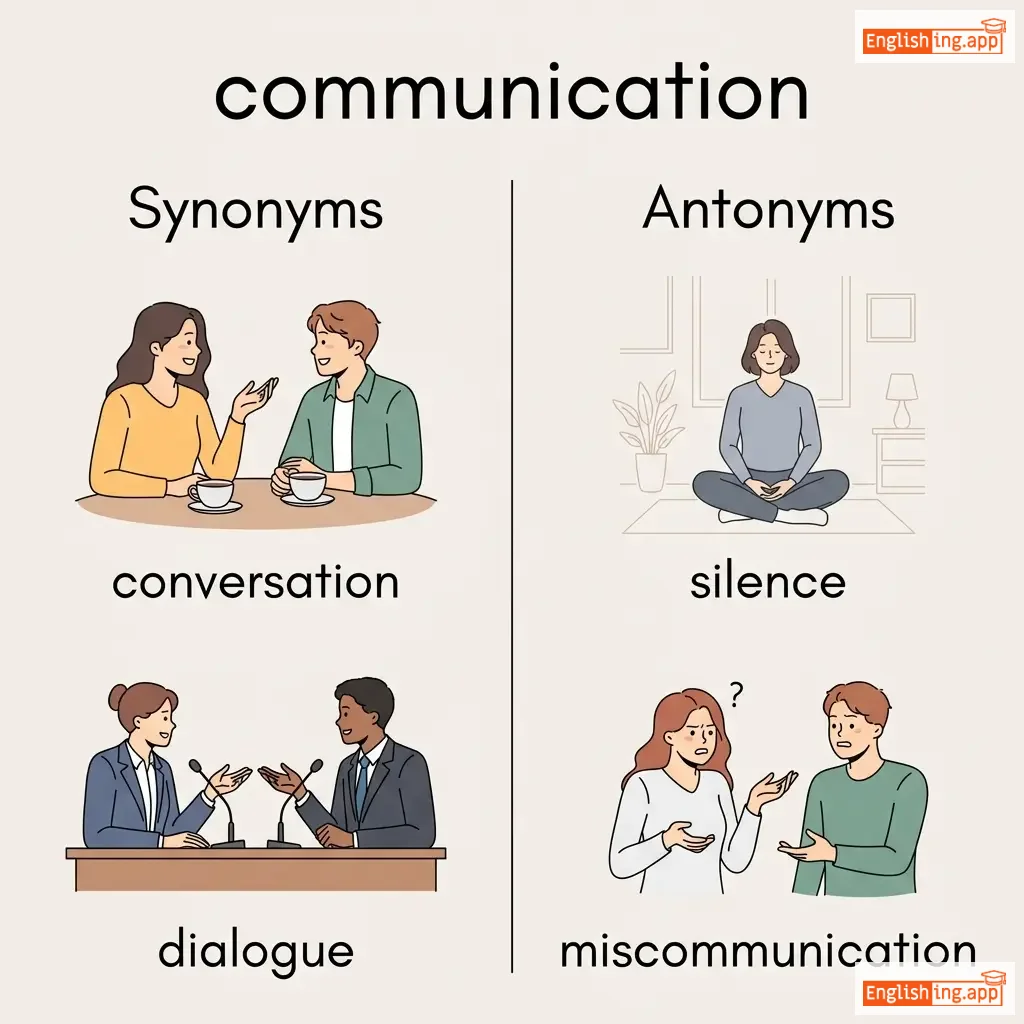
/kəˌmjuː.nɪˈkeɪ.ʃən/
noun
(コミュニケーション)
••••••
|
|
コミュニケーション; 情報交換; 接続手段
komyunikeeshon, jouhou koukan, setsuzoku shudan
••••••
|
the imparting or exchanging of information or ideas; means of connection between people or places
••••••
|
Good communication is essential for a successful business relationship.
良いコミュニケーションは、成功したビジネス関係に不可欠です。
••••••
|
良いコミュニケーションは、成功したビジネス関係に不可欠です。
Yoi komyunikeeshon wa, seikou shita bijinesu kankei ni fukaketsu desu.
••••••
|
interaction, correspondence, dialogue, contact
••••••
|
silence, isolation, disconnection
••••••
|
effective communication, mass communication, communication skills
••••••
|
日本語で「コミュニケーション」は情報を交換し、関係を築く方法です。
••••••
|
|
#183
🛌
|
/ˈkʌm.fərt/
noun
(コンフォート)
••••••
|
- •••••• |
快適さ; 便利さ
kaitekisa, benrisā
••••••
|
a state of physical ease and freedom from pain or constraint; relief from distress or anxiety
••••••
|
The soft sofa provided great comfort after a long day at work.
ソフトなソファは長い一日の仕事後に大きな快適さを提供しました。
••••••
|
ソフトなソファは長い一日の仕事後に大きな快適さを提供しました。
Sofuto na sofa wa nagai ichinichi no shigoto go ni ōkina kaitekisa o teikyō shimashita.
••••••
|
ease, relief, solace, consolation
••••••
|
discomfort, pain, distress, agony
••••••
|
provide comfort, great comfort, comfort zone
••••••
|
Comfort in Japanese is similar to the English pronunciation of 'コンフォート'!
••••••
|
|
#184
🚗💥
|
/kəˈlɪʒ.ən/
noun
(コリジョン)
••••••
|
- •••••• |
衝突; ぶつかり合い
shoutotsu, butsukariai
••••••
|
an instance of one moving object hitting violently against another; a conflict of opposing ideas or interests
••••••
|
The collision between two cars caused a major traffic jam.
二台の車の衝突で大きな渋滞が発生しました。
••••••
|
二台の車の衝突で大きな渋滞が発生しました。
Nidai no kuruma no shoutotsu de ookina jūtai ga hassei shimashita.
••••••
|
crash, impact, clash, smash
••••••
|
separation, avoidance, harmony
••••••
|
car collision, head-on collision, avoid collision
••••••
|
二台の車がぶつかる、それが衝突です。
••••••
|
|
#185
📚
|
/kəˈlek.ʃən/
noun
(コレクション)
••••••
|
- •••••• |
コレクション; 収集; アーカイブ
korekushon; shūshū; ākaibu
••••••
|
a group of objects gathered together; the action or process of collecting
••••••
|
She has an impressive collection of vintage books in her library.
彼女は図書館に古い本の印象的なコレクションを持っています。
••••••
|
彼女は図書館に古い本の印象的なコレクションを持っています。
Kanojo wa toshokan ni furui hon no inshō-teki na korekushon o motteimasu.
••••••
|
accumulation, assembly, compilation, anthology
••••••
|
distribution, dispersal, scattering
••••••
|
art collection, book collection, stamp collection
••••••
|
考えてみてください、'コレクション' は本を集めて図書館を作るようなものです。
••••••
|
|
#186
🎲
|
/koʊˈɪn.sɪ.dəns/
noun
(kɔɪnˈsɪdəns)
••••••
|
- •••••• |
偶然
guuzen
••••••
|
a remarkable occurrence of events or circumstances without apparent causal connection; chance happening
••••••
|
It was a strange coincidence that they both wore the same dress to the party.
それは奇妙な偶然だった、彼ら二人は同じドレスを着てパーティーに行った。
••••••
|
それは奇妙な偶然だった、彼ら二人は同じドレスを着てパーティーに行った。
Sore wa kimyou na guuzen datta, karera futari wa onaji doresu o kite pātii ni itta.
••••••
|
chance, accident, fluke, serendipity
••••••
|
plan, intention, design, purpose
••••••
|
strange coincidence, mere coincidence, what a coincidence
••••••
|
偶然 (guuzen) = 意外な一致
••••••
|
|
#187
🤝
|
/ˌkovuːɪɡˈzɪs.təns/
noun
(コーイグズィステンス)
••••••
|
- •••••• |
共存
kyouzon
••••••
|
the state of existing together at the same time or in the same place; peaceful cohabitation
••••••
|
The peaceful co-existence of different cultures makes this city unique. |
異なる文化の平和的共存がこの都市をユニークにしています。
Kotonaru bunka no heiwateki kyousei ga kono toshi o yuniiku ni shiteimasu.
••••••
|
cohabitation, harmony, peaceful living, tolerance
••••••
|
conflict, war, hostility, separation
••••••
|
peaceful co-existence, cultural co-existence, promote co-existence
••••••
|
共存は平和的に共に生きることを意味します
••••••
|
|
#188
🤡
|
/klaʊn/
noun
(クラウン)
••••••
|
- •••••• |
道化師; サーカスの中で特に伝統的な衣装と誇張されたメイクをしたコメディアン
dōkeshī; sākasuno naka de toku ni dentō-teki na isshō to kojō sareta meiku o shita komedian
••••••
|
a comic entertainer, especially one in a circus, wearing a traditional costume and exaggerated makeup
••••••
|
The children laughed loudly at the funny clown's silly antics.
子供たちは面白いクラウンの愚かな仕草に大笑いしました。
••••••
|
子供たちは面白いクラウンの愚かな仕草に大笑いしました。
Kodomotachi wa omoshiroi kuraundo no oroka na shigusa ni ōwarai shimashita.
••••••
|
jester, comedian, entertainer, buffoon
••••••
|
serious person, scholar, intellectual
••••••
|
circus clown, funny clown, class clown
••••••
|
クラウンが登場し、子供たちは大笑い!
••••••
|
|
#189
🏆
|
/ˈklaɪ.mæks/
noun
(クライマックス)
••••••
|
- •••••• |
クライマックス
kuraimakkusu
••••••
|
the most intense, exciting, or important point of something; the highest or most intense point in a process
••••••
|
The movie reached its climax during the final battle scene. |
映画は最後の戦闘シーンでクライマックスに達しました。
Eiga wa saigo no sentō shīn de kuraimakkusu ni tasshimashita.
••••••
|
peak, pinnacle, culmination, apex
••••••
|
beginning, start, anticlimax
••••••
|
reach climax, dramatic climax, story climax
••••••
|
日本語でも‘クライマックス’は最高潮を意味し、英語と同じです。
••••••
|
|
#190
🌍
|
/ˈsɜːr.kəmˌsˌtæn.sɪz/
noun
(sākamusutānsu)
••••••
|
- •••••• |
状況
jōkyō
••••••
|
the conditions that affect a situation, action, or event; facts or conditions connected with or relevant to an event
••••••
|
Under normal circumstances, she would have arrived by now. |
通常の状況では、彼女はもう到着しているはずです。
tsūjō no jōkyō de wa, kanojo wa mō tōchaku shite iru hazu desu.
••••••
|
conditions, situation, context, environment
••••••
|
isolation, simplicity
••••••
|
unusual circumstances, difficult circumstances, under circumstances
••••••
|
Circumstances = あなたの周りで起こることに影響を与えるもの。
••••••
|
|
#191
😊
|
/tʃiːk/
noun
(chīk)
••••••
|
- •••••• |
頬; 横柄;
hoo, ōhēi
••••••
|
either side of the face below the eye; impudent or disrespectful behavior
••••••
|
The baby's rosy cheeks showed she was healthy and happy.
赤ちゃんのピンク色のほおが、健康で幸せであることを示していました。
••••••
|
赤ちゃんのピンク色のほおが、健康で幸せであることを示していました。
Akachan no pinku-iro no hoo ga, kenkō de shiawase de aru koto o shimeshiteimashita.
••••••
|
face, jowl, impudence, audacity
••••••
|
respect, politeness, modesty
••••••
|
rosy cheeks, chubby cheeks, turn the other cheek
••••••
|
Think of 'hoo' for the rosy cheeks of a baby.
••••••
|
|
#192
📅
|
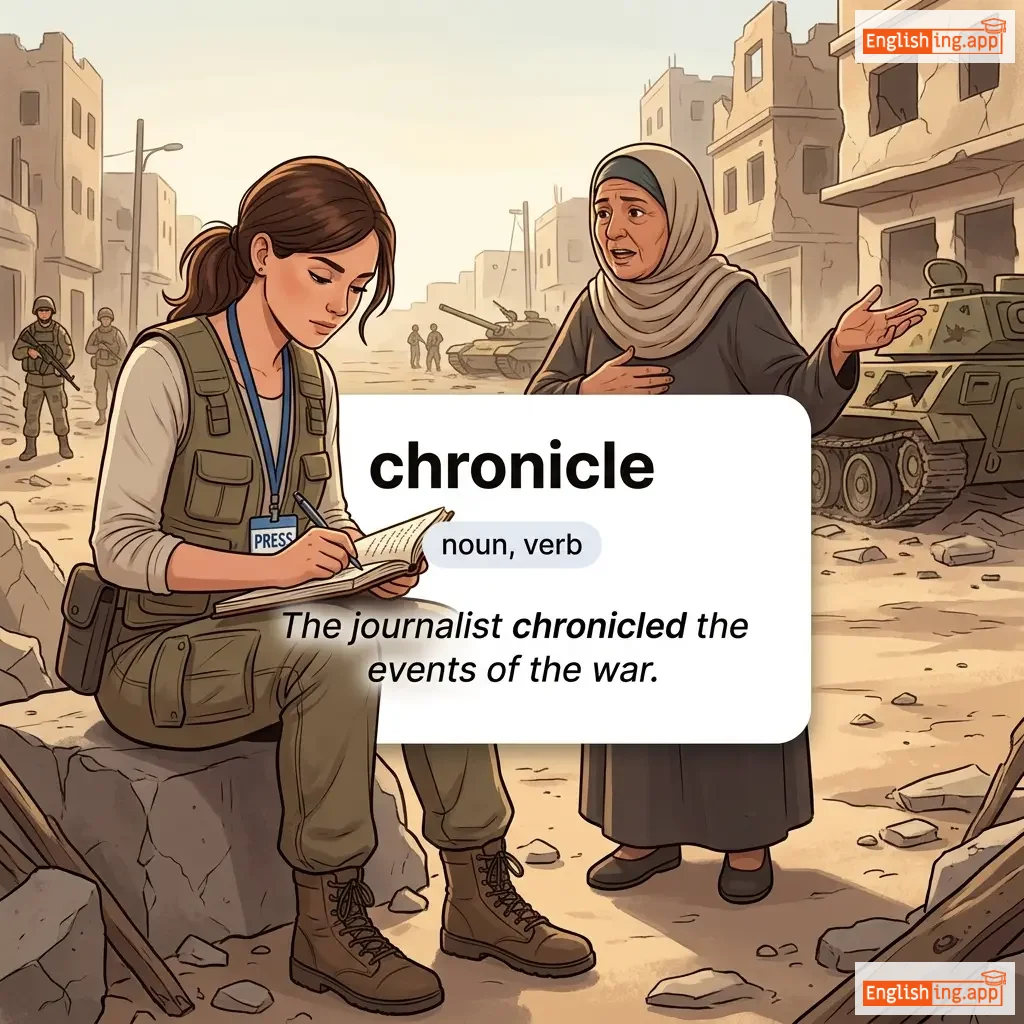
/ˈkrɑn.ɪ.kəl/
noun
(クロニクル)
••••••
|
|
年表; 歴史的な出来事の記録
nenpyou, rekishiteki na dekigoto no kiroku
••••••
|
a factual written account of important or historical events in the order they happened
••••••
|
The historian wrote a detailed chronicle of the medieval period. |
歴史家は中世時代の詳細な年表を書いた。
rekishika wa chūsei jidai no shōsai na nenpyō o kaita.
••••••
|
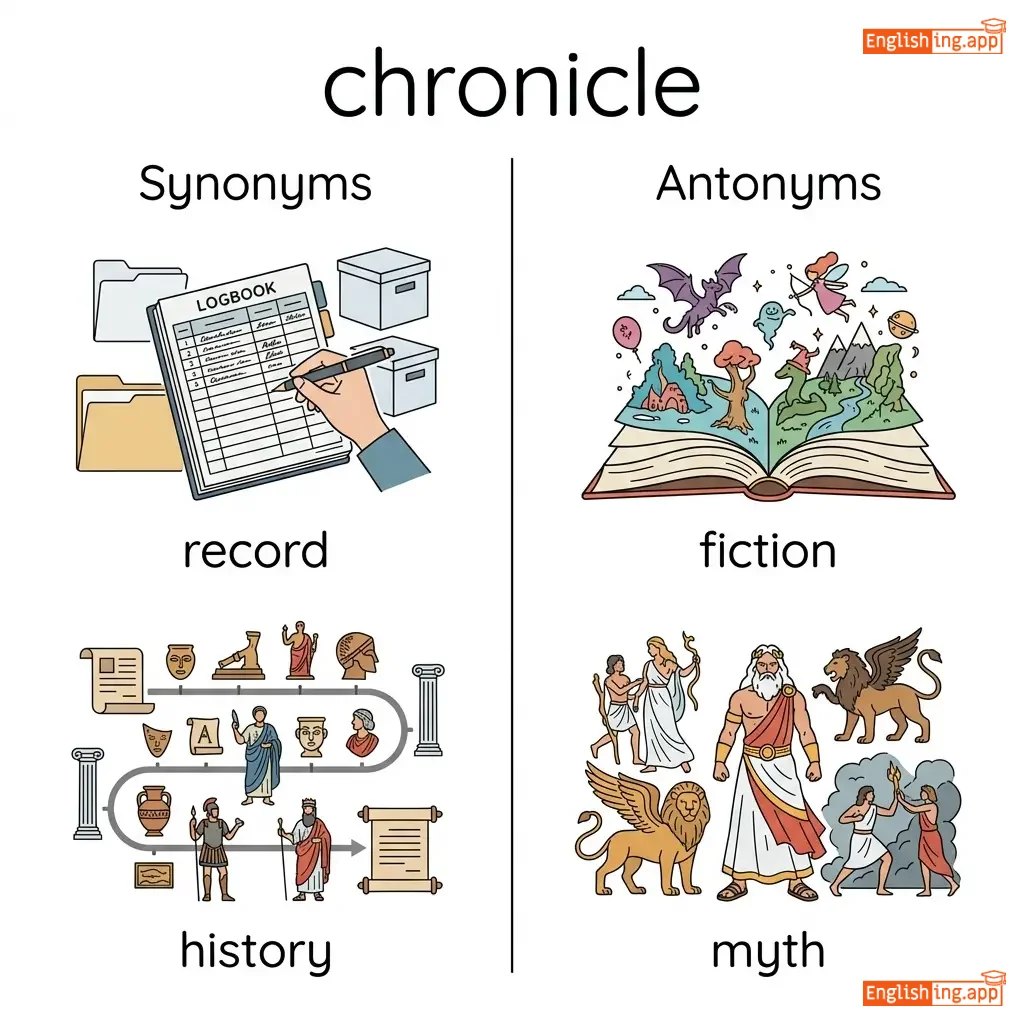
record, account, history, annals
••••••
|
fiction, myth, legend
••••••
|
historical chronicle, ancient chronicle, chronicle events
••••••
|
Chronicle: 'Chron' means time, '年表' (nenpyou) is a record of time.
••••••
|
|
#193
🎵
|
/ˈkɔːr.əs/
noun
(コーラス)
••••••
|
- •••••• |
コーラス; 各節の後に繰り返される歌の一部
kōrasu; kakusen no ato ni kurikaesareru uta no ichibu
••••••
|
a large organized group of singers; a part of a song that is repeated after each verse
••••••
|
The school chorus performed beautifully at the annual concert.
学校のコーラスは年次コンサートで素晴らしいパフォーマンスをしました。
••••••
|
学校のコーラスは年次コンサートで素晴らしいパフォーマンスをしました。
Gakkō no kōrasu wa nenji konsāto de subarashī pafōmansu o shimashita.
••••••
|
choir, ensemble, refrain, group
••••••
|
solo, individual, single voice
••••••
|
school chorus, chorus line, join the chorus
••••••
|
コーラスはみんなで歌うように、学校でみんなで歌うように思い出す。
••••••
|
|
#194
✅
|
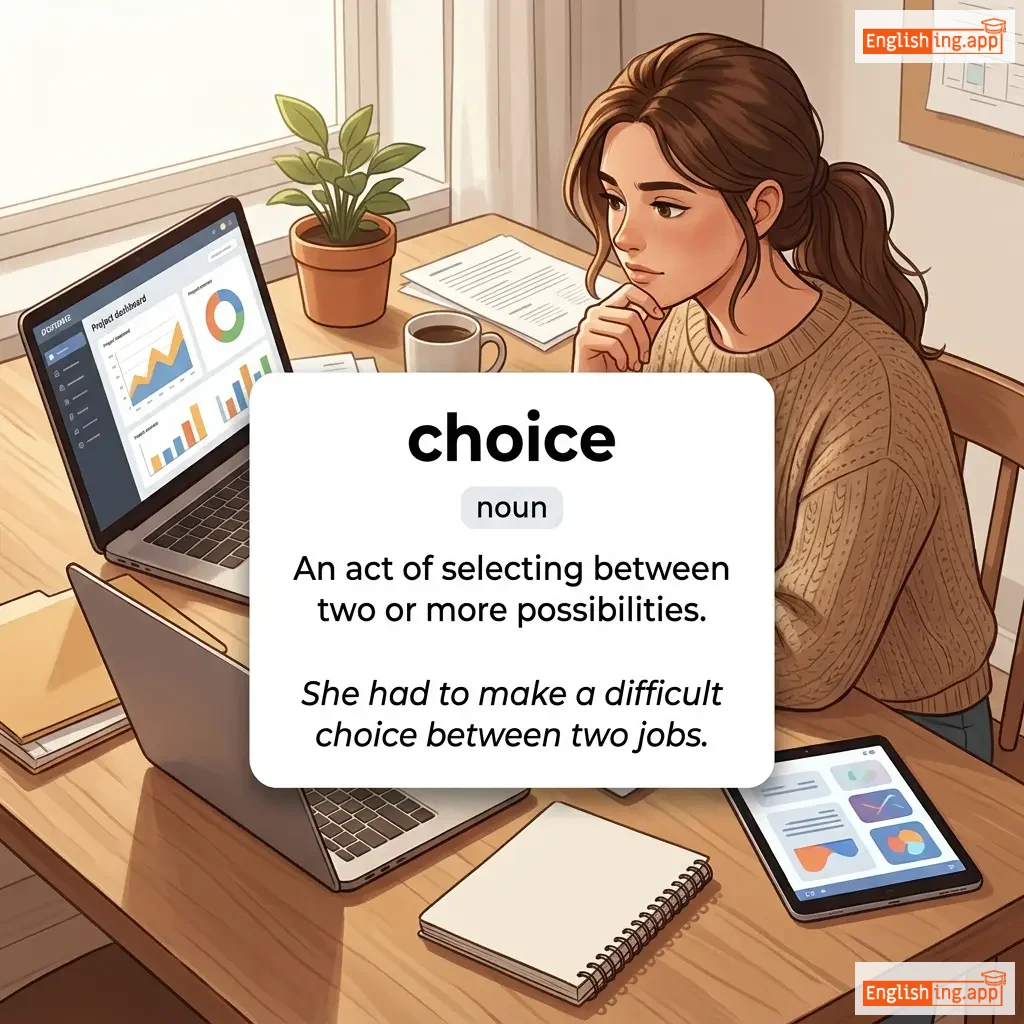
/tʃɔɪs/
noun
(チョイス)
••••••
|
|
選択
sentaku
••••••
|
an act of selecting or making a decision when faced with two or more possibilities
••••••
|
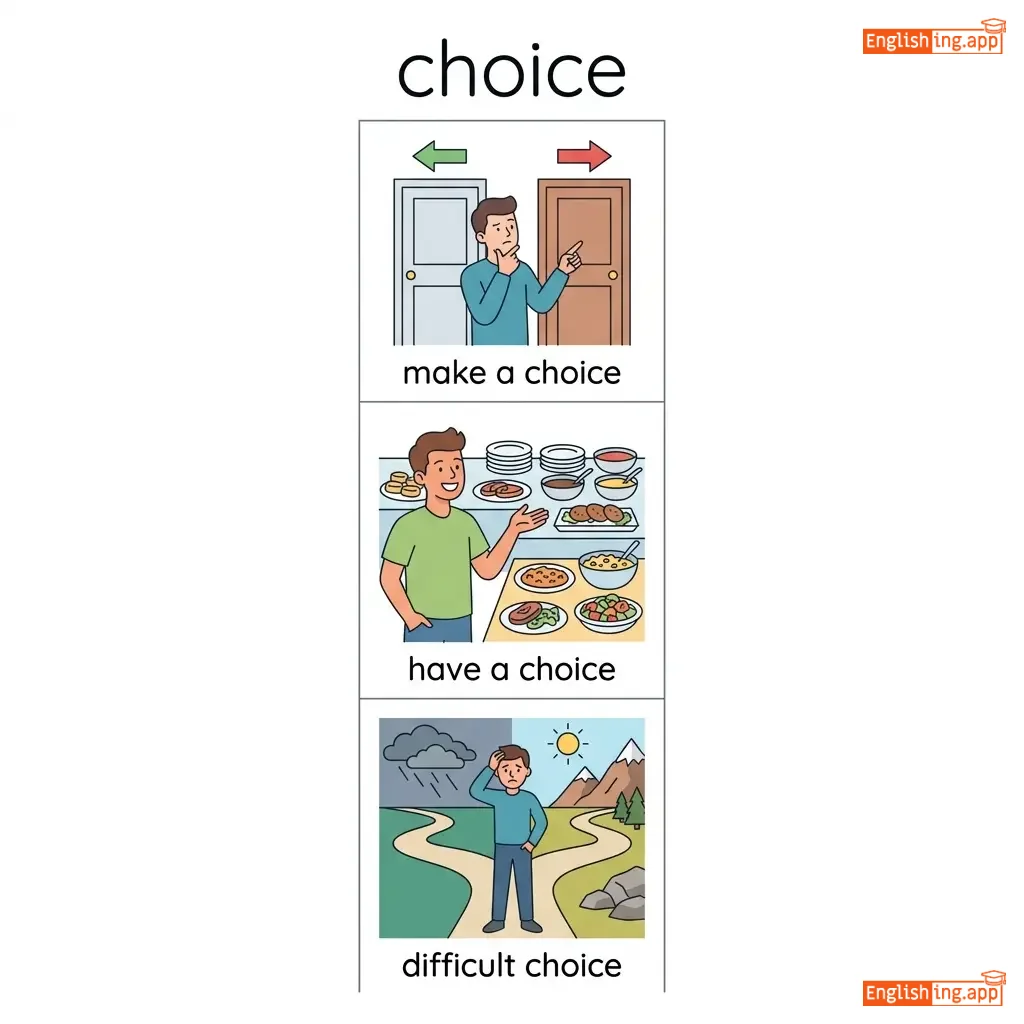
She had to make a difficult choice between her career and family. |
彼女はキャリアと家族の間で難しい選択をしなければならなかった。
Kanojo wa kyaria to kazoku no aida de muzukashii sentaku o shinakereba naranakatta.
••••••
|
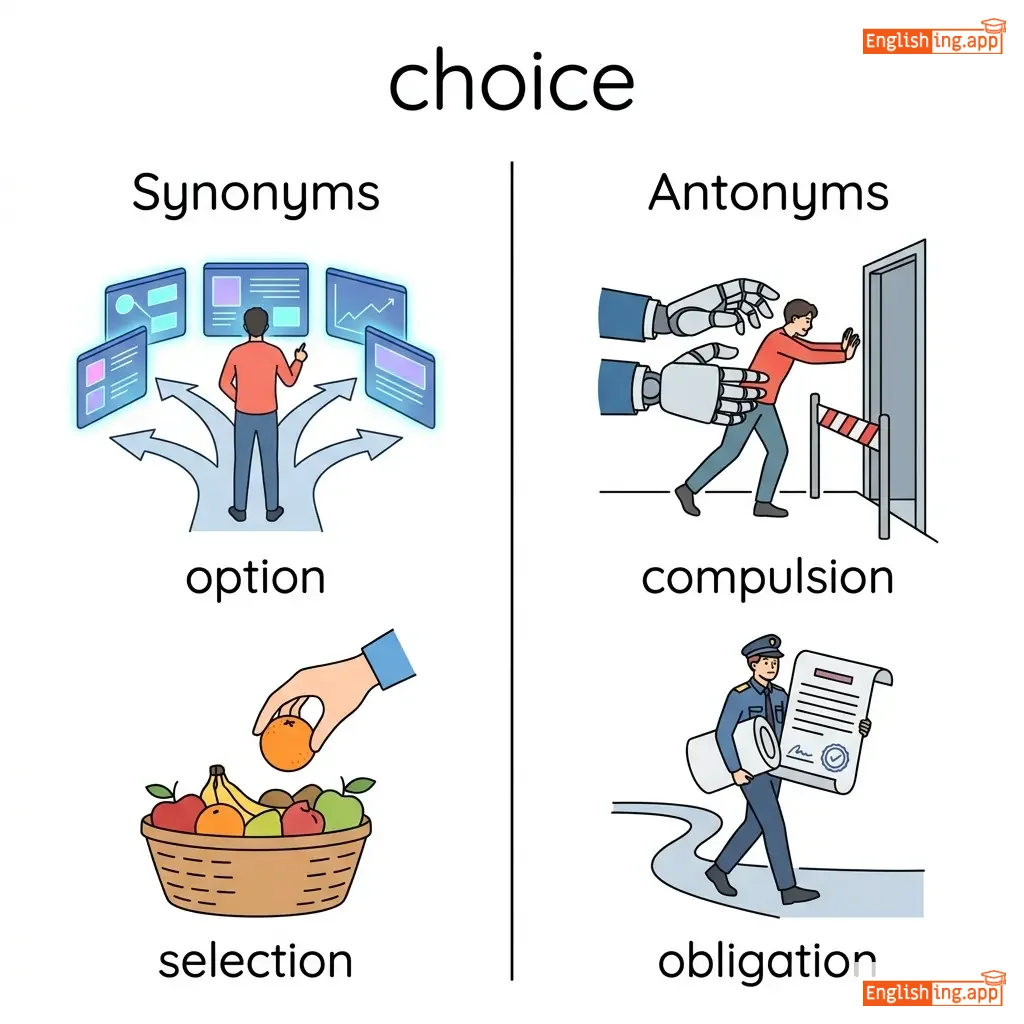
option, selection, preference, alternative
••••••
|
compulsion, obligation, necessity
••••••
|
make a choice, difficult choice, good choice
••••••
|
選択する時はいつも選ぶべき道を見つけること
••••••
|
|
#195
📝
|
/tʃɪt/
noun
(チット)
••••••
|
- •••••• |
メモ、控え
memo, hikae
••••••
|
a short note, typically a brief informal letter; a voucher for a sum owed
••••••
|
She left a chit on the table asking him to call her back.
彼女はテーブルにチットを置いて、彼に戻って電話するように頼んだ。
••••••
|
彼女はテーブルにチットを置いて、彼に戻って電話するように頼んだ。
Kanojo wa tēburu ni chitto o oite, kare ni modotte denwa suru yō ni tanonda.
••••••
|
note, slip, voucher, receipt
••••••
|
formal letter, long message
••••••
|
leave a chit, pay chit, credit chit
••••••
|
チットはあなたが伝えたいことを短く書いたメモです。
••••••
|
|
#196
🙂
|
/tʃɪn/
noun
(チン)
••••••
|
- •••••• |
あご
ago
••••••
|
the protruding part of the face below the mouth, formed by the apex of the lower jaw
••••••
|
He stroked his beard thoughtfully, resting his hand on his chin.
彼は考えながらあごひげを撫で、手をあごに置いた。
••••••
|
彼は考えながらあごひげを撫で、手をあごに置いた。
Kare wa kangae nagara agohige wo nade, te wo ago ni oita.
••••••
|
jaw, mandible
••••••
|
forehead, top of head
••••••
|
double chin, pointed chin, weak chin
••••••
|
考えるときはあごを触ろう (chin)!
••••••
|
|
#197
🌶️
|
/ˈtʃɪl.i/
noun
(チリ)
••••••
|
- •••••• |
寒い; 辛い唐辛子;
samui, karai tōgarashi
••••••
|
noticeably cold; a hot-tasting pod of a variety of capsicum, used as a spice
••••••
|
The chef added red chilli to make the curry spicier. |
シェフはカレーを辛くするために赤いチリを加えました。
Shefu wa karē o karaku suru tame ni akai chiri o kuwaemashita.
••••••
|
cold, pepper, capsicum, spice
••••••
|
warm, mild, bland
••••••
|
chilly weather, red chilli, green chilli
••••••
|
Chili in Japanese means cold and spicy, just like in English!
••••••
|
|
#198
❄️
|
/tʃɪl/
noun
(チル)
••••••
|
- •••••• |
寒さ; 恐れや不安の感情; リラックスする
samusa; osore ya fuan no kanjou; rirakkusu suru
••••••
|
an unpleasant feeling of coldness; a feeling of fear or anxiety; to relax
••••••
|
There was a chill in the air as autumn approached. |
秋が近づくにつれて、空気の中に寒さを感じた。
Aki ga chikazuku ni tsurete, kuuki no naka ni samusa o kanjita.
••••••
|
coldness, coolness, shiver, relaxation
••••••
|
warmth, heat, tension
••••••
|
morning chill, chill out, catch a chill
••••••
|
Chill - 寒い時は、リラックスすることが大切!
••••••
|
|
#199
👕
|
/tʃest/
noun
(チェスト)
••••••
|
- •••••• |
胸部; 箱
kyoubu, hako
••••••
|
the front surface of a person's or animal's body between the neck and abdomen; a large strong box
••••••
|
The doctor listened to his chest with a stethoscope. |
医者は聴診器で彼の胸部を聞いた。
Isha wa choushinki de kare no kyoubu wo kiita.
••••••
|
torso, breast, trunk, box
••••••
|
back, spine, rear
••••••
|
chest pain, treasure chest, chest of drawers
••••••
|
胸部は大切な部分を守る、箱のように.
••••••
|
|
#200
🧀
|
/tʃiːz/
noun
(チーズ)
••••••
|
- •••••• |
チーズ
chiizu
••••••
|
a food made from the pressed curds of milk; used for photography to make people smile
••••••
|
She added grated cheese to the pasta for extra flavor. |
彼女はパスタに追加の風味を加えるために細かくおろしたチーズを加えました。
kanojo wa pasuta ni tsuika no fūmi o kuwaeru tame ni komakaku oroshita chīzu o kuwaemashita.
••••••
|
dairy product, curd, fromage
••••••
|
liquid milk, fresh milk
••••••
|
grated cheese, melted cheese, cheese sandwich
••••••
|
チーズ (chiizu) sounds like 'cheese' in Japanese
••••••
|
Vocabulary Quiz
Test your vocabulary by matching words with their translations or meanings.
Login to take the quiz
Comments (0)
Share your thoughts and join the discussion.
Join the discussion by logging in
Login to CommentNo comments yet
Be the first to share your thoughts!