

अनुवाद
भूतकाल
भूत कृदंत
तृतीय पुरुष एकवचन
जेरंड
मीनिंग
उदाहरण वाक्य
उदाहरण वाक्य अनुवाद
सिनोनिम्स
एंटोनिम्स
कॉलोकेशन्स
निमोनिक


Swipe left or right, or use the buttons. Tap image to zoom.
उदाहरण वाक्य अनुवाद
शब्द
Lesson 10Lesson 10 - मास्क टॉगल
|
इमोजी
|
शब्द | Images | अनुवाद | मीनिंग | उदाहरण वाक्य | उदाहरण वाक्य अनुवाद | सिनोनिम्स | एंटोनिम्स | कॉलोकेशन्स | निमोनिक |
|---|---|---|---|---|---|---|---|---|---|---|
|
#181
😄
|
/ˈtʃʌk.əl/
noun
(चकलब)
••••••
|
- •••••• |
मुलायम हंसी
mulayam hansi
••••••
|
a quiet or suppressed laugh; to laugh quietly or with amusement
••••••
|
He gave a soft chuckle when he heard the funny joke.
वह मजेदार जोक सुनकर हल्का हंसी हंसा।
••••••
|
वह मजेदार जोक सुनकर हल्का हंसी हंसा।
vah mazedar jok sunkar halka hansi hansa.
••••••
|
giggle, snicker, laugh softly, titter
••••••
|
cry, sob, wail
••••••
|
soft chuckle, quiet chuckle, give a chuckle
••••••
|
हंसी का मज़ा उठाने के लिए 'हल्का हंसी' यह ध्यान में रखें
••••••
|
|
#182
📞
|
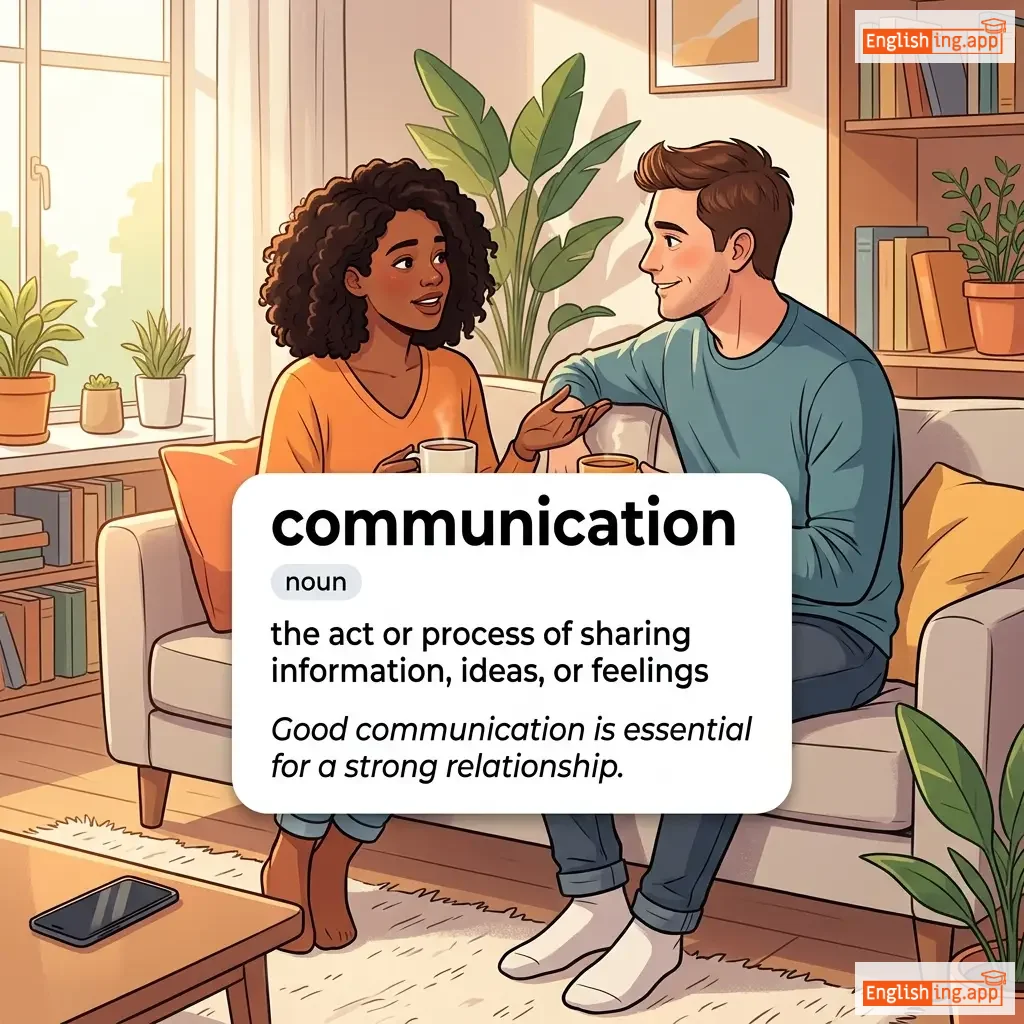
/kəˌmjuː.nɪˈkeɪ.ʃən/
noun
(कमीुनिकेशन)
••••••
|
|
संचार; सूचना आदान-प्रदान; संबंध स्थापित करने का तरीका
sanchar, soochna adan-pradan, sambandh sthapit karne ka tareeka
••••••
|
the imparting or exchanging of information or ideas; means of connection between people or places
••••••
|
Good communication is essential for a successful business relationship.
गुड कम्युनिकेशन इज एसेंशियल फॉर अ सक्सेसफुल बिज़नेस रिलेशनशिप।
••••••
|
एक सफल व्यापारिक संबंध के लिए अच्छा संचार आवश्यक है।
ek safal vyaparik sambandh ke liye achha sanchar avashyak hai.
••••••
|
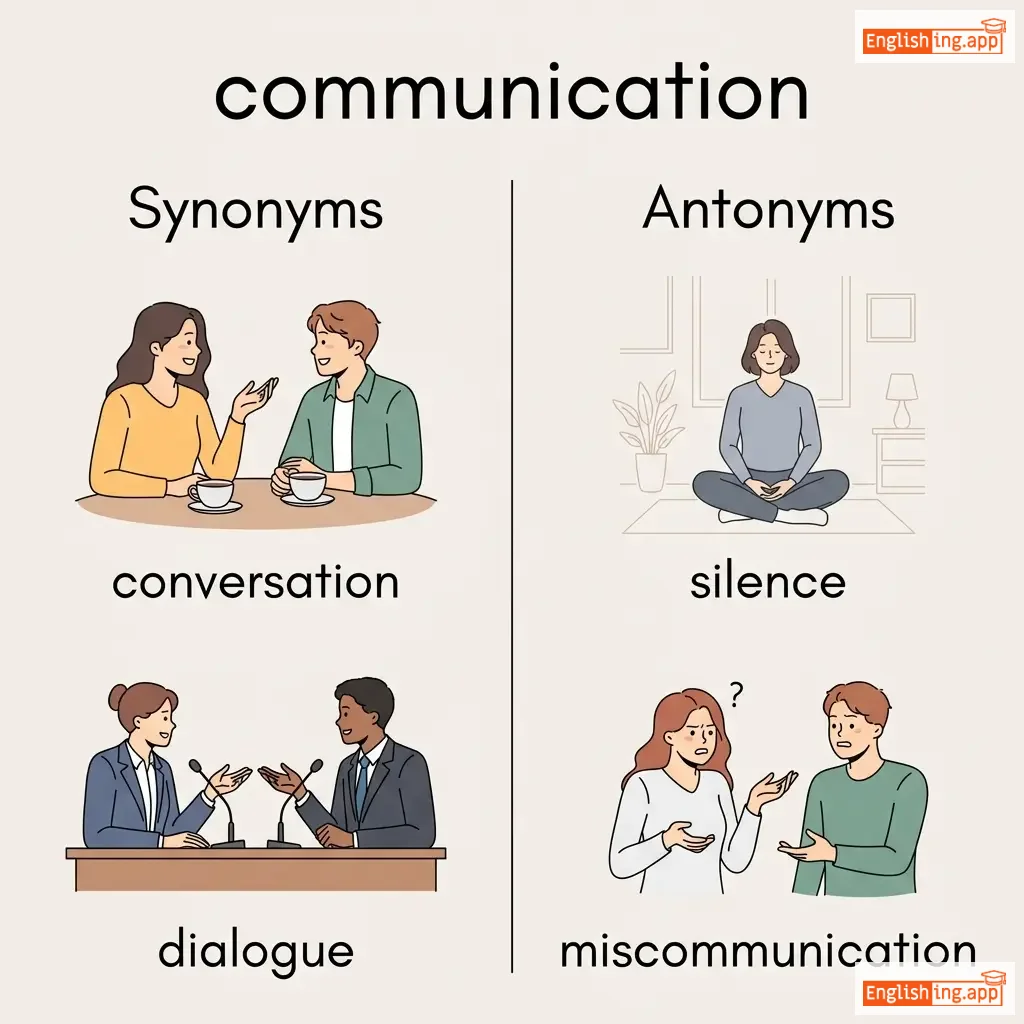
interaction, correspondence, dialogue, contact
••••••
|
silence, isolation, disconnection
••••••
|
effective communication, mass communication, communication skills
••••••
|
Hindi mein 'sanchaar' yaani communication, jahan 'soochna' ya 'vicharon ka adan-pradan' hota hai
••••••
|
|
#183
🛌
|
/ˈkʌm.fərt/
noun
(कम्फर्ट)
••••••
|
- •••••• |
आराम; सुख
aram, sukh
••••••
|
a state of physical ease and freedom from pain or constraint; relief from distress or anxiety
••••••
|
The soft sofa provided great comfort after a long day at work.
द सोफे ने लंबे दिन के बाद शानदार आराम दिया।
••••••
|
लंबे दिन के बाद नरम सोफे ने शानदार आराम दिया।
lambhe din ke baad naram sofe ne shandar aaram diya.
••••••
|
ease, relief, solace, consolation
••••••
|
discomfort, pain, distress, agony
••••••
|
provide comfort, great comfort, comfort zone
••••••
|
comfort in English is like 'अराम' in Hindi
••••••
|
|
#184
🚗💥
|
/kəˈlɪʒ.ən/
noun
(कोलिज़न)
••••••
|
- •••••• |
टक्कर; टकराव
takkar, takraav
••••••
|
an instance of one moving object hitting violently against another; a conflict of opposing ideas or interests
••••••
|
The collision between two cars caused a major traffic jam.
दो कारों के बीच टक्कर ने एक बड़ा ट्रैफिक जाम पैदा किया।
••••••
|
दो कारों के बीच टक्कर ने एक बड़ा ट्रैफिक जाम पैदा किया।
do kaaron ke beech takkar ne ek bada traffic jam paida kiya.
••••••
|
crash, impact, clash, smash
••••••
|
separation, avoidance, harmony
••••••
|
car collision, head-on collision, avoid collision
••••••
|
जैसे 'टक्कर' में दोनों वाहन टकराए, वैसे 'कोलिज़न' में भी टकराहट होती है
••••••
|
|
#185
📚
|
/kəˈlek.ʃən/
noun
(कलेक्शन)
••••••
|
- •••••• |
संग्रह; संग्रहण; संग्रहित वस्तुएँ
sangrah; sangrahan; sangrahit vastuyein
••••••
|
a group of objects gathered together; the action or process of collecting
••••••
|
She has an impressive collection of vintage books in her library.
वह अपनी लाइब्रेरी में पुरानी किताबों का एक प्रभावशाली संग्रह रखती है।
••••••
|
वह अपनी लाइब्रेरी में पुरानी किताबों का एक प्रभावशाली संग्रह रखती है।
vah apni library mein purani kitabon ka ek prabhavshali sangrah rakhti hai.
••••••
|
accumulation, assembly, compilation, anthology
••••••
|
distribution, dispersal, scattering
••••••
|
art collection, book collection, stamp collection
••••••
|
संग्रह (संग्रह + संग्रहण) को याद रखने के लिए सोचें, जैसे कोई लाइब्रेरी में किताबों का संग्रह करता है।
••••••
|
|
#186
🎲
|
/koʊˈɪn.sɪ.dəns/
noun
(कॉइनसीडेंस)
••••••
|
- •••••• |
संयोग
sanyog
••••••
|
a remarkable occurrence of events or circumstances without apparent causal connection; chance happening
••••••
|
It was a strange coincidence that they both wore the same dress to the party.
यह एक अजीब संयोग था कि वे दोनों पार्टी में एक ही ड्रेस पहने हुए थे।
••••••
|
यह एक अजीब संयोग था कि वे दोनों पार्टी में एक ही ड्रेस पहने हुए थे।
yah ek ajeeb sanyog tha ki ve donon party mein ek hi dress pehne hue the.
••••••
|
chance, accident, fluke, serendipity
••••••
|
plan, intention, design, purpose
••••••
|
strange coincidence, mere coincidence, what a coincidence
••••••
|
संयोग (sanyog) = chance happening
••••••
|
|
#187
🤝
|
/ˌkovuːɪɡˈzɪs.təns/
noun
(को-एक्सिस्टेंस)
••••••
|
- •••••• |
सह-अस्तित्व
sah-astitv
••••••
|
the state of existing together at the same time or in the same place; peaceful cohabitation
••••••
|
The peaceful co-existence of different cultures makes this city unique. |
विभिन्न संस्कृतियों का शांतिपूर्ण सह-अस्तित्व इस शहर को अद्वितीय बनाता है।
vibhinn sanskritiyon ka shantipurn sah-astitv is shahar ko advitiya banata hai.
••••••
|
cohabitation, harmony, peaceful living, tolerance
••••••
|
conflict, war, hostility, separation
••••••
|
peaceful co-existence, cultural co-existence, promote co-existence
••••••
|
सह-अस्तित्व का मतलब शांतिपूर्वक एक साथ रहना
••••••
|
|
#188
🤡
|
/klaʊn/
noun
(क्लाउन)
••••••
|
- •••••• |
जोकर; एक हास्य अभिनेता विशेष रूप से एक सर्कस में, पारंपरिक वस्त्र और अतिरंजित मेकअप पहने हुए
jokar; ek hasya abhineta vishesh roop se ek sarkas mein, paramparik vastra aur atiranjit makeup pehne hue
••••••
|
a comic entertainer, especially one in a circus, wearing a traditional costume and exaggerated makeup
••••••
|
The children laughed loudly at the funny clown's silly antics.
बच्चों ने मजेदार जोकर के मूर्खतापूर्ण हरकतों पर जोर से हंसी मारी।
••••••
|
बच्चों ने मजेदार जोकर के मूर्खतापूर्ण हरकतों पर जोर से हंसी मारी।
bachchon ne mazedar jokar ke moorkhtapurn harkaton par zor se hansi maari.
••••••
|
jester, comedian, entertainer, buffoon
••••••
|
serious person, scholar, intellectual
••••••
|
circus clown, funny clown, class clown
••••••
|
क्लाउन को देखो, जैसे ही हंसी आए, बच्चों का उत्साह बढ़े।
••••••
|
|
#189
🏆
|
/ˈklaɪ.mæks/
noun
(क्लाइमैक्स)
••••••
|
- •••••• |
चरम बिंदु
charam bindu
••••••
|
the most intense, exciting, or important point of something; the highest or most intense point in a process
••••••
|
The movie reached its climax during the final battle scene. |
फिल्म अपनी चरम बिंदु पर अंतिम युद्ध के दृश्य के दौरान पहुँच गई।
film apni charam bindu par antim yudh ke drishya ke dauran pahunch gayi.
••••••
|
peak, pinnacle, culmination, apex
••••••
|
beginning, start, anticlimax
••••••
|
reach climax, dramatic climax, story climax
••••••
|
Hi mein 'charam' matlab highest, aur 'bindu' matlab point.
••••••
|
|
#190
🌍
|
/ˈsɜːr.kəmˌsˌtæn.sɪz/
noun
(सर्कमस्टांसिस)
••••••
|
- •••••• |
परिस्थितियाँ
paristhitiyan
••••••
|
the conditions that affect a situation, action, or event; facts or conditions connected with or relevant to an event
••••••
|
Under normal circumstances, she would have arrived by now. |
सामान्य परिस्थितियों में, वह अब तक पहुँच चुकी होती।
saamanya paristhitiyon mein, vah ab tak pahunch chuki hoti.
••••••
|
conditions, situation, context, environment
••••••
|
isolation, simplicity
••••••
|
unusual circumstances, difficult circumstances, under circumstances
••••••
|
Circumstances = परिस्थितियाँ, जैसे वो परिस्थिति जिसमें आप होते हैं।
••••••
|
|
#191
😊
|
/tʃiːk/
noun
(चीक)
••••••
|
- •••••• |
गाल; अभद्रता;
gaal, abhadrota
••••••
|
either side of the face below the eye; impudent or disrespectful behavior
••••••
|
The baby's rosy cheeks showed she was healthy and happy.
द बेबी के गुलाबी गालों से यह जाहिर था कि वह स्वस्थ और खुश थी।
••••••
|
बेबी के गुलाबी गाल दिखा रहे थे कि वह स्वस्थ और खुश थी।
baby ke gulabi gaal dikha rahe the ki woh swasth aur khush thi.
••••••
|
face, jowl, impudence, audacity
••••••
|
respect, politeness, modesty
••••••
|
rosy cheeks, chubby cheeks, turn the other cheek
••••••
|
Remember 'cheek' as 'gaal', like a smiling face.
••••••
|
|
#192
📅
|
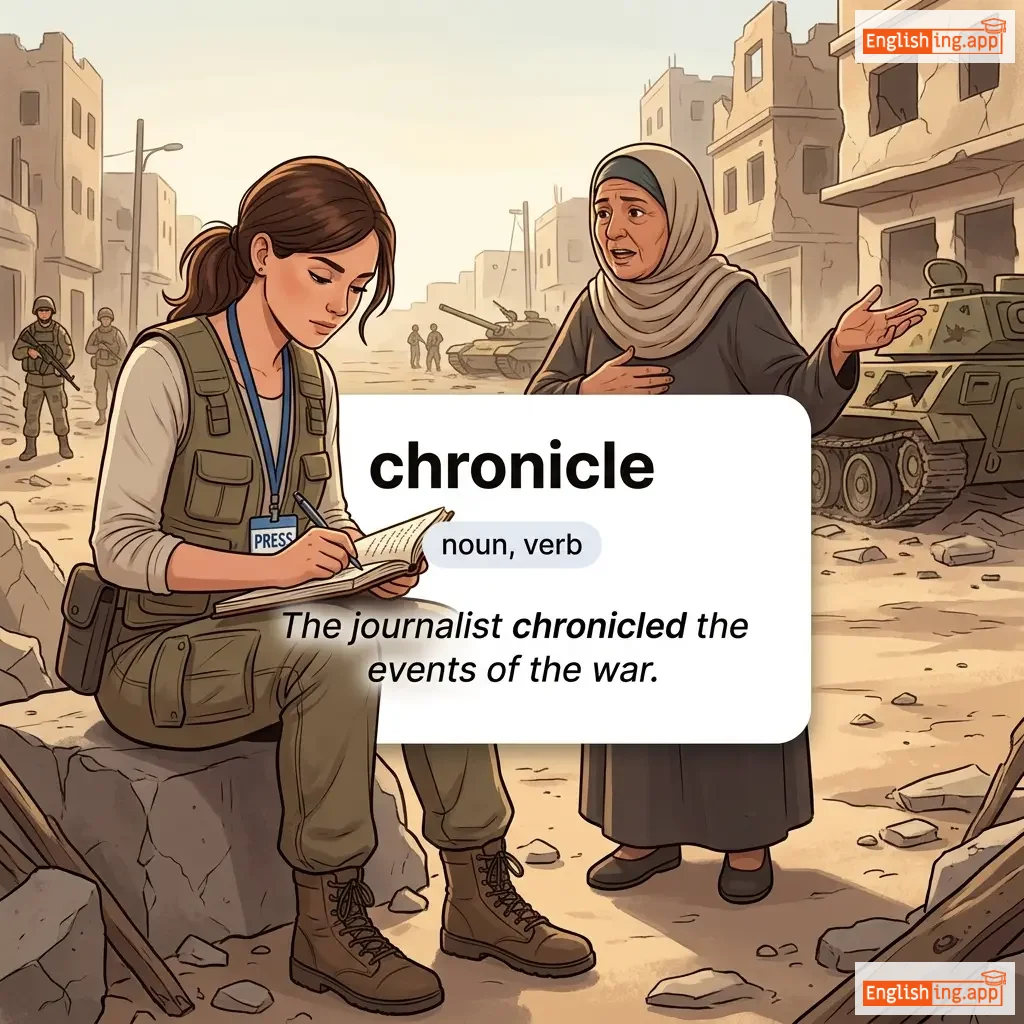
/ˈkrɑn.ɪ.kəl/
noun
(क्रॉनिकल)
••••••
|
|
क्रॉनिकल; ऐतिहासिक घटनाओं का लिखित विवरण
kronikal, aitihasik ghatnaon ka likhit vivaran
••••••
|
a factual written account of important or historical events in the order they happened
••••••
|
The historian wrote a detailed chronicle of the medieval period. |
इतिहासकार ने मध्यकालीन काल का एक विस्तृत क्रॉनिकल लिखा।
itihaskaar ne madhyakaaleen kaal ka ek vistarit kronikal likha.
••••••
|
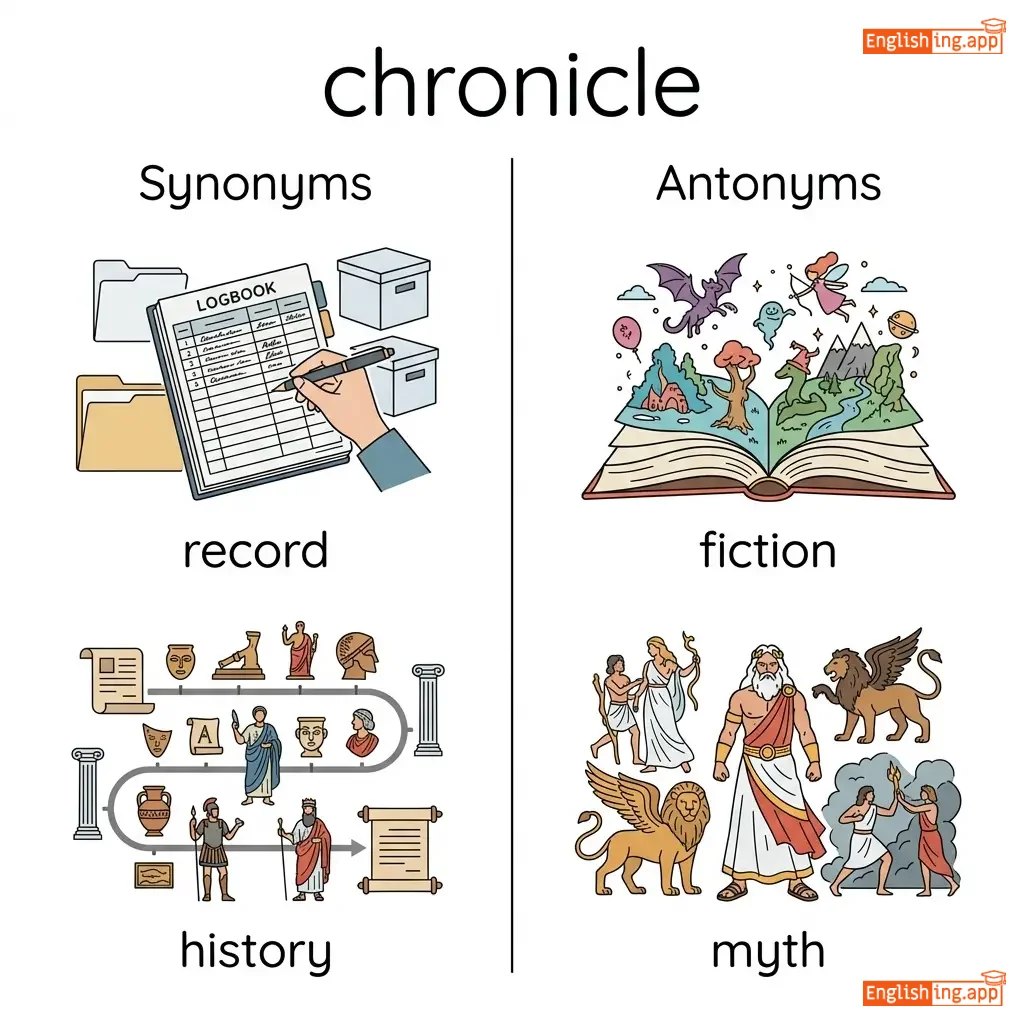
record, account, history, annals
••••••
|
fiction, myth, legend
••••••
|
historical chronicle, ancient chronicle, chronicle events
••••••
|
Chronicle: 'Chrono' for time, 'kal' means era in Hindi, a record of time.
••••••
|
|
#193
🎵
|
/ˈkɔːr.əs/
noun
(कोरस)
••••••
|
- •••••• |
गान मंडली; एक गाने का हिस्सा जो प्रत्येक गीत के बाद दोहराया जाता है
gaan mandali; ek gaane ka hissa jo pratyek geet ke baad dohraya jata hai
••••••
|
a large organized group of singers; a part of a song that is repeated after each verse
••••••
|
The school chorus performed beautifully at the annual concert.
द स्कूल कोरस परफॉर्मड ब्यूटीफुली ऐट द एन्नुअल कॉन्सर्ट।
••••••
|
स्कूल के कोरस ने वार्षिक संगीत कार्यक्रम में सुंदरता से प्रदर्शन किया।
school ke koras ne varshik sangeet karyakram mein sundarta se pradarshan kiya.
••••••
|
choir, ensemble, refrain, group
••••••
|
solo, individual, single voice
••••••
|
school chorus, chorus line, join the chorus
••••••
|
कोरस में सारे गायक मिलकर गाते हैं, जैसे स्कूल में सब बच्चे मिलकर गाते हैं।
••••••
|
|
#194
✅
|
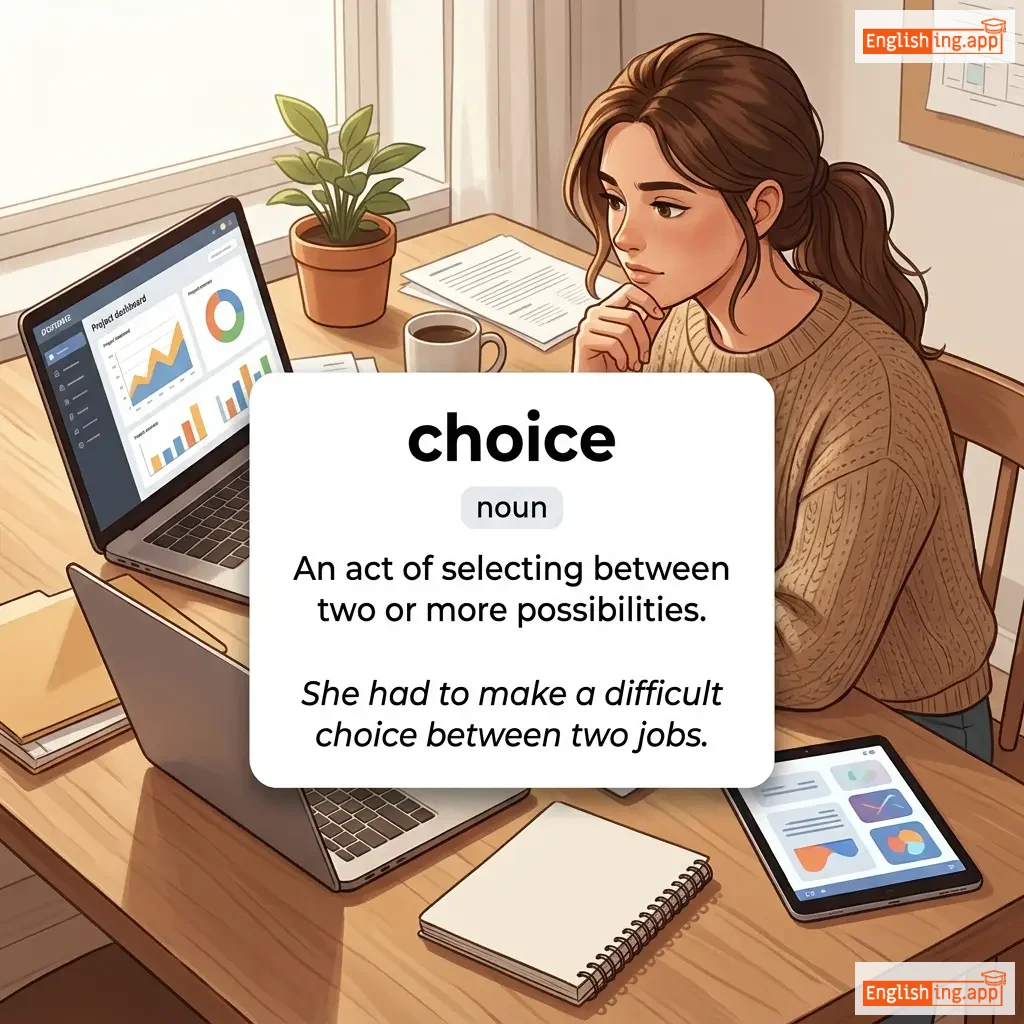
/tʃɔɪs/
noun
(चॉयस)
••••••
|
|
चुनाव
chunav
••••••
|
an act of selecting or making a decision when faced with two or more possibilities
••••••
|
She had to make a difficult choice between her career and family. |
उसे अपने करियर और परिवार के बीच एक कठिन चुनाव करना पड़ा।
use apne kariyer aur parivaar ke beech ek kathin chunav karna pada.
••••••
|
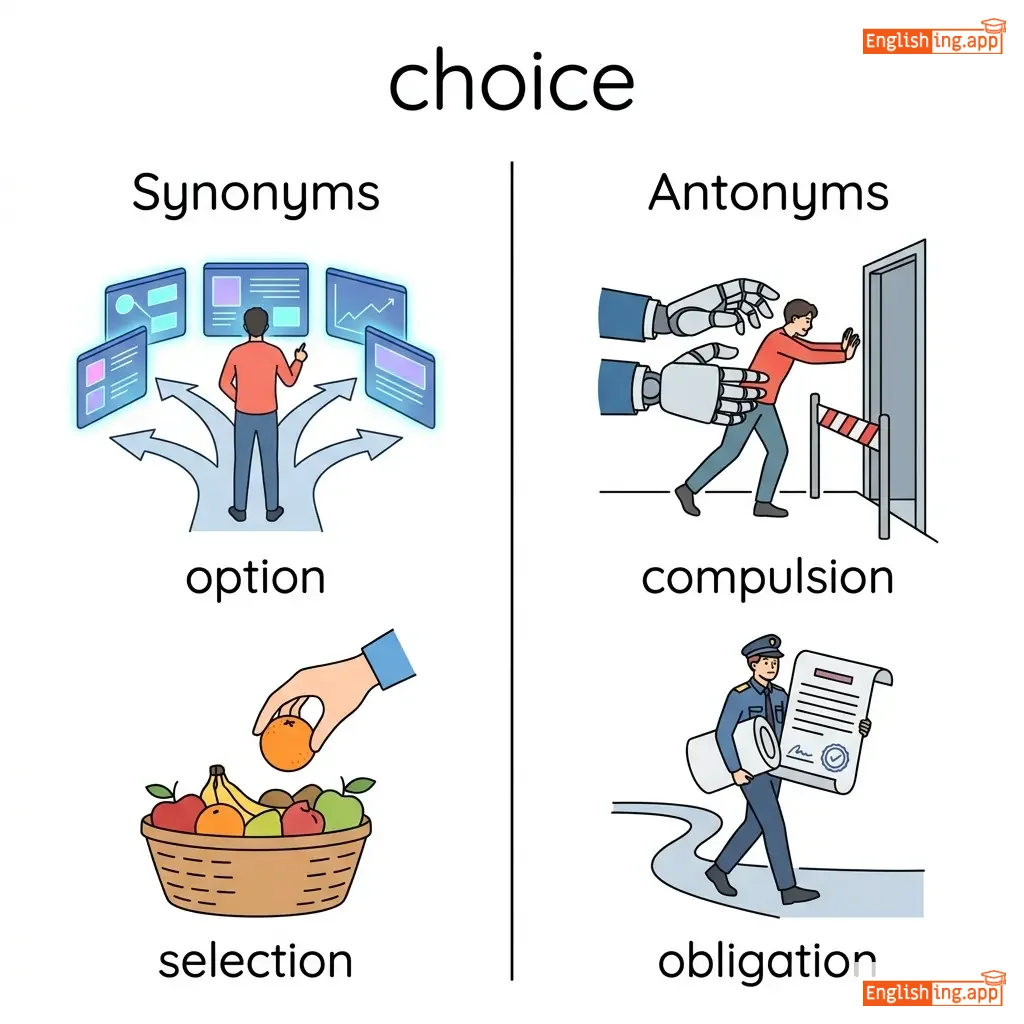
option, selection, preference, alternative
••••••
|
compulsion, obligation, necessity
••••••
|
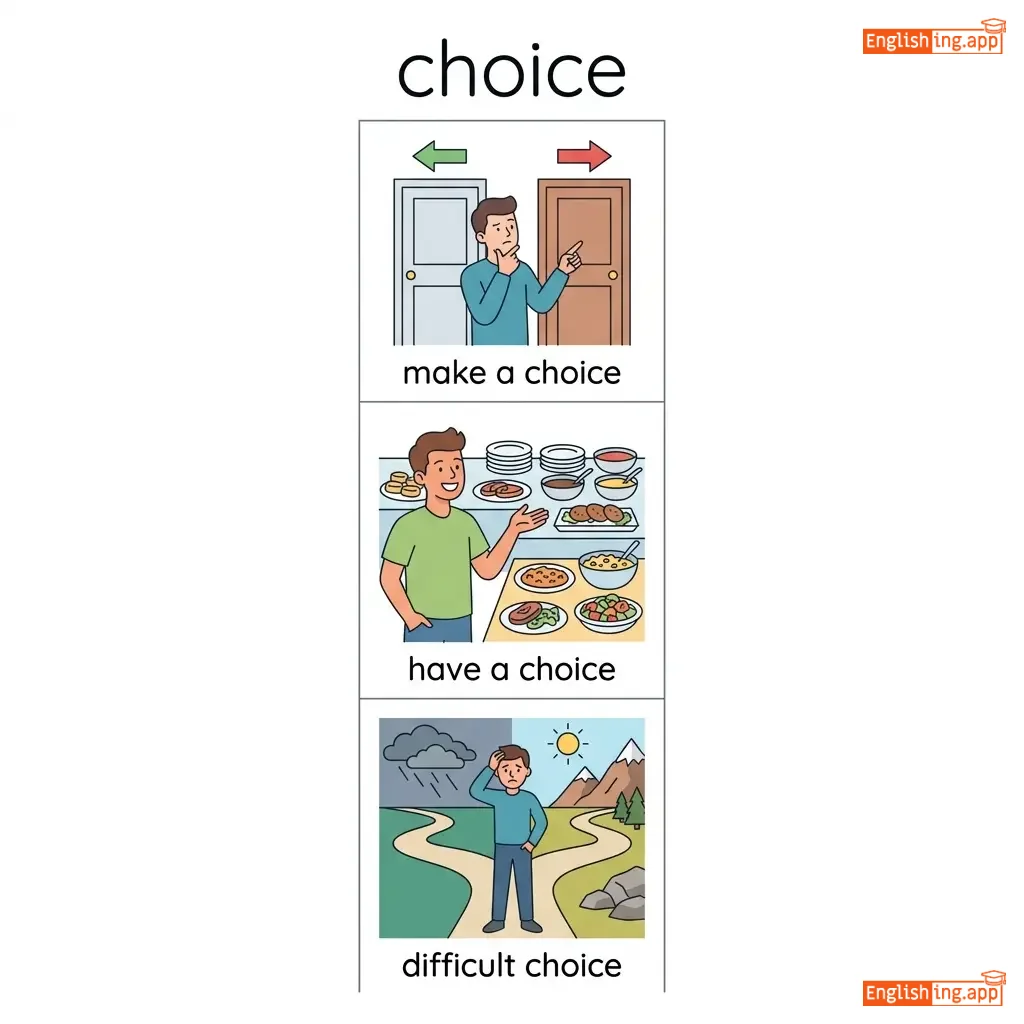
make a choice, difficult choice, good choice
••••••
|
चुनाव करने का समय आता है जब दो रास्ते हो
••••••
|
|
#195
📝
|
/tʃɪt/
noun
(चिट)
••••••
|
- •••••• |
चिट
chit
••••••
|
a short note, typically a brief informal letter; a voucher for a sum owed
••••••
|
She left a chit on the table asking him to call her back.
वह टेबल पर एक चिट छोड़ गई, जिसमें उसने उसे फोन करने के लिए कहा था।
••••••
|
वह टेबल पर एक चिट छोड़ गई, जिसमें उसने उसे फोन करने के लिए कहा था।
vah table par ek chit chhod gayi, jismein usne use phone karne ke liye kaha tha.
••••••
|
note, slip, voucher, receipt
••••••
|
formal letter, long message
••••••
|
leave a chit, pay chit, credit chit
••••••
|
चिट एक छोटी सी नोट है जो आपको तुरंत काम करने के लिए याद दिलाती है।
••••••
|
|
#196
🙂
|
/tʃɪn/
noun
(चिन)
••••••
|
- •••••• |
ठोड़ी
thodi
••••••
|
the protruding part of the face below the mouth, formed by the apex of the lower jaw
••••••
|
He stroked his beard thoughtfully, resting his hand on his chin.
वह सोचते हुए अपनी दाढ़ी को सहला रहा था, और हाथ अपने चिन पर रखा था।
••••••
|
वह सोचते हुए अपनी दाढ़ी को सहला रहा था, और हाथ अपने ठोड़ी पर रखा था।
vah sochte hue apni dari ko sehla raha tha, aur hath apne thodi par rakha tha
••••••
|
jaw, mandible
••••••
|
forehead, top of head
••••••
|
double chin, pointed chin, weak chin
••••••
|
थोड़ी (chin) पर हाथ रखो, गहरी सोच में डूबो
••••••
|
|
#197
🌶️
|
/ˈtʃɪl.i/
noun
(चिली)
••••••
|
- •••••• |
ठंडा; तीखा मिर्च;
thanda, teekha mirch
••••••
|
noticeably cold; a hot-tasting pod of a variety of capsicum, used as a spice
••••••
|
The chef added red chilli to make the curry spicier. |
सेफ ने करी को और तीखा बनाने के लिए लाल मिर्च डाली।
chef ne curry ko aur teekha banane ke liye laal mirch daali.
••••••
|
cold, pepper, capsicum, spice
••••••
|
warm, mild, bland
••••••
|
chilly weather, red chilli, green chilli
••••••
|
Chilly in English sounds like Chilli in Hindi, both are about a spicy or cold thing!
••••••
|
|
#198
❄️
|
/tʃɪl/
noun
(चिल)
••••••
|
- •••••• |
ठंड; डर या चिंता की भावना; आराम करना
thand; dar ya chinta ki bhavna; aaram karna
••••••
|
an unpleasant feeling of coldness; a feeling of fear or anxiety; to relax
••••••
|
There was a chill in the air as autumn approached. |
जैसे ही शरद ऋतु आई, हवा में ठंडक महसूस हो रही थी।
Jaise hi sharad ritu aayi, hawa mein thandak mehsoos ho rahi thi.
••••••
|
coldness, coolness, shiver, relaxation
••••••
|
warmth, heat, tension
••••••
|
morning chill, chill out, catch a chill
••••••
|
चिल - जब ठंड लगती है, तो चिल करने की जरूरत होती है!
••••••
|
|
#199
👕
|
/tʃest/
noun
(चेस्ट)
••••••
|
- •••••• |
छाती; संदूक
chaatee, sandook
••••••
|
the front surface of a person's or animal's body between the neck and abdomen; a large strong box
••••••
|
The doctor listened to his chest with a stethoscope. |
डॉक्टर ने उसके छाती को स्टेथोस्कोप से सुना।
doktar ne uske chaatee ko stethoscope se suna.
••••••
|
torso, breast, trunk, box
••••••
|
back, spine, rear
••••••
|
chest pain, treasure chest, chest of drawers
••••••
|
Chaatee ka dard dikhata hai, jese ek box jo patla ho.
••••••
|
|
#200
🧀
|
/tʃiːz/
noun
(चीज़)
••••••
|
- •••••• |
पनीर
paneer
••••••
|
a food made from the pressed curds of milk; used for photography to make people smile
••••••
|
She added grated cheese to the pasta for extra flavor. |
उसने पास्ता में अतिरिक्त स्वाद के लिए कद्दूकस किया हुआ पनीर डाला।
usne pasta mein atirikt swad ke liye kaddukas kiya hua paneer dala.
••••••
|
dairy product, curd, fromage
••••••
|
liquid milk, fresh milk
••••••
|
grated cheese, melted cheese, cheese sandwich
••••••
|
Paneer (पनीर) and Cheese both are dairy products
••••••
|
Vocabulary Quiz
Test your vocabulary by matching words with their translations or meanings.
Login to take the quiz
Comments (0)
Share your thoughts and join the discussion.
Join the discussion by logging in
Login to CommentNo comments yet
Be the first to share your thoughts!