





Swipe left or right, or use the buttons. Tap image to zoom.
例句翻译
单词
Lesson 10Lesson 10 - 遮罩切换
|
表情符号
|
单词 | Images | 翻译 | 含义 | 例句 | 例句翻译 | 同义词 | 反义词 | 搭配词 | 助记符 |
|---|---|---|---|---|---|---|---|---|---|---|
|
#181
😄
|
/ˈtʃʌk.əl/
noun
(ʧʌkl)
••••••
|
- •••••• |
轻微的笑声
qingwei de xiaosheng
••••••
|
a quiet or suppressed laugh; to laugh quietly or with amusement
••••••
|
He gave a soft chuckle when he heard the funny joke.
他听到那个有趣的笑话时发出轻轻的笑声。
••••••
|
他听到那个有趣的笑话时发出轻轻的笑声。
Tā tīngdào nàgè yǒuqù de xiàohuà shí fāchū qīngqīng de xiàoshēng.
••••••
|
giggle, snicker, laugh softly, titter
••••••
|
cry, sob, wail
••••••
|
soft chuckle, quiet chuckle, give a chuckle
••••••
|
轻微的笑声像一个 'chuckle' 不大声
••••••
|
|
#182
📞
|
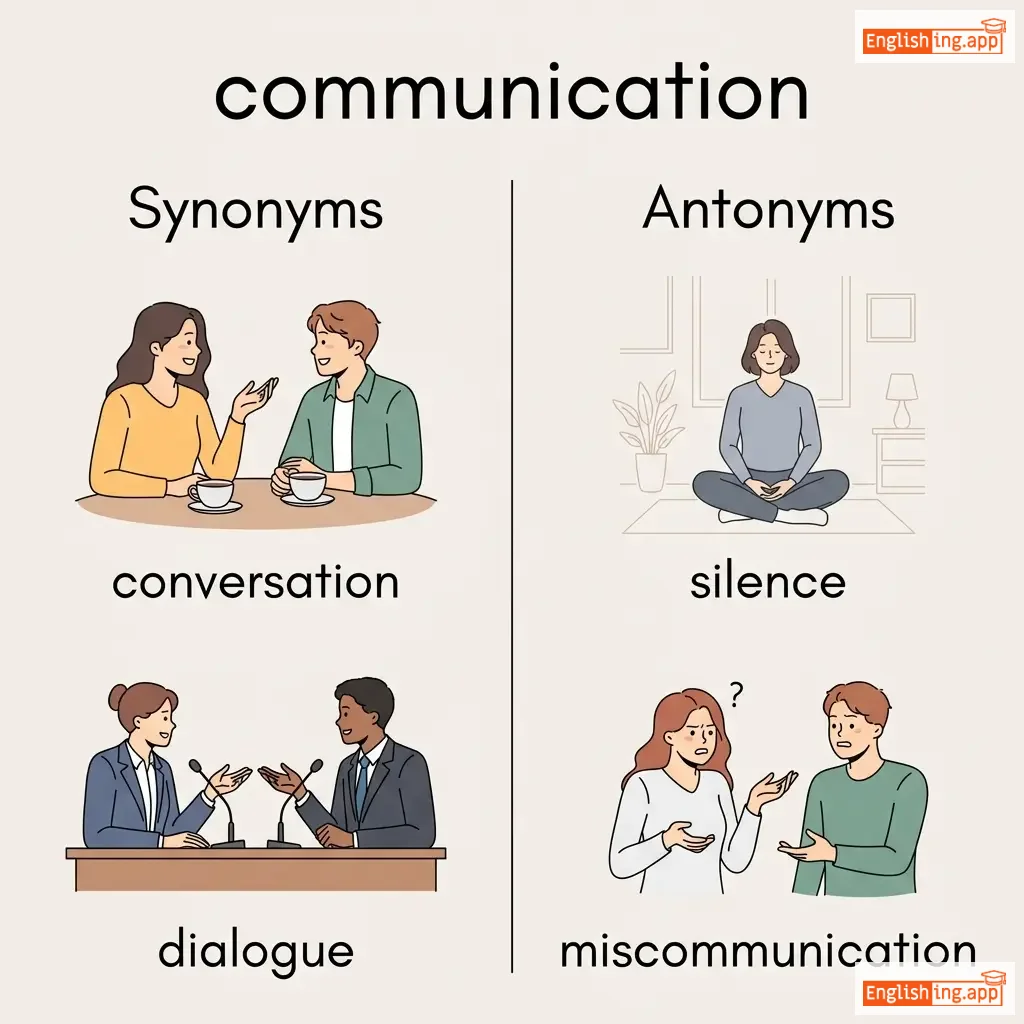
/kəˌmjuː.nɪˈkeɪ.ʃən/
noun
(沟通)
••••••
|
|
沟通; 信息交换; 连接手段
gōutōng, xìnxī jiāohuàn, liánjiē shǒuduàn
••••••
|
the imparting or exchanging of information or ideas; means of connection between people or places
••••••
|
Good communication is essential for a successful business relationship.
良好的沟通对成功的商业关系至关重要。
••••••
|
良好的沟通对成功的商业关系至关重要。
Liánghǎo de gōutōng duì chénggōng de shāngyè guānxi zhìguān zhòngyào.
••••••
|
interaction, correspondence, dialogue, contact
••••••
|
silence, isolation, disconnection
••••••
|
effective communication, mass communication, communication skills
••••••
|
中文中,‘沟通’意指通过交换信息建立联系。
••••••
|
|
#183
🛌
|
/ˈkʌm.fərt/
noun
(kāngfú tè)
••••••
|
- •••••• |
舒适; 安逸
shūshì, ānyì
••••••
|
a state of physical ease and freedom from pain or constraint; relief from distress or anxiety
••••••
|
The soft sofa provided great comfort after a long day at work.
柔软的沙发在长时间工作后提供了极大的舒适感。
••••••
|
柔软的沙发在长时间工作后提供了极大的舒适感。
Róuruǎn de shāfā zài cháng shíjiān gōngzuò hòu tígōng le jí dà de shūshì gǎn.
••••••
|
ease, relief, solace, consolation
••••••
|
discomfort, pain, distress, agony
••••••
|
provide comfort, great comfort, comfort zone
••••••
|
Comfort in Chinese sounds very similar to '舒适' (Shūshì)
••••••
|
|
#184
🚗💥
|
/kəˈlɪʒ.ən/
noun
(碰撞)
••••••
|
- •••••• |
碰撞; 冲突
pengzhuang, chongtu
••••••
|
an instance of one moving object hitting violently against another; a conflict of opposing ideas or interests
••••••
|
The collision between two cars caused a major traffic jam.
两辆车之间的碰撞造成了严重的交通堵塞。
••••••
|
两辆车之间的碰撞造成了严重的交通堵塞。
Liang liang che zhijian de pengzhuang zaochengle yanzhong de jiaotong dusa.
••••••
|
crash, impact, clash, smash
••••••
|
separation, avoidance, harmony
••••••
|
car collision, head-on collision, avoid collision
••••••
|
当两辆车碰撞时,我们说的是碰撞。
••••••
|
|
#185
📚
|
/kəˈlek.ʃən/
noun
(kòulèikshùn)
••••••
|
- •••••• |
收藏;合集;档案
shōucáng; héjí; dàng'àn
••••••
|
a group of objects gathered together; the action or process of collecting
••••••
|
She has an impressive collection of vintage books in her library.
她在她的图书馆里有一部令人印象深刻的古籍收藏。
••••••
|
她在她的图书馆里有一部令人印象深刻的古籍收藏。
Tā zài tā de túshūguǎn lǐ yǒu yī bù lìng rén yìnxiàng shēn kè de gǔjí shōucáng.
••••••
|
accumulation, assembly, compilation, anthology
••••••
|
distribution, dispersal, scattering
••••••
|
art collection, book collection, stamp collection
••••••
|
记住'收藏'意味着将所有东西放在一起,比如在图书馆里整理书籍。
••••••
|
|
#186
🎲
|
/koʊˈɪn.sɪ.dəns/
noun
(kɔɪnˈsɪdəns)
••••••
|
- •••••• |
巧合
qiaohe
••••••
|
a remarkable occurrence of events or circumstances without apparent causal connection; chance happening
••••••
|
It was a strange coincidence that they both wore the same dress to the party.
这是一个奇怪的巧合,他们俩都穿着相同的衣服参加派对。
••••••
|
这是一个奇怪的巧合,他们俩都穿着相同的衣服参加派对。
Zhe shi yige qiguai de qiaohe, tamen lia dou chuanzhe xiangtong de yifu canjia paidui.
••••••
|
chance, accident, fluke, serendipity
••••••
|
plan, intention, design, purpose
••••••
|
strange coincidence, mere coincidence, what a coincidence
••••••
|
巧合 (qiaohe) = 意外的重合
••••••
|
|
#187
🤝
|
/ˌkovuːɪɡˈzɪs.təns/
noun
(kòu-èxī-sī-tènsī)
••••••
|
- •••••• |
共存
gongcun
••••••
|
the state of existing together at the same time or in the same place; peaceful cohabitation
••••••
|
The peaceful co-existence of different cultures makes this city unique. |
不同文化的和平共存使这座城市独一无二。
Bu tong wen hua de he ping gong cun shi zhe zuo cheng shi du yi wu er.
••••••
|
cohabitation, harmony, peaceful living, tolerance
••••••
|
conflict, war, hostility, separation
••••••
|
peaceful co-existence, cultural co-existence, promote co-existence
••••••
|
共存意味着和平共处
••••••
|
|
#188
🤡
|
/klaʊn/
noun
(小丑)
••••••
|
- •••••• |
小丑; 一个搞笑的表演者,特别是在马戏团中,穿着传统的服装和夸张的化妆
xiǎo chǒu; yí gè gǎo xiào de biǎo yǎn zhě, tè bié shì zài mǎ xì tuán zhōng, chuān zhe chuántǒng de fú zhuāng hé kuā zhāng de huà zhuāng
••••••
|
a comic entertainer, especially one in a circus, wearing a traditional costume and exaggerated makeup
••••••
|
The children laughed loudly at the funny clown's silly antics.
孩子们大声笑着,看着那个有趣的小丑的傻乎乎的动作。
••••••
|
孩子们大声笑着,看着那个有趣的小丑的傻乎乎的动作。
Háizimen dàshēng xiàozhe, kànzhe nàgè yǒuqù de xiǎo chǒu de shǎ hū hū de dòngzuò.
••••••
|
jester, comedian, entertainer, buffoon
••••••
|
serious person, scholar, intellectual
••••••
|
circus clown, funny clown, class clown
••••••
|
小丑穿上他的服装,逗得孩子们哈哈大笑!
••••••
|
|
#189
🏆
|
/ˈklaɪ.mæks/
noun
(高潮)
••••••
|
- •••••• |
高潮
gaochao
••••••
|
the most intense, exciting, or important point of something; the highest or most intense point in a process
••••••
|
The movie reached its climax during the final battle scene. |
电影在最后的战斗场面中达到了高潮。
dianying zai zuihou de zhandou changmian zhong daliandao gaochao.
••••••
|
peak, pinnacle, culmination, apex
••••••
|
beginning, start, anticlimax
••••••
|
reach climax, dramatic climax, story climax
••••••
|
中文‘高潮’代表最高潮的时刻,就像‘climax’一样。
••••••
|
|
#190
🌍
|
/ˈsɜːr.kəmˌsˌtæn.sɪz/
noun
(sirkəmstænsiz)
••••••
|
- •••••• |
情况
qíngkuàng
••••••
|
the conditions that affect a situation, action, or event; facts or conditions connected with or relevant to an event
••••••
|
Under normal circumstances, she would have arrived by now. |
在正常情况下,她应该已经到了。
zài zhèngcháng qíngkuàng xià, tā yīnggāi yǐjīng dào le.
••••••
|
conditions, situation, context, environment
••••••
|
isolation, simplicity
••••••
|
unusual circumstances, difficult circumstances, under circumstances
••••••
|
Circumstances = 影响你的所有事情的条件。
••••••
|
|
#191
😊
|
/tʃiːk/
noun
(chīk)
••••••
|
- •••••• |
脸颊; 无礼;
liǎn jiá, wú lǐ
••••••
|
either side of the face below the eye; impudent or disrespectful behavior
••••••
|
The baby's rosy cheeks showed she was healthy and happy.
宝宝的红润脸颊显示她健康快乐。
••••••
|
宝宝的红润脸颊显示她健康快乐。
Bǎobǎo de hóngrùn liǎn jiá xiǎnshì tā jiànkāng kuàilè.
••••••
|
face, jowl, impudence, audacity
••••••
|
respect, politeness, modesty
••••••
|
rosy cheeks, chubby cheeks, turn the other cheek
••••••
|
Imagine the rosy 'liǎn jiá' cheeks of a healthy baby.
••••••
|
|
#192
📅
|
/ˈkrɑn.ɪ.kəl/
noun
(克罗尼克尔)
••••••
|
|
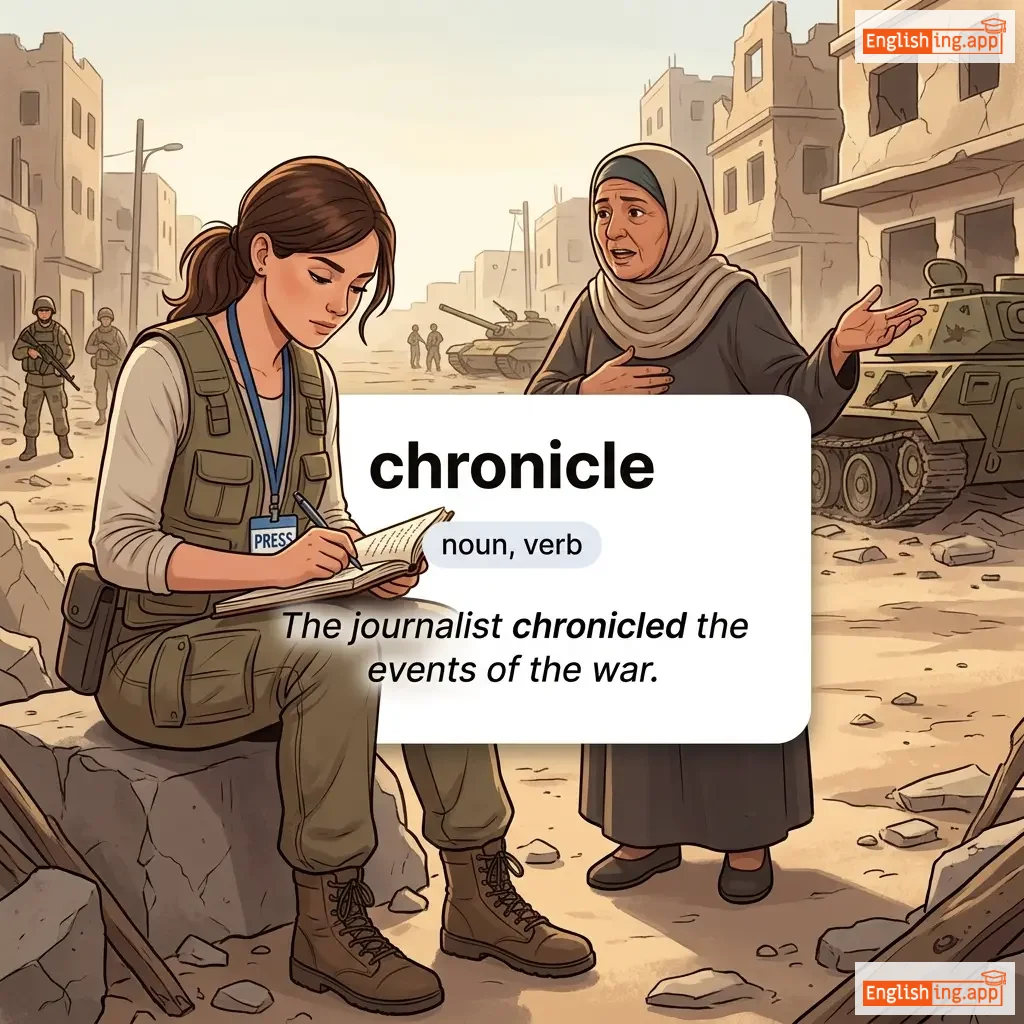
编年史; 重要事件的书面记载
bian nián shǐ, zhòng yào shì jiàn de shū miàn jì zǎi
••••••
|
a factual written account of important or historical events in the order they happened
••••••
|
The historian wrote a detailed chronicle of the medieval period. |
历史学家写了一本关于中世纪时期的详细编年史。
Lì shǐ xué jiā xiě le yī běn guān yú zhōng shì jì shí qī de xiáng xì biān nián shǐ.
••••••
|
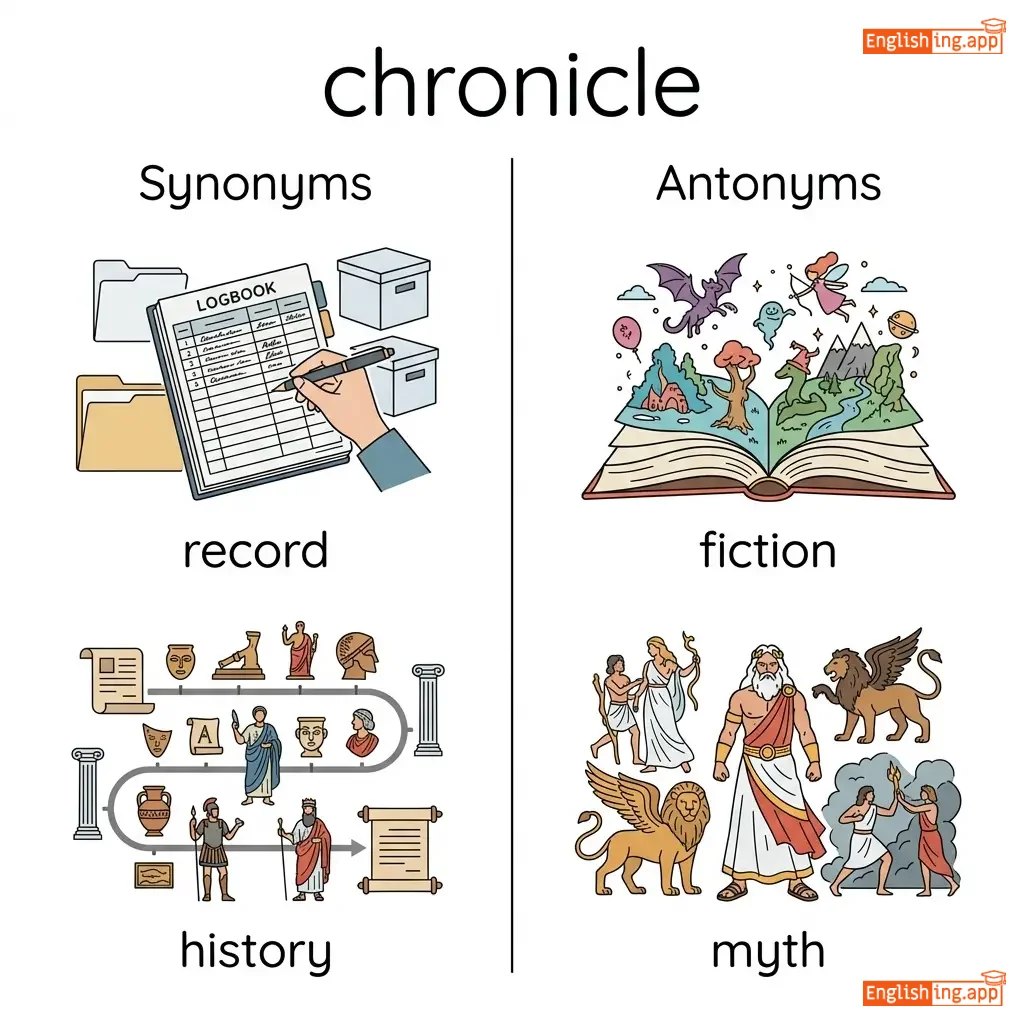
record, account, history, annals
••••••
|
fiction, myth, legend
••••••
|
historical chronicle, ancient chronicle, chronicle events
••••••
|
Chronicle: 'Chron' sounds like time, '史' (shǐ) means history.
••••••
|
|
#193
🎵
|
/ˈkɔːr.əs/
noun
(kuo luo si)
••••••
|
- •••••• |
合唱团;一首歌曲中在每节之后重复的部分
he chang tuan; yi shou ge qu zhong zai mei jie zhi hou chong fu de bu fen
••••••
|
a large organized group of singers; a part of a song that is repeated after each verse
••••••
|
The school chorus performed beautifully at the annual concert.
学校合唱团在年度音乐会上表现得非常好。
••••••
|
学校合唱团在年度音乐会上表现得非常好。
Xuexiao hechangtuan zai niandu yinyue hui shang biaoxian de feichang hao.
••••••
|
choir, ensemble, refrain, group
••••••
|
solo, individual, single voice
••••••
|
school chorus, chorus line, join the chorus
••••••
|
合唱团是一群人一起歌唱,像学校里孩子们一起唱歌一样。
••••••
|
|
#194
✅
|
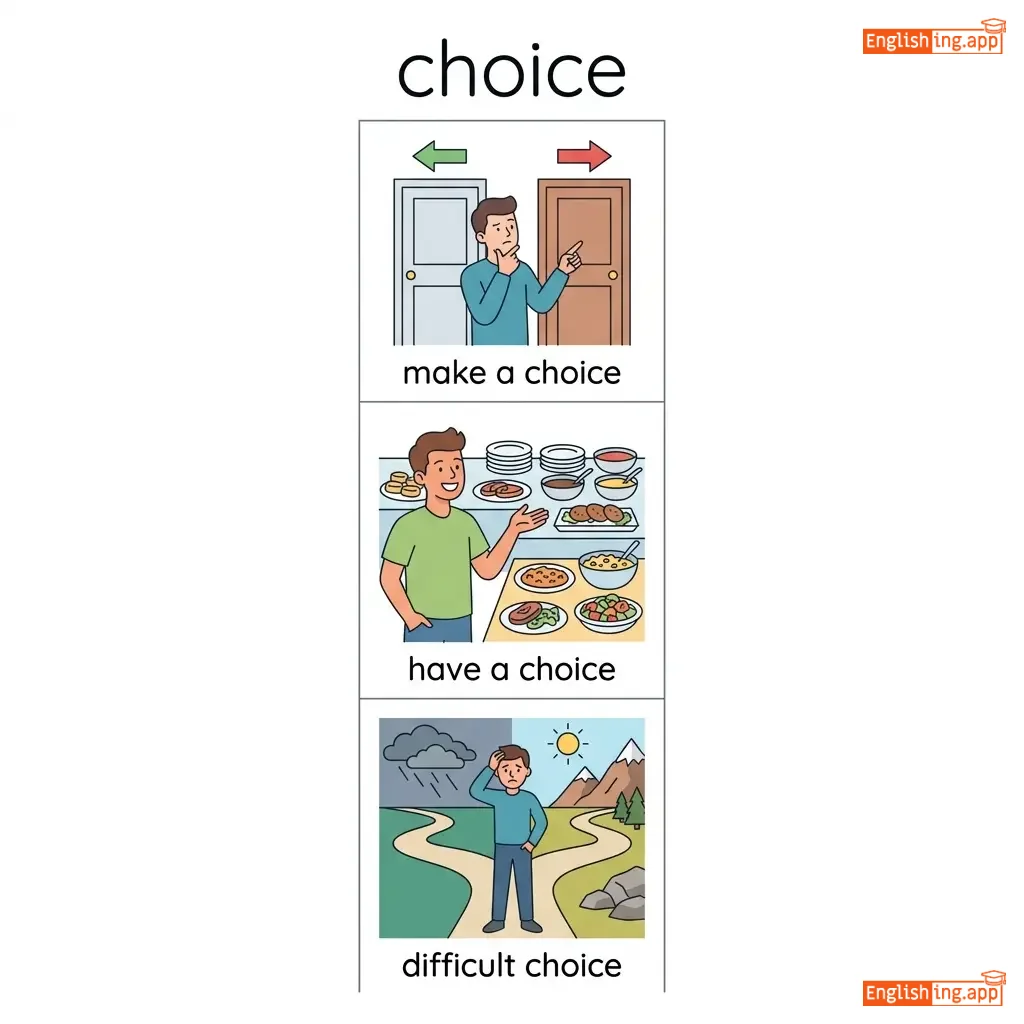
/tʃɔɪs/
noun
(chōisī)
••••••
|
|
选择
xuanze
••••••
|
an act of selecting or making a decision when faced with two or more possibilities
••••••
|
She had to make a difficult choice between her career and family. |
她不得不在事业和家庭之间做出艰难的选择。
Tā bùdé bù zài shìyè hé jiātíng zhījiān zuòchū jiānnán de xuǎnzé.
••••••
|
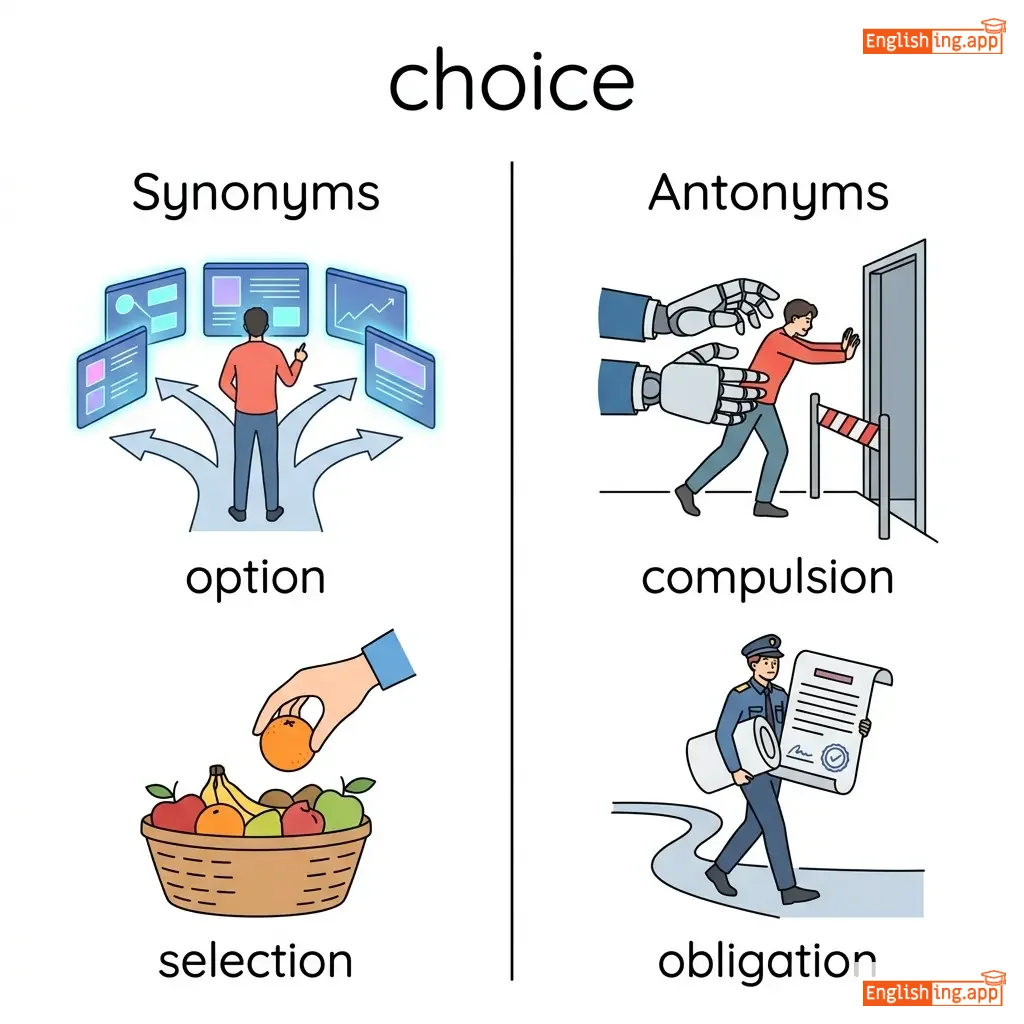
option, selection, preference, alternative
••••••
|
compulsion, obligation, necessity
••••••
|
make a choice, difficult choice, good choice
••••••
|
选择是当你站在十字路口时的决定
••••••
|
|
#195
📝
|
/tʃɪt/
noun
(chit)
••••••
|
- •••••• |
便条, 紙條
biàntiáo, zhǐtiáo
••••••
|
a short note, typically a brief informal letter; a voucher for a sum owed
••••••
|
She left a chit on the table asking him to call her back.
她在桌子上留了一张纸条,要求他回电。
••••••
|
她在桌子上留了一张纸条,要求他回电。
Tā zài zhuōzi shàng liúle yī zhāng zhǐtiáo, yāoqiú tā huí diàn.
••••••
|
note, slip, voucher, receipt
••••••
|
formal letter, long message
••••••
|
leave a chit, pay chit, credit chit
••••••
|
Chit就像是留给别人快速提醒的小纸条。
••••••
|
|
#196
🙂
|
/tʃɪn/
noun
(chin)
••••••
|
- •••••• |
下巴
xiàba
••••••
|
the protruding part of the face below the mouth, formed by the apex of the lower jaw
••••••
|
He stroked his beard thoughtfully, resting his hand on his chin.
他若有所思地抚摸着胡须,手放在下巴上。
••••••
|
他若有所思地抚摸着胡须,手放在下巴上。
Tā ruò yǒu suǒ sī de fǔmō zhe húxū, shǒu fàng zài xiàba shàng.
••••••
|
jaw, mandible
••••••
|
forehead, top of head
••••••
|
double chin, pointed chin, weak chin
••••••
|
用手触摸下巴 (chin),让思绪飞扬。
••••••
|
|
#197
🌶️
|
/ˈtʃɪl.i/
noun
(辣椒)
••••••
|
- •••••• |
冷; 辣椒;
lěng, làjiāo
••••••
|
noticeably cold; a hot-tasting pod of a variety of capsicum, used as a spice
••••••
|
The chef added red chilli to make the curry spicier. |
厨师添加了红辣椒以使咖喱更辣。
Chúshī tiānjiāle hóng làjiāo yǐ shǐ gālí gèng là.
••••••
|
cold, pepper, capsicum, spice
••••••
|
warm, mild, bland
••••••
|
chilly weather, red chilli, green chilli
••••••
|
Chili in Chinese, bringing both cold and spice just like the English version!
••••••
|
|
#198
❄️
|
/tʃɪl/
noun
(chíl)
••••••
|
- •••••• |
寒冷; 恐惧或焦虑的感觉; 放松
hanleng; kongju huo jiaolv de ganjue; fangsong
••••••
|
an unpleasant feeling of coldness; a feeling of fear or anxiety; to relax
••••••
|
There was a chill in the air as autumn approached. |
当秋天临近时,空气中感到一阵寒冷。
Dang qiutian linjin shi, kongqi zhong gan dao yizhen hanleng.
••••••
|
coldness, coolness, shiver, relaxation
••••••
|
warmth, heat, tension
••••••
|
morning chill, chill out, catch a chill
••••••
|
Chill - 当感到寒冷时,放松一下自己!
••••••
|
|
#199
👕
|
/tʃest/
noun
(chest)
••••••
|
- •••••• |
胸部; 箱子
xiongbu, xiangzi
••••••
|
the front surface of a person's or animal's body between the neck and abdomen; a large strong box
••••••
|
The doctor listened to his chest with a stethoscope. |
医生用听诊器听他的胸部。
Yisheng yong tingzhenqi ting tade xiongbu.
••••••
|
torso, breast, trunk, box
••••••
|
back, spine, rear
••••••
|
chest pain, treasure chest, chest of drawers
••••••
|
胸部像箱子,保护着我们的重要部分。
••••••
|
|
#200
🧀
|
/tʃiːz/
noun
(qiːz)
••••••
|
- •••••• |
奶酪
nǎilào
••••••
|
a food made from the pressed curds of milk; used for photography to make people smile
••••••
|
She added grated cheese to the pasta for extra flavor. |
她把磨碎的奶酪加到意大利面中,增加了风味。
tā bǎ mó suì de nǎilào jiā dào yìdàlìmiàn zhōng, zēngjiāle fēngwèi.
••••••
|
dairy product, curd, fromage
••••••
|
liquid milk, fresh milk
••••••
|
grated cheese, melted cheese, cheese sandwich
••••••
|
奶酪 (nǎilào) is the word for cheese in Chinese.
••••••
|
Vocabulary Quiz
Test your vocabulary by matching words with their translations or meanings.
Login to take the quiz
Comments (0)
Share your thoughts and join the discussion.
Join the discussion by logging in
Login to CommentNo comments yet
Be the first to share your thoughts!