


Swipe left or right, or use the buttons. Tap image to zoom.
例句翻译
单词
Lesson 74Lesson 74 - 遮罩切换
|
表情符号
|
单词 | Images | 翻译 | 含义 | 例句 | 例句翻译 | 同义词 | 反义词 | 搭配词 | 助记符 |
|---|---|---|---|---|---|---|---|---|---|---|
|
#1461
🏖️
|
/veɪˈkeɪ.ʃən/
noun
(weikeishen)
••••••
|
- •••••• |
假期
jiaqi
••••••
|
a period of time when someone does not go to work or school but is free to do what they want, such as travel or relax
••••••
|
I'm planning a vacation to the beach next summer.
我计划明年夏天去海滩度假。
••••••
|
我计划明年夏天去海滩度假。
Wo jihua mingnian xiatian qu haitan dujia.
••••••
|
holiday, break, leave, trip
••••••
|
work, duty, obligation
••••••
|
summer vacation, family vacation, vacation time, go on vacation
••••••
|
假期是放松和享受的时刻!
••••••
|
|
#1462
🔄
|
/ˌveəriˈeɪʃən/
noun
(变化)
••••••
|
- •••••• |
变化; 改变; 状态或数量的差异
bianhua; gaibian; zhuangtai huo shuliang de chayi
••••••
|
a change or difference in condition, amount, or level; a different or distinct form or version of something
••••••
|
There was a significant variation in temperature throughout the day.
白天温度变化显著。
••••••
|
白天温度变化显著。
Baitian wendu bianhua xian zhu.
••••••
|
change, difference, modification, alteration
••••••
|
uniformity, consistency, sameness
••••••
|
seasonal variation, price variation, genetic variation
••••••
|
变化 = 改变, 就像季节变化一样.
••••••
|
|
#1463
🤔
|
/ˌvæs.ɪˈleɪ.ʃən/
noun
(维萨雷申)
••••••
|
- •••••• |
摇摆不定
yaobingbuding
••••••
|
the inability to decide between different opinions or actions; indecision
••••••
|
His constant vacillation between career choices frustrated his parents.
他在职业选择之间的持续犹豫让他的父母感到沮丧。
••••••
|
他在职业选择之间的持续犹豫让他的父母感到沮丧。
Ta zai zhiye xuanze zhi jian de chixu youyu rang tade fumu gandao jushang.
••••••
|
indecision, hesitation, uncertainty, wavering
••••••
|
decisiveness, determination, resolution
••••••
|
constant vacillation, political vacillation, mental vacillation
••••••
|
Chinese '摇摆不定' (yaobingbuding) vividly describes indecision as unsteady and wavering.
••••••
|
|
#1464
🌈
|
/vəˈraɪəti/
noun
(wàiràitì)
••••••
|
- •••••• |
多样性; 种类
duōyàngxì; zhǒnglèi
••••••
|
the quality of being different or diverse; a number of things of the same general class that are distinct in character or quality
••••••
|
The restaurant offers a wide variety of international dishes.
这家餐厅提供种类繁多的国际菜肴。
••••••
|
这家餐厅提供种类繁多的国际菜肴。
Zhè jiā cāntīng tígōng zhǒnglèi fánduō de guójì càiyáo.
••••••
|
diversity, range, assortment, selection
••••••
|
monotony, uniformity, sameness
••••••
|
wide variety, variety show, variety pack
••••••
|
多样性就像餐馆里不同种类的菜肴,满足各种口味。
••••••
|
|
#1465
💉
|
/ˌvæk.sɪˈneɪ.ʃən/
noun
(疫苗接种)
••••••
|
- •••••• |
疫苗接种
yimiao jiezong
••••••
|
the process of giving a vaccine to a person or animal to protect them against a disease
••••••
|
Children receive vaccination against measles at an early age.
孩子们在年轻时接种麻疹疫苗。
••••••
|
孩子们在年轻时接种麻疹疫苗。
Haizimen zai niansheng shi jiezong mazheng yimiao.
••••••
|
immunization, inoculation, injection
••••••
|
infection, contamination
••••••
|
childhood vaccination, mass vaccination, vaccination program, vaccination schedule
••••••
|
在中国,疫苗接种是保护人们免受许多疾病的关键。
••••••
|
|
#1466
🥬
|
/ˌvedʒəˈteəriən/
noun
(wéi jí tǎ lián)
••••••
|
- •••••• |
素食者
sù shí zhě
••••••
|
a person who does not eat meat or fish; relating to vegetarians or vegetarianism
••••••
|
She became a vegetarian for health and environmental reasons. |
她因健康和环保原因成为了素食者。
Tā yīn jiànkāng hé huánbǎo yuányīn chéngwéi le sù shí zhě.
••••••
|
herbivore, plant-eater, vegan
••••••
|
carnivore, meat-eater, omnivore
••••••
|
strict vegetarian, vegetarian diet, vegetarian restaurant
••••••
|
素食者不吃肉,只吃蔬菜和水果!
••••••
|
|
#1467
💉
|
/ˈvæk.siːn/
noun
(wèikèxīn)
••••••
|
- •••••• |
疫苗
yimiao
••••••
|
a substance that is put into the body to prevent a disease
••••••
|
The COVID-19 vaccine has helped reduce severe illness. |
COVID-19疫苗有助于减少重症疾病。
COVID-19 yimiao youzhu yu jianshao zhongzheng jibing.
••••••
|
immunization, shot, inoculation
••••••
|
virus, infection, disease
••••••
|
flu vaccine, COVID vaccine, vaccine development, vaccine dose
••••••
|
疫苗可以帮助你预防疾病。
••••••
|
|
#1468
🔥
|
/ˈviːəməns/
noun
(威赫门斯)
••••••
|
- •••••• |
强烈; 感情或表达的强度
qianglie; ganqing huo biaoda de qiangdu
••••••
|
great forcefulness or intensity of feeling or expression; passionate conviction
••••••
|
He argued with such vehemence that everyone was surprised.
他辩论时的强烈情感让每个人都感到吃惊。
••••••
|
他辩论时的强烈情感让每个人都感到吃惊。
Ta bianlun shi de qianglie ganqing rang meige ren dou gandao chijing.
••••••
|
intensity, passion, fervor, ardor
••••••
|
mildness, gentleness, calmness
••••••
|
argue with vehemence, speak with vehemence
••••••
|
想象一下你用巨大的力量辩论,让每个人都为你的激情所震撼。
••••••
|
|
#1469
🚶♂️
|
/ˈvæɡ.ə.bɒnd/
noun
(流浪汉)
••••••
|
- •••••• |
流浪汉; 无家可归者
liúlànghàn; wújiā kěguī zhě
••••••
|
a person who has no home or job and travels from place to place
••••••
|
The old vagabond wandered through the streets looking for food.
那位年老的流浪汉在街头四处游荡寻找食物。
••••••
|
那位年老的流浪汉在街头四处游荡寻找食物。
Nà wèi nián lǎo de liúlànghàn zài jiētóu sìchù yóudàng xúnzhǎo shíwù.
••••••
|
wanderer, drifter, homeless person, tramp
••••••
|
resident, homeowner, settled person
••••••
|
old vagabond, wandering vagabond, street vagabond
••••••
|
流浪汉是没有固定住所的人,像是漂泊不定的风
••••••
|
|
#1470
🚗
|
/ˈviːɪkəl/
noun
(wéijìkè)
••••••
|
- •••••• |
车辆; 汽车; 媒介
chēliàng; qìchē; méijiè
••••••
|
a thing used for transporting people or goods, especially on land; a means of expressing or displaying something
••••••
|
The electric vehicle is becoming more popular these days.
电动汽车在这些日子里越来越受欢迎。
••••••
|
电动汽车在这些日子里越来越受欢迎。
Diàndòng qìchē zài zhèxiē rìzi lǐ yuè lái yuè shòu huānyíng.
••••••
|
transport, conveyance, automobile, car
••••••
|
obstacle, hindrance
••••••
|
motor vehicle, emergency vehicle, commercial vehicle
••••••
|
电动汽车 transport 方式 – 车载人交通方式
••••••
|
|
#1471
✅
|
/vəˈlɪd.ɪ.ti/
noun
(有效性)
••••••
|
- •••••• |
有效性
youxiaoxing
••••••
|
the quality of being legally or officially acceptable; the quality of being logically or factually sound
••••••
|
The validity of the contract expires next month.
合同的有效性将在下个月到期。
••••••
|
合同的有效性将在下个月到期。
Hétóng de yǒuxiàoxìng jiāng zài xiàgè yuè dàoqī.
••••••
|
legitimacy, authenticity, soundness, legality
••••••
|
invalidity, illegitimacy, falseness
••••••
|
legal validity, test validity, validity period, question validity
••••••
|
Chinese '有效性' sounds like 'validity' in English, both meaning legal and logical acceptance.
••••••
|
|
#1472
👰
|
/veɪl/
noun
(wēi'ěr)
••••••
|
- •••••• |
面纱; 罩子; 新娘面纱;
miànshā; zhàozǐ; xīnniáng miànshā
••••••
|
a piece of fine material worn to protect or conceal the face; something that conceals or disguises
••••••
|
The bride wore a beautiful white veil during the ceremony.
新娘在仪式上戴着一条美丽的白色面纱。
••••••
|
新娘在仪式上戴着一条美丽的白色面纱。
Xīnniáng zài yíshì shàng dàizhe yītiáo měilì de báisè miànshā.
••••••
|
covering, screen, shroud, mask
••••••
|
exposure, revelation, disclosure
••••••
|
bridal veil, lift the veil, veil of secrecy
••••••
|
In Chinese, '面纱' means 'veil' and is associated with covering or concealing.
••••••
|
|
#1473
💰
|
/ˌvæl.juˈeɪ.ʃən/
noun
(wèi liú èi shèn)
••••••
|
|
估值
guzhi
••••••
|
the process of deciding how much money something is worth; an estimated value
••••••
|
The property valuation came in higher than expected. |
房地产的估值高于预期。
fangdichan de guzhi gaoyu yuqi.
••••••
|
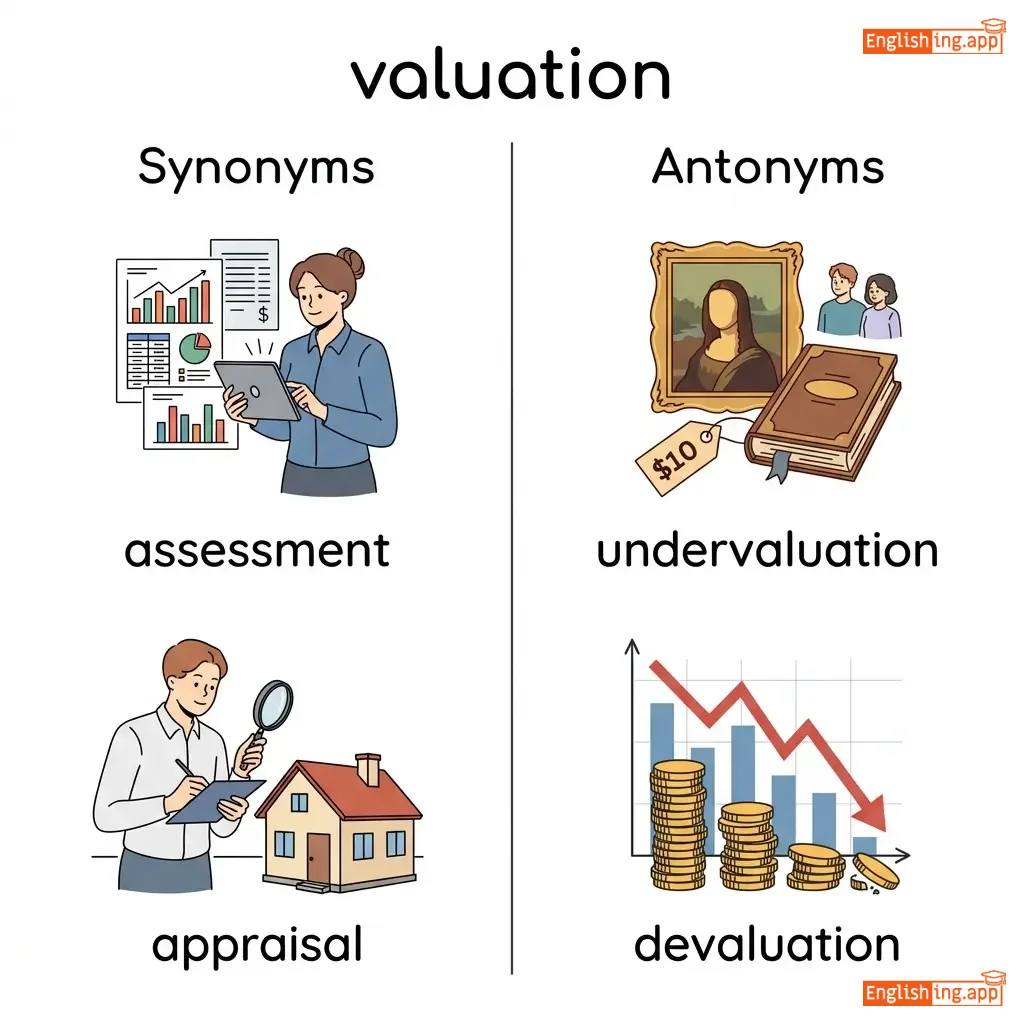
assessment, appraisal, evaluation, estimation
••••••
|
undervaluation, devaluation
••••••
|
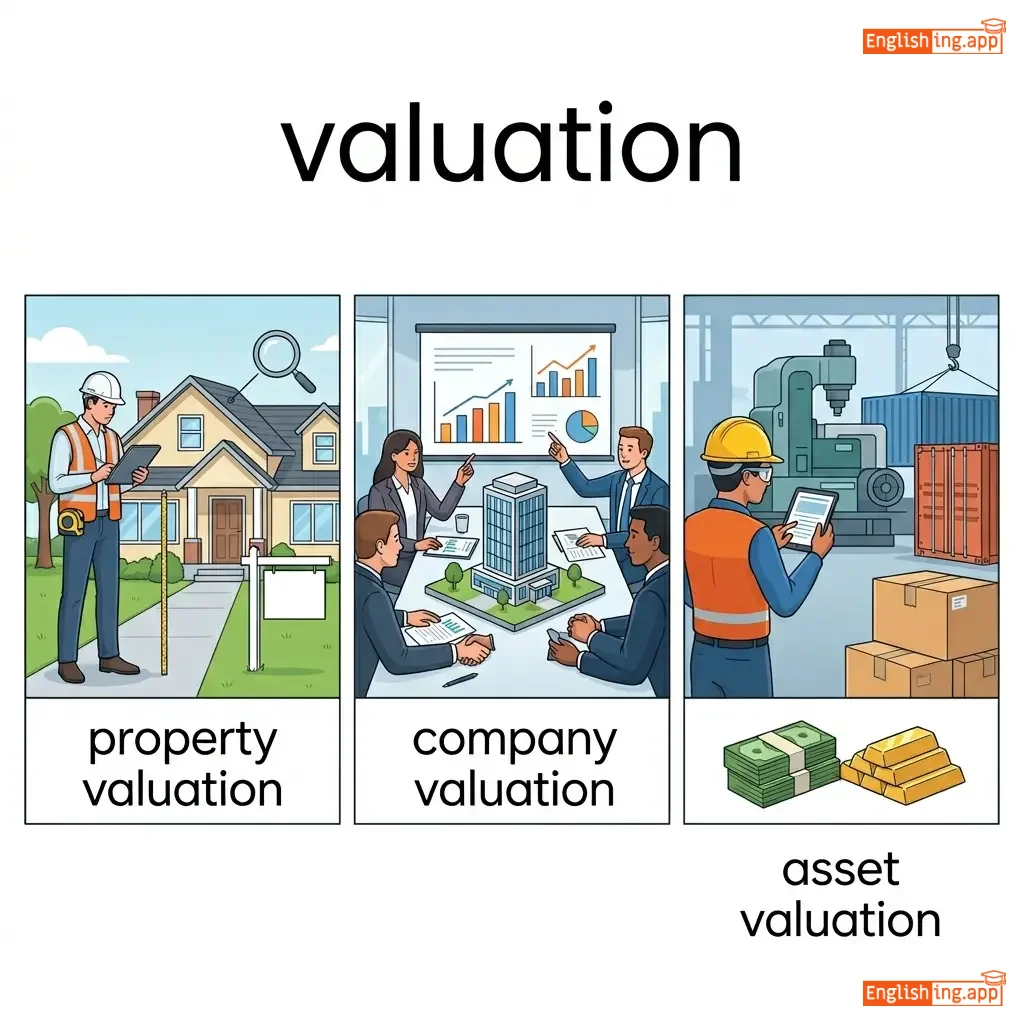
property valuation, company valuation, asset valuation, market valuation
••••••
|
No •••••• |
|
#1474
🛒
|
/ˈvendə(r)/
noun
(wēndé)
••••••
|
- •••••• |
小贩
xiaofan
••••••
|
a person or company offering something for sale, especially a trader in the street
••••••
|
The street vendor sold fresh fruits and vegetables. |
街头小贩卖新鲜的水果和蔬菜。
Jiētóu xiǎofàn mài xīnxiān de shuǐguǒ hé shūcài.
••••••
|
seller, trader, merchant, retailer
••••••
|
buyer, customer, purchaser
••••••
|
street vendor, food vendor, software vendor
••••••
|
Vendor = 小贩, 就像街头的小商贩。
••••••
|
|
#1475
💎
|
/ˈvæl.juː/
noun
(wēi liú)
••••••
|
- •••••• |
价值; 价格; 重要性
jiàzhí; jiàgé; zhòngyào xìng
••••••
|
the importance or worth of something; the amount of money that something is worth
••••••
|
This antique vase has great sentimental value to our family.
这个古董花瓶对我们家来说具有很大的情感价值。
••••••
|
这个古董花瓶对我们家来说具有很大的情感价值。
Zhège gǔdǒng huāpíng duì wǒmen jiā lái shuō jùyǒu hěn dà de qínggǎn jiàzhí.
••••••
|
worth, importance, significance, price
••••••
|
worthlessness, insignificance
••••••
|
market value, face value, family values, good value
••••••
|
这个物品的价值不仅仅是价格,还是它对家庭的意义。
••••••
|
|
#1476
⚔️
|
/ˈvendʒəns/
noun
(fēngxiè)
••••••
|
- •••••• |
复仇
fuchou
••••••
|
punishment inflicted or retribution exacted for an injury or wrong; revenge
••••••
|
He swore to seek vengeance against those who wronged him.
他发誓要向那些伤害他的人复仇。
••••••
|
他发誓要向那些伤害他的人复仇。
Tā fāshì yào xiàng nàxiē shānghài tā de rén fùchóu.
••••••
|
revenge, retribution, retaliation, payback
••••••
|
forgiveness, mercy, pardon
••••••
|
seek vengeance, take vengeance, vengeance is mine
••••••
|
Vengeance in Chinese is '复仇', remember it as 'fùchóu' (revenge), where you take action for justice.
••••••
|
|
#1477
🪞
|
/ˈvæn.ɪ.ti/
noun
(waniti)
••••••
|
- •••••• |
虚荣
xūróng
••••••
|
excessive pride in one's appearance or achievements; the quality of being worthless or pointless
••••••
|
Her vanity made her spend hours looking at herself in the mirror. |
她的虚荣让她花了好几个小时在镜子前看自己。
Tā de xūróng ràng tā huā le hǎo jǐ ge xiǎoshí zài jìngzi qián kàn zìjǐ.
••••••
|
pride, conceit, arrogance, narcissism
••••••
|
humility, modesty, selflessness
••••••
|
personal vanity, vanity mirror, wounded vanity, pure vanity
••••••
|
虚荣 (xūróng) in Chinese relates to vanity in English, focusing on outward pride.
••••••
|
|
#1478
🐍
|
/ˈvenəm/
noun
(wēi-nòng)
••••••
|
- •••••• |
毒液
dúyè
••••••
|
a poisonous substance secreted by animals such as snakes; extreme malice and bitterness
••••••
|
The snake's venom can be deadly if not treated quickly.
蛇的毒液如果不及时治疗,可能会致命。
••••••
|
蛇的毒液如果不及时治疗,可能会致命。
Shé de dúyè rúguǒ bù jíshí zhìliáo, kěnéng huì zhìmìng.
••••••
|
poison, toxin, malice, spite
••••••
|
antidote, cure, kindness
••••••
|
snake venom, spider venom, venomous bite
••••••
|
毒液 (dúyè) 就像蛇的毒液一样 - 不及时治疗会致命。
••••••
|
|
#1479
💨
|
/ˈveɪ.pər/
noun
(蒸汽)
••••••
|
- •••••• |
蒸汽
zhengqi
••••••
|
a substance in the form of a gas, especially when it has changed from a liquid or solid state
••••••
|
Water vapour rose from the hot pavement after the rain. |
水蒸气在雨后从热的路面上升。
shuǐ zhēngqì zài yǔ hòu cóng rè de lùmiàn shàngshēng.
••••••
|
steam, mist, gas, fume
••••••
|
liquid, solid, condensation
••••••
|
water vapour, vapour pressure, vapour trail, mercury vapour
••••••
|
蒸汽从热的地面升起
••••••
|
|
#1480
🚀
|
/ˈventʃə(r)/
noun
(文彻)
••••••
|
|
冒险事业; 企业
maoxian shiye; qiye
••••••
|
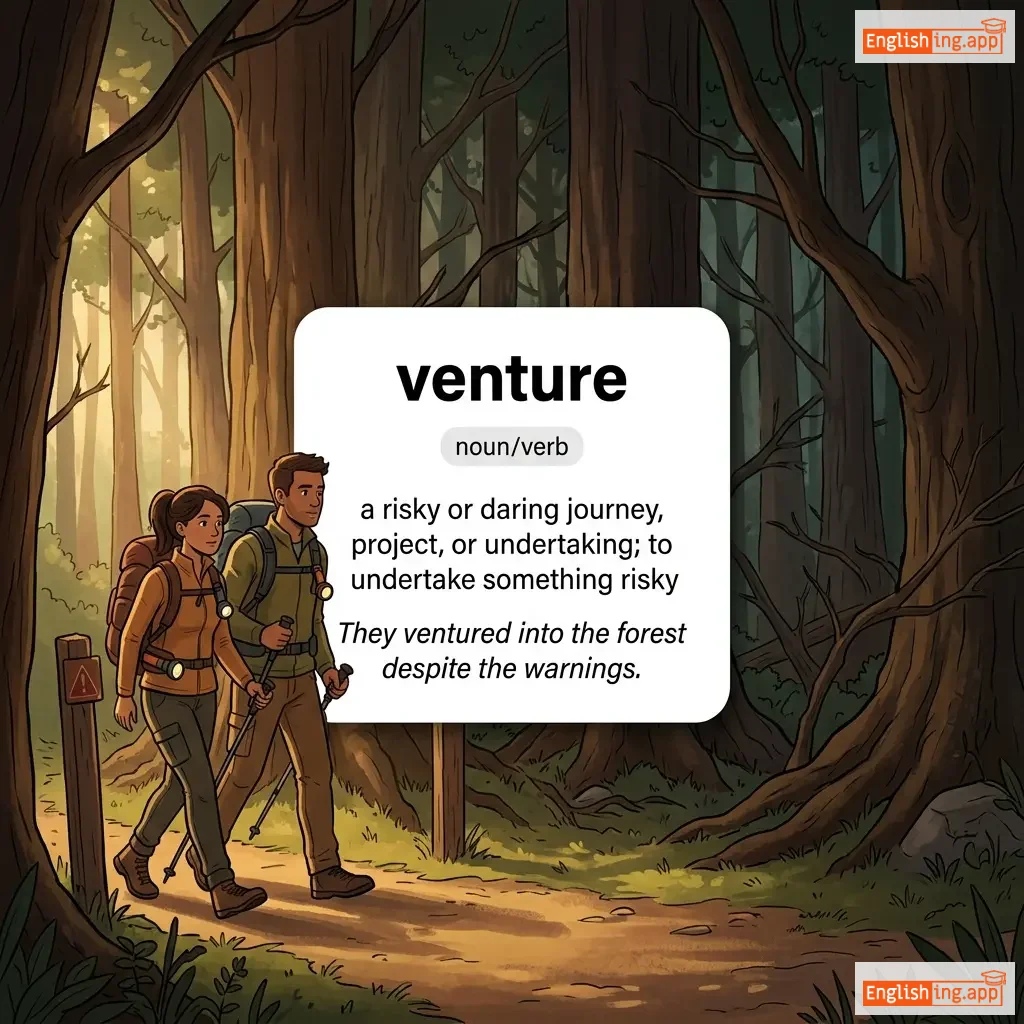
a risky or daring journey or undertaking; a business enterprise involving considerable risk
••••••
|
Starting a new business is always a risky venture.
开办新企业总是一次冒险的尝试。
••••••
|
开办新企业总是一次冒险的尝试。
Kaiban xin qiye zongshi yici maoxian de changshi.
••••••
|
enterprise, undertaking, project, expedition
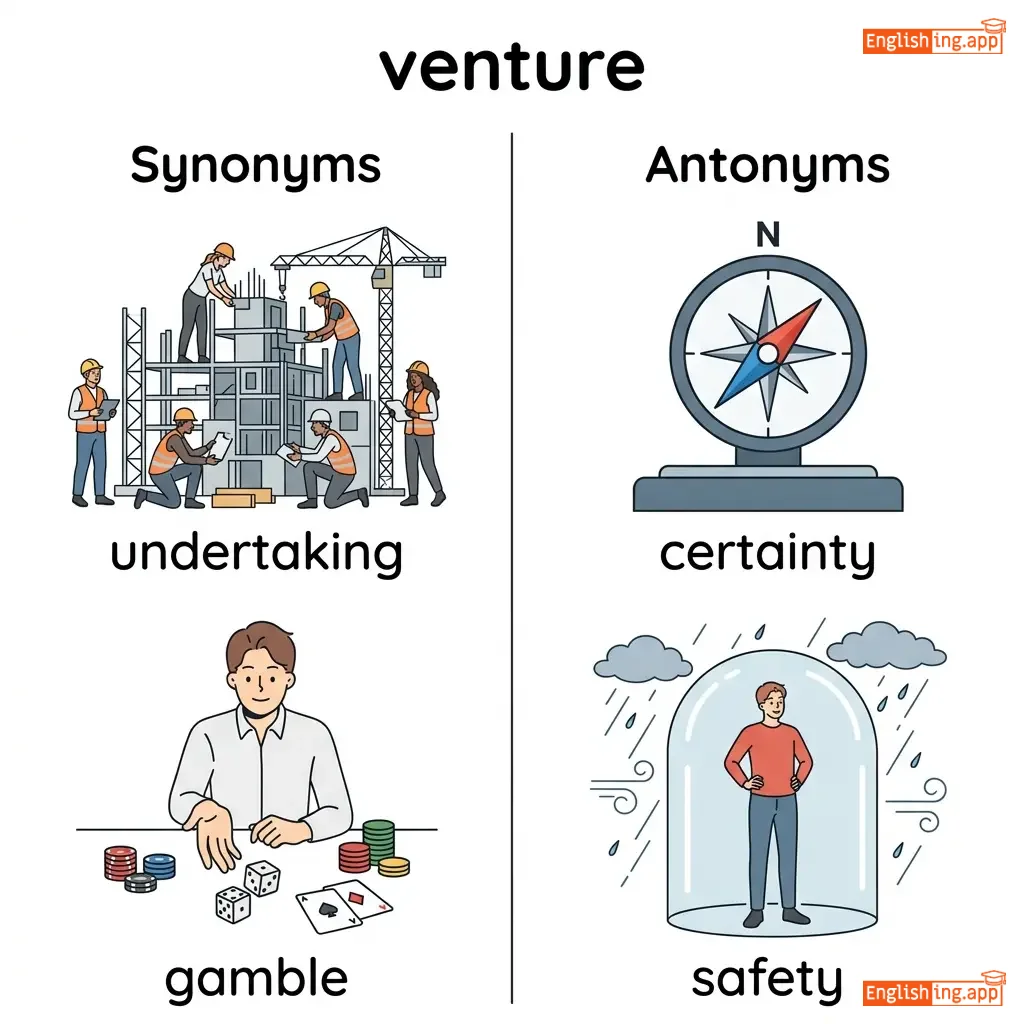
••••••
|
certainty, safety, security
••••••
|
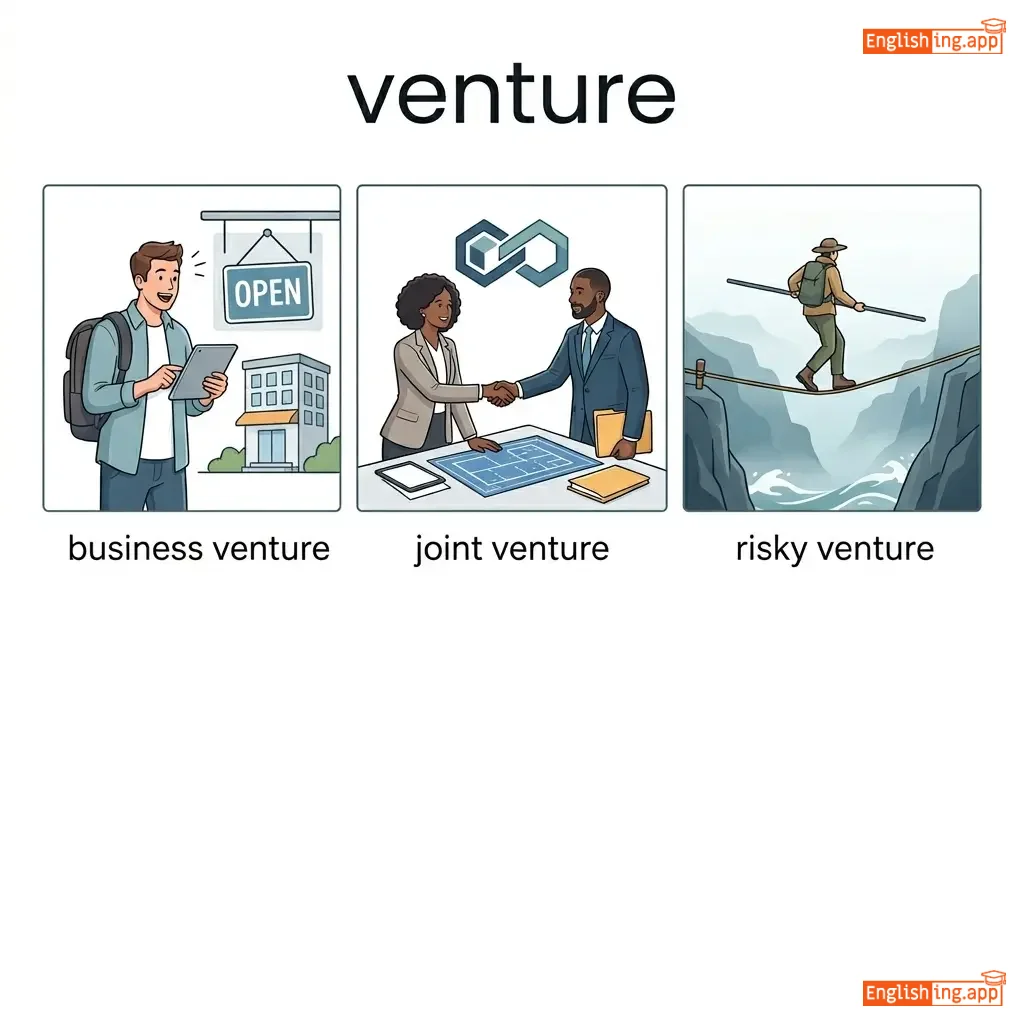
business venture, joint venture, risky venture
••••••
|
Venture在中文中也有冒险的意思,表示有风险的活动。
••••••
|
Vocabulary Quiz
Test your vocabulary by matching words with their translations or meanings.
Login to take the quiz
Comments (0)
Share your thoughts and join the discussion.
Join the discussion by logging in
Login to CommentNo comments yet
Be the first to share your thoughts!