

Swipe left or right, or use the buttons. Tap image to zoom.
例句翻译
单词
Lesson 8Lesson 8 - 遮罩切换
|
表情符号
|
单词 | Images | 翻译 | 含义 | 例句 | 例句翻译 | 同义词 | 反义词 | 搭配词 | 助记符 |
|---|---|---|---|---|---|---|---|---|---|---|
|
#141
🧟
|
/ˈkæn.ɪ.bəl/
noun
(kàn nǐ bā ěr)
••••••
|
- •••••• |
食人者
shirenzhe
••••••
|
a person who eats the flesh of other human beings
••••••
|
The explorer's journal described rumors of cannibals living on the remote island. |
探险家的日志描述了有关食人者在偏远岛屿上生活的谣言。
Tànxiǎn jiā de rìzhì miáoshùle yǒuguān shirenzhe zài piānyuǎn dǎoyǔ shàng shēnghuó de yáoyán.
••••••
|
man-eater, anthropophagite
••••••
|
vegetarian, humanitarian
••••••
|
savage cannibal, feared cannibal, cannibal tribe
••••••
|
Shirenzhe - 'Shi' (eat) + 'ren' (people) = People eater.
••••••
|
|
#142
🥰
|
/kəˈres/
noun
(凯瑞斯)
••••••
|
- •••••• |
抚摸
fumo
••••••
|
a gentle or loving touch
••••••
|
The mother's gentle caress calmed the crying baby.
母亲温柔的抚摸使哭泣的婴儿平静下来。
••••••
|
母亲温柔的抚摸使哭泣的婴儿平静下来。
Mǔqīn wēnróu de fǔmō shǐ kūqì de yīngér píngjìng xiàlái.
••••••
|
stroke, pat, cuddle, embrace
••••••
|
slap, hit, roughness
••••••
|
gentle caress, loving caress, tender caress
••••••
|
In Chinese, 'fumo' feels like a soft, loving touch.
••••••
|
|
#143
🤦
|
/ˈker.ləs.nəs/
noun
(ker-les-nes)
••••••
|
- •••••• |
疏忽; 粗心
shūhū, cūxīn
••••••
|
failure to give sufficient attention to avoiding harm or errors
••••••
|
His carelessness with money led to serious financial problems. |
他在金钱上的疏忽导致了严重的财务问题。
Tā zài jīnqián shàng de shūhū dǎozhìle yánzhòng de cáiwù wèntí.
••••••
|
negligence, inattention, recklessness
••••••
|
carefulness, attention, diligence
••••••
|
due to carelessness, show carelessness, extreme carelessness
••••••
|
疏忽可能会带来严重的问题,尤其是在财务上。
••••••
|
|
#144
❤️
|
/ker/
noun
(凯尔)
••••••
|
- •••••• |
照顾; 保护; 关怀
zhaogu, baohu, guanhui
••••••
|
the provision of what is necessary for health, welfare, or protection
••••••
|
The nurse provided excellent care for the elderly patients. |
护士为老年患者提供了出色的照顾。
hushi wei laonian huanzhe tigong le chuxie de zhaogu.
••••••
|
attention, concern, protection, treatment
••••••
|
neglect, carelessness, indifference
••••••
|
medical care, child care, take care
••••••
|
照顾意味着提供保护和关怀。
••••••
|
|
#145
🐪
|
/ˈkær.ə.væn/
noun
(卡拉万)
••••••
|
- •••••• |
大篷车
dàpéngchē
••••••
|
a group of people traveling together, especially through desert areas
••••••
|
The merchant caravan crossed the desert with camels carrying precious goods. |
商人队伍穿越沙漠,驼背上载着贵重的货物。
Shāngrén duìwǔ chuānyuè shāmò, tuóbèi shàng zàizhe guìzhòng de huòwù.
••••••
|
convoy, procession, expedition
••••••
|
lone traveler, single vehicle
••••••
|
desert caravan, merchant caravan, camel caravan
••••••
|
大篷车,一路走来,沙漠中有无尽的财富。
••••••
|
|
#146
🔒
|
/kæpˈtɪv.ɪ.ti/
noun
(禁锢)
••••••
|
- •••••• |
禁锢
jingu
••••••
|
the condition of being imprisoned or confined
••••••
|
After years of captivity, the prisoner was finally released.
经过多年的禁锢,囚犯终于被释放。
••••••
|
经过多年的禁锢,囚犯终于被释放。
Jingguo duonian de jingu, qiufen zhongyu bei shifang.
••••••
|
imprisonment, confinement, detention
••••••
|
freedom, liberty, release
••••••
|
years of captivity, escape captivity, in captivity
••••••
|
禁锢意味着像监禁一样被囚禁,不自由。
••••••
|
|
#147
⛓️
|
/ˈkæp.tɪv/
noun
(kèpítí fú)
••••••
|
- •••••• |
俘虏
fulu
••••••
|
a person who has been taken prisoner or an animal that has been confined
••••••
|
The captive was held in a small cell for several months.
俘虏被关押在一个小牢房里好几个月。
••••••
|
俘虏被关押在一个小牢房里好几个月。
Fulu bei guanya zai yige xiao laofang li hao ji ge yue.
••••••
|
prisoner, hostage, detainee
••••••
|
free person, liberator
••••••
|
hold captive, captive audience, former captive
••••••
|
Fulu (Chinese) indicates someone or something held captive, confined or imprisoned.
••••••
|
|
#148
🏢
|
/ˈkæp.ɪ.təl/
noun
(首都)
••••••
|
- •••••• |
首都; 资本; 财富
shoudu; ziben; caifu
••••••
|
the most important city or town of a country or region; wealth in the form of money or assets
••••••
|
Paris is the capital of France and also a major financial capital.
巴黎是法国的首都,也是一个重要的金融中心。
••••••
|
巴黎是法国的首都,也是一个重要的金融中心。
ba li shi fa guo de shou du, ye shi yi ge zhong yao de jin rong zhong xin.
••••••
|
metropolis, funds, assets, money
••••••
|
countryside, debt, liability
••••••
|
capital city, financial capital, venture capital
••••••
|
Think of the capital as a place full of power and money, just like Paris for France.
••••••
|
|
#149
📦
|
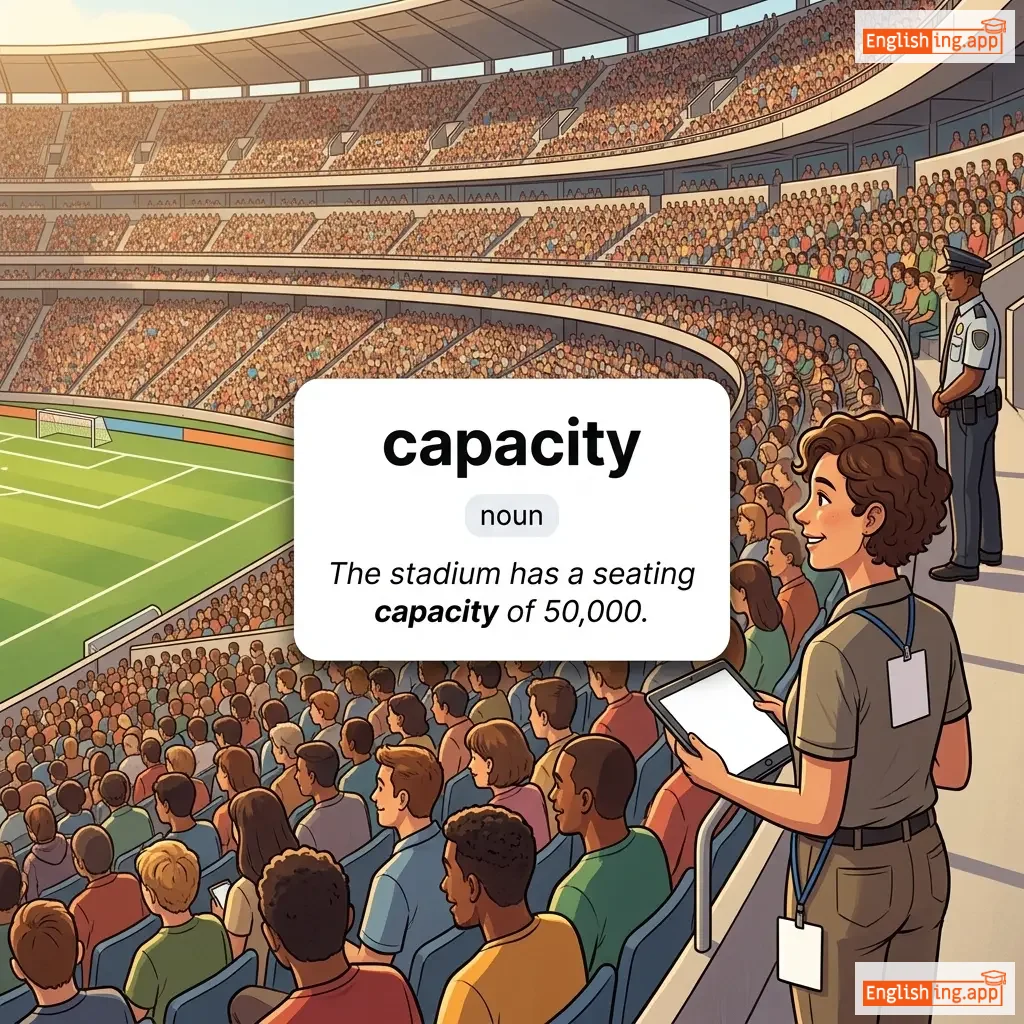
/kəˈpæs.ɪ.ti/
noun
(kapasiti)
••••••
|
|
容量; 能力
rongliang, nengli
••••••
|
the maximum amount that something can contain; the ability or power to do something
••••••
|
The stadium has a capacity of fifty thousand spectators. |
这个体育场的容量是五万人。
Zhege tiyuchang de rongliang shi wuwan ren.
••••••
|
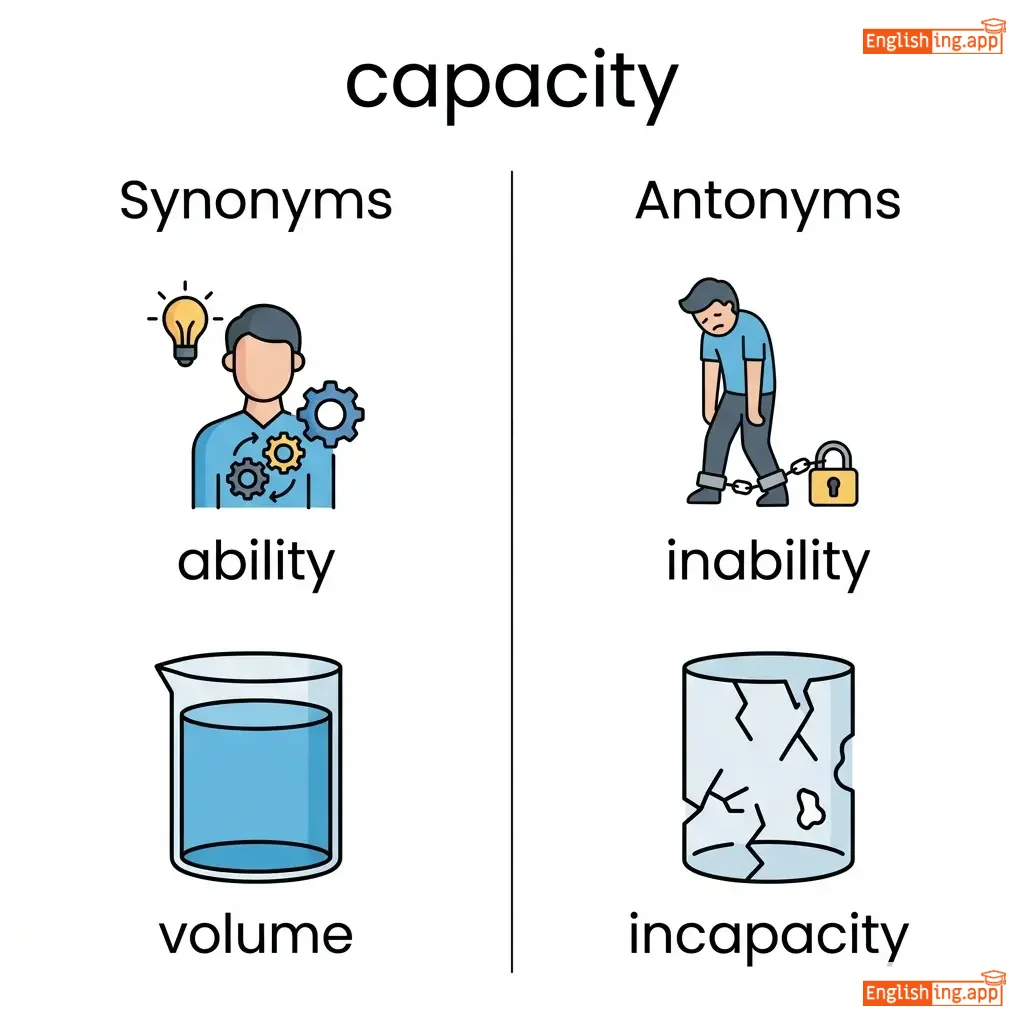
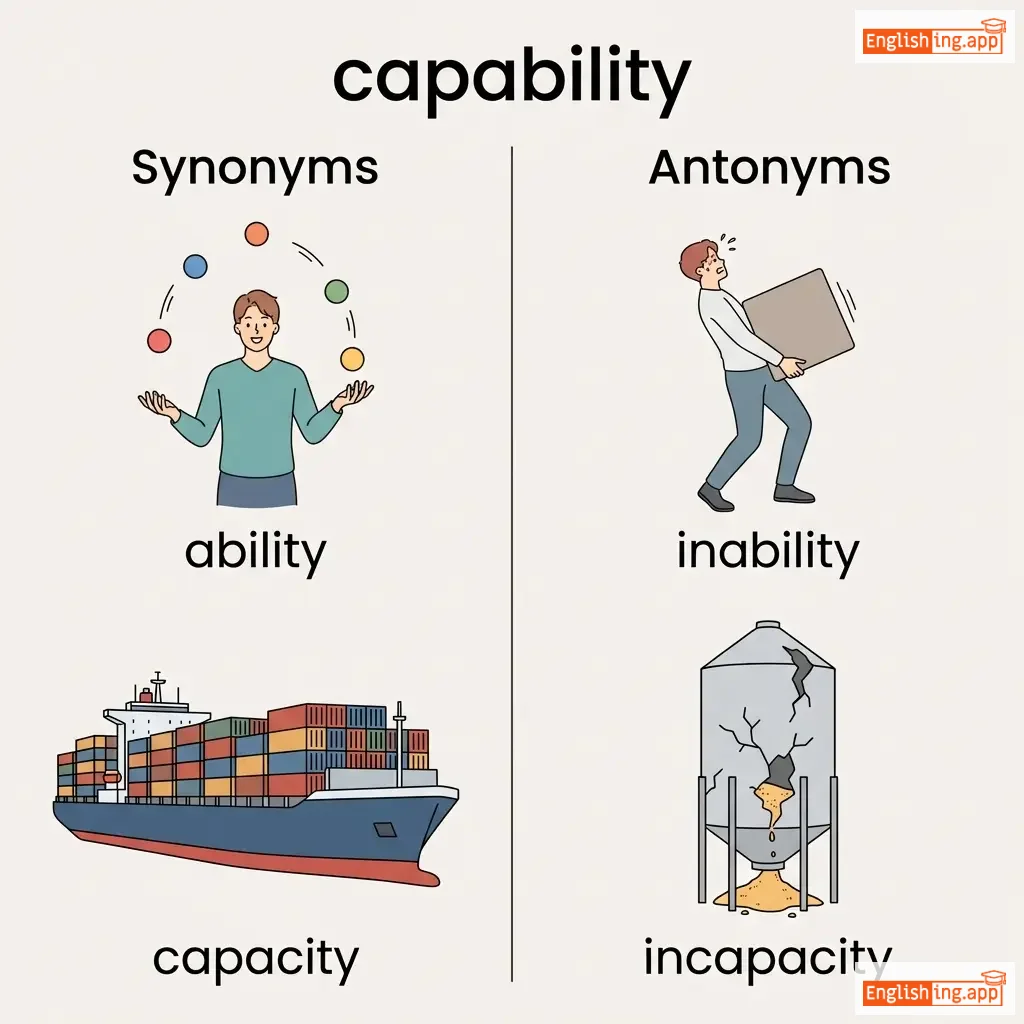
volume, ability, capability, potential
••••••
|
incapacity, inability, limitation
••••••
|
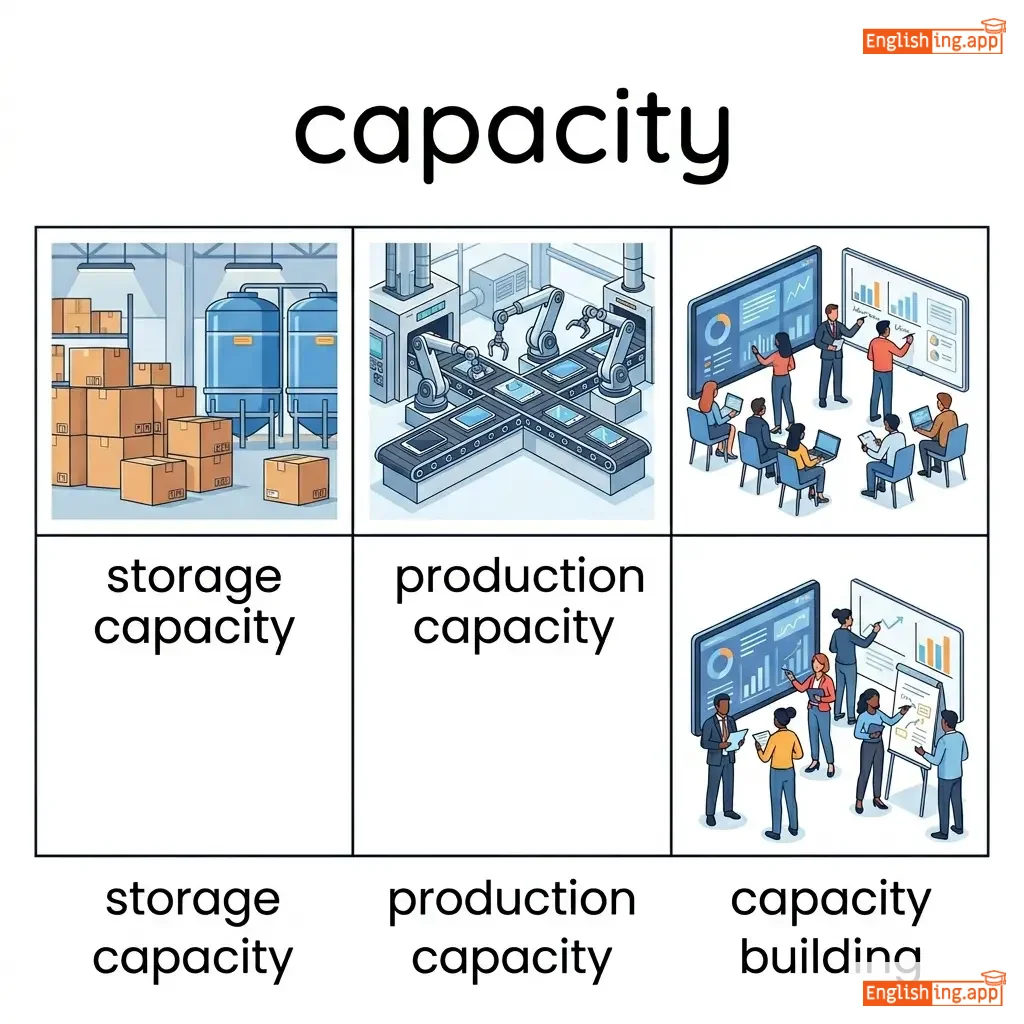
seating capacity, full capacity, mental capacity
••••••
|
容量就像一个能容纳50,000人的大容器
••••••
|
|
#150
💪
|
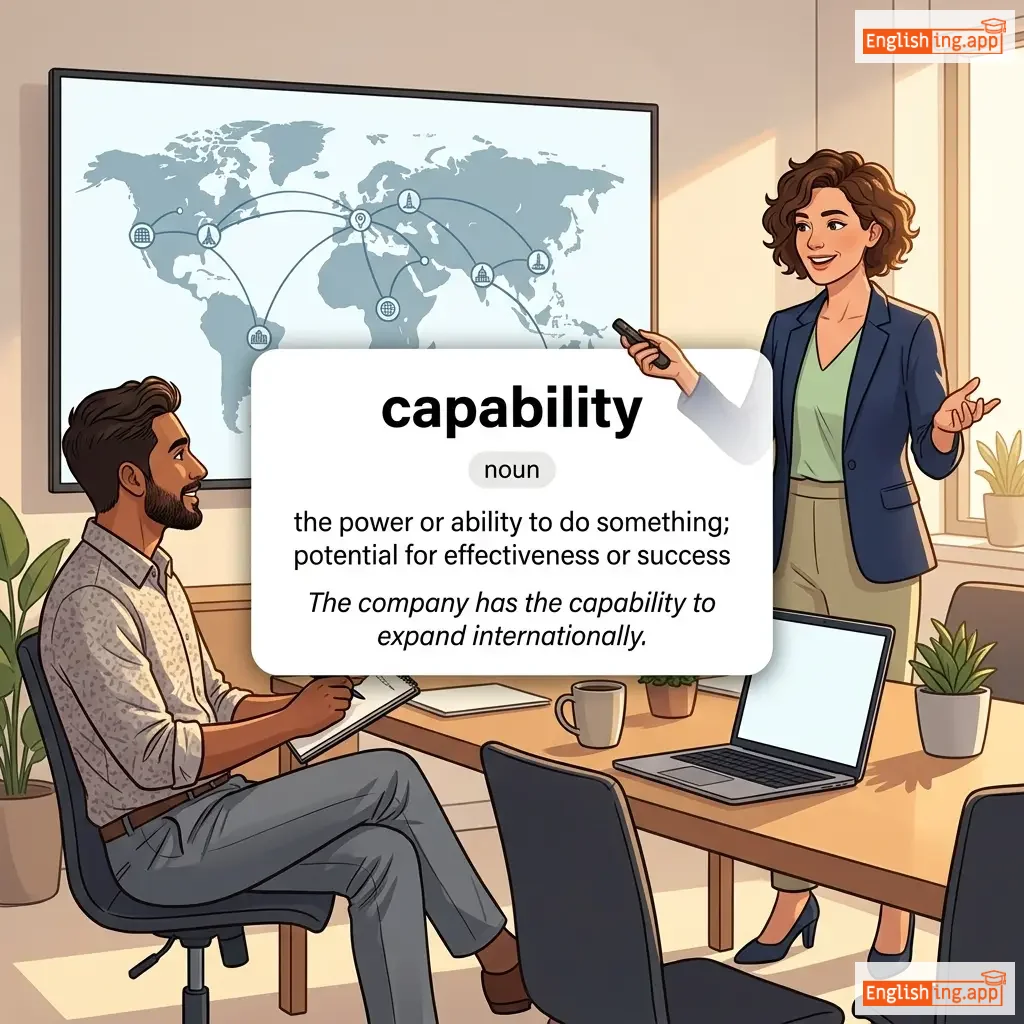
/ˌkɪ.pəˈbɪl.ɪ.ti/
noun
(能力)
••••••
|
|
能力
nengli
••••••
|
the ability or power to do, experience, or understand something
••••••
|
Her remarkable capability in mathematics earned her a scholarship.
她在数学方面的卓越能力为她赢得了奖学金。
••••••
|
她在数学方面的卓越能力为她赢得了奖学金。
Ta zai shuxue fangmian de zhuoyue nengli wei ta yingde le jiangxuejin.
••••••
|
ability, capacity, skill, competence
••••••
|
inability, incapacity, incompetence
••••••
|
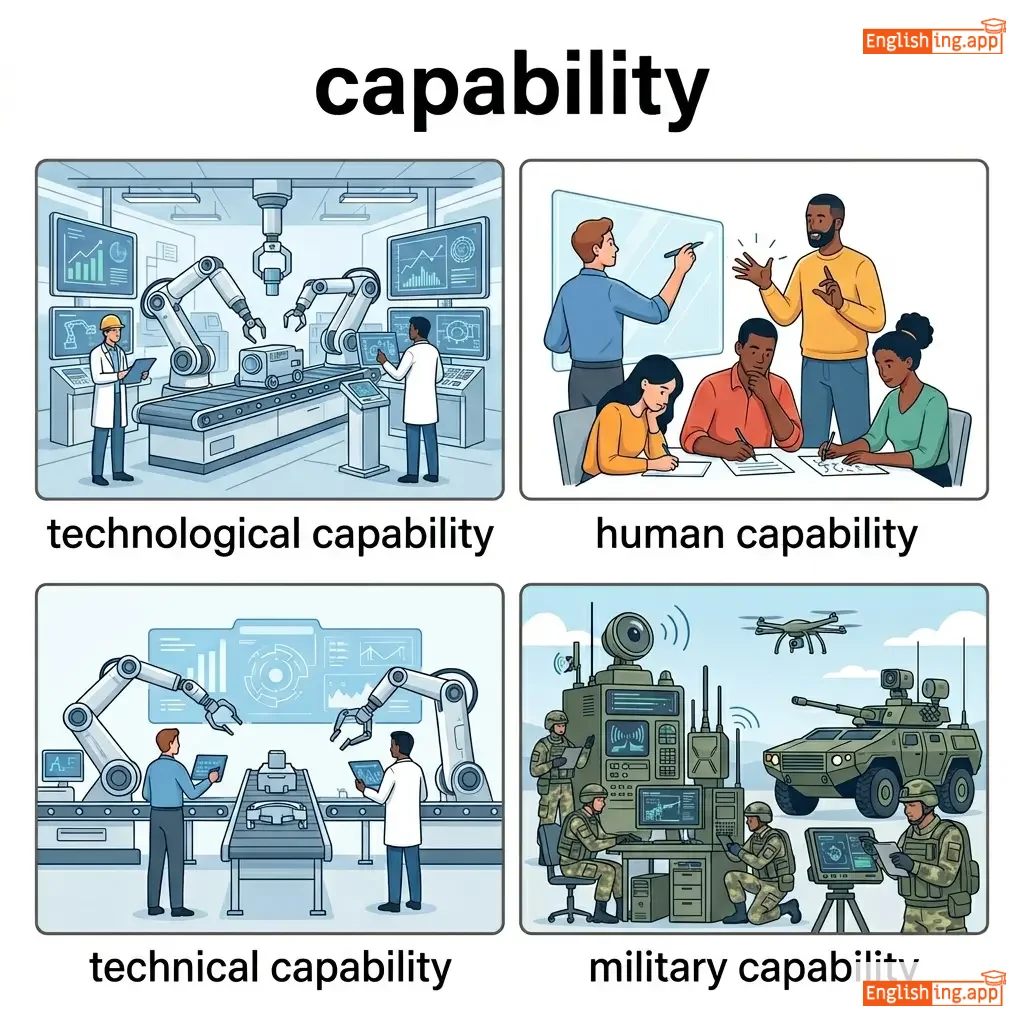
technical capability, military capability, mental capability
••••••
|
Enhance your 能力 (ability) to unlock better career opportunities.
••••••
|
|
#151
🍇
|
/bʌntʃ/
noun
(banch)
••••••
|
- •••••• |
束; 丛; 捆
shu, cong, kun
••••••
|
a number of things of the same type fastened together or occurring close together
••••••
|
She picked a bunch of flowers from the garden for her mother.
她为母亲从花园里摘了一束花。
••••••
|
她为母亲从花园里摘了一束花。
Tā wèi mǔqīn cóng huāyuán lǐ zhāile yī shù huā.
••••••
|
cluster, group, collection, bundle
••••••
|
single item, individual piece
••••••
|
bunch of flowers, bunch of grapes, bunch of keys
••••••
|
花束是从花园中摘取的。
••••••
|
|
#152
📢
|
/kæmˈpeɪn/
noun
(运动)
••••••
|
- •••••• |
运动
yundong
••••••
|
an organized course of action to achieve a particular goal; a series of military operations
••••••
|
The environmental campaign successfully raised awareness about climate change. |
环保运动成功提高了人们对气候变化的认识。
huánbǎo yùndòng chénggōng tígāo le rénmen duì qìhòu biànhuà de rènshí.
••••••
|
drive, crusade, operation, movement
••••••
|
inaction, passivity
••••••
|
election campaign, advertising campaign, military campaign
••••••
|
运动 (yùndòng) 是一种帮助我们达成目标的活动,就像运动一样充满活力!
••••••
|
|
#153
🗣️
|
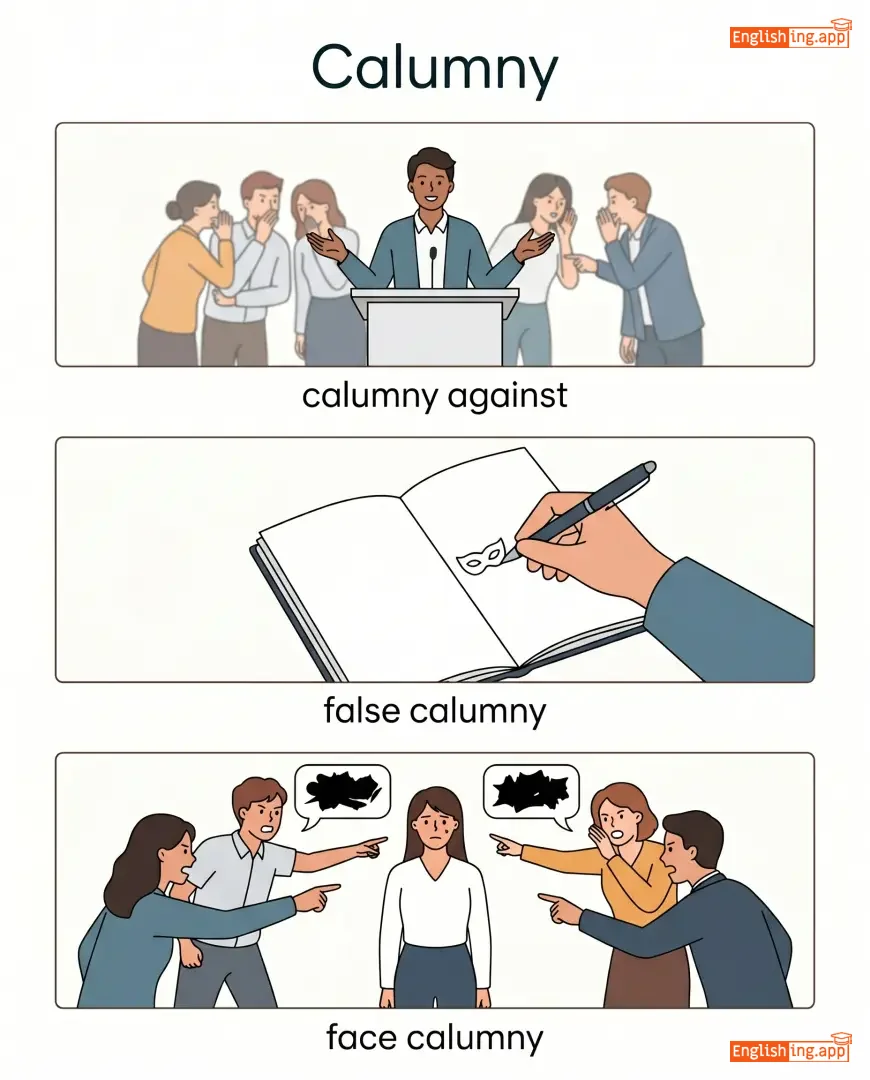
/ˈkæl.əm.ni/
noun
(kalumni)
••••••
|
|
诽谤
feibang
••••••
|
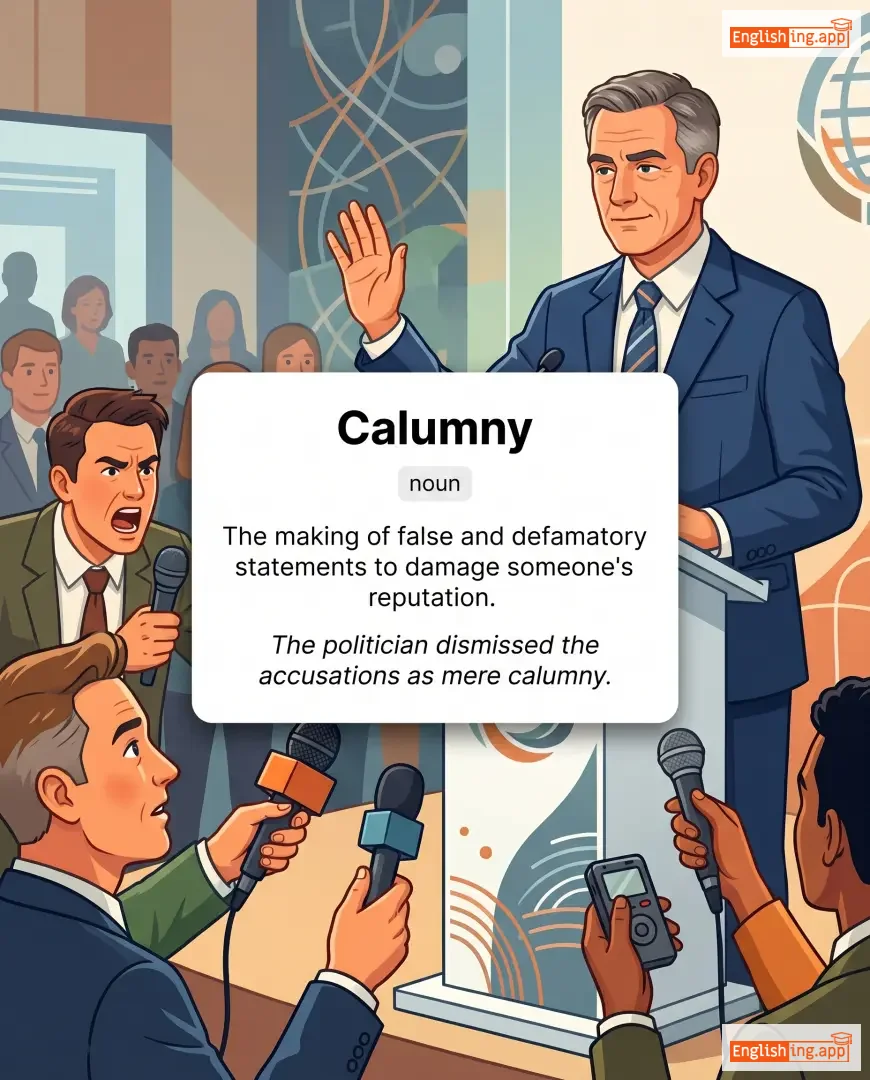
the making of false and defamatory statements about someone in order to damage their reputation
••••••
|
The politician sued the newspaper for spreading calumny about his personal life. |
这位政治家因报纸传播关于他个人生活的诽谤而起诉了报纸。
Zhe wei zhengzhijia yin baozhi chuanbo guanyu ta geren shenghuo de feibang er qisu le baozhi.
••••••
|
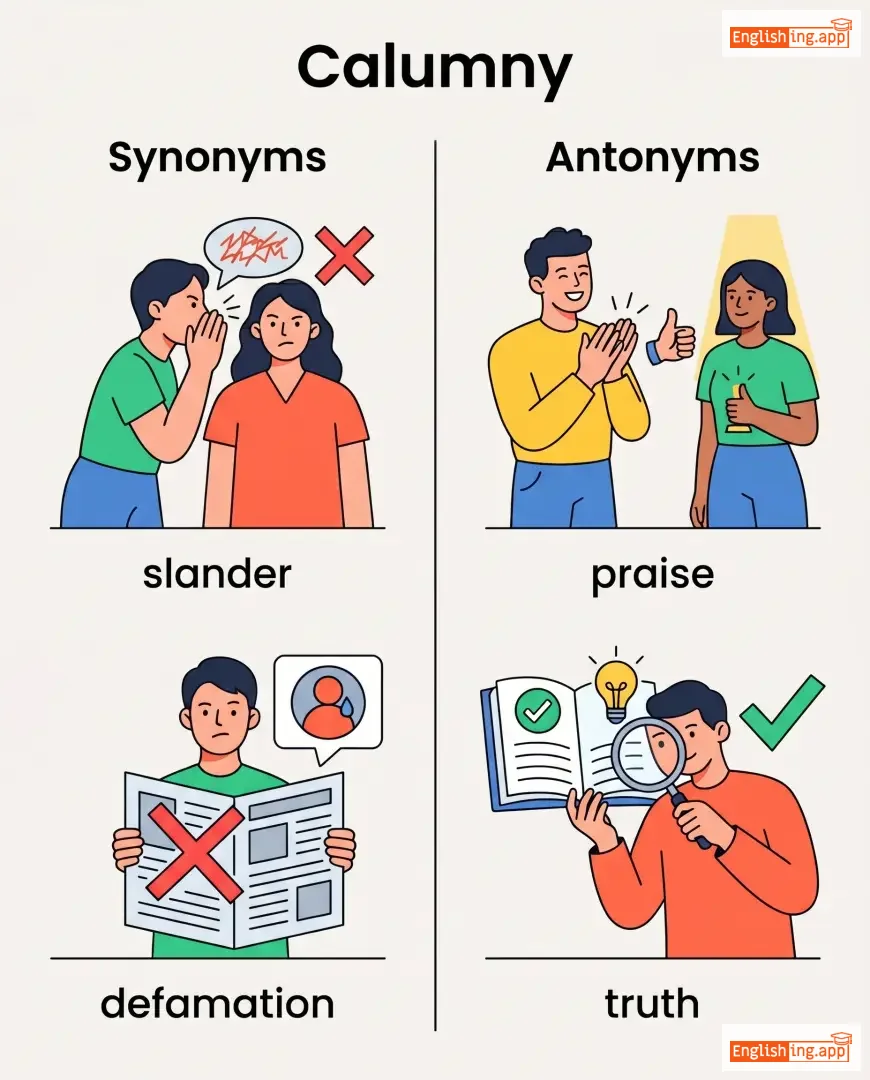
slander, defamation, libel, vilification
••••••
|
praise, commendation, tribute
••••••
|
spread calumny, victim of calumny, malicious calumny
••••••
|
诽谤 (feibang) 破坏某人的名誉
••••••
|
|
#154
🧮
|
/ˌkæl.kjəˈleɪ.ʃən/
noun
(kao-lu-lei-shen)
••••••
|
- •••••• |
计算
jisuan
••••••
|
a mathematical determination of the size or number of something
••••••
|
His calculation of the total cost was accurate to the penny.
他的总成本计算准确到分。
••••••
|
他的总成本计算准确到分。
ta de zong cheng ben ji suan zhun que dao fen.
••••••
|
computation, reckoning, estimation, arithmetic
••••••
|
guess, estimation without precision
••••••
|
mathematical calculation, quick calculation, accurate calculation
••••••
|
计算 = 数学上的准确计算
••••••
|
|
#155
⚡
|
/kəˈlæm.ɪ.ti/
noun
(kalamiti)
••••••
|
- •••••• |
灾难;灾祸
zāinàn; zāihuò
••••••
|
an event causing great and often sudden damage or distress; a disaster
••••••
|
The earthquake was a terrible calamity that affected thousands of families.
地震是一次可怕的灾难,影响了成千上万的家庭。
••••••
|
地震是一次可怕的灾难,影响了成千上万的家庭。
Dìzhèn shì yīcì kěpà de zāinàn, yǐngxiǎngle chéngqiān shàngwàn de jiātíng.
••••••
|
disaster, catastrophe, tragedy, misfortune
••••••
|
blessing, fortune, success
••••••
|
natural calamity, terrible calamity, avoid calamity
••••••
|
灾难就是灾祸,突发的灾难!
••••••
|
|
#156
😡
|
/kæd/
noun
(kæd)
••••••
|
- •••••• |
坏蛋; 粗鲁
huài dàn, cū lǔ
••••••
|
a man who behaves dishonorably, especially toward women
••••••
|
Everyone at the party avoided him because he was known to be a cad.
派对上的每个人都避开了他,因为他以一个‘坏蛋’著称。
••••••
|
派对上的每个人都避开了他,因为他以一个坏蛋著称。
pài duì shàng de měi gè rén dōu bì kāi le tā, yīn wèi tā yǐ yí gè huài dàn zhù chēng.
••••••
|
scoundrel, rogue, heel, bounder
••••••
|
gentleman, honorable man
••••••
|
complete cad, absolute cad, notorious cad
••••••
|
坏蛋是一个对待女性不尊重的人。
••••••
|
|
#157
🥬
|
/ˈkæb.ɪdʒ/
noun
(kæbɪdʒ)
••••••
|
- •••••• |
卷心菜
juǎn xīn cài
••••••
|
a cultivated plant eaten as a vegetable, having thick green or purple leaves surrounding a spherical heart
••••••
|
She chopped the fresh cabbage to make coleslaw for dinner.
她切了新鲜的卷心菜,准备做沙拉。
••••••
|
她切了新鲜的卷心菜,准备做沙拉。
Tā qiēle xīnxiān de juǎn xīn cài, zhǔnbèi zuò shālā.
••••••
|
cole, brassica
••••••
|
- •••••• |
fresh cabbage, green cabbage, cabbage soup
••••••
|
Juǎn xīn cài = 健康蔬菜,健康生活
••••••
|
|
#158
🤷
|
/kəˈbɑl/
noun
(卡巴尔)
••••••
|
- •••••• |
阴谋集团
yīnmóu jítuán
••••••
|
a secret political clique or faction
••••••
|
The journalists exposed a cabal of corrupt politicians working together.
记者揭露了一个腐败政治家的秘密团体,他们一起合作。
••••••
|
记者揭露了一个腐败政治家的秘密团体,他们一起合作。
Jìzhě jiēlù le yī gè fǔbài zhèngzhìjiā de mìmì tuántǐ, tāmen yīqǐ hézuò.
••••••
|
conspiracy, clique, faction, coterie
••••••
|
open group, public organization
••••••
|
political cabal, secret cabal, powerful cabal
••••••
|
阴谋 + 集团 = 一个秘密的政治团体
••••••
|
|
#159
💼
|
/ˈbɪz.nəs/
noun
(bìzīnèsī)
••••••
|
- •••••• |
生意; 商业; 企业
shēngyì, shāngyè, qǐyè
••••••
|
work relating to the production, buying, and selling of goods or services
••••••
|
He started his own business after graduating from university.
他大学毕业后开始了自己的生意。
••••••
|
他大学毕业后开始了自己的生意。
Tā dàxué bìyè hòu kāishǐle zìjǐ de shēngyì.
••••••
|
commerce, trade, enterprise, company
••••••
|
hobby, leisure, personal activity
••••••
|
small business, business plan, family business
••••••
|
开始生意需要一定的市场敏锐度和计划。
••••••
|
|
#160
📦
|
/ˈbʌn.dəl/
noun
(bāndel)
••••••
|
- •••••• |
包裹; 捆
bāoguǒ, kǔn
••••••
|
a collection of things or quantity of material tied or wrapped up together
••••••
|
The mailman delivered a bundle of letters to our house.
邮递员把一包信送到了我们的家。
••••••
|
邮递员把一包信送到了我们的家。
Yóudìyuán bǎ yī bāo xìn sòng dào le wǒmen de jiā.
••••••
|
package, parcel, pack, collection
••••••
|
single item, loose objects
••••••
|
bundle of sticks, bundle of clothes, bundle of papers
••••••
|
一个包裹就像邮递员送到家中的一捆信。
••••••
|
Vocabulary Quiz
Test your vocabulary by matching words with their translations or meanings.
Login to take the quiz
Comments (0)
Share your thoughts and join the discussion.
Join the discussion by logging in
Login to CommentNo comments yet
Be the first to share your thoughts!