

Swipe left or right, or use the buttons. Tap image to zoom.
例句翻译
单词
Lesson 61Lesson 61 - 遮罩切换
|
表情符号
|
单词 | Images | 翻译 | 含义 | 例句 | 例句翻译 | 示例表达翻译 | 同义词 | 反义词 | 搭配词 | 助记符 |
|---|---|---|---|---|---|---|---|---|---|---|---|
|
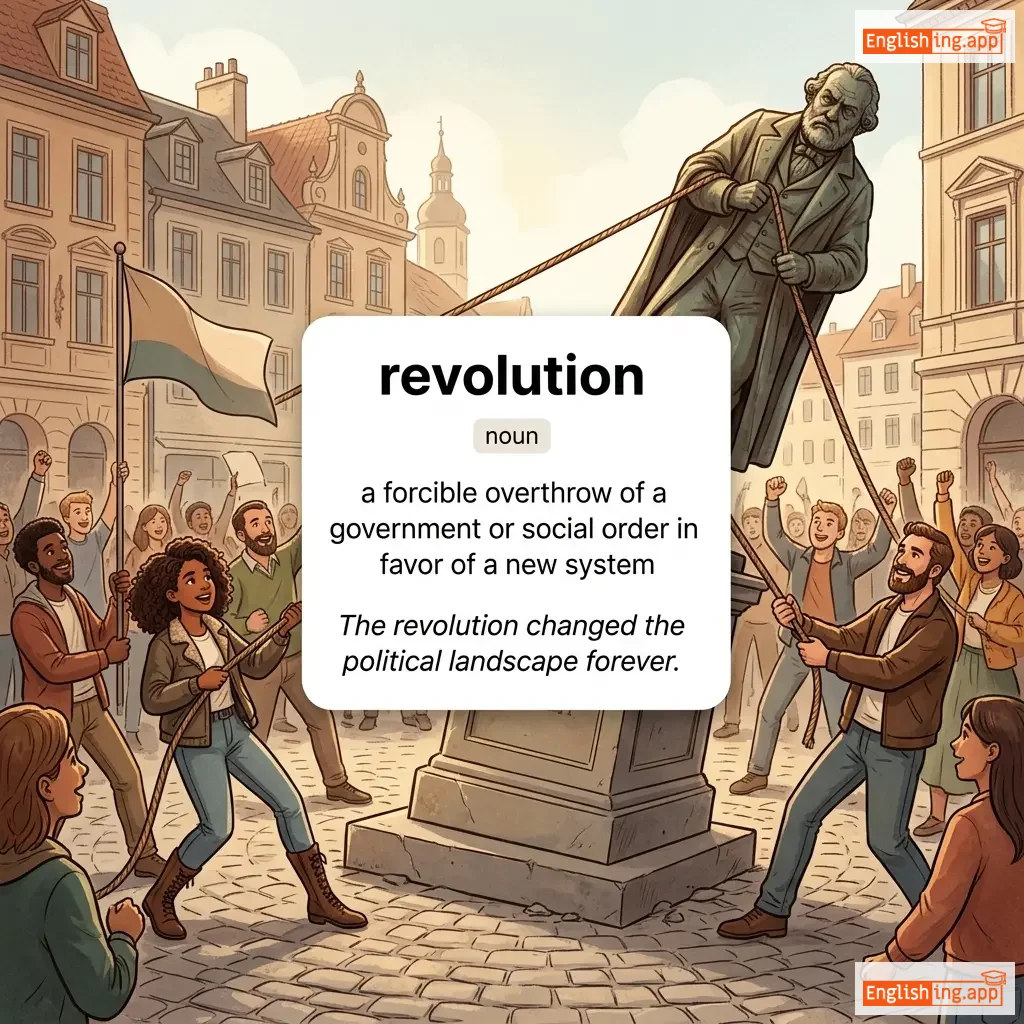
#1201
🔄
|
/ˌrevəˈluːʃən/
noun
(革命)
••••••
|
|
革命; 转变; 推翻
geming; zhuanbian; tui fan
••••••
|
a dramatic and wide-reaching change in conditions, attitudes, or operation; a forcible overthrow of a government or social order
••••••
|
The industrial revolution changed the way people lived and worked.
工业革命改变了人们的生活和工作方式。
••••••
|
工业革命改变了人们的生活和工作方式。
gongye geming gaibian le renmen de shenghuo he gongzuo fangshi.
••••••
|
- •••••• |
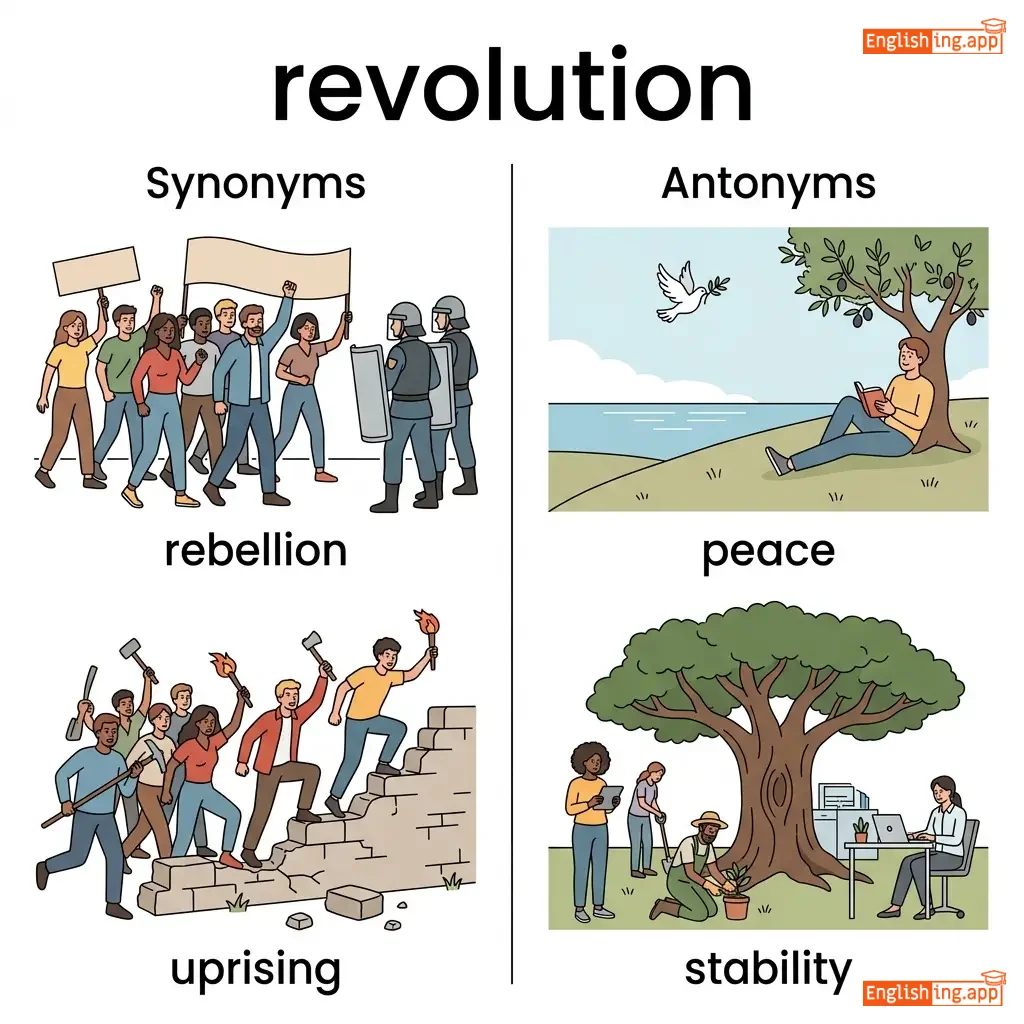
upheaval, transformation, rebellion, revolt
••••••
|
stability, conservation, tradition
••••••
|
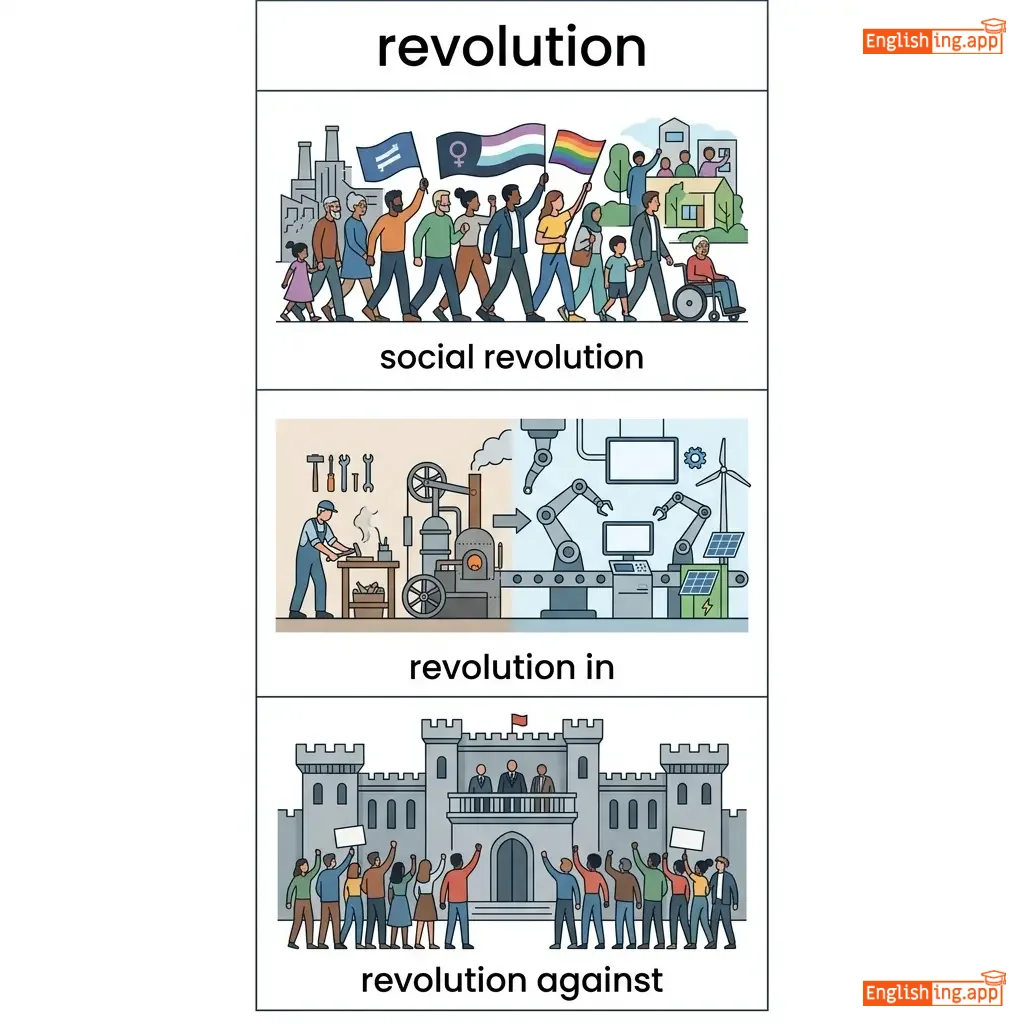
industrial revolution, political revolution, scientific revolution
••••••
|
革命带来剧变,像是社会的颠覆。
••••••
|
|
#1202
🔄
|
/roʊˈteɪʃən/
noun
(luo-tei-shen)
••••••
|
- •••••• |
旋转; 转动; 自转
xuánzhuǎn; zhuǎndòng; zìzhuǎn
••••••
|
the action of rotating around an axis or center; a single turn
••••••
|
The Earth's rotation takes 24 hours to complete.
地球的自转需要24小时才能完成。
••••••
|
地球的自转需要24小时才能完成。
Dìqiú de zìzhuǎn xūyào 24 xiǎoshí cáinéng wánchéng.
••••••
|
- •••••• |
turning, spinning, revolution, orbit
••••••
|
stillness, stability, stagnation
••••••
|
crop rotation, job rotation, axis of rotation
••••••
|
想象地球像陀螺一样旋转
••••••
|
|
#1203
🧩
|
/ˈrɪdəl/
noun
(rɪdəl)
••••••
|
- •••••• |
谜语
míyǔ
••••••
|
a question or statement intentionally phrased so as to require ingenuity in ascertaining its answer or meaning; a puzzle
••••••
|
The ancient riddle stumped all the scholars for years. |
古老的谜语让所有学者困扰了多年。
gǔlǎo de míyǔ ràng suǒyǒu xuézhě kùnrǎo le duōnián.
••••••
|
- •••••• |
puzzle, enigma, mystery, brain teaser
••••••
|
solution, answer, explanation
••••••
|
solve a riddle, ancient riddle, riddle me this
••••••
|
Chinese '谜语' (riddle) is a similar-sounding term to 'riddle'.
••••••
|
|
#1204
🗑️
|
/ˈrʌbɪʃ/
noun
(拉比什)
••••••
|
- •••••• |
垃圾; 无用的东西; 胡说
la-bi-shi; wu-yong-de dong-xi; hu-shuo
••••••
|
waste material; refuse or litter; nonsense or worthless things
••••••
|
Please throw the rubbish in the bin. |
请把垃圾丢进垃圾桶。
Qing ba la-ji diu jin la-ji tong.
••••••
|
- •••••• |
garbage, trash, waste, junk
••••••
|
treasure, valuable, precious
••••••
|
household rubbish, rubbish bin, rubbish collection
••••••
|
In Chinese, '垃圾' means rubbish, just like the one you throw away.
••••••
|
|
#1205
🔒
|
/rɪˈdʒɪdəti/
noun
(rijiditi)
••••••
|
- •••••• |
刚性
gangxing
••••••
|
inability to bend or be forced out of shape; unwillingness to change or compromise
••••••
|
The rigidity of the old system prevented any innovation. |
旧系统的刚性阻止了任何创新。
Jiu xitong de gangxing zuzhi le renhe chuangxin.
••••••
|
- •••••• |
stiffness, inflexibility, strictness, firmness
••••••
|
flexibility, adaptability, elasticity
••••••
|
mental rigidity, structural rigidity, rigidity of rules
••••••
|
刚性就像铁一样,不容易改变
••••••
|
|
#1206
👥
|
/rʌk/
noun
(rǎk)
••••••
|
- •••••• |
推搡; 混乱的人群
tui shang; hunluan de renqun
••••••
|
a situation where a crowd of people are pushing against each other; a disorderly crowd
••••••
|
There was a ruck at the football match. |
足球比赛中发生了推搡。
zuqiu bisai zhong fasheng le tuishang
••••••
|
- •••••• |
scuffle, fight, brawl, melee
••••••
|
peace, order, calm
••••••
|
rugby ruck, ruck and maul, ruck formation
••••••
|
推搡 = 人群中相互推搡
••••••
|
|
#1207
🔥
|
/ˈraɪət/
noun
(raiyot)
••••••
|
- •••••• |
骚乱; 暴乱
saoluan; baoluan
••••••
|
a violent disturbance of the peace by a crowd; an uncontrolled outburst
••••••
|
The peaceful protest turned into a riot when violence broke out.
和平抗议活动在暴力爆发时变成了骚乱。
••••••
|
和平抗议活动在暴力爆发时变成了骚乱。
Heping kangyi huodong zai baoli baofa shi bian chengle saoluan
••••••
|
- •••••• |
uprising, disturbance, unrest, rebellion
••••••
|
peace, order, calm, tranquility
••••••
|
riot police, food riot, prison riot
••••••
|
想象抗议活动的暴力如何迅速转变为骚乱。
••••••
|
|
#1208
😤
|
/ˈruːdnəs/
noun
(鲁德尼斯)
••••••
|
- •••••• |
粗鲁
cu-lu
••••••
|
the quality of being impolite, discourteous, or offensive in behavior or speech
••••••
|
His rudeness shocked everyone at the dinner party. |
他的粗鲁在晚宴上震惊了所有人。
Tā de cūlǔ zài wǎnyàn shàng zhènjīng le suǒyǒu rén.
••••••
|
- •••••• |
impoliteness, discourtesy, incivility, bad manners
••••••
|
politeness, courtesy, civility, respect
••••••
|
shocking rudeness, deliberate rudeness, inexcusable rudeness
••••••
|
粗鲁就像是没有礼貌,说话没有尊重。
••••••
|
|
#1209
🌊
|
/ˈrɪpəl/
noun
(rɪpəl)
••••••
|
- •••••• |
涟漪
lián yī
••••••
|
a small wave on the surface of water; a spreading effect or influence
••••••
|
The stone created ripples across the calm pond. |
石头在平静的池塘中激起了涟漪。
Shítou zài píngjìng de chítáng zhōng jīqǐle lián yī.
••••••
|
- •••••• |
wave, undulation, effect, consequence
••••••
|
stillness, calm, smoothness
••••••
|
ripple effect, water ripple, ripple through
••••••
|
像涟漪一样,快乐从一个地方扩散到另一个地方。
••••••
|
|
#1210
😈
|
/ˈrʌfiən/
noun
(拉夫扬)
••••••
|
- •••••• |
流氓; 暴力的人;
làfūyáng
••••••
|
a violent person, especially one involved in crime; a brutal or lawless person
••••••
|
The ruffian threatened the shopkeeper for money.
流氓威胁店主要钱。
••••••
|
流氓威胁店主要钱。
Liúmáng wēixié diànzhǔ yào qián
••••••
|
- •••••• |
thug, hooligan, criminal, villain
••••••
|
gentleman, saint, hero, protector
••••••
|
street ruffian, common ruffian, dangerous ruffian
••••••
|
想象一个暴力的人,他威胁商店老板要钱,这可以帮助记住'Ruffian'。
••••••
|
|
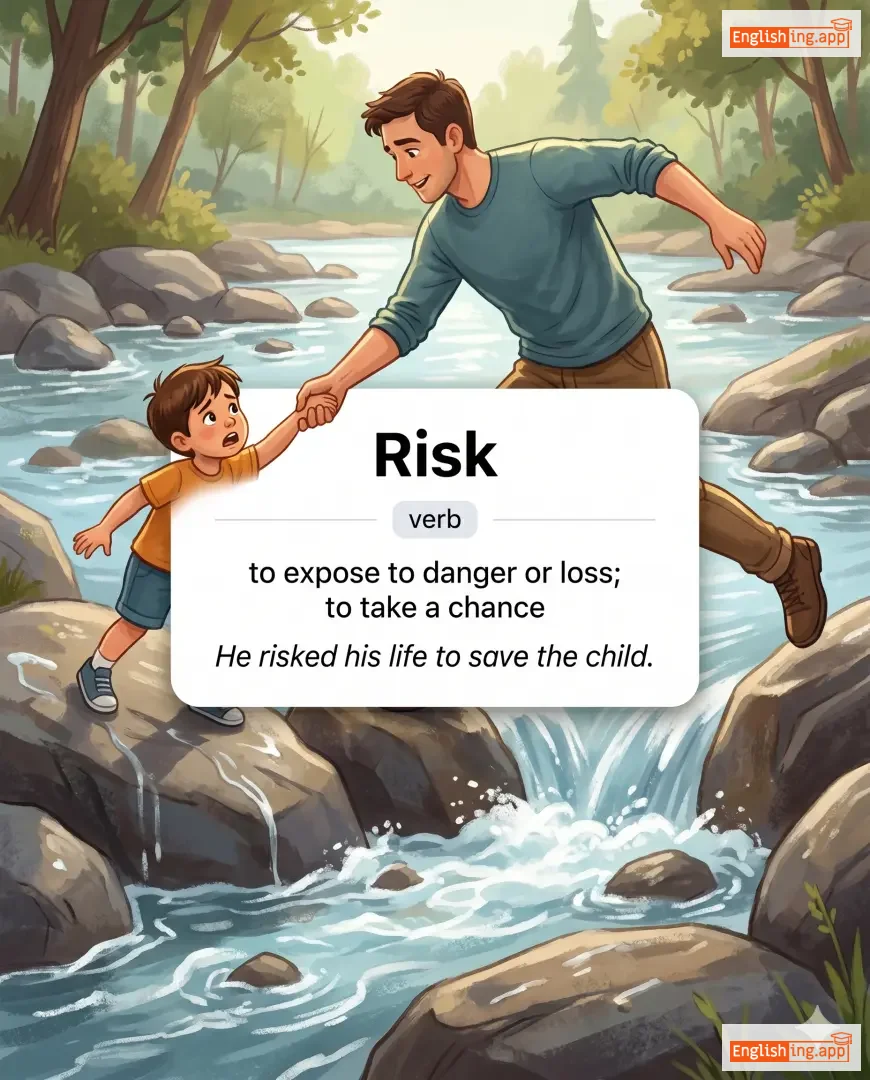
#1211
⚠️
|
/rɪsk/
noun
(风险)
••••••
|
|
风险
fengxian
••••••
|
a situation involving exposure to danger; the possibility of something bad happening
••••••
|
Taking this investment carries a high risk of losing money. |
进行这项投资存在高风险可能会损失资金。
Jinxing zhe xiang touzi cunzai gao fengxian keneng hui sunshi zijin
••••••
|
追求幸福
zhuiqiu xingfu
••••••
|
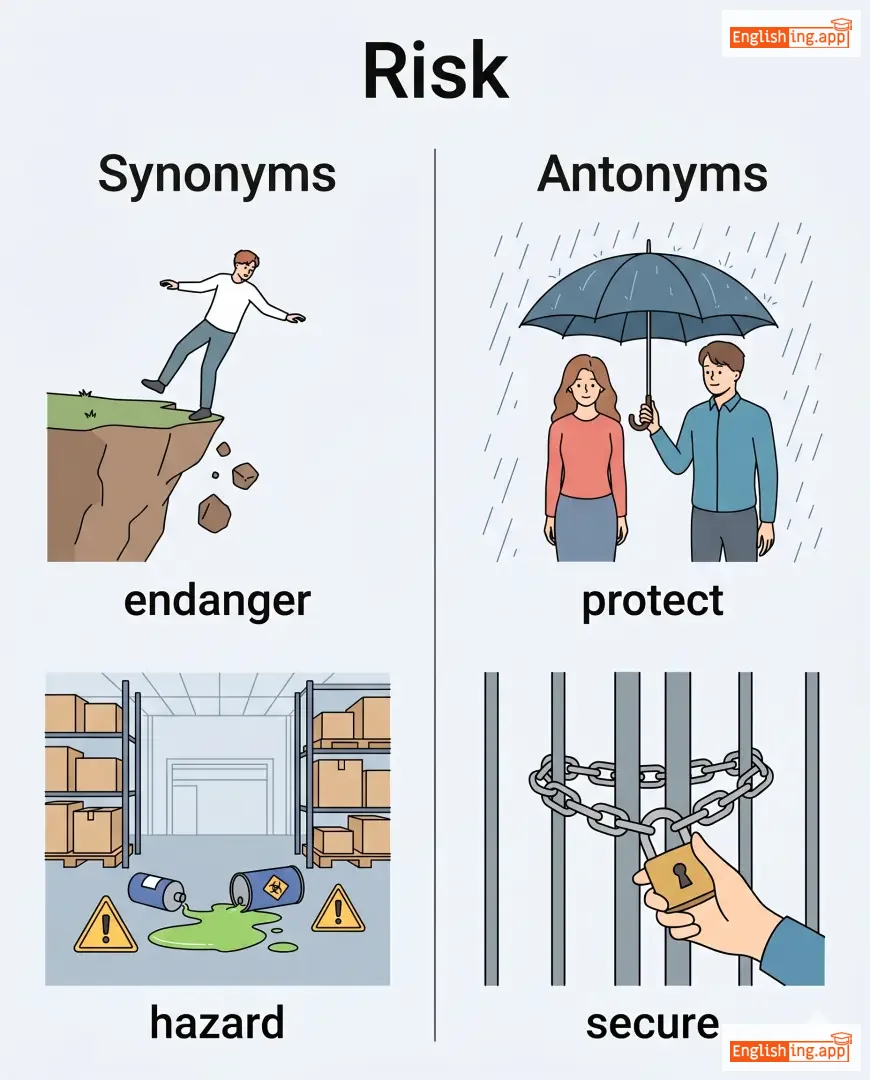
danger, hazard, peril, threat
••••••
|
safety, security, certainty
••••••
|
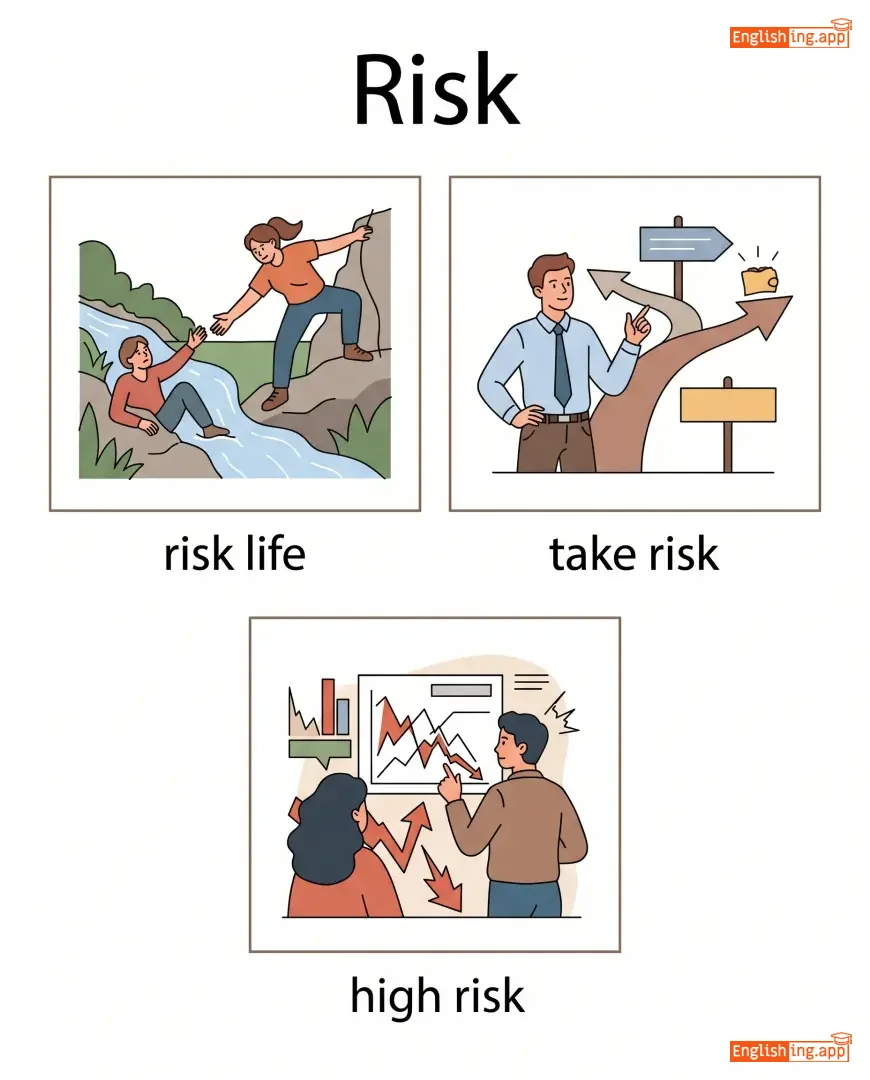
high risk, take a risk, risk assessment
••••••
|
风险是成功的垫脚石,也可能导致失败。
••••••
|
|
#1212
🗣️
|
/ˈruːmər/
noun
(流言)
••••••
|
- •••••• |
流言; 八卦; 新闻
liúyán
••••••
|
a currently circulating story or report of uncertain or doubtful truth; gossip
••••••
|
There's a rumour that the company will close next month.
有传言说公司将在下个月关闭。
••••••
|
有传言说公司将在下个月关闭。
yǒu chuányán shuō gōngsī jiāng zài xià gè yuè guānbì
••••••
|
- •••••• |
gossip, hearsay, speculation, whisper
••••••
|
fact, truth, certainty, confirmation
••••••
|
spread rumour, false rumour, rumour mill
••••••
|
Liúyán sounds like 'liu' (flow) and 'yan' (word), making it easy to remember as gossip.
••••••
|
|
#1213
🥊
|
/ˈraɪvəl/
noun
(raival)
••••••
|
- •••••• |
竞争对手; 对手;
jingzheng duishou; duishou
••••••
|
a person or thing competing with another for the same objective or for superiority in the same field
••••••
|
The two companies have been business rivals for decades.
这两家公司已经是商业竞争对手几十年了。
••••••
|
这两家公司已经是商业竞争对手几十年了。
Zhe liang jia gongsi yijing shi shangye jingzheng duishou jishinian le.
••••••
|
- •••••• |
competitor, opponent, adversary, challenger
••••••
|
ally, partner, friend, supporter
••••••
|
business rival, fierce rival, political rival
••••••
|
竞争对手就像两家公司争夺市场份额,就像两个朋友争夺同一个玩具。
••••••
|
|
#1214
🔊
|
/ˈrʌmpəs/
noun
(rampas)
••••••
|
- •••••• |
喧闹; 骚动; 混乱
xuannao; saodong; hunluan
••••••
|
a noisy disturbance; an uproar or commotion
••••••
|
The children caused quite a rumpus in the playground.
孩子们在游乐场引起了相当大的骚乱。
••••••
|
孩子们在游乐场引起了相当大的骚乱。
Haizimen zai youlexiang yinqi le xiangdang da de saoluan.
••••••
|
- •••••• |
commotion, uproar, disturbance, tumult
••••••
|
quiet, peace, calm, silence
••••••
|
cause rumpus, raise rumpus, rumpus room
••••••
|
想象在游乐场发生的喧闹和骚动
••••••
|
|
#1215
⚔️
|
/ˈraɪvəlri/
noun
(raivolri)
••••••
|
- •••••• |
竞争; 对抗
jìngzhēng; duìkàng
••••••
|
competition for the same objective or for superiority in the same field; the state of being rivals
••••••
|
The rivalry between the two teams made the match exciting.
两个队伍之间的竞争使比赛变得非常刺激。
••••••
|
两个队伍之间的竞争使比赛变得非常刺激。
Liǎng gè duìwǔ zhījiān de jìngzhēng shǐ bǐsài biàn dé fēicháng cìjī.
••••••
|
- •••••• |
competition, contest, conflict, antagonism
••••••
|
cooperation, alliance, friendship
••••••
|
fierce rivalry, sibling rivalry, sporting rivalry
••••••
|
竞争意味着两个力量对抗,就像两个队伍争夺冠军。
••••••
|
|
#1216
🎭
|
/ruːz/
noun
(rú)
••••••
|
|
诡计; 计谋
gui ji; ji mou
••••••
|
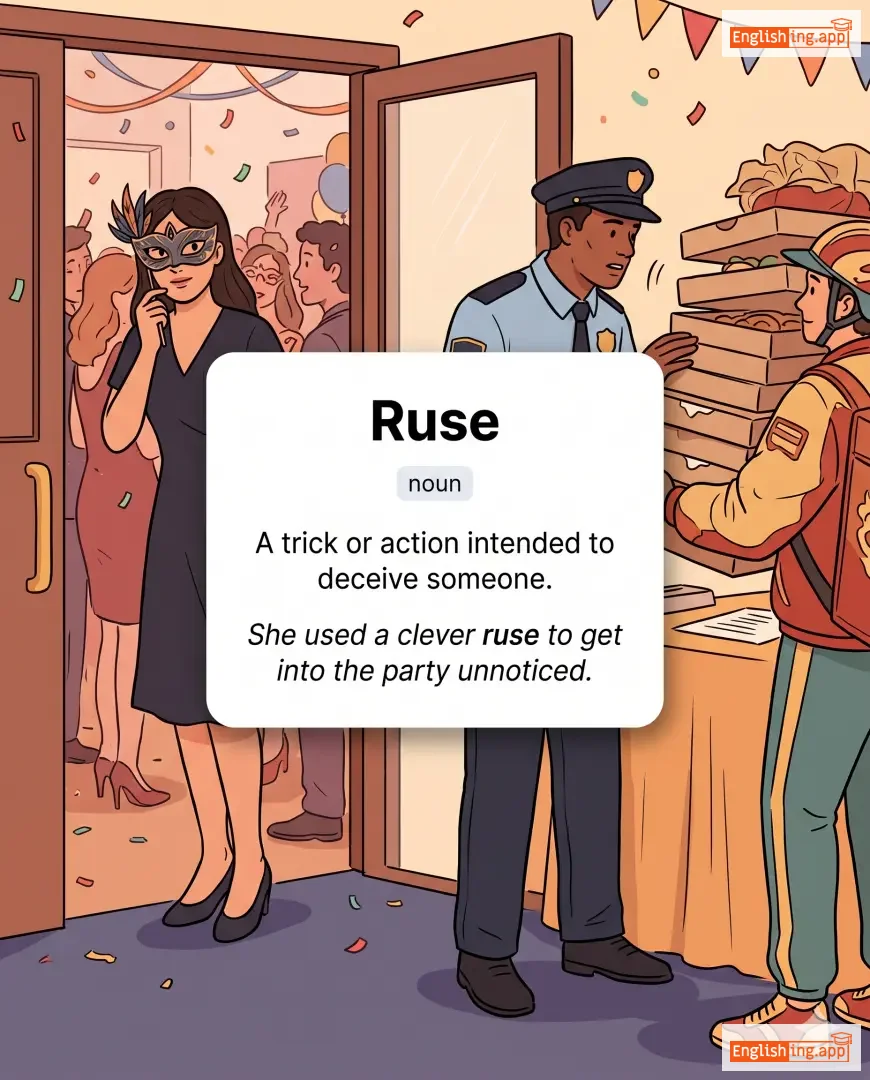
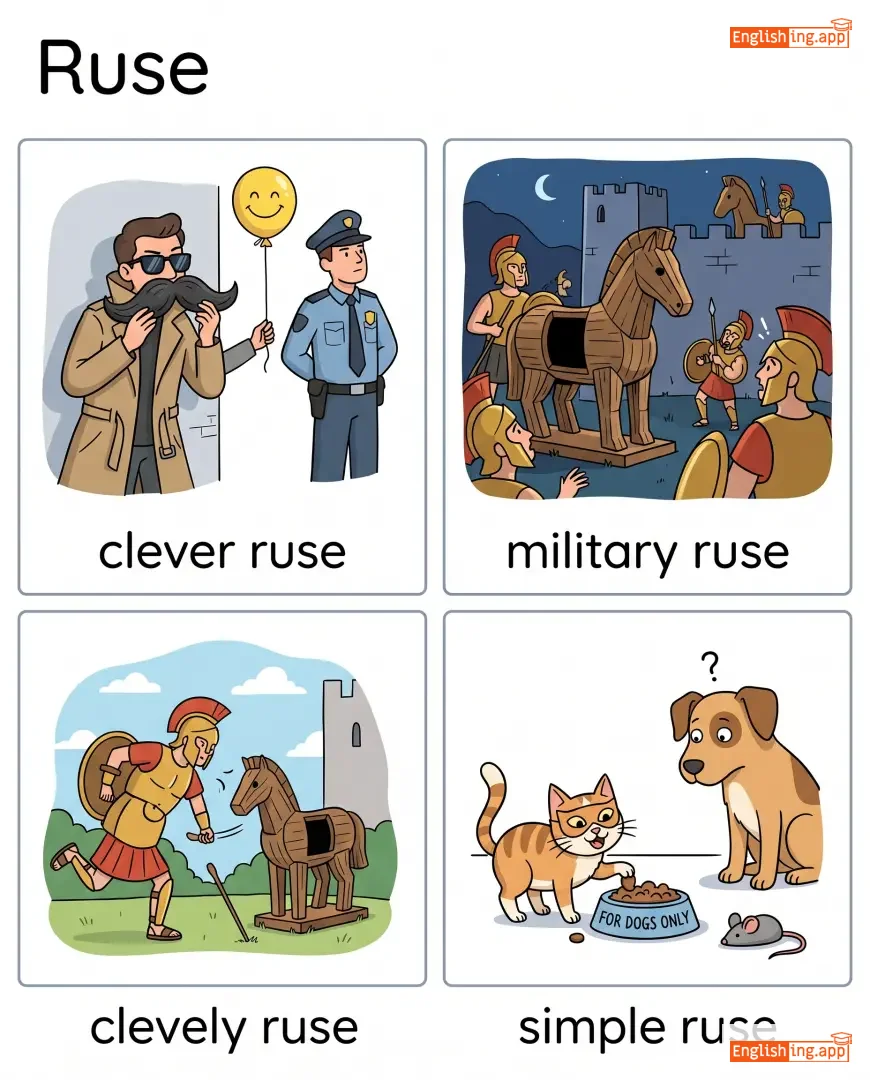
an action intended to deceive someone; a trick or stratagem
••••••
|
The thief used a clever ruse to distract the guard. |
小偷使用了一种巧妙的诡计来分散警卫的注意力。
Xiǎotōu shǐyòng le yī zhǒng qiǎomiào de guǐjì lái fēnsàn jǐngwèi de zhùyìlì.
••••••
|
- •••••• |
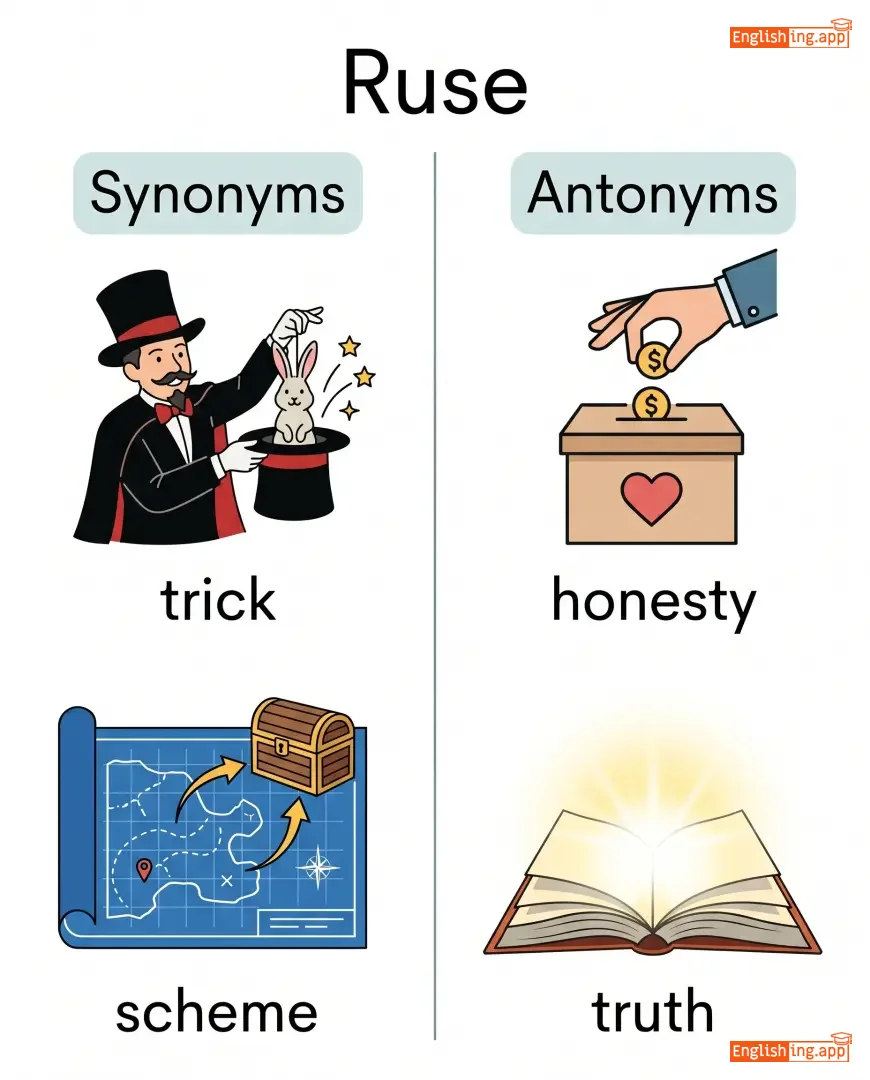
trick, deception, stratagem, ploy
••••••
|
honesty, truth, straightforwardness
••••••
|
clever ruse, elaborate ruse, fall for ruse
••••••
|
No •••••• |
|
#1217
💕
|
/roʊˈmæns/
noun
(罗曼史)
••••••
|
- •••••• |
浪漫
luo man shi
••••••
|
a feeling of excitement and mystery associated with love; a love affair or relationship
••••••
|
Their romance began when they met at the university library.
他们的罗曼史始于他们在大学图书馆相遇时。
••••••
|
他们的罗曼史始于他们在大学图书馆相遇时。
tamen de luo man shi shi yu tamen zai da xue tu shu guan xiang yu shi
••••••
|
- •••••• |
love affair, courtship, passion, relationship
••••••
|
hatred, indifference, platonic friendship
••••••
|
office romance, summer romance, whirlwind romance
••••••
|
罗曼史 = ROMAN SHI, 想象一个 ROMAN 男子 在 月光 下 讲述 爱情 故事, 让 浪漫 的 感觉 牢牢记住
••••••
|
|
#1218
🍪
|
/rʌsk/
noun
(rusk)
••••••
|
- •••••• |
干饼干;烤面包
rusk
••••••
|
a hard, dry biscuit or twice-baked bread; a type of crisp, sweet biscuit
••••••
|
The baby enjoyed eating the soft rusk with milk.
宝宝喜欢吃奶时吃软脆饼干。
••••••
|
宝宝喜欢吃奶时吃软脆饼干。
Bǎobǎo xǐhuān chī nǎi shí chī ruǎn cuì bǐnggān.
••••••
|
- •••••• |
biscuit, cracker, zwieback, hardtack
••••••
|
soft bread, fresh bread, moist cake
••••••
|
baby rusk, tea rusk, rusk crumbs
••••••
|
一口脆脆的rusk,给宝宝带来温暖的享受。
••••••
|
|
#1219
🌱
|
/ruːt/
noun
(rùt)
••••••
|
- •••••• |
根; 来源; 根源; 原因
gēn; láiyuán; gēnyuán; yuányīn
••••••
|
the part of a plant that grows underground; the basic cause, source, or origin of something
••••••
|
We need to find the root of this problem to solve it permanently.
我们需要找到这个问题的根源,才能永久解决它。
••••••
|
我们需要找到这个问题的根源,才能永久解决它。
Wǒmen xūyào zhǎodào zhège wèntí de gēnyuán, cáinéng yǒngjiǔ jiějué tā.
••••••
|
- •••••• |
source, origin, basis, foundation
••••••
|
branch, leaf, effect, result
••••••
|
root cause, tree root, root of the problem
••••••
|
In Chinese, '根' (gēn) refers to the root, which is the origin or cause of something, just like the root of a plant.
••••••
|
|
#1220
🏃
|
/rʌʃ/
noun
(rʌʃ)
••••••
|
- •••••• |
匆忙; 急促
cōngmáng; jícù
••••••
|
a sudden quick movement toward something; a period of great activity or demand; hurry
••••••
|
There was a rush to buy tickets for the concert. |
为购买音乐会门票而匆忙。
wèi gòumǎi yīnyuè huì ménpiào ér cōngmáng.
••••••
|
- •••••• |
hurry, haste, urgency, dash
••••••
|
delay, calm, leisure, slowness
••••••
|
rush hour, gold rush, adrenaline rush
••••••
|
匆忙和急促的Rush使得一切都变得更快。
••••••
|
Vocabulary Quiz
Test your vocabulary by matching words with their translations or meanings.
Login to take the quiz
Comments (0)
Share your thoughts and join the discussion.
Join the discussion by logging in
Login to CommentNo comments yet
Be the first to share your thoughts!