

翻訳
過去
過去分詞
三人称単数
動名詞
意味
例文
例文の翻訳
同義語
対義語
コロケーション
ニーモニック
Swipe left or right, or use the buttons. Tap image to zoom.
例文の翻訳
単語
Lesson 61Lesson 61 - マスクトグル
|
絵文字
|
単語 | Images | 翻訳 | 意味 | 例文 | 例文の翻訳 | 表現例の翻訳 | 同義語 | 対義語 | コロケーション | ニーモニック |
|---|---|---|---|---|---|---|---|---|---|---|---|
|
#1201
🔄
|
/ˌrevəˈluːʃən/
noun
(レボリューション)
••••••
|
|
革命; 変革; 転覆
kakumei; henka; tenpuku
••••••
|
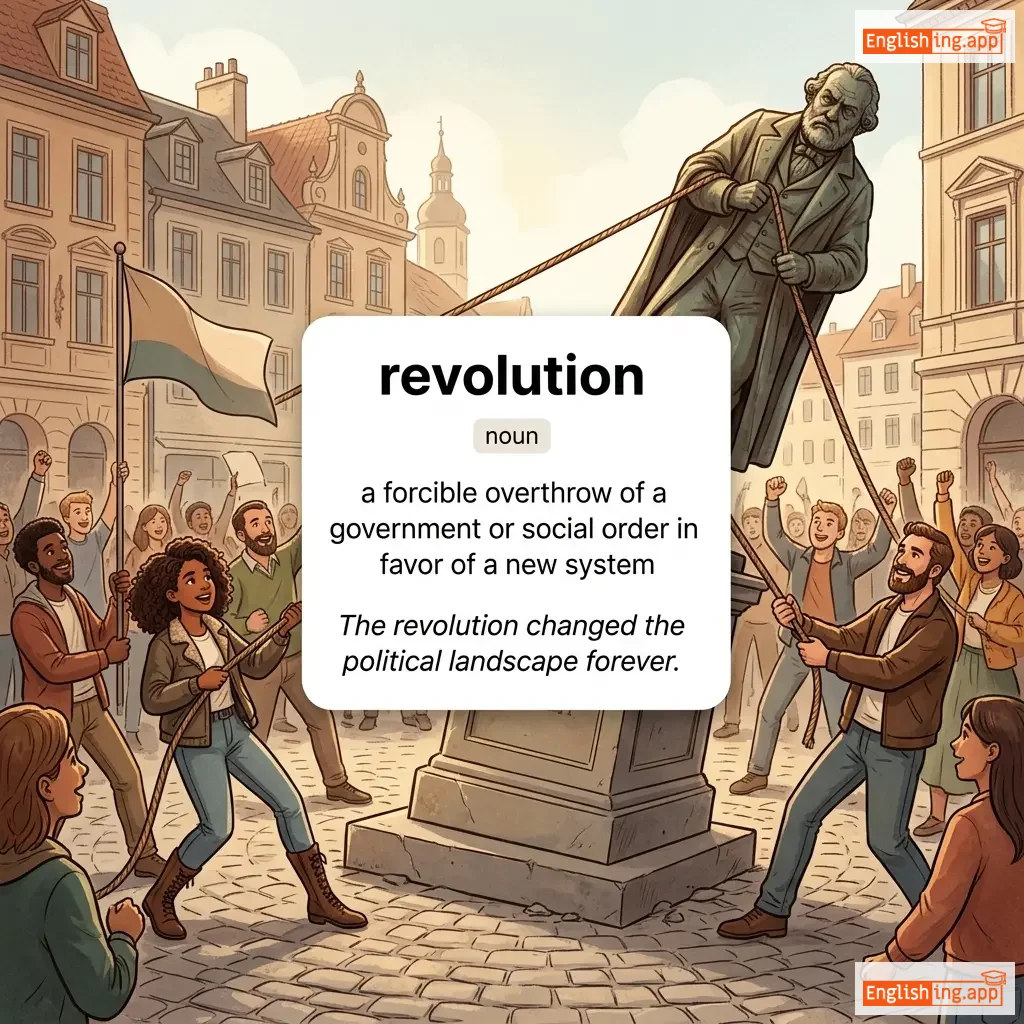
a dramatic and wide-reaching change in conditions, attitudes, or operation; a forcible overthrow of a government or social order
••••••
|
The industrial revolution changed the way people lived and worked.
産業革命は人々の生活と仕事の仕方を変えました。
••••••
|
産業革命は人々の生活と仕事の仕方を変えました。
sangyou kakumei wa hitobito no seikatsu to shigoto no shikata o kaemashita.
••••••
|
- •••••• |
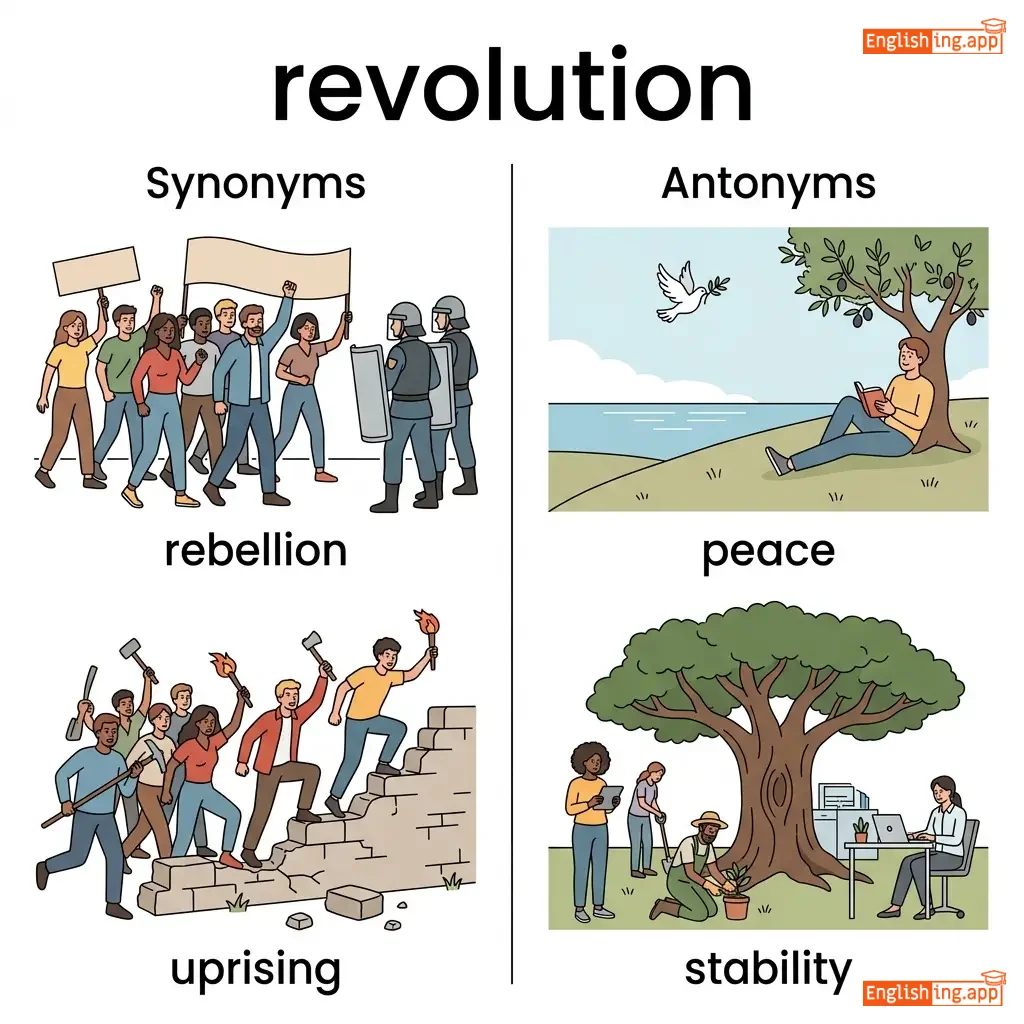
upheaval, transformation, rebellion, revolt
••••••
|
stability, conservation, tradition
••••••
|
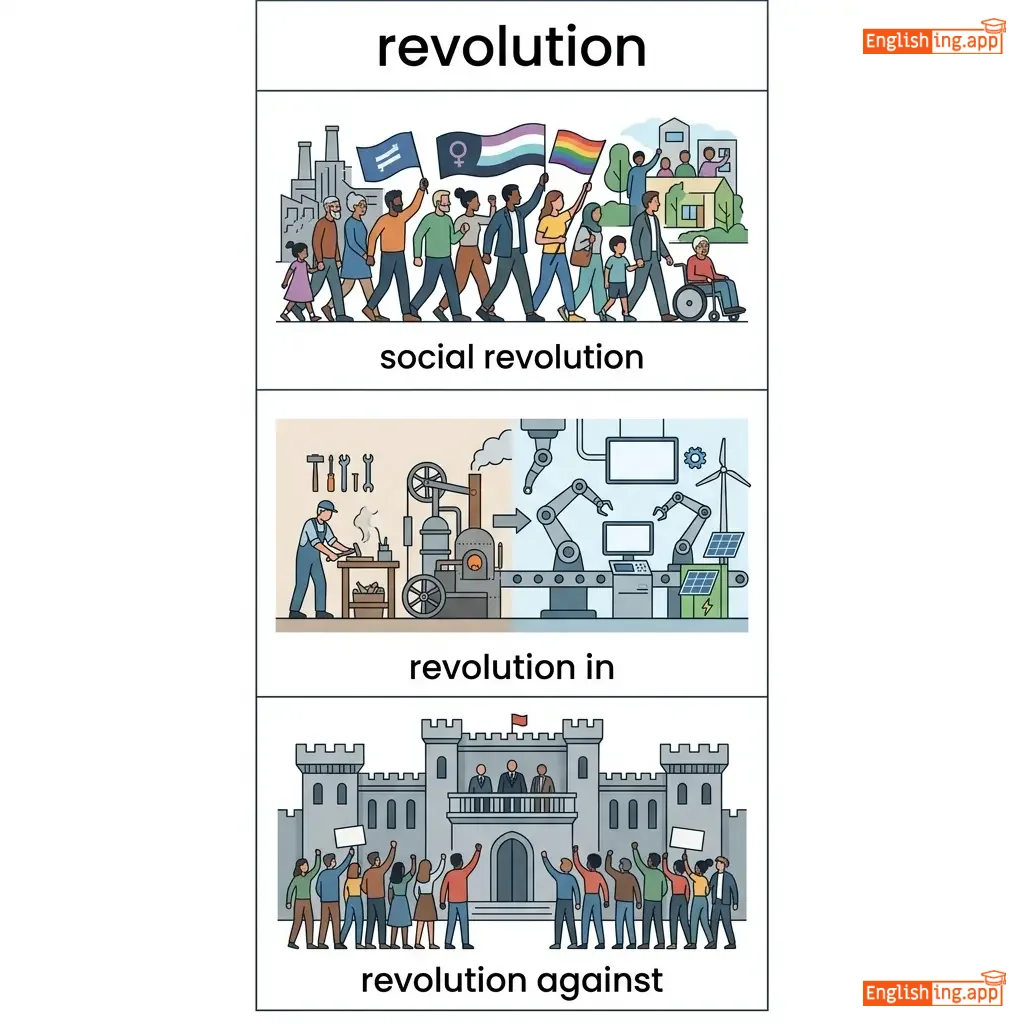
industrial revolution, political revolution, scientific revolution
••••••
|
革命はすべてを変える、まるで社会秩序の転覆のように。
••••••
|
|
#1202
🔄
|
/roʊˈteɪʃən/
noun
(ro-tei-shon)
••••••
|
- •••••• |
回転; 回転運動; 自転
kaiten; kaiten undō; jiten
••••••
|
the action of rotating around an axis or center; a single turn
••••••
|
The Earth's rotation takes 24 hours to complete.
地球の回転は24時間かかります。
••••••
|
地球の回転は24時間かかります。
Chikyū no kaiten wa 24 jikan kakarimasu.
••••••
|
- •••••• |
turning, spinning, revolution, orbit
••••••
|
stillness, stability, stagnation
••••••
|
crop rotation, job rotation, axis of rotation
••••••
|
地球が回転するのを想像してください
••••••
|
|
#1203
🧩
|
/ˈrɪdəl/
noun
(ハピネス)
••••••
|
- •••••• |
謎
nazo
••••••
|
a question or statement intentionally phrased so as to require ingenuity in ascertaining its answer or meaning; a puzzle
••••••
|
The ancient riddle stumped all the scholars for years. |
その古代の謎は何年もの間、すべての学者を困らせました。
sono kodai no nazo wa nannen mono aida, subete no gakusha o komarasemashita
••••••
|
- •••••• |
puzzle, enigma, mystery, brain teaser
••••••
|
solution, answer, explanation
••••••
|
solve a riddle, ancient riddle, riddle me this
••••••
|
Japanese '謎' (nazo) is a close match to the English 'riddle'.
••••••
|
|
#1204
🗑️
|
/ˈrʌbɪʃ/
noun
(ラビッシュ)
••••••
|
- •••••• |
ゴミ; 無駄な物; ナンセンス
go-mi; mu-da-na mo-no; nan-sen-su
••••••
|
waste material; refuse or litter; nonsense or worthless things
••••••
|
Please throw the rubbish in the bin. |
ゴミをゴミ箱に捨ててください。
Go-mi wo go-mi-ba-ko ni su-te-te ku-da-sa-i.
••••••
|
- •••••• |
garbage, trash, waste, junk
••••••
|
treasure, valuable, precious
••••••
|
household rubbish, rubbish bin, rubbish collection
••••••
|
In Japanese, 'ゴミ' (gomi) means rubbish, keep it in mind next time you dispose of it!
••••••
|
|
#1205
🔒
|
/rɪˈdʒɪdəti/
noun
(rijiditi)
••••••
|
- •••••• |
剛性
gōsei
••••••
|
inability to bend or be forced out of shape; unwillingness to change or compromise
••••••
|
The rigidity of the old system prevented any innovation. |
古いシステムの剛性は、どんな革新も妨げました。
Furui shisutemu no gōsei wa, donna kakushin mo samatagemashita.
••••••
|
- •••••• |
stiffness, inflexibility, strictness, firmness
••••••
|
flexibility, adaptability, elasticity
••••••
|
mental rigidity, structural rigidity, rigidity of rules
••••••
|
剛性は動かない硬さを意味する
••••••
|
|
#1206
👥
|
/rʌk/
noun
(ラック)
••••••
|
- •••••• |
押し合い; 混雑した人々
oshi ai; konzatsu shita hitobito
••••••
|
a situation where a crowd of people are pushing against each other; a disorderly crowd
••••••
|
There was a ruck at the football match. |
サッカーの試合で押し合いがありました。
sakkaa no shiai de oshi ai ga arimashita
••••••
|
- •••••• |
scuffle, fight, brawl, melee
••••••
|
peace, order, calm
••••••
|
rugby ruck, ruck and maul, ruck formation
••••••
|
押し合い = 混乱した人々の中での押し合い
••••••
|
|
#1207
🔥
|
/ˈraɪət/
noun
(raiyoto)
••••••
|
- •••••• |
暴動; 騒乱
bōdō; sōran
••••••
|
a violent disturbance of the peace by a crowd; an uncontrolled outburst
••••••
|
The peaceful protest turned into a riot when violence broke out.
平和的な抗議は暴力が起こったときに暴動に変わった。
••••••
|
平和的な抗議は暴力が起こったときに暴動に変わった。
Heiwateki na kōgi wa bōryoku ga okotta toki ni bōdō ni kawatta
••••••
|
- •••••• |
uprising, disturbance, unrest, rebellion
••••••
|
peace, order, calm, tranquility
••••••
|
riot police, food riot, prison riot
••••••
|
抗議が暴力に変わった瞬間を想像してください。
••••••
|
|
#1208
😤
|
/ˈruːdnəs/
noun
(ルードネス)
••••••
|
- •••••• |
無礼
ru-do-nesu
••••••
|
the quality of being impolite, discourteous, or offensive in behavior or speech
••••••
|
His rudeness shocked everyone at the dinner party. |
彼の無礼さはディナーパーティーで皆を驚かせました。
Kare no burei-sa wa dinā pāti de mina o odorokasemashita.
••••••
|
- •••••• |
impoliteness, discourtesy, incivility, bad manners
••••••
|
politeness, courtesy, civility, respect
••••••
|
shocking rudeness, deliberate rudeness, inexcusable rudeness
••••••
|
無礼は、相手を尊重せずに話すこと。
••••••
|
|
#1209
🌊
|
/ˈrɪpəl/
noun
(リップル)
••••••
|
- •••••• |
波紋
hamon
••••••
|
a small wave on the surface of water; a spreading effect or influence
••••••
|
The stone created ripples across the calm pond. |
石が静かな池に波紋を作った。
Ishi ga shizukana ike ni hamon o tsukutta.
••••••
|
- •••••• |
wave, undulation, effect, consequence
••••••
|
stillness, calm, smoothness
••••••
|
ripple effect, water ripple, ripple through
••••••
|
波紋が広がるように、ポジティブな影響を広げよう。
••••••
|
|
#1210
😈
|
/ˈrʌfiən/
noun
(ラフィアン)
••••••
|
- •••••• |
暴力的な人物; 不良;
rafian
••••••
|
a violent person, especially one involved in crime; a brutal or lawless person
••••••
|
The ruffian threatened the shopkeeper for money.
ラフィアンは店主を金のために脅した。
••••••
|
不良は店主を金のために脅した。
Furyō wa tenshu o kane no tame ni odoshita
••••••
|
- •••••• |
thug, hooligan, criminal, villain
••••••
|
gentleman, saint, hero, protector
••••••
|
street ruffian, common ruffian, dangerous ruffian
••••••
|
ラフィアンを覚えるために、金のために店主を脅す暴力的な人物を想像してみてください。
••••••
|
|
#1211
⚠️
|
/rɪsk/
noun
(リスク)
••••••
|
|
リスク
risuku
••••••
|
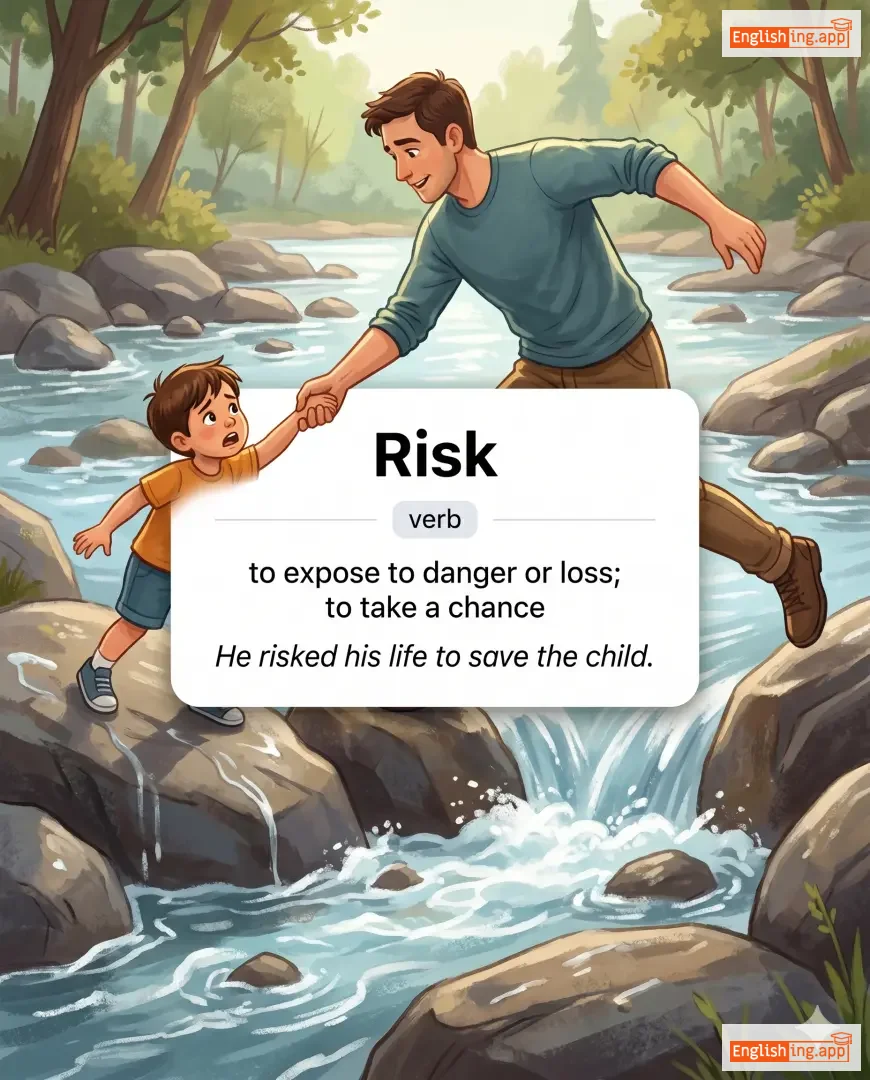
a situation involving exposure to danger; the possibility of something bad happening
••••••
|
Taking this investment carries a high risk of losing money. |
この投資には高いリスクが伴い、資金を失う可能性があります。
Kono toushi ni wa takai risuku ga tomonai, shikin wo ushinau kanousei ga arimasu
••••••
|
幸福の追求
koufuku no tsuikyuu
••••••
|
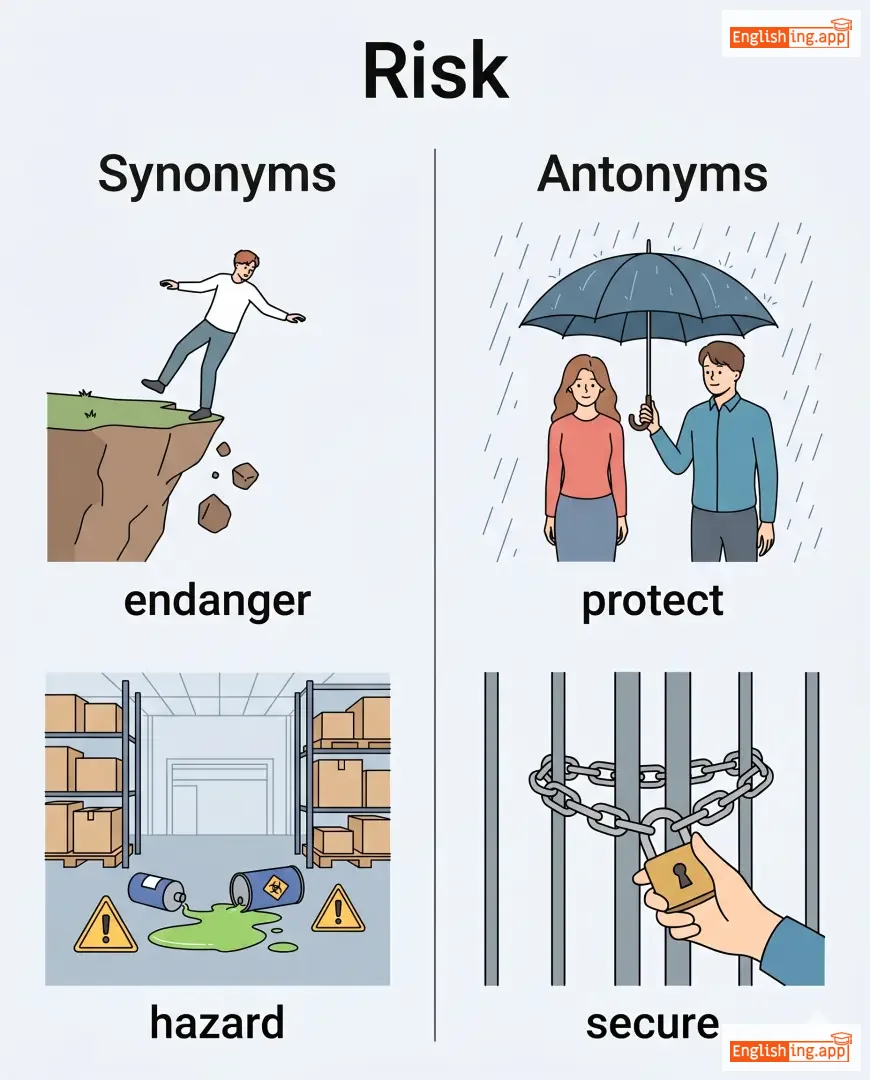
danger, hazard, peril, threat
••••••
|
safety, security, certainty
••••••
|
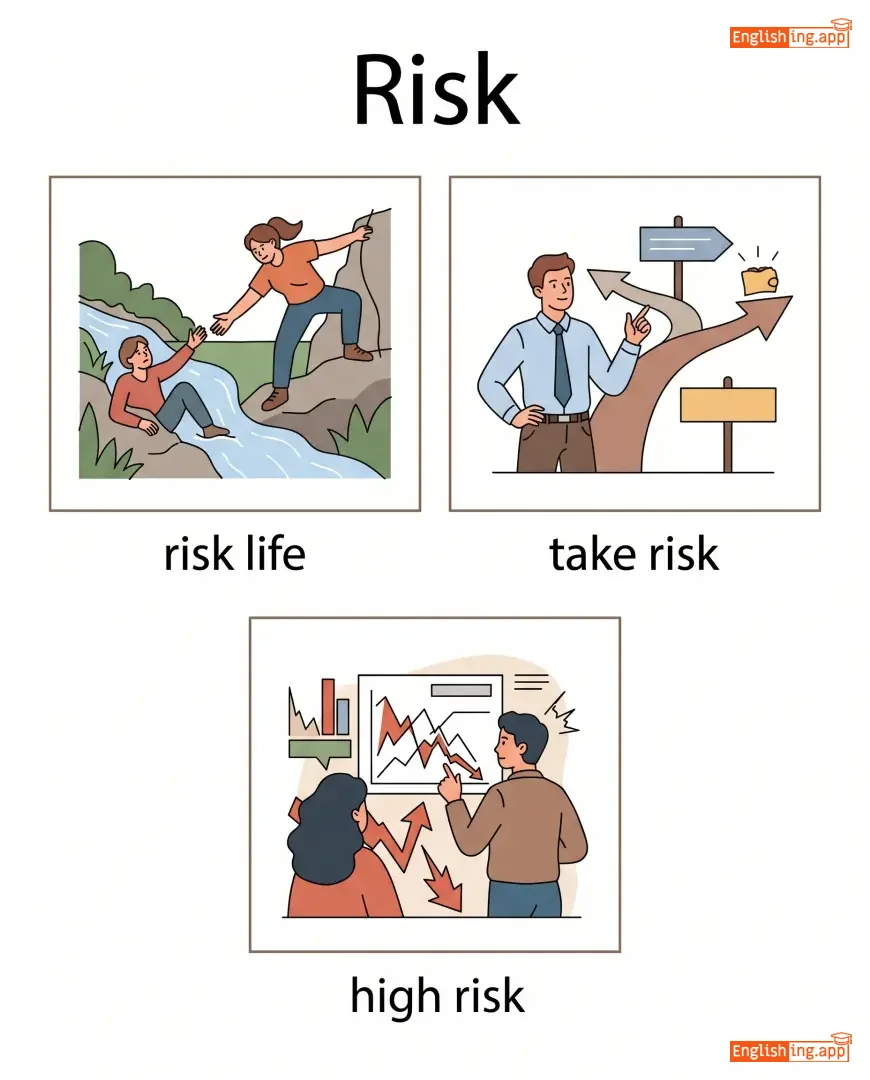
high risk, take a risk, risk assessment
••••••
|
リスクを冒してこそ、新しいチャンスが開かれる。
••••••
|
|
#1212
🗣️
|
/ˈruːmər/
noun
(ルーマー)
••••••
|
- •••••• |
噂; ゴシップ; ニュース
rūmā
••••••
|
a currently circulating story or report of uncertain or doubtful truth; gossip
••••••
|
There's a rumour that the company will close next month.
会社が来月閉鎖されるという噂があります。
••••••
|
会社が来月閉鎖されるという噂があります。
kaisha ga raigetsu heisa sareru to iu uwasa ga arimasu
••••••
|
- •••••• |
gossip, hearsay, speculation, whisper
••••••
|
fact, truth, certainty, confirmation
••••••
|
spread rumour, false rumour, rumour mill
••••••
|
Rūmā in Japanese sounds like 'rumor' and reminds us of the gossip word 'goshippu'.
••••••
|
|
#1213
🥊
|
/ˈraɪvəl/
noun
(raival)
••••••
|
- •••••• |
ライバル; 競争相手;
raibaru; kyousou aite
••••••
|
a person or thing competing with another for the same objective or for superiority in the same field
••••••
|
The two companies have been business rivals for decades.
二つの企業は何十年もの間、商業上のライバルです。
••••••
|
二つの企業は何十年もの間、商業上のライバルです。
Futatsu no kigyou wa nanjuunen mono aida, shougyoujou no raibaru desu.
••••••
|
- •••••• |
competitor, opponent, adversary, challenger
••••••
|
ally, partner, friend, supporter
••••••
|
business rival, fierce rival, political rival
••••••
|
ライバルは、二つの企業が市場シェアを争うようなものです。まるで二人の友達が同じおもちゃを争っているように。
••••••
|
|
#1214
🔊
|
/ˈrʌmpəs/
noun
(ランパス)
••••••
|
- •••••• |
騒動; 混乱; 騒音
soudou; konran; souon
••••••
|
a noisy disturbance; an uproar or commotion
••••••
|
The children caused quite a rumpus in the playground.
子供たちは遊び場でかなりの騒動を引き起こしました。
••••••
|
子供たちは遊び場でかなりの騒動を引き起こしました。
Kodomotachi wa asobiba de kanari no soudou o hikiokoshimashita.
••••••
|
- •••••• |
commotion, uproar, disturbance, tumult
••••••
|
quiet, peace, calm, silence
••••••
|
cause rumpus, raise rumpus, rumpus room
••••••
|
子供たちの騒音と騒動を思い浮かべてください
••••••
|
|
#1215
⚔️
|
/ˈraɪvəlri/
noun
(raivoriri)
••••••
|
- •••••• |
ライバル関係; 競争
raibaru kankei; kyousou
••••••
|
competition for the same objective or for superiority in the same field; the state of being rivals
••••••
|
The rivalry between the two teams made the match exciting.
二つのチーム間のライバル関係が試合を興奮させた。
••••••
|
二つのチーム間のライバル関係が試合を興奮させた。
Futatsu no chīmu-kan no raibaru kankei ga shiai o kōfun saseta.
••••••
|
- •••••• |
competition, contest, conflict, antagonism
••••••
|
cooperation, alliance, friendship
••••••
|
fierce rivalry, sibling rivalry, sporting rivalry
••••••
|
ライバル関係は、競争している二つの力を表しています。
••••••
|
|
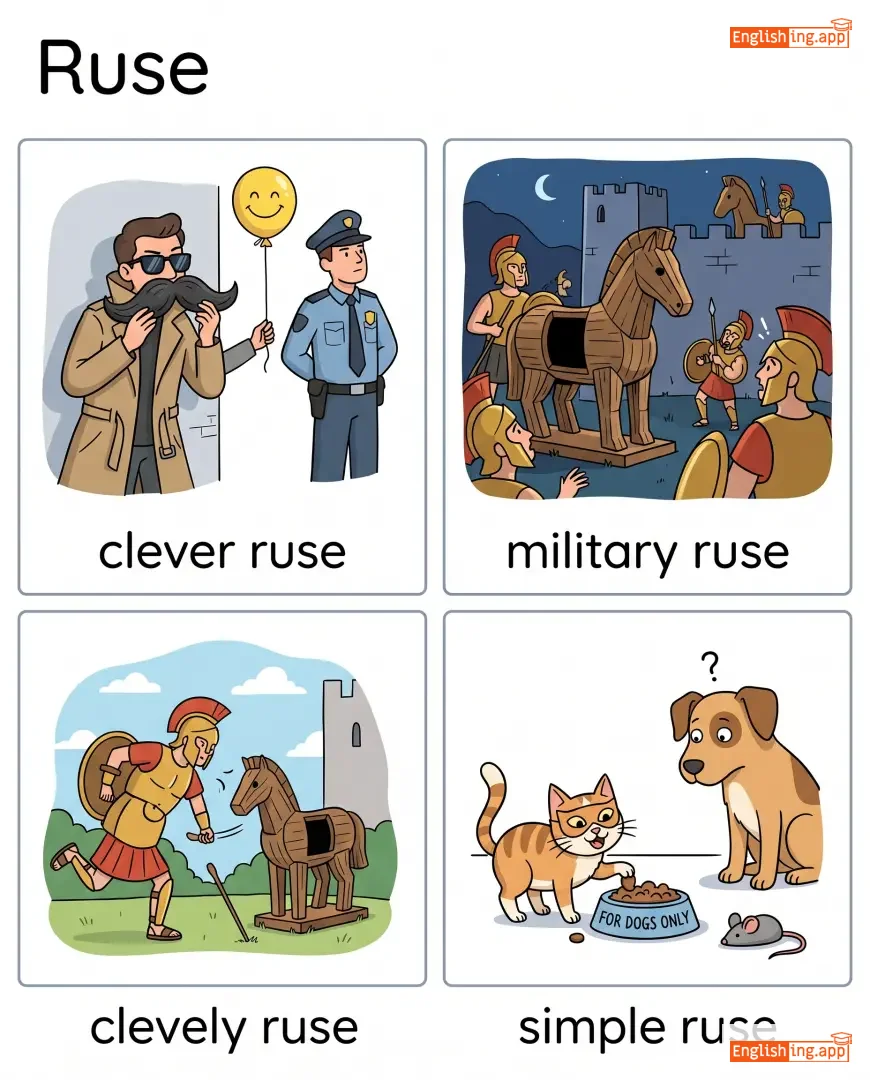
#1216
🎭
|
/ruːz/
noun
(ルーズ)
••••••
|
|
策略; 騙し
rūzu
••••••
|
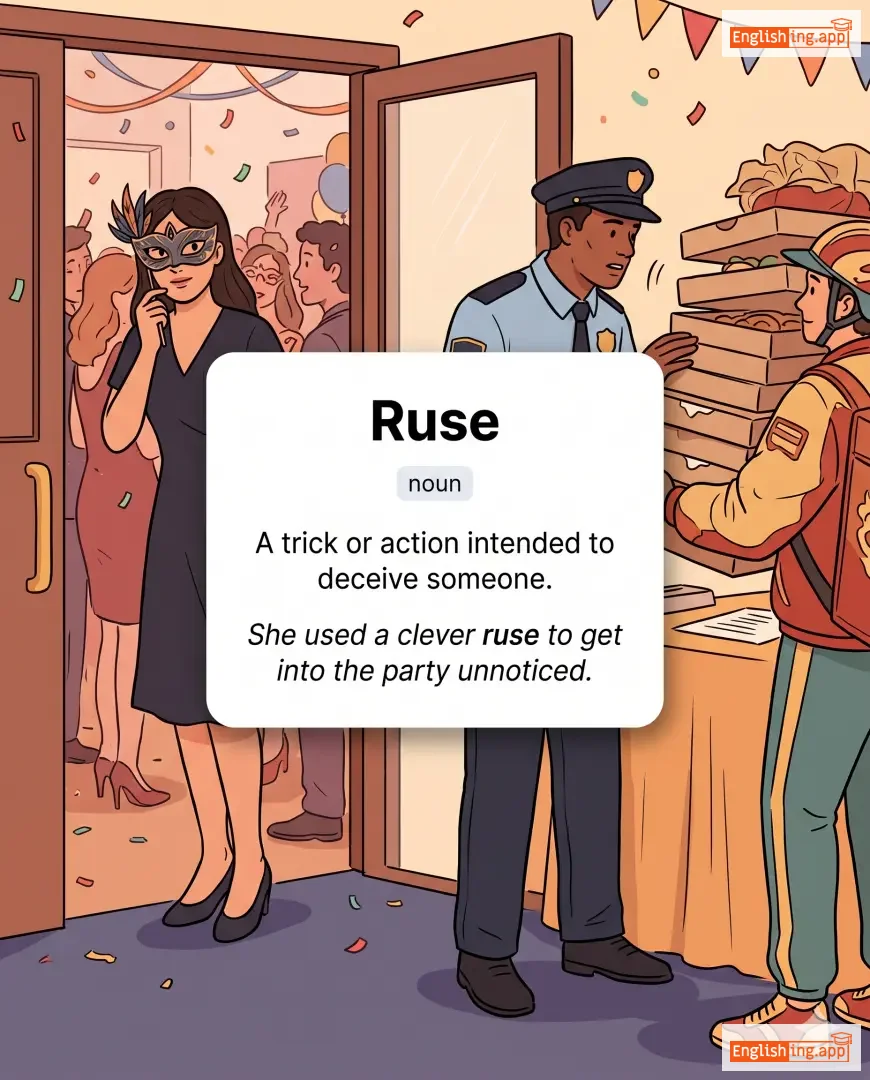
an action intended to deceive someone; a trick or stratagem
••••••
|
The thief used a clever ruse to distract the guard. |
泥棒は警備員を惑わすために巧妙な策略を使った。
Dorobō wa keibiin o madowasu tame ni kōmyōna sakuryaku o tsukatta.
••••••
|
- •••••• |
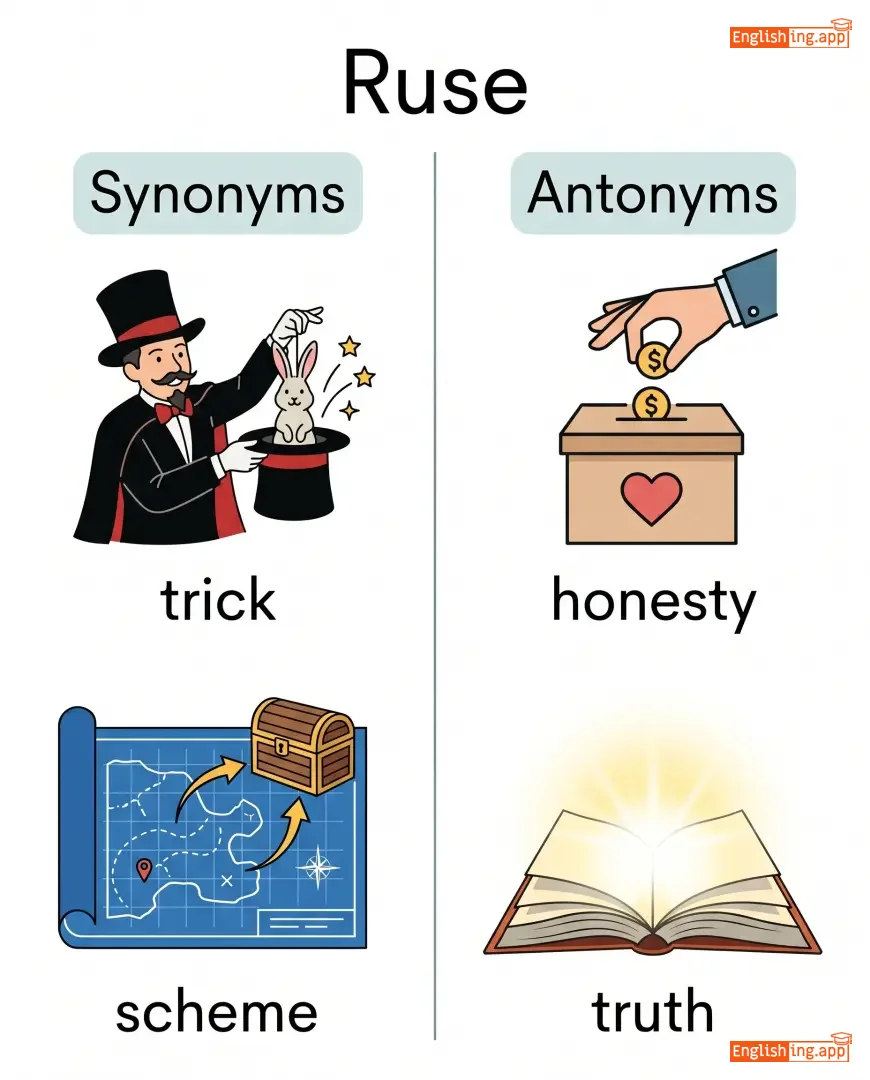
trick, deception, stratagem, ploy
••••••
|
honesty, truth, straightforwardness
••••••
|
clever ruse, elaborate ruse, fall for ruse
••••••
|
No •••••• |
|
#1217
💕
|
/roʊˈmæns/
noun
(ロマンス)
••••••
|
- •••••• |
ロマンス
romansu
••••••
|
a feeling of excitement and mystery associated with love; a love affair or relationship
••••••
|
Their romance began when they met at the university library.
彼らの恋愛は、大学の図書館で出会ったときに始まった。
••••••
|
彼らの恋愛は、大学の図書館で出会ったときに始まった。
Karera no renai wa daigaku no toshokan de deatta toki ni hajimatta
••••••
|
- •••••• |
love affair, courtship, passion, relationship
••••••
|
hatred, indifference, platonic friendship
••••••
|
office romance, summer romance, whirlwind romance
••••••
|
RO-MAN-SU: RO (from Romeo) + MAN (a man) + SU (as in suki すき) to cue love
••••••
|
|
#1218
🍪
|
/rʌsk/
noun
(ラスク)
••••••
|
- •••••• |
乾燥ビスケット; トーストパン
rasku
••••••
|
a hard, dry biscuit or twice-baked bread; a type of crisp, sweet biscuit
••••••
|
The baby enjoyed eating the soft rusk with milk.
赤ちゃんはミルクと一緒に柔らかいラスクを食べるのが好きでした。
••••••
|
赤ちゃんはミルクと一緒に柔らかいラスクを食べるのが好きでした。
Akachan wa miruku to issho ni yawarakai rāsuku o taberu no ga suki deshita.
••••••
|
- •••••• |
biscuit, cracker, zwieback, hardtack
••••••
|
soft bread, fresh bread, moist cake
••••••
|
baby rusk, tea rusk, rusk crumbs
••••••
|
ラスクを食べる時、赤ちゃんの笑顔が見える!
••••••
|
|
#1219
🌱
|
/ruːt/
noun
(ルート)
••••••
|
- •••••• |
根; 起源; 基本原因; ルート
ne; kigen; kihon gen'in; rūto
••••••
|
the part of a plant that grows underground; the basic cause, source, or origin of something
••••••
|
We need to find the root of this problem to solve it permanently.
この問題の根本原因を見つけて、永続的に解決する必要があります。
••••••
|
この問題の根本原因を見つけて、永続的に解決する必要があります。
Kono mondai no konpon gen'in o mitsukete, eizoku-teki ni kaiketsu suru hitsuyō ga arimasu.
••••••
|
- •••••• |
source, origin, basis, foundation
••••••
|
branch, leaf, effect, result
••••••
|
root cause, tree root, root of the problem
••••••
|
In Japanese, 'ルート' (rūto) refers to the root of something, just like the root of a plant that grows under the soil.
••••••
|
|
#1220
🏃
|
/rʌʃ/
noun
(ラッシュ)
••••••
|
- •••••• |
急ぎ; ラッシュ
isogi; rasshu
••••••
|
a sudden quick movement toward something; a period of great activity or demand; hurry
••••••
|
There was a rush to buy tickets for the concert. |
コンサートのチケットを買うために急いでいました。
konsāto no chiketto o kau tame ni isoide imashita.
••••••
|
- •••••• |
hurry, haste, urgency, dash
••••••
|
delay, calm, leisure, slowness
••••••
|
rush hour, gold rush, adrenaline rush
••••••
|
急いで行動することで、Rushが生まれる!
••••••
|
Vocabulary Quiz
Test your vocabulary by matching words with their translations or meanings.
Login to take the quiz
Comments (0)
Share your thoughts and join the discussion.
Join the discussion by logging in
Login to CommentNo comments yet
Be the first to share your thoughts!