

翻訳
過去
過去分詞
三人称単数
動名詞
意味
例文
例文の翻訳
同義語
対義語
コロケーション
ニーモニック
Swipe left or right, or use the buttons. Tap image to zoom.
例文の翻訳
単語
Lesson 9Lesson 9 - マスクトグル
|
絵文字
|
単語 | Images | 翻訳 | 意味 | 例文 | 例文の翻訳 | 同義語 | 対義語 | コロケーション | ニーモニック |
|---|---|---|---|---|---|---|---|---|---|---|
|
#161
🕳️
|
/keɪv/
noun
(keiv)
••••••
|
- •••••• |
洞窟; 空間;
doukutsu, kuukan
••••••
|
a large underground chamber in a hill or cliff; a hollow space in rock
••••••
|
The explorers discovered ancient paintings on the cave walls.
探険者は洞窟の壁に古代の絵を発見しました。
••••••
|
探険者は洞窟の壁に古代の絵を発見しました。
Tanken-sha wa doukutsu no kabe ni kodai no e o hakken shimashita.
••••••
|
cavern, grotto, hollow, den
••••••
|
open space, surface, exterior
••••••
|
deep cave, limestone cave, cave entrance
••••••
|
洞窟は岩の中の空間です。
••••••
|
|
#162
🐿️
|
/ˈtʃæs.tɪ.ti/
noun
(チャスティティ)
••••••
|
- •••••• |
純潔; 処女性; 節制;
junketsu, shojosei, sessē
••••••
|
the practice of refraining from extramarital or premarital sexual relations; sexual purity
••••••
|
Many religious traditions value chastity as a virtue of moral purity. |
多くの宗教的伝統では、純潔は道徳的純粋さの美徳とされています。
ōku no shūkyōteki dentō de wa, junketsu wa dōtoku-teki junshinsa no bitoku to sareteimasu.
••••••
|
purity, celibacy, virtue, modesty
••••••
|
promiscuity, immorality, indulgence
••••••
|
vow of chastity, maintain chastity, moral chastity
••••••
|
純潔を思い出すには、清らかな心を保つことを考えましょう。
••••••
|
|
#163
✨
|
/tʃɑːrm/
noun
(チャーム)
••••••
|
- •••••• |
魅力; 魔法; 魅力的な力
miryoku, mahou, miryokuteki na chikara
••••••
|
the power or quality of giving delight or arousing admiration; a magical spell or talisman
••••••
|
Her natural charm and wit made her popular at social gatherings.
her natural charm and wit made her popular at social gatherings.
••••••
|
彼女の自然な魅力と機知は、社交的な集まりで彼女を人気者にした。
kanojo no shizen na miryoku to kichi wa, shakouteki na atsumari de kanojo o ninkimono ni shita.
••••••
|
appeal, allure, magnetism, enchantment
••••••
|
repulsion, ugliness, unpleasantness
••••••
|
natural charm, personal charm, magical charm
••••••
|
魅力を持つと、どこでも注目される
••••••
|
|
#164
❤️
|
/ˈtʃær.ɪ.ti/
noun
(チャリティ)
••••••
|
- •••••• |
チャリティ; 寛大さ; 利他主義
chariti; kandaisa; rita shugi
••••••
|
the voluntary giving of help to those in need; kindness and tolerance in judging others
••••••
|
The wealthy businessman donated millions to charity for education.
裕福な実業家は教育のためにチャリティに何百万も寄付しました。
••••••
|
裕福な実業家は教育のためにチャリティに何百万も寄付しました。
Yūfukuna jitsugyōka wa kyōiku no tame ni chariti ni nanbyakuman mo kifu shimashita.
••••••
|
philanthropy, generosity, kindness, compassion
••••••
|
selfishness, greed, cruelty
••••••
|
donate to charity, charity work, charity organization
••••••
|
チャリティという言葉で、‘親切’と‘寛大さ’を思い出せるように。
••••••
|
|
#165
🎭
|
/ˈkær.ɪk.tər/
noun
(キャラクター)
••••••
|
- •••••• |
キャラクター; 性格; 特徴;
kyarakutā, seikaku, tokuchō
••••••
|
the mental and moral qualities distinctive to an individual; a person in a novel, play, or film
••••••
|
She showed great character by helping others during the crisis.
彼女は危機の間に他の人々を助けることで偉大なキャラクターを示しました。
••••••
|
彼女は危機の間に他の人々を助けることで偉大なキャラクターを示しました。
Kanojo wa kiki no aida ni hoka no hitobito o tasukeru koto de idaina kyarakutā o shimeshimashita.
••••••
|
personality, nature, disposition, role
••••••
|
characterlessness, weakness
••••••
|
good character, main character, character development
••••••
|
'キャラクター' はあなたの物語の中でヒーローのように最良の自分を見せます。
••••••
|
|
#166
🌀
|
/ˈkeɪ.ɒs/
noun
(カオス)
••••••
|
- •••••• |
カオス; 混乱; 無秩序
kaosu, konran, muchitsujo
••••••
|
complete disorder and confusion; a state of total confusion with no order
••••••
|
The earthquake caused chaos in the city as buildings collapsed and people panicked.
地震は都市でカオスを引き起こし、建物が崩れ、人々がパニックに陥った。
••••••
|
地震は都市でカオスを引き起こし、建物が崩れ、人々がパニックに陥った。
Jishin wa toshi de kaosu o hikiokoshi, tatemono ga kuzure, hitobito ga panikku ni ochitta.
••••••
|
disorder, confusion, mayhem, pandemonium
••••••
|
order, organization, calm, peace
••••••
|
complete chaos, cause chaos, chaos theory
••••••
|
Japanese 'カオス' (kaosu) is close to English 'chaos', making it easy to recall.
••••••
|
|
#167
📺
|
/ˈtʃæn.əl/
noun
(チャンネル)
••••••
|
- •••••• |
チャンネル; 水路; 手段;
channeru, suiro, shudan
••••••
|
a television or radio station; a passage for water or other liquids; a means of communication
••••••
|
The news channel provided live coverage of the important event.
ニュースチャンネルは重要なイベントのライブ放送を提供しました。
••••••
|
ニュースチャンネルは重要なイベントのライブ放送を提供しました。
Nyūsu channeru wa jūyōna ibento no raibu hōsō o teikyō shimashita.
••••••
|
station, passage, conduit, medium
••••••
|
blockage, barrier, obstruction
••••••
|
television channel, news channel, water channel
••••••
|
チャンネルは伝達の手段や水路のような通路を意味します。
••••••
|
|
#168
🌾
|
/tʃæf/
noun
(チャフ)
••••••
|
- •••••• |
ふすま; 価値のないもの; 軽い冗談
fusuma, kachi no nai mono, karui jodan
••••••
|
the husks of corn or other seed separated by winnowing; worthless things; light-hearted joking
••••••
|
The farmer separated the wheat from the chaff using traditional methods. |
農夫は伝統的な方法で小麦をふすまから分けました。
noufu wa dentouteki na houhou de komugi wo fusuma kara wakemashita.
••••••
|
husks, debris, waste, banter
••••••
|
grain, wheat, valuable substance
••••••
|
separate chaff, wheat and chaff, worthless chaff
••••••
|
Chaf はふすまのように無駄なもの、冗談のような軽い部分を意味します。
••••••
|
|
#169
✅
|
/ˈsɜːr.tən.ti/
noun
(サーティンティ)
••••••
|
- •••••• |
確実性
kakujitsusei
••••••
|
firm conviction that something is the case; the quality of being reliably true
••••••
|
We can say with certainty that the project will be completed on time. |
私たちは確実にそのプロジェクトが時間通りに完了することを言えます。
Watashitachi wa kakujitsu ni sono purojekuto ga jikan doori ni kanryou suru koto wo iemasu.
••••••
|
confidence, assurance, conviction, sureness
••••••
|
uncertainty, doubt, hesitation
••••••
|
absolute certainty, with certainty, degree of certainty
••••••
|
Kakujitsusei means certainty, like confidently knowing the project will be finished.
••••••
|
|
#170
📅
|
/ˈsen.tʃər.i/
noun
(センチュリー)
••••••
|
- •••••• |
世紀; 百年
seiki, hyakunen
••••••
|
a period of one hundred years; a score of one hundred in cricket
••••••
|
The ancient castle has stood for more than five centuries.
その古い城は500年以上も立っています。
••••••
|
その古い城は500年以上も立っています。
sono furui shiro wa 500-nen ijou mo tatteimasu.
••••••
|
hundred years, era, age, period
••••••
|
moment, instant, brief period
••••••
|
twenty-first century, half century, turn of the century
••••••
|
世紀 - 100年、クリケットでの100点のように!
••••••
|
|
#171
🔴
|
/ˈkɑr.mɪn/
noun
(カーミン)
••••••
|
- •••••• |
カルミン
karumin
••••••
|
a vivid crimson color; a red pigment obtained from cochineal
••••••
|
The artist mixed carmine with white to create a beautiful pink shade.
アーティストはカーミンと白を混ぜて、美しいピンク色の色合いを作り出しました。
••••••
|
アーティストはカーミンと白を混ぜて、美しいピンク色の色合いを作り出しました。
Ātisuto wa kāmin to shiro o mazete, utsukushī pinku iro no irodō o tsukuridashimashita.
••••••
|
crimson, scarlet, red pigment
••••••
|
white, pale, colorless
••••••
|
carmine red, carmine pigment, carmine dye
••••••
|
カーミンは鮮やかな赤色、覚えやすい色を連想させます。
••••••
|
|
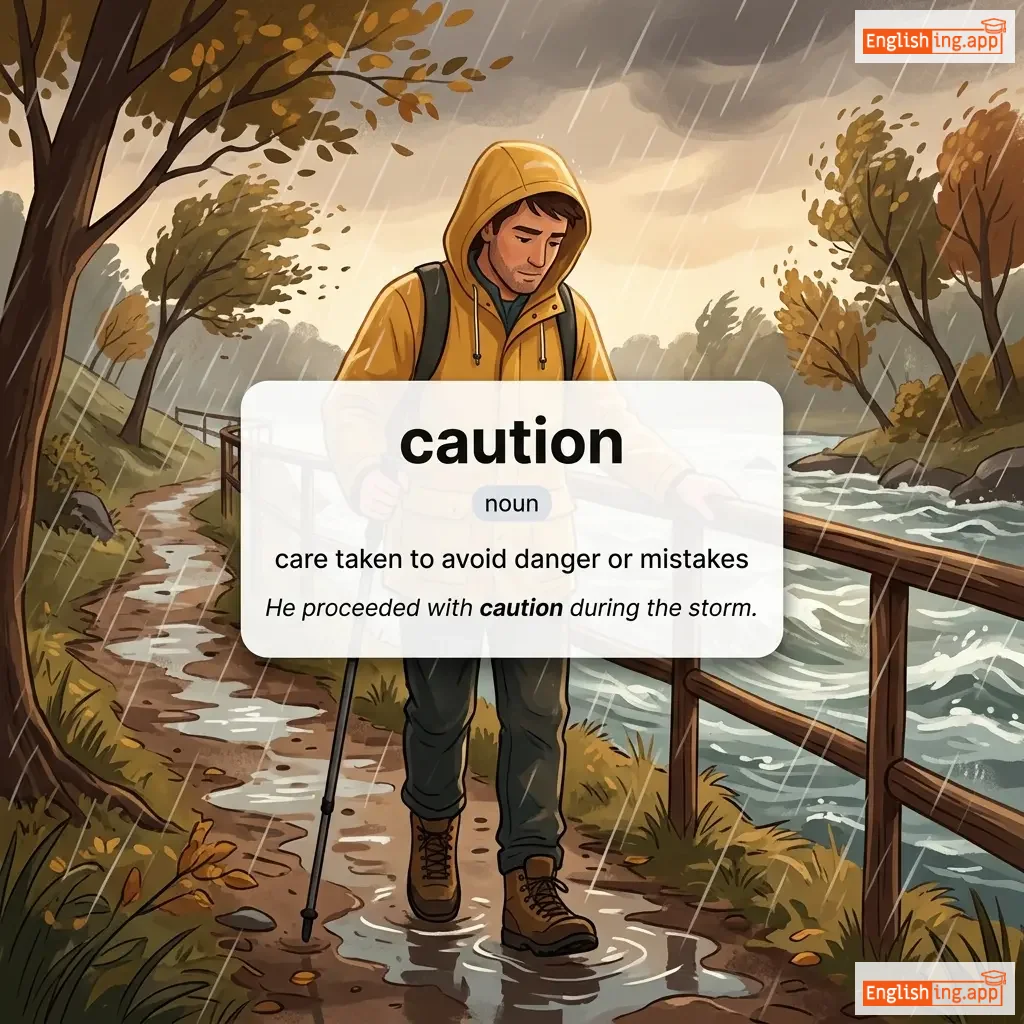
#172
⚠️
|
/ˈkɔː.ʃən/
noun
(カウション)
••••••
|
|
警告; 注意
keikoku; chūi
••••••
|
care taken to avoid danger or mistakes; a warning about possible danger or problems
••••••
|
The teacher gave a caution to students about the slippery stairs.
教師は滑りやすい階段について生徒に注意を与えた。
••••••
|
教師は滑りやすい階段について生徒に注意を与えた。
Kyōshi wa suberiyasui kaidan ni tsuite seito ni chūi o ataeta.
••••••
|
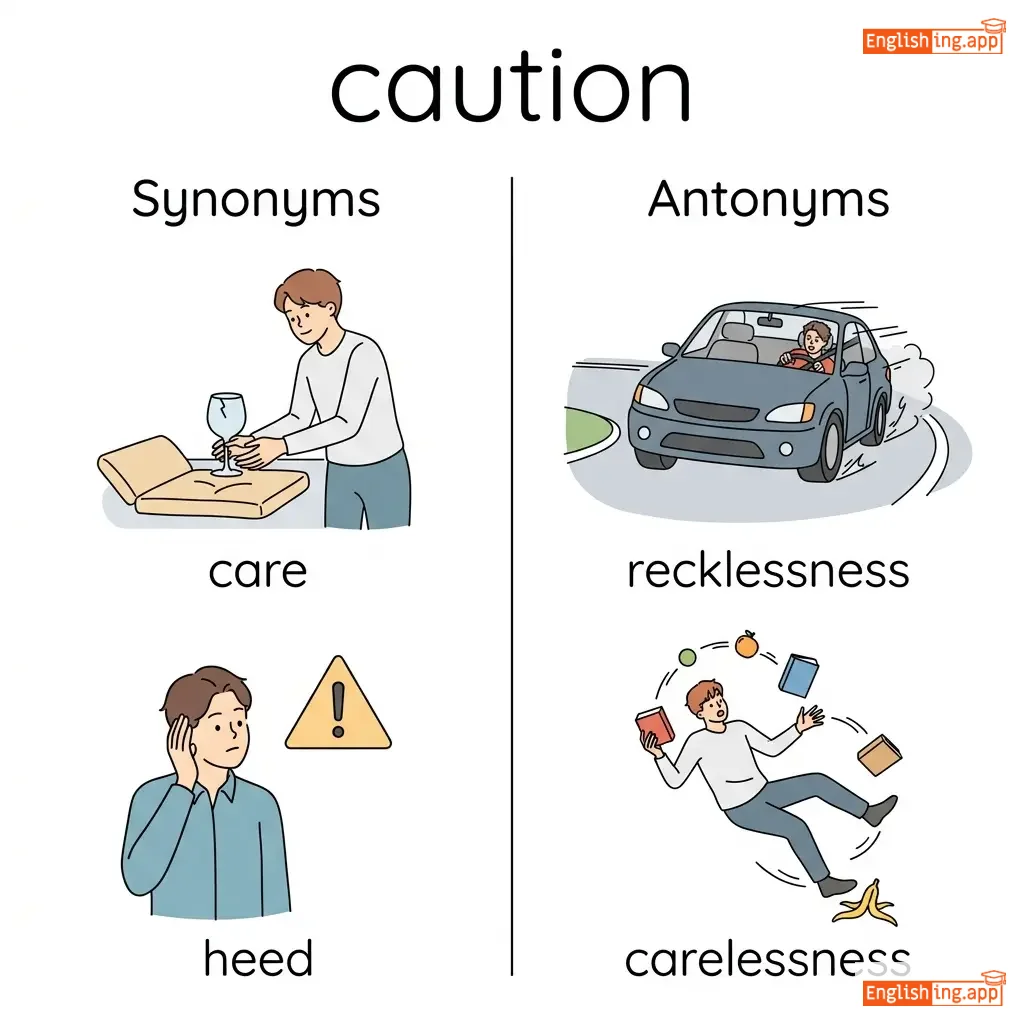
warning, care, prudence, vigilance
••••••
|
recklessness, carelessness, negligence
••••••
|
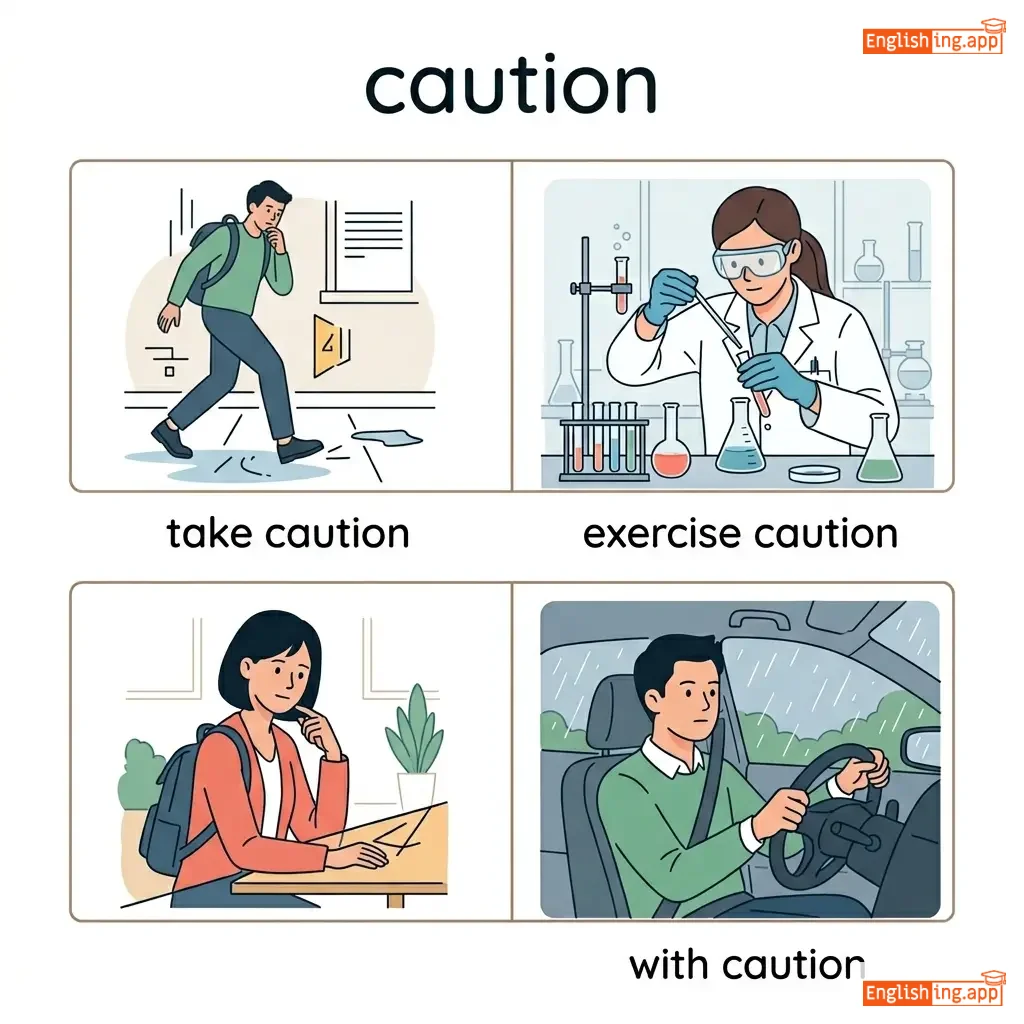
exercise caution, word of caution, proceed with caution
••••••
|
In Japanese, '注意' means caution, like the warning given by the teacher.
••••••
|
|
#173
🌿
|
/ˈkæt.kɪn/
noun
(キャットキン)
••••••
|
- •••••• |
ネコヤナギ
neko yanagi
••••••
|
a drooping, often tasseled cluster of small flowers found on willow and birch trees
••••••
|
The willow tree's catkins swayed gently in the spring breeze.
柳の木のキャットキンが春の風に揺れていた。
••••••
|
柳の木のネコヤナギが春の風に揺れていた。
Yanagi no ki no nekoyanagi ga haru no kaze ni yurete ita.
••••••
|
ament, flower cluster, tassel
••••••
|
individual flower, single blossom
••••••
|
willow catkin, birch catkin, hanging catkin
••••••
|
ネコヤナギは春風に揺れる、猫の耳のように揺れている。
••••••
|
|
#174
🚑
|
/ˈkæʒ.u.əl.ti/
noun
(カジュアルティ)
••••••
|
- •••••• |
犠牲者; 負傷者; 損失
giseisha; fushousha; sonshitsu
••••••
|
a person killed or injured in a war or accident; a victim of circumstances
••••••
|
The hospital treated many casualties from the car accident.
病院は車の事故からの多くの負傷者を治療しました。
••••••
|
病院は車の事故からの多くの負傷者を治療しました。
Byouin wa kuruma no jiko kara no ooku no fushousha wo chiryou shimashita.
••••••
|
victim, fatality, injured person, loss
••••••
|
survivor, unharmed person
••••••
|
war casualty, traffic casualty, casualty count
••••••
|
事故の犠牲者は運命の犠牲者です
••••••
|
|
#175
🏰
|
/ˈkæs.əl/
noun
(キャッスル)
••••••
|
- •••••• |
城; 宮殿;
shiro, kyūden
••••••
|
a large fortified building or set of buildings; a fortress
••••••
|
The medieval castle stood majestically on top of the hill. |
中世の城は丘の頂上に堂々と立っていました。
Chūsei no shiro wa oka no chōjō ni dōdō to tatte imashita.
••••••
|
fortress, stronghold, citadel, palace
••••••
|
hut, cottage, simple dwelling
••••••
|
medieval castle, ancient castle, castle walls
••••••
|
Imagine a 'shiro' on top of a hill.
••••••
|
|
#176
🗣️
|
/kɑst/
noun
(カースト)
••••••
|
|
カースト; カースト制度
kaasuto, kaasuto seido
••••••
|
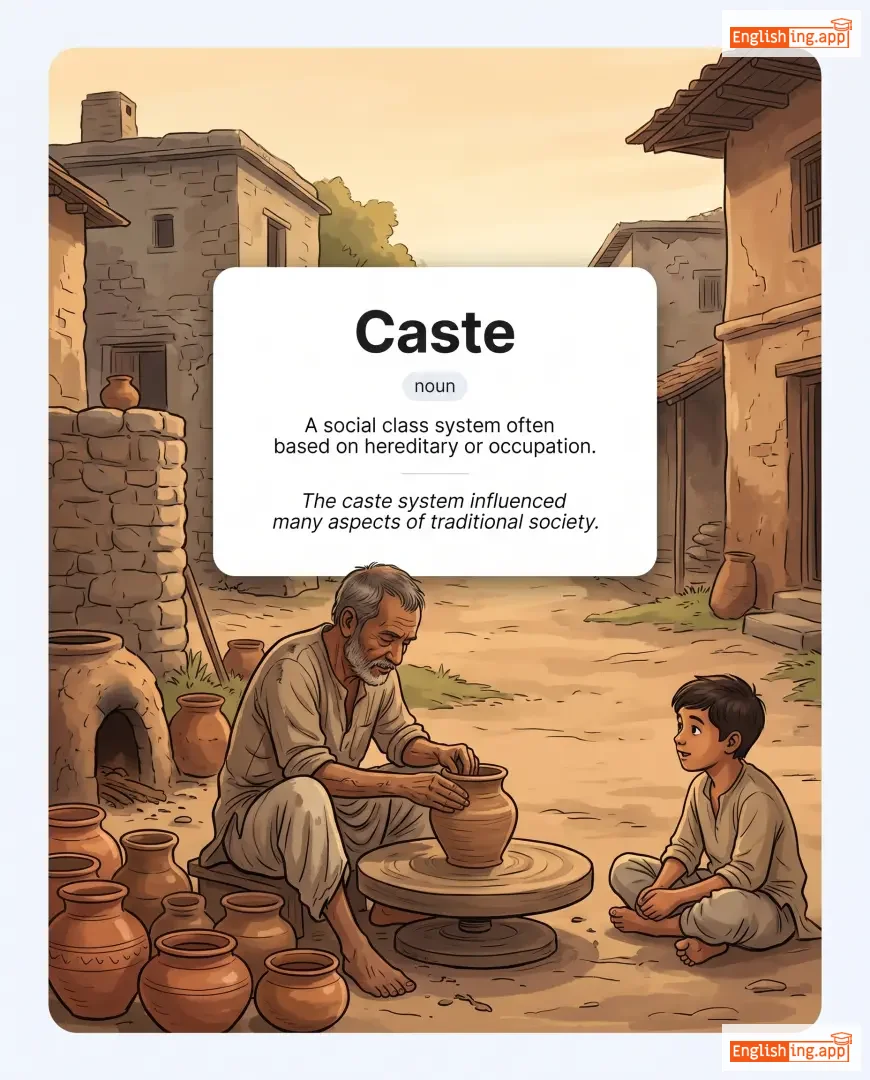
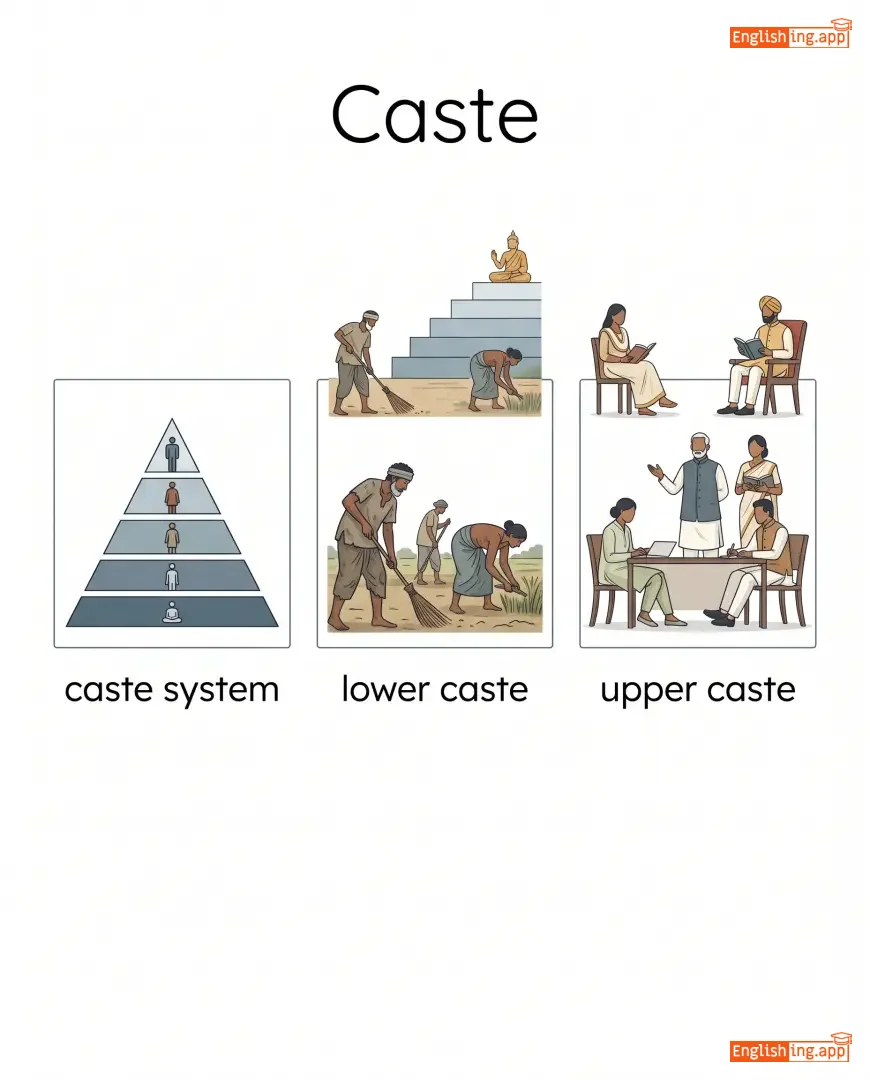
a social class system; a hereditary class of Hindu society
••••••
|
The ancient caste system divided society into different social groups.
古代のカースト制度は社会を異なる社会的グループに分けました。
••••••
|
古代のカースト制度は社会を異なる社会的グループに分けました。
Kodai no kaasuto seido wa shakai o kotonaru shakaiteki gurūpu ni wakemashita.
••••••
|
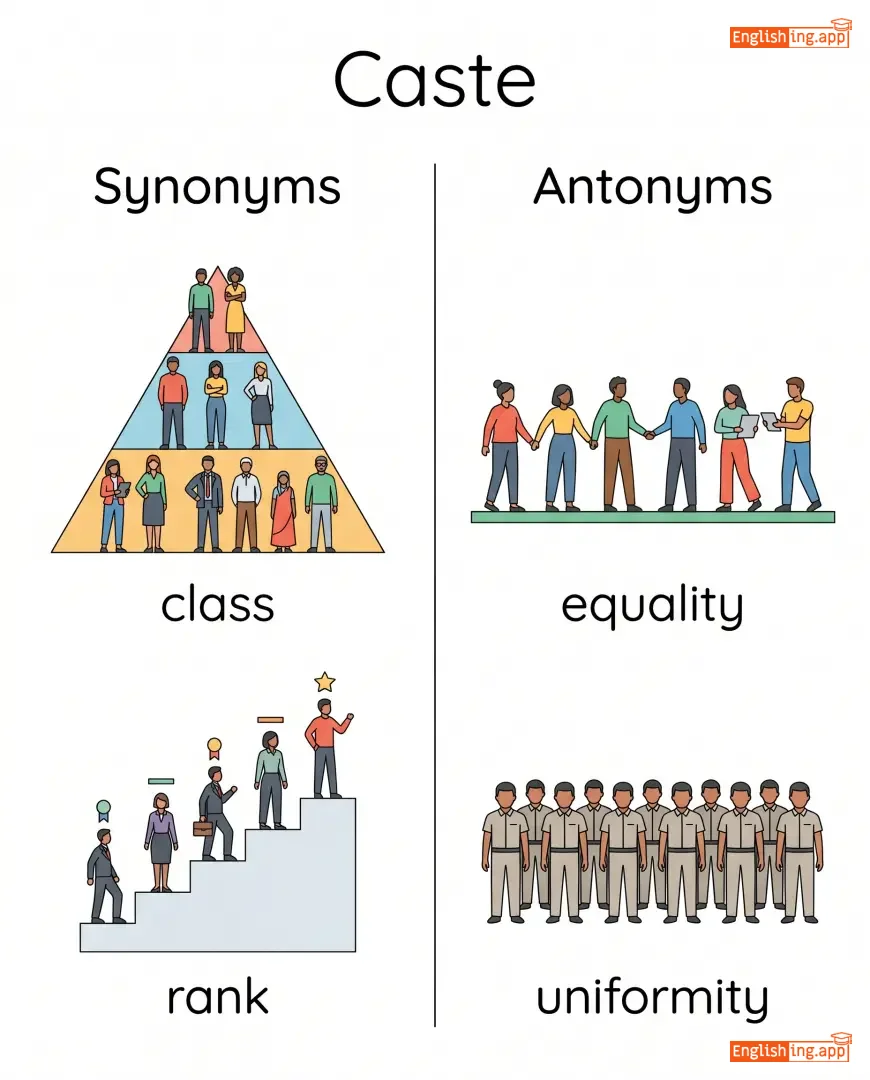
class, social stratum, hierarchy
••••••
|
equality, classless society
••••••
|
caste system, upper caste, caste discrimination
••••••
|
カーストで社会を区別する
••••••
|
|
#177
📦
|
/ˈkeɪ.sɪŋ/
noun
(ケイシング)
••••••
|
- •••••• |
カバー; 外殻
kaba, tokaru
••••••
|
a cover or shell that protects or encloses something
••••••
|
The mechanic removed the engine casing to examine the internal parts. |
整備士はエンジンの外殻を取り外して内部の部品を調べました。
Seibishi wa enjin no tokaru o torihazushite naibu no buhin o shirabemashita.
••••••
|
cover, shell, housing, enclosure
••••••
|
exposure, opening
••••••
|
engine casing, protective casing, metal casing
••••••
|
Imagine a protective case (外殻) around a car engine, just like a 'cover' or 'shell' in Japanese!
••••••
|
|
#178
🏡
|
/kæsˈkeɪd/
noun
(カスケード)
••••••
|
- •••••• |
滝; 一連の段階や操作
taki; ichiren no dankai ya sōsa
••••••
|
a waterfall; a succession of stages or operations
••••••
|
The mountain cascade created a beautiful natural swimming pool below.
山の滝は下に美しい自然のスイミングプールを作りました。
••••••
|
山の滝は下に美しい自然のスイミングプールを作りました。
yama no taki wa shita ni utsukushii shizen no suimingu pūru o tsukurimashita.
••••••
|
waterfall, torrent, series, sequence
••••••
|
trickle, single event
••••••
|
mountain cascade, cascade effect, water cascade
••••••
|
カスケードは滝のことです。滝が自然のスイミングプールを作り出すことを思い出してください。
••••••
|
|
#179
🗺️
|
/ˈkɑr.pɪt/
noun
(カーペット)
••••••
|
- •••••• |
カーペット
kaapetto
••••••
|
a floor covering made from thick woven fabric
••••••
|
The Persian carpet in the living room was a family heirloom.
リビングルームのペルシャカーペットは家族の遺産でした。
••••••
|
リビングルームのペルシャカーペットは家族の遺産でした。
ribingurūmu no perushā kaapetto wa kazoku no isan deshita.
••••••
|
rug, mat, floor covering
••••••
|
bare floor, uncovered surface
••••••
|
Persian carpet, red carpet, carpet cleaning
••••••
|
カーペット (kaapetto) は英語の carpet と同じ、地面をカバーするものです。
••••••
|
|
#180
☠️
|
/ˈkɑr.nɪdʒ/
noun
(kānej)
••••••
|
- •••••• |
虐殺
gyakusatsu
••••••
|
the killing of a large number of people; widespread slaughter
••••••
|
The battlefield was filled with carnage after the brutal war.
戦場は残虐な戦争の後、血みどろの殺戮で満ちていた。
••••••
|
戦場は残虐な戦争の後、血みどろの殺戮で満ちていた。
Senjō wa zangyaku na sensō no ato, chimidoro no satsuriku de michite ita.
••••••
|
massacre, slaughter, bloodshed, butchery
••••••
|
peace, harmony, preservation
••••••
|
widespread carnage, brutal carnage, battlefield carnage
••••••
|
Carnage - 虐殺 in Japanese, representing brutal slaughter.
••••••
|
Vocabulary Quiz
Test your vocabulary by matching words with their translations or meanings.
Login to take the quiz
Comments (0)
Share your thoughts and join the discussion.
Join the discussion by logging in
Login to CommentNo comments yet
Be the first to share your thoughts!