

翻訳
過去
過去分詞
三人称単数
動名詞
意味
例文
例文の翻訳
同義語
対義語
コロケーション
ニーモニック


Swipe left or right, or use the buttons. Tap image to zoom.
例文の翻訳
単語
Lesson 62Lesson 62 - マスクトグル
|
絵文字
|
単語 | Images | 翻訳 | 意味 | 例文 | 例文の翻訳 | 同義語 | 対義語 | コロケーション | ニーモニック |
|---|---|---|---|---|---|---|---|---|---|---|
|
#1221
🦀
|
/rʌst/
noun
(ラスティ)
••••••
|
- •••••• |
錆
sabi
••••••
|
reddish-brown coating formed on iron or steel by oxidation; corrosion
••••••
|
The old car was covered in rust after years of neglect.
古い車は何年も放置されていた後、サビで覆われていました。
••••••
|
古い車は何年も放置されていた後、サビで覆われていました。
Furui kuruma wa nannen mo houchi sarete ita ato, sabi de owarete imashita.
••••••
|
corrosion, oxidation, tarnish
••••••
|
polish, shine, gleam
••••••
|
rust prevention, rust remover, iron rust, rust spots
••••••
|
錆は鉄や鋼が長期間水分や空気に触れることで自然に形成されます。
••••••
|
|
#1222
💰
|
/ˈsæl.ər.i/
noun
(サラリー)
••••••
|
- •••••• |
給料
kyūryō
••••••
|
a fixed regular payment, typically paid on a monthly basis
••••••
|
She receives a good salary for her work as a teacher. |
彼女は教師としての仕事に対して良い給料を受け取っています。
Kanojo wa kyōshi to shite no shigoto ni taishite yoi kyūryō o uketotte imasu
••••••
|
wage, pay, income, earnings
••••••
|
debt, expense, cost
••••••
|
annual salary, monthly salary, basic salary, gross salary
••••••
|
Japanese '給料' (kyūryō) helps you remember salary as a regular monthly payment.
••••••
|
|
#1223
💧
|
/səˈlaɪ.və/
noun
(サリヴァ)
••••••
|
- •••••• |
唾液
sariva
••••••
|
the watery liquid secreted into the mouth by glands
••••••
|
The dentist asked her to rinse the saliva from her mouth.
ザ デンティスト アスクド ハー トゥ リンス ザ サリヴァ フロム ハー マウス。
••••••
|
歯科医は彼女に口の中の唾液をすすぐように言った。
shikai wa kanojo ni kuchi no naka no daeki o susugu you ni itta
••••••
|
spit, spittle, drool
••••••
|
- •••••• |
excess saliva, saliva production, saliva glands
••••••
|
Sali va, sip and rinse さりヴぁ is mouth water streaming like a tiny river
••••••
|
|
#1224
💥
|
/ˈrʌp.tʃər/
noun
(ラプチャー)
••••••
|
- •••••• |
破裂; 関係の断絶
haretsu; kankei no danzetsu
••••••
|
breaking or bursting apart; breakdown of relations
••••••
|
The rupture in the pipeline caused a massive oil spill.
パイプラインのラプチャーが大規模な石油漏れを引き起こしました。
••••••
|
パイプラインの破裂が大規模な石油漏れを引き起こしました。
paipurain no haretsu ga daikibo na sekiyu more o hikiokoshimashita
••••••
|
break, tear, split, fracture
••••••
|
repair, mend, unite, join
••••••
|
muscle rupture, rupture point, diplomatic rupture
••••••
|
日本語の '破裂' は英語の 'rupture' と似ています!
••••••
|
|
#1225
💣
|
/ˈsæb.ə.tɑːʒ/
noun
(サボタージュ)
••••••
|
- •••••• |
サボタージュ
sabotaju
••••••
|
deliberate destruction of equipment or disruption of activities
••••••
|
The factory was shut down due to an act of sabotage.
工場は破壊行為のために閉鎖されました。
••••••
|
工場は破壊行為のために閉鎖されました。
Koujou wa hakai koui no tame ni heisa saremashita
••••••
|
destruction, vandalism, disruption, undermining
••••••
|
support, assistance, cooperation, help
••••••
|
industrial sabotage, sabotage attempt, economic sabotage
••••••
|
サボタージュはすべてを止める!
••••••
|
|
#1226
🙏
|
/ˌsæl.jʊˈteɪ.ʃən/
noun
(saryuːtēshon)
••••••
|
- •••••• |
挨拶; 善意の表現
aisatsu; zen'i no hyōgen
••••••
|
a greeting; an expression of goodwill
••••••
|
The letter began with a formal salutation.
その手紙は正式な挨拶で始まりました。
••••••
|
その手紙は正式な挨拶で始まりました。
Sono tegami wa seishiki na aisatsu de hajimarimashita.
••••••
|
greeting, welcome, address, hail
••••••
|
farewell, goodbye, dismissal
••••••
|
formal salutation, opening salutation, respectful salutation
••••••
|
日本語: 挨拶 = 友好的な気持ちを示す言葉や動作。
••••••
|
|
#1227
🙏
|
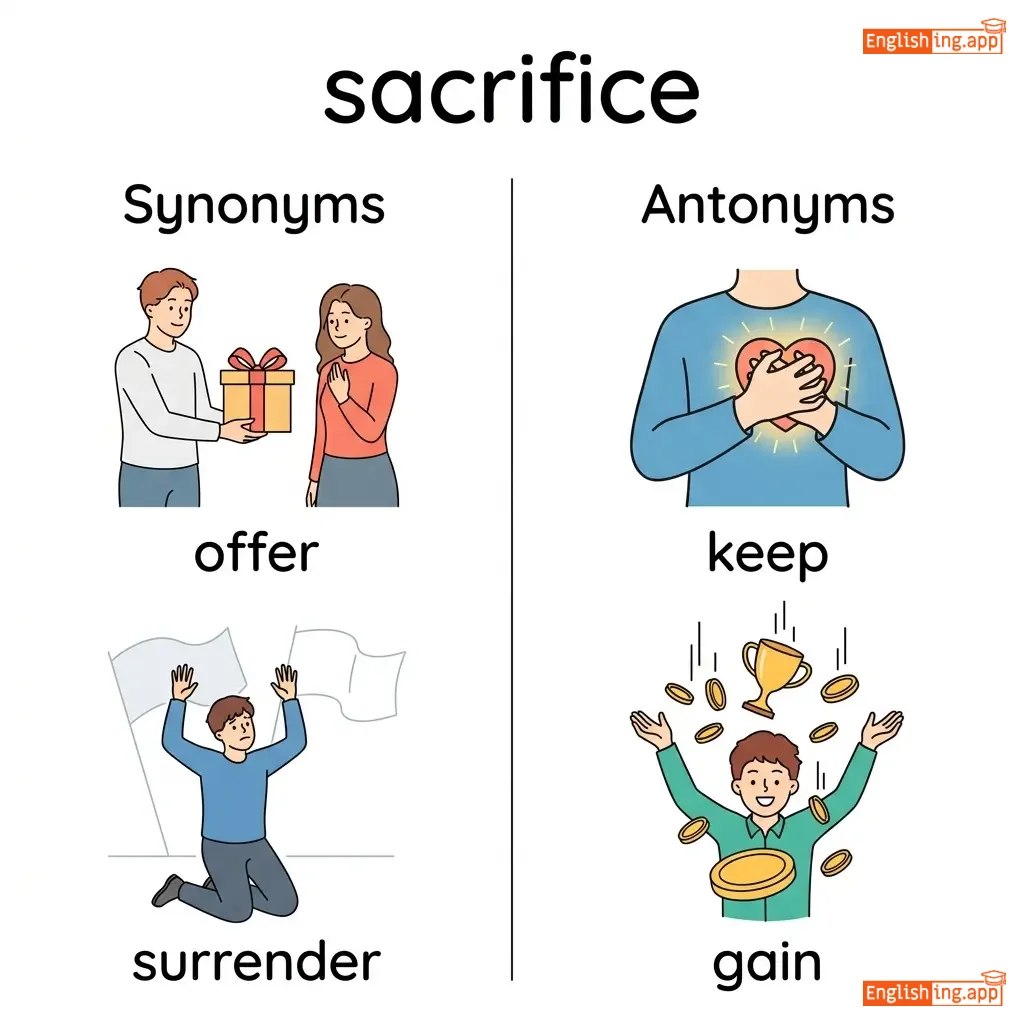
/ˈsæk.rɪ.faɪs/
noun
(サクリファイス)
••••••
|
|
犠牲
gisei
••••••
|
giving up something valued for the sake of something else; offering to a deity
••••••
|
She made many sacrifices to support her family. |
彼女は家族を支援するために多くの犠牲を払った。
Kanojo wa kazoku o shien suru tame ni ōku no gisei o hatatta.
••••••
|
offering, surrender, devotion, selflessness
••••••
|
selfishness, greed, taking, receiving
••••••
|
personal sacrifice, animal sacrifice, ultimate sacrifice
••••••
|
犠牲 = 大きな目標のために何かを捧げる
••••••
|
|
#1228
✝️
|
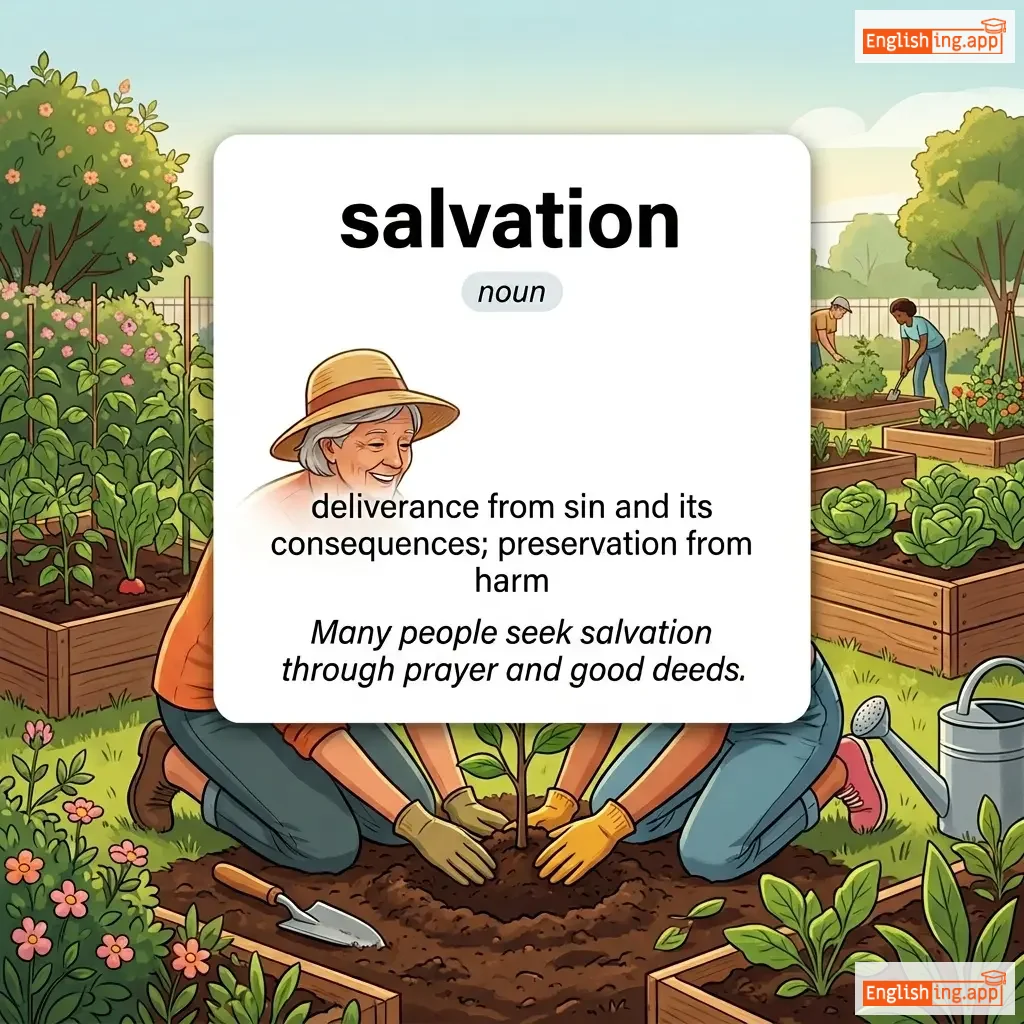
/sælˈveɪ.ʃən/
noun
(サルヴェイション)
••••••
|
|
救済
kyūsai
••••••
|
deliverance from sin and its consequences; preservation from harm
••••••
|
Many people seek salvation through prayer and good deeds. |
多くの人々は祈りと善行を通じて救済を求めます。
ōku no hitobito wa inori to zen kō o tsūjite kyūsai o motomemasu.
••••••
|
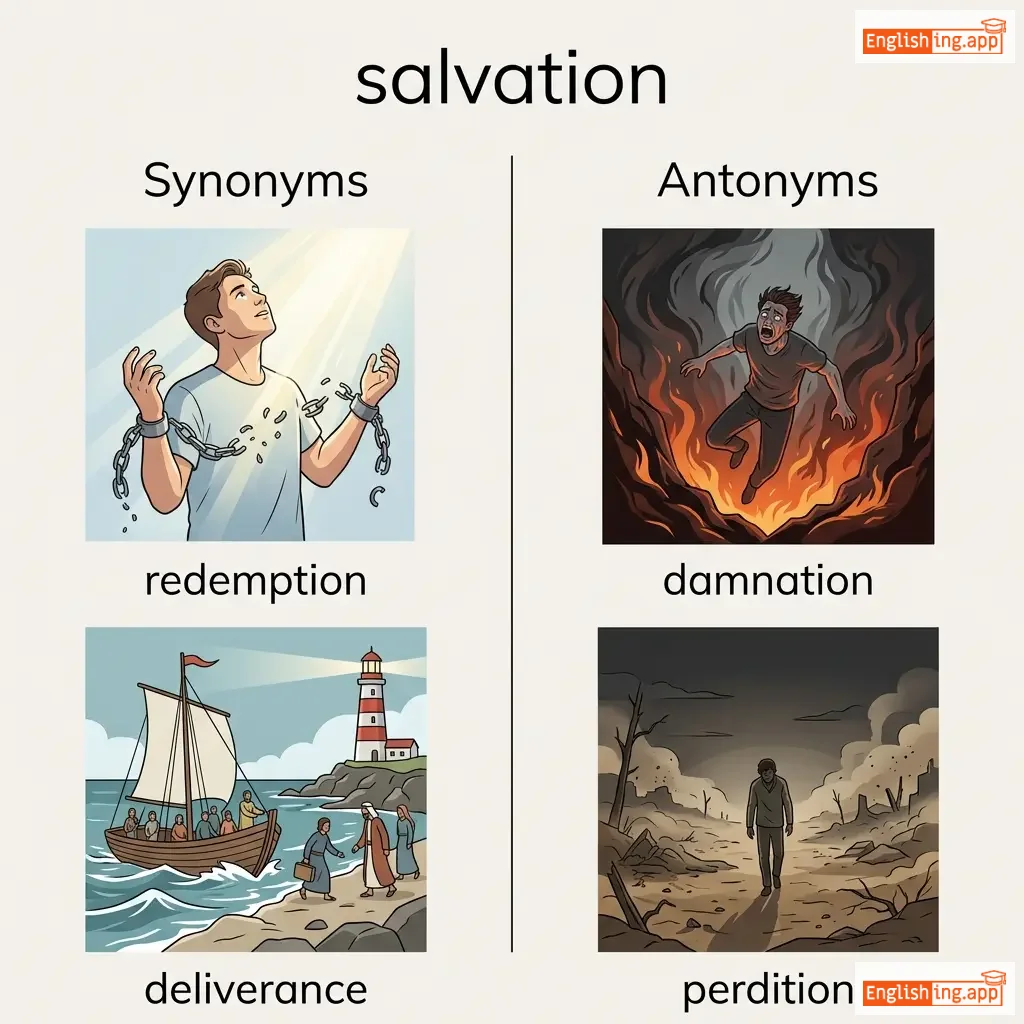
redemption, deliverance, rescue, liberation
••••••
|
damnation, perdition, condemnation
••••••
|
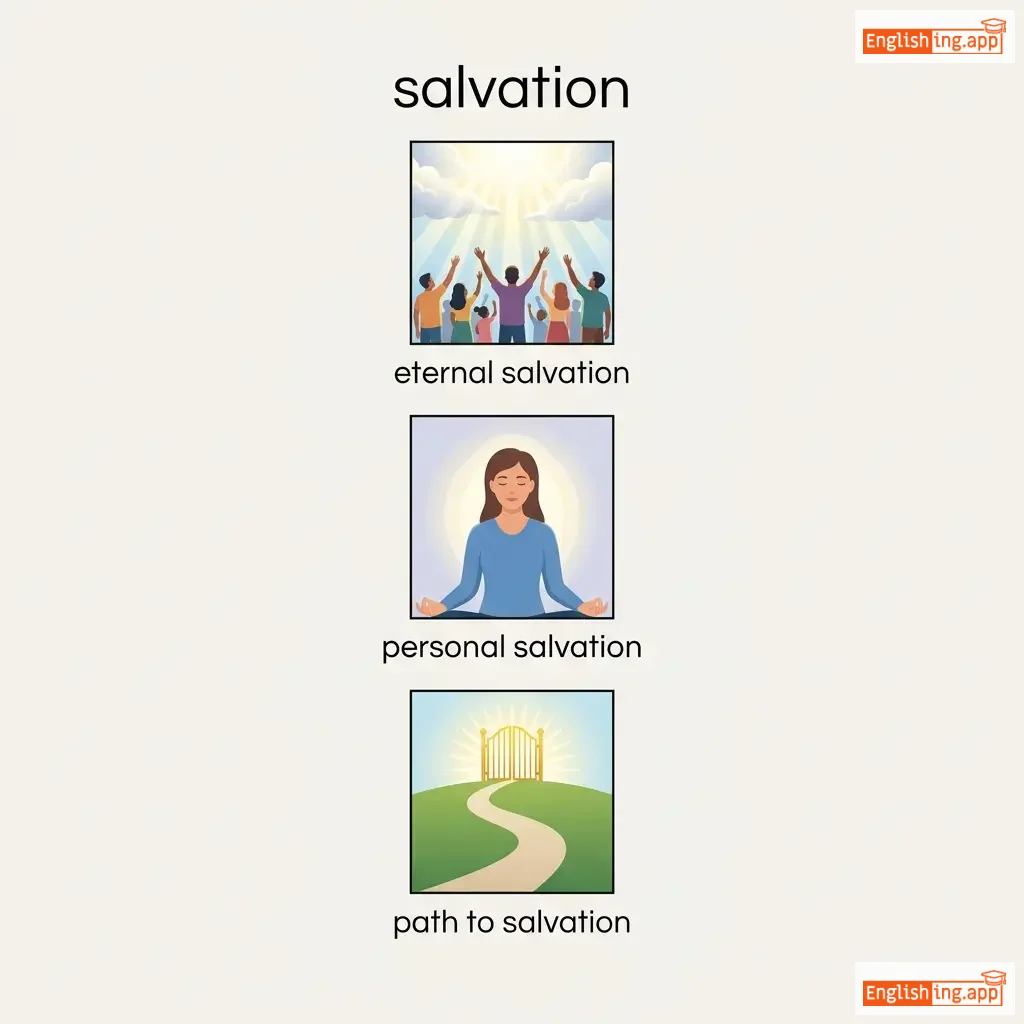
eternal salvation, personal salvation, path to salvation
••••••
|
In Japanese, '救済' is like 'Salvation', rescuing you from sin.
••••••
|
|
#1229
😢
|
/ˈsæd.nəs/
noun
(サッドネス)
••••••
|
- •••••• |
悲しみ、哀しみ、痛み
kanashimi, kanashimi, itami
••••••
|
feeling of sorrow, unhappiness, or grief
••••••
|
Her sadness was evident after hearing the bad news.
悪いニュースを聞いた後、彼女の悲しみは明らかでした。
••••••
|
悪いニュースを聞いた後、彼女の悲しみは明らかでした。
Warui nyūsu o kiita ato, kanojo no kanashimi wa akiraka deshita.
••••••
|
sorrow, grief, melancholy, depression
••••••
|
happiness, joy, cheerfulness, delight
••••••
|
deep sadness, overwhelming sadness, sadness and grief
••••••
|
悲しみは悪いニュースから
••••••
|
|
#1230
🔬
|
/ˈsæm.pəl/
noun
(サンプル)
••••••
|
- •••••• |
サンプル
sanpuru
••••••
|
a small part taken as an example of the whole; a specimen
••••••
|
The doctor took a blood sample for testing.
医師はテストのために血液サンプルを取った。
••••••
|
医師はテストのために血液サンプルを取った。
Ishi wa tesuto no tame ni ketsueki sanpuru wo totta.
••••••
|
specimen, example, instance, model
••••••
|
whole, entirety, complete set
••••••
|
blood sample, free sample, sample size, random sample
••••••
|
サンプルは全体の一部として理解する。
••••••
|
|
#1231
🔒
|
/seɪf/
noun
(セーフ)
••••••
|
- •••••• |
金庫; 保護
kinko; hogo
••••••
|
secure container for storing valuables; protection from danger
••••••
|
He kept his important documents in the office safe. |
彼は重要な書類をオフィスの金庫に保管していました。
Kare wa juuyou na shorui o ofisu no kinko ni hokan shite imashita.
••••••
|
vault, strongbox, security, protection
••••••
|
danger, risk, threat, unsafe
••••••
|
bank safe, fire safe, combination safe, safe deposit
••••••
|
金庫(kinko)は、保護を提供します。
••••••
|
|
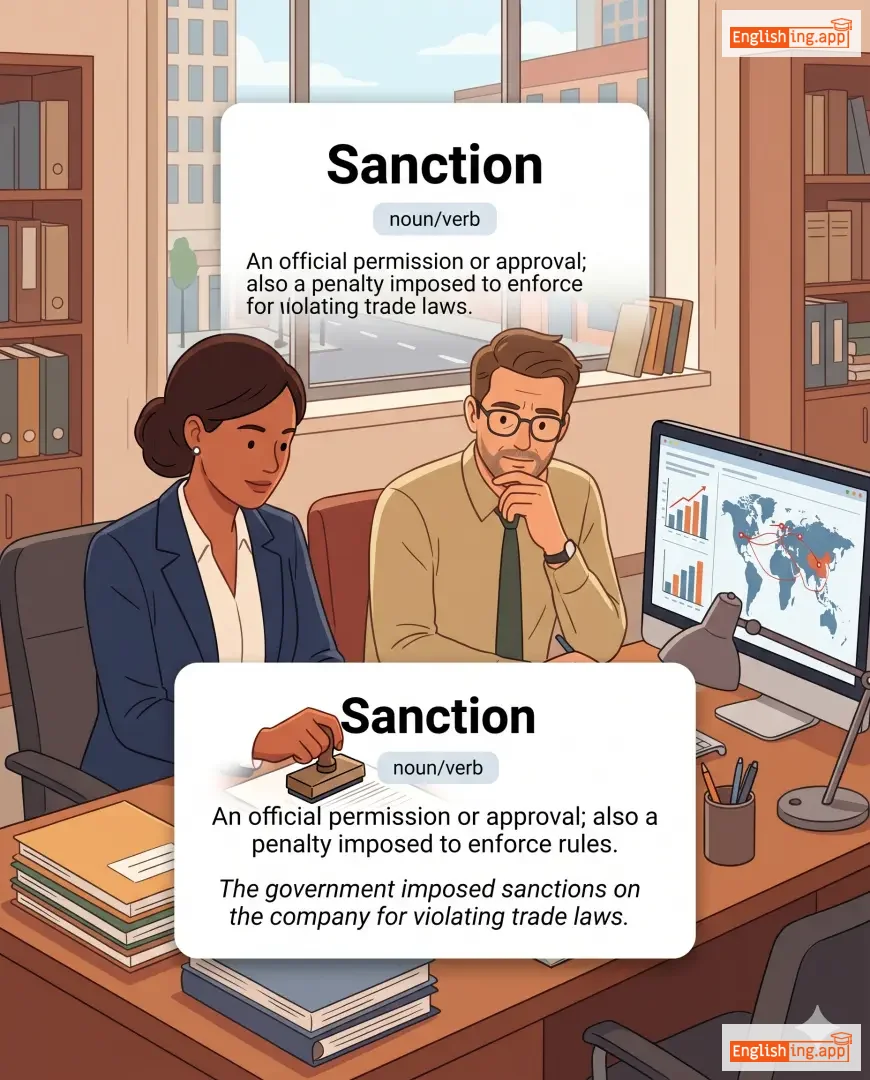
#1232
⚖️
|
/ˈsæŋk.ʃən/
noun
(サンクション)
••••••
|
|
制裁
sankushon
••••••
|
official permission or approval; a penalty for disobeying a rule
••••••
|
The government imposed economic sanctions on the country.
政府はその国に対して経済制裁を科した。
••••••
|
政府はその国に対して経済制裁を科した。
Seifu wa sono kuni ni taishite keizai seisai o kashita.
••••••
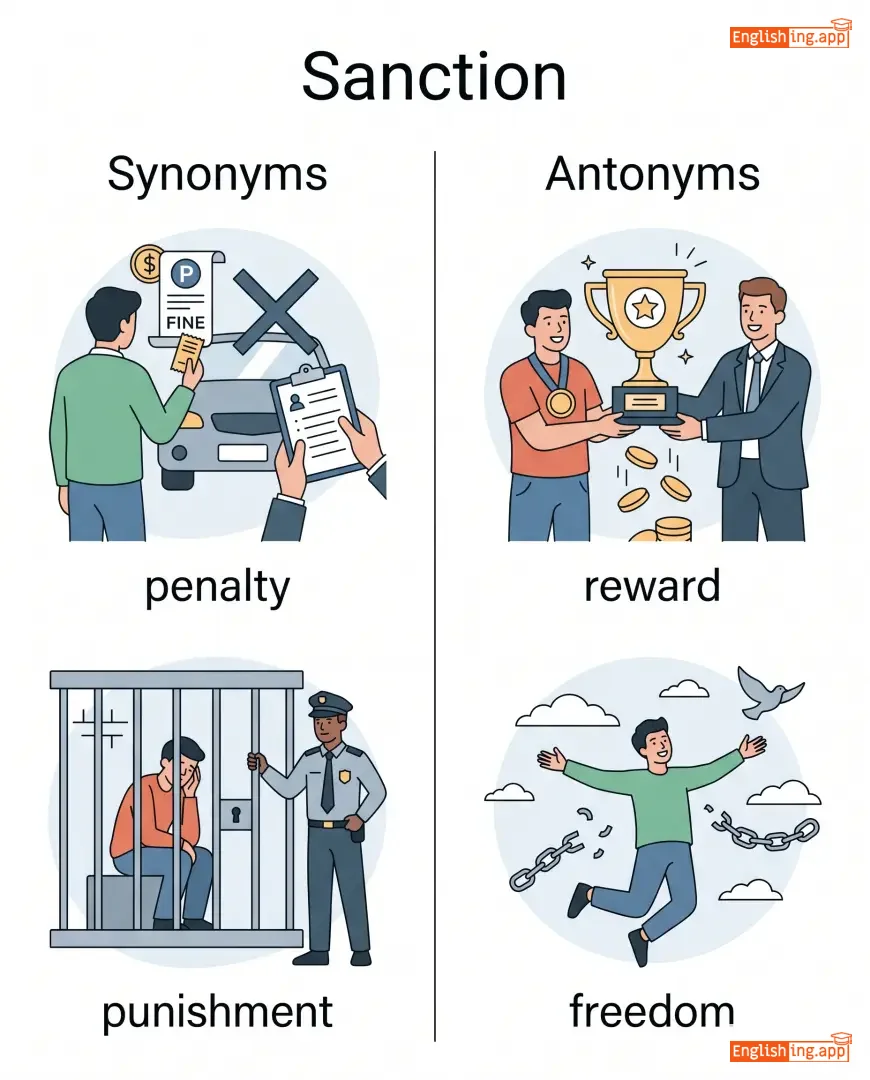
|
approval, authorization, penalty, punishment
••••••
|
prohibition, ban, reward, encouragement
••••••
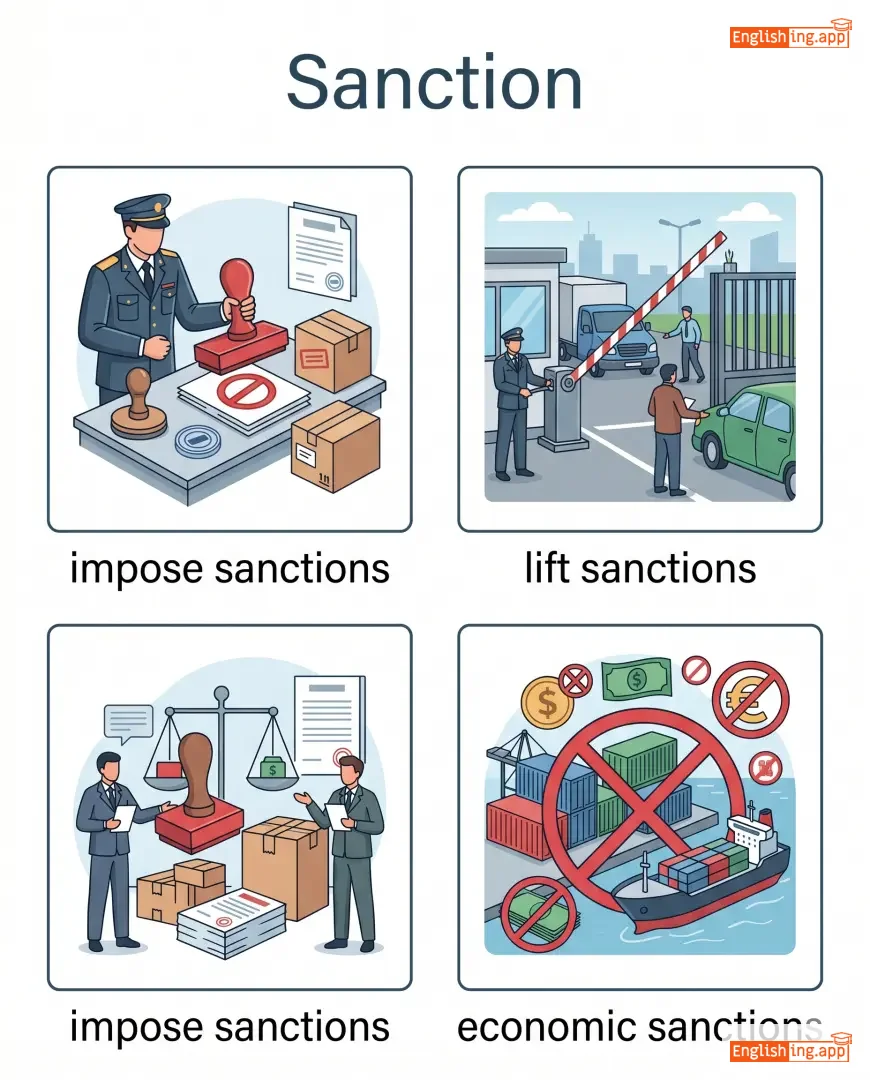
|
economic sanctions, trade sanctions, impose sanctions
••••••
|
さん + クション on a paper; 三つの seals decide OK or NO: official permission or punishment — サンクション
••••••
|
|
#1233
🛡️
|
/ˈseɪf.ɡɑːrd/
noun
(セーフガード)
••••••
|
- •••••• |
保護措置
hogo sochi
••••••
|
measure or action designed to protect someone or something
••••••
|
New safeguards were implemented to prevent data breaches. |
データ漏洩を防ぐために新しい保護措置が実施されました。
dēta rōe o fusegu tame ni atarashī hogo sochi ga jisshi saremashita
••••••
|
protection, shield, defense, security
••••••
|
threat, danger, vulnerability, risk
••••••
|
security safeguards, legal safeguards, environmental safeguards
••••••
|
保護するための措置
••••••
|
|
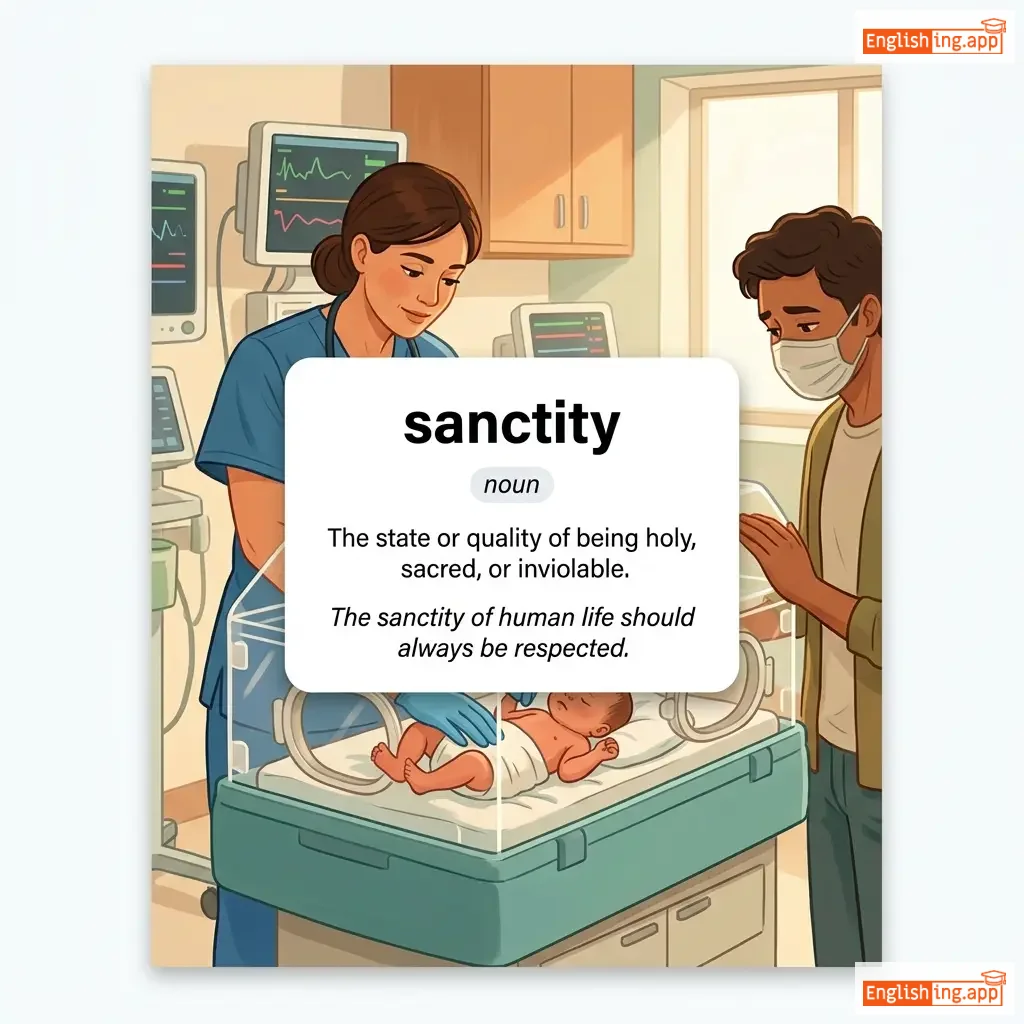
#1234
🕊️
|
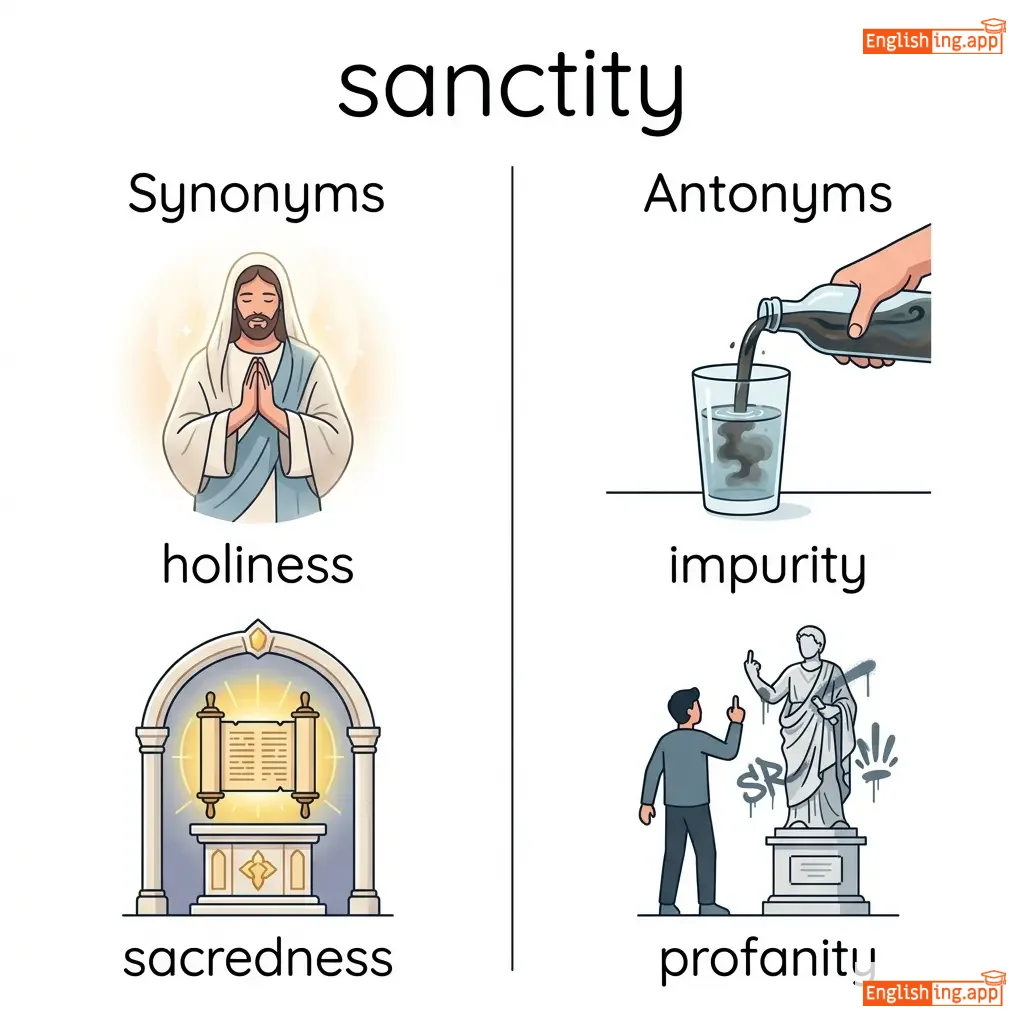
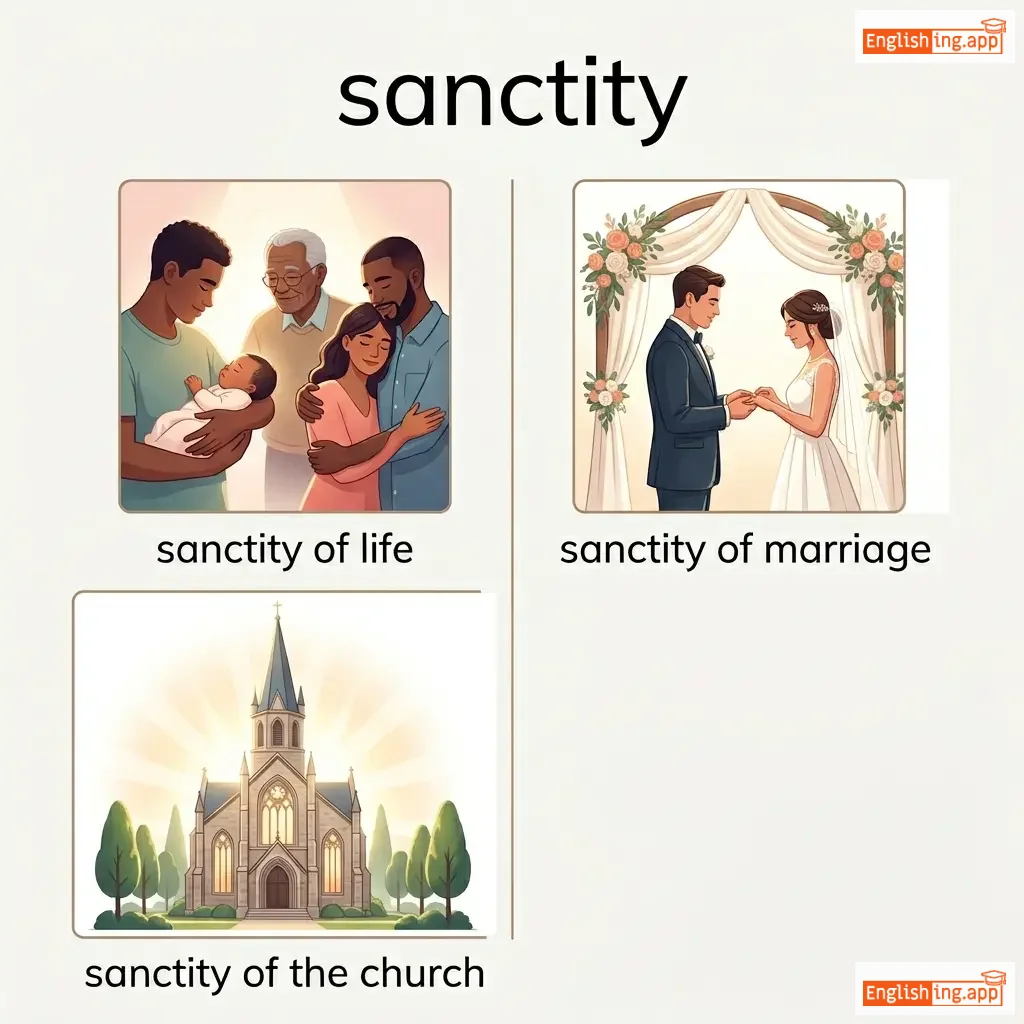
/ˈsæŋk.tɪ.ti/
noun
(サンクティティ)
••••••
|
|
神聖さ
shinseisa
••••••
|
the state of being holy, sacred, or spiritually pure
••••••
|
The sanctity of the temple must be preserved.
ザ サンクティティ オブ ザ テンプル マスト ビー プリザーブド
••••••
|
寺院の神聖さを守らなければならない。
jiin no shinseisa o mamoranakereba naranai
••••••
|
holiness, sacredness, purity, inviolability
••••••
|
profanity, impurity, corruption, desecration
••••••
|
sanctity of life, sanctity of marriage, preserve sanctity
••••••
|
Shinseisa sounds like 'shiny saint'—reminds of holiness and purity.
••••••
|
|
#1235
⚠️
|
/ˈseɪf.ti/
noun
(セーフティ)
••••••
|
- •••••• |
安全
anzen
••••••
|
condition of being protected from danger, risk, or injury
••••••
|
The company prioritizes workplace safety above all else. |
その会社は職場の安全を最優先しています。
Sono kaisha wa shokuba no anzen o sai yūsen shiteimasu
••••••
|
security, protection, welfare, well-being
••••••
|
danger, hazard, risk, peril
••••••
|
safety measures, public safety, safety regulations, road safety
••••••
|
安全 = Safety, 安全な場所にいることが一番安全
••••••
|
|
#1236
😈
|
/ˈseɪ.tən/
noun
(サタン)
••••••
|
- •••••• |
サタン
Satan
••••••
|
the chief evil spirit; the Devil in Christian and Islamic belief
••••••
|
According to religious texts, Satan tempts people to sin.
宗教的な文献によると、サタンは人々を罪に導く。
••••••
|
宗教的な文献によると、サタンは人々を罪に導く。
Shūkyō-teki na bunken ni yoru to, Satan wa hitobito o tsumi ni michibiku.
••••••
|
Devil, Lucifer, Evil One, Beelzebub
••••••
|
God, Angel, Saint, Divine
••••••
|
Satan's temptation, worship Satan, Satan's power
••••••
|
サタンは悪魔であり、常に人々を悪に導こうとします。
••••••
|
|
#1237
😇
|
/seɪnt/
noun
(セイント)
••••••
|
- •••••• |
聖人として認められた人物; とても親切で忍耐強い人物
seijin toshite mitomerareta jinbutsu; totemo shinsetsu de nintaizuyoi jinbutsu
••••••
|
person recognized as holy or virtuous; very kind or patient person
••••••
|
Mother Teresa was declared a saint by the Catholic Church.
マザー・テレサはカトリック教会によって聖人と宣言されました。
••••••
|
マザー・テレサはカトリック教会によって聖人と宣言されました。
mazaa teresa wa katorikku kyoukai ni yotte seijin to sengen saremashita.
••••••
|
holy person, martyr, angel, paragon
••••••
|
sinner, devil, villain, criminal
••••••
|
patron saint, saint's day, canonized saint
••••••
|
聖人は教会から認定されます
••••••
|
|
#1238
😊
|
/ˌsæt.ɪsˈfæk.ʃən/
noun
(サティスファクション)
••••••
|
- •••••• |
満足
manzoku
••••••
|
fulfillment of one's wishes, expectations, or needs
••••••
|
She felt great satisfaction after completing the project. |
プロジェクトを完成させた後、彼女は大きな満足感を感じました。
Purojekuto o kansei saseta ato, kanojo wa ōkina manzokukan o kanjimashita.
••••••
|
contentment, fulfillment, pleasure, gratification
••••••
|
dissatisfaction, disappointment, frustration
••••••
|
job satisfaction, customer satisfaction, personal satisfaction
••••••
|
Manzoku in Japanese is the satisfaction after finishing a goal!
••••••
|
|
#1239
🤝
|
/seɪk/
noun
(セイク)
••••••
|
- •••••• |
目的; 理由;
mokuteki; riyuu;
••••••
|
purpose or reason for doing something; benefit or interest
••••••
|
She worked overtime for the sake of her family's future.
彼女は家族の未来のために残業しました。
••••••
|
彼女は家族の未来のために残業しました。
Kanojo wa kazoku no mirai no tame ni zangyo shimashita.
••••••
|
purpose, benefit, interest, welfare
••••••
|
detriment, harm, disadvantage, loss
••••••
|
for the sake of, heaven's sake, goodness sake
••••••
|
Sake = 'Sake' のために家族の未来
••••••
|
|
#1240
🗣️
|
/ˈsɔː.dər/
noun
(サウダー)
••••••
|
- •••••• |
お世辞; おべっか
oseji; obekka
••••••
|
flattering or wheedling talk; soft soap
••••••
|
His sawder couldn't convince anyone of his sincerity.
彼のサウダーは彼の誠実さを誰にも納得させることができなかった。
••••••
|
彼のオベッカは誰にも彼の誠実さを納得させることができなかった。
Kare no obekka wa dare ni mo kare no seijitsusa o nattoku saseru koto ga dekinakatta.
••••••
|
flattery, cajolery, wheedling, soft soap
••••••
|
honesty, sincerity, straightforwardness
••••••
|
empty sawder, use sawder, sawder and flattery
••••••
|
Sawderを使って、あたなの本心が伝わらないようにするのはうまくない。
••••••
|
Vocabulary Quiz
Test your vocabulary by matching words with their translations or meanings.
Login to take the quiz
Comments (0)
Share your thoughts and join the discussion.
Join the discussion by logging in
Login to CommentNo comments yet
Be the first to share your thoughts!