

翻訳
過去
過去分詞
三人称単数
動名詞
意味
例文
例文の翻訳
同義語
対義語
コロケーション
ニーモニック

Swipe left or right, or use the buttons. Tap image to zoom.
例文の翻訳
単語
Lesson 4Lesson 4 - マスクトグル
|
絵文字
|
単語 | Images | 翻訳 | 意味 | 例文 | 例文の翻訳 | 同義語 | 対義語 | コロケーション | ニーモニック |
|---|---|---|---|---|---|---|---|---|---|---|
|
#61
🚧
|
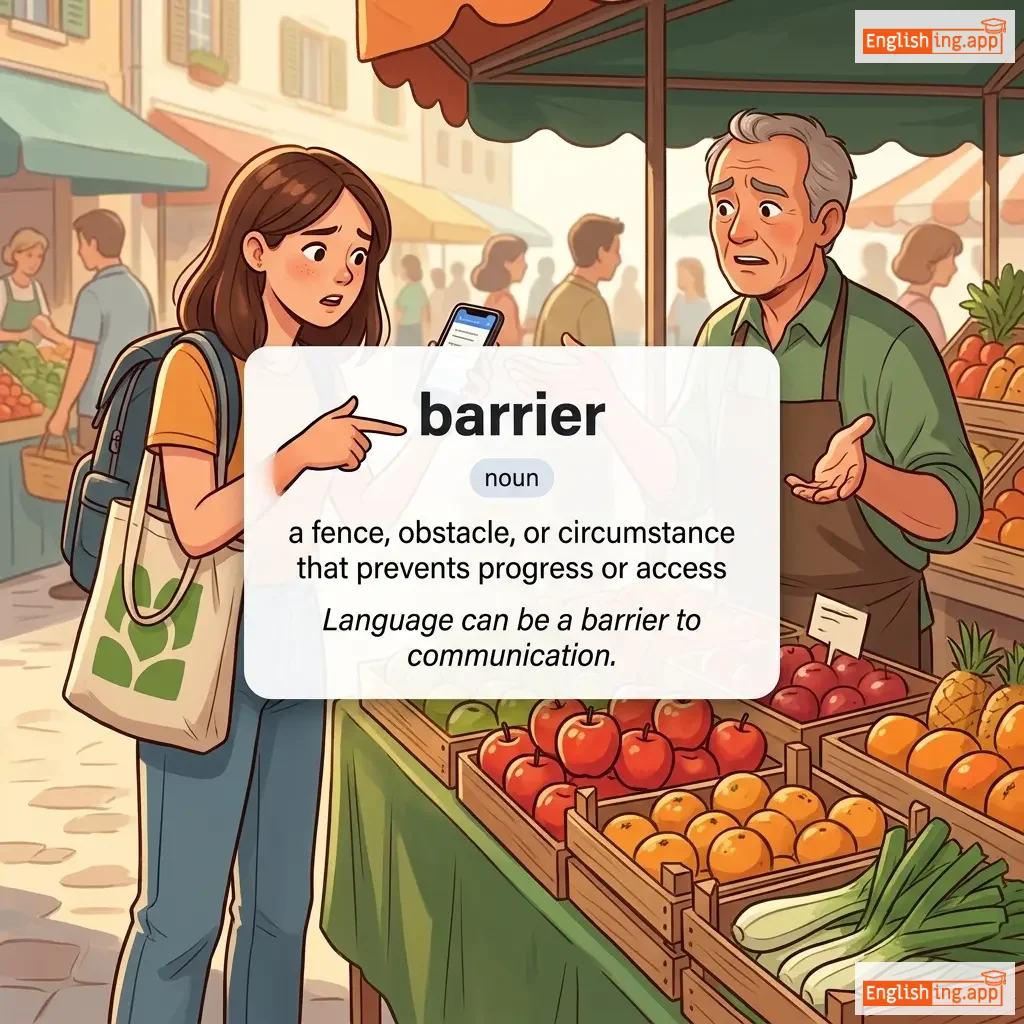
/ˈbær.i.ər/
noun
(バリア)
••••••
|
|
障壁
shōheki
••••••
|
something that blocks or prevents movement or progress
••••••
|
The language barrier made communication difficult.
言語のバリアがコミュニケーションを困難にしました。
••••••
|
言語の障壁がコミュニケーションを困難にしました。
Gengo no shōheki ga komyunikēshon o kon'nan ni shimashita.
••••••
|
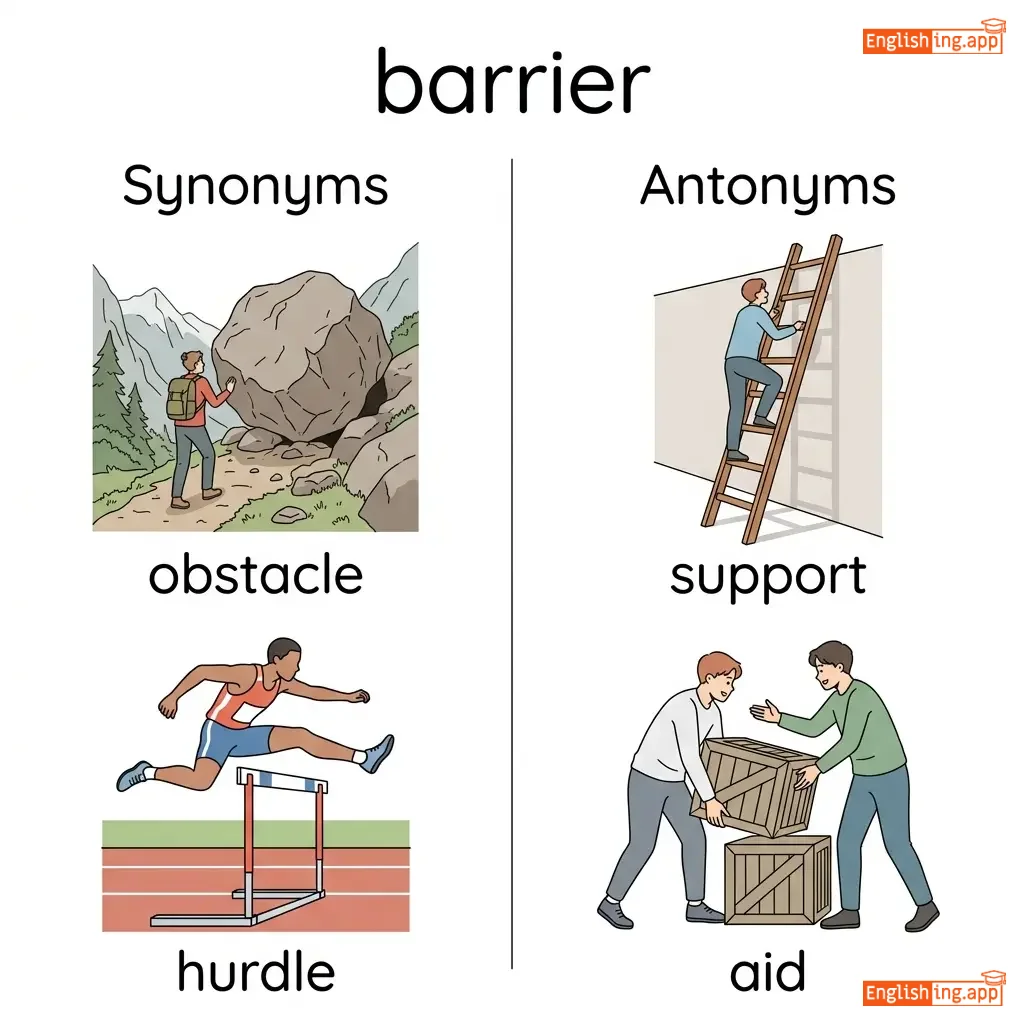
obstacle, blockade, hurdle, impediment
••••••
|
opening, gateway, passage
••••••
|
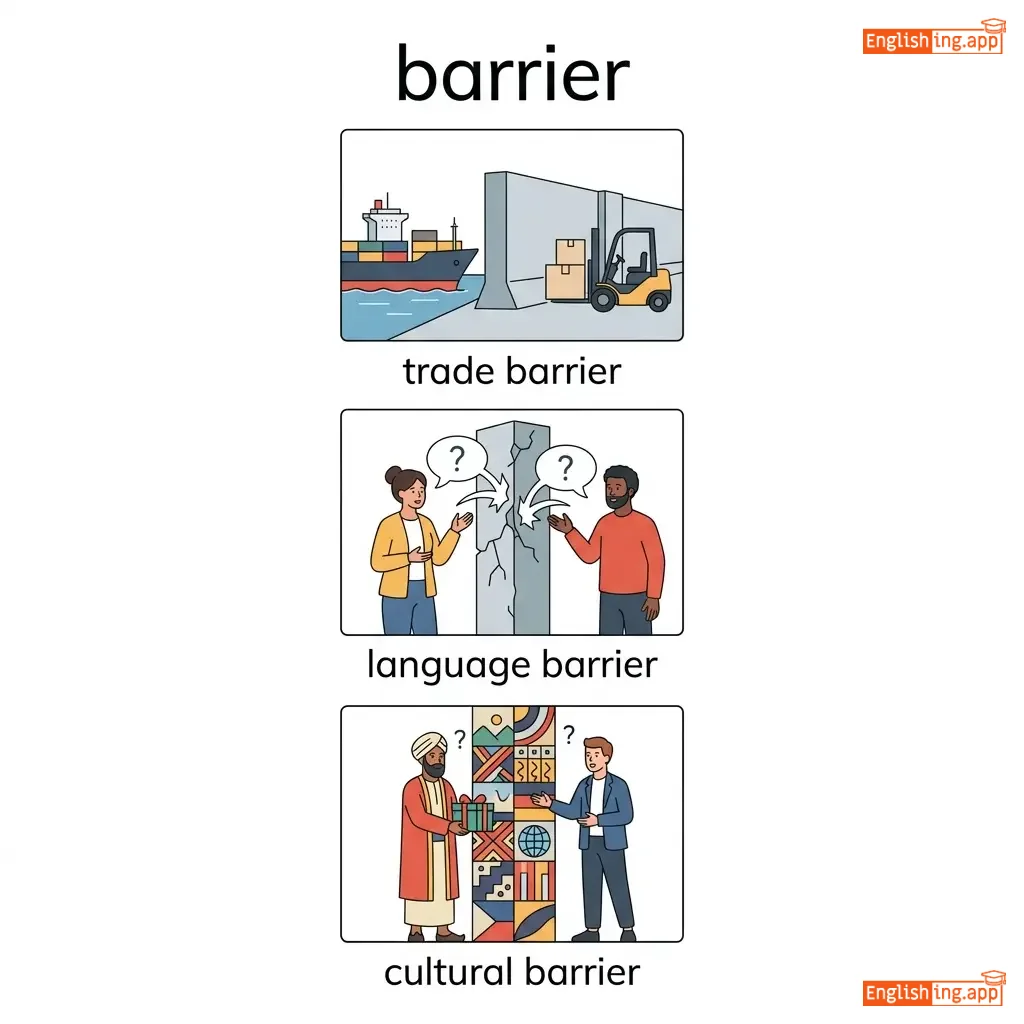
language barrier, trade barrier, sound barrier
••••••
|
障壁 (shōheki) は進行を止める壁のようなもの。
••••••
|
|
#62
🙏
|
/bɪˈliːf/
noun
(ビリーフ)
••••••
|
- •••••• |
信念; 信頼
shinnen, shinrai
••••••
|
confidence in the truth or existence of something; trust or faith
••••••
|
His belief in justice never wavered. |
彼の正義への信念は決して揺るがなかった。
Kare no seigi e no shinnen wa kesshite yuruganakatta.
••••••
|
faith, trust, conviction, confidence
••••••
|
disbelief, doubt, skepticism, mistrust
••••••
|
religious belief, strong belief, personal belief, belief system
••••••
|
Japanese 'shinnen' and 'shinrai' mix well with English 'belief'.
••••••
|
|
#63
👻
|
/ˈbiː.ɪŋ/
noun
(ビーイング)
••••••
|
- •••••• |
存在; 生物; 存在の状態
sonzai, seibutsu, sonzai no joutai
••••••
|
existence; a living creature; the state of existing
••••••
|
Every human being deserves respect and dignity. |
すべての人間は尊敬と尊厳に値する。
Subete no ningen wa sonkei to songen ni atai suru.
••••••
|
existence, creature, entity, life form
••••••
|
non-existence, void, nothingness
••••••
|
human being, living being, Supreme Being, well-being
••••••
|
Being means 'sonzai' in Japanese, think 'sonzai' like 'existence'.
••••••
|
|
#64
🎭
|
/bɪˈheɪ.vjər/
noun
(ビヘイビア)
••••••
|
- •••••• |
行動
kōdō
••••••
|
the way a person or animal acts or conducts themselves
••••••
|
His behaviour at the meeting was very professional.
彼の会議での行動は非常にプロフェッショナルでした。
••••••
|
彼の会議での行動は非常にプロフェッショナルでした。
Kare no kaigi de no kōdō wa hijō ni purofesshonaru deshita.
••••••
|
conduct, manner, attitude, deportment
••••••
|
misbehaviour, misconduct
••••••
|
good behaviour, bad behaviour, social behaviour, animal behaviour
••••••
|
行動は、会議でのプロフェッショナルな振る舞いのように、どのように行動するかを表します。
••••••
|
|
#65
🔥
|
/ˈbed.ləm/
noun
(ベッドラム)
••••••
|
- •••••• |
混乱; 騒がしい混乱
konran; sawagashī konran
••••••
|
a scene of noisy confusion; chaos and disorder
••••••
|
The classroom was complete bedlam after the fire alarm.
火災警報後、教室は完全にベッドラムでした。
••••••
|
火災警報後、教室は完全に混乱していました。
Kasai keihō go, kyōshitsu wa kanzen ni konran shiteimashita.
••••••
|
chaos, mayhem, pandemonium, uproar
••••••
|
order, peace, calm, tranquility
••••••
|
complete bedlam, absolute bedlam, bedlam breaks out
••••••
|
Visualize a classroom full of noise after a fire alarm.
••••••
|
|
#66
✨
|
/ˈbjuː.ti/
noun
(ビューティ)
••••••
|
- •••••• |
美しさ
utsukushisa
••••••
|
the quality of being pleasing to look at; attractiveness
••••••
|
The beauty of the sunset took my breath away.
夕日の美しさに息を呑んだ。
••••••
|
夕日の美しさに息を呑んだ。
Yūhi no utsukushisa ni iki o nonda.
••••••
|
attractiveness, elegance, charm, loveliness
••••••
|
ugliness, plainness, unsightliness
••••••
|
natural beauty, inner beauty, beauty contest, beauty salon
••••••
|
Beauty = 美しさ (Like how beautiful sunsets are in Japanese).
••••••
|
|
#67
👤
|
/ˈbeə.rər/
noun
(ベアラー)
••••••
|
- •••••• |
運び手; 書類の保持者
hakobite; shorui no hojisha
••••••
|
a person who carries or brings something; holder of a document
••••••
|
The bearer of this message must deliver it quickly. |
このメッセージの運び手はそれを迅速に届けなければなりません。
Kono messeeji no hakobite wa sore wo jinsoku ni todokena kereba narimasen.
••••••
|
carrier, messenger, holder, porter
••••••
|
receiver, recipient
••••••
|
message bearer, torch bearer, bearer bond, standard bearer
••••••
|
In Japanese, '運び手' means 'carrier', similar to 'bearer' in English.
••••••
|
|
#68
📿
|
/biːd/
noun
(ビード)
••••••
|
- •••••• |
ビーズ
biizu
••••••
|
a small round object with a hole through it for threading
••••••
|
She made a necklace with colorful beads. |
彼女はカラフルなビーズでネックレスを作った。
Kanojo wa karafuru na biizu de nekkuresu wo tsukutta.
••••••
|
pearl, ball, sphere, ornament
••••••
|
flat disc, square piece
••••••
|
prayer beads, glass beads, bead necklace, wooden beads
••••••
|
In Japanese, 'ビーズ' sounds like beads, perfect for colorful jewelry.
••••••
|
|
#69
🛁
|
/bɑːθ/
noun
(バス)
••••••
|
- •••••• |
お風呂; 浴槽
ofuro, yokusou
••••••
|
the act of washing one's body; a container for bathing
••••••
|
I take a hot bath every evening. |
私は毎晩、熱いお風呂に入ります。
Watashi wa maiban, atsui ofuro ni hairimasu.
••••••
|
wash, bathing, soak
••••••
|
shower, quick wash
••••••
|
hot bath, bubble bath, bath towel, bath time
••••••
|
温かいお風呂に入ると、心も体もリフレッシュされる。
••••••
|
|
#70
🏠
|
/ˈbeɪs.mənt/
noun
(ベースメント)
••••••
|
- •••••• |
地下室
chikashitsu
••••••
|
the lowest floor of a building, typically below ground level
••••••
|
We store old furniture in the basement. |
古い家具は地下室に保管されています。
Furui kagu wa chikashitsu ni hokan sareteimasu.
••••••
|
cellar, underground floor, lower level
••••••
|
attic, top floor, upper level
••••••
|
basement apartment, basement stairs, basement storage
••••••
|
地下室はいつもひんやりしている
••••••
|
|
#71
✅
|
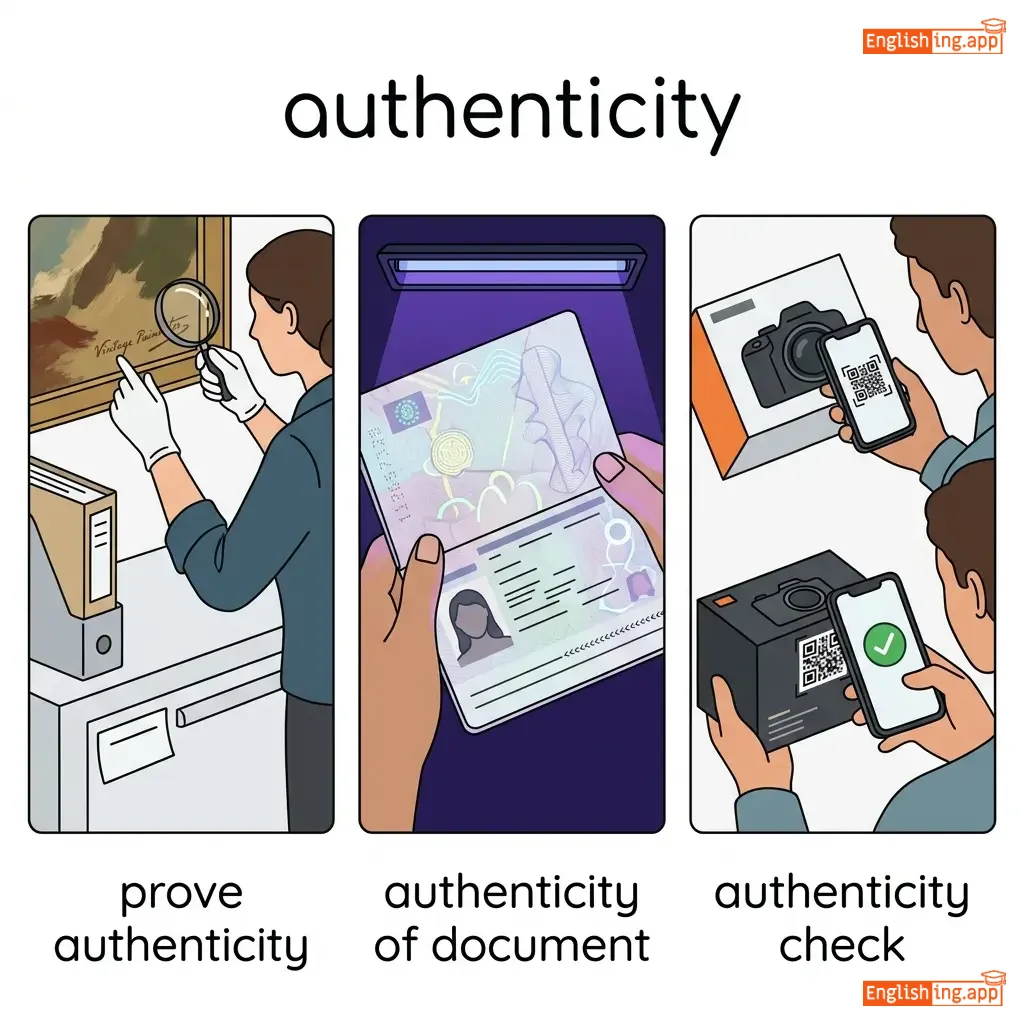
/ɔːˌθenˈtɪsɪti/
noun
(オーセンティシティ)
••••••
|
|
真正性
shinseisei
••••••
|
the quality of being genuine or real; not copied or false
••••••
|
The authenticity of the ancient artifact was confirmed by experts. |
古代の遺物の真正性は専門家によって確認されました。
Kodai no ibutsu no shinseisei wa senmonka ni yotte kakunin saremashita.
••••••
|
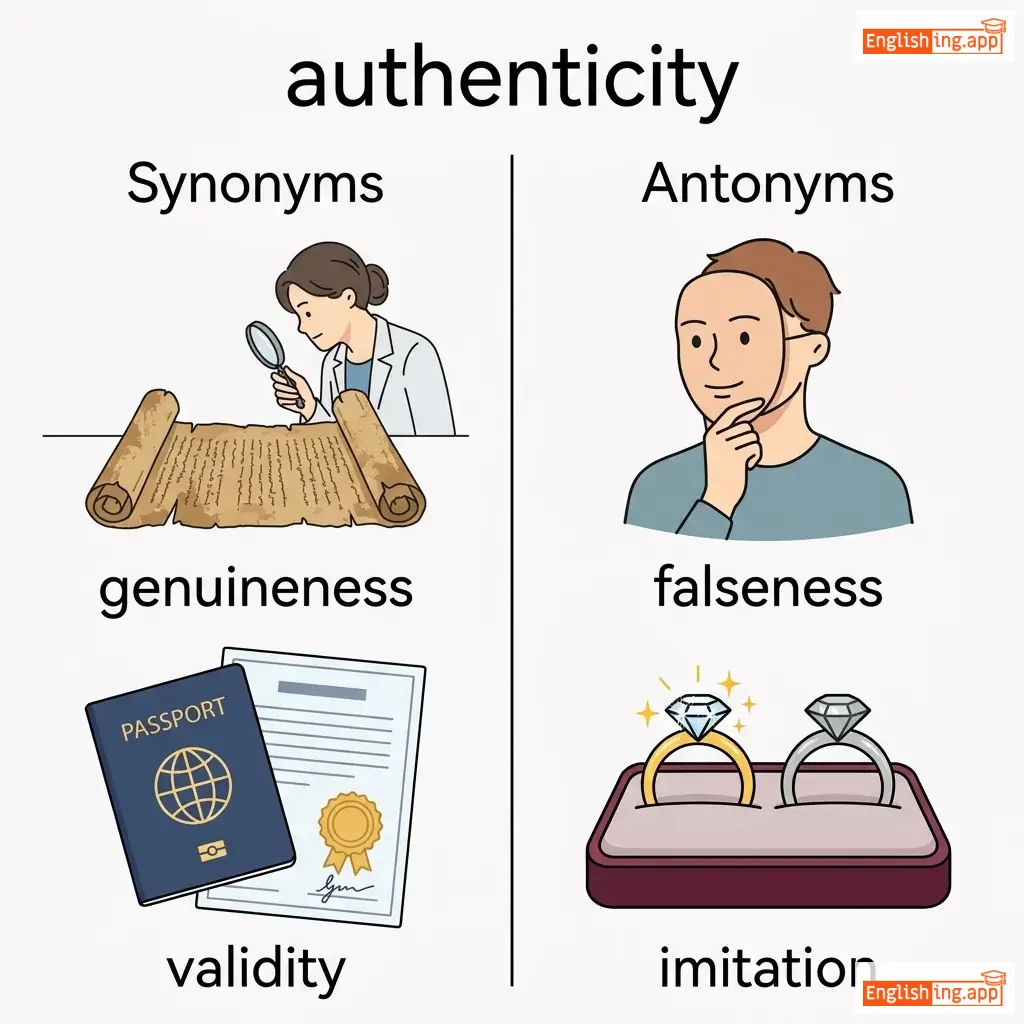
genuineness, validity, legitimacy
••••••
|
falseness, artificiality, counterfeit
••••••
|
authentic document, verify authenticity, question authenticity
••••••
|
Authenticity in Japanese: '真正性' means 'true and real', just like 'authenticity'.
••••••
|
|
#72
😡
|
/ˈbɑːrbərɪzəm/
noun
(バーバリズム)
••••••
|
- •••••• |
野蛮
yaban
••••••
|
extreme cruelty or brutality; absence of culture and civilization
••••••
|
The barbarism of the war crimes shocked the entire international community.
戦争犯罪の野蛮さは国際社会全体を衝撃に陥れた。
••••••
|
戦争犯罪の野蛮さは国際社会全体を衝撃に陥れた。
Sensō hanzai no yaban-sa wa kokusai shakai zentai o shōgeki ni ochiireta.
••••••
|
brutality, savagery, cruelty, inhumanity
••••••
|
civilization, culture, refinement, humanity
••••••
|
acts of barbarism, moral barbarism, prevent barbarism
••••••
|
野蛮 (yaban) = Barbarism
••••••
|
|
#73
⚔️
|
/bɑːrˈbeəriən/
noun
(バーバリアン)
••••••
|
- •••••• |
野蛮人; 未開人;
yebanjin; mikajin
••••••
|
a person from an uncivilized group; someone who is cruel or brutal
••••••
|
The ancient Romans considered anyone outside their empire to be barbarians.
古代ローマ人は自分たちの帝国の外にいる者たちを野蛮人と見なしていた。
••••••
|
古代ローマ人は自分たちの帝国の外にいる者たちを野蛮人と見なしていた。
Kodai Rōmajin wa jibuntachi no teikoku no soto ni iru mono-tachi o yebanjin to minasiteita.
••••••
|
savage, brute, vandal, primitive
••••••
|
civilized person, cultured individual, refined person
••••••
|
ancient barbarian, savage barbarian, barbarian invasion
••••••
|
Barbarian = Yebanjin + Mikajin
••••••
|
|
#74
💸
|
/ˈbæŋkrʌpt/
noun
(バンクラプト)
••••••
|
- •••••• |
破産
hasan
••••••
|
a person unable to pay debts; having no money; completely lacking in something
••••••
|
The company went bankrupt after years of poor financial management. |
その会社は、長年の不良な財務管理の後、破産しました。
Sono kaisha wa, naganen no furyō na zaimu kanri no ato, hasan shimashita.
••••••
|
insolvent, broke, ruined, failed
••••••
|
solvent, wealthy, prosperous, rich
••••••
|
go bankrupt, declare bankrupt, morally bankrupt
••••••
|
No •••••• |
|
#75
💥
|
/bæŋ/
noun
(バン)
••••••
|
- •••••• |
突然の大きな音; 強い衝撃や打撃
totsuzen no ōkina oto; tsuyoi shōgeki ya dageki
••••••
|
a sudden loud noise; a hard blow or hit
••••••
|
The door closed with a loud bang that woke everyone up. |
ドアが大きな音を立てて閉まり、皆を起こしました。
Doa ga ōkina oto o tatete shimari, mina o okoshimashita.
••••••
|
crash, thud, slam, boom
••••••
|
whisper, silence, quiet
••••••
|
loud bang, big bang, door bang
••••••
|
日本語で'bang'はみんなを起こす音!
••••••
|
|
#76
🧳
|
/ˈbæɡɪdʒ/
noun
(バゲージ)
••••••
|
- •••••• |
荷物; 所持品;
nimotsu; shojihin;
••••••
|
suitcases and bags containing personal belongings; past experiences or problems that affect behavior
••••••
|
Please collect your baggage from the conveyor belt at the airport.
空港のコンベヤーベルトから荷物をお取りください。
••••••
|
空港のコンベヤーベルトから荷物をお取りください。
Kūkō no konbeyā beruto kara nimotsu o otori kudasai.
••••••
|
luggage, belongings, suitcases
••••••
|
emptiness, freedom
••••••
|
check baggage, carry-on baggage, excess baggage
••••••
|
バゲージ (bagēji) = バッグ (baggu) + エージ (ejī) = 旅行
••••••
|
|
#77
🤝
|
/ˈbækɪŋ/
noun
(バックイング)
••••••
|
- •••••• |
支援
shien
••••••
|
help or support; financial or material support
••••••
|
The project received backing from several major investors. |
そのプロジェクトは、いくつかの主要な投資家から支援を受けました。
Sono purojekuto wa, ikutsuka no shuyou na tōshika kara shien o ukemashita.
••••••
|
support, assistance, endorsement, funding
••••••
|
opposition, hindrance, obstruction
••••••
|
financial backing, strong backing, political backing
••••••
|
Backing in Japanese is '支援', which means support.
••••••
|
|
#78
🖼️
|
/ˈbækɡraʊnd/
noun
(バックグラウンド)
••••••
|
- •••••• |
背景
haikei
••••••
|
the circumstances or situation that form the setting; a person's education, experience, or social circumstances
••••••
|
She has a strong background in mathematics and computer science.
彼女は数学とコンピュータサイエンスの強力なバックグラウンドを持っています。
••••••
|
彼女は数学とコンピュータサイエンスの強力な背景を持っています。
Kanojo wa sūgaku to konpyūta saiensu no kyōryokuna haikei o motteimasu.
••••••
|
setting, context, history, experience
••••••
|
foreground, future, inexperience
••••••
|
educational background, family background, background check
••••••
|
背景は個人の教育や経験の基盤を表しています。
••••••
|
|
#79
👨🎓
|
/ˈbætʃələr/
noun
(バチェラー)
••••••
|
- •••••• |
独身男性; 大学の学位を持つ人
dokushin dansei; daigaku no gakui o motsu hito
••••••
|
an unmarried man; a person who holds a first degree from a university
••••••
|
He remained a bachelor all his life and earned a bachelor's degree in engineering. |
彼は一生独身で、工学の学位を取得しました。
Kare wa isshou dokushin de, kougaku no gakui o shutoku shimashita.
••••••
|
single man, graduate, degree holder
••••••
|
married man, husband
••••••
|
bachelor's degree, eligible bachelor, confirmed bachelor
••••••
|
あなたが独身で、大学の学位を持っていることを想像してください、まるでバチェラーのようです。
••••••
|
|
#80
🧠
|
/əˈweənəs/
noun
(アウェアネス)
••••••
|
|
認識
ninshiki
••••••
|
knowledge or understanding of a situation or subject at the present time
••••••
|
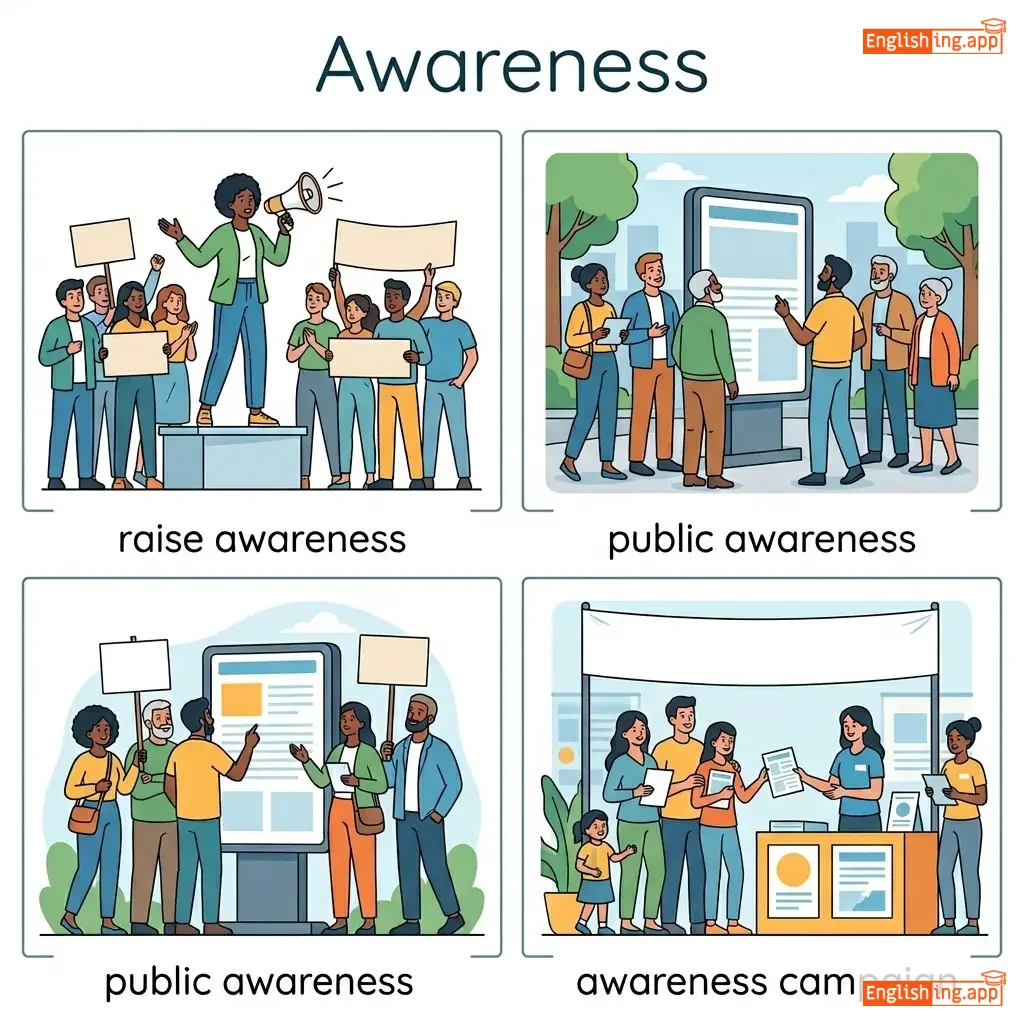
Public awareness about environmental issues has increased significantly. |
環境問題に対する公共の認識は大幅に増加した。
Kankyou mondai ni taisuru koukyou no ninshiki wa ouhaba ni zouka shita.
••••••
|
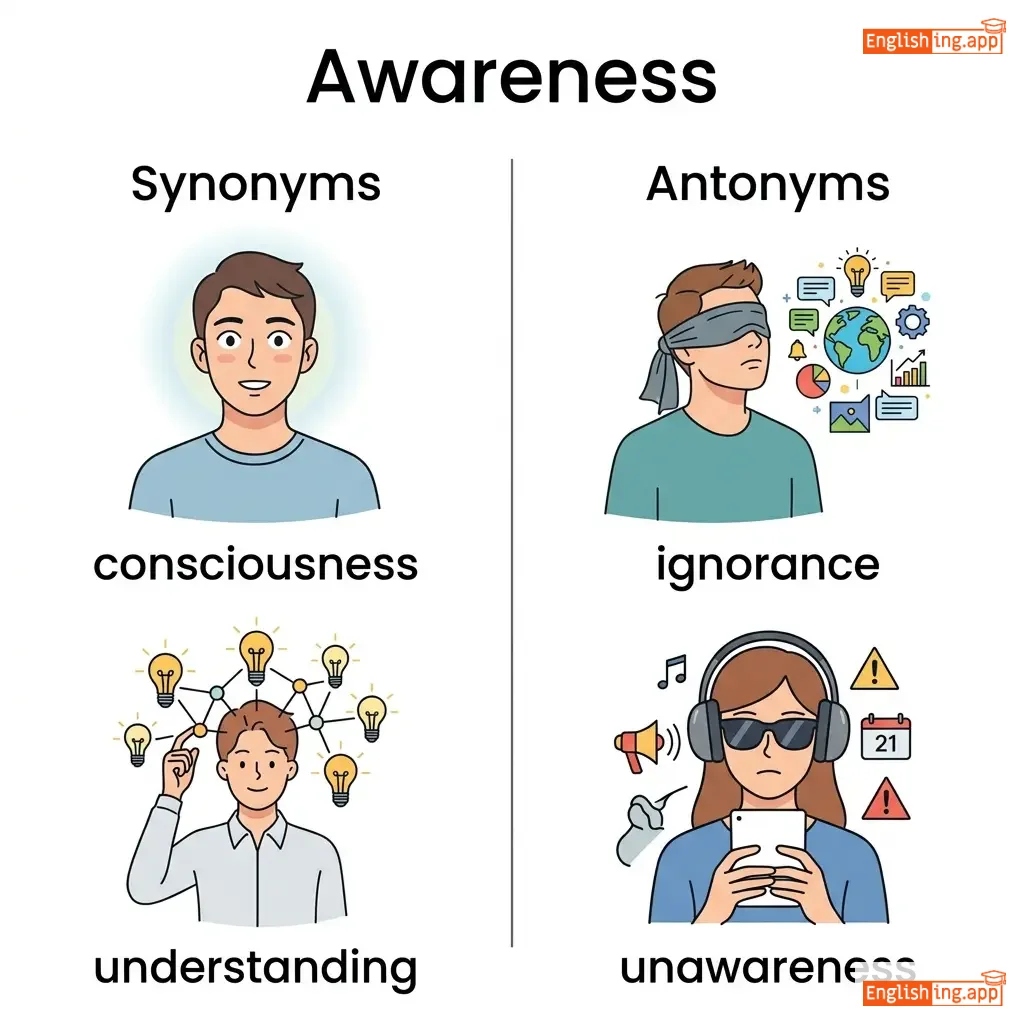
consciousness, knowledge, understanding
••••••
|
ignorance, unawareness, oblivion
••••••
|
raise awareness, public awareness, self-awareness
••••••
|
認識は世界を理解する第一歩です
••••••
|
Vocabulary Quiz
Test your vocabulary by matching words with their translations or meanings.
Login to take the quiz
Comments (0)
Share your thoughts and join the discussion.
Join the discussion by logging in
Login to CommentNo comments yet
Be the first to share your thoughts!