

翻訳
過去
過去分詞
三人称単数
動名詞
意味
例文
例文の翻訳
同義語
対義語
コロケーション
ニーモニック
Swipe left or right, or use the buttons. Tap image to zoom.
例文の翻訳
単語
Lesson 35Lesson 35 - マスクトグル
|
絵文字
|
単語 | Images | 翻訳 | 意味 | 例文 | 例文の翻訳 | 同義語 | 対義語 | コロケーション | ニーモニック |
|---|---|---|---|---|---|---|---|---|---|---|
|
#681
🤸
|
/dʒʌmp/
noun
(ジャンプ)
••••••
|
|
ジャンプ
janpu
••••••
|
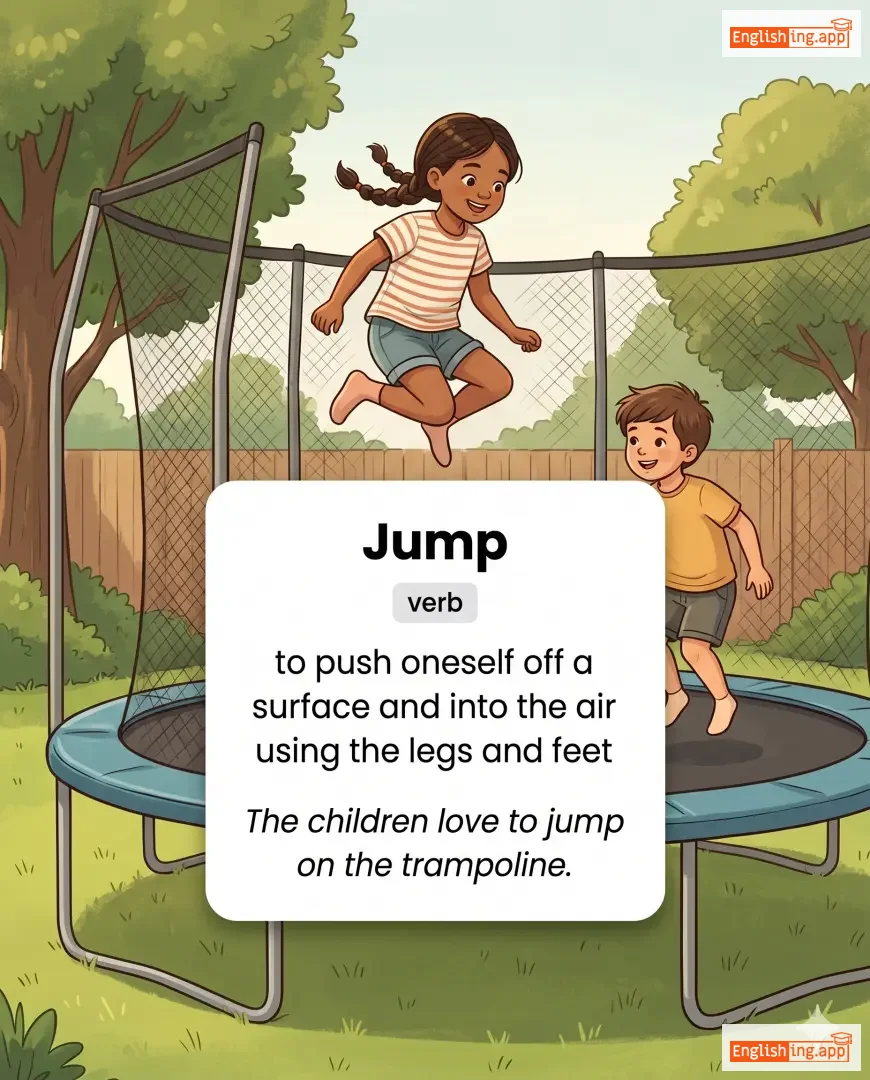
an act of jumping; a sudden movement upwards or forwards
••••••
|
The athlete made a perfect jump over the high bar.
アスリートは高いバーを完璧にジャンプしました。
••••••
|
アスリートは高いバーを完璧にジャンプしました。
Asurīto wa takai bā o kanpeki ni janpu shimashita.
••••••
|
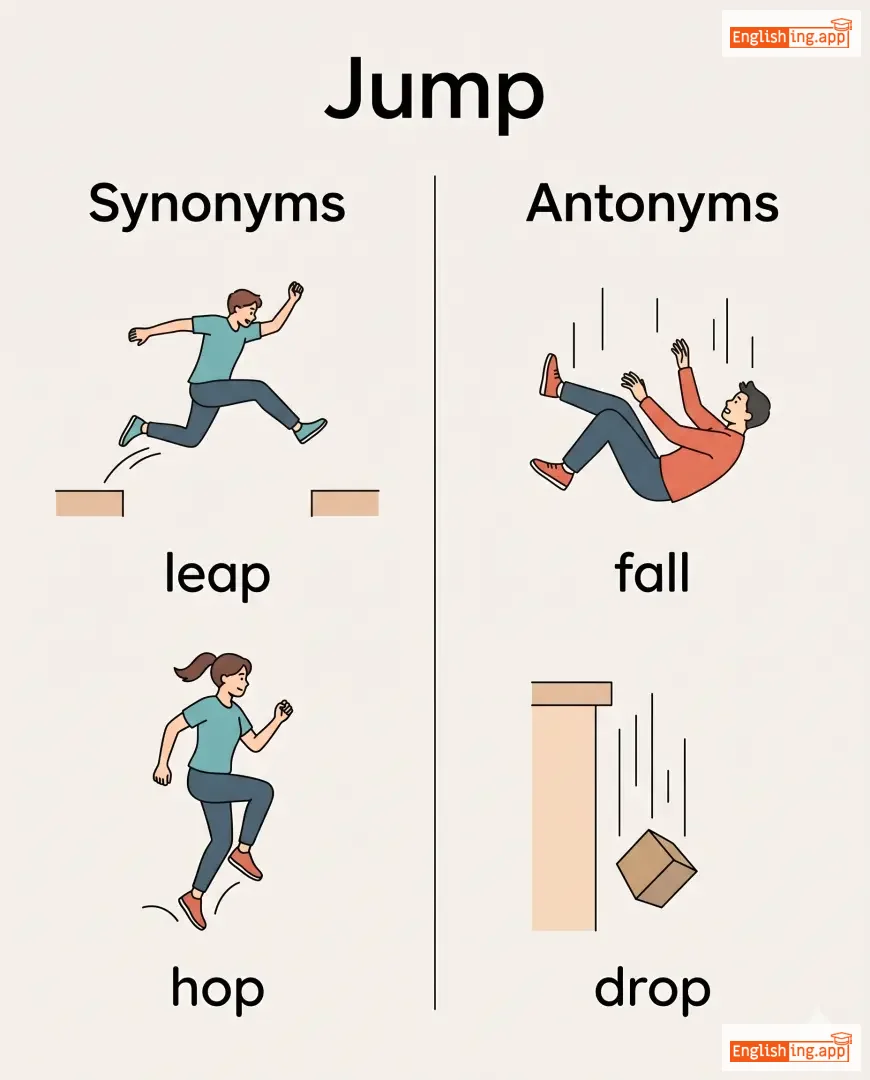
leap, bound, hop, spring
••••••
|
fall, drop, descend
••••••
|
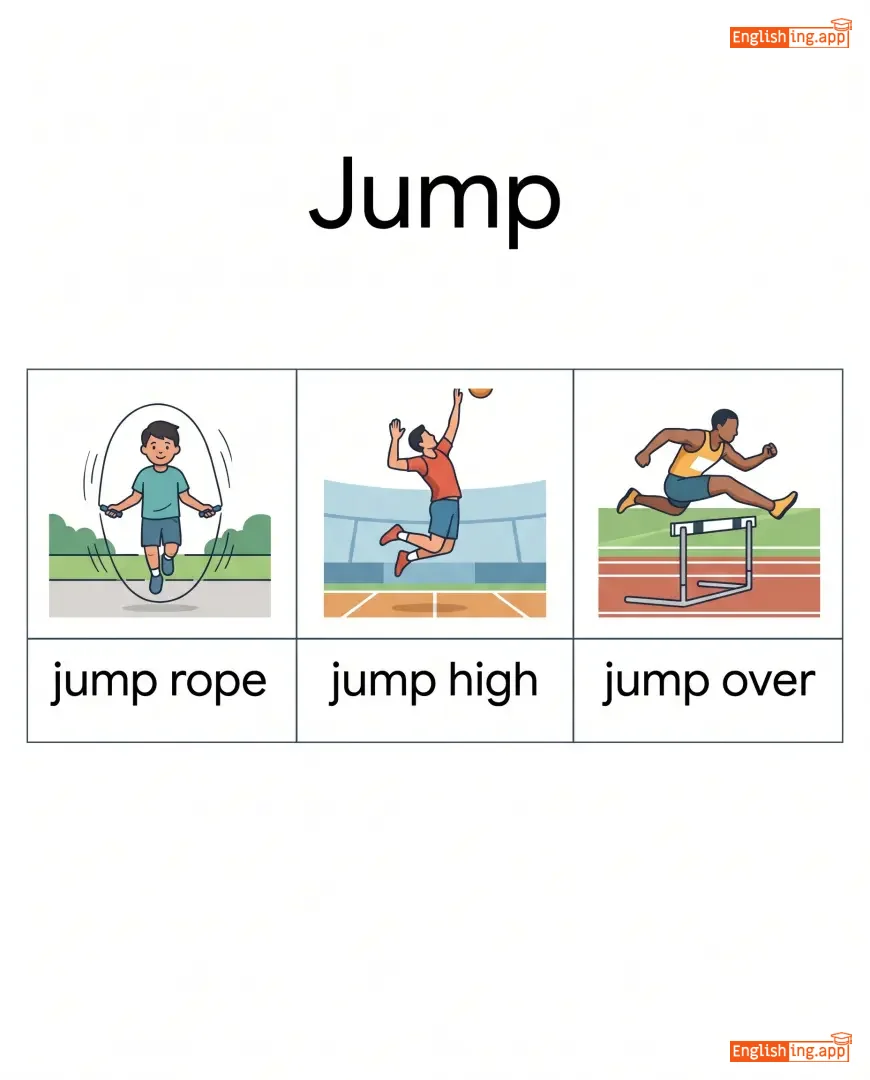
high jump, long jump, quantum jump
••••••
|
ジャンプは上に向かって飛び跳ねる動作で覚えましょう。
••••••
|
|
#682
🧒
|
/ˈdʒuː.və.naɪl/
noun
(ジュヴェナイル)
••••••
|
- •••••• |
未成年者; 若者
miseinen-sha, wakamono
••••••
|
a young person below the age of adult criminal responsibility; relating to young people
••••••
|
The juvenile court handles cases involving young offenders under eighteen. |
少年裁判所は、18歳未満の若年犯罪者に関する事件を扱います。
Shōnen saiban-sho wa, 18-sai miman no wakamono hanzai-sha ni kansuru jiken o atsukaimasu.
••••••
|
young person, adolescent, minor, youth
••••••
|
adult, mature person, elder
••••••
|
juvenile court, juvenile delinquent, juvenile crime
••••••
|
ジュヴェナイル sounds like juvenile in Japanese, handling young offenders.
••••••
|
|
#683
👕
|
/ˈdʒʌm.pər/
noun
(ジャンパー)
••••••
|
- •••••• |
セーター;
se-ta
••••••
|
a knitted garment worn on the upper body; a person or animal that jumps
••••••
|
She wore a warm woolen jumper during the cold winter evening.
彼女は寒い冬の夜に暖かいウールのジャンパーを着ていました。
••••••
|
彼女は寒い冬の夜に暖かいウールのジャンパーを着ていました。
Kanojo wa samui fuyu no yoru ni atatakai u-ru no janpa- o kiteimashita.
••••••
|
sweater, pullover, jersey, cardigan
••••••
|
t-shirt, tank top, sleeveless top
••••••
|
woolen jumper, cable-knit jumper, school jumper
••••••
|
寒い季節にはセーター(ジャンパー)を着よう!
••••••
|
|
#684
🍛
|
/ˈkedʒ.ə.riː/
noun
(ケジリー)
••••••
|
- •••••• |
ケジリー
kejirī
••••••
|
a European dish of cooked rice, fish, and hard-boiled eggs, originally from India
••••••
|
The breakfast menu featured traditional kedgeree with smoked haddock and eggs. |
朝食のメニューには、スモークハドックと卵が入った伝統的なケジリーがありました。
Chōshoku no menyū ni wa, sumōku hadokku to tamago ga haitta dentō-teki na kejirī ga arimashita.
••••••
|
rice dish, pilaf, khichdi
••••••
|
raw ingredients, separate dishes
••••••
|
smoked haddock kedgeree, breakfast kedgeree, traditional kedgeree
••••••
|
ケジリーは、インディアンスタイルのご飯、魚、卵を使ったヨーロッパの伝統的な料理です。
••••••
|
|
#685
🚗
|
/ˈdʒʌŋk.ʃən/
noun
(jankushon)
••••••
|
- •••••• |
ジャンクション
jankushon
••••••
|
a place where two or more roads or railway lines meet; a point where things join or connect
••••••
|
Turn left at the junction to reach the shopping center.
ショッピングセンターに行くために、ジャンクションで左に曲がってください。
••••••
|
ショッピングセンターに行くために、ジャンクションで左に曲がってください。
Shopping center ni iku tame ni, jankushon de hidari ni magatte kudasai.
••••••
|
intersection, crossroads, meeting point, connection
••••••
|
separation, division, dead end
••••••
|
railway junction, road junction, busy junction
••••••
|
ジャンクション: 道路が交差する場所で、曲がる場所を知っている
••••••
|
|
#686
🏰
|
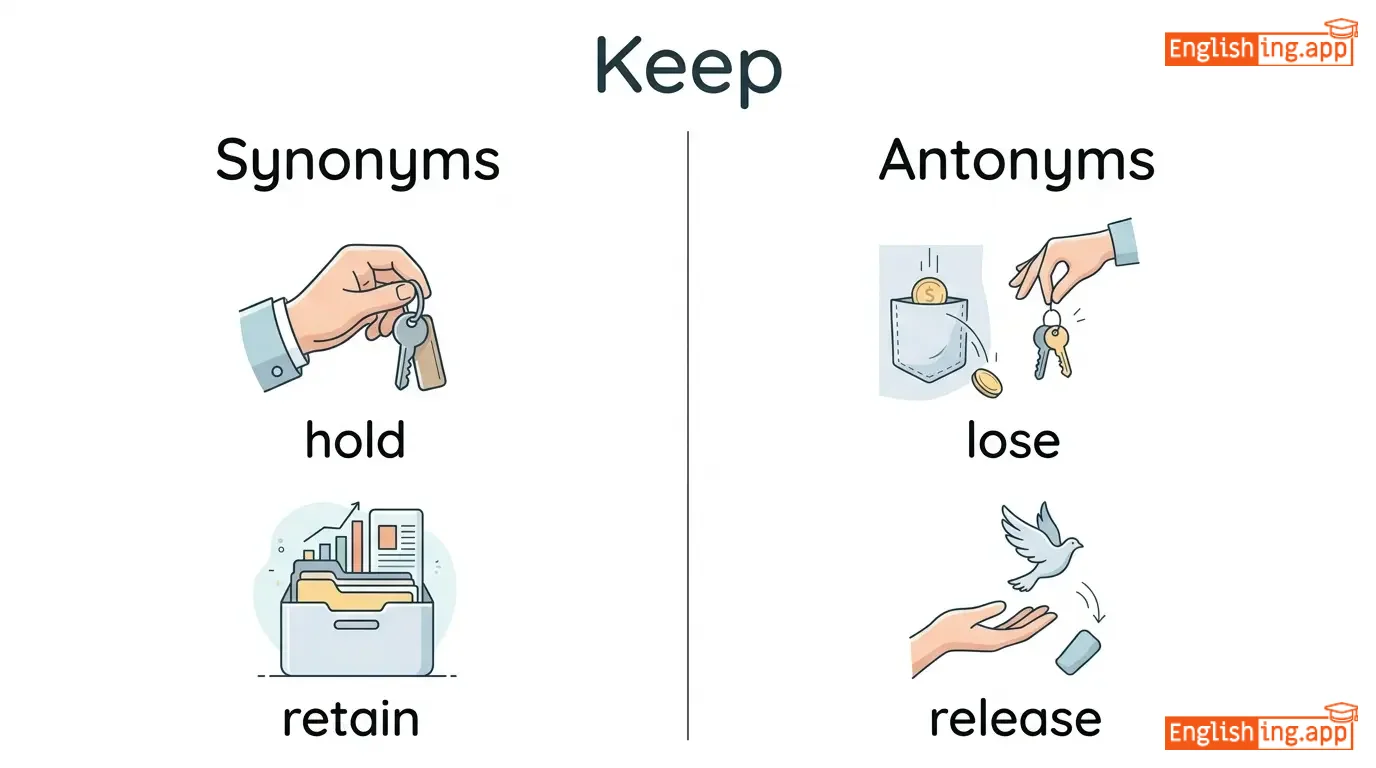
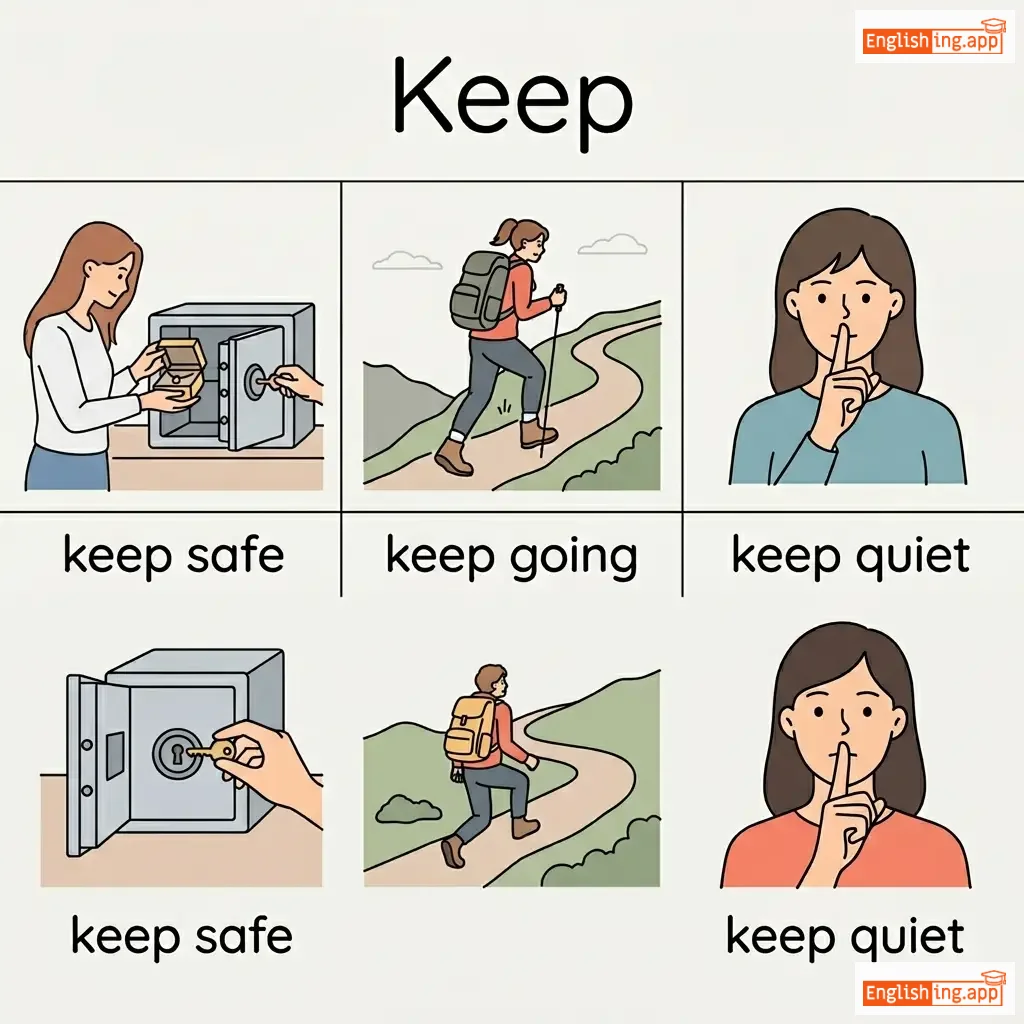
/kiːp/
noun
(キープ)
••••••
|
|
生活費; 城の最強部分
seikatsuhi; shiro no saikyō bubun
••••••
|
food and other things necessary for living; the strongest part of a castle
••••••
|
He worked hard to earn his keep and support his family. |
彼は家族を支えるために一生懸命働いた。
Kare wa kazoku o sasaeru tame ni isshōkenmei hataraita.
••••••
|
maintenance, sustenance, support, upkeep
••••••
|
abandonment, neglect, deprivation
••••••
|
earn one's keep, for keeps, castle keep
••••••
|
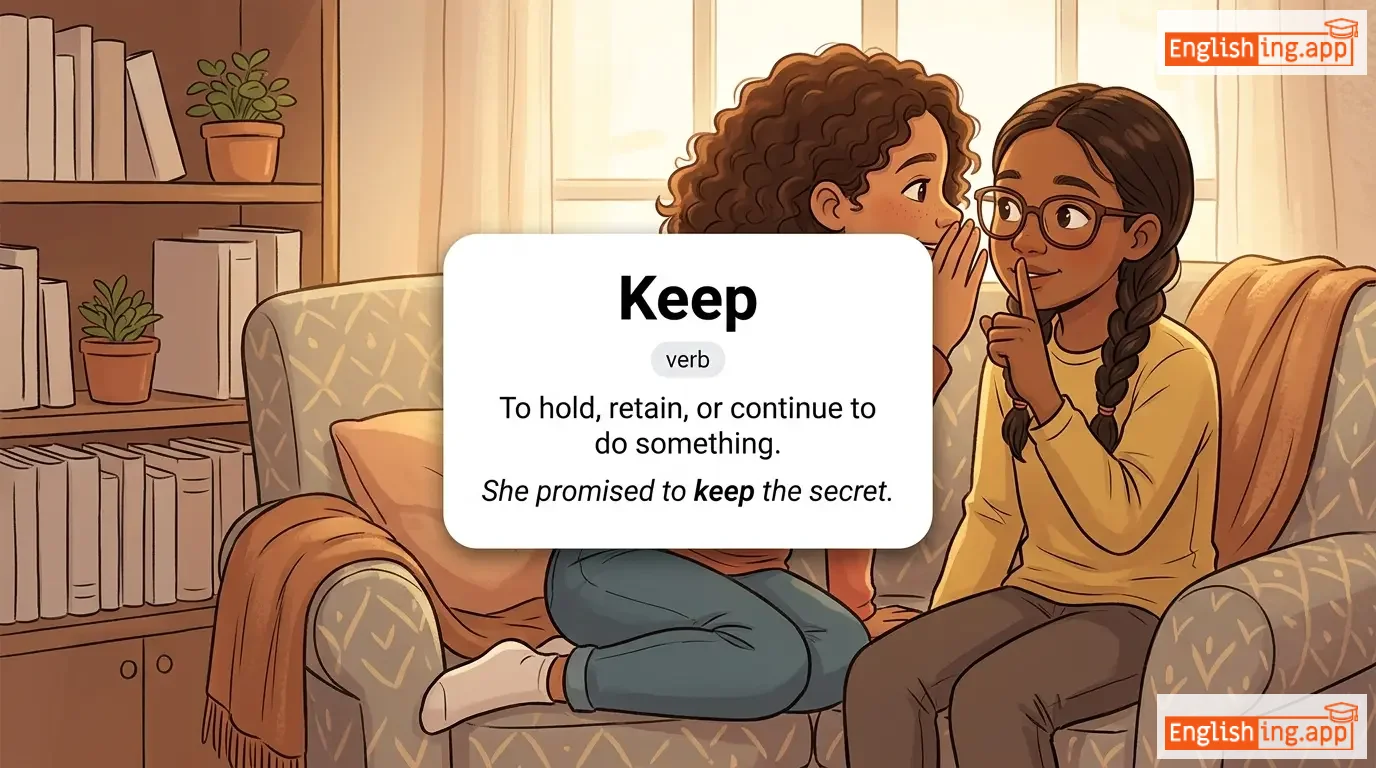
Keep = 生活費、生活に必要なもの
••••••
|
|
#687
⏰
|
/ˈdʒʌŋk.tʃər/
noun
(ジャンクチャー)
••••••
|
- •••••• |
重要な時点
juuyou na jiten
••••••
|
a particular point in events or time; a critical moment when important decisions must be made
••••••
|
At this juncture, we need to make a crucial decision about our future. |
この重要な時点で、私たちは未来について重要な決定を下さなければなりません。
Kono juuyou na jiten de, watashitachi wa mirai ni tsuite juuyou na kettei wo kudasanakereba narimasen.
••••••
|
moment, point, stage, crossroads
••••••
|
continuity, stability, routine
••••••
|
critical juncture, this juncture, important juncture
••••••
|
Juncture - あなたの未来を決定する瞬間
••••••
|
|
#688
🔐
|
/ˈkiː.pər/
noun
(キーパー)
••••••
|
- •••••• |
守衛; 飼育係;
shuei; shiikugakari
••••••
|
a person whose job it is to guard or take care of something or someone; a goalkeeper
••••••
|
The zoo keeper fed the animals every morning at eight o'clock.
動物園のキーパーは毎朝8時に動物たちに餌を与えていました。
••••••
|
動物園のキーパーは毎朝8時に動物たちに餌を与えていました。
Doubutsuen no kiipaa wa mai asa 8 ji ni doubutsutachi ni esa o ataeteimashita.
••••••
|
guardian, caretaker, custodian, warden
••••••
|
destroyer, neglector, abandoner
••••••
|
zoo keeper, goal keeper, secret keeper
••••••
|
Remember: a 'Keeper' guards like a 'shuei' in Japanese!
••••••
|
|
#689
🌳
|
/ˈdʒʌŋ.ɡəl/
noun
(ジャングル)
••••••
|
- •••••• |
密林; ジャングル;
mitsurin, janguru
••••••
|
a dense forest in a tropical climate; a place of bewildering complexity or ruthless struggle
••••••
|
The explorer got lost in the dense Amazon jungle for three days.
探検家は3日間アマゾンの密林で迷子になりました。
••••••
|
探検家は3日間アマゾンの密林で迷子になりました。
Tankenka wa mikka kan Amazon no mitsurin de maigo ni narimashita.
••••••
|
forest, rainforest, wilderness, thicket
••••••
|
desert, clearing, city, civilization
••••••
|
dense jungle, tropical jungle, concrete jungle
••••••
|
ジャングルの中では迷子になりやすい。探検家のように、道を失ってしまうことがある。
••••••
|
|
#690
🐕
|
/ˈken.əl/
noun
(ケネル)
••••••
|
- •••••• |
犬小屋; 犬の繁殖や預かりを行う施設
inugoya; inu no hanshoku ya azukari o okonau shisetsu
••••••
|
a small shelter for a dog; an establishment for the breeding or boarding of dogs
••••••
|
The dog slept comfortably in his wooden kennel in the backyard.
犬は裏庭の木製のケネルで快適に寝ていました。
••••••
|
犬は裏庭の木製のケネルで快適に寝ていました。
Inu wa uraniwa no mokusei no kenel de kaiteki ni nete imashita.
••••••
|
doghouse, shelter, boarding house, pen
••••••
|
open space, freedom, wild habitat
••••••
|
dog kennel, boarding kennel, breeding kennel
••••••
|
犬は自分の犬小屋で寝るのが好きです。
••••••
|
|
#691
👶
|
/ˈdʒuː.ni.ər/
noun
(ジュニア)
••••••
|
- •••••• |
ジュニア; 初心者; 下位
junia; shoshinsha; kai
••••••
|
a person who is younger or lower in rank than someone else; relating to young people
••••••
|
The junior employee was eager to learn from senior colleagues.
ジュニア社員はシニアの同僚から学びたがっていました。
••••••
|
ジュニア社員はシニアの同僚から学びたがっていました。
Junia shain wa shinia no dōryō kara manabitagatte imashita.
••••••
|
younger, subordinate, novice, apprentice
••••••
|
senior, elder, superior, veteran
••••••
|
junior employee, junior school, junior partner
••••••
|
Junior in Japanese sounds like a newcomer eager to learn from those ahead.
••••••
|
|
#692
⛽
|
/ˈker.ə.siːn/
noun
(ケロシン)
••••••
|
- •••••• |
ケロシン
keroshin
••••••
|
a combustible hydrocarbon liquid widely used as a fuel in lamps and heating systems
••••••
|
The old lamp burned kerosene to provide light during power outages.
古いランプは停電中に光を提供するためにケロシンを燃やしていました。
••••••
|
古いランプは停電中に光を提供するためにケロシンを燃やしていました。
Furui ranpu wa teiden-chuu ni hikari wo teikyou suru tame ni keroshin wo moyashite imashita.
••••••
|
paraffin oil, lamp oil, heating oil
••••••
|
electric power, solar energy, gas
••••••
|
kerosene lamp, kerosene heater, kerosene stove
••••••
|
Kerosene fuels the light in lamps during a power outage, just like the oil that keeps the heat going.
••••••
|
|
#693
🗑️
|
/dʒʌŋk/
noun
(ジャンク)
••••••
|
- •••••• |
ゴミ; 不要品
gomi, fuyouhin
••••••
|
old or discarded articles that are considered useless or of little value; things of poor quality
••••••
|
He cleaned out the garage and threw away all the old junk. |
彼はガレージを掃除して、すべての古いゴミを捨てました。
kare wa gareeji o souji shite, subete no furui gomi o sutemashita.
••••••
|
rubbish, trash, waste, clutter
••••••
|
treasure, valuable, asset, quality item
••••••
|
old junk, junk food, junk mail
••••••
|
Junk in Japanese is 'ゴミ,' just like junk means waste.
••••••
|
|
#694
🍅
|
/ˈketʃ.ʌp/
noun
(ケチャップ)
••••••
|
- •••••• |
ケチャップソース
kechappu sōsu
••••••
|
a thick sauce made chiefly from tomatoes, vinegar, and spices
••••••
|
She squeezed some ketchup on her french fries before eating them. |
彼女はフレンチフライにケチャップをかけてから食べました。
Kanojo wa furenchi furai ni kechappu o kakete kara tabemashita.
••••••
|
tomato sauce, condiment, relish
••••••
|
plain food, unseasoned
••••••
|
tomato ketchup, squeeze ketchup, ketchup bottle
••••••
|
覚えておいて:'ケチャップ'はフライドポテトに欠かせないソースです。
••••••
|
|
#695
🪐
|
/ˈdʒuː.pɪ.tər/
noun
(ジュピター)
••••••
|
- •••••• |
木星; ローマ神話の主神
mokusei; ro-ma shinwa no shushin
••••••
|
the largest planet in our solar system; the chief god of Roman mythology
••••••
|
Jupiter is known for its massive size and distinctive red spot.
ジュピターはその巨大なサイズと特徴的な赤い斑点で知られています。
••••••
|
ジュピターはその巨大なサイズと特徴的な赤い斑点で知られています。
Jupitā wa sono kyodaina saizu to tokuchō-teki na akai hanten de shirareteimasu.
••••••
|
giant planet, gas giant, Jove
••••••
|
small planet, terrestrial planet
••••••
|
planet Jupiter, Jupiter's moons, Jupiter's atmosphere
••••••
|
ジュピターはその大きさから、ローマ神話の主神にぴったりです!
••••••
|
|
#696
🤿
|
/ˈket.əl/
noun
(やかん)
••••••
|
- •••••• |
やかん
yakan
••••••
|
a container used for boiling water, typically with a lid, spout, and handle
••••••
|
The electric kettle whistled when the water reached boiling point.
電気ケトルは水が沸騰点に達したときに笛のような音を立てました。
••••••
|
電気ケトルは水が沸騰点に達したときに笛のような音を立てました。
Denki ketoru wa mizu ga futtō ten ni tasshita toki ni fue no yō na oto o tatemashita.
••••••
|
teapot, boiler, pot, vessel
••••••
|
cooler, freezer, ice bucket
••••••
|
electric kettle, tea kettle, boiling kettle
••••••
|
やかんでお湯を沸かす音が、ピッピッ!
••••••
|
|
#697
🏩
|
/ˌdʒʊə.rɪsˈdɪk.ʃən/
noun
(ジュリスディクション)
••••••
|
- •••••• |
管轄
kankatsu
••••••
|
the official power to make legal decisions and judgments; the extent of this power
••••••
|
This case falls under the jurisdiction of the federal court. |
このケースは連邦裁判所の管轄下にあります。
kono kēsu wa renpō saiban-sho no kankatsu-ka ni arimasu.
••••••
|
authority, power, control, domain
••••••
|
powerlessness, anarchy, lawlessness
••••••
|
legal jurisdiction, federal jurisdiction, court jurisdiction
••••••
|
管轄は、どの裁判所が判決を下せるかを決めます。
••••••
|
|
#698
🔑
|
/kiː/
noun
(キ)
••••••
|
- •••••• |
鍵
kagi
••••••
|
a small piece of shaped metal used to operate a lock; something that provides a means of access
••••••
|
She lost her house key and couldn't get inside until the locksmith arrived.
彼女は家の鍵を失くして、鍵屋が来るまで中に入れませんでした。
••••••
|
彼女は家の鍵を失くして、鍵屋が来るまで中に入れませんでした。
Kanojo wa ie no kagi o nakushite, kagiya ga kuru made naka ni iremasen deshita.
••••••
|
opener, access, solution, clue
••••••
|
lock, barrier, obstacle
••••••
|
house key, car key, master key
••••••
|
Kagi = Kagi de tobira wo akemasu.
••••••
|
|
#699
⚙️
|
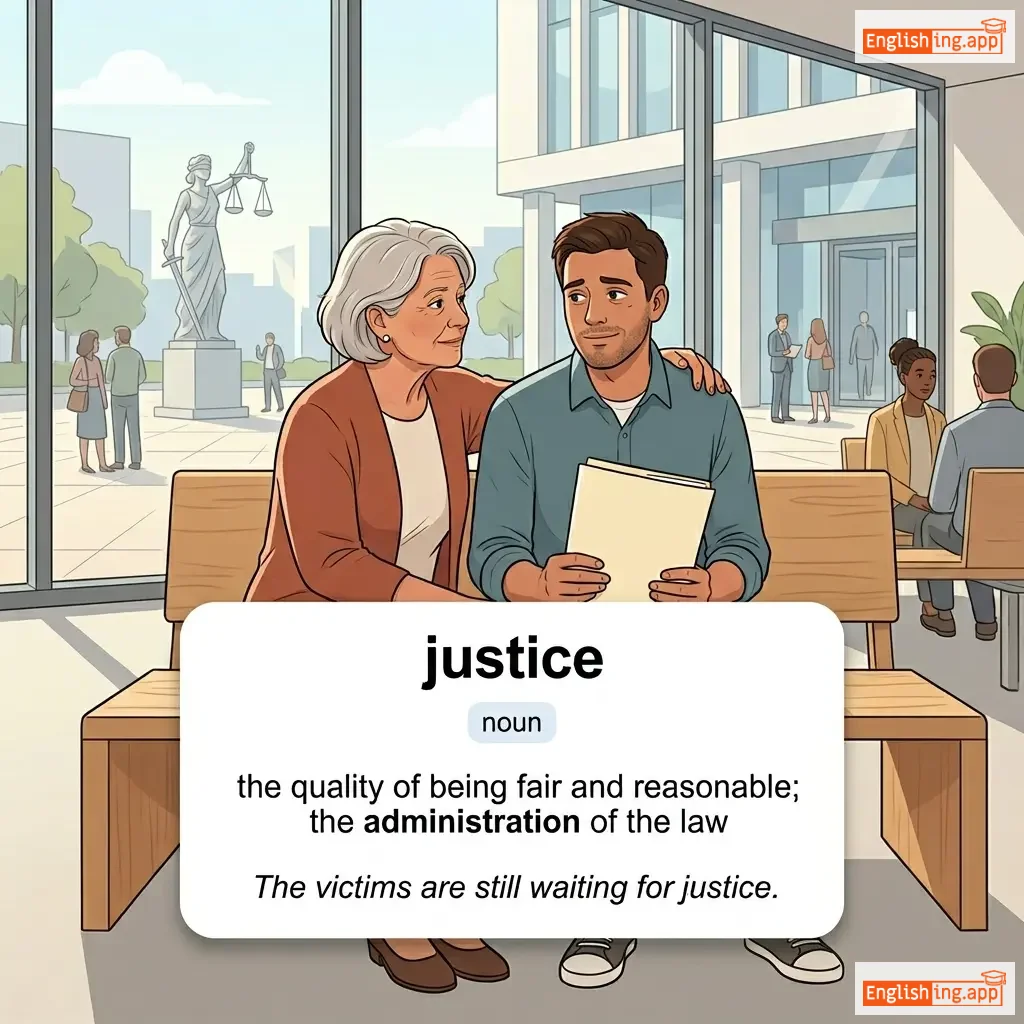
/ˈdʒʌs.tɪs/
noun
(ジャスティス)
••••••
|
|
正義; 裁判官; 公正
seigi, saiban-kan, kōsei
••••••
|
just behavior or treatment; the quality of being fair and reasonable; a judge in a court of law
••••••
|
The family sought justice for their loved one through the legal system.
家族は法的システムを通じて愛する人のために正義を求めました。
••••••
|
家族は法的システムを通じて愛する人のために正義を求めました。
Kazoku wa hōteki shisutemu o tōjite aisuru hito no tame ni seigi o motomemashita.
••••••
|
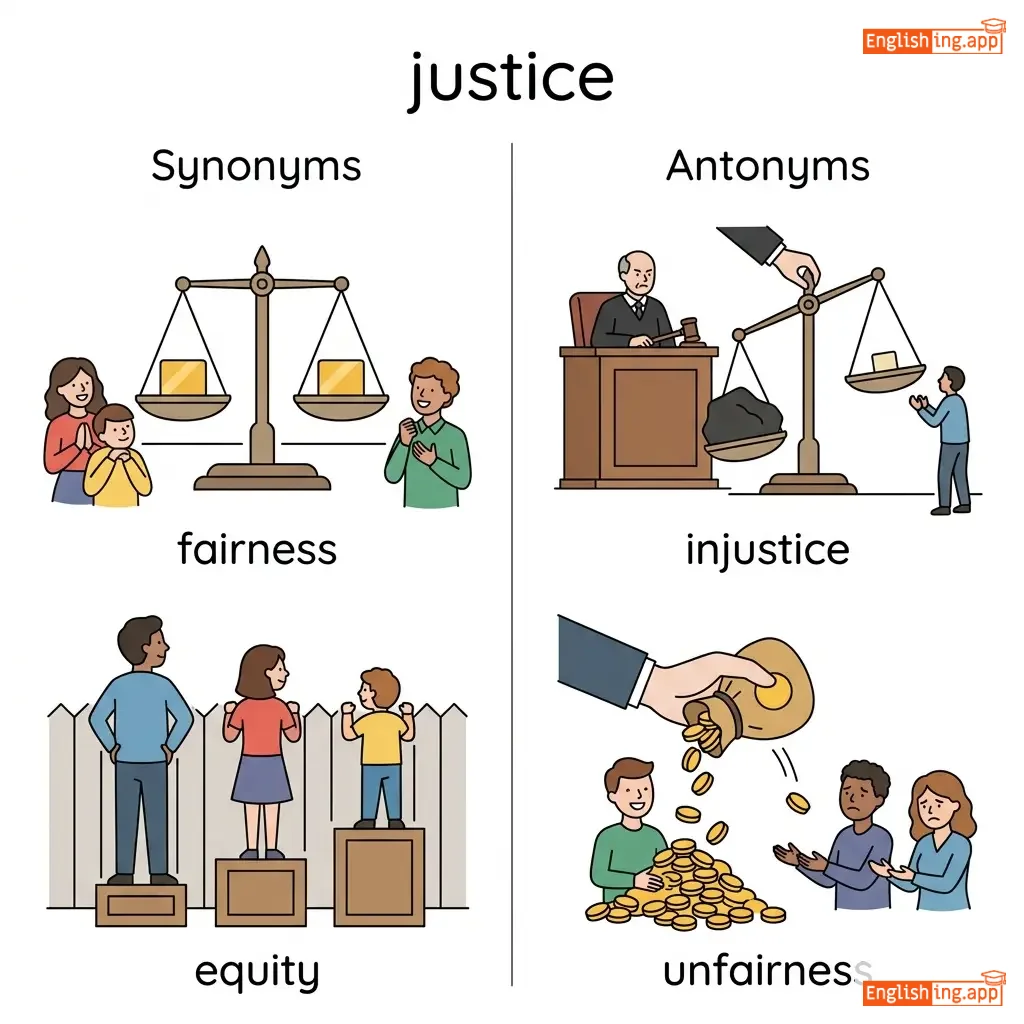
fairness, righteousness, equity, impartiality
••••••
|
injustice, unfairness, bias, prejudice
••••••
|
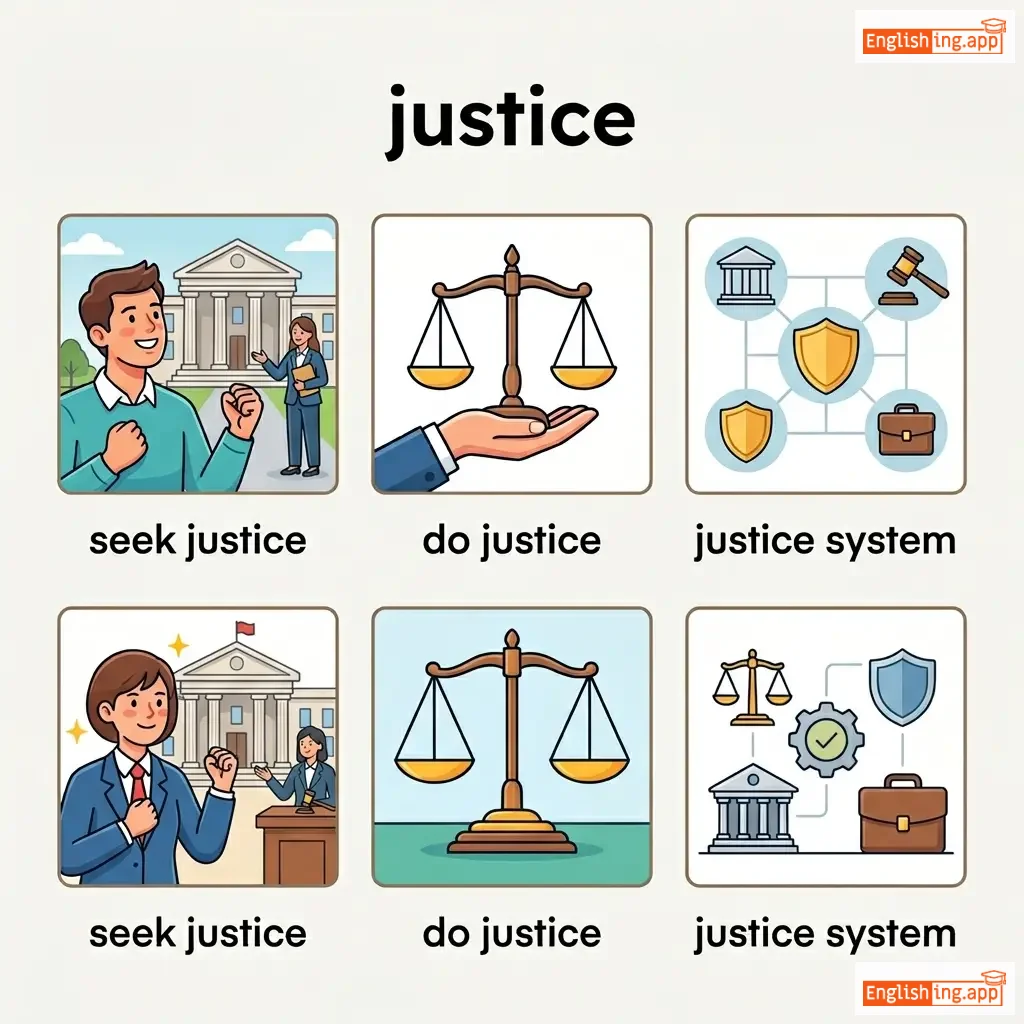
social justice, criminal justice, justice system
••••••
|
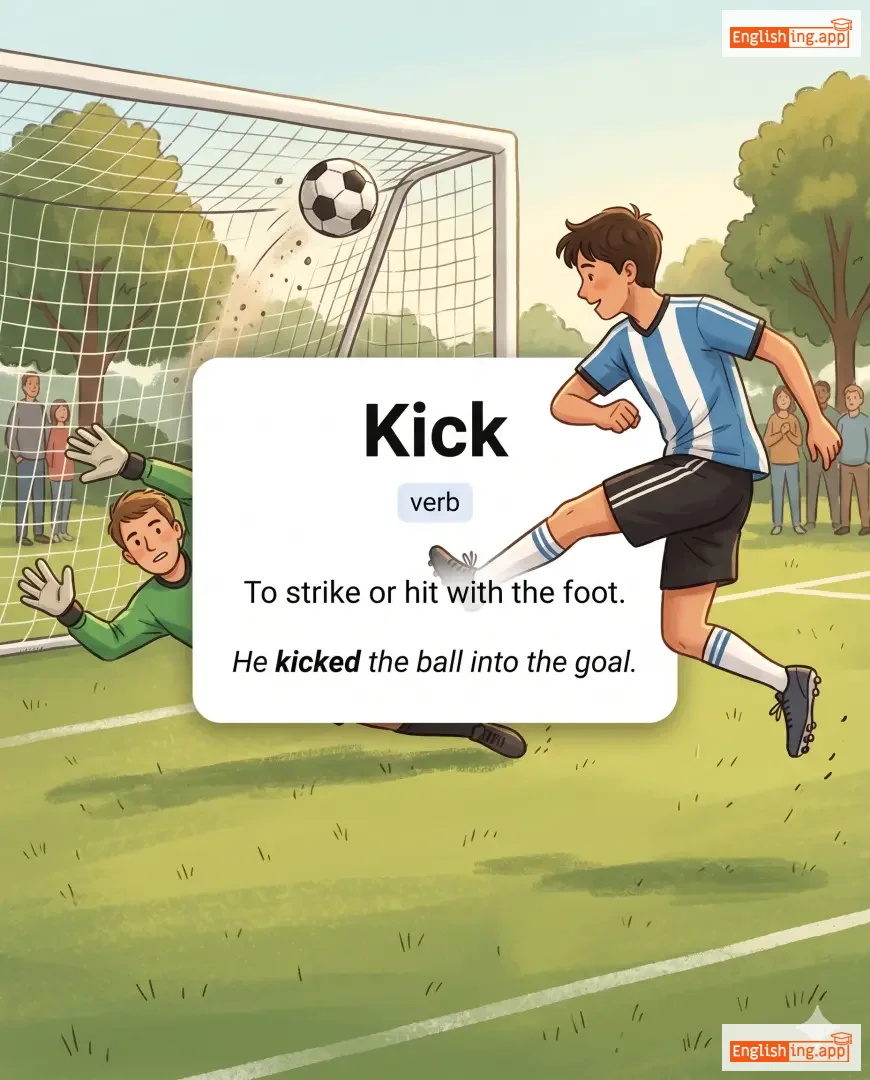
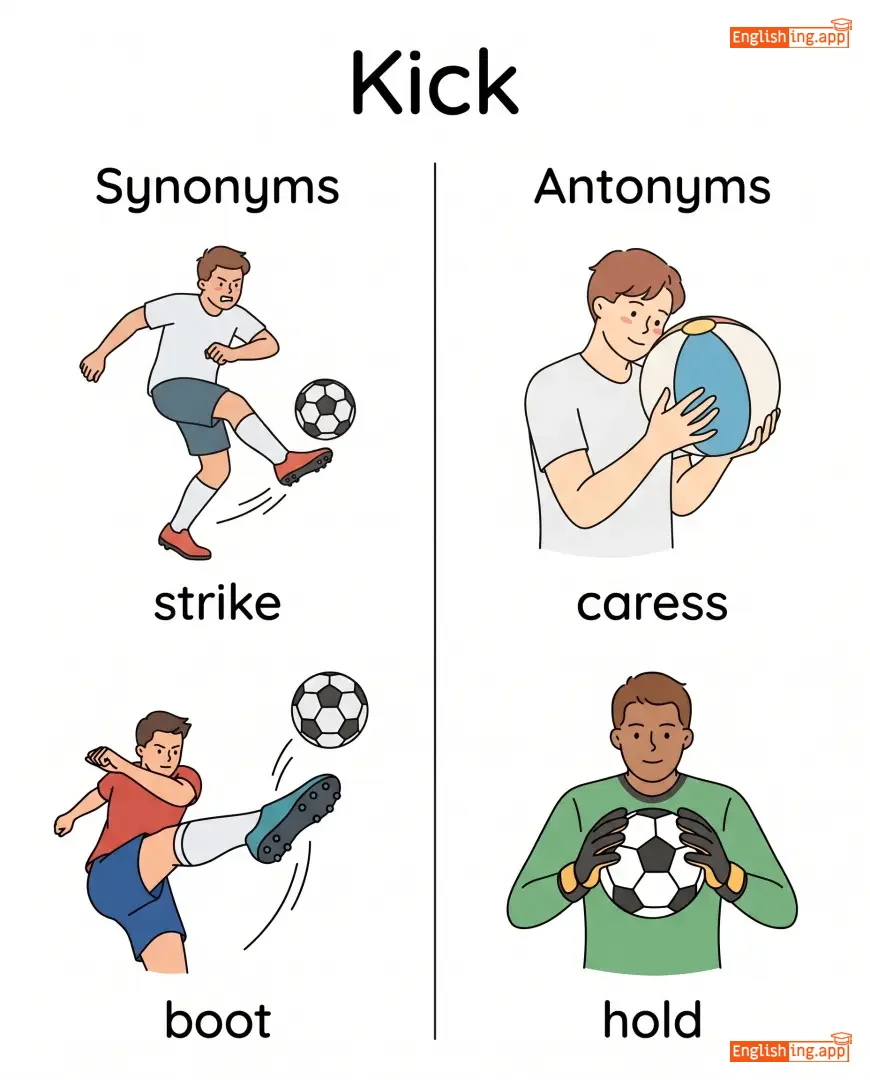
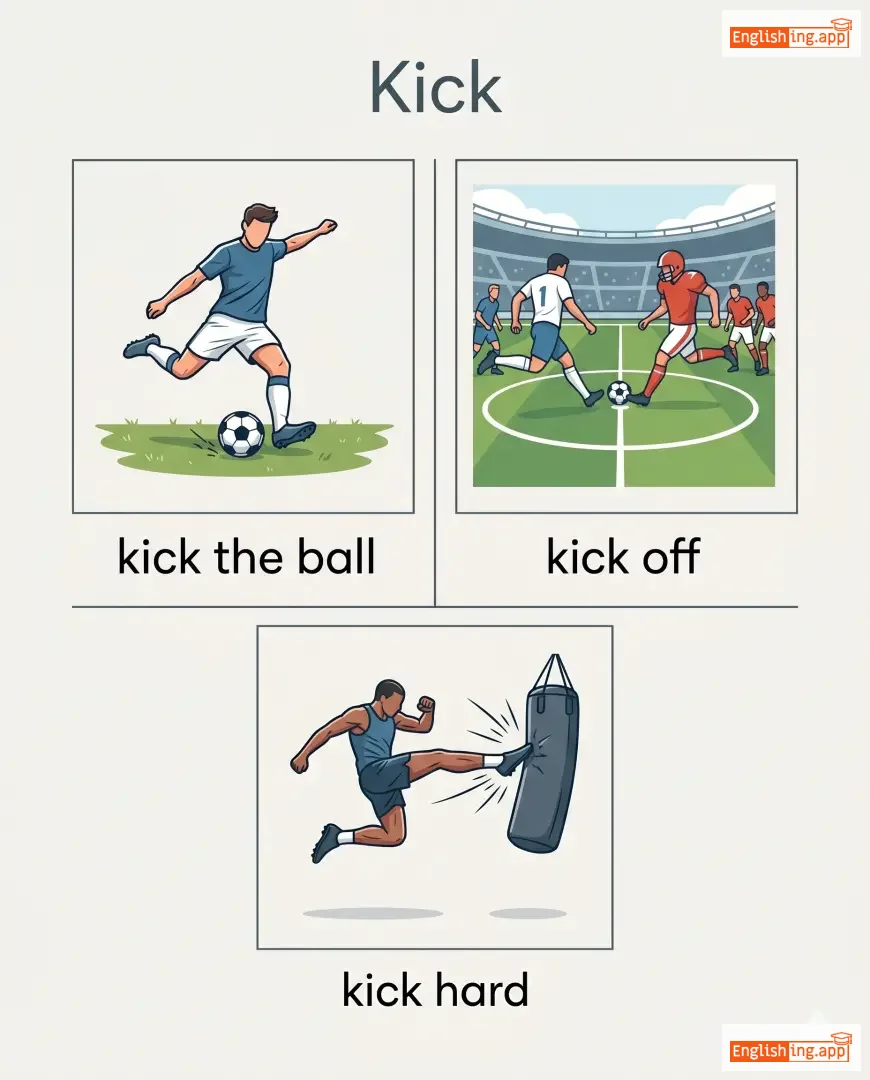
Justice in Japanese, 'seigi', is about fairness and righteousness in court.
••••••
|
|
#700
🦵
|
/kɪk/
noun
(キック)
••••••
|
|
キック; 足で蹴る
kikku; ashi de keru
••••••
|
a blow or forceful thrust with the foot; a sudden strong feeling of excitement
••••••
|
The soccer player scored a goal with a powerful kick from outside the penalty area. |
サッカー選手はペナルティエリアの外から強力なキックでゴールを決めました。
sakka senshu wa penalti eria no soto kara kyouryoku na kikku de gooru o kimemashita.
••••••
|
boot, strike, blow, thrust
••••••
|
caress, gentle touch, pat
••••••
|
penalty kick, free kick, powerful kick
••••••
|
足でボールを蹴ると、ゴールを決めた時のような強い興奮が感じられます。
••••••
|
Vocabulary Quiz
Test your vocabulary by matching words with their translations or meanings.
Login to take the quiz
Comments (0)
Share your thoughts and join the discussion.
Join the discussion by logging in
Login to CommentNo comments yet
Be the first to share your thoughts!