

翻訳
過去
過去分詞
三人称単数
動名詞
意味
例文
例文の翻訳
同義語
対義語
コロケーション
ニーモニック



Swipe left or right, or use the buttons. Tap image to zoom.
例文の翻訳
単語
Lesson 12Lesson 12 - マスクトグル
|
絵文字
|
単語 | Images | 翻訳 | 意味 | 例文 | 例文の翻訳 | 同義語 | 対義語 | コロケーション | ニーモニック |
|---|---|---|---|---|---|---|---|---|---|---|
|
#221
🔄
|
/kənˈvɜr.ʃən/
noun
(コンバージョン)
••••••
|
|
転換; 変換; 変更
tenkan, henkan, henkō
••••••
|
the process of changing or causing something to change from one form to another; the act of changing one's religion or beliefs
••••••
|
The conversion of the old factory into a modern shopping center took two years.
古い工場を現代的なショッピングセンターに転換するのに2年かかりました。
••••••
|
古い工場を現代的なショッピングセンターに転換するのに2年かかりました。
Furui kōjō o gendai-teki na shoppingu sentā ni tenkan suru no ni 2-nen kakarimashita.
••••••
|
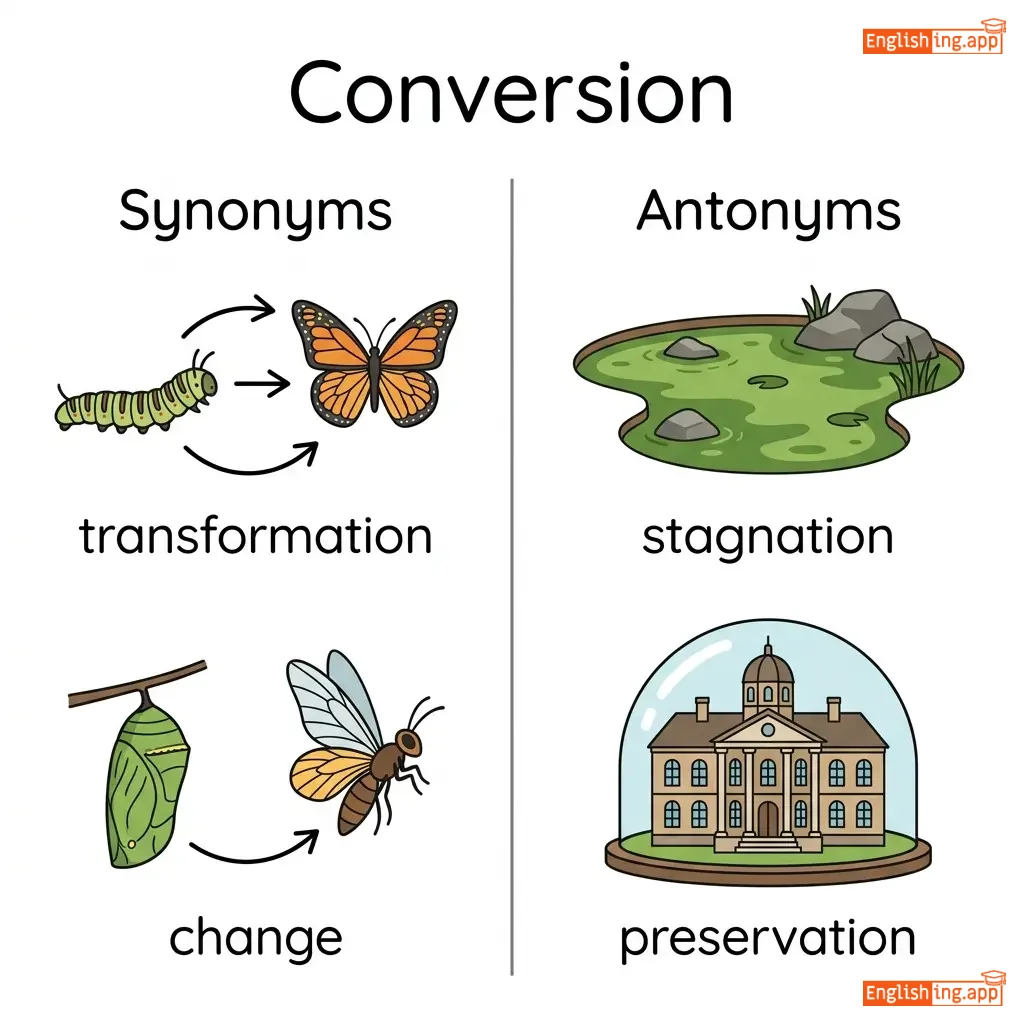
transformation, change, alteration, switch
••••••
|
preservation, maintenance, stagnation
••••••
|
religious conversion, conversion rate, energy conversion
••••••
|
転換 = 新しい信念への変化
••••••
|
|
#222
🤔
|
/ˌkjʊr.iˈɑs.ɪ.ti/
noun
(キュリオシティ)
••••••
|
- •••••• |
好奇心; 異常または興味深い物事
koukishin; ijou matawa kyoumi-bukai monogoto
••••••
|
a strong desire to know or learn something; an unusual or interesting object or fact
••••••
|
Her curiosity about different cultures led her to travel around the world.
彼女の異文化への好奇心は、彼女を世界中に旅行させました。
••••••
|
彼女の異文化への好奇心は、彼女を世界中に旅行させました。
Kanojo no ibunka e no koukishin wa, kanojo o sekaijuu ni ryokou sasemashita.
••••••
|
inquisitiveness, interest, wonder, fascination
••••••
|
indifference, apathy, disinterest, unconcern
••••••
|
natural curiosity, intellectual curiosity, satisfy curiosity
••••••
|
好奇心は新しい発見を求めるような気持ちで、世界を旅するようなものです。
••••••
|
|
#223
🤝
|
/ˌkɔr.diˈæl.ɪ.ti/
noun
(コーディアリティ)
••••••
|
- •••••• |
友情; 優しさ
yūjō; yasashisa
••••••
|
sincere affection and kindness; warm and friendly behavior
••••••
|
The host's cordiality made all the guests feel welcome and comfortable.
ホストのコーディアリティはすべてのゲストが歓迎され、快適に感じさせました。
••••••
|
ホストのコーディアリティはすべてのゲストが歓迎され、快適に感じさせました。
Hosuto no kōdiariti wa subete no gesuto ga kangei sare, kaiteki ni kanjisemashita.
••••••
|
warmth, friendliness, geniality, hospitality
••••••
|
hostility, coldness, unfriendliness, rudeness
••••••
|
genuine cordiality, warm cordiality, show cordiality
••••••
|
コーディアリティは、友人の温かい抱擁のように感じられる。
••••••
|
|
#224
🐁
|
/kɜːrl/
noun
(kāru)
••••••
|
- •••••• |
カール; らせん形
kāru; raseんkei
••••••
|
a piece of hair that curves or coils; something with a spiral or curved shape
••••••
|
She had beautiful natural curls that framed her face perfectly.
彼女は顔を完璧に縁取る自然なカールをしていた。
••••••
|
彼女は顔を完璧に縁取る自然なカールをしていた。
Kanojo wa kao o kanpeki ni fuchi toru shizen na kāru o shite ita.
••••••
|
coil, ringlet, wave, spiral
••••••
|
straight line, straightness
••••••
|
hair curl, natural curl, tight curl
••••••
|
Curl = カール = 自然なカールの髪の毛
••••••
|
|
#225
📬
|
/ˌkɔr.əˈspɑn.dəns/
noun
(コレスポンデンス)
••••••
|
- •••••• |
通信; 類似または同等; 手紙の交換によるコミュニケーション
tsuushin; ruiji mata wa doutou; tegami no koukan ni yoru komyunikēshon
••••••
|
letters sent or received; similarity or equivalence; communication by exchange of letters
••••••
|
The historical correspondence between the two famous writers was recently published. |
二人の有名な作家の間の歴史的な通信は最近発表されました。
Futari no yuumei na sakka no aida no rekishiteki na tsuushin wa saikin happyou saremashita.
••••••
|
letters, communication, mail, similarity
••••••
|
silence, difference, dissimilarity
••••••
|
business correspondence, private correspondence, email correspondence
••••••
|
コレスポンデンスは、手紙を交換することによって情報をやり取りする方法です。
••••••
|
|
#226
🌀
|
/kɜːrv/
noun
(カーヴ)
••••••
|
- •••••• |
曲線; カーブ
kyokusen; kaabu
••••••
|
a line or outline that gradually deviates from being straight; a bend or turn in a road or path
••••••
|
The driver slowed down as he approached the sharp curve in the mountain road. |
運転手は山道の急なカーブに近づくとスピードを落としました。
Untenshu wa yamamichi no kyū na kaabu ni chikazuku to supīdo o otoshimashita.
••••••
|
bend, arc, bow, turn
••••••
|
straight line, angle, straightness
••••••
|
sharp curve, gentle curve, curve in the road
••••••
|
Imagine taking a sharp turn on a winding mountain road, following the curve of the path.
••••••
|
|
#227
💰🚫
|
/kəˈrʌp.ʃən/
noun
(コラプション)
••••••
|
- •••••• |
腐敗
fuhai
••••••
|
dishonest or fraudulent conduct by those in power; the process of decay or decomposition
••••••
|
The government launched a campaign to fight corruption in public offices.
政府は公共のオフィスでの腐敗と戦うためのキャンペーンを開始しました。
••••••
|
政府は公共のオフィスでの腐敗と戦うためのキャンペーンを開始しました。
Seifu wa kōkyō no ofisu de no fuhai to tatakau tame no kyanpēn o kaishi shimashita.
••••••
|
dishonesty, bribery, fraud, decay
••••••
|
honesty, integrity, purity, incorruptibility
••••••
|
government corruption, fight corruption, corruption scandal
••••••
|
腐敗は権力から始まり、社会を腐らせるものです。
••••••
|
|
#228
🔑
|
/kʌˈstoʊ.di.ən/
noun
(カストディアン)
••••••
|
- •••••• |
守衛; 管理人; 監督者
shuei; kanri-nin; kantokusha
••••••
|
a person who has responsibility for or looks after something; a caretaker or guardian
••••••
|
The school custodian ensures that all buildings are clean and secure.
学校の管理人はすべての建物が清潔で安全であることを確認します。
••••••
|
学校の管理人はすべての建物が清潔で安全であることを確認します。
Gakkou no kanri-nin wa subete no tatemono ga seiketsu de anzen de aru koto o kakunin shimasu.
••••••
|
caretaker, guardian, keeper, janitor
••••••
|
neglector, abandoner
••••••
|
school custodian, building custodian, custodian of records
••••••
|
Japanese '守衛' (shuei) for 'custodian' relates to guarding and protecting places.
••••••
|
|
#229
🦁
|
/ˈkɜːr.ɪdʒ/
noun
(kyridʒ)
••••••
|
|
勇気
yūki
••••••
|
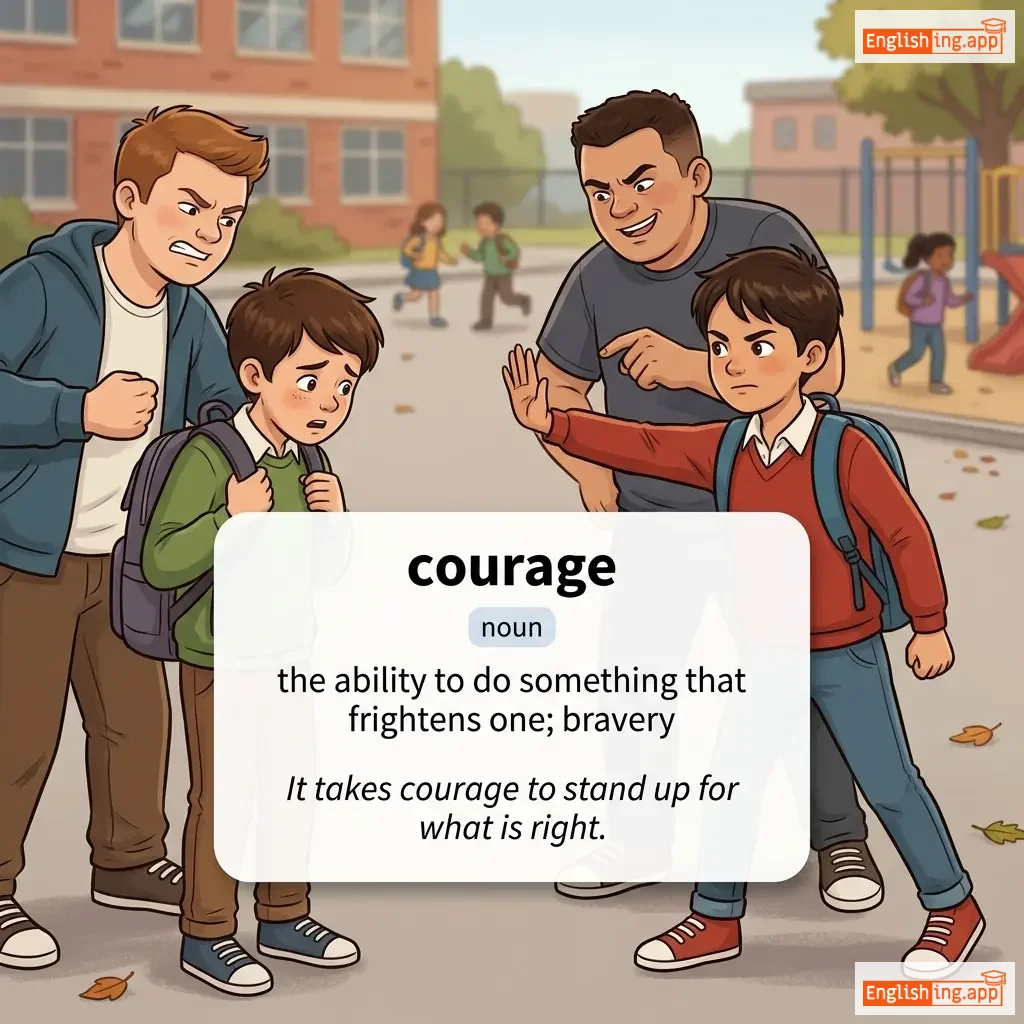
the ability to do something that frightens one; strength in the face of pain or grief
••••••
|
It took great courage for her to speak up against the injustice.
It took great courage for her to speak up against the injustice.
••••••
|
不正義に立ち向かうためには、彼女には大きな勇気が必要でした。
Fuseigi ni tachimukau tame ni wa, kanojo ni wa ōkina yūki ga hitsuyō deshita.
••••••
|
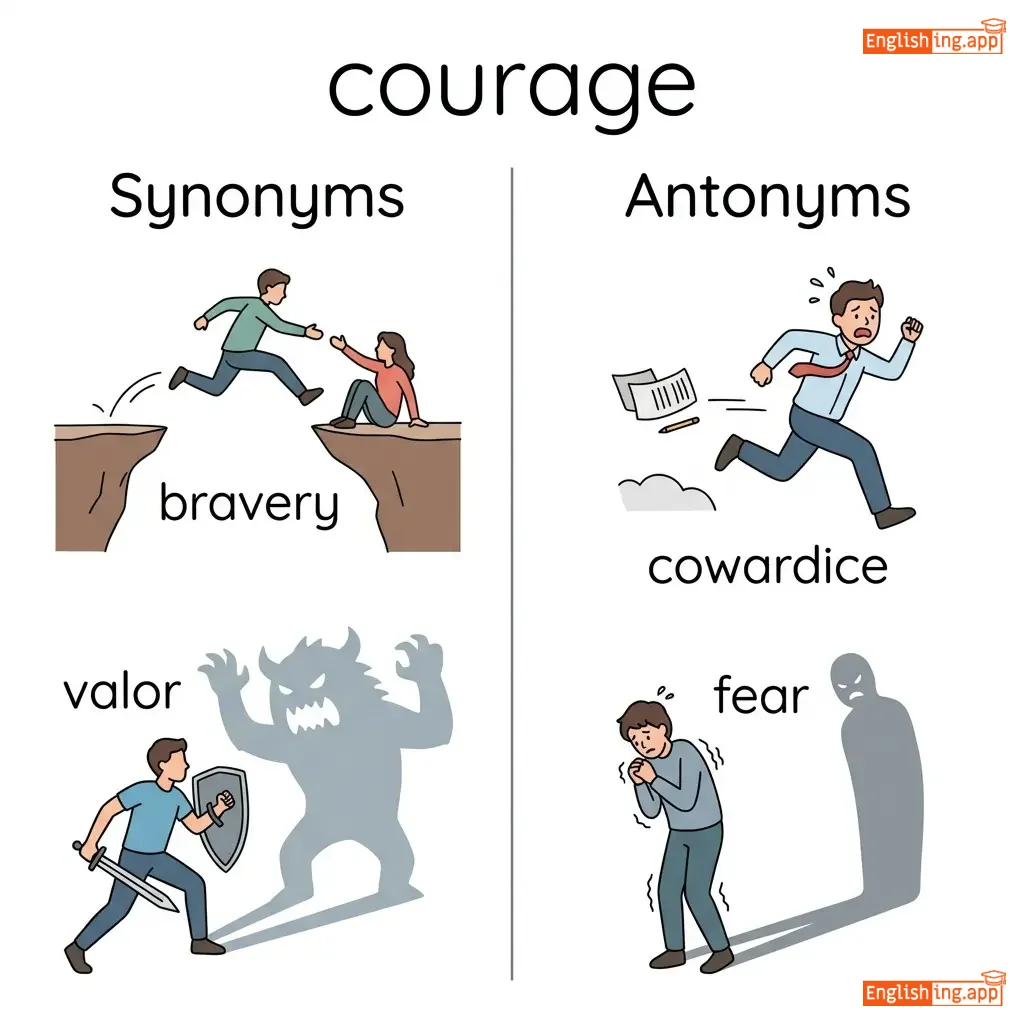
bravery, valor, boldness, heroism
••••••
|
cowardice, fear, timidity, weakness
••••••
|
moral courage, show courage, courage under fire
••••••
|
勇気 (yūki) means courage in Japanese, and sounds similar to 'you key.'
••••••
|
|
#230
🔒
|
/ˈkʌˈs.tə.di/
noun
(カストディ)
••••••
|
- •••••• |
監護; 拘留; 保護
kango, koryuu, hogo
••••••
|
the protective care or guardianship of someone or something; imprisonment or detention
••••••
|
After the divorce, they shared custody of their children equally.
離婚後、彼らは子供たちの監護権を平等に分けました。
••••••
|
離婚後、彼らは子供たちの監護権を平等に分けました。
Rikon-go, karera wa kodomotachi no kangoken o byoudou ni wakemashita.
••••••
|
care, guardianship, detention, safekeeping
••••••
|
freedom, release, abandonment
••••••
|
child custody, police custody, in custody
••••••
|
Custody = 監護 = 子供たちを大切に保護し、守る
••••••
|
|
#231
😇
|
/ˈkɜːr.tə.si/
noun
(kāteshi)
••••••
|
- •••••• |
礼儀; 優雅;
reigi, yūga
••••••
|
the showing of politeness in one's attitude and behavior toward others; a polite gesture or remark
••••••
|
He showed great courtesy by holding the door open for elderly people.
彼は高齢者のためにドアを開けたまま、非常に礼儀正しさを示しました。
••••••
|
彼は高齢者のためにドアを開けたまま、非常に礼儀正しさを示しました。
Kare wa kōreisha no tame ni doa o aketa mama, hijō ni reigi tadashisa o shimeshimashita.
••••••
|
politeness, civility, respect, good manners
••••••
|
rudeness, impoliteness, incivility, discourtesy
••••••
|
common courtesy, professional courtesy, extend courtesy
••••••
|
In Japanese, '礼儀' makes you think of acts of politeness, like holding doors open for others.
••••••
|
|
#232
🌍
|
/ˈkʌˈs.təm/
noun
(カスタム)
••••••
|
- •••••• |
習慣; 慣習; 関税;
shūkan, kanshū, kanzei
••••••
|
a traditional practice or behavior; duties levied on imports; habitual practice
••••••
|
It is a local custom to remove shoes before entering someone's home. |
他の人の家に入る前に靴を脱ぐのは、地元の習慣です。
Hoka no hito no ie ni hairu mae ni kutsu o nugu no wa, jimoto no shūkan desu.
••••••
|
tradition, practice, habit, convention
••••••
|
innovation, novelty, exception
••••••
|
local custom, ancient custom, cultural custom
••••••
|
Custom sounds like 'kasutamu' in Japanese, and 'shūkan' means custom.
••••••
|
|
#233
😨
|
/ˈkaʊ.ərd/
noun
(ka-wādo)
••••••
|
- •••••• |
臆病者
okubyou-sha
••••••
|
a person who lacks the courage to do or endure dangerous or unpleasant things
••••••
|
He called himself a coward for not standing up to the bully.
彼はいじめっ子に立ち向かわなかったので、自分を臆病者だと言った。
••••••
|
彼はいじめっ子に立ち向かわなかったので、自分を臆病者だと言った。
Kare wa ijimekko ni tachimukawanakatta node, jibun o okubyou-sha da to itta.
••••••
|
weakling, chicken, scaredy-cat, craven
••••••
|
hero, brave person, champion, warrior
••••••
|
moral coward, complete coward, coward's way out
••••••
|
Okubyou-sha is the Japanese word for coward.
••••••
|
|
#234
🙄
|
/ˈsɪ.nɪk/
noun
(シニック)
••••••
|
- •••••• |
皮肉屋; 疑い深い人
hinokoya; utagai bukai hito
••••••
|
a person who believes that people are motivated purely by self-interest; someone who is skeptical about human nature
••••••
|
The old cynic believed that politicians only cared about getting votes. |
その古い皮肉屋は政治家がただ票を得ることにしか関心がないと信じていた。
sono furui hinokoya wa seijika ga tada hyou o eru koto ni shika kanshin ga nai to shinjite ita.
••••••
|
skeptic, pessimist, doubter, misanthrope
••••••
|
optimist, believer, idealist, trustful person
••••••
|
old cynic, confirmed cynic, cynic's view
••••••
|
皮肉屋は政治家の目的をすぐに見抜く
••••••
|
|
#235
✨
|
/kriˈeɪ.ʃən/
noun
(クレイエイション)
••••••
|
- •••••• |
創造; 作品
souzou, sakuhin
••••••
|
the action or process of bringing something into existence; something that has been made or invented
••••••
|
The artist's latest creation was displayed at the modern art gallery.
アーティストの最新の創作は現代アートギャラリーに展示されました。
••••••
|
アーティストの最新の創作は現代アートギャラリーに展示されました。
Aatisuto no saishin no sousaku wa gendai aato gyararii ni tenji saremashita.
••••••
|
formation, invention, making, production
••••••
|
destruction, demolition, annihilation
••••••
|
artistic creation, job creation, creation of life
••••••
|
創作はアーティストの独自の表現です。
••••••
|
|
#236
👾
|
/dəˈkɔɪt/
noun
(dakoito)
••••••
|
- •••••• |
盗賊
tōzoku
••••••
|
a member of an armed gang of robbers; a bandit, especially in India and Myanmar
••••••
|
The village was terrorized by a gang of dacoits who robbed travelers. |
その村は、旅行者を強盗した強盗団によって恐怖に陥れられました。
Sono mura wa, ryokōsha o gōtō shita gōtōdan ni yotte kyōfu ni ochirerarimashita.
••••••
|
bandit, robber, brigand, outlaw
••••••
|
protector, defender, law enforcer
••••••
|
gang of dacoits, dacoit attack, notorious dacoit
••••••
|
盗賊 = 盗 (盗む) + 賊 (悪者)
••••••
|
|
#237
😢
|
/ˈkruː.əl.ti/
noun
(クルエルティ)
••••••
|
- •••••• |
残酷; 非人道的な扱い; 苦痛を引き起こす行動
zankoku, hi jindō-teki na atsukai, kutsū o hikiokosu kōdō
••••••
|
behavior that causes pain or suffering to others; the quality of being cruel
••••••
|
The documentary exposed the cruelty of factory farming to animals. |
ドキュメンタリーは、工場式農業が動物に対して行う残酷さを暴露した。
Dokyumentarī wa, kōjō-shiki nōgyō ga dōbutsu ni taishite okonau zankokusa o bakuro shita.
••••••
|
brutality, harshness, callousness, inhumanity
••••••
|
kindness, compassion, mercy, gentleness
••••••
|
animal cruelty, acts of cruelty, unnecessary cruelty
••••••
|
残酷さは動物に与える苦しみ
••••••
|
|
#238
🐄
|
/ˈdeə.ri/
noun
(デイリー)
••••••
|
- •••••• |
牛乳が生産される建物や農場; 牛乳から作られた製品; 牛乳と乳製品を販売する店
gyūnyū ga seisan sareru tatemono ya nōjō; gyūnyū kara tsukurareta seihin; gyūnyū to nyūseihin o hanbai suru mise
••••••
|
a building or farm where milk is produced; products made from milk; a shop selling milk and milk products
••••••
|
The local dairy provides fresh milk and cheese to the entire neighborhood.
地元のデイリーは、新鮮な牛乳とチーズを地域全体に提供しています。
••••••
|
地元のデイリーは、新鮮な牛乳とチーズを地域全体に提供しています。
Jimoto no deirī wa, shinsen na gyūnyū to chīzu o chiiki zentai ni teikyō shiteimasu.
••••••
|
creamery, milk farm, dairy farm
••••••
|
non-dairy, vegan alternatives
••••••
|
dairy farm, dairy products, local dairy
••••••
|
デイリーで牛乳とチーズを手に入れよう
••••••
|
|
#239
🎭
|
/ˈkʌl.tʃər/
noun
(カルチャー)
••••••
|
- •••••• |
文化
bunka
••••••
|
the arts and other manifestations of human intellectual achievement; the customs and beliefs of a particular society
••••••
|
Learning about different cultures helps us understand and appreciate diversity.
異なる文化について学ぶことは、多様性を理解し、評価するのに役立ちます。
••••••
|
異なる文化について学ぶことは、多様性を理解し、評価するのに役立ちます。
Kotonaru bunka ni tsuite manabu koto wa, tayousei wo rikai shi, hyouka suru no ni yakudachimasu.
••••••
|
civilization, heritage, tradition, customs
••••••
|
barbarism, ignorance, uncultured behavior
••••••
|
popular culture, cultural heritage, culture shock
••••••
|
In Japanese, '文化' (bunka) directly reflects the notion of culture, just like in English.
••••••
|
|
#240
🎭
|
/ˈdeɪ.ɪs/
noun
(ダイス)
••••••
|
- •••••• |
演壇
endan
••••••
|
a raised platform, typically at one end of a room or hall, for speakers or honored guests
••••••
|
The principal stood on the dais to address the entire school assembly. |
校長は演壇に立ち、全校集会に話しかけました。
Kōchō wa endan ni tachi, zenkō shūkai ni hanashikakemashita.
••••••
|
platform, stage, podium, rostrum
••••••
|
floor level, ground level
••••••
|
speaker's dais, raised dais, step onto the dais
••••••
|
演壇に立つと、自信がみなぎる!
••••••
|
Vocabulary Quiz
Test your vocabulary by matching words with their translations or meanings.
Login to take the quiz
Comments (0)
Share your thoughts and join the discussion.
Join the discussion by logging in
Login to CommentNo comments yet
Be the first to share your thoughts!