

Обновитесь для доступа ко всему словарю
Получите неограниченный доступ ко всем словам с подпиской Pro
Обновить до ProПеревод
Прошедшее
Причастие прошедшего времени
Третье лицо единственного числа
Герундий
Значение
Пример предложения
Перевод примера предложения
Синонимы
Антонимы
Коллокации
Мнемоника



Swipe left or right, or use the buttons. Tap image to zoom.
Обновитесь для доступа ко всем предложениям
Получите неограниченный доступ ко всем предложениям с подпиской Pro
Обновить до ProПеревод примера предложения
Слово
Lesson 12Lesson 12 - Переключатель маски
|
Эмодзи
|
Слово | Images | Перевод | Значение | Пример предложения | Перевод примера предложения | Синонимы | Антонимы | Коллокации | Мнемоника |
|---|---|---|---|---|---|---|---|---|---|---|
|
#221
🔄
|
/kənˈvɜr.ʃən/
noun
(kon-vyer-si-ya)
••••••
|
|
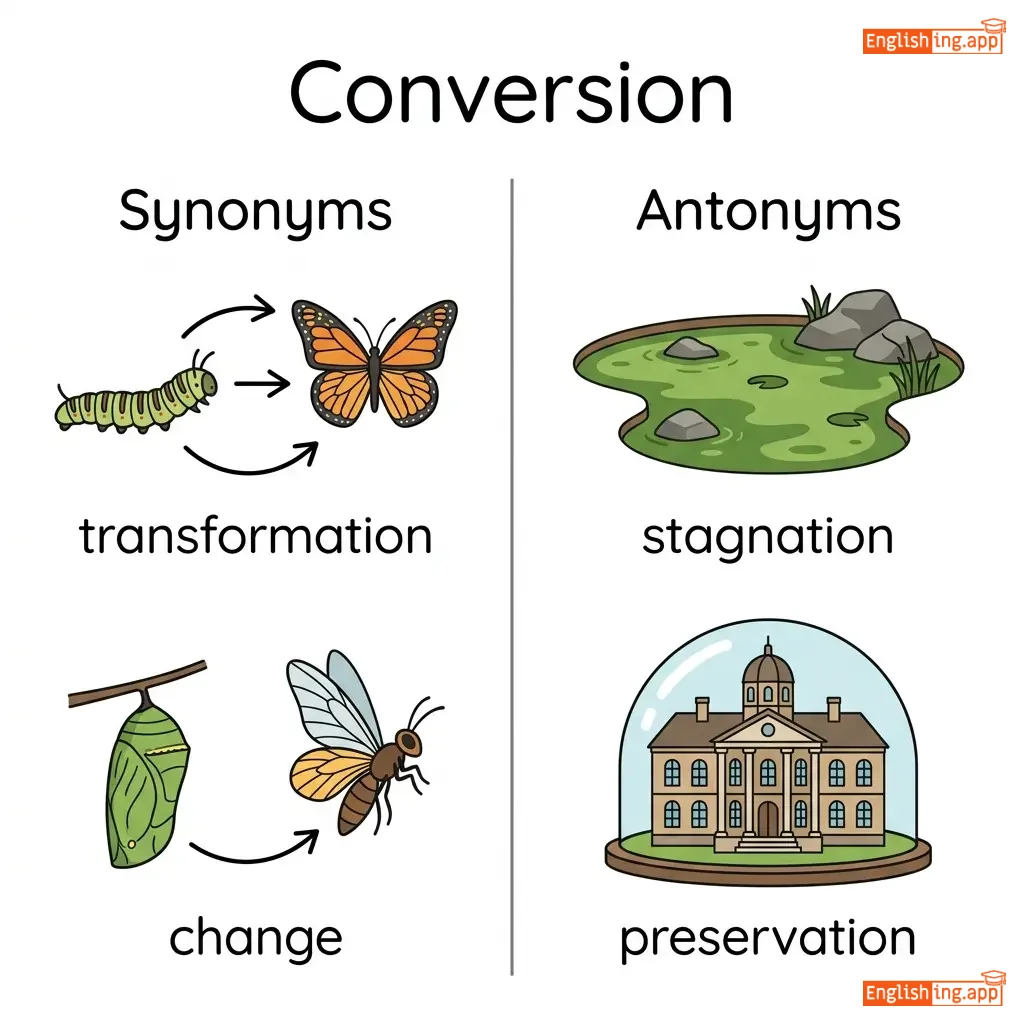
конверсия; изменение; преобразование
konversiya, izmeneniye, preobrazovaniye
••••••
|
the process of changing or causing something to change from one form to another; the act of changing one's religion or beliefs
••••••
|
The conversion of the old factory into a modern shopping center took two years.
Преобразование старой фабрики в современный торговый центр заняло два года.
••••••
|
Преобразование старой фабрики в современный торговый центр заняло два года.
Preobrazovaniye stroy fabryki v sovremenny torgovy tsentr zanyo dva goda.
••••••
|
transformation, change, alteration, switch
••••••
|
preservation, maintenance, stagnation
••••••
|
religious conversion, conversion rate, energy conversion
••••••
|
Конверсия = новый путь веры.
••••••
|
|
#222
🤔
|
/ˌkjʊr.iˈɑs.ɪ.ti/
noun
(kiuriositi)
••••••
|
- •••••• |
любопытство; необычный или интересный объект или факт
lyubopytstvo; neobychnyj ili interesnyj ob'ekt ili fakt
••••••
|
a strong desire to know or learn something; an unusual or interesting object or fact
••••••
|
Her curiosity about different cultures led her to travel around the world.
Ее любопытство к различным культурам побудило ее путешествовать по всему миру.
••••••
|
Ее любопытство к различным культурам побудило ее путешествовать по всему миру.
Eyo lyubopytstvo k razlichnym kul'turam pobudilo yeje puteshestvovat' po vsemu miru.
••••••
|
inquisitiveness, interest, wonder, fascination
••••••
|
indifference, apathy, disinterest, unconcern
••••••
|
natural curiosity, intellectual curiosity, satisfy curiosity
••••••
|
Любопытство — это как желание узнать больше о культуре, например, путешествия по миру.
••••••
|
|
#223
🤝
|
/ˌkɔr.diˈæl.ɪ.ti/
noun
(kordial'nost')
••••••
|
- •••••• |
крдильность; доброжелательность
kordial'nost'; dobrozhelatel'nost'
••••••
|
sincere affection and kindness; warm and friendly behavior
••••••
|
The host's cordiality made all the guests feel welcome and comfortable.
Кордильность хозяина заставила всех гостей почувствовать себя желанными и комфортными.
••••••
|
Кордильность хозяина заставила всех гостей почувствовать себя желанными и комфортными.
Kordial'nost' khozyaina zastavila vsekh gostei pochuvstvovat' sebia zhelannymi i komfortnymi.
••••••
|
warmth, friendliness, geniality, hospitality
••••••
|
hostility, coldness, unfriendliness, rudeness
••••••
|
genuine cordiality, warm cordiality, show cordiality
••••••
|
Кордильность — это как тепло от доброго друга.
••••••
|
|
#224
🐁
|
/kɜːrl/
noun
(kurl)
••••••
|
- •••••• |
локон; спираль
lokon; spiral
••••••
|
a piece of hair that curves or coils; something with a spiral or curved shape
••••••
|
She had beautiful natural curls that framed her face perfectly.
У неё были красивые натуральные локоны, которые идеально обрамляли её лицо.
••••••
|
У неё были красивые натуральные локоны, которые идеально обрамляли её лицо.
U nee byli krasivye natural'nye lokony, kotorye ideal'no obramlyali ee litso.
••••••
|
coil, ringlet, wave, spiral
••••••
|
straight line, straightness
••••••
|
hair curl, natural curl, tight curl
••••••
|
Curl = Локон = Как локон волос.
••••••
|
|
#225
📬
|
/ˌkɔr.əˈspɑn.dəns/
noun
(корреспонденция)
••••••
|
- •••••• |
корреспонденция; сходство или эквивалентность; общение через обмен письмами
korrespondentsiya; skhodstvo ili ekvivalentnost; obshcheniye cherez obmen pis'mami
••••••
|
letters sent or received; similarity or equivalence; communication by exchange of letters
••••••
|
The historical correspondence between the two famous writers was recently published. |
Историческая корреспонденция между двумя известными писателями была недавно опубликована.
Istoricheskaya korrespondentsiya mezhdu dvumya izvestnymi pisatelyami byla nedavno opublikovana.
••••••
|
letters, communication, mail, similarity
••••••
|
silence, difference, dissimilarity
••••••
|
business correspondence, private correspondence, email correspondence
••••••
|
Корреспонденция - это обмен письмами, как разговор через бумагу.
••••••
|
|
#226
🌀
|
/kɜːrv/
noun
(кёрв)
••••••
|
- •••••• |
изгиб; поворот
izgib; povorot
••••••
|
a line or outline that gradually deviates from being straight; a bend or turn in a road or path
••••••
|
The driver slowed down as he approached the sharp curve in the mountain road. |
Водитель замедлил скорость, когда он приблизился к резкому повороту на горной дороге.
Voditel' zamedlil skorost', kogda on priblizilsya k rezkomu povorotu na gornoy doroge.
••••••
|
bend, arc, bow, turn
••••••
|
straight line, angle, straightness
••••••
|
sharp curve, gentle curve, curve in the road
••••••
|
Picture yourself driving along a winding road, making gradual curves and turns.
••••••
|
|
#227
💰🚫
|
/kəˈrʌp.ʃən/
noun
(коррупция)
••••••
|
- •••••• |
коррупция
korruptsiya
••••••
|
dishonest or fraudulent conduct by those in power; the process of decay or decomposition
••••••
|
The government launched a campaign to fight corruption in public offices.
Правительство запустило кампанию по борьбе с коррупцией в государственных учреждениях.
••••••
|
Правительство запустило кампанию по борьбе с коррупцией в государственных учреждениях.
Pravitel'stvo zapustilo kampaniyu po bor'be s korruptsiey v gosudarstvennykh uchrezhdeniyakh.
••••••
|
dishonesty, bribery, fraud, decay
••••••
|
honesty, integrity, purity, incorruptibility
••••••
|
government corruption, fight corruption, corruption scandal
••••••
|
Коррупция разрушает систему, начиная с самых высоких уровней власти.
••••••
|
|
#228
🔑
|
/kʌˈstoʊ.di.ən/
noun
(kas-to-di-an)
••••••
|
- •••••• |
дворник; охранник; управляющий
dvor-nik; ohr-annik; u-prav-lyay-ushchiy
••••••
|
a person who has responsibility for or looks after something; a caretaker or guardian
••••••
|
The school custodian ensures that all buildings are clean and secure.
Школьный смотритель следит за тем, чтобы все здания были чистыми и безопасными.
••••••
|
Школьный смотритель следит за тем, чтобы все здания были чистыми и безопасными.
Shkol'nyy smot-ritel' sle-dit za tem, chtoby vse zda-ni-ya by-li chist-y-mi i be-zop-as-ny-mi.
••••••
|
caretaker, guardian, keeper, janitor
••••••
|
neglector, abandoner
••••••
|
school custodian, building custodian, custodian of records
••••••
|
Russian 'дворник' (dvor-nik) helps remember 'custodian', as they both involve someone maintaining cleanliness.
••••••
|
|
#229
🦁
|
/ˈkɜːr.ɪdʒ/
noun
(kyridʒ)
••••••
|
|
смелость
smelost
••••••
|
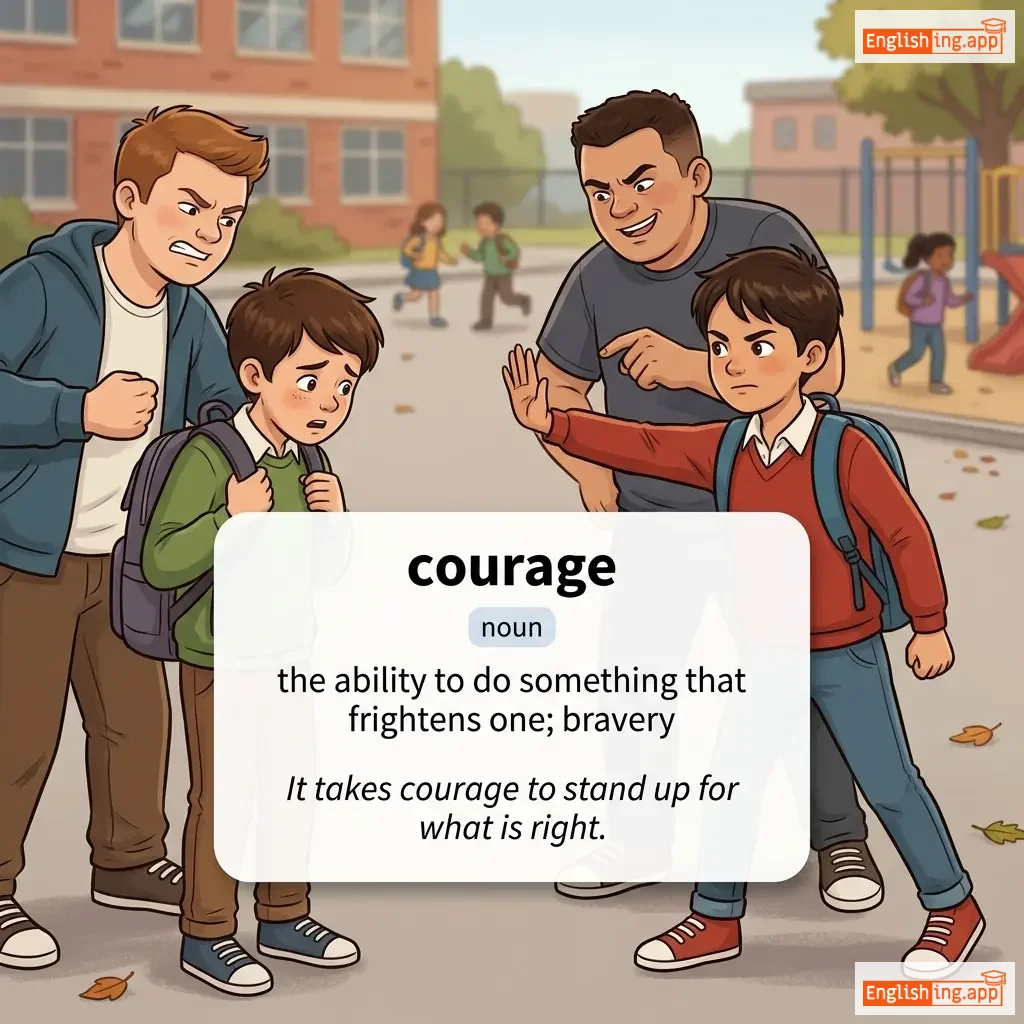
the ability to do something that frightens one; strength in the face of pain or grief
••••••
|
It took great courage for her to speak up against the injustice.
It took great courage for her to speak up against the injustice.
••••••
|
Ей потребовалась большая смелость, чтобы выступить против несправедливости.
Eĭ potrebovalas' bol'shaya smelost', chtoby vystupit' protiv nespravedlivosti.
••••••
|
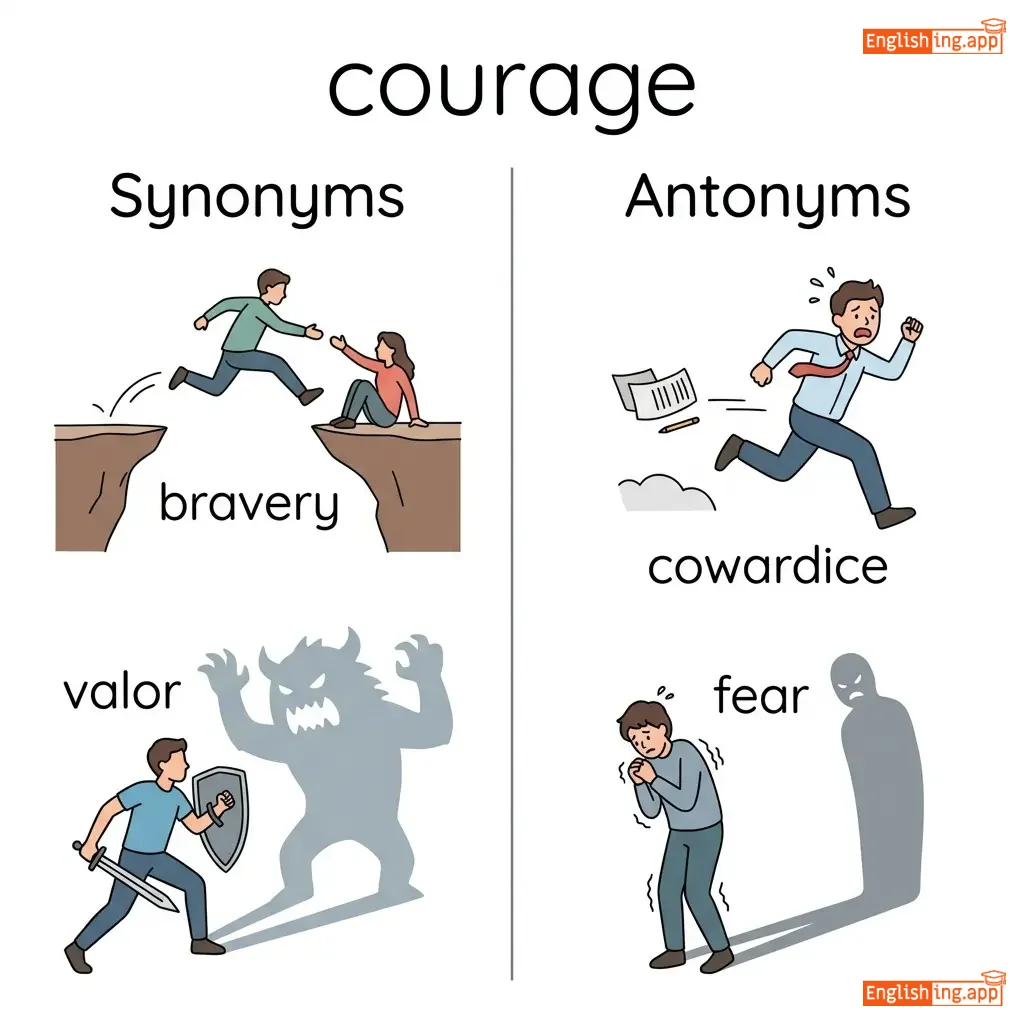
bravery, valor, boldness, heroism
••••••
|
cowardice, fear, timidity, weakness
••••••
|
moral courage, show courage, courage under fire
••••••
|
Smelost in Russian means courage.
••••••
|
|
#230
🔒
|
/ˈkʌˈs.tə.di/
noun
(кʌс.tə.di)
••••••
|
- •••••• |
опека; арест; охрана
opeka, arest, okhrana
••••••
|
the protective care or guardianship of someone or something; imprisonment or detention
••••••
|
After the divorce, they shared custody of their children equally.
После развода они поделили опеку над детьми поровну.
••••••
|
После развода они поделили опеку над детьми поровну.
Posle razvoda oni podelili opekу nad det'mi porovnu.
••••••
|
care, guardianship, detention, safekeeping
••••••
|
freedom, release, abandonment
••••••
|
child custody, police custody, in custody
••••••
|
Custody = Опера = Защищать детей, не забывая об ответственности
••••••
|
|
#231
😇
|
/ˈkɜːr.tə.si/
noun
(kortési)
••••••
|
- •••••• |
учтивость; вежливость;
uchtivost', vezhlivost'
••••••
|
the showing of politeness in one's attitude and behavior toward others; a polite gesture or remark
••••••
|
He showed great courtesy by holding the door open for elderly people.
Он продемонстрировал великую учтивость, держа дверь открытой для пожилых людей.
••••••
|
Он продемонстрировал великую учтивость, держа дверь открытой для пожилых людей.
On prodemonstriroval velikuyu uchtivost', derzha dver' otkrytoy dlya pozhilykh lyudey.
••••••
|
politeness, civility, respect, good manners
••••••
|
rudeness, impoliteness, incivility, discourtesy
••••••
|
common courtesy, professional courtesy, extend courtesy
••••••
|
Russian 'учтивость' is linked to acts of politeness like helping the elderly!
••••••
|
|
#232
🌍
|
/ˈkʌˈs.təm/
noun
(кастом)
••••••
|
- •••••• |
обычай; практика; пошлина;
obychai, praktika, poshlina
••••••
|
a traditional practice or behavior; duties levied on imports; habitual practice
••••••
|
It is a local custom to remove shoes before entering someone's home. |
Это местная традиция снимать обувь перед входом в чей-то дом.
Eto mestnaya traditsiya snimat' obuv' pered vkhodom v chey-to dom.
••••••
|
tradition, practice, habit, convention
••••••
|
innovation, novelty, exception
••••••
|
local custom, ancient custom, cultural custom
••••••
|
Custom sounds like 'kastom' in Russian, and 'obychai' means custom.
••••••
|
|
#233
😨
|
/ˈkaʊ.ərd/
noun
(ka-vard)
••••••
|
- •••••• |
трус
trus
••••••
|
a person who lacks the courage to do or endure dangerous or unpleasant things
••••••
|
He called himself a coward for not standing up to the bully.
Он назвал себя трусом, потому что не встал против хулигана.
••••••
|
Он назвал себя трусом, потому что не встал против хулигана.
On nazval sebya trusom, potomu chto ne vstal protiv huligana.
••••••
|
weakling, chicken, scaredy-cat, craven
••••••
|
hero, brave person, champion, warrior
••••••
|
moral coward, complete coward, coward's way out
••••••
|
Trus means coward in Russian.
••••••
|
|
#234
🙄
|
/ˈsɪ.nɪk/
noun
(циник)
••••••
|
- •••••• |
циник; скептик
tsinik; skeptik
••••••
|
a person who believes that people are motivated purely by self-interest; someone who is skeptical about human nature
••••••
|
The old cynic believed that politicians only cared about getting votes. |
Старый циник верил, что политики заботятся только о получении голосов.
Staryi tsinik veril, chto politiky zabotyatsya tol'ko o poluchenyii golosov.
••••••
|
skeptic, pessimist, doubter, misanthrope
••••••
|
optimist, believer, idealist, trustful person
••••••
|
old cynic, confirmed cynic, cynic's view
••••••
|
Циник не верит в добрые намерения людей
••••••
|
|
#235
✨
|
/kriˈeɪ.ʃən/
noun
(kriˈeɪʃən)
••••••
|
- •••••• |
творение; создание
tvorėnie, sozdanie
••••••
|
the action or process of bringing something into existence; something that has been made or invented
••••••
|
The artist's latest creation was displayed at the modern art gallery.
Последнее творение художника было выставлено в галерее современного искусства.
••••••
|
Последнее творение художника было выставлено в галерее современного искусства.
Poslednee tvorėnie khudozhnika bylo vystavleno v galeree sovremennogo iskusstva.
••••••
|
formation, invention, making, production
••••••
|
destruction, demolition, annihilation
••••••
|
artistic creation, job creation, creation of life
••••••
|
Творение художника — его новаторское создание.
••••••
|
|
#236
👾
|
/dəˈkɔɪt/
noun
(dakoyt)
••••••
|
- •••••• |
разбойник
razboynik
••••••
|
a member of an armed gang of robbers; a bandit, especially in India and Myanmar
••••••
|
The village was terrorized by a gang of dacoits who robbed travelers. |
Деревня была терроризирована бандой разбойников, которые грабили путешественников.
Derevnya byla terrorizirovana bandoy razboynikov, kotorye grabili puteshestvennikov.
••••••
|
bandit, robber, brigand, outlaw
••••••
|
protector, defender, law enforcer
••••••
|
gang of dacoits, dacoit attack, notorious dacoit
••••••
|
Разбойник = Разбой (преступление) + ник (все бегают)
••••••
|
|
#237
😢
|
/ˈkruː.əl.ti/
noun
(krʲuˈɛltʲɪ)
••••••
|
- •••••• |
жестокость; бесчеловечное обращение; поведение, причиняющее боль
zhestokost', beschelovechnoe obshchenie, povedenie, prichinyayushchee bol'
••••••
|
behavior that causes pain or suffering to others; the quality of being cruel
••••••
|
The documentary exposed the cruelty of factory farming to animals. |
Документальный фильм продемонстрировал жестокость промышленного животноводства по отношению к животным.
Dokumental'nyy film prodemonstriroval zhestokost' promyshlennogo zhivotnovodstva po otnosheniyu k zhivotnym.
••••••
|
brutality, harshness, callousness, inhumanity
••••••
|
kindness, compassion, mercy, gentleness
••••••
|
animal cruelty, acts of cruelty, unnecessary cruelty
••••••
|
жестокость — это жестокое обращение с животными
••••••
|
|
#238
🐄
|
/ˈdeə.ri/
noun
(дейри)
••••••
|
- •••••• |
здание или ферма, где производится молоко; продукты из молока; магазин, продающий молоко и молочные продукты
zdanie ili ferma, gde proizvoditsya moloko; produkty iz moloka; magazin, prodayushchiy moloko i molochnye produkty
••••••
|
a building or farm where milk is produced; products made from milk; a shop selling milk and milk products
••••••
|
The local dairy provides fresh milk and cheese to the entire neighborhood.
Местная молочная ферма предоставляет свежее молоко и сыр всему району.
••••••
|
Местная молочная ферма предоставляет свежее молоко и сыр всему району.
Mestnaya molochnaya ferma predostavlyayet svezhoye moloko i syr vsemu rayonu.
••••••
|
creamery, milk farm, dairy farm
••••••
|
non-dairy, vegan alternatives
••••••
|
dairy farm, dairy products, local dairy
••••••
|
Молоко и сыр из местной молочной фермы
••••••
|
|
#239
🎭
|
/ˈkʌl.tʃər/
noun
(культура)
••••••
|
- •••••• |
культура
kultura
••••••
|
the arts and other manifestations of human intellectual achievement; the customs and beliefs of a particular society
••••••
|
Learning about different cultures helps us understand and appreciate diversity.
Изучение различных культур помогает нам понять и оценить разнообразие.
••••••
|
Изучение различных культур помогает нам понять и оценить разнообразие.
Izucheniye razlichnykh kultur pomogaet nam ponyat' i otsenit' raznoobraziye.
••••••
|
civilization, heritage, tradition, customs
••••••
|
barbarism, ignorance, uncultured behavior
••••••
|
popular culture, cultural heritage, culture shock
••••••
|
The Russian word for culture, 'культура,' is similar to the English term and carries the same meaning.
••••••
|
|
#240
🎭
|
/ˈdeɪ.ɪs/
noun
(даис)
••••••
|
- •••••• |
подиум
podium
••••••
|
a raised platform, typically at one end of a room or hall, for speakers or honored guests
••••••
|
The principal stood on the dais to address the entire school assembly. |
Директор встал на подиум, чтобы обратиться ко всей школьной ассамблее.
Direktor vstal na podium, chtoby obratit'sya ko vsej shkol'noj assamblee.
••••••
|
platform, stage, podium, rostrum
••••••
|
floor level, ground level
••••••
|
speaker's dais, raised dais, step onto the dais
••••••
|
На подиуме, чтобы выслушать великих.
••••••
|
Vocabulary Quiz
Test your vocabulary by matching words with their translations or meanings.
Login to take the quiz
Comments (0)
Share your thoughts and join the discussion.
Join the discussion by logging in
Login to CommentNo comments yet
Be the first to share your thoughts!