

Обновитесь для доступа ко всему словарю
Получите неограниченный доступ ко всем словам с подпиской Pro
Обновить до ProПеревод
Прошедшее
Причастие прошедшего времени
Третье лицо единственного числа
Герундий
Значение
Пример предложения
Перевод примера предложения
Синонимы
Антонимы
Коллокации
Мнемоника

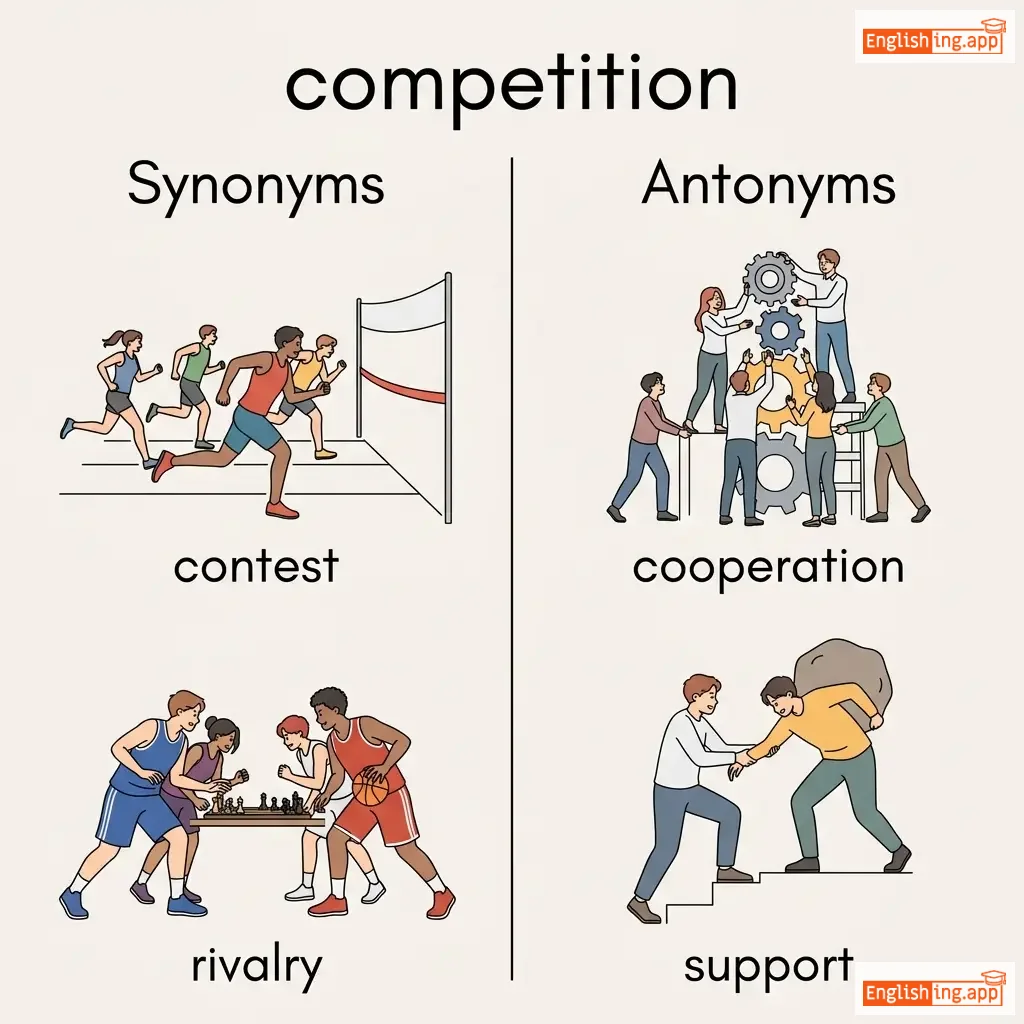

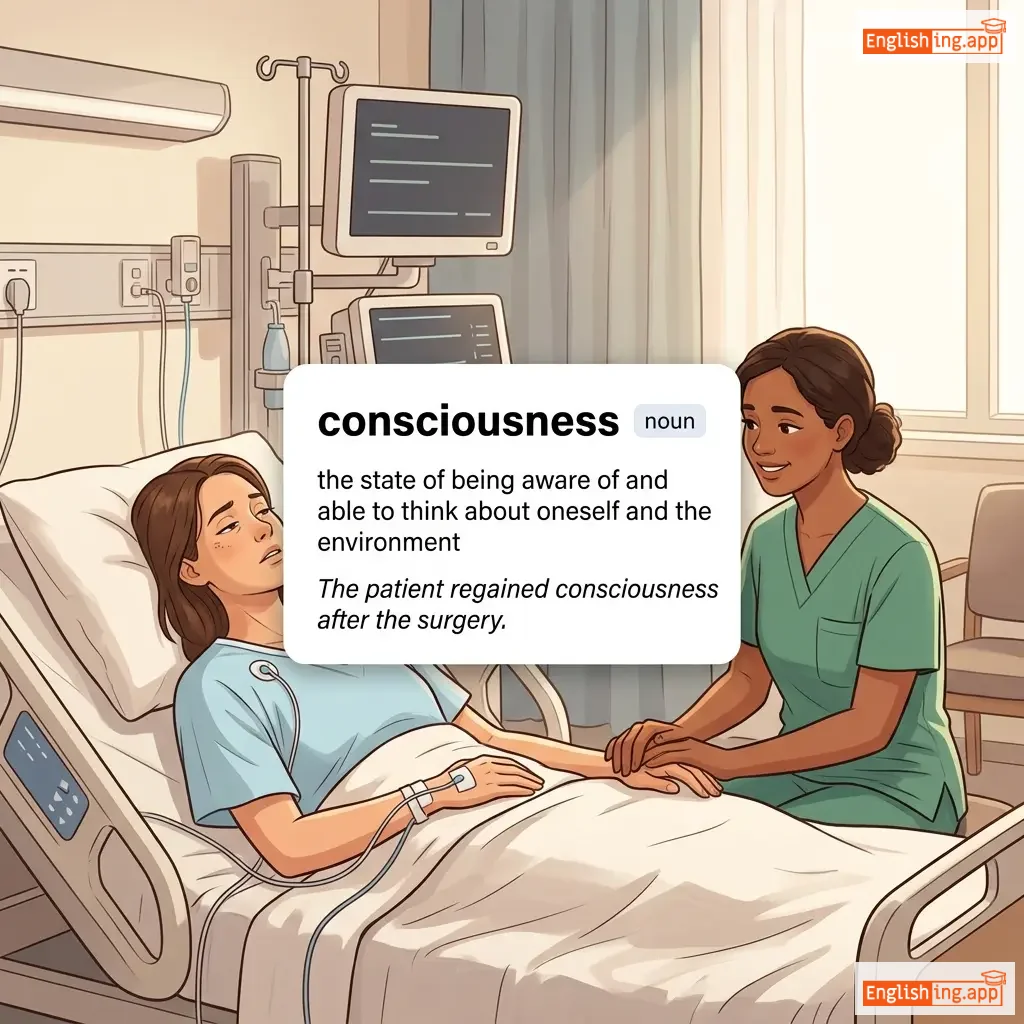
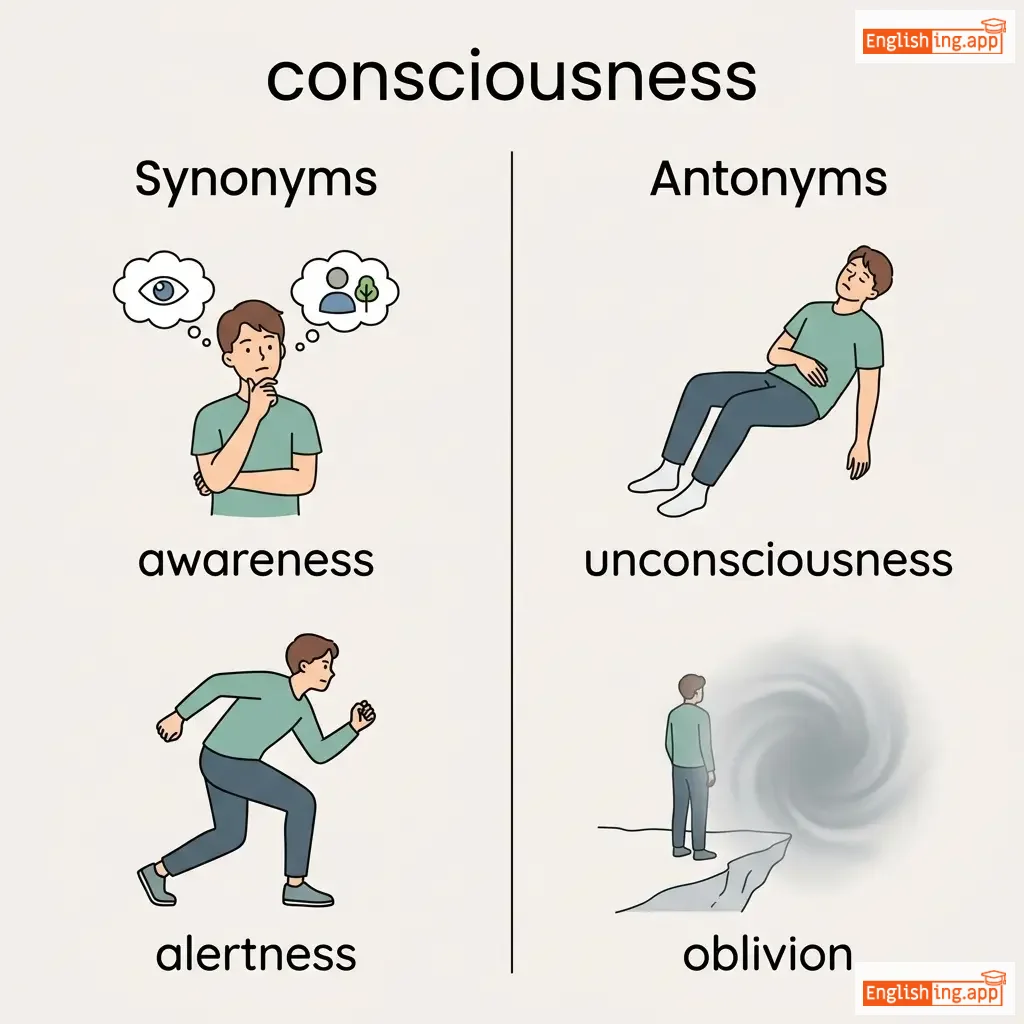
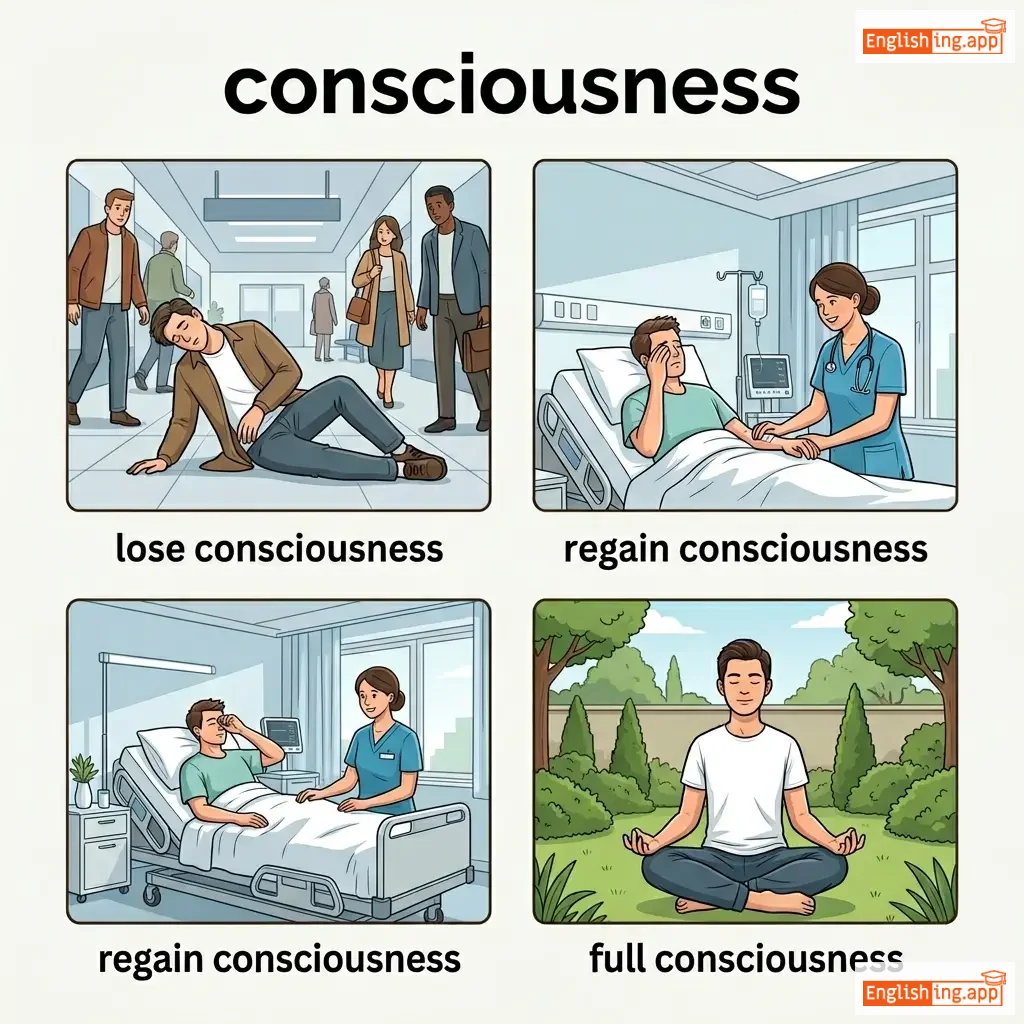
Swipe left or right, or use the buttons. Tap image to zoom.
Обновитесь для доступа ко всем предложениям
Получите неограниченный доступ ко всем предложениям с подпиской Pro
Обновить до ProПеревод примера предложения
Слово
Lesson 11Lesson 11 - Переключатель маски
|
Эмодзи
|
Слово | Images | Перевод | Значение | Пример предложения | Перевод примера предложения | Синонимы | Антонимы | Коллокации | Мнемоника |
|---|---|---|---|---|---|---|---|---|---|---|
|
#201
🤰
|
/kənˈsep.ʃən/
noun
(kənˈsɛpʃən)
••••••
|
- •••••• |
концепция; идея; оплодотворение
kontseptsiya, ideya, oplodotvoreniye
••••••
|
the forming of an idea or plan; the fertilization of an ovum by a sperm; the action of conceiving
••••••
|
The conception of this innovative project took several months of brainstorming.
Концепция этого инновационного проекта потребовала нескольких месяцев мозгового штурма.
••••••
|
Концепция этого инновационного проекта потребовала нескольких месяцев мозгового штурма.
Kontseptsiya etogo innovatsionnogo proyektu potrebovala neskol'kikh mesyatsev mozgovogo shturma.
••••••
|
formation, creation, beginning, fertilization
••••••
|
completion, end, destruction
••••••
|
conception of an idea, moment of conception, creative conception
••••••
|
Концепция: это как создать новую идею, как проектирование чего-то нового.
••••••
|
|
#202
⚖️
|
/kəmˈpær.ɪ.sən/
noun
(kəmˈpɛrəsən)
••••••
|
- •••••• |
сравнение
sravnenie
••••••
|
the act of examining the similarities and differences between two or more things
••••••
|
The teacher made a comparison between the two poems to show their different styles.
Учитель сделал сравнение между двумя стихами, чтобы показать их разные стили.
••••••
|
Учитель сделал сравнение между двумя стихами, чтобы показать их разные стили.
Uchitel' sdelal sravnenie mezhdu dvumya stikhami, chtoby pokazat' ikh raznye stili.
••••••
|
contrast, examination, analysis, evaluation
••••••
|
similarity, uniformity, likeness
••••••
|
make a comparison, comparison between, in comparison
••••••
|
Сравнение помогает увидеть различия между стихами.
••••••
|
|
#203
❤️🤗
|
/kəmˈpæʃ.ən/
noun
(kəmˈpæʃən)
••••••
|
- •••••• |
сострадание
sostradanie
••••••
|
sympathetic concern for the sufferings or misfortunes of others; deep awareness of suffering with a desire to help
••••••
|
She showed great compassion towards the homeless children by providing them food and shelter. |
Она проявила большое сострадание к бездомным детям, обеспечив их едой и укрытием.
Ona proyavila bol'shoe sostradanie k bezdomnym detyam, obespechiv ikh yedoy i ukrytiyem.
••••••
|
empathy, sympathy, mercy, kindness
••••••
|
cruelty, indifference, heartlessness, callousness
••••••
|
show compassion, deep compassion, compassion for others
••••••
|
Сострадание — это когда вы чувствуете чужие страдания и хотите помочь.
••••••
|
|
#204
🔚
|
/kənˈkluː.ʒən/
noun
(kənˈklʊʒən)
••••••
|
- •••••• |
заключение; завершение; решение
zaklyucheniye, zaversheniye, resheniye
••••••
|
the end or finish of an event, process, or text; a judgment or decision reached by reasoning
••••••
|
The conclusion of the research paper summarized all the important findings.
Заключение исследовательской работы подытожило все важные результаты.
••••••
|
Заключение исследовательской работы подытожило все важные результаты.
Zaklyucheniye issledovatelskoy raboty podytozhilo vse vazhnyye rezul'taty.
••••••
|
ending, finale, outcome, decision
••••••
|
beginning, introduction, start, opening
••••••
|
draw a conclusion, in conclusion, logical conclusion
••••••
|
Заключение - заключительная часть исследования, подводящая итоги.
••••••
|
|
#205
💰
|
/ˌkɑm.pənˈseɪ.ʃən/
noun
(kəm.pɛnˈseɪ.ʃən)
••••••
|
- •••••• |
компенсация; возмещение
kompensatsiya, vozmeshenie
••••••
|
something given or received as an equivalent for services, debt, loss, injury, or suffering; payment or reward
••••••
|
The company provided financial compensation to the workers injured in the accident. |
Компания предоставила финансовую компенсацию работникам, пострадавшим в аварии.
Kompaniya predostavila finansovuyu kompensatsiyu rabotnikam, postradavshim v avarii.
••••••
|
payment, reimbursement, remuneration, reparation
••••••
|
penalty, punishment, loss, debt
••••••
|
financial compensation, fair compensation, compensation package
••••••
|
In Russian, 'компенсация' sounds like 'compensation' in English.
••••••
|
|
#206
🎉
|
/kənˌɡrætʃ.əˈleɪ.ʃənz/
noun
(kənˌɡrætʃ.əˈleɪ.ʃənz)
••••••
|
- •••••• |
поздравления
pozdravleniya
••••••
|
words expressing praise for an achievement or good wishes on a special occasion
••••••
|
Congratulations on your promotion! You really deserved this success. |
Поздравляю с повышением! Ты действительно заслужил этот успех.
Pozdravlyayu s povysheniem! Ty deystvitel'no zasluzhil etot uspek.
••••••
|
felicitations, compliments, praise, well wishes
••••••
|
condolences, criticism, blame
••••••
|
heartfelt congratulations, warm congratulations, congratulations are in order
••••••
|
Pozdravleniya = pozdravite na velikoe dostizhenie
••••••
|
|
#207
🏆
|
/ˌkɑm.pəˈtɪʃ.ən/
noun
(kəm-pə-ˈti-shən)
••••••
|
|
конкурс
konkurs
••••••
|
the activity or condition of striving to gain or win something by defeating or establishing superiority over others
••••••
|
The swimming competition attracted athletes from all over the country.
Плавательный конкурс привлек атлетов со всей страны.
••••••
|
Плавательный конкурс привлек атлетов со всей страны.
Plavatel'nyy konkurs privlek atletov so vsey strany.
••••••
|
contest, rivalry, tournament, race
••••••
|
cooperation, collaboration, partnership
••••••
|
fierce competition, healthy competition, international competition
••••••
|
В каждом конкурсе только один победитель, не забывайте это.
••••••
|
|
#208
💭
|
/ˈkɑn.ʃəns/
noun
(kons-yens)
••••••
|
- •••••• |
совесть, мораль, внутренний голос
sovest, moral, vnutrenniy golos
••••••
|
an inner feeling or voice viewed as acting as a guide to the rightness or wrongness of one's behavior
••••••
|
His conscience prevented him from lying to his parents about his grades. |
Его совесть не позволила ему лгать своим родителям о своих оценках.
Yego sovest' ne pozvolila yemu lgat' svoim roditelyam o svoikh otsenkakh.
••••••
|
moral sense, ethics, scruples, inner voice
••••••
|
amorality, unscrupulousness, immorality
••••••
|
clear conscience, guilty conscience, matter of conscience
••••••
|
Совесть помогает различать правильное и неправильное.
••••••
|
|
#209
😊
|
/kəmˈplek.ʃən/
noun
(komplekʃɪən)
••••••
|
- •••••• |
цвет лица
tsvet litsa
••••••
|
the natural color, texture, and appearance of a person's skin, especially on the face
••••••
|
Her fair complexion glowed beautifully in the morning sunlight.
Её светлая кожа сияла красиво на утреннем солнце.
••••••
|
Её светлая кожа сияла красиво на утреннем солнце.
Yeyo svetlaya kozha siyala krasivo na utrevnem solntse.
••••••
|
skin color, skin tone, coloring, hue
••••••
|
- •••••• |
fair complexion, dark complexion, clear complexion
••••••
|
In Russian, 'tsvet' (color) and 'litsa' (face) rhyme like a color of the face.
••••••
|
|
#210
🧠
|
/ˈkɑn.ʃəs.nəs/
noun
(konsʲɪəsnʲɪs)
••••••
|
|
сознание
soznanie
••••••
|
the state of being awake and aware of one's surroundings; the awareness or perception of something
••••••
|
After the accident, she slowly regained consciousness in the hospital.
После несчастного случая она медленно пришла в сознание в больнице.
••••••
|
После несчастного случая она медленно пришла в сознание в больнице.
Posle neschastnogo sluchaya ona medlenno prishla v soznanie v bol'nitse.
••••••
|
awareness, cognition, alertness, perception
••••••
|
unconsciousness, unawareness, oblivion
••••••
|
lose consciousness, stream of consciousness, environmental consciousness
••••••
|
In Russian, 'сознание' (soznanie) reflects the awareness of being awake.
••••••
|
|
#211
⚠️
|
/kəmˈpʌl.ʃən/
noun
(компульсия)
••••••
|
- •••••• |
побуждение; принуждение;
pobuzhdenie, prinuzhdenie
••••••
|
the action or state of forcing or being forced to do something; an irresistible urge to behave in a certain way
••••••
|
He felt a strong compulsion to check his phone every few minutes. |
Он чувствовал сильное побуждение проверять свой телефон каждые несколько минут.
On chuvstvoval sil'noe pobuzhdenie proverjat' svoy telefon kazhdyye neskol'ko minut.
••••••
|
obligation, force, coercion, urge
••••••
|
choice, freedom, option, voluntariness
••••••
|
under compulsion, strong compulsion, compulsive behavior
••••••
|
No •••••• |
|
#212
😌
|
/ˈkɑn.tent/
noun
(kontent)
••••••
|
- •••••• |
довольный
dovolnyy
••••••
|
pleased and satisfied; the things that are contained in something; subject matter of a text
••••••
|
She felt content with her simple life in the countryside.
Она была довольна своей простой жизнью в деревне.
••••••
|
Она была довольна своей простой жизнью в деревне.
Ona byla dovol'na svoey prostoy zhiznyu v derevne.
••••••
|
satisfied, material, substance, happy
••••••
|
dissatisfied, unhappy, discontented
••••••
|
content with life, website content, table of contents
••••••
|
Content = довольный, как человек, который доволен своей жизнью.
••••••
|
|
#213
💪
|
/ˈkɑn.fɪ.dəns/
noun
(kənˈfɪdɛns)
••••••
|
- •••••• |
уверенность в себе
uverenost' v sebe
••••••
|
the feeling or belief that one can rely on someone or something; firm trust; self-assurance
••••••
|
She spoke with great confidence during the job interview. |
Она говорила с большой уверенностью на собеседовании.
Ona govoryla s bol'shoy uverennost'yu na sobesedovanii.
••••••
|
trust, faith, assurance, self-belief
••••••
|
doubt, uncertainty, insecurity, anxiety
••••••
|
have confidence, boost confidence, lose confidence
••••••
|
Уверенность в себе — это доверие к собственным силам.
••••••
|
|
#214
⚡
|
/ˌkɑn.trəˈdɪk.ʃən/
noun
(контрадикшн)
••••••
|
- •••••• |
противоречие; несоответствие
protivorechie, nesootvetstvie
••••••
|
a combination of statements, ideas, or features which are opposed to one another; inconsistency
••••••
|
There was a clear contradiction between his words and his actions. |
Было явное противоречие между его словами и его действиями.
Bylo iavnoe protivorechie mezhdu ego slovami i ego deistviiami.
••••••
|
inconsistency, conflict, opposition, paradox
••••••
|
consistency, agreement, harmony, accord
••••••
|
direct contradiction, logical contradiction, contradiction in terms
••••••
|
Contradiction in Russian = 'противоречие' = opposing ideas
••••••
|
|
#215
⚔️
|
/ˌkɑn.frənˈteɪ.ʃən/
noun
(kənˈfrɒn.teɪ.ʃən)
••••••
|
- •••••• |
конфронтация
konfrontatsiya
••••••
|
a hostile or argumentative meeting or situation between opposing parties; direct challenge or opposition
••••••
|
The confrontation between the two leaders ended without any agreement.
Конфронтация между двумя лидерами закончилась без какого-либо соглашения.
••••••
|
Конфронтация между двумя лидерами закончилась без какого-либо соглашения.
Konfrontatsiya mezhdu dvumya liderami zakonchilas bez kakogo-libo soglasheniya.
••••••
|
conflict, clash, dispute, face-off
••••••
|
agreement, cooperation, harmony, peace
••••••
|
avoid confrontation, violent confrontation, direct confrontation
••••••
|
Konfrontatsiya - Когда два лидера сталкиваются лицом к лицу.
••••••
|
|
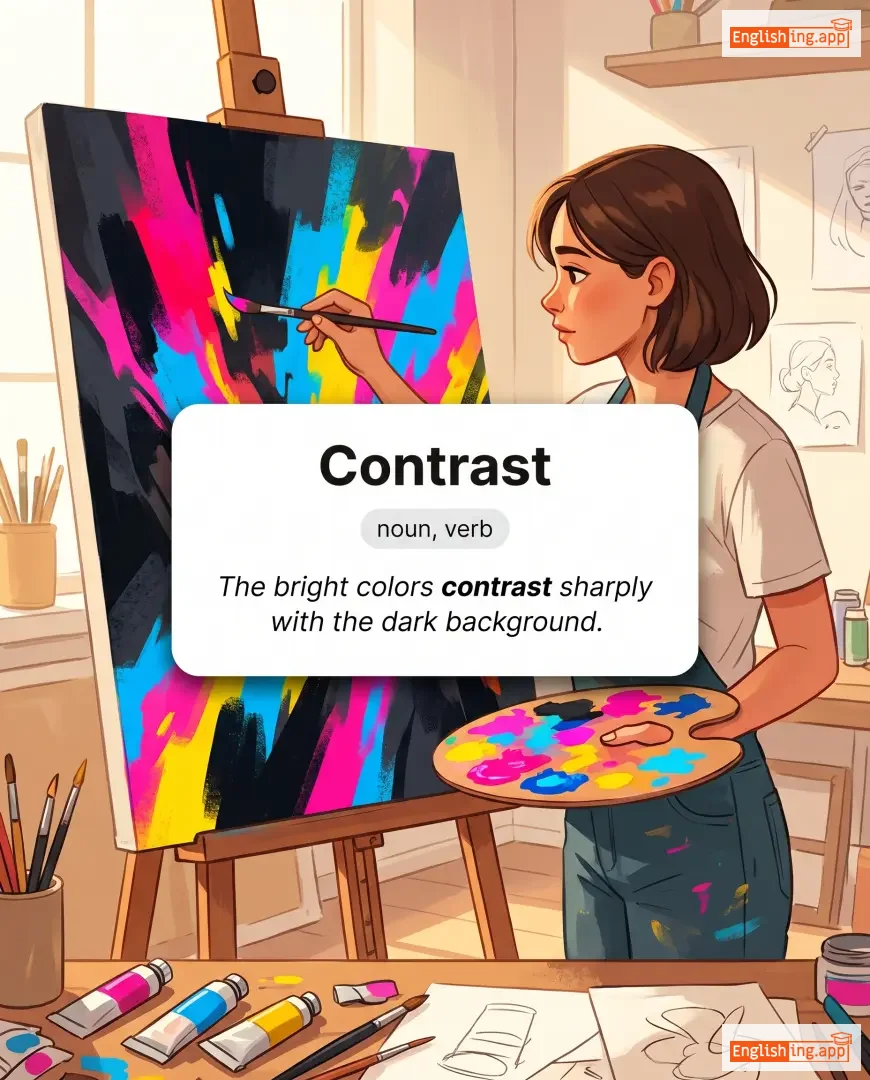
#216
⚫⚪
|
/ˈkɑn.træst/
noun
(kontrast)
••••••
|
|
контраст; различие; сравнение
kontrast, razlichie, sravnenie
••••••
|
the state of being strikingly different from something else; comparison showing differences
••••••
|
The contrast between city life and rural life is quite remarkable.
Контраст между городской жизнью и сельской жизнью довольно заметен.
••••••
|
Контраст между городской жизнью и сельской жизнью довольно заметен.
Kontrast mezhdu gorodskoy zhiznyu i selskim zhiznyu dovol'no zameten.
••••••
|
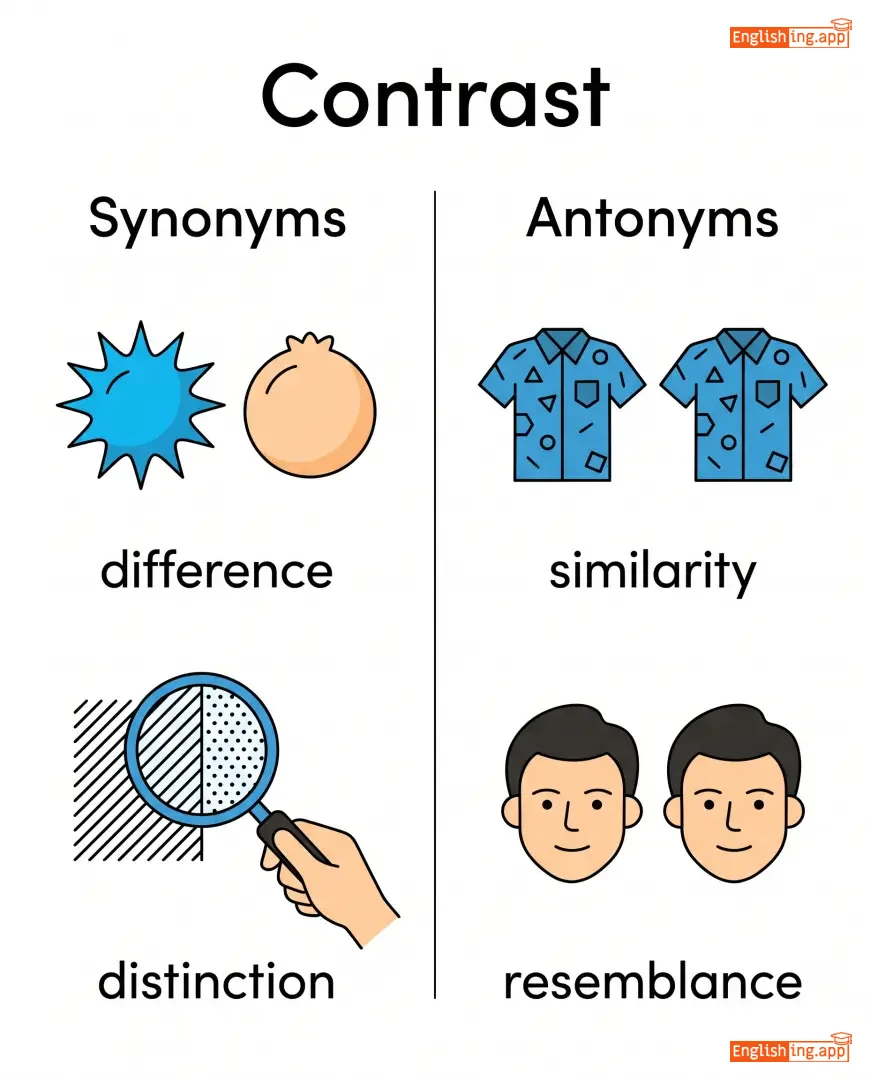
difference, distinction, comparison, opposition
••••••
|
similarity, likeness, resemblance, agreement
••••••
|
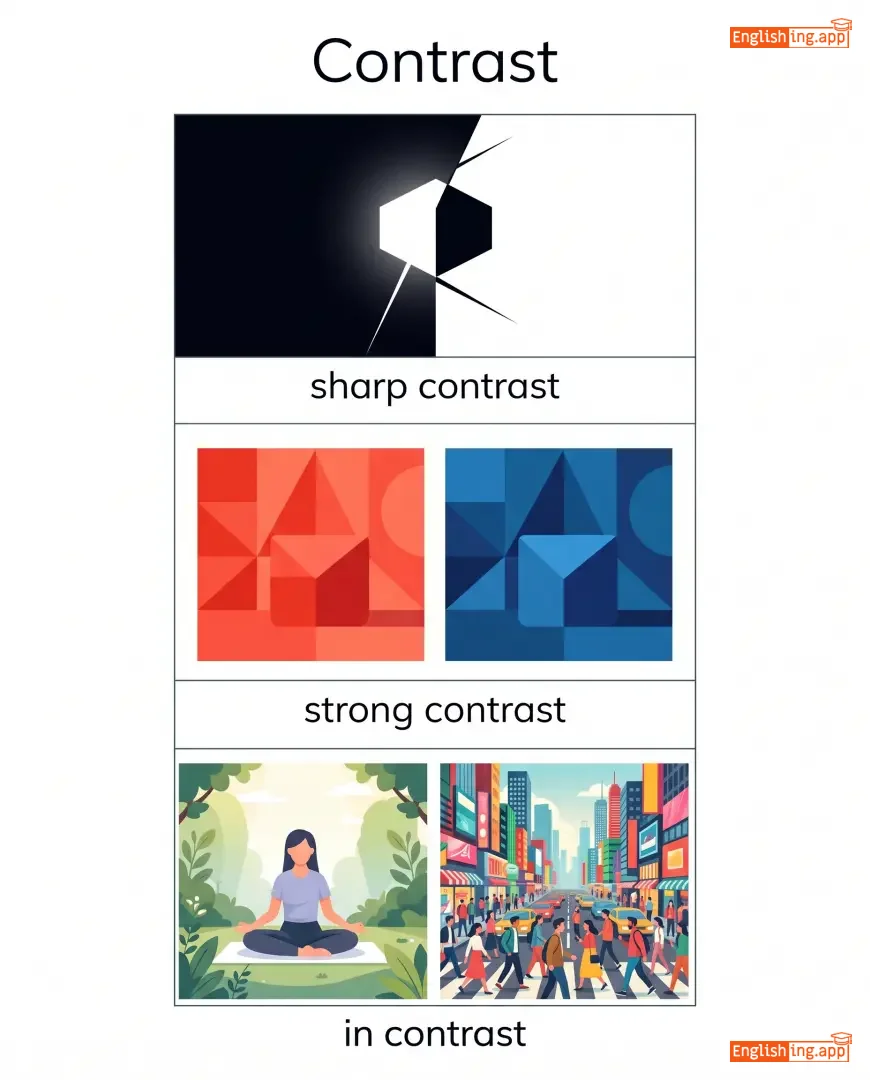
sharp contrast, striking contrast, in contrast to
••••••
|
Contrast = 'Kontr' + 'ast' вспоминайте как различия между объектами.
••••••
|
|
#217
😵💫
|
/kənˈfjuː.ʒən/
noun
(конфьюжн)
••••••
|
- •••••• |
путаница, неразбериха, хаос
putanitsa, nerazberiha, khaos
••••••
|
lack of understanding; uncertainty; the state of being bewildered or unclear in one's mind
••••••
|
There was confusion about the meeting time, so half the team arrived late.
Была путаница по поводу времени встречи, поэтому половина команды опоздала.
••••••
|
Была путаница по поводу времени встречи, поэтому половина команды опоздала.
Byla putanitsa po povodu vremeni vstrechi, poetomu polovina komandy opozdala.
••••••
|
bewilderment, perplexity, disorder, chaos
••••••
|
clarity, understanding, certainty, order
••••••
|
cause confusion, avoid confusion, mental confusion
••••••
|
Confusion in Russian = 'Путаница' (Putanitsa) + 'Неясность' (Neyasnost) – imagine being lost in confusion!
••••••
|
|
#218
🗣️💥
|
/ˈkɑn.trəˌvɜr.si/
noun
(контроверсия)
••••••
|
- •••••• |
спор; разногласие
spor, raznoglasiye
••••••
|
prolonged public disagreement or heated discussion; a dispute or argument involving opposing viewpoints
••••••
|
The new policy sparked a major controversy among the citizens.
Новая политика вызвала большую контроверсию среди граждан.
••••••
|
Новая политика вызвала большую контроверсию среди граждан.
Novaya politika vyzvala bol'shuyu kontroversiyu sredi grazhdan.
••••••
|
debate, dispute, argument, disagreement
••••••
|
agreement, consensus, harmony, accord
••••••
|
public controversy, major controversy, controversy surrounds
••••••
|
Контроверсия - это как спор между двумя противоположными мнениями.
••••••
|
|
#219
💡
|
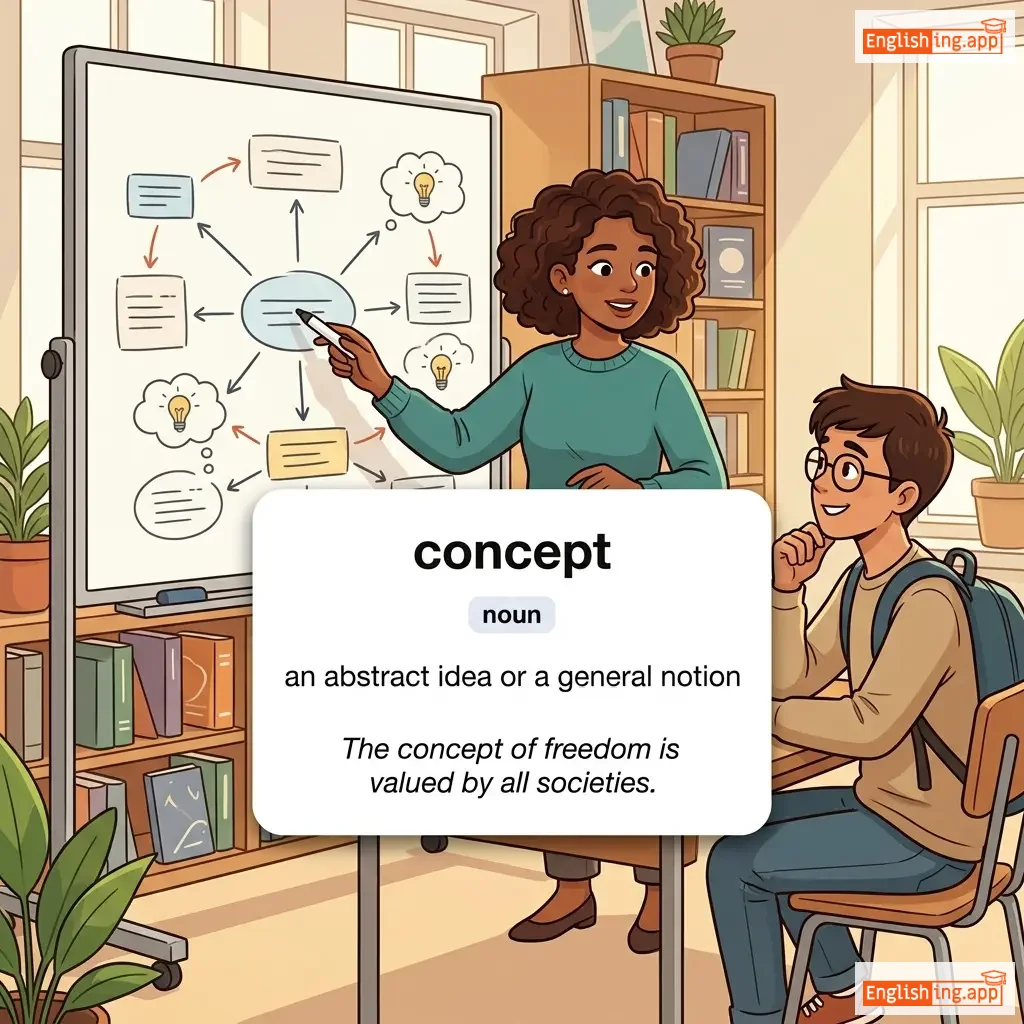
/ˈkɑn.sept/
noun
(kənˈsɛpt)
••••••
|
|
концепция; общее представление
kontseptsiya, obshchee predstavleniye
••••••
|
an abstract idea; a general notion or understanding of something; a plan or intention
••••••
|
The concept of democracy is based on the idea that people should govern themselves. |
Концепция демократии основывается на идее, что люди должны управлять собой.
Kontseptsiya demokratii osnovyvaetsya na ideye, chto lyudi dolzhny upravlyat' soboy.
••••••
|
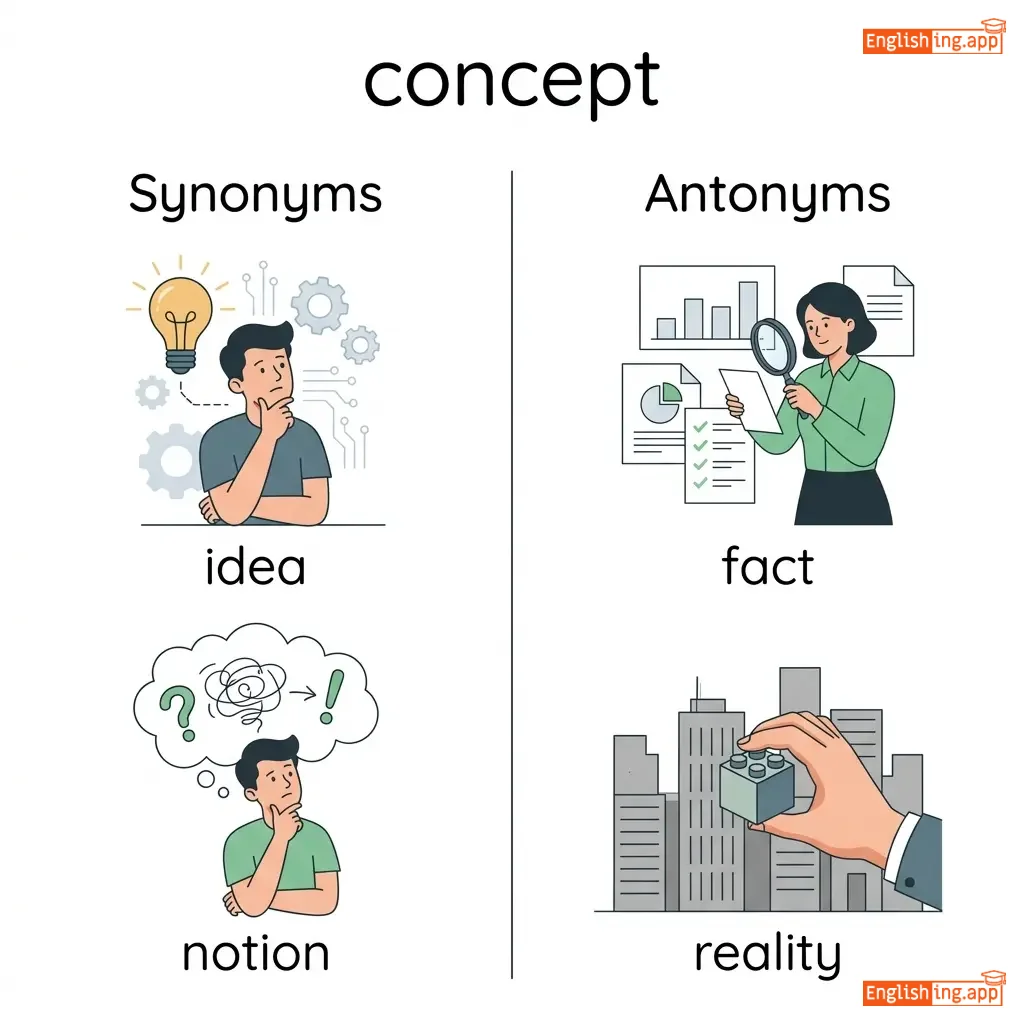
idea, notion, thought, principle
••••••
|
reality, fact, concrete example
••••••
|
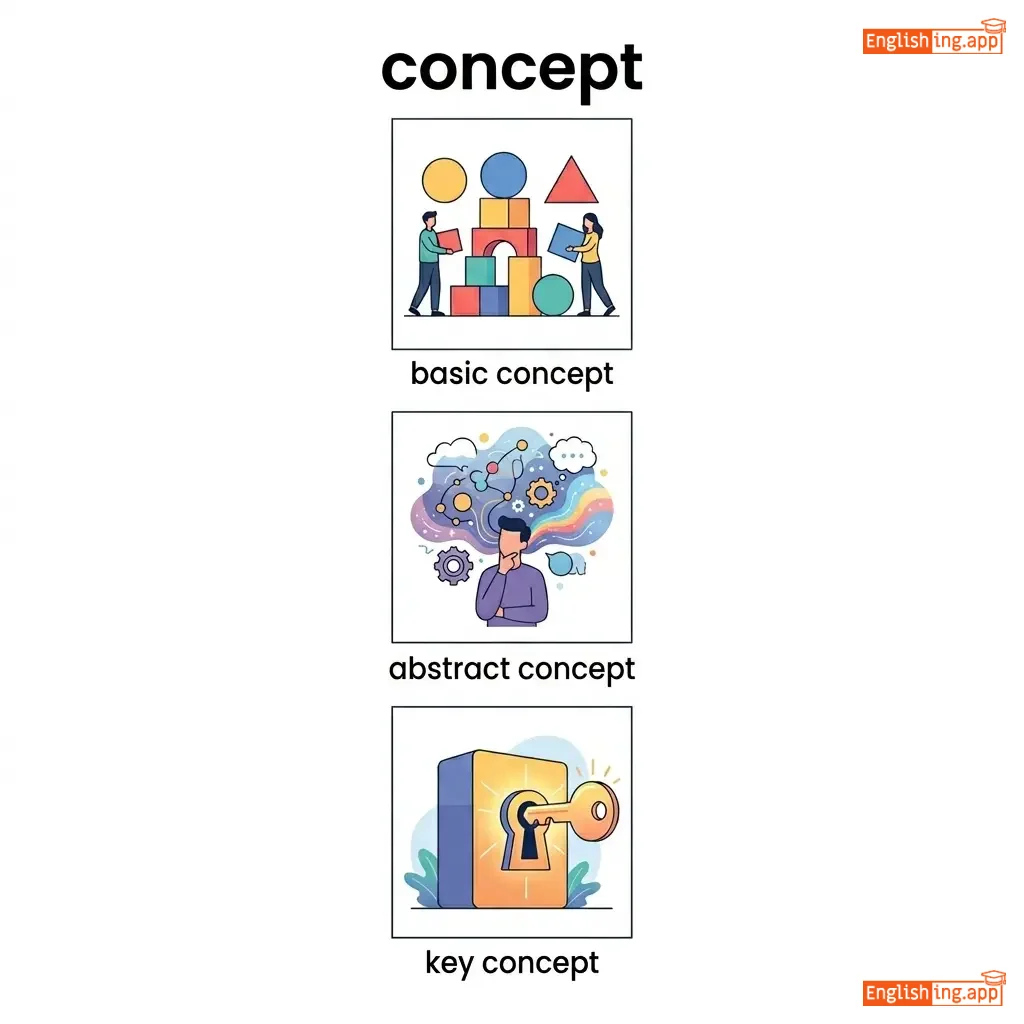
basic concept, new concept, concept development
••••••
|
Русский – концепция демократии как идея самоуправления
••••••
|
|
#220
🛍️
|
/kənˈviː.ni.əns/
noun
(конвиниенс)
••••••
|
- •••••• |
удобство
udobstvo
••••••
|
the state of being able to proceed with something without difficulty; a thing that contributes to an easy way of life
••••••
|
The convenience of online shopping has changed how people buy products. |
Удобство онлайн-шопинга изменило способ, которым люди покупают продукты.
Udobstvo onlayn-shoppinga izmenilo sposob, kotorym lyudi pokupayut produkty.
••••••
|
ease, comfort, advantage, benefit
••••••
|
inconvenience, difficulty, hardship, trouble
••••••
|
for your convenience, convenience store, modern convenience
••••••
|
Udobstvo = Udarivayut dlya pokupok
••••••
|
Vocabulary Quiz
Test your vocabulary by matching words with their translations or meanings.
Login to take the quiz
Comments (0)
Share your thoughts and join the discussion.
Join the discussion by logging in
Login to CommentNo comments yet
Be the first to share your thoughts!