

Обновитесь для доступа ко всему словарю
Получите неограниченный доступ ко всем словам с подпиской Pro
Обновить до ProПеревод
Прошедшее
Причастие прошедшего времени
Третье лицо единственного числа
Герундий
Значение
Пример предложения
Перевод примера предложения
Синонимы
Антонимы
Коллокации
Мнемоника

Swipe left or right, or use the buttons. Tap image to zoom.
Обновитесь для доступа ко всем предложениям
Получите неограниченный доступ ко всем предложениям с подпиской Pro
Обновить до ProПеревод примера предложения
Слово
Lesson 3Lesson 3 - Переключатель маски
|
Эмодзи
|
Слово | Images | Перевод | Значение | Пример предложения | Перевод примера предложения | Синонимы | Антонимы | Коллокации | Мнемоника |
|---|---|---|---|---|---|---|---|---|---|---|
|
#41
✈️
|
/əˈraɪvəl/
noun
(arival)
••••••
|
- •••••• |
прибытие; акт прибытия
pribytie; akt pribytiya
••••••
|
the action or process of arriving; the reaching of a destination
••••••
|
The arrival of the train was delayed by two hours.
Прибытие поезда было задержано на два часа.
••••••
|
Прибытие поезда было задержано на два часа.
Pribytiye poyezda bylo zaderzhano na dva chasa.
••••••
|
coming, advent, appearance, entrance
••••••
|
departure, leaving, exit
••••••
|
arrival time, arrival gate, late arrival, early arrival
••••••
|
Прибытие поезда, как и момент счастья.
••••••
|
|
#42
😏
|
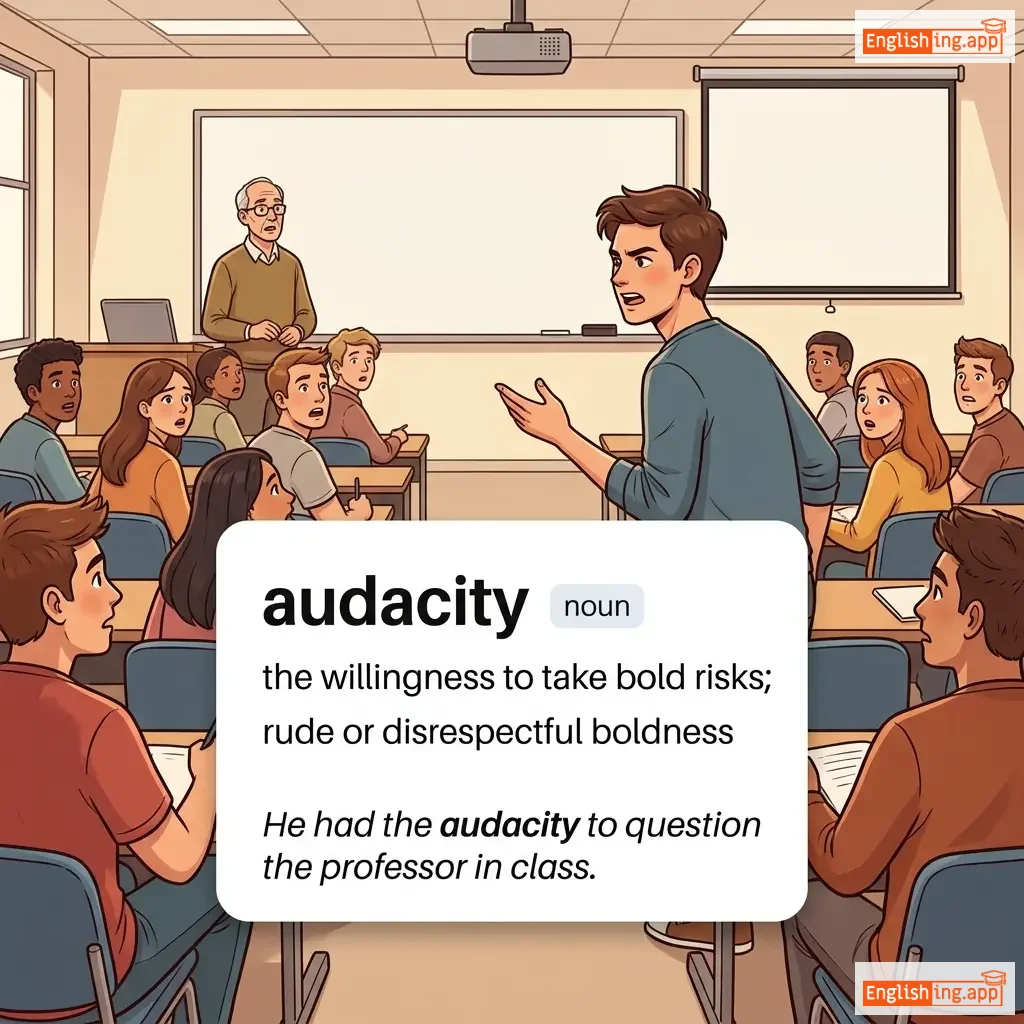
/ɔːˈdæsəti/
noun
(аудасити)
••••••
|
|
дерзость; смелость;
derzost; smelost
••••••
|
willingness to take bold risks; rude or disrespectful behavior; impudence
••••••
|
He had the audacity to ask for a raise after being late every day.
Он имел наглость просить повышение зарплаты после того, как опаздывал каждый день.
••••••
|
Он имел наглость просить повышение зарплаты после того, как опаздывал каждый день.
On imel naglost prosit' povyshenie zarplaty posle togo, kak opazdyval kazhdyj den'.
••••••
|
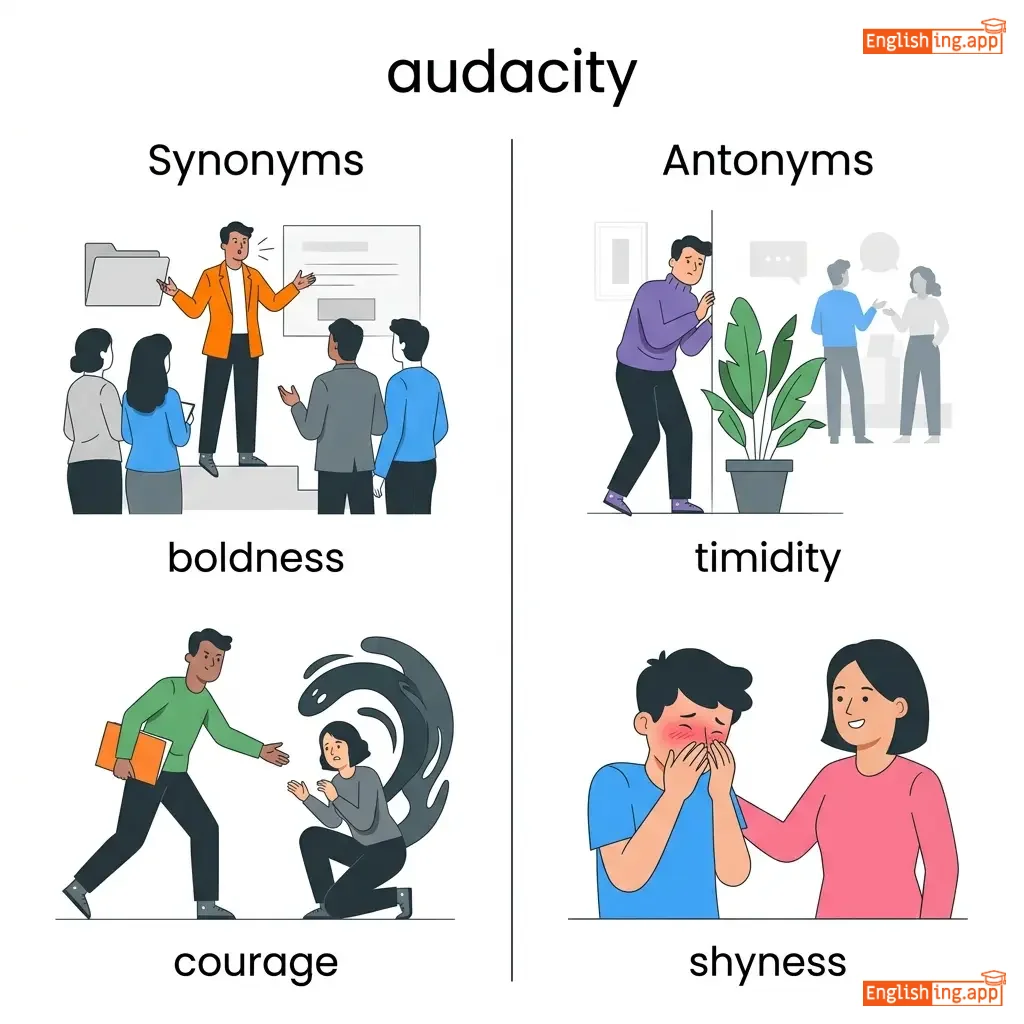
boldness, nerve, impudence, cheek
••••••
|
timidity, respect, politeness, modesty
••••••
|
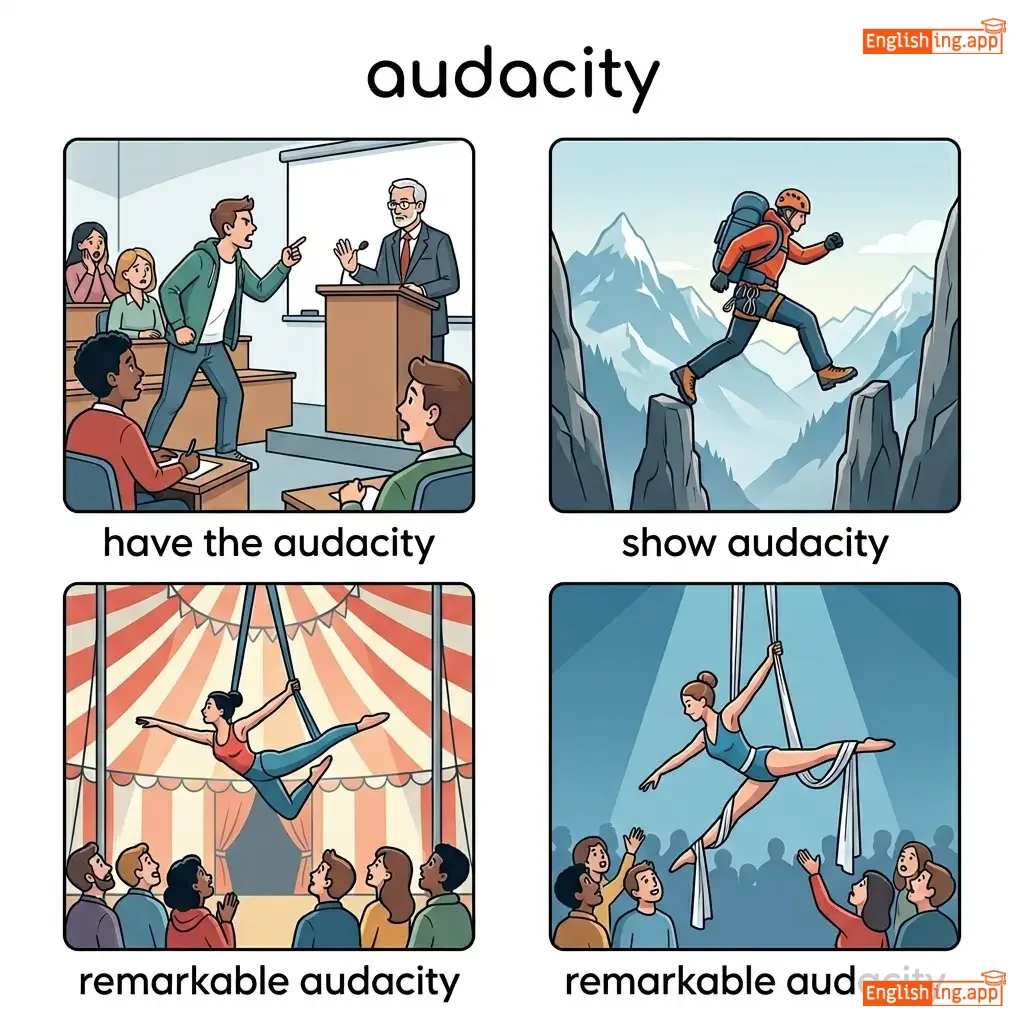
have the audacity, sheer audacity, incredible audacity
••••••
|
Русский-Английский: дерзость (derzost) – когда смело просишь, несмотря на все.
••••••
|
|
#43
🔨
|
/ˈɔːkʃən/
noun
(ókʃən)
••••••
|
- •••••• |
аукцион
auktsion
••••••
|
a public sale in which goods or property are sold to the highest bidder
••••••
|
The antique furniture was sold at an auction last weekend.
Антикварная мебель была продана на аукционе в прошлые выходные.
••••••
|
Антикварная мебель была продана на аукционе в прошлые выходные.
Antikvarnaya mebel' byla prodana na auktsione v proshlye vykhodnye.
••••••
|
sale, bidding, public sale
••••••
|
private sale, fixed price sale
••••••
|
auction house, online auction, art auction
••••••
|
Auktsion - prodazha tovarov po samoy vysokoy tsene
••••••
|
|
#44
🧲
|
/əˈtrækʃən/
noun
(аттракцион)
••••••
|
- •••••• |
аттракция; сила притяжения;
attraktsion
••••••
|
the action or power of evoking interest or pleasure in something; a place that draws visitors
••••••
|
The museum is the main attraction for tourists in this city. |
Музей — это основная аттракция для туристов в этом городе.
Muzey — eto osnovnaya attraktsiya dlya turistov v etom gorode.
••••••
|
appeal, draw, magnetism, fascination
••••••
|
repulsion, aversion, deterrent
••••••
|
tourist attraction, main attraction, physical attraction
••••••
|
Russian 'аттракция' is similar to 'attraction' in English.
••••••
|
|
#45
📋
|
/əˈtendəns/
noun
(atendens)
••••••
|
- •••••• |
присутствие
prisutstvie
••••••
|
the action or state of going regularly to or being present at a place or event
••••••
|
The teacher takes attendance at the beginning of each class. |
Учитель берет посещаемость в начале каждого урока.
Uchitel' beret poseshchayemost' v nachale kazhdogo urokа.
••••••
|
presence, participation, turnout
••••••
|
absence, non-attendance, truancy
••••••
|
school attendance, perfect attendance, take attendance
••••••
|
Attendance = Присутствие - Помни, что всегда важно присутствовать на уроках.
••••••
|
|
#46
✅
|
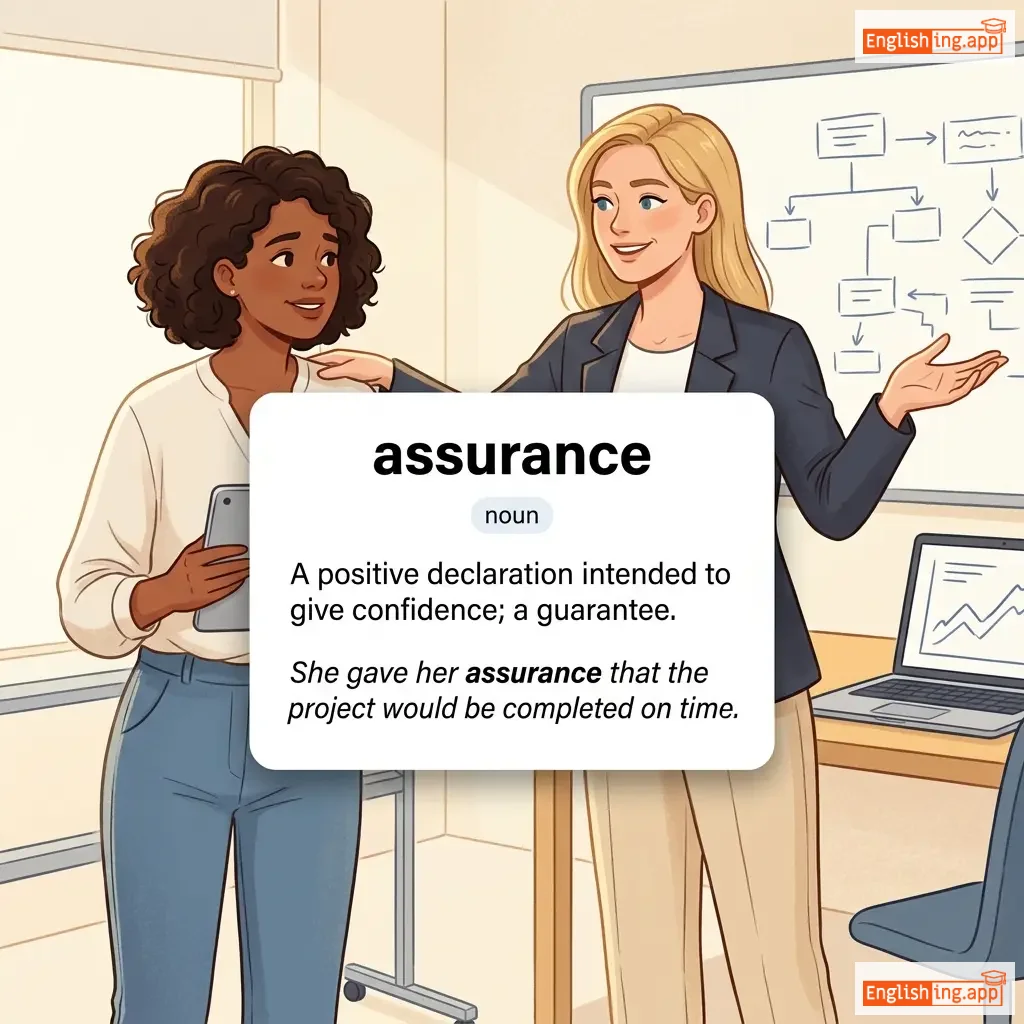
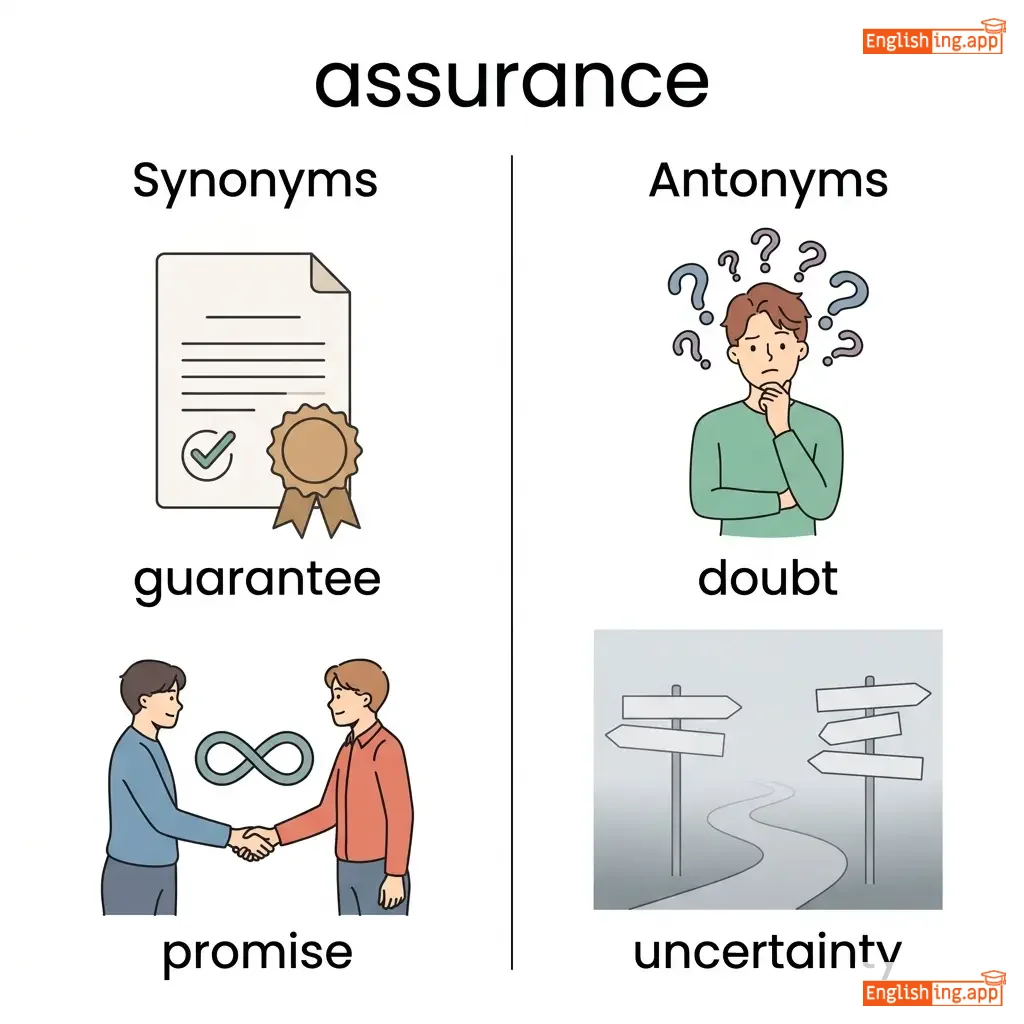
/əˈʃʊrəns/
noun
(assurens)
••••••
|
|
уверенность; доверие; уверенность в себе
uverenost
••••••
|
a positive declaration intended to give confidence; a promise; confidence in oneself
••••••
|
The manager gave us assurance that the project would be completed on time.
Менеджер дал нам уверенность, что проект будет завершен вовремя.
••••••
|
Менеджер дал нам уверенность, что проект будет завершен вовремя.
Menedzher dal nam uverennost, chto proyekt budet zavershen vovremya.
••••••
|
guarantee, promise, pledge, confidence
••••••
|
doubt, uncertainty, insecurity
••••••
|
give assurance, quality assurance, self-assurance
••••••
|
Уверенность даёт доверие
••••••
|
|
#47
🤔
|
/əˈsʌmpʃən/
noun
(ассампшн)
••••••
|
- •••••• |
предположение
predpolozhenie
••••••
|
a thing that is accepted as true without proof; a supposition
••••••
|
His assumption about the weather proved to be wrong. |
Его предположение о погоде оказалось неверным.
Ego predpolozhenie o pogode okazalos' nevernym.
••••••
|
supposition, presumption, belief, conjecture
••••••
|
fact, certainty, proof, evidence
••••••
|
false assumption, basic assumption, make an assumption
••••••
|
No •••••• |
|
#48
🤝
|
/əˈsɪstəns/
noun
(асистенс)
••••••
|
- •••••• |
помощь; поддержка
pomoshch; podderzhka
••••••
|
the action of helping someone with a job or task; support
••••••
|
She offered her assistance with the project.
Она предложила свою помощь в проекте.
••••••
|
Она предложила свою помощь в проекте.
Ona predlozhila svoyu pomoshch v proyekte.
••••••
|
help, aid, support, service
••••••
|
hindrance, obstruction, interference
••••••
|
provide assistance, need assistance, technical assistance
••••••
|
Помни, что 'помощь' связано с глаголом 'помогать'.
••••••
|
|
#49
🗡️
|
/əˈsæsɪn/
noun
(асса́син)
••••••
|
- •••••• |
убийца
ubiytsa
••••••
|
a person who murders an important person for political or religious reasons
••••••
|
The president was protected from potential assassins by security guards.
Президент был защищён от возможных убийц охраной.
••••••
|
Президент был защищён от возможных убийц охраной.
Prezident byl zashchishchyon ot vozmozhnykh ubiits okhranoy.
••••••
|
killer, murderer, hitman
••••••
|
protector, guardian, defender
••••••
|
hired assassin, political assassin, would-be assassin
••••••
|
Убийца - это тот, кто убивает.
••••••
|
|
#50
😤
|
/ˈærəɡəns/
noun
(арроганс)
••••••
|
- •••••• |
аррогантность
arrogantnost
••••••
|
having or revealing an exaggerated sense of one's own importance or abilities
••••••
|
His arrogance made him unpopular among his colleagues.
его арроганс сделал его непопулярным среди коллег.
••••••
|
Его аррогантность сделала его непопулярным среди коллег.
Ego arrogantsnost' sdelala ego nepopulyarnym sredi kolleg.
••••••
|
pride, conceit, haughtiness, hubris
••••••
|
humility, modesty, meekness
••••••
|
sheer arrogance, display arrogance, arrogance of power
••••••
|
Russian: аррогантность (arrogantnost) - English: arrogance
••••••
|
|
#51
👼
|
/ˈeɪn.dʒəl/
noun
(эндʒел)
••••••
|
- •••••• |
ангел
angel
••••••
|
a spiritual being believed to act as an attendant, agent, or messenger of God
••••••
|
She looked like an angel in her white dress.
Она выглядела как ангел в своем белом платье.
••••••
|
Она выглядела как ангел в своем белом платье.
Ona vyglyadela kak angel v svoem belym platy'e.
••••••
|
cherub, seraph, divine messenger
••••••
|
demon, devil, fiend
••••••
|
guardian angel, fallen angel, angel of mercy
••••••
|
Запомни 'ангел' как духовное существо, которое защищает и помогает.
••••••
|
|
#52
👑
|
/əˈrɪs.tə.kræt/
noun
(аристократ)
••••••
|
- •••••• |
аристократ; человек благородного происхождения
aristokrat; chelovek blagorodnogo proiskhozhdeniya
••••••
|
a member of the aristocracy; a person of noble rank or birth
••••••
|
The aristocrat lived in a magnificent castle.
Аристократ жил в великолепном замке.
••••••
|
Аристократ жил в великолепном замке.
Aristokrat zhyl v velikolepnom zamke.
••••••
|
noble, peer, patrician, blue blood
••••••
|
commoner, peasant, plebeian
••••••
|
wealthy aristocrat, old aristocrat, aristocratic family
••••••
|
Аристократы живут в замках.
••••••
|
|
#53
🗣️
|
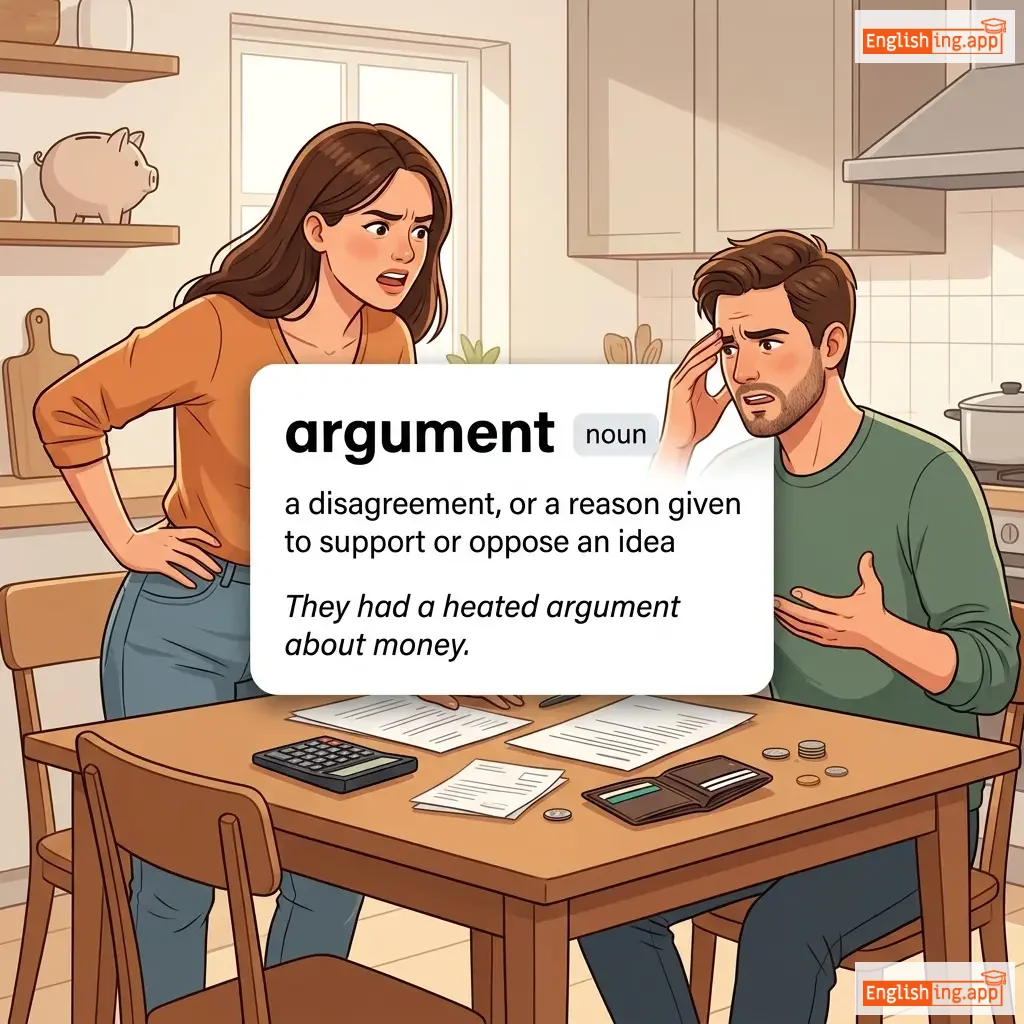
/ˈɑːr.ɡju.mənt/
noun
(аргумент)
••••••
|
|
спор; аргумент; обоснование
spor; argument; obosnovanie
••••••
|
an exchange of diverging or opposite views; a reason or set of reasons given in support of an idea
••••••
|
They had a heated argument about politics. |
У них был жаркий спор о политике.
U nikh byl zharkiy spor o politike.
••••••
|
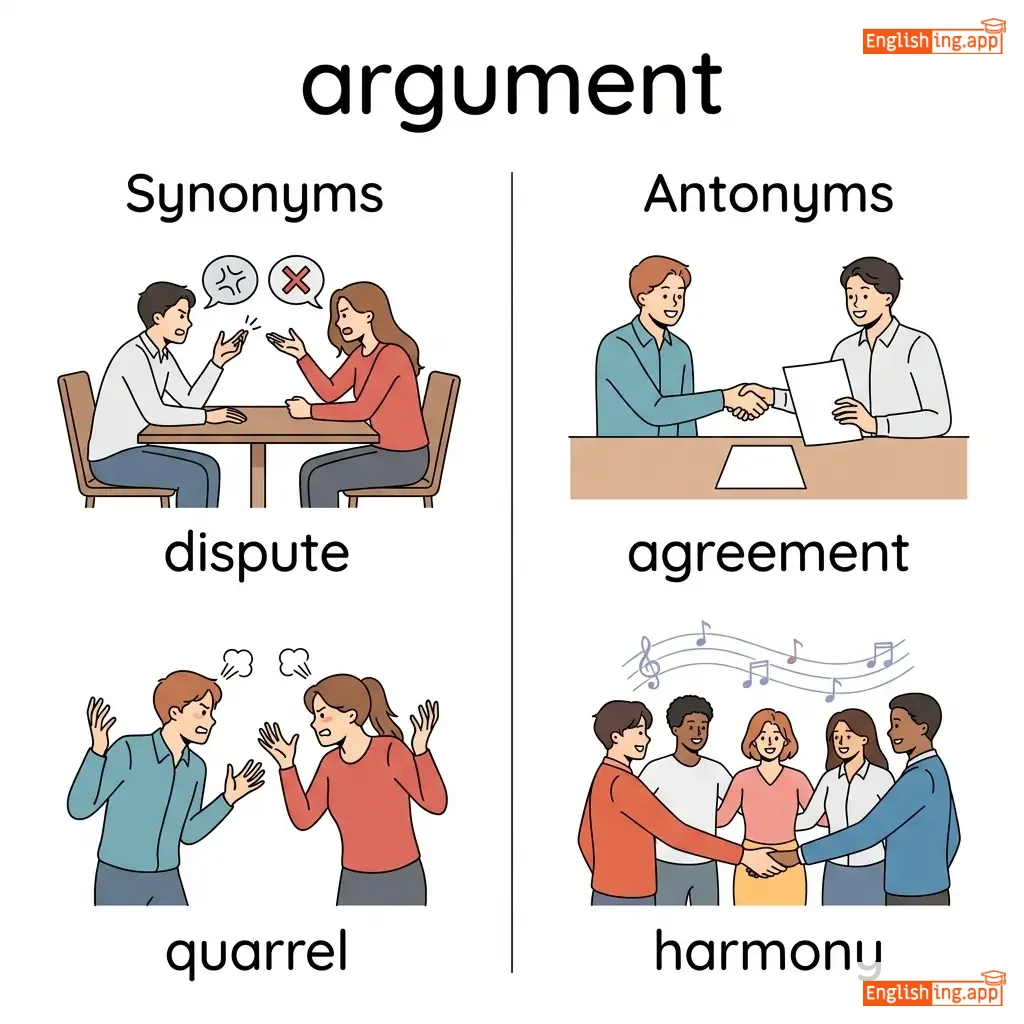
debate, dispute, disagreement, reasoning
••••••
|
agreement, harmony, consensus
••••••
|
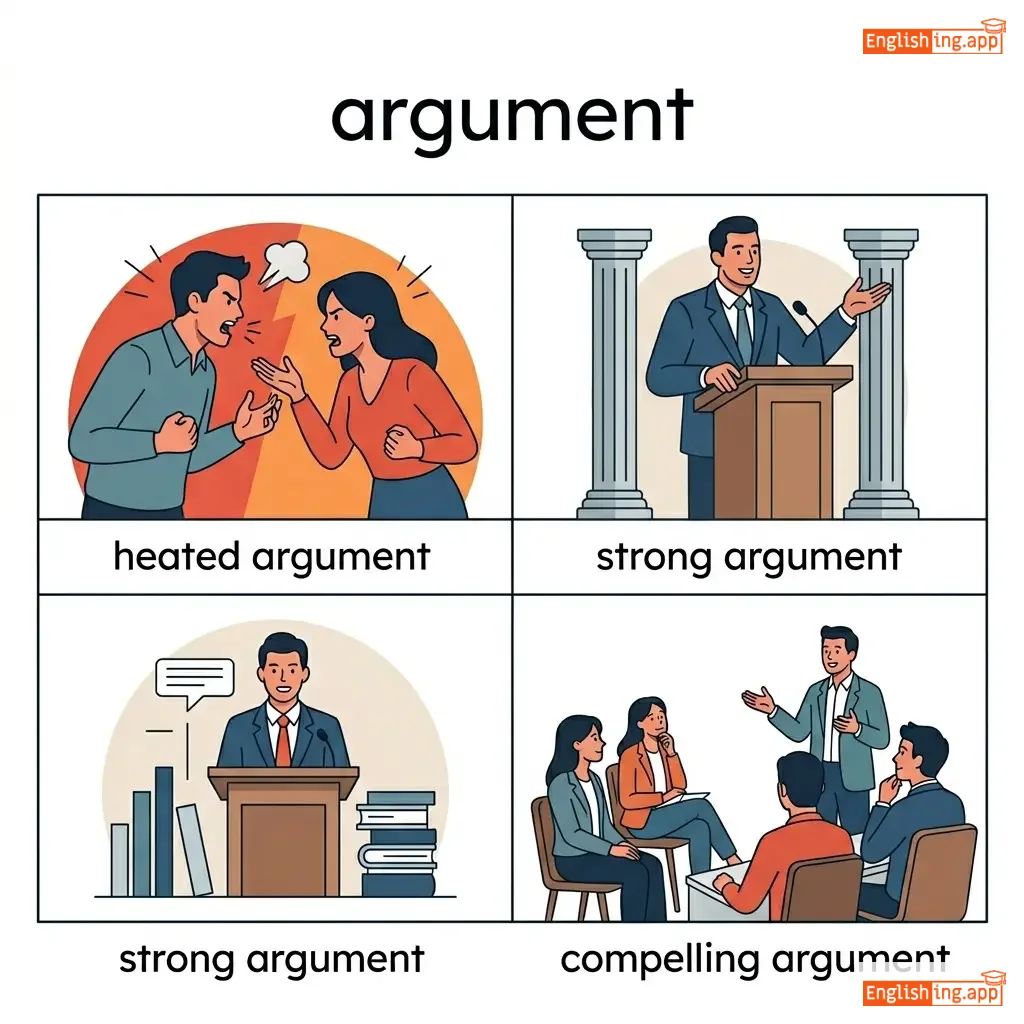
strong argument, heated argument, valid argument
••••••
|
аргумент = спор по поводу идеи
••••••
|
|
#54
📅
|
/əˈpɔɪnt.mənt/
noun
(apointmɛnt)
••••••
|
- •••••• |
встреча; назначение;
vstrecha; naznachenie
••••••
|
an arrangement to meet someone at a particular time and place; the action of appointing someone to a job or position
••••••
|
I have a doctor's appointment at 3 PM.
У меня прием у врача в 15:00.
••••••
|
У меня прием у врача в 15:00.
U menya priyom u vracha v 15:00.
••••••
|
meeting, arrangement, engagement, assignment
••••••
|
cancellation, dismissal, discharge
••••••
|
medical appointment, job appointment, keep an appointment
••••••
|
Appointment - это встреча или назначение на работу.
••••••
|
|
#55
👀
|
/əˈpɪə.rəns/
noun
(apirens)
••••••
|
- •••••• |
внешность; присутствие; проявление
vneshnost; prisutstvie; proyavlenie
••••••
|
the way that someone or something looks; an act of performing or participating in a public event
••••••
|
Her appearance at the event surprised everyone.
Ее появление на мероприятии удивило всех.
••••••
|
Ее появление на мероприятии удивило всех.
Eyo poyavlenie na meropriyatii udivilo vsekh.
••••••
|
look, presence, manifestation, emergence
••••••
|
disappearance, absence, invisibility
••••••
|
physical appearance, public appearance, make an appearance
••••••
|
In Russian, 'внешность' is pronounced similarly to 'appearance', so it's easy to remember.
••••••
|
|
#56
🙏
|
/əˈpiːl/
noun
(апел)
••••••
|
- •••••• |
апелляция; запрос; привлекательность
apellyatsiya
••••••
|
a serious or urgent request, typically to the public; the quality of being attractive or interesting
••••••
|
The charity made an appeal for donations. |
Благотворительная организация сделала апелляцию о пожертвованиях.
Blagotvoritel'naya organizatsiya sdelala apellyatsiyu o pozhertvovaniyakh.
••••••
|
request, plea, petition, entreaty
••••••
|
rejection, refusal, denial
••••••
|
appeal for help, court appeal, emotional appeal
••••••
|
Imagine a charity appeal that attracts donations like a magnet!
••••••
|
|
#57
😰
|
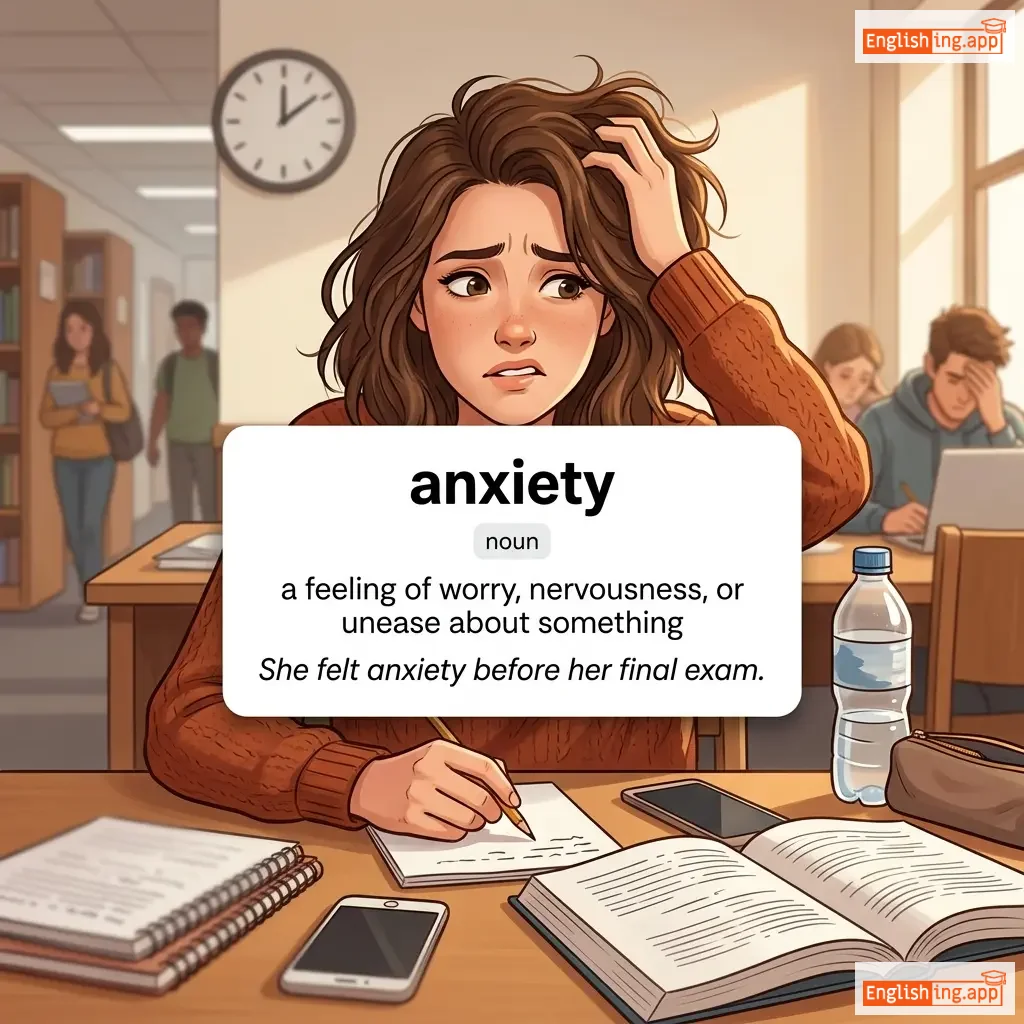
/æŋˈzaɪ.ə.ti/
noun
(ang-zái-ti)
••••••
|
|
тревога; беспокойство;
trevoga; bespokoystvo
••••••
|
a feeling of worry, nervousness, or unease about something with an uncertain outcome
••••••
|
She felt anxiety before her job interview.
Она почувствовала тревогу перед своим собеседованием.
••••••
|
Она почувствовала тревогу перед своим собеседованием.
Ona pochuvstvovala trevogu pered svoim sobesedovaniem.
••••••
|
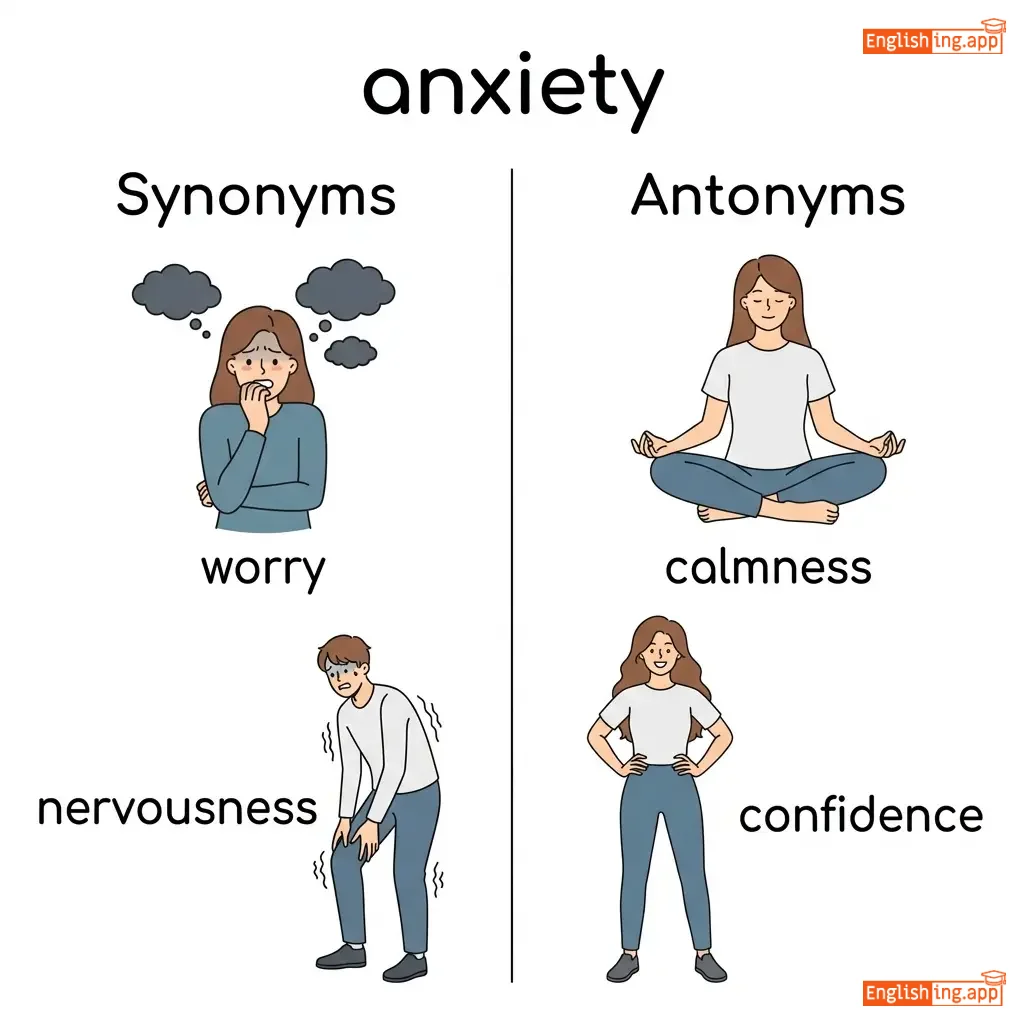
worry, nervousness, unease, concern
••••••
|
calmness, confidence, peace
••••••
|
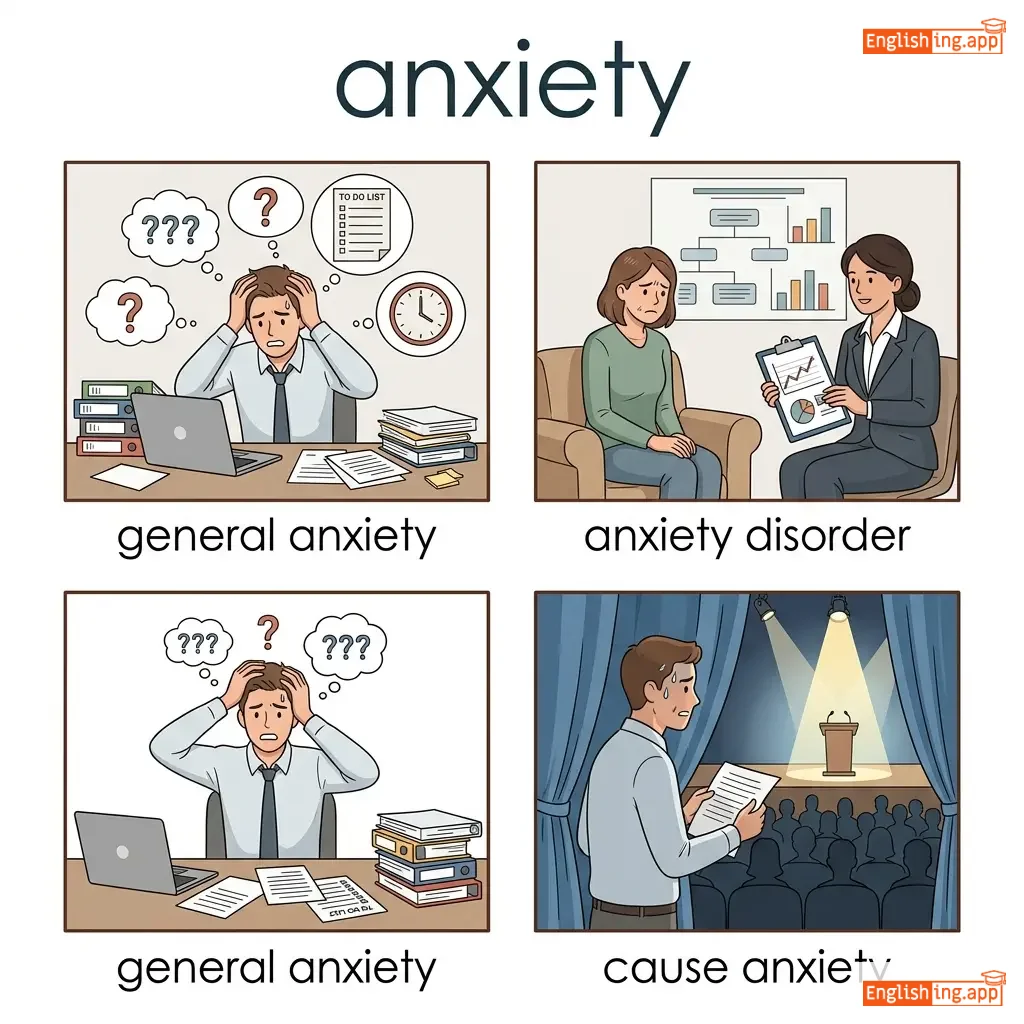
anxiety disorder, anxiety attack, reduce anxiety
••••••
|
Тревога или беспокойство перед неизвестным результатом.
••••••
|
|
#58
😡
|
/ˌæn.ɪˈmɒs.ə.ti/
noun
(анимозити)
••••••
|
- •••••• |
враждебность; антипатия
vrazhdebnost; antipatiya
••••••
|
strong hostility or dislike; active hatred or ill will
••••••
|
There was clear animosity between the two rival teams. |
Между двумя соперничающими командами была явная враждебность.
Mezhdu dvumya sopernichayushchimi komandami byla yavnyaya vrazhdebnost'.
••••••
|
hostility, hatred, enmity, antagonism
••••••
|
friendship, affection, goodwill
••••••
|
personal animosity, deep animosity, show animosity
••••••
|
Анимозитет - это враждебность, которая чувствуется.
••••••
|
|
#59
🎬
|
/ˌæn.ɪˈmeɪ.ʃən/
noun
(анимэйшн)
••••••
|
- •••••• |
анимация
animatsiya
••••••
|
the technique of making inanimate objects appear to move; liveliness and enthusiasm
••••••
|
The animation in this movie is incredibly detailed.
Анимация в этом фильме невероятно детализирована.
••••••
|
Анимация в этом фильме невероятно детализирована.
Animatsiya v etom filme neveroyatno detalizirovana.
••••••
|
cartoon, motion picture, liveliness
••••••
|
stillness, lifelessness, inertia
••••••
|
computer animation, stop-motion animation, animated film
••••••
|
Анимация на русском языке обозначает 'animation', и это оживление объектов в фильмах.
••••••
|
|
#60
😠
|
/ˈæŋ.ɡər/
noun
(æŋɡɚ)
••••••
|
- •••••• |
гнев
gnev
••••••
|
a strong feeling of annoyance, displeasure, or hostility
••••••
|
His anger was evident when he slammed the door. |
Его гнев был очевиден, когда он хлопнул дверью.
Ego gnev byl ocheviden, kogda on khlopnul dveryu.
••••••
|
rage, fury, wrath, irritation
••••••
|
calmness, peace, serenity
••••••
|
express anger, control anger, burst of anger
••••••
|
Гнев = Anger, в русском языке это очень близко
••••••
|
Vocabulary Quiz
Test your vocabulary by matching words with their translations or meanings.
Login to take the quiz
Comments (0)
Share your thoughts and join the discussion.
Join the discussion by logging in
Login to CommentNo comments yet
Be the first to share your thoughts!