

Upgrade für Zugriff auf alle Vokabeln
Erhalten Sie unbegrenzten Zugriff auf alle Vokabeln mit Pro-Mitgliedschaft
Upgrade auf ProÜbersetzung
Vergangenheit
Partizip Perfekt
Dritte Person Singular
Gerundium
Bedeutung
Beispielsatz
Übersetzung Beispielsatz
Synonyme
Antonyme
Kollokationen
Eselsbrücke
Swipe left or right, or use the buttons. Tap image to zoom.
Upgrade für Zugriff auf alle Sätze
Erhalten Sie unbegrenzten Zugriff auf alle Sätze mit Pro-Mitgliedschaft
Upgrade auf ProÜbersetzung Beispielsatz
Wort
Lesson 3Lesson 3 - Maske umschalten
|
Emoji
|
Wort | Images | Übersetzung | Bedeutung | Beispielsatz | Übersetzung Beispielsatz | Synonyme | Antonyme | Kollokationen | Eselsbrücke |
|---|---|---|---|---|---|---|---|---|---|---|
|
#41
✈️
|
/əˈraɪvəl/
noun
(arival)
••••••
|
- •••••• |
ankunft; der akt des ankommens
ankunft; der akt des ankommens
••••••
|
the action or process of arriving; the reaching of a destination
••••••
|
The arrival of the train was delayed by two hours.
Die Ankunft des Zuges wurde um zwei Stunden verzögert.
••••••
|
Die Ankunft des Zuges wurde um zwei Stunden verzögert.
Die Ankunft des Zuges wurde um zwei Stunden verzögert.
••••••
|
coming, advent, appearance, entrance
••••••
|
departure, leaving, exit
••••••
|
arrival time, arrival gate, late arrival, early arrival
••••••
|
Die Ankunft des Zuges, wie das Eintreffen von Freude.
••••••
|
|
#42
😏
|
/ɔːˈdæsəti/
noun
(audazität)
••••••
|
|
Dreistigkeit; Kühnheit;
dreistigkeit; kuhnheit
••••••
|
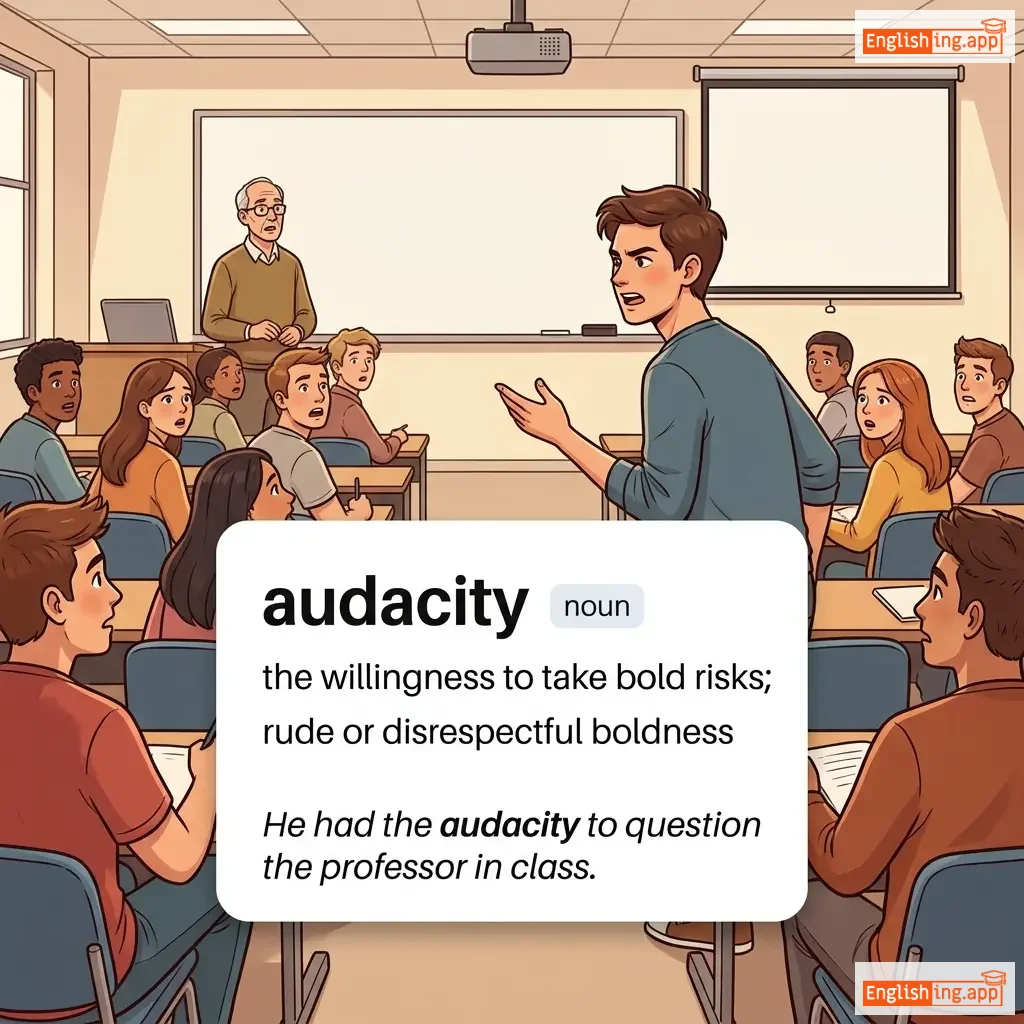
willingness to take bold risks; rude or disrespectful behavior; impudence
••••••
|
He had the audacity to ask for a raise after being late every day.
Er hatte die Audazität, nach seiner täglichen Verspätung um eine Gehaltserhöhung zu bitten.
••••••
|
Er hatte die Audazität, nach seiner täglichen Verspätung um eine Gehaltserhöhung zu bitten.
Er hatte die Audazitaet, nach seiner taeglichen Verspaetung um eine Gehaltserhoehung zu bitten.
••••••
|
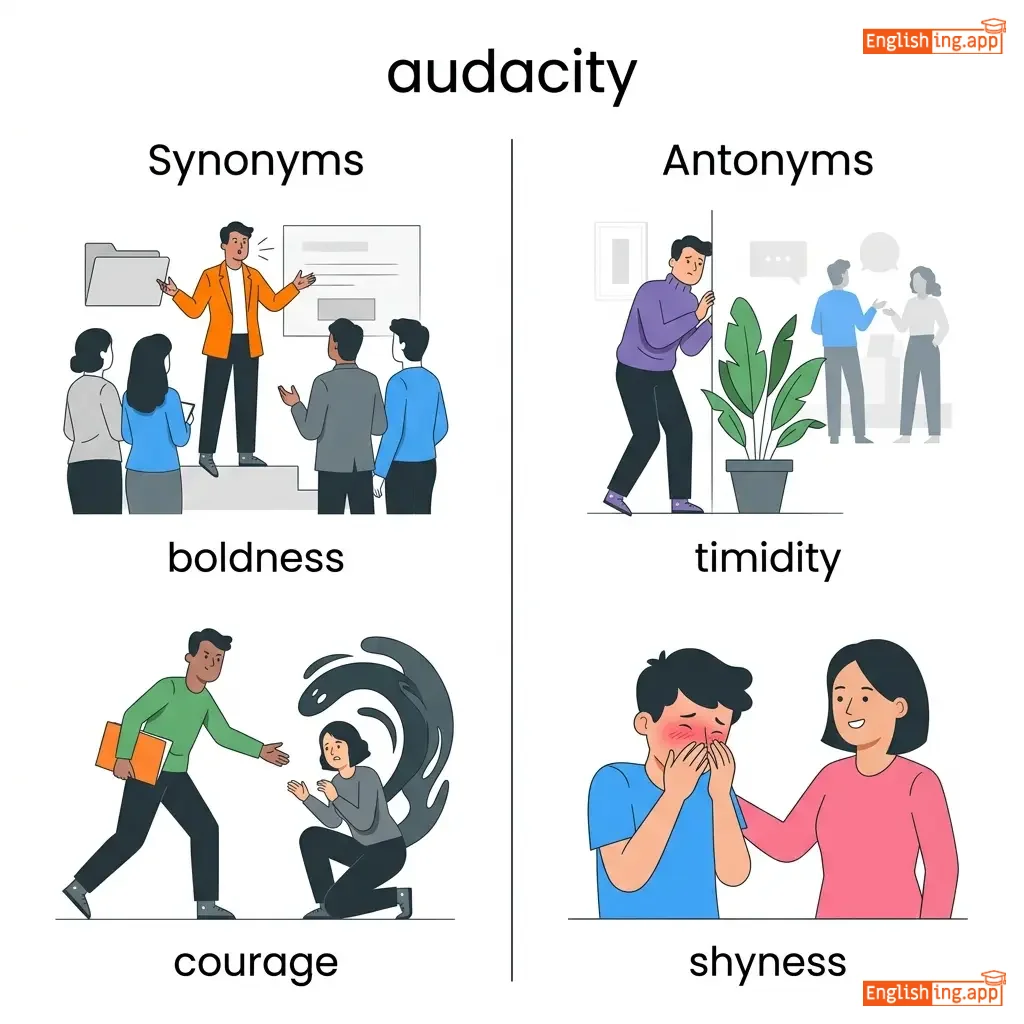
boldness, nerve, impudence, cheek
••••••
|
timidity, respect, politeness, modesty
••••••
|
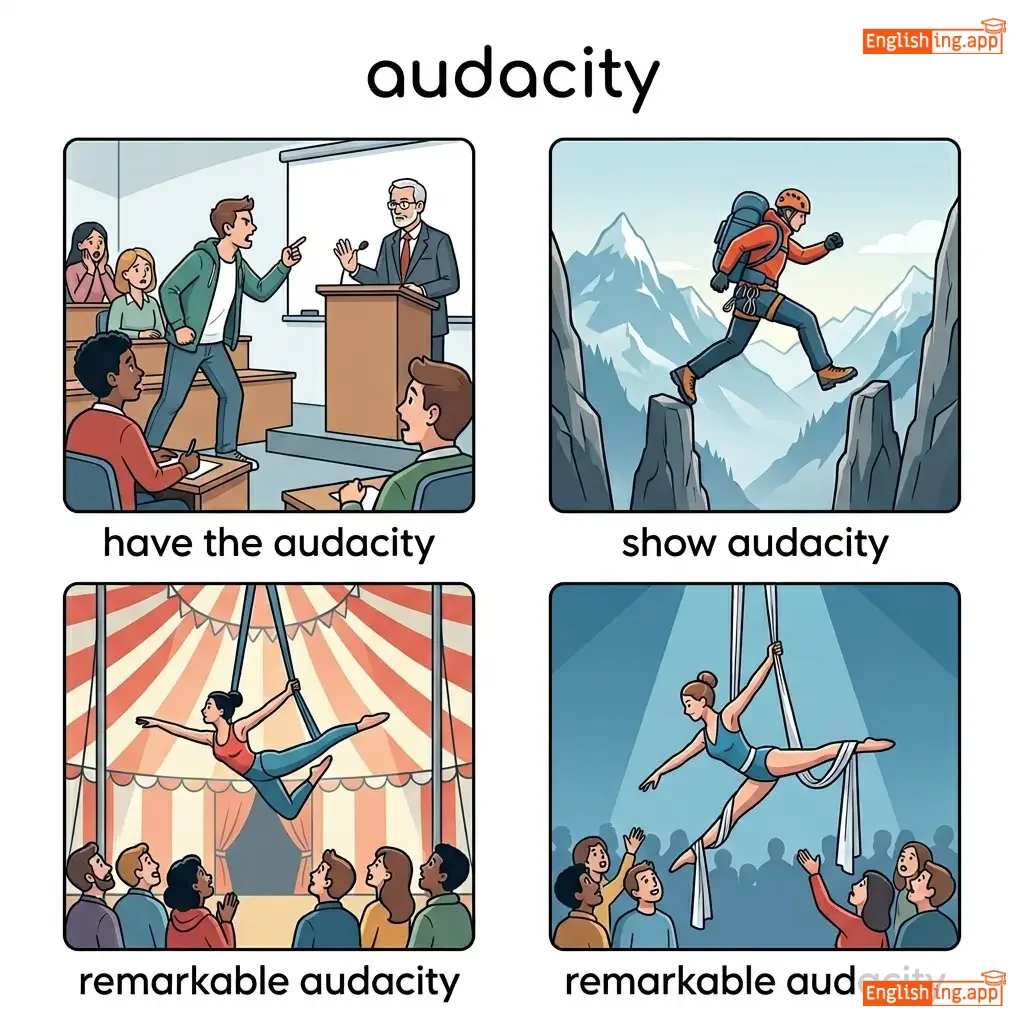
have the audacity, sheer audacity, incredible audacity
••••••
|
Deutsch-Englisch: Audazität – wie der Mut, unverschämt zu sein.
••••••
|
|
#43
🔨
|
/ˈɔːkʃən/
noun
(ɔkʃən)
••••••
|
- •••••• |
Auktion
Auktion
••••••
|
a public sale in which goods or property are sold to the highest bidder
••••••
|
The antique furniture was sold at an auction last weekend.
Die antiken Möbel wurden letzte Woche bei einer Auktion verkauft.
••••••
|
Die antiken Möbel wurden letzte Woche bei einer Auktion verkauft.
Die antiken Möbel wurden letzte Woche bei einer Auktion verkauft.
••••••
|
sale, bidding, public sale
••••••
|
private sale, fixed price sale
••••••
|
auction house, online auction, art auction
••••••
|
Auktion als Verkaufsform von Gegenständen
••••••
|
|
#44
🧲
|
/əˈtrækʃən/
noun
(attraktion)
••••••
|
- •••••• |
Attraktion; Anziehungskraft;
atraktsion
••••••
|
the action or power of evoking interest or pleasure in something; a place that draws visitors
••••••
|
The museum is the main attraction for tourists in this city. |
Das Museum ist die Hauptattraktion für Touristen in dieser Stadt.
Das Museum ist die Hauptattraktion für Touristen in dieser Stadt.
••••••
|
appeal, draw, magnetism, fascination
••••••
|
repulsion, aversion, deterrent
••••••
|
tourist attraction, main attraction, physical attraction
••••••
|
German 'Attraktion' reminds of the word 'attract' in English.
••••••
|
|
#45
📋
|
/əˈtendəns/
noun
(atendens)
••••••
|
- •••••• |
anwesenheit
anwesenheit
••••••
|
the action or state of going regularly to or being present at a place or event
••••••
|
The teacher takes attendance at the beginning of each class. |
Der Lehrer nimmt die Anwesenheit zu Beginn jeder Klasse.
Der Lehrer nimmt die Anwesenheit zu Beginn jeder Klasse.
••••••
|
presence, participation, turnout
••••••
|
absence, non-attendance, truancy
••••••
|
school attendance, perfect attendance, take attendance
••••••
|
Attendance = Anwesenheit - Denke daran, dass du immer anwesend sein musst, wenn du zur Schule gehst.
••••••
|
|
#46
✅
|
/əˈʃʊrəns/
noun
(assurens)
••••••
|
|
Versicherung; Vertrauen; Zuversicht
versicherung
••••••
|
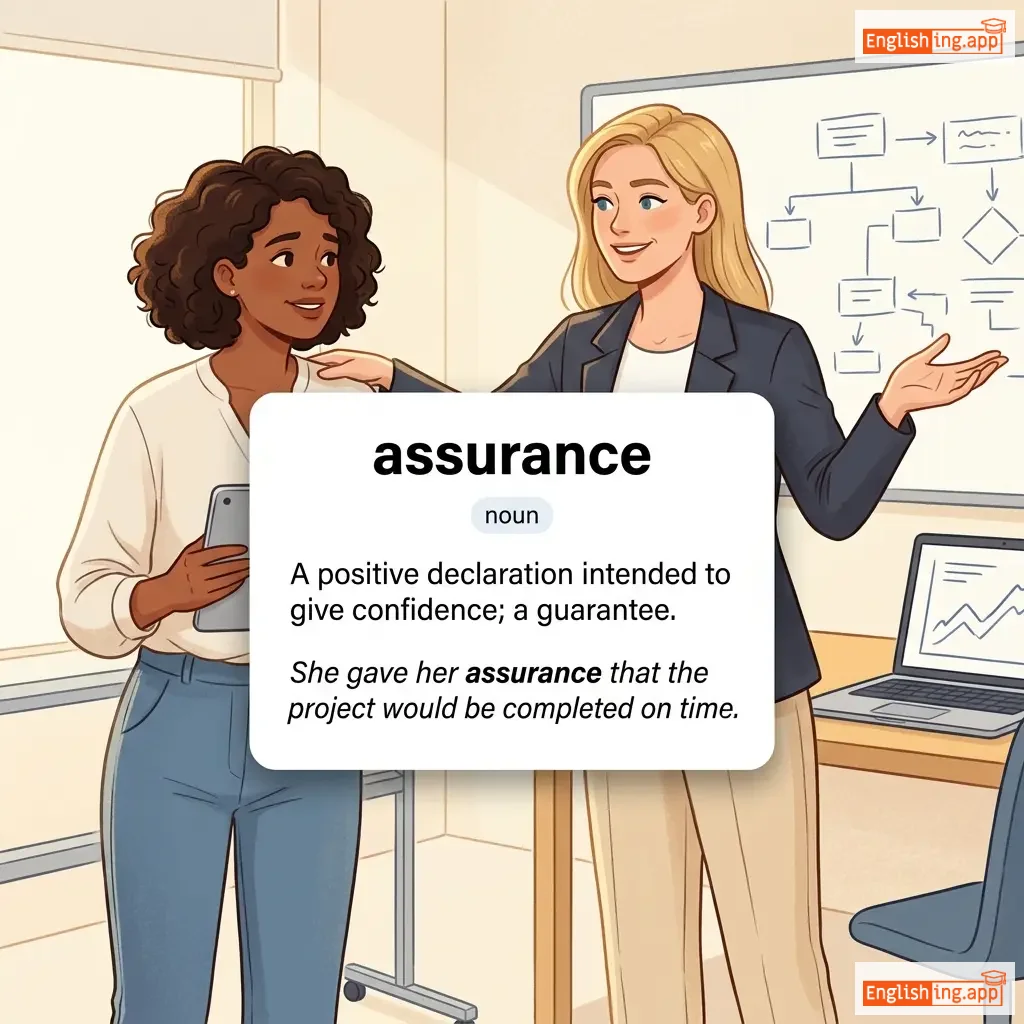
a positive declaration intended to give confidence; a promise; confidence in oneself
••••••
|
The manager gave us assurance that the project would be completed on time.
Der Manager gab uns die Versicherung, dass das Projekt rechtzeitig abgeschlossen wird.
••••••
|
Der Manager gab uns die Versicherung, dass das Projekt rechtzeitig abgeschlossen wird.
Der Manager gab uns die Versicherung, dass das Projekt rechtzeitig abgeschlossen wird.
••••••
|
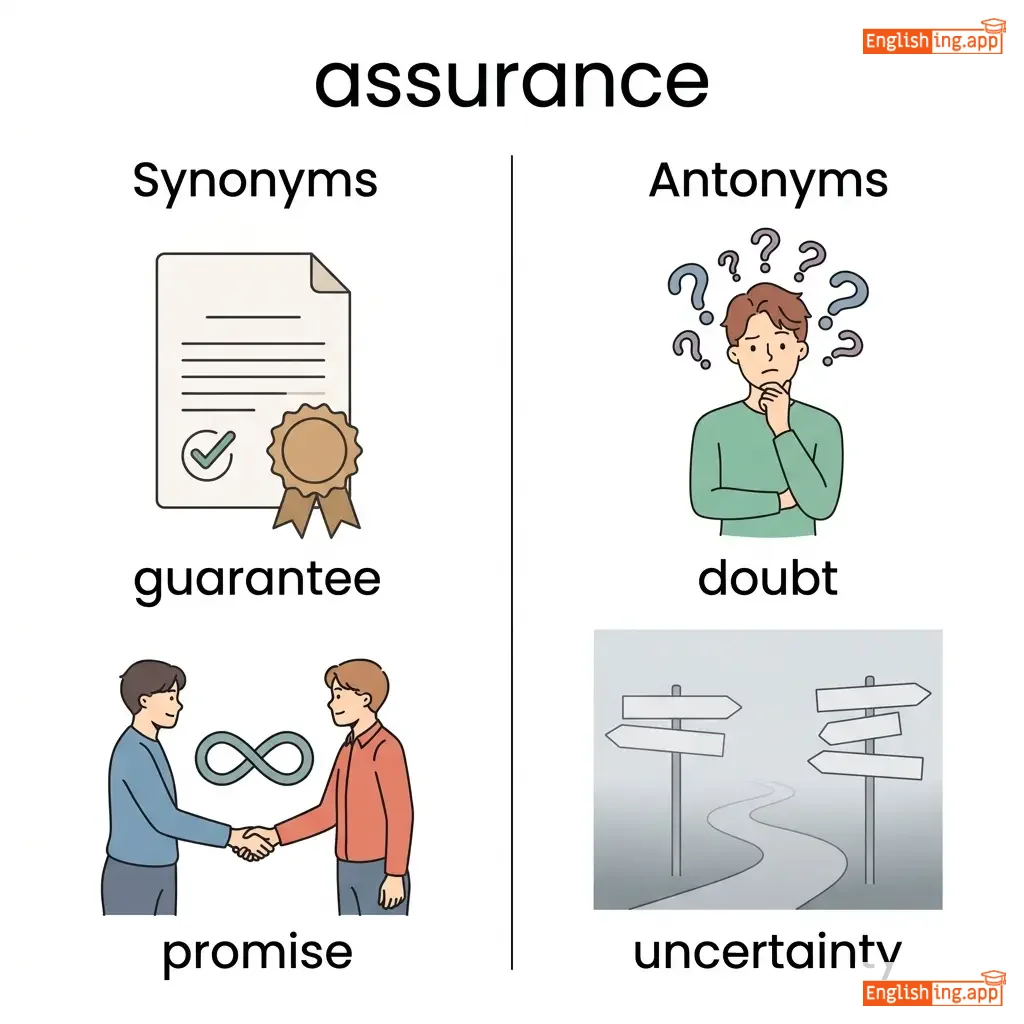
guarantee, promise, pledge, confidence
••••••
|
doubt, uncertainty, insecurity
••••••
|
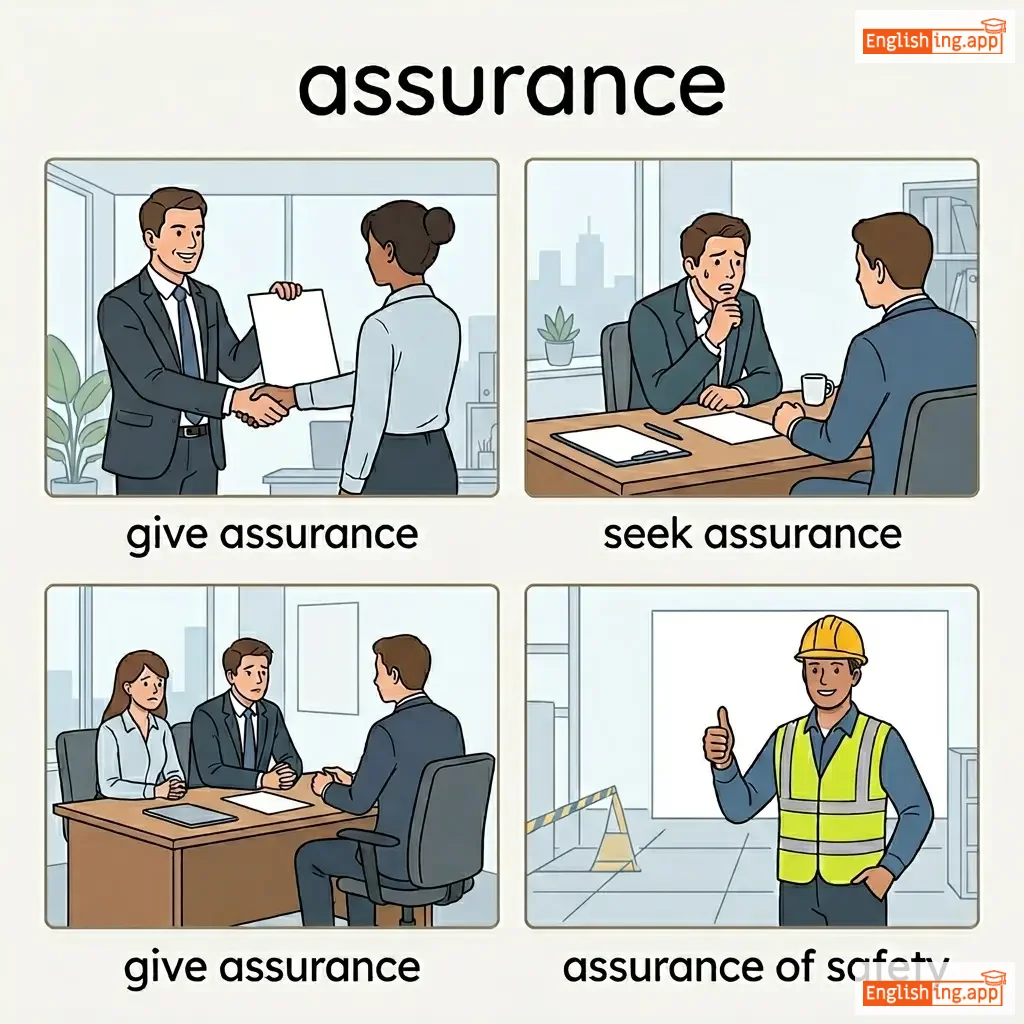
give assurance, quality assurance, self-assurance
••••••
|
Versicherung schafft Vertrauen
••••••
|
|
#47
🤔
|
/əˈsʌmpʃən/
noun
(assumptions)
••••••
|
- •••••• |
Annahme
Annahme
••••••
|
a thing that is accepted as true without proof; a supposition
••••••
|
His assumption about the weather proved to be wrong. |
Seine Annahme über das Wetter stellte sich als falsch heraus.
Seine Annahme uber das Wetter stellte sich als falsch heraus.
••••••
|
supposition, presumption, belief, conjecture
••••••
|
fact, certainty, proof, evidence
••••••
|
false assumption, basic assumption, make an assumption
••••••
|
No •••••• |
|
#48
🤝
|
/əˈsɪstəns/
noun
(assistenze)
••••••
|
- •••••• |
hilfe; unterstützung
hilfe; unterstützung
••••••
|
the action of helping someone with a job or task; support
••••••
|
She offered her assistance with the project.
Sie bot ihre Hilfe beim Projekt an.
••••••
|
Sie bot ihre Hilfe beim Projekt an.
Sie bot ihre Hilfe beim Projekt an.
••••••
|
help, aid, support, service
••••••
|
hindrance, obstruction, interference
••••••
|
provide assistance, need assistance, technical assistance
••••••
|
Denke daran, dass 'hilfe' mit 'helfen' zusammenhängt, was Hilfe bedeutet.
••••••
|
|
#49
🗡️
|
/əˈsæsɪn/
noun
(assassine)
••••••
|
- •••••• |
Attentäter
Attentaeter
••••••
|
a person who murders an important person for political or religious reasons
••••••
|
The president was protected from potential assassins by security guards.
Der Präsident wurde vor potenziellen Assassinen von Sicherheitskräften geschützt.
••••••
|
Der Präsident wurde vor potenziellen Attentätern von Sicherheitskräften geschützt.
Der Präsident wurde vor potenziellen Attentaetern von Sicherheitskraeften geschuetzt.
••••••
|
killer, murderer, hitman
••••••
|
protector, guardian, defender
••••••
|
hired assassin, political assassin, would-be assassin
••••••
|
Attentäter hat das Wort 'Täter', was hilft, sich an den Täter zu erinnern.
••••••
|
|
#50
😤
|
/ˈærəɡəns/
noun
(arroganz)
••••••
|
- •••••• |
arroganz
arroganz
••••••
|
having or revealing an exaggerated sense of one's own importance or abilities
••••••
|
His arrogance made him unpopular among his colleagues.
seine arroganz machte ihn unter seinen kollegen unbeliebt.
••••••
|
Seine Arroganz machte ihn unter seinen Kollegen unbeliebt.
Seine Arroganz machte ihn unter seinen Kollegen unbeliebt.
••••••
|
pride, conceit, haughtiness, hubris
••••••
|
humility, modesty, meekness
••••••
|
sheer arrogance, display arrogance, arrogance of power
••••••
|
German: arroganz - English: arrogance
••••••
|
|
#51
👼
|
/ˈeɪn.dʒəl/
noun
(ændʒəl)
••••••
|
- •••••• |
Engel
engel
••••••
|
a spiritual being believed to act as an attendant, agent, or messenger of God
••••••
|
She looked like an angel in her white dress.
Sie sah aus wie ein Engel in ihrem weißen Kleid.
••••••
|
Sie sah aus wie ein Engel in ihrem weißen Kleid.
Sie sah aus wie ein Engel in ihrem weißen Kleid.
••••••
|
cherub, seraph, divine messenger
••••••
|
demon, devil, fiend
••••••
|
guardian angel, fallen angel, angel of mercy
••••••
|
Denke an den 'Engel', der einen liebevollen Boten darstellt.
••••••
|
|
#52
👑
|
/əˈrɪs.tə.kræt/
noun
(aristokrat)
••••••
|
- •••••• |
Aristokrat; Person von Adel
aristokrat; person von adel
••••••
|
a member of the aristocracy; a person of noble rank or birth
••••••
|
The aristocrat lived in a magnificent castle.
Der Aristokrat lebte in einem prächtigen Schloss.
••••••
|
Der Aristokrat lebte in einem prächtigen Schloss.
Der Aristokrat lebte in einem prächtigen Schloss.
••••••
|
noble, peer, patrician, blue blood
••••••
|
commoner, peasant, plebeian
••••••
|
wealthy aristocrat, old aristocrat, aristocratic family
••••••
|
Aristokraten leben in prächtigen Schlössern.
••••••
|
|
#53
🗣️
|
/ˈɑːr.ɡju.mənt/
noun
(Argument)
••••••
|
|
Streit; Argument; Begründung
Streit; Argument; Begruendung
••••••
|
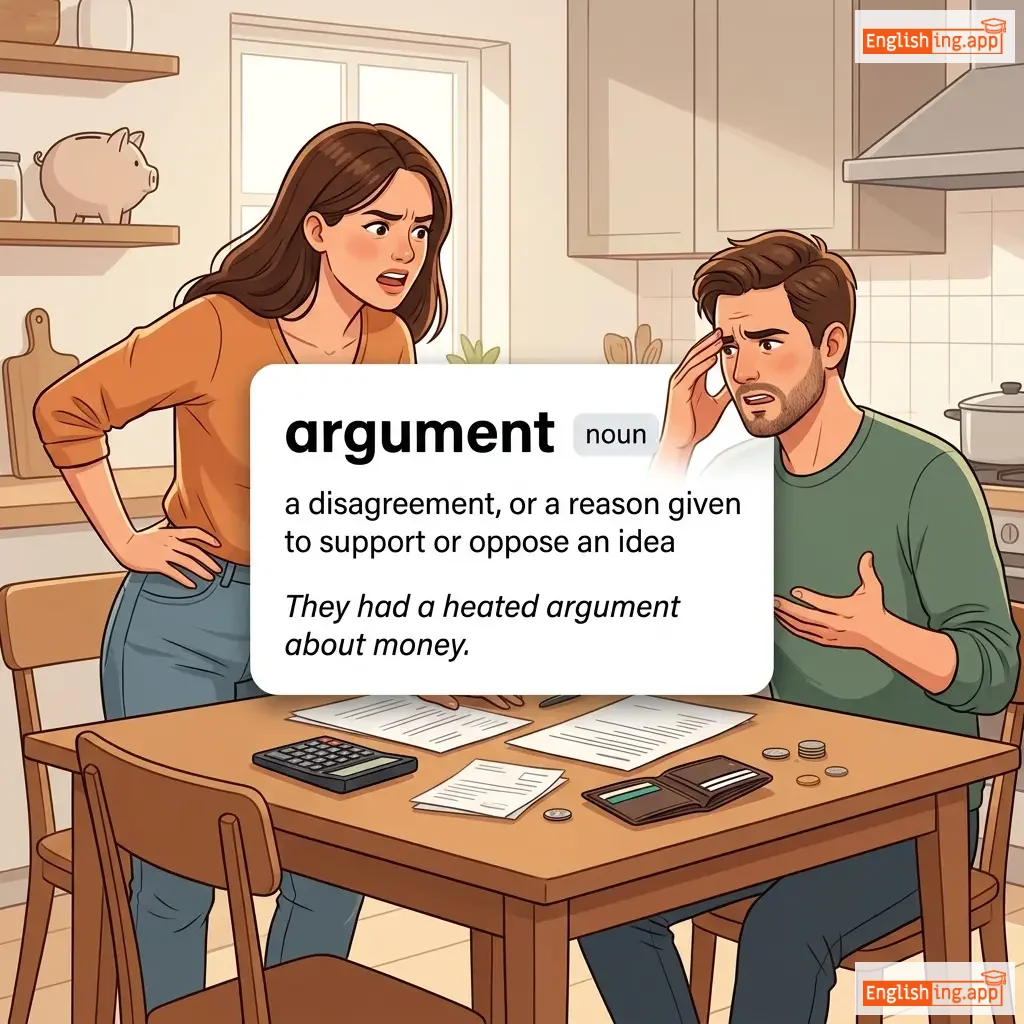
an exchange of diverging or opposite views; a reason or set of reasons given in support of an idea
••••••
|
They had a heated argument about politics. |
Sie hatten einen hitzigen Streit über Politik.
Sie hatten einen hitzigen Streit ueber Politik.
••••••
|
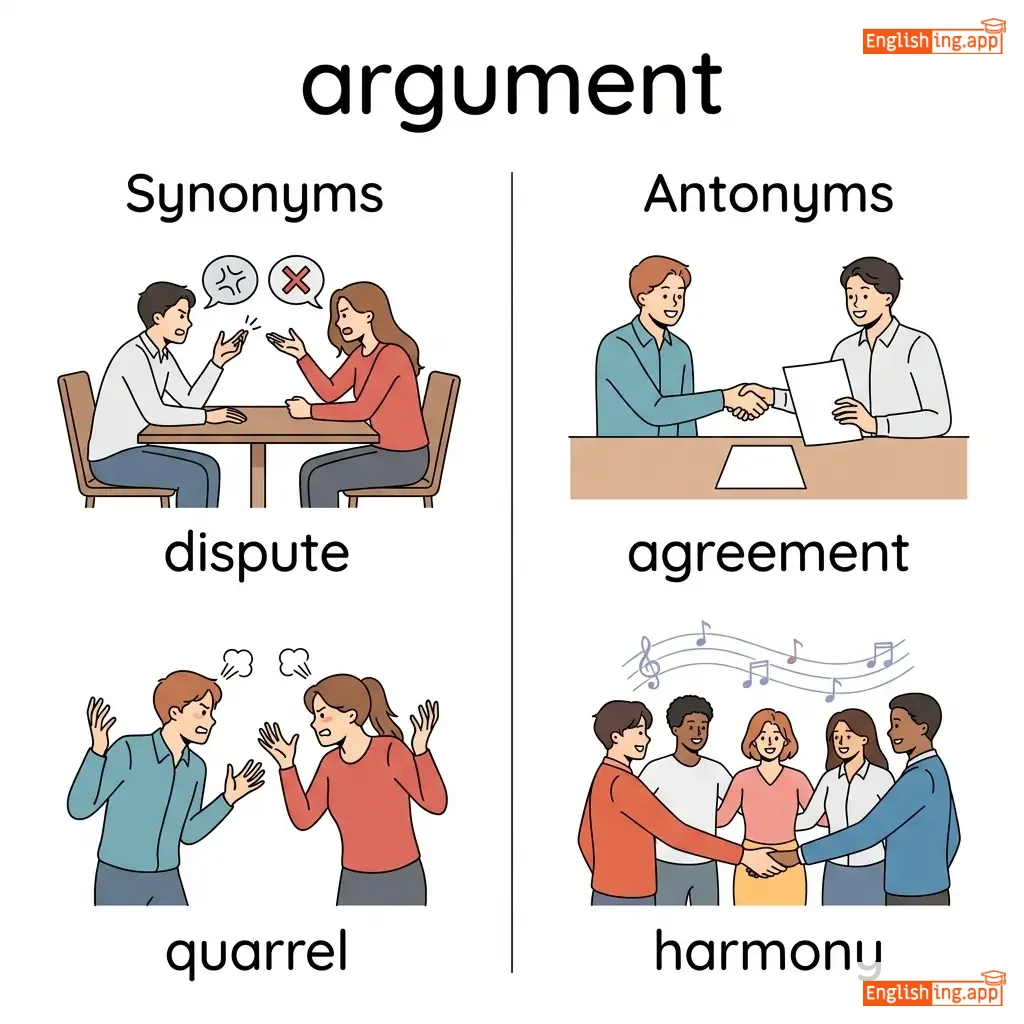
debate, dispute, disagreement, reasoning
••••••
|
agreement, harmony, consensus
••••••
|
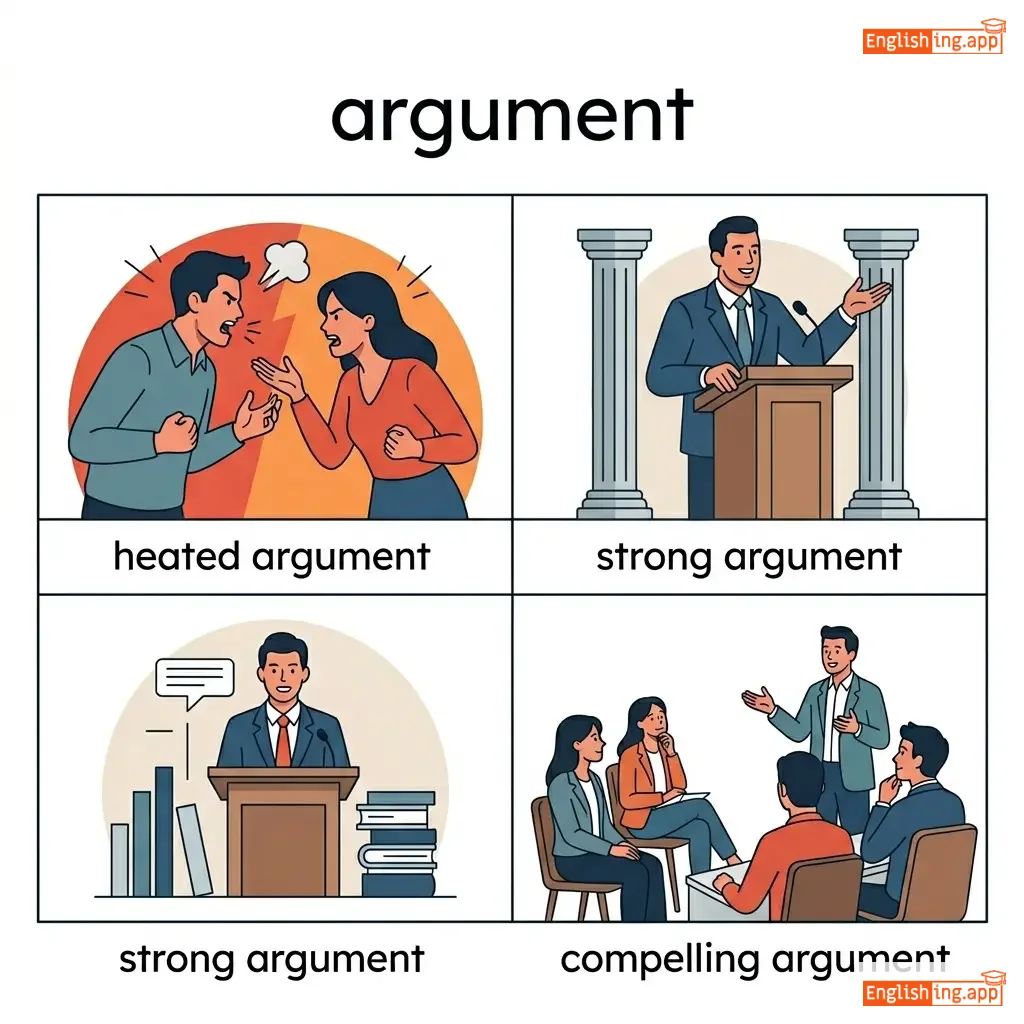
strong argument, heated argument, valid argument
••••••
|
Argument = Streit um eine Idee
••••••
|
|
#54
📅
|
/əˈpɔɪnt.mənt/
noun
(apɔɪntmɛnt)
••••••
|
- •••••• |
Termin; Ernennung;
Termin; Ernennung
••••••
|
an arrangement to meet someone at a particular time and place; the action of appointing someone to a job or position
••••••
|
I have a doctor's appointment at 3 PM.
Ich habe einen Arzttermin um 15 Uhr.
••••••
|
Ich habe einen Arzttermin um 15 Uhr.
Ich habe einen Arzttermin um 15 Uhr.
••••••
|
meeting, arrangement, engagement, assignment
••••••
|
cancellation, dismissal, discharge
••••••
|
medical appointment, job appointment, keep an appointment
••••••
|
Appointment ist wie ein Termin oder eine Arbeitszuweisung.
••••••
|
|
#55
👀
|
/əˈpɪə.rəns/
noun
(apirenz)
••••••
|
- •••••• |
Erscheinung; Präsenz; Auftreten
erscheinung; prasenz; auftreten
••••••
|
the way that someone or something looks; an act of performing or participating in a public event
••••••
|
Her appearance at the event surprised everyone.
Ihr Erscheinen bei der Veranstaltung überraschte alle.
••••••
|
Ihr Erscheinen bei der Veranstaltung überraschte alle.
Ihr Erscheinen bei der Veranstaltung überraschte alle.
••••••
|
look, presence, manifestation, emergence
••••••
|
disappearance, absence, invisibility
••••••
|
physical appearance, public appearance, make an appearance
••••••
|
In German, 'Erscheinung' sounds like appearance in English, making it easy to recall.
••••••
|
|
#56
🙏
|
/əˈpiːl/
noun
(apil)
••••••
|
- •••••• |
Appell; Antrag; Anziehungskraft
appell
••••••
|
a serious or urgent request, typically to the public; the quality of being attractive or interesting
••••••
|
The charity made an appeal for donations. |
Die Wohltätigkeitsorganisation machte einen Appell für Spenden.
Die Wohltatigkeitsorganisation machte einen Appell für Spenden.
••••••
|
request, plea, petition, entreaty
••••••
|
rejection, refusal, denial
••••••
|
appeal for help, court appeal, emotional appeal
••••••
|
Imagine a charity making an appeal that is as attractive as a donation request!
••••••
|
|
#57
😰
|
/æŋˈzaɪ.ə.ti/
noun
(ang-zaï-ti)
••••••
|
|
Angst; Nervosität;
Angst; Nervositat
••••••
|
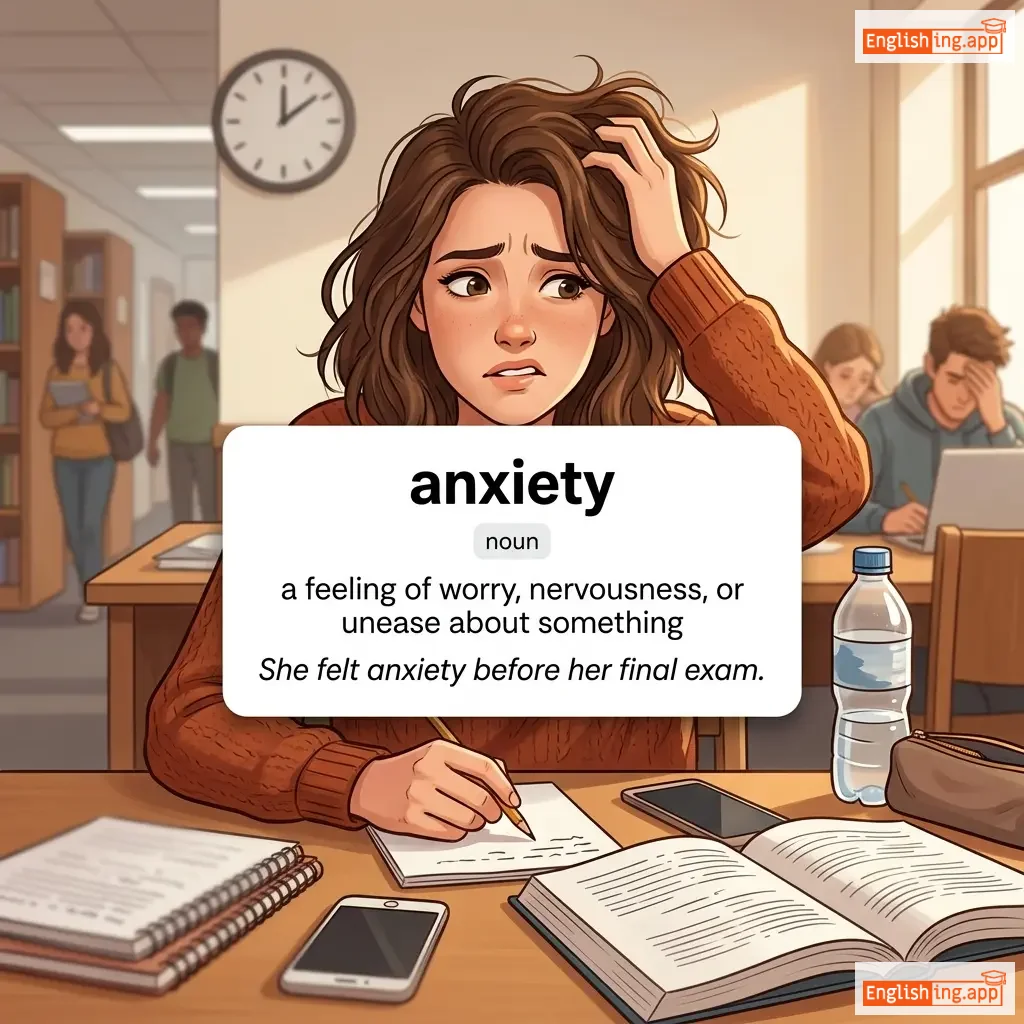
a feeling of worry, nervousness, or unease about something with an uncertain outcome
••••••
|
She felt anxiety before her job interview.
Sie fühlte Angst vor ihrem Vorstellungsgespräch.
••••••
|
Sie fühlte Angst vor ihrem Vorstellungsgespräch.
Sie fühlte Angst vor ihrem Vorstellungsgespräch.
••••••
|
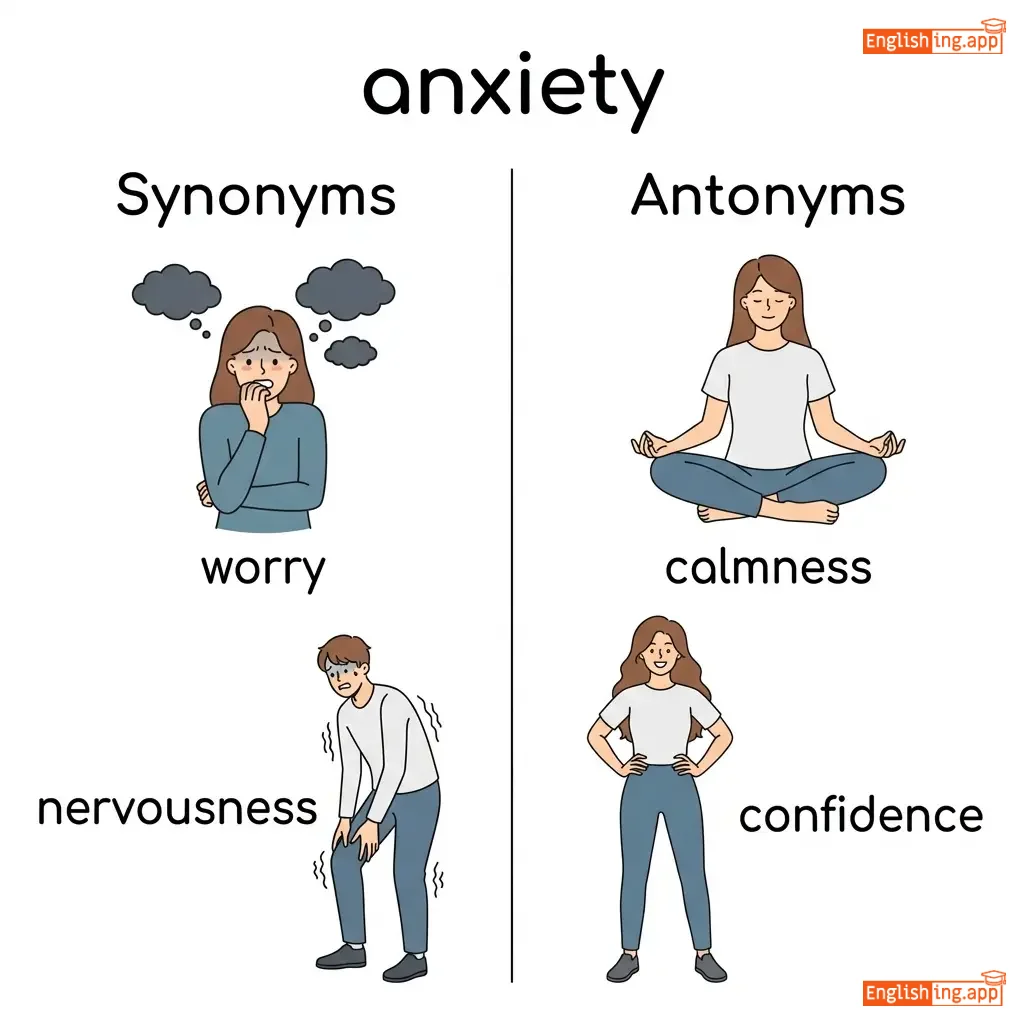
worry, nervousness, unease, concern
••••••
|
calmness, confidence, peace
••••••
|
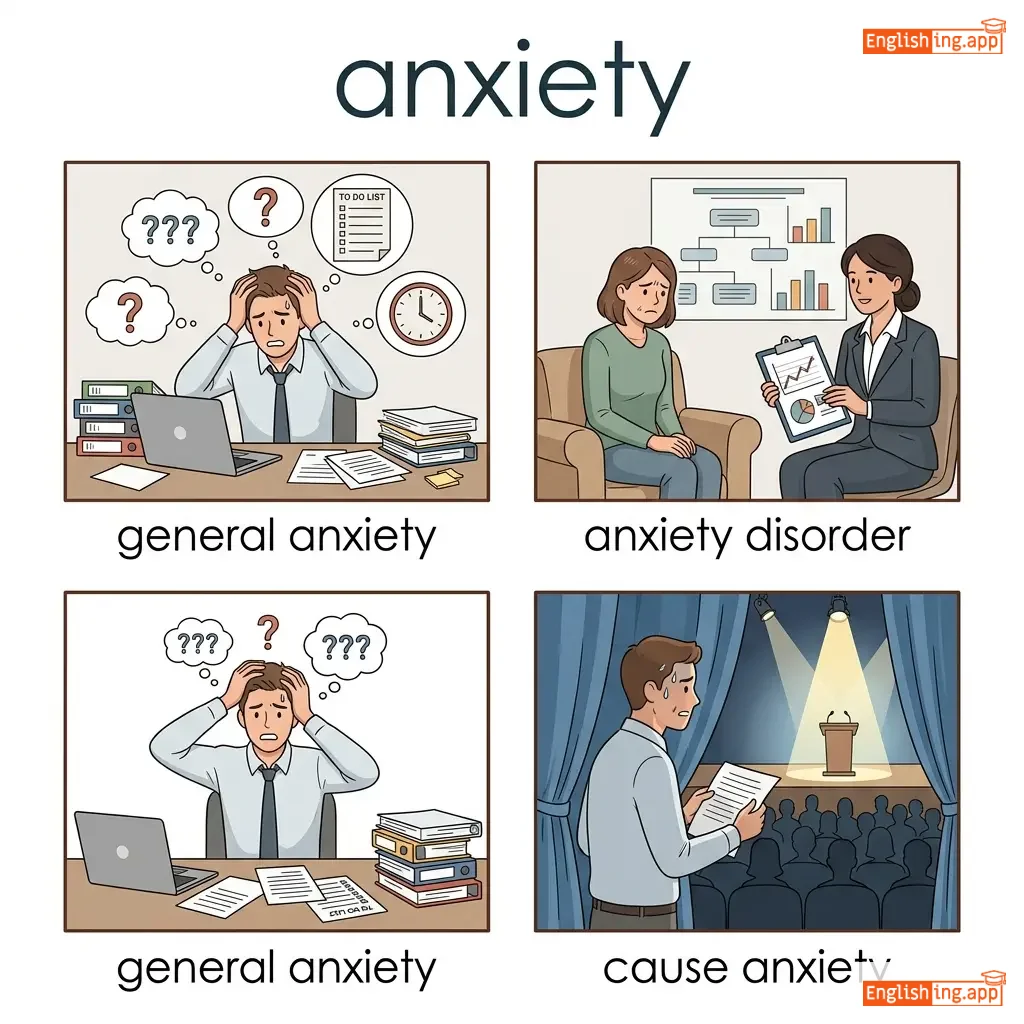
anxiety disorder, anxiety attack, reduce anxiety
••••••
|
Angst oder Nervosität bei der Vorstellung, dass etwas unsicher wird.
••••••
|
|
#58
😡
|
/ˌæn.ɪˈmɒs.ə.ti/
noun
(Animosität)
••••••
|
- •••••• |
Feindseligkeit; Antipathie
Feindseligkeit; Antipathie
••••••
|
strong hostility or dislike; active hatred or ill will
••••••
|
There was clear animosity between the two rival teams. |
Es gab eine klare Feindseligkeit zwischen den beiden rivalisierenden Teams.
Es gab eine klare Feindseligkeit zwischen den beiden rivalisierenden Teams.
••••••
|
hostility, hatred, enmity, antagonism
••••••
|
friendship, affection, goodwill
••••••
|
personal animosity, deep animosity, show animosity
••••••
|
Animosität bedeutet starke Feindseligkeit oder Hass.
••••••
|
|
#59
🎬
|
/ˌæn.ɪˈmeɪ.ʃən/
noun
(Animation)
••••••
|
- •••••• |
Animation
Animation
••••••
|
the technique of making inanimate objects appear to move; liveliness and enthusiasm
••••••
|
The animation in this movie is incredibly detailed.
Die Animation in diesem Film ist unglaublich detailliert.
••••••
|
Die Animation in diesem Film ist unglaublich detailliert.
Die Animation in diesem Film ist unglaublich detailliert.
••••••
|
cartoon, motion picture, liveliness
••••••
|
stillness, lifelessness, inertia
••••••
|
computer animation, stop-motion animation, animated film
••••••
|
Animation in Deutsch bleibt 'Animation', ein Begriff, der Bewegungen in Filmen beschreibt.
••••••
|
|
#60
😠
|
/ˈæŋ.ɡər/
noun
(ˈæŋɡɚ)
••••••
|
- •••••• |
Wut
Wut
••••••
|
a strong feeling of annoyance, displeasure, or hostility
••••••
|
His anger was evident when he slammed the door. |
Seine Wut war offensichtlich, als er die Tür zuschlug.
Seine Wut war offensichtlich, als er die Tür zuschlug.
••••••
|
rage, fury, wrath, irritation
••••••
|
calmness, peace, serenity
••••••
|
express anger, control anger, burst of anger
••••••
|
Wut = Anger, in Deutsch ist es direkt und klar
••••••
|
Vocabulary Quiz
Test your vocabulary by matching words with their translations or meanings.
Login to take the quiz
Comments (0)
Share your thoughts and join the discussion.
Join the discussion by logging in
Login to CommentNo comments yet
Be the first to share your thoughts!