

Upgrade für Zugriff auf alle Vokabeln
Erhalten Sie unbegrenzten Zugriff auf alle Vokabeln mit Pro-Mitgliedschaft
Upgrade auf ProÜbersetzung
Vergangenheit
Partizip Perfekt
Dritte Person Singular
Gerundium
Bedeutung
Beispielsatz
Übersetzung Beispielsatz
Synonyme
Antonyme
Kollokationen
Eselsbrücke


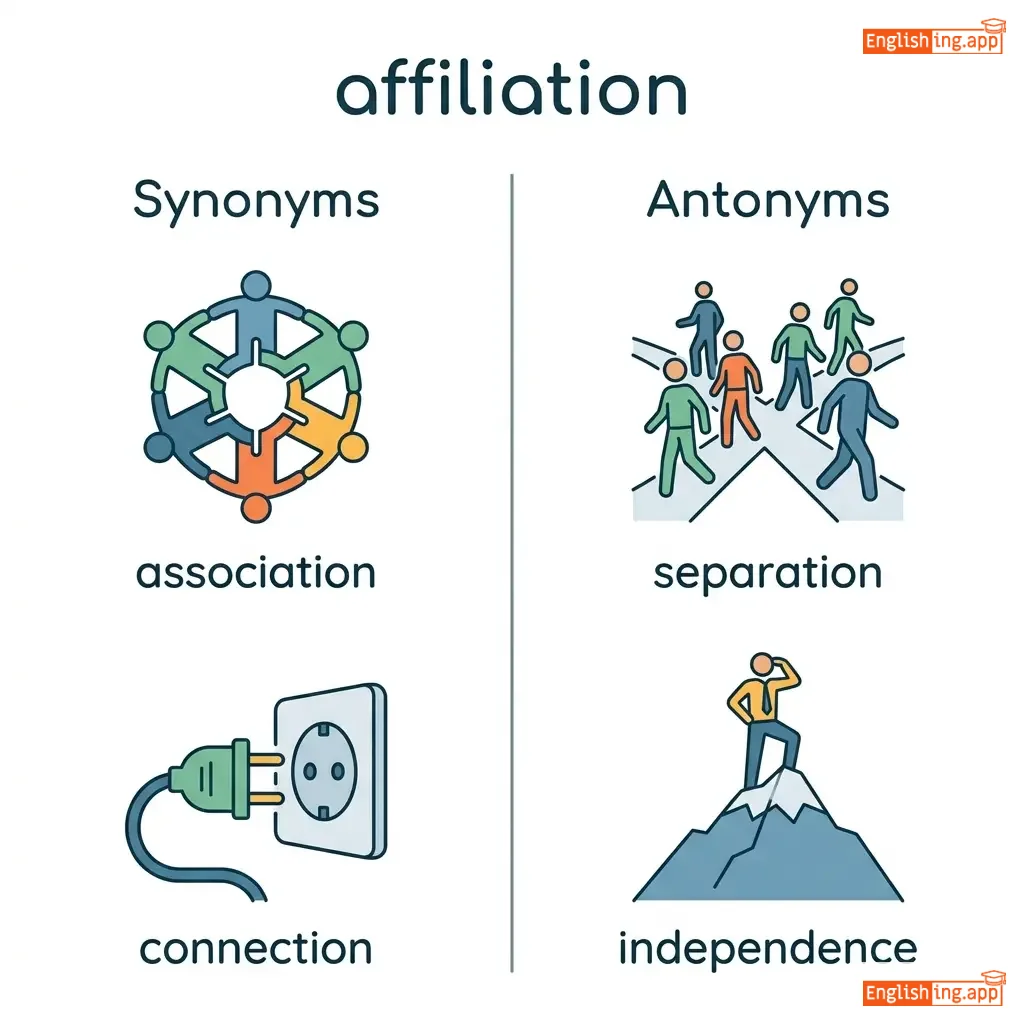
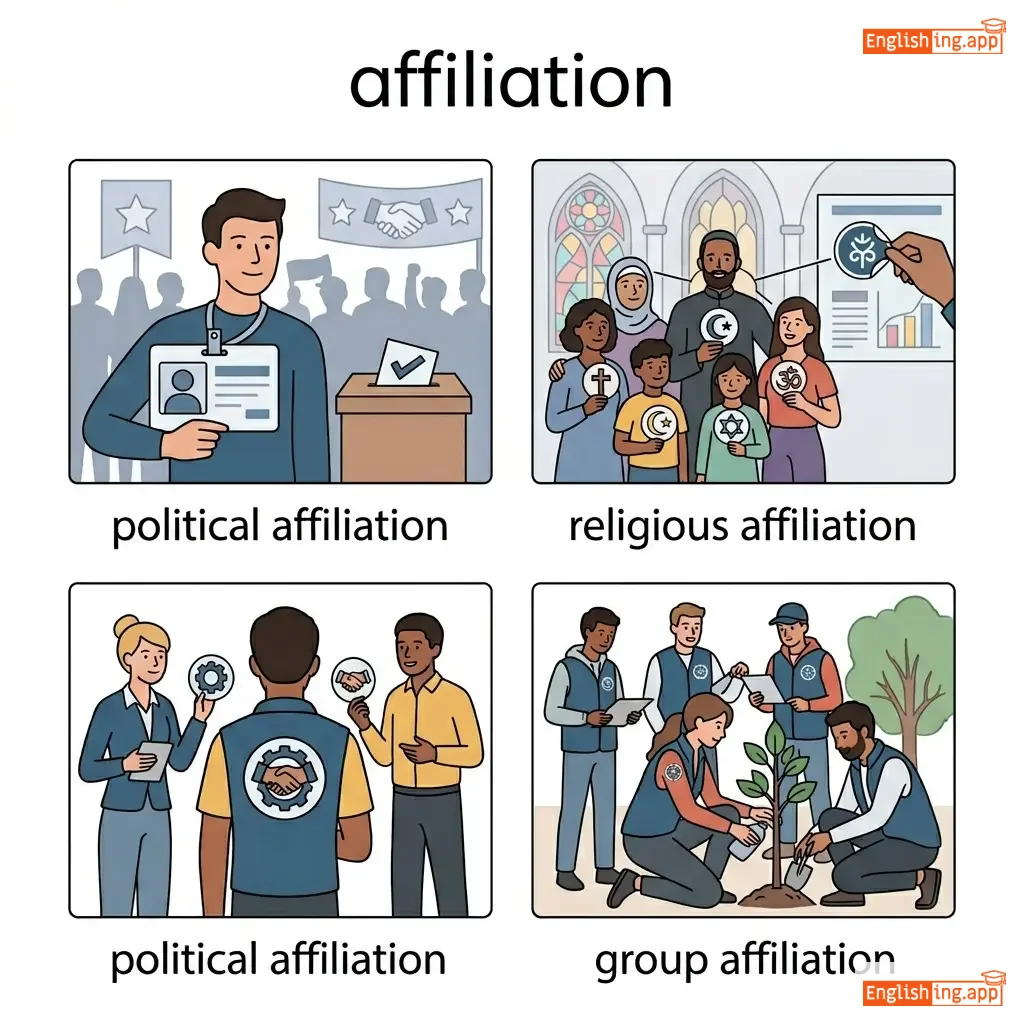
Swipe left or right, or use the buttons. Tap image to zoom.
Upgrade für Zugriff auf alle Sätze
Erhalten Sie unbegrenzten Zugriff auf alle Sätze mit Pro-Mitgliedschaft
Upgrade auf ProÜbersetzung Beispielsatz
Wort
Lesson 2Lesson 2 - Maske umschalten
|
Emoji
|
Wort | Images | Übersetzung | Bedeutung | Beispielsatz | Übersetzung Beispielsatz | Synonyme | Antonyme | Kollokationen | Eselsbrücke |
|---|---|---|---|---|---|---|---|---|---|---|
|
#21
🤝
|
/əˈlaɪəns/
noun
(alīanz)
••••••
|
|
Allianz
Allianz
••••••
|
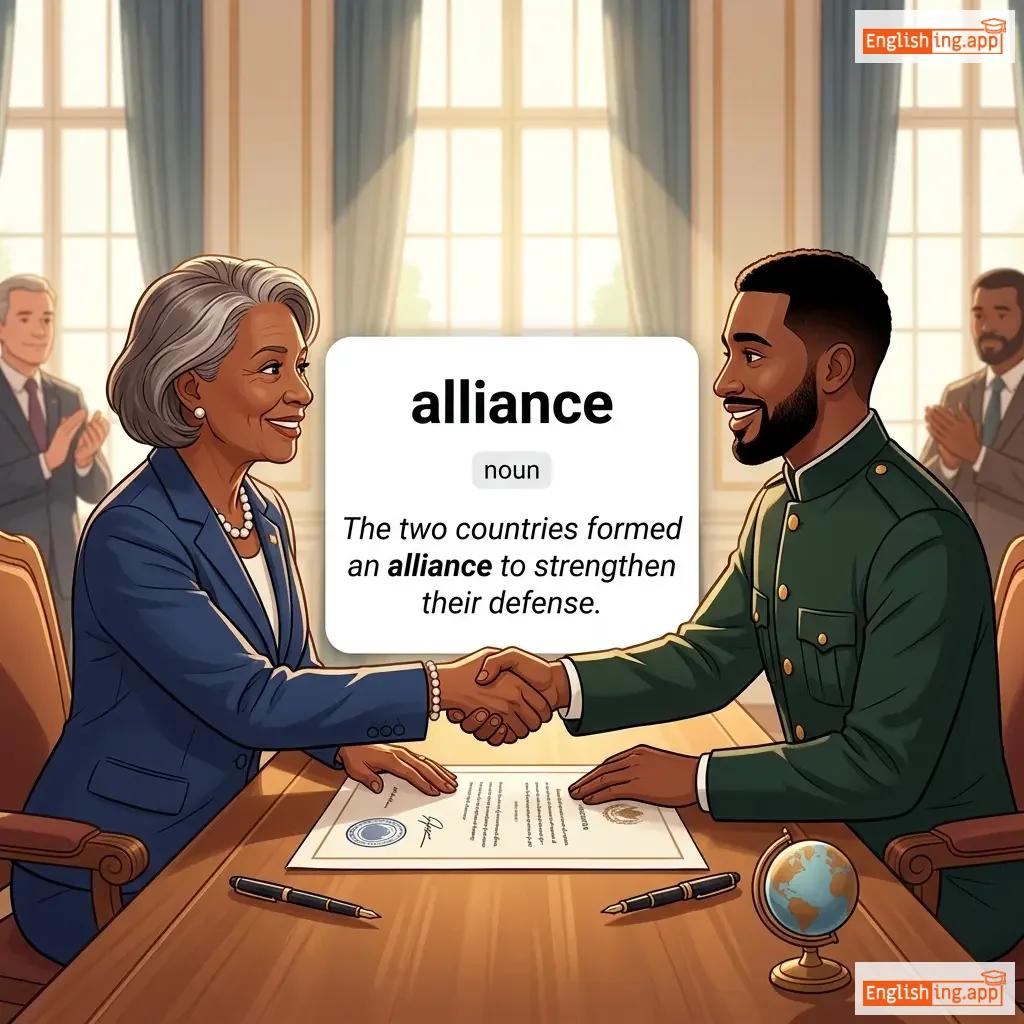
a union or association formed for mutual benefit, especially between countries or organizations
••••••
|
The two countries formed a strong alliance for trade.
Die beiden Länder bildeten eine starke Allianz für den Handel.
••••••
|
Die beiden Länder bildeten eine starke Allianz für den Handel.
Die beiden Länder bildeten eine starke Allianz für den Handel.
••••••
|
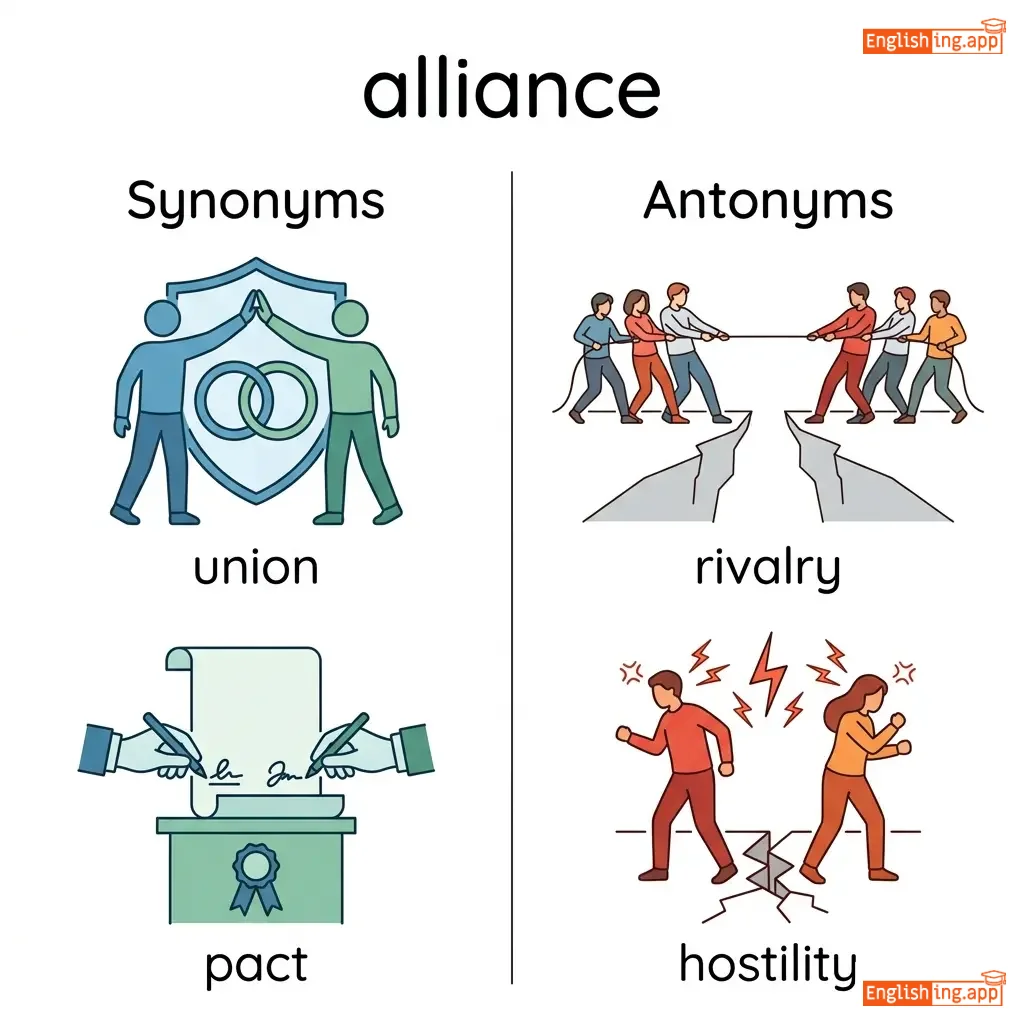
partnership, coalition, union, pact
••••••
|
opposition, rivalry, conflict
••••••
|
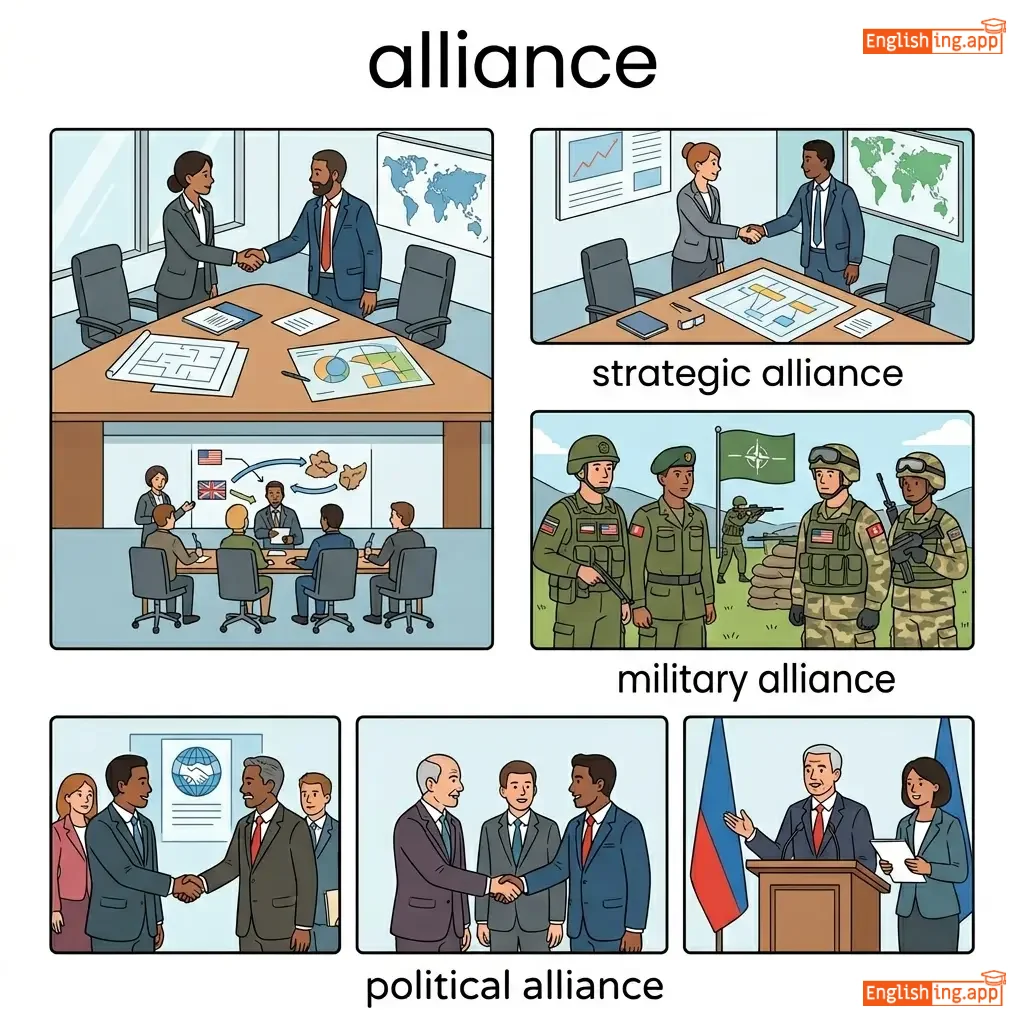
strategic alliance, military alliance, form an alliance
••••••
|
Allianz in Deutsch klingt wie 'alliance' in Englisch - ein starkes Team von Ländern.
••••••
|
|
#22
⚓
|
/ˈæŋkər/
noun
(Anker)
••••••
|
- •••••• |
Anker
Anker
••••••
|
a heavy object used to moor a vessel to the sea bottom; a person or thing that provides stability or confidence
••••••
|
The ship dropped its anchor in the harbor.
Das Schiff warf sein Anker im Hafen aus.
••••••
|
Das Schiff warf sein Anker im Hafen aus.
Das Schiff warf sein Anker im Hafen aus.
••••••
|
mooring, support, foundation, mainstay
••••••
|
- •••••• |
drop anchor, weigh anchor, news anchor
••••••
|
Das Anker hält das Schiff wie Stabilität im Leben.
••••••
|
|
#23
👴
|
/ˈænsestər/
noun
(ˈænsɛstər)
••••••
|
- •••••• |
Vorfahre
vorfah-re
••••••
|
a person, typically one more remote than a grandparent, from whom one is descended
••••••
|
She researched her family tree to learn about her ancestors.
Sie forschte in ihrem Stammbaum, um mehr über ihre Vorfahren zu erfahren.
••••••
|
Sie forschte in ihrem Stammbaum, um mehr über ihre Vorfahren zu erfahren.
Sie forschte in ihrem Stammbaum, um mehr uber ihre Vorfahren zu erfahren.
••••••
|
forefather, foremother, predecessor, forebear
••••••
|
descendant, offspring, progeny
••••••
|
ancient ancestor, common ancestor, trace ancestors
••••••
|
Vorfahre (ancestor) bedeutet der Ursprung Ihrer Familie.
••••••
|
|
#24
🔍
|
/əˈnæləsɪs/
noun
(analyse)
••••••
|
|
Analyse
Analyse
••••••
|
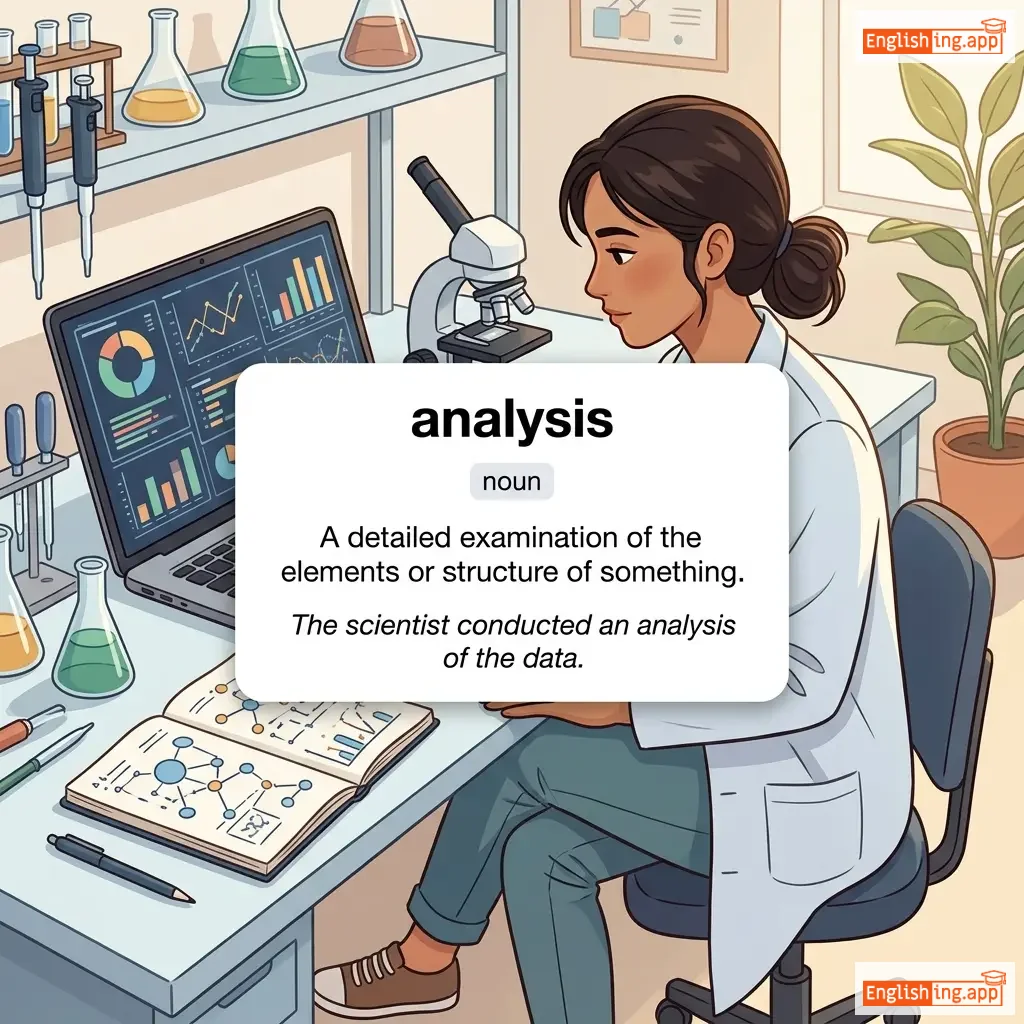
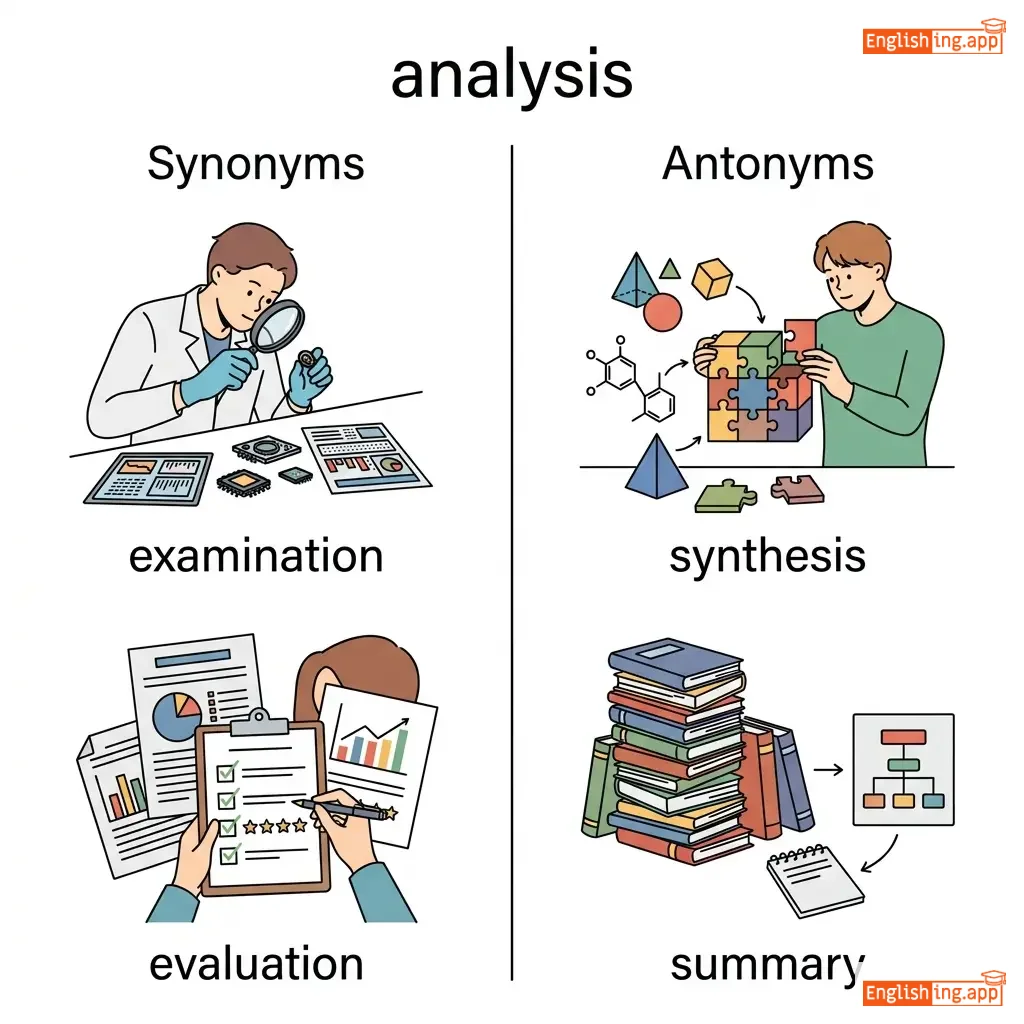
detailed examination of the elements or structure of something
••••••
|
The scientist conducted a thorough analysis of the data. |
Der Wissenschaftler führte eine gründliche Analyse der Daten durch.
Der Wissenschaftler fuehrte eine gruendliche Analyse der Daten durch.
••••••
|
examination, study, investigation, evaluation
••••••
|
synthesis, combination, integration
••••••
|
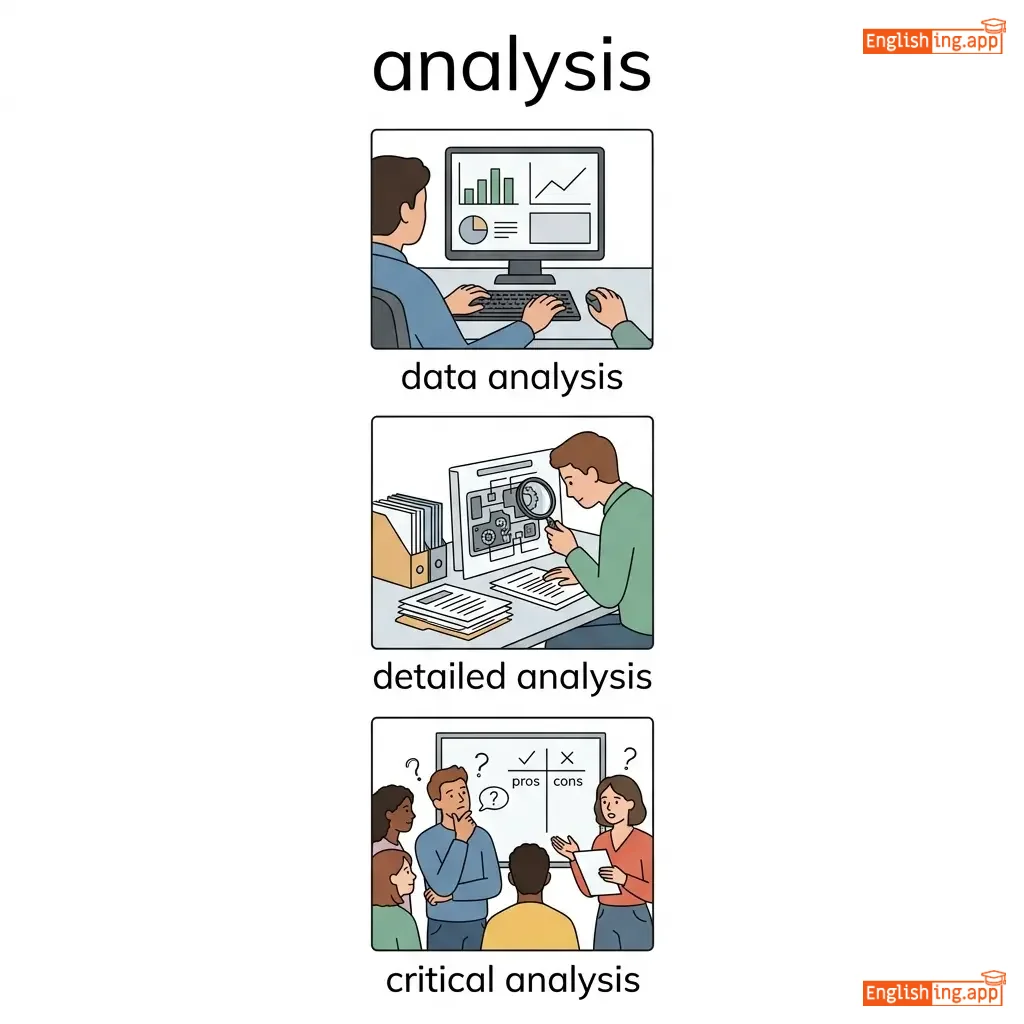
detailed analysis, data analysis, statistical analysis
••••••
|
Das Wort 'Analyse' auf Deutsch ist fast identisch mit dem englischen Wort.
••••••
|
|
#25
🎪
|
/əˈmjuːzmənt/
noun
(amüsement)
••••••
|
- •••••• |
Vergnügen; Freude; Unterhaltung
Vergnuegen; Freude; Unterhaltung
••••••
|
the state or experience of finding something funny; entertainment or recreational activities
••••••
|
The children's laughter showed their amusement at the clown's performance.
Das Lachen der Kinder zeigte ihre Amüsement über die Aufführung des Clowns.
••••••
|
Das Lachen der Kinder zeigte ihre Amüsement über die Aufführung des Clowns.
Das Lachen der Kinder zeigte ihre Amüsement über die Aufführung des Clowns.
••••••
|
entertainment, enjoyment, fun, pleasure
••••••
|
boredom, displeasure, annoyance
••••••
|
great amusement, public amusement, amusement park
••••••
|
Enjoyment = Amuse! Easy way to connect to the meaning
••••••
|
|
#26
🧿
|
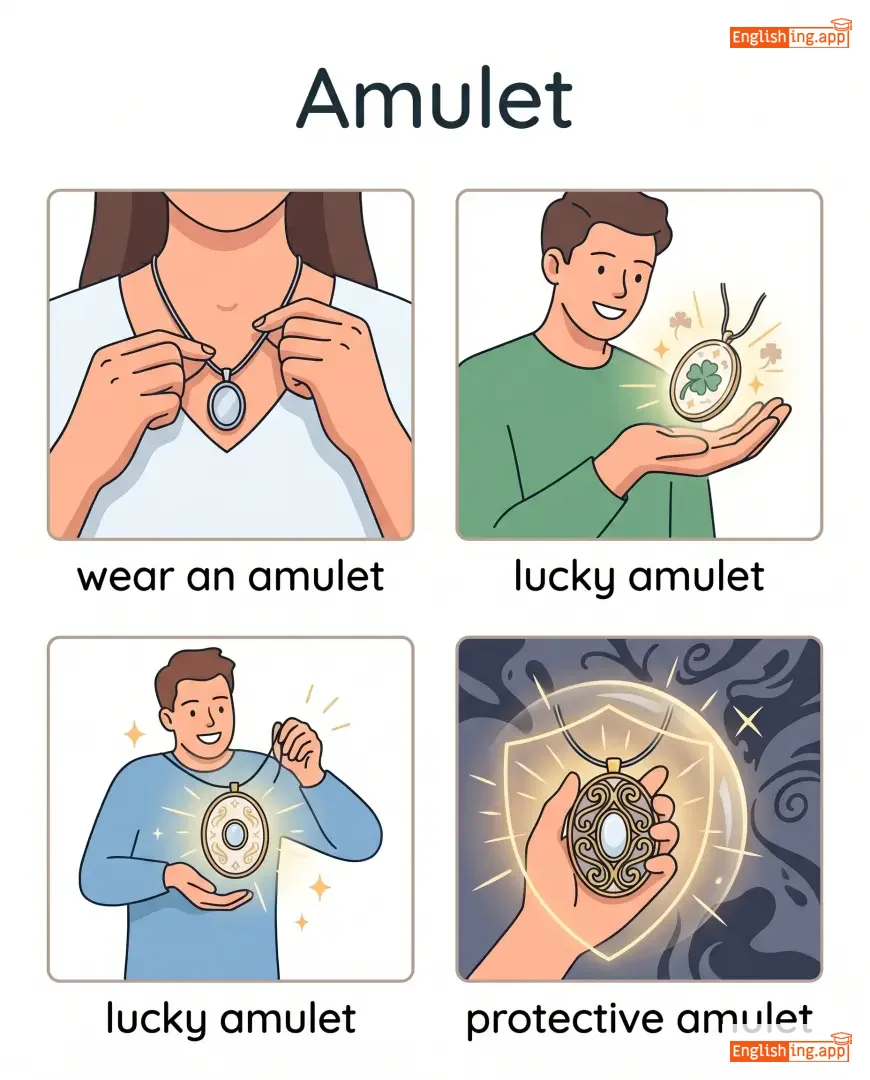
/ˈæmjʊlət/
noun
(amulett)
••••••
|
|
Amulett; Talisman
amulett; talisman
••••••
|
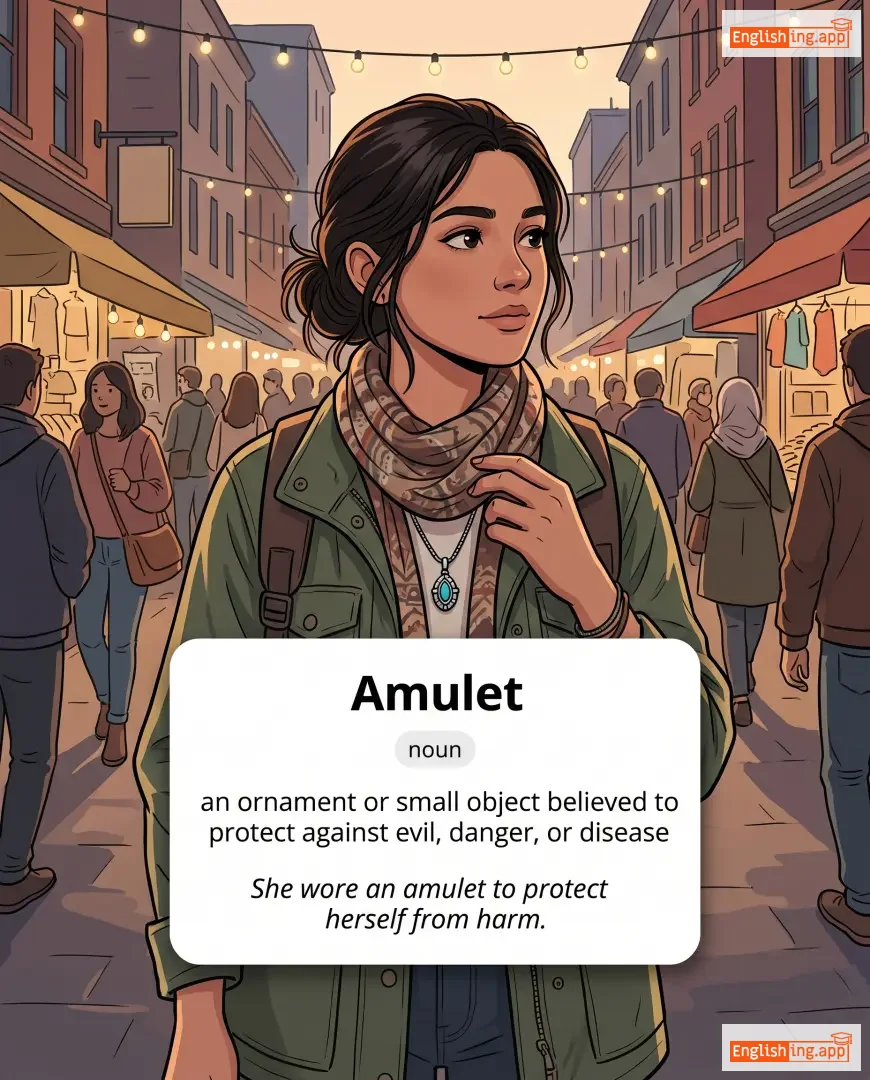
an ornament or small piece of jewelry thought to give protection against evil, danger, or disease
••••••
|
She wore a silver amulet around her neck for good luck.
Sie trug ein silbernes Amulett um ihren Hals für gutes Glück.
••••••
|
Sie trug ein silbernes Amulett um ihren Hals für gutes Glück.
Sie trug ein silbernes Amulett um ihren Hals für gutes Glück.
••••••
|
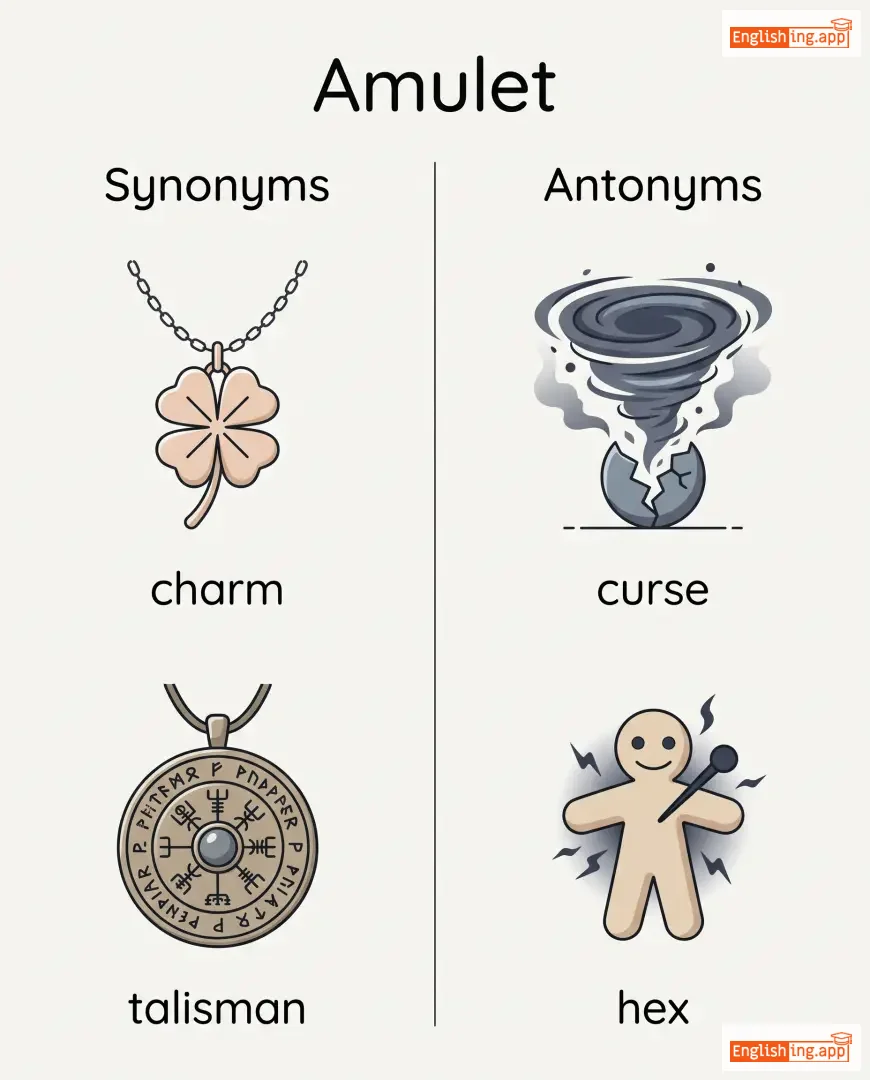
charm, talisman, pendant, lucky charm
••••••
|
- •••••• |
protective amulet, ancient amulet, wear an amulet
••••••
|
Amulett - A als Abwehr gegen Unglück
••••••
|
|
#27
🎯
|
/æmˈbɪʃən/
noun
(ambition)
••••••
|
|
Ambition
Ambition
••••••
|
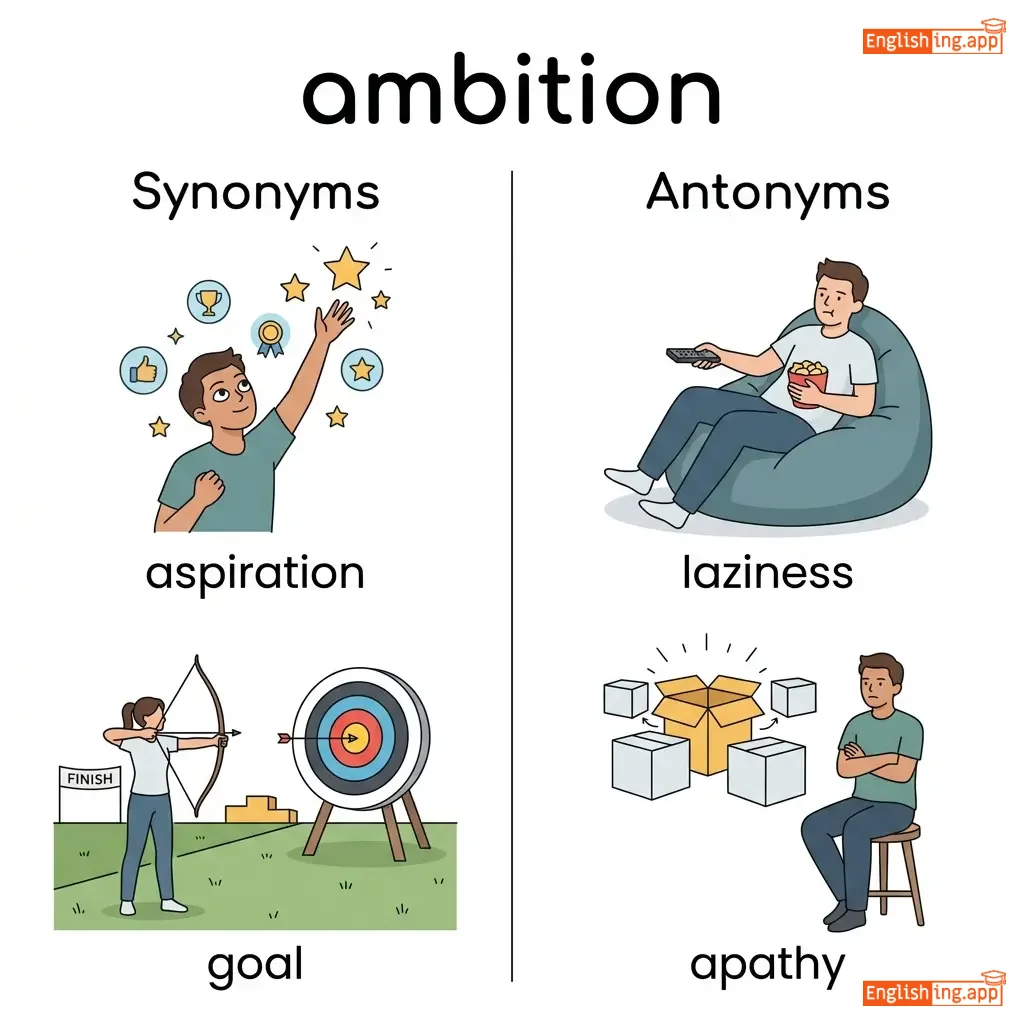
a strong desire to do or to achieve something, typically requiring determination and hard work
••••••
|
Her ambition is to become a successful doctor.
Ihre Ambition ist es, eine erfolgreiche Ärztin zu werden.
••••••
|
Ihre Ambition ist es, eine erfolgreiche Ärztin zu werden.
Ihre Ambition ist es, eine erfolgreiche Arzting zu werden.
••••••
|
aspiration, drive, determination, goal
••••••
|
apathy, laziness, contentment
••••••
|
personal ambition, political ambition, fulfill ambition
••••••
|
Ambition = 'Ambition' in German; remember it’s all about your strong will to succeed.
••••••
|
|
#28
🏛️
|
/æmˈbæsədər/
noun
(æmbæsador)
••••••
|
- •••••• |
Botschafter
Botschafter
••••••
|
an accredited diplomat sent by a country as its official representative to a foreign country
••••••
|
The ambassador met with government officials to discuss trade agreements. |
Der Botschafter traf sich mit Regierungsbeamten, um Handelsabkommen zu besprechen.
Der Botschafter traf sich mit Regierungsbeamten, um Handelsabkommen zu besprechen.
••••••
|
diplomat, envoy, representative, emissary
••••••
|
- •••••• |
foreign ambassador, diplomatic ambassador, appoint an ambassador
••••••
|
Ein Botschafter ist der Vertreter eines Landes für Verträge.
••••••
|
|
#29
⛪
|
/ˈɔːltər/
noun
(al-ter)
••••••
|
- •••••• |
Altar
altar
••••••
|
a raised structure on which offerings or sacrifices are made to a deity
••••••
|
The bride and groom stood before the altar during the ceremony. |
Die Braut und der Bräutigam standen während der Zeremonie vor dem Altar.
Die Braut und der Brautigam standen waehrend der Zeremonie vor dem Altar.
••••••
|
shrine, sanctuary, platform
••••••
|
- •••••• |
church altar, wedding altar, sacrifice at the altar
••••••
|
Das deutsche Wort 'Altar' ist wie im Englischen ein Ort für religiöse Opfergaben.
••••••
|
|
#30
💰
|
/əˈlaʊəns/
noun
(alawens)
••••••
|
- •••••• |
Taschengeld
taschengeld
••••••
|
a sum of money paid regularly to a person; permission to do something
••••••
|
Children receive a weekly allowance for helping with chores. |
Kinder erhalten ein wöchentliches Taschengeld für die Hilfe bei den Hausarbeiten.
Kinder erhalten ein wöchentliches Taschengeld für die Hilfe bei den Hausarbeiten.
••••••
|
stipend, payment, allocation, quota
••••••
|
prohibition, ban, restriction
••••••
|
monthly allowance, pocket allowance, travel allowance
••••••
|
wöchentliches Taschengeld für Kinder
••••••
|
|
#31
⚡
|
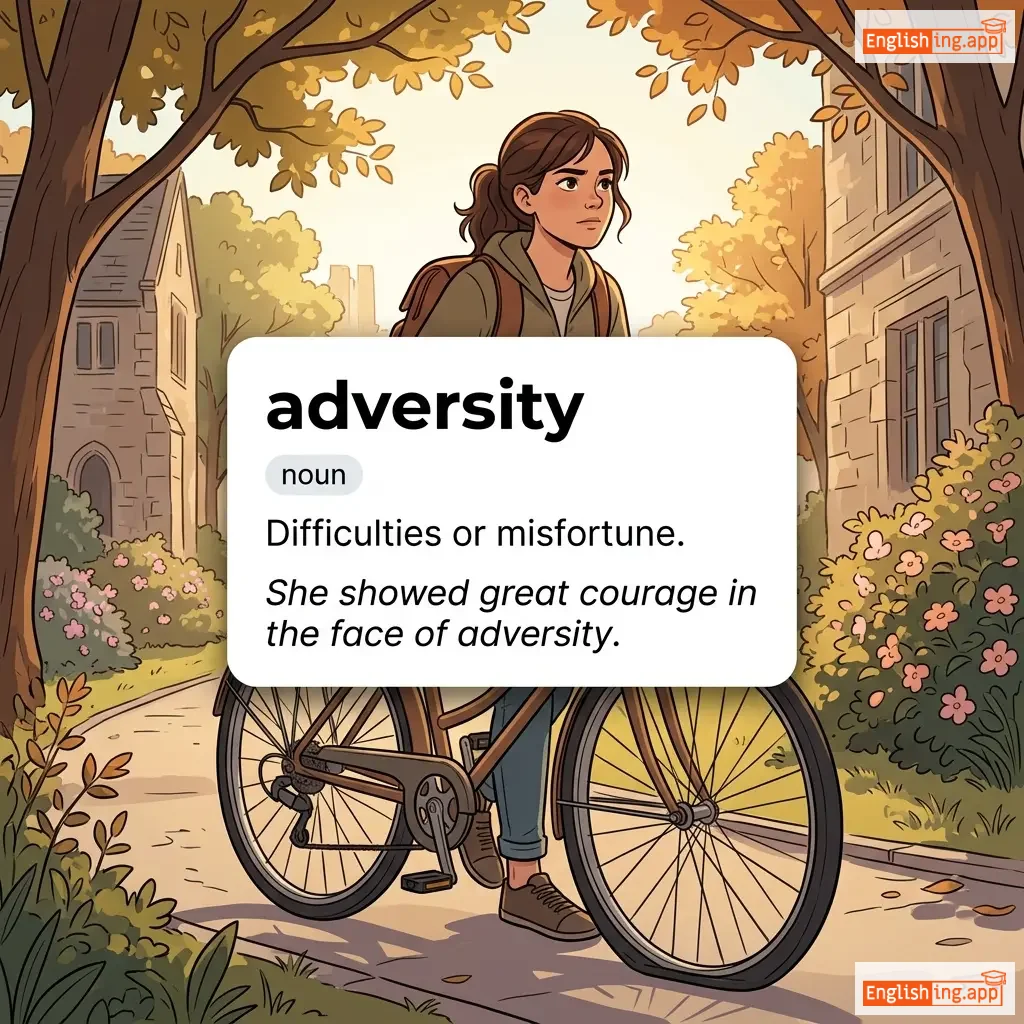
/ædˈvɜːr.sə.ti/
noun
(Adversität)
••••••
|
|
Widrigkeit; Schwierigkeit;
Widrigkeit; Schwierigkeit
••••••
|
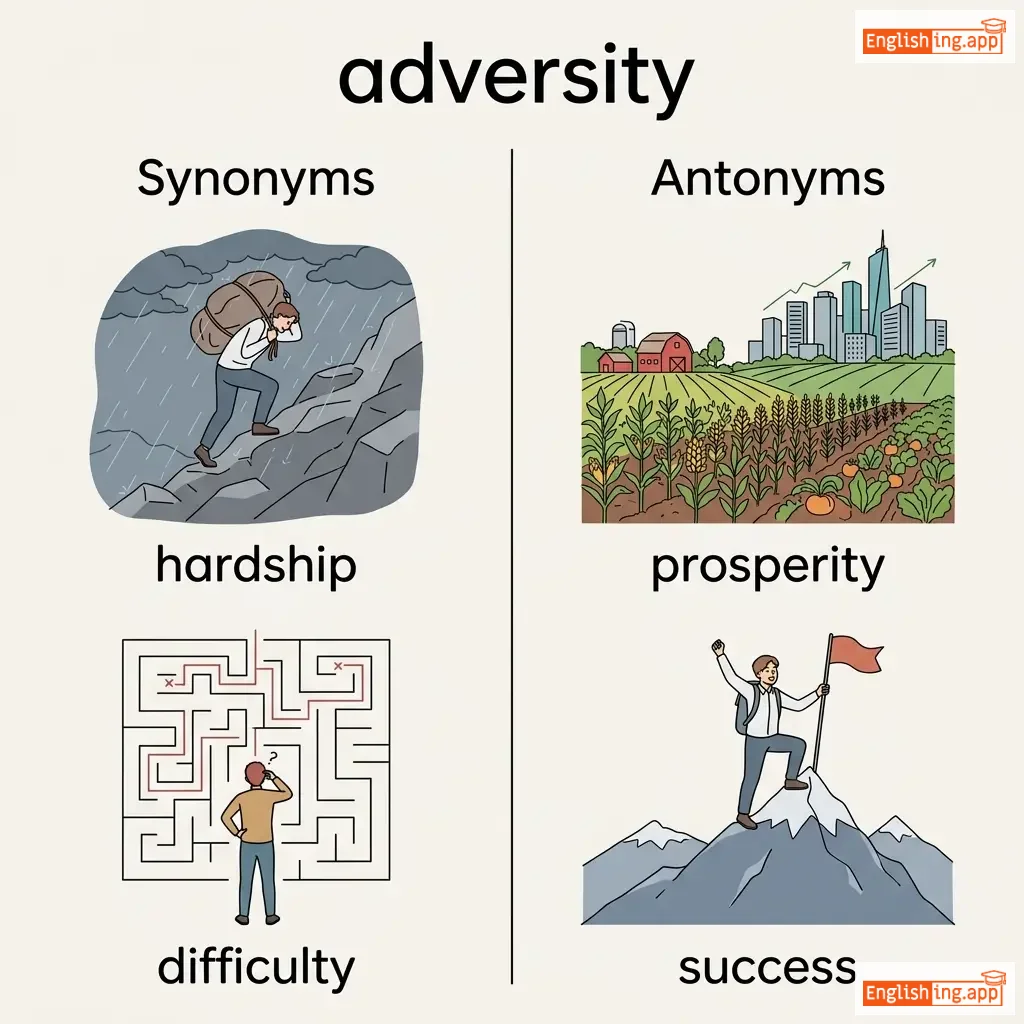
difficulties or misfortune; hardship
••••••
|
She showed great courage in the face of adversity.
Sie zeigte großen Mut im Angesicht der Adversität.
••••••
|
Sie zeigte großen Mut im Angesicht der Adversität.
Sie zeigte großen Mut im Angesicht der Adversität.
••••••
|
hardship, misfortune, difficulty, trouble
••••••
|
prosperity, fortune, success, ease
••••••
|
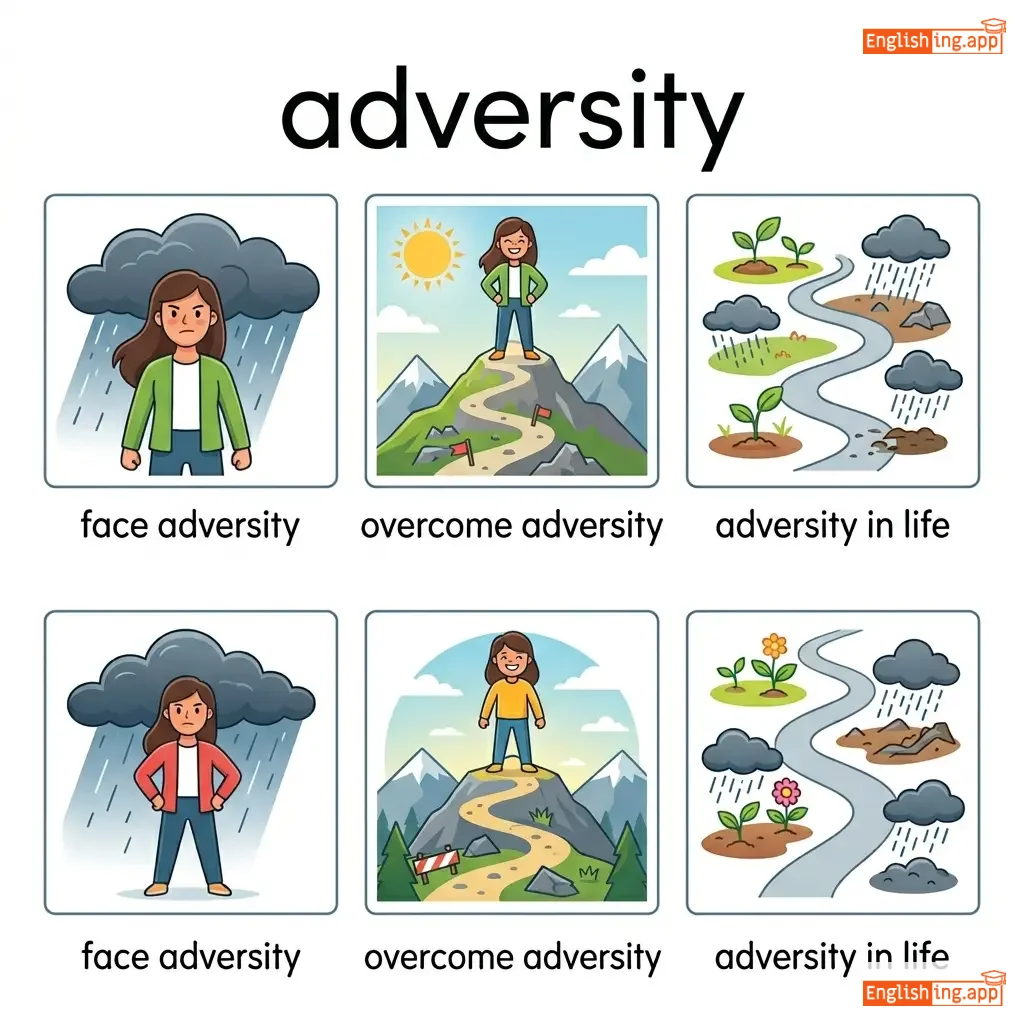
face adversity, overcome adversity, in adversity
••••••
|
In German, adversity is 'Adversität', and you face it just as you would difficult situations.
••••••
|
|
#32
⚖️
|
/ˌæl.əˈɡeɪ.ʃən/
noun
(alɪɡeˈt͡si̯oːn)
••••••
|
- •••••• |
Anschuldigung
Anschuldigung
••••••
|
a claim that someone has done something wrong or illegal
••••••
|
The allegation against him was proven false. |
Die Anschuldigung gegen ihn wurde als falsch erwiesen.
Die Anschuldigung gegen ihn wurde als falsch erwiesen.
••••••
|
accusation, charge, claim, assertion
••••••
|
vindication, exoneration, proof of innocence
••••••
|
serious allegation, false allegation, investigate allegation
••••••
|
Anschuldigung (Anschuldigung) — Eine Anschuldigung wird gemacht, wenn etwas Schlechtes passiert.
••••••
|
|
#33
👽
|
/ˈeɪ.li.ən/
noun
(aliens)
••••••
|
|
Ausländer; fremd; seltsam
Ausländer; fremd; seltsam
••••••
|
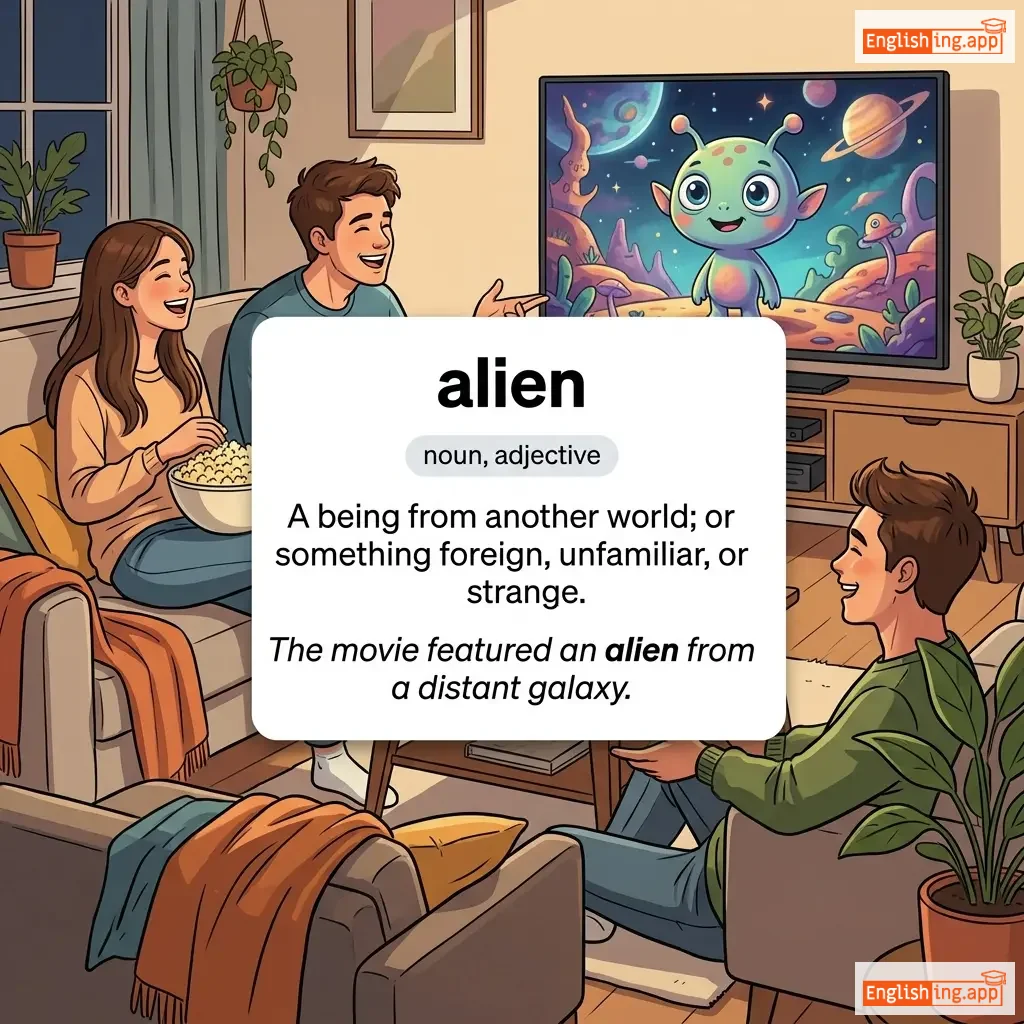
a foreigner; being from another world or place; strange
••••••
|
The customs were alien to their culture.
Die Sitten waren fremd für ihre Kultur.
••••••
|
Die Sitten waren fremd für ihre Kultur.
Die Sitten waren fremd für ihre Kultur.
••••••
|
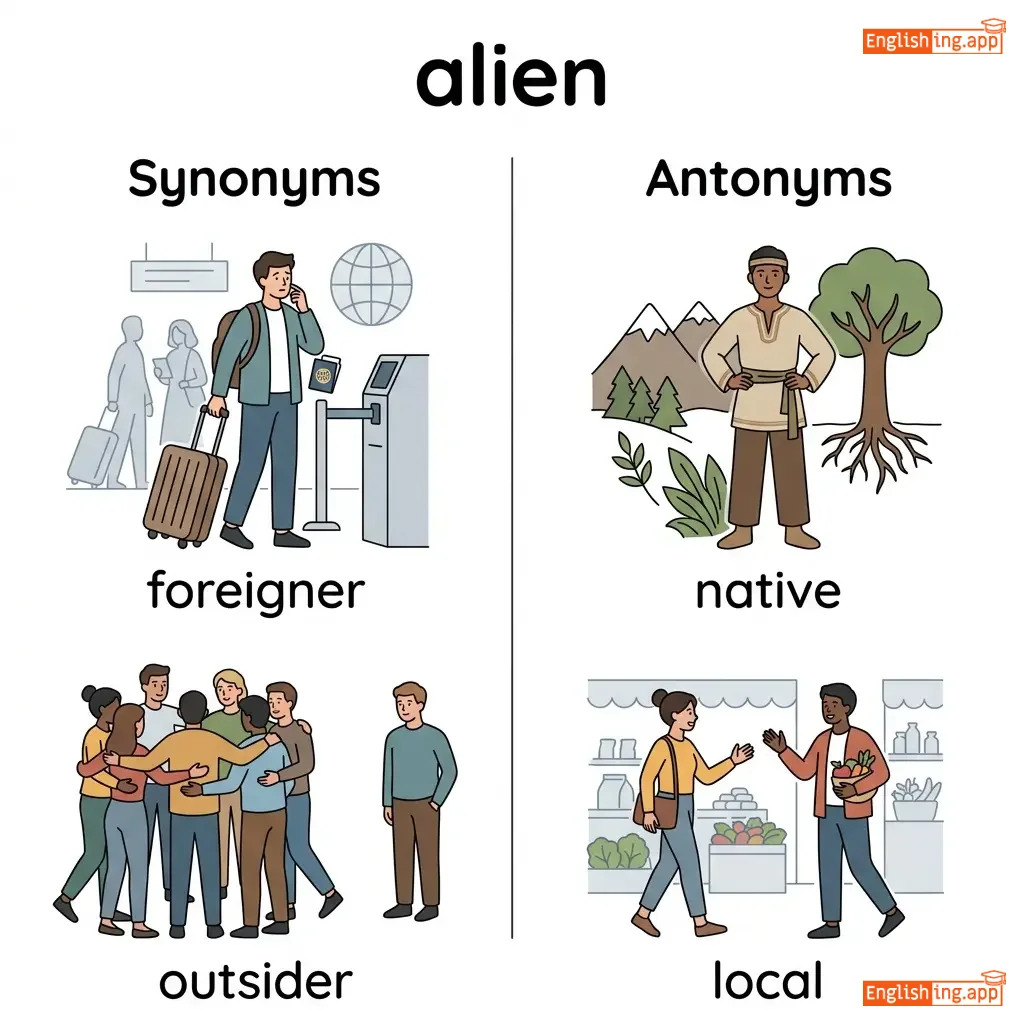
foreign, strange, unfamiliar, outsider
••••••
|
native, familiar, domestic, local
••••••
|
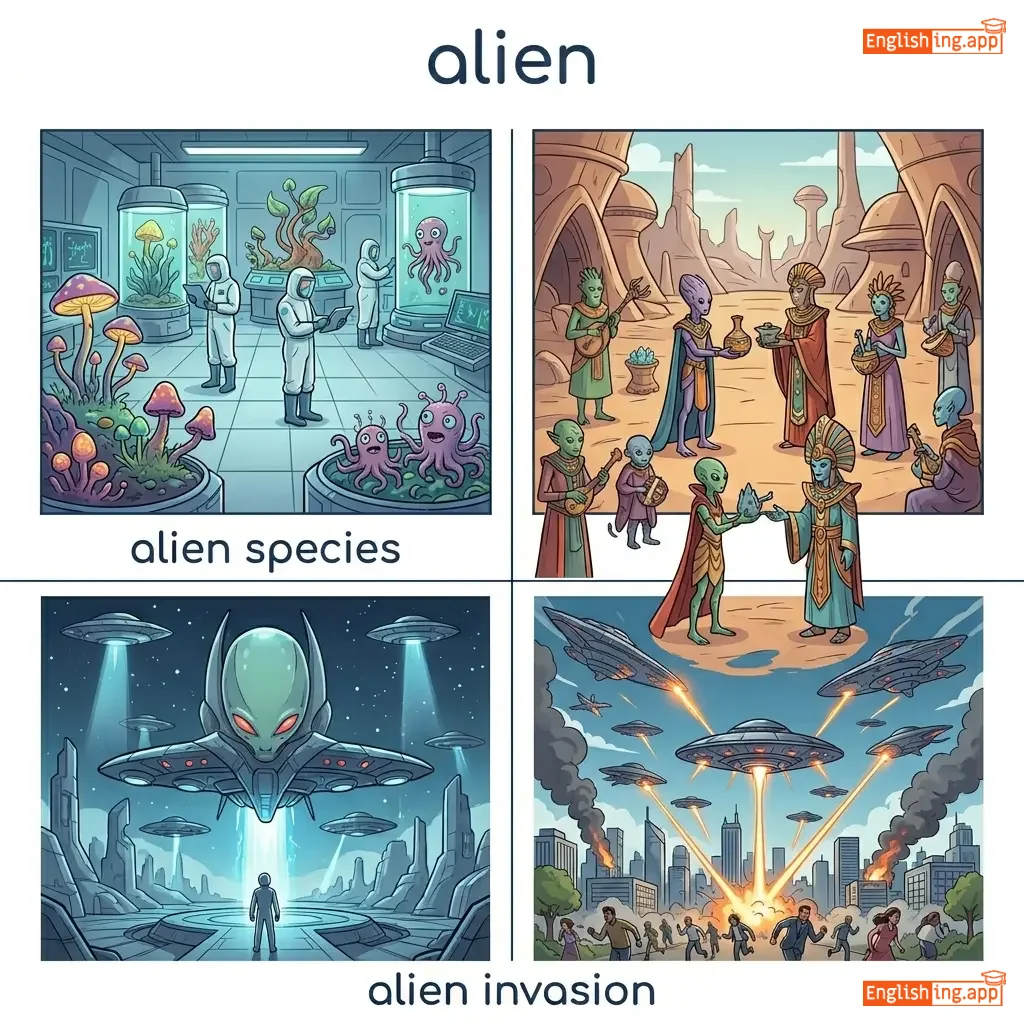
alien culture, alien concept, illegal alien
••••••
|
Ausländer wie etwas Seltsames oder Fremdes.
••••••
|
|
#34
🤝
|
/əˈɡriː.mənt/
noun
(agriment)
••••••
|
|
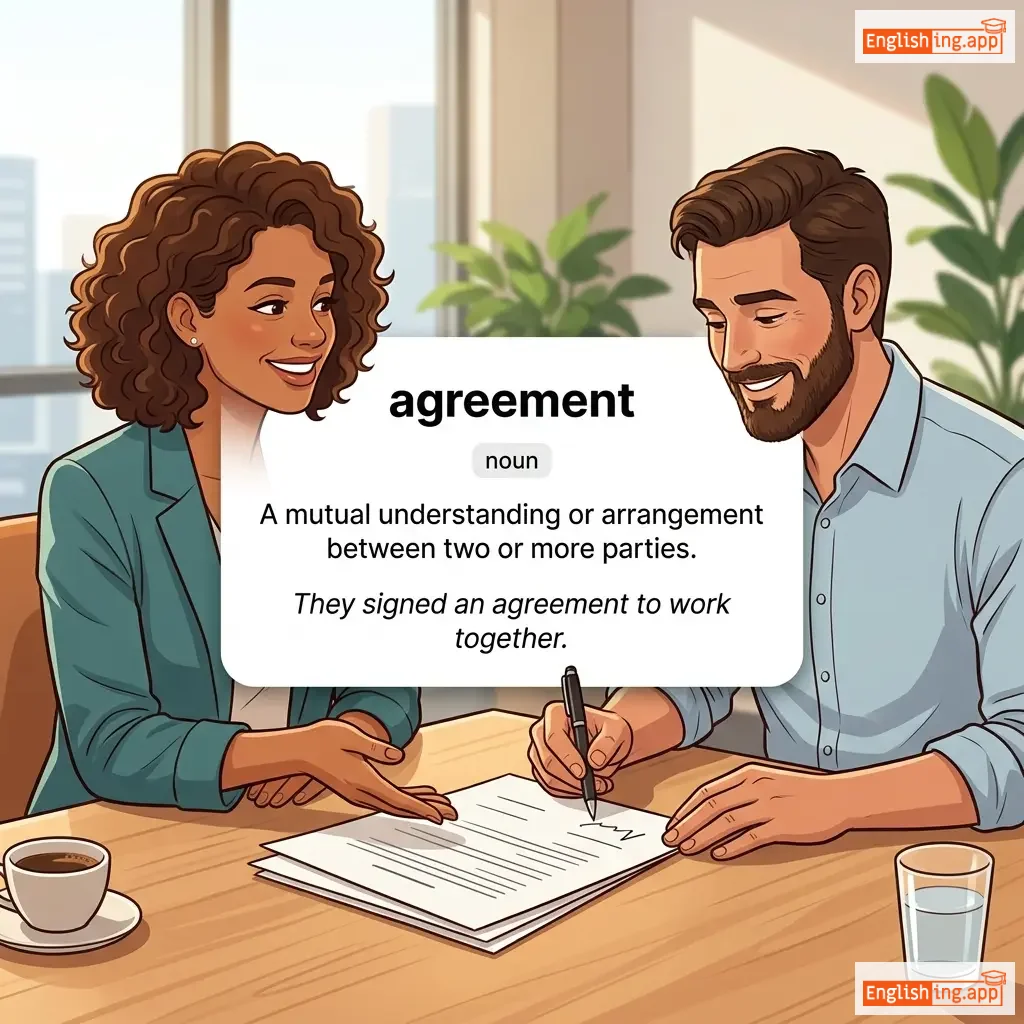
Vereinbarung; Übereinstimmung; zu einer Vereinbarung kommen
vereinbarung
••••••
|
a negotiated arrangement between parties; harmony of opinion
••••••
|
They signed a business agreement yesterday. |
Sie haben gestern eine Geschäftsvereinbarung unterzeichnet.
Sie haben gestern eine Geschäftsvereinbarung unterzeichnet.
••••••
|
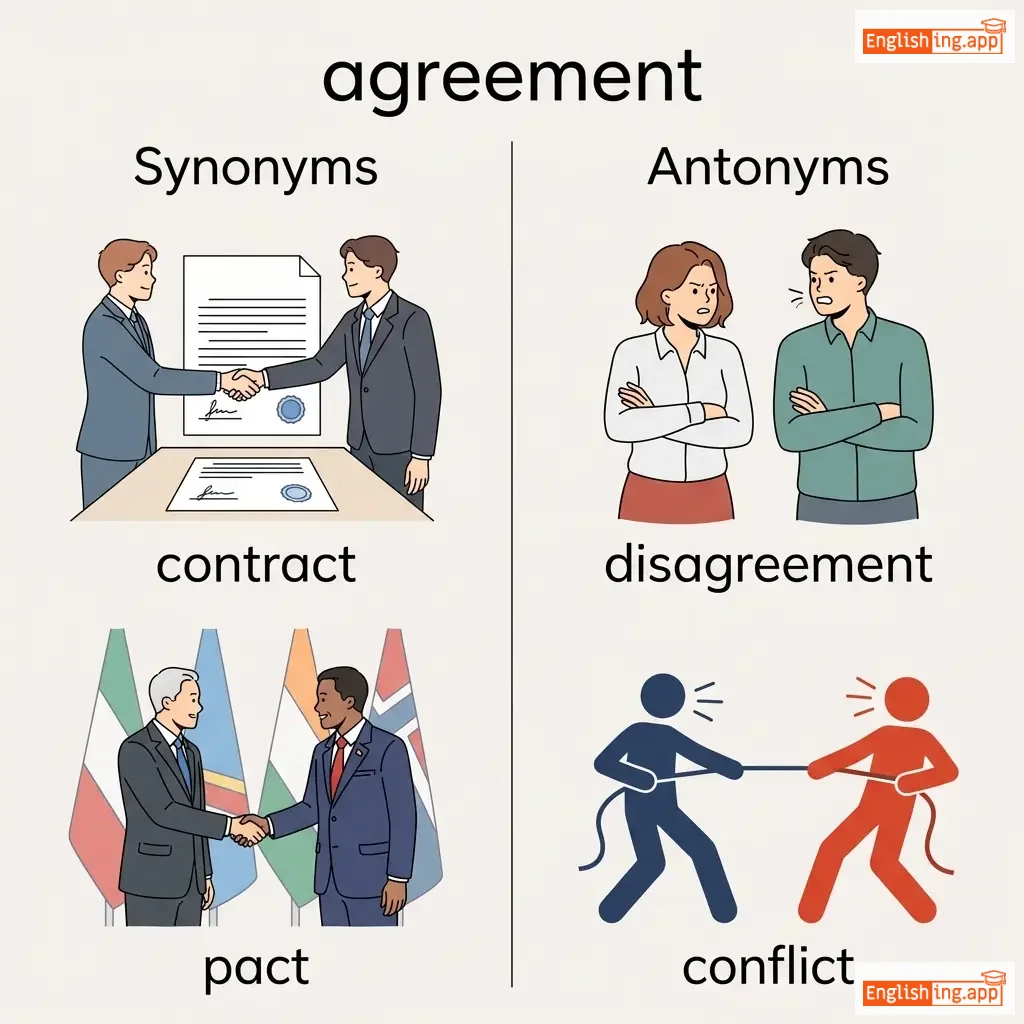
contract, deal, pact, accord
••••••
|
disagreement, conflict, dispute, discord
••••••
|
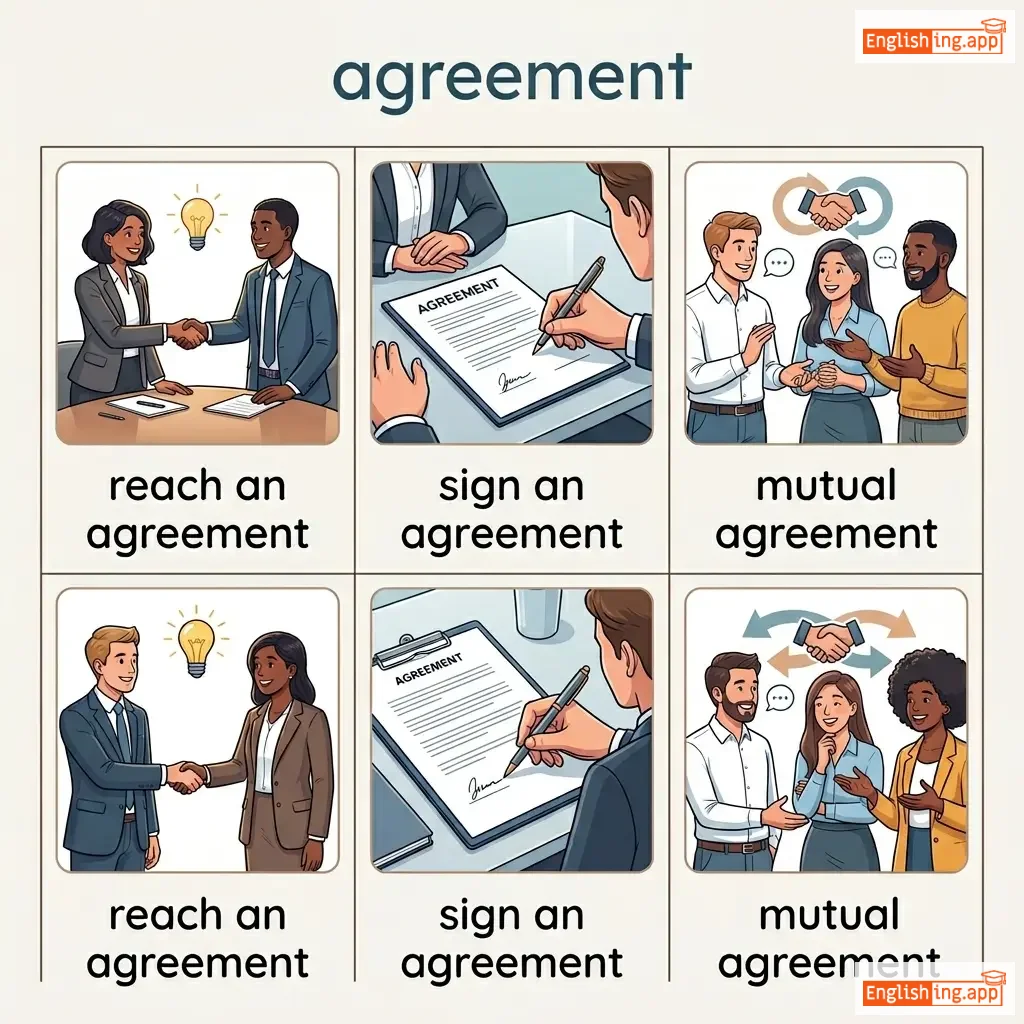
reach agreement, sign agreement, mutual agreement
••••••
|
Die Unterschrift unter einer Vereinbarung ist wie das Agreement.
••••••
|
|
#35
😫
|
/ˈæɡ.ə.ni/
noun
(Ägho-ni)
••••••
|
- •••••• |
extreme körperliche oder geistige Qual; intensiver Schmerz
extreme koerperliche oder geistige qual; intensiver schmerz
••••••
|
extreme physical or mental suffering; intense pain
••••••
|
He was in agony after the accident.
Er war nach dem Unfall in Agonie.
••••••
|
Er war nach dem Unfall in Agonie.
er war nach dem unfall in agonie.
••••••
|
pain, suffering, torture, anguish
••••••
|
bliss, comfort, relief, pleasure
••••••
|
in agony, agony of defeat, prolonged agony
••••••
|
Agony means severe pain, physically or mentally.
••••••
|
|
#36
📝
|
/əˈdʒen.də/
noun
(aˈʒɛnda)
••••••
|
- •••••• |
Tagesordnung
Tagesordnung
••••••
|
a list of items to be discussed at a meeting; a plan of action
••••••
|
The meeting agenda includes budget discussions. |
Die Tagesordnung der Sitzung enthält Diskussionen über das Budget.
Die Tagesordnung der Sitzung enthält Diskussionen über das Budget.
••••••
|
schedule, program, plan, itinerary
••••••
|
spontaneity, improvisation
••••••
|
meeting agenda, hidden agenda, political agenda
••••••
|
Tagesordnung ist wie ein Agenda für eine Besprechung.
••••••
|
|
#37
🏢
|
/ˈeɪ.dʒən.si/
noun
(ædʒənsi)
••••••
|
- •••••• |
Agentur; Büro eines Agenten
Agentur
••••••
|
a business or organization that provides a particular service
••••••
|
She works for a travel agency downtown. |
Sie arbeitet in einer Reiseagentur in der Innenstadt.
Sie arbeitet in einer Reiseagentur in der Innenstadt.
••••••
|
organization, bureau, company, firm
••••••
|
individual, freelance
••••••
|
travel agency, advertising agency, government agency
••••••
|
Think of an 'Agentur' helping you organize your travels.
••••••
|
|
#38
🤝
|
/əˌfɪl.iˈeɪ.ʃən/
noun
(Affiliation)
••••••
|
|
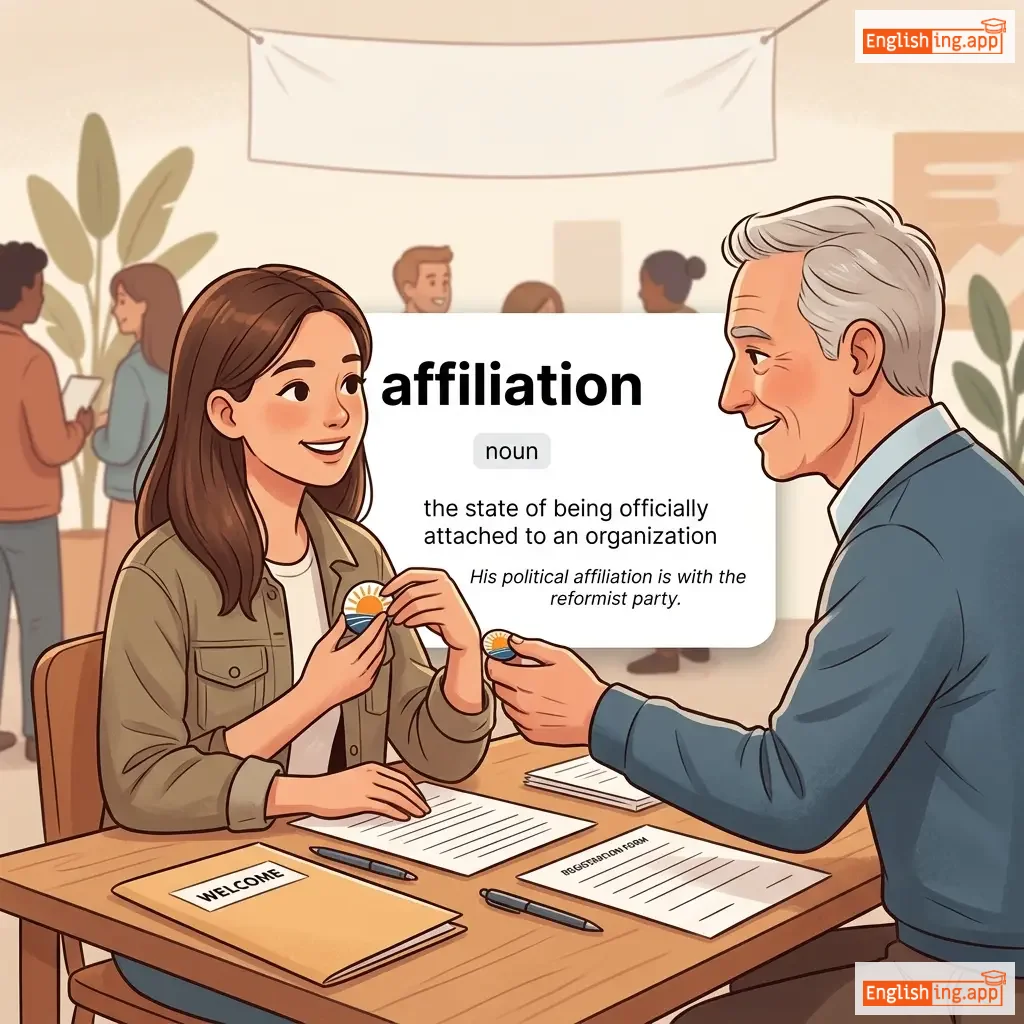
Verbindung oder Assoziation mit einer Organisation oder Gruppe
Verbindung oder Assoziation mit einer Organisation oder Gruppe
••••••
|
connection or association with an organization or group
••••••
|
His political affiliation influenced his career decisions. |
Seine politische Zugehörigkeit beeinflusste seine Karriereentscheidungen.
Seine politische Zugehoerigkeit beeinflusste seine Karriereentscheidungen.
••••••
|
association, connection, membership, alliance
••••••
|
dissociation, separation, independence
••••••
|
political affiliation, religious affiliation, party affiliation
••••••
|
In German, 'Affiliation' refers to an organizational connection.
••••••
|
|
#39
❤️
|
/əˈfek.ʃən/
noun
(afɛkʃən)
••••••
|
- •••••• |
Zuneigung; Liebe
Zuneigung; Liebe
••••••
|
a feeling of liking or caring for someone or something
••••••
|
She has deep affection for her grandmother.
Sie hat tiefes Affekt für ihre Großmutter.
••••••
|
Sie hat tiefes Affekt für ihre Großmutter.
Sie hat tiefes Affekt für ihre Großmutter.
••••••
|
love, fondness, tenderness, care
••••••
|
hatred, dislike, indifference, hostility
••••••
|
deep affection, show affection, feel affection
••••••
|
Affekt wird mit Liebe und Zuneigung verbunden.
••••••
|
|
#40
📋
|
/əˈfer/
noun
(affär)
••••••
|
- •••••• |
Angelegenheit; Ereignis;
Angelegenheit; Ereignis
••••••
|
an event or situation; a matter that someone deals with
••••••
|
The wedding was a grand affair with hundreds of guests. |
Die Hochzeit war eine große Angelegenheit mit Hunderten von Gästen.
Die Hochzeit war eine große Angelegenheit mit Hunderten von Gästen.
••••••
|
matter, business, concern, event
••••••
|
triviality, insignificance
••••••
|
business affair, love affair, family affair
••••••
|
Stell dir vor, jedes 'Ereignis' ist eine 'Affäre'.
••••••
|
Vocabulary Quiz
Test your vocabulary by matching words with their translations or meanings.
Login to take the quiz
Comments (0)
Share your thoughts and join the discussion.
Join the discussion by logging in
Login to CommentNo comments yet
Be the first to share your thoughts!