

Upgrade für Zugriff auf alle Vokabeln
Erhalten Sie unbegrenzten Zugriff auf alle Vokabeln mit Pro-Mitgliedschaft
Upgrade auf ProÜbersetzung
Vergangenheit
Partizip Perfekt
Dritte Person Singular
Gerundium
Bedeutung
Beispielsatz
Übersetzung Beispielsatz
Synonyme
Antonyme
Kollokationen
Eselsbrücke
Swipe left or right, or use the buttons. Tap image to zoom.
Upgrade für Zugriff auf alle Sätze
Erhalten Sie unbegrenzten Zugriff auf alle Sätze mit Pro-Mitgliedschaft
Upgrade auf ProÜbersetzung Beispielsatz
Wort
Lesson 58Lesson 58 - Maske umschalten
|
Emoji
|
Wort | Images | Übersetzung | Bedeutung | Beispielsatz | Übersetzung Beispielsatz | Synonyme | Antonyme | Kollokationen | Eselsbrücke |
|---|---|---|---|---|---|---|---|---|---|---|
|
#1141
👍
|
/ˌrek.ə.menˈdeɪ.ʃən/
noun
(rekomendation)
••••••
|
- •••••• |
empfehlung
empfehlung
••••••
|
a suggestion that someone or something would be good or suitable for a particular job or purpose
••••••
|
I got this job based on a recommendation from my professor.
Ich habe diesen Job aufgrund einer Empfehlung von meinem Professor bekommen.
••••••
|
Ich habe diesen Job aufgrund einer Empfehlung von meinem Professor bekommen.
Ich habe diesen Job aufgrund einer Empfehlung von meinem Professor bekommen.
••••••
|
suggestion, advice, endorsement, proposal
••••••
|
warning, discouragement, disapproval
••••••
|
make a recommendation, follow recommendations, letter of recommendation
••••••
|
Empfehlungen sind der Schlüssel zum Erfolg.
••••••
|
|
#1142
✨
|
/rɪˈfɔːr.mər/
noun
(reformator)
••••••
|
- •••••• |
reformator
reformator
••••••
|
a person who works to bring about positive changes in society or institutions
••••••
|
The social reformer dedicated her life to improving education for all children.
der soziale reformator widmete sein leben der verbesserung der bildung für alle kinder
••••••
|
Der soziale Reformator widmete sein Leben der Verbesserung der Bildung für alle Kinder.
der soziale reformator widmete sein leben der verbesserung der bildung fuer alle kinder
••••••
|
revolutionary, progressive, activist, modernizer
••••••
|
conservative, traditionalist, reactionary
••••••
|
social reformer, political reformer, educational reformer, reform movement
••••••
|
A reformer rebuilds society like an architect redesigns a building.
••••••
|
|
#1143
🤝
|
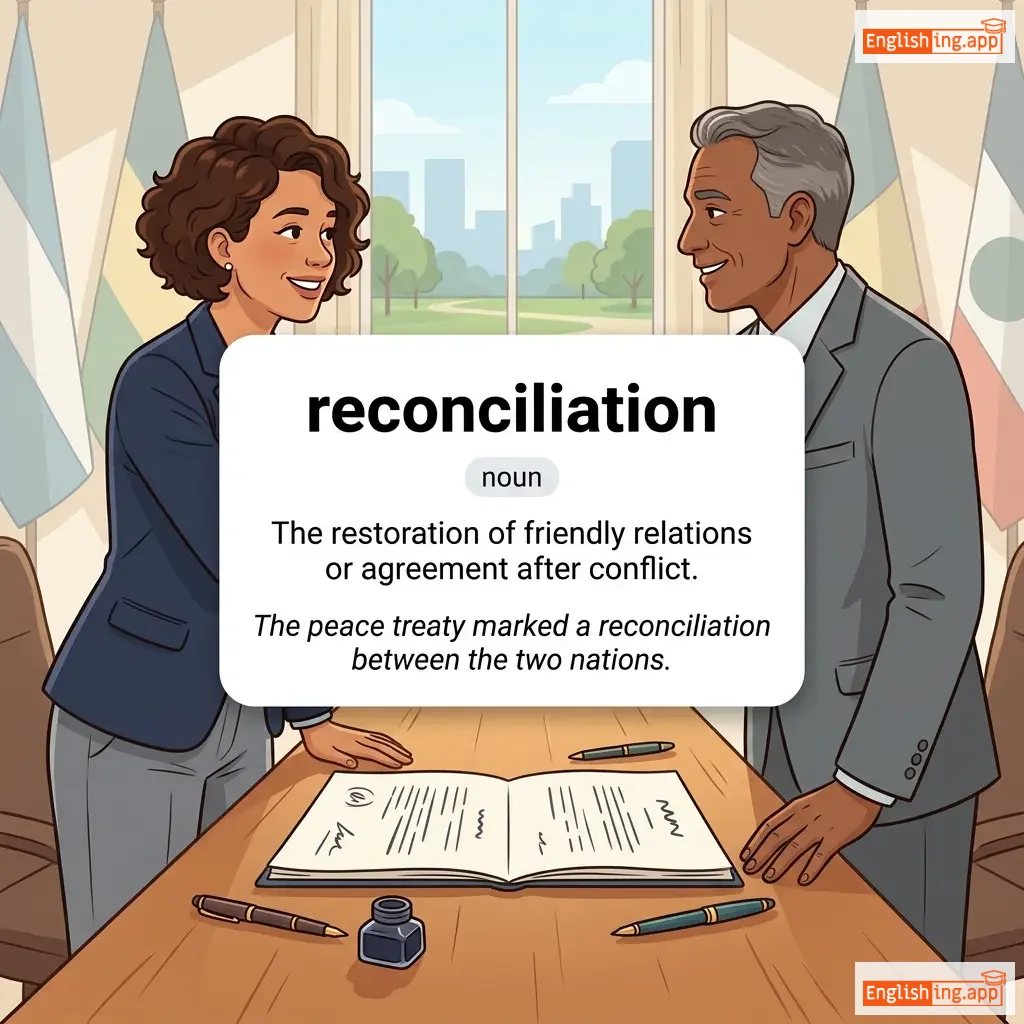
/ˌrek.ən.sɪl.iˈeɪ.ʃən/
noun
(rekonzilierung)
••••••
|
|
Versöhnung
versoehnung
••••••
|
a situation in which two people or groups of people become friendly again after they have argued; the process of making two opposite beliefs, ideas, or situations agree
••••••
|
The reconciliation between the two families brought peace to the community. |
Die Versöhnung zwischen den beiden Familien brachte Frieden in die Gemeinde.
Die Versoehnung zwischen den beiden Familien brachte Frieden in die Gemeinde.
••••••
|
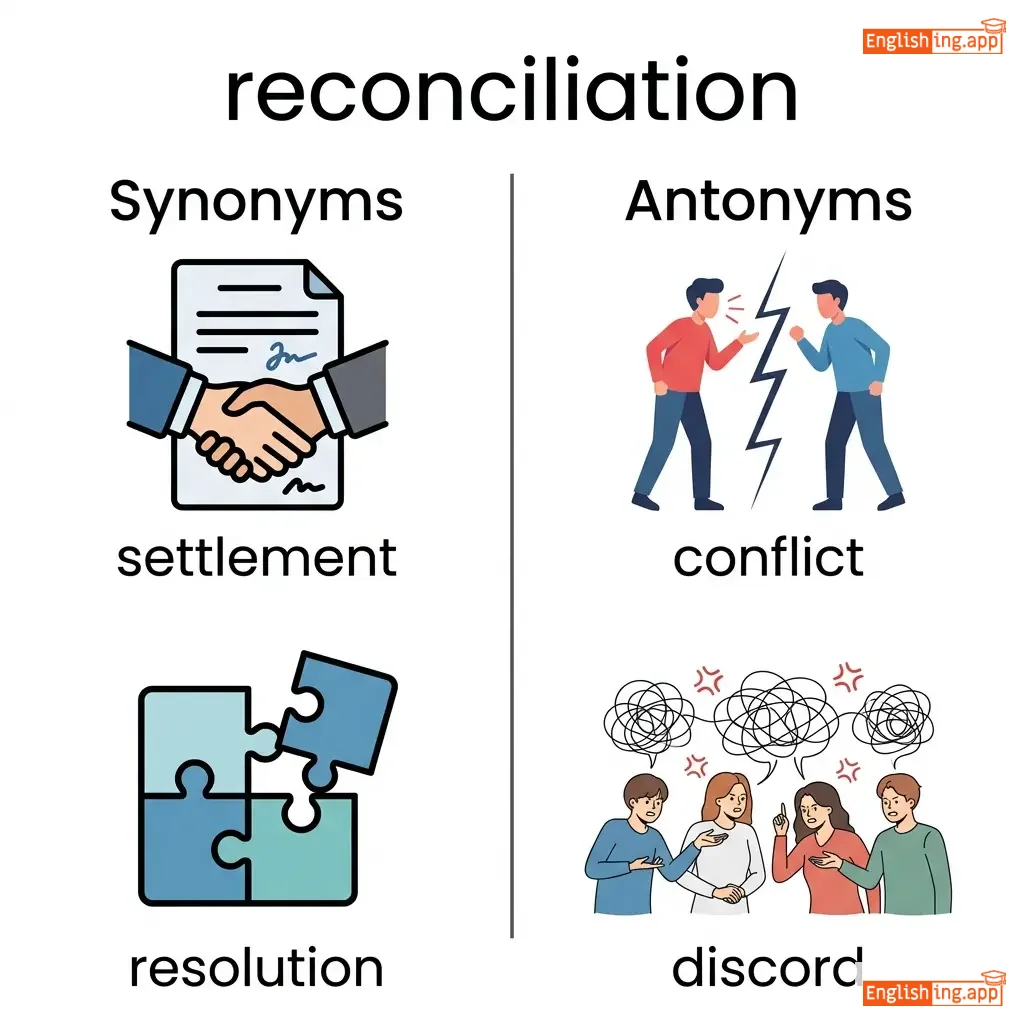
reunion, harmony, settlement, peace-making
••••••
|
conflict, discord, separation, estrangement
••••••
|
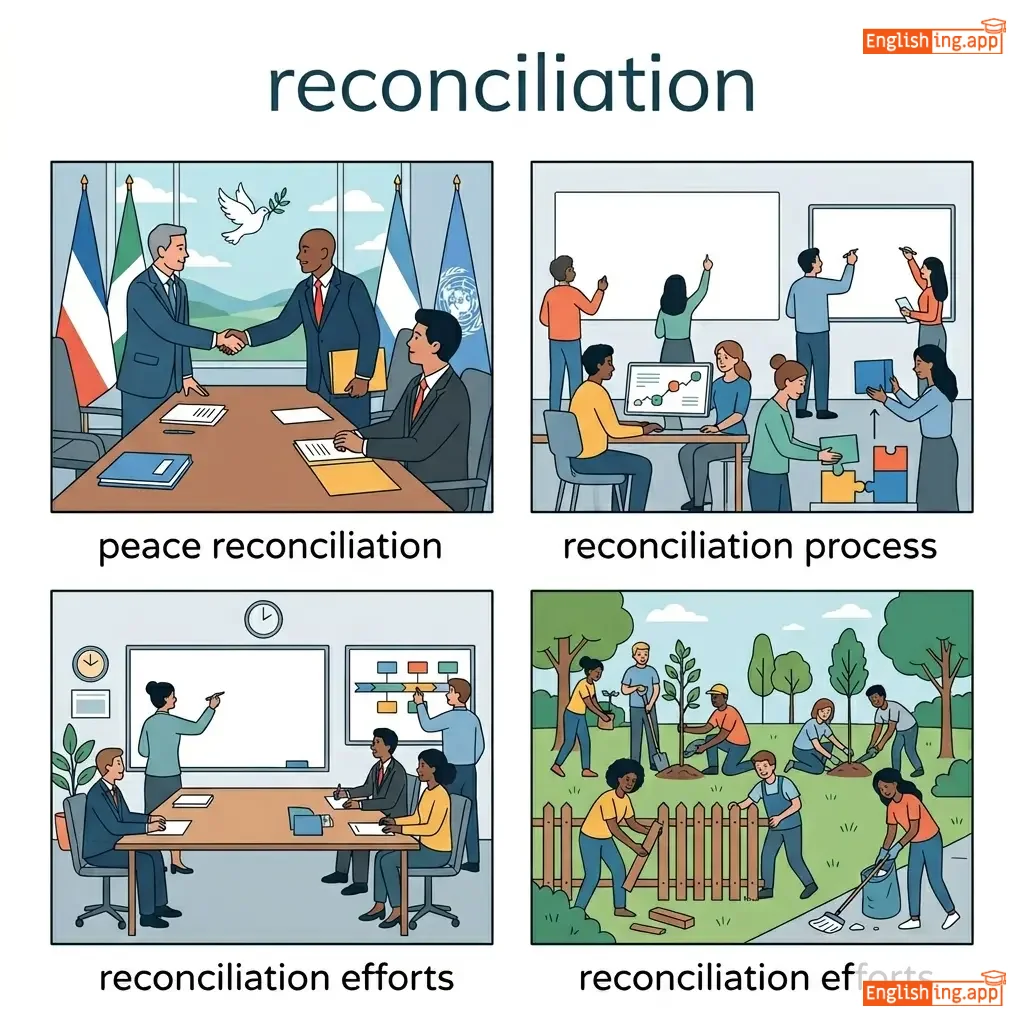
family reconciliation, national reconciliation, seek reconciliation
••••••
|
Versöhnung: Zwei Personen versöhnen sich nach einem Streit.
••••••
|
|
#1144
🥤
|
/rɪˈfreʃ.mənt/
noun
(refreshment)
••••••
|
- •••••• |
Erfrischung
erfrischung
••••••
|
food and drink that is served as a light meal; something that refreshes
••••••
|
We served light refreshments after the meeting. |
Wir haben nach dem Meeting leichte Erfrischungen serviert.
wir haben nach dem meeting leichte erfrischungen serviert
••••••
|
snacks, drinks, food, beverages
••••••
|
main meal, feast, banquet
••••••
|
light refreshments, serve refreshments, refreshment break, refreshment stand
••••••
|
Erfrischung sounds like 'refresh', so think of it as a refreshing snack.
••••••
|
|
#1145
🎮
|
/ˌrek.riˈeɪ.ʃən/
noun
(recreation)
••••••
|
- •••••• |
Freizeit; der Prozess, etwas wieder zum Leben zu erwecken
Freizeit; der Prozess, etwas wieder zum Leben zu erwecken
••••••
|
an activity that is done for enjoyment; the process of making something exist again
••••••
|
The park provides recreation facilities for children and adults. |
Der Park bietet Freizeiteinrichtungen für Kinder und Erwachsene.
Der Park bietet Freizeiteinrichtungen für Kinder und Erwachsene.
••••••
|
entertainment, amusement, leisure, fun
••••••
|
work, labor, duty, obligation
••••••
|
recreation center, outdoor recreation, recreation activities
••••••
|
Freizeit bedeutet Spaß und Entspannung.
••••••
|
|
#1146
🏠
|
/ˌref.jʊˈdʒiː/
noun
(refugierter)
••••••
|
- •••••• |
Flüchtling
fluchtling
••••••
|
a person who has been forced to leave their country in order to escape war, persecution, or natural disaster
••••••
|
The refugee camp provided temporary shelter for thousands of displaced families. |
Das Flüchtlingslager bot vorübergehenden Schutz für Tausende von vertriebenen Familien.
Das fluechtlingslager bot voruebergehenden schutz fuer tausende von vertriebenen familien
••••••
|
asylum seeker, displaced person, exile, migrant
••••••
|
citizen, resident, native
••••••
|
refugee camp, refugee crisis, political refugee, refugee status
••••••
|
Flüchtling = fliehen vor Gefahr und Not
••••••
|
|
#1147
🔄
|
/rɪˈkɜr.əns/
noun
(rekurrenz)
••••••
|
- •••••• |
Wiederholung
wiederholung
••••••
|
the fact of something happening again; an instance of something happening again
••••••
|
The doctor was concerned about the recurrence of the patient's symptoms.
Der Arzt war besorgt über das Wiederauftreten der Symptome des Patienten.
••••••
|
Der Arzt war besorgt über das Wiederauftreten der Symptome des Patienten.
Der Arzt war besorgt über das Wiederauftreten der Symptome des Patienten.
••••••
|
repetition, return, reappearance, revival
••••••
|
cessation, ending, conclusion, finality
••••••
|
prevent recurrence, cancer recurrence, recurrence rate
••••••
|
Wiederholung - Denke an das wiederholte Erscheinen eines Ereignisses.
••••••
|
|
#1148
❌
|
/rɪˈfjuː.zəl/
noun
(rifyuːzal)
••••••
|
- •••••• |
Ablehnung; Verweigerung
ablehnung; verweigerung
••••••
|
the act of saying no to something or not accepting something
••••••
|
His refusal to cooperate made the project more difficult. |
Seine Ablehnung zur Zusammenarbeit machte das Projekt schwieriger.
Seine Ablehnung zur Zusammenarbeit machte das Projekt schwieriger.
••••••
|
rejection, denial, decline, negation
••••••
|
acceptance, approval, agreement, consent
••••••
|
flat refusal, outright refusal, refuse to accept, refusal to comply
••••••
|
Wenn jemand ablehnt, wird alles schwieriger.
••••••
|
|
#1149
🙏
|
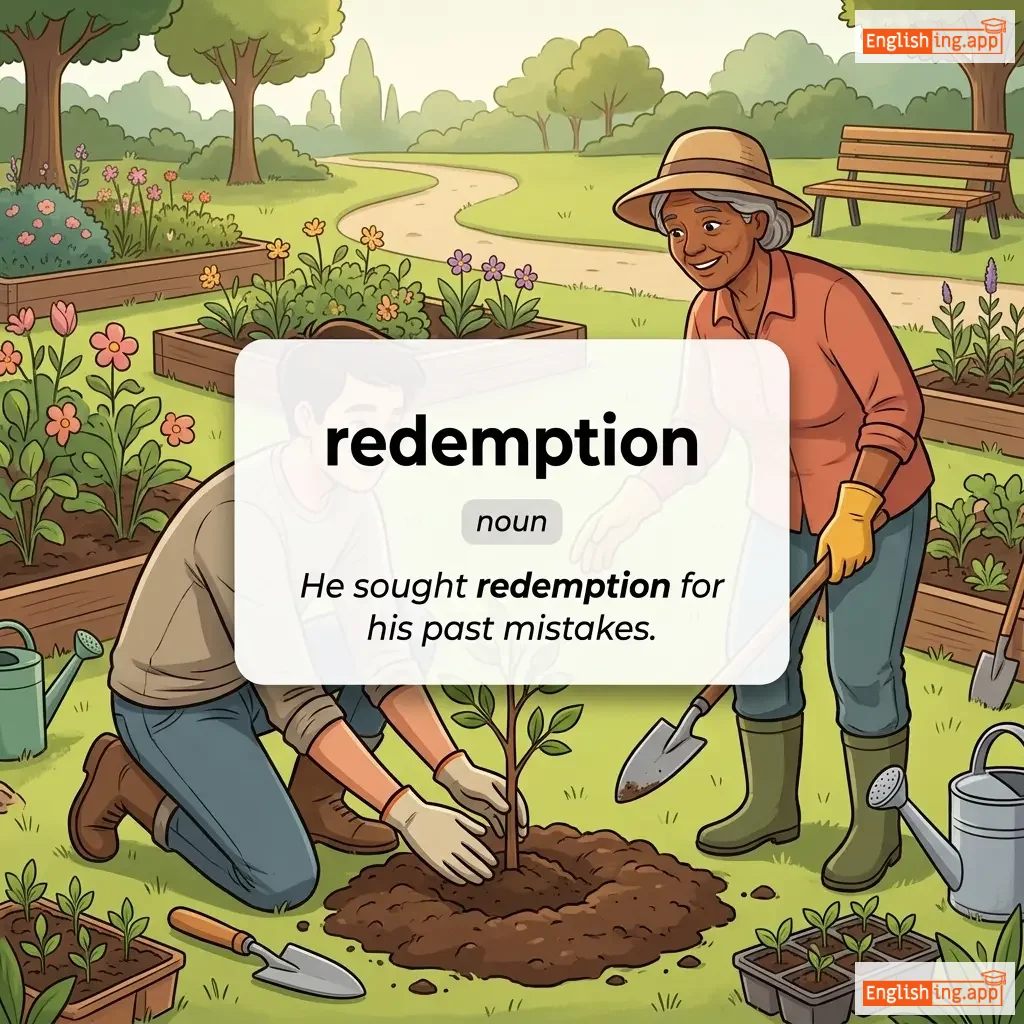
/rɪˈdemp.ʃən/
noun
(rɪˈdɛmpʃən)
••••••
|
|
Erlösung; Rettung;
Erlosung; Rettung;
••••••
|
the act of saving or being saved from sin, error, or evil; the action of regaining or gaining possession of something in exchange for payment
••••••
|
He sought redemption for his past mistakes through charitable work.
Er suchte Erlösung für seine vergangenen Fehler durch wohltätige Arbeit.
••••••
|
Er suchte Erlösung für seine vergangenen Fehler durch wohltätige Arbeit.
Er suchte Erloesung fuer seine vergangenen Fehler durch wohltätige Arbeit.
••••••
|
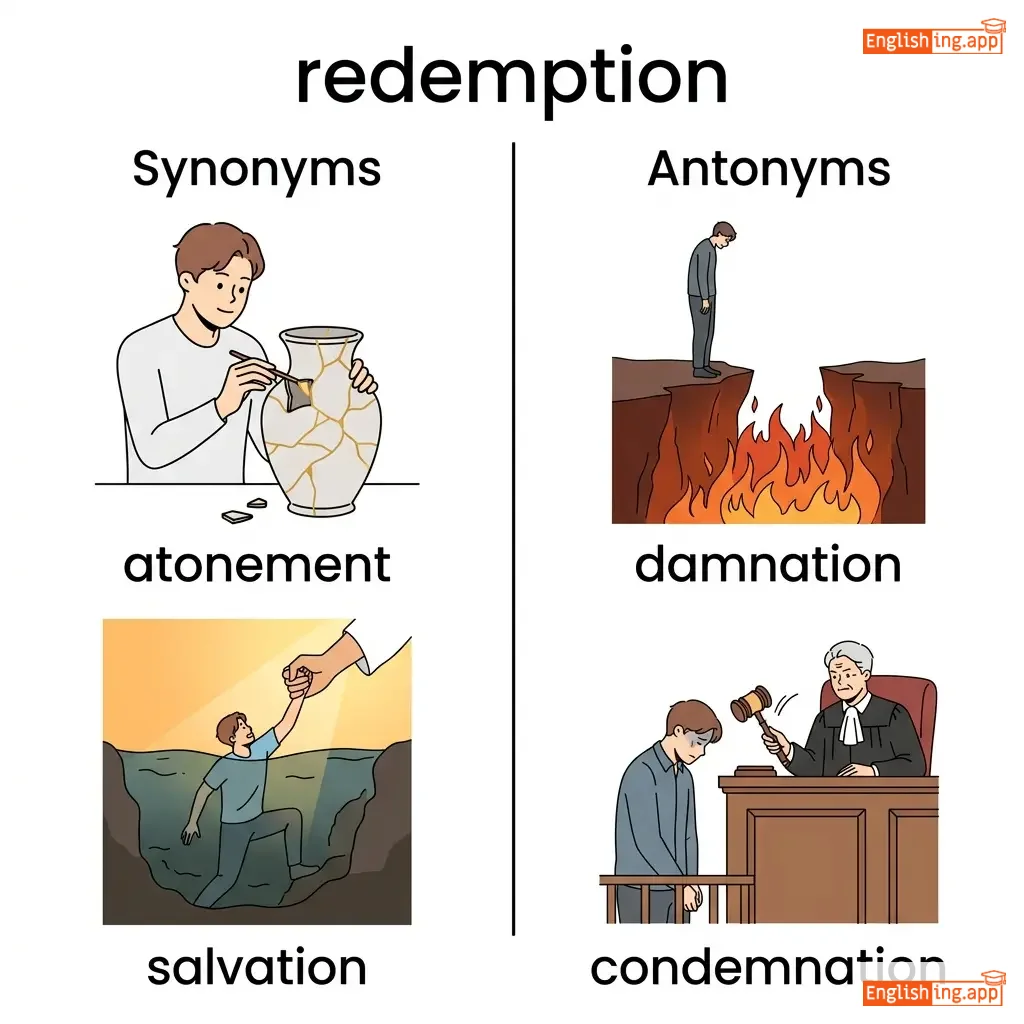
salvation, deliverance, recovery, atonement
••••••
|
damnation, condemnation, punishment, forfeiture
••••••
|
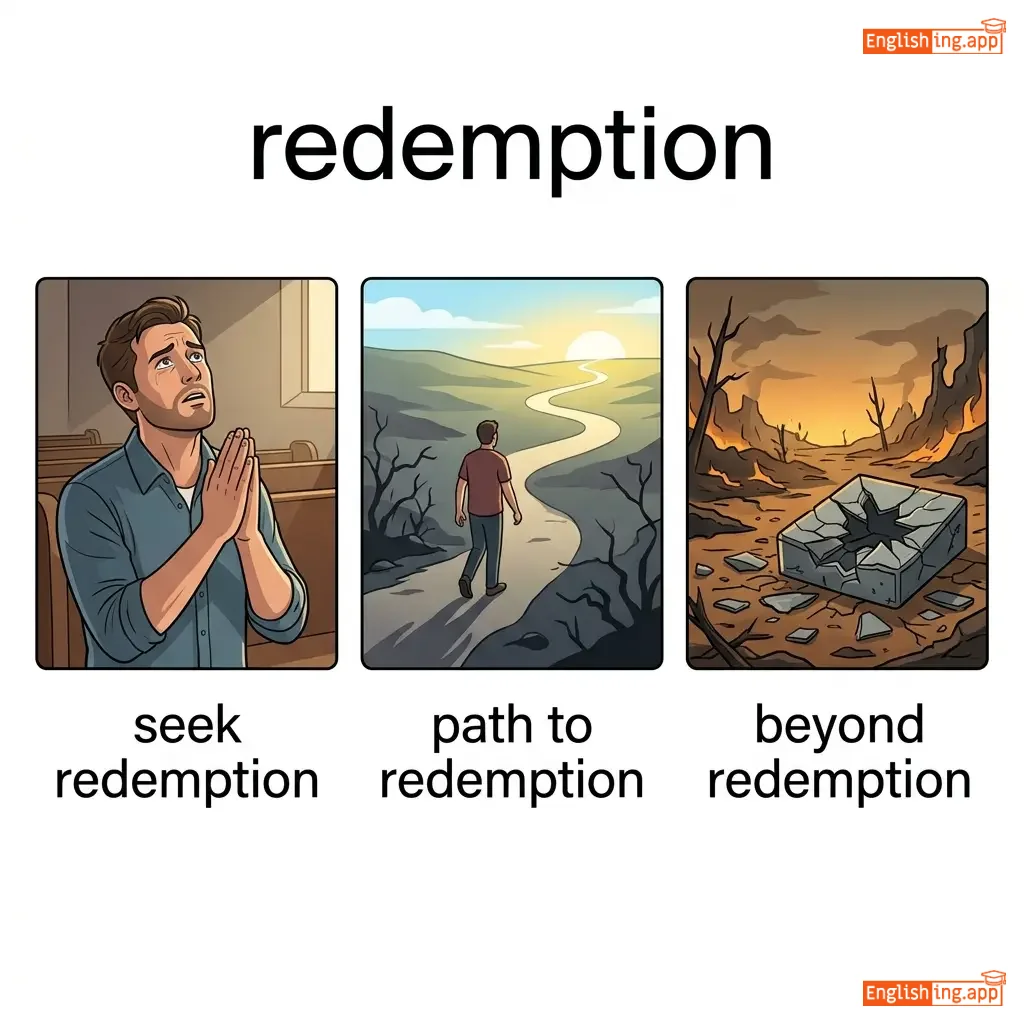
seek redemption, path to redemption, redemption value
••••••
|
Erlösung als Weg der Vergebung, die durch gute Taten erlangt wird.
••••••
|
|
#1150
🗑️
|
/rɪˈfjuːz/
noun
(refjūs)
••••••
|
- •••••• |
Abfall; Ablehnung
refyus
••••••
|
waste material; garbage; to decline or reject something
••••••
|
Please put the refuse in the designated bins.
Bitte werfen Sie den Abfall in die vorgesehenen Behälter.
••••••
|
Bitte werfen Sie den Abfall in die vorgesehenen Behälter.
Bitte werfen Sie den Abfall in die vorgesehenen Behaelter.
••••••
|
garbage, waste, trash, rubbish, decline, reject
••••••
|
accept, agree, treasure, valuables
••••••
|
refuse collection, household refuse, refuse disposal, refuse to answer
••••••
|
Refuse is 'Abfall' in German, and they both mean trash or to decline.
••••••
|
|
#1151
📉
|
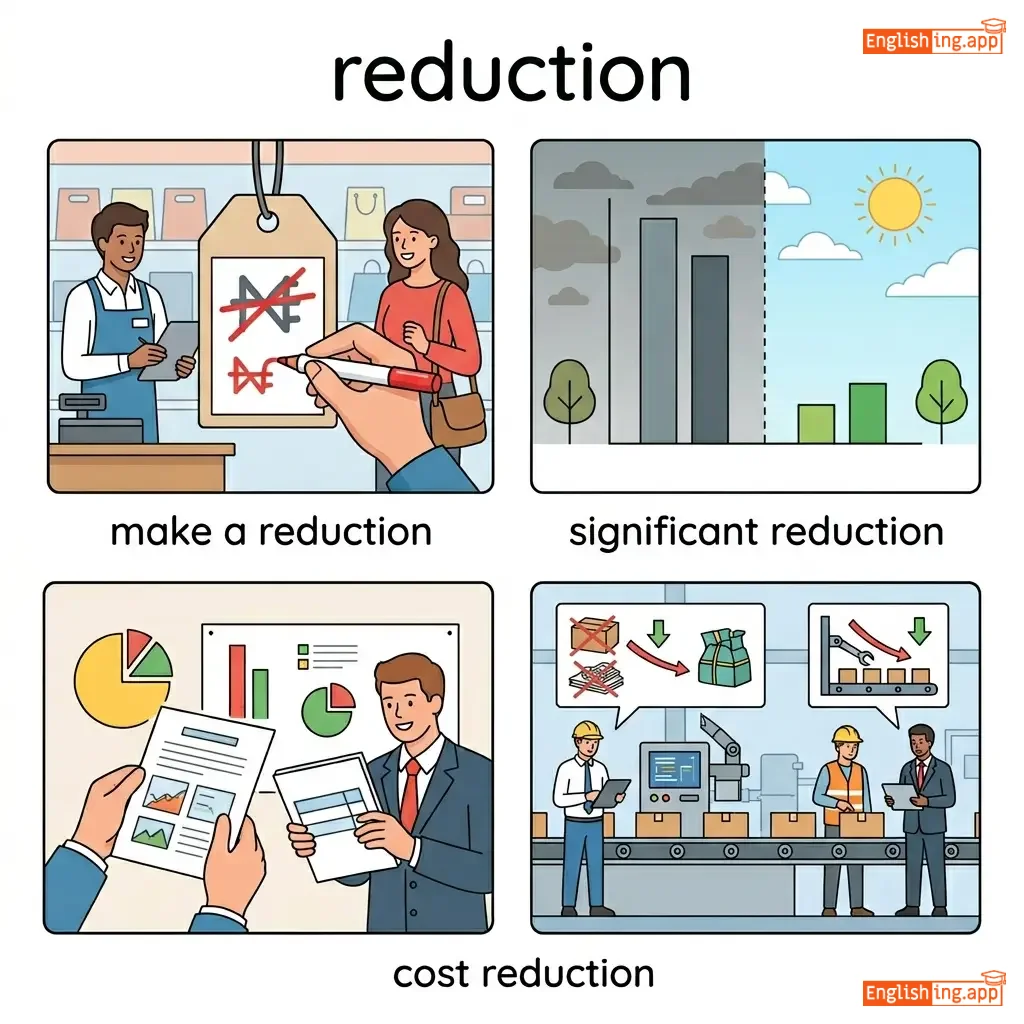
/rɪˈdʌk.ʃən/
noun
(Reduktion)
••••••
|
|
Reduktion
Reduktion
••••••
|
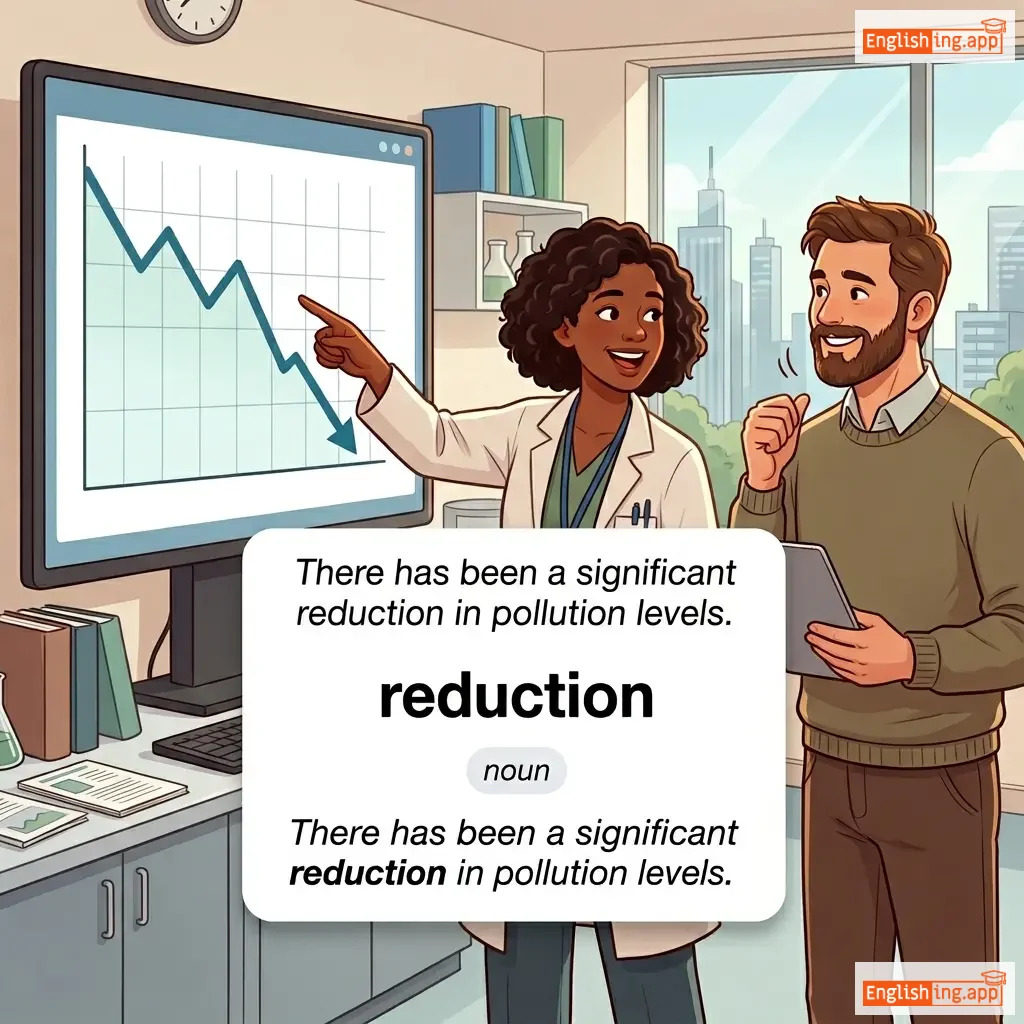
the action or fact of making a specified thing smaller or less in amount, degree, or size
••••••
|
The company announced a reduction in staff to cut costs.
Das Unternehmen kündigte eine Reduktion des Personals an, um Kosten zu senken.
••••••
|
Das Unternehmen kündigte eine Reduktion des Personals an, um Kosten zu senken.
Das Unternehmen kuendigte eine Reduktion des Personals an, um Kosten zu senken.
••••••
|
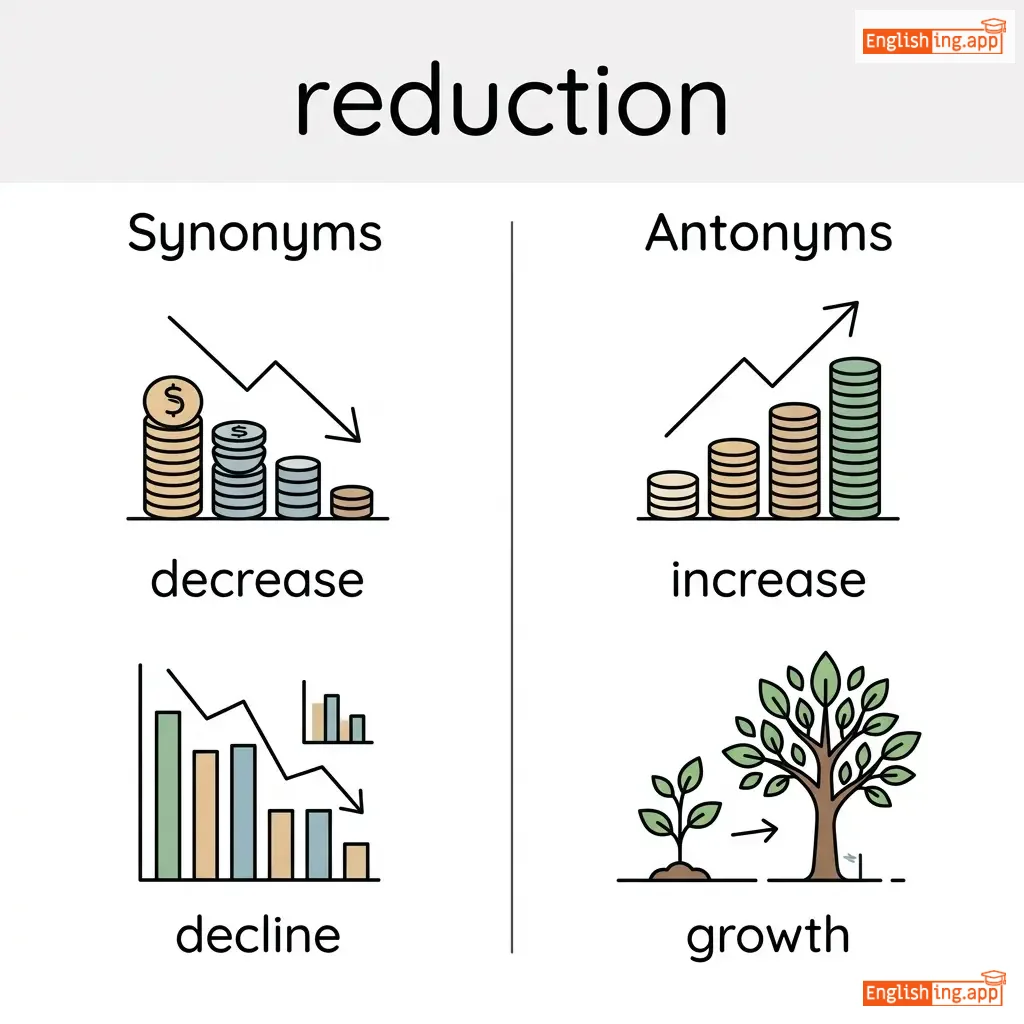
decrease, cut, decline, diminution
••••••
|
increase, growth, expansion, enlargement
••••••
|
cost reduction, price reduction, reduction in size
••••••
|
Reduktion = Reduce + Ktion. Visualize a giant red K cutting down budgets and costs to show the act of making things smaller.
••••••
|
|
#1152
🗺️
|
/ˈriː.dʒən/
noun
(rijon)
••••••
|
- •••••• |
Region; Gebiet; Bereich
region; gebiet; bereich
••••••
|
a particular area or part of a country or the world
••••••
|
This region is famous for its wine production.
Diese Region ist berühmt für ihre Weinproduktion.
••••••
|
Diese Region ist berühmt für ihre Weinproduktion.
Diese Region ist beruehmt fuer ihre Weinproduktion.
••••••
|
area, zone, territory, district, province
••••••
|
center, point, specific location
••••••
|
geographical region, remote region, coastal region, mountainous region
••••••
|
Region in German means a part of a country or area!
••••••
|
|
#1153
♻️
|
/rɪˈdʌn.dəns/
noun
(rɪˈdʌn.dəns)
••••••
|
- •••••• |
Redundanz
Redundanz
••••••
|
the state of being not or no longer needed or useful; superfluous repetition of information
••••••
|
The document contained redundance that made it unnecessarily long. |
Das Dokument enthielt Redundanz, die es unnötig lang machte.
Das Dokument enthielt Redundanz, die es unnötig lang machte.
••••••
|
superfluity, excess, surplus, repetition
••••••
|
necessity, shortage, scarcity, deficiency
••••••
|
data redundance, redundance in writing, avoid redundance
••••••
|
Wenn Informationen wiederholt werden, obwohl sie nicht notwendig sind, nennt man das Redundanz.
••••••
|
|
#1154
😞
|
/rɪˈɡret/
noun
(rigret)
••••••
|
- •••••• |
Bedauern
Bedauern
••••••
|
a feeling of sadness or disappointment about something that has happened or been done
••••••
|
She felt deep regret about her harsh words. |
Sie empfand tiefes Bedauern über ihre harten Worte.
Sie empfand tiefes Bedauern uber ihre harten Worte.
••••••
|
remorse, sorrow, guilt, repentance
••••••
|
satisfaction, contentment, pride, joy
••••••
|
deep regret, express regret, regret deeply, no regrets
••••••
|
Bedauern = Bedauern, das Gefühl, wenn man merkt, dass man einen Fehler gemacht hat
••••••
|
|
#1155
🤢
|
/riːk/
noun
(rik)
••••••
|
- •••••• |
stinken; einen starken Eindruck von etwas Unangenehmem oder Unerwünschtem vermitteln
stinken; einen starken eindruck von etwas unangenehmem oder unerwunschten vermitteln
••••••
|
to have a very unpleasant smell; to give a strong impression of something unpleasant or undesirable
••••••
|
The garbage can reeks of rotten food. |
Der Mülleimer stinkt nach verfaultem Essen.
Der Muelleimer stinkt nach verfaultem Essen.
••••••
|
stink, smell, stench, emit odor
••••••
|
fragrance, perfume, sweet smell, aroma
••••••
|
reek of alcohol, reek with sweat, reek of corruption
••••••
|
Stinken wie ein Mülleimer
••••••
|
|
#1156
⏰
|
/ˌreɡ.jʊˈlær.ɪ.ti/
noun
(regulärität)
••••••
|
- •••••• |
Regelmäßigkeit
regelmaessigkeit
••••••
|
the quality of being regular; occurring at fixed intervals or in a consistent pattern
••••••
|
The regularity of his exercise routine helped him stay healthy. |
Die Regelmäßigkeit seiner Trainingsroutine half ihm, gesund zu bleiben.
Die Regelmaessigkeit seiner Trainingsroutine half ihm, gesund zu bleiben.
••••••
|
consistency, routine, pattern, frequency
••••••
|
irregularity, randomness, chaos, inconsistency
••••••
|
with regularity, mathematical regularity, clockwork regularity, maintain regularity
••••••
|
Regelmäßigkeit gibt dem Leben Struktur, wie die Uhr die Zeit regelt
••••••
|
|
#1157
📚
|
/ˈref.ər.əns/
noun
(referenzen)
••••••
|
- •••••• |
Referenz
referenz
••••••
|
the action of mentioning or alluding to something; a source of information
••••••
|
Please provide references to support your research claims. |
Bitte geben Sie Referenzen an, um Ihre Forschungsaussagen zu unterstützen.
Bitte geben Sie Referenzen an, um Ihre Forschungsaussagen zu unterstuetzen.
••••••
|
citation, source, mention, allusion
••••••
|
ignorance, omission, exclusion, disregard
••••••
|
make reference to, reference book, character reference
••••••
|
Referenz hilft, die Forschung zu untermauern.
••••••
|
|
#1158
🎭
|
/rɪˈhɜːr.səl/
noun
(rihärsal)
••••••
|
- •••••• |
Probe; Übung einer Aufführung
rihersal
••••••
|
a practice performance of a play, concert, or other work for later public performance
••••••
|
The final rehearsal before opening night went perfectly.
Die letzte Generalprobe vor der Eröffnungsnacht verlief perfekt.
••••••
|
Die letzte Probe vor der Eröffnungsnacht war perfekt.
Die letzte probe vor der eroeffnungsnacht war perfekt.
••••••
|
practice, drill, run-through, preparation
••••••
|
performance, show, actual event
••••••
|
dress rehearsal, final rehearsal, wedding rehearsal, rehearsal dinner
••••••
|
probe = üben, bevor man auf die Bühne geht
••••••
|
|
#1159
🪞
|
/rɪˈflek.ʃən/
noun
(Reflexion)
••••••
|
|
Reflexion
reflexion
••••••
|
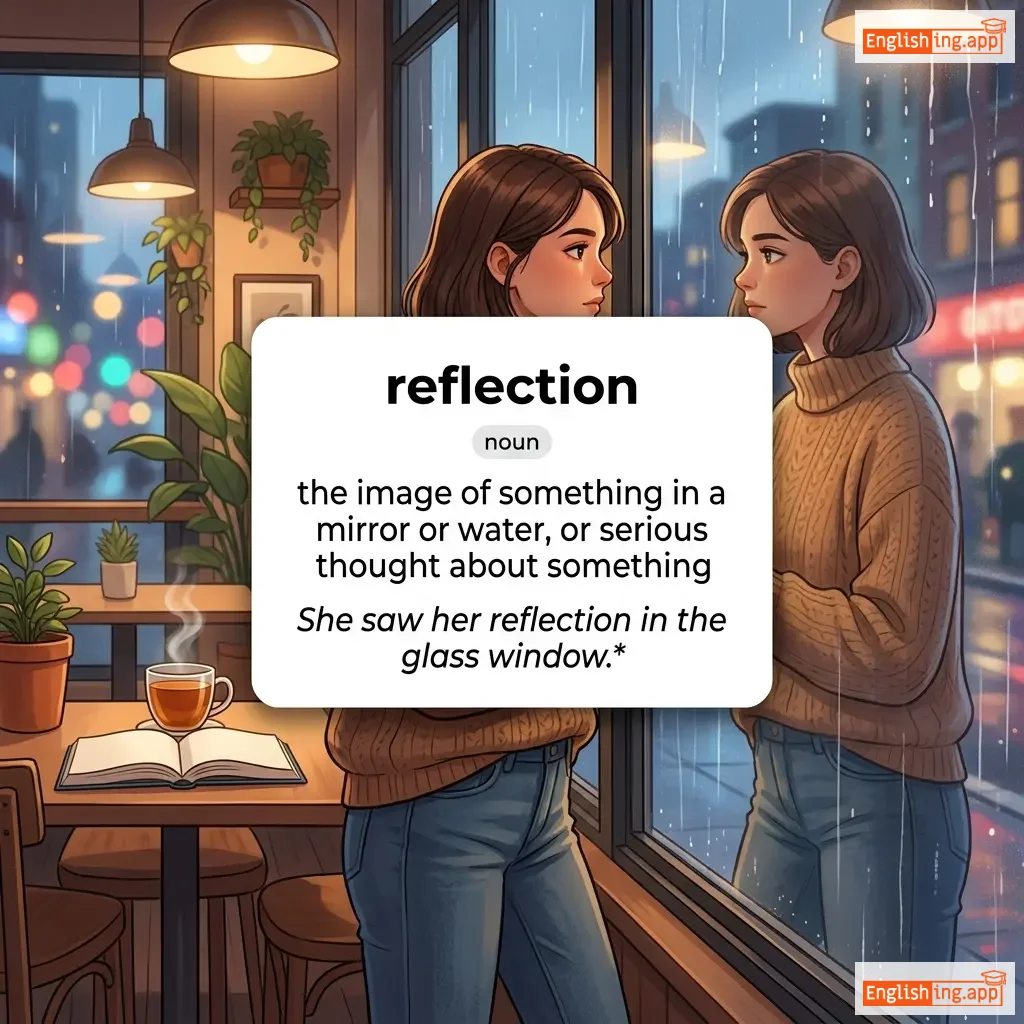
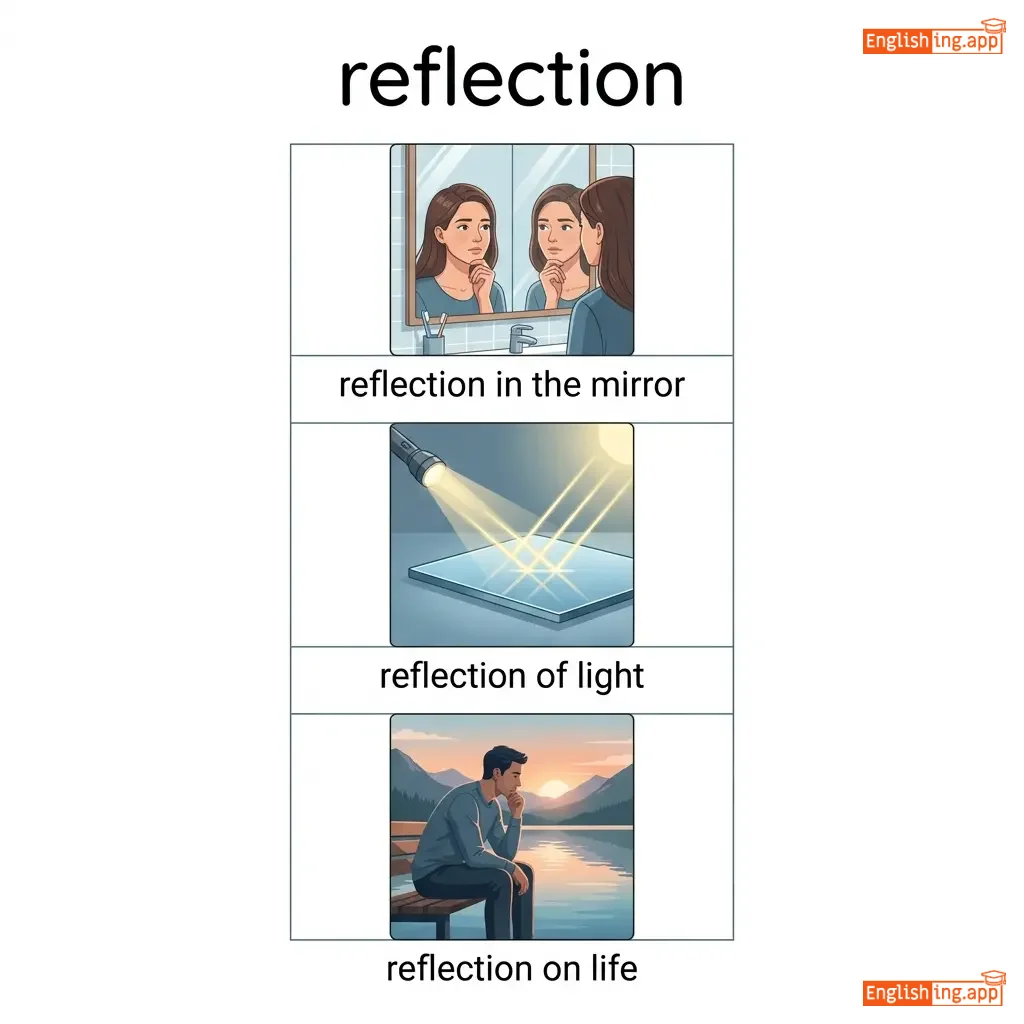
the image of something in a mirror or on any reflective surface; serious thought or consideration
••••••
|
She saw her reflection in the water and started thinking deeply. |
Sie sah ihr Spiegelbild im Wasser und begann tief nachzudenken.
Sie sah ihr Spiegelbild im Wasser und begann tief nachzudenken.
••••••
|
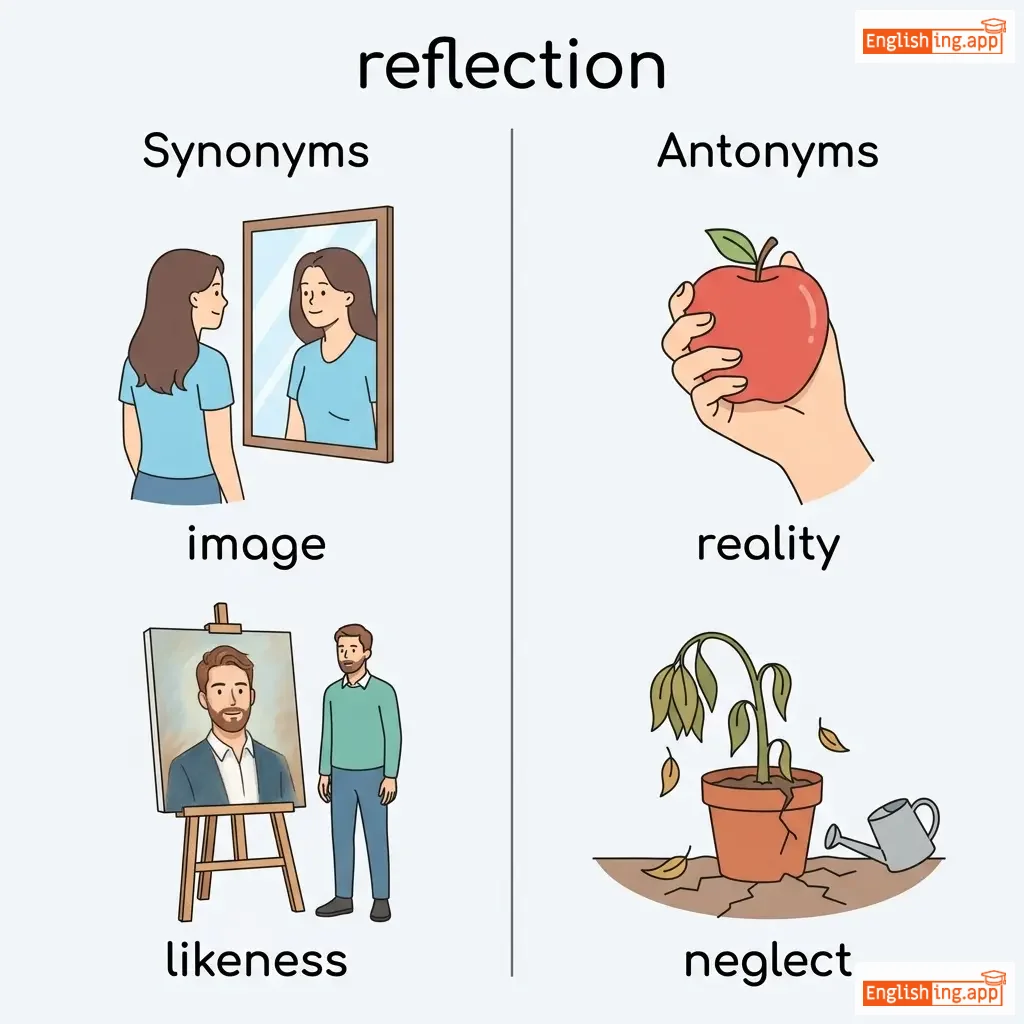
mirror image, contemplation, thought, consideration
••••••
|
reality, substance, impulsiveness, thoughtlessness
••••••
|
mirror reflection, deep reflection, reflection on life
••••••
|
nachdenken, was im Spiegel reflektiert wird
••••••
|
|
#1160
👨👩👧👦
|
/rɪˈleɪ.ʃən/
noun
(riléʃion)
••••••
|
- •••••• |
Beziehung; Verwandtschaft
Beziehung; Verwandtschaft
••••••
|
the way in which two or more people or things are connected; a family member
••••••
|
They have a strong business relation that has lasted for years. |
Sie haben eine starke geschäftliche Beziehung, die seit Jahren besteht.
Sie haben eine starke geschaftliche Beziehung, die seit Jahren besteht
••••••
|
relationship, connection, association, kinship
••••••
|
disconnection, separation, isolation
••••••
|
family relation, business relation, close relation, diplomatic relations
••••••
|
Beziehung bezieht sich auf eine Verbindung, wie in einer familiären Bindung.
••••••
|
Vocabulary Quiz
Test your vocabulary by matching words with their translations or meanings.
Login to take the quiz
Comments (0)
Share your thoughts and join the discussion.
Join the discussion by logging in
Login to CommentNo comments yet
Be the first to share your thoughts!