

Upgrade für Zugriff auf alle Vokabeln
Erhalten Sie unbegrenzten Zugriff auf alle Vokabeln mit Pro-Mitgliedschaft
Upgrade auf ProÜbersetzung
Vergangenheit
Partizip Perfekt
Dritte Person Singular
Gerundium
Bedeutung
Beispielsatz
Übersetzung Beispielsatz
Synonyme
Antonyme
Kollokationen
Eselsbrücke
Swipe left or right, or use the buttons. Tap image to zoom.
Upgrade für Zugriff auf alle Sätze
Erhalten Sie unbegrenzten Zugriff auf alle Sätze mit Pro-Mitgliedschaft
Upgrade auf ProÜbersetzung Beispielsatz
Wort
Lesson 77Lesson 77 - Maske umschalten
|
Emoji
|
Wort | Images | Übersetzung | Bedeutung | Beispielsatz | Übersetzung Beispielsatz | Synonyme | Antonyme | Kollokationen | Eselsbrücke |
|---|---|---|---|---|---|---|---|---|---|---|
|
#1521
🌿
|
/wiːd/
noun
(wiːd)
••••••
|
|
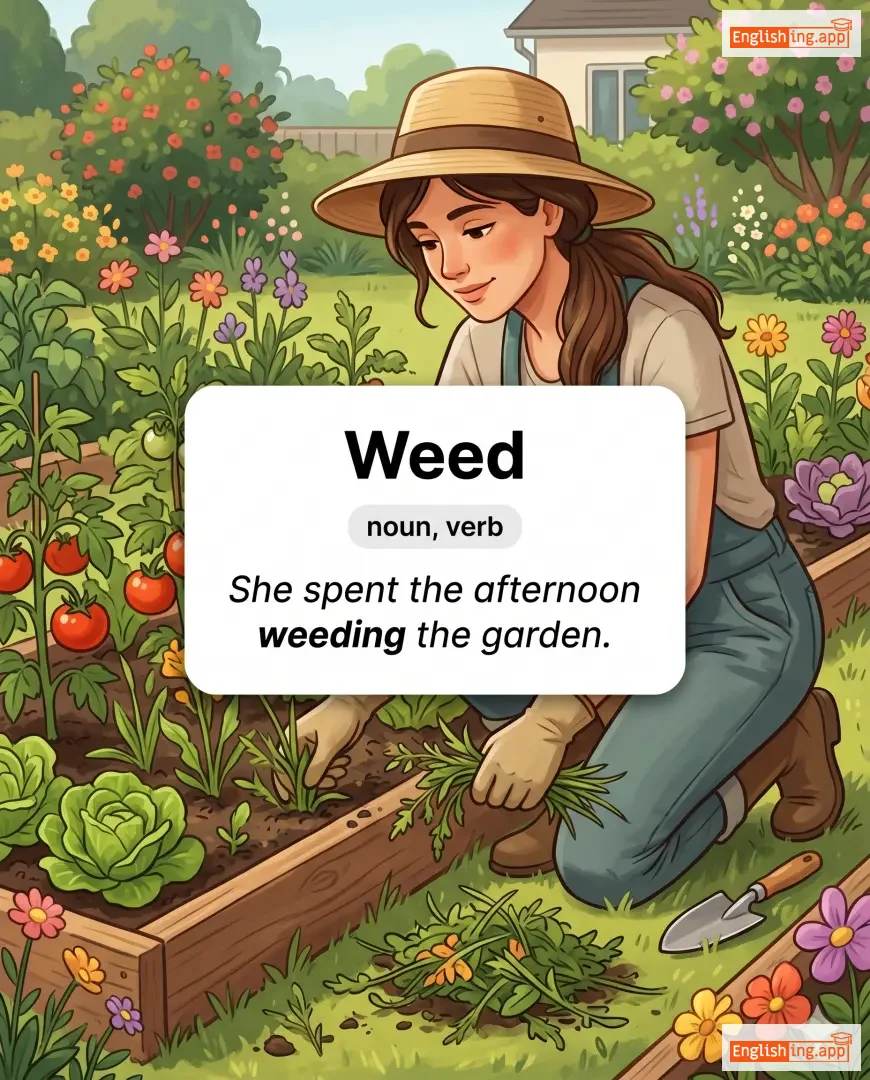
Unkraut
unkraut
••••••
|
a wild plant growing where it is not wanted; unwanted plant
••••••
|
The garden was full of weeds that needed to be removed. |
Der Garten war voller Unkraut, das entfernt werden musste.
Der Garten war voller Unkraut, das entfernt werden musste.
••••••
|
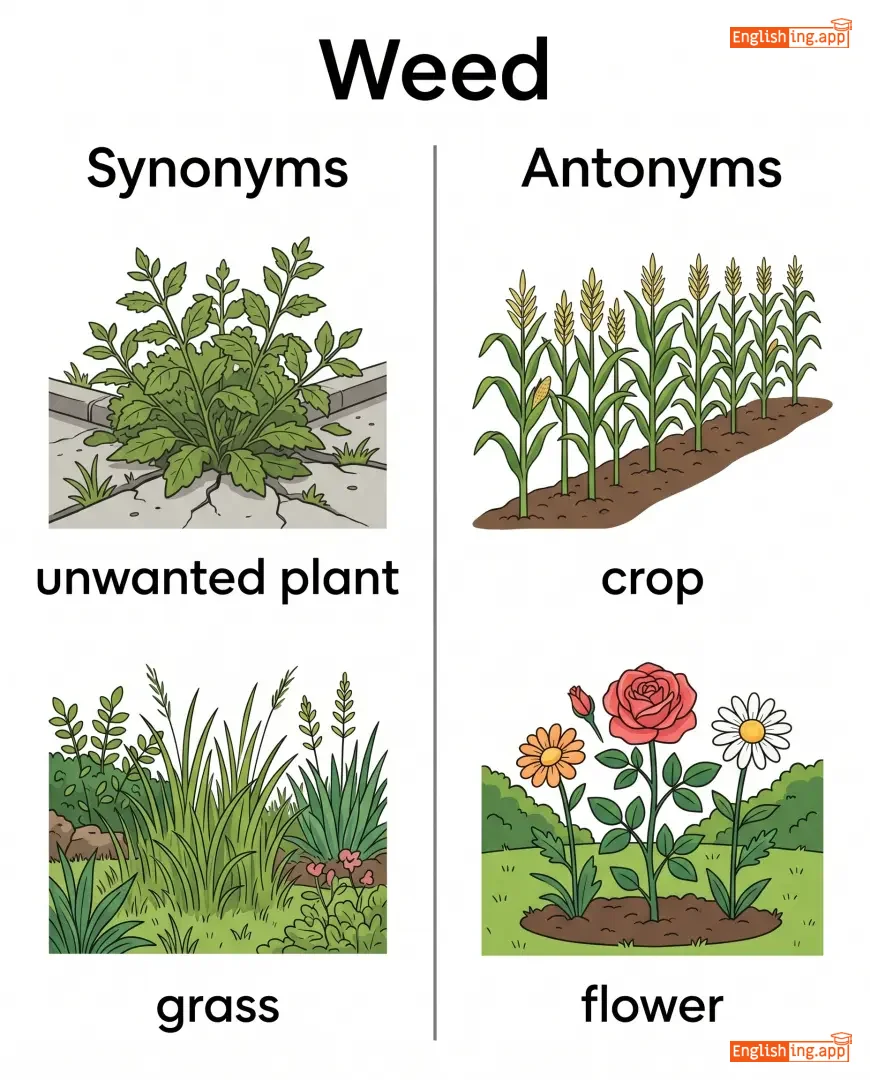
unwanted plant, wild plant
••••••
|
flower, crop, cultivated plant
••••••
|
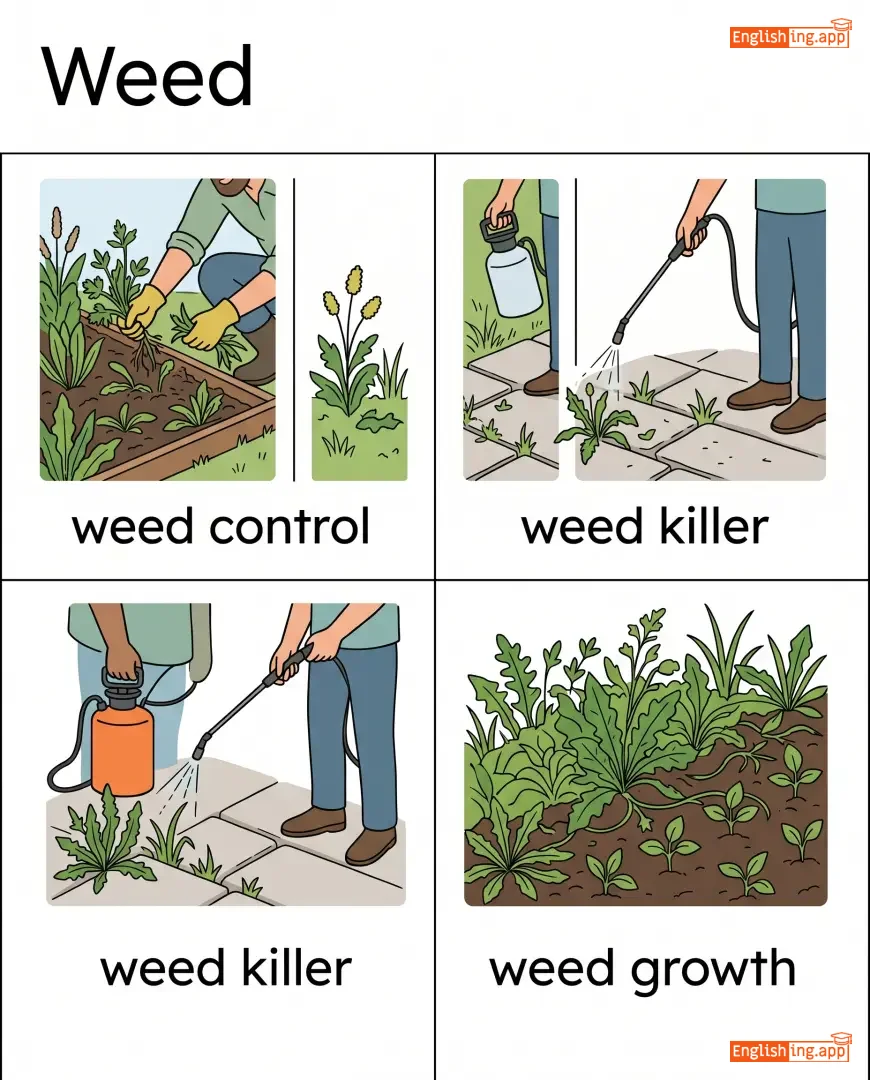
weed killer, garden weed, pull weeds
••••••
|
Unkraut im Garten muss entfernt werden, wenn es unerwünscht ist.
••••••
|
|
#1522
↔️
|
/wɪdθ/
noun
(wɪdθ)
••••••
|
- •••••• |
Breite; Ausdehnung
breite; ausdehnung
••••••
|
the measurement or extent of something from side to side; breadth
••••••
|
The width of the river is about 50 meters.
Die Breite des Flusses beträgt etwa 50 Meter.
••••••
|
Die Breite des Flusses beträgt etwa 50 Meter.
Die Breite des Flusses betraegt etwa 50 Meter.
••••••
|
breadth, span, extent
••••••
|
length, height, narrowness
••••••
|
full width, average width, total width
••••••
|
Stellen Sie sich den Fluss vor, um sich an 'width' zu erinnern.
••••••
|
|
#1523
🤝
|
/ˈwel.feər/
noun
(welfare)
••••••
|
- •••••• |
Wohlergehen; Wohlstand; Gesundheit
Wohlergehen; Wohlstand; Gesundheit
••••••
|
the health, happiness, and fortunes of a person or group; care and support
••••••
|
The government is responsible for the welfare of its citizens. |
Die Regierung ist für das Wohlergehen ihrer Bürger verantwortlich.
Die Regierung ist fur das Wohlergehen ihrer Burger verantwortlich.
••••••
|
well-being, benefit, good, prosperity
••••••
|
harm, disadvantage, detriment
••••••
|
social welfare, welfare state, welfare system
••••••
|
Wohlergehen = Wohl (well) + ergehen (being)
••••••
|
|
#1524
🌲
|
/ˈwɪldərnəs/
noun
(wildernes)
••••••
|
- •••••• |
Wildnis; unberührtes Gebiet; Wüste
wildnis; unberuhrtes gebiet; wuste
••••••
|
an uncultivated, uninhabited, and inhospitable region; a wild or uncultivated state
••••••
|
They got lost in the wilderness for three days.
Sie haben sich drei Tage lang in der Wildnis verirrt.
••••••
|
Sie haben sich drei Tage lang in der Wildnis verirrt.
Sie haben sich drei Tage lang in der Wildnis verirrt.
••••••
|
wild, wasteland, desert, backwoods
••••••
|
civilization, city, settlement, town
••••••
|
vast wilderness, wilderness area, into the wilderness
••••••
|
Stellen Sie sich vor, Sie verirren sich in einem unbewohnten Gebiet. 'Wilderness' ist der Ort, an dem man die Wildnis hautnah erlebt.
••••••
|
|
#1525
🕳️
|
/wel/
noun
(wel)
••••••
|
- •••••• |
Brunnen; Wohlergehen;
brunnen; wohlergehen
••••••
|
a deep hole in the ground from which water is obtained
••••••
|
The villagers get water from the old well in the center of town.
Die Dorfbewohner holen Wasser aus dem alten Brunnen im Zentrum des Dorfes.
••••••
|
Die Dorfbewohner holen Wasser aus dem alten Brunnen im Zentrum des Dorfes.
Die Dorfbewohner holen Wasser aus dem alten Brunnen im Zentrum des Dorfes.
••••••
|
water hole, spring, bore
••••••
|
hill, mound, elevation
••••••
|
water well, oil well, deep well
••••••
|
Brunnen liefert Wasser, Wohlergehen für alle im Dorf.
••••••
|
|
#1526
🦉
|
/ˈwɪzdəm/
noun
(wɪzdəm)
••••••
|
- •••••• |
Weisheit; Wissen; Urteilskraft
Weisheit; Wissen; Urteilskraft
••••••
|
the quality of having experience, knowledge, and good judgment; the soundness of an action or decision
••••••
|
Age brings wisdom and experience. |
Das Alter bringt Weisheit und Erfahrung.
Das Alter bringt Weisheit und Erfahrung.
••••••
|
knowledge, intelligence, insight, prudence
••••••
|
foolishness, ignorance, stupidity, folly
••••••
|
ancient wisdom, conventional wisdom, words of wisdom
••••••
|
German: 'Weisheit' = Wisdom
••••••
|
|
#1527
😊
|
/ˈwel.biː.ɪŋ/
noun
(ˈwɛlˌbiɪŋ)
••••••
|
|
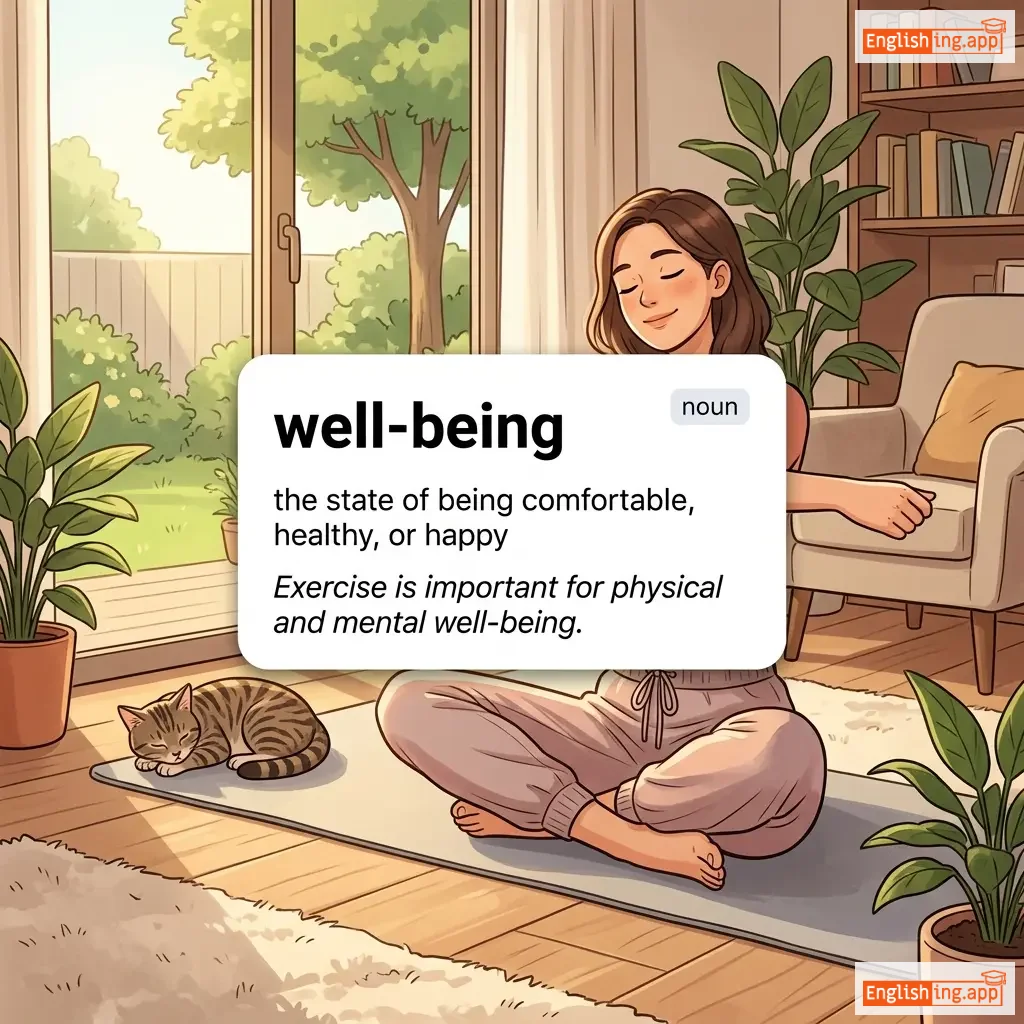
Wohlbefinden
Wohlbefinden
••••••
|
the state of being comfortable, healthy, or happy
••••••
|
Regular exercise contributes to physical and mental well-being. |
Regelmäßige Bewegung trägt zum physischen und mentalen Wohlbefinden bei.
Regelmaessige Bewegung traegt zum physischen und mentalen Wohlbefinden bei.
••••••
|
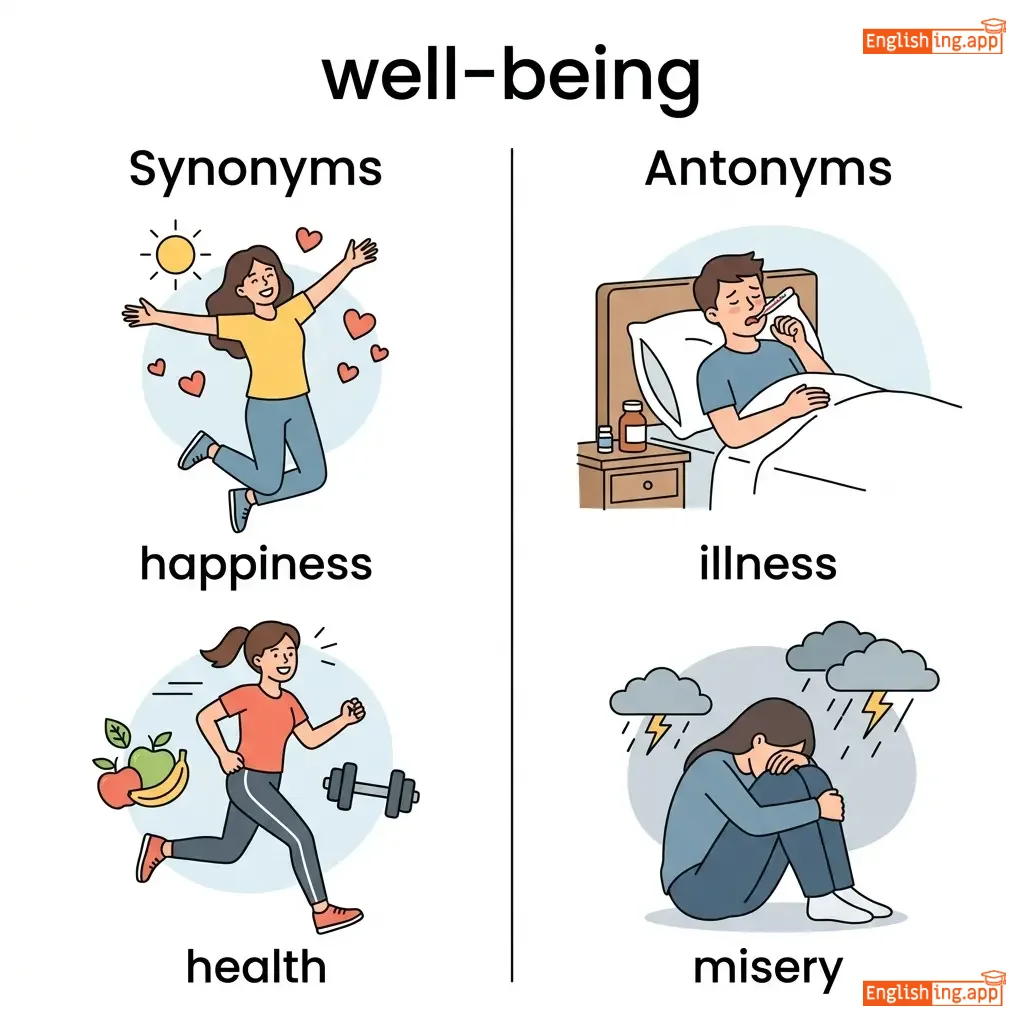
welfare, health, happiness, comfort
••••••
|
suffering, distress, misery
••••••
|
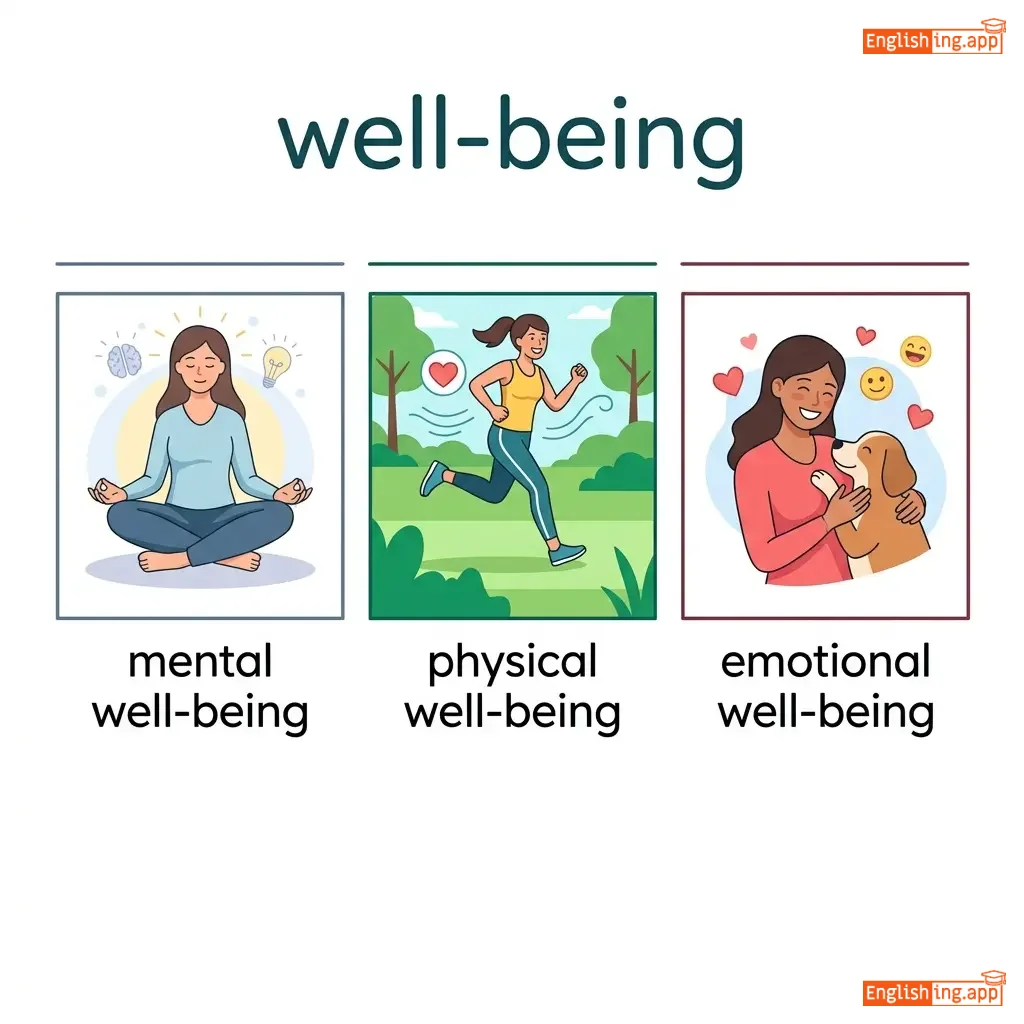
physical well-being, mental well-being, emotional well-being
••••••
|
Wohlbefinden in German combines 'wohl' (well) and 'befinden' (being), just like 'well-being' in English.
••••••
|
|
#1528
🧠
|
/wɪt/
noun
(vit)
••••••
|
- •••••• |
Witz
witz
••••••
|
mental sharpness and inventiveness; keen intelligence; a natural aptitude for using words in a clever and amusing way
••••••
|
She has a sharp wit and quick sense of humor.
Sie hat einen scharfen Verstand und einen schnellen Sinn für Humor.
••••••
|
Sie hat einen scharfen Verstand und einen schnellen Sinn für Humor.
Sie hat einen scharfen Verstand und einen schnellen Sinn für Humor.
••••••
|
intelligence, humor, cleverness, sharpness
••••••
|
dullness, stupidity, seriousness, foolishness
••••••
|
quick wit, sharp wit, dry wit
••••••
|
Wit = Witz (wit = witz)
••••••
|
|
#1529
🤗
|
/ˈwel.wɪʃ.ər/
noun
(wɛl wɪʃər)
••••••
|
- •••••• |
Wohlwender
Wohlwender
••••••
|
a person who desires happiness or success for another
••••••
|
Many well-wishers came to congratulate her on her graduation.
Meni wɛl wɪʃərz keɪm tuː kəngræʧuleɪt hɜːr ɒn hɜːr grædʒueɪʃən.
••••••
|
Viele Wohlwender kamen, um ihr zum Abschluss zu gratulieren.
Viele Wohlwender kamen, um ihr zum Abschluss zu gratulieren.
••••••
|
supporter, friend, admirer
••••••
|
enemy, opponent, rival
••••••
|
family well-wishers, close well-wishers
••••••
|
Wohlwender = Wohl bedeutet gutes und Wender jemand, der wendet (hilft).
••••••
|
|
#1530
🧙♀️
|
/wɪtʃ/
noun
(witsch)
••••••
|
- •••••• |
hexe
hexe
••••••
|
a woman thought to have magic powers, especially evil ones; a practitioner of witchcraft
••••••
|
The old witch cast a spell on the prince.
Die alte Hexe sprach einen Zauber über den Prinzen.
••••••
|
Die alte Hexe sprach einen Zauber über den Prinzen.
Die alte Hexe sprach einen Zauber über den Prinzen.
••••••
|
sorceress, enchantress, hag, magician
••••••
|
saint, angel, good fairy, healer
••••••
|
old witch, evil witch, witch doctor
••••••
|
Hexe im Deutschen ist wie Witch im Englischen, also 'Hexe' hilft dir!
••••••
|
|
#1531
🥛
|
/weɪ/
noun
(whey)
••••••
|
- •••••• |
Molke
Molke
••••••
|
the watery part of milk that separates from the curds when making cheese
••••••
|
Whey protein is popular among athletes and bodybuilders. |
Molkeprotein ist bei Athleten und Bodybuildern beliebt.
Molkeprotein ist bei Athleten und Bodybuildern beliebt.
••••••
|
milk serum, liquid portion
••••••
|
curd, solid portion
••••••
|
whey protein, whey powder, sweet whey
••••••
|
Molke = Whey, both are by-products of milk and popular in fitness.
••••••
|
|
#1532
👁️
|
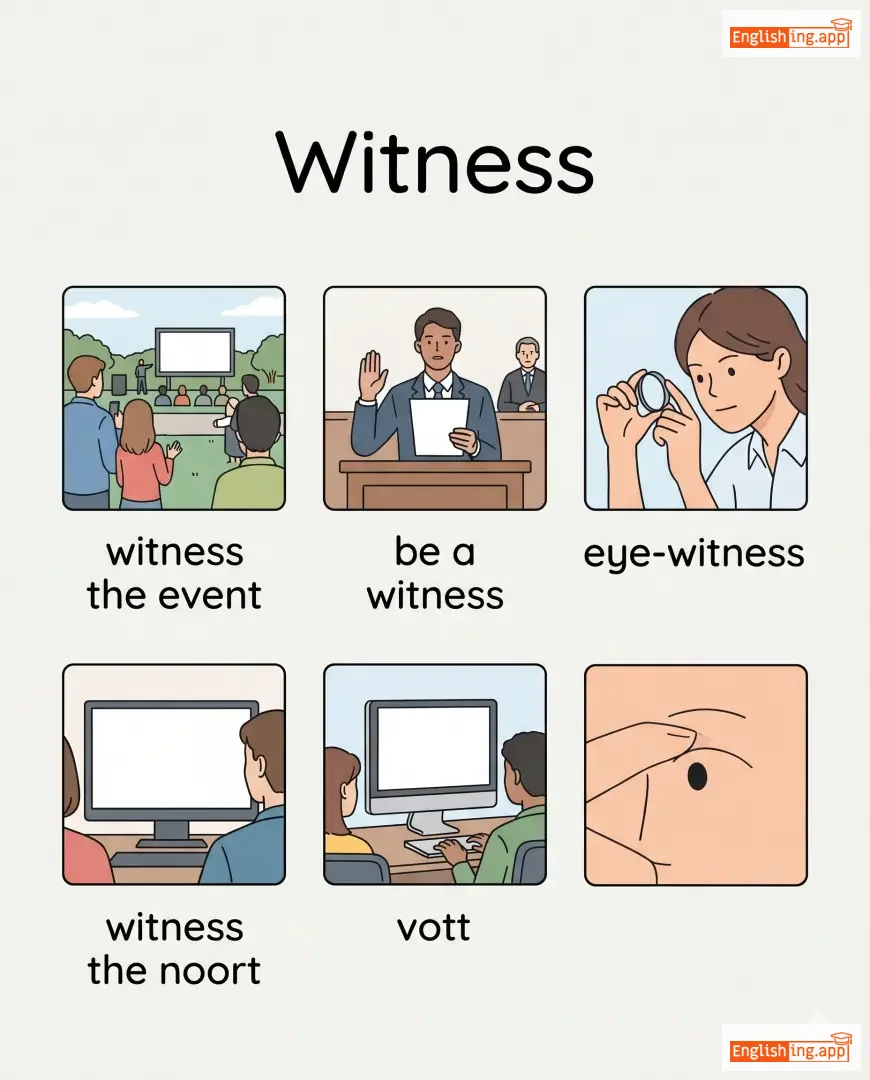
/ˈwɪtnəs/
noun
(witness)
••••••
|
|
Zeuge
tsoguh
••••••
|
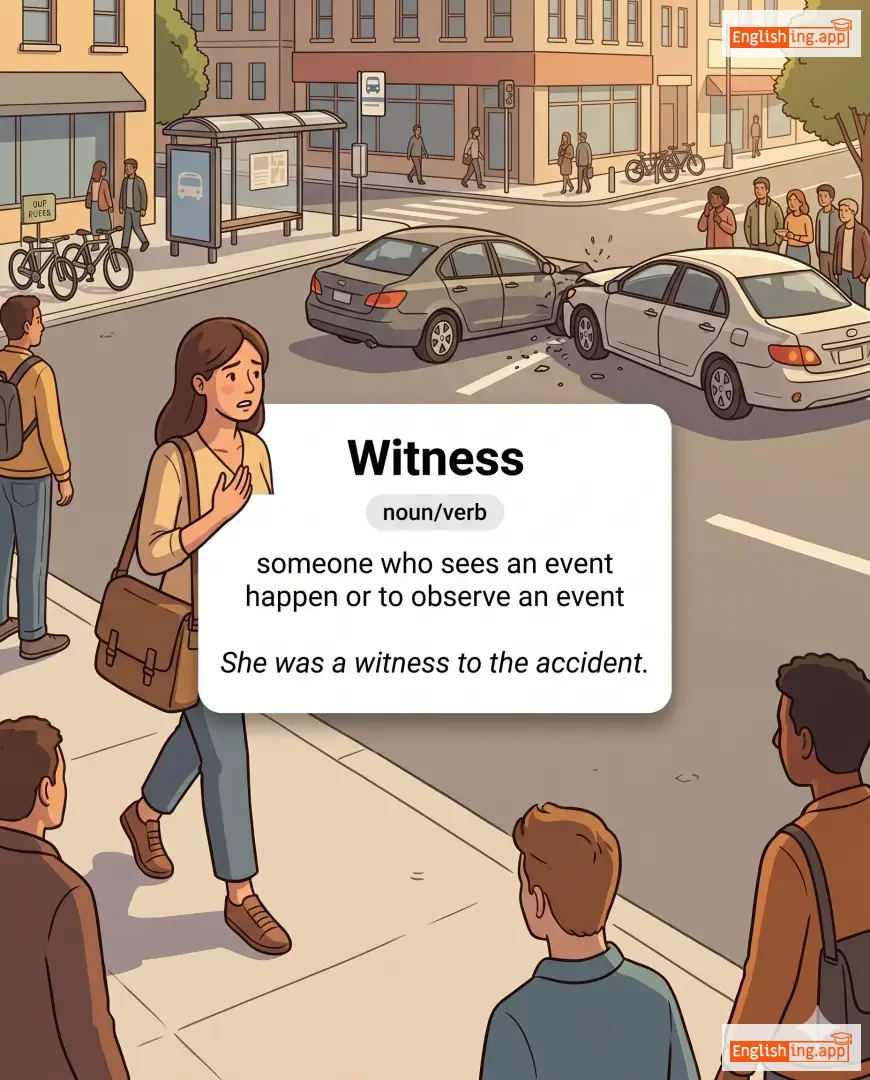
a person who sees an event, typically a crime or accident; someone who gives evidence in a court of law
••••••
|
The witness testified in court yesterday. |
Der Zeuge sagte gestern vor Gericht aus.
Der Zeuge sagte gestern vor Gericht aus.
••••••
|
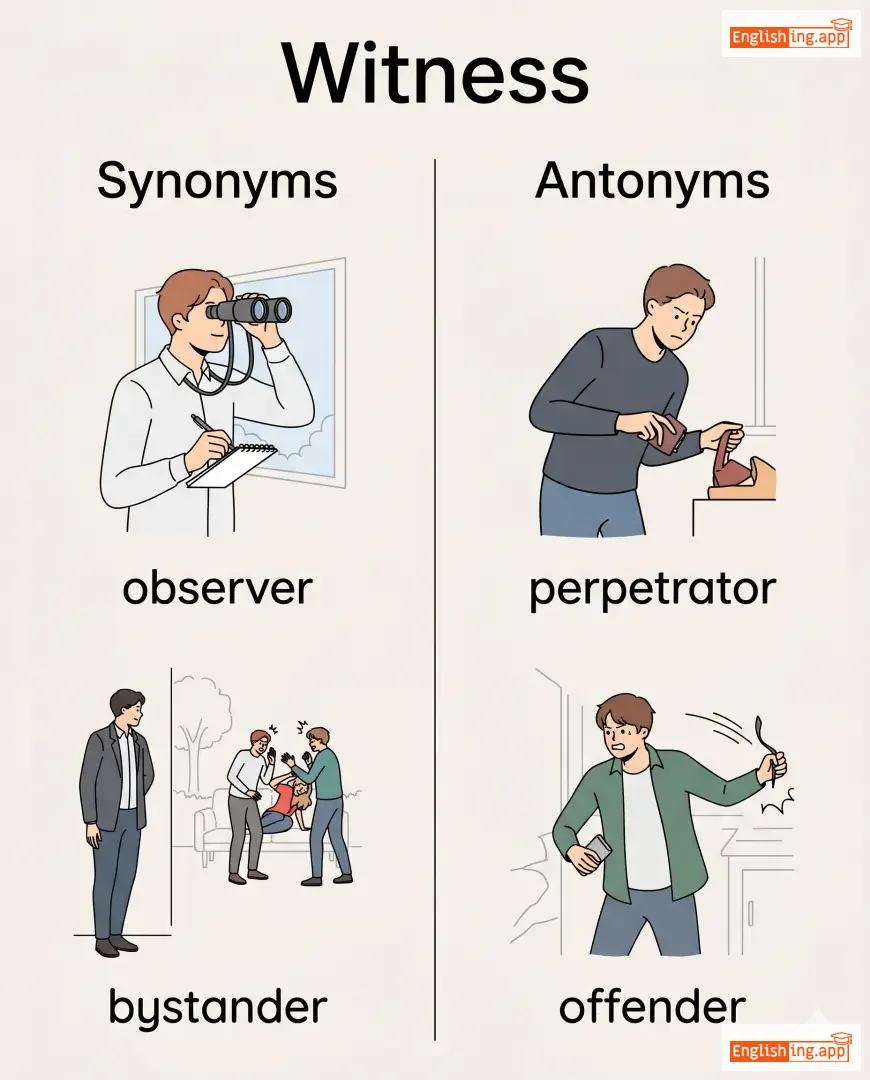
observer, bystander, eyewitness, spectator
••••••
|
participant, perpetrator, defendant, accused
••••••
|
key witness, star witness, reliable witness
••••••
|
Zeuge – eine Person, die vor Gericht aussagt.
••••••
|
|
#1533
📍
|
/ˈweər.ə.baʊts/
noun
(wɛər əˈbaʊts)
••••••
|
- •••••• |
aufenthaltsort; ort; position
aufenthaltsort; ort; position
••••••
|
the place where someone or something is located
••••••
|
Nobody knows the whereabouts of the missing person.
Niemand weiß, wo sich die vermisste Person aufhält.
••••••
|
Niemand weiß, wo sich die vermisste Person aufhält.
Niemand weiß, wo sich die vermisste Person aufhält.
••••••
|
location, position, place
••••••
|
absence, unknown location
••••••
|
unknown whereabouts, current whereabouts
••••••
|
Wie findet man seinen Aufenthaltsort auf der Landkarte
••••••
|
|
#1534
🧙♂️
|
/ˈwɪzərd/
noun
(wɪzɑːd)
••••••
|
- •••••• |
Zauberer
Zauberer
••••••
|
a man who is supposed to have magical powers; a person who is very skilled in a particular area
••••••
|
The wizard performed amazing magic tricks.
Der Zauberer führte erstaunliche Zaubertricks vor.
••••••
|
Der Zauberer führte erstaunliche Zaubertricks vor.
Der Zauberer führte erstaunliche Zaubertricks vor.
••••••
|
magician, sorcerer, conjurer, expert
••••••
|
novice, amateur, beginner, muggle
••••••
|
powerful wizard, wise wizard, computer wizard
••••••
|
Ein Zauberer ist ein Wizard, der mit Magie und erstaunlichen Tricks beeindruckt.
••••••
|
|
#1535
🕯️
|
/wɪk/
noun
(wik)
••••••
|
- •••••• |
Docht einer Kerze
Docht einer Kerze
••••••
|
a cord or strand of cotton that burns to provide light in a candle or lamp
••••••
|
The candle wick needs to be trimmed for better burning. |
Der Docht der Kerze muss gekürzt werden, um besser zu brennen.
Der Docht der Kerze muss gekurzt werden, um besser zu brennen.
••••••
|
fuse, cord, string
••••••
|
flame, fire
••••••
|
candle wick, lamp wick, oil wick
••••••
|
Der Docht einer Kerze ist der Teil, der brennt.
••••••
|
|
#1536
🙏
|
/ˈwɜːrʃɪp/
noun
(wör-ship)
••••••
|
- •••••• |
Gottesdienst
gottesdienst
••••••
|
the feeling or expression of reverence and adoration for a deity; religious devotion and practice
••••••
|
They gather every Sunday for worship.
Sie versammeln sich jeden Sonntag zum Gottesdienst.
••••••
|
Sie versammeln sich jeden Sonntag zum Gottesdienst.
Sie versammeln sich jeden Sonntag zum Gottesdienst.
••••••
|
prayer, devotion, reverence, adoration
••••••
|
blasphemy, disrespect, irreverence, sacrilege
••••••
|
place of worship, religious worship, morning worship
••••••
|
Worship in German is Gottesdienst, think of 'God' in 'Gottesdienst' as you imagine religious ceremonies.
••••••
|
|
#1537
👩🦳
|
/ˈwɪd.oʊ/
noun
(ˈvɪd.oʊ)
••••••
|
- •••••• |
Witwe
Witwe
••••••
|
a woman whose husband has died and who has not married again
••••••
|
The widow received support from her family and community. |
Die Witwe erhielt Unterstützung von ihrer Familie und Gemeinschaft.
Die Witwe erhielt Unterstützung von ihrer Familie und Gemeinschaft.
••••••
|
bereaved woman, surviving spouse
••••••
|
wife, married woman
••••••
|
young widow, war widow, widow's pension
••••••
|
Witwe, Witwenstand, braucht Unterstützung.
••••••
|
|
#1538
💎
|
/wɜːrθ/
noun
(wɜːrθ)
••••••
|
- •••••• |
Wert; Preis;
wert; preis
••••••
|
the value equivalent to that of someone or something; the level at which someone or something deserves to be valued
••••••
|
The painting is worth thousands of dollars. |
Das Gemälde ist tausende von Dollar wert.
Das Gemälde ist tausende von Dollar wert.
••••••
|
value, price, merit, importance
••••••
|
worthlessness, insignificance, cheapness, valuelessness
••••••
|
net worth, true worth, self-worth
••••••
|
Der 'Wert' ist, was man einer wertvollen Sache gibt.
••••••
|
|
#1539
👨🦳
|
/ˈwɪd.oʊ.ər/
noun
(wɪd.əʊ.ɚ)
••••••
|
- •••••• |
Witwer
Witwer
••••••
|
a man whose wife has died and who has not married again
••••••
|
The elderly widower lived alone but had regular visits from his children. |
Der ältere Witwer lebte allein, aber er hatte regelmäßige Besuche von seinen Kindern.
Der ältere Witwer lebte allein, aber er hatte regelmäßige Besuche von seinen Kindern.
••••••
|
bereaved man, surviving husband
••••••
|
husband, married man
••••••
|
elderly widower, lonely widower
••••••
|
Witwer ist ein Mann, der nach dem Tod seiner Frau weiter lebt und nicht wieder heiratet.
••••••
|
|
#1540
😡
|
/ræθ/
noun
(rath)
••••••
|
- •••••• |
Zorn; Wut
Zorn; Wut
••••••
|
extreme anger; intense fury or indignation
••••••
|
His wrath was terrible to behold.
Sein Zorn war schrecklich zu sehen.
••••••
|
Sein Zorn war schrecklich zu sehen.
Sein Zorn war schrecklich zu sehen.
••••••
|
anger, fury, rage, indignation
••••••
|
calmness, peace, serenity, forgiveness
••••••
|
divine wrath, terrible wrath, face someone's wrath
••••••
|
Wut ist wie ein Feuer, das in dir brennt, heiß und unkontrollierbar.
••••••
|
Vocabulary Quiz
Test your vocabulary by matching words with their translations or meanings.
Login to take the quiz
Comments (0)
Share your thoughts and join the discussion.
Join the discussion by logging in
Login to CommentNo comments yet
Be the first to share your thoughts!