

Upgrade für Zugriff auf alle Vokabeln
Erhalten Sie unbegrenzten Zugriff auf alle Vokabeln mit Pro-Mitgliedschaft
Upgrade auf ProÜbersetzung
Vergangenheit
Partizip Perfekt
Dritte Person Singular
Gerundium
Bedeutung
Beispielsatz
Übersetzung Beispielsatz
Synonyme
Antonyme
Kollokationen
Eselsbrücke
Swipe left or right, or use the buttons. Tap image to zoom.
Upgrade für Zugriff auf alle Sätze
Erhalten Sie unbegrenzten Zugriff auf alle Sätze mit Pro-Mitgliedschaft
Upgrade auf ProÜbersetzung Beispielsatz
Wort
Lesson 76Lesson 76 - Maske umschalten
|
Emoji
|
Wort | Images | Übersetzung | Bedeutung | Beispielsatz | Übersetzung Beispielsatz | Synonyme | Antonyme | Kollokationen | Eselsbrücke |
|---|---|---|---|---|---|---|---|---|---|---|
|
#1501
😄
|
/wæɡ/
noun
(wäg)
••••••
|
- •••••• |
Spaßvogel; jemand, der gerne Witze macht
wag
••••••
|
a humorous or playful person; someone who enjoys joking around
••••••
|
The class wag always made everyone laugh with his clever jokes. |
Der Spaßvogel der Klasse brachte alle immer mit seinen cleveren Witzen zum Lachen.
Der Spaßvogel der Klasse brachte alle immer mit seinen cleveren Witzen zum Lachen.
••••••
|
joker, comedian, wit, jester
••••••
|
serious person, bore, killjoy
••••••
|
class wag, office wag, little wag
••••••
|
Wag in Deutsch bedeutet 'Spaßvogel', jemand, der immer zum Lachen bringt.
••••••
|
|
#1502
⚔️
|
/ˈwɒr.i.ər/
noun
(Krieger)
••••••
|
- •••••• |
Krieger; tapferer oder erfahrener Kämpfer
Krieger
••••••
|
a person who fights in battles; a brave or experienced fighter
••••••
|
The brave warrior defended his village from the invaders. |
Der tapfere Krieger verteidigte sein Dorf vor den Eindringlingen.
Der tapfere Krieger verteidigte sein Dorf vor den Eindringlingen.
••••••
|
fighter, soldier, combatant, champion
••••••
|
coward, pacifist, civilian
••••••
|
brave warrior, ancient warrior, warrior spirit, warrior culture
••••••
|
Der Krieger ist stark und mutig, wie der wahre Kämpfer.
••••••
|
|
#1503
💰
|
/weɪdʒ/
noun
(veɪdʒ)
••••••
|
- •••••• |
Lohn; Gehalt;
wage
••••••
|
money paid to someone for work, especially for work done by the hour or day
••••••
|
The company increased the minimum wage for all workers. |
Das Unternehmen hat den Mindestlohn für alle Arbeiter erhöht.
Das Unternehmen hat den Mindestlohn für alle Arbeiter erhöht.
••••••
|
salary, pay, earnings, remuneration
••••••
|
debt, expense, cost
••••••
|
minimum wage, hourly wage, wage increase, living wage
••••••
|
No •••••• |
|
#1504
🗑️
|
/ˈweɪ.stɪdʒ/
noun
(wejstj)
••••••
|
- •••••• |
Verschwendung
Verschwendung
••••••
|
the action of using or expending something carelessly or without purpose
••••••
|
The company reduced food wastage by implementing better inventory management. |
Das Unternehmen hat die Lebensmittelverschwendung durch die Implementierung einer besseren Bestandsverwaltung reduziert.
Das Unternehmen hat die Lebensmittelverschwendung durch die Implementierung einer besseren Bestandsverwaltung reduziert.
••••••
|
waste, squandering, misuse, loss
••••••
|
conservation, saving, preservation, efficiency
••••••
|
food wastage, energy wastage, reduce wastage, prevent wastage
••••••
|
Verschwendung steht für ungenutzte Ressourcen – besser verwalten als verschwenden!
••••••
|
|
#1505
👶
|
/weɪf/
noun
(weif)
••••••
|
- •••••• |
ein obdachloses oder verlassenes Kind; eine streunende Person oder ein Tier
weif
••••••
|
a homeless or abandoned child; a stray person or animal
••••••
|
The charity helps waifs and strays find homes and families. |
Die Wohltätigkeitsorganisation hilft Obdachlosen und Streunern, ein Zuhause und Familien zu finden.
Die Wohltätigkeitsorganisation hilft Obdachlosen und Streunern, ein Zuhause und Familien zu finden.
••••••
|
orphan, stray, abandoned child, foundling
••••••
|
cared child, protected person
••••••
|
waifs and strays, homeless waif, abandoned waif
••••••
|
Ein 'weif' findet sein Zuhause mit der Hilfe von Wohltätigkeit.
••••••
|
|
#1506
⌚
|
/wɒtʃ/
noun
(votch)
••••••
|
|
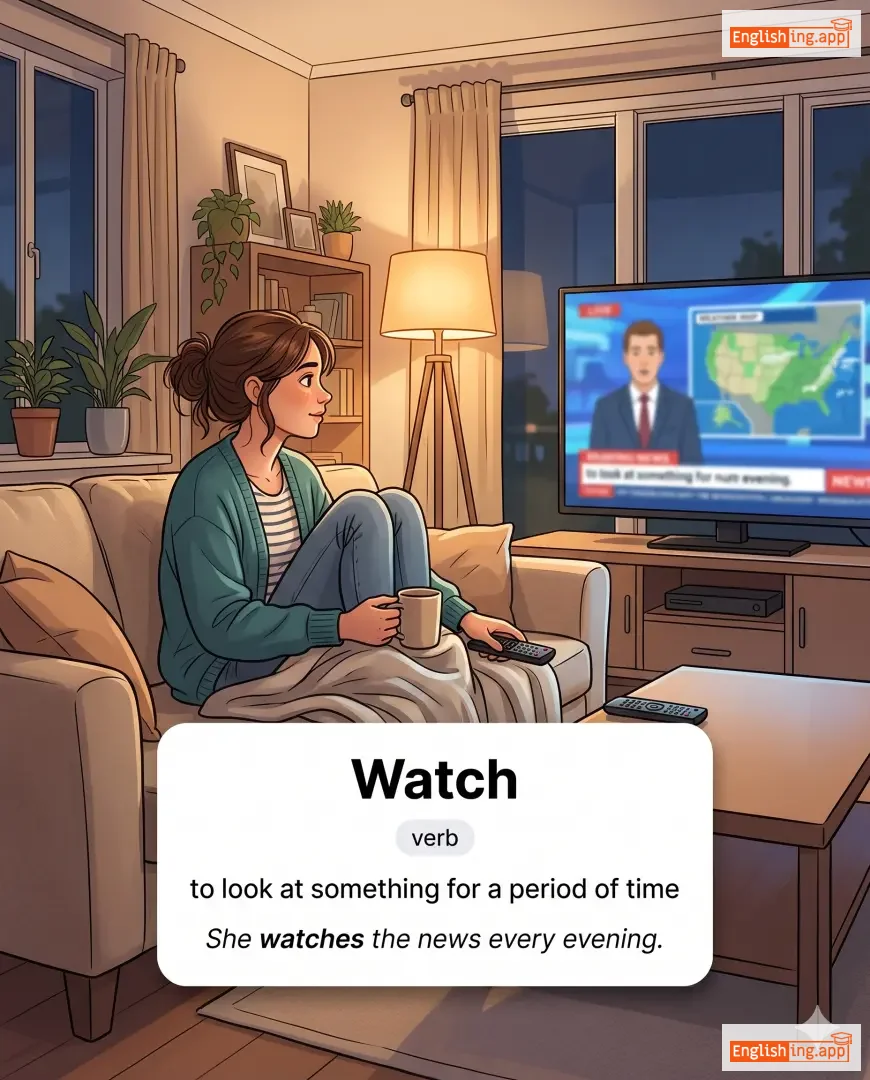
Uhr; Überwachung; Beobachtung
Uhr; Ueberwachung; Beobachtung
••••••
|
a small timepiece worn on the wrist; the act of observing or monitoring
••••••
|
He checked his watch to see if he was late for the meeting.
Er schaute auf seine Uhr, um zu sehen, ob er zu spät zum Meeting kam.
••••••
|
Er schaute auf seine Uhr, um zu sehen, ob er zu spät zum Meeting kam.
Er schaute auf seine Uhr, um zu sehen, ob er zu spaet zum Meeting kam.
••••••
|
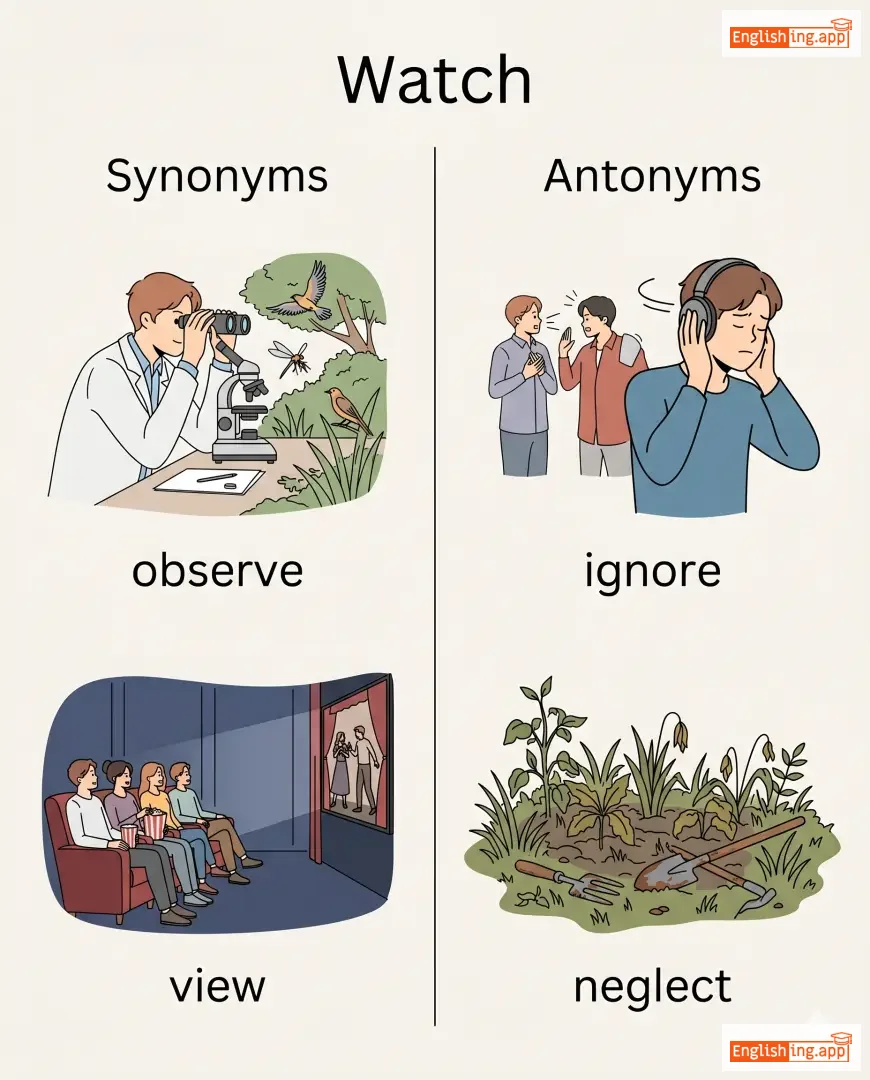
timepiece, clock, observe, monitor
••••••
|
ignore, neglect, overlook
••••••
|
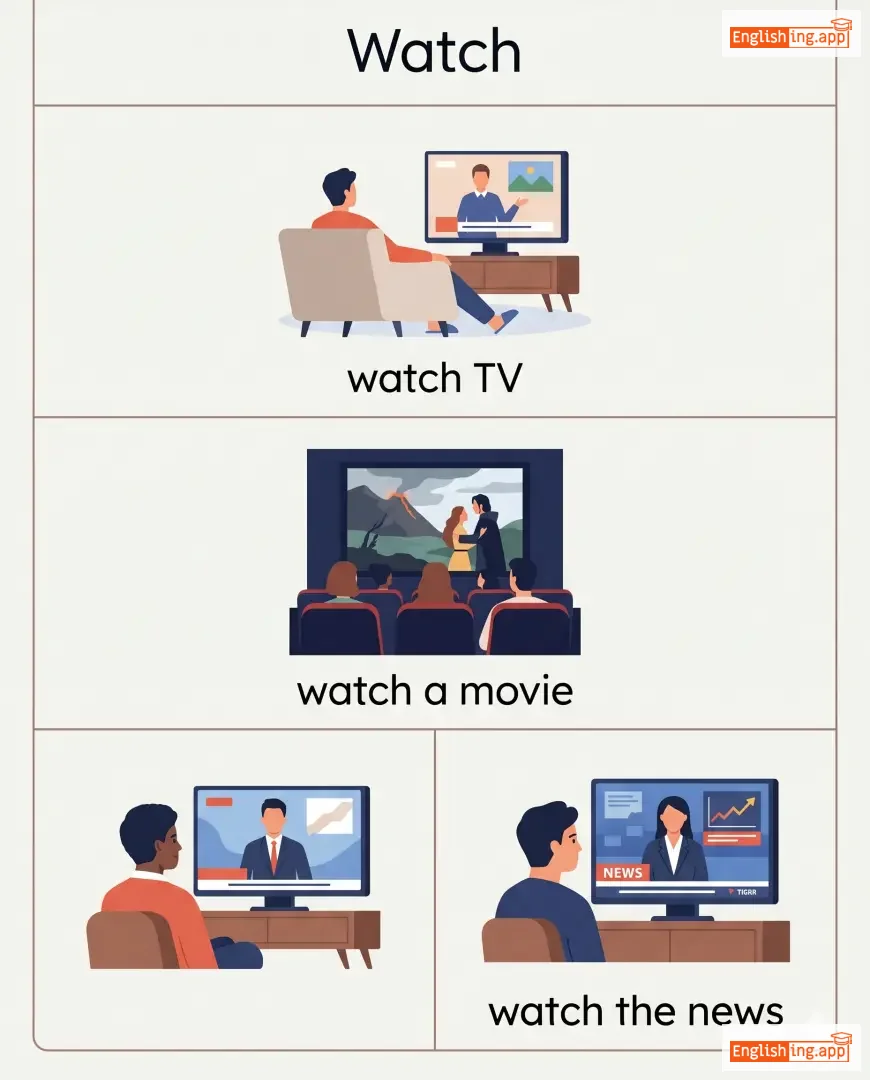
wrist watch, pocket watch, watch time, keep watch
••••••
|
Die Uhr ist wie ein Aufseher für die Zeit, immer da, um uns zu überwachen.
••••••
|
|
#1507
😭
|
/weɪl/
noun
(weɪl)
••••••
|
- •••••• |
Wimmern; Klage
wail
••••••
|
a prolonged cry of pain, grief, or anger; to cry loudly
••••••
|
The child's wail could be heard throughout the house. |
Das Wimmern des Kindes konnte im ganzen Haus gehört werden.
Das Wimmern des Kindes konnte im ganzen Haus gehört werden.
••••••
|
cry, howl, sob, lament
••••••
|
laugh, giggle, chuckle
••••••
|
mournful wail, plaintive wail, wail of despair
••••••
|
Wail (Wimmern) ist ein klagender, lauter Schrei
••••••
|
|
#1508
🌊
|
/weɪv/
noun
(weiv)
••••••
|
|
Welle; Woge
Welle; Woge
••••••
|
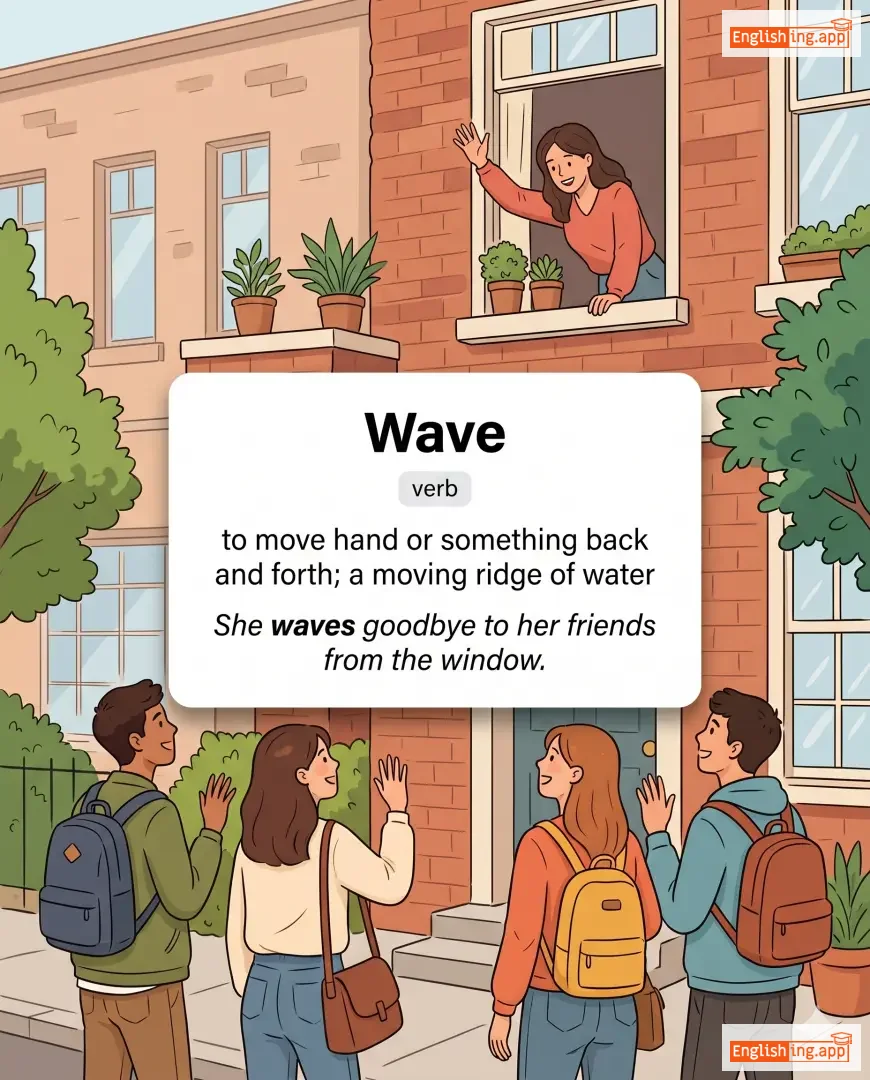
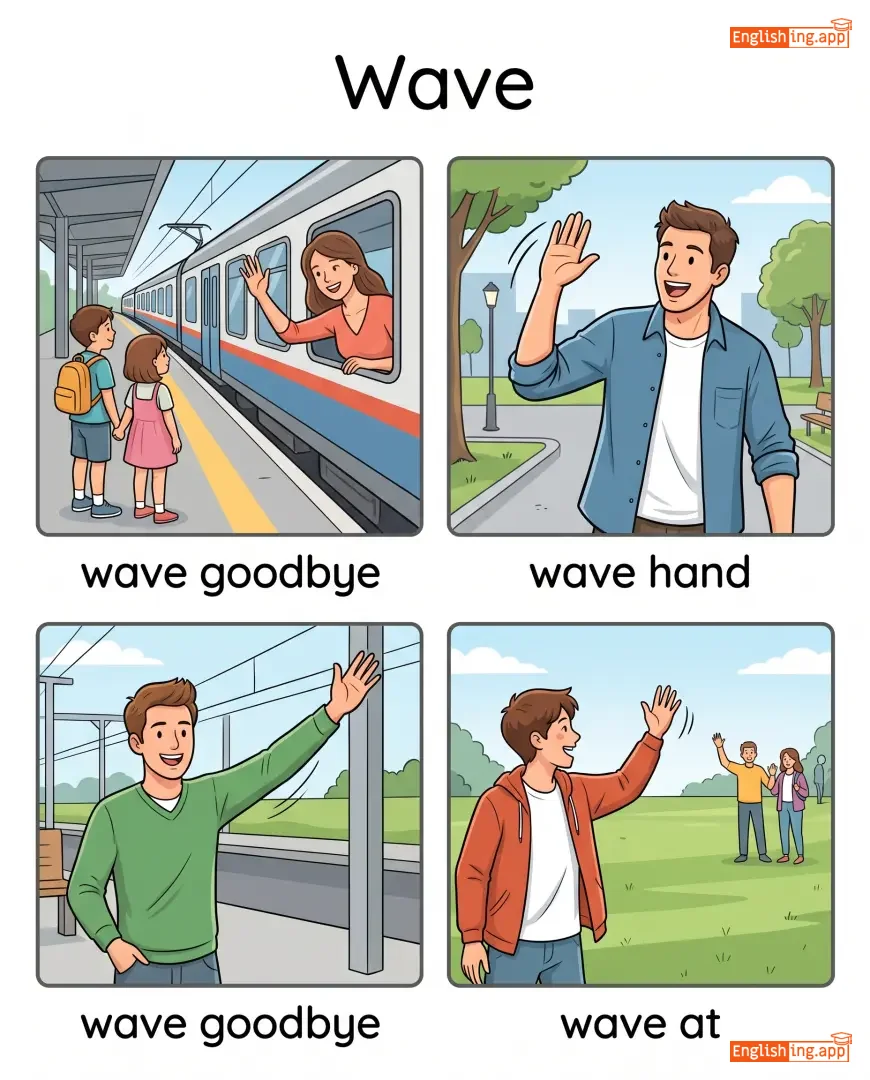
a moving ridge on the surface of water; a gesture of greeting or farewell
••••••
|
The surfer rode the big wave all the way to the shore. |
Der Surfer ritt die große Welle bis zum Ufer.
Der Surfer ritt die große Welle bis zum Ufer.
••••••
|
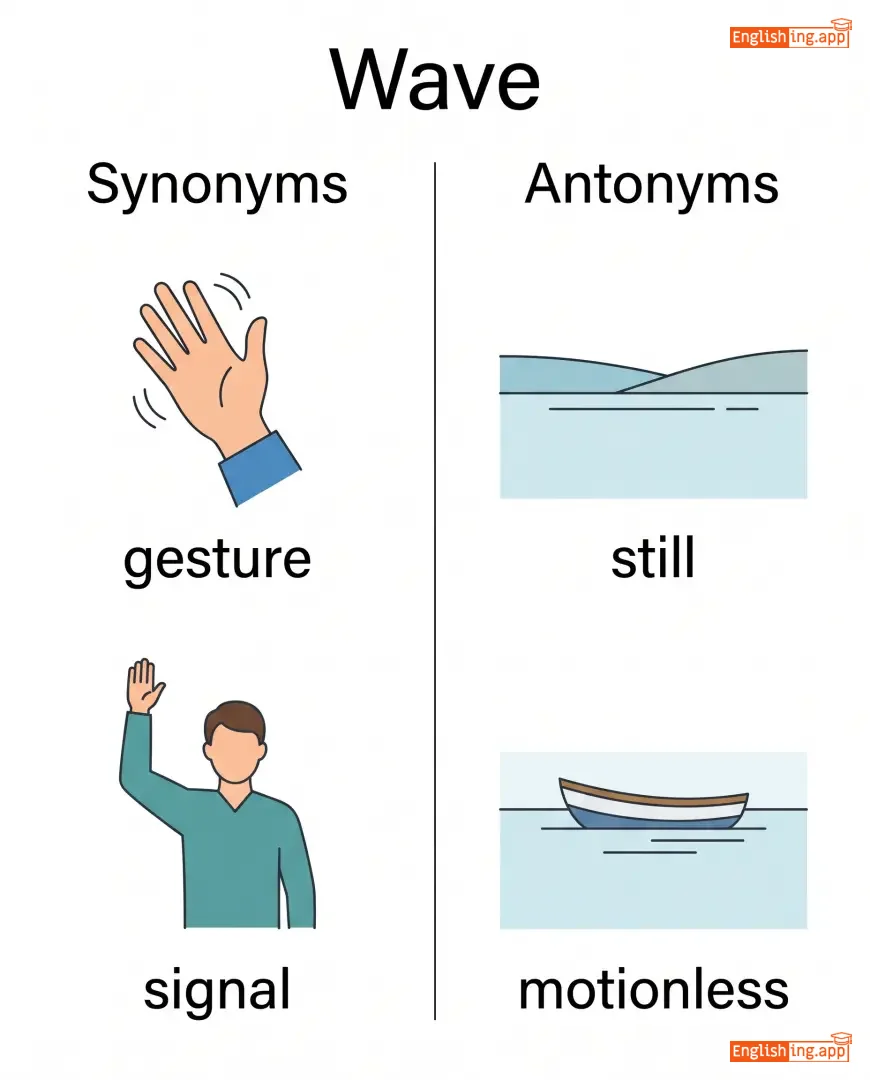
ripple, surge, breaker, billow
••••••
|
stillness, calm, flatness
••••••
|
ocean wave, sound wave, heat wave, wave goodbye
••••••
|
Wellen reiten und winken! Denk daran!
••••••
|
|
#1509
👛
|
/ˈwɒlɪt/
noun
(wɔlɛt)
••••••
|
- •••••• |
Brieftasche
Brieftasche
••••••
|
a small folding case for carrying money, credit cards, and identification
••••••
|
He pulled out his wallet to pay for the coffee. |
Er zog seine Brieftasche heraus, um den Kaffee zu bezahlen.
Er zog seine Brieftasche heraus, um den Kaffee zu bezahlen.
••••••
|
purse, billfold, pocketbook
••••••
|
safe, vault, treasury
••••••
|
leather wallet, digital wallet, wallet chain, lost wallet
••••••
|
In der Brieftasche sind immer deine Karten und Geld
••••••
|
|
#1510
🕯️
|
/wæks/
noun
(wæks)
••••••
|
- •••••• |
wachs
wachs
••••••
|
a solid substance that melts when heated, used for making candles and polishing
••••••
|
She used candle wax to seal the old letter. |
Sie verwendete Kerzenwachs, um den alten Brief zu versiegeln.
Sie verwendete Kerzenwachs, um den alten Brief zu versiegeln.
••••••
|
paraffin, beeswax, polish, coating
••••••
|
liquid, solvent, thinner
••••••
|
candle wax, car wax, beeswax, wax coating
••••••
|
Wachs wird in Kerzen verwendet, genau wie 'Wachs' für Wachs
••••••
|
|
#1511
🚶
|
/ˈwɒndərər/
noun
(wændərər)
••••••
|
- •••••• |
Wanderer; jemand, der ohne festes Ziel reist
wanderer
••••••
|
a person who travels aimlessly; someone who roams from place to place
••••••
|
The wanderer explored different countries without a fixed destination.
Der Wanderer erkundete verschiedene Länder ohne festes Ziel.
••••••
|
Der Wanderer erkundete verschiedene Länder ohne festes Ziel.
Der Wanderer erkundete verschiedene Länder ohne festes Ziel.
••••••
|
traveler, nomad, roamer, drifter
••••••
|
settler, resident, homebody
••••••
|
lonely wanderer, restless wanderer, eternal wanderer
••••••
|
Wanderer = jemand, der ohne festes Ziel reist, wie Wanderer
••••••
|
|
#1512
🛤️
|
/weɪ/
noun
(weɪ)
••••••
|
- •••••• |
Weg; Methode; Art; Stil;
Weg; Methode; Art; Stil;
••••••
|
a method, style, or manner of doing something; a road or path
••••••
|
There must be a better way to solve this problem.
Es muss einen besseren Weg geben, dieses Problem zu lösen.
••••••
|
Es muss einen besseren Weg geben, dieses Problem zu lösen.
Es muss einen besseren Weg geben, dieses Problem zu lösen.
••••••
|
method, path, route, manner, approach
••••••
|
obstacle, barrier, dead end
••••••
|
best way, right way, new way, way out
••••••
|
Der 'Weg' ist ähnlich zu 'Weg' in Deutsch. Denke an den besten Weg zu einem Ziel.
••••••
|
|
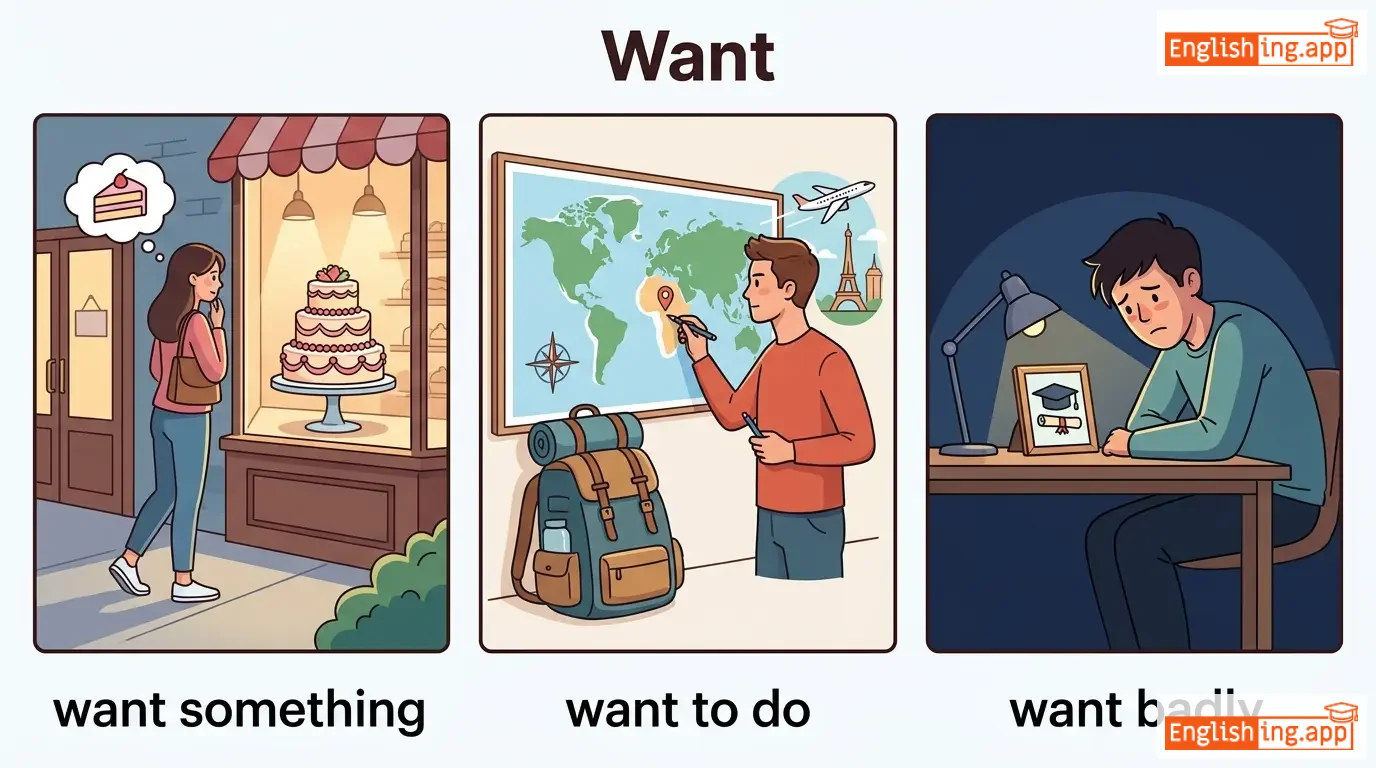
#1513
💸
|
/wɒnt/
noun
(wont)
••••••
|
|
Mangel; Bedarf
Mangel; Bedarf
••••••
|
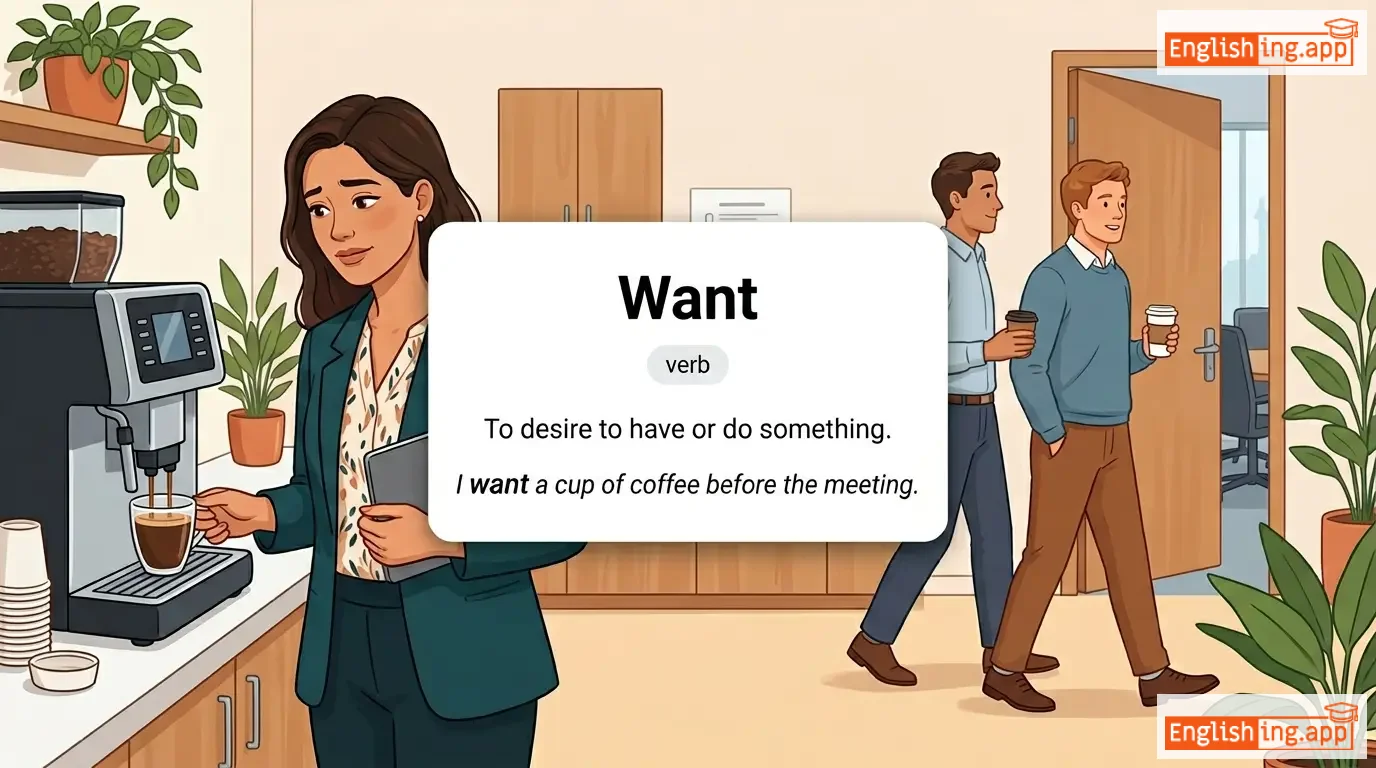
lack or shortage of something; poverty or need
••••••
|
There is a want of fresh water in the drought-affected areas.
Es gibt einen Mangel an Trinkwasser in den von Dürre betroffenen Gebieten.
••••••
|
Es gibt einen Mangel an Trinkwasser in den von Dürre betroffenen Gebieten.
Es gibt einen Mangel an Trinkwasser in den von Dürre betroffenen Gebieten.
••••••
|
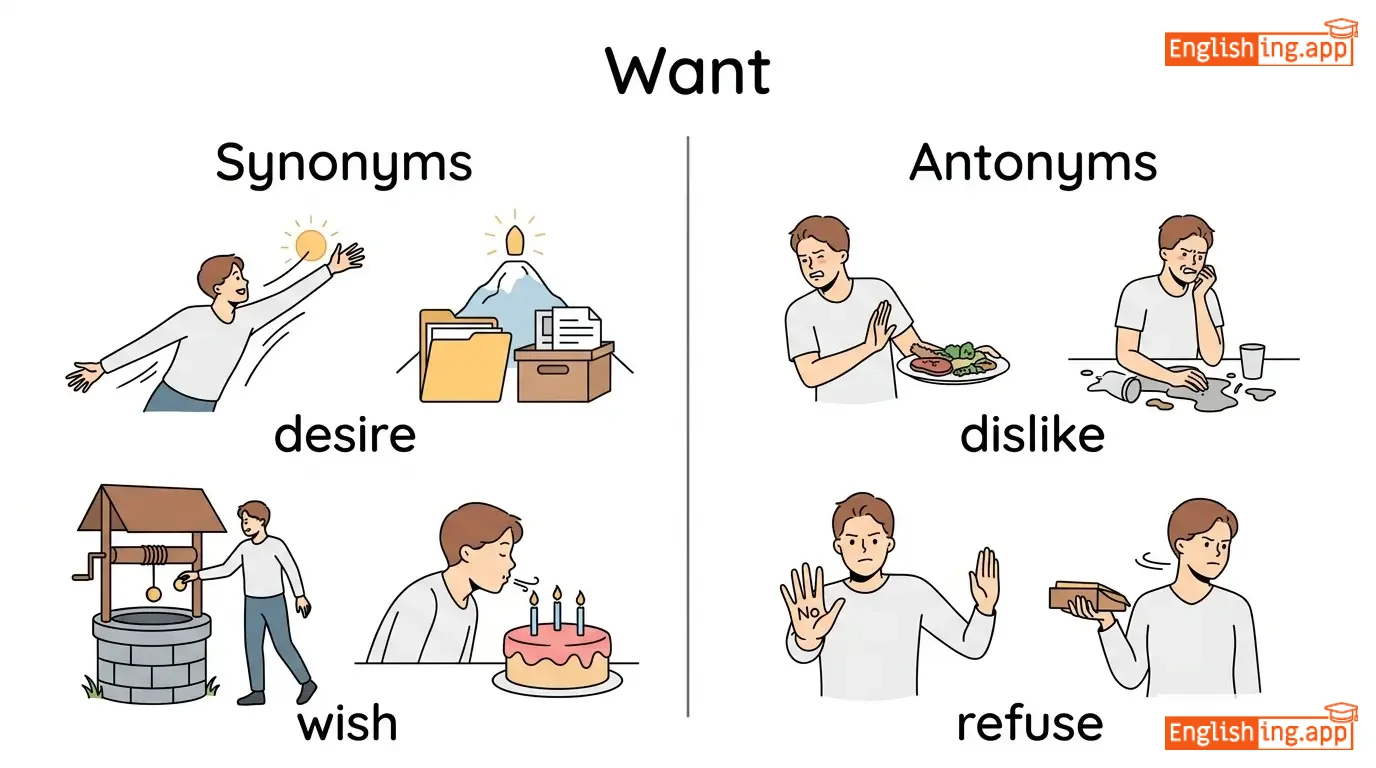
lack, need, shortage, deficiency
••••••
|
abundance, plenty, surplus, excess
••••••
|
want of money, want of food, for want of
••••••
|
Want im Englischen bedeutet Mangel oder Bedarf, wie im Mangel an Trinkwasser.
••••••
|
|
#1514
💰
|
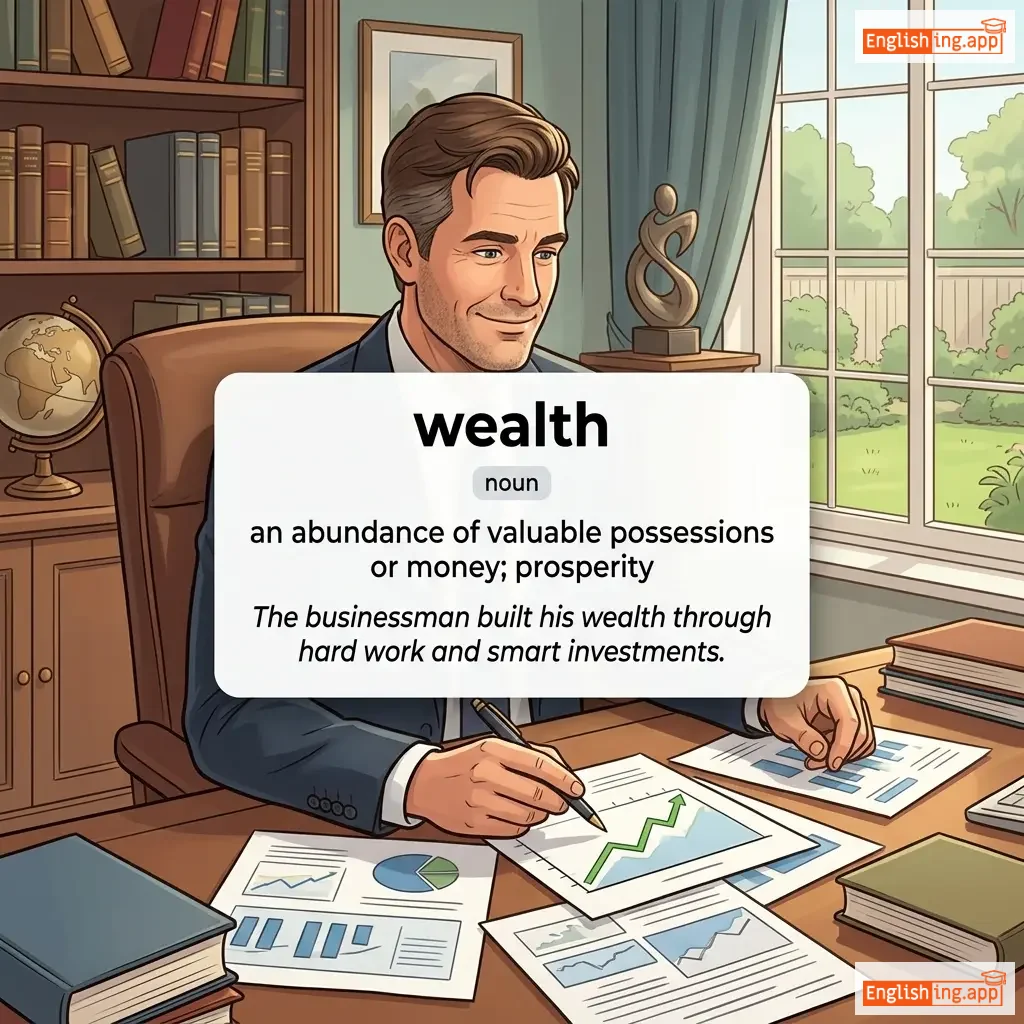
/welθ/
noun
(wɛlθ)
••••••
|
|
Reichtum
Reichtum
••••••
|
an abundance of valuable possessions or money; prosperity
••••••
|
His wealth came from years of hard work and smart investments.
hɪz wɛlθ keɪm frɒm jɪərz ʌv hɑrd wɜrk ænd smɑrt ɪnvɛstmənts.
••••••
|
Sein Reichtum kam von Jahren harter Arbeit und klugen Investitionen.
Sein Reichtum kam von Jahren harter Arbeit und klugen Investitionen.
••••••
|
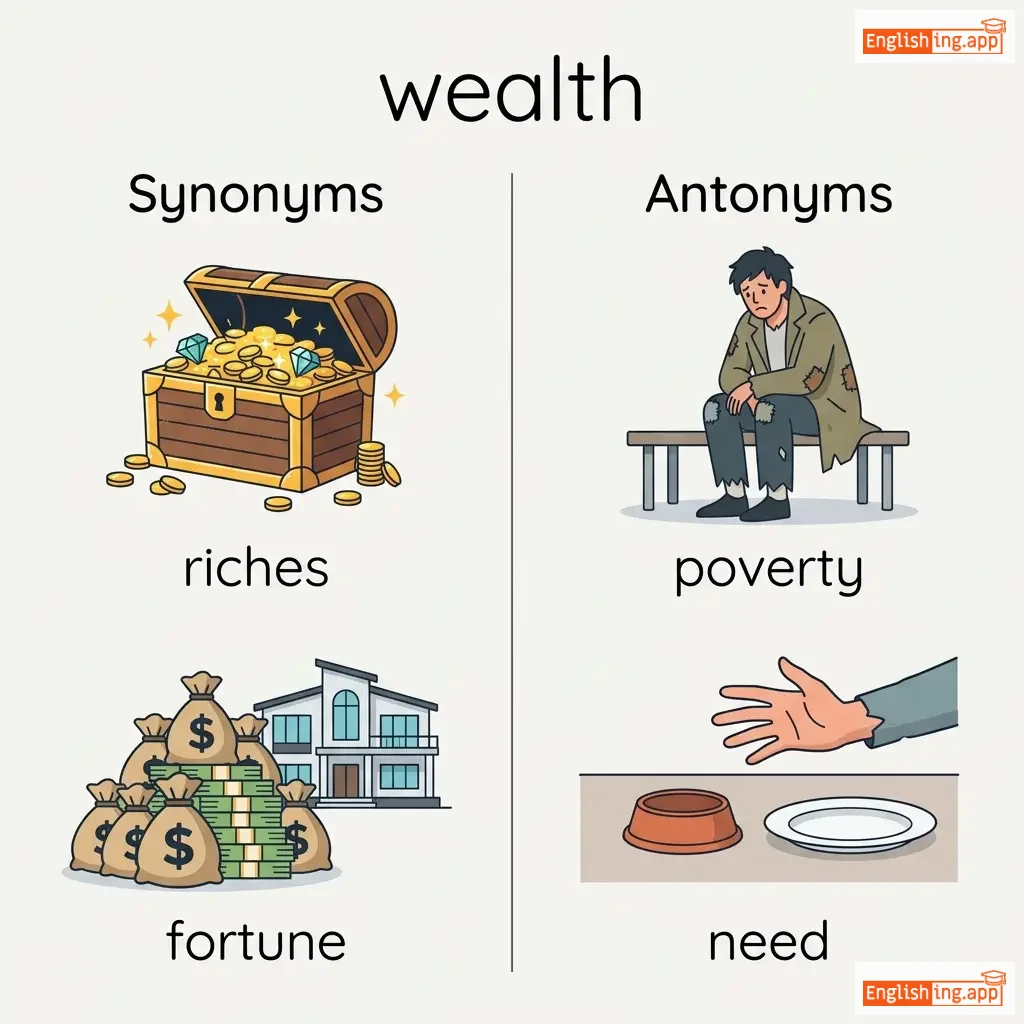
riches, fortune, prosperity, affluence
••••••
|
poverty, destitution, want, need
••••••
|
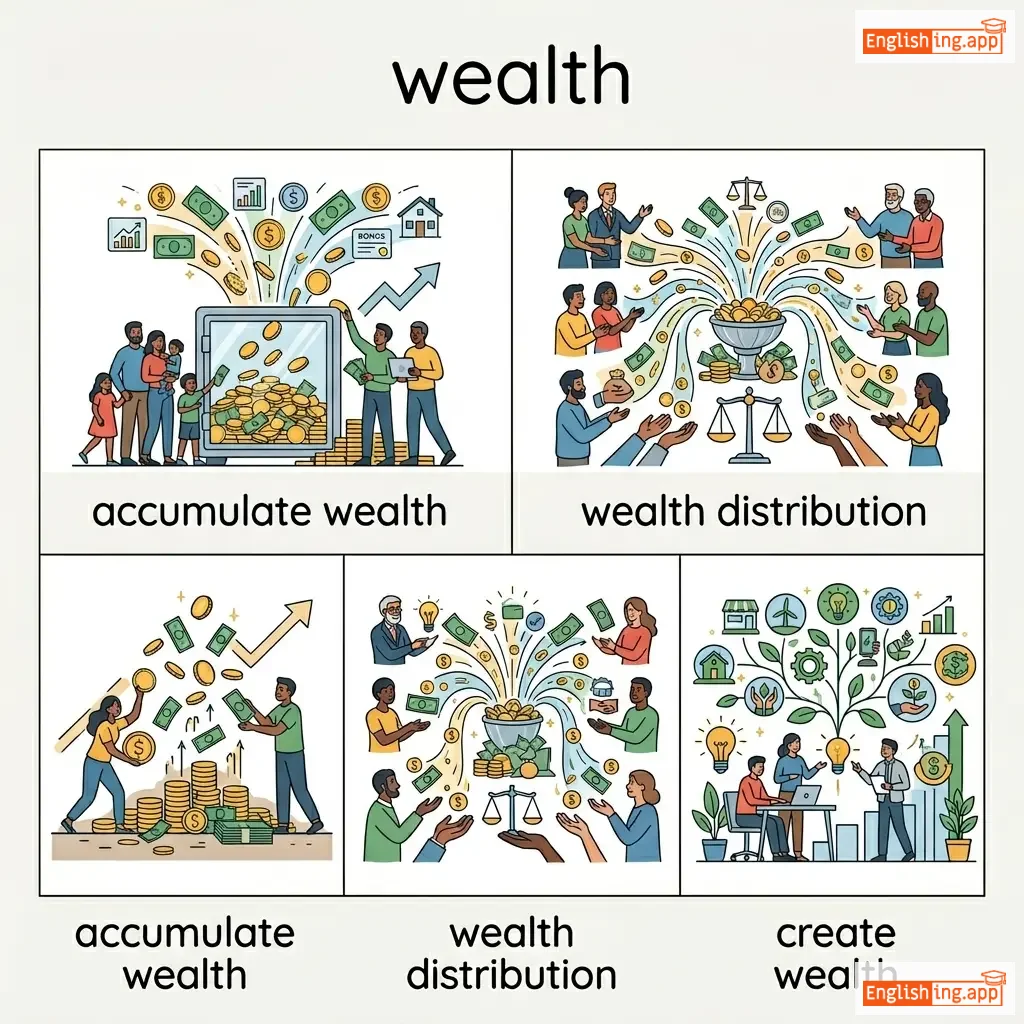
great wealth, personal wealth, wealth creation, wealth distribution
••••••
|
Wohlstand wächst durch harte Arbeit und kluge Entscheidungen.
••••••
|
|
#1515
⚔️
|
/ˈwɔːfeər/
noun
(kriegsführung)
••••••
|
- •••••• |
Krieg
krieg
••••••
|
armed conflict between different countries or groups; the activity of fighting a war
••••••
|
Modern warfare involves advanced technology and strategic planning. |
Moderne Kriegsführung umfasst fortschrittliche Technologie und strategische Planung.
Moderne Kriegsfuehrung umfasst fortschrittliche Technologie und strategische Planung.
••••••
|
combat, battle, conflict, fighting
••••••
|
peace, harmony, truce, ceasefire
••••••
|
modern warfare, guerrilla warfare, chemical warfare, psychological warfare
••••••
|
Im Krieg ist eine gute Planung wichtig, um erfolgreich zu sein.
••••••
|
|
#1516
🗡️
|
/ˈwep.ən/
noun
(wepn)
••••••
|
- •••••• |
Waffe
Waffe
••••••
|
a thing designed or used for inflicting bodily harm or physical damage
••••••
|
The police found a dangerous weapon at the crime scene.
Die Polizei fand eine gefährliche Waffe am Tatort.
••••••
|
Die Polizei fand eine gefährliche Waffe am Tatort.
Die Polizei fand eine gefährliche Waffe am Tatort.
••••••
|
arm, armament, firearm, tool of violence
••••••
|
shield, protection, defense, peace
••••••
|
deadly weapon, nuclear weapon, weapon of mass destruction, concealed weapon
••••••
|
Waffen symbolisieren Kraft und Schutz, sie sind dafür gedacht, Schaden zu verursachen oder sich zu verteidigen.
••••••
|
|
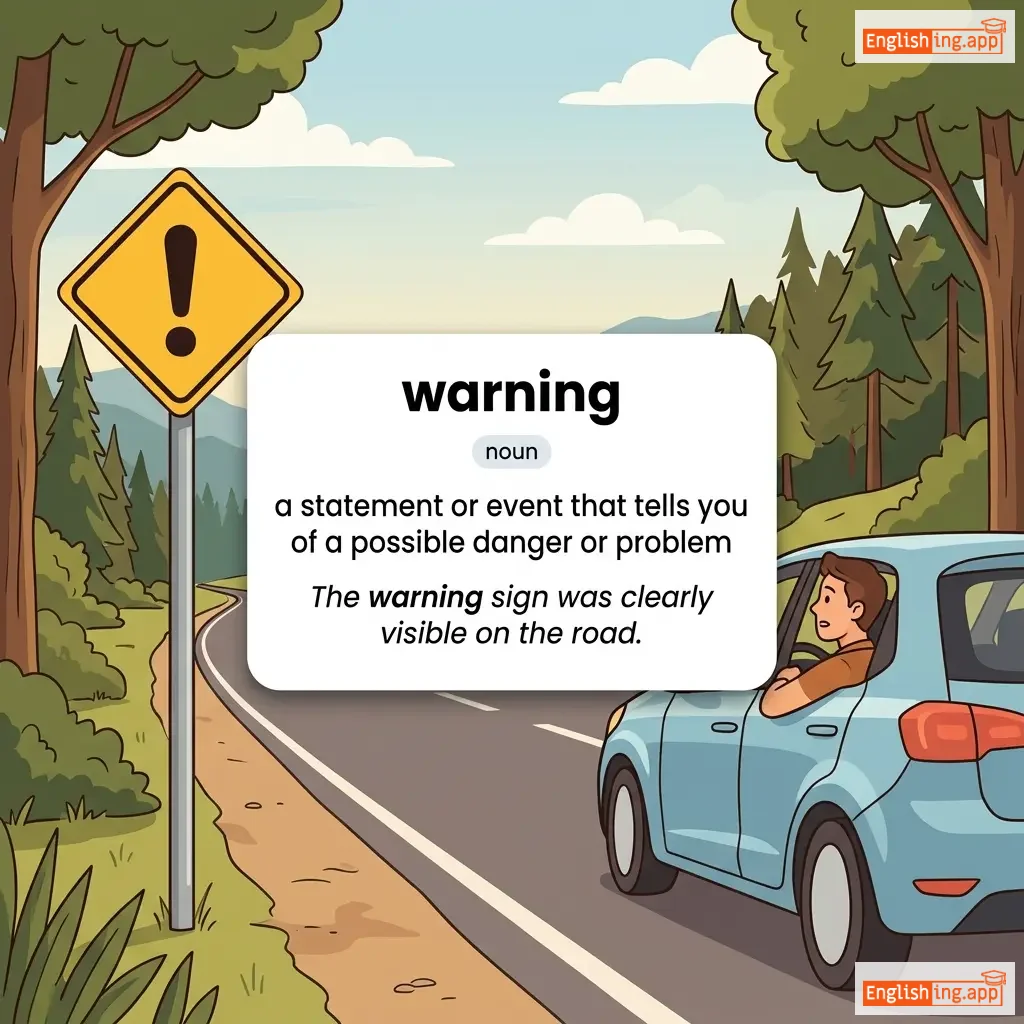
#1517
⚠️
|
/ˈwɔːnɪŋ/
noun
(wɔːnɪŋ)
••••••
|
|
Warnung
warnung
••••••
|
a statement or event that indicates a possible or impending danger, problem, or other unpleasant situation
••••••
|
The weather service issued a severe storm warning.
Der Wetterdienst gab eine schwere Sturmwarnung heraus.
••••••
|
Der Wetterdienst gab eine schwere Sturmwarnung heraus.
Der Wetterdienst gab eine schwere Sturmwarnung heraus.
••••••
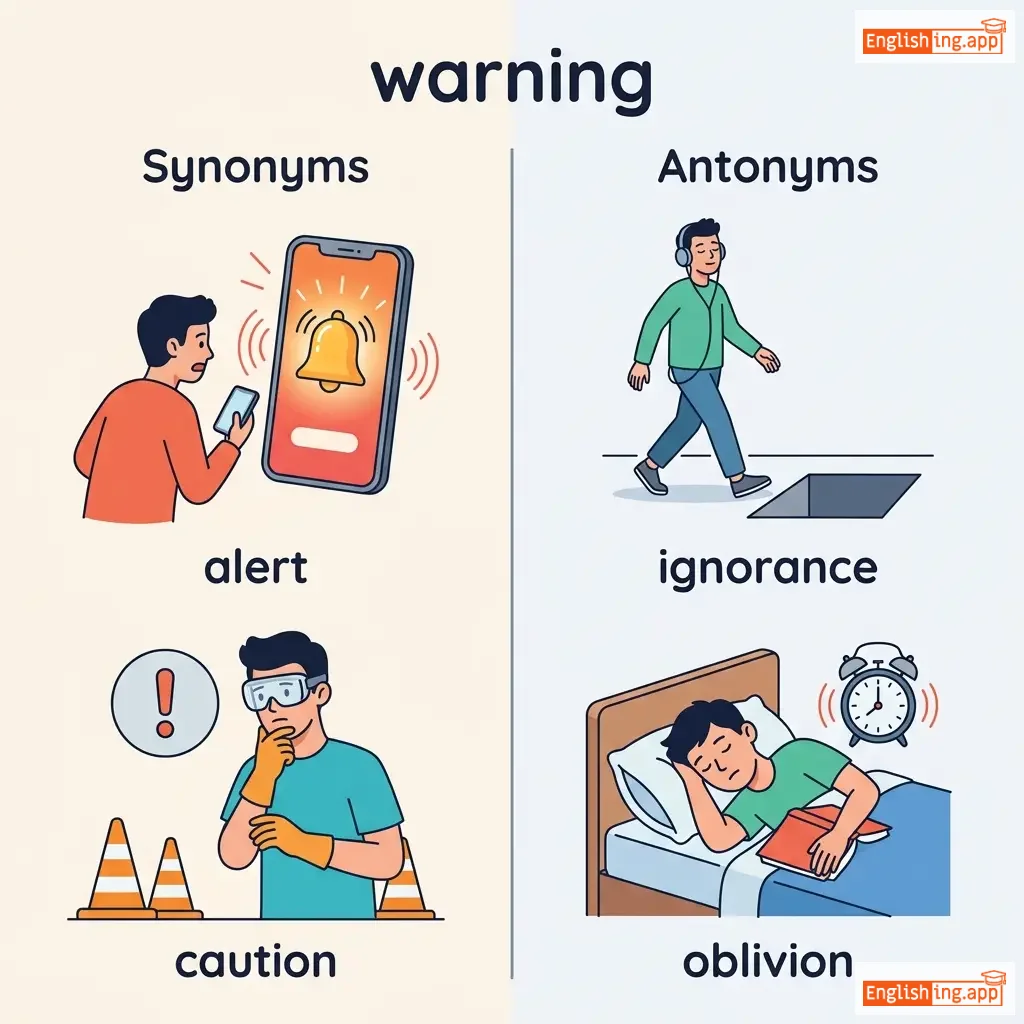
|
alert, caution, notice, alarm
••••••
|
assurance, guarantee, safety, security
••••••
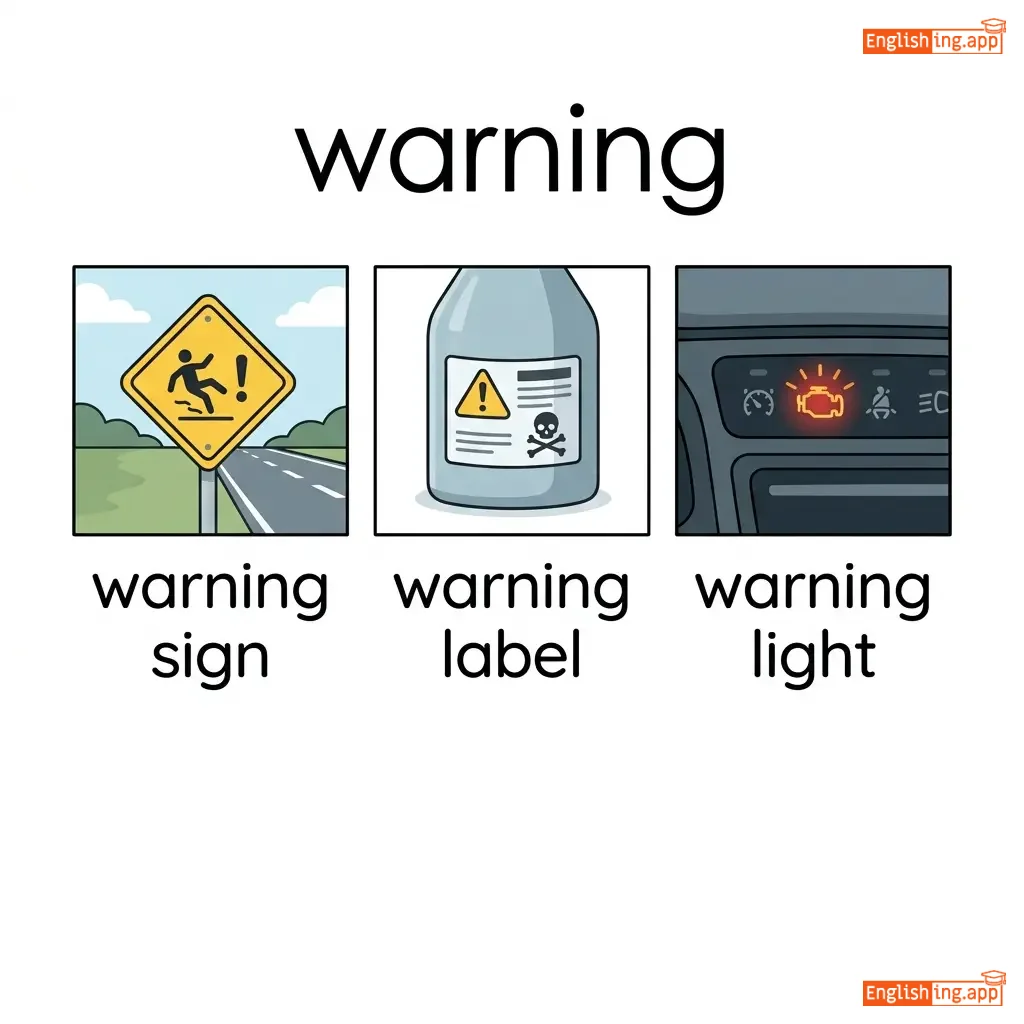
|
warning sign, early warning, final warning, health warning
••••••
|
Warnung ist wie warning im Englischen, es bedeutet eine Gefahr oder eine drohende Situation.
••••••
|
|
#1518
🧀
|
/wedʒ/
noun
(wɛdʒ)
••••••
|
- •••••• |
Keil; keilen; spalten
Keil; keilen; spalten
••••••
|
a triangular piece of wood or metal used for splitting or securing; a piece of cheese or cake
••••••
|
He used a wooden wedge to split the log into smaller pieces. |
Er benutzte einen Holzkeil, um den Baumstamm in kleinere Stücke zu spalten.
Er benutzte einen Holzkeil, um den Baumstamm in kleinere Stücke zu spalten.
••••••
|
triangle, slice, segment, piece
••••••
|
whole, unity, complete piece
••••••
|
cheese wedge, door wedge, wedge shape, driving wedge
••••••
|
Ein Stück Kuchen mit einem Keil teilen, um es für alle zugänglich zu machen.
••••••
|
|
#1519
📋
|
/ˈwɒrənt/
noun
(warrant)
••••••
|
- •••••• |
Durchsuchungsbefehl
durchsuchungsbefehl
••••••
|
a legal document that gives police the authority to do something; justification or authority for an action
••••••
|
The police obtained a search warrant before entering the building.
Die Polizei holte einen Durchsuchungsbefehl, bevor sie das Gebäude betrat.
••••••
|
Die Polizei holte einen Durchsuchungsbefehl, bevor sie das Gebäude betrat.
Die Polizei holte einen Durchsuchungsbefehl, bevor sie das Gebäude betrat.
••••••
|
authorization, permit, license, mandate
••••••
|
prohibition, ban, restriction
••••••
|
search warrant, arrest warrant, death warrant, warrant officer
••••••
|
Ein Durchsuchungsbefehl ist der Schlüssel für polizeiliche Handlungen.
••••••
|
|
#1520
💒
|
/ˈwed.lɒk/
noun
(wɛd lɒk)
••••••
|
- •••••• |
Ehe
Ehe
••••••
|
the state of being married; matrimony
••••••
|
They have been happily united in wedlock for twenty years. |
Sie sind seit zwanzig Jahren glücklich im Ehebund vereint.
Sie sind seit zwanzig Jahren glücklich im Ehebund vereint.
••••••
|
marriage, matrimony, union, partnership
••••••
|
divorce, separation, singleness, celibacy
••••••
|
holy wedlock, born in wedlock, wedlock ceremony, blessed wedlock
••••••
|
Ehe = Ehe (marriage) + Bindung (bond)
••••••
|
Vocabulary Quiz
Test your vocabulary by matching words with their translations or meanings.
Login to take the quiz
Comments (0)
Share your thoughts and join the discussion.
Join the discussion by logging in
Login to CommentNo comments yet
Be the first to share your thoughts!