

Обновитесь для доступа ко всему словарю
Получите неограниченный доступ ко всем словам с подпиской Pro
Обновить до ProПеревод
Прошедшее
Причастие прошедшего времени
Третье лицо единственного числа
Герундий
Значение
Пример предложения
Перевод примера предложения
Синонимы
Антонимы
Коллокации
Мнемоника







Swipe left or right, or use the buttons. Tap image to zoom.
Обновитесь для доступа ко всем предложениям
Получите неограниченный доступ ко всем предложениям с подпиской Pro
Обновить до ProПеревод примера предложения
Слово
Lesson 71Lesson 71 - Переключатель маски
|
Эмодзи
|
Слово | Images | Перевод | Значение | Пример предложения | Перевод примера предложения | Синонимы | Антонимы | Коллокации | Мнемоника |
|---|---|---|---|---|---|---|---|---|---|---|
|
#1401
😰
|
/ˈtɔːr.ment/
noun
(тор-мент)
••••••
|
- •••••• |
мучение; страдание
mur-ment
••••••
|
severe physical or mental suffering; extreme pain or anguish
••••••
|
The prisoner endured years of torment in solitary confinement. |
Заключенный выдержал годы мучений в одиночном заключении.
Zaklyuchennyi vydierzhal godu muchieniy v odinochnom zaklyuchienii.
••••••
|
suffering, agony, anguish, torture, pain
••••••
|
comfort, relief, peace, pleasure, joy
••••••
|
mental torment, physical torment, years of torment, endure torment
••••••
|
Мучение напоминает боль в теле, когда мучают!
••••••
|
|
#1402
🔄
|
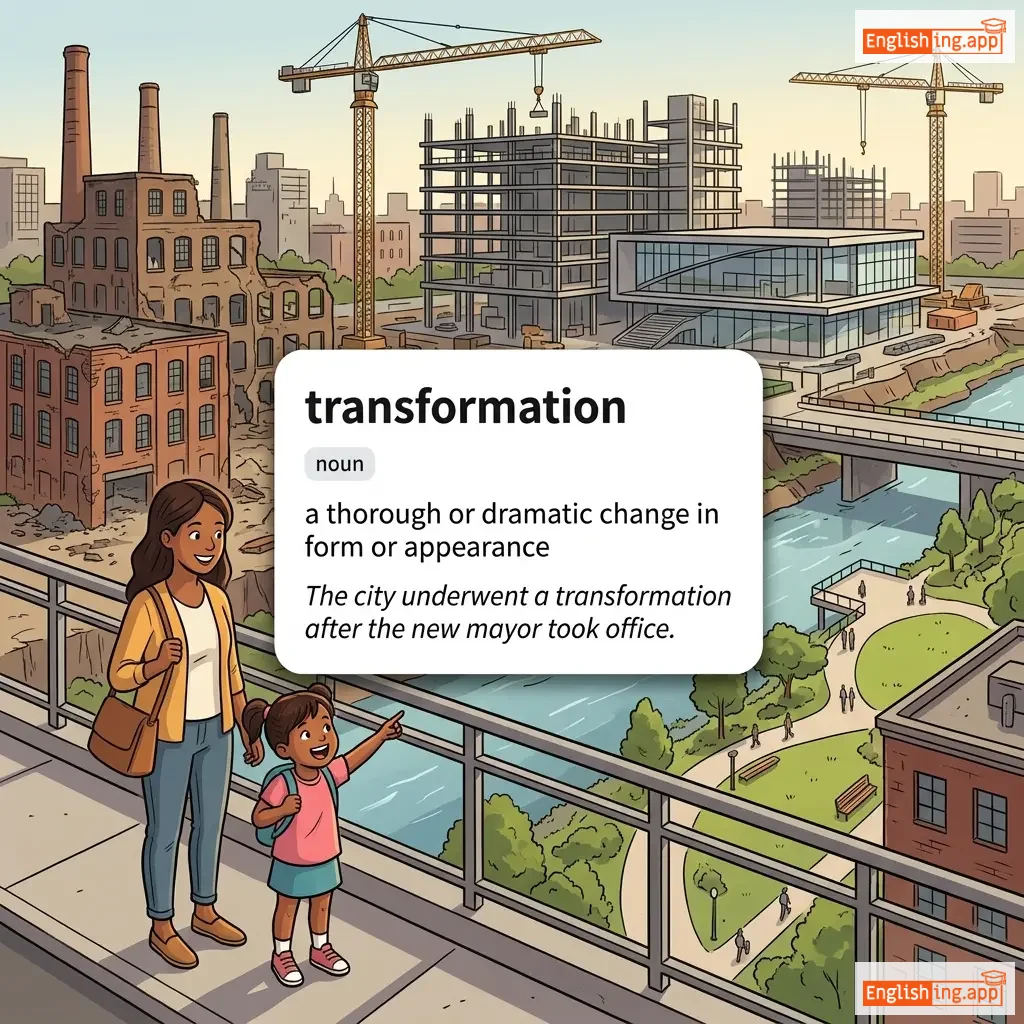
/ˌtrænsfərˈmeɪʃən/
noun
(трансформация)
••••••
|
|
трансформация
transformaciya
••••••
|
the action or process of changing something into a different form or structure
••••••
|
The transformation of the company took several years to complete.
Трансформация компании заняла несколько лет.
••••••
|
Трансформация компании заняла несколько лет.
Transformaciya kompanii zanyala neskol'ko let.
••••••
|
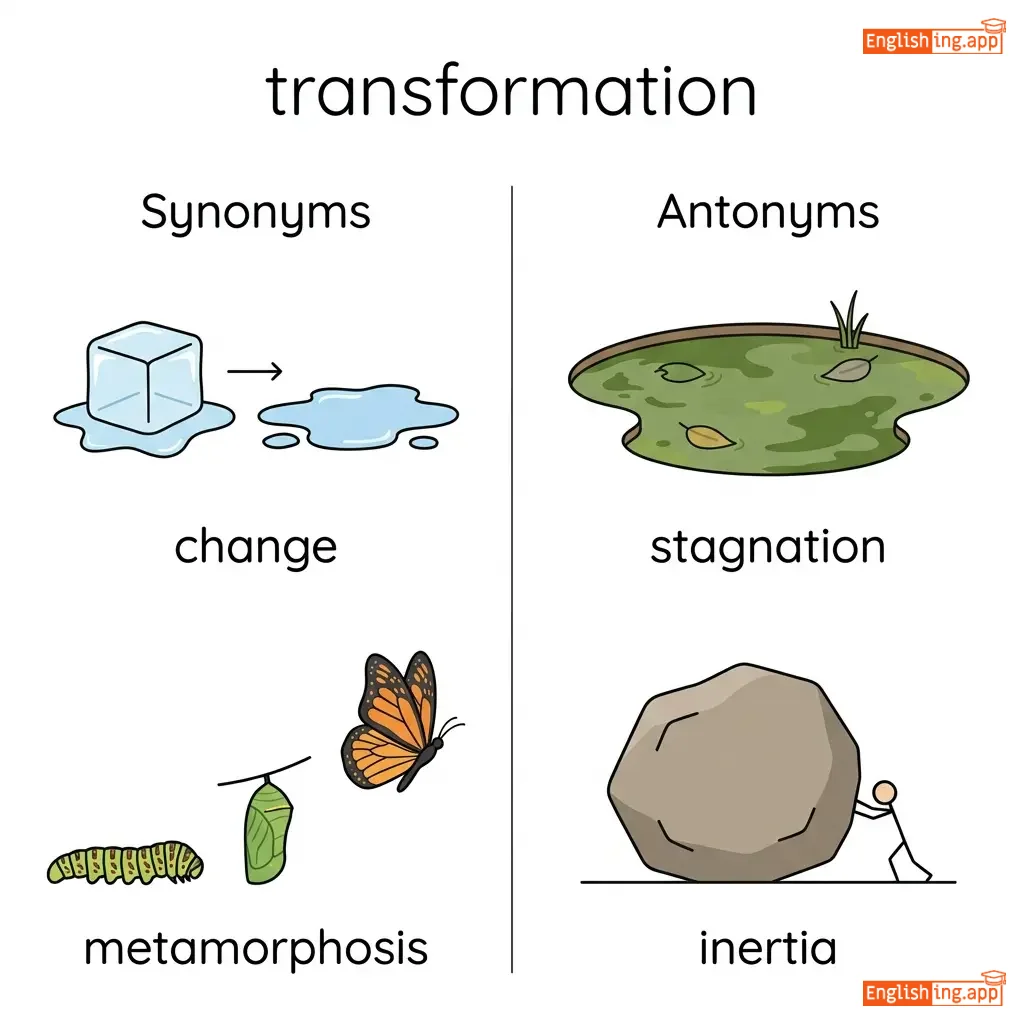
change, conversion, metamorphosis, alteration
••••••
|
stagnation, preservation, maintenance
••••••
|
digital transformation, complete transformation, undergo transformation
••••••
|
Трансформация (смена формы) - представьте, как что-то меняет свою форму.
••••••
|
|
#1403
🌊
|
/ˈtɒr.ənt/
noun
(торрент)
••••••
|
- •••••• |
сильный поток; поток воды
torrent
••••••
|
a strong and fast-moving stream of water or other liquid; a sudden, violent, and copious outpouring
••••••
|
The heavy rain created a torrent of water rushing down the mountain. |
Сильный дождь создал поток воды, мчащегося по горе.
Sil'nyy dozhd' sozdal potok vody, mchyashhegosya po gore.
••••••
|
flood, stream, rush, cascade, deluge
••••••
|
trickle, drip, drought, shortage
••••••
|
torrent of rain, torrent of abuse, raging torrent, mountain torrent
••••••
|
Torrent - это сильный поток воды, как поток дождя, стекающий с горы.
••••••
|
|
#1404
🔄
|
/trænˈzɪʃən/
noun
(транзишн)
••••••
|
|
переход
perekhod
••••••
|
the process or period of changing from one state or condition to another
••••••
|
The transition from school to work can be challenging.
Переход от школы к работе может быть сложным.
••••••
|
Переход от школы к работе может быть сложным.
Perekhod ot shkoly k rabote mozhet byt' slozhnym.
••••••
|
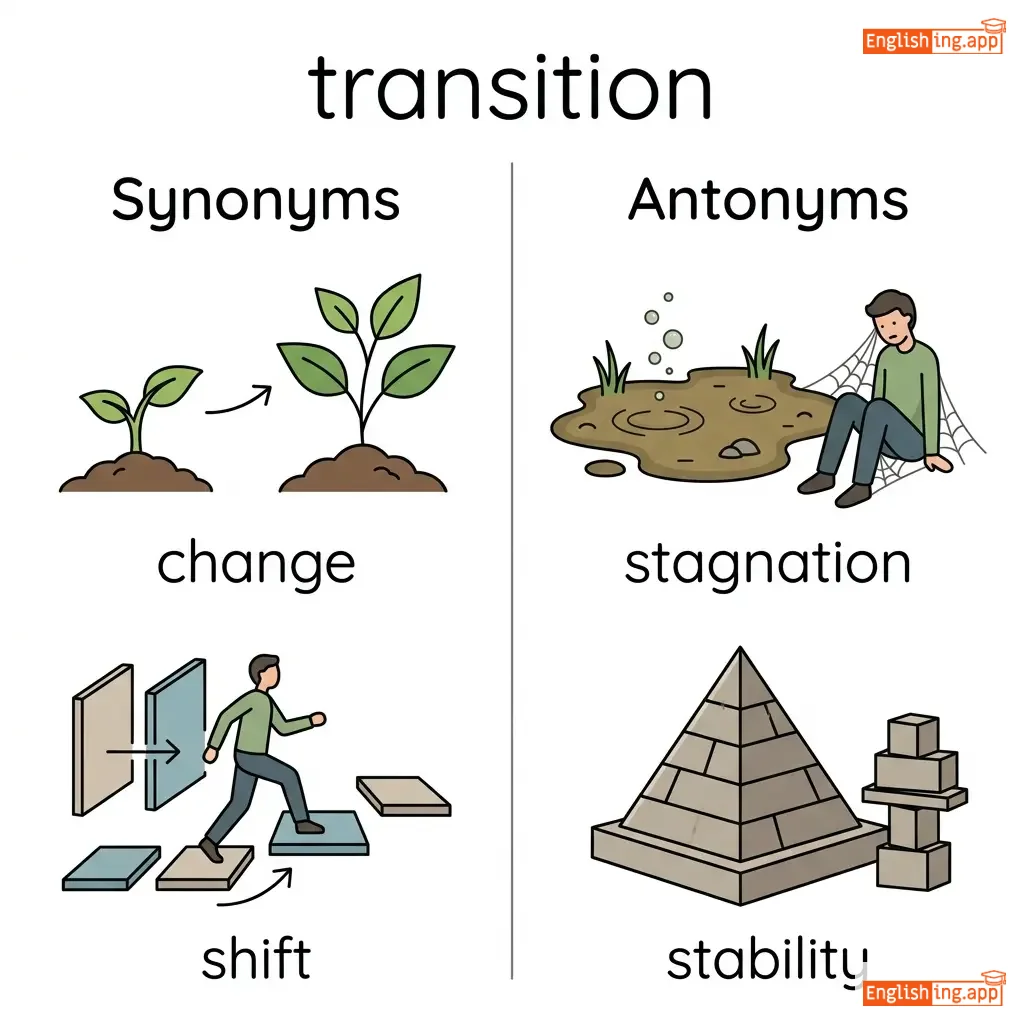
change, shift, passage, conversion
••••••
|
continuity, stability, permanence
••••••
|
smooth transition, career transition, transition period
••••••
|
In Russian, 'переход' sounds like 'transition'. Think of it as a change in conditions or status.
••••••
|
|
#1405
⚖️
|
/ˈtʌtʃ.stoʊn/
noun
(tachston)
••••••
|
- •••••• |
критерий; эталон
tachston
••••••
|
a standard or criterion by which something is judged or recognized; a test of genuineness
••••••
|
His honesty became the touchstone by which all other employees were measured. |
Его честность стала критерием, по которому измерялись все остальные сотрудники.
ego chestnost' stala kriteriem, po kotoromu izmerialis' vse ostal'nye sotrudniki.
••••••
|
standard, criterion, benchmark, yardstick, measure
••••••
|
variable, uncertainty, inconsistency
••••••
|
touchstone of quality, moral touchstone, serve as a touchstone
••••••
|
честность как критерий для всех
••••••
|
|
#1406
🪤
|
/træp/
noun
(трэп)
••••••
|
- •••••• |
ловушка
lovushka
••••••
|
a device or enclosure designed to catch and retain animals, or a situation from which it is difficult to escape
••••••
|
The mouse was caught in the trap overnight.
Мышь была поймана в ловушку за ночь.
••••••
|
Мышь была поймана в ловушку за ночь.
Mysh' byla poymana v lovushku za noch'.
••••••
|
snare, catch, pitfall, ambush
••••••
|
freedom, escape, release
••••••
|
mouse trap, set a trap, fall into a trap
••••••
|
Ловушка, в которой мышь застряла, как в 'трапе'.
••••••
|
|
#1407
🛤️
|
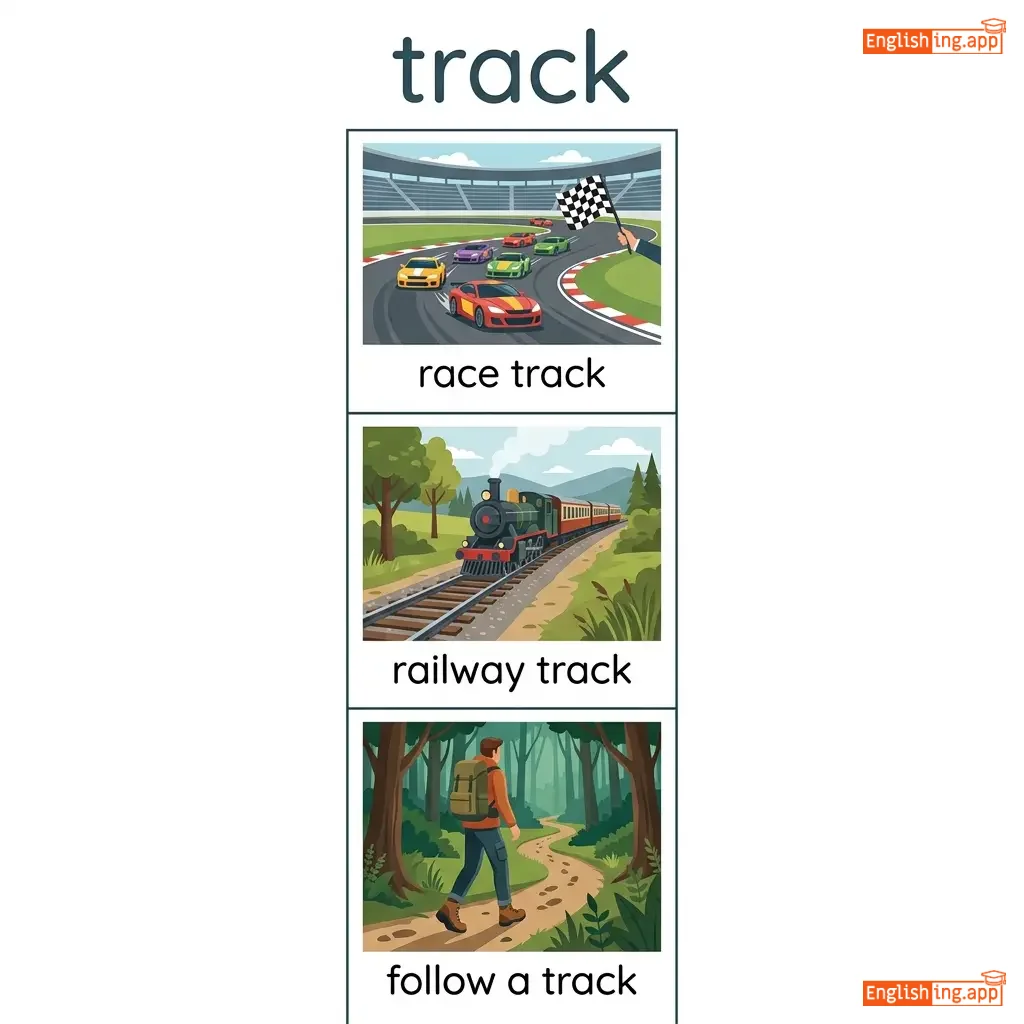
/træk/
noun
(трак)
••••••
|
|
тропа
track
••••••
|
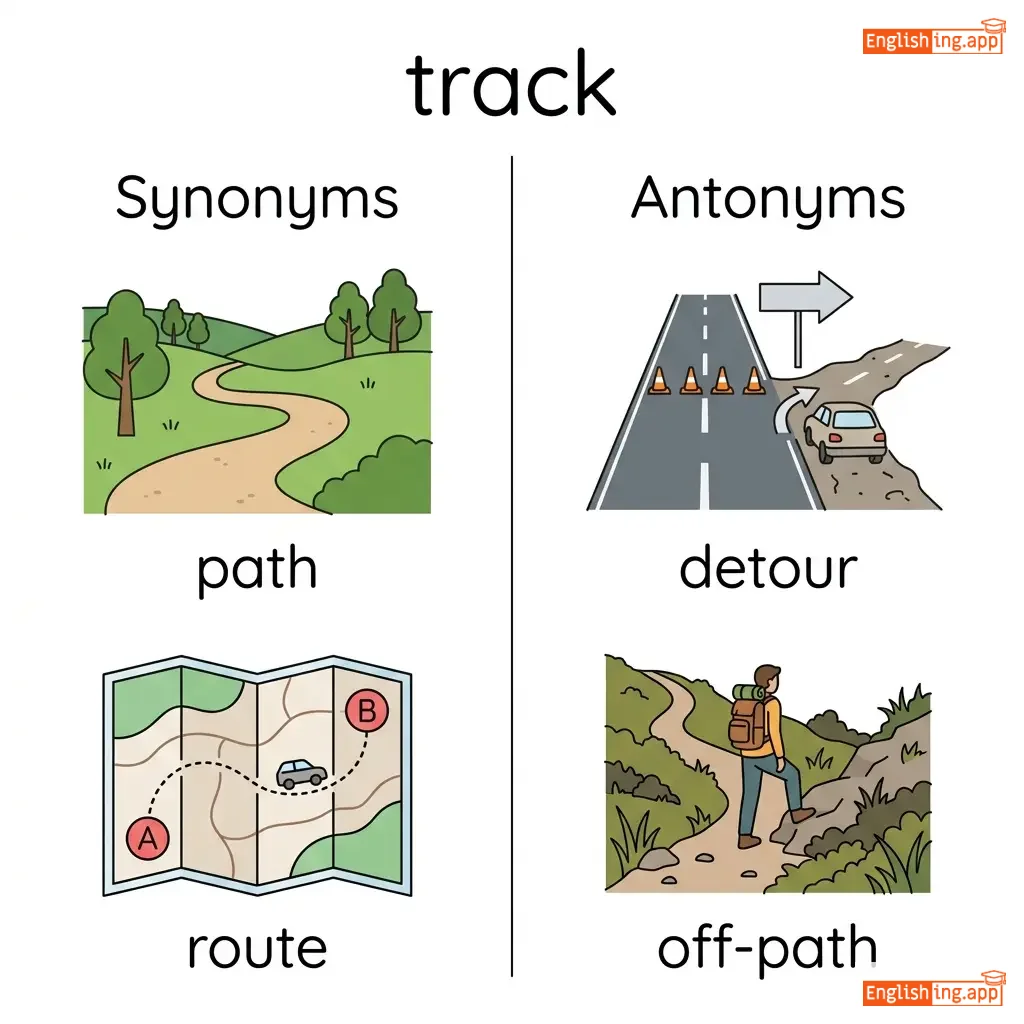
a rough path or minor road; a course or route followed; to follow or trace
••••••
|
The detective was able to track the suspect's movements through the city. |
Детектив смог проследить движения подозреваемого по городу.
Detektiv smog prosledit' dviženiya podozrevaemogo po gorodu.
••••••
|
path, trail, route, follow, trace
••••••
|
lose, abandon, ignore
••••••
|
race track, train track, track record, keep track
••••••
|
Track – Идите по следу, чтобы найти истину.
••••••
|
|
#1408
🗑️
|
/træʃ/
noun
(трэш)
••••••
|
- •••••• |
мусор; отходы; что-то низкого качества или малой ценности
musor; otkhody; chto-to nizkogo kachestva ili maloy tsennosti
••••••
|
waste material; refuse; something of poor quality or little value
••••••
|
Please take out the trash before you leave. |
Пожалуйста, выньте мусор, прежде чем уйдете.
Pozhaluysta, vyn'te musor, prezhde chem uyedete.
••••••
|
garbage, waste, rubbish, refuse
••••••
|
treasure, valuable, quality
••••••
|
take out trash, trash can, trash bag
••••••
|
Мусор всегда должен быть вынут до того, как ты уйдешь
••••••
|
|
#1409
🏛️
|
/trəˈdɪʃ.ən/
noun
(tradit͡sɨˈon)
••••••
|
- •••••• |
традиция
traditsiya
••••••
|
the transmission of customs or beliefs from generation to generation; a long-established custom or belief
••••••
|
It's a family tradition to gather for dinner every Sunday evening.
Это семейная традиция собираться за ужином каждое воскресенье вечером.
••••••
|
Это семейная традиция собираться за ужином каждое воскресенье вечером.
Eto semeynaya traditsiya sobirat'sya za uzhinom kazhdoe voskresen'ye vecherom.
••••••
|
custom, heritage, convention, practice, ritual
••••••
|
innovation, modernization, change
••••••
|
family tradition, cultural tradition, oral tradition, break tradition
••••••
|
Семья и традиция, как обед по воскресеньям.
••••••
|
|
#1410
⚖️
|
/ˈtriːzən/
noun
(trizn)
••••••
|
- •••••• |
измена
izmena
••••••
|
the crime of betraying one's country, especially by attempting to kill or overthrow the sovereign or government
••••••
|
He was accused of treason against the state.
Его обвинили в измене против государства.
••••••
|
Его обвинили в измене против государства.
Ego obvinili v izmeni protiv gosudarstva.
••••••
|
betrayal, sedition, treachery, disloyalty
••••••
|
loyalty, patriotism, allegiance
••••••
|
high treason, commit treason, accused of treason
••••••
|
Remember: 'izmena' sounds like 'betrayal' in Russian.
••••••
|
|
#1411
😢
|
/ˈtrædʒ.ə.di/
noun
(трэджиди)
••••••
|
- •••••• |
трагедия; катастрофа
tragediya
••••••
|
an event causing great suffering, destruction, and distress; a serious drama with an unhappy ending
••••••
|
The earthquake was a tragedy that affected thousands of families.
Землетрясение было трагедией, которое затронуло тысячи семей.
••••••
|
Землетрясение было трагедией, которое затронуло тысячи семей.
Zemletryaseniye bylo tragediyey, kotoroye zatronulo tysyachi semey.
••••••
|
disaster, catastrophe, calamity, misfortune, drama
••••••
|
comedy, fortune, blessing, success
••••••
|
great tragedy, personal tragedy, tragic event, family tragedy
••••••
|
Tragedy – Трагедия в России – это что-то ужасное, как землетрясение.
••••••
|
|
#1412
💎
|
/ˈtreʒər/
noun
(tre-zor)
••••••
|
- •••••• |
сокровище
sokrovische
••••••
|
a quantity of precious metals, gems, or other valuable objects; something of great worth or value
••••••
|
The pirates buried their treasure on the island. |
Пираты закопали свое сокровище на острове.
Piraty zakopali svoe sokrovische na ostrove.
••••••
|
wealth, riches, valuables, fortune
••••••
|
trash, worthless, poverty
••••••
|
treasure chest, buried treasure, national treasure
••••••
|
сокровище = сокровища, спрятанные пиратами
••••••
|
|
#1413
🎓
|
/treɪˈniː/
noun
(трэйни)
••••••
|
- •••••• |
стажёр; ученик
trainee
••••••
|
a person undergoing training for a particular job or profession; a novice learner
••••••
|
The medical trainee worked long hours to gain practical experience. |
Медицинский стажёр работал долгие часы, чтобы получить практический опыт.
Meditsinskiy stazhyor rabotal dolgye chasy, chtoby poluchit' prakticheskiy opyt.
••••••
|
apprentice, student, novice, intern, learner
••••••
|
expert, master, veteran, professional
••••••
|
medical trainee, management trainee, trainee program, new trainee
••••••
|
Trainee напоминает 'train', представь себе, что стажёр учится на поезде.
••••••
|
|
#1414
💊
|
/ˈtriːtmənt/
noun
(tritment)
••••••
|
- •••••• |
лечение
lechenie
••••••
|
medical care given to a patient for an illness or injury; the action of treating someone or something
••••••
|
The doctor recommended a new treatment for her condition.
Врач порекомендовал новое лечение для её состояния.
••••••
|
Врач порекомендовал новое лечение для её состояния.
Vrach porekomendoval novoye lecheniye dlya yeё sostoyaniya.
••••••
|
therapy, care, cure, medication
••••••
|
neglect, harm, damage
••••••
|
medical treatment, receive treatment, effective treatment
••••••
|
Лечение – это помощь врачу.
••••••
|
|
#1415
🧬
|
/treɪt/
noun
(treit)
••••••
|
- •••••• |
черта
cherta
••••••
|
a distinguishing quality or characteristic of a person; an inherited feature
••••••
|
Patience is an important trait for anyone working with children.
Терпение — важная черта для тех, кто работает с детьми.
••••••
|
Терпение — важная черта для тех, кто работает с детьми.
Terpenie — vazhnaya cherta dlya tekh, kto rabotaet s det'mi.
••••••
|
characteristic, quality, feature, attribute, property
••••••
|
absence, lack, deficiency
••••••
|
personality trait, genetic trait, positive trait, character trait
••••••
|
Черта = что делает человека уникальным
••••••
|
|
#1416
📜
|
/ˈtriːti/
noun
(triti)
••••••
|
- •••••• |
договор
dogovor
••••••
|
a formally concluded and ratified agreement between countries or states
••••••
|
The peace treaty was signed after years of negotiations.
мирный договор был подписан после многих лет переговоров.
••••••
|
Мирный договор был подписан после многих лет переговоров.
Mirnyy dogovor byl podpisan posle mnogikh let peregovorov.
••••••
|
agreement, pact, accord, contract
••••••
|
war, conflict, disagreement
••••••
|
peace treaty, sign a treaty, international treaty
••••••
|
DOGOVOR (treaty) and DOGOVORYATSYA (to sign)
••••••
|
|
#1417
🗡️
|
/ˈtreɪ.tər/
noun
(treytor)
••••••
|
- •••••• |
предатель
predatel
••••••
|
a person who betrays someone or something, such as a friend, cause, or principle
••••••
|
The spy was branded a traitor to his country after being caught.
Шпион был признан предателем своей страны после того, как был пойман.
••••••
|
Шпион был признан предателем своей страны после того, как был пойман.
Shpion byl priznan predatelem svoey strany posle togo, kak byl poyman.
••••••
|
betrayer, turncoat, defector, backstabber, renegade
••••••
|
loyalist, patriot, supporter, ally
••••••
|
branded a traitor, political traitor, traitor to the cause
••••••
|
Предатель – человек, который предает своих близких
••••••
|
|
#1418
🕳️
|
/trentʃ/
noun
(тренч)
••••••
|
- •••••• |
окоп
okop
••••••
|
a long, narrow ditch; a deep furrow in the ground, especially one used for military defense
••••••
|
The soldiers dug a trench for protection during the battle.
Солдаты вырыли окоп для защиты во время битвы.
••••••
|
Солдаты вырыли окоп для защиты во время битвы.
Soldaty vyrili okop dlya zashchity vo vremya bitvy.
••••••
|
ditch, furrow, channel, excavation
••••••
|
mound, hill, elevation
••••••
|
dig a trench, deep trench, war trench
••••••
|
Oкоп (trench) sounds like 'Okop' in English.
••••••
|
|
#1419
↔️
|
/ˈtræns.fər/
noun
(трансфер)
••••••
|
|
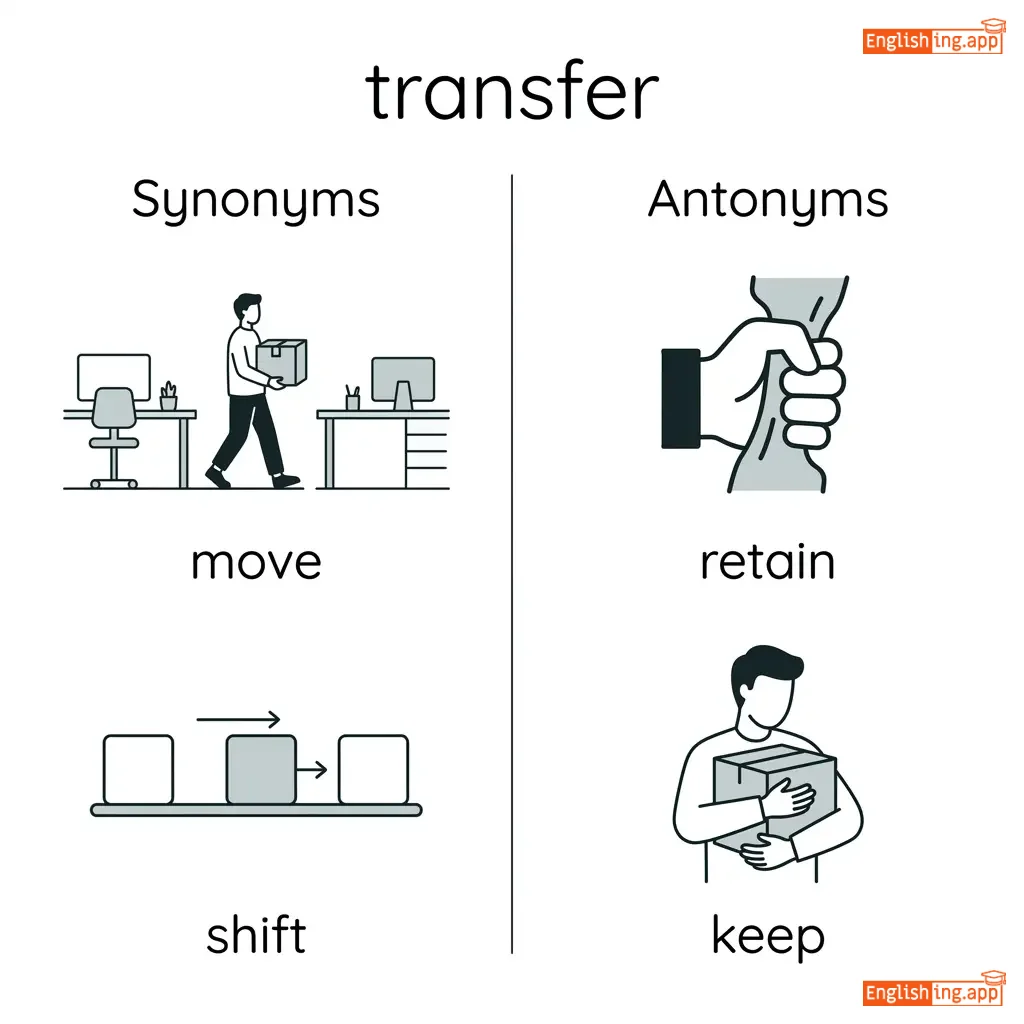
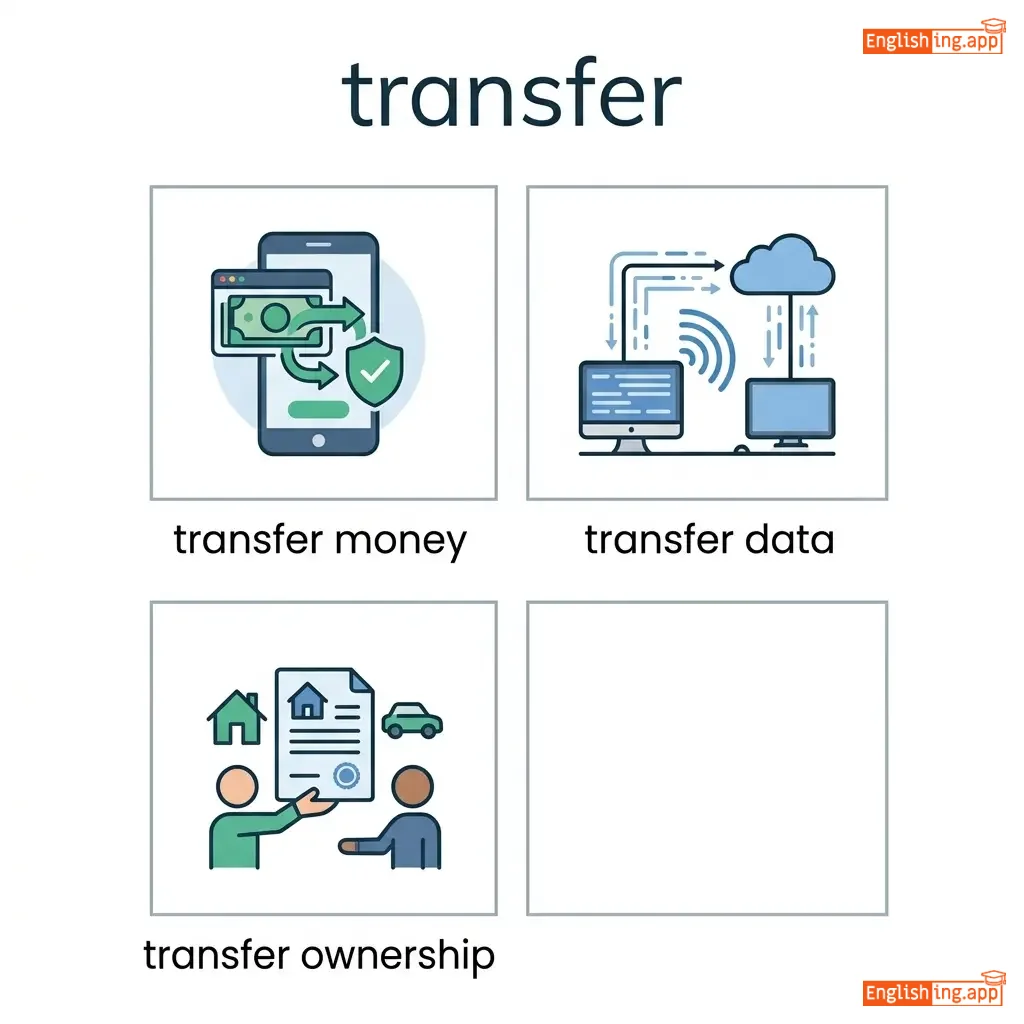
трансфер; перевод; перемещение
transfer
••••••
|
to move from one place to another; the action of moving something or someone to a different position
••••••
|
The company decided to transfer him to their branch office in London.
Компания решила перевести его в свой офис в Лондоне.
••••••
|
Компания решила перевести его в свой офис в Лондоне.
Kompaniya reshila perevesti ego v svoi ofis v Londone.
••••••
|
move, relocate, shift, transport, convey
••••••
|
retain, keep, maintain, stay
••••••
|
bank transfer, data transfer, job transfer, transfer payment
••••••
|
Переводить в другое место.
••••••
|
|
#1420
📈
|
/trend/
noun
(тренд)
••••••
|
|
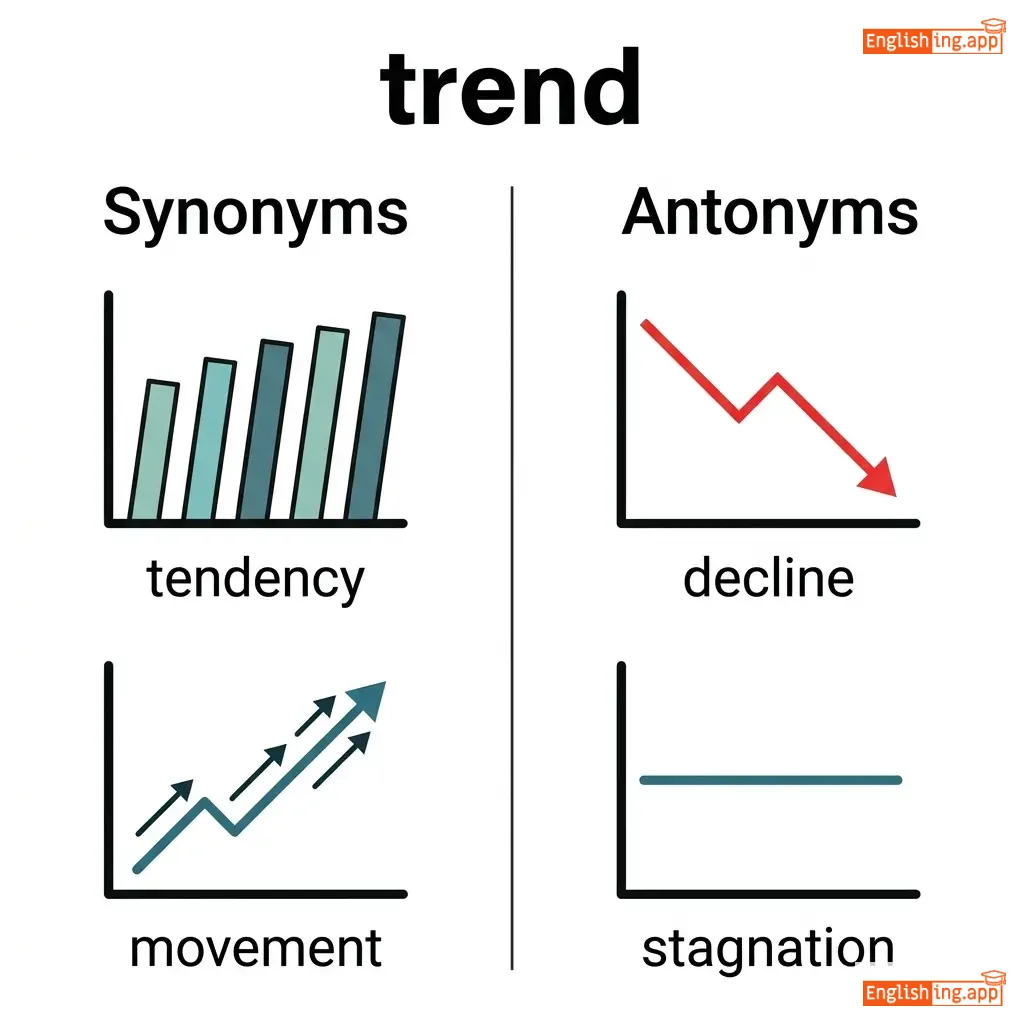
тенденция; мода; направление
tendentsiya; moda; napravlenie
••••••
|
a general direction in which something is developing or changing; a fashion or style that is popular
••••••
|
The trend towards online shopping continues to grow. |
Тренд к онлайн-шоппингу продолжает расти.
Trend k onlayn-shoppingu prodolzhaet rasti.
••••••
|
tendency, direction, pattern, fashion
••••••
|
stability, constancy, tradition
••••••
|
current trend, fashion trend, market trend
••••••
|
Tendentsiya (trend) это как когда мода становится все более популярной.
••••••
|
Vocabulary Quiz
Test your vocabulary by matching words with their translations or meanings.
Login to take the quiz
Comments (0)
Share your thoughts and join the discussion.
Join the discussion by logging in
Login to CommentNo comments yet
Be the first to share your thoughts!