

Обновитесь для доступа ко всему словарю
Получите неограниченный доступ ко всем словам с подпиской Pro
Обновить до ProПеревод
Прошедшее
Причастие прошедшего времени
Третье лицо единственного числа
Герундий
Значение
Пример предложения
Перевод примера предложения
Синонимы
Антонимы
Коллокации
Мнемоника


Swipe left or right, or use the buttons. Tap image to zoom.
Обновитесь для доступа ко всем предложениям
Получите неограниченный доступ ко всем предложениям с подпиской Pro
Обновить до ProПеревод примера предложения
Слово
Lesson 1Lesson 1 - Переключатель маски
|
Эмодзи
|
Слово | Images | Перевод | Значение | Пример предложения | Перевод примера предложения | Синонимы | Антонимы | Коллокации | Мнемоника |
|---|---|---|---|---|---|---|---|---|---|---|
|
#1
⚡
|
/ˈæk.ʃən/
noun
(экшн)
••••••
|
- •••••• |
действие; поступок
deystviye; postupok
••••••
|
the process of doing something; something that is done
••••••
|
We need to take action to solve this problem. |
Нам нужно принять меры для решения этой проблемы.
Nam nuzhno prinyat' mery dlya resheniya etoy problemy.
••••••
|
deed, act, activity, move
••••••
|
inaction, passivity
••••••
|
take action, direct action, immediate action, corrective action
••••••
|
Действие помогает в решении любой проблемы.
••••••
|
|
#2
💡
|
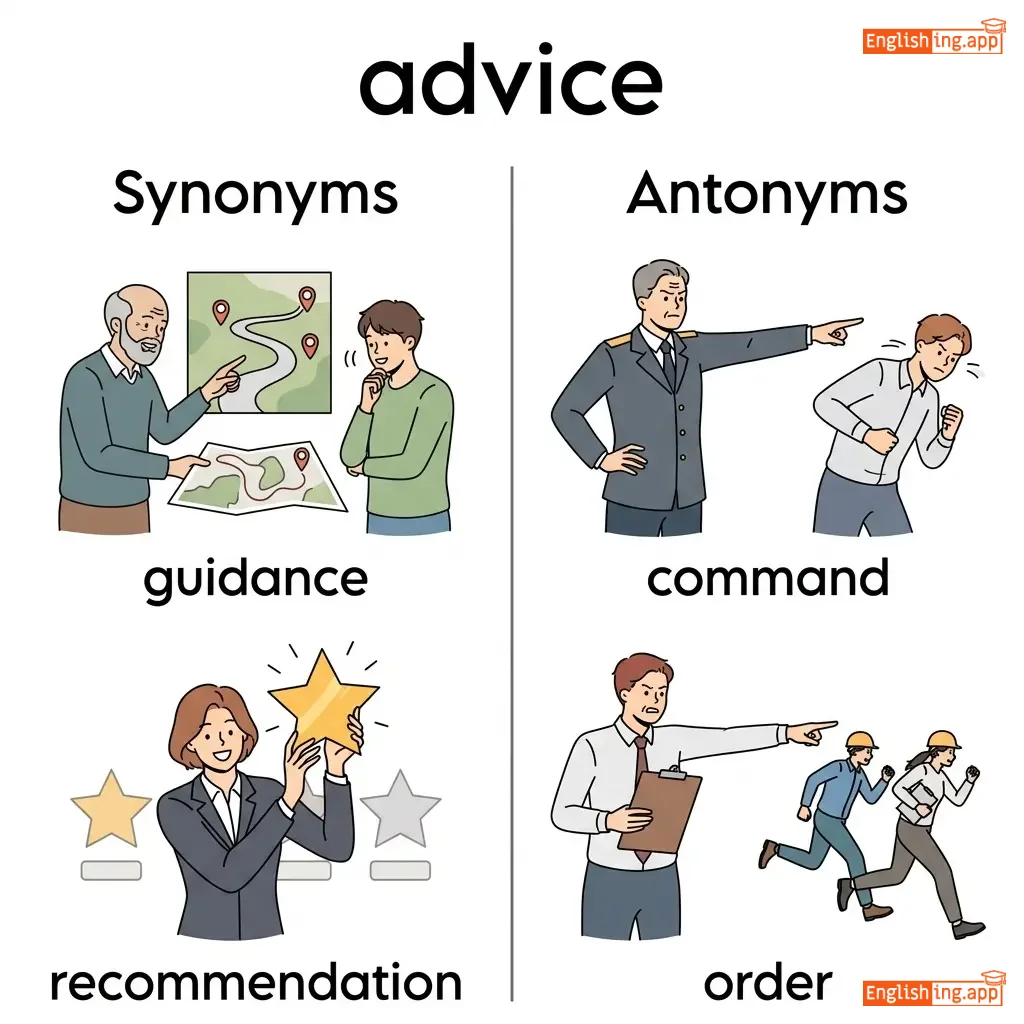
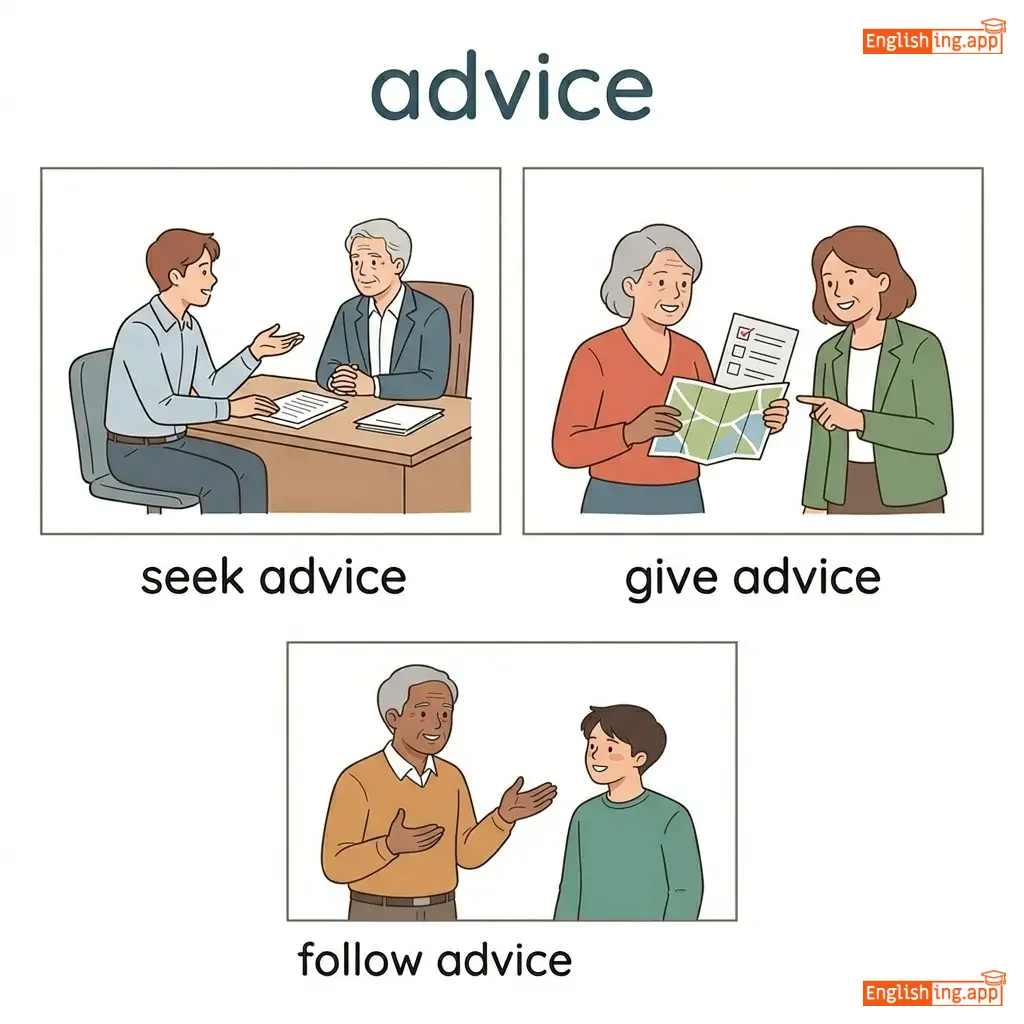
/ədˈvaɪs/
noun
(эдвайс)
••••••
|
|
совет
sovet
••••••
|
guidance or recommendations offered with regard to prudent action; opinion about what should be done
••••••
|
She gave me good advice about choosing a career. |
Она дала мне хороший совет по выбору карьеры.
Ona dala mne khoroshiy sovet po viboru kar'yery.
••••••
|
guidance, counsel, recommendation, suggestion
••••••
|
misguidance, discouragement
••••••
|
give advice, take advice, good advice, professional advice
••••••
|
Совет помогает принимать правильные решения
••••••
|
|
#3
🏔️
|
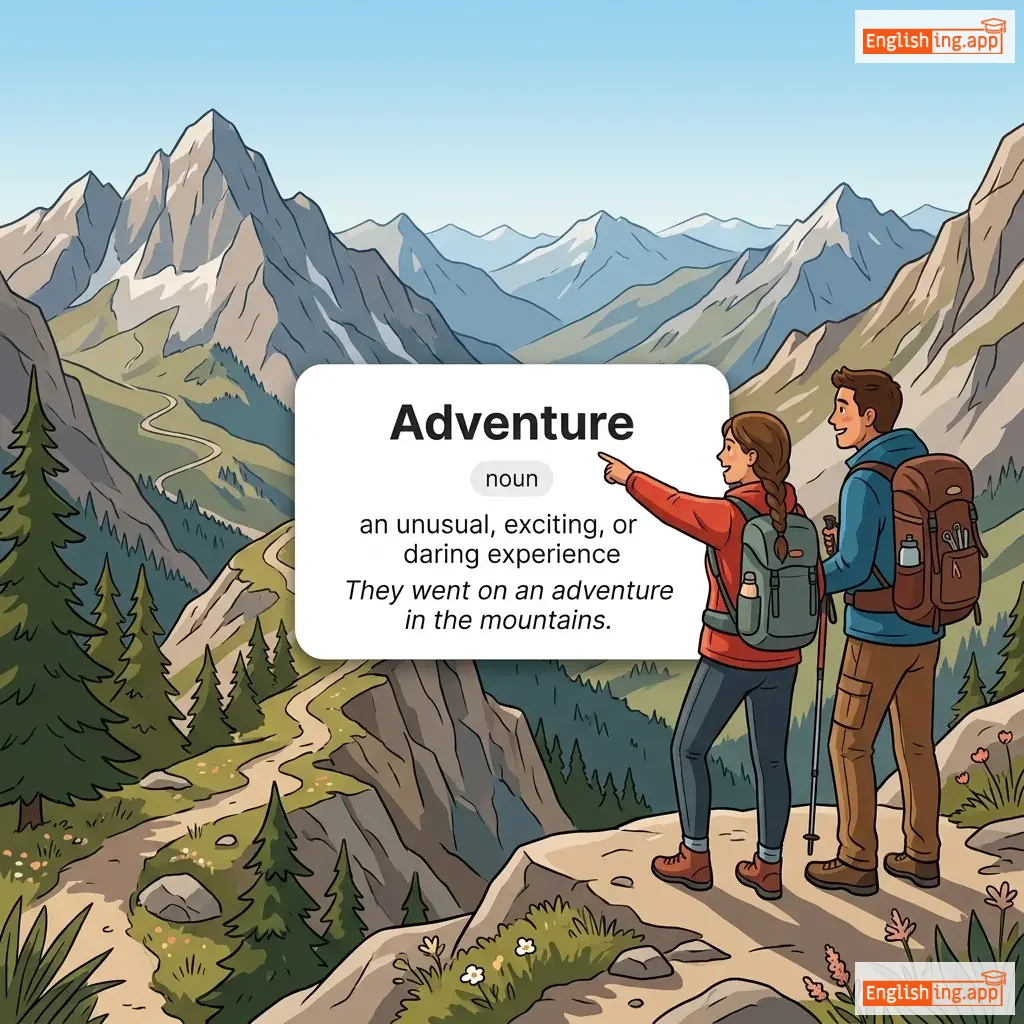
/ədˈven.tʃər/
noun
(ædˈvɛnʧər)
••••••
|
|
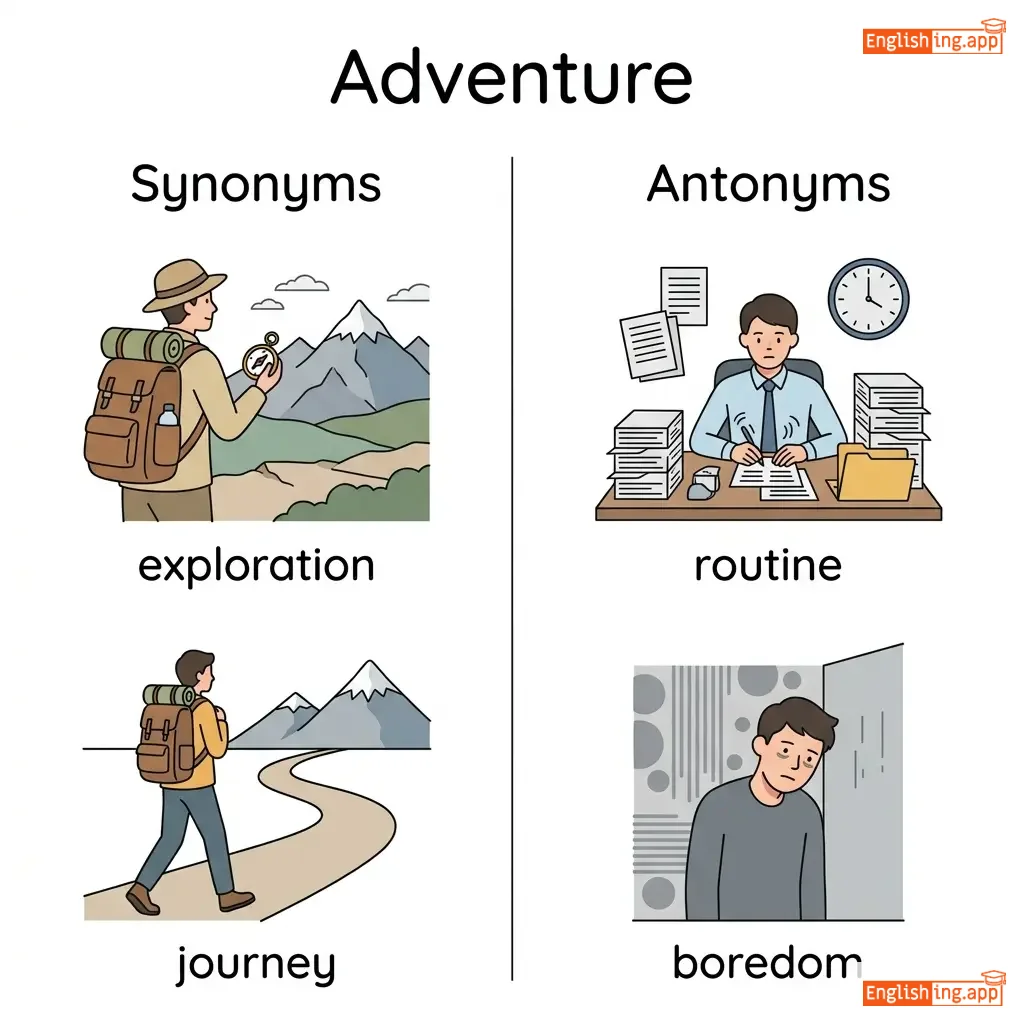
приключение
priklyucheniye
••••••
|
an exciting or dangerous experience; an unusual and exciting activity
••••••
|
Their trip to the Amazon was a real adventure. |
Их поездка в Амазонию была настоящим приключением.
Ikh poyezdka v Amazoniyu byla nastoyashchim priklyucheniye.
••••••
|
expedition, journey, quest, escapade
••••••
|
routine, boredom, safety
••••••
|
outdoor adventure, adventure story, seek adventure, exciting adventure
••••••
|
На русском 'приключение' - это adventure.
••••••
|
|
#4
🏆
|
/ədˈvæn.tɪdʒ/
noun
(advantijiz)
••••••
|
- •••••• |
преимущество; выгода
preimushchestvo; vygoda
••••••
|
a condition or circumstance that puts one in a favorable position; a benefit
••••••
|
Having a college degree gives you an advantage in the job market.
Наличие высшего образования дает вам преимущество на рынке труда.
••••••
|
Наличие высшего образования дает вам преимущество на рынке труда.
Nalichiye vysshego obrazovaniya dayet vam preimushchestvo na rynke truda.
••••••
|
benefit, asset, plus, edge
••••••
|
disadvantage, drawback, handicap
••••••
|
competitive advantage, take advantage, unfair advantage, clear advantage
••••••
|
Преимущество — это то, что дает вам выигрыш в жизни.
••••••
|
|
#5
⬆️
|
/ədˈvæns/
noun
(адвáнс)
••••••
|
- •••••• |
прогресс; развитие; предоплата
progress; razvitiye; predoplata
••••••
|
progress or development; movement forward; money paid before it is due
••••••
|
Technology has made great advances in recent years.
Технологии сделали большие успехи в последние годы.
••••••
|
Технологии сделали большие успехи в последние годы.
Tekhnologii sdelali bol'shiye uspekhi v posledniye gody.
••••••
|
progress, improvement, development, breakthrough
••••••
|
retreat, decline, setback
••••••
|
technological advance, medical advance, advance payment, in advance
••••••
|
Advancing in technology means progress and development.
••••••
|
|
#6
👨
|
/əˈdʌlt/
noun
(адульт)
••••••
|
- •••••• |
взрослый человек; взрослый
vzrosly chelovek; vzrosly
••••••
|
a person who is fully grown or developed; mature
••••••
|
Only adults are allowed to enter this area.
Только взрослые могут войти в эту зону.
••••••
|
Только взрослые могут войти в эту зону.
Tol'ko vzroslye mogut voiti v etu zonu.
••••••
|
grown-up, mature person, grownup
••••••
|
child, minor, juvenile
••••••
|
young adult, adult education, adult supervision, adult responsibilities
••••••
|
Vozrosly = Adult; Vzroslye tol'ko zdes'.
••••••
|
|
#7
🎓
|
/ədˈmɪʃ.ən/
noun
(адмишн)
••••••
|
- •••••• |
допуск; принятие
dopusk; prinyatie
••••••
|
the process of entering or being allowed to enter a school or organization; accepting that something is true
••••••
|
She gained admission to Harvard University.
Она получила допуск в Университет Гарварда.
••••••
|
Она получила допуск в Университет Гарварда.
Ona poluchila dopusk v Universitet Garvarda.
••••••
|
entry, acceptance, enrollment, confession
••••••
|
rejection, denial, exclusion
••••••
|
college admission, hospital admission, admission fee, admission requirements
••••••
|
Допуск = когда вас принимают, как в университет.
••••••
|
|
#8
🏛️
|
/ədˌmɪn.ɪˈstreɪ.ʃən/
noun
(администрация)
••••••
|
- •••••• |
администрация; управление
administratsiya; upravleniye
••••••
|
the process of managing or organizing something; a government or organization
••••••
|
The university administration announced new policies. |
Университетская администрация объявила о новых политиках.
Universitetskaya administratsiya ob'yavila o novykh politikakh.
••••••
|
management, government, control, supervision
••••••
|
chaos, disorder, mismanagement
••••••
|
public administration, school administration, business administration, government administration
••••••
|
Администрация управляет всеми аспектами, как университет или правительство.
••••••
|
|
#9
➕
|
/əˈdɪʃ.ən/
noun
(эддишн)
••••••
|
- •••••• |
сложение; процесс добавления
slozhenie; protsess dobavleniya
••••••
|
the process of adding numbers; something that is added
••••••
|
The addition of a new room made the house more spacious. |
Добавление новой комнаты сделало дом более просторным.
Dobavlenie novoy komnaty sdelalo dom bolee prostornym.
••••••
|
supplement, extension, extra, attachment
••••••
|
subtraction, removal, reduction
••••••
|
in addition to, recent addition, new addition, welcome addition
••••••
|
Сложение означает добавление чего-то к чему-то.
••••••
|
|
#10
🎯
|
/ækˈtɪv.ə.ti/
noun
(активность)
••••••
|
- •••••• |
активность; деятельность; задача
aktivnost'; deyatel'nost'; zadacha
••••••
|
something that you do for interest or pleasure, or in order to achieve a particular aim
••••••
|
Physical activity is important for good health. |
Физическая активность важна для хорошего здоровья.
Fizicheskaya aktivnost' vazhna dlya khoroshego zdorov'ya.
••••••
|
pursuit, exercise, pastime, occupation
••••••
|
inactivity, rest, idleness
••••••
|
physical activity, outdoor activity, leisure activity, business activity
••••••
|
Занимайтесь активностью для хорошего самочувствия!
••••••
|
|
#11
💪
|
/əˈbɪləti/
noun
(абилити)
••••••
|
- •••••• |
способность; умение
sposobnost; umenie
••••••
|
the power or skill to do something; capacity
••••••
|
She has the ability to solve complex problems.
Она имеет способность решать сложные задачи.
••••••
|
Она имеет способность решать сложные задачи.
Ona imeet sposobnost reshat' slozhnye zadachi.
••••••
|
capability, skill, talent, competence
••••••
|
inability, incapacity, weakness
••••••
|
natural ability, mental ability, ability to learn
••••••
|
Используй свою способность, чтобы преодолевать трудности.
••••••
|
|
#12
😣
|
/eɪk/
noun
(eik)
••••••
|
- •••••• |
боль
bol
••••••
|
a continuous or prolonged dull pain in a part of one's body
••••••
|
He had a terrible headache after working late. |
У него была ужасная головная боль после работы допоздна.
U nego byla uzhasnaya golovnaya bol posle raboty do pozdno.
••••••
|
pain, soreness, discomfort, hurt
••••••
|
comfort, relief, ease, wellness
••••••
|
headache, backache, stomach ache
••••••
|
Боль (болит) в голове, когда работаешь слишком долго.
••••••
|
|
#13
🎯
|
/ˈækjərəsi/
noun
(аккьюрэси)
••••••
|
- •••••• |
точность; правильность
tochnost'; pravel'nost'
••••••
|
the quality of being correct or precise; exactness
••••••
|
The accuracy of the measurements is very important. |
Точность измерений очень важна.
Tochnost' izmereniy ochen' vazhna.
••••••
|
precision, correctness, exactness, truth
••••••
|
inaccuracy, error, mistake, imprecision
••••••
|
high accuracy, accuracy of data, improve accuracy
••••••
|
Accuracy — это как измерять что-то с точностью до миллиметра.
••••••
|
|
#14
📊
|
/əˈkaʊnt/
noun
(аккаунт)
••••••
|
- •••••• |
счёт
schyot
••••••
|
a record of money received and paid out; a report or description of an event
••••••
|
She opened a savings account at the bank. |
Она открыла сберегательный счёт в банке.
Ona otkryla sberegatel'nyy schyot v banke.
••••••
|
record, report, statement, description
••••••
|
silence, concealment, secrecy
••••••
|
bank account, account balance, on account of
••••••
|
Счёт — это место, где записываются все финансовые операции, как в банке.
••••••
|
|
#15
🏠
|
/əˌkɒməˈdeɪʃən/
noun
(akomodéishn)
••••••
|
- •••••• |
жилище
zhilishche
••••••
|
a room, group of rooms, or building in which someone may live or stay
••••••
|
The hotel provides comfortable accommodation for tourists.
Отель предоставляет комфортное жилье для туристов.
••••••
|
Отель предоставляет комфортное жилье для туристов.
Otel' predostavlyayet komfortnoye zhilye dlya turistov.
••••••
|
housing, lodging, residence, shelter
••••••
|
homelessness, displacement, eviction
••••••
|
student accommodation, temporary accommodation, book accommodation
••••••
|
Accommodation in Russian is 'zhilishche', a place to stay.
••••••
|
|
#16
🚗💥
|
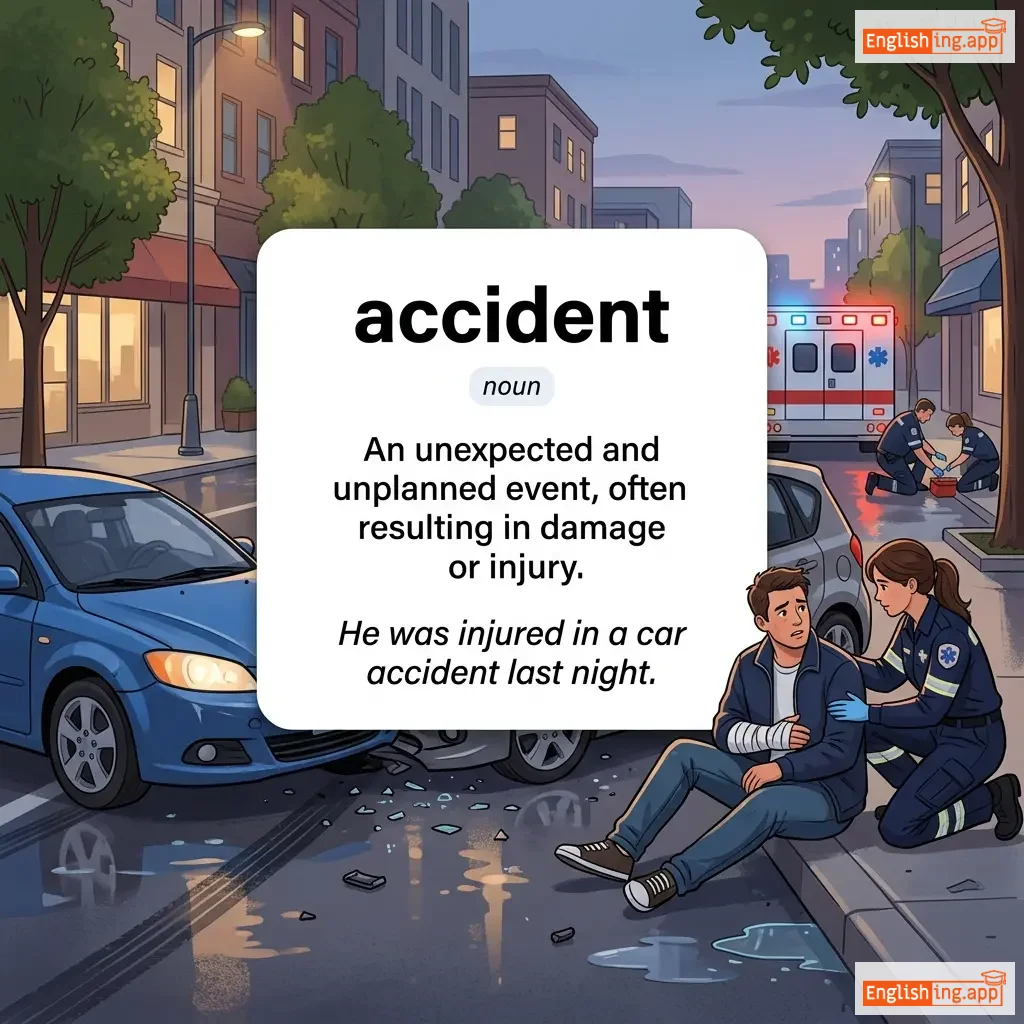
/ˈæksɪdənt/
noun
(aksident)
••••••
|
|
авария
avariya
••••••
|
an unfortunate incident that happens unexpectedly and unintentionally
••••••
|
The car accident happened on the highway during rush hour. |
Дорожная авария произошла на шоссе в час пик.
Dorozhnaya avariya proizoshla na shosse v chas pik.
••••••
|
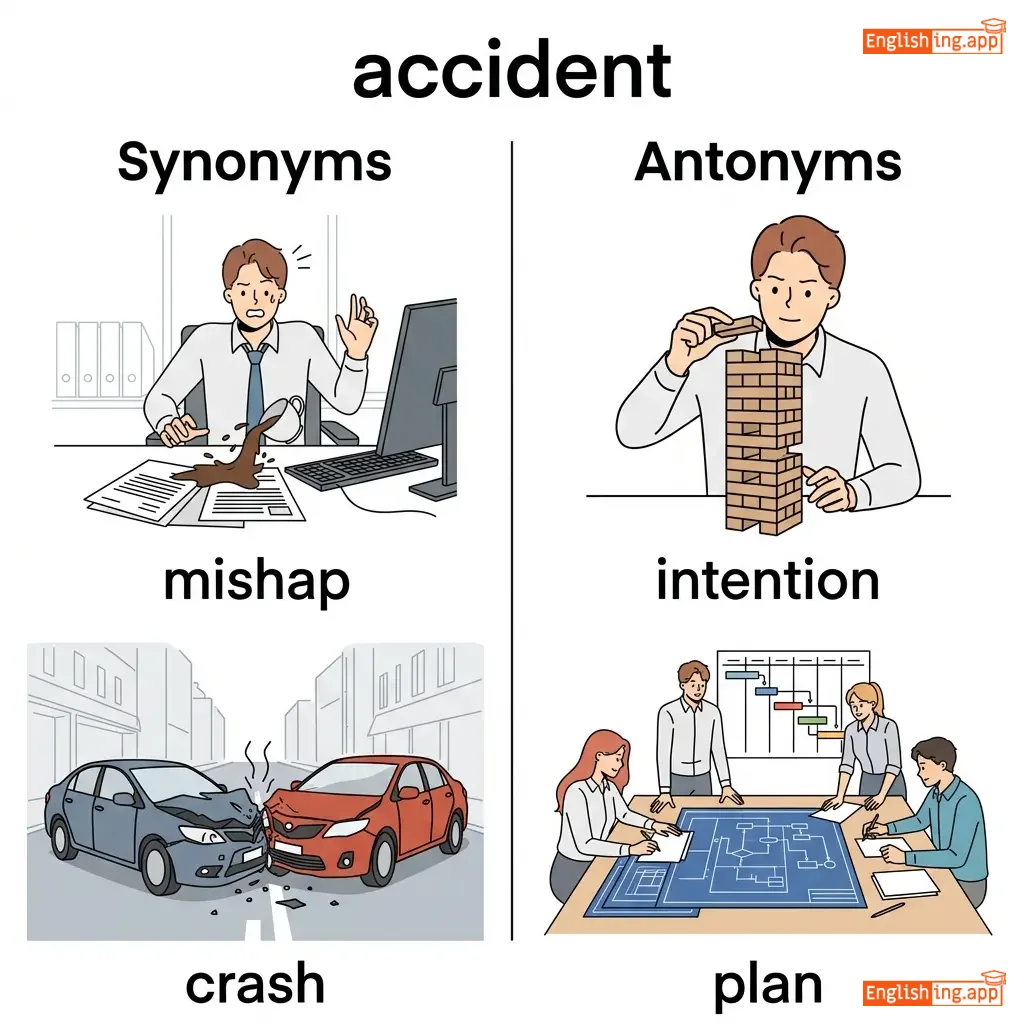
mishap, incident, crash, collision
••••••
|
intention, plan, design, purpose
••••••
|
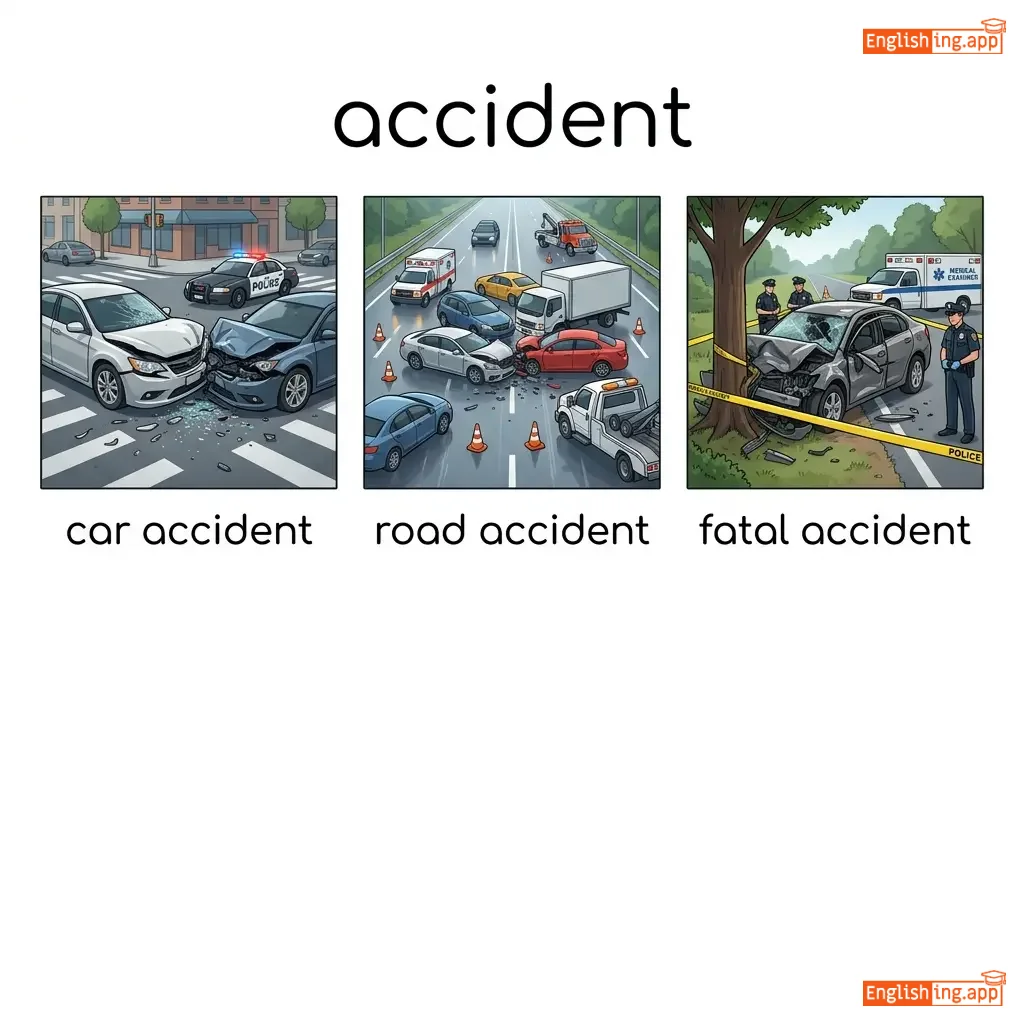
car accident, by accident, accident report
••••••
|
Авария - это что-то неожиданное, например, автомобильная авария.
••••••
|
|
#17
🔓
|
/ˈækses/
noun
(aksess)
••••••
|
- •••••• |
доступ
dostup
••••••
|
the ability, right, or permission to approach, enter, or pass to and from a place
••••••
|
Students have access to the library 24 hours a day. |
Студенты имеют доступ в библиотеку 24 часа в сутки.
Studenty imeyut dostup v biblioteku 24 chasa v sutki.
••••••
|
entry, admission, approach, passage
••••••
|
denial, restriction, prohibition, blockage
••••••
|
access to information, free access, access road
••••••
|
Доступ = 'dostup' - как дверь, к которой нужен ключ.
••••••
|
|
#18
🚫
|
/əˈbjuːs/
noun
(абьюз)
••••••
|
- •••••• |
злоупотребление; насилие;
zloupotreblenie; nasilie
••••••
|
cruel and violent treatment; improper use of something
••••••
|
The abuse of power led to his resignation. |
Злоупотребление властью привело к его отставке.
Zlouprezhenie vlast'yu privelo k ego otstavke.
••••••
|
mistreatment, misuse, maltreatment, exploitation
••••••
|
care, protection, proper use, respect
••••••
|
abuse of power, physical abuse, drug abuse
••••••
|
Злоупотребление — это неправильное использование власти и ресурсов
••••••
|
|
#19
🌾
|
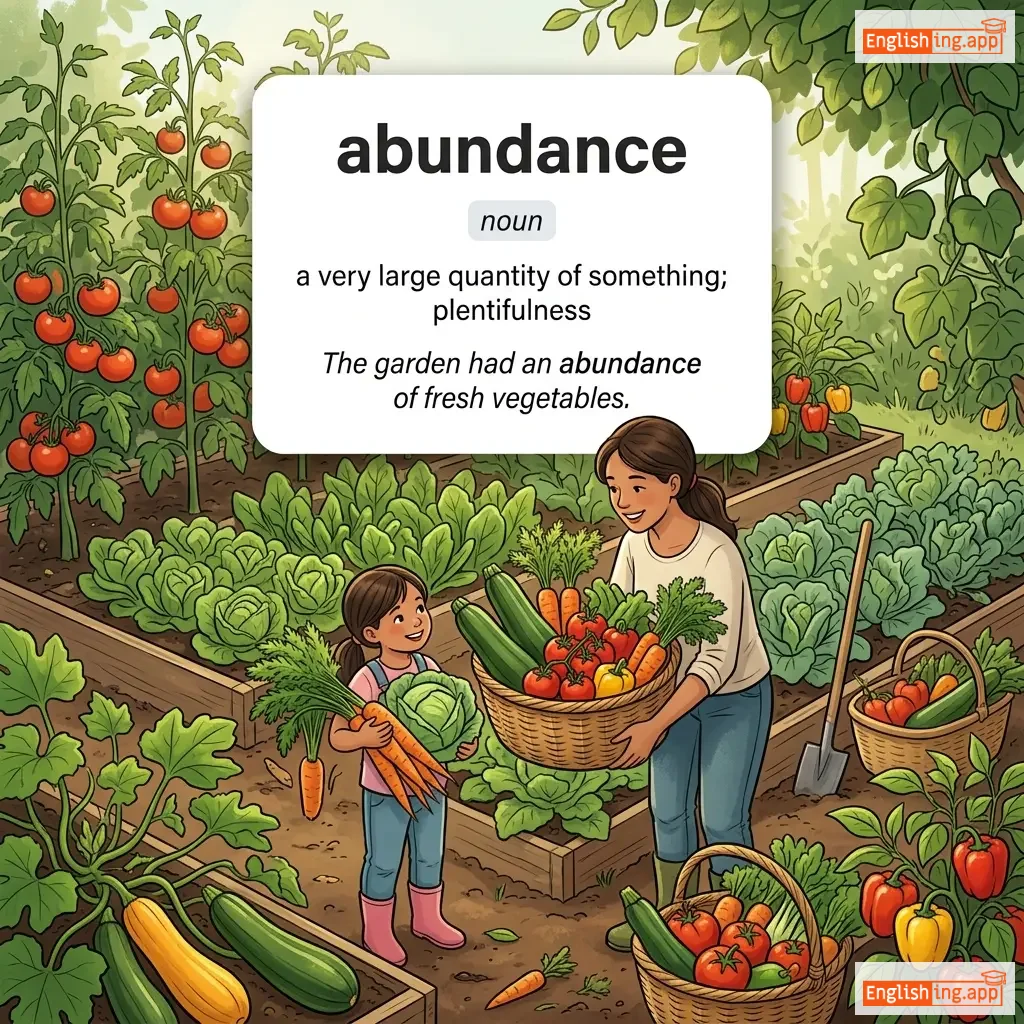
/əˈbʌndəns/
noun
(abundens)
••••••
|
|
изобилие; большое количество
izobilie; bolshoe kolichestvo
••••••
|
a very large quantity of something; plentifulness
••••••
|
The garden had an abundance of fresh vegetables.
В саду было много свежих овощей.
••••••
|
В саду было много свежих овощей.
V sadu bylo mnogo svezhikh ovochhey.
••••••
|
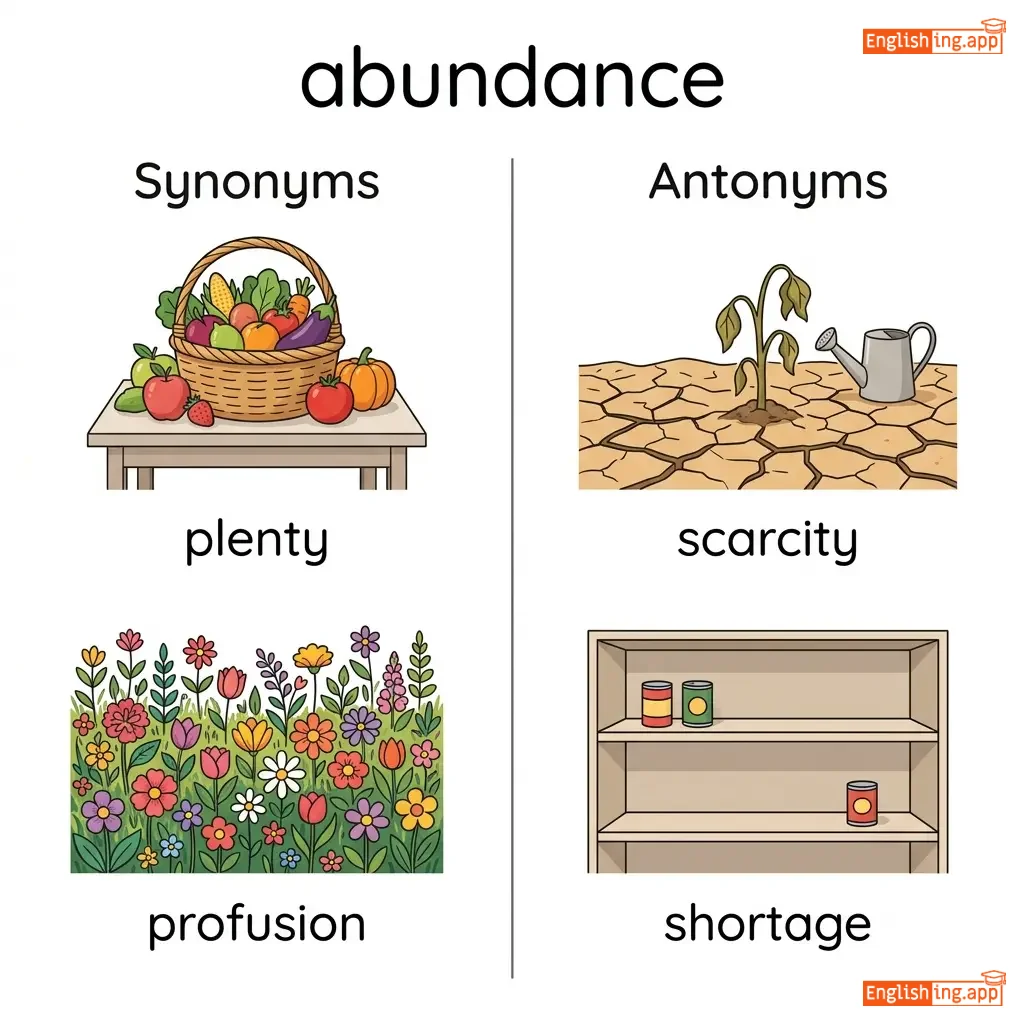
plenty, profusion, wealth, richness
••••••
|
scarcity, shortage, lack, dearth
••••••
|
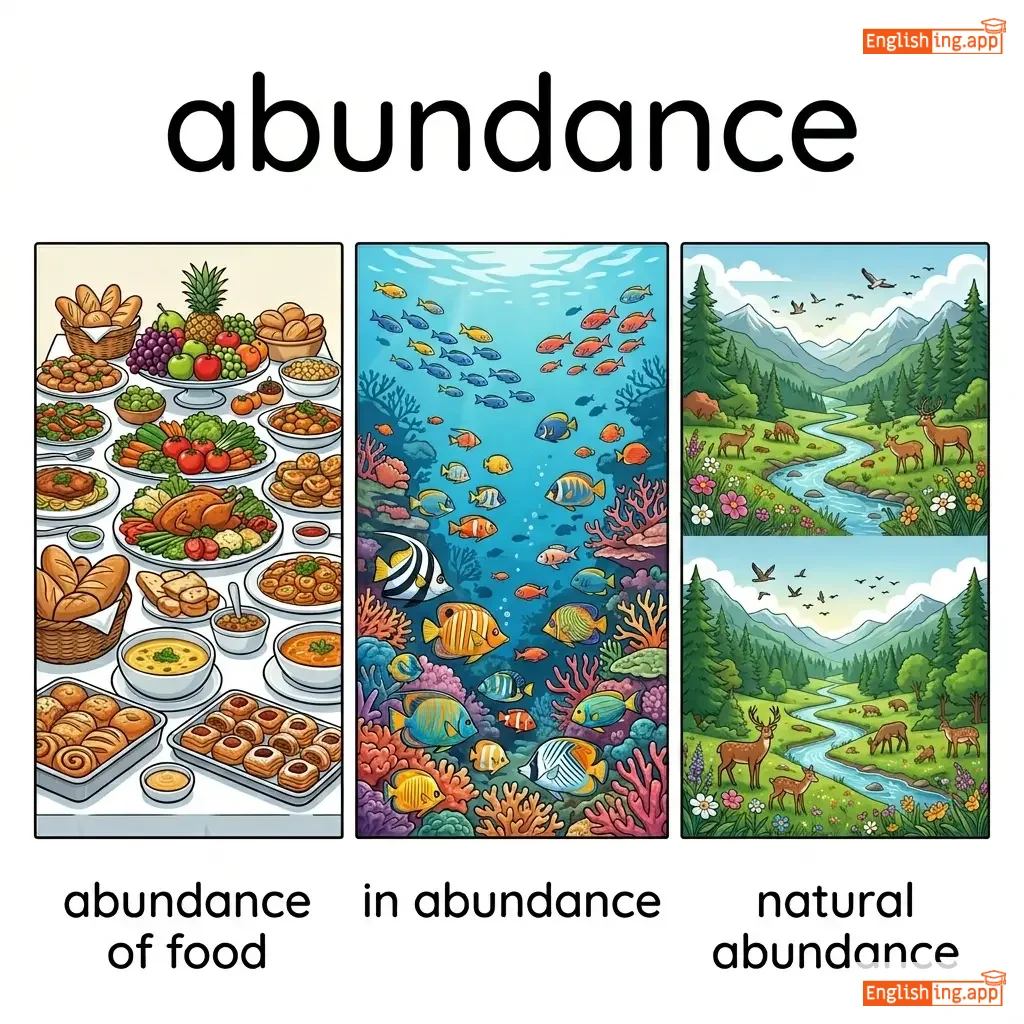
abundance of food, in abundance, natural abundance
••••••
|
Abundance: A garden overflowing with fresh vegetables.
••••••
|
|
#20
❌
|
/ˈæbsəns/
noun
(æbsens)
••••••
|
- •••••• |
отсутствие
otsutstvie
••••••
|
the state of being away from a place or person; lack or non-existence
••••••
|
His absence from the meeting was noticed by everyone.
Его отсутствие на собрании заметили все.
••••••
|
Его отсутствие на собрании заметили все.
Ego otsutstvie na sobranii zametili vse.
••••••
|
nonattendance, lack, want, deficiency
••••••
|
presence, attendance, existence
••••••
|
absence from work, in the absence of, prolonged absence
••••••
|
Absence = 'otsutstvie' in Russian, meaning 'absence' or 'not present'.
••••••
|
Vocabulary Quiz
Test your vocabulary by matching words with their translations or meanings.
Login to take the quiz
Comments (0)
Share your thoughts and join the discussion.
Join the discussion by logging in
Login to CommentNo comments yet
Be the first to share your thoughts!