

Обновитесь для доступа ко всему словарю
Получите неограниченный доступ ко всем словам с подпиской Pro
Обновить до ProПеревод
Прошедшее
Причастие прошедшего времени
Третье лицо единственного числа
Герундий
Значение
Пример предложения
Перевод примера предложения
Синонимы
Антонимы
Коллокации
Мнемоника
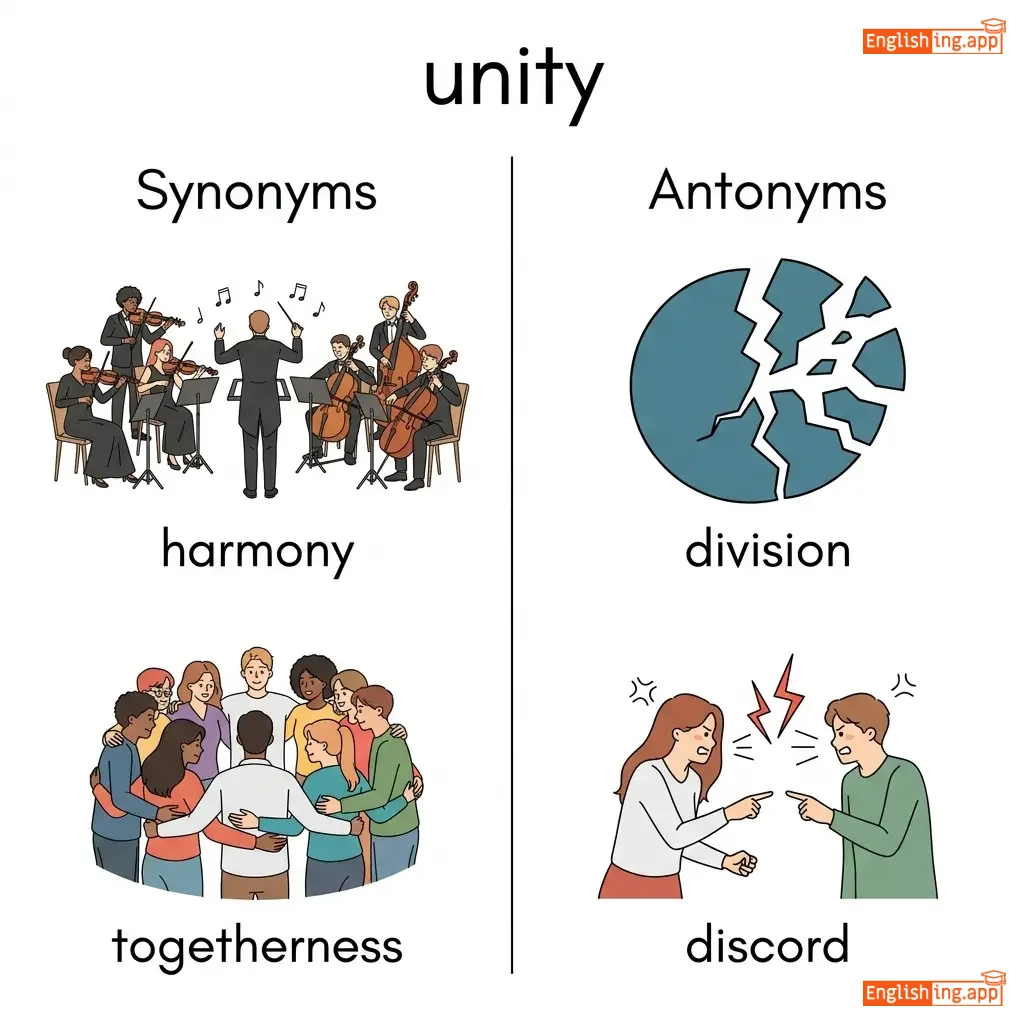
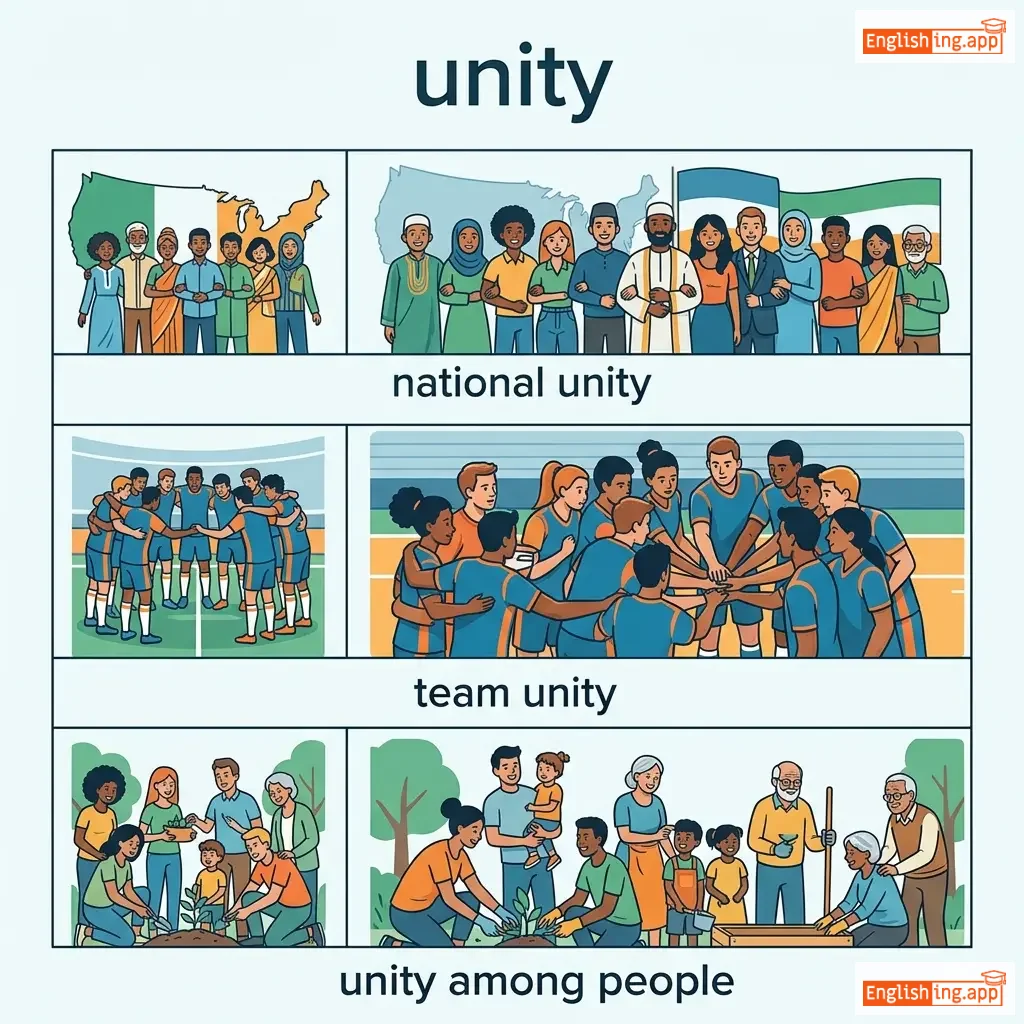
Swipe left or right, or use the buttons. Tap image to zoom.
Обновитесь для доступа ко всем предложениям
Получите неограниченный доступ ко всем предложениям с подпиской Pro
Обновить до ProПеревод примера предложения
Слово
Lesson 73Lesson 73 - Переключатель маски
|
Эмодзи
|
Слово | Images | Перевод | Значение | Пример предложения | Перевод примера предложения | Синонимы | Антонимы | Коллокации | Мнемоника |
|---|---|---|---|---|---|---|---|---|---|---|
|
#1441
🤝
|
/juːnəˈnɪməti/
noun
(ю-нан-и-ми-ти)
••••••
|
- •••••• |
единодушие
yedinodushie
••••••
|
complete agreement among all members of a group
••••••
|
The committee reached unanimity on the new policy. |
Комитет достиг единодушия по новой политике.
Komitet dostig yedinodushiya po novoy politike.
••••••
|
consensus, agreement, accord, harmony
••••••
|
disagreement, discord, dissent, division
••••••
|
reach unanimity, achieve unanimity, unanimous decision
••••••
|
Единодушие - это как когда все говорят 'да' одновременно.
••••••
|
|
#1442
⚖️
|
/ˈʌp.raɪt.nəs/
noun
(apraítnes)
••••••
|
- •••••• |
честность; целеустремленность
chestnost'; tseleustremlennost'
••••••
|
the quality of being honest and morally correct; integrity
••••••
|
His uprightness in business dealings earned him great respect.
Его прямота в деловых отношениях принесла ему большой уважение.
••••••
|
Его прямота в деловых отношениях принесла ему большой уважение.
Ego pryamota v delovykh otnosheniyakh prinesla yemu bol'shoy uvazhenie.
••••••
|
integrity, honesty, righteousness, virtue
••••••
|
dishonesty, corruption, immorality
••••••
|
moral uprightness, personal uprightness, uprightness of character
••••••
|
Uprightness stands firm like 'chestnost', rooted in moral integrity.
••••••
|
|
#1443
🤔
|
/ˌʌnbɪˈliːf/
noun
(anbileef)
••••••
|
- •••••• |
неверие
neverie
••••••
|
lack of religious belief; skepticism or doubt
••••••
|
His unbelief in the supernatural made him a skeptic.
His unbelief in the supernatural made him a skeptic.
••••••
|
Его неверие в сверхъестественное сделало его скептиком.
ego neverie v sverkhestestvennoe sdelo ego skeptikom
••••••
|
disbelief, skepticism, doubt, atheism
••••••
|
belief, faith, trust, conviction
••••••
|
religious unbelief, express unbelief, overcome unbelief
••••••
|
Russian 'neverie' sounds like 'never'. Imagine doubting what seems 'impossible'.
••••••
|
|
#1444
✊
|
/ˈʌp.raɪ.zɪŋ/
noun
(apraizing)
••••••
|
|
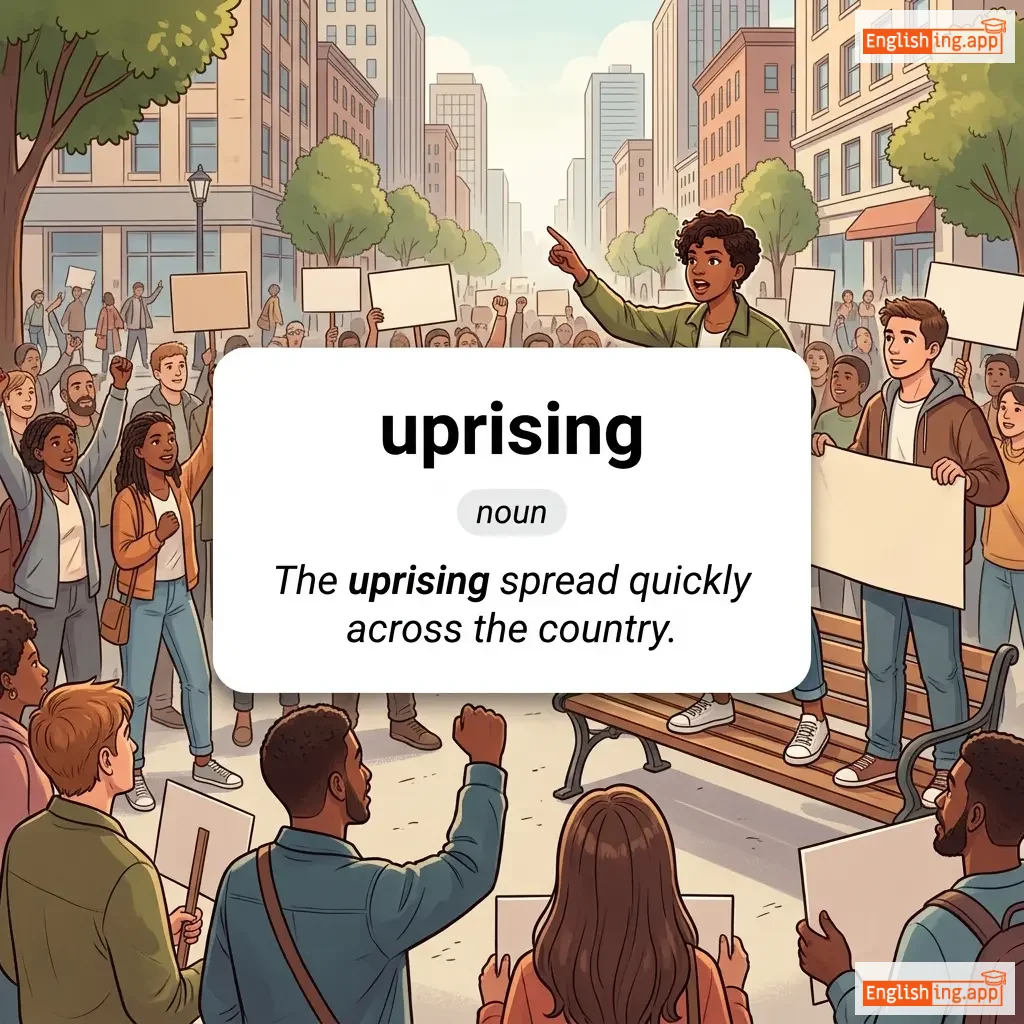
восстание; бунт
vosstanie, bunt
••••••
|
a violent or armed resistance against an established government or ruler; rebellion
••••••
|
The people organized an uprising against the oppressive regime. |
Люди организовали восстание против репрессивного режима.
Lyudi organizovali vosstanie protiv repressivnogo rezima.
••••••
|
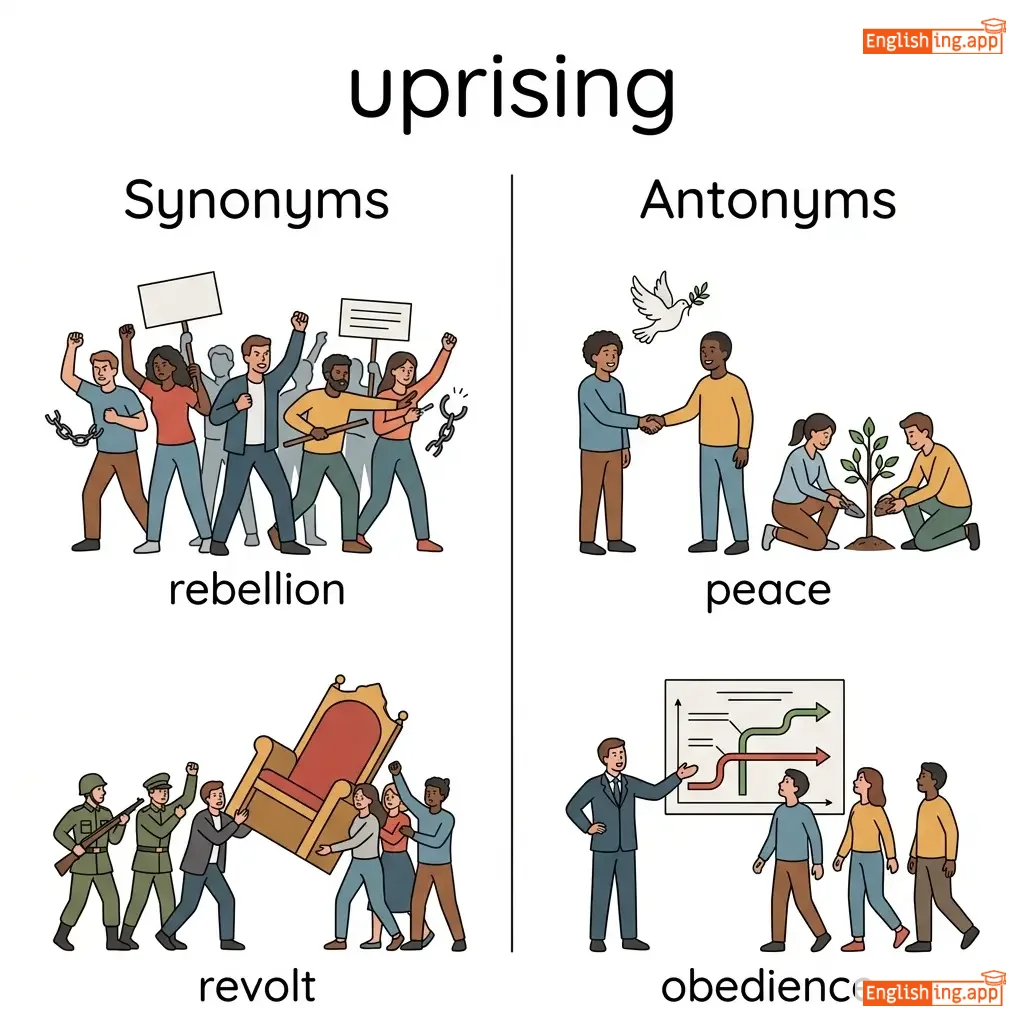
rebellion, revolt, insurrection, revolution
••••••
|
submission, compliance, obedience
••••••
|
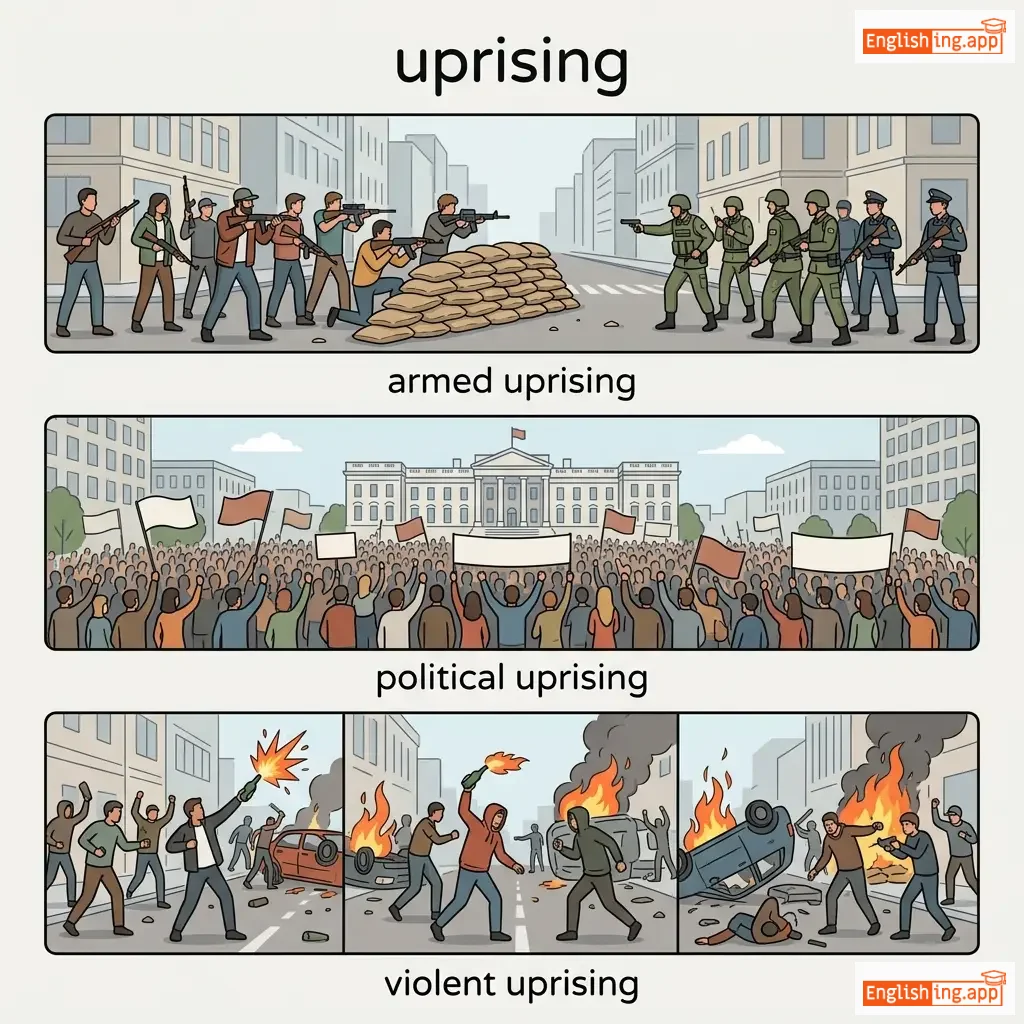
popular uprising, armed uprising, uprising against
••••••
|
В русском языке 'восстание' и 'бунт' связаны с бунтом против власти.
••••••
|
|
#1445
❓
|
/ʌnˈsɜːrtənti/
noun
(anserten-ti)
••••••
|
- •••••• |
неопределенность; сомнение или отсутствие уверенности
neopredelennost'; somnenie ili otsutstvie uverennosti
••••••
|
the state of being uncertain; doubt or lack of sureness
••••••
|
The uncertainty about the weather delayed our trip.
неопределенность о погоде задержала нашу поездку.
••••••
|
Неопределенность о погоде задержала нашу поездку.
Neopredelennost' o pogode zaderzhala nashu poyezdku.
••••••
|
doubt, ambiguity, confusion, hesitation
••••••
|
certainty, confidence, assurance, clarity
••••••
|
economic uncertainty, create uncertainty, reduce uncertainty
••••••
|
Неопределенность — как погода, всегда меняется.
••••••
|
|
#1446
📢
|
/ˈʌp.rɔːr/
noun
(ʌpˈrɔːr)
••••••
|
- •••••• |
беспорядок; шум; волнение
besporyadok, shuum, volnenie
••••••
|
a loud and emotional noise or disturbance; public outcry
••••••
|
The announcement caused an uproar among the students.
Объявление вызвало шум среди студентов.
••••••
|
Объявление вызвало шум среди студентов.
Ob'yavlenie vyzvalo shuum sredi studentov.
••••••
|
commotion, tumult, chaos, disturbance
••••••
|
calm, quiet, peace, silence
••••••
|
cause uproar, public uproar, uproar among
••••••
|
In Russian, 'besporyadok' means 'uproar', just like in English!
••••••
|
|
#1447
😐
|
/ʌnkənˈsɜːrn/
noun
(анкэнсёрн)
••••••
|
- •••••• |
безразличие
bezrazlichie
••••••
|
lack of worry or interest; indifference
••••••
|
She showed complete unconcern about the criticism. |
Она показала полное безразличие к критике.
Ona pokazala polnoe bezrazlichie k kritike.
••••••
|
indifference, apathy, detachment, nonchalance
••••••
|
concern, worry, interest, anxiety
••••••
|
show unconcern, complete unconcern, apparent unconcern
••••••
|
Запомни слово 'безразличие' как неинтересность к чему-либо.
••••••
|
|
#1448
🎯
|
/ˈʌp.ʃɒt/
noun
(ap-shot)
••••••
|
- •••••• |
результат; итог
rezultat, itog
••••••
|
the final result or outcome of a series of events; conclusion
••••••
|
The upshot of the meeting was a decision to postpone the project.
Итог встречи был решением отложить проект.
••••••
|
Итог встречи был решением отложить проект.
Itog vstrechi byl resheniem otlozhit' proyekt.
••••••
|
result, outcome, consequence, conclusion
••••••
|
beginning, cause, origin
••••••
|
upshot of, final upshot, upshot was
••••••
|
Итог, как ap-shot, это результат встречи.
••••••
|
|
#1449
📉
|
/ˌʌnɪmˈplɔɪmənt/
noun
(anemploiment)
••••••
|
- •••••• |
безработица
bezrabotitsa
••••••
|
the state of being unemployed; lack of paid work
••••••
|
The unemployment rate has increased significantly this year. |
Уровень безработицы значительно увеличился в этом году.
Uroven' bezrabotitsy znachitel'no uvelichilsya v etom godu.
••••••
|
joblessness, idleness, redundancy
••••••
|
employment, work, occupation, job
••••••
|
unemployment rate, unemployment benefits, mass unemployment
••••••
|
Безработица — это ситуация, когда нет работы, и это всегда неприятно.
••••••
|
|
#1450
🔝
|
/ˌʌpˈsteəz/
noun
(apsteyrs)
••••••
|
- •••••• |
верхний этаж
verkhniy etazh
••••••
|
on or to an upper floor of a building; the upper floor or floors
••••••
|
She went upstairs to her bedroom to rest.
Она поднялась наверх в свою спальню, чтобы отдохнуть.
••••••
|
Она поднялась наверх в свою спальню, чтобы отдохнуть.
Ona podnyalas' navverkh v svoyu spal'nyu, chtoby otdokhnut'.
••••••
|
above, upper floor, overhead
••••••
|
downstairs, below, ground floor
••••••
|
go upstairs, live upstairs, upstairs bedroom
••••••
|
apsteyrs = верхний этаж
••••••
|
|
#1451
🔄
|
/ˌjuːnɪˈfɔːrməti/
noun
(юнифо́рмити)
••••••
|
- •••••• |
однородность; последовательность; равенство
odnorodnost; posledovatel'nost; ravenstvo
••••••
|
the quality of being uniform; consistency or sameness
••••••
|
The uniformity of the design created a pleasing visual effect. |
Однородность дизайна создала привлекательный визуальный эффект.
Odnorodnost' dizayna sozdala privlekatel'nyy vizual'nyy effekt.
••••••
|
consistency, regularity, sameness, standardization
••••••
|
variety, diversity, irregularity, inconsistency
••••••
|
maintain uniformity, achieve uniformity, lack uniformity
••••••
|
Однородность означает 'равенство' и 'последовательность' в дизайне.
••••••
|
|
#1452
⚡
|
/ˈɜː.dʒən.si/
noun
(ɜː.dʒən.si)
••••••
|
- •••••• |
неотложность
neotlozhnost
••••••
|
the quality of requiring immediate action or attention; pressing importance
••••••
|
The urgency of the situation required immediate medical attention. |
Неотложность ситуации потребовала немедленного медицинского внимания.
Neotlozhnost' situatsii potrebovala nemedlennogo meditsinskogo vnimaniya
••••••
|
priority, importance, immediacy, pressing need
••••••
|
delay, postponement, leisure
••••••
|
sense of urgency, urgency of situation, extreme urgency
••••••
|
Неотложность - когда нужно действовать прямо сейчас!
••••••
|
|
#1453
🤲
|
/ˈjuːnjən/
noun
(юнион)
••••••
|
- •••••• |
союз
soyuiz
••••••
|
the action of joining or combining; a political unit formed from separate states
••••••
|
The union of the two companies created a powerful corporation.
Объединение двух компаний создало мощную корпорацию.
••••••
|
Объединение двух компаний создало мощную корпорацию.
Ob'edineniye dvukh kompaniy sozdalo moshchnuyu korporatsiyu.
••••••
|
alliance, merger, combination, federation
••••••
|
separation, division, dissolution, split
••••••
|
trade union, labor union, form a union
••••••
|
Союз - это когда разные части объединяются для создания чего-то сильного.
••••••
|
|
#1454
📖
|
/ˈjuː.sɪdʒ/
noun
(yoo-seyzh)
••••••
|
- •••••• |
использование
ispol'zovanie
••••••
|
the action of using something; the way in which words are used in a language
••••••
|
The dictionary explains the correct usage of difficult words.
Словарь объясняет правильное использование трудных слов.
••••••
|
Словарь объясняет правильное использование трудных слов.
Slovar' ob'yasnyayet pravil'noye ispol'zovaniye trudnykh slov.
••••••
|
use, application, employment, utilization
••••••
|
disuse, neglect, abandonment
••••••
|
correct usage, common usage, word usage
••••••
|
Использование = Ispol'zovaniye (Russian word similar to 'usage' in English)
••••••
|
|
#1455
🔗
|
/ˈjuːnəti/
noun
(yuniti)
••••••
|
|
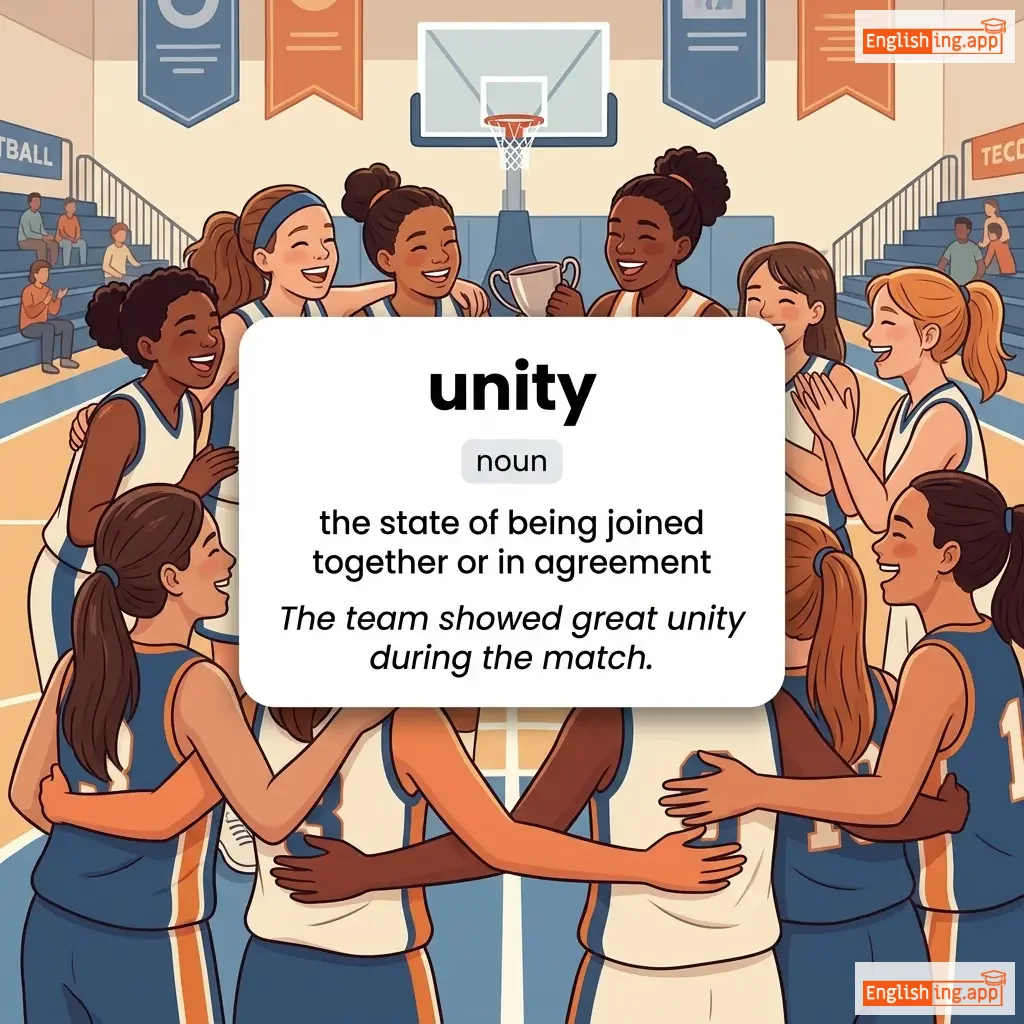
единство
yedinstvo
••••••
|
the state of being united or joined as a whole; harmony
••••••
|
The team's unity helped them win the championship. |
Единство команды помогло им выиграть чемпионат.
Yedinstvo komandy pomoglo im vyigrat' chempionat.
••••••
|
harmony, solidarity, cohesion, togetherness
••••••
|
division, discord, disunity, fragmentation
••••••
|
national unity, achieve unity, promote unity
••••••
|
Единство in Russian means unity, like 'Unity' in English, both show togetherness.
••••••
|
|
#1456
🔧
|
/ˈjuːs.fəl.nəs/
noun
(yusfulnes)
••••••
|
- •••••• |
полезность
poleznost
••••••
|
the quality of being useful; practical value or helpfulness
••••••
|
The usefulness of this tool became apparent during the project. |
Полезность этого инструмента стала очевидной в процессе проекта.
Poleznost' etogo instrumenta stala ochevidnoy v protsesse proyeka.
••••••
|
utility, value, benefit, practicality
••••••
|
uselessness, worthlessness, futility
••••••
|
practical usefulness, usefulness of tool, question usefulness
••••••
|
Полезность = Полезный + ть (meaning state of being useful)
••••••
|
|
#1457
🌌
|
/ˈjuːnɪvɜːrs/
noun
(yʊnɪvɜːrs)
••••••
|
- •••••• |
вселенная
vselennaya
••••••
|
all existing matter and space; the cosmos
••••••
|
Scientists study the universe to understand its mysteries.
Учёные изучают вселенную, чтобы понять её тайны.
••••••
|
Учёные изучают вселенную, чтобы понять её тайны.
Uchyonye izuchayut vselennoe, chtoby ponyat' yeye tayny.
••••••
|
cosmos, space, creation, existence
••••••
|
nothingness, void, emptiness
••••••
|
expanding universe, observable universe, parallel universe
••••••
|
Вселенной нет конца
••••••
|
|
#1458
⚙️
|
/juːˈtɪl.ə.ti/
noun
(yutiliti)
••••••
|
- •••••• |
полезность; выгода; общественная услуга
poleznost', vigoda, obshchestvennaya usluga
••••••
|
the state of being useful, profitable, or beneficial; a public service
••••••
|
The utility of solar panels increases with rising electricity costs. |
Полезность солнечных панелей увеличивается с ростом стоимости электричества.
Poleznost' solnechnykh panelей uvelichivayetsya s rostom stoimosti elektrichestva
••••••
|
usefulness, practicality, benefit, service
••••••
|
uselessness, impracticality, disadvantage
••••••
|
public utility, utility company, utility bill
••••••
|
Utility = Полезность (По + лезность)
••••••
|
|
#1459
⚡
|
/ʌnˈrest/
noun
(анрест)
••••••
|
- •••••• |
беспокойство; волнения; социальные или политические беспорядки
bespokojstvo; volneniya; sotsial'nye ili politicheskie besporyadki
••••••
|
a state of dissatisfaction and disturbance; social or political disorder
••••••
|
The economic crisis led to widespread social unrest. |
Экономический кризис привел к широкому социальному беспокойству.
Ekonomicheskiy krizis privel k shirokomu sotsial'nomu bespokoystvu.
••••••
|
disorder, turmoil, agitation, disturbance
••••••
|
peace, calm, tranquility, order
••••••
|
social unrest, civil unrest, political unrest
••••••
|
Unrest напоминает беспокойство, это когда что-то идет не так.
••••••
|
|
#1460
🏢
|
/ˈveɪ.kən.si/
noun
(veikensi)
••••••
|
- •••••• |
вакансия; незанятое место или пустое помещение
vakansiya, nezanyatoe mesto ili pustoje pomeshcheniye
••••••
|
an unoccupied position or job; an empty space or room
••••••
|
There is a vacancy for a software engineer in our company.
В нашей компании есть вакансия для инженера-программиста.
••••••
|
В нашей компании есть вакансия для инженера-программиста.
V nashei kompanii est' vakansiya dlya inzhenera-programmista.
••••••
|
opening, position, emptiness, void
••••••
|
occupation, fullness, employment
••••••
|
job vacancy, vacancy rate, fill vacancy
••••••
|
Vacancy – Imagine a job opening waiting for a new employee.
••••••
|
Vocabulary Quiz
Test your vocabulary by matching words with their translations or meanings.
Login to take the quiz
Comments (0)
Share your thoughts and join the discussion.
Join the discussion by logging in
Login to CommentNo comments yet
Be the first to share your thoughts!