

Обновитесь для доступа ко всему словарю
Получите неограниченный доступ ко всем словам с подпиской Pro
Обновить до ProПеревод
Прошедшее
Причастие прошедшего времени
Третье лицо единственного числа
Герундий
Значение
Пример предложения
Перевод примера предложения
Синонимы
Антонимы
Коллокации
Мнемоника

Swipe left or right, or use the buttons. Tap image to zoom.
Обновитесь для доступа ко всем предложениям
Получите неограниченный доступ ко всем предложениям с подпиской Pro
Обновить до ProПеревод примера предложения
Слово
Lesson 13Lesson 13 - Переключатель маски
|
Эмодзи
|
Слово | Images | Перевод | Значение | Пример предложения | Перевод примера предложения | Синонимы | Антонимы | Коллокации | Мнемоника |
|---|---|---|---|---|---|---|---|---|---|---|
|
#241
💕
|
/ˈdæl.i.əns/
noun
(дэлиэнс)
••••••
|
- •••••• |
романтические отношения; флирт; недолгая связь
romanticheskie otnosheniya, flirt, nedolgaya svyaz
••••••
|
a casual romantic or sexual relationship; a brief involvement or experiment
••••••
|
His dalliance with photography lasted only a few months before he lost interest. |
Его роман с фотографией длился всего несколько месяцев, прежде чем он потерял интерес.
yego roman s fotografiyey dlyalsya vsego neskol'ko mesyatsev, prezhde chem on poteryal interes
••••••
|
flirtation, affair, fling, liaison
••••••
|
commitment, dedication, serious relationship
••••••
|
brief dalliance, romantic dalliance, casual dalliance
••••••
|
No •••••• |
|
#242
☀️
|
/deɪ/
noun
(dei)
••••••
|
- •••••• |
день
den
••••••
|
a period of twenty-four hours; the time during which there is light
••••••
|
What a beautiful day it is today with clear blue skies! |
Какой прекрасный день сегодня с ясным голубым небом!
Kakoy prekrasnyy den' segodnya s yasnym golubym nebom!
••••••
|
daytime, twenty-four hours, date, era
••••••
|
night, darkness, evening
••••••
|
beautiful day, long day, working day
••••••
|
Den sounds like 'dawn' which begins the day.
••••••
|
|
#243
🏞️
|
/dæm/
noun
(dæm)
••••••
|
- •••••• |
дамба; водоем;
damba, vodeem
••••••
|
a barrier constructed to hold back water and raise its level; a female parent of an animal
••••••
|
The massive dam provides electricity and controls flooding in the region.
Массивная дамба обеспечивает электричество и контролирует наводнения в регионе.
••••••
|
Массивная дамба обеспечивает электричество и контролирует наводнения в регионе.
Massivnaya damba obespechivaet elektrichestvo i kontroliruet navodneniya v regione.
••••••
|
barrier, weir, embankment, dyke
••••••
|
opening, breach, gap
••••••
|
hydroelectric dam, concrete dam, dam construction
••••••
|
Дамба = удержание воды и водоем = место для хранения воды
••••••
|
|
#244
⏰
|
/ˈded.laɪn/
noun
(дедлайн)
••••••
|
- •••••• |
крайний срок;
krayniy srok
••••••
|
the latest time or date by which something should be completed
••••••
|
The deadline for submitting the project is next Friday.
Крайний срок подачи проекта — в следующую пятницу.
••••••
|
Крайний срок подачи проекта — в следующую пятницу.
Krayniy srok podachi proyektov — v sleduyushchuyu pyatnitsu.
••••••
|
time limit, due date, cutoff, expiry
••••••
|
extension, flexibility, open-ended
••••••
|
strict deadline, meet deadline, deadline pressure
••••••
|
Deadline (крайний срок) — момент, когда проект должен быть сдан.
••••••
|
|
#245
🔒
|
/ˈded.lɑk/
noun
(дэд-лок)
••••••
|
- •••••• |
тупик; блокировка
tupik; blokirovka
••••••
|
a situation in which no progress is possible; complete standstill
••••••
|
The negotiations reached a deadlock when neither side would compromise.
переговоры зашли в тупик, когда ни одна из сторон не хотела идти на компромисс.
••••••
|
Переговоры зашли в тупик, когда ни одна из сторон не хотела идти на компромисс.
Peregovory zashli v tupik, kogda ni odna iz storon ne khotela idti na kompromiss.
••••••
|
stalemate, impasse, standstill, gridlock
••••••
|
progress, breakthrough, resolution, movement
••••••
|
political deadlock, break deadlock, reach deadlock
••••••
|
Deadlock = тупик на русском
••••••
|
|
#246
💥
|
/ˈdæm.ɪdʒ/
noun
(дэ́мидж)
••••••
|
- •••••• |
повреждение; ущерб
povrezhdenie, ushcherb
••••••
|
physical harm caused to something; injury or harm that reduces value or usefulness
••••••
|
The storm caused significant damage to the coastal buildings. |
Шторм причинил значительный ущерб прибрежным зданиям.
Shtorm prichinil znachitel'nyy ushcherb pribrizhnym zdaniyam.
••••••
|
harm, destruction, injury, loss
••••••
|
repair, restoration, improvement, benefit
••••••
|
property damage, brain damage, environmental damage
••••••
|
Ущерб и повреждения связаны с чем-то, что теряет свою ценность.
••••••
|
|
#247
🔥
|
/dæmˈneɪ.ʃən/
noun
(dæmˈneɪʃən)
••••••
|
- •••••• |
проклятие; разрушение
proklyatie; razrushenie
••••••
|
condemnation to eternal punishment in hell; something that causes ruin or failure
••••••
|
The preacher spoke about salvation and damnation in his sermon.
Проповедник говорил о спасении и проклятии в своей проповеди.
••••••
|
Проповедник говорил о спасении и проклятии в своей проповеди.
Propovednik govoril o spasenii i proklyatii v svoei propovedi.
••••••
|
condemnation, perdition, ruin, curse
••••••
|
salvation, blessing, redemption
••••••
|
eternal damnation, threat of damnation, escape damnation
••••••
|
Damnation на русском означает проклятие.
••••••
|
|
#248
🤝
|
/ˈdiː.lɪŋ/
noun
(дилинг)
••••••
|
- •••••• |
обращение; сделки; бизнес-процессы
obrascheniye, sdelki, biznes-protsessy
••••••
|
business transactions; the way of treating people or handling situations
••••••
|
His fair dealing with customers earned him an excellent reputation. |
Его честное обращение с клиентами принесло ему отличную репутацию.
Yego chestnoye obrascheniye s klientami prineslo yemu otlichnuyu reputatsiyu.
••••••
|
transaction, trade, conduct, behavior
••••••
|
avoidance, neglect, dishonesty
••••••
|
fair dealing, business dealing, honest dealing
••••••
|
Дилинг — это честные сделки в бизнесе.
••••••
|
|
#249
❄️
|
/ˈdæn.drʌf/
noun
(дандраф)
••••••
|
- •••••• |
перхоть
perkhot
••••••
|
small white or grey flakes of dead skin that form on the scalp and fall from the hair
••••••
|
He used a special shampoo to treat his persistent dandruff problem.
Он использовал специальный шампунь для лечения своей постоянной проблемы с перхотью.
••••••
|
Он использовал специальный шампунь для лечения своей постоянной проблемы с перхотью.
On ispol'zoval spetsial'nyy shampun' dlya lecheniya svoey postoyannoy problemy s perkhotyuy.
••••••
|
scalp flakes, seborrhea, scurf
••••••
|
healthy scalp, clean hair
••••••
|
dandruff shampoo, severe dandruff, treat dandruff
••••••
|
Perrkhoyt means dandruff falling off your hair.
••••••
|
|
#250
⚰️
|
/deθ/
noun
(дэθ)
••••••
|
- •••••• |
смерть
smerť
••••••
|
the end of life; the permanent cessation of vital functions
••••••
|
The death of the great leader was mourned by the entire nation. |
Смерть великого лидера была оплакана всей нацией.
Smerť velikogo lidera byla oplakana vsej natsiej.
••••••
|
demise, passing, mortality, end
••••••
|
birth, life, existence, vitality
••••••
|
sudden death, natural death, death certificate
••••••
|
Смерть (smerť) в русском языке обозначает конец жизни.
••••••
|
|
#251
🎯
|
/ˈder.ɪŋ/
noun
(деринг)
••••••
|
- •••••• |
дерзость; готовность идти на риск
derzost, gotovnost idti na risk
••••••
|
adventurous courage; willingness to take risks
••••••
|
The mountain climber's daring impressed everyone at the base camp. |
Дерзость альпиниста впечатлила всех на базе лагеря.
Derzost alpinista vpechatlila vsekh na baze lagerya.
••••••
|
boldness, courage, bravery, audacity
••••••
|
cowardice, timidity, caution, hesitation
••••••
|
great daring, act of daring, show daring
••••••
|
In Russian, daring means дерзость, like going up the mountain without fear!
••••••
|
|
#252
🗣️
|
/dɪˈbeɪt/
noun
(дɪˈбеɪт)
••••••
|
- •••••• |
дебаты
debaty
••••••
|
a formal discussion of opposing viewpoints; argument with reasoned points
••••••
|
The political debate lasted for three hours with passionate arguments. |
Политические дебаты длились три часа с страстными аргументами.
Politicheskie debaty dliilis' tri chasa s strastnymi argumentami.
••••••
|
discussion, argument, dispute, deliberation
••••••
|
agreement, consensus, silence, acceptance
••••••
|
heated debate, public debate, debate competition
••••••
|
Дебаты — это всегда жаркие обсуждения.
••••••
|
|
#253
🌑
|
/ˈdɑrk.nəs/
noun
(даркнесс)
••••••
|
- •••••• |
темнота; невежество;
temnota, nevedomost
••••••
|
the partial or total absence of light; wickedness or evil; ignorance or lack of knowledge
••••••
|
The power outage plunged the entire city into darkness.
Из-за отключения электроэнергии весь город погрузился в темноту.
••••••
|
Из-за отключения электроэнергии весь город погрузился в темноту.
Iz-za otklyucheniya elektroenergii ves' gorod pogruzilsya v temnotu.
••••••
|
blackness, gloom, shadow, ignorance
••••••
|
light, brightness, illumination, knowledge
••••••
|
total darkness, fear of darkness, darkness falls
••••••
|
Темнота скрывает всё вокруг
••••••
|
|
#254
💳
|
/ˈdeb.ɪt/
noun
(дебит)
••••••
|
- •••••• |
дебет; долг; списание
debet; dolg; spisanie
••••••
|
an entry recording an amount owed; money taken from a bank account
••••••
|
The bank showed a debit of fifty dollars from my checking account.
Банк показал дебет в размере пятидесяти долларов с моего расчетного счета.
••••••
|
Банк показал дебет в размере пятидесяти долларов с моего расчетного счета.
Bank pokazal debit v razmere pyatidesyati dollarov s moyego raschetnogo scheta.
••••••
|
charge, withdrawal, debt, liability
••••••
|
credit, deposit, asset, income
••••••
|
debit card, debit account, automatic debit
••••••
|
Дебет - это как списание средств с вашего счета, когда вы тратите деньги.
••••••
|
|
#255
📊
|
/ˈdeɪ.tə/
noun
(данные)
••••••
|
- •••••• |
данные
dannye
••••••
|
facts and statistics collected together for reference or analysis; information in digital form
••••••
|
Scientists analyzed the data from thousands of experiments to reach their conclusion. |
Учёные проанализировали данные из тысяч экспериментов, чтобы прийти к своему заключению.
Uchyonye proanalizirovali dannye iz tysyach eksperimentov, chtoby priyti k svoemu zaklyuchenyiyu.
••••••
|
information, facts, statistics, figures
••••••
|
ignorance, misinformation, assumptions
••••••
|
collect data, analyze data, raw data
••••••
|
No •••••• |
|
#256
🧱
|
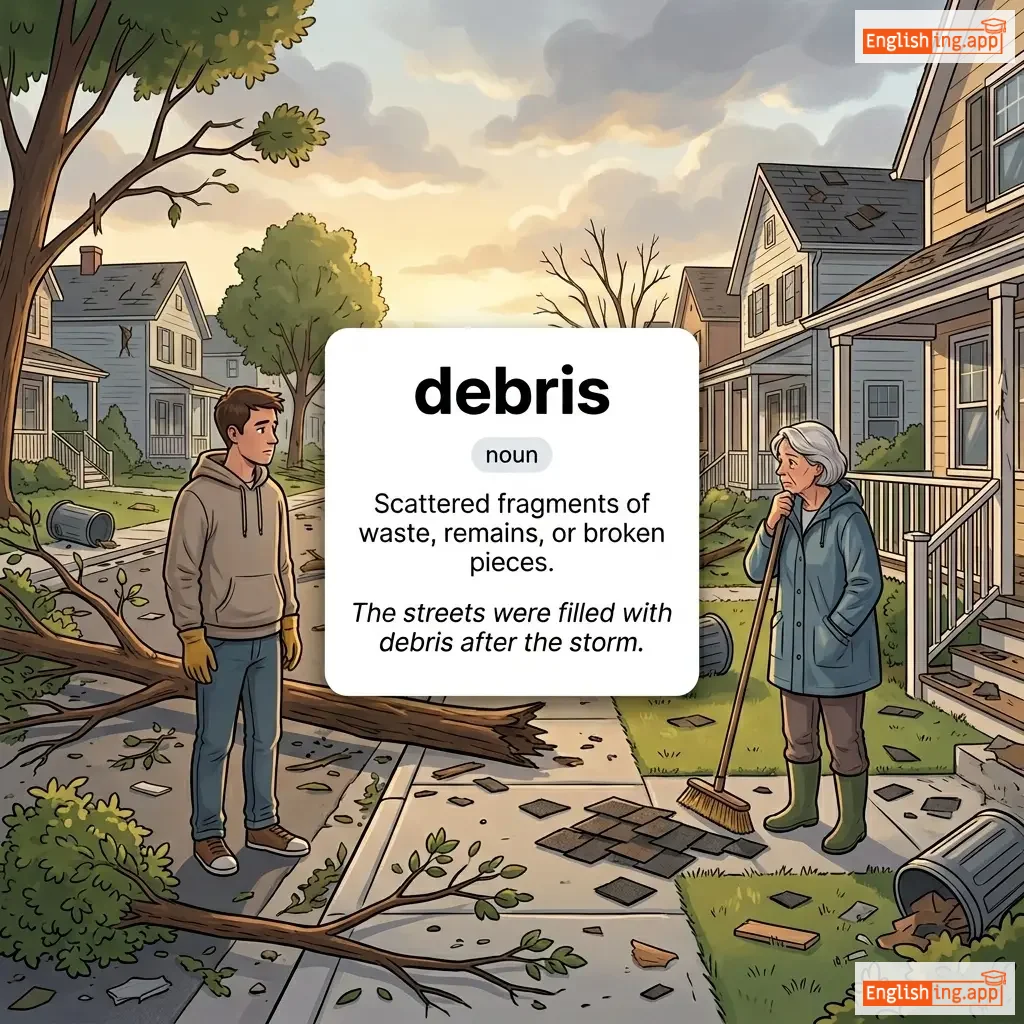
/dəˈbriː/
noun
(дэбри)
••••••
|
|
обломки; остатки чего-то разрушенного
oblomki; ostatki chego-to razrushennogo
••••••
|
scattered fragments of something destroyed; rubble or wreckage
••••••
|
The cleanup crew removed debris from the construction site.
Уборочная команда убрала обломки с строительного участка.
••••••
|
Уборочная команда убрала обломки с строительного участка.
Uborochnaya komanda ubrala oblomki s stroitel'nogo uchastka.
••••••
|
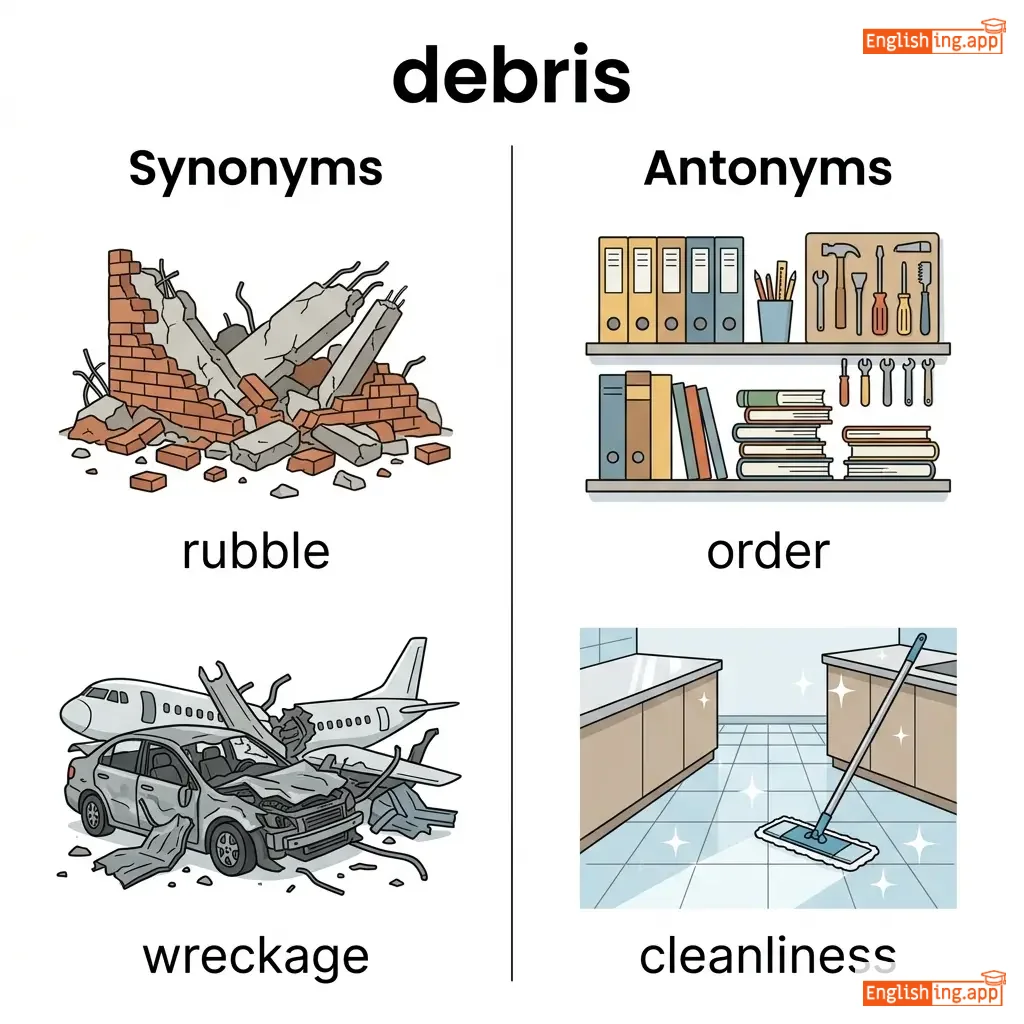
rubble, wreckage, fragments, ruins
••••••
|
construction, building, whole structure
••••••
|
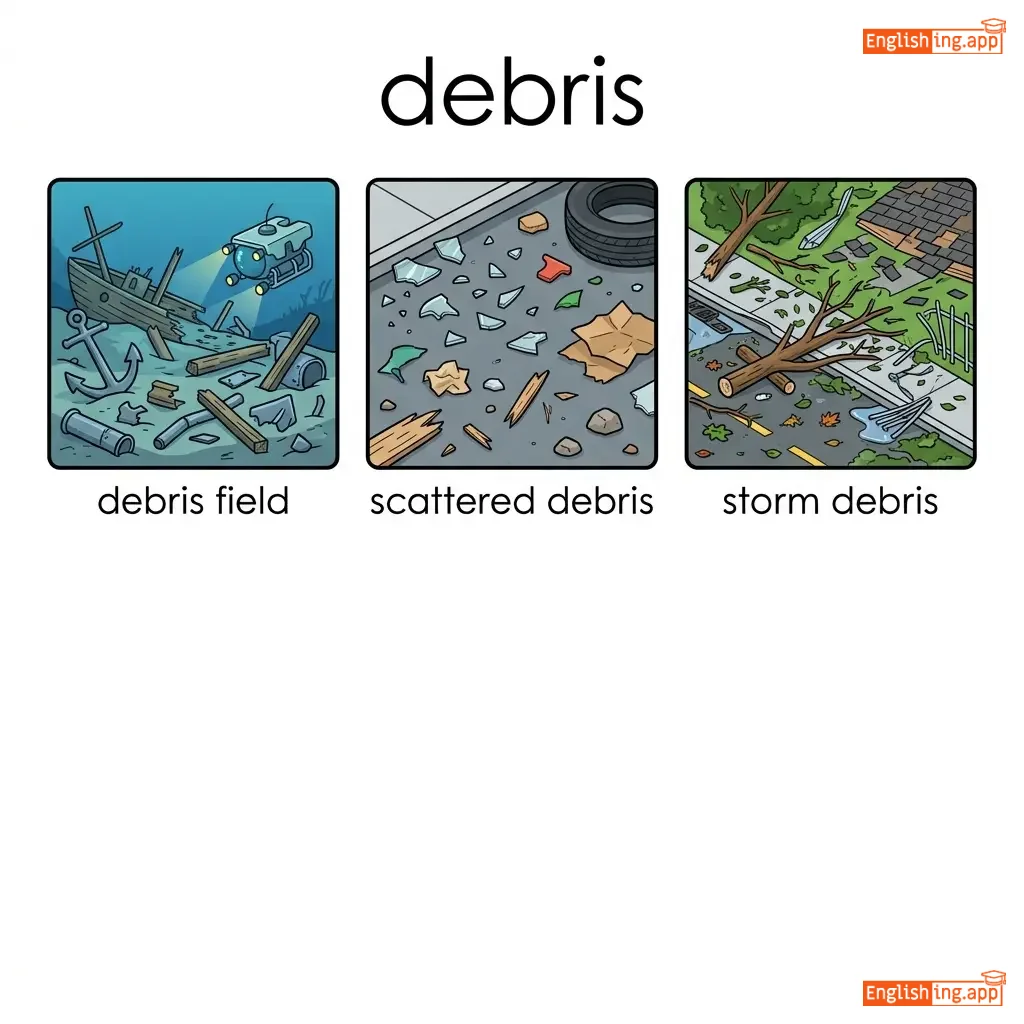
space debris, construction debris, clear debris
••••••
|
Слово 'debris' напоминает русское 'обломки', что означает остатки разрушенного.
••••••
|
|
#257
👧
|
/ˈdɔː.tər/
noun
(доːтэр)
••••••
|
- •••••• |
дочь
doch
••••••
|
a female offspring; a young woman in relation to her parents
••••••
|
Their daughter graduated from medical school with top honors.
Их дочь окончила медицинскую школу с отличием.
••••••
|
Их дочь окончила медицинскую школу с отличием.
Ikh doch' okonchila meditsinskuyu shkolu s otlichiem.
••••••
|
child, offspring, girl, descendant
••••••
|
son, parent, ancestor
••••••
|
eldest daughter, beloved daughter, daughter-in-law
••••••
|
Russian 'дочь' means 'daughter' in English.
••••••
|
|
#258
💰
|
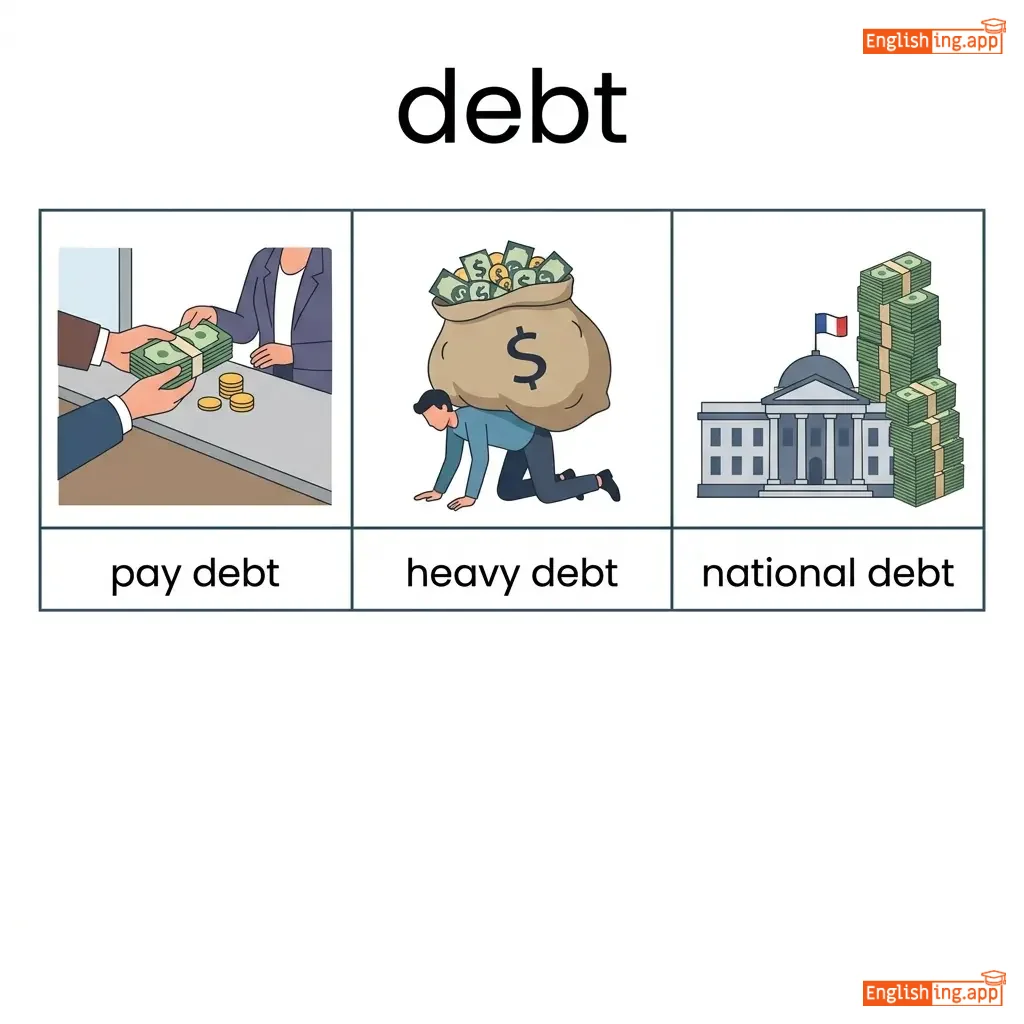
/det/
noun
(дэт)
••••••
|
|
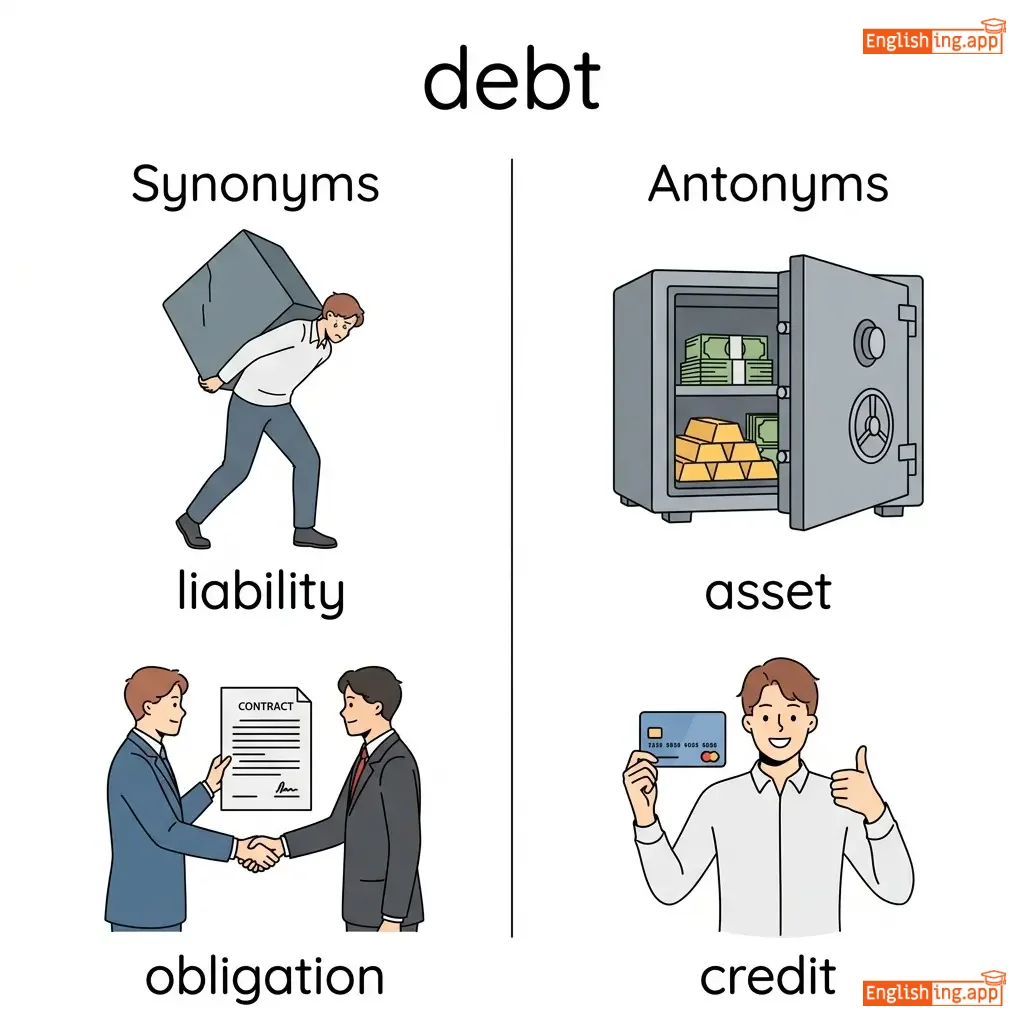
долг; обязательство
dolg; obyazatel'stvo
••••••
|
something owed, especially money; obligation to pay or repay
••••••
|
He worked extra hours to pay off his student loan debt.
Он работал сверхурочно, чтобы погасить свой студенческий долг.
••••••
|
Он работал сверхурочно, чтобы погасить свой студенческий долг.
On rabotal sverkhruchno, chtoby pogasit' svoy studencheskiy dolg.
••••••
|
loan, obligation, liability, arrears
••••••
|
asset, credit, wealth, savings
••••••
|
pay debt, national debt, debt relief
••••••
|
Debt is 'dolg', a responsibility ('obyazatel'stvo') to pay back.
••••••
|
|
#259
🌅
|
/dɔːn/
noun
(дон)
••••••
|
- •••••• |
рассвет
rassvet
••••••
|
the first appearance of light in the sky before sunrise; the beginning or start of something
••••••
|
The fishermen set out to sea before dawn to catch the morning tide. |
Рыбаки отправились в море до рассвета, чтобы поймать утренний прилив.
Rybaki otpravilis' v more do rassveta, chtoby poymat' utrejnii priliiv.
••••••
|
daybreak, sunrise, morning, beginning
••••••
|
dusk, sunset, evening, end
••••••
|
crack of dawn, dawn breaks, dawn of a new era
••••••
|
Dawn – Рассвет, как первый свет, который приносит новый день.
••••••
|
|
#260
🍂
|
/dɪˈkeɪ/
noun
(dikey)
••••••
|
- •••••• |
упадок; разложение; гниение
upadok, razlozhenie, gniyenie
••••••
|
the process of rotting or decomposing; gradual decline or deterioration
••••••
|
The old building showed signs of decay after years of neglect.
The old building showed signs of decay after years of neglect.
••••••
|
Старое здание показывало признаки упадка после лет небрежности.
Staroye zdanije pokazyvalo priznakie upadka posle let nebrezhnosti.
••••••
|
deterioration, rot, decomposition, decline
••••••
|
growth, improvement, preservation, renewal
••••••
|
tooth decay, urban decay, prevent decay
••••••
|
Decay = когда что-то разрушается, как испорченное яблоко.
••••••
|
Vocabulary Quiz
Test your vocabulary by matching words with their translations or meanings.
Login to take the quiz
Comments (0)
Share your thoughts and join the discussion.
Join the discussion by logging in
Login to CommentNo comments yet
Be the first to share your thoughts!