

翻訳
過去
過去分詞
三人称単数
動名詞
意味
例文
例文の翻訳
同義語
対義語
コロケーション
ニーモニック

Swipe left or right, or use the buttons. Tap image to zoom.
例文の翻訳
単語
Lesson 13Lesson 13 - マスクトグル
|
絵文字
|
単語 | Images | 翻訳 | 意味 | 例文 | 例文の翻訳 | 同義語 | 対義語 | コロケーション | ニーモニック |
|---|---|---|---|---|---|---|---|---|---|---|
|
#241
💕
|
/ˈdæl.i.əns/
noun
(ダリアンス)
••••••
|
- •••••• |
浮気; 関係の一時的なもの
uwaki, kankei no ichijiteki na mono
••••••
|
a casual romantic or sexual relationship; a brief involvement or experiment
••••••
|
His dalliance with photography lasted only a few months before he lost interest. |
彼の写真への浮気は数ヶ月しか続かず、興味を失いました。
kare no shashin e no uwaki wa suukagetsu shika tsuzukazu, kyōmi o ushinai mashita
••••••
|
flirtation, affair, fling, liaison
••••••
|
commitment, dedication, serious relationship
••••••
|
brief dalliance, romantic dalliance, casual dalliance
••••••
|
No •••••• |
|
#242
☀️
|
/deɪ/
noun
(デイ)
••••••
|
- •••••• |
日
hi
••••••
|
a period of twenty-four hours; the time during which there is light
••••••
|
What a beautiful day it is today with clear blue skies! |
今日は青空が広がる美しい日です!
Kyou wa aozora ga hirogaru utsukushii hi desu!
••••••
|
daytime, twenty-four hours, date, era
••••••
|
night, darkness, evening
••••••
|
beautiful day, long day, working day
••••••
|
Hi sounds like 'high', a bright sky marking the day.
••••••
|
|
#243
🏞️
|
/dæm/
noun
(ダム)
••••••
|
- •••••• |
ダム; 貯水池;
damu, chōsuiki
••••••
|
a barrier constructed to hold back water and raise its level; a female parent of an animal
••••••
|
The massive dam provides electricity and controls flooding in the region.
巨大なダムはこの地域に電力を提供し、洪水を制御します。
••••••
|
巨大なダムはこの地域に電力を提供し、洪水を制御します。
Kyodaina damu wa kono chiiki ni denryoku o teikyō shi, kōzui o seigyo shimasu.
••••••
|
barrier, weir, embankment, dyke
••••••
|
opening, breach, gap
••••••
|
hydroelectric dam, concrete dam, dam construction
••••••
|
ダム = 水を止める and 貯水池 = 水をためる場所
••••••
|
|
#244
⏰
|
/ˈded.laɪn/
noun
(デッドライン)
••••••
|
- •••••• |
締め切り;
shimekiri
••••••
|
the latest time or date by which something should be completed
••••••
|
The deadline for submitting the project is next Friday.
プロジェクト提出の締め切りは来週の金曜日です。
••••••
|
プロジェクト提出の締め切りは来週の金曜日です。
Purojekuto teishutsu no shimekiri wa raishū no kin'yōbi desu.
••••••
|
time limit, due date, cutoff, expiry
••••••
|
extension, flexibility, open-ended
••••••
|
strict deadline, meet deadline, deadline pressure
••••••
|
Deadline (締め切り) – プロジェクトが期限内に提出されるべき日付
••••••
|
|
#245
🔒
|
/ˈded.lɑk/
noun
(デッドロック)
••••••
|
- •••••• |
行き詰まり; 停滞
ikizumari; teitai
••••••
|
a situation in which no progress is possible; complete standstill
••••••
|
The negotiations reached a deadlock when neither side would compromise.
交渉はデッドロックに達し、どちらの側も妥協しようとしませんでした。
••••••
|
交渉は行き詰まりに達し、どちらの側も妥協しようとしませんでした。
Kōshō wa ikizumari ni tasshi, dochira no gawa mo dakyo shiyō to shimasen deshita.
••••••
|
stalemate, impasse, standstill, gridlock
••••••
|
progress, breakthrough, resolution, movement
••••••
|
political deadlock, break deadlock, reach deadlock
••••••
|
Deadlock = 行き詰まり in Japanese
••••••
|
|
#246
💥
|
/ˈdæm.ɪdʒ/
noun
(ダメージ)
••••••
|
- •••••• |
損害; 被害
songai, higai
••••••
|
physical harm caused to something; injury or harm that reduces value or usefulness
••••••
|
The storm caused significant damage to the coastal buildings. |
嵐は沿岸の建物に大きな損害を与えました。
Arashi wa engan no tatemono ni ōkina songai o ataemashita.
••••••
|
harm, destruction, injury, loss
••••••
|
repair, restoration, improvement, benefit
••••••
|
property damage, brain damage, environmental damage
••••••
|
損害や被害は物を傷つけ、価値を失わせるものです。
••••••
|
|
#247
🔥
|
/dæmˈneɪ.ʃən/
noun
(ダムネーション)
••••••
|
- •••••• |
永遠の罰; 破滅
eien no batsu; hametsu
••••••
|
condemnation to eternal punishment in hell; something that causes ruin or failure
••••••
|
The preacher spoke about salvation and damnation in his sermon.
説教者はその説教で救いと永遠の罰について話しました。
••••••
|
説教者はその説教で救いと永遠の罰について話しました。
Sekkyousha wa sono sekkyou de suki to eien no batsu ni tsuite hanashimashita.
••••••
|
condemnation, perdition, ruin, curse
••••••
|
salvation, blessing, redemption
••••••
|
eternal damnation, threat of damnation, escape damnation
••••••
|
Damnation 日本語では永遠の罰を意味します。
••••••
|
|
#248
🤝
|
/ˈdiː.lɪŋ/
noun
(ディーリング)
••••••
|
- •••••• |
取引; 処理; 扱い
torihiki, shori, atsukai
••••••
|
business transactions; the way of treating people or handling situations
••••••
|
His fair dealing with customers earned him an excellent reputation. |
顧客との公正な取引が彼に素晴らしい評判をもたらしました。
Kokyaku to no kousei na torihiki ga kare ni subarashii hyouban o motarashimashita.
••••••
|
transaction, trade, conduct, behavior
••••••
|
avoidance, neglect, dishonesty
••••••
|
fair dealing, business dealing, honest dealing
••••••
|
ディーリングでの取引は公正でなければなりません。
••••••
|
|
#249
❄️
|
/ˈdæn.drʌf/
noun
(ダンドラフ)
••••••
|
- •••••• |
フケ
dandorafu
••••••
|
small white or grey flakes of dead skin that form on the scalp and fall from the hair
••••••
|
He used a special shampoo to treat his persistent dandruff problem.
彼は慢性的なフケの問題を治すために、特別なシャンプーを使った。
••••••
|
彼は慢性的なフケの問題を治すために、特別なシャンプーを使った。
kare wa manseitekina fuke no mondai o naosu tame ni tokubetsu na shanpuu o tsukatta
••••••
|
scalp flakes, seborrhea, scurf
••••••
|
healthy scalp, clean hair
••••••
|
dandruff shampoo, severe dandruff, treat dandruff
••••••
|
Dandruff = Dan + Druff; 頭皮のフケを思い浮かべて SHANPUU で撃退しよう。
••••••
|
|
#250
⚰️
|
/deθ/
noun
(デス)
••••••
|
- •••••• |
死
shi
••••••
|
the end of life; the permanent cessation of vital functions
••••••
|
The death of the great leader was mourned by the entire nation. |
偉大な指導者の死は国全体で悲しまれました。
Idaina shidōsha no shi wa kuni zentai de kanashimaremashita.
••••••
|
demise, passing, mortality, end
••••••
|
birth, life, existence, vitality
••••••
|
sudden death, natural death, death certificate
••••••
|
死 (shi) は日本語で「死」を意味し、生命の終わりを示す言葉です。
••••••
|
|
#251
🎯
|
/ˈder.ɪŋ/
noun
(デアリング)
••••••
|
- •••••• |
大胆; 危険を冒す意欲
daitan, kiken wo okasu iyoku
••••••
|
adventurous courage; willingness to take risks
••••••
|
The mountain climber's daring impressed everyone at the base camp. |
山登りの冒険心は、ベースキャンプの皆に感動を与えました。
Yamanobori no bōken-shin wa, bēsu kyanpu no mina ni kandō o ataemashita.
••••••
|
boldness, courage, bravery, audacity
••••••
|
cowardice, timidity, caution, hesitation
••••••
|
great daring, act of daring, show daring
••••••
|
In Japanese, daring is 大胆, like going on a risky adventure!
••••••
|
|
#252
🗣️
|
/dɪˈbeɪt/
noun
(ディベート)
••••••
|
- •••••• |
討論
tōron
••••••
|
a formal discussion of opposing viewpoints; argument with reasoned points
••••••
|
The political debate lasted for three hours with passionate arguments. |
政治的な討論は3時間続き、情熱的な議論が交わされました。
Seiji-teki na tōron wa 3-jikan tsuzuki, jōnetsu-teki na giron ga kawasaremashita.
••••••
|
discussion, argument, dispute, deliberation
••••••
|
agreement, consensus, silence, acceptance
••••••
|
heated debate, public debate, debate competition
••••••
|
討論は理にかなった議論です。
••••••
|
|
#253
🌑
|
/ˈdɑrk.nəs/
noun
(ダークネス)
••••••
|
- •••••• |
暗闇; 無知;
kurayami, muchi
••••••
|
the partial or total absence of light; wickedness or evil; ignorance or lack of knowledge
••••••
|
The power outage plunged the entire city into darkness.
停電で町全体が暗闇に包まれた。
••••••
|
停電で町全体が暗闇に包まれた。
Teiden de machi zentai ga kurayami ni tsutsumareta.
••••••
|
blackness, gloom, shadow, ignorance
••••••
|
light, brightness, illumination, knowledge
••••••
|
total darkness, fear of darkness, darkness falls
••••••
|
暗闇がすべてを飲み込む
••••••
|
|
#254
💳
|
/ˈdeb.ɪt/
noun
(デビット)
••••••
|
- •••••• |
デビット; 借金; 引き落とし
debitto; shakkin; hikiotoshi
••••••
|
an entry recording an amount owed; money taken from a bank account
••••••
|
The bank showed a debit of fifty dollars from my checking account.
銀行は私の当座預金口座から50ドルのデビットを表示しました。
••••••
|
銀行は私の当座預金口座から50ドルのデビットを表示しました。
Ginkou wa watashi no touza yokin kouza kara gojuu doru no debitto wo hyouji shimashita.
••••••
|
charge, withdrawal, debt, liability
••••••
|
credit, deposit, asset, income
••••••
|
debit card, debit account, automatic debit
••••••
|
デビットカードを使うと、銀行からお金を引き落とす。
••••••
|
|
#255
📊
|
/ˈdeɪ.tə/
noun
(データ)
••••••
|
- •••••• |
データ
dēta
••••••
|
facts and statistics collected together for reference or analysis; information in digital form
••••••
|
Scientists analyzed the data from thousands of experiments to reach their conclusion. |
科学者たちは、何千もの実験から得られたデータを分析して、結論に達しました。
Kagakusha-tachi wa, nanzen mo no jikken kara erareta deeta o bunseki shite, ketsuron ni tasshimashita.
••••••
|
information, facts, statistics, figures
••••••
|
ignorance, misinformation, assumptions
••••••
|
collect data, analyze data, raw data
••••••
|
No •••••• |
|
#256
🧱
|
/dəˈbriː/
noun
(デブリ)
••••••
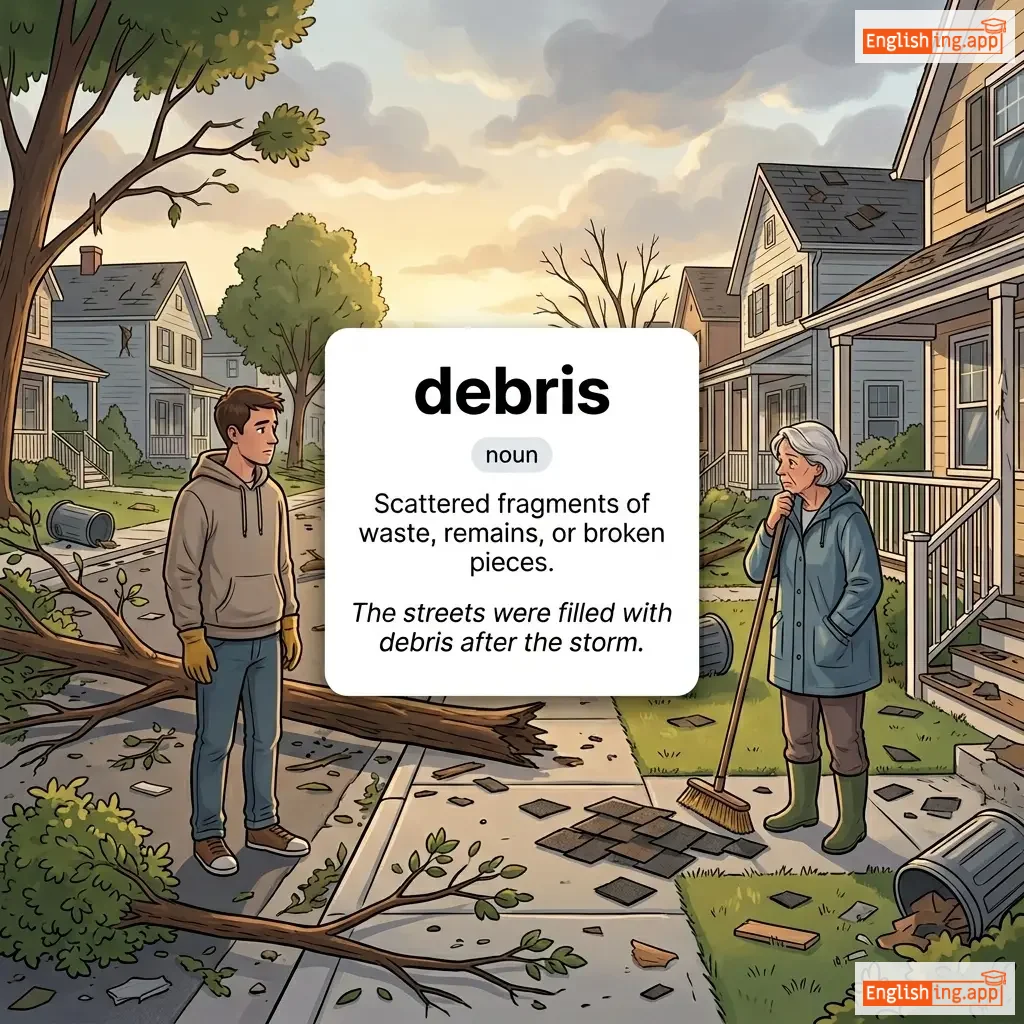
|
|
がれき; 破壊された物の残骸
gareki; hakaisareta mono no zangai
••••••
|
scattered fragments of something destroyed; rubble or wreckage
••••••
|
The cleanup crew removed debris from the construction site.
清掃員は建設現場からデブリを取り除きました。
••••••
|
清掃員は建設現場からがれきを取り除きました。
Seisouin wa kensetsu genba kara gareki wo torinozo kimashita.
••••••
|
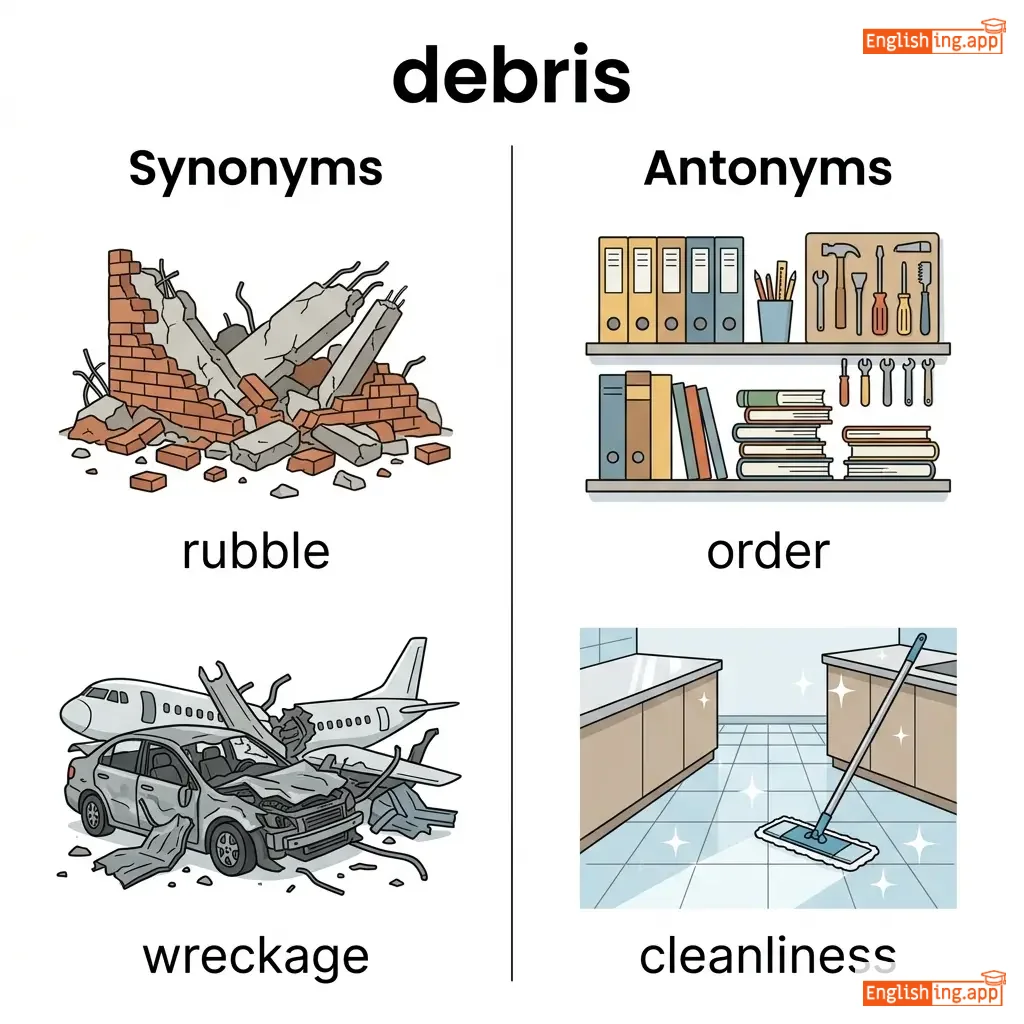
rubble, wreckage, fragments, ruins
••••••
|
construction, building, whole structure
••••••
|
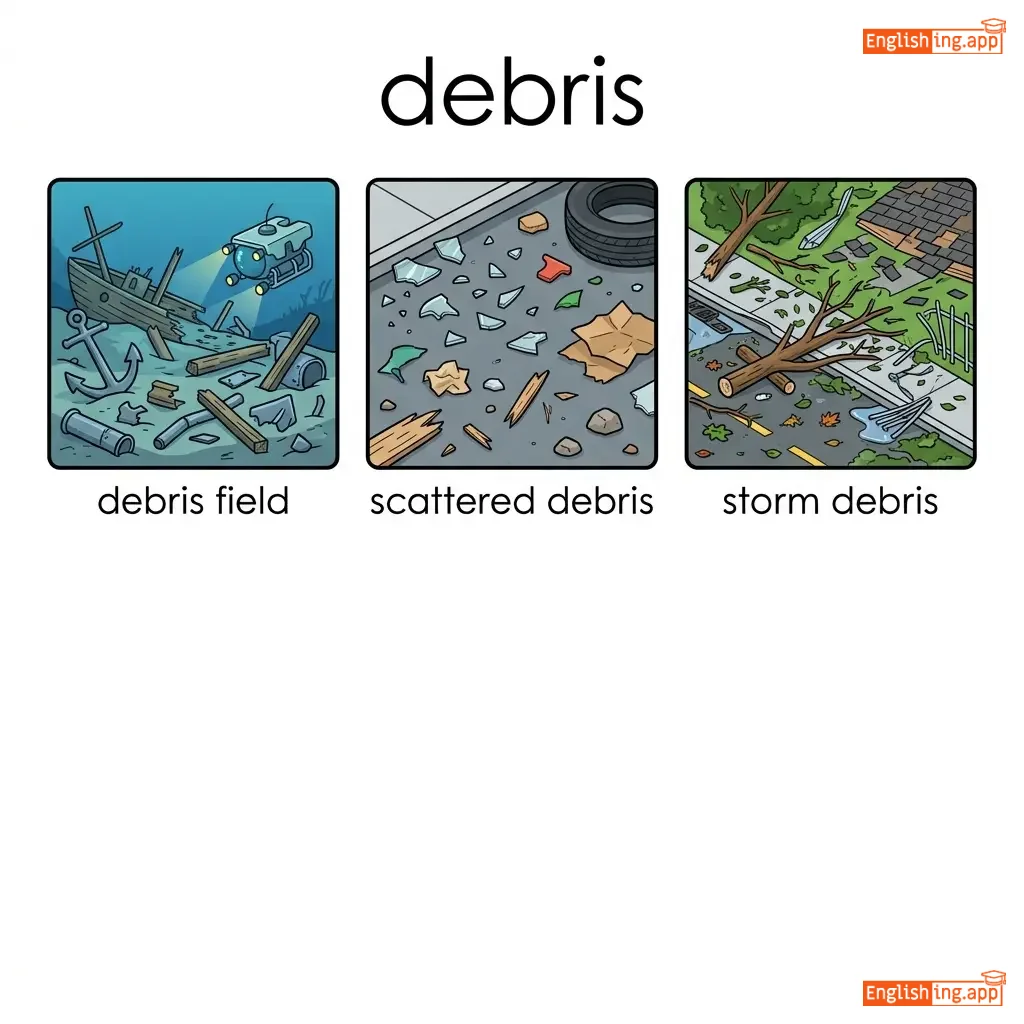
space debris, construction debris, clear debris
••••••
|
‘Debris’ は日本語でがれき、壊れた物の残りカスを意味します。
••••••
|
|
#257
👧
|
/ˈdɔː.tər/
noun
(ドーター)
••••••
|
- •••••• |
娘
musume
••••••
|
a female offspring; a young woman in relation to her parents
••••••
|
Their daughter graduated from medical school with top honors.
彼らの娘は医学校を優秀な成績で卒業しました。
••••••
|
彼らの娘は医学校を優秀な成績で卒業しました。
Karera no musume wa igakkou wo yuushuu na seiseki de sotsugyou shimashita.
••••••
|
child, offspring, girl, descendant
••••••
|
son, parent, ancestor
••••••
|
eldest daughter, beloved daughter, daughter-in-law
••••••
|
Japanese '娘' means 'daughter' in English.
••••••
|
|
#258
💰
|
/det/
noun
(デット)
••••••
|
|
借金; 義務
shakkin; gimu
••••••
|
something owed, especially money; obligation to pay or repay
••••••
|
He worked extra hours to pay off his student loan debt.
彼は学生ローンの借金を返済するために残業をしました。
••••••
|
彼は学生ローンの借金を返済するために残業をしました。
Kare wa gakusei rōn no shakkin o hensai suru tame ni zangyō o shimashita.
••••••
|
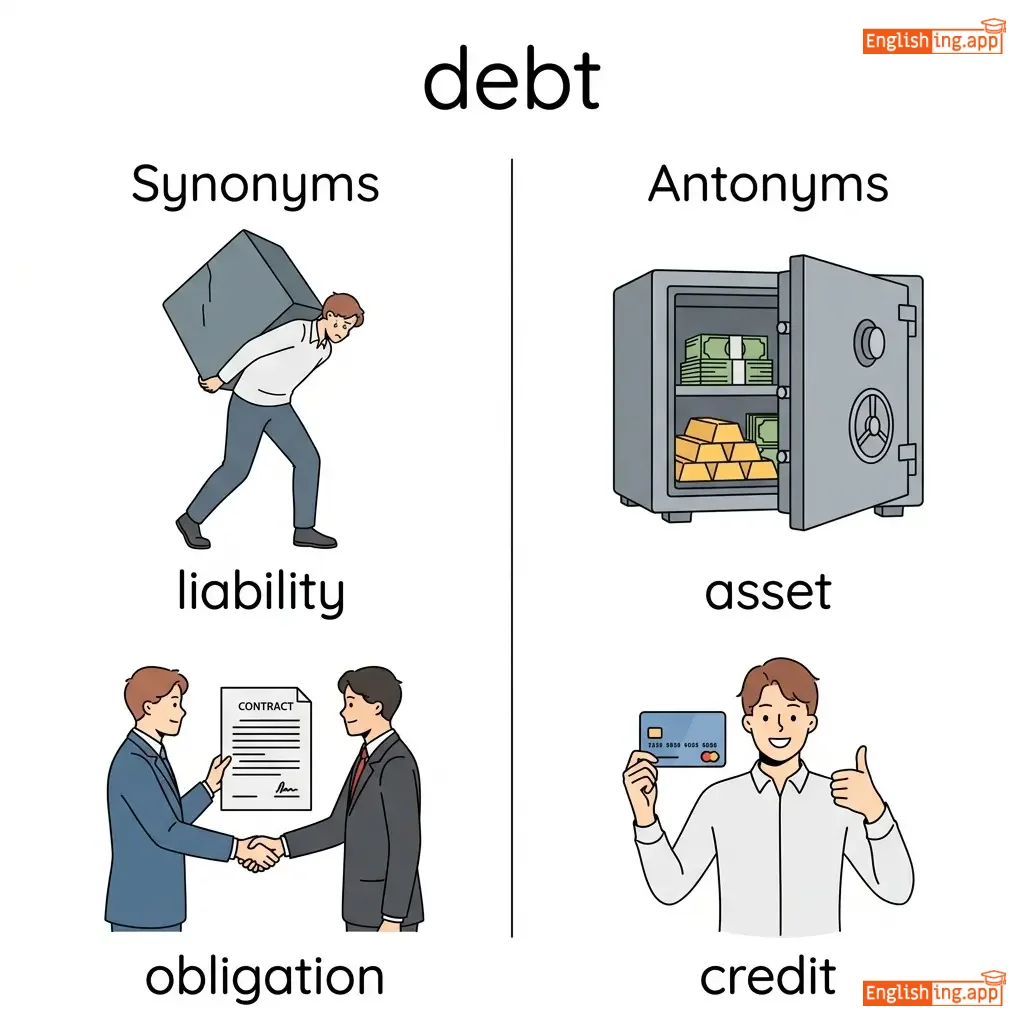
loan, obligation, liability, arrears
••••••
|
asset, credit, wealth, savings
••••••
|
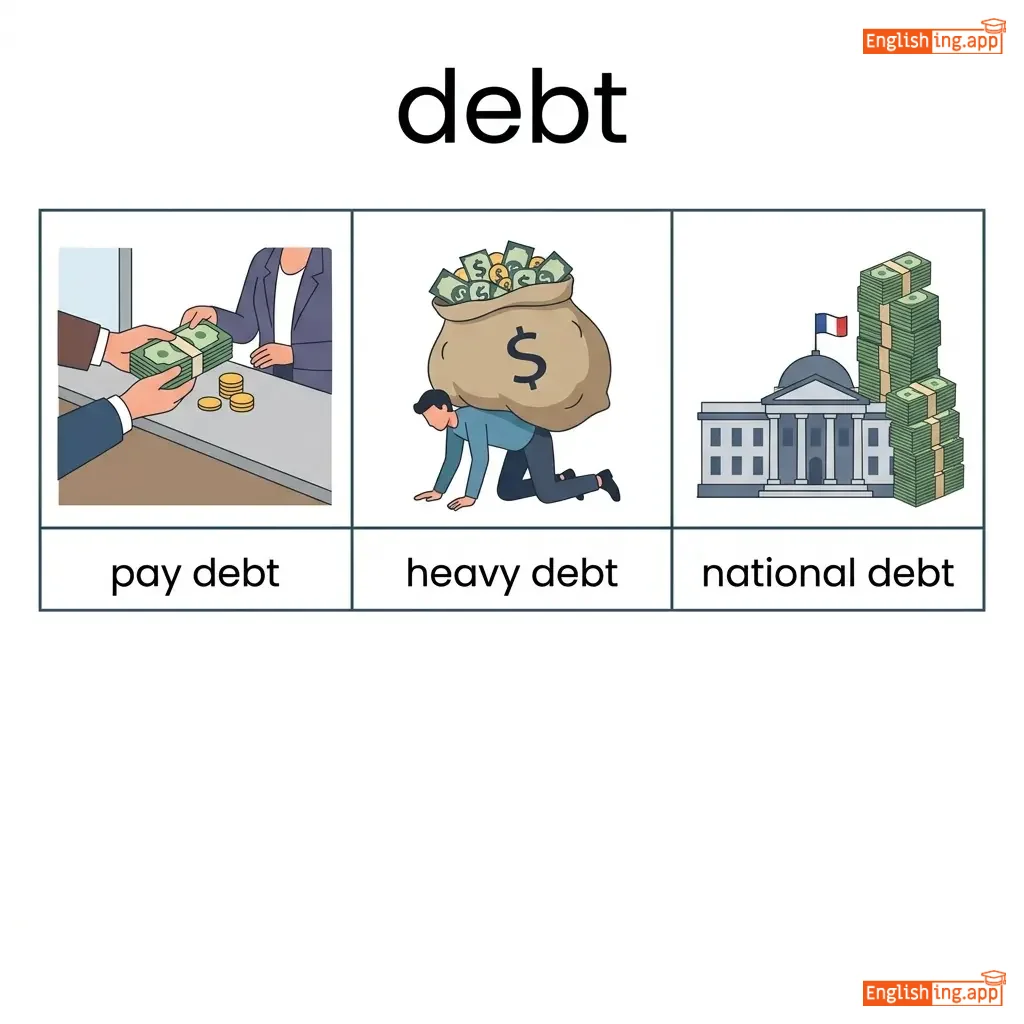
pay debt, national debt, debt relief
••••••
|
Debt is 'shakkin', and you have the 'gimu' (duty) to pay it off.
••••••
|
|
#259
🌅
|
/dɔːn/
noun
(ドーン)
••••••
|
- •••••• |
夜明け
yoake
••••••
|
the first appearance of light in the sky before sunrise; the beginning or start of something
••••••
|
The fishermen set out to sea before dawn to catch the morning tide. |
漁師たちは夜明け前に海に出て、朝の潮を捕まえました。
Ryoushitachi wa yoake mae ni umi ni dete, asa no shio wo tsukamaemashita.
••••••
|
daybreak, sunrise, morning, beginning
••••••
|
dusk, sunset, evening, end
••••••
|
crack of dawn, dawn breaks, dawn of a new era
••••••
|
Dawn – 夜明けの光が新しい一日を照らすように、心の中で新しい始まりを感じる。
••••••
|
|
#260
🍂
|
/dɪˈkeɪ/
noun
(dekei)
••••••
|
- •••••• |
腐敗; 分解; 老化
fuhai, bunkai, roka
••••••
|
the process of rotting or decomposing; gradual decline or deterioration
••••••
|
The old building showed signs of decay after years of neglect.
The old building showed signs of decay after years of neglect.
••••••
|
その古い建物は長年の無視の後、腐敗の兆しを示していた。
Sono furui tatemono wa naganen no mushi no ato, fuhai no kizashi wo shimeshiteita.
••••••
|
deterioration, rot, decomposition, decline
••••••
|
growth, improvement, preservation, renewal
••••••
|
tooth decay, urban decay, prevent decay
••••••
|
Decay = 腐敗しているもののように、徐々に崩れていく。
••••••
|
Vocabulary Quiz
Test your vocabulary by matching words with their translations or meanings.
Login to take the quiz
Comments (0)
Share your thoughts and join the discussion.
Join the discussion by logging in
Login to CommentNo comments yet
Be the first to share your thoughts!