

翻訳
過去
過去分詞
三人称単数
動名詞
意味
例文
例文の翻訳
同義語
対義語
コロケーション
ニーモニック

Swipe left or right, or use the buttons. Tap image to zoom.
例文の翻訳
単語
Lesson 75Lesson 75 - マスクトグル
|
絵文字
|
単語 | Images | 翻訳 | 意味 | 例文 | 例文の翻訳 | 同義語 | 対義語 | コロケーション | ニーモニック |
|---|---|---|---|---|---|---|---|---|---|---|
|
#1481
🏢
|
/ˈven.juː/
noun
(ヴェニュー)
••••••
|
- •••••• |
会場
kaijou
••••••
|
a place where an event or activity takes place
••••••
|
The wedding venue was beautifully decorated. |
結婚式の会場は美しく飾られていました。
kekkonshiki no kaijou wa utsukushiku kazararete imashita
••••••
|
location, place, site, setting
••••••
|
- •••••• |
wedding venue, concert venue, sports venue
••••••
|
会場=イベントのための特別な場所。
••••••
|
|
#1482
🏆
|
/ˈvɪk.tər.i/
noun
(ヴィクトリー)
••••••
|
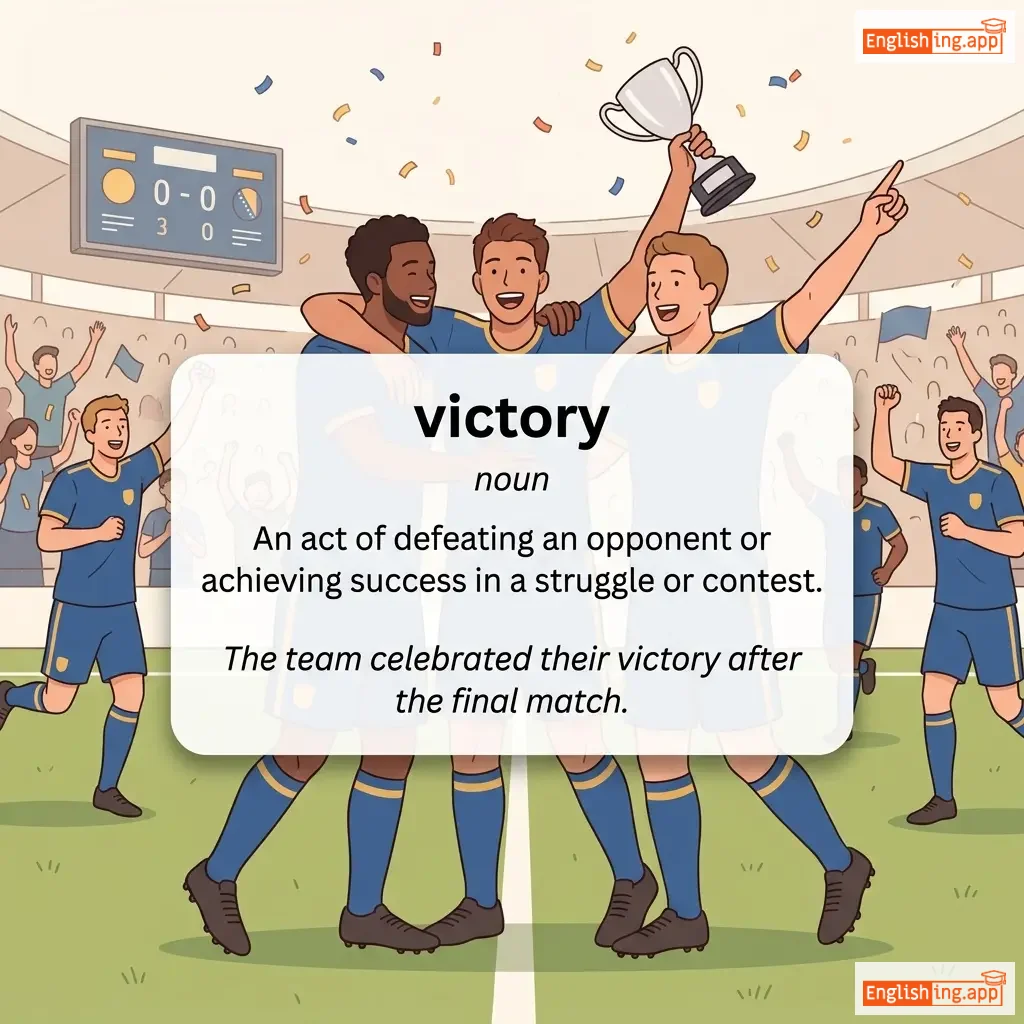
|
勝利
shōri
••••••
|
success in a struggle or contest; the defeat of an enemy or opponent
••••••
|
The team celebrated their victory in the championship. |
チームはチャンピオンシップで勝利を祝いました。
Chīmu wa chanpionshipu de shōri o iwai mashita.
••••••
|
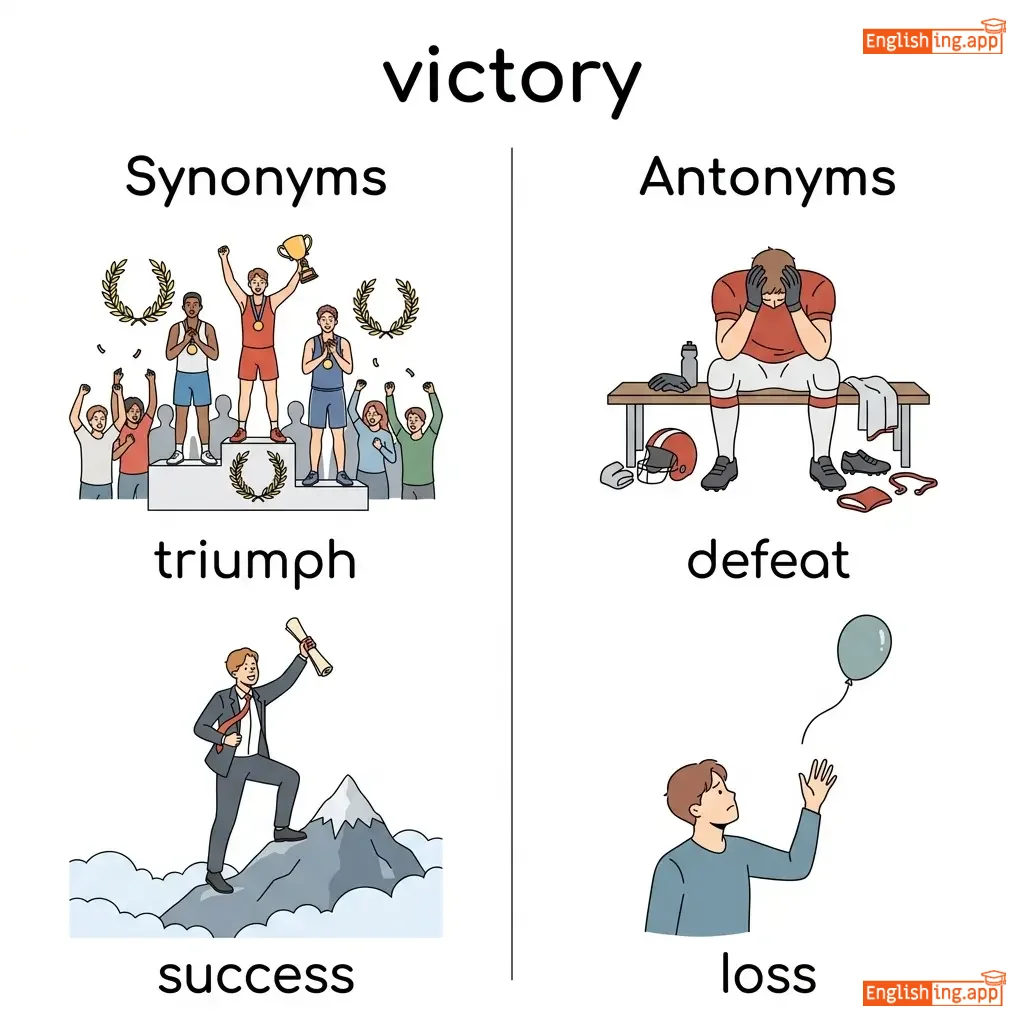
triumph, success, win, conquest
••••••
|
defeat, loss, failure
••••••
|
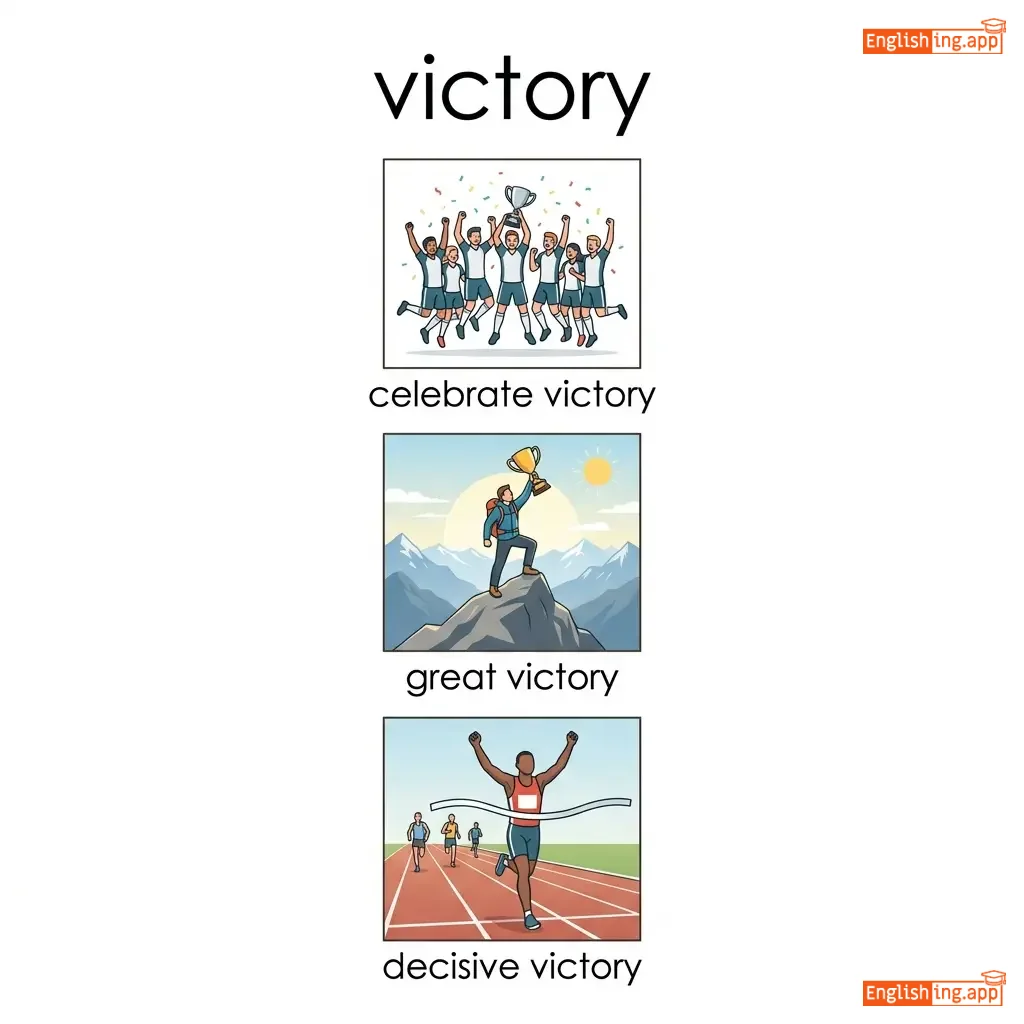
victory celebration, victory speech, decisive victory
••••••
|
‘勝利’は‘Victory’の日本語版です。勝つ時の心!
••••••
|
|
#1483
🚪
|
/vɜːrdʒ/
noun
(ヴァージ)
••••••
|
- •••••• |
縁; 境界; しきい値
verge
••••••
|
the edge or border of something; very close to happening
••••••
|
She was on the verge of tears. |
彼女は涙の縁に立っていた。
kanojo wa namida no en ni tatte ita.
••••••
|
edge, border, brink, threshold
••••••
|
center, middle, interior
••••••
|
on the verge of, verge of collapse, verge of tears
••••••
|
涙の verge に立っている感じ。
••••••
|
|
#1484
👁️
|
/vjuː/
noun
(ビュー)
••••••
|
- •••••• |
景色; 視点; 意見
keshiki; shiten; iken
••••••
|
the ability to see something; a particular way of considering or regarding something; an opinion
••••••
|
The mountain view from our hotel room was breathtaking.
ホテルの部屋からの山のビューは息を呑むような美しさでした。
••••••
|
ホテルの部屋からの山の景色は息を呑むような美しさでした。
Hoteru no heya kara no yama no keshiki wa iki o nomu yō na utsukushisa deshita.
••••••
|
sight, perspective, opinion, outlook
••••••
|
blindness, ignorance
••••••
|
point of view, bird's eye view, scenic view
••••••
|
山の頂上から見る美しい景色
••••••
|
|
#1485
🔴
|
/vərˈmɪl.jən/
noun
(ヴァーミリオン)
••••••
|
- •••••• |
鮮やかな赤橙色; この色の顔料
vermillion
••••••
|
a bright red-orange color; a pigment of this color
••••••
|
The artist used vermillion paint for the sunset.
アーティストは夕焼けのためにヴァーミリオンペイントを使用しました。
••••••
|
アーティストは夕焼けのためにヴァーミリオンペイントを使用しました。
Ātisuto wa yūyake no tame ni vāmirion peinto o shiyō shimashita.
••••••
|
scarlet, crimson, red-orange, cinnabar
••••••
|
blue, green, cyan
••••••
|
vermillion paint, vermillion color, bright vermillion
••••••
|
ヴァーミリオンは夕焼けのように美しく、暖かい色です。
••••••
|
|
#1486
👀
|
/ˈvɪdʒ.ɪ.ləns/
noun
(ビジランス)
••••••
|
|
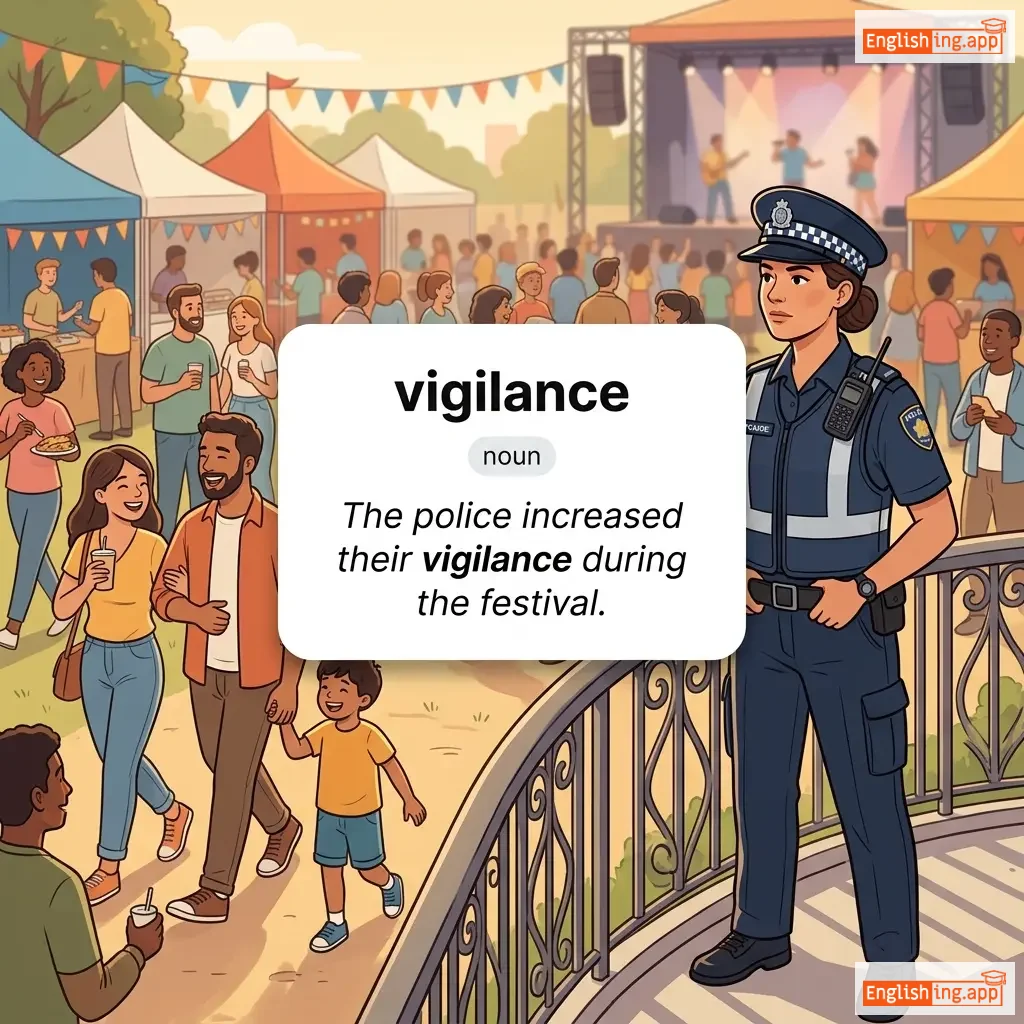
警戒; 継続的な監視
keikai; keizokuteki na kanshi
••••••
|
the action or state of keeping careful watch for possible danger or difficulties
••••••
|
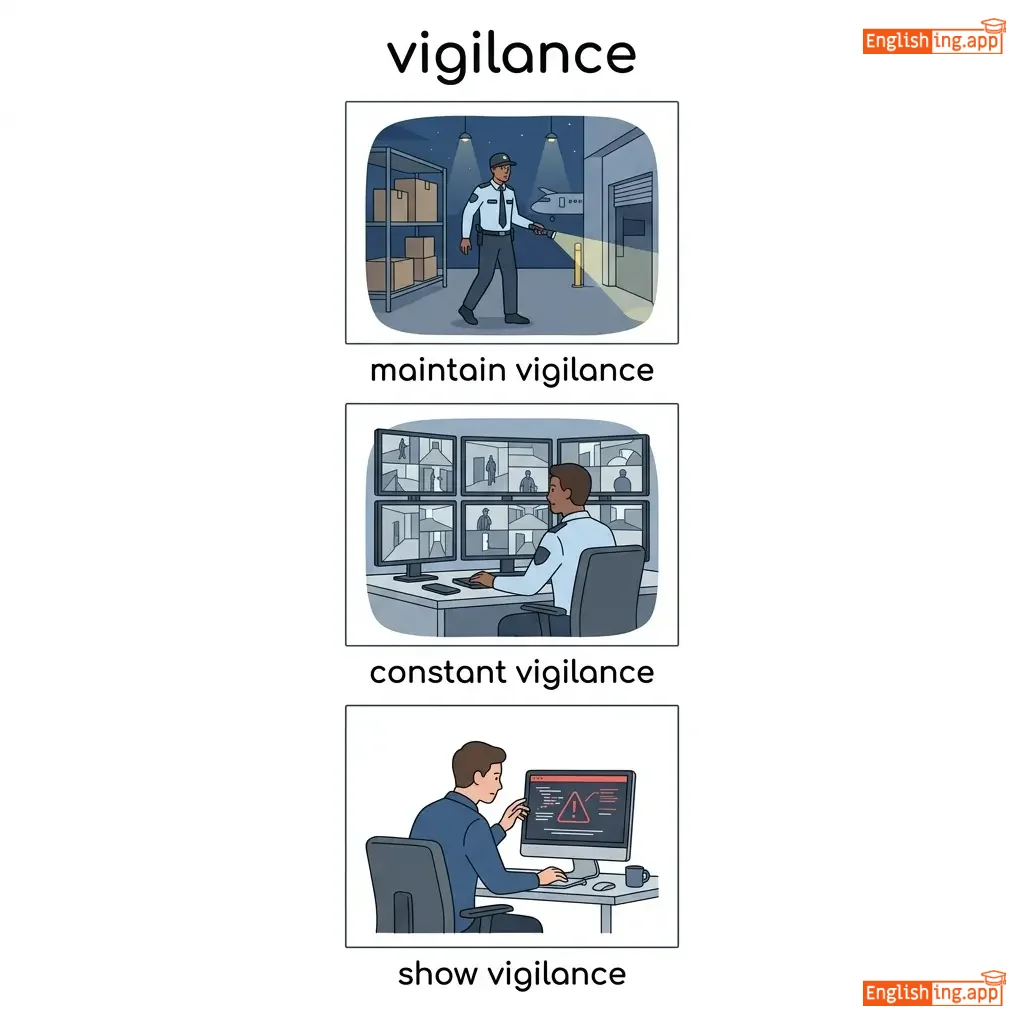
Security guards must maintain constant vigilance at the airport. |
警備員は空港で継続的な警戒を維持しなければならない。
Keibiin wa kūkō de keizokuteki na keikai o iji shinakereba naranai.
••••••
|
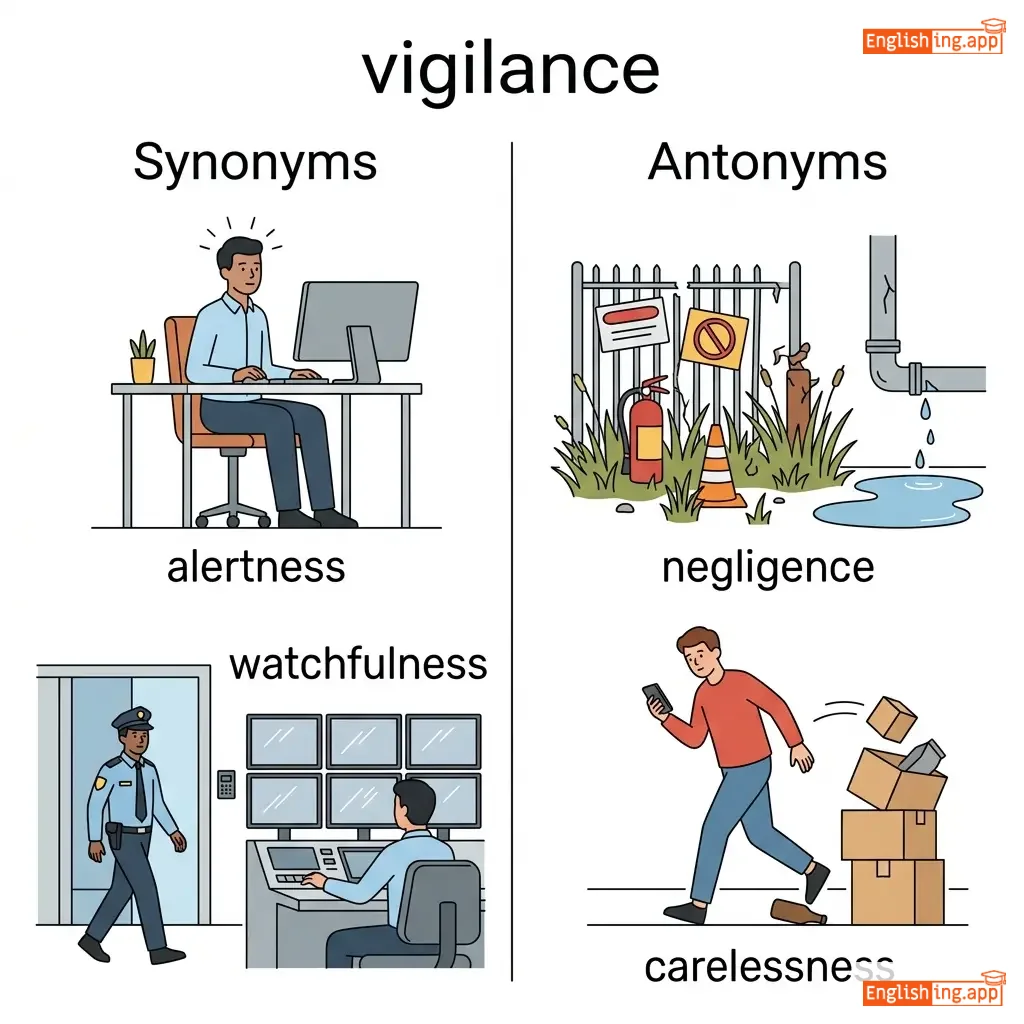
watchfulness, alertness, caution, surveillance
••••••
|
negligence, carelessness, inattention
••••••
|
constant vigilance, maintain vigilance, security vigilance
••••••
|
ビジランスは、警備員が常に警戒しているようなものです。
••••••
|
|
#1487
📝
|
/ˈvɜːr.ʒən/
noun
(バージョン)
••••••
|
- •••••• |
バージョン; 形態; 物語
bājon
••••••
|
a particular form or variation of something; an account of an event
••••••
|
This is the latest version of the software.
これはソフトウェアの最新バージョンです。
••••••
|
これはソフトウェアの最新バージョンです。
Kore wa sofutō~ea no saishin bājon desu.
••••••
|
edition, variant, form, adaptation
••••••
|
original, prototype
••••••
|
latest version, new version, updated version
••••••
|
バージョン = 形態 (ソフトウェアのバージョン)
••••••
|
|
#1488
💪
|
/ˈvɪɡ.ər/
noun
(ヴィゴール)
••••••
|
- •••••• |
身体的な力と健康; 努力、エネルギー、熱意
vigōru
••••••
|
physical strength and good health; effort, energy, and enthusiasm
••••••
|
She approached her work with renewed vigour after the vacation. |
休暇後、彼女は新たな活力で仕事に取り組みました。
kyūka go, kanojo wa aratana katsuryoku de shigoto ni torikumi mashita.
••••••
|
energy, strength, vitality, enthusiasm
••••••
|
weakness, lethargy, fatigue
••••••
|
youthful vigour, physical vigour, renewed vigour
••••••
|
In Japanese, 'vigour' represents both strength and enthusiasm. Picture someone reinvigorated after taking a vacation.
••••••
|
|
#1489
🚢
|
/ˈves.əl/
noun
(ヴェッセル)
••••••
|
|
船またはボート; 液体を保持する容器
veseru
••••••
|
a ship or boat; a container for holding liquids
••••••
|
The cargo vessel arrived at the port.
貨物船は港に到着しました。
••••••
|
貨物船は港に到着しました。
Kamoto-sen wa minato ni touchakushimashita.
••••••
|
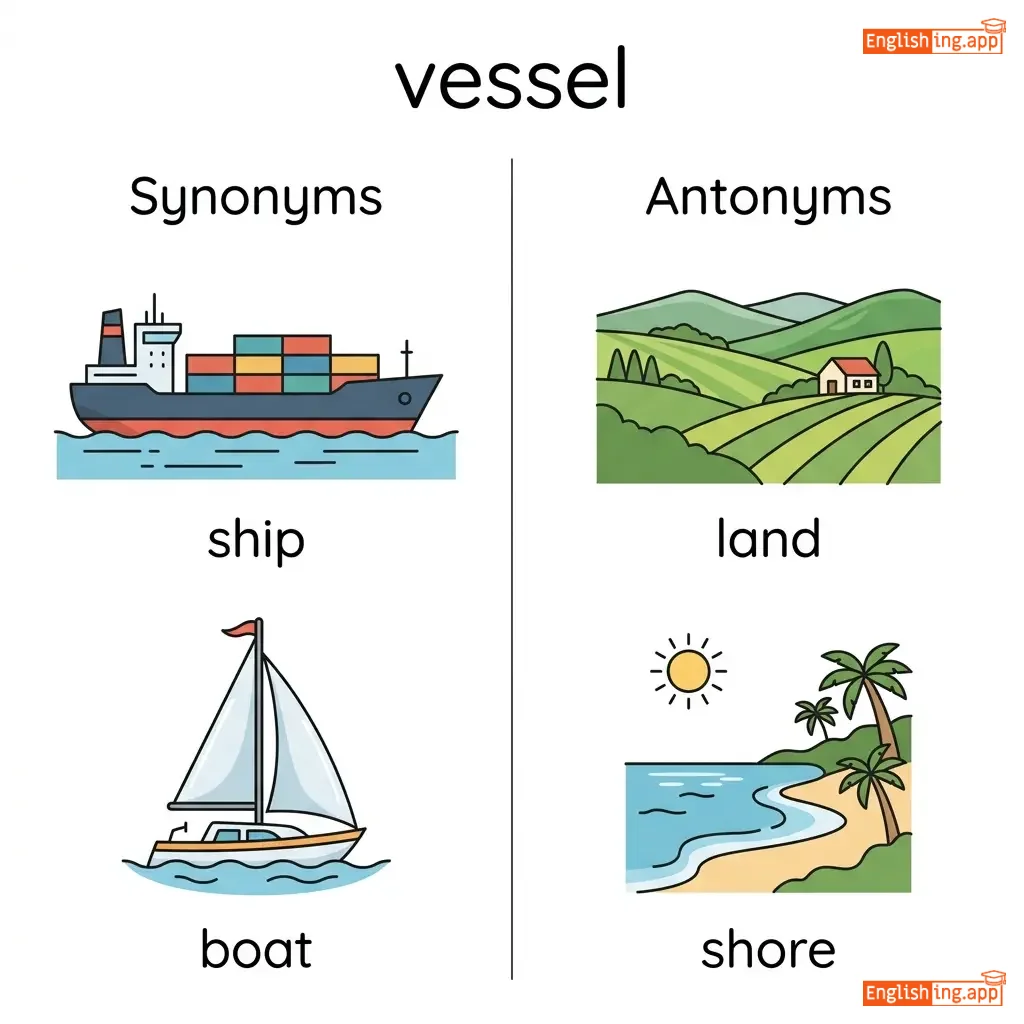
ship, boat, container, receptacle
••••••
|
- •••••• |
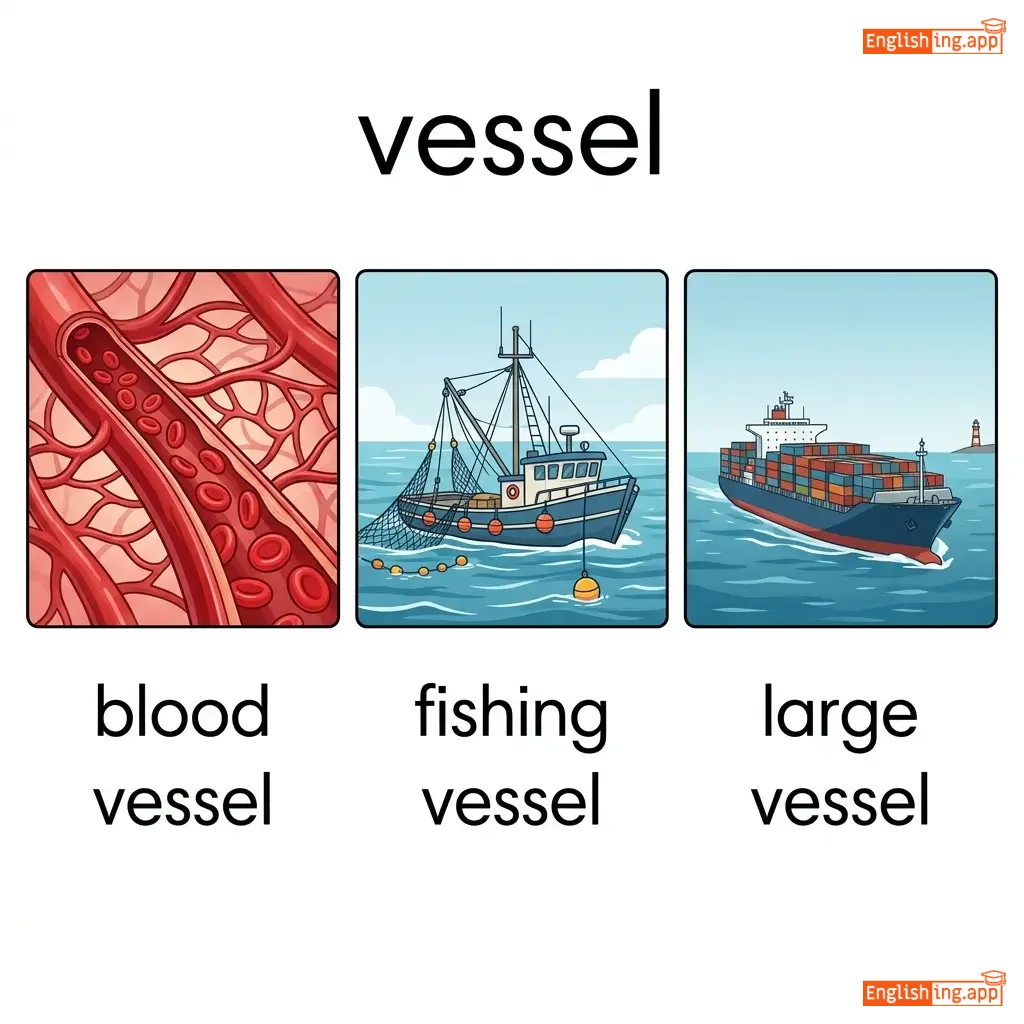
cargo vessel, blood vessel, drinking vessel
••••••
|
Vessel - 大きな船(vessel)は港に荷物を運び、海を越えるための容器です。
••••••
|
|
#1490
🚫
|
/ˌvaɪ.əˈleɪ.ʃən/
noun
(バイオレーション)
••••••
|
- •••••• |
違反; ルール違反
ihan; rūru ihan
••••••
|
the action of violating someone or something; the action of breaking or failing to comply with a rule or formal agreement
••••••
|
The company was fined for violation of environmental regulations.
その会社は環境規制違反で罰金を科せられました。
••••••
|
その会社は環境規制違反で罰金を科せられました。
Sono kaisha wa kankyō kisei ihan de bakkin o kase raremashita.
••••••
|
breach, infringement, transgression, contravention
••••••
|
compliance, observance, adherence
••••••
|
traffic violation, human rights violation, rule violation
••••••
|
Japanese '違反' (ihan) mirrors the meaning of 'violation', both pointing to breaking rules.
••••••
|
|
#1491
🏺
|
/ˈves.tɪdʒ/
noun
(ヴェスティジ)
••••••
|
- •••••• |
痕跡
koseki
••••••
|
a trace or remnant of something that is disappearing or no longer exists
••••••
|
No vestige of the ancient city remains.
ノー ヴェスティジ オブ ザ エンシェント シティ リメインズ。
••••••
|
古代の都市の痕跡は残っていません。
Kodai no toshi no koseki wa nokotteimasen.
••••••
|
trace, remnant, remains, relic
••••••
|
entirety, whole, complete
••••••
|
last vestige, vestige of hope, no vestige
••••••
|
痕跡 = 過去の痕跡が残ること。
••••••
|
|
#1492
⚔️
|
/ˈvaɪ.ə.ləns/
noun
(ヴァイオレンス)
••••••
|
- •••••• |
暴力; 残忍さ; 極端な強度
bōryoku; zannin-sa; kyokutan na kyōdo
••••••
|
behavior involving physical force intended to hurt, damage, or kill; extreme force or intensity
••••••
|
The government condemned all forms of violence against civilians.
政府は市民に対するあらゆる暴力の形態を非難しました。
••••••
|
政府は市民に対するあらゆる暴力の形態を非難しました。
seifu wa shimin ni taisuru arayuru bōryoku no keitai o hinan shimashita.
••••••
|
brutality, aggression, force, cruelty
••••••
|
peace, gentleness, nonviolence
••••••
|
domestic violence, prevent violence, acts of violence
••••••
|
暴力のバ、暴れるのバ。覚えやすい!
••••••
|
|
#1493
📳
|
/vaɪˈbreɪ.ʃən/
noun
(vaiburēshon)
••••••
|
- •••••• |
振動
shindou
••••••
|
a rapid back and forth movement; oscillation
••••••
|
The phone's vibration woke me up.
電話の振動で目が覚めた。
••••••
|
電話の振動で目が覚めた。
Denwa no shindou de me ga sameta.
••••••
|
oscillation, tremor, pulsation, quiver
••••••
|
stillness, stability, motionlessness
••••••
|
phone vibration, sound vibration, vibration mode
••••••
|
電話が振動して目を覚ます。『振動』という言葉です。
••••••
|
|
#1494
✨
|
/ˈvɜː.tʃuː/
noun
(ヴァーチュー)
••••••
|
- •••••• |
美徳;道徳;有益な品質
bitoku; dōtoku; yūeki na hinshitsu
••••••
|
behavior showing high moral standards; a good or useful quality of a thing
••••••
|
Honesty is considered the highest virtue in many cultures.
誠実は多くの文化で最も高い美徳と見なされています。
••••••
|
誠実は多くの文化で最も高い美徳と見なされています。
Seijitsu wa ōku no bunka de mottomo takai bitoku to minasareteimasu.
••••••
|
goodness, morality, integrity, excellence
••••••
|
vice, immorality, wickedness
••••••
|
moral virtue, cardinal virtue, virtue ethics
••••••
|
‘Virtue’ sounds like ‘美徳’, which means virtue in Japanese.
••••••
|
|
#1495
⚠️
|
/vaɪs/
noun
(ヴァイス)
••••••
|
- •••••• |
悪習; 道徳的欠点
vice
••••••
|
an immoral or wicked behavior; a moral failing or fault
••••••
|
Smoking is his only vice. |
喫煙は彼の唯一の悪習です。
Kitsuen wa kare no yuiitsu no akushu desu.
••••••
|
fault, weakness, sin, immorality
••••••
|
virtue, goodness, morality, strength
••••••
|
moral vice, hidden vice, overcome vice
••••••
|
悪習はやめにくいもの、例えば喫煙のように。
••••••
|
|
#1496
🙋
|
/ˌvɒl.ənˈtɪər/
noun
(ボランティア)
••••••
|
- •••••• |
ボランティア
borantia
••••••
|
a person who freely offers to take part in an enterprise or undertake a task
••••••
|
Many volunteers helped distribute food to the homeless. |
多くのボランティアがホームレスに食べ物を配る手伝いをしました。
Ōku no borantia ga hōmuresu ni tabemono o kubaru tetsudai o shimashita.
••••••
|
helper, assistant, supporter, contributor
••••••
|
employee, professional, paid worker
••••••
|
volunteer work, volunteer organization, community volunteer
••••••
|
ボランティアは無償で他人を助ける人です。
••••••
|
|
#1497
📍
|
/vɪˈsɪn.ə.ti/
noun
(ビシニティ)
••••••
|
- •••••• |
近隣; 周辺
vicinity
••••••
|
the area near or surrounding a particular place; neighborhood
••••••
|
There are many shops in the vicinity of the school.
学校の近くにたくさんの店があります。
••••••
|
学校の近くにたくさんの店があります。
gakkou no chikaku ni takusan no mise ga arimasu.
••••••
|
neighborhood, area, locality, proximity
••••••
|
distance, remoteness
••••••
|
in the vicinity, immediate vicinity, general vicinity
••••••
|
Vicinityは日本語で'近隣'または'周辺'という意味です。
••••••
|
|
#1498
🚢
|
/ˈvɔɪ.ɪdʒ/
noun
(ボヤージュ)
••••••
|
- •••••• |
航海; 海上旅行
kōkai; kaijō ryokō
••••••
|
a long journey involving travel by sea or in space
••••••
|
The ship's voyage across the Atlantic took two weeks.
船の大西洋を越える航海は2週間かかりました。
••••••
|
船の大西洋を越える航海は2週間かかりました。
Fune no taisēyō o koeru kōkai wa 2 shūkan kakarimashita.
••••••
|
journey, trip, expedition, cruise
••••••
|
stay, residence, sojourn
••••••
|
maiden voyage, sea voyage, long voyage
••••••
|
Think of 'Voyage' as a 'Kōkai' (journey) across the sea.
••••••
|
|
#1499
😢
|
/ˈvɪk.tɪm/
noun
(ヴィクティム)
••••••
|
- •••••• |
犠牲者
giseisha
••••••
|
a person who suffers harm, injury, or death as a result of an event or action
••••••
|
The victim was taken to the hospital immediately. |
犠牲者はすぐに病院に運ばれました。
Giseisha wa sugu ni byōin ni hakobaremashita.
••••••
|
casualty, sufferer, target, prey
••••••
|
perpetrator, aggressor, attacker
••••••
|
crime victim, accident victim, victim support
••••••
|
The Japanese word '犠牲者' (giseisha) sounds similar to 'victim' and means the same.
••••••
|
|
#1500
😤
|
/vʌlˈɡær.ɪ.ti/
noun
(ヴァルガリティ)
••••••
|
- •••••• |
下品さ
gehin-sa
••••••
|
the quality of being rude, offensive, or indecent; lack of sophistication or good taste
••••••
|
The comedian's jokes were criticized for their vulgarity. |
そのコメディアンのジョークは、彼らの下品さのために批判された。
Sono komedian no jōku wa, karera no gehin-sa no tame ni hihan sareta.
••••••
|
crudeness, coarseness, indecency, impropriety
••••••
|
refinement, sophistication, elegance
••••••
|
avoid vulgarity, display vulgarity, crude vulgarity
••••••
|
Picture a comedian's rude jokes getting criticized for their vulgarity.
••••••
|
Vocabulary Quiz
Test your vocabulary by matching words with their translations or meanings.
Login to take the quiz
Comments (0)
Share your thoughts and join the discussion.
Join the discussion by logging in
Login to CommentNo comments yet
Be the first to share your thoughts!