

翻訳
過去
過去分詞
三人称単数
動名詞
意味
例文
例文の翻訳
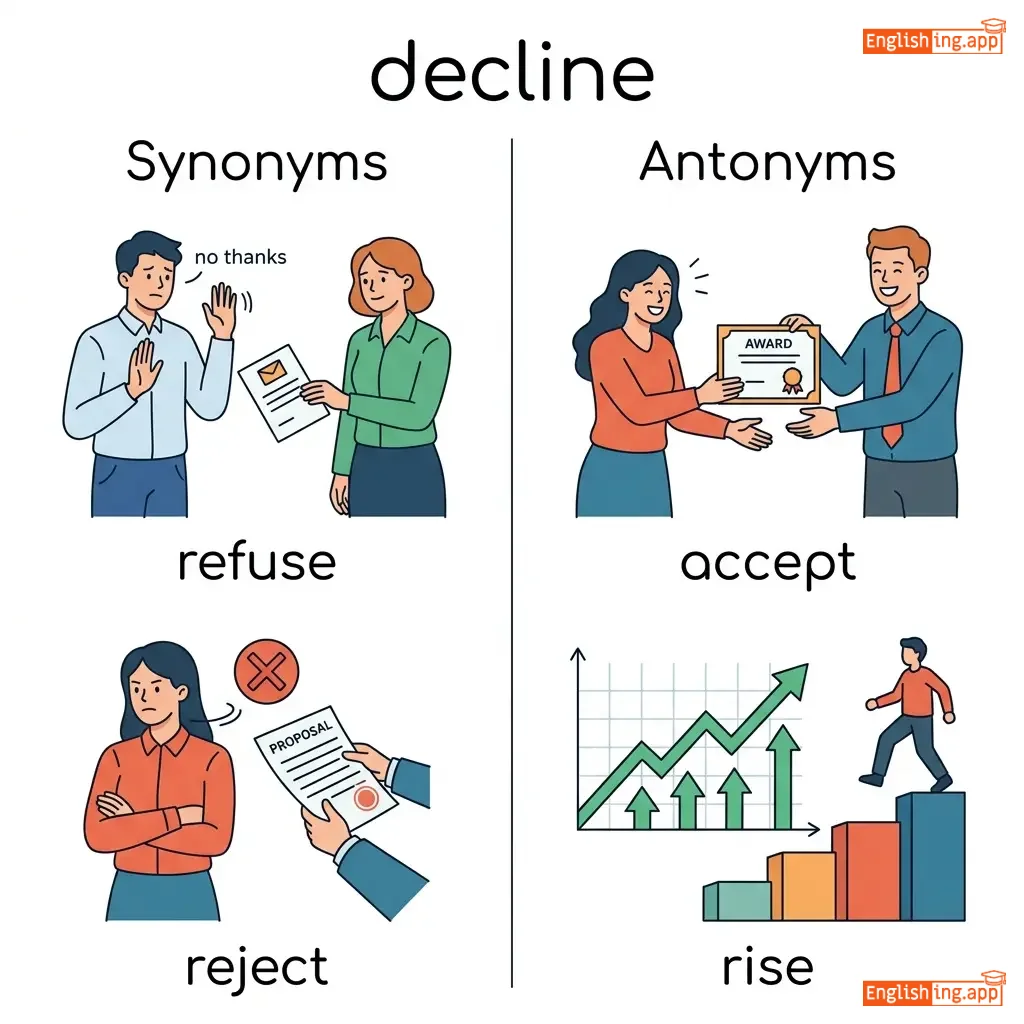
同義語
対義語
コロケーション
ニーモニック

Swipe left or right, or use the buttons. Tap image to zoom.
例文の翻訳
単語
Lesson 14Lesson 14 - マスクトグル
|
絵文字
|
単語 | Images | 翻訳 | 意味 | 例文 | 例文の翻訳 | 同義語 | 対義語 | コロケーション | ニーモニック |
|---|---|---|---|---|---|---|---|---|---|---|
|
#261
🎭
|
/dɪˈsiːt/
noun
(ディシート)
••••••
|
- •••••• |
欺瞞; 詐欺; 嘘
kiman, sagi, uso
••••••
|
the action or practice of deceiving someone by concealing or misrepresenting the truth
••••••
|
His deceit was discovered when the truth about his qualifications came to light.
His deceit was discovered when the truth about his qualifications came to light.
••••••
|
彼の欺瞞は、彼の資格についての真実が明らかになったときに発覚しました。
kare no kiman wa, kare no shikaku ni tsuite no shinjitsu ga akiraka ni natta toki ni hakkaku shimashita.
••••••
|
deception, dishonesty, fraud, trickery
••••••
|
honesty, truthfulness, sincerity, transparency
••••••
|
practice deceit, acts of deceit, deliberate deceit
••••••
|
嘘は常に暴かれる、まるで曇り空の中に隠れている太陽のように。
••••••
|
|
#262
📄
|
/diːd/
noun
(ディード)
••••••
|
- •••••• |
行為; 偉業; 法的文書;
kōi, igyō, houteki bunsho
••••••
|
an action that is performed intentionally or consciously; a legal document showing ownership
••••••
|
His heroic deed saved the child from drowning in the river. |
彼の英雄的な行為は子供を川で溺れさせないように救った。
kare no eiyūteki na kōi wa kodomo o kawa de oboresasenai yō ni sukutta.
••••••
|
action, act, exploit, feat
••••••
|
inaction, neglect, omission
••••••
|
good deed, heroic deed, property deed
••••••
|
'Deed'を'法的文書'または'英雄的行為'として覚えよう。
••••••
|
|
#263
🤝
|
/ˈdiː.sən.si/
noun
(ディセンシー)
••••••
|
- •••••• |
品位
hin'i
••••••
|
behavior that conforms to accepted standards of morality or respectability
••••••
|
She had the decency to apologize for her mistake immediately. |
彼女はすぐに自分の間違いを謝る品位を示しました。
Kanojo wa sugu ni jibun no machigai o ayamaru hin'i o shimeshimashita.
••••••
|
propriety, respectability, civility, morality
••••••
|
impropriety, indecency, rudeness, immorality
••••••
|
basic decency, human decency, common decency
••••••
|
品位: 自分を高く保つ行動。
••••••
|
|
#264
🔧
|
/ˈdiː.fekt/
noun
(ディフェクト)
••••••
|
- •••••• |
欠陥
kekkan
••••••
|
a shortcoming, imperfection, or lack; a fault or flaw in something
••••••
|
The manufacturing defect caused the product to fail after only one week. |
製造上の欠陥により、製品はわずか1週間で故障しました。
Seizō-jō no kekkan ni yori, seihin wa wazuka 1-shūkan de koshō shimashita.
••••••
|
flaw, fault, imperfection, shortcoming
••••••
|
perfection, strength, advantage, asset
••••••
|
birth defect, design defect, manufacturing defect
••••••
|
欠陥はまるで機械の壊れた部品のように、全体を動かなくさせます。
••••••
|
|
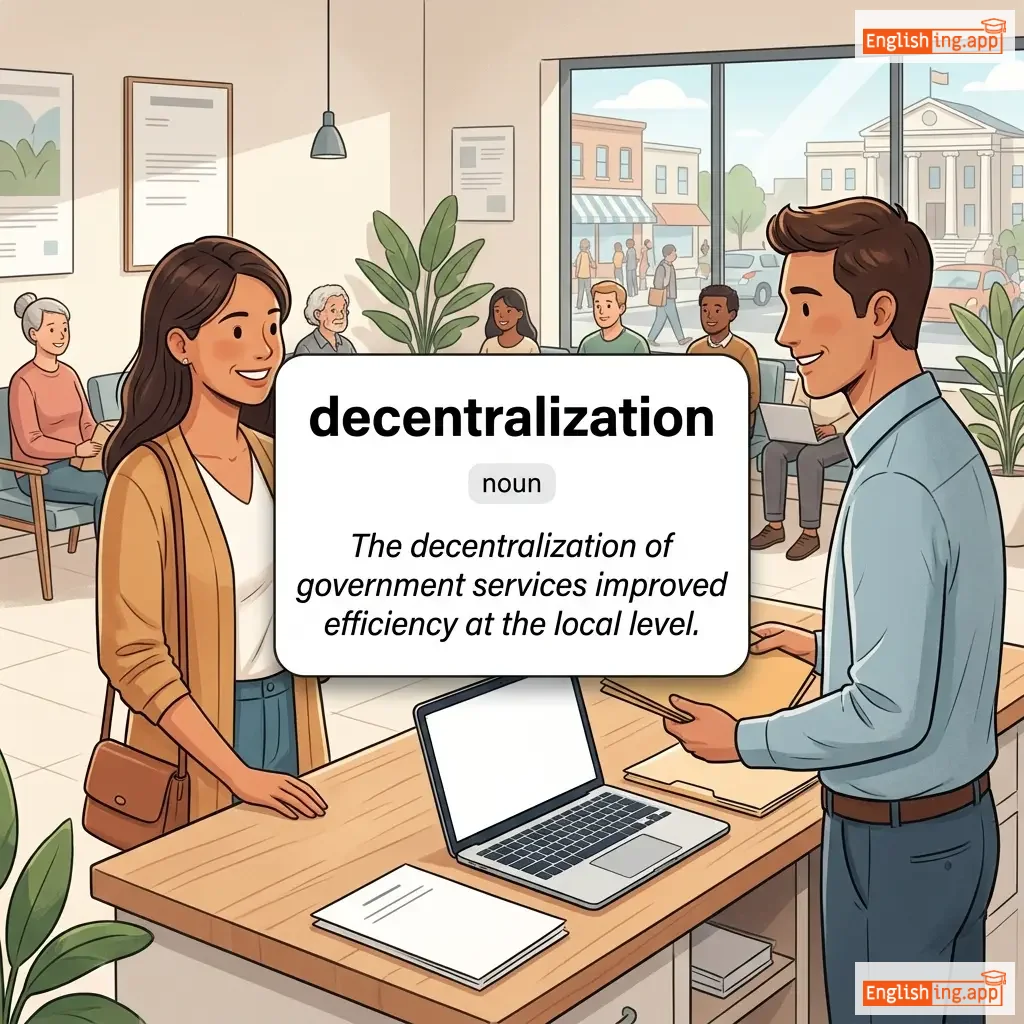
#265
🌐
|
/diːˌsen.trə.laɪˈzeɪ.ʃən/
noun
(ディセントラライゼーション)
••••••
|
|
分権化; 権力の分配
bunkenka; kenryoku no bunpai
••••••
|
the transfer of authority from central to local government; distribution of power
••••••
|
The decentralization of government services improved efficiency at the local level.
政府サービスの分権化は、地域レベルでの効率を向上させました。
••••••
|
政府サービスの分権化は、地域レベルでの効率を向上させました。
seifu sābisu no bunkenka wa, chiiki reberu de no kōritsu o kōjō sasemashita.
••••••
|
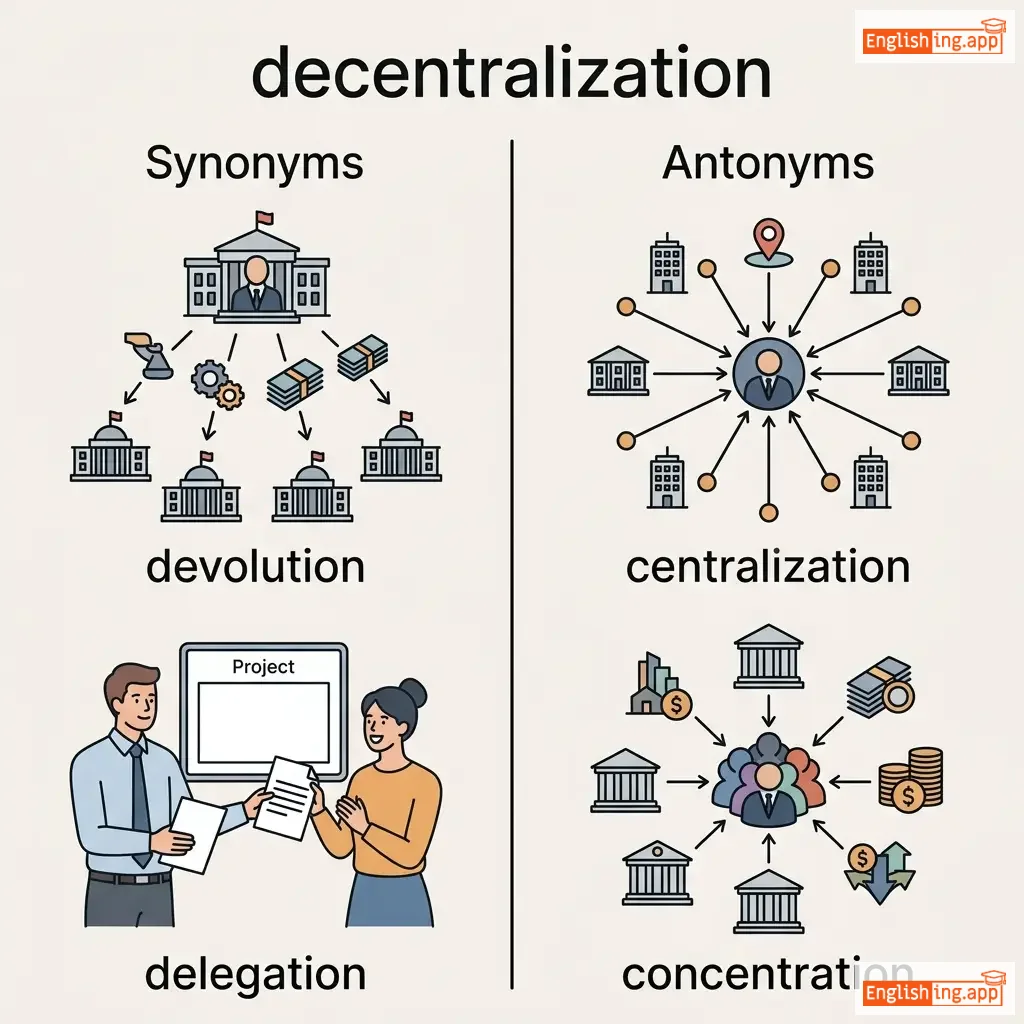
devolution, delegation, distribution, dispersion
••••••
|
centralization, concentration, consolidation
••••••
|
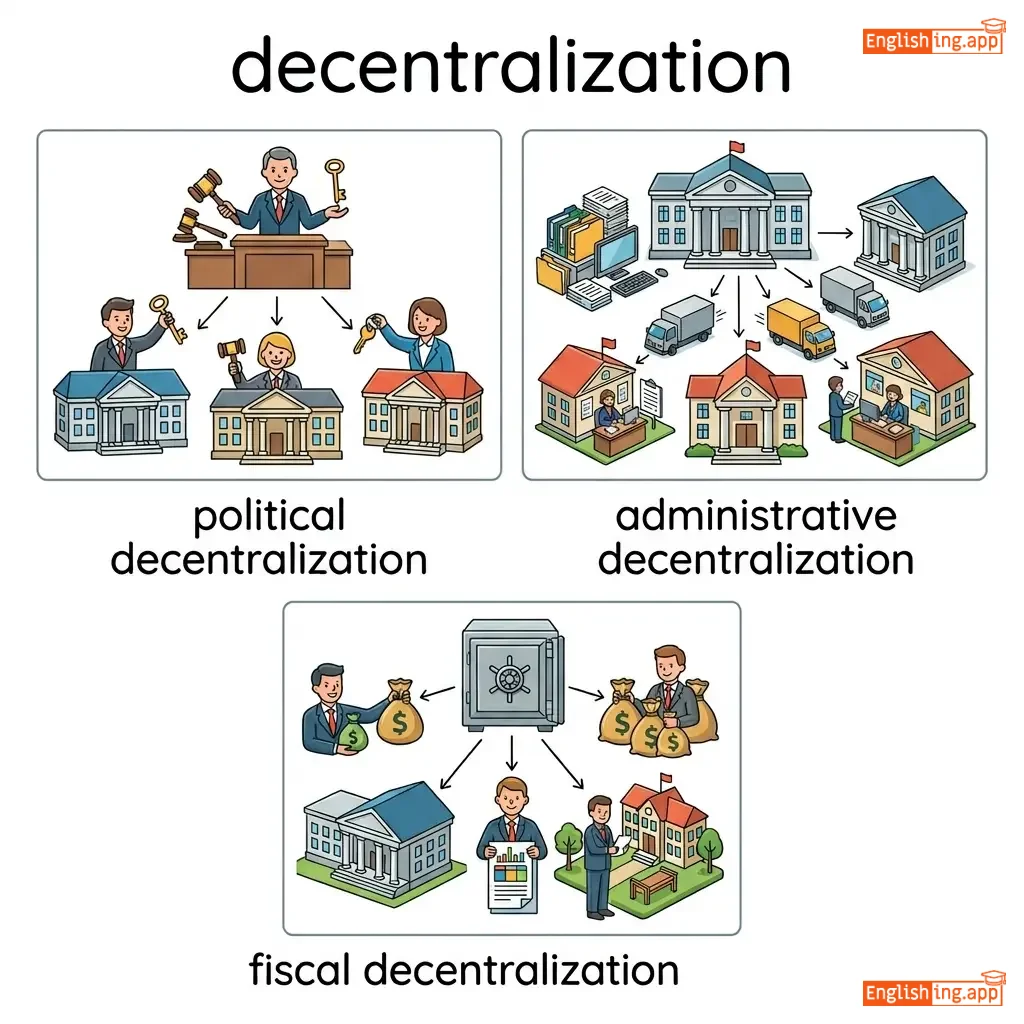
political decentralization, administrative decentralization, fiscal decentralization
••••••
|
分権化: 権力が地方に分散される
••••••
|
|
#266
🛡️
|
/dɪˈfens/
noun
(ディフェンス)
••••••
|
- •••••• |
防御; 保護
bougyo, hogo
••••••
|
the action of defending from or resisting attack; protection or support
••••••
|
The country strengthened its defence system against potential threats. |
その国は潜在的な脅威に対抗するため、防御システムを強化しました。
Sono kuni wa senzai-teki na kyoui ni taikou suru tame, bougyo shisutemu o kyouka shimashita.
••••••
|
protection, guard, shield, security
••••••
|
attack, offense, aggression, assault
••••••
|
national defence, self defence, strong defence
••••••
|
No •••••• |
|
#267
🕵️
|
/dɪˈsep.ʃən/
noun
(ディセプション)
••••••
|
- •••••• |
欺瞞
kiman
••••••
|
the action of deceiving someone; the state of being deceived
••••••
|
The magician's deception amazed the audience with seemingly impossible tricks. |
魔法使いの欺瞞は、観客を一見不可能なトリックで驚かせた。
Mahōtsukai no kiman wa, kankyaku o ikken fukanōna torikku de odorokaseta.
••••••
|
fraud, trickery, illusion, misleading
••••••
|
truth, honesty, reality, transparency
••••••
|
deliberate deception, clever deception, visual deception
••••••
|
魔法使いとその欺瞞を覚えておこう
••••••
|
|
#268
⚖️
|
/dɪˈfen.dənt/
noun
(ディフェンダント)
••••••
|
- •••••• |
被告
hikoku
••••••
|
an individual, company, or institution sued or accused in a court of law
••••••
|
The defendant pleaded not guilty to all charges brought against him. |
被告は、彼に対するすべての告発に対して無罪を主張しました。
Hikoku wa, kare ni taisuru subete no kokuhatsu ni taishite muzai o shuchou shimashita.
••••••
|
accused, respondent, litigant
••••••
|
plaintiff, prosecutor, accuser
••••••
|
criminal defendant, civil defendant, defendant's rights
••••••
|
被告は法廷で自分を弁護する役割を果たします。
••••••
|
|
#269
⚖️
|
/dɪˈsɪʒ.ən/
noun
(ディシジョン)
••••••
|
- •••••• |
決定
kettei
••••••
|
a conclusion or resolution reached after consideration; the action of deciding
••••••
|
Making the right decision required careful analysis of all available options. |
正しい決定を下すには、利用可能なすべての選択肢を慎重に分析する必要がありました。
Tadashī kettei o kudasu ni wa, riyō kanōna subete no sentakushi o shinchō ni bunseki suru hitsuyō ga arimashita.
••••••
|
choice, determination, judgment, resolution
••••••
|
indecision, hesitation, uncertainty, doubt
••••••
|
make decision, tough decision, final decision
••••••
|
決定は慎重に、未来を形作る一歩。
••••••
|
|
#270
📉
|
/dɪˈfɪʃ.ən.si/
noun
(ディフィシエンシー)
••••••
|
- •••••• |
不足; 欠乏; 不足感
fusoku, ketsubou, fusokukan
••••••
|
a lack or shortage of something; inadequacy or insufficiency
••••••
|
The doctor diagnosed a vitamin D deficiency in the patient's blood test. |
医師は患者の血液検査でビタミンDの不足を診断しました。
Ishi wa kanja no ketsueki kensa de bitamin D no fusoku wo shindan shimashita.
••••••
|
shortage, lack, inadequacy, insufficiency
••••••
|
abundance, excess, sufficiency, surplus
••••••
|
vitamin deficiency, immune deficiency, nutritional deficiency
••••••
|
Deficiency: Think of a lack (fusoku) of something vital!
••••••
|
|
#271
📜
|
/ˌdek.ləˈreɪ.ʃən/
noun
(dek-rei-rei-shun)
••••••
|
- •••••• |
宣言; 発表; 告知
sengen, happyou, kokuji
••••••
|
a formal or explicit statement or announcement; an official proclamation
••••••
|
The president's declaration of independence marked a historic moment for the nation.
大統領の独立宣言は、国にとって歴史的な瞬間を意味していました。
••••••
|
大統領の独立宣言は、国にとって歴史的な瞬間を意味していました。
Daitouryou no dokuritsu sengen wa, kuni ni totte rekishiteki na shunkan wo imi shite imashita.
••••••
|
announcement, proclamation, statement, pronouncement
••••••
|
concealment, silence, secrecy, denial
••••••
|
formal declaration, public declaration, declaration of war
••••••
|
日本語での宣言は重要な公式の発表や通知を指します。
••••••
|
|
#272
💸
|
/ˈdef.ə.sɪt/
noun
(デフィシット)
••••••
|
- •••••• |
赤字; 欠乏
akaji, kebō
••••••
|
the amount by which something is too small; a shortfall or lack
••••••
|
The government faced a budget deficit of millions due to increased spending.
政府は支出の増加により、何百万もの予算の赤字に直面しました。
••••••
|
政府は支出の増加により、何百万もの予算の赤字に直面しました。
Seifu wa shishutsu no zōka ni yori, nanbyakuman mo no yosannya ketsubi ni chokumen shimashita.
••••••
|
shortfall, shortage, gap, debt
••••••
|
surplus, excess, profit, abundance
••••••
|
budget deficit, trade deficit, attention deficit
••••••
|
赤字 = 金額が不足している状態
••••••
|
|
#273
📉
|
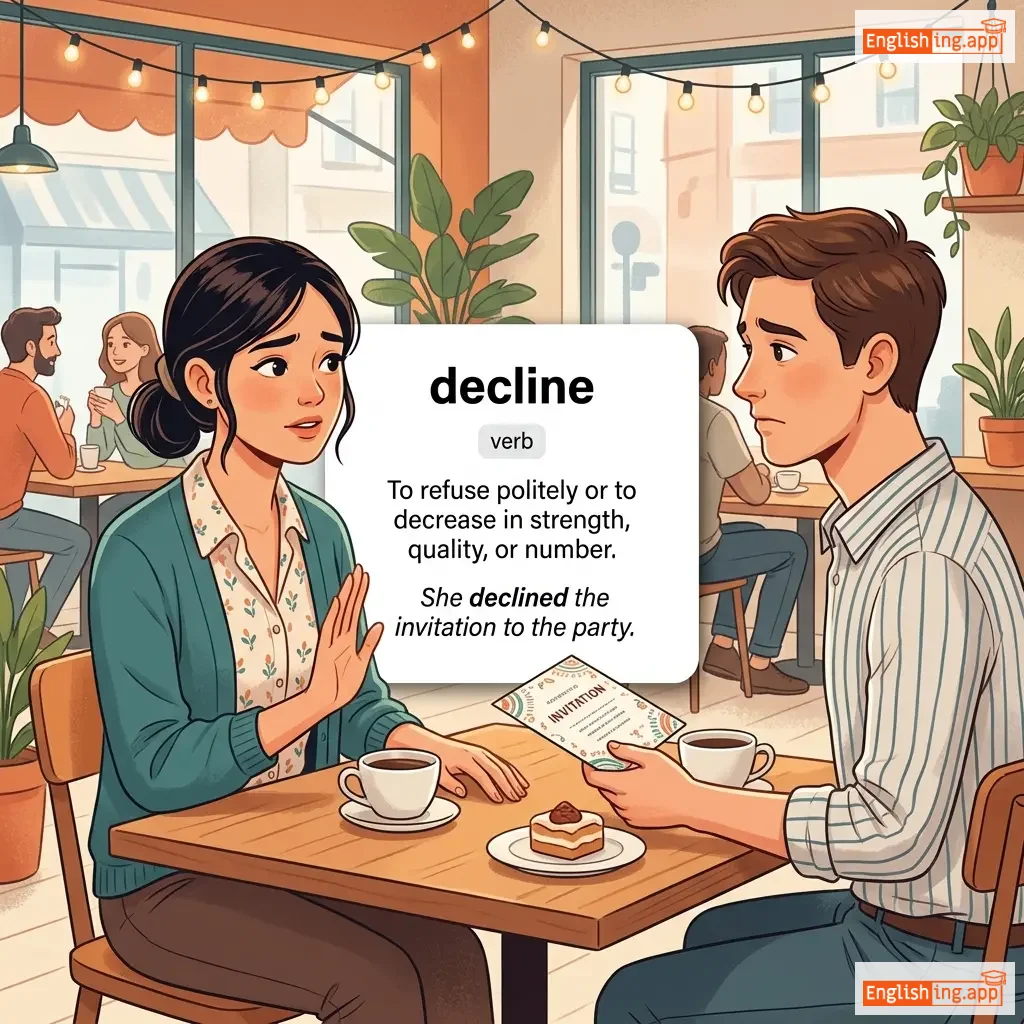
/dɪˈklaɪn/
noun
(ディクライン)
••••••
|
|
低下; 劣化; 拒否
teika; reika; kyohi
••••••
|
a gradual and continuous loss of strength, numbers, or quality; deterioration
••••••
|
The decline in air quality became noticeable after the factory opened nearby. |
工場が近くに開業した後、空気品質の低下が顕著になった。
Koujou ga chikaku ni kaigyou shita ato, kuuki hinshitsu no teika ga kencho ni natta.
••••••
|
deterioration, decrease, reduction, downfall
••••••
|
improvement, increase, growth, rise
••••••
|
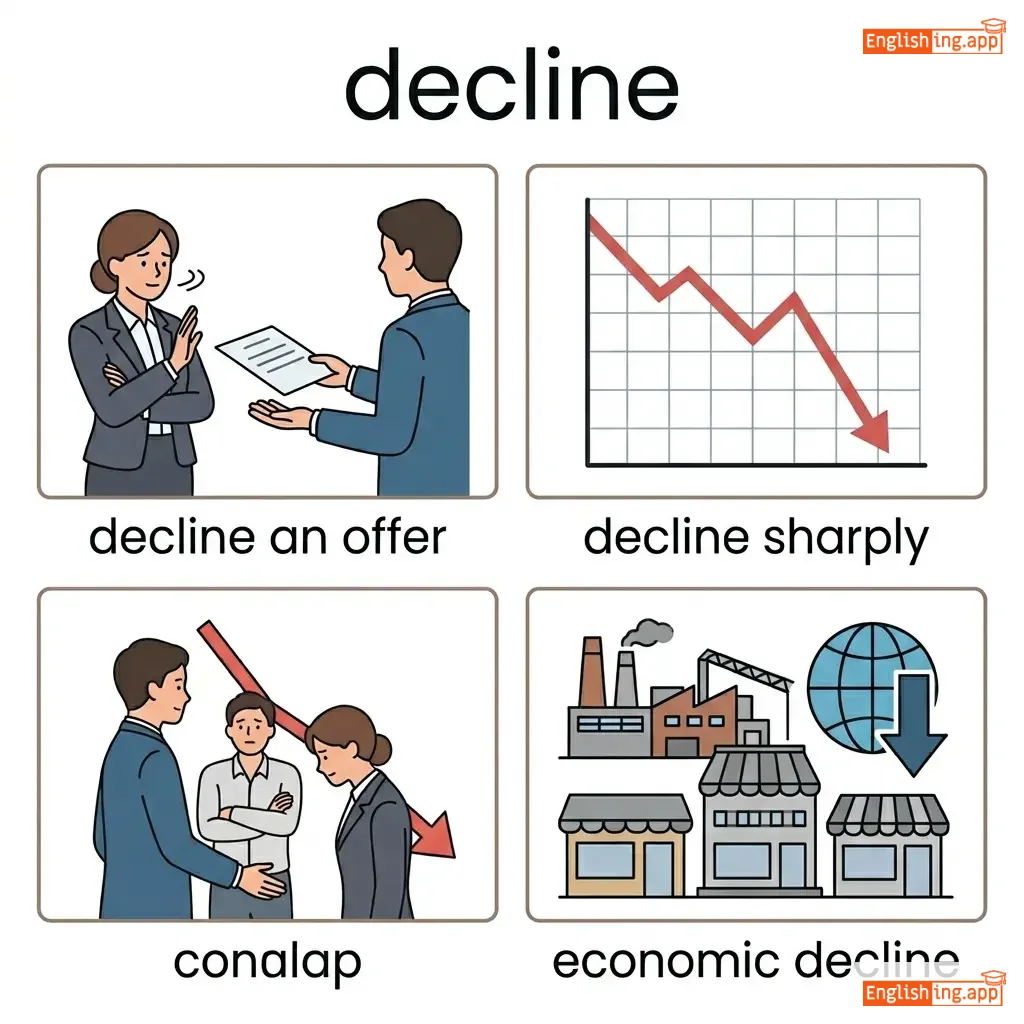
economic decline, gradual decline, steep decline
••••••
|
No •••••• |
|
#274
🦴
|
/dɪˈfɔː.mə.ti/
noun
(ディフォーム)
••••••
|
- •••••• |
変形; 身体的欠陥
henkei; shintaiteki kenkan
••••••
|
a distorted or unnatural shape or form; physical malformation
••••••
|
The accident caused a permanent deformity in his left hand. |
事故は彼の左手に永続的な変形を引き起こしました。
Jiko wa kare no hidari te ni eizokuteki na henkei o hikiokoshimashita.
••••••
|
malformation, distortion, disfigurement, abnormality
••••••
|
perfection, normality, symmetry, beauty
••••••
|
birth deformity, spinal deformity, facial deformity
••••••
|
変形は物体や体の形の変化を指します。
••••••
|
|
#275
🎨
|
/ˌdek.əˈreɪ.ʃən/
noun
(dekoreishon)
••••••
|
- •••••• |
装飾; 飾り; 賞;
sōshoku, kazari, shō
••••••
|
the process or art of decorating something; ornamental items used to beautify
••••••
|
The Christmas decoration transformed the ordinary room into a festive wonderland.
クリスマスのデコレーションは、普通の部屋をお祝いのワンダーランドに変えました。
••••••
|
クリスマスのデコレーションは、普通の部屋をお祝いのワンダーランドに変えました。
Kurisumasu no dekoreeshon wa, futsū no heya o oiwai no wandārando ni kaemashita.
••••••
|
ornamentation, embellishment, adornment, beautification
••••••
|
simplicity, plainness, bareness, austerity
••••••
|
home decoration, holiday decoration, interior decoration
••••••
|
装飾が空間を美しく変えるように、デコレーションは部屋を祝祭に変えます。
••••••
|
|
#276
📉
|
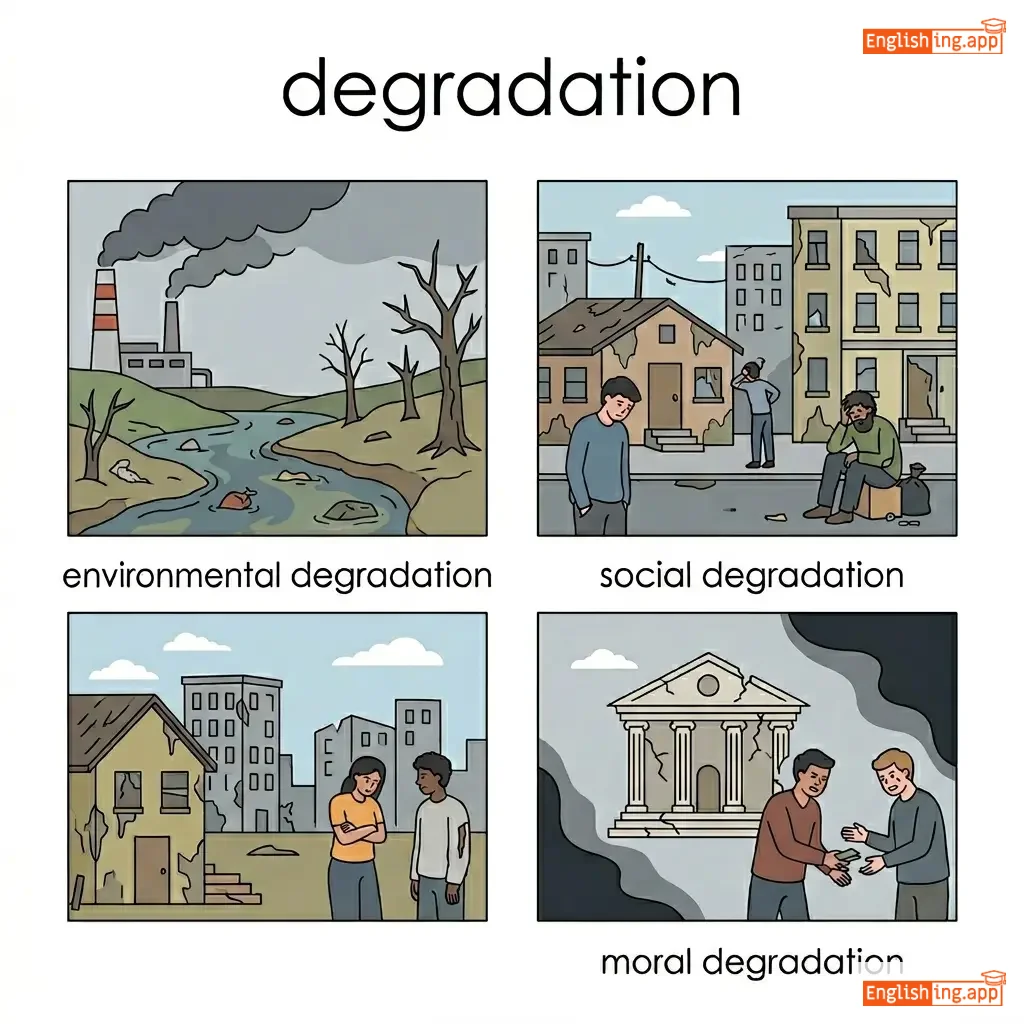
/ˌdeɡ.rəˈdeɪ.ʃən/
noun
(デグラデーション)
••••••
|
|
劣化
rekka
••••••
|
the condition or process of deteriorating; reduction to a lower or worse state
••••••
|
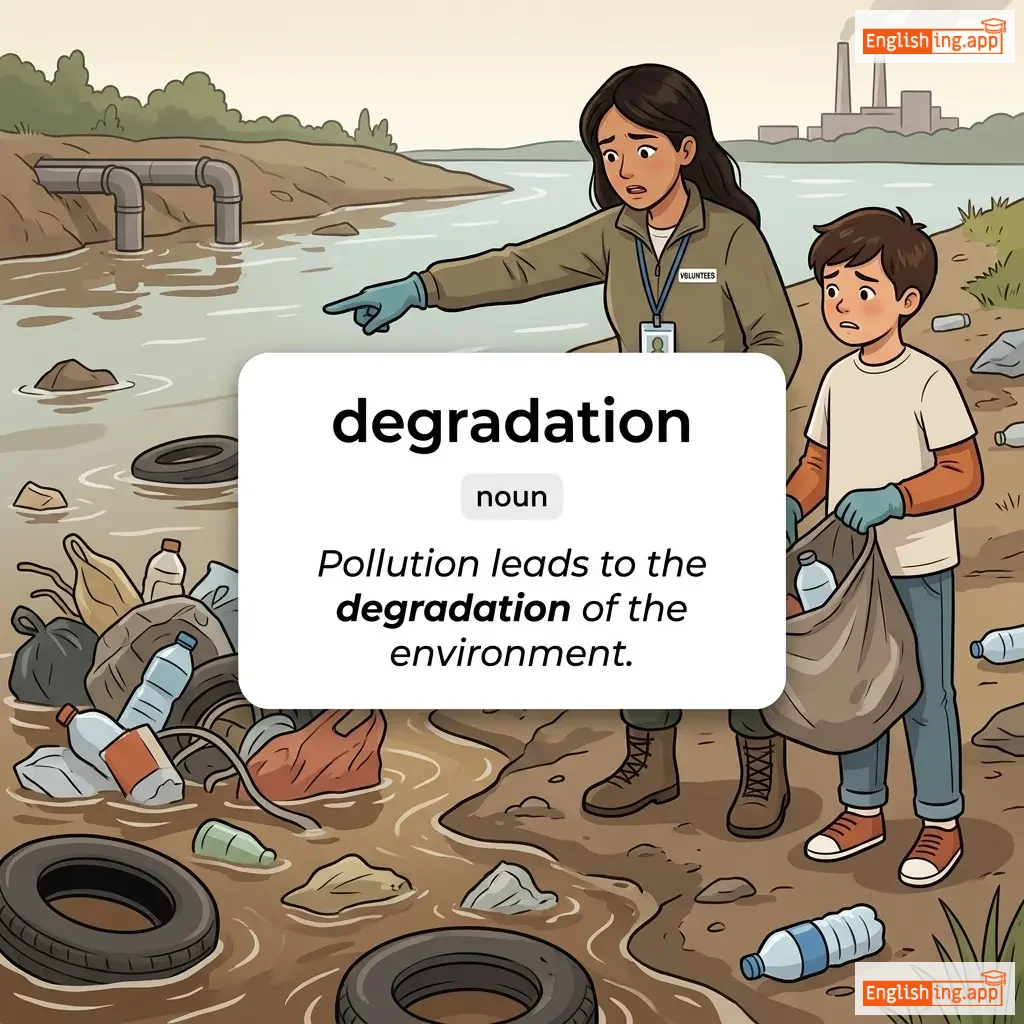
Environmental degradation threatens the survival of many species. |
環境劣化は多くの種の生存を脅かしています。
Kankyō rekka wa ōku no shu no seizon o obiyakashiteimasu.
••••••
|
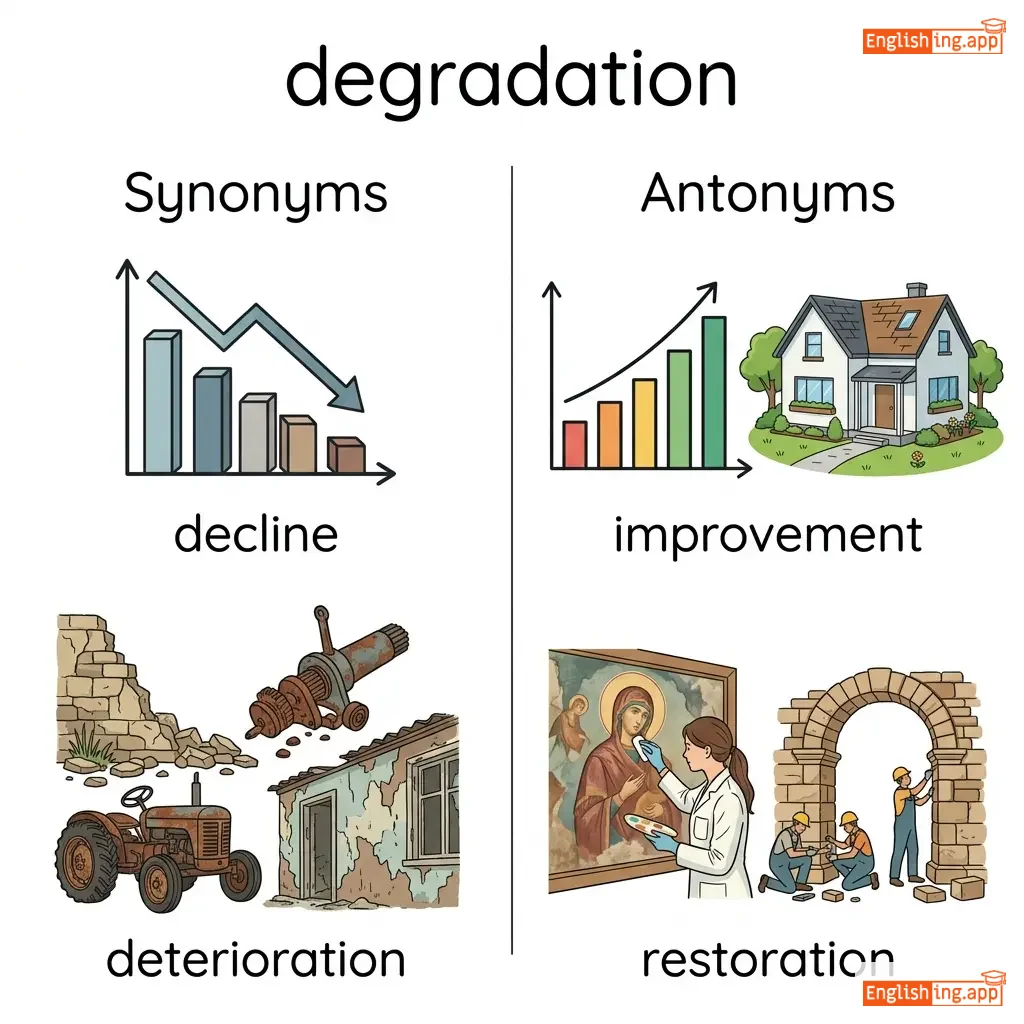
deterioration, decline, degeneration, erosion
••••••
|
improvement, enhancement, restoration, upgrade
••••••
|
environmental degradation, moral degradation, soil degradation
••••••
|
劣化 (悪化) とdegradation(低下)で記憶
••••••
|
|
#277
🎩
|
/dɪˈkɔː.rəm/
noun
(デコラム)
••••••
|
|
礼儀; 品位; 威厳
reigi, hin'i, igen
••••••
|
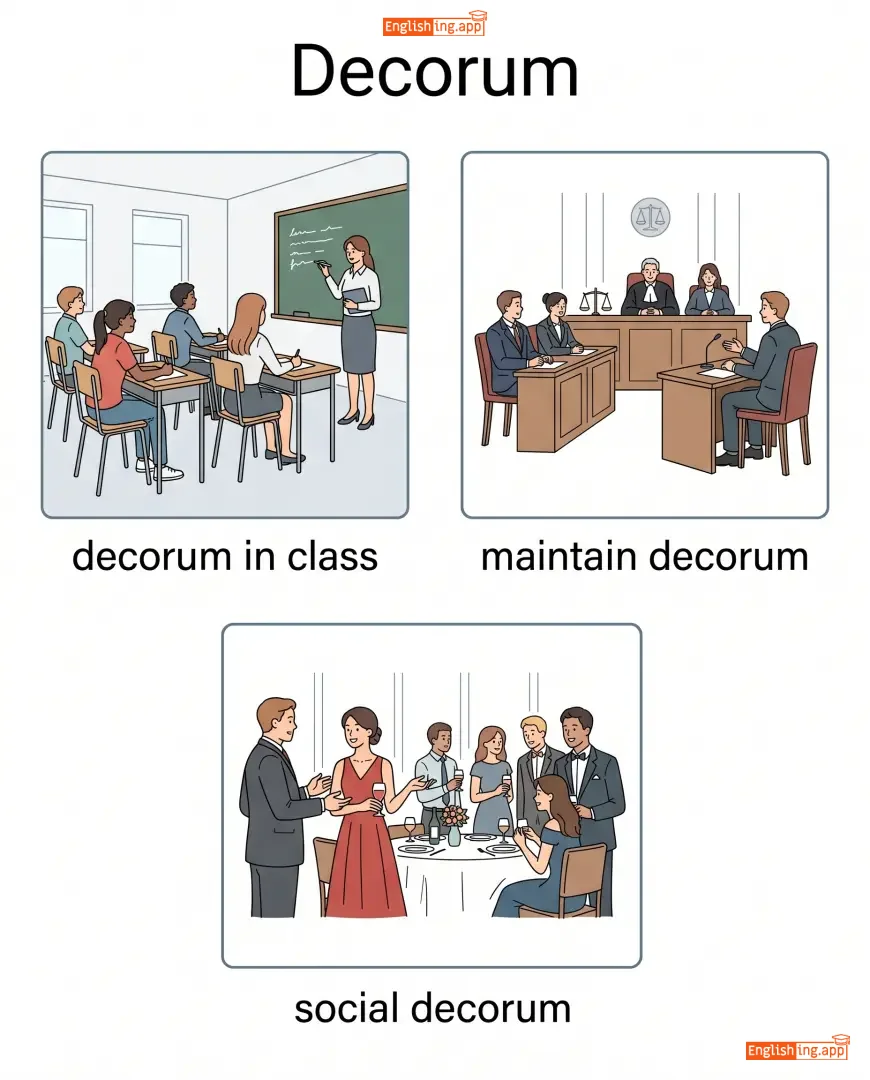
behavior in keeping with good taste and propriety; dignified and appropriate conduct
••••••
|
The diplomat maintained perfect decorum throughout the heated negotiations. |
その外交官は熱心な交渉の中で完璧な礼儀を保っていました。
Sono gaikōkan wa nesshin na kōshō no naka de kanpeki na reigi o tamotte imashita.
••••••
|
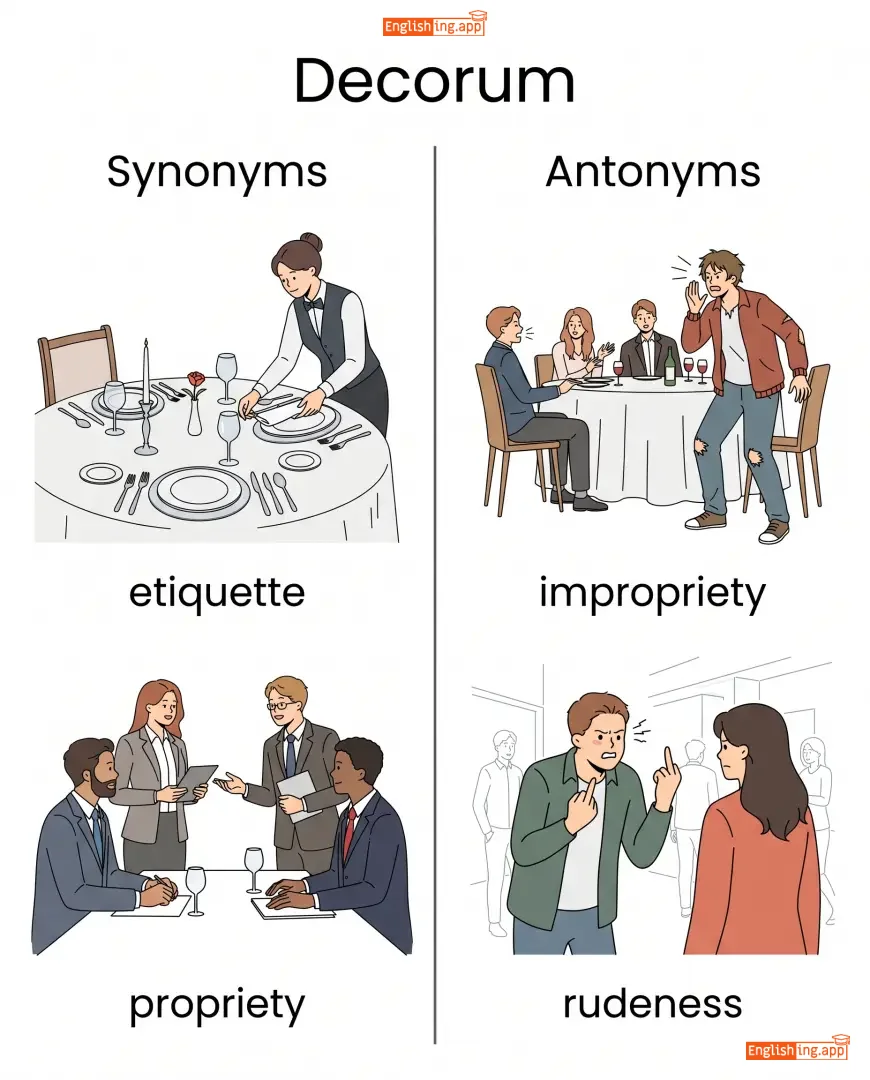
propriety, etiquette, dignity, respectability
••••••
|
impropriety, indecorum, rudeness, misconduct
••••••
|
maintain decorum, breach of decorum, social decorum
••••••
|
礼儀を守ることで'品位'と'威厳'を保ちましょう。
••••••
|
|
#278
👥
|
/ˈdel.ɪ.ɡət/
noun
(デリゲート)
••••••
|
- •••••• |
代表
daihyou
••••••
|
a person chosen or elected to act for or represent others; representative
••••••
|
Each country sent a delegate to participate in the international conference.
各国は国際会議に参加するために代表を派遣しました。
••••••
|
各国は国際会議に参加するために代表を派遣しました。
Kakkoku wa kokusai kaigi ni sanka suru tame ni daihyou o haken shimashita.
••••••
|
representative, envoy, agent, ambassador
••••••
|
principal, employer, authority
••••••
|
union delegate, conference delegate, trade delegate
••••••
|
代表 (daihyou) は、他の人のために行動する人を指す言葉です。
••••••
|
|
#279
⚖️
|
/dɪˈkriː/
noun
(ディクリー)
••••••
|
- •••••• |
法令
hōrei
••••••
|
an official order issued by a legal authority; a judicial decision or edict
••••••
|
The king issued a decree that all citizens must pay additional taxes.
王はすべての市民に追加の税金を支払うように命じる法令を出しました。
••••••
|
王はすべての市民に追加の税金を支払うように命じる法令を出しました。
Ō wa subete no shimin ni tsuika no zeikin o shiharau yō ni meijiru hōrei o dashimashita.
••••••
|
edict, order, ruling, mandate
••••••
|
suggestion, request, appeal, recommendation
••••••
|
royal decree, court decree, government decree
••••••
|
王の命令で税金が追加された。
••••••
|
|
#280
🍽️
|
/ˈdel.ɪ.kə.si/
noun
(デリカシー)
••••••
|
- •••••• |
繊細さ; 高級な料理;
sensaisa; koukyuu na ryouri
••••••
|
fineness of texture or structure; a choice or expensive food; sensitivity in handling
••••••
|
The chef prepared a local delicacy that was famous throughout the region. |
シェフは地域全体で有名な地元のデリカシーを準備しました。
Shefu wa chiiki zentai de yuumei na jimoto no derikashii wo junbi shimashita.
••••••
|
refinement, subtlety, specialty, treat
••••••
|
coarseness, roughness, common food
••••••
|
local delicacy, rare delicacy, culinary delicacy
••••••
|
In Japanese, delicacy (‘デリカシー’) refers to something refined and special, just like a precious dish.
••••••
|
Vocabulary Quiz
Test your vocabulary by matching words with their translations or meanings.
Login to take the quiz
Comments (0)
Share your thoughts and join the discussion.
Join the discussion by logging in
Login to CommentNo comments yet
Be the first to share your thoughts!