


Swipe left or right, or use the buttons. Tap image to zoom.
例句翻译
单词
Lesson 14Lesson 14 - 遮罩切换
|
表情符号
|
单词 | Images | 翻译 | 含义 | 例句 | 例句翻译 | 同义词 | 反义词 | 搭配词 | 助记符 |
|---|---|---|---|---|---|---|---|---|---|---|
|
#261
🎭
|
/dɪˈsiːt/
noun
(dísìt)
••••••
|
- •••••• |
欺骗; 欺诈; 谎言
qīpiàn, qīzhà, huǎngyán
••••••
|
the action or practice of deceiving someone by concealing or misrepresenting the truth
••••••
|
His deceit was discovered when the truth about his qualifications came to light.
His deceit was discovered when the truth about his qualifications came to light.
••••••
|
当关于他资历的真相浮出水面时,他的欺骗行为被揭露了。
dāng guānyú tā zīlì de zhēnxiàng fúchū shuǐmiàn shí, tā de qīpiàn xíngwéi bèi jiēlù le.
••••••
|
deception, dishonesty, fraud, trickery
••••••
|
honesty, truthfulness, sincerity, transparency
••••••
|
practice deceit, acts of deceit, deliberate deceit
••••••
|
像水中的泡沫一样,欺骗终会破裂。
••••••
|
|
#262
📄
|
/diːd/
noun
(迪德)
••••••
|
- •••••• |
行为; 壮举; 法律文件;
xíngwéi, zhuàngjǔ, fǎlǜ wénjiàn
••••••
|
an action that is performed intentionally or consciously; a legal document showing ownership
••••••
|
His heroic deed saved the child from drowning in the river. |
他的英雄行为救了孩子免于在河里溺水。
tā de yīngxióng xíngwéi jiùle háizi miǎn yú zài hé lǐ nìshuǐ.
••••••
|
action, act, exploit, feat
••••••
|
inaction, neglect, omission
••••••
|
good deed, heroic deed, property deed
••••••
|
记住'Deed'作为'法律文件'或'英雄行为',用中文回忆。
••••••
|
|
#263
🤝
|
/ˈdiː.sən.si/
noun
(迪森西)
••••••
|
- •••••• |
体面
tǐmiàn
••••••
|
behavior that conforms to accepted standards of morality or respectability
••••••
|
She had the decency to apologize for her mistake immediately. |
她有体面,立即为她的错误道歉。
Tā yǒu tǐmiàn, lìjí wèi tā de cuòwù dàoqiàn.
••••••
|
propriety, respectability, civility, morality
••••••
|
impropriety, indecency, rudeness, immorality
••••••
|
basic decency, human decency, common decency
••••••
|
体面: 做正确的事,哪怕有时很难。
••••••
|
|
#264
🔧
|
/ˈdiː.fekt/
noun
(dɪˈfɛkt)
••••••
|
- •••••• |
缺陷
quēxiàn
••••••
|
a shortcoming, imperfection, or lack; a fault or flaw in something
••••••
|
The manufacturing defect caused the product to fail after only one week. |
生产缺陷导致产品在仅仅一周后就失败了。
Shēngchǎn quēxiàn dǎozhì chǎnpǐn zài jǐn jǐn yī zhōu hòu jiù shībài le.
••••••
|
flaw, fault, imperfection, shortcoming
••••••
|
perfection, strength, advantage, asset
••••••
|
birth defect, design defect, manufacturing defect
••••••
|
缺陷就像是掉在路上的石头,绊倒你,阻止你前进。
••••••
|
|
#265
🌐
|
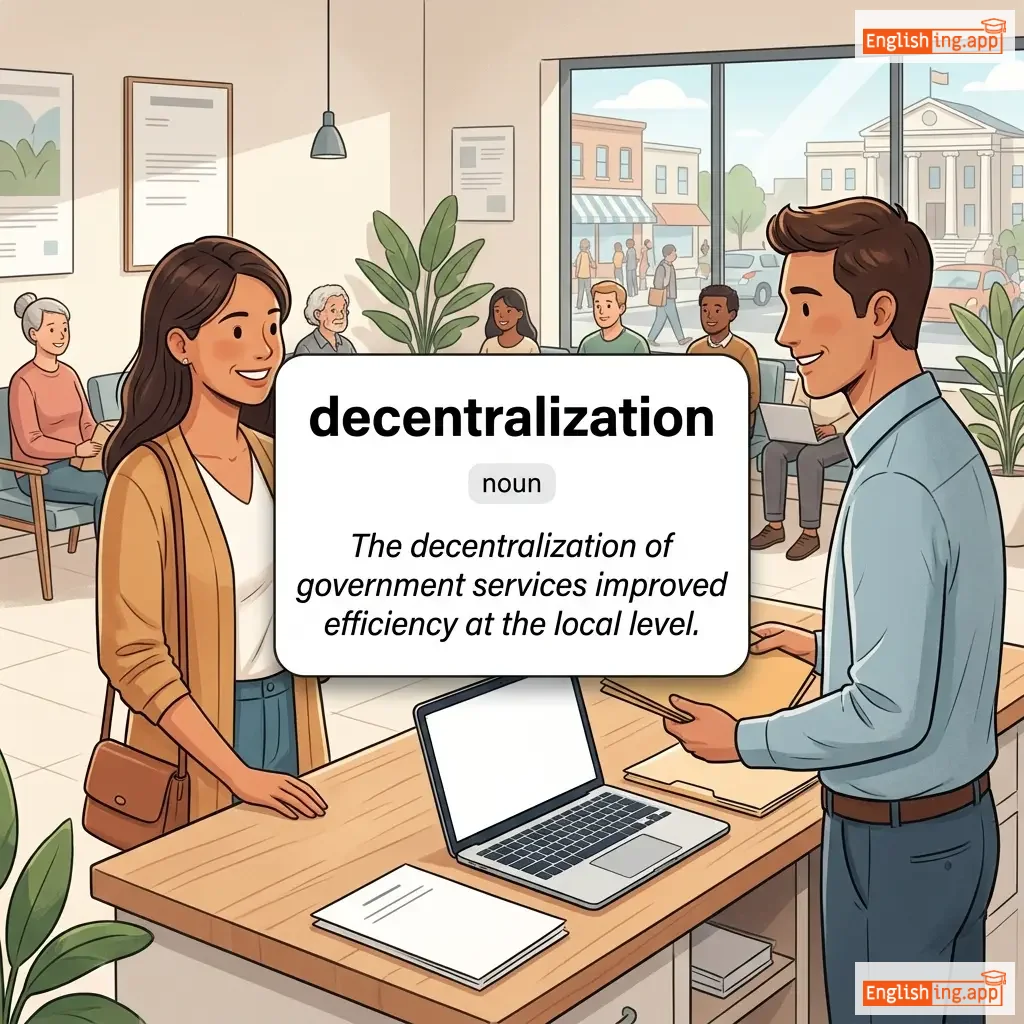
/diːˌsen.trə.laɪˈzeɪ.ʃən/
noun
(去中心化)
••••••
|
|
去中心化; 权力分配
qù zhōngxīn huà; quánlì fēnpèi
••••••
|
the transfer of authority from central to local government; distribution of power
••••••
|
The decentralization of government services improved efficiency at the local level.
政府服务的去中心化提高了地方层面的效率。
••••••
|
政府服务的去中心化提高了地方层面的效率。
zhèngfǔ fúwù de qù zhōngxīn huà tígāo le dìfāng céngmiàn de xiàolǜ.
••••••
|
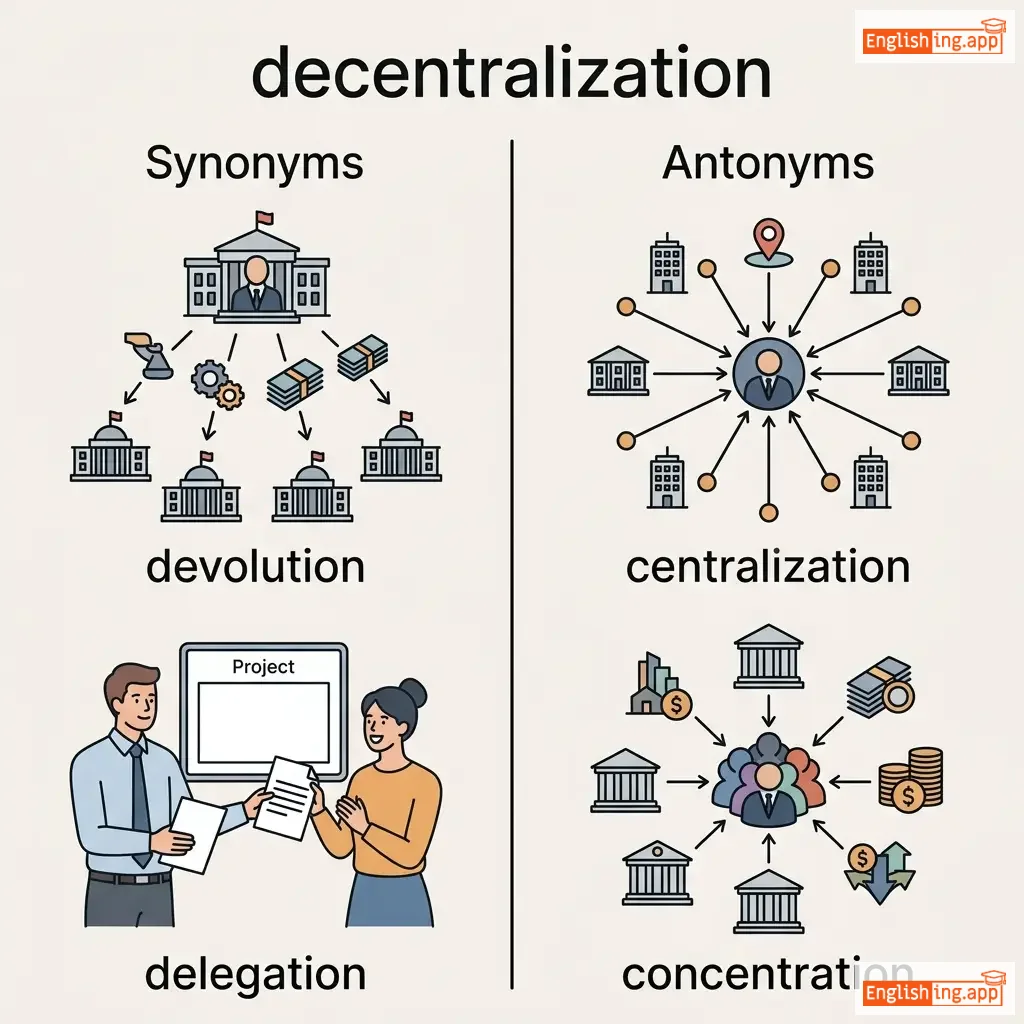
devolution, delegation, distribution, dispersion
••••••
|
centralization, concentration, consolidation
••••••
|
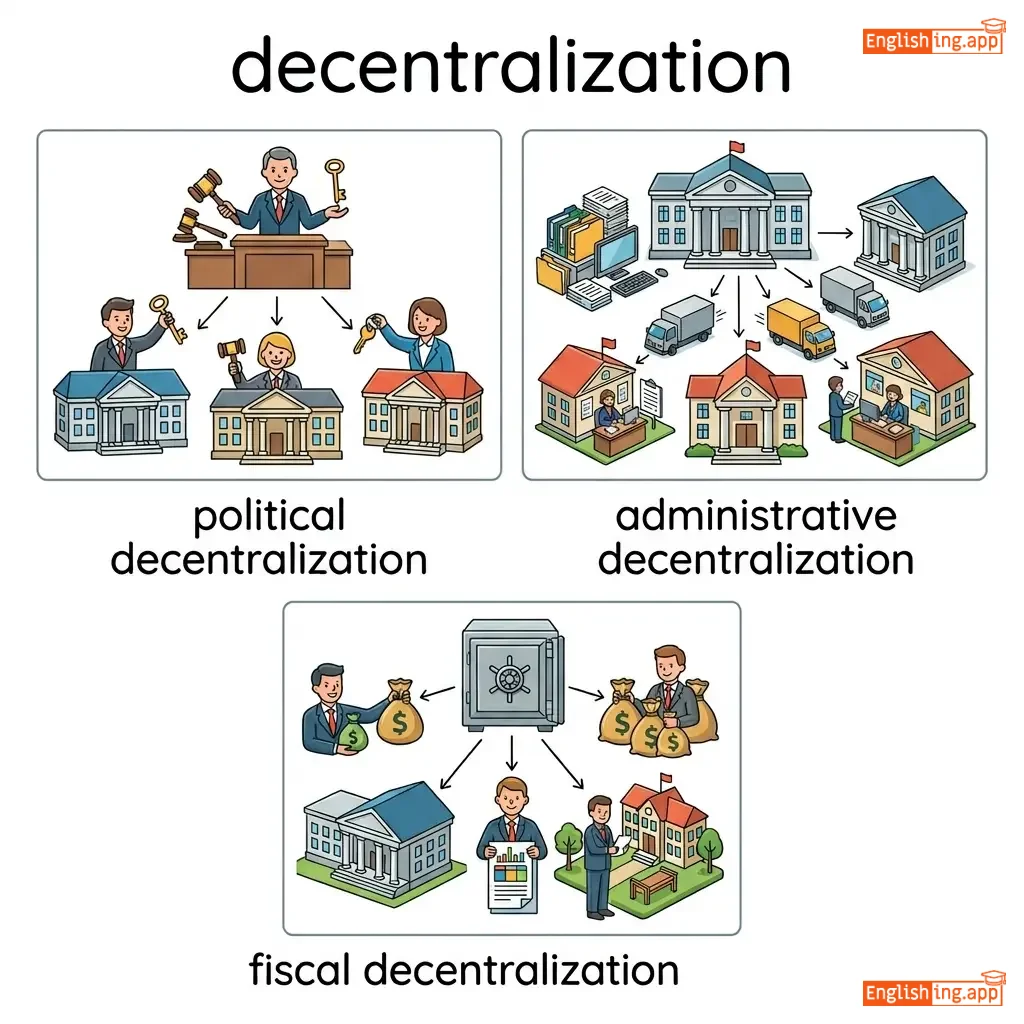
political decentralization, administrative decentralization, fiscal decentralization
••••••
|
去中心化: 政府的权力分散到地方。
••••••
|
|
#266
🛡️
|
/dɪˈfens/
noun
(迪芬斯)
••••••
|
- •••••• |
防御; 保护
fangyu, baohu
••••••
|
the action of defending from or resisting attack; protection or support
••••••
|
The country strengthened its defence system against potential threats. |
该国加强了其防御系统,以应对潜在威胁。
Gai guo jiaqiang le qi fangyu xitong, yi yingdui qianzai weixie.
••••••
|
protection, guard, shield, security
••••••
|
attack, offense, aggression, assault
••••••
|
national defence, self defence, strong defence
••••••
|
No •••••• |
|
#267
🕵️
|
/dɪˈsep.ʃən/
noun
(迪塞普肖)
••••••
|
- •••••• |
欺骗
qīpiàn
••••••
|
the action of deceiving someone; the state of being deceived
••••••
|
The magician's deception amazed the audience with seemingly impossible tricks. |
魔术师的欺骗让观众对看似不可能的魔法惊讶不已。
Móshù shī de qīpiàn ràng guānzhòng duì kànshì bù kěnéng de mófǎ jīngyà bùyǐ.
••••••
|
fraud, trickery, illusion, misleading
••••••
|
truth, honesty, reality, transparency
••••••
|
deliberate deception, clever deception, visual deception
••••••
|
记住魔术师和他的欺骗技巧
••••••
|
|
#268
⚖️
|
/dɪˈfen.dənt/
noun
(被告)
••••••
|
- •••••• |
被告
beigao
••••••
|
an individual, company, or institution sued or accused in a court of law
••••••
|
The defendant pleaded not guilty to all charges brought against him. |
被告对所有对他提出的指控表示不认罪。
Beigao dui suoyou dui ta tichu de zhigong biaoshi bu renzui.
••••••
|
accused, respondent, litigant
••••••
|
plaintiff, prosecutor, accuser
••••••
|
criminal defendant, civil defendant, defendant's rights
••••••
|
被告在法庭上为自己辩护.
••••••
|
|
#269
⚖️
|
/dɪˈsɪʒ.ən/
noun
(决策)
••••••
|
- •••••• |
决定
jueding
••••••
|
a conclusion or resolution reached after consideration; the action of deciding
••••••
|
Making the right decision required careful analysis of all available options. |
做出正确的决定需要对所有可用选项进行仔细分析。
zuò chū zhèngquè de juédìng xūyào duì suǒyǒu kěyòng xuǎnxiàng jìnxíng zǐxì fēnxī.
••••••
|
choice, determination, judgment, resolution
••••••
|
indecision, hesitation, uncertainty, doubt
••••••
|
make decision, tough decision, final decision
••••••
|
决定决定你的未来,每一个选择都很重要。
••••••
|
|
#270
📉
|
/dɪˈfɪʃ.ən.si/
noun
(dɪˈfɪʃənsi)
••••••
|
- •••••• |
缺乏; 不足; 不够
quefa, buzhu, bu gou
••••••
|
a lack or shortage of something; inadequacy or insufficiency
••••••
|
The doctor diagnosed a vitamin D deficiency in the patient's blood test. |
医生在患者的血液测试中诊断出维生素D缺乏。
Yisheng zai huanzhe de xueye ceshi zhong zhenduan chu weishengsu D quefa.
••••••
|
shortage, lack, inadequacy, insufficiency
••••••
|
abundance, excess, sufficiency, surplus
••••••
|
vitamin deficiency, immune deficiency, nutritional deficiency
••••••
|
Deficiency: Lack of something essential, like Vitamin D!
••••••
|
|
#271
📜
|
/ˌdek.ləˈreɪ.ʃən/
noun
(di-kle-rei-shun)
••••••
|
- •••••• |
声明; 宣告; 公告
shengming, xuangao, gonggao
••••••
|
a formal or explicit statement or announcement; an official proclamation
••••••
|
The president's declaration of independence marked a historic moment for the nation.
总统的独立宣言标志着国家历史性的时刻。
••••••
|
总统的独立宣言标志着国家历史性的时刻。
Zongtong de duli xuanyan biaozhizhe guojia lishi xing de shike.
••••••
|
announcement, proclamation, statement, pronouncement
••••••
|
concealment, silence, secrecy, denial
••••••
|
formal declaration, public declaration, declaration of war
••••••
|
在中文中,声明常用于正式或官方的场合。
••••••
|
|
#272
💸
|
/ˈdef.ə.sɪt/
noun
(赤字)
••••••
|
- •••••• |
赤字; 不足
chìzì, bùzú
••••••
|
the amount by which something is too small; a shortfall or lack
••••••
|
The government faced a budget deficit of millions due to increased spending.
由于支出的增加,政府面临着数百万的预算赤字。
••••••
|
由于支出的增加,政府面临着数百万的预算赤字。
Yóuyú zhīchū de zēngjiā, zhèngfǔ miànlínzhe shù bǎi wàn de yùsuàn chìzì.
••••••
|
shortfall, shortage, gap, debt
••••••
|
surplus, excess, profit, abundance
••••••
|
budget deficit, trade deficit, attention deficit
••••••
|
赤字 = 不足或缺少的金额
••••••
|
|
#273
📉
|
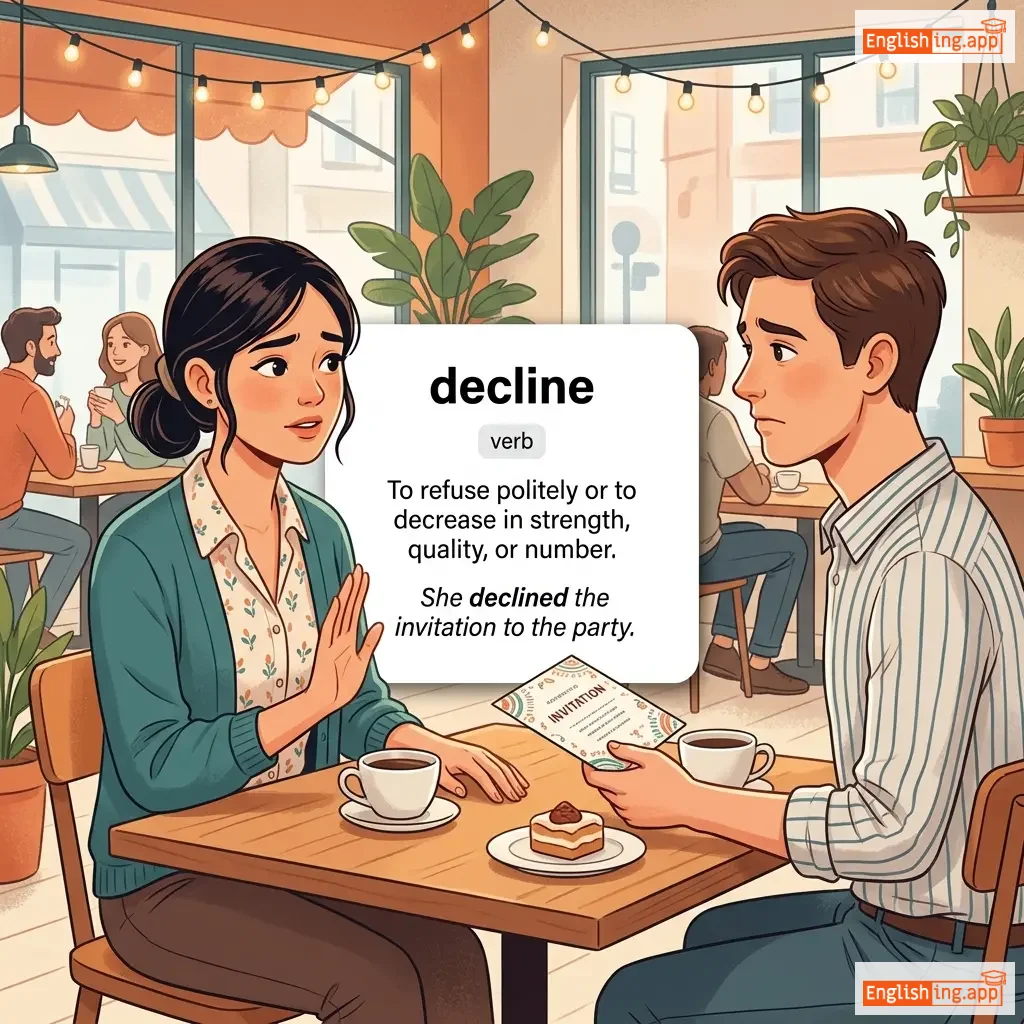
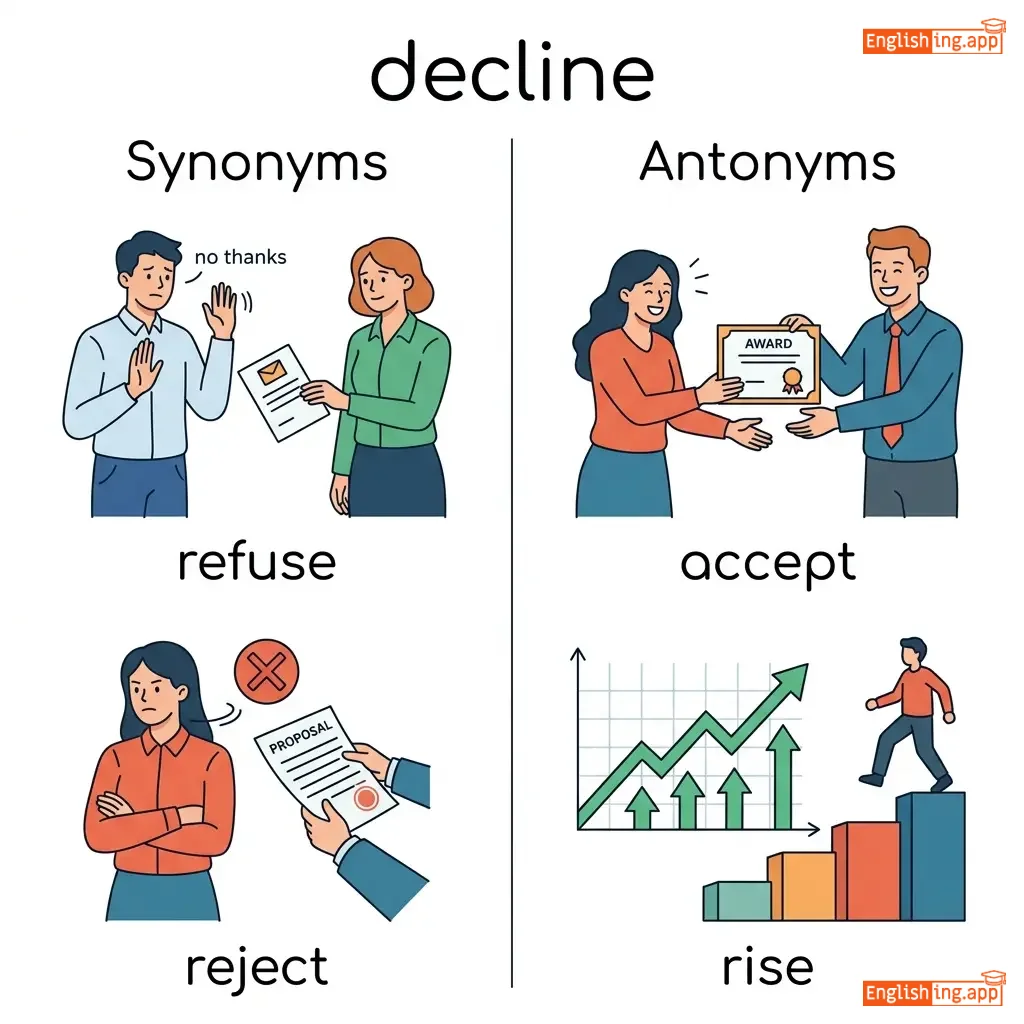
/dɪˈklaɪn/
noun
(迪克莱恩)
••••••
|
|
衰退; 恶化; 拒绝
shuaitui; ehua; jujue
••••••
|
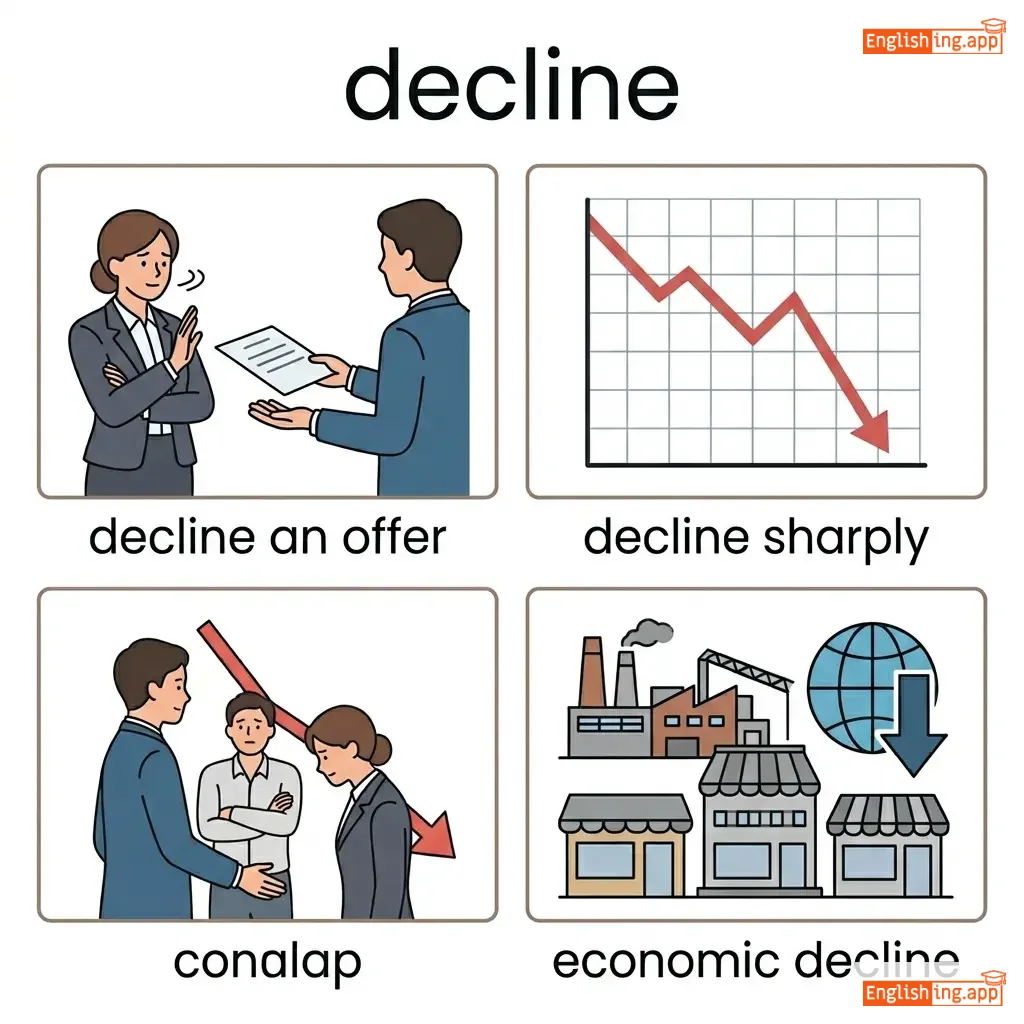
a gradual and continuous loss of strength, numbers, or quality; deterioration
••••••
|
The decline in air quality became noticeable after the factory opened nearby. |
空气质量的衰退在工厂附近开业后变得显而易见。
kongqi zhiliang de shuaitui zai gongchang fujin kaiye hou biande xianeryijian.
••••••
|
deterioration, decrease, reduction, downfall
••••••
|
improvement, increase, growth, rise
••••••
|
economic decline, gradual decline, steep decline
••••••
|
No •••••• |
|
#274
🦴
|
/dɪˈfɔː.mə.ti/
noun
(dɪˈfɔː.mə.ti)
••••••
|
- •••••• |
畸形; 身体畸形
jīxíng; shēntǐ jīxíng
••••••
|
a distorted or unnatural shape or form; physical malformation
••••••
|
The accident caused a permanent deformity in his left hand. |
事故导致他左手出现了永久性畸形。
Shìgù dǎozhì tā zuǒ shǒu chūxiànle yǒngjiǔ xìng jīxíng.
••••••
|
malformation, distortion, disfigurement, abnormality
••••••
|
perfection, normality, symmetry, beauty
••••••
|
birth deformity, spinal deformity, facial deformity
••••••
|
畸形是指形态的扭曲或不正常,类似身体上的伤害或缺陷。
••••••
|
|
#275
🎨
|
/ˌdek.əˈreɪ.ʃən/
noun
(dèkòulāshēn)
••••••
|
- •••••• |
装饰; 装饰品; 奖项;
zhuangshi, zhuangshipin, jiangxiang
••••••
|
the process or art of decorating something; ornamental items used to beautify
••••••
|
The Christmas decoration transformed the ordinary room into a festive wonderland.
圣诞装饰把普通房间变成了一个节日奇境。
••••••
|
圣诞装饰把普通房间变成了一个节日奇境。
Shèngdàn zhuāngshì bǎ pǔtōng fángjiān biànchéngle yīgè jiérì qíjìng.
••••••
|
ornamentation, embellishment, adornment, beautification
••••••
|
simplicity, plainness, bareness, austerity
••••••
|
home decoration, holiday decoration, interior decoration
••••••
|
就像圣诞装饰让房间变得更美,装饰可以提升任何地方的美感。
••••••
|
|
#276
📉
|
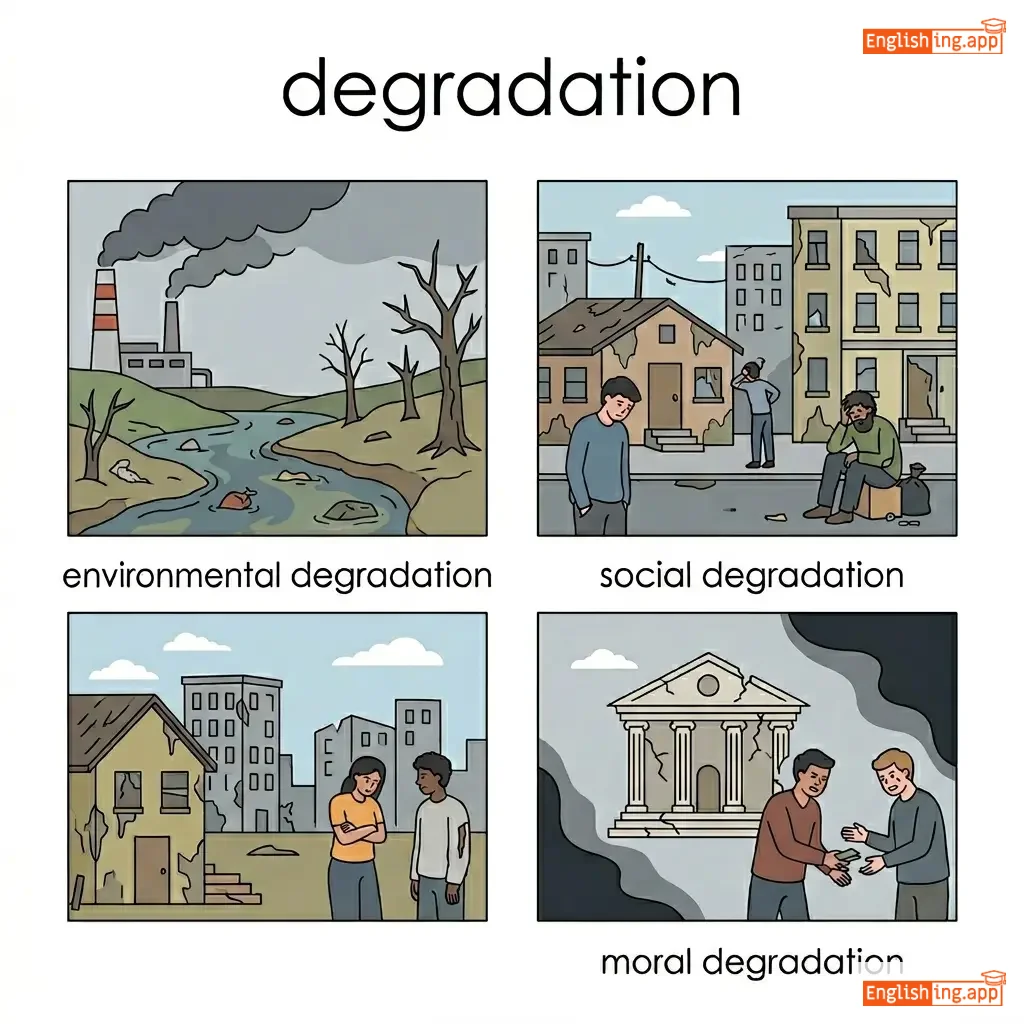
/ˌdeɡ.rəˈdeɪ.ʃən/
noun
(dɪˈɡreɪˈdeɪʃən)
••••••
|
|
退化
tuihua
••••••
|
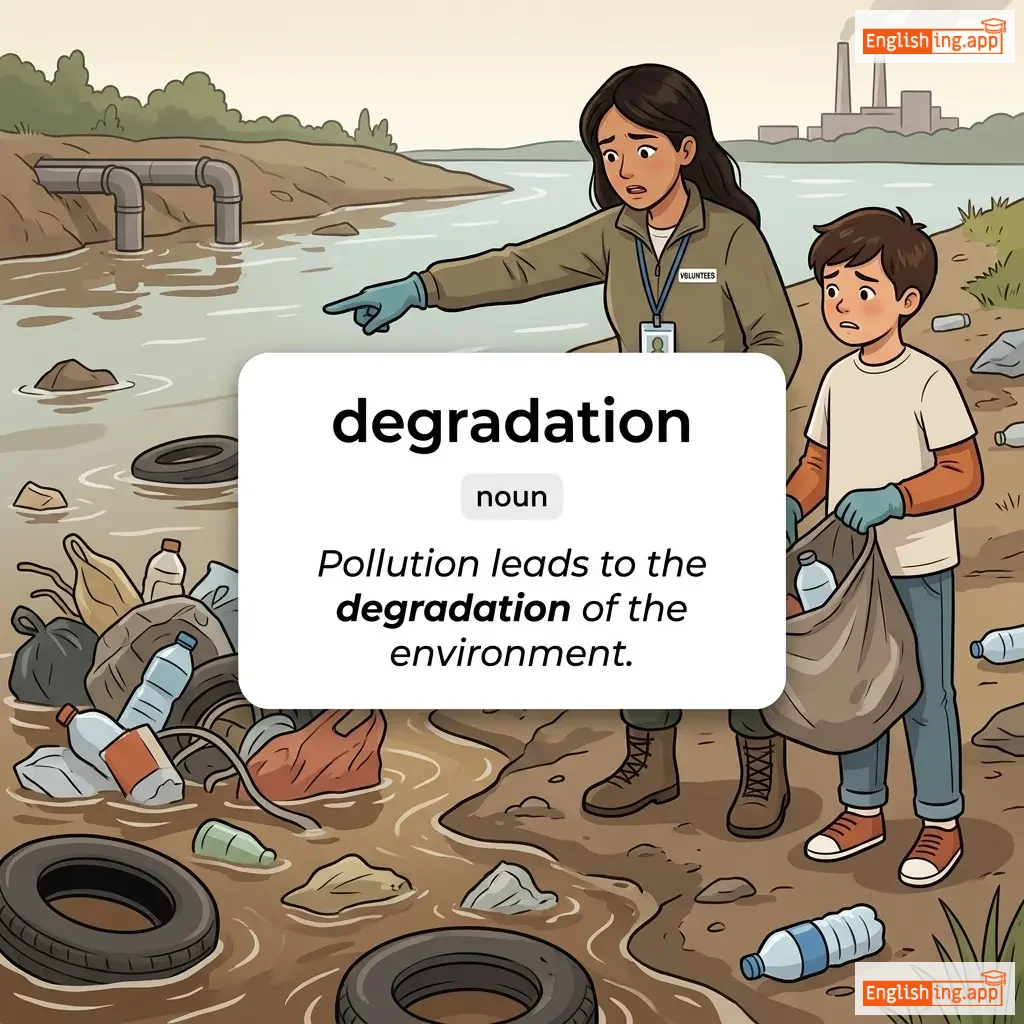
the condition or process of deteriorating; reduction to a lower or worse state
••••••
|
Environmental degradation threatens the survival of many species. |
环境退化威胁许多物种的生存。
huánjìng tuìhuà wēixié xǔduō wùzhǒng de shēngcún.
••••••
|
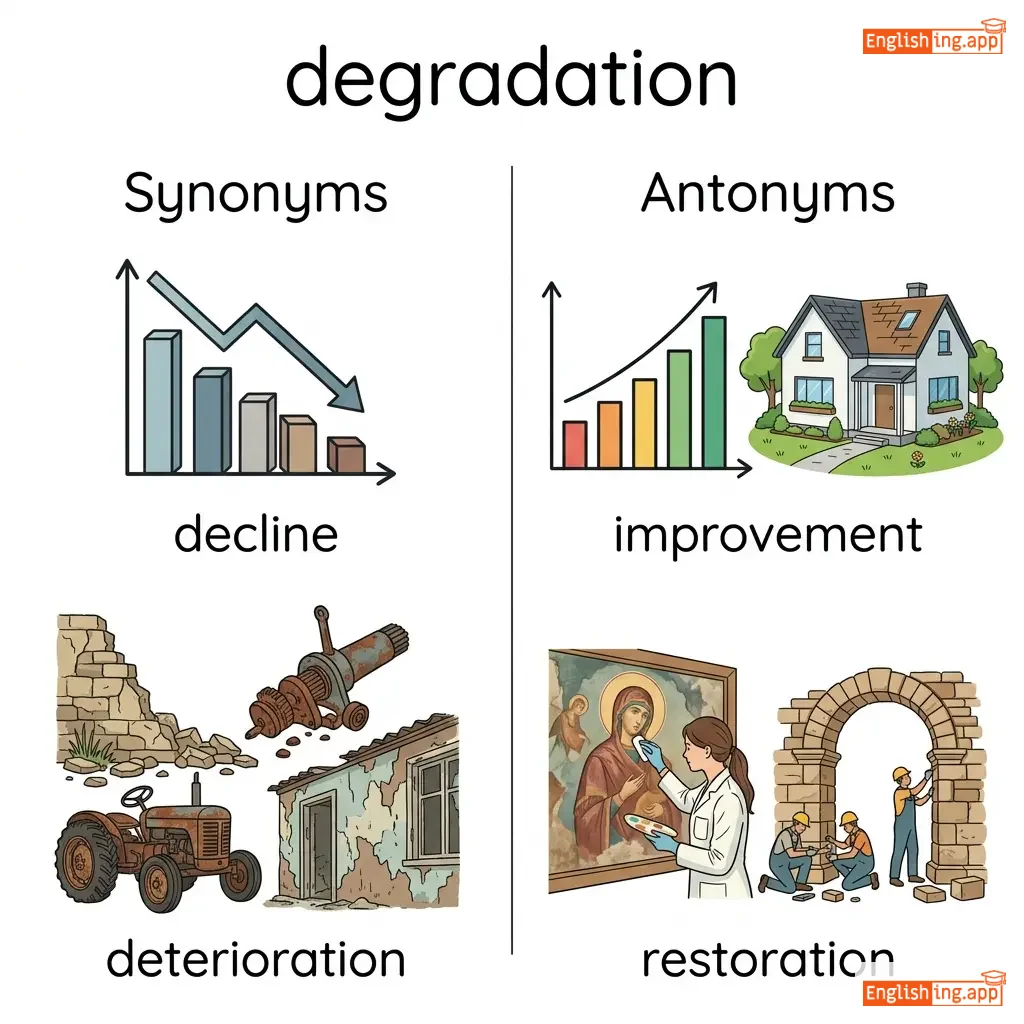
deterioration, decline, degeneration, erosion
••••••
|
improvement, enhancement, restoration, upgrade
••••••
|
environmental degradation, moral degradation, soil degradation
••••••
|
退化 (恶化) 和 degradation (降到更低)
••••••
|
|
#277
🎩
|
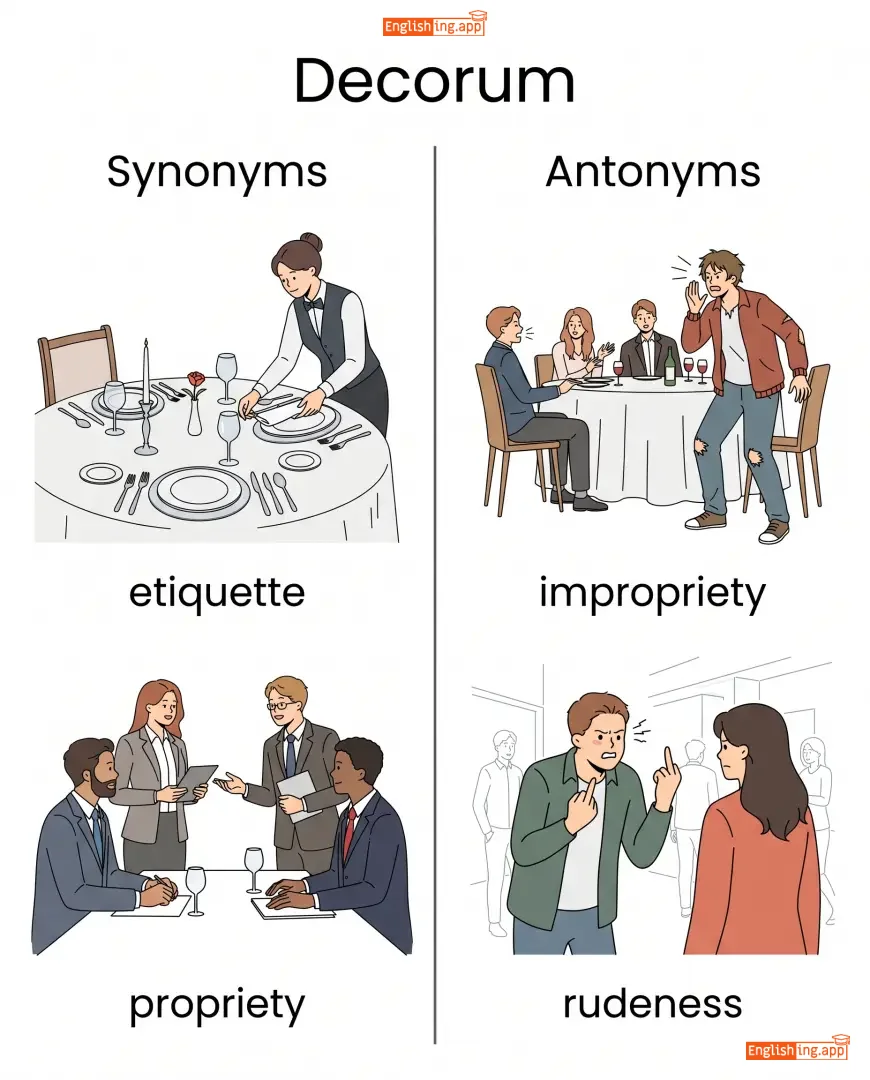
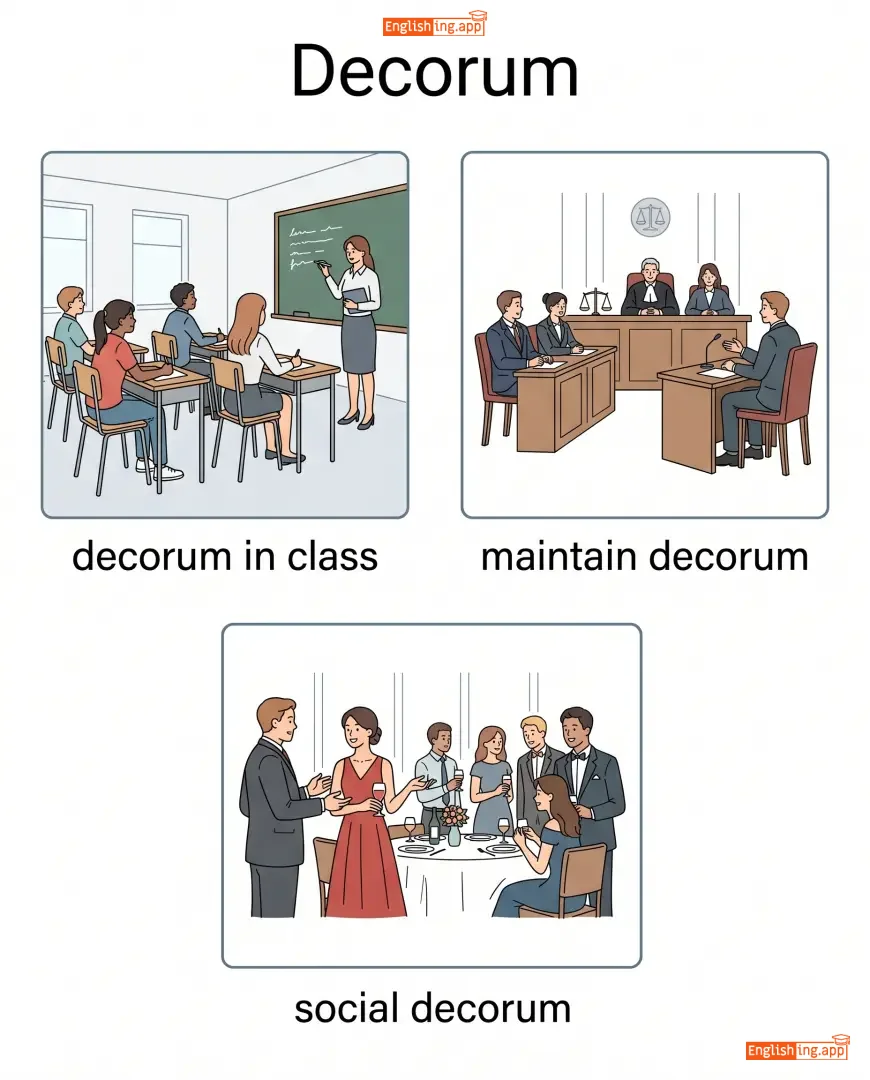
/dɪˈkɔː.rəm/
noun
(德科鲁姆)
••••••
|
|
礼仪; 体面; 尊严
lǐyí, tǐmiàn, zūnyán
••••••
|
behavior in keeping with good taste and propriety; dignified and appropriate conduct
••••••
|
The diplomat maintained perfect decorum throughout the heated negotiations. |
这位外交官在激烈的谈判中保持了完美的礼仪。
Zhè wèi wàijiāo guān zài jīliè de tánpàn zhōng bǎochíle wánměi de lǐyí.
••••••
|
propriety, etiquette, dignity, respectability
••••••
|
impropriety, indecorum, rudeness, misconduct
••••••
|
maintain decorum, breach of decorum, social decorum
••••••
|
想象在正式场合保持'体面'和'尊严',这就是'礼仪'的意义。
••••••
|
|
#278
👥
|
/ˈdel.ɪ.ɡət/
noun
(dɛlɪɡɛt)
••••••
|
- •••••• |
代表
dàibiǎo
••••••
|
a person chosen or elected to act for or represent others; representative
••••••
|
Each country sent a delegate to participate in the international conference.
每个国家派遣了一个代表参加国际会议。
••••••
|
每个国家派遣了一个代表参加国际会议。
Měi gè guójiā pāi qiǎnle yīgè dàibiǎo cānjiā guójì huìyì.
••••••
|
representative, envoy, agent, ambassador
••••••
|
principal, employer, authority
••••••
|
union delegate, conference delegate, trade delegate
••••••
|
代表(dàibiǎo)就像是代表某个国家的人,代表他人的权利。
••••••
|
|
#279
⚖️
|
/dɪˈkriː/
noun
(dɪˈkriː)
••••••
|
- •••••• |
法令
fǎlìng
••••••
|
an official order issued by a legal authority; a judicial decision or edict
••••••
|
The king issued a decree that all citizens must pay additional taxes.
国王发布了一个法令,要求所有公民支付额外税款。
••••••
|
国王发布了一个法令,要求所有公民支付额外税款。
Guówáng fābùle yīgè fǎlìng, yāoqiú suǒyǒu gōngmín zhīfù éwài shuìkuǎn.
••••••
|
edict, order, ruling, mandate
••••••
|
suggestion, request, appeal, recommendation
••••••
|
royal decree, court decree, government decree
••••••
|
国王发布的法令要求所有遵守。
••••••
|
|
#280
🍽️
|
/ˈdel.ɪ.kə.si/
noun
(delikasi)
••••••
|
- •••••• |
美味佳肴; 一种精致或昂贵的食物;
měiwèi jiāyáo; yī zhǒng jīngzhì huò ángguì de shíwù
••••••
|
fineness of texture or structure; a choice or expensive food; sensitivity in handling
••••••
|
The chef prepared a local delicacy that was famous throughout the region. |
厨师准备了一道当地的美味佳肴,这道菜在整个地区都很有名。
chúshī zhǔnbèile yī dào dāngdì de měiwèi jiāyáo, zhè dào cài zài zhěnggè dìqū dōu hěn yǒumíng.
••••••
|
refinement, subtlety, specialty, treat
••••••
|
coarseness, roughness, common food
••••••
|
local delicacy, rare delicacy, culinary delicacy
••••••
|
In Chinese, delicacy is about fine food (‘美味佳肴’), like preparing a gourmet meal.
••••••
|
Vocabulary Quiz
Test your vocabulary by matching words with their translations or meanings.
Login to take the quiz
Comments (0)
Share your thoughts and join the discussion.
Join the discussion by logging in
Login to CommentNo comments yet
Be the first to share your thoughts!