



Swipe left or right, or use the buttons. Tap image to zoom.
例句翻译
单词
Lesson 11Lesson 11 - 遮罩切换
|
表情符号
|
单词 | Images | 翻译 | 含义 | 例句 | 例句翻译 | 同义词 | 反义词 | 搭配词 | 助记符 |
|---|---|---|---|---|---|---|---|---|---|---|
|
#201
🤰
|
/kənˈsep.ʃən/
noun
(kənˈsɛpʃən)
••••••
|
- •••••• |
构思; 想法; 受精
gousi, xiangfa, shoujing
••••••
|
the forming of an idea or plan; the fertilization of an ovum by a sperm; the action of conceiving
••••••
|
The conception of this innovative project took several months of brainstorming.
这个创新项目的构思花费了几个月的头脑风暴。
••••••
|
这个创新项目的构思花费了几个月的头脑风暴。
Zhege chuangxin xiangmu de gousi huafei le ji ge yue de tounao fengbao.
••••••
|
formation, creation, beginning, fertilization
••••••
|
completion, end, destruction
••••••
|
conception of an idea, moment of conception, creative conception
••••••
|
构思 (gousi): 就像在头脑中产生一个新的想法。
••••••
|
|
#202
⚖️
|
/kəmˈpær.ɪ.sən/
noun
(kəmˈpɛrəsən)
••••••
|
- •••••• |
比较
bijiao
••••••
|
the act of examining the similarities and differences between two or more things
••••••
|
The teacher made a comparison between the two poems to show their different styles.
老师通过比较两首诗的不同风格来展示它们的差异。
••••••
|
老师通过比较两首诗的不同风格来展示它们的差异。
Laoshi tongguo bijiao liang shou shi de butong fengge lai zhanshi tamen de chayi.
••••••
|
contrast, examination, analysis, evaluation
••••••
|
similarity, uniformity, likeness
••••••
|
make a comparison, comparison between, in comparison
••••••
|
比较帮助我们看到诗歌风格的不同。
••••••
|
|
#203
❤️🤗
|
/kəmˈpæʃ.ən/
noun
(kěnpàixīn)
••••••
|
- •••••• |
同情
tongqing
••••••
|
sympathetic concern for the sufferings or misfortunes of others; deep awareness of suffering with a desire to help
••••••
|
She showed great compassion towards the homeless children by providing them food and shelter. |
她通过为无家可归的孩子提供食物和住所,表现出极大的同情。
Ta tongguo wei wujia keguide haizi tigong shiwu he zhuce, biaoxianshi chu jidada de tongqing.
••••••
|
empathy, sympathy, mercy, kindness
••••••
|
cruelty, indifference, heartlessness, callousness
••••••
|
show compassion, deep compassion, compassion for others
••••••
|
同情是当你看到他人痛苦并想要伸出援手时的感情。
••••••
|
|
#204
🔚
|
/kənˈkluː.ʒən/
noun
(kənˈklʊʒən)
••••••
|
- •••••• |
结论; 结尾; 决定
jie lun, jie wei, jue ding
••••••
|
the end or finish of an event, process, or text; a judgment or decision reached by reasoning
••••••
|
The conclusion of the research paper summarized all the important findings.
研究报告的结论总结了所有重要的发现。
••••••
|
研究报告的结论总结了所有重要的发现。
Yánjiū bàogào de jiélùn zǒngjiéle suǒyǒu zhòngyào de fāxiàn.
••••••
|
ending, finale, outcome, decision
••••••
|
beginning, introduction, start, opening
••••••
|
draw a conclusion, in conclusion, logical conclusion
••••••
|
结论 - 在研究结束时总结出最终的判断。
••••••
|
|
#205
💰
|
/ˌkɑm.pənˈseɪ.ʃən/
noun
(kəmˌpɛnˈseɪʃən)
••••••
|
- •••••• |
补偿; 赔偿
buchang, peichang
••••••
|
something given or received as an equivalent for services, debt, loss, injury, or suffering; payment or reward
••••••
|
The company provided financial compensation to the workers injured in the accident. |
公司向在事故中受伤的工人提供了经济补偿。
Gongsi xiang zai shigu zhong shoushang de gongren tigongle jingji buchang.
••••••
|
payment, reimbursement, remuneration, reparation
••••••
|
penalty, punishment, loss, debt
••••••
|
financial compensation, fair compensation, compensation package
••••••
|
In Chinese, '补偿' means compensation, similar to the idea of reimbursing for loss.
••••••
|
|
#206
🎉
|
/kənˌɡrætʃ.əˈleɪ.ʃənz/
noun
(kənˌɡrætʃ.əˈleɪ.ʃənz)
••••••
|
- •••••• |
祝贺
zhùhè
••••••
|
words expressing praise for an achievement or good wishes on a special occasion
••••••
|
Congratulations on your promotion! You really deserved this success. |
恭喜晋升!你真的值得这次成功。
Gōngxǐ jìnshēng! Nǐ zhēn de zhídé zhè cì chénggōng.
••••••
|
felicitations, compliments, praise, well wishes
••••••
|
condolences, criticism, blame
••••••
|
heartfelt congratulations, warm congratulations, congratulations are in order
••••••
|
祝贺可以和庆祝成功的时刻关联,记住加油祝福!
••••••
|
|
#207
🏆
|
/ˌkɑm.pəˈtɪʃ.ən/
noun
(kəm-pə-tī-shən)
••••••
|
|
竞赛
jìngsài
••••••
|
the activity or condition of striving to gain or win something by defeating or establishing superiority over others
••••••
|
The swimming competition attracted athletes from all over the country.
游泳比赛吸引了来自全国各地的运动员。
••••••
|
游泳比赛吸引了来自全国各地的运动员。
Yóuyǒng bǐsài xīyǐnle láizì quánguó gèdì de yùndòngyuán.
••••••
|
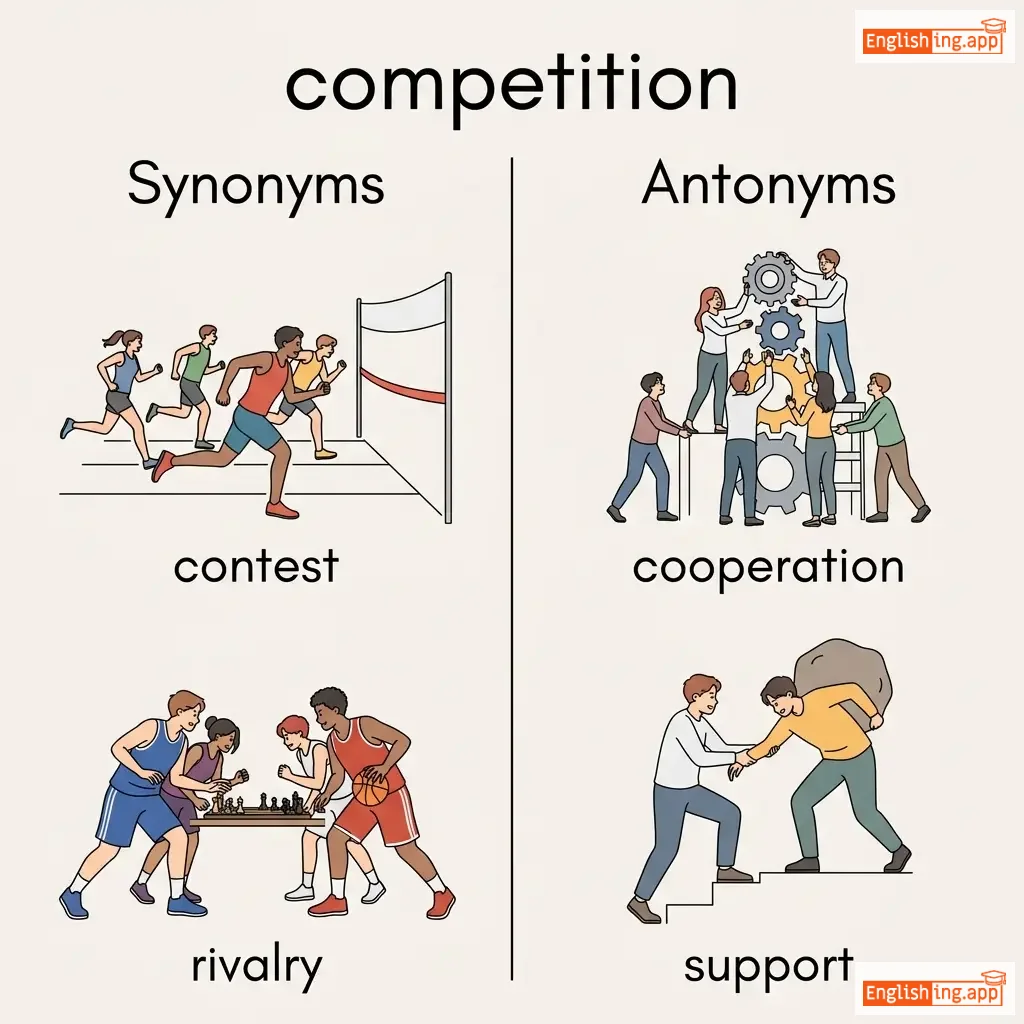
contest, rivalry, tournament, race
••••••
|
cooperation, collaboration, partnership
••••••
|
fierce competition, healthy competition, international competition
••••••
|
记住,在比赛中,所有的竞争者都渴望获得第一。
••••••
|
|
#208
💭
|
/ˈkɑn.ʃəns/
noun
(kāng-xiàn-sī)
••••••
|
- •••••• |
良心, 道德, 内心的声音
liángxīn, dàodé, nèixīn de shēngyīn
••••••
|
an inner feeling or voice viewed as acting as a guide to the rightness or wrongness of one's behavior
••••••
|
His conscience prevented him from lying to his parents about his grades. |
他的良心阻止他对父母撒谎,关于他的成绩。
tā de liángxīn zǔzhǐ tā duì fùmǔ sāhuǎng, guānyú tā de chéngjī.
••••••
|
moral sense, ethics, scruples, inner voice
••••••
|
amorality, unscrupulousness, immorality
••••••
|
clear conscience, guilty conscience, matter of conscience
••••••
|
良心是你判断行为是否正确的内心声音。
••••••
|
|
#209
😊
|
/kəmˈplek.ʃən/
noun
(kɑmplɛkʃən)
••••••
|
- •••••• |
肤色
fuse
••••••
|
the natural color, texture, and appearance of a person's skin, especially on the face
••••••
|
Her fair complexion glowed beautifully in the morning sunlight.
她的皮肤在早晨的阳光下美丽地发光。
••••••
|
她的肤色在早晨的阳光下美丽地发光。
Tā de fūsè zài zǎo chén de yángguāng xià měilì de fā guāng.
••••••
|
skin color, skin tone, coloring, hue
••••••
|
- •••••• |
fair complexion, dark complexion, clear complexion
••••••
|
In Chinese, '肤' (skin) and '色' (color) together form '肤色', referring to skin tone.
••••••
|
|
#210
🧠
|
/ˈkɑn.ʃəs.nəs/
noun
(kāngshí'ěnèsī)
••••••
|
|
意识
yìshí
••••••
|
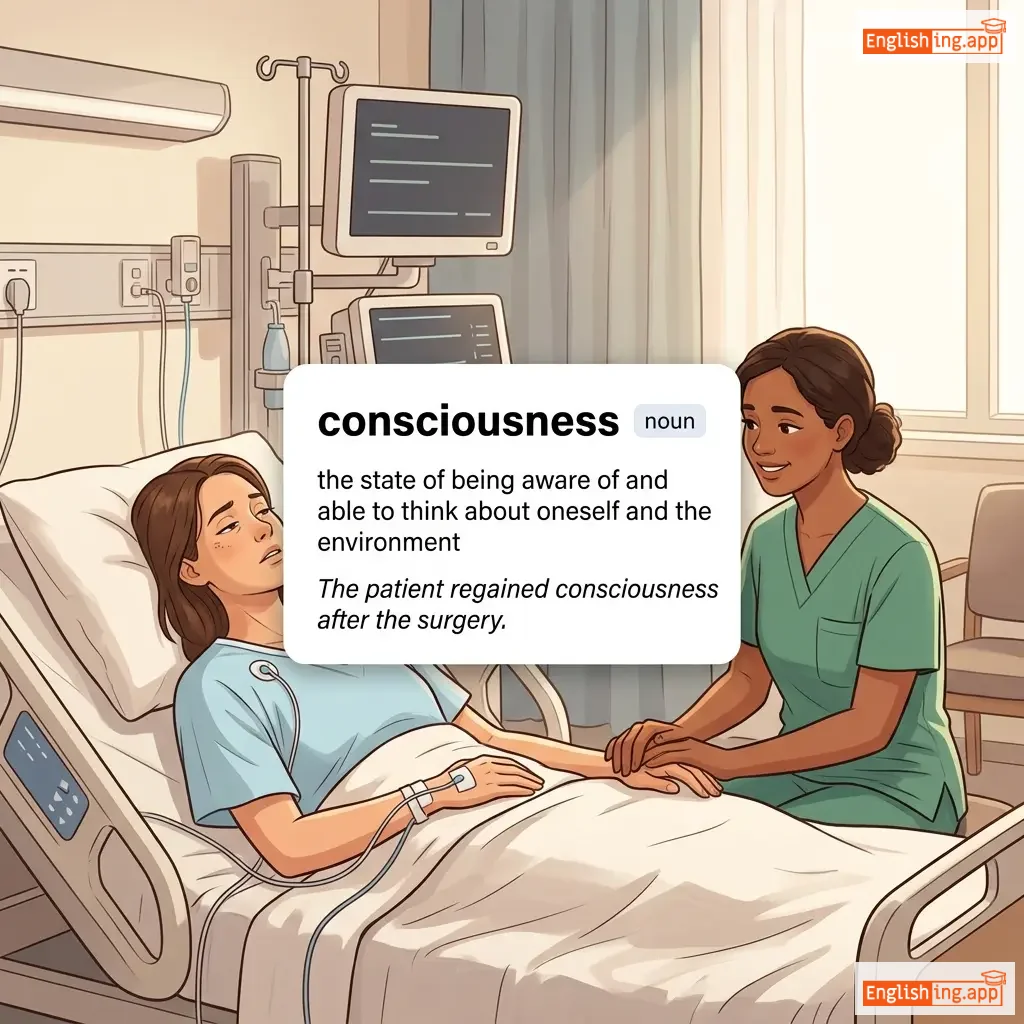
the state of being awake and aware of one's surroundings; the awareness or perception of something
••••••
|
After the accident, she slowly regained consciousness in the hospital.
事故发生后,她在医院慢慢恢复了意识。
••••••
|
事故发生后,她在医院慢慢恢复了意识。
Shìgù fāshēng hòu, tā zài yīyuàn màn man huīfù le yìshí.
••••••
|
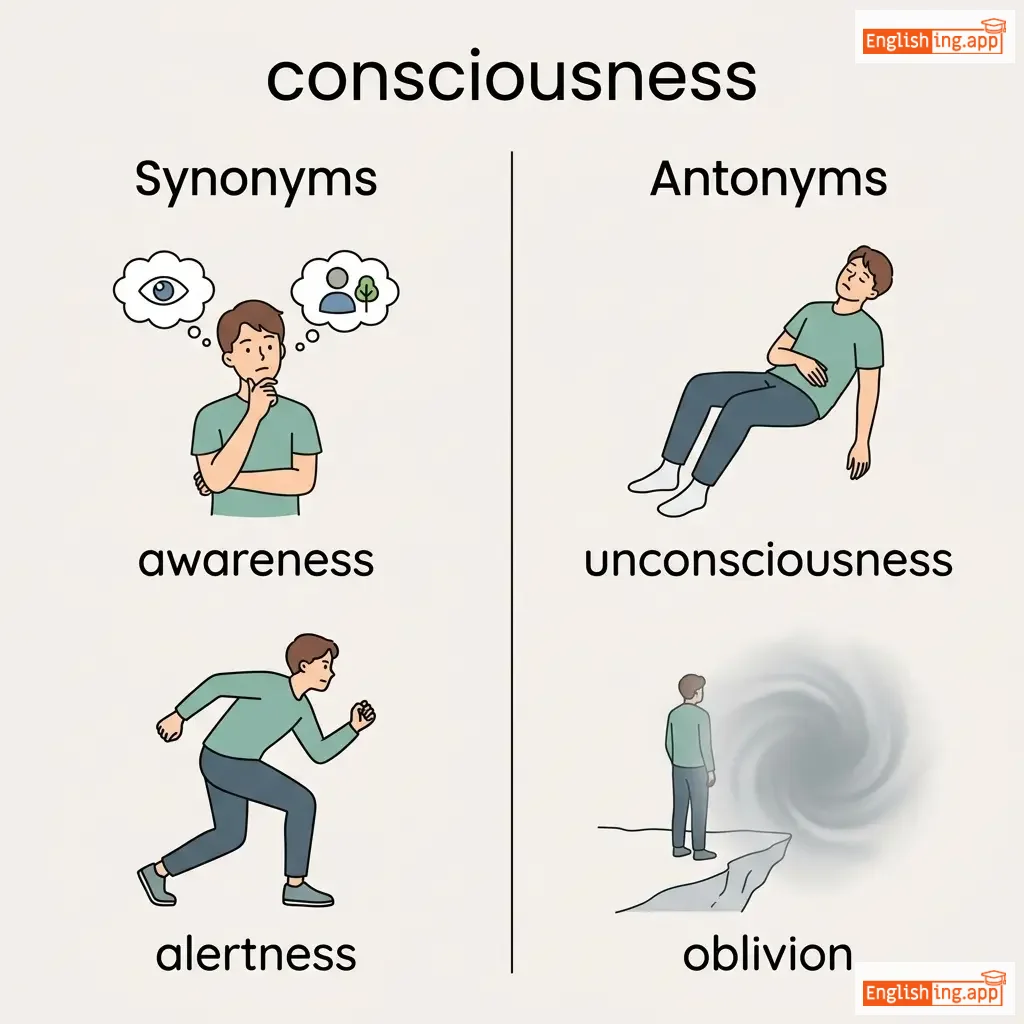
awareness, cognition, alertness, perception
••••••
|
unconsciousness, unawareness, oblivion
••••••
|
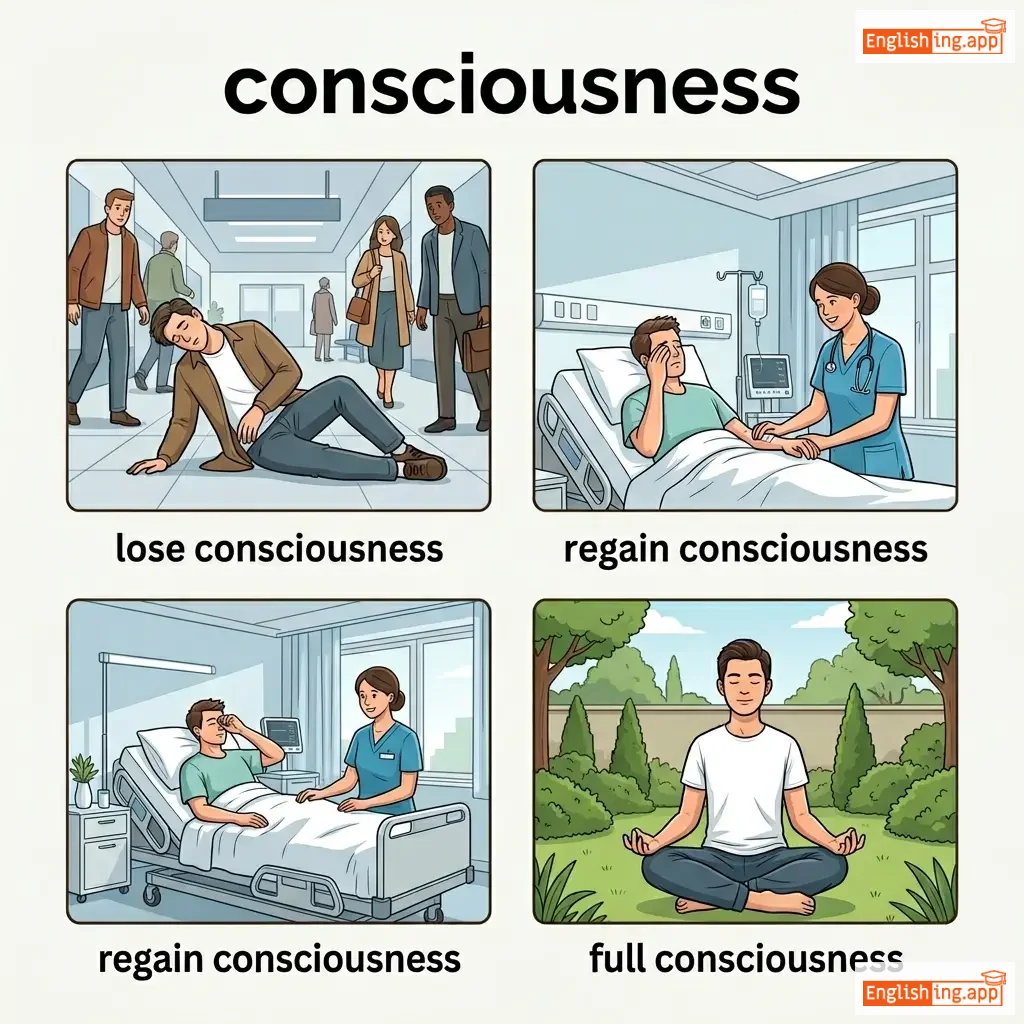
lose consciousness, stream of consciousness, environmental consciousness
••••••
|
'意识' in Chinese shows being aware, just like consciousness in English.
••••••
|
|
#211
⚠️
|
/kəmˈpʌl.ʃən/
noun
(强迫症)
••••••
|
- •••••• |
强迫; 强制;
qiangpo, qiangzhi
••••••
|
the action or state of forcing or being forced to do something; an irresistible urge to behave in a certain way
••••••
|
He felt a strong compulsion to check his phone every few minutes. |
他感到强烈的冲动,每隔几分钟就检查一次手机。
Tā gǎndào qiángliè de chōngdòng, měi gé jǐ fēnzhōng jiù jiǎnchá yīcì shǒujī.
••••••
|
obligation, force, coercion, urge
••••••
|
choice, freedom, option, voluntariness
••••••
|
under compulsion, strong compulsion, compulsive behavior
••••••
|
No •••••• |
|
#212
😌
|
/ˈkɑn.tent/
noun
(kāntènt)
••••••
|
- •••••• |
满足
mǎnzú
••••••
|
pleased and satisfied; the things that are contained in something; subject matter of a text
••••••
|
She felt content with her simple life in the countryside.
她对自己在乡村的简单生活感到满足。
••••••
|
她对自己在乡村的简单生活感到满足。
Tā duì zìjǐ zài xiāngcūn de jiǎndān shēnghuó gǎndào mǎnzú.
••••••
|
satisfied, material, substance, happy
••••••
|
dissatisfied, unhappy, discontented
••••••
|
content with life, website content, table of contents
••••••
|
Content = 满足 (Mǎnzú), 就像一个人对简单生活感到满足。
••••••
|
|
#213
💪
|
/ˈkɑn.fɪ.dəns/
noun
(kɑnfɪˈdɛns)
••••••
|
- •••••• |
自信
zìxìn
••••••
|
the feeling or belief that one can rely on someone or something; firm trust; self-assurance
••••••
|
She spoke with great confidence during the job interview. |
她在面试中表现出极大的自信。
Tā zài miànshì zhōng biǎoxiàn chū jí dà de zìxìn.
••••••
|
trust, faith, assurance, self-belief
••••••
|
doubt, uncertainty, insecurity, anxiety
••••••
|
have confidence, boost confidence, lose confidence
••••••
|
自信来自于对自己能力的坚信!
••••••
|
|
#214
⚡
|
/ˌkɑn.trəˈdɪk.ʃən/
noun
(矛盾)
••••••
|
- •••••• |
矛盾; 不一致
maodun, buyizhi
••••••
|
a combination of statements, ideas, or features which are opposed to one another; inconsistency
••••••
|
There was a clear contradiction between his words and his actions. |
他的言辞与行动之间存在明显的矛盾。
Tā de yáncí yǔ xíngdòng zhī jiān cúnzài míngxiǎn de máodùn.
••••••
|
inconsistency, conflict, opposition, paradox
••••••
|
consistency, agreement, harmony, accord
••••••
|
direct contradiction, logical contradiction, contradiction in terms
••••••
|
Contradiction in Chinese = '矛盾' = opposition of ideas
••••••
|
|
#215
⚔️
|
/ˌkɑn.frənˈteɪ.ʃən/
noun
(kɑnfrənˈteɪʃən)
••••••
|
- •••••• |
对抗
duìkàng
••••••
|
a hostile or argumentative meeting or situation between opposing parties; direct challenge or opposition
••••••
|
The confrontation between the two leaders ended without any agreement.
两位领导人之间的对抗以没有任何协议结束。
••••••
|
两位领导人之间的对抗以没有任何协议结束。
Liǎng wèi lǐngdǎo rén zhī jiān de duìkàng yǐ méiyǒu rènhé xiéyì jiéshù.
••••••
|
conflict, clash, dispute, face-off
••••••
|
agreement, cooperation, harmony, peace
••••••
|
avoid confrontation, violent confrontation, direct confrontation
••••••
|
对抗 - 两方在同一场合进行直接的对立和争论。
••••••
|
|
#216
⚫⚪
|
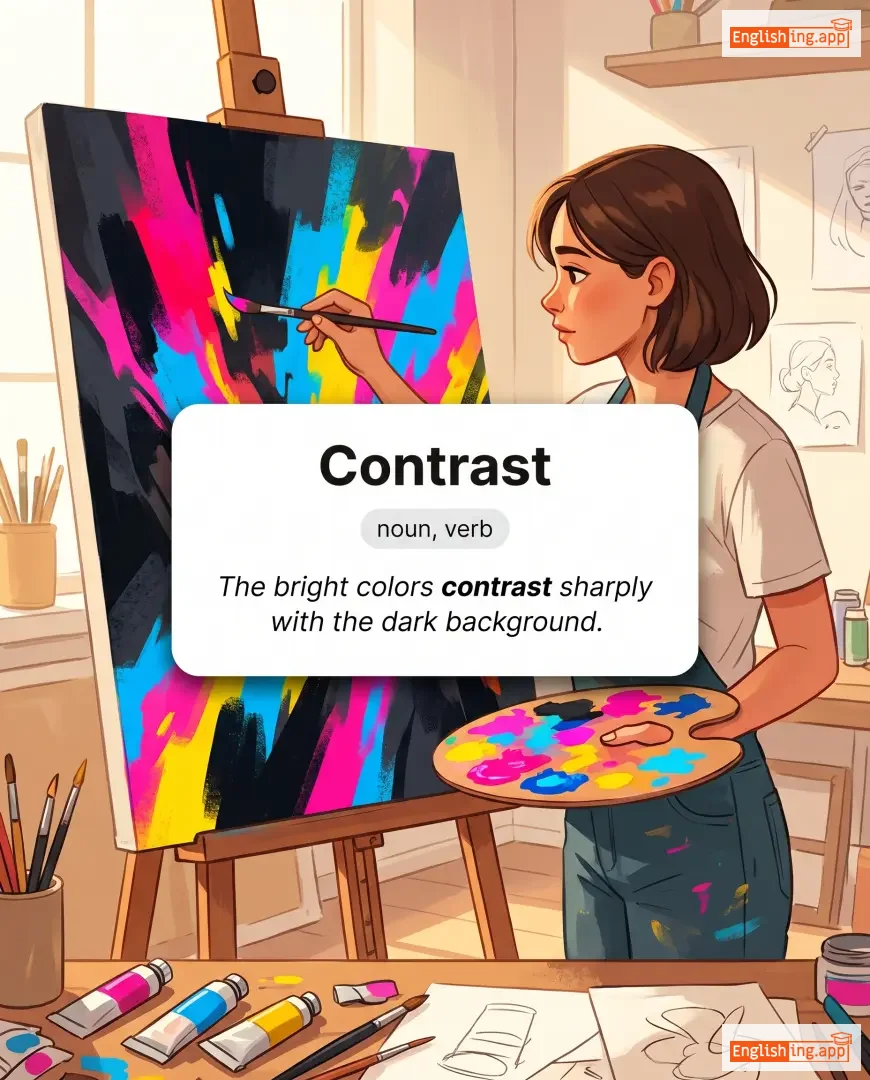
/ˈkɑn.træst/
noun
(kàngéruò sītè)
••••••
|
|
对比; 差异; 比较
duìbǐ, chāyì, bǐjiào
••••••
|
the state of being strikingly different from something else; comparison showing differences
••••••
|
The contrast between city life and rural life is quite remarkable.
城市生活和乡村生活之间的对比相当显著。
••••••
|
城市生活和乡村生活之间的对比相当显著。
Chéngshì shēnghuó hé xiāngcūn shēnghuó zhī jiān de duìbǐ xiāngdāng xiǎnzhù.
••••••
|
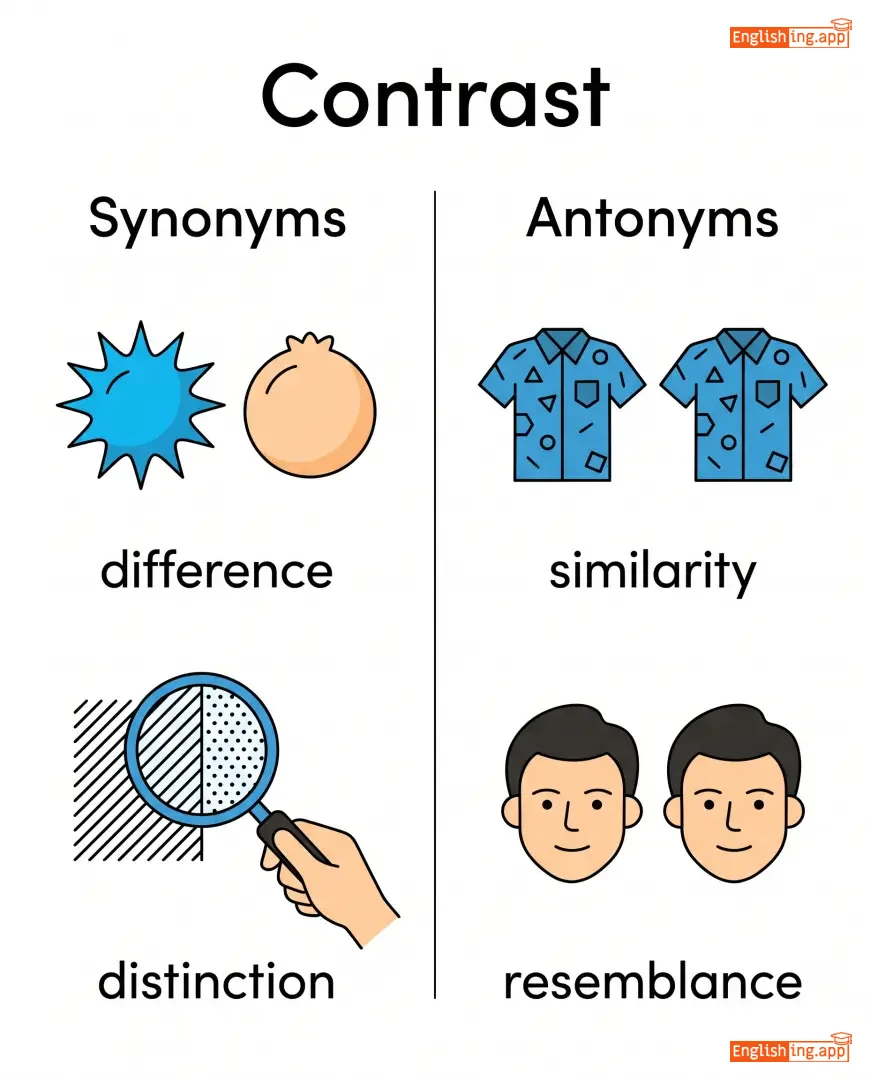
difference, distinction, comparison, opposition
••••••
|
similarity, likeness, resemblance, agreement
••••••
|
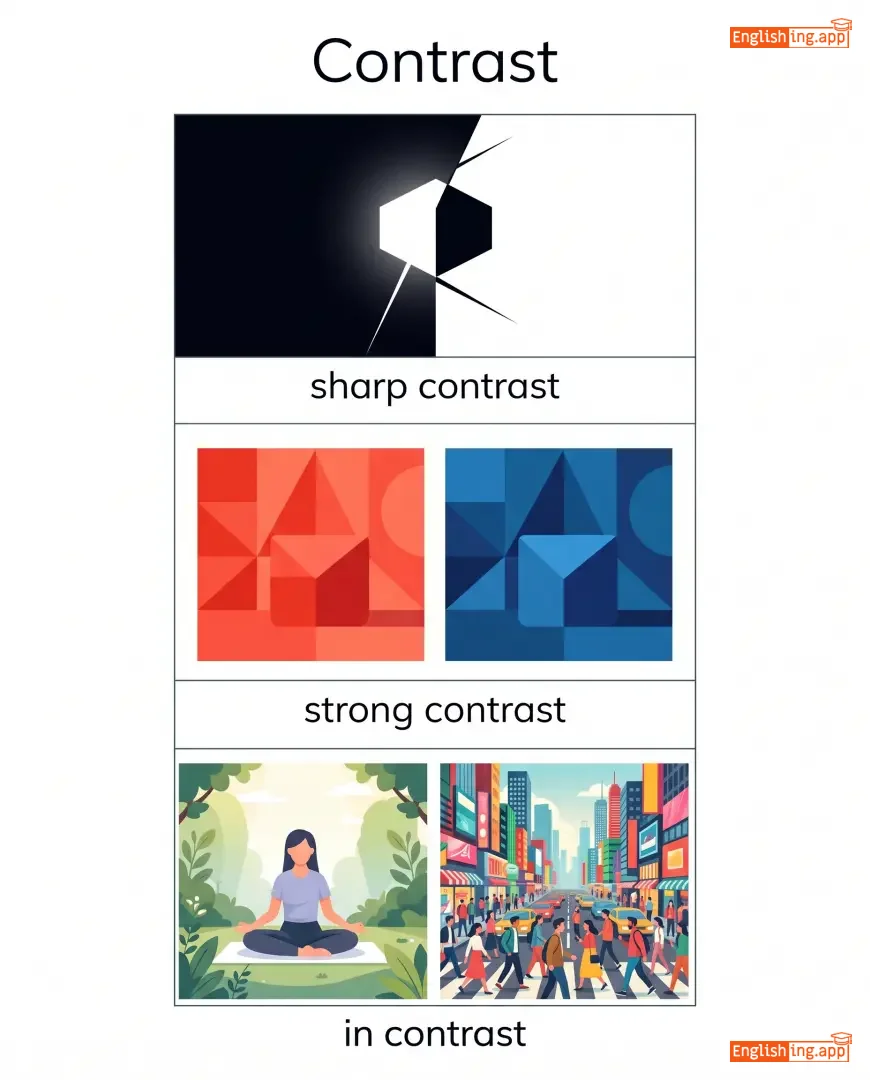
sharp contrast, striking contrast, in contrast to
••••••
|
Contrast 可以让你想象城市与乡村的鲜明差异。
••••••
|
|
#217
😵💫
|
/kənˈfjuː.ʒən/
noun
(混淆)
••••••
|
- •••••• |
混乱, 迷惑, 混淆
hunluan, miwo, hunxiao
••••••
|
lack of understanding; uncertainty; the state of being bewildered or unclear in one's mind
••••••
|
There was confusion about the meeting time, so half the team arrived late.
关于会议时间存在混淆,因此一半团队迟到了。
••••••
|
关于会议时间存在混淆,因此一半团队迟到了。
Guanyu huiyi shijian cunzai hunxiao, yinci yiban tuandui chidao le.
••••••
|
bewilderment, perplexity, disorder, chaos
••••••
|
clarity, understanding, certainty, order
••••••
|
cause confusion, avoid confusion, mental confusion
••••••
|
Confusion in Chinese = '混乱' (Hunluan) + '混淆' (Hunxiao) – imagine a team lost in a confused state.
••••••
|
|
#218
🗣️💥
|
/ˈkɑn.trəˌvɜr.si/
noun
(争议)
••••••
|
- •••••• |
争议; 分歧
zhēngyì, fēnqí
••••••
|
prolonged public disagreement or heated discussion; a dispute or argument involving opposing viewpoints
••••••
|
The new policy sparked a major controversy among the citizens.
新政策在市民中引发了巨大的争议。
••••••
|
新政策在市民中引发了巨大的争议。
Xīn zhèngcè zài shìmín zhōng yǐn fàle jùdà de zhēngyì.
••••••
|
debate, dispute, argument, disagreement
••••••
|
agreement, consensus, harmony, accord
••••••
|
public controversy, major controversy, controversy surrounds
••••••
|
争议就像是两方的意见冲突,像‘争’和‘议’一样对立。
••••••
|
|
#219
💡
|
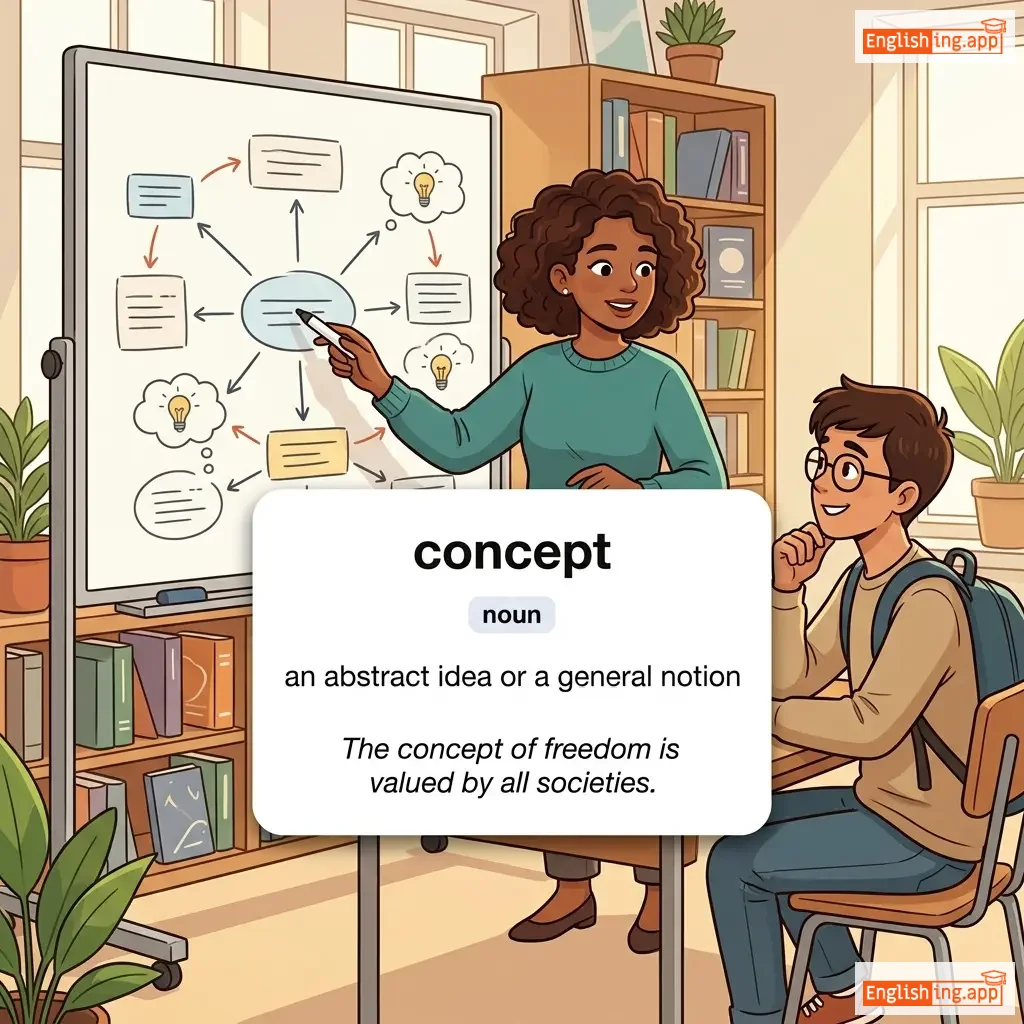
/ˈkɑn.sept/
noun
(kàngsèpǔ)
••••••
|
|
概念; 一般概念
gainian, yiban gainian
••••••
|
an abstract idea; a general notion or understanding of something; a plan or intention
••••••
|
The concept of democracy is based on the idea that people should govern themselves. |
民主的概念基于这样一个思想:人们应该自己管理自己。
mínzhǔ de gàiniàn jīyú zhèyàng yīgè sīxiǎng: rénmen yīnggāi zìjǐ guǎnlǐ zìjǐ.
••••••
|
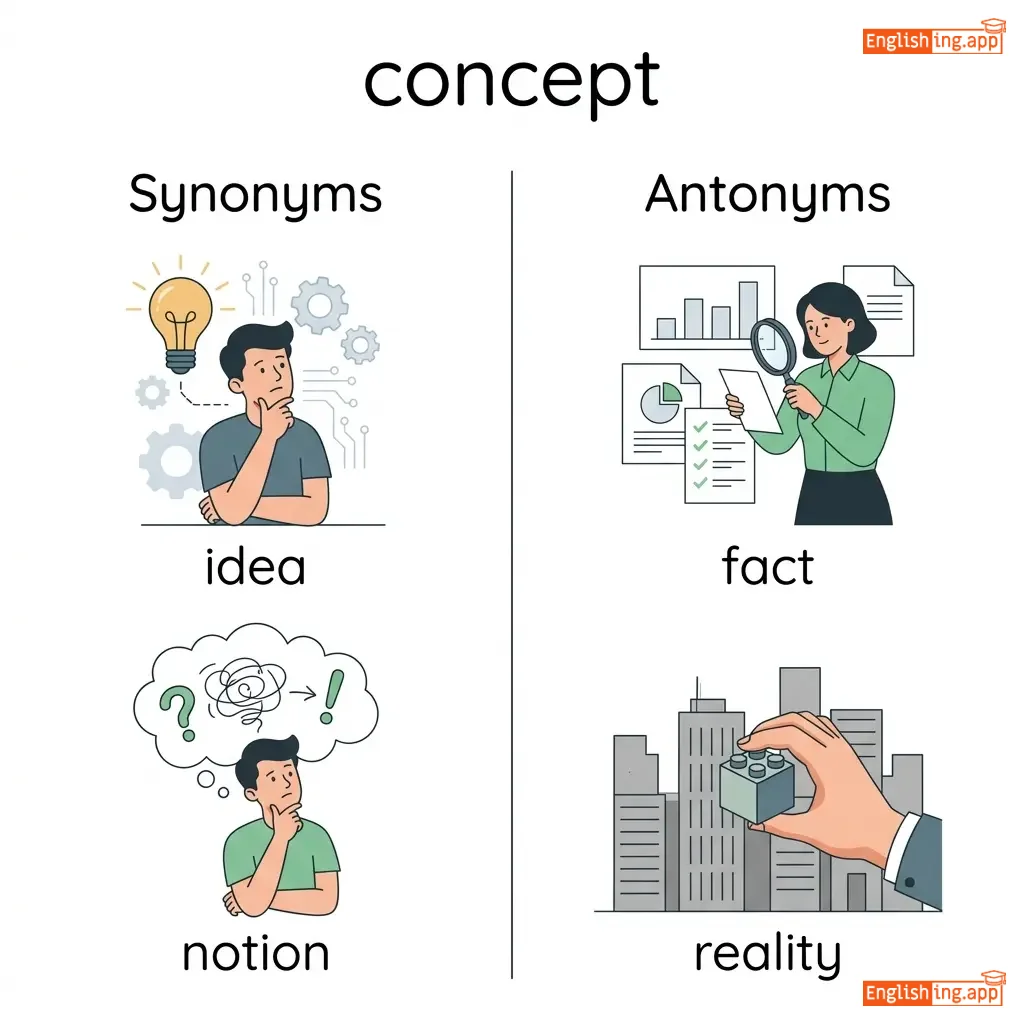
idea, notion, thought, principle
••••••
|
reality, fact, concrete example
••••••
|
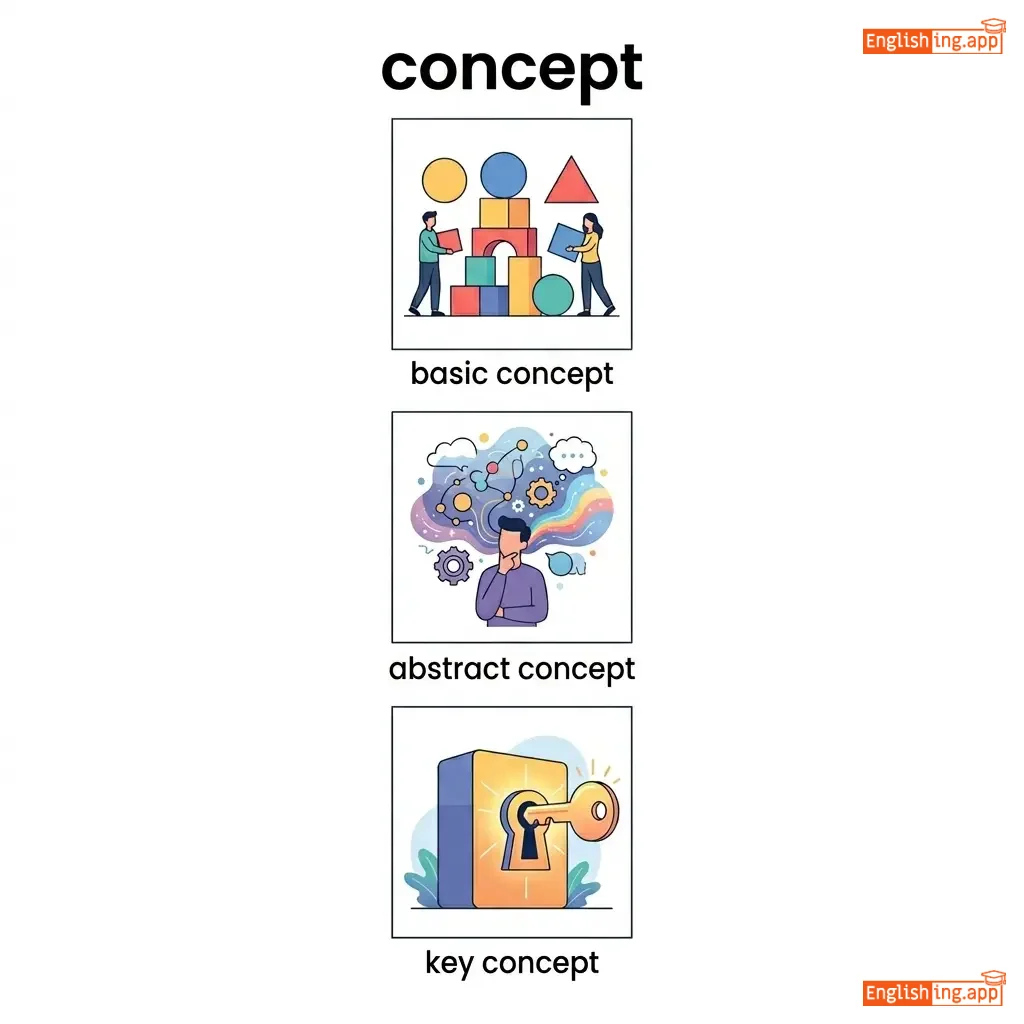
basic concept, new concept, concept development
••••••
|
中文 – 概念清晰,民主作为基本理念
••••••
|
|
#220
🛍️
|
/kənˈviː.ni.əns/
noun
(方便)
••••••
|
- •••••• |
便利
bianli
••••••
|
the state of being able to proceed with something without difficulty; a thing that contributes to an easy way of life
••••••
|
The convenience of online shopping has changed how people buy products. |
在线购物的便利改变了人们购买产品的方式。
Zaixian gouwu de bianli gaibian le renmen goupiao chanpin de fangshi.
••••••
|
ease, comfort, advantage, benefit
••••••
|
inconvenience, difficulty, hardship, trouble
••••••
|
for your convenience, convenience store, modern convenience
••••••
|
Bianli = Biao Nian Li, convenient!
••••••
|
Vocabulary Quiz
Test your vocabulary by matching words with their translations or meanings.
Login to take the quiz
Comments (0)
Share your thoughts and join the discussion.
Join the discussion by logging in
Login to CommentNo comments yet
Be the first to share your thoughts!