

Swipe left or right, or use the buttons. Tap image to zoom.
例句翻译
单词
Lesson 44Lesson 44 - 遮罩切换
|
表情符号
|
单词 | Images | 翻译 | 含义 | 例句 | 例句翻译 | 同义词 | 反义词 | 搭配词 | 助记符 |
|---|---|---|---|---|---|---|---|---|---|---|
|
#861
🎭
|
/maɪm/
noun
(maim)
••••••
|
- •••••• |
哑剧演员
mime
••••••
|
A performer who acts without words, using only gestures and body movements
••••••
|
The street mime entertained the crowd with his invisible box routine. |
街头哑剧演员用他的无形盒子表演娱乐了人群。
Jiētóu yǎjù yǎnyuán yòng tā de wúxíng hézi biǎoyǎn yúlè le rénqún.
••••••
|
pantomimist, silent performer, street performer
••••••
|
speaker, narrator, vocal performer
••••••
|
street mime, mime artist, mime performance, invisible box
••••••
|
Mime 只用手势和身体语言来表演。
••••••
|
|
#862
😈
|
/ˈmɪs.kri.ənt/
noun
(mìsīkuì'āntè)
••••••
|
- •••••• |
恶棍; 罪犯
miscreant
••••••
|
A person who behaves badly or illegally; a villain or criminal
••••••
|
The miscreant was caught stealing from the store.
这个恶棍在商店偷东西时被抓住了。
••••••
|
这个恶棍在商店偷东西时被抓住了。
Zhège è gùn zài shāngdiàn tōu dōngxī shí bèi zhuā zhù le.
••••••
|
villain, criminal, wrongdoer, scoundrel
••••••
|
hero, saint, good person, law-abiding citizen
••••••
|
dangerous miscreant, petty miscreant, notorious miscreant, young miscreant
••••••
|
Miscreant - A person who misbehaves. In Chinese, '恶棍' is a criminal or bad person.
••••••
|
|
#863
🔄
|
/ˈmɪm.ɪk/
noun
(米米克)
••••••
|
- •••••• |
模仿者; 模仿;
mimic
••••••
|
A person who copies or imitates the actions, speech, or mannerisms of others
••••••
|
The talented mimic could perfectly imitate famous celebrities.
这位有才华的模仿者能够完美地模仿著名的名人。
••••••
|
这位有才华的模仿者能够完美地模仿著名的名人。
Zhe wei you caihua de mofangzhe nenggou wanmei de mofang zhuming de mingren.
••••••
|
imitator, impersonator, copycat, impressionist
••••••
|
original, innovator, creator
••••••
|
talented mimic, voice mimic, animal mimic, perfect mimic
••••••
|
在中文中,'模仿者' 是指模仿别人动作和语言的人,就像英语中的 'Mimic'。
••••••
|
|
#864
❌
|
/ˌmɪsˈdiːd/
noun
(mìsìdì)
••••••
|
- •••••• |
恶行; 罪行
misdeed
••••••
|
A wicked or illegal act; wrongdoing
••••••
|
He regretted his past misdeeds and tried to make amends. |
他后悔过去的恶行,并试图弥补。
Tā hòuhuǐ guòqù de èxíng, bìng shìtú míbǔ.
••••••
|
wrongdoing, offense, transgression, crime
••••••
|
good deed, virtue, righteousness, kindness
••••••
|
past misdeed, serious misdeed, minor misdeed, confess misdeed
••••••
|
Misdeed: Mis (坏的) deed (行为) – 坏行为
••••••
|
|
#865
⬇️
|
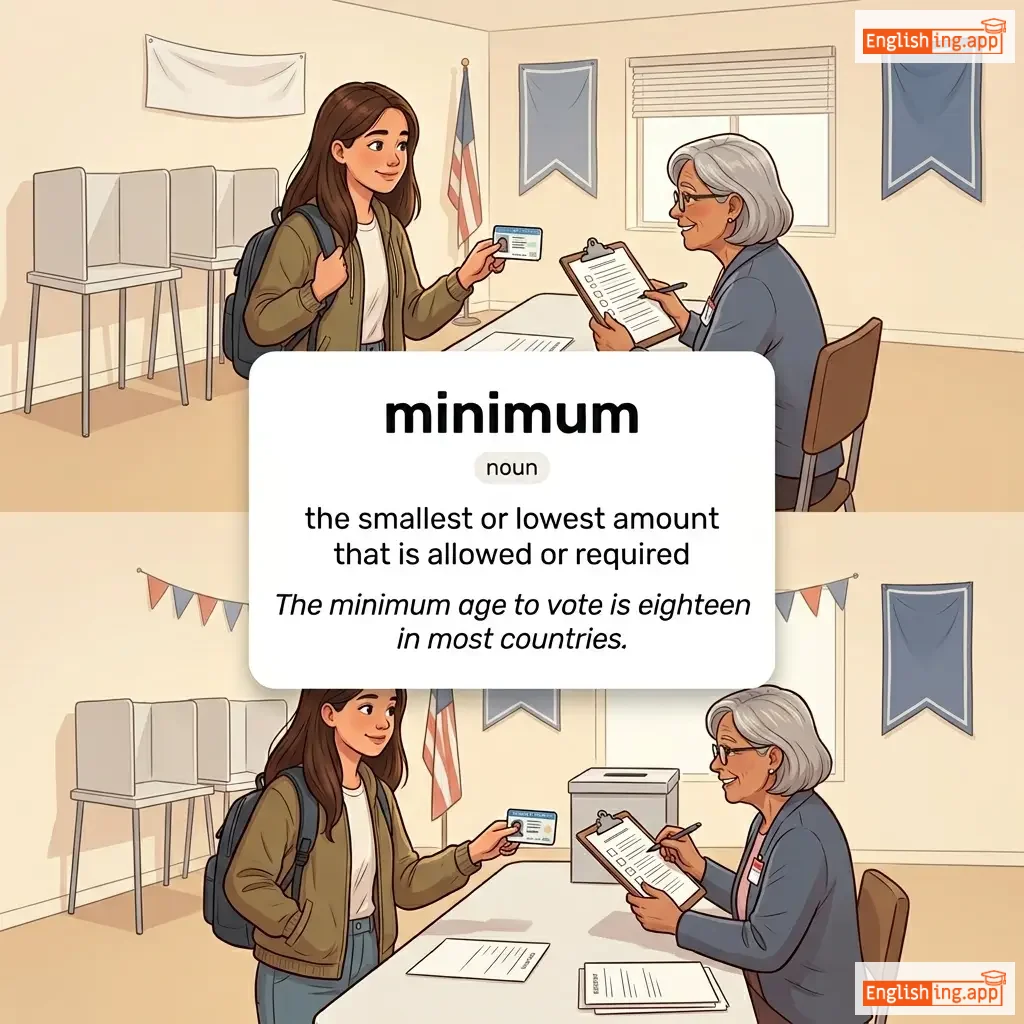
/ˈmɪn.ɪ.məm/
noun
(最小值)
••••••
|
|
最小值
zuì xiǎo zhí
••••••
|
The smallest or lowest amount, degree, or quantity possible or required
••••••
|
The minimum wage was increased to help workers cover basic expenses. |
最低工资已提高,以帮助工人支付基本开支。
Zui di gongzi yi tigao, yi bangzhu gongren zhifu jiben kaizhi.
••••••
|
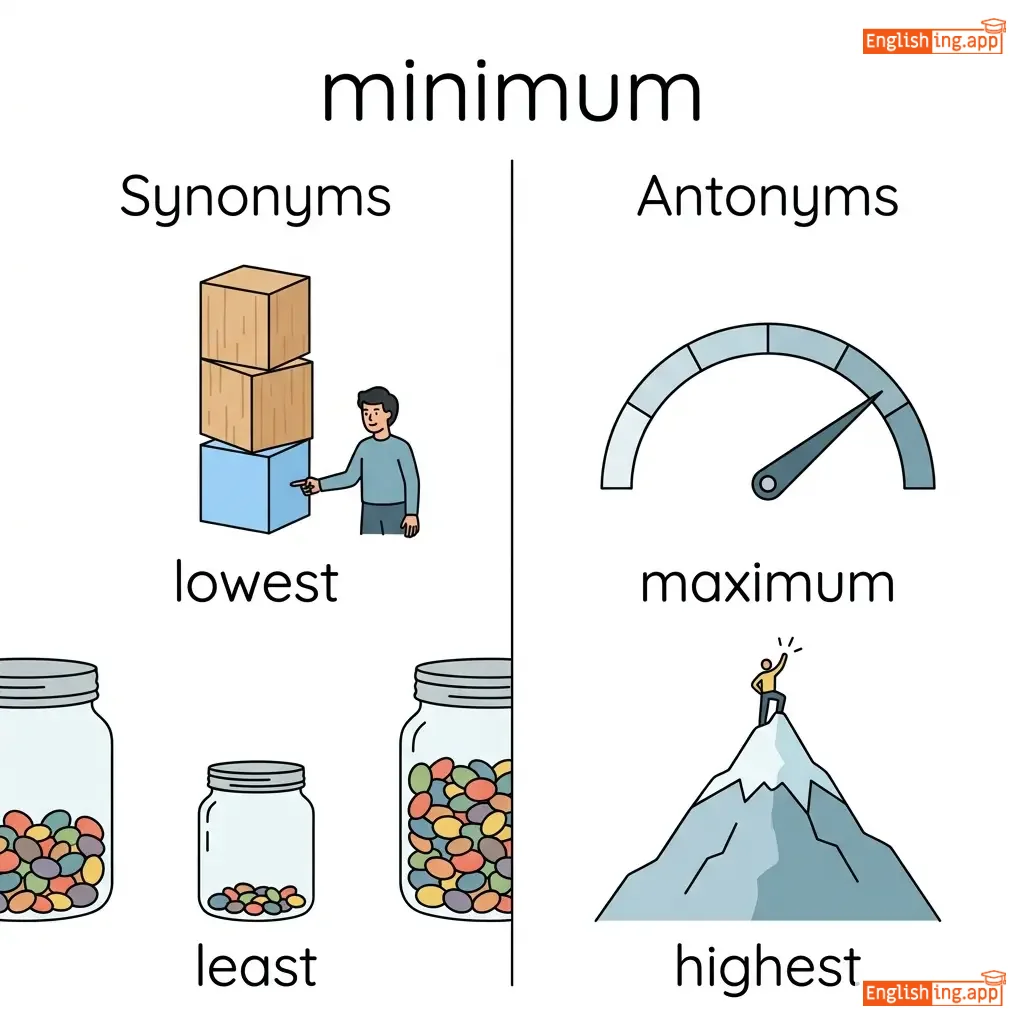
least, lowest, smallest, bottom
••••••
|
maximum, highest, most, peak
••••••
|
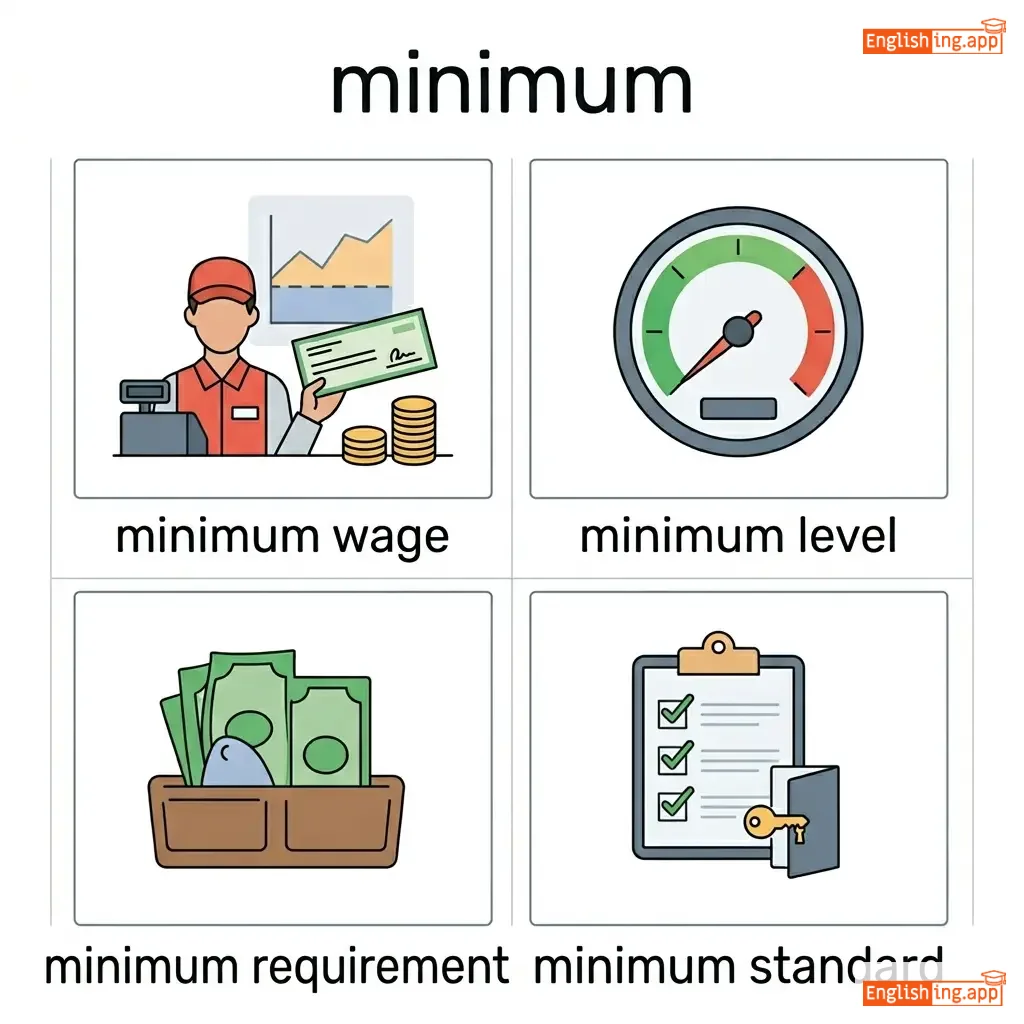
minimum wage, minimum requirement, minimum amount, bare minimum
••••••
|
The word '最小值' (zuì xiǎo zhí) directly translates to 'minimum' in Chinese, signifying the smallest value.
••••••
|
|
#866
😭
|
/ˈmɪz.ər.i/
noun
(米泽里)
••••••
|
- •••••• |
痛苦; 极度贫困; 折磨
misery
••••••
|
Great mental or physical suffering; extreme unhappiness or distress
••••••
|
The poor family lived in complete misery after losing their home.
失去家园后,这个贫困家庭生活在极度痛苦中。
••••••
|
失去家园后,这个贫困家庭生活在极度痛苦中。
shiqu jiayuan hou, zhege pinkun jiating shenghuo zai jidutongku zhong.
••••••
|
suffering, anguish, distress, torment
••••••
|
happiness, joy, bliss, contentment
••••••
|
human misery, complete misery, endless misery, cause misery
••••••
|
痛苦无法承受,一切都变得如此艰难。
••••••
|
|
#867
🏛️
|
/ˈmɪn.ɪ.stri/
noun
(mīnìsītrī)
••••••
|
- •••••• |
部委
bùwěi
••••••
|
A government department responsible for a particular area of public administration
••••••
|
The Ministry of Education announced new policies for schools. |
教育部宣布了新的学校政策。
Jiàoyù bù xuānbùle xīn de xuéxiào zhèngcè.
••••••
|
department, bureau, office, agency
••••••
|
private sector, corporation, business
••••••
|
government ministry, ministry office, ministry officials, ministry policy
••••••
|
中文: '部委' — 部门负责特定公共事务的管理。
••••••
|
|
#868
🤔
|
/mɪsˈɡɪv.ɪŋ/
noun
(mísīgīwīnɡ)
••••••
|
- •••••• |
疑虑; 担忧; 不确定
misgiving
••••••
|
A feeling of doubt or apprehension about the outcome or consequences of something
••••••
|
She had serious misgivings about accepting the job offer.
她对于接受工作邀请有严重的疑虑。
••••••
|
她对于接受工作邀请有严重的疑虑。
Tā duìyú jiēshòu gōngzuò yāoqǐng yǒu yánzhòng de yílǜ.
••••••
|
doubt, apprehension, uncertainty, worry
••••••
|
confidence, certainty, assurance, trust
••••••
|
serious misgiving, grave misgiving, deep misgiving, have misgivings
••••••
|
中文: '疑虑' 就是对某事不确定或不信任,类似于英文中的 'misgiving'
••••••
|
|
#869
🌿
|
/mɪnt/
noun
(薄荷)
••••••
|
- •••••• |
薄荷; 钱币厂
bòhé; qiánbìchǎng
••••••
|
An aromatic plant used for flavoring; also a place where money is manufactured
••••••
|
She added fresh mint leaves to the tea for a refreshing taste.
她在茶里加了新鲜的薄荷叶,带来清新的味道。
••••••
|
她在茶里加了新鲜的薄荷叶,带来清新的味道。
Tā zài chá lǐ jiāle xīnxiān de bòhé yè, dàilái qīngxīn de wèidào.
••••••
|
peppermint, spearmint, mentha
••••••
|
bitter herb, sour plant
••••••
|
fresh mint, mint leaves, mint tea, mint condition
••••••
|
薄荷给你清爽,就像清晨的空气。
••••••
|
|
#870
😱
|
/ˈmɪs.hæp/
noun
(mìshāp)
••••••
|
- •••••• |
不幸; 意外; 事故
mishap
••••••
|
An unlucky accident or unfortunate event, typically minor
••••••
|
The cooking mishap resulted in a burnt dinner.
烹饪失误导致了晚餐烧焦。
••••••
|
烹饪失误导致了晚餐烧焦。
Pēngrèn shīwù dǎozhì le wǎncān shāojiāo.
••••••
|
accident, misfortune, setback, incident
••••••
|
success, good fortune, blessing
••••••
|
minor mishap, kitchen mishap, traffic mishap, unfortunate mishap
••••••
|
Mishap = 烹饪事故
••••••
|
|
#871
✨
|
/ˈmɪr.ɪ.kəl/
noun
(米拉克尔)
••••••
|
- •••••• |
奇迹
qiji
••••••
|
An extraordinary and welcome event that cannot be explained by natural or scientific laws
••••••
|
The patient's recovery was called a miracle by the doctors. |
病人的康复被医生称为奇迹。
Bingren de kangfu bei yisheng chengwei qiji
••••••
|
wonder, marvel, phenomenon, blessing
••••••
|
disaster, catastrophe, misfortune
••••••
|
medical miracle, modern miracle, miracle cure, miracle worker
••••••
|
奇迹 (qiji) sounds like 'miracle'—an event that fills you with wonder.
••••••
|
|
#872
🎯
|
/ˈmɪʃ.ən/
noun
(mishen)
••••••
|
- •••••• |
一个重要的任务或使命,分配给个人或团队;一个特定的目标或目的
mishen
••••••
|
An important task or assignment given to a person or group; a specific purpose or goal
••••••
|
The astronauts completed their mission to the space station. |
宇航员完成了他们的任务,前往太空站。
Yǔhángyuán wánchéngle tāmen de rènwu, qiánwǎng tàikōng zhàn.
••••••
|
task, assignment, objective, goal
••••••
|
aimlessness, purposelessness
••••••
|
space mission, rescue mission, secret mission, military mission
••••••
|
Mission in Chinese is 'mishen' where every goal is a task to complete.
••••••
|
|
#873
🏜️
|
/mɪˈrɑːʒ/
noun
(mìlāzhī)
••••••
|
- •••••• |
海市蜃楼
hǎishìshènlóu
••••••
|
An optical illusion caused by atmospheric conditions, especially in deserts
••••••
|
The travelers saw a mirage of water in the desert.
旅行者在沙漠中看到了水的海市蜃楼。
••••••
|
旅行者在沙漠中看到了水的海市蜃楼。
Lǚxíng zhě zài shāmò zhōng kàn dào le shuǐ de hǎishìshènlóu.
••••••
|
illusion, hallucination, phantom, vision
••••••
|
reality, truth, fact
••••••
|
desert mirage, water mirage, optical mirage, distant mirage
••••••
|
海市蜃楼 (hǎishìshènlóu) 就像是沙漠中的幻觉,看似水面,实际上是错觉。
••••••
|
|
#874
⛪
|
/ˈmɪʃ.ən.ɛr.i/
noun
(mɪʃəˌnɛri)
••••••
|
- •••••• |
传教士
chuán jiào shì
••••••
|
A person sent on a religious mission to promote their faith in a foreign country
••••••
|
The missionary spent years teaching and helping people in remote villages.
传教士在偏远的村庄度过了多年,教导并帮助人们。
••••••
|
传教士在偏远的村庄度过了多年,教导并帮助人们。
Chuán jiào shì zài piānyuǎn de cūnzhuāng dùguòle duō nián, jiàodǎo bìng bāngzhù rénmen.
••••••
|
evangelist, preacher, religious worker, apostle
••••••
|
atheist, non-believer, secular person
••••••
|
Christian missionary, foreign missionary, missionary work, missionary school
••••••
|
传教士 = 任务 + 传教;一个为宗教使命而生的人
••••••
|
|
#875
😡
|
/ˌmɪs.bɪˈheɪ.vjər/
noun
(misbehaviour)
••••••
|
- •••••• |
不良或不可接受的行为,特别是孩子们或在正式场合中的行为
misbehaviour
••••••
|
Bad or unacceptable behavior, especially by children or in formal situations
••••••
|
The student was punished for his misbehaviour in class.
学生因在课堂上的不当行为而受到惩罚。
••••••
|
学生因在课堂上的不当行为而受到惩罚。
Xuesheng yin zai kètáng shàng de bùdàng xíngwéi ér shòudào chéngfá.
••••••
|
misconduct, bad behavior, wrongdoing, naughtiness
••••••
|
good behavior, proper conduct, obedience
••••••
|
student misbehaviour, serious misbehaviour, repeated misbehaviour, classroom misbehaviour
••••••
|
Chinese: 'mis' is similar to '不良' for bad, and 'behaviour' for '行为'.
••••••
|
|
#876
🤦
|
/mɪˈsteɪk/
noun
(ミステイク)
••••••
|
- •••••• |
错误; 失误;
cuo wu; shi wu;
••••••
|
An action or judgment that is misguided or wrong; an error
••••••
|
Making mistakes is part of the learning process.
メイキング ミステイクス イズ パート オブ ザ ラーニング プロセス。
••••••
|
犯错是学习过程的一部分。
Fan cuo shi xue xi guo cheng de yi bu fen.
••••••
|
error, blunder, fault, slip
••••••
|
correctness, accuracy, success
••••••
|
common mistake, serious mistake, honest mistake, learn from mistakes
••••••
|
犯错是进步的必经之路。
••••••
|
|
#877
😈
|
/ˈmɪs.tʃɪf/
noun
(mǐshīfū)
••••••
|
- •••••• |
恶作剧
ezuòjù
••••••
|
Playful behavior that causes minor trouble or annoyance but is not meant to cause serious harm
••••••
|
The children were full of mischief during the summer holidays. |
孩子们在暑假期间充满了恶作剧。
háizimen zài shǔjià qījiān chōngmǎnle èzuòjù.
••••••
|
naughtiness, pranks, trouble, devilry
••••••
|
good behavior, obedience, virtue
••••••
|
childhood mischief, playful mischief, harmless mischief, get into mischief
••••••
|
Mischief是恶作剧,孩子们在玩耍时充满了调皮捣蛋。
••••••
|
|
#878
😒
|
/ˌmɪsˈtrʌst/
noun
(mistrust)
••••••
|
- •••••• |
不信任
bù xìnrèn
••••••
|
Lack of trust; suspicion or doubt about someone or something
••••••
|
There was deep mistrust between the two political parties. |
两个政治党派之间存在着深深的不信任。
Liǎng gè zhèngzhì dǎngpài zhī jiān cúnzài zhe shēn shēn de bù xìnrèn.
••••••
|
distrust, suspicion, doubt, wariness
••••••
|
trust, confidence, faith, belief
••••••
|
deep mistrust, mutual mistrust, growing mistrust, mistrust of authority
••••••
|
No trust is 不信任 in Chinese, meaning distrust right in its core.
••••••
|
|
#879
⚠️
|
/ˌmɪsˈkɒn.dʌkt/
noun
(mǐsī kǎn dá kè tè)
••••••
|
- •••••• |
不当行为
bùdàng xíngwéi
••••••
|
Unacceptable or improper behavior, especially by a professional person
••••••
|
The officer was dismissed for professional misconduct. |
该官员因职业不当行为被解雇。
gāi guānyuán yīn zhíyè bùdàng xíngwéi bèi jiěgù.
••••••
|
wrongdoing, malpractice, impropriety, violation
••••••
|
good conduct, proper behavior, integrity
••••••
|
professional misconduct, serious misconduct, sexual misconduct, academic misconduct
••••••
|
不当行为可能会导致职业生涯的失败
••••••
|
|
#880
🤷
|
/ˌmɪs.ʌn.dəˈstæn.dɪŋ/
noun
(misunderstanding)
••••••
|
- •••••• |
误解
wùjiě
••••••
|
A failure to understand something correctly; a disagreement or confusion between people
••••••
|
The argument was caused by a simple misunderstanding. |
争论是由一个简单的误解引起的。
zhēnglùn shì yóu yīgè jiǎndān de wùjiě yǐnqǐ de.
••••••
|
confusion, miscommunication, mix-up, disagreement
••••••
|
understanding, clarity, agreement, comprehension
••••••
|
clear up misunderstanding, avoid misunderstanding, cultural misunderstanding, serious misunderstanding
••••••
|
误解导致争论
••••••
|
Vocabulary Quiz
Test your vocabulary by matching words with their translations or meanings.
Login to take the quiz
Comments (0)
Share your thoughts and join the discussion.
Join the discussion by logging in
Login to CommentNo comments yet
Be the first to share your thoughts!