


Swipe left or right, or use the buttons. Tap image to zoom.
例句翻译
单词
Lesson 15Lesson 15 - 遮罩切换
|
表情符号
|
单词 | Images | 翻译 | 含义 | 例句 | 例句翻译 | 同义词 | 反义词 | 搭配词 | 助记符 |
|---|---|---|---|---|---|---|---|---|---|---|
|
#281
😄
|
/dɪˈlaɪt/
noun
(dɪˈlaɪt)
••••••
|
- •••••• |
快乐; 愉悦
kuàilè, yúyuè
••••••
|
a feeling of happiness or pleasure; something that gives great pleasure
••••••
|
The children's laughter filled her heart with pure delight. |
孩子们的笑声让她的心充满了纯粹的快乐。
háizimen de xiàoshēng ràng tā de xīn chōngmǎnle chúncuì de kuàilè.
••••••
|
joy, pleasure, happiness, bliss
••••••
|
sorrow, displeasure, disappointment, misery
••••••
|
pure delight, take delight, great delight
••••••
|
No •••••• |
|
#282
✈️
|
/dɪˈpɑː.tʃər/
noun
(dɪˈpɑː.tʃər)
••••••
|
- •••••• |
出发
chūfā
••••••
|
the action of leaving, especially to start a journey; a deviation from an established course
••••••
|
The departure of the train was delayed by thirty minutes due to technical issues. |
由于技术问题,火车的出发推迟了三十分钟。
Yóuyú jìshù wèntí, huǒchē de chūfā tuīchíle sānshí fēnzhōng.
••••••
|
exit, leaving, withdrawal, launch
••••••
|
arrival, coming, entrance, approach
••••••
|
departure time, sudden departure, departure gate
••••••
|
出发 (departure) - 就像开始新的旅行,走上新的路线。
••••••
|
|
#283
📦
|
/dɪˈlɪv.ə.ri/
noun
(递送)
••••••
|
- •••••• |
递送; 分娩
dì sòng, fēn miǎn
••••••
|
the action of delivering letters, parcels, or goods; the process of giving birth
••••••
|
The delivery of the package was delayed due to bad weather conditions.
由于恶劣的天气条件,包裹的递送被延迟。
••••••
|
由于恶劣的天气条件,包裹的递送被延迟。
Yóu yú è liè de tiān qì tiáo jiàn, bāo guǒ de dì sòng bèi yán chí.
••••••
|
distribution, dispatch, shipment, birth
••••••
|
collection, pickup, retention
••••••
|
express delivery, home delivery, safe delivery
••••••
|
递送是为了及时到达,就像顺利分娩。
••••••
|
|
#284
🤝
|
/dɪˈpen.dəns/
noun
(dɪˈpendəns)
••••••
|
- •••••• |
依赖
yīlài
••••••
|
the state of relying on or needing someone or something for support; addiction
••••••
|
His dependence on technology made it difficult for him to work without internet. |
他对科技的依赖使得他在没有互联网的情况下很难工作。
Tā duì kējì de yīlài shǐdé tā zài méiyǒu hùliánwǎng de qíngkuàng xià hěn nán gōngzuò.
••••••
|
reliance, addiction, need, dependency
••••••
|
independence, self-reliance, autonomy
••••••
|
drug dependence, economic dependence, complete dependence
••••••
|
依赖就像一根拐杖,帮助你站立
••••••
|
|
#285
📢
|
/dɪˈmænd/
noun
(demand)
••••••
|
- •••••• |
需求;消费者对商品或服务的需求
xūqiú; xiāofèi zhě duì shāngpǐn huò fúwù de xūqiú
••••••
|
an urgent request; the desire of consumers for goods or services
••••••
|
The demand for organic food has increased significantly in recent years. |
近年来,有机食品的需求显著增加。
Jìnnián lái, yǒujī shípǐn de xūqiú xiǎnzhù zēngjiā.
••••••
|
request, requirement, need, claim
••••••
|
supply, offer, refusal, rejection
••••••
|
high demand, meet demand, supply and demand
••••••
|
当有需求时,要找寻解决方案。
••••••
|
|
#286
👶
|
/dɪˈpen.dənt/
noun
(dɪˈpɛndənt)
••••••
|
- •••••• |
依赖; 被抚养人
yīlài; bèi fǔyǎngrén
••••••
|
a person who relies on another for financial support; someone who depends on others
••••••
|
As a tax dependent, she could not file her own tax return separately.
作为税务依赖人,她无法单独提交自己的税表。
••••••
|
作为税务依赖人,她无法单独提交自己的税表。
Zuòwéi shuìwù yīlàirén, tā wúfǎ dān dú tíjiāo zìjǐ de shuìbiǎo.
••••••
|
subordinate, reliant person, charge, ward
••••••
|
independent, self-sufficient, autonomous
••••••
|
tax dependent, financial dependent, dependent child
••••••
|
依赖人表示某人依赖他人,就像税务上的依赖者
••••••
|
|
#287
🚧
|
/ˌdiː.mɑːˈkeɪ.ʃən/
noun
(dɪˈmɑːkeɪʃən)
••••••
|
- •••••• |
划界
huà jiè
••••••
|
the action of fixing the boundary or limits of something; separation or division
••••••
|
The demarcation between public and private land was clearly marked. |
公共和私人土地之间的划界已被明确标记。
Gōnggòng hé sīrén tǔdì zhījiān de huàjiè yǐ bèi míngquè biāojì.
••••••
|
boundary, separation, division, delimitation
••••••
|
integration, unification, merger
••••••
|
clear demarcation, demarcation line, territorial demarcation
••••••
|
划界 in Chinese means to demarcate or set boundaries, similar to 'demarcation' in English.
••••••
|
|
#288
😞
|
/dɪˈpreʃ.ən/
noun
(抑郁症)
••••••
|
- •••••• |
抑郁症
yiyuzheng
••••••
|
a mental health condition characterized by persistent sadness; a severe economic downturn
••••••
|
The therapist helped her cope with depression through cognitive behavioral therapy. |
治疗师通过认知行为疗法帮助她应对抑郁症。
Zhiliaoshi tongguo renshi xingwei liaofa bangzhu ta yingdui yiyuzheng.
••••••
|
sadness, melancholy, recession, downturn
••••••
|
happiness, joy, prosperity, boom
••••••
|
clinical depression, economic depression, severe depression
••••••
|
抑郁症像阴霾笼罩在心头,使生活失去色彩。
••••••
|
|
#289
❌
|
/ˌdiːˈmer.ɪt/
noun
(德梅里特)
••••••
|
- •••••• |
过错; 缺点; 由于过错或违法行为而给出的标记
guòcuò, quēdiǎn, yóuyú guòcuò huò wéifǎ xíngwéi ér gěi chū de biāozhì
••••••
|
a fault or disadvantage; a mark given for a fault or offense
••••••
|
The student received a demerit for arriving late to class repeatedly. |
学生因为多次迟到而得到了一个德梅里特。
Xuéshēng yīnwèi duō cì chídào ér dédàole yīgè déméilìtè.
••••••
|
fault, flaw, disadvantage, penalty
••••••
|
merit, advantage, benefit, reward
••••••
|
serious demerit, receive demerit, demerit point
••••••
|
记住,'德梅里特' 就是一个关于错误或不当行为的标记!
••••••
|
|
#290
🌊
|
/depθ/
noun
(dèpθ)
••••••
|
- •••••• |
深度; 深沉或深刻的特质
shendu, shencheng huo shenke de tezhi
••••••
|
the distance from the top or surface to the bottom; the quality of being intense or profound
••••••
|
The depth of the ocean in this area reaches over three thousand meters.
该地区的海洋深度超过三千米。
••••••
|
该地区的海洋深度超过三千米。
Gai diqu de haiyang shendu chao guo sanqian mi.
••••••
|
profundity, deepness, intensity, extent
••••••
|
shallowness, superficiality, surface
••••••
|
ocean depth, emotional depth, in-depth analysis
••••••
|
海洋深度超乎想象
••••••
|
|
#291
🗳️
|
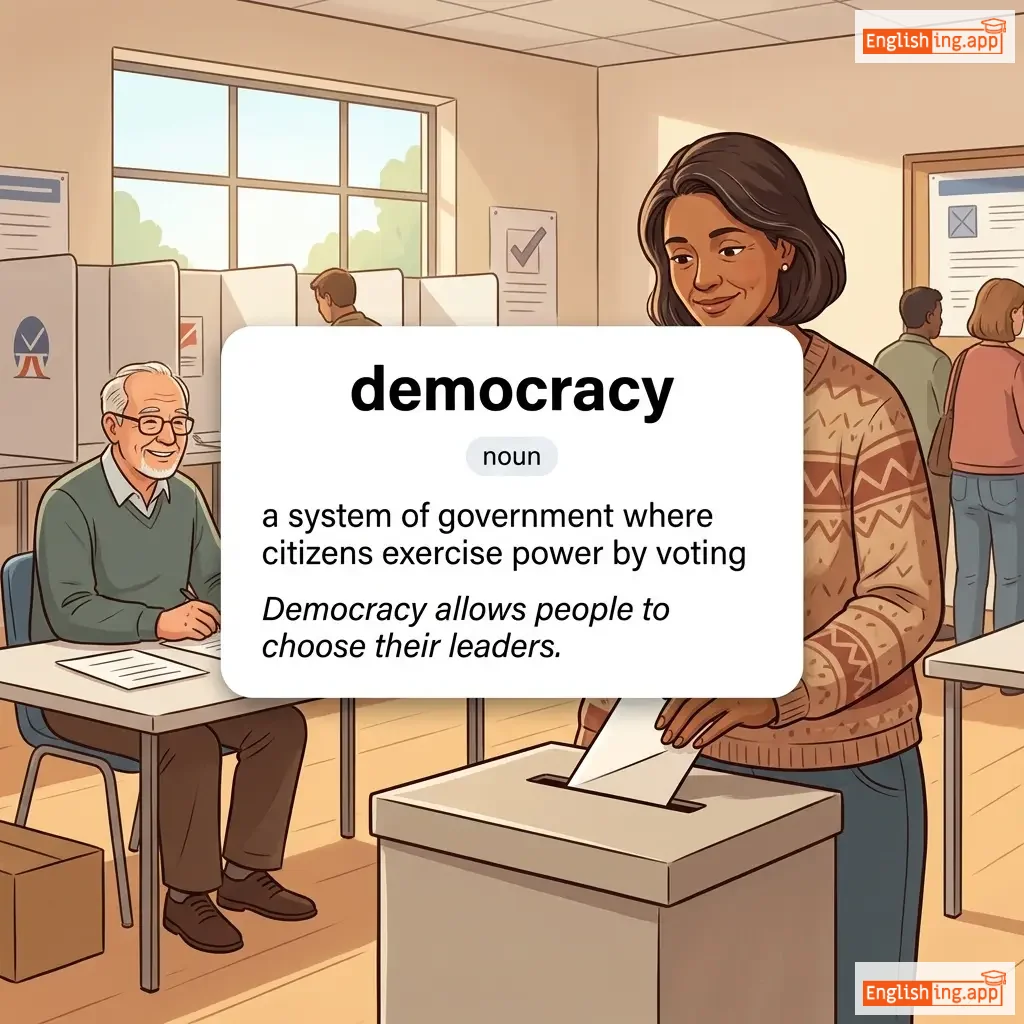
/dɪˈmɒk.rə.si/
noun
(民主)
••••••
|
|
民主
minzhu
••••••
|
a system of government by the whole population through elected representatives
••••••
|
Democracy allows citizens to participate in decision-making through voting. |
民主使公民通过投票参与决策。
mínzhǔ shǐ gōngmín tōngguò tóupiào cānyù juécè.
••••••
|
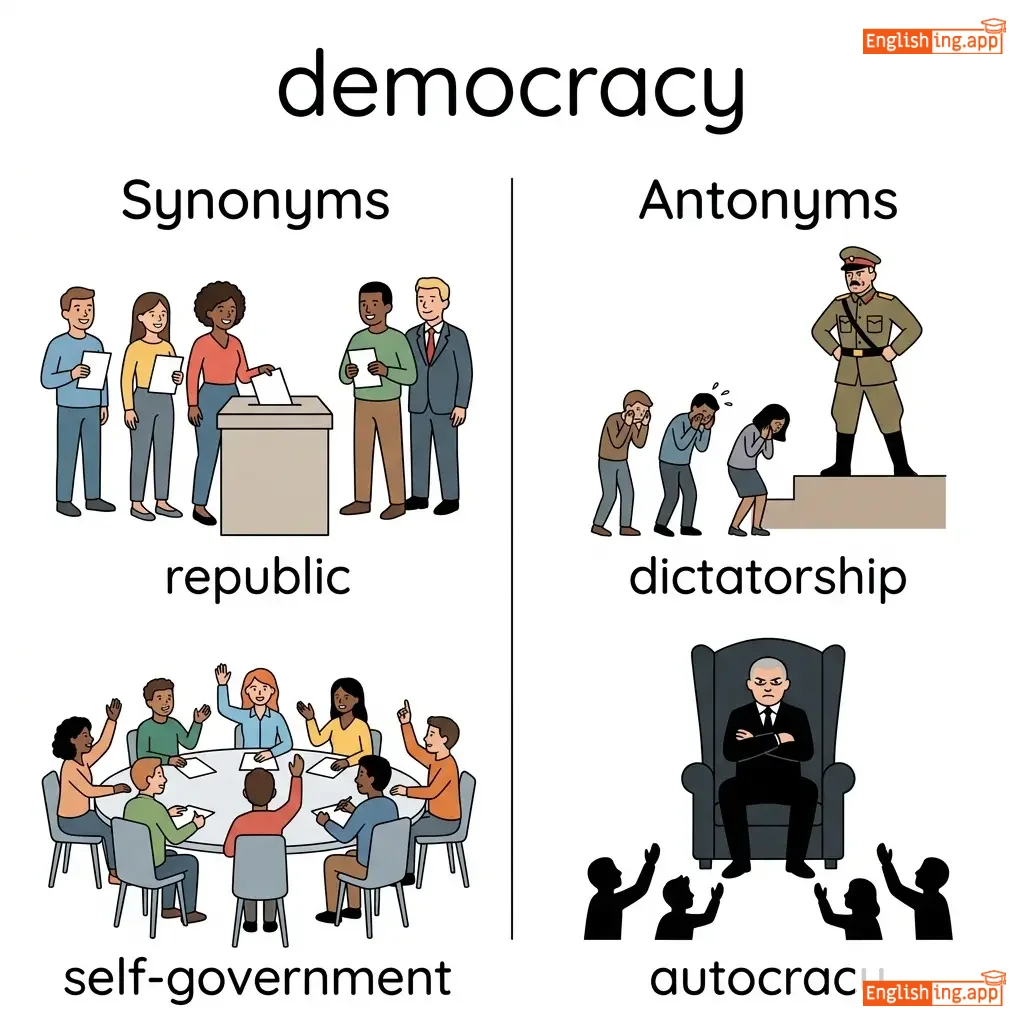
republic, self-government, popular government
••••••
|
dictatorship, autocracy, totalitarianism
••••••
|
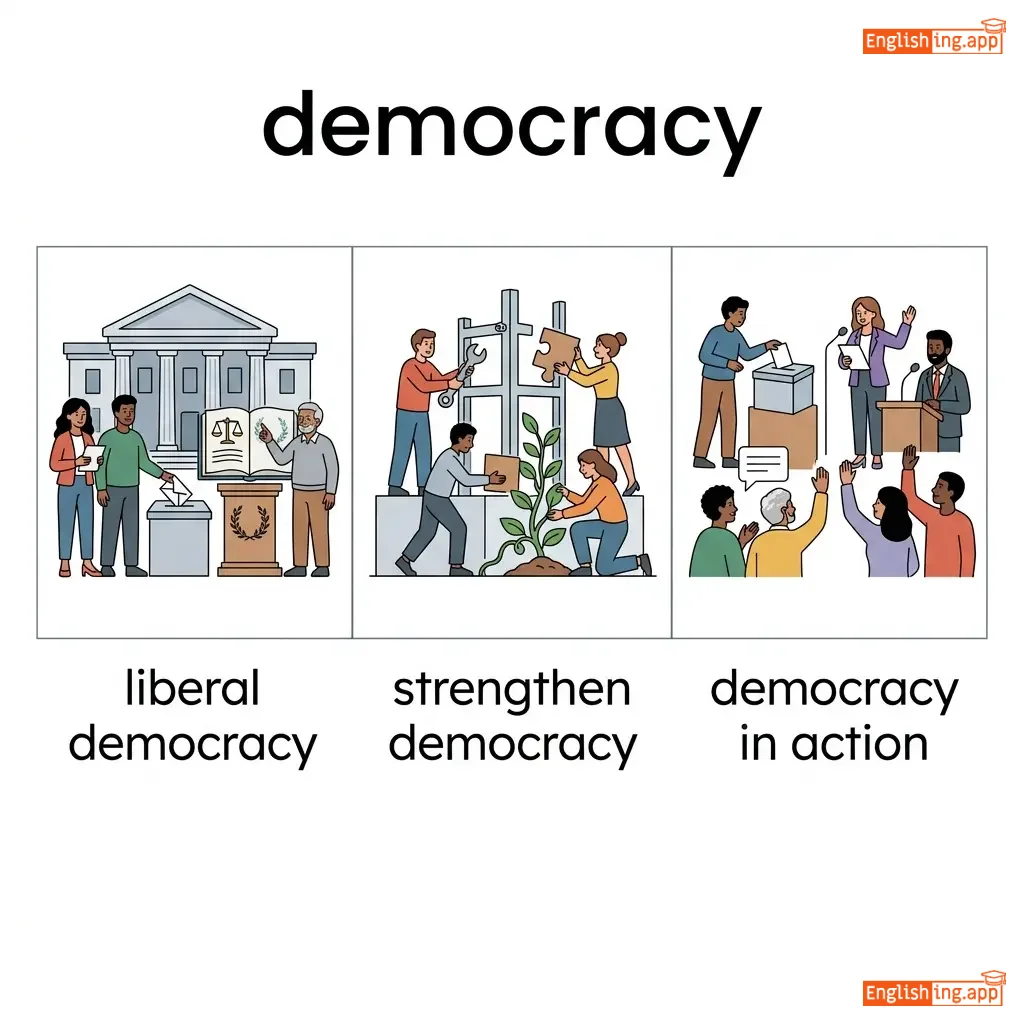
parliamentary democracy, liberal democracy, democratic process
••••••
|
民主 - 人民的选择
••••••
|
|
#292
👨👩👧👦
|
/dɪˈsen.dənt/
noun
(dɪˈsɛndənt)
••••••
|
- •••••• |
后代
hòudài
••••••
|
a person who is descended from a particular ancestor; offspring of a later generation
••••••
|
She discovered that she was a descendant of European royalty through genealogy research.
她通过家谱研究发现,她是欧洲皇室的后代。
••••••
|
她通过家谱研究发现,她是欧洲皇室的后代。
Tā tōngguò jiāpǔ yánjiū fāxiàn, tā shì Ōuzhōu huángshì de hòudài.
••••••
|
offspring, heir, progeny, successor
••••••
|
ancestor, forefather, predecessor
••••••
|
direct descendant, royal descendant, descendant of immigrants
••••••
|
In Chinese, ‘后代’ (hòudài) means descendant, closely tied to lineage and ancestry.
••••••
|
|
#293
🏠
|
/den/
noun
(den)
••••••
|
- •••••• |
洞穴;舒适的房间;非法活动的场所
dongxue; shuxi de fangjian; fefan huodong de changsuo
••••••
|
a wild animal's lair or home; a small, comfortable room; a place for illegal activities
••••••
|
The fox disappeared into its den when it sensed danger approaching. |
狐狸在感到危险接近时消失在它的洞穴里。
Huli zai gando weixian jiejin shi xiaoshi zai ta de dongxue li.
••••••
|
lair, burrow, hideout, retreat
••••••
|
open space, exposure, public area
••••••
|
animal den, cozy den, thieves' den
••••••
|
No •••••• |
|
#294
📝
|
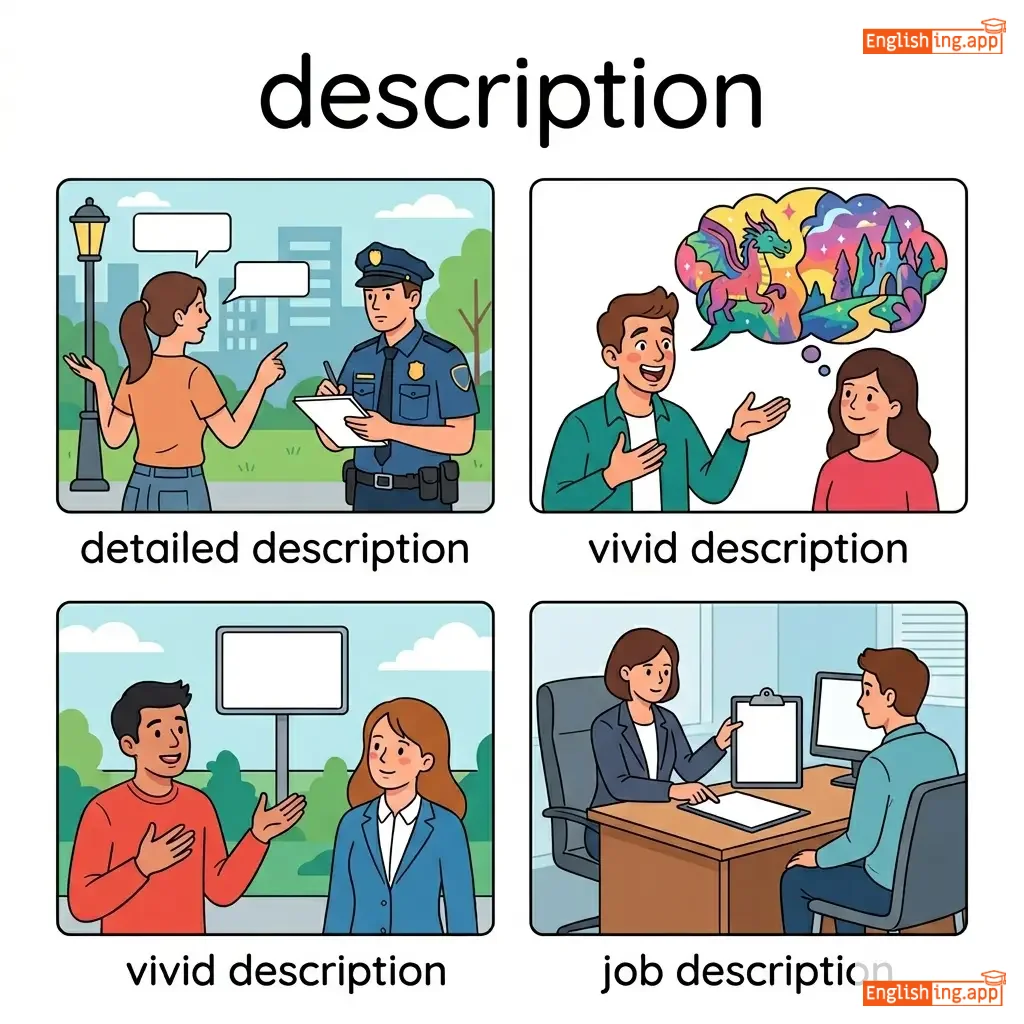
/dɪˈskrɪp.ʃən/
noun
(描述)
••••••
|
|
描述
miaoshu
••••••
|
a spoken or written representation or account of someone or something
••••••
|
The witness gave a detailed description of the suspect to the police officer.
目击者向警察描述了嫌疑人的详细情况。
••••••
|
目击者向警察描述了嫌疑人的详细情况。
Mùjī zhě xiàng jǐngchá miáoshùle xiányí rén de xiángxì qíngkuàng.
••••••
|
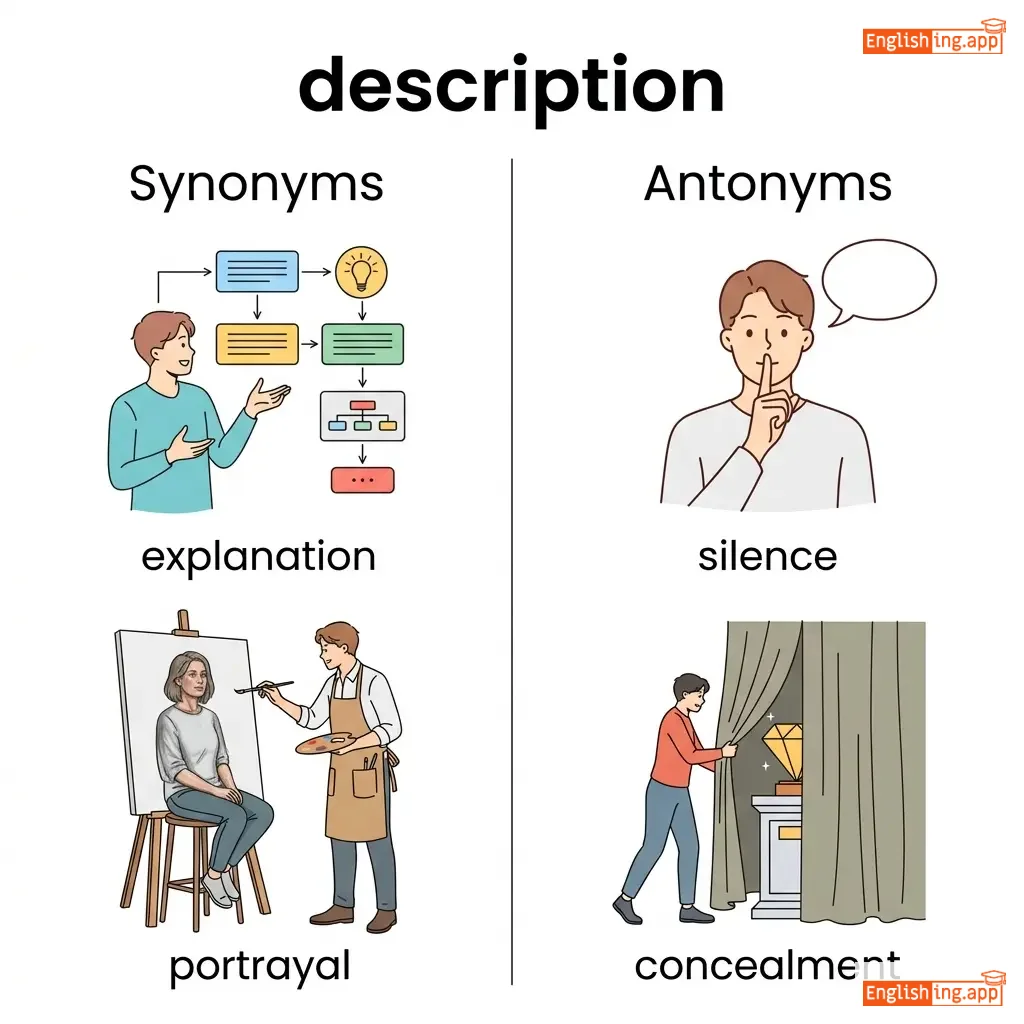
account, explanation, depiction, portrayal
••••••
|
misrepresentation, distortion, concealment
••••••
|
detailed description, job description, physical description
••••••
|
描述 - 详细陈述所见
••••••
|
|
#295
🚫
|
/dɪˈnaɪ.əl/
noun
(dɪˈnaɪəl)
••••••
|
- •••••• |
否认
fǒurèn
••••••
|
the action of declaring something to be untrue; refusal to acknowledge something
••••••
|
His denial of involvement in the scandal was met with skepticism. |
他否认参与丑闻的行为,遭遇了怀疑。
Tā fǒurèn cānyù chǒuwén de xíngwéi, zāoyùle huáiyí.
••••••
|
refusal, rejection, disavowal, contradiction
••••••
|
acceptance, admission, acknowledgment, confirmation
••••••
|
flat denial, complete denial, denial of access
••••••
|
否认是拒绝承认事实。
••••••
|
|
#296
🏜️
|
/ˈdez.ət/
noun
(沙漠)
••••••
|
- •••••• |
沙漠
shamo
••••••
|
a barren area of landscape with little precipitation; an arid region with sparse vegetation
••••••
|
The Sahara Desert is one of the largest hot deserts in the world.
撒哈拉沙漠是世界上最大的热沙漠之一。
••••••
|
撒哈拉沙漠是世界上最大的热沙漠之一。
Sahara shamo shi shijie shang zuida de re shamo zhi yi.
••••••
|
wasteland, wilderness, arid region, badlands
••••••
|
oasis, forest, meadow, wetland
••••••
|
desert climate, desert storm, cross the desert
••••••
|
沙漠代表干旱和沙子,就像撒哈拉沙漠一样。
••••••
|
|
#297
📏
|
/ˈden.sə.ti/
noun
(dèn.sì.tī)
••••••
|
- •••••• |
密度
mìdù
••••••
|
the degree of compactness of a substance; the quantity of something per unit area
••••••
|
The density of population in the city center is extremely high. |
市中心的人口密度极高。
Shì zhōngxīn de rénkǒu mìdù jí gāo.
••••••
|
compactness, concentration, thickness, mass
••••••
|
sparseness, thinness, scarcity
••••••
|
population density, bone density, high density
••••••
|
密度 = 密 (dense) + 度 (degree)
••••••
|
|
#298
🏷️
|
/ˌdez.ɪɡˈneɪ.ʃən/
noun
(dɪˌzɪɡˈneɪʃən)
••••••
|
- •••••• |
任命; 职位; 标题; 官方身份
renming, zhiwei, biaoti, guanfang shenfen
••••••
|
the action of choosing someone for a position; a name, title, or official status
••••••
|
His designation as team leader came with additional responsibilities and authority.
他的团队领导职务带来了额外的责任和权力。
••••••
|
他的团队领导职务带来了额外的责任和权力。
tade tuandui lingdao zhiwu dailai le ewai de zeren he quanli.
••••••
|
title, appointment, assignment, label
••••••
|
dismissal, removal, demotion
••••••
|
job designation, official designation, special designation
••••••
|
Designated - 这是一个职位或角色的名字。
••••••
|
|
#299
🧴
|
/diˈoʊ.dər.ənt/
noun
(diˈoʊ.dər.ənt)
••••••
|
- •••••• |
除臭剂
chúchòu jì
••••••
|
a substance that removes or conceals unpleasant smells, especially bodily odors
••••••
|
She applied deodorant before going to the gym to stay fresh during workout. |
她在去健身房之前涂了除臭剂,以保持训练时的清新。
Tā zài qù jiànshēnfáng zhīqián túle chúchòu jì, yǐ bǎochí xùnliàn shí de qīngxīn.
••••••
|
antiperspirant, fragrance, freshener
••••••
|
perfume, scent (positive smells)
••••••
|
roll-on deodorant, spray deodorant, natural deodorant
••••••
|
除臭剂帮助你保持清新
••••••
|
|
#300
😰
|
/dɪˈsper/
noun
(dɪsˈpɛr)
••••••
|
- •••••• |
绝望
juewang
••••••
|
the complete loss or absence of hope; a state of feeling hopeless
••••••
|
After losing his job, he fell into despair and couldn't see any way forward.
Aftər lʊzɪŋ hɪz dʒɒb, hi fɛl ˈɪntu dɪsˈpɛr ənd kʊdnt siː ɛni wɛɪ fɔrwəd.
••••••
|
失去工作后,他陷入了绝望,无法看到前进的任何路。
Shiqu gongzuo hou, ta xianru le juewang, wufa kandao qianjin de renhe lu.
••••••
|
hopelessness, anguish, desperation, despondency
••••••
|
hope, optimism, confidence, joy
••••••
|
deep despair, fall into despair, overcome despair
••••••
|
绝望是当你完全失去希望时的状态。
••••••
|
Vocabulary Quiz
Test your vocabulary by matching words with their translations or meanings.
Login to take the quiz
Comments (0)
Share your thoughts and join the discussion.
Join the discussion by logging in
Login to CommentNo comments yet
Be the first to share your thoughts!