



Swipe left or right, or use the buttons. Tap image to zoom.
例句翻译
单词
Lesson 63Lesson 63 - 遮罩切换
|
表情符号
|
单词 | Images | 翻译 | 含义 | 例句 | 例句翻译 | 同义词 | 反义词 | 搭配词 | 助记符 |
|---|---|---|---|---|---|---|---|---|---|---|
|
#1241
💬
|
/ˈseɪ.ɪŋ/
noun
(seɪɪŋ)
••••••
|
- •••••• |
谚语
yànyǔ
••••••
|
a well-known phrase that expresses something true about life; a proverb
••••••
|
There's an old saying that practice makes perfect. |
有一句老话说,实践出真知。
Yǒu yī jù lǎo huà shuō, shíjiàn chū zhēnzhī.
••••••
|
proverb, maxim, adage, phrase
••••••
|
- •••••• |
old saying, popular saying, famous saying, well-known saying
••••••
|
想象一个流传下来的谚语,说明实践是成功的关键。
••••••
|
|
#1242
🔍
|
/ˈskruː.tɪ.ni/
noun
(sī kè lú tì ní)
••••••
|
|
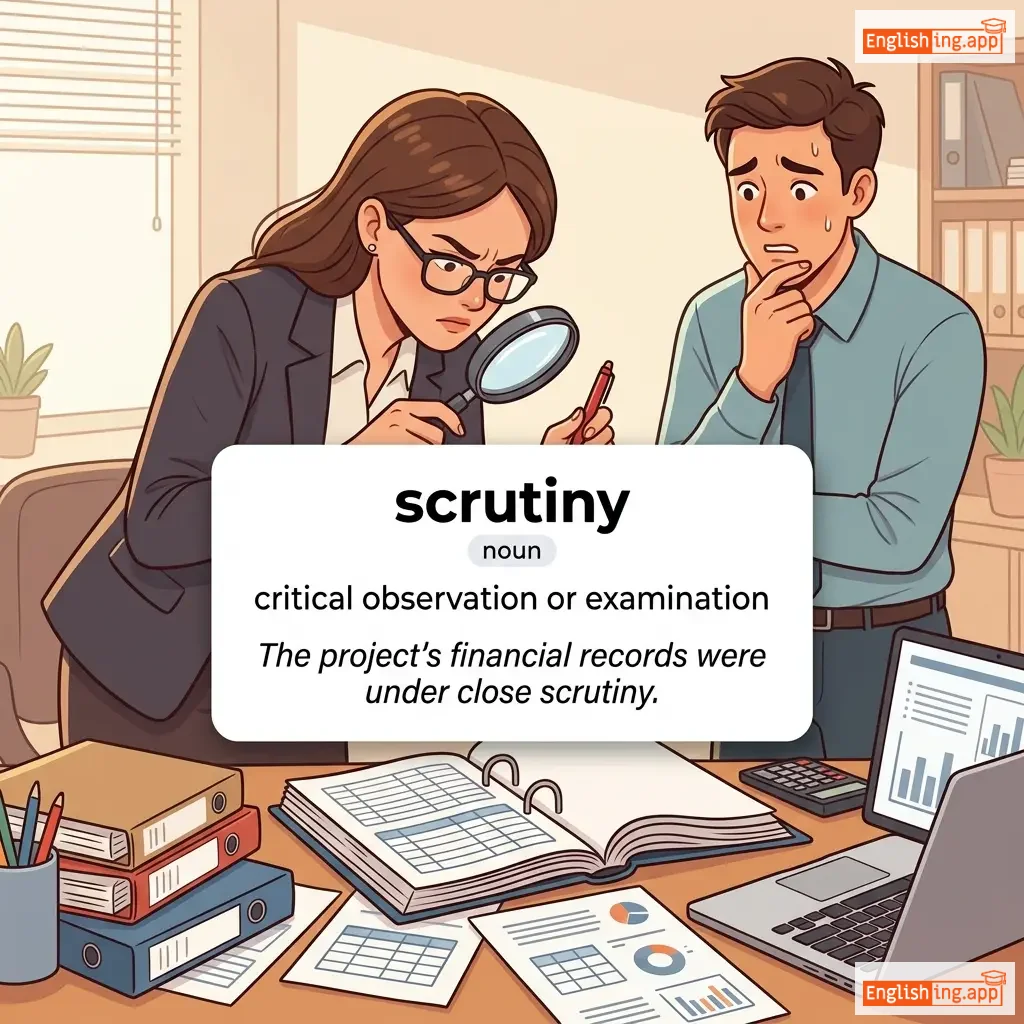
审查; 关键性检查
shen cha; guan jian xing jian cha
••••••
|
careful examination or inspection; critical observation
••••••
|
The company's financial records were under intense scrutiny. |
公司的财务记录正受到严格审查。
gongsi de caiwu jilu zheng shoudao yange shencha.
••••••
|
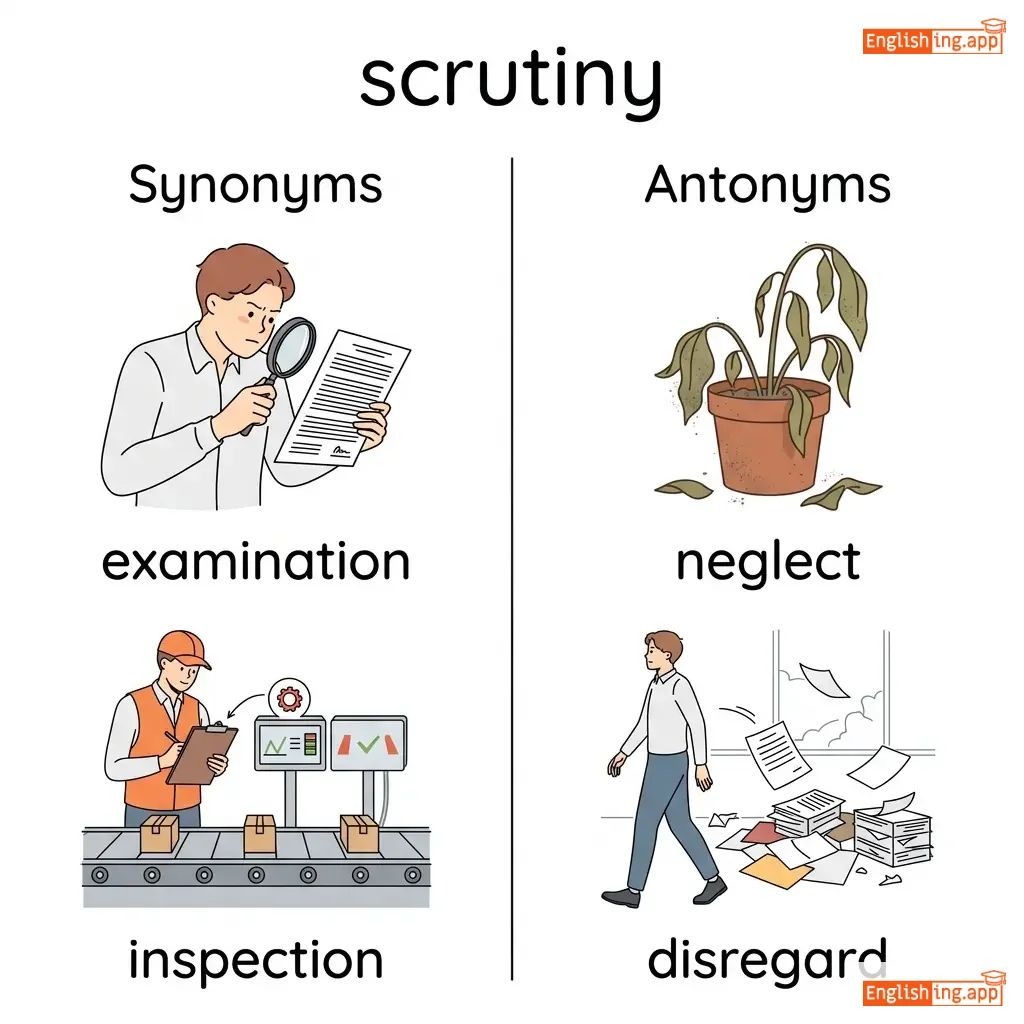
examination, inspection, analysis, investigation
••••••
|
neglect, ignorance, oversight
••••••
|
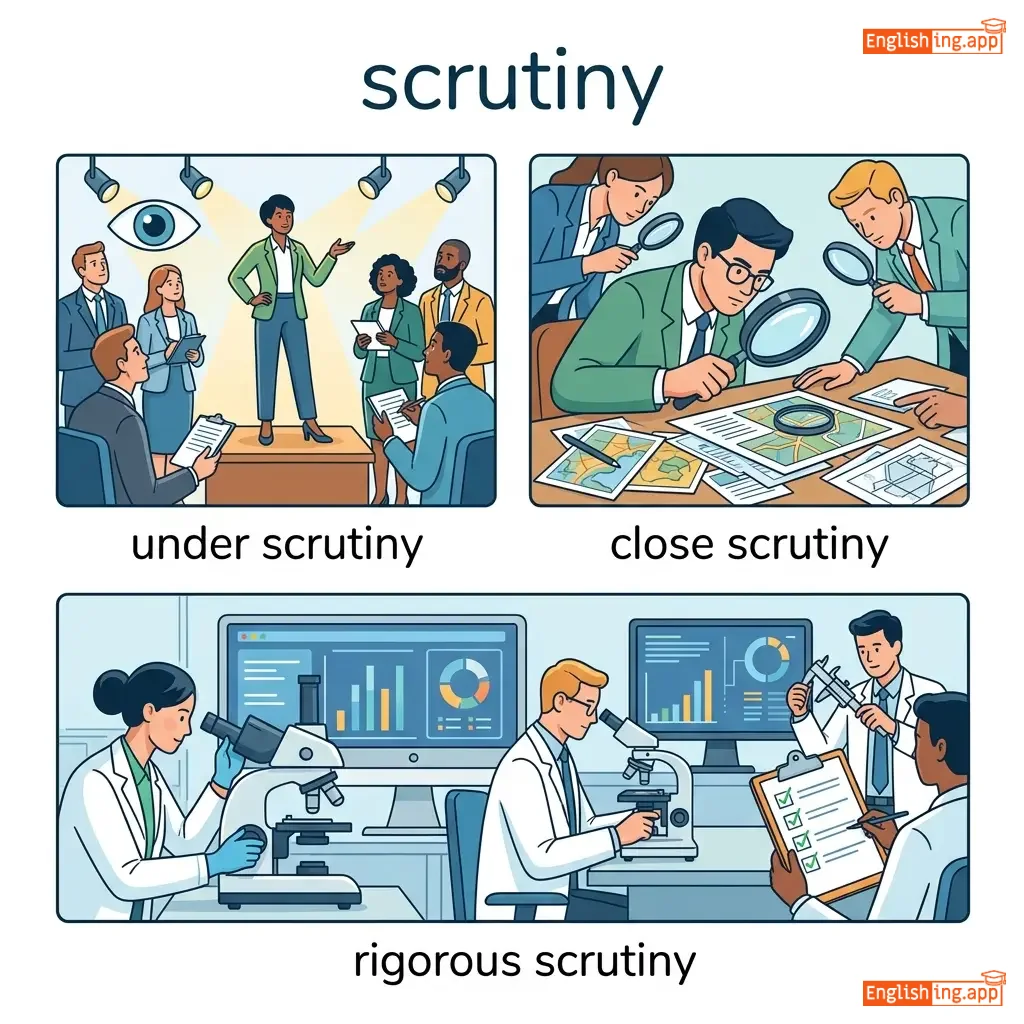
under scrutiny, intense scrutiny, public scrutiny, careful scrutiny
••••••
|
审查就像把每一页翻过来看看有什么遗漏的东西
••••••
|
|
#1243
🦠
|
/ˈskeɪ.biːz/
noun
(xiǎnɡ shēn)
••••••
|
- •••••• |
疥疮
jiechuang
••••••
|
a contagious skin disease caused by mites that causes intense itching
••••••
|
The doctor diagnosed him with scabies after examining the rash.
医生在检查了皮疹后诊断他为疥疮。
••••••
|
医生在检查了皮疹后诊断他为疥疮。
Yīshēng zài jiǎnchá le pízhěn hòu zhěnduàn tā wèi jiè chuāng.
••••••
|
itch mite, mange
••••••
|
- •••••• |
scabies outbreak, scabies treatment, scabies infection
••••••
|
疥疮: 传染性皮肤病,发生剧烈瘙痒
••••••
|
|
#1244
🗿
|
/ˈskʌlp.tʃər/
noun
(雕塑)
••••••
|
- •••••• |
雕塑; 通过雕刻制作的艺术品
diaosu; tongguo diaoke zhizuo de yishupin
••••••
|
the art of making objects by carving; a work of art made by carving
••••••
|
The museum displays ancient Greek sculpture. |
博物馆展示了古希腊雕塑。
Bowuguan zhanshile gu xila diaosu.
••••••
|
carving, statue, figure, artwork
••••••
|
destruction, demolition
••••••
|
ancient sculpture, marble sculpture, bronze sculpture, sculpture garden
••••••
|
雕塑在中文里是雕刻的艺术,和'Sculpture'相同。
••••••
|
|
#1245
🏗️
|
/ˈskæf.əld/
noun
(脚手架)
••••••
|
- •••••• |
脚手架
jiaoshoujia
••••••
|
a temporary structure used by workers to stand on when building or repairing something high; a platform for execution
••••••
|
The workers erected a scaffold to paint the building's exterior. |
工人们搭建了脚手架来粉刷建筑物的外部。
Gongrenmen dajianle jiaoshoujia lai fenshua jianzhuwu de waibu.
••••••
|
platform, framework, structure, staging
••••••
|
- •••••• |
erect scaffold, scaffold platform, scaffold structure, construction scaffold
••••••
|
脚手架是建造高物体时用的工具
••••••
|
|
#1246
🤐
|
/ˈsiː.krə.si/
noun
(sīkè lǐsī)
••••••
|
- •••••• |
保密
baomi
••••••
|
the practice of keeping something secret; the state of being kept hidden
••••••
|
The project was conducted in complete secrecy. |
该项目是在完全保密的情况下进行的。
Gai xiangmu shi zai wanquan baomi de qingkuang xia jinxing de.
••••••
|
privacy, confidentiality, concealment, discretion
••••••
|
openness, transparency, publicity, disclosure
••••••
|
maintain secrecy, sworn to secrecy, shrouded in secrecy, complete secrecy
••••••
|
保密就像是把秘密藏在盒子里,没人知道。
••••••
|
|
#1247
🐐
|
/ˈskeɪp.ɡəʊt/
noun
(skeɪpɡoʊt)
••••••
|
- •••••• |
替罪羊
tisuiyang
••••••
|
a person who is blamed for the wrongdoings, mistakes, or faults of others
••••••
|
He became the scapegoat for the team's poor performance.
他成了团队表现不佳的替罪羊。
••••••
|
他成了团队表现不佳的替罪羊。
Ta cheng le tuandui biaoxian bu jia de tisuiyang.
••••••
|
fall guy, victim, patsy, whipping boy
••••••
|
culprit, perpetrator
••••••
|
make scapegoat, become scapegoat, blame scapegoat
••••••
|
替罪羊是被用来替别人承担责任的人。
••••••
|
|
#1248
💧
|
/sɪˈkriː.ʃən/
noun
(sīkrèxiàng)
••••••
|
- •••••• |
分泌
fenmi
••••••
|
a process by which substances are produced and discharged from a cell or gland
••••••
|
Insulin secretion is crucial for blood sugar regulation.
胰岛素分泌对血糖的调节至关重要。
••••••
|
胰岛素分泌对血糖的调节至关重要。
yidaosun fenmi dui xuetang de tiaojie zhiguang zhongyao
••••••
|
discharge, excretion, emission, production
••••••
|
absorption, retention, intake
••••••
|
hormone secretion, saliva secretion, gastric secretion, insulin secretion
••••••
|
分泌就像是释放重要物质,像胰岛素调节血糖。
••••••
|
|
#1249
🩹
|
/skɑːr/
noun
(scar)
••••••
|
- •••••• |
疤痕
bāhén
••••••
|
a mark left on the skin after a wound has healed; lasting emotional damage
••••••
|
The accident left a permanent scar on his forehead.
事故在他额头上留下了永久的伤疤。
••••••
|
事故在他额头上留下了永久的伤疤。
Shìgù zài tā é tóu shàng liúxià le yǒngjiǔ de shāngbā.
••••••
|
mark, blemish, wound, cicatrix
••••••
|
- •••••• |
permanent scar, deep scar, scar tissue, emotional scar
••••••
|
疤痕提醒我们,痛苦可以变成一种记忆。
••••••
|
|
#1250
🔒
|
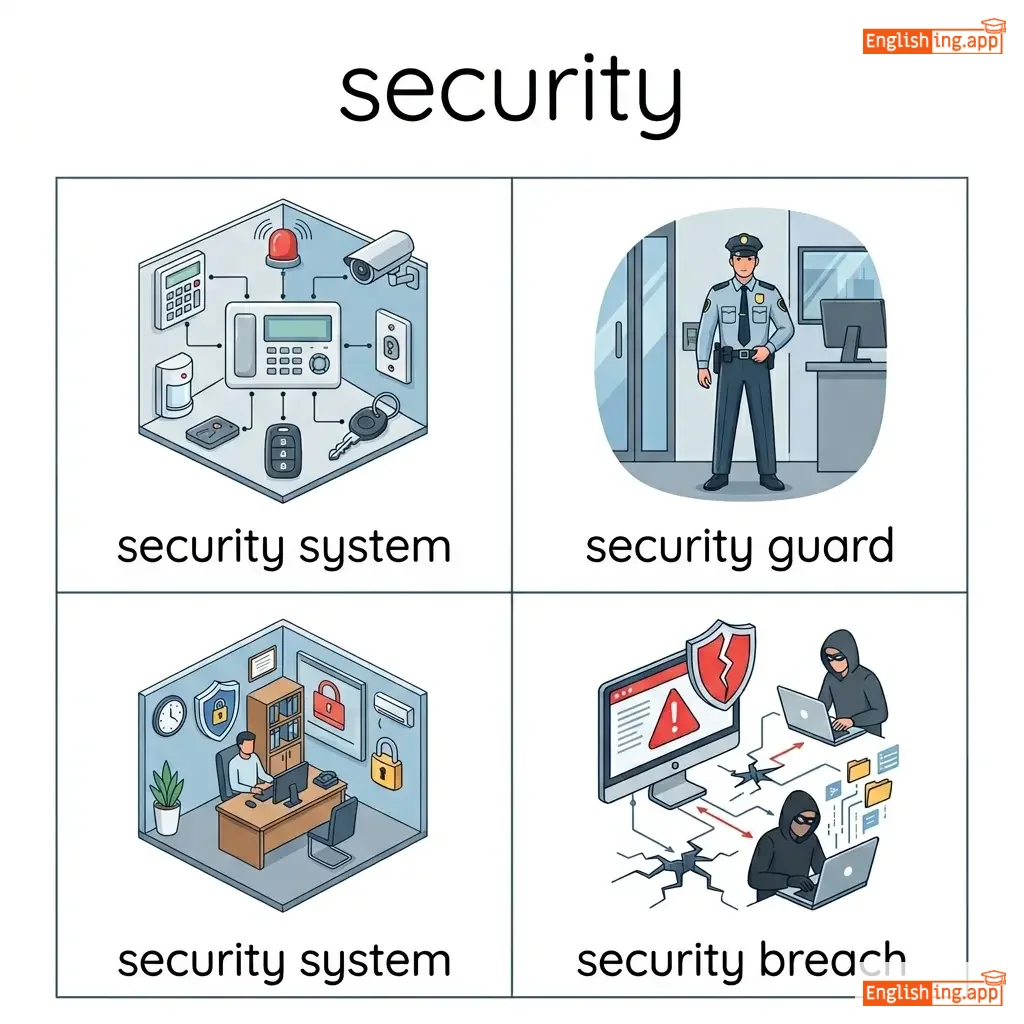
/sɪˈkjʊər.ə.ti/
noun
(安全)
••••••
|
|
安全
anquan
••••••
|
the state of being free from danger or threat; protection against harm
••••••
|
Airport security has been increased after the incident.
机场安全在事件发生后得到加强。
••••••
|
事件发生后,机场的安全得到了加强。
Shijian fasheng hou, jichang de anquan dedaole jiaqiang.
••••••
|
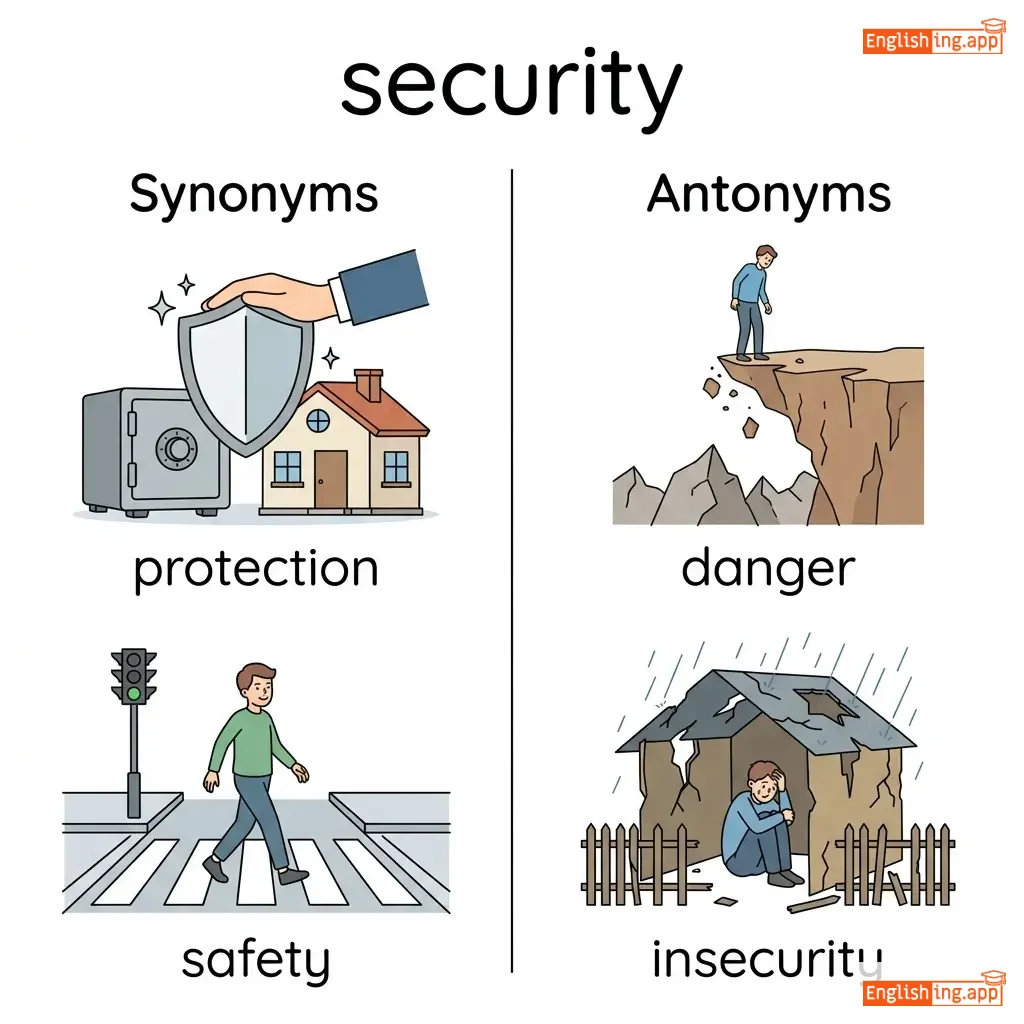
safety, protection, defense, safeguarding
••••••
|
danger, vulnerability, insecurity, risk
••••••
|
national security, security guard, cyber security, job security
••••••
|
安全 in Chinese sounds like 'anquan', think of securing safety.
••••••
|
|
#1251
🏞️
|
/ˈsiː.nər.i/
noun
(xīnní)
••••••
|
- •••••• |
风景
fēngjǐng
••••••
|
the natural features of a landscape; the painted background used on a theater stage
••••••
|
The mountain scenery was breathtakingly beautiful. |
山脉的风景令人叹为观止。
Shānmài de fēngjǐng lìng rén tàn wéi guān zhǐ.
••••••
|
landscape, view, vista, backdrop
••••••
|
- •••••• |
beautiful scenery, mountain scenery, natural scenery, scenic view
••••••
|
风景就是大自然的美丽画卷。
••••••
|
|
#1252
🪨
|
/ˈsed.ɪ.mənt/
noun
(塞迪门特)
••••••
|
- •••••• |
沉积物
sediment
••••••
|
matter that settles to the bottom of a liquid; particles deposited by water or wind
••••••
|
The river carried sediment downstream during the flood.
洪水期间,河水把沉积物冲向下游。
••••••
|
洪水期间,河水把沉积物冲向下游。
hongshui qijian heshui ba chenjiwu chongxiang xiayou
••••••
|
deposit, residue, silt, debris
••••••
|
solution, suspension
••••••
|
river sediment, marine sediment, sediment layer, sediment deposit
••••••
|
塞地的沉降 Sediment: 想象 river 床上 slowly 积累 dirt,底部 的 material 就是 sediment
••••••
|
|
#1254
⚖️
|
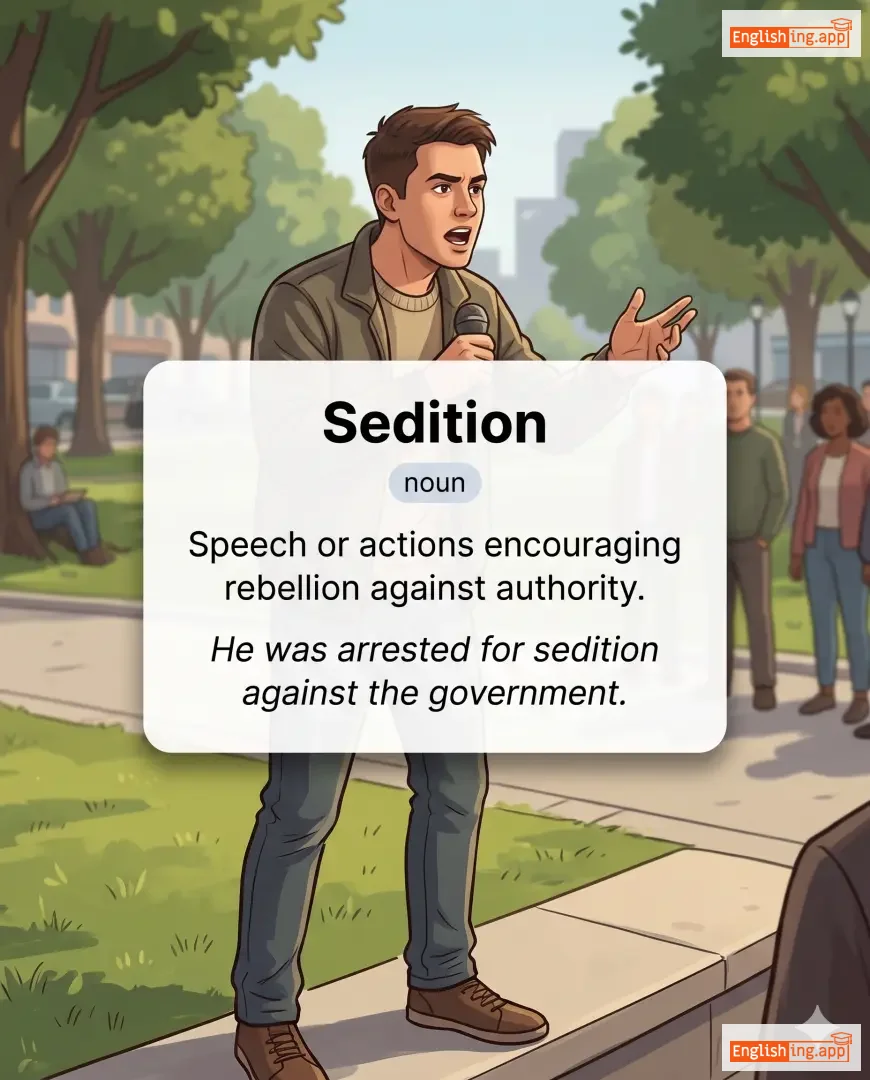
/sɪˈdɪʃ.ən/
noun
(煽动罪)
••••••
|
|
煽动罪
shāndòng zuì
••••••
|
conduct or speech inciting people to rebel against authority; treason
••••••
|
The activist was charged with sedition for his inflammatory speeches. |
因其煽动性言论,该活动家被控煽动罪。
Yīn qí shāndòngxìng yánlùn, gāi huódòngjiā bèi kòng shāndòng zuì.
••••••
|
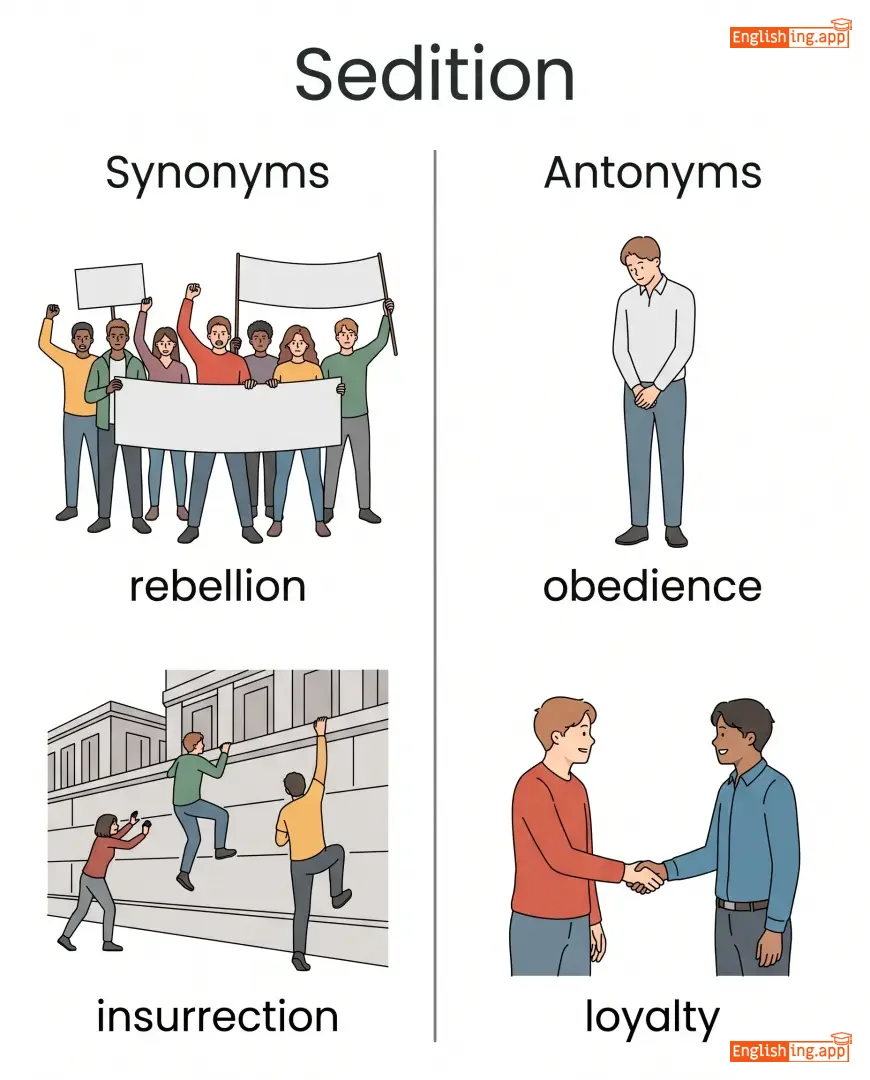
rebellion, mutiny, insurrection, treason
••••••
|
loyalty, allegiance, obedience, patriotism
••••••
|
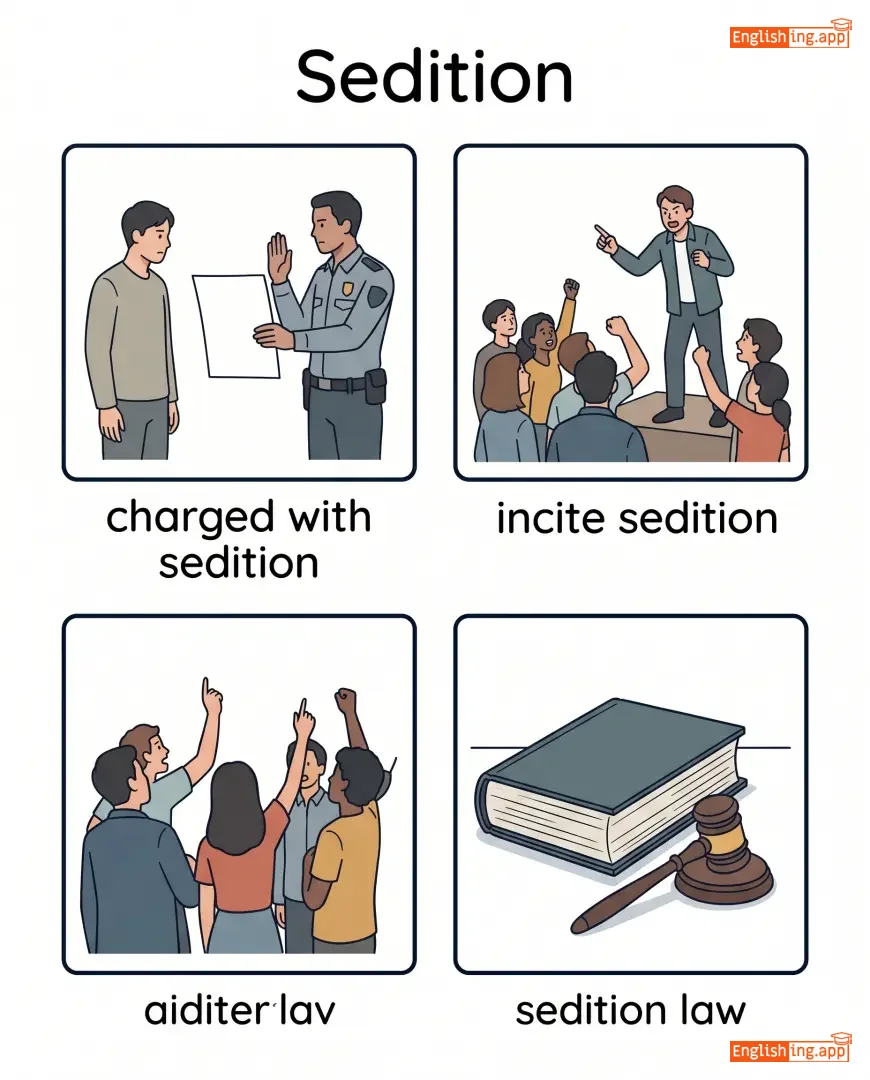
charged with sedition, sedition law, acts of sedition, sedition trial
••••••
|
In Chinese, '煽动罪' literally means 'inciting crime,' perfect for remembering sedition.
••••••
|
|
#1255
📅
|
/ˈʃed.juːl/
noun
(sked-ju-l)
••••••
|
- •••••• |
日程安排; 计划;
schedule
••••••
|
a plan that lists things or events and the times when they will happen; timetable
••••••
|
Please check your schedule before confirming the meeting time.
请在确认会议时间前查看您的时间表。
••••••
|
请在确认会议时间前查看您的时间表。
Qǐng zài quèrèn huìyì shíjiān qián chá kàn nín de shíjiān biǎo.
••••••
|
timetable, agenda, plan, calendar
••••••
|
chaos, disorder
••••••
|
busy schedule, work schedule, meeting schedule, follow schedule
••••••
|
时间表帮助你规划一天的事件。
••••••
|
|
#1256
💋
|
/sɪˈdʌk.ʃən/
noun
(色诱)
••••••
|
- •••••• |
色诱; 诱惑
seyou; youhua
••••••
|
the action of seducing someone; temptation to do something wrong
••••••
|
He fell victim to the seduction of easy money. |
他成为了快速赚钱诱惑的受害者。
Ta chengwei le kuaisu zhuanqian youhua de shouhaizhe.
••••••
|
temptation, enticement, allure, attraction
••••••
|
repulsion, deterrence, discouragement
••••••
|
the seduction of power, fall to seduction, art of seduction, seduction technique
••••••
|
In Chinese, resist the 'youhua' of 'seyou' (seduction)!
••••••
|
|
#1257
🎓
|
/ˈskɒl.ər/
noun
(学者)
••••••
|
- •••••• |
学者;学术人员
xué zhě; xué shù rén yuán
••••••
|
a person who has studied a subject for a long time and knows a lot about it; an academic
••••••
|
The renowned scholar published several books on ancient history.
ðə rɪˈnaʊnd ˈskɒlər ˈpʌblɪʃt ˈsɛvrəl bʊks ɒn ˈeɪnʃənt ˈhɪstəri.
••••••
|
著名学者出版了几本关于古代历史的书籍。
zhù míng xué zhě chū bǎn le jǐ běn guān yú gǔ dài lì shǐ de shū jí.
••••••
|
academic, intellectual, researcher, learned person
••••••
|
ignoramus, illiterate
••••••
|
renowned scholar, distinguished scholar, scholarship program, scholarly work
••••••
|
学者分享知识,改变世界。
••••••
|
|
#1258
🧩
|
/ˈseɡ.mənt/
noun
(细分)
••••••
|
- •••••• |
部分; 段; 切分的部分
bùfen; duàn; qiēfēn de bùfen
••••••
|
each of the parts into which something is divided; a section or portion
••••••
|
The orange was divided into eight segments.
橙子被分成了八个部分。
••••••
|
橙子被分成了八个部分。
Chéngzi bèi fēnchéng le bā gè bùfen.
••••••
|
section, portion, part, division
••••••
|
whole, entirety, totality
••••••
|
market segment, line segment, segment analysis, target segment
••••••
|
想象将一个橙子切成几个相同的部分,像切片一样。
••••••
|
|
#1259
📺
|
/skriːn/
noun
(píngmù)
••••••
|
- •••••• |
屏幕
pingmu
••••••
|
a flat surface on which pictures or words are shown; a movable partition used to divide a room
••••••
|
The movie was displayed on a large screen in the theater.
电影在剧院的大屏幕上播放。
••••••
|
电影在剧院的大屏幕上播放。
Dianying zai juyuan de da pingmu shang bofang.
••••••
|
display, monitor, partition, barrier
••••••
|
- •••••• |
computer screen, movie screen, screen time, touch screen
••••••
|
屏幕是我们看电影的地方
••••••
|
|
#1260
✅
|
/sɪˈlek.ʃən/
noun
(选择)
••••••
|
|
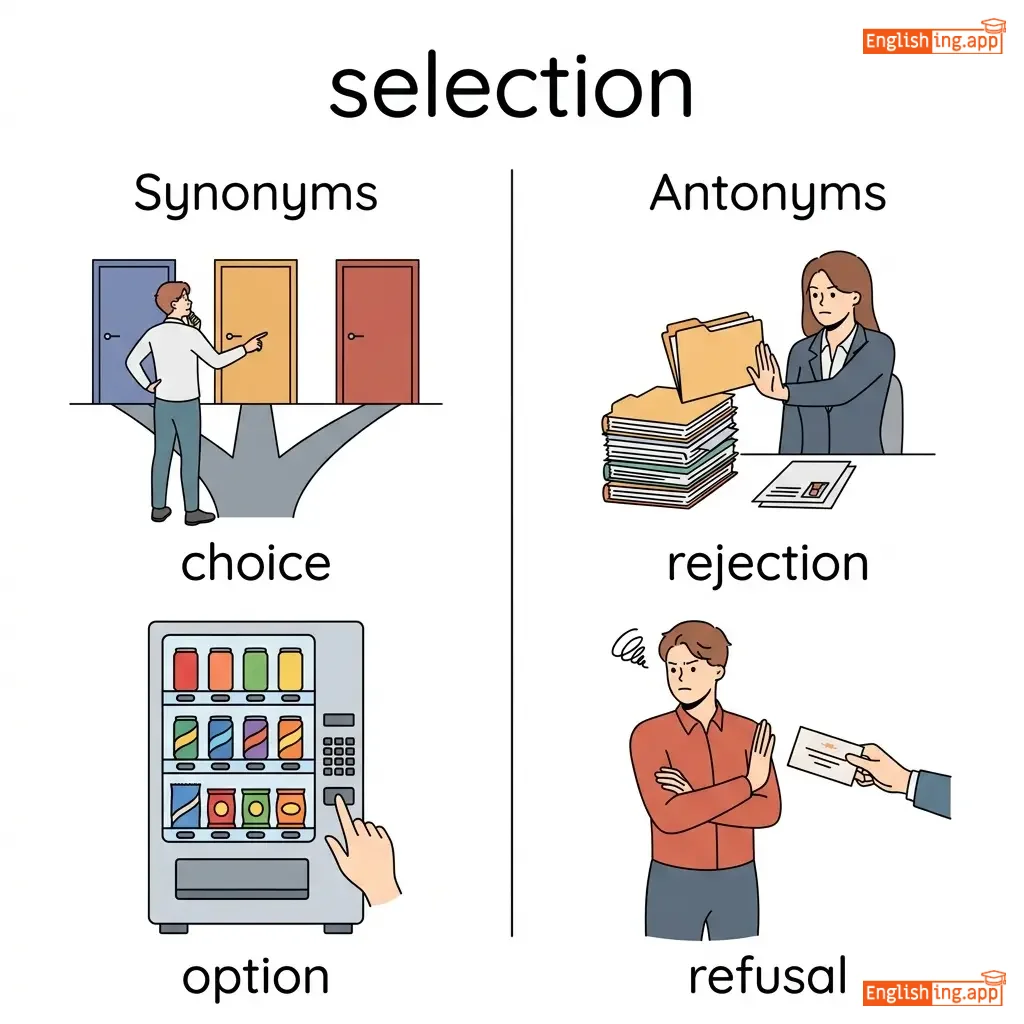
选择; 选择过程; 选择某物
xuǎnzé; xuǎnzé guòchéng; xuǎnzé mǒuwù
••••••
|
the action or fact of carefully choosing someone or something; a range of items to choose from
••••••
|
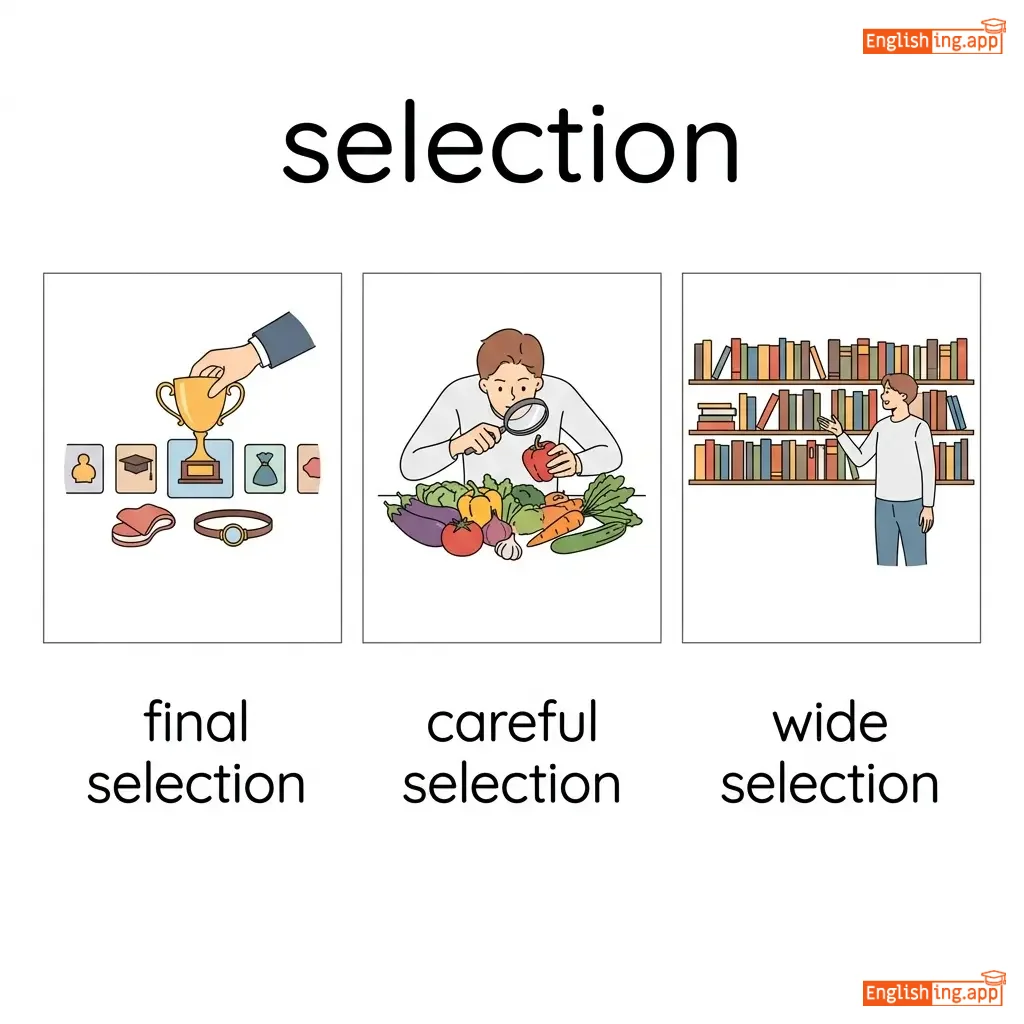
The store offers a wide selection of books.
商店提供广泛的图书选择。
••••••
|
商店提供广泛的图书选择。
Shāngdiàn tígōng guǎngfàn de túshū xuǎnzé.
••••••
|
choice, picking, preference, assortment
••••••
|
rejection, exclusion, elimination
••••••
|
natural selection, selection process, wide selection, selection criteria
••••••
|
记住选择就像在商店选择书籍一样。
••••••
|
Vocabulary Quiz
Test your vocabulary by matching words with their translations or meanings.
Login to take the quiz
Comments (0)
Share your thoughts and join the discussion.
Join the discussion by logging in
Login to CommentNo comments yet
Be the first to share your thoughts!