

Обновитесь для доступа ко всему словарю
Получите неограниченный доступ ко всем словам с подпиской Pro
Обновить до ProПеревод
Прошедшее
Причастие прошедшего времени
Третье лицо единственного числа
Герундий
Значение
Пример предложения
Перевод примера предложения
Синонимы
Антонимы
Коллокации
Мнемоника


Swipe left or right, or use the buttons. Tap image to zoom.
Обновитесь для доступа ко всем предложениям
Получите неограниченный доступ ко всем предложениям с подпиской Pro
Обновить до ProПеревод примера предложения
Слово
Lesson 63Lesson 63 - Переключатель маски
|
Эмодзи
|
Слово | Images | Перевод | Значение | Пример предложения | Перевод примера предложения | Синонимы | Антонимы | Коллокации | Мнемоника |
|---|---|---|---|---|---|---|---|---|---|---|
|
#1241
💬
|
/ˈseɪ.ɪŋ/
noun
(сейинг)
••••••
|
- •••••• |
пословица
poslovitsa
••••••
|
a well-known phrase that expresses something true about life; a proverb
••••••
|
There's an old saying that practice makes perfect. |
Есть старая пословица, что практика приводит к совершенству.
Yest' staraya poslovitsa, chto praktika prikhodit k sovershenstvu.
••••••
|
proverb, maxim, adage, phrase
••••••
|
- •••••• |
old saying, popular saying, famous saying, well-known saying
••••••
|
Пословица 'практика делает мастера' напоминает, как истинное знание передается.
••••••
|
|
#1242
🔍
|
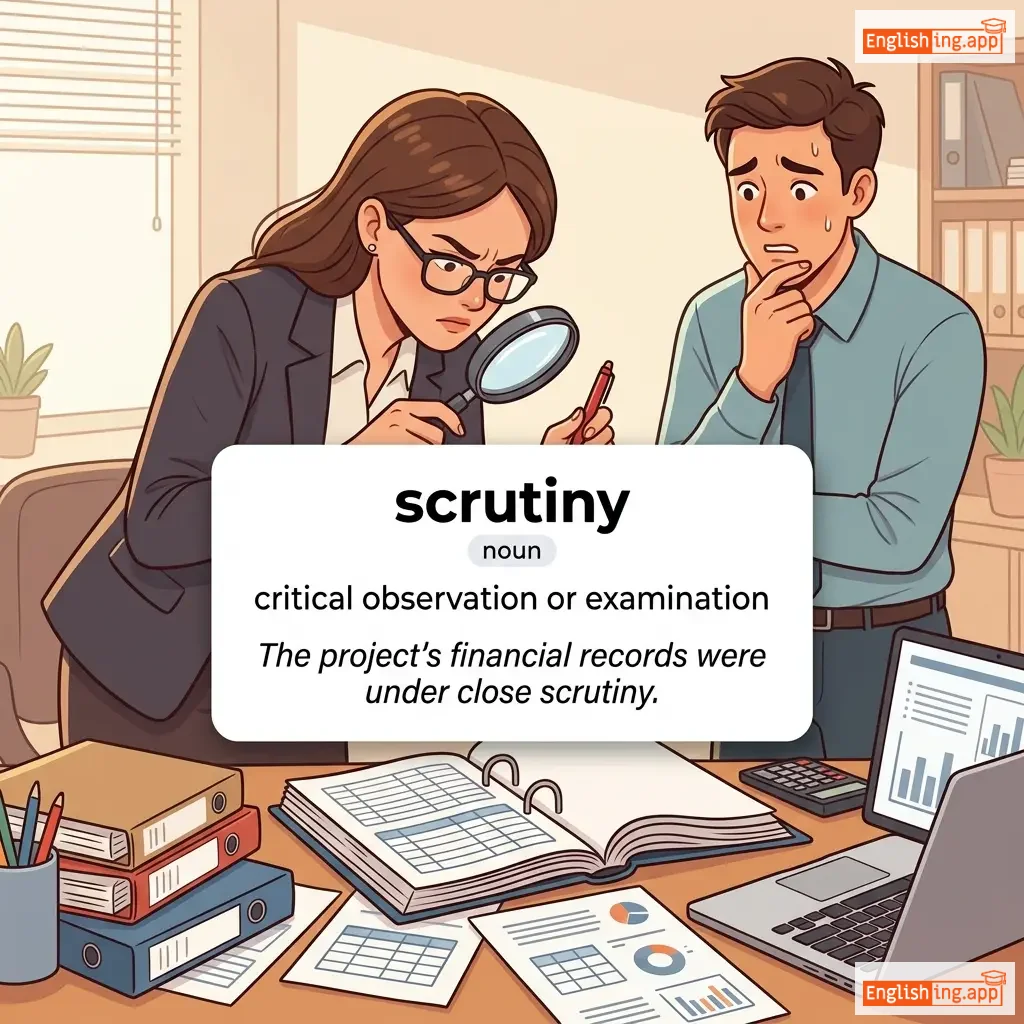
/ˈskruː.tɪ.ni/
noun
(skru-ti-ni)
••••••
|
|
проверка; критическая инспекция
proverka; kriticheskaya inspektsiya
••••••
|
careful examination or inspection; critical observation
••••••
|
The company's financial records were under intense scrutiny. |
Финансовые записи компании находились под интенсивной проверкой.
Finansovye zapisi kompanii nakhodilis' pod intensivnoy proverkoy.
••••••
|
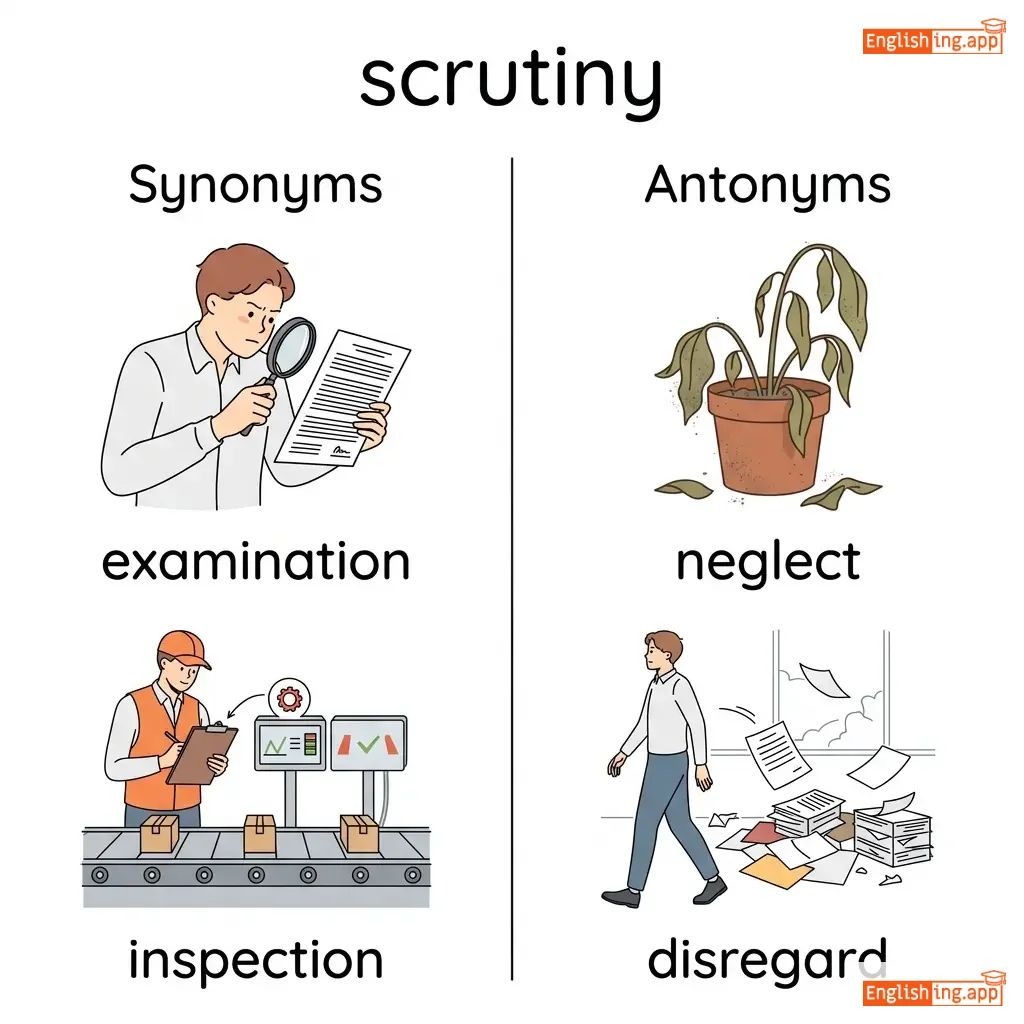
examination, inspection, analysis, investigation
••••••
|
neglect, ignorance, oversight
••••••
|
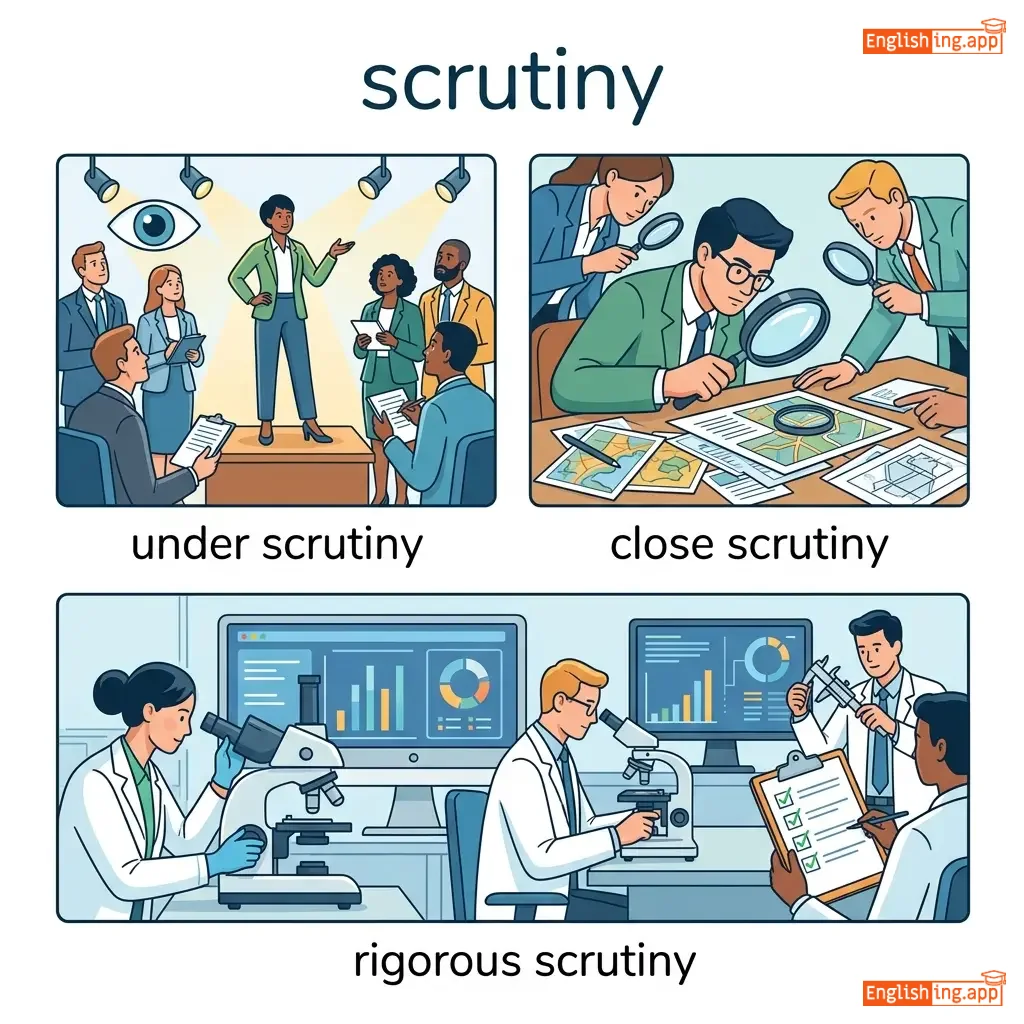
under scrutiny, intense scrutiny, public scrutiny, careful scrutiny
••••••
|
Как скрупулезно проверять каждый документ, так и нужно внимательно следить за действиями.
••••••
|
|
#1243
🦠
|
/ˈskeɪ.biːz/
noun
(skæbiːz)
••••••
|
- •••••• |
чесотка
chesotka
••••••
|
a contagious skin disease caused by mites that causes intense itching
••••••
|
The doctor diagnosed him with scabies after examining the rash.
Доктор поставил диагноз чесотка после осмотра сыпи.
••••••
|
Доктор поставил диагноз чесотка после осмотра сыпи.
Doktor postavil diagnoz chesotka posle osmotra sypi.
••••••
|
itch mite, mange
••••••
|
- •••••• |
scabies outbreak, scabies treatment, scabies infection
••••••
|
Чесотка: зуд, вызванный кожными клещами, нуждающийся в лечении
••••••
|
|
#1244
🗿
|
/ˈskʌlp.tʃər/
noun
(скульптура)
••••••
|
- •••••• |
скульптура; искусство создания объектов путем вырезания
skulptura; iskusstvo sozdaniya ob'ektov putem vyrezaniya
••••••
|
the art of making objects by carving; a work of art made by carving
••••••
|
The museum displays ancient Greek sculpture. |
Музей выставляет древнегреческую скульптуру.
Muzey vystavlyayet drevnegrecheskuyu skulpturu.
••••••
|
carving, statue, figure, artwork
••••••
|
destruction, demolition
••••••
|
ancient sculpture, marble sculpture, bronze sculpture, sculpture garden
••••••
|
Скульптура на русском — это искусство вырезать, как в 'sculpture' на английском.
••••••
|
|
#1245
🏗️
|
/ˈskæf.əld/
noun
(шкала)
••••••
|
- •••••• |
строительная леса
stroitelnaya lesa
••••••
|
a temporary structure used by workers to stand on when building or repairing something high; a platform for execution
••••••
|
The workers erected a scaffold to paint the building's exterior. |
Рабочие установили строительную леса для покраски внешней стороны здания.
Rabochie ustanovili stroitel'nuyu lesa dlya pokraski vneshney storony zdaniya.
••••••
|
platform, framework, structure, staging
••••••
|
- •••••• |
erect scaffold, scaffold platform, scaffold structure, construction scaffold
••••••
|
Строительная леса - это платформа для работы на высоте
••••••
|
|
#1246
🤐
|
/ˈsiː.krə.si/
noun
(sikrɛsʲɪ)
••••••
|
- •••••• |
секретность
sekretnost
••••••
|
the practice of keeping something secret; the state of being kept hidden
••••••
|
The project was conducted in complete secrecy. |
Проект был проведен в полной секретности.
Proyekt byl provedyon v polnoy sekretnosti.
••••••
|
privacy, confidentiality, concealment, discretion
••••••
|
openness, transparency, publicity, disclosure
••••••
|
maintain secrecy, sworn to secrecy, shrouded in secrecy, complete secrecy
••••••
|
Секретность - это как спрятать что-то важное от всех.
••••••
|
|
#1247
🐐
|
/ˈskeɪp.ɡəʊt/
noun
(skeɪpɡoʊt)
••••••
|
- •••••• |
козел отпущения
kozel otpushcheniya
••••••
|
a person who is blamed for the wrongdoings, mistakes, or faults of others
••••••
|
He became the scapegoat for the team's poor performance.
Он стал козлом отпущения за плохие результаты команды.
••••••
|
Он стал козлом отпущения за плохие результаты команды.
On stal kozlom otpushcheniya za plokhie rezul'taty komandy.
••••••
|
fall guy, victim, patsy, whipping boy
••••••
|
culprit, perpetrator
••••••
|
make scapegoat, become scapegoat, blame scapegoat
••••••
|
Козел отпущения - это тот, кого обвиняют в ошибках других.
••••••
|
|
#1248
💧
|
/sɪˈkriː.ʃən/
noun
(sikréshn)
••••••
|
- •••••• |
секреция
sekreciya
••••••
|
a process by which substances are produced and discharged from a cell or gland
••••••
|
Insulin secretion is crucial for blood sugar regulation.
Секреция инсулина имеет решающее значение для регулирования уровня сахара в крови.
••••••
|
Секреция инсулина имеет решающее значение для регулирования уровня сахара в крови.
sekreciya insulina imeet reshayushchee znachenie dlya regulirovaniya urovnya sahara v krovi
••••••
|
discharge, excretion, emission, production
••••••
|
absorption, retention, intake
••••••
|
hormone secretion, saliva secretion, gastric secretion, insulin secretion
••••••
|
Секреция - это выделение важных веществ, например, инсулина.
••••••
|
|
#1249
🩹
|
/skɑːr/
noun
(скар)
••••••
|
- •••••• |
шрам
shram
••••••
|
a mark left on the skin after a wound has healed; lasting emotional damage
••••••
|
The accident left a permanent scar on his forehead.
Авария оставила постоянный шрам на его лбу.
••••••
|
Авария оставила постоянный шрам на его лбу.
Avariya ostavila postoyannyy shram na ego lbu.
••••••
|
mark, blemish, wound, cicatrix
••••••
|
- •••••• |
permanent scar, deep scar, scar tissue, emotional scar
••••••
|
Шрам — это память о боли, как и эмоциональные шрамы.
••••••
|
|
#1250
🔒
|
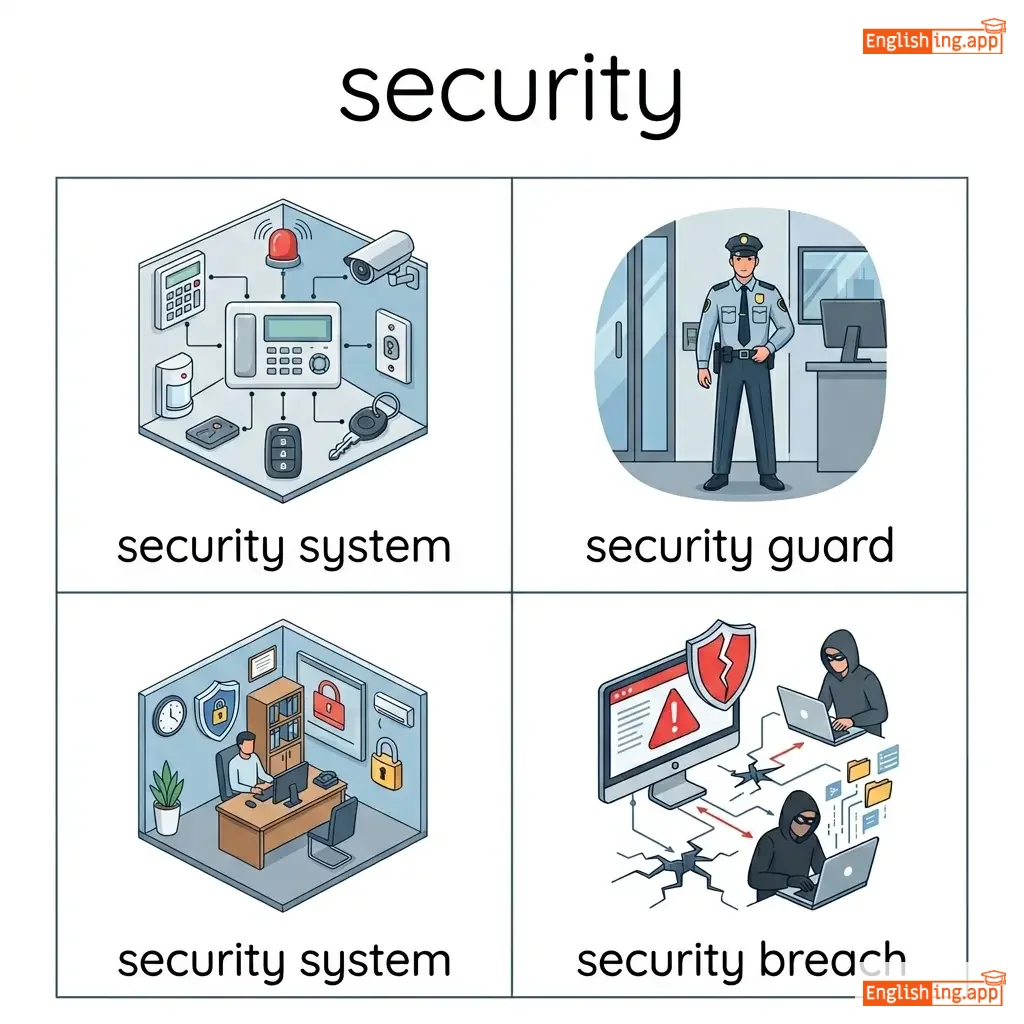
/sɪˈkjʊər.ə.ti/
noun
(безопасность)
••••••
|
|
безопасность
bezopasnost
••••••
|
the state of being free from danger or threat; protection against harm
••••••
|
Airport security has been increased after the incident.
Безопасность в аэропорту была усилена после инцидента.
••••••
|
Безопасность в аэропорту была увеличена после инцидента.
Bezopasnost' v aeroportu byla uvelichena posle intsidenta.
••••••
|
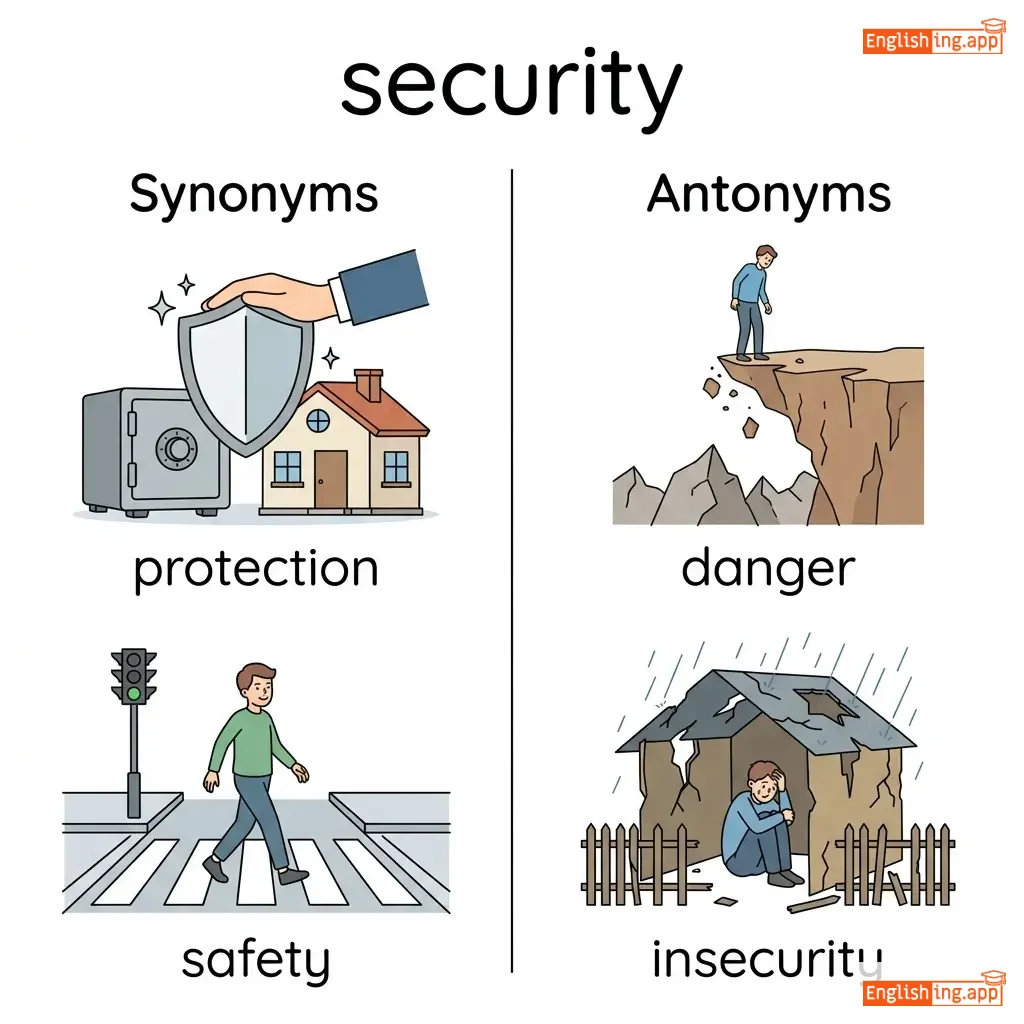
safety, protection, defense, safeguarding
••••••
|
danger, vulnerability, insecurity, risk
••••••
|
national security, security guard, cyber security, job security
••••••
|
Безопасность means safety in Russian, securing from harm!
••••••
|
|
#1251
🏞️
|
/ˈsiː.nər.i/
noun
(sinieri)
••••••
|
- •••••• |
пейзаж
peizazh
••••••
|
the natural features of a landscape; the painted background used on a theater stage
••••••
|
The mountain scenery was breathtakingly beautiful. |
Горный пейзаж был захватывающе красив.
Gornyy peyzazh byl zakhvatyvayushche krasiv.
••••••
|
landscape, view, vista, backdrop
••••••
|
- •••••• |
beautiful scenery, mountain scenery, natural scenery, scenic view
••••••
|
Пейзаж — это картинка природы, которая захватывает.
••••••
|
|
#1252
🪨
|
/ˈsed.ɪ.mənt/
noun
(седимент)
••••••
|
- •••••• |
осадок
osadok
••••••
|
matter that settles to the bottom of a liquid; particles deposited by water or wind
••••••
|
The river carried sediment downstream during the flood.
Зе ривер кэрид седимент даунстрим дьюринг зе флад.
••••••
|
Река несла осадки вниз по течению во время наводнения.
Reka nesla osadki vniz po techenie vo vremya navodneniya.
••••••
|
deposit, residue, silt, debris
••••••
|
solution, suspension
••••••
|
river sediment, marine sediment, sediment layer, sediment deposit
••••••
|
Sediment седимент сидит на дне, осадки на дне воды — легко запомнить
••••••
|
|
#1254
⚖️
|
/sɪˈdɪʃ.ən/
noun
(седин)
••••••
|
|
предательство
predatel'stvo
••••••
|
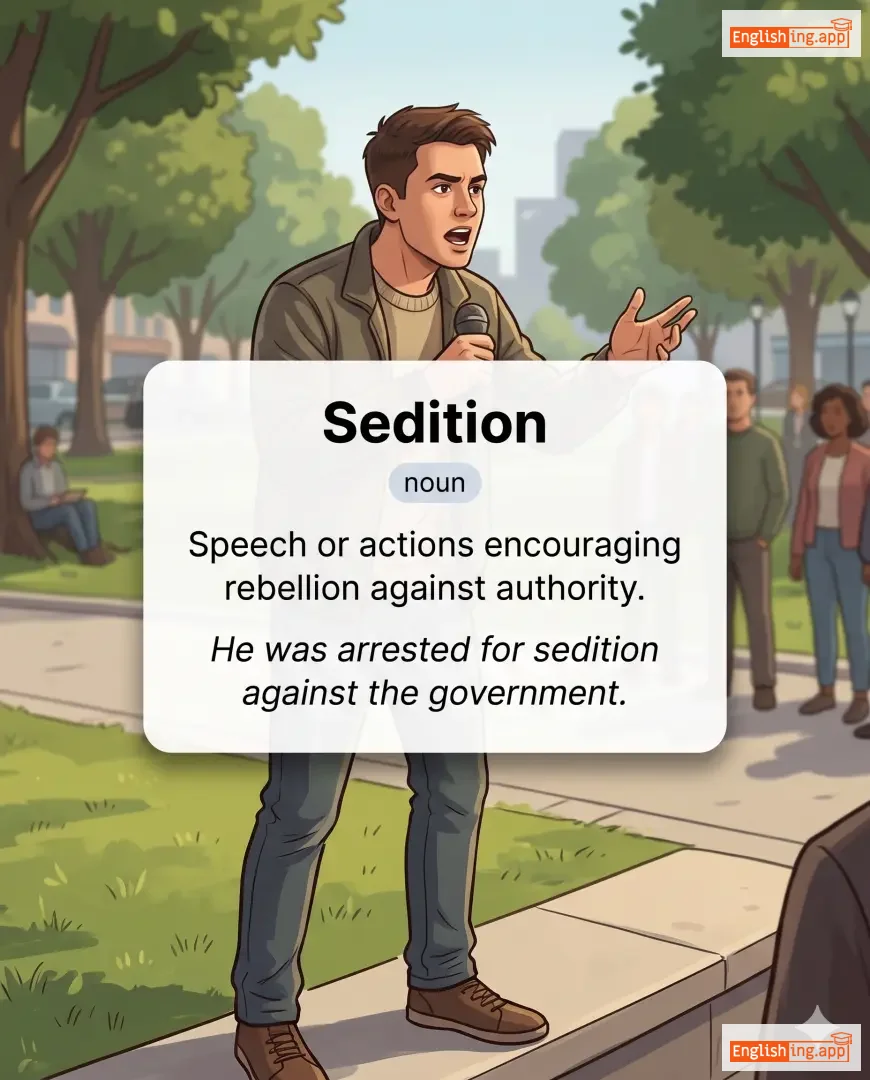
conduct or speech inciting people to rebel against authority; treason
••••••
|
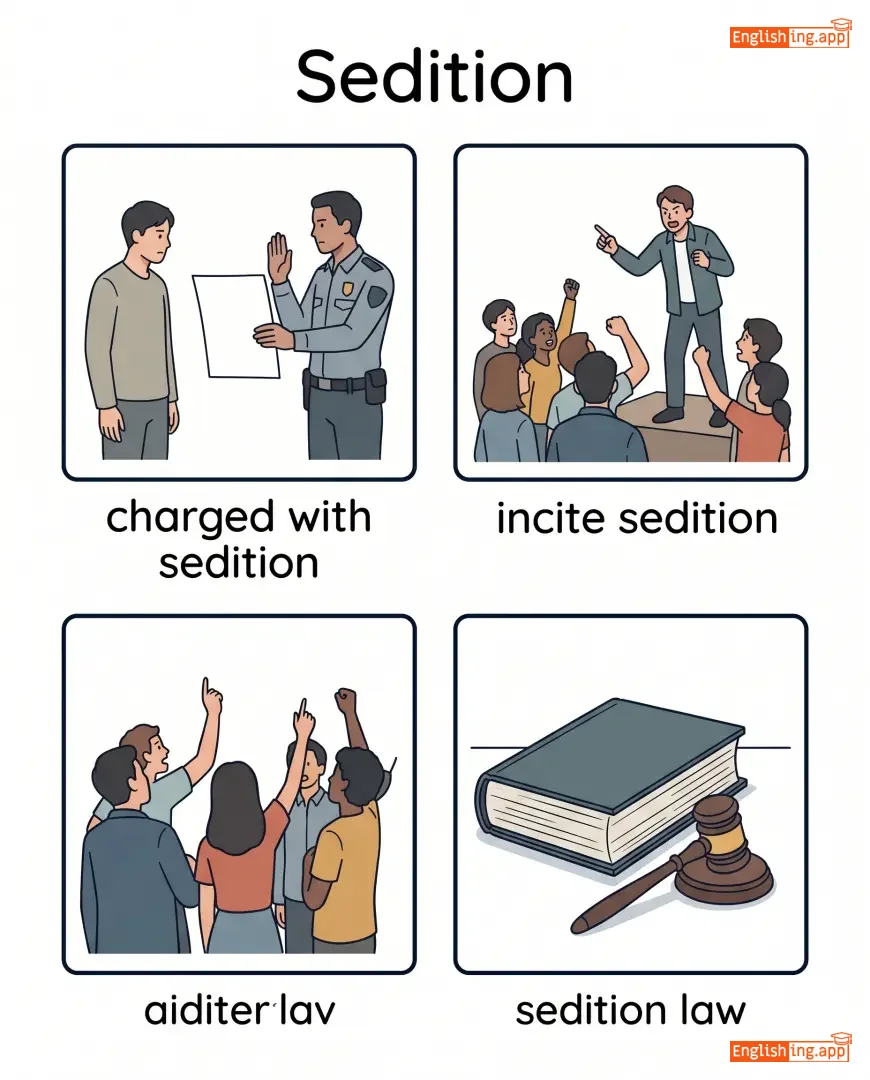
The activist was charged with sedition for his inflammatory speeches. |
Активист был обвинен в предательстве за его подстрекательские речи.
Aktivist byl obvinen v predatel'stve za ego podstrekatel'skie rechi.
••••••
|
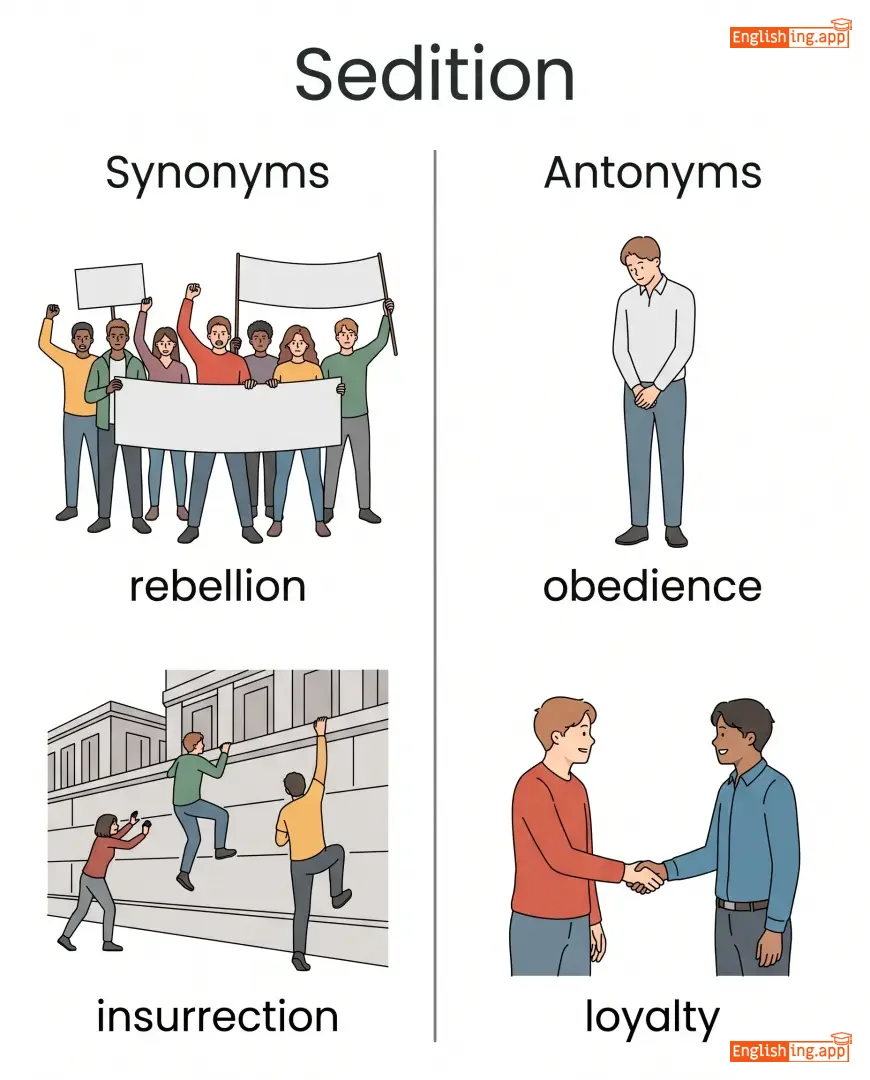
rebellion, mutiny, insurrection, treason
••••••
|
loyalty, allegiance, obedience, patriotism
••••••
|
charged with sedition, sedition law, acts of sedition, sedition trial
••••••
|
Think of 'предательство' as betrayal in Russian, which leads to sedition.
••••••
|
|
#1255
📅
|
/ˈʃed.juːl/
noun
(skedjul)
••••••
|
- •••••• |
расписание; план;
schedule
••••••
|
a plan that lists things or events and the times when they will happen; timetable
••••••
|
Please check your schedule before confirming the meeting time.
Пожалуйста, проверьте свой график перед подтверждением времени встречи.
••••••
|
Пожалуйста, проверьте свой график перед подтверждением времени встречи.
Pozhaluysta, prover'te svoi grafik pered podtverzhdeniem vremeni vstrechi.
••••••
|
timetable, agenda, plan, calendar
••••••
|
chaos, disorder
••••••
|
busy schedule, work schedule, meeting schedule, follow schedule
••••••
|
График - это инструмент для организации вашего времени.
••••••
|
|
#1256
💋
|
/sɪˈdʌk.ʃən/
noun
(седакшн)
••••••
|
- •••••• |
соблазн; искушение
soblazn; iskushenie
••••••
|
the action of seducing someone; temptation to do something wrong
••••••
|
He fell victim to the seduction of easy money. |
Он стал жертвой соблазна легких денег.
On stal zhertvoy soblazna legkikh deneg.
••••••
|
temptation, enticement, allure, attraction
••••••
|
repulsion, deterrence, discouragement
••••••
|
the seduction of power, fall to seduction, art of seduction, seduction technique
••••••
|
In Russian, don't give in to the 'iskushenie' of 'soblazn'!
••••••
|
|
#1257
🎓
|
/ˈskɒl.ər/
noun
(сколер)
••••••
|
- •••••• |
учёный; академик
uchyoniy; akademik
••••••
|
a person who has studied a subject for a long time and knows a lot about it; an academic
••••••
|
The renowned scholar published several books on ancient history.
ðə rɪˈnaʊnd ˈskɒlər ˈpʌblɪʃt ˈsɛvrəl bʊks ɒn ˈeɪnʃənt ˈhɪstəri.
••••••
|
Знаменитый учёный опубликовал несколько книг по древней истории.
Znamenityy uchyony opublikoval neskol'ko knig po drevney istorii.
••••••
|
academic, intellectual, researcher, learned person
••••••
|
ignoramus, illiterate
••••••
|
renowned scholar, distinguished scholar, scholarship program, scholarly work
••••••
|
Учёный всегда в поисках знаний.
••••••
|
|
#1258
🧩
|
/ˈseɡ.mənt/
noun
(сегмент)
••••••
|
- •••••• |
сегмент; часть; разделённая часть
segment; chast'; razdelennaya chast'
••••••
|
each of the parts into which something is divided; a section or portion
••••••
|
The orange was divided into eight segments.
Апельсин был разделён на восемь сегментов.
••••••
|
Апельсин был разделён на восемь сегментов.
Apelsin byl razdelyon na vosem' segmentov.
••••••
|
section, portion, part, division
••••••
|
whole, entirety, totality
••••••
|
market segment, line segment, segment analysis, target segment
••••••
|
Представьте, что апельсин разделён на восемь одинаковых сегментов.
••••••
|
|
#1259
📺
|
/skriːn/
noun
(ekran)
••••••
|
- •••••• |
экран
ekran
••••••
|
a flat surface on which pictures or words are shown; a movable partition used to divide a room
••••••
|
The movie was displayed on a large screen in the theater.
Фильм был показан на большом экране в театре.
••••••
|
Фильм был показан на большом экране в театре.
Film byl pokazan na bol'shom ekrane v teatre.
••••••
|
display, monitor, partition, barrier
••••••
|
- •••••• |
computer screen, movie screen, screen time, touch screen
••••••
|
Экран - это то, что показывается в кино.
••••••
|
|
#1260
✅
|
/sɪˈlek.ʃən/
noun
(селекшн)
••••••
|
|
выбор; процесс выбора; выбор чего-либо
vybor; protsess vibora; vybor chego-libo
••••••
|
the action or fact of carefully choosing someone or something; a range of items to choose from
••••••
|
The store offers a wide selection of books.
магазин предлагает широкий выбор книг.
••••••
|
Магазин предлагает широкий выбор книг.
Magazin predlagayet shirokiy vybor knig.
••••••
|
choice, picking, preference, assortment
••••••
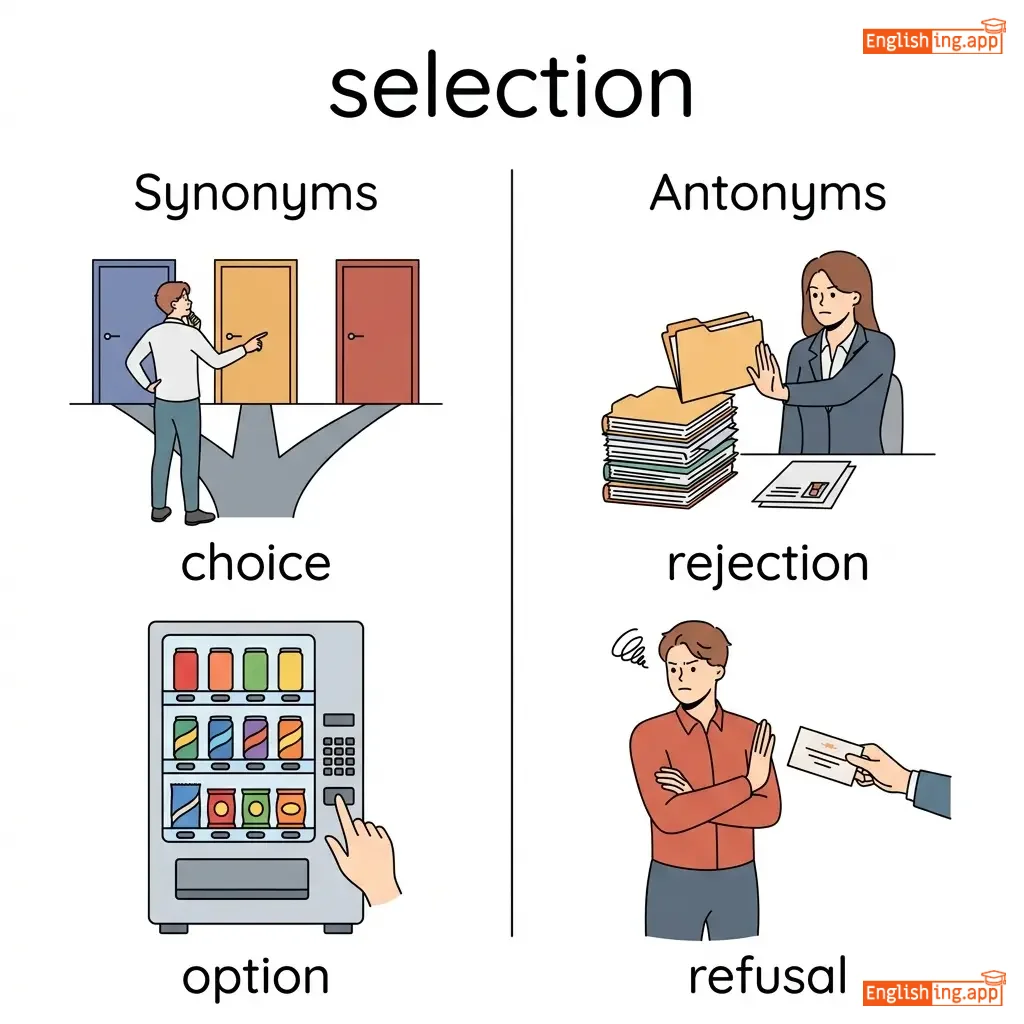
|
rejection, exclusion, elimination
••••••
|
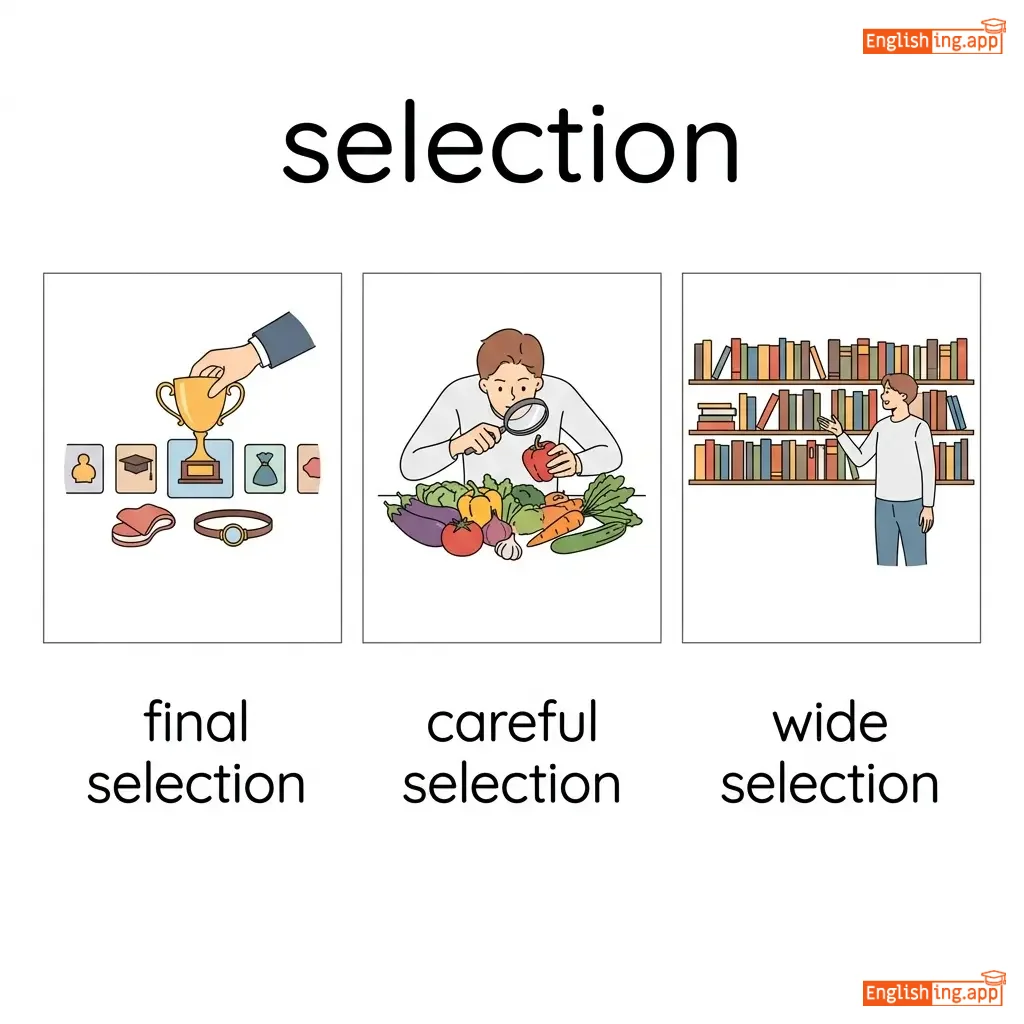
natural selection, selection process, wide selection, selection criteria
••••••
|
Помните о выборе как о выборе книг в магазине.
••••••
|
Vocabulary Quiz
Test your vocabulary by matching words with their translations or meanings.
Login to take the quiz
Comments (0)
Share your thoughts and join the discussion.
Join the discussion by logging in
Login to CommentNo comments yet
Be the first to share your thoughts!