

Обновитесь для доступа ко всему словарю
Получите неограниченный доступ ко всем словам с подпиской Pro
Обновить до ProПеревод
Прошедшее
Причастие прошедшего времени
Третье лицо единственного числа
Герундий
Значение
Пример предложения
Перевод примера предложения
Синонимы
Антонимы
Коллокации
Мнемоника
Swipe left or right, or use the buttons. Tap image to zoom.
Обновитесь для доступа ко всем предложениям
Получите неограниченный доступ ко всем предложениям с подпиской Pro
Обновить до ProПеревод примера предложения
Слово
Lesson 50Lesson 50 - Переключатель маски
|
Эмодзи
|
Слово | Images | Перевод | Значение | Пример предложения | Перевод примера предложения | Синонимы | Антонимы | Коллокации | Мнемоника |
|---|---|---|---|---|---|---|---|---|---|---|
|
#981
📝
|
/ˈɔr.dər/
noun
(порядок)
••••••
|
|
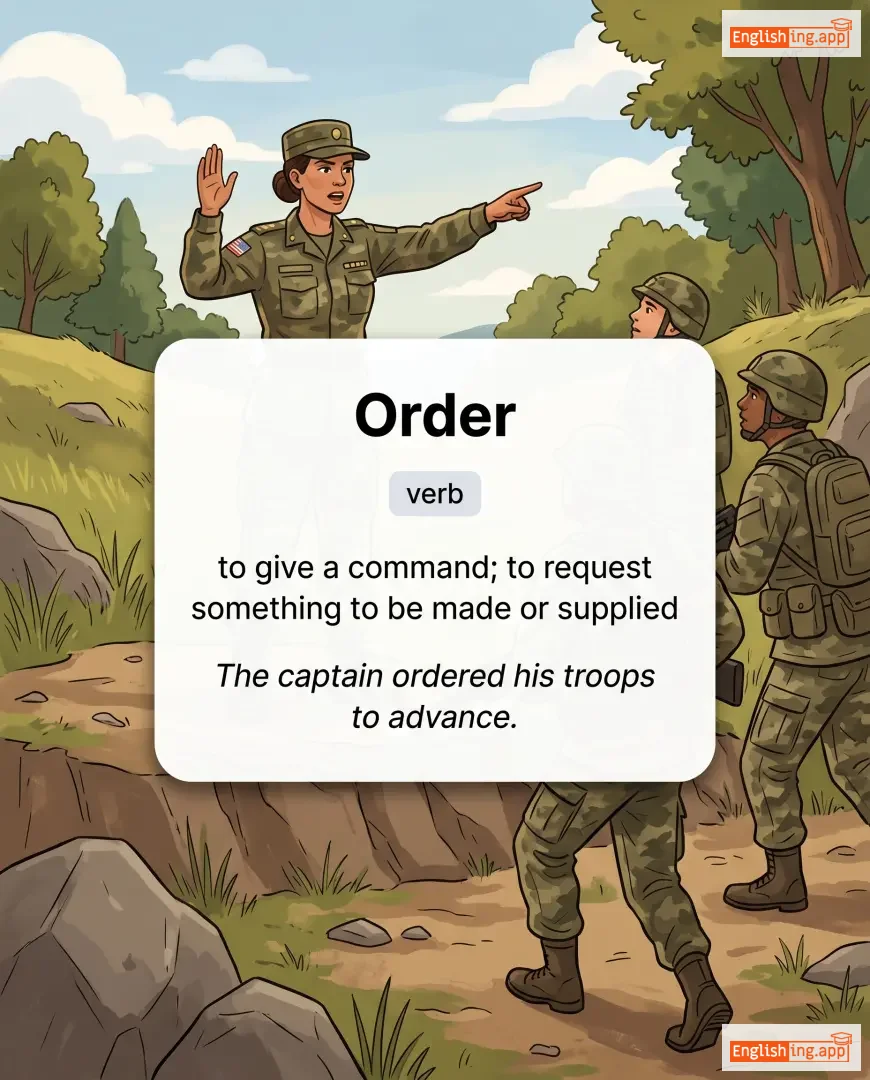
приказ; порядок
prikaz; poryadok
••••••
|
a command or instruction; the arrangement of things following a particular sequence
••••••
|
The teacher gave an order to sit down quietly.
Учитель дал команду сесть спокойно.
••••••
|
Учитель дал команду сесть спокойно.
Uchitel' dal komandu sесть spokojno.
••••••
|
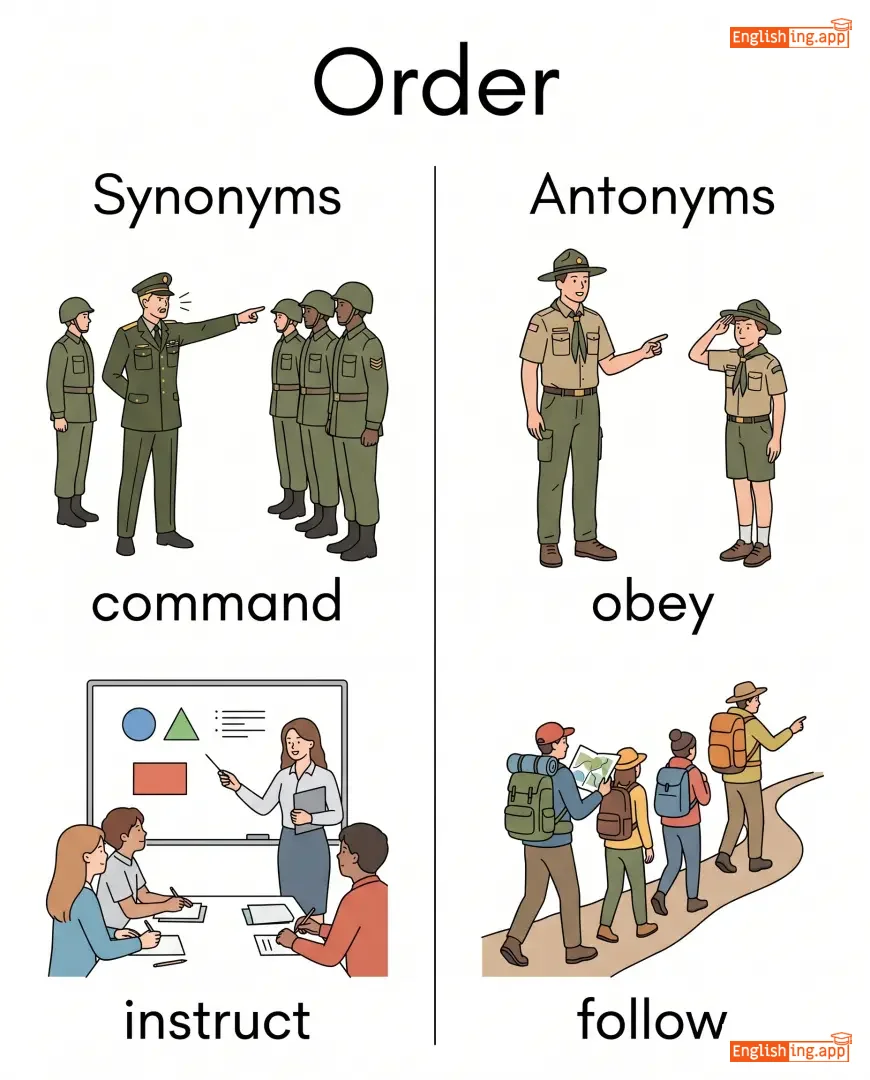
command, instruction, arrangement, sequence
••••••
|
chaos, disorder, confusion, anarchy
••••••
|
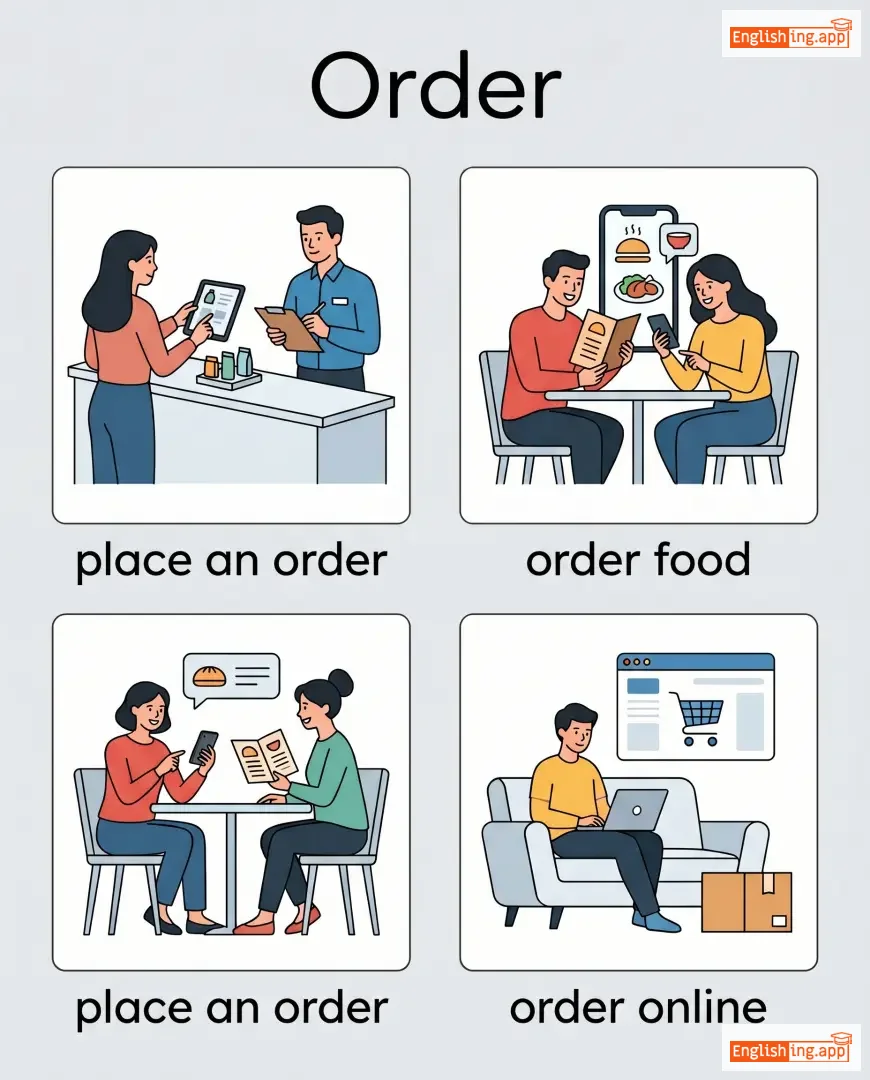
give order, follow order, in order
••••••
|
Приказ напоминает, как сесть спокойно, следуя порядку.
••••••
|
|
#982
🌿
|
/ˈoʊ.vər ɡroʊθ/
noun
(Овер гроус)
••••••
|
- •••••• |
чрезмерный рост
ohver groth
••••••
|
excessive growth beyond normal size; too much development or expansion
••••••
|
The overgrowth of weeds made the garden look untidy.
Заросли сорняков сделали сад неопрятным.
••••••
|
Заросли сорняков сделали сад неопрятным.
Zarosli sornyakov sdelali sad neoprjatnym
••••••
|
excessive growth, overgrowth, proliferation, expansion
••••••
|
undergrowth, stunted growth, reduction, decline
••••••
|
vegetation overgrowth, cancer overgrowth, prevent overgrowth
••••••
|
Овер Гроус = over growth; представь сад с Зарослями сорняков, растущими сверх нормы — это Чрезмерный рост
••••••
|
|
#983
🌅
|
/ˈɔr.i.ənt/
noun
(ориент)
••••••
|
- •••••• |
Восток, особенно страны Восточной Азии
vostok, osobenno strany vostochnoj azii
••••••
|
the East, especially countries of eastern Asia; to determine one's position or direction
••••••
|
Many spices come from the Orient. |
Многие специи приходят с Востока.
Mnogie spetsi pristavayut s Vostoka.
••••••
|
East, eastern countries, Asia, Far East
••••••
|
Occident, West, western countries
••••••
|
Far Orient, Orient Express, orient oneself
••••••
|
Ориент как специи с востока
••••••
|
|
#984
🌊
|
/ˈoʊ.vər spɪl/
noun
(оувэрспил)
••••••
|
- •••••• |
перелив
pereliv
••••••
|
the overflow of liquid from a container; excess that cannot be contained
••••••
|
The overspill from the river flooded nearby farms.
Перелив реки затопил соседние фермы.
••••••
|
Перелив реки затопил соседние фермы.
Pereliv reki zatopil sosednie fermy.
••••••
|
overflow, spillage, excess, surplus
••••••
|
containment, shortage, deficit, underflow
••••••
|
water overspill, population overspill, prevent overspill
••••••
|
Перелив — это когда жидкость выходит за пределы сосуда, например, когда река выходит из берегов и затопляет поля.
••••••
|
|
#985
🌱
|
/ˈɔr.ə.ʒɪn/
noun
(ориджин)
••••••
|
- •••••• |
происхождение
proiskhozhdenie
••••••
|
the point or place where something begins, arises, or is derived; the source
••••••
|
Scientists are studying the origin of the universe. |
Учёные изучают происхождение вселенной.
Uchonyye izuchayut proiskhozhdeniye vselennoy.
••••••
|
source, beginning, start, root
••••••
|
end, conclusion, result, outcome
••••••
|
country of origin, origin story, trace origin
••••••
|
Происхождение — это начало, как 'origin' на английском.
••••••
|
|
#986
💼
|
/ˈoʊ.nər/
noun
(óvner)
••••••
|
- •••••• |
владелец
vladelets
••••••
|
a person who owns something; someone who has legal possession of property
••••••
|
The owner of the restaurant greeted us warmly. |
Владелец ресторана тепло нас поприветствовал.
Vladelyets restorana teplo nas poprivetsvoval.
••••••
|
proprietor, possessor, holder, landlord
••••••
|
tenant, renter, borrower, user
••••••
|
business owner, property owner, car owner
••••••
|
In Russian, 'владелец' is the one who owns, just like an 'owner'.
••••••
|
|
#987
✨
|
/əˌrɪʒ.əˈnæl.ə.ti/
noun
(ориджиналити)
••••••
|
- •••••• |
оригинальность
originalnost
••••••
|
the quality of being novel or unusual; the ability to think independently and creatively
••••••
|
The artist's work showed great originality and creativity.
работа художника показала большую ориджиналити и креативность
••••••
|
Работа художника показала большую оригинальность и креативность.
rabota khudozhnika pokazala bolshuyu originalnost i kreativnost
••••••
|
creativity, innovation, novelty, uniqueness
••••••
|
imitation, copying, conventionality, conformity
••••••
|
show originality, lack originality, creative originality
••••••
|
Originalnost sounds like originality – Russian style!
••••••
|
|
#988
🤝
|
/pækt/
noun
(пакт)
••••••
|
- •••••• |
пакт; соглашение
pakt; soglashenie
••••••
|
a formal agreement between individuals or parties; a treaty or contract
••••••
|
The two countries signed a peace pact to end the war. |
Две страны подписали мирный пакт, чтобы закончить войну.
Dve strany podpisali mirnyy pakt, chtoby zakonchit' voyynu.
••••••
|
agreement, treaty, contract, deal
••••••
|
disagreement, conflict, dispute, breach
••••••
|
peace pact, trade pact, sign pact
••••••
|
Пакт мира, соглашение для завершения войны
••••••
|
|
#989
👶
|
/ˈɔr.fən/
noun
(орфан)
••••••
|
- •••••• |
сирота
sirota
••••••
|
a child whose parents are dead; someone without protective support
••••••
|
The orphan was adopted by a loving family. |
Сирота был усыновлён любящей семьёй.
Sirota byl usynovlyon lyubyashchey sem'yoy.
••••••
|
foundling, waif, abandoned child
••••••
|
biological child, wanted child
••••••
|
adopt orphan, orphan child, care for orphan
••••••
|
Любящая семья принимает сироту.
••••••
|
|
#990
🌾
|
/ˈpæd.i/
noun
(пэдди)
••••••
|
- •••••• |
необработанный рис; рисовое поле
neobrabotanny ris; risovoe pole
••••••
|
rice in its natural state before processing; a field where rice is grown
••••••
|
The farmers worked hard in the paddy fields during harvest season. |
Фермеры усердно работали на рисовых полях во время сезона сбора урожая.
Fermery usyerdno rabotali na risovykh polyakh vo vremya sezona sbora urozhaia.
••••••
|
rice field, rice paddy, rice cultivation
••••••
|
processed rice, milled rice
••••••
|
paddy field, paddy cultivation, paddy harvest
••••••
|
Поле риса, где труд дает урожай
••••••
|
|
#991
🏠
|
/ˈɔr.fən.ɪʒ/
noun
(орфанаж)
••••••
|
- •••••• |
детский дом
detskiy dom
••••••
|
an institution for the care and education of children who have lost their parents
••••••
|
The charity built a new orphanage for homeless children. |
Благотворительная организация построила новый детский дом для бездомных детей.
Blagotvoritel'naya organizatsiya postroila novyy detskiy dom dlya bezdomnykh detey.
••••••
|
children's home, foster home, care institution
••••••
|
family home, biological family
••••••
|
run orphanage, orphanage staff, children's orphanage
••••••
|
Детский дом – место для детей, которые потеряли своих родителей.
••••••
|
|
#992
⛩️
|
/ˈpeɪ.ɡən/
noun
••••••
|
- •••••• | - •••••• |
a person holding religious beliefs other than the main world religions; a heathen
••••••
|
Ancient Romans considered early Christians to be pagans. |
- •••••• |
heathen, non-believer, idolater, infidel
••••••
|
believer, Christian, Muslim, religious person
••••••
|
pagan rituals, pagan beliefs, ancient pagan
••••••
|
No •••••• |
|
#993
🚨
|
/ˈaʊt.breɪk/
noun
(Аут-брейк)
••••••
|
- •••••• |
вспышка
aut-breyk
••••••
|
a sudden occurrence or eruption of something, especially disease or violence
••••••
|
The outbreak of flu affected many students in the school.
Вспышка гриппа повлияла на многих учащихся в школе.
••••••
|
Вспышка гриппа повлияла на многих учащихся в школе.
Vspyshka grippa povliyala na mnogikh uchashchikhsya v shkole.
••••••
|
eruption, epidemic, flare-up, onset
••••••
|
containment, control, suppression, end
••••••
|
disease outbreak, outbreak of violence, contain outbreak
••••••
|
Mnemonic: Представь сцену: Out выходит наружу, и BREAK — болезнь разгорается, вспышка
••••••
|
|
#994
😢
|
/peɪn/
noun
(pein)
••••••
|
- •••••• |
боль; физическое страдание или эмоциональное напряжение
bol; fizicheskoe stradanie ili emotsionalnoe napryazhenie
••••••
|
physical suffering or discomfort; mental or emotional distress
••••••
|
The patient felt severe pain in his back.
Пациент почувствовал сильную боль в спине.
••••••
|
Пациент почувствовал сильную боль в спине.
Patsient pochuvstvoval sil'nuyu bol' v spine.
••••••
|
ache, suffering, agony, discomfort
••••••
|
pleasure, comfort, relief, ease
••••••
|
severe pain, chronic pain, feel pain
••••••
|
Вспомните слово 'pain' и как оно означает 'боль' на русском.
••••••
|
|
#995
🏆
|
/ˈaʊt.kʌm/
noun
(autokam)
••••••
|
- •••••• |
результат; последствие;
rezultat; posledstvie
••••••
|
the result or consequence of an action or situation; the final product
••••••
|
The outcome of the election surprised everyone.
Результат выборов удивил всех.
••••••
|
Результат выборов удивил всех.
Rezultat viborov udivil vsekh.
••••••
|
result, consequence, conclusion, end result
••••••
|
beginning, cause, input, start
••••••
|
positive outcome, final outcome, predict outcome
••••••
|
Результат = Конечный результат
••••••
|
|
#996
👅
|
/ˈpæl.ət/
noun
(палет)
••••••
|
- •••••• |
небо; способность различать вкусы
nebo; sposobnost' razlichat' vkusy
••••••
|
the roof of the mouth; a person's ability to distinguish between different flavors
••••••
|
The chef created dishes to please every palate. |
Шеф-повар создал блюда, чтобы угодить каждому вкусу.
Shef-povar sozdal blyuda, chtoby ugodit' kazhdomu vkusu.
••••••
|
taste, flavor sense, roof of mouth
••••••
|
tastelessness, flavor blindness
••••••
|
refined palate, develop palate, please palate
••••••
|
Небо (nebo) - это то место, где вкус становится искусством.
••••••
|
|
#997
🗺️
|
/ˈaʊt.laɪn/
noun
(aʊt.laɪn)
••••••
|
- •••••• |
контур; план; схема
kontur; plan; skhema
••••••
|
a general description or plan showing the essential features of something; the main points
••••••
|
The teacher provided an outline of the course syllabus. |
Учитель предоставил контур учебного плана курса.
Uchitel predostavil kontur uchebnogo plana kursa.
••••••
|
summary, plan, draft, framework
••••••
|
detail, elaboration, full content
••••••
|
course outline, project outline, detailed outline
••••••
|
Контур помогает понять ключевые моменты.
••••••
|
|
#998
⚰️
|
/pɔl/
noun
(pohl)
••••••
|
- •••••• |
ткань, накрывающая гроб; темное покрытие, создающее мрачную атмосферу
tkan' nakryvayushchaya grob; temnoe pokrytie, sozdavayushchee mrachnuyu atmosferu
••••••
|
a cloth spread over a coffin; a dark covering that creates a gloomy atmosphere
••••••
|
A pall of smoke hung over the burning building. |
Туман висел над горящим зданием.
Tuman visel nad goryashchim zdaniem.
••••••
|
shroud, covering, cloak, veil
••••••
|
brightness, clarity, openness, light
••••••
|
pall of smoke, funeral pall, cast pall
••••••
|
Pall, ткань, как дым, который скрывает все и создает атмосферу тревоги.
••••••
|
|
#999
🚫
|
/ˈaʊt.saɪ.dər/
noun
(aʊt-saɪdər)
••••••
|
- •••••• |
аутсайдер
outsajder
••••••
|
a person who does not belong to a particular group; someone not accepted by a group
••••••
|
As an outsider, he found it difficult to understand their traditions.
Как аутсайдер, ему было трудно понять их традиции.
••••••
|
Как аутсайдер, ему было трудно понять их традиции.
Kak aoutsayder, emu bylo trudno ponyat' ikh traditsii.
••••••
|
stranger, foreigner, alien, newcomer
••••••
|
insider, member, local, native
••••••
|
complete outsider, political outsider, remain outsider
••••••
|
Аутсайдер, не понимающий местные традиции
••••••
|
|
#1000
💓
|
/ˌpæl.pɪˈteɪ.ʃən/
noun
(палпитация)
••••••
|
- •••••• |
заметно учащенное, сильное или нерегулярное сердцебиение из-за волнения или медицинского состояния
zametno uchtchennoe, sil'noe ili nereguljarnoe serdcebiienie iz-za volneniya ili medicinskogo sostoyaniya
••••••
|
a noticeably rapid, strong, or irregular heartbeat due to agitation or medical condition
••••••
|
She experienced palpitations before her job interview. |
Она почувствовала палпитацию перед своим собеседованием.
Ona pochuvstvovala palpituatsiyu pered svoim sobesedovaniem.
••••••
|
rapid heartbeat, heart flutter, irregular pulse
••••••
|
normal heartbeat, steady pulse, calm heart
••••••
|
heart palpitations, experience palpitations, cause palpitations
••••••
|
Палпитация (palpitation) = пал (pal) + пити (drink) = ощущение сильных и быстрых сердечных ударов перед собеседованием.
••••••
|
Vocabulary Quiz
Test your vocabulary by matching words with their translations or meanings.
Login to take the quiz
Comments (0)
Share your thoughts and join the discussion.
Join the discussion by logging in
Login to CommentNo comments yet
Be the first to share your thoughts!