

Обновитесь для доступа ко всему словарю
Получите неограниченный доступ ко всем словам с подпиской Pro
Обновить до ProПеревод
Прошедшее
Причастие прошедшего времени
Третье лицо единственного числа
Герундий
Значение
Пример предложения
Перевод примера предложения
Синонимы
Антонимы
Коллокации
Мнемоника
Swipe left or right, or use the buttons. Tap image to zoom.
Обновитесь для доступа ко всем предложениям
Получите неограниченный доступ ко всем предложениям с подпиской Pro
Обновить до ProПеревод примера предложения
Слово
Lesson 61Lesson 61 - Переключатель маски
|
Эмодзи
|
Слово | Images | Перевод | Значение | Пример предложения | Перевод примера предложения | Перевод примера выражения | Синонимы | Антонимы | Коллокации | Мнемоника |
|---|---|---|---|---|---|---|---|---|---|---|---|
|
#1201
🔄
|
/ˌrevəˈluːʃən/
noun
(револю́ция)
••••••
|
|
революция; преобразование; переворот
revolyutsiya; preobrazovaniye; perevorot
••••••
|
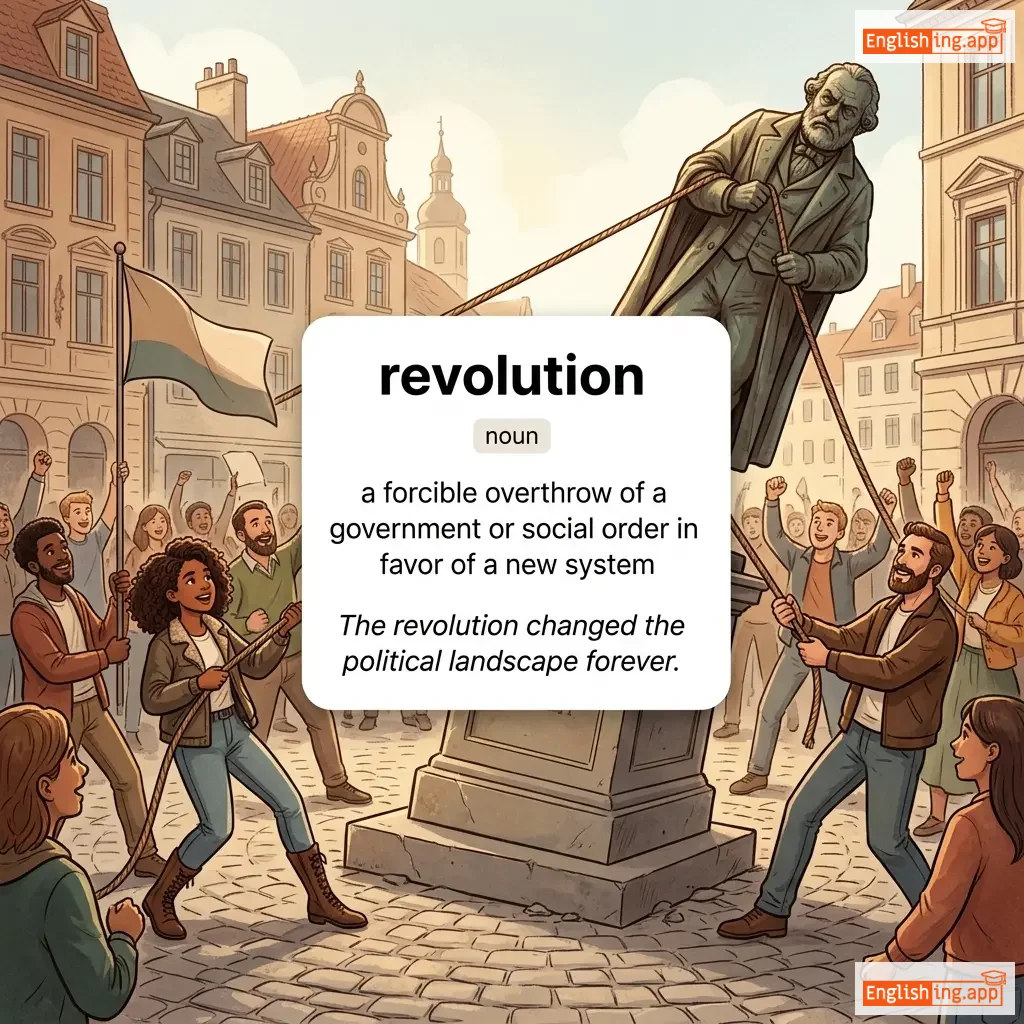
a dramatic and wide-reaching change in conditions, attitudes, or operation; a forcible overthrow of a government or social order
••••••
|
The industrial revolution changed the way people lived and worked.
Индустриальная революция изменила способ жизни и работы людей.
••••••
|
Индустриальная революция изменила способ жизни и работы людей.
Industrial'naya revolyutsiya izmenila sposob zhizni i raboty lyudey.
••••••
|
- •••••• |
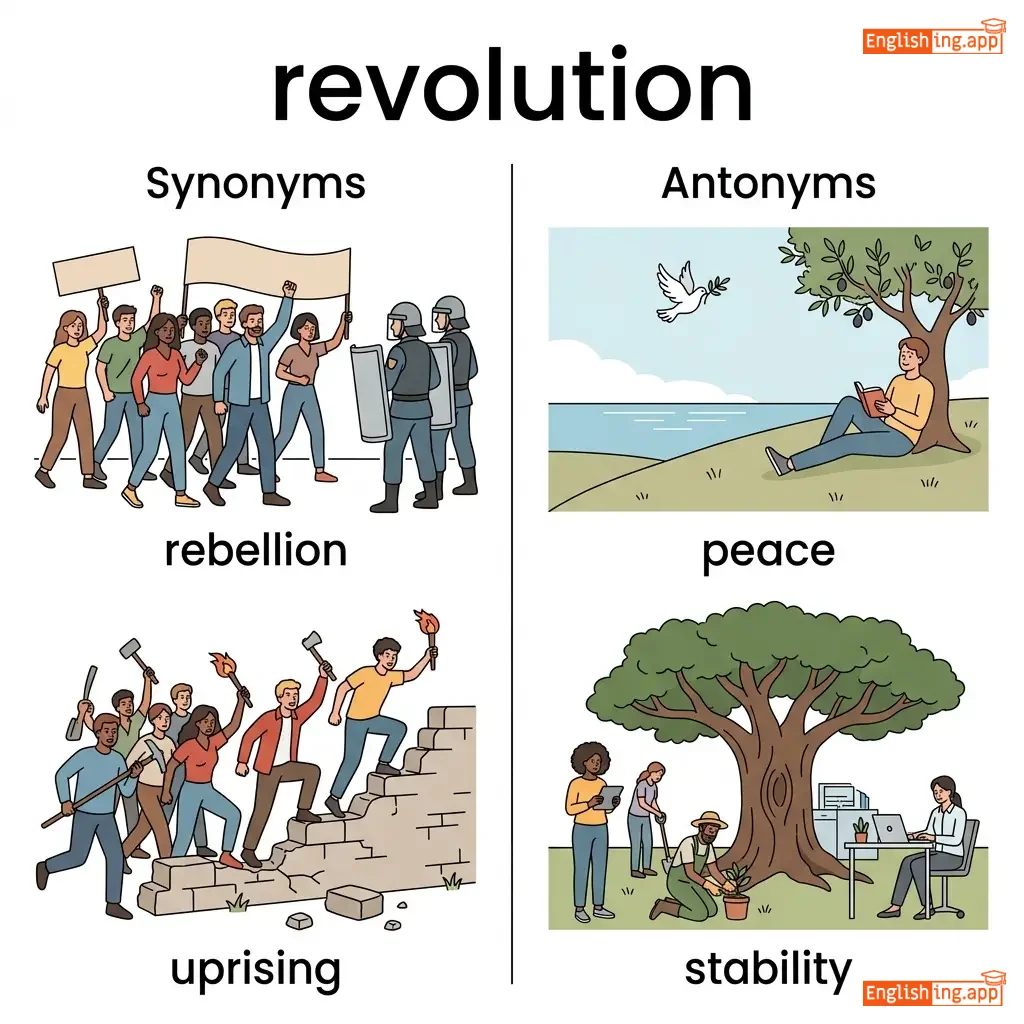
upheaval, transformation, rebellion, revolt
••••••
|
stability, conservation, tradition
••••••
|
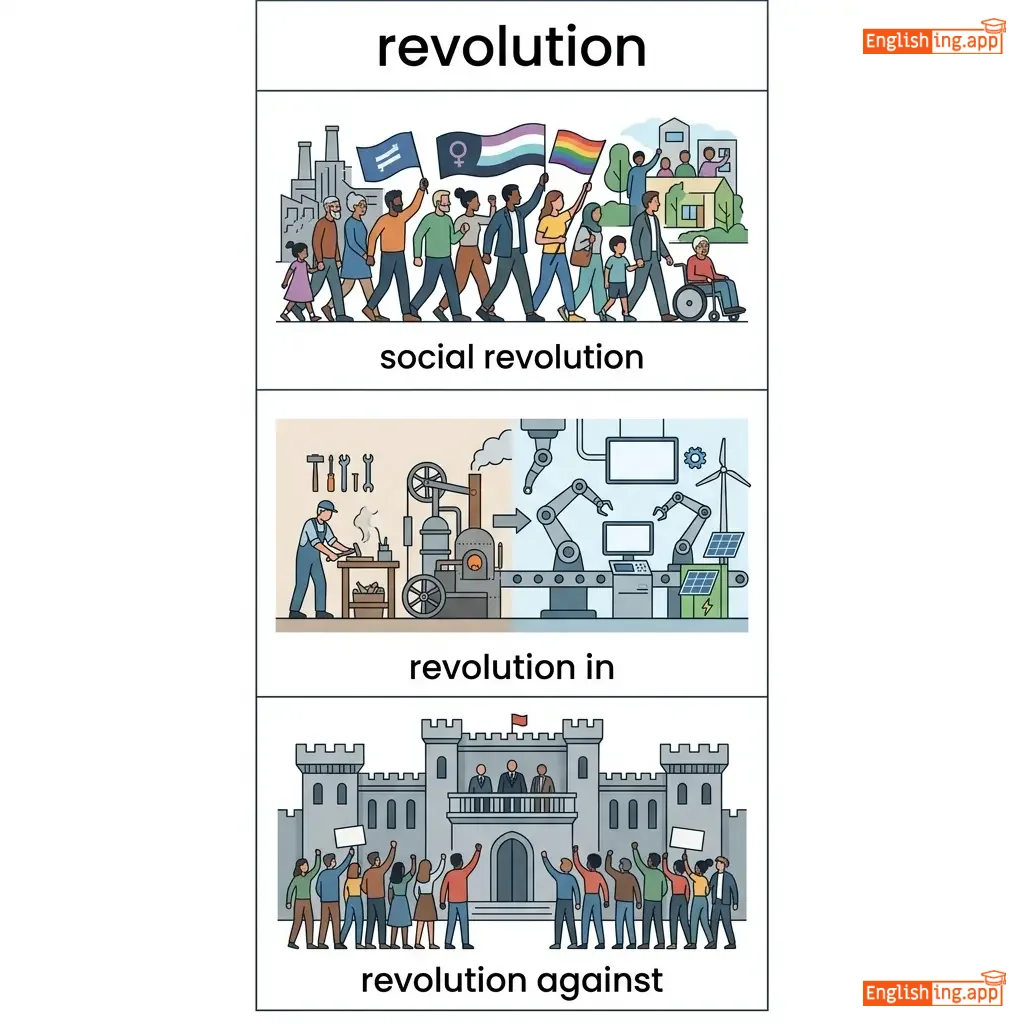
industrial revolution, political revolution, scientific revolution
••••••
|
Революция приносит большие изменения, как смена порядка в обществе.
••••••
|
|
#1202
🔄
|
/roʊˈteɪʃən/
noun
(ro-tei-shon)
••••••
|
- •••••• |
вращение; оборот; вращение оси
vraschenie; oborot; vraschenie osy
••••••
|
the action of rotating around an axis or center; a single turn
••••••
|
The Earth's rotation takes 24 hours to complete.
вращение Земли занимает 24 часа.
••••••
|
Вращение Земли занимает 24 часа.
Vraschenie Zemli zaniymayet 24 chasa.
••••••
|
- •••••• |
turning, spinning, revolution, orbit
••••••
|
stillness, stability, stagnation
••••••
|
crop rotation, job rotation, axis of rotation
••••••
|
Представьте себе, как Земля вращается как юла
••••••
|
|
#1203
🧩
|
/ˈrɪdəl/
noun
(хэппинесс)
••••••
|
- •••••• |
загадка
zagadka
••••••
|
a question or statement intentionally phrased so as to require ingenuity in ascertaining its answer or meaning; a puzzle
••••••
|
The ancient riddle stumped all the scholars for years. |
Древняя загадка сбивала с толку всех учёных на протяжении многих лет.
Drevnyaya zagadka sbivala s tolkum vsekh uchyonykh na protyazhenii mnogikh let.
••••••
|
- •••••• |
puzzle, enigma, mystery, brain teaser
••••••
|
solution, answer, explanation
••••••
|
solve a riddle, ancient riddle, riddle me this
••••••
|
Russian 'загадка' (riddle) has a similar sound to the word 'riddle'.
••••••
|
|
#1204
🗑️
|
/ˈrʌbɪʃ/
noun
(рэбиш)
••••••
|
- •••••• |
мусор; бесполезные вещи; чепуха
mu-sor; bes-po-lez-nye ve-shchi; che-pu-kha
••••••
|
waste material; refuse or litter; nonsense or worthless things
••••••
|
Please throw the rubbish in the bin. |
Пожалуйста, выбросьте мусор в контейнер.
Po-zhals-ta, vy-bros-te mu-sor v kon-tey-ner.
••••••
|
- •••••• |
garbage, trash, waste, junk
••••••
|
treasure, valuable, precious
••••••
|
household rubbish, rubbish bin, rubbish collection
••••••
|
In Russian, 'мусор' sounds like 'rubbish'.
••••••
|
|
#1205
🔒
|
/rɪˈdʒɪdəti/
noun
(rijiditi)
••••••
|
- •••••• |
жесткость
zhestkost
••••••
|
inability to bend or be forced out of shape; unwillingness to change or compromise
••••••
|
The rigidity of the old system prevented any innovation. |
Жесткость старой системы препятствовала любым инновациям.
Zhestkost' staroy sistemy prepyatstvovala lyubym innovatsiyam.
••••••
|
- •••••• |
stiffness, inflexibility, strictness, firmness
••••••
|
flexibility, adaptability, elasticity
••••••
|
mental rigidity, structural rigidity, rigidity of rules
••••••
|
Жесткость, как если бы что-то было неподвижным и твёрдым
••••••
|
|
#1206
👥
|
/rʌk/
noun
(рак)
••••••
|
- •••••• |
толкотня; беспорядочная толпа
tolkotnya; besporyadochnaya tolpa
••••••
|
a situation where a crowd of people are pushing against each other; a disorderly crowd
••••••
|
There was a ruck at the football match. |
На футбольном матче была толкотня.
Na futbol'nom matche byla tolkotnya
••••••
|
- •••••• |
scuffle, fight, brawl, melee
••••••
|
peace, order, calm
••••••
|
rugby ruck, ruck and maul, ruck formation
••••••
|
Толкотня = люди толкаются в толпе
••••••
|
|
#1207
🔥
|
/ˈraɪət/
noun
(raiyot)
••••••
|
- •••••• |
беспорядки; восстание
besporyadki; vosstanie
••••••
|
a violent disturbance of the peace by a crowd; an uncontrolled outburst
••••••
|
The peaceful protest turned into a riot when violence broke out.
мирная демонстрация превратилась в беспорядки, когда насилие вспыхнуло.
••••••
|
Мирная демонстрация превратилась в беспорядки, когда насилие вспыхнуло.
Mirnaya demonstratsiya prevratilsya v besporyadki, kogda nasilie vsphyhnulo
••••••
|
- •••••• |
uprising, disturbance, unrest, rebellion
••••••
|
peace, order, calm, tranquility
••••••
|
riot police, food riot, prison riot
••••••
|
Представьте, как быстро мирный протест превращается в беспорядки.
••••••
|
|
#1208
😤
|
/ˈruːdnəs/
noun
(руднес)
••••••
|
- •••••• |
грубость
rud-nes
••••••
|
the quality of being impolite, discourteous, or offensive in behavior or speech
••••••
|
His rudeness shocked everyone at the dinner party. |
Его грубость потрясла всех на ужинной вечеринке.
Ego grubost' potryasla vsekh na uzhinnoy vecherinke.
••••••
|
- •••••• |
impoliteness, discourtesy, incivility, bad manners
••••••
|
politeness, courtesy, civility, respect
••••••
|
shocking rudeness, deliberate rudeness, inexcusable rudeness
••••••
|
Грубость — это когда вы ведете себя невежливо или говорите оскорбительно.
••••••
|
|
#1209
🌊
|
/ˈrɪpəl/
noun
(рИпл)
••••••
|
- •••••• |
волнение
volnenie
••••••
|
a small wave on the surface of water; a spreading effect or influence
••••••
|
The stone created ripples across the calm pond. |
Камень создал волнения на спокойном пруду.
Kamen' sozdaval volneniya na spokoynom prudu.
••••••
|
- •••••• |
wave, undulation, effect, consequence
••••••
|
stillness, calm, smoothness
••••••
|
ripple effect, water ripple, ripple through
••••••
|
Как волна, которая всегда распространяется далеко.
••••••
|
|
#1210
😈
|
/ˈrʌfiən/
noun
(рафиан)
••••••
|
- •••••• |
бандит; жестокий человек;
ruffian
••••••
|
a violent person, especially one involved in crime; a brutal or lawless person
••••••
|
The ruffian threatened the shopkeeper for money.
Руффиан угрожал владельцу магазина за деньги.
••••••
|
Бандит угрожал владельцу магазина за деньги.
Bandit ughrozhat vladeltsu magazina za dengi
••••••
|
- •••••• |
thug, hooligan, criminal, villain
••••••
|
gentleman, saint, hero, protector
••••••
|
street ruffian, common ruffian, dangerous ruffian
••••••
|
Представьте себе бандита, который угрожает за деньги, чтобы помнить слово 'Ruffian'.
••••••
|
|
#1211
⚠️
|
/rɪsk/
noun
(риск)
••••••
|
|
риск
risk
••••••
|
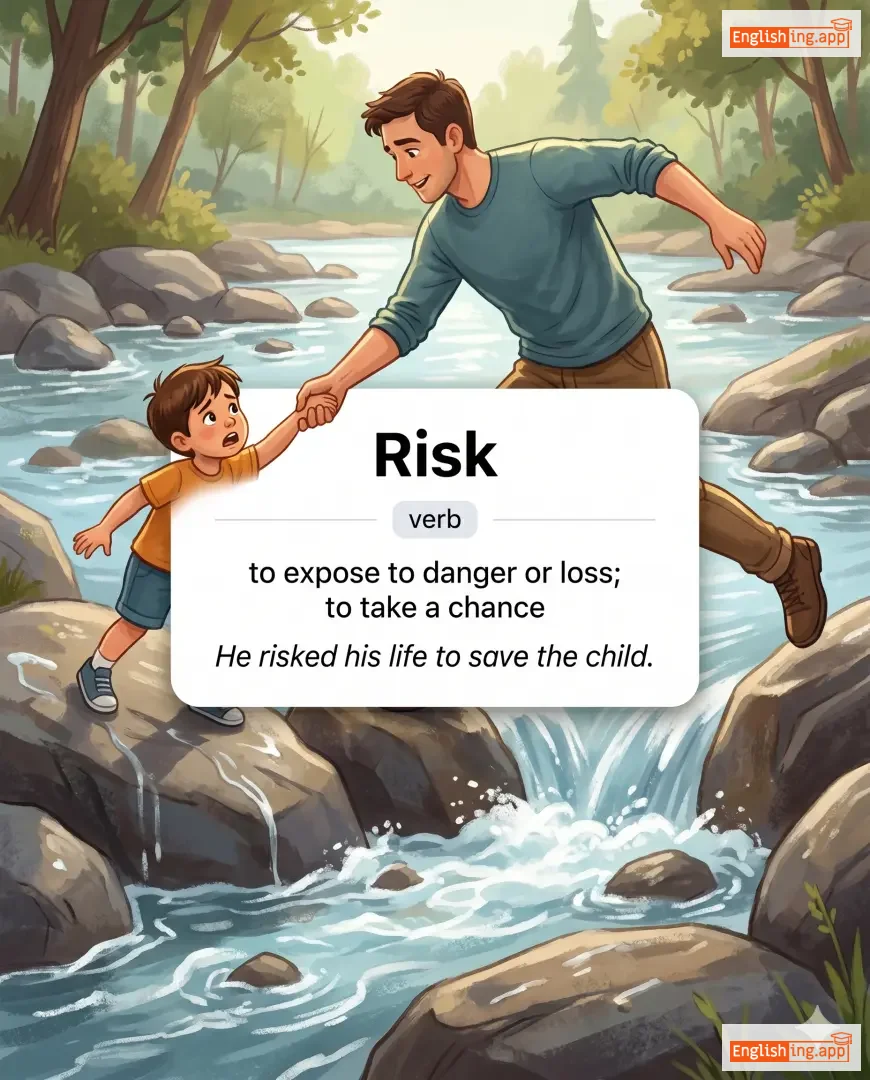
a situation involving exposure to danger; the possibility of something bad happening
••••••
|
Taking this investment carries a high risk of losing money. |
Принятие этой инвестиции связано с высоким риском потери денег.
Priyat'ye etoy investitsii svyazano s vysokim riskom poteri deneg
••••••
|
поиск счастья
poisk schast'ya
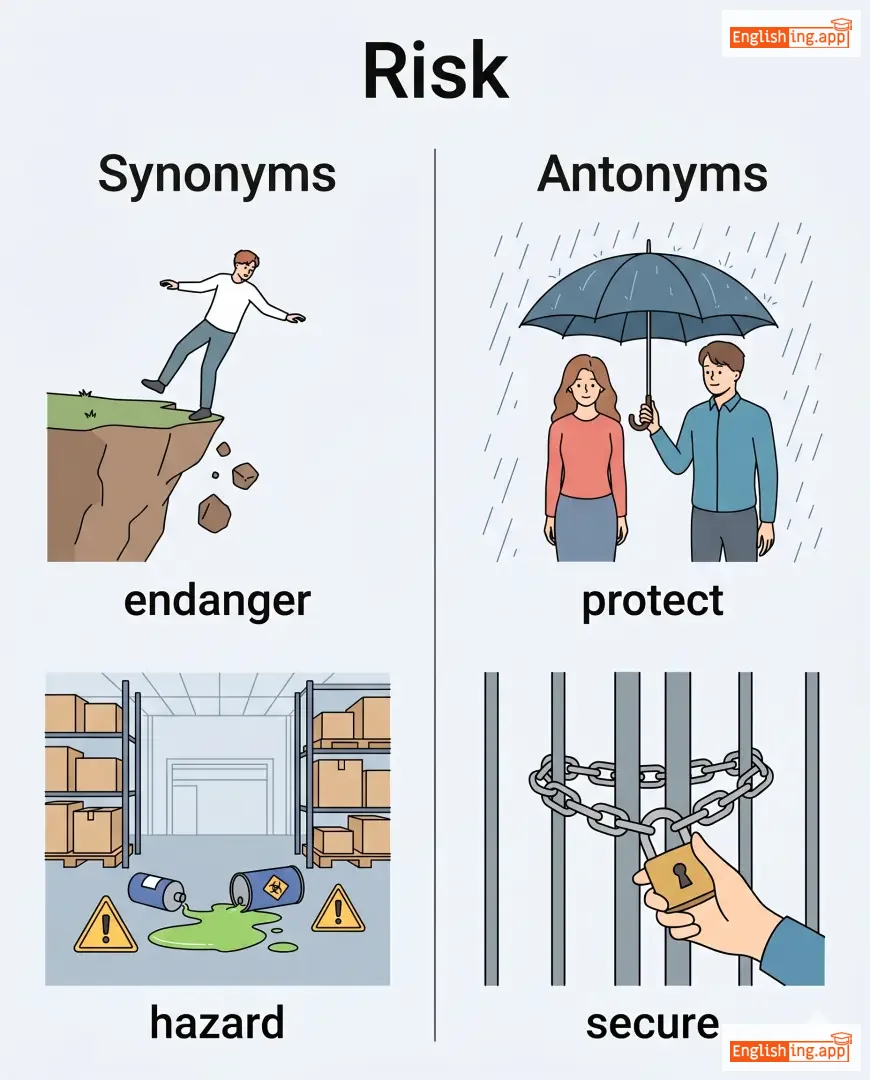
••••••
|
danger, hazard, peril, threat
••••••
|
safety, security, certainty
••••••
|
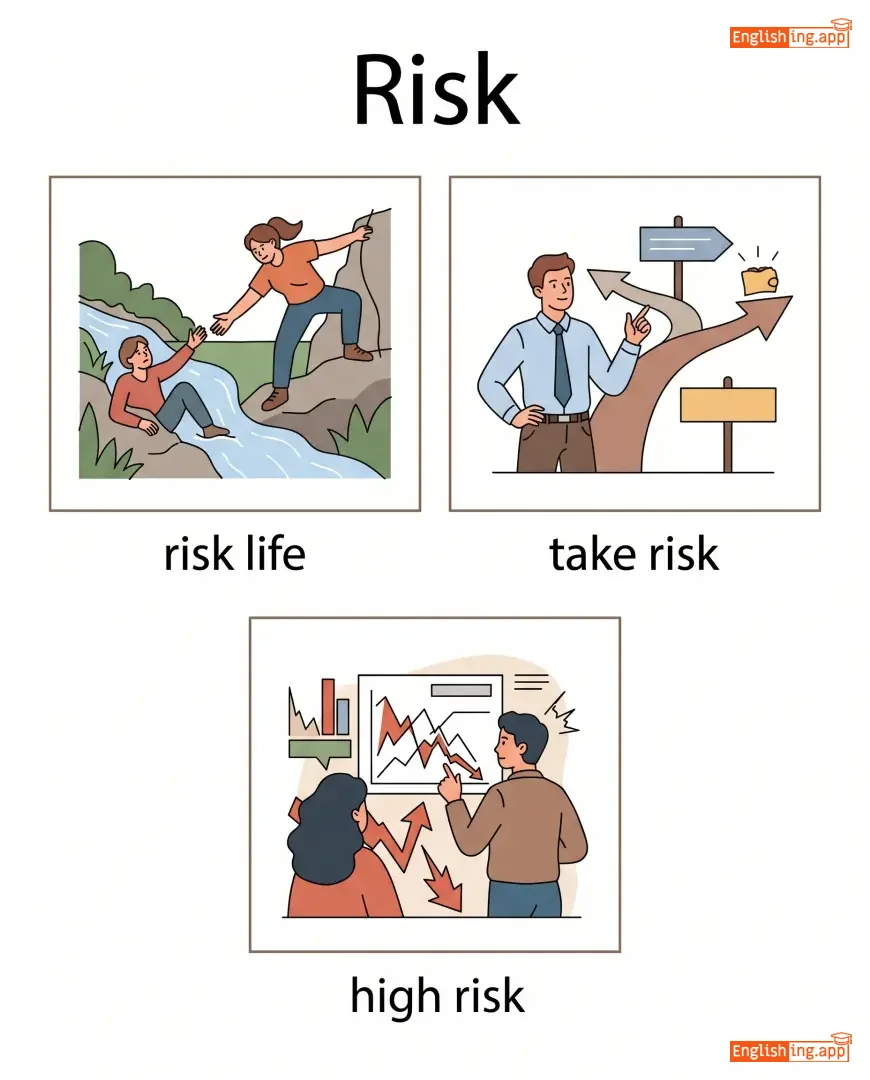
high risk, take a risk, risk assessment
••••••
|
Риск - это то, что приводит к большим возможностям или большим потерям.
••••••
|
|
#1212
🗣️
|
/ˈruːmər/
noun
(румор)
••••••
|
- •••••• |
слух; сплетня; новость
slukh
••••••
|
a currently circulating story or report of uncertain or doubtful truth; gossip
••••••
|
There's a rumour that the company will close next month.
Существует слух, что компания закроется в следующем месяце.
••••••
|
Существует слух, что компания закроется в следующем месяце.
sushchestvuet slukh, chto kompaniya zakroetsya v sleduyushchem mesyatse
••••••
|
- •••••• |
gossip, hearsay, speculation, whisper
••••••
|
fact, truth, certainty, confirmation
••••••
|
spread rumour, false rumour, rumour mill
••••••
|
Slukh in Russian sounds like 'sly' in gossip—easy connection to rumors.
••••••
|
|
#1213
🥊
|
/ˈraɪvəl/
noun
(raival)
••••••
|
- •••••• |
соперник; конкурент;
sopernik; konkurent
••••••
|
a person or thing competing with another for the same objective or for superiority in the same field
••••••
|
The two companies have been business rivals for decades.
Две компании являются коммерческими соперниками на протяжении десятилетий.
••••••
|
Две компании являются коммерческими соперниками на протяжении десятилетий.
Dve kompanii yavyayutsya kommercheskimi soopernikami na protyazhenii desyatiletiy.
••••••
|
- •••••• |
competitor, opponent, adversary, challenger
••••••
|
ally, partner, friend, supporter
••••••
|
business rival, fierce rival, political rival
••••••
|
Соперник - это как две компании, борющиеся за долю рынка, как два друга, сражающиеся за одну игрушку.
••••••
|
|
#1214
🔊
|
/ˈrʌmpəs/
noun
(рампас)
••••••
|
- •••••• |
шум; беспорядок; суматоха
shum; besporyadok; sumatoha
••••••
|
a noisy disturbance; an uproar or commotion
••••••
|
The children caused quite a rumpus in the playground.
Дети вызвали настоящий переполох на игровой площадке.
••••••
|
Дети вызвали настоящий переполох на игровой площадке.
Deti vyzvali nastoyashchiy perepoloch na igrovoy ploshchadke.
••••••
|
- •••••• |
commotion, uproar, disturbance, tumult
••••••
|
quiet, peace, calm, silence
••••••
|
cause rumpus, raise rumpus, rumpus room
••••••
|
Представьте себе шум и суматоху на площадке
••••••
|
|
#1215
⚔️
|
/ˈraɪvəlri/
noun
(raivalri)
••••••
|
- •••••• |
соперничество; конкуренция
sopernichestvo; konkurentsiya
••••••
|
competition for the same objective or for superiority in the same field; the state of being rivals
••••••
|
The rivalry between the two teams made the match exciting.
Ривалитет между двумя командами сделал матч захватывающим.
••••••
|
Соперничество между двумя командами сделало матч захватывающим.
Sopernichestvo mezhdu dvumya komandami sdelalo match zakhvatyvayushchim.
••••••
|
- •••••• |
competition, contest, conflict, antagonism
••••••
|
cooperation, alliance, friendship
••••••
|
fierce rivalry, sibling rivalry, sporting rivalry
••••••
|
Соперничество — это как два спортсмена, соревнующихся за победу.
••••••
|
|
#1216
🎭
|
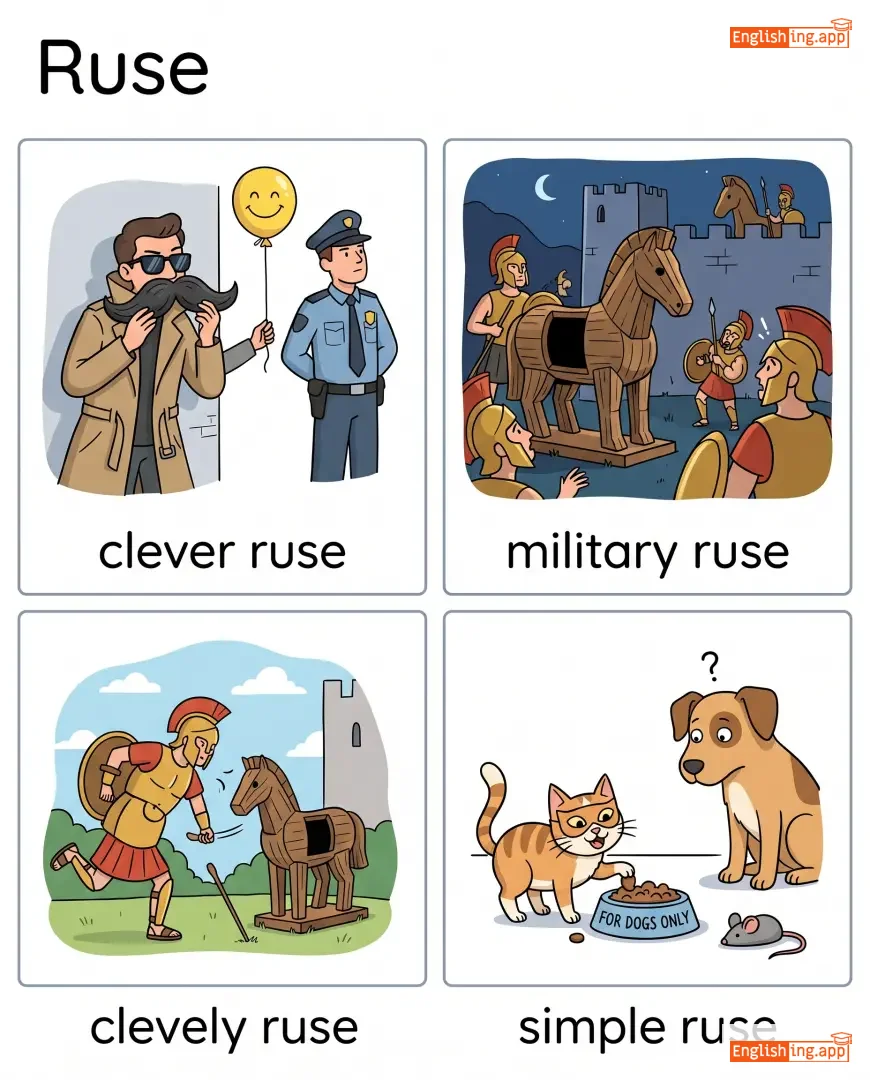
/ruːz/
noun
(ruz)
••••••
|
|
хитрость; уловка
khitrost; ulovka
••••••
|
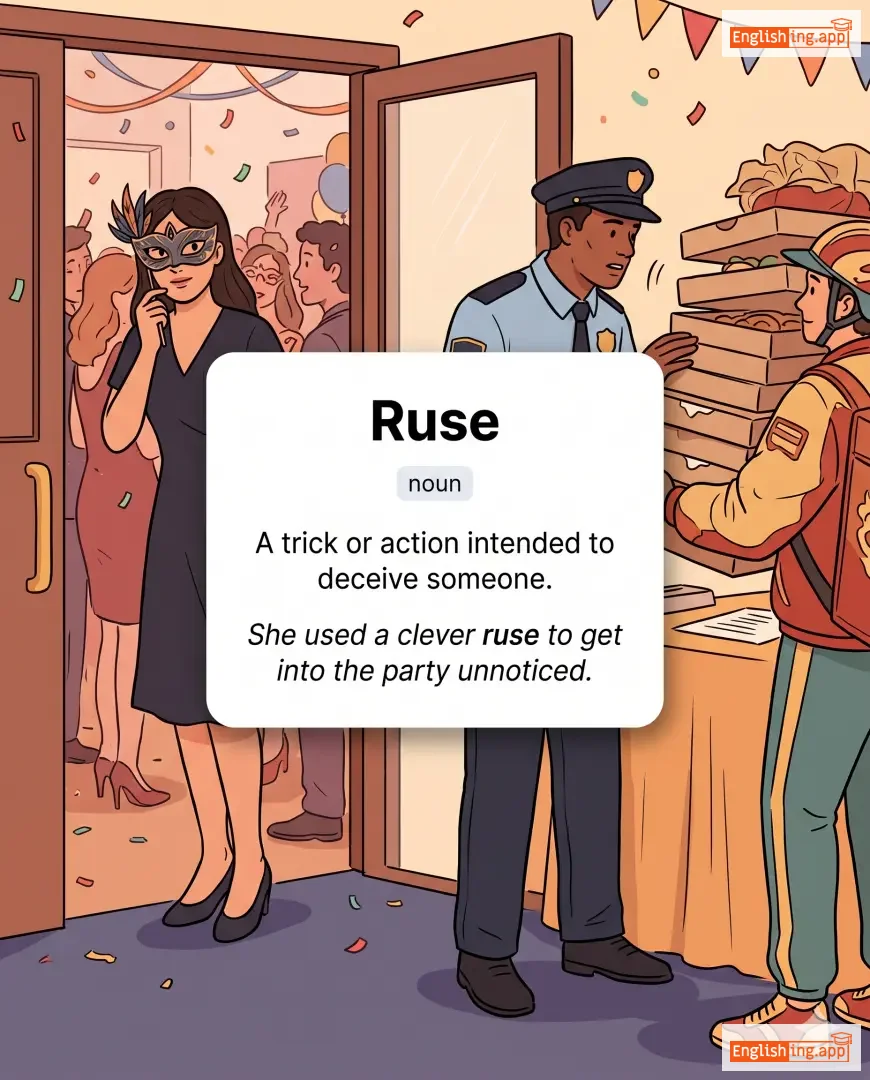
an action intended to deceive someone; a trick or stratagem
••••••
|
The thief used a clever ruse to distract the guard. |
Вор использовал хитрость, чтобы отвлечь охранника.
Vor ispol'zoval khitrost', chtoby otvlech' okhrannik.
••••••
|
- •••••• |
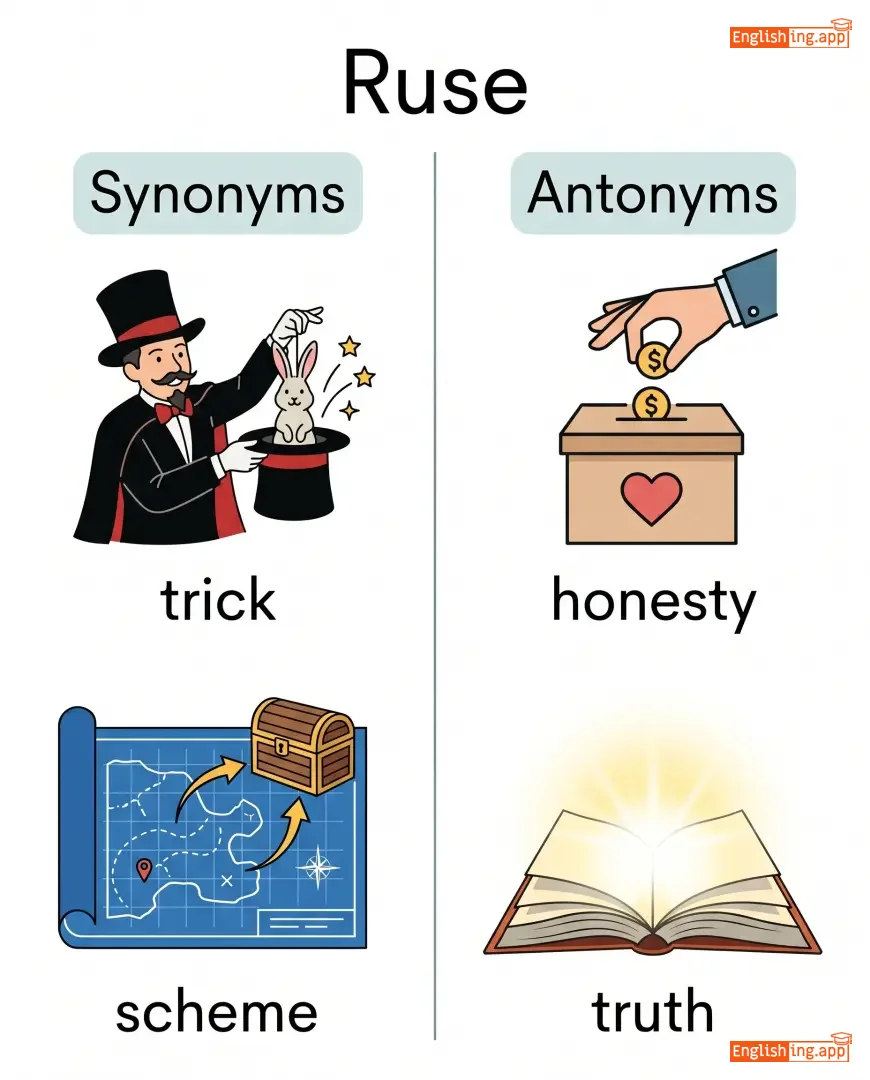
trick, deception, stratagem, ploy
••••••
|
honesty, truth, straightforwardness
••••••
|
clever ruse, elaborate ruse, fall for ruse
••••••
|
No •••••• |
|
#1217
💕
|
/roʊˈmæns/
noun
(романс)
••••••
|
- •••••• |
романс
romans
••••••
|
a feeling of excitement and mystery associated with love; a love affair or relationship
••••••
|
Their romance began when they met at the university library.
Их роман начался, когда они встретились в университетской библиотеке.
••••••
|
Их роман начался, когда они встретились в университетской библиотеке.
ikh roman nachalsya kogda oni vstretilis v universitetskoy biblioteke
••••••
|
- •••••• |
love affair, courtship, passion, relationship
••••••
|
hatred, indifference, platonic friendship
••••••
|
office romance, summer romance, whirlwind romance
••••••
|
романс = ROMAN плюс CE; запомни: любовь и mystery живут вместе в сердце
••••••
|
|
#1218
🍪
|
/rʌsk/
noun
(раск)
••••••
|
- •••••• |
сухое печенье; дважды выпеченный хлеб
rask
••••••
|
a hard, dry biscuit or twice-baked bread; a type of crisp, sweet biscuit
••••••
|
The baby enjoyed eating the soft rusk with milk.
Малыш наслаждался мягким руском с молоком.
••••••
|
Малыш наслаждался мягким руском с молоком.
Malysh naslazhdalsya myagkim ruskom s molokom.
••••••
|
- •••••• |
biscuit, cracker, zwieback, hardtack
••••••
|
soft bread, fresh bread, moist cake
••••••
|
baby rusk, tea rusk, rusk crumbs
••••••
|
Руск с молоком — хрустящий вкус детства.
••••••
|
|
#1219
🌱
|
/ruːt/
noun
(rut)
••••••
|
- •••••• |
корень; источник; причина; основание
koren; istochnik; prichina; osnova
••••••
|
the part of a plant that grows underground; the basic cause, source, or origin of something
••••••
|
We need to find the root of this problem to solve it permanently.
Нам нужно найти корень этой проблемы, чтобы решить её навсегда.
••••••
|
Нам нужно найти корень этой проблемы, чтобы решить её навсегда.
Nam nuzhno nayti koren' etoy problemy, chtoby reshit' yeyo navsegda.
••••••
|
- •••••• |
source, origin, basis, foundation
••••••
|
branch, leaf, effect, result
••••••
|
root cause, tree root, root of the problem
••••••
|
In Russian, 'корень' (koren') is the root or source of everything, just like the underground roots of a plant.
••••••
|
|
#1220
🏃
|
/rʌʃ/
noun
(раш)
••••••
|
- •••••• |
спешка; торопливость
sveshka; toroplivost
••••••
|
a sudden quick movement toward something; a period of great activity or demand; hurry
••••••
|
There was a rush to buy tickets for the concert. |
Был наплыв желающих купить билеты на концерт.
Byl naplyv zhelayushchikh kupit' bilety na kontsert.
••••••
|
- •••••• |
hurry, haste, urgency, dash
••••••
|
delay, calm, leisure, slowness
••••••
|
rush hour, gold rush, adrenaline rush
••••••
|
Спешка на концерт заставляет всех торопиться – это Rush.
••••••
|
Vocabulary Quiz
Test your vocabulary by matching words with their translations or meanings.
Login to take the quiz
Comments (0)
Share your thoughts and join the discussion.
Join the discussion by logging in
Login to CommentNo comments yet
Be the first to share your thoughts!