


Swipe left or right, or use the buttons. Tap image to zoom.
例句翻译
单词
Lesson 29Lesson 29 - 遮罩切换
|
表情符号
|
单词 | Images | 翻译 | 含义 | 例句 | 例句翻译 | 同义词 | 反义词 | 搭配词 | 助记符 |
|---|---|---|---|---|---|---|---|---|---|---|
|
#561
🌅
|
/ˈhɑːr.bɪn.dʒər/
noun
(哈宾杰)
••••••
|
- •••••• |
先兆
xian zhao
••••••
|
a person or thing that announces or signals the approach of another; a forerunner of something
••••••
|
The first robin of spring is often considered a harbinger of warmer weather to come. |
春天的第一只知更鸟常被认为是即将来临的温暖天气的先兆。
Chūntiān de dì yī zhī zhīgèniǎo cháng bèi rènwéi shì jíjiāng láilín de wēnnuǎn tiānqì de xiānzhào.
••••••
|
herald, forerunner, precursor, messenger
••••••
|
follower, aftermath, consequence, result
••••••
|
harbinger of spring, harbinger of change, early harbinger
••••••
|
先兆 (xian zhao) = '先' (before) + '兆' (sign)
••••••
|
|
#562
📰
|
/ˈhed.ɪŋ/
noun
(hɛdɪŋ)
••••••
|
|
标题
biaoti
••••••
|
a title at the head of a page or section of a book; the direction or course being followed
••••••
|
The newspaper article had a bold heading that immediately caught the reader's attention. |
这篇报纸文章有一个粗体标题,立刻吸引了读者的注意。
Zhe pian baozhi wen zhang you yi ge cu ti biao ti, li ke xi yin le du zhe de zhu yi.
••••••
|
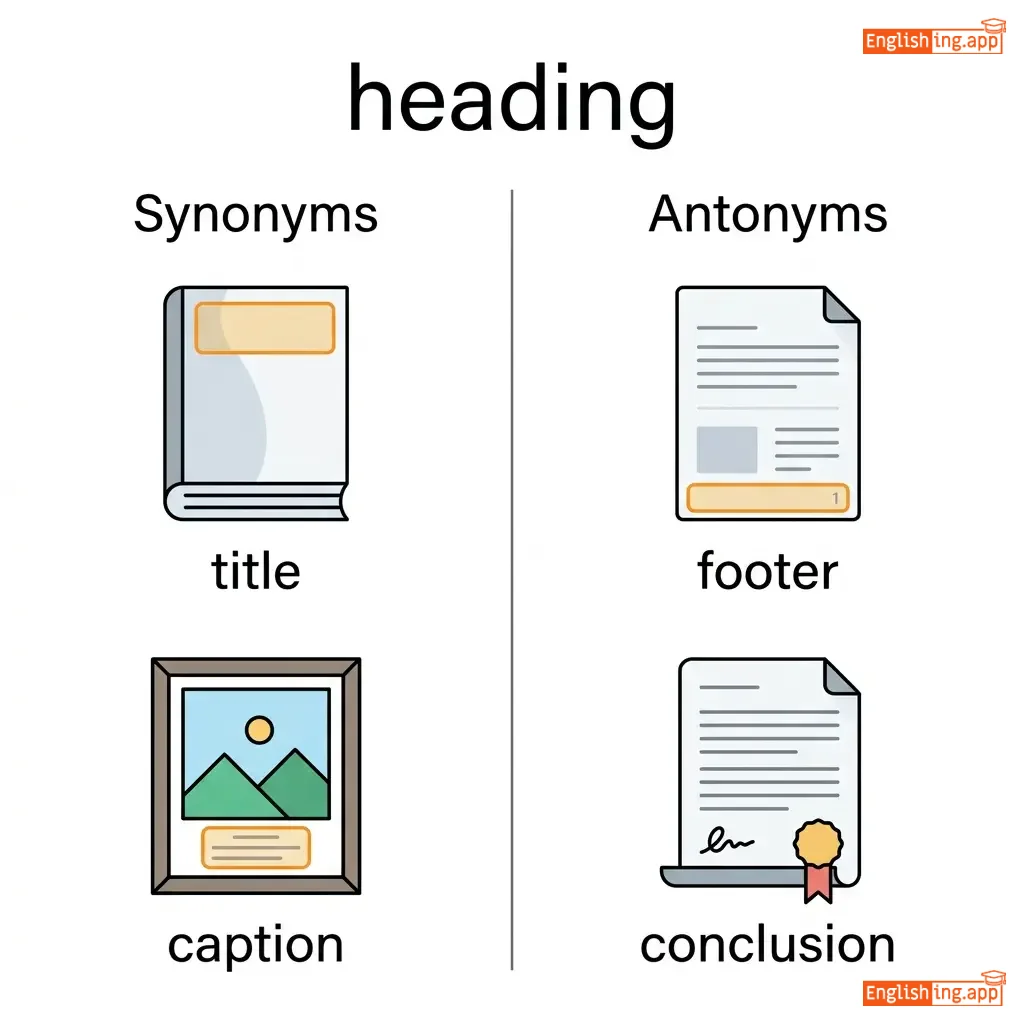
title, caption, header, direction
••••••
|
footer, conclusion, ending, tail
••••••
|
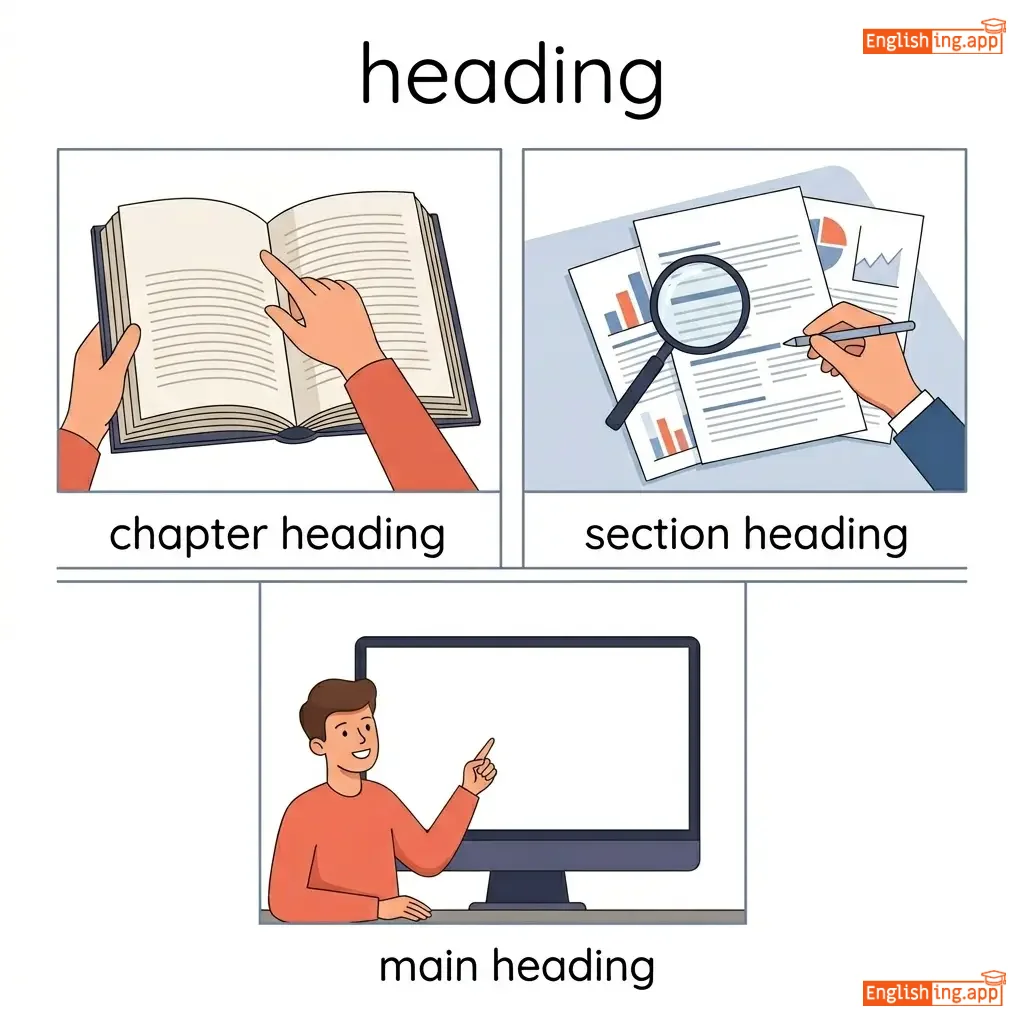
chapter heading, section heading, main heading
••••••
|
标题是文章的开头部分,吸引着所有的注意力。
••••••
|
|
#563
⚓
|
/ˈhɑːr.bər/
noun
(哈-伯)
••••••
|
- •••••• |
港口
gangkou
••••••
|
a place on the coast where vessels may find shelter; a place of safety or refuge
••••••
|
The fishing boats returned safely to the harbour before the storm hit the coastline. |
渔船在风暴袭击海岸之前安全地回到了港口。
Yúchuán zài fēngbào xíjī hǎi'àn zhīqián ānquán de huídào le gǎngkǒu.
••••••
|
port, haven, marina, dock
••••••
|
open sea, storm, danger, exposure
••••••
|
safe harbour, natural harbour, harbour master
••••••
|
港口是一个安全的避风港,像船只的'避难所'。
••••••
|
|
#564
📈
|
/ˈhed.weɪ/
noun
(hédwèi)
••••••
|
- •••••• |
进展; 进步; 向前迈进
jinzhan, jinbu, xiangqian maijin
••••••
|
forward movement or progress, especially when this is slow or difficult
••••••
|
Despite the challenges, the research team made significant headway in developing the new vaccine. |
尽管面临挑战,研究团队在开发新疫苗方面取得了显著的进展。
Jinguan mianlin tiaozhan, yanjiu tuandui zai kaifa xin yimiao fangmian qudelao xianzhu de jinzhan.
••••••
|
progress, advancement, improvement, development
••••••
|
setback, regression, decline, stagnation
••••••
|
make headway, significant headway, slow headway
••••••
|
No •••••• |
|
#565
😣
|
/ˈhɑːrd.ʃɪp/
noun
(哈德希普)
••••••
|
- •••••• |
困境,痛苦
kùnjìng, tòngkǔ
••••••
|
severe suffering or privation; difficulty or distress
••••••
|
Despite facing many hardships during the war, the family remained united and hopeful.
尽管在战争期间经历了许多困难,家庭依然保持团结和希望。
••••••
|
尽管在战争期间经历了许多困难,家庭依然保持团结和希望。
Jǐnguǎn zài zhànzhēng qījiān jīnglì le xǔduō kùnnán, jiātíng yīrán bǎochí tuánjié hé xīwàng.
••••••
|
difficulty, adversity, suffering, trial
••••••
|
comfort, ease, prosperity, luxury
••••••
|
financial hardship, endure hardship, overcome hardship
••••••
|
Hardship 就是困难的时光,但我们依然能够携手前进。
••••••
|
|
#566
👂
|
/ˈhɪr.ɪŋ/
noun
(希尔林)
••••••
|
- •••••• |
听力; 听证会
tingli; tingzhenghui
••••••
|
the faculty of perceiving sounds; a session in which testimony and arguments are heard
••••••
|
The elderly man's hearing had deteriorated, so he needed to wear a hearing aid. |
老年人的听力已经恶化,因此他需要佩戴助听器。
lǎonián rén de tīnglì yǐjīng èhuà, yīncǐ tā xūyào pèidài zhùtīngqì.
••••••
|
audition, listening, trial, tribunal
••••••
|
deafness, silence, muteness, quiet
••••••
|
hearing aid, hearing loss, court hearing
••••••
|
听力是感知声音的能力,听证会是获取证据的方式。
••••••
|
|
#567
🎵
|
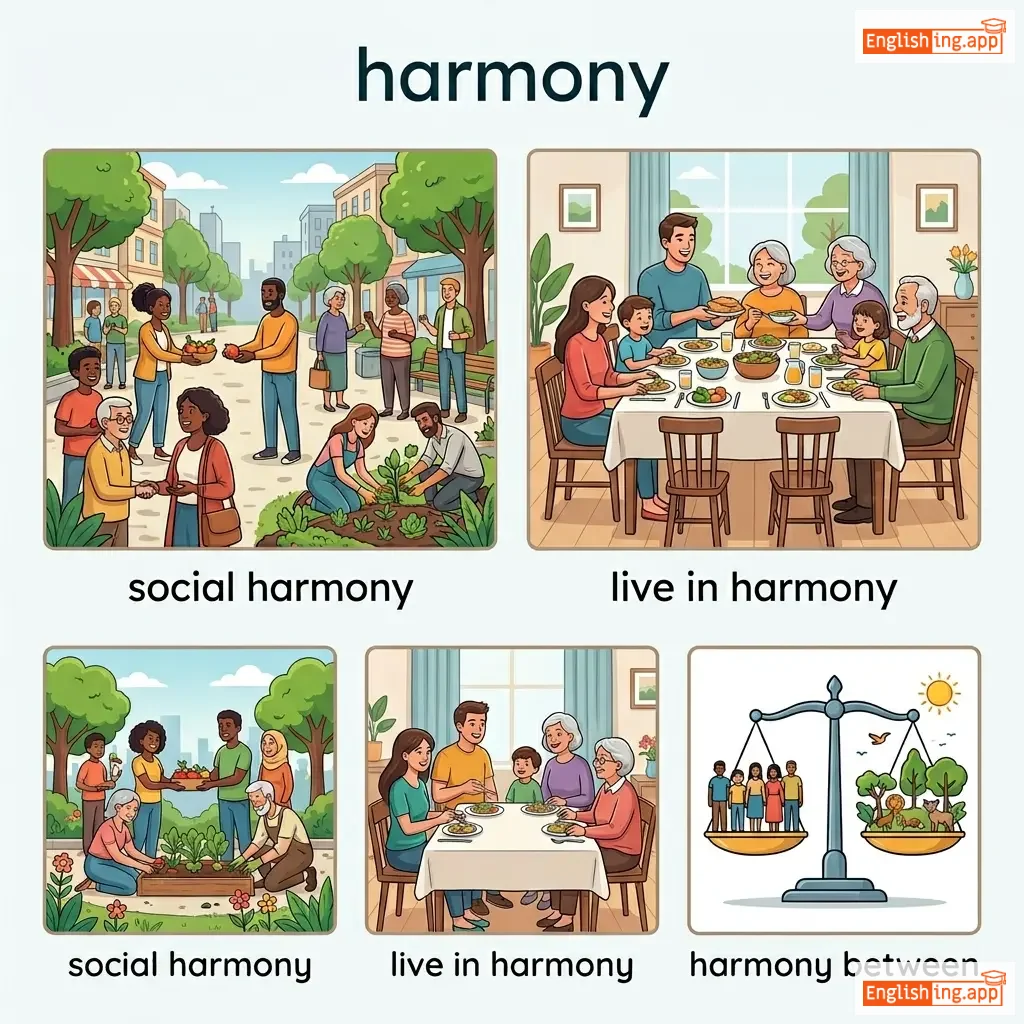
/ˈhɑːr.mə.ni/
noun
(harmony)
••••••
|
|
和谐; 一致; 平静;
hexie, yizhi, pingjing
••••••
|
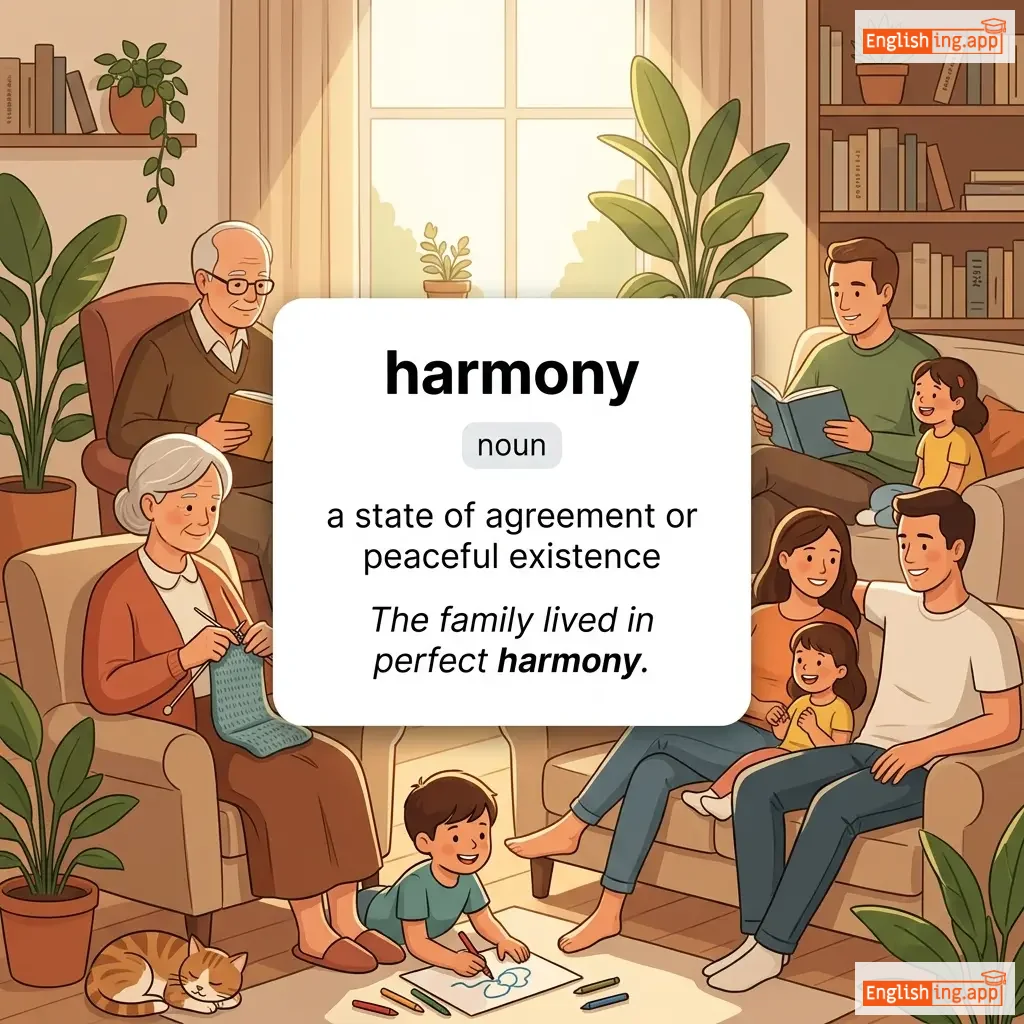
the combination of simultaneously sounded musical notes to produce chords; agreement or concord
••••••
|
The choir sang in perfect harmony, creating a beautiful and peaceful atmosphere.
合唱团在完美的和谐中歌唱,创造了美丽而宁静的氛围。
••••••
|
合唱团在完美的和谐中歌唱,创造了美丽而宁静的氛围。
Hechangtuan zai wanmei de hexie zhong gechang, chuangzao le meili er ningjing de fenwei.
••••••
|
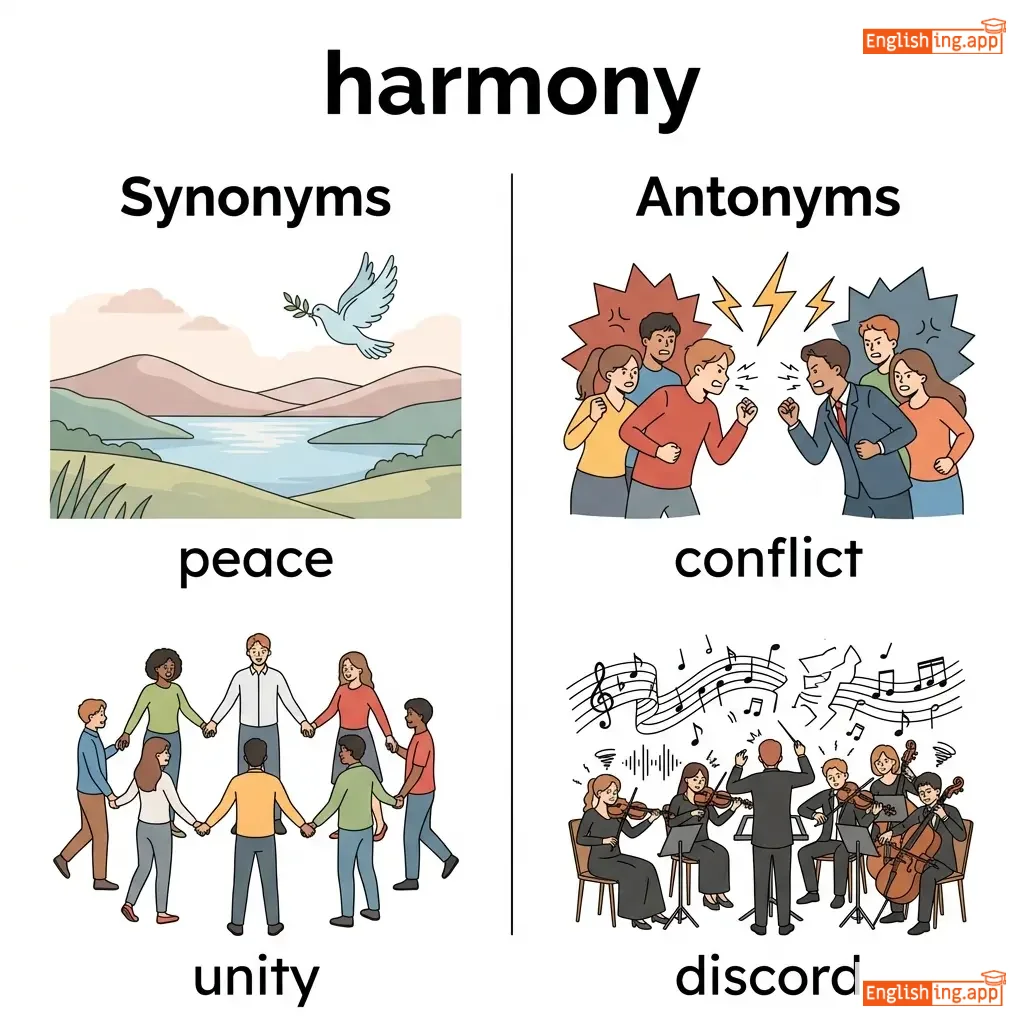
accord, unity, balance, peace
••••••
|
discord, conflict, disagreement, chaos
••••••
|
perfect harmony, live in harmony, social harmony
••••••
|
和谐是音乐和生活中的和平
••••••
|
|
#568
🗣️
|
/ˈhɪr.seɪ/
noun
(xi-er-sei)
••••••
|
- •••••• |
谣言
yaoyan
••••••
|
information received from other people that one cannot adequately substantiate; rumor
••••••
|
The accusations were based on hearsay rather than concrete evidence or eyewitness testimony. |
这些指控是基于谣言,而不是确凿的证据或目击者证词。
Zhexie zhigong shi jiyu yaoyan, er bushi quezaode zhengju huo mùjī zhě zhèngcí.
••••••
|
rumor, gossip, speculation, word of mouth
••••••
|
fact, evidence, proof, testimony
••••••
|
mere hearsay, based on hearsay, hearsay evidence
••••••
|
中国人说,别相信谣言,除非你自己证实。
••••••
|
|
#569
😤
|
/ˈhæs.əl/
noun
(哈塞尔)
••••••
|
- •••••• |
麻烦; 不便; 困难
mafan, bian, kunnan
••••••
|
irritating inconvenience; trouble or difficulty; a situation causing problems
••••••
|
Booking tickets online can save you the hassle of waiting in long queues at the theater. |
在线预订门票可以帮你省去在剧院排长队的麻烦。
Zai xian yuding menpiao keyi bang ni shengqu zai juyuan pai changdui de mafan.
••••••
|
trouble, annoyance, bother, inconvenience
••••••
|
convenience, ease, help, assistance
••••••
|
avoid hassle, unnecessary hassle, too much hassle
••••••
|
哈塞尔 (hassle) = 麻烦
••••••
|
|
#570
⚱️
|
/hɜːrs/
noun
(赫斯)
••••••
|
- •••••• |
灵车;
língchē
••••••
|
a vehicle for conveying the coffin at a funeral; a funeral car
••••••
|
The black hearse slowly made its way to the cemetery, followed by a procession of mourners. |
黑色的灵车缓缓驶向墓地,后面跟着一队哀悼的人。
Hēisè de língchē huǎn huǎn shǐ xiàng mùdì, hòumiàn gēnzhe yī duì āidào de rén.
••••••
|
funeral car, death wagon, mortuary vehicle, funeral carriage
••••••
|
wedding car, celebration vehicle, ambulance, rescue vehicle
••••••
|
funeral hearse, horse-drawn hearse, black hearse
••••••
|
灵车,生命的最后一程。
••••••
|
|
#571
⏰
|
/heɪst/
noun
(heist)
••••••
|
- •••••• |
匆忙; 急切
cōngmáng, jíqiè
••••••
|
swiftness of motion; urgent need of quick action; excessive speed or urgency
••••••
|
In his haste to catch the train, he forgot to take his wallet from the table.
因为急于赶上火车,他忘了从桌子上拿走钱包。
••••••
|
因为急于赶上火车,他忘了从桌子上拿走钱包。
Yīnwèi jíyú gǎn shàng huǒchē, tā wàngle cóng zhuōzi shàng názǒu qiánbāo.
••••••
|
speed, hurry, rush, urgency
••••••
|
slowness, deliberation, patience, delay
••••••
|
in haste, make haste, haste makes waste
••••••
|
急于赶火车,钱包忘桌上
••••••
|
|
#572
☁️
|
/ˈhev.ən/
noun
(希文)
••••••
|
- •••••• |
天堂
xiwen
••••••
|
a place regarded in various religions as the abode of God and the angels; a place of eternal happiness
••••••
|
Many people believe that good souls go to heaven after they pass away from this world.
很多人相信,善良的灵魂在离开这个世界后会去天堂。
••••••
|
很多人相信,善良的灵魂在离开这个世界后会去天堂。
hen duo ren xiangxin, shanliang de linghun zai likai zhege shijie hou hui qu tiantang
••••••
|
paradise, afterlife, eternity, bliss
••••••
|
hell, purgatory, damnation, suffering
••••••
|
go to heaven, heaven and earth, seventh heaven
••••••
|
Heaven = 天堂, imagine Hi Ven standing at the tiantang gate, 云端就在前方, 一步步 飞上去
••••••
|
|
#573
😡
|
/ˈheɪ.trəd/
noun
(hèitè)
••••••
|
- •••••• |
仇恨
chóuhèn
••••••
|
intense dislike or ill will; a feeling of strong aversion
••••••
|
His hatred for injustice motivated him to become a human rights lawyer. |
他对不公正的仇恨促使他成为了一名人权律师。
Tā duì bù gōngzhèng de chóuhèn cùshǐ tā chéngwéile yī míng rénquán lǜshī.
••••••
|
loathing, animosity, hostility, resentment
••••••
|
love, affection, admiration, fondness
••••••
|
deep hatred, racial hatred, hatred towards
••••••
|
仇恨 = 强烈的厌恶
••••••
|
|
#574
👑
|
/er/
noun
(海尔)
••••••
|
- •••••• |
继承人
jicheng ren
••••••
|
a person legally entitled to the property or rank of another on that person's death
••••••
|
The young prince was the rightful heir to the throne and would become king someday. |
年轻的王子是合法的王位继承人,将来有一天会成为国王。
niánqīng de wángzǐ shì héfǎ de wángwèi jìchéngrén, jiānglái yǒu yītiān huì chéngwéi guówáng.
••••••
|
successor, inheritor, beneficiary, descendant
••••••
|
predecessor, ancestor, donor, grantor
••••••
|
rightful heir, sole heir, heir apparent
••••••
|
The heir is the one who '继承' (inherits) the throne in China.
••••••
|
|
#575
💥
|
/ˈhæv.ək/
noun
(海皮尼斯)
••••••
|
- •••••• |
广泛的破坏;极大的混乱或无序;混乱
guǎngfàn de pòhuài; jí dà de hùnluàn huò wúxù; hùnluàn
••••••
|
widespread destruction; great confusion or disorder; chaos
••••••
|
The hurricane wreaked havoc on the coastal towns, destroying homes and businesses. |
飓风在沿海城镇造成了大规模的破坏,摧毁了房屋和商业。
Jùfēng zài yánhǎi chéngzhèn zàochéngle dà guīmó de pòhuài, cuīhuǐle fángwū hé shāngyè.
••••••
|
destruction, chaos, devastation, mayhem
••••••
|
order, peace, construction, harmony
••••••
|
wreak havoc, cause havoc, widespread havoc
••••••
|
想象一个飓风带来混乱和破坏。
••••••
|
|
#576
🔥
|
/hel/
noun
(hé'ěr)
••••••
|
- •••••• |
地狱; 痛苦的状态; 极其不愉快的经历
dìyù; tòngkǔ de zhuàngtài; jíqí bù yúkuài de jīnglì
••••••
|
a place regarded in various religions as a spiritual realm of evil and suffering; an extremely unpleasant experience
••••••
|
Working in the factory during summer was absolute hell due to the extreme heat.
在工厂里工作时,由于极端的高温,简直是地狱。
••••••
|
在工厂里工作时,由于极端的高温,简直是地狱。
zài gōngchǎng lǐ gōngzuò shí, yóuyú jíduān de gāowēn, jiǎnzhí shì dìyù.
••••••
|
inferno, torment, nightmare, agony
••••••
|
heaven, paradise, bliss, joy
••••••
|
living hell, hell on earth, through hell
••••••
|
将地狱想象成一个非常热的地方,就像夏天的工厂。
••••••
|
|
#577
⚠️
|
/ˈhæz.ərd/
noun
(哈扎德)
••••••
|
- •••••• |
危害; 风险
weihai, fengxian
••••••
|
a danger or risk; something that poses a threat to safety
••••••
|
Smoking is a serious health hazard that can lead to lung cancer and heart disease.
吸烟是一种严重的健康危害,可能导致肺癌和心脏病。
••••••
|
吸烟是一种严重的健康危害,可能导致肺癌和心脏病。
Xiyan shi yizhong yanzhong de jiankang weihai, keneng daozhi fei'ai he xinzangbing.
••••••
|
danger, risk, peril, threat
••••••
|
safety, security, protection, benefit
••••••
|
health hazard, fire hazard, occupational hazard
••••••
|
In Chinese, '危害' (weihai) and '风险' (fengxian) will help you remember 'hazard' as a serious threat.
••••••
|
|
#578
⚓
|
/helm/
noun
(赫尔姆)
••••••
|
- •••••• |
舵
duo
••••••
|
a tiller or wheel for steering a ship or boat; a position of leadership or control
••••••
|
The experienced captain took the helm and expertly navigated the ship through the storm. |
经验丰富的船长接管了舵,巧妙地将船只穿过风暴。
Jīngyàn fēngfù de chuánzhǎng jiēguǎnle duò, qiǎomiào de jiāng chuánzhī chuānguò fēngbào.
••••••
|
steering wheel, rudder, control, leadership
••••••
|
passenger seat, follower position, subordination, guidance
••••••
|
take the helm, at the helm, ship's helm
••••••
|
舵是船的方向控制者
••••••
|
|
#579
🌫️
|
/heɪz/
noun
(hèi zī)
••••••
|
- •••••• |
雾霾
wùmái
••••••
|
a slight obscuration of the lower atmosphere, typically caused by fine suspended particles; confusion
••••••
|
The morning haze lifted gradually as the sun rose higher in the sky. |
早晨的雾霾逐渐消散,随着太阳在空中升得更高。
Zǎochén de wùmái zhújiàn xiāosàn, suízhe tàiyáng zài kōngzhōng shēng de gèng gāo.
••••••
|
mist, fog, vapor, blur
••••••
|
clarity, clearness, brightness, sharpness
••••••
|
morning haze, heat haze, haze of smoke
••••••
|
No •••••• |
|
#580
⛑️
|
/ˈhel.mət/
noun
(海皮尼斯)
••••••
|
- •••••• |
头盔
tóukuī
••••••
|
a hard or padded protective hat worn by motorcyclists, construction workers, or soldiers
••••••
|
The cyclist always wore a bright yellow helmet for safety and visibility while riding.
骑行者总是戴着一顶亮黄色的头盔,以保证安全性和可见性。
••••••
|
骑行者总是戴着一顶亮黄色的头盔,以保证安全性和可见性。
Qíxíng zhě zǒng shì dàizhe yī dǐng liàng huángsè de tóukuī, yǐ bǎozhèng ānquánxìng hé kějiànxìng.
••••••
|
hard hat, protective headgear, safety helmet, crash helmet
••••••
|
bare head, unprotected head, soft hat, cap
••••••
|
safety helmet, bicycle helmet, motorcycle helmet
••••••
|
头盔 = 骑行时的安全帽
••••••
|
Vocabulary Quiz
Test your vocabulary by matching words with their translations or meanings.
Login to take the quiz
Comments (0)
Share your thoughts and join the discussion.
Join the discussion by logging in
Login to CommentNo comments yet
Be the first to share your thoughts!