

Swipe left or right, or use the buttons. Tap image to zoom.
例句翻译
单词
Lesson 47Lesson 47 - 遮罩切换
|
表情符号
|
单词 | Images | 翻译 | 含义 | 例句 | 例句翻译 | 同义词 | 反义词 | 搭配词 | 助记符 |
|---|---|---|---|---|---|---|---|---|---|---|
|
#921
🏠
|
/ˈneɪ.bər/
noun
(neibor)
••••••
|
- •••••• |
邻居; 旁边
línjū; pángbiān
••••••
|
a person who lives near or next to another person
••••••
|
My neighbour is very friendly and helpful.
我的邻居非常友好且乐于助人。
••••••
|
我的邻居非常友好且乐于助人。
Wǒ de línjū fēicháng yǒuhǎo qiě lè yú zhùrén.
••••••
|
resident, dweller, adjacent person
••••••
|
stranger, distant person
••••••
|
next-door neighbour, good neighbour, noisy neighbour
••••••
|
邻居永远在旁边,像朋友一样。
••••••
|
|
#922
🔊
|
/nɔɪz/
noun
(nuòyīz)
••••••
|
- •••••• |
噪音
zaoyin
••••••
|
a sound, especially one that is loud or unpleasant
••••••
|
The noise from the construction site was very disturbing.
施工现场的噪音非常扰人。
••••••
|
施工现场的噪音非常扰人。
Shīgōng xiànchǎng de zàoyīn fēicháng rǎo rén.
••••••
|
sound, din, racket, clamor
••••••
|
silence, quiet, peace, stillness
••••••
|
loud noise, background noise, noise pollution
••••••
|
噪音和noise一样令人烦恼。
••••••
|
|
#923
👥
|
/ˈnep.ə.tɪz.əm/
noun
(内坡蒂主义)
••••••
|
- •••••• |
裙带关系
qundai guanxi
••••••
|
the practice of favoring relatives or friends in business or politics
••••••
|
The company was accused of nepotism in its hiring practices.
该公司在招聘过程中被指控存在内坡蒂主义。
••••••
|
该公司在招聘过程中被指控存在内坡蒂主义。
Gai gongsi zai zhaopin guocheng zhong bei zhikong cunzai neipodizhuyi.
••••••
|
favoritism, bias, partiality, cronyism
••••••
|
merit-based, fairness, impartiality
••••••
|
political nepotism, accused of nepotism, nepotism scandal
••••••
|
裙带关系: 利用亲戚朋友关系谋取职位,做事不公平。
••••••
|
|
#924
💼
|
/ˌnɑm.əˈni/
noun
(诺米尼)
••••••
|
- •••••• |
提名人
tímíngrén
••••••
|
a person who is nominated for an office, award, or honor
••••••
|
She was the nominee for the Best Actress award. |
她是最佳女演员奖项的提名人。
Tā shì zuì jiā nǚ yǎnyuán jiǎngxiàng de tímíngrén.
••••••
|
candidate, contender, designee
••••••
|
disqualified person, rejected candidate
••••••
|
presidential nominee, award nominee, party nominee
••••••
|
提名人是那些被选中参与某个重要奖项的人。
••••••
|
|
#925
⚖️
|
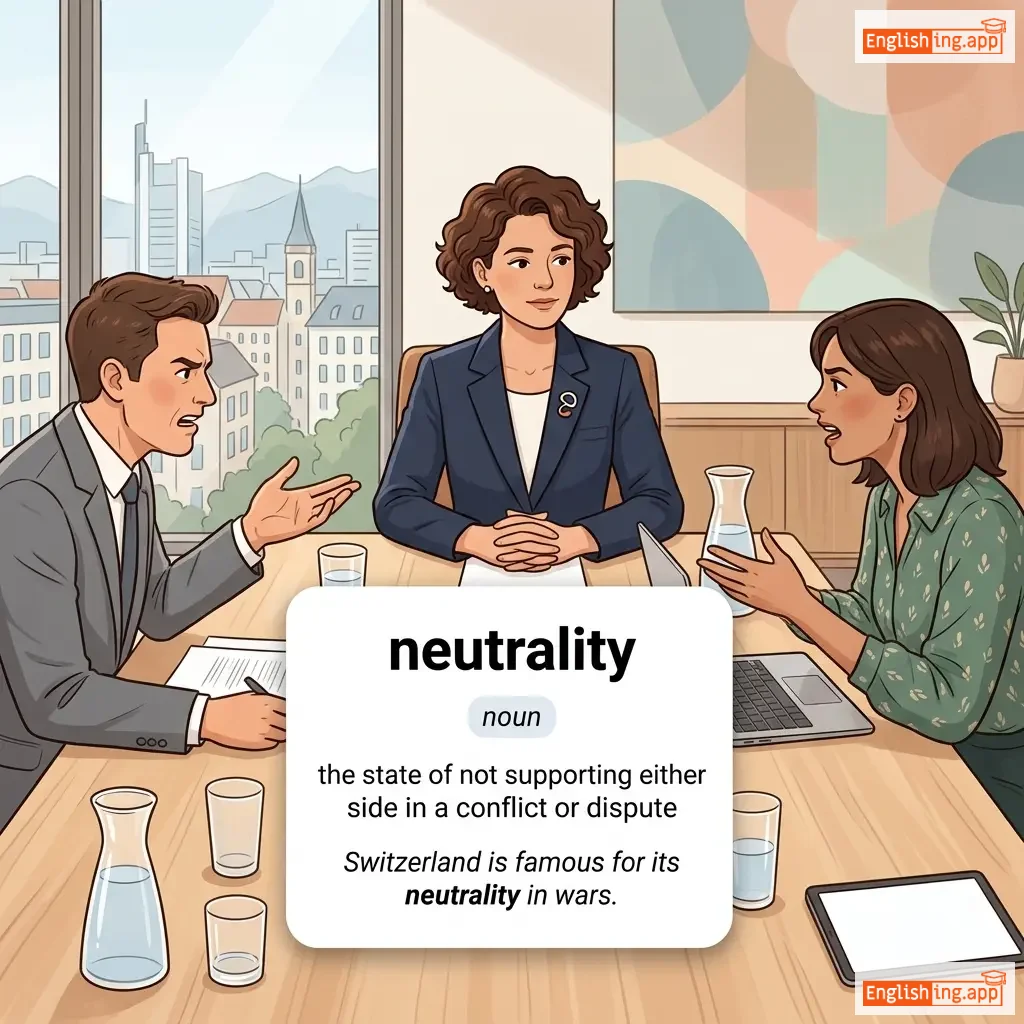
/nuːˈtræl.ə.ti/
noun
(中立)
••••••
|
|
中立
zhongli
••••••
|
the state of not supporting either side in a conflict or dispute
••••••
|
Switzerland is famous for its neutrality in wars.
瑞士因其在战争中的中立而闻名。
••••••
|
瑞士因其在战争中的中立而闻名。
Ruìshì yīn qí zài zhànzhēng zhōng de zhōnglì ér wénmíng.
••••••
|
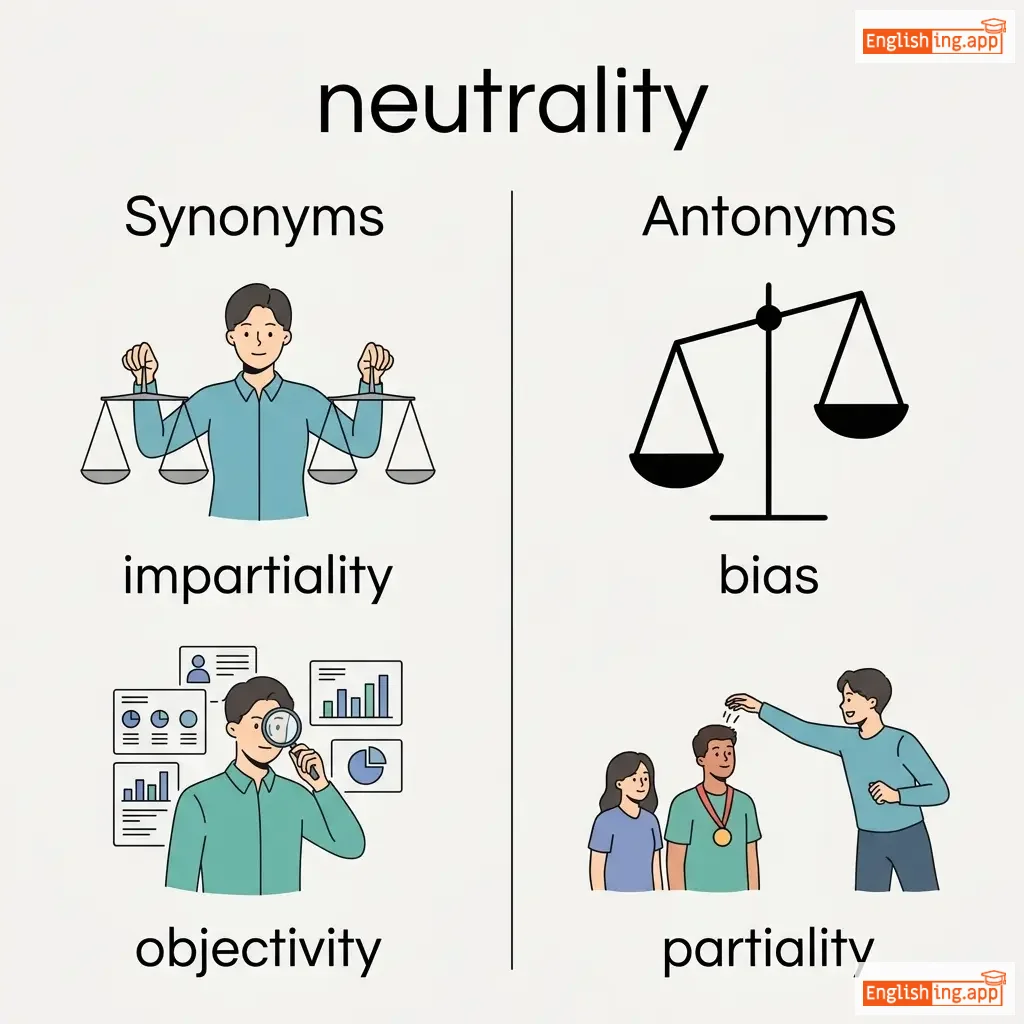
impartiality, objectivity, non-alignment
••••••
|
bias, partiality, involvement, alliance
••••••
|
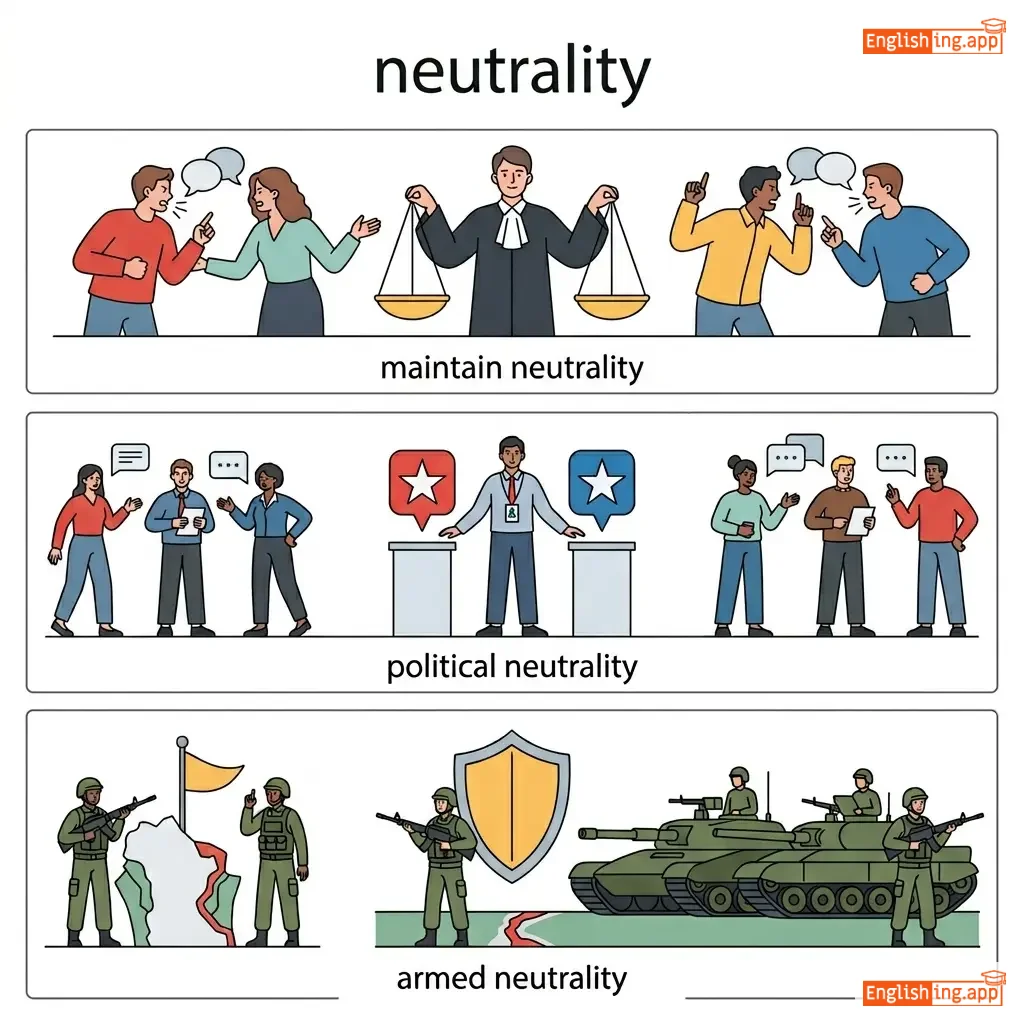
maintain neutrality, political neutrality, armed neutrality
••••••
|
中立 - '中'表示中间,'立'表示站立,指不站在任何一方。
••••••
|
|
#926
👶
|
/ˈnɒn.ɪʤ/
noun
(诺内吉)
••••••
|
- •••••• |
未成年时期
nonij
••••••
|
the period of being under the legal age of majority; youth or immaturity
••••••
|
During his nonage, all legal decisions were made by his guardian.
在他未成年时期,所有法律决定都由他的监护人作出。
••••••
|
在他未成年时期,所有法律决定都由他的监护人作出。
zai ta wei chengnian shiqi, suo you falv jue ding dou you ta de jianhu ren zuo chu.
••••••
|
minority, youth, childhood, immaturity
••••••
|
adulthood, majority, maturity
••••••
|
during nonage, legal nonage, period of nonage
••••••
|
NoAge 未成年时期; 想象一个 guardian 守在门口说 No Age, 让你在 wei chengnian shiqi 里成长
••••••
|
|
#927
👶
|
/ˈnuː.kʌm.ər/
noun
(niú-kō-mè)
••••••
|
- •••••• |
新来者
xin laizhe
••••••
|
a person who has recently arrived in a place or joined a group
••••••
|
The newcomer was warmly welcomed by the team.
新来者受到了团队的热烈欢迎。
••••••
|
新来者受到了团队的热烈欢迎。
Xin laizhe shòudàole tuánduì de rèliè huānyíng.
••••••
|
new arrival, novice, beginner, fresh face
••••••
|
veteran, old-timer, experienced person
••••••
|
welcome newcomer, help newcomer, newcomer to the area
••••••
|
Xin laizhe – 新 (new) 来者 (arrived)
••••••
|
|
#928
👻
|
/nɑnˈen.tə.ti/
noun
(nónén tìtī)
••••••
|
- •••••• |
无足轻重的人; 不存在的事物
wú zú qīng zhòng de rén
••••••
|
a person of no importance or influence; something that does not exist
••••••
|
He felt like a nonentity in the large corporation. |
他在大公司里感觉自己像个无足轻重的人。
Tā zài dà gōngsī lǐ gǎnjué zìjǐ xiàng gè wú zú qīng zhòng de rén.
••••••
|
nobody, insignificant person, zero
••••••
|
somebody, celebrity, important person
••••••
|
political nonentity, complete nonentity, feel like nonentity
••••••
|
非重要人物不会是一个 nonentity。
••••••
|
|
#929
🔗
|
/ˈnek.səs/
noun
(nexus)
••••••
|
- •••••• |
联系; 纽带;
liánxì; niǔdài;
••••••
|
a connection or series of connections linking two or more things
••••••
|
There's a clear nexus between education and economic development.
教育与经济发展的之间有一个清晰的纽带。
••••••
|
教育与经济发展的之间有一个清晰的纽带。
Jiàoyù yǔ jīngjì fāzhǎn de zhī jiān yǒu yīgè qīngxī de niǔdài.
••••••
|
connection, link, bond, tie
••••••
|
disconnection, separation, isolation
••••••
|
criminal nexus, nexus between, power nexus
••••••
|
‘联系’就像是连接思想的纽带,像教育和经济发展一样。
••••••
|
|
#930
🤪
|
/ˈnɑn.sens/
noun
(nonsense)
••••••
|
- •••••• |
胡说
hushuo
••••••
|
words or language that have no meaning; foolish or unacceptable behavior
••••••
|
Stop talking nonsense and be serious! |
停止胡说八道,认真点!
Tíngzhǐ hùshuō bādào, rènzhēn diǎn!
••••••
|
rubbish, garbage, foolishness, absurdity
••••••
|
sense, logic, reason, wisdom
••••••
|
complete nonsense, utter nonsense, talk nonsense
••••••
|
胡说 (Chinese) means nonsense (English)
••••••
|
|
#931
🏷️
|
/ˈnɪk.neɪm/
noun
(nɪkˈneɪm)
••••••
|
- •••••• |
昵称
ni cheng
••••••
|
a familiar or humorous name given to a person instead of their real name
••••••
|
His nickname is 'Tiger' because he's so brave. |
他的昵称是'老虎'因为他非常勇敢。
tā de nìchēng shì 'lǎohǔ' yīnwèi tā fēicháng yǒnggǎn.
••••••
|
pet name, alias, moniker, sobriquet
••••••
|
real name, formal name, given name
••••••
|
give nickname, earn nickname, childhood nickname
••••••
|
昵称就像'老虎'一样,是一个熟悉的名字。
••••••
|
|
#932
⚙️
|
/nuːs/
noun
(nuːs)
••••••
|
- •••••• |
套索
taosu
••••••
|
a loop with a running knot used for hanging; a trap or snare
••••••
|
The cowboy made a noose to catch the wild horse.
牛仔做了一个套索来抓住野马。
••••••
|
牛仔做了一个套索来抓住野马。
Niúzǎi zuòle yīgè tàosu lái zhuā zhù yěmǎ.
••••••
|
loop, snare, lasso, trap
••••••
|
freedom, release, escape
••••••
|
tighten noose, escape noose, hang noose
••••••
|
想象一个牛仔使用套索来捕捉野马,像一个锁链套住它。
••••••
|
|
#933
😱
|
/ˈnaɪt.meər/
noun
(nàitméiér)
••••••
|
- •••••• |
噩梦
è mèng
••••••
|
a frightening or unpleasant dream; a very unpleasant experience
••••••
|
The exam was a complete nightmare for unprepared students.
考试对未准备的学生来说是一场彻底的噩梦。
••••••
|
考试对未准备的学生来说是一场彻底的噩梦。
kǎoshì duì wèi zhǔnbèi de xuéshēng lái shuō shì yī chǎng chèdǐ de èmèng.
••••••
|
bad dream, horror, ordeal, torment
••••••
|
pleasant dream, good dream, fantasy
••••••
|
recurring nightmare, worst nightmare, living nightmare
••••••
|
噩梦 = 恶 = Nightmare
••••••
|
|
#934
📊
|
/nɔːrm/
noun
(nɔːrm)
••••••
|
- •••••• |
标准; 常规; 规则; 传统
biaozhun; changgui; guize; chuantong
••••••
|
a standard of behavior; what is typical or expected
••••••
|
Working late has become the norm in this company. |
加班已成为这家公司的一项常规。
Jiaban yi chengwei zhe jia gongsi de yi xiang changgui.
••••••
|
standard, rule, convention, practice
••••••
|
exception, deviation, abnormality
••••••
|
social norm, cultural norm, become the norm
••••••
|
当加班成为常规时,这就是'标准'。
••••••
|
|
#935
✅
|
/nɪl/
noun
(nil)
••••••
|
- •••••• |
零; 什么都没有
ling; shenme dou meiyou
••••••
|
nothing; zero; no amount
••••••
|
His chances of winning were nil after the scandal. |
在丑闻之后,他的获胜机会为零。
Zai chouwen zhihou, ta de huosheng jihui wei ling.
••••••
|
nothing, zero, none, naught
••••••
|
something, all, everything, many
••••••
|
nil chance, nil result, nil value
••••••
|
零表示没有,一切为空!
••••••
|
|
#936
😢
|
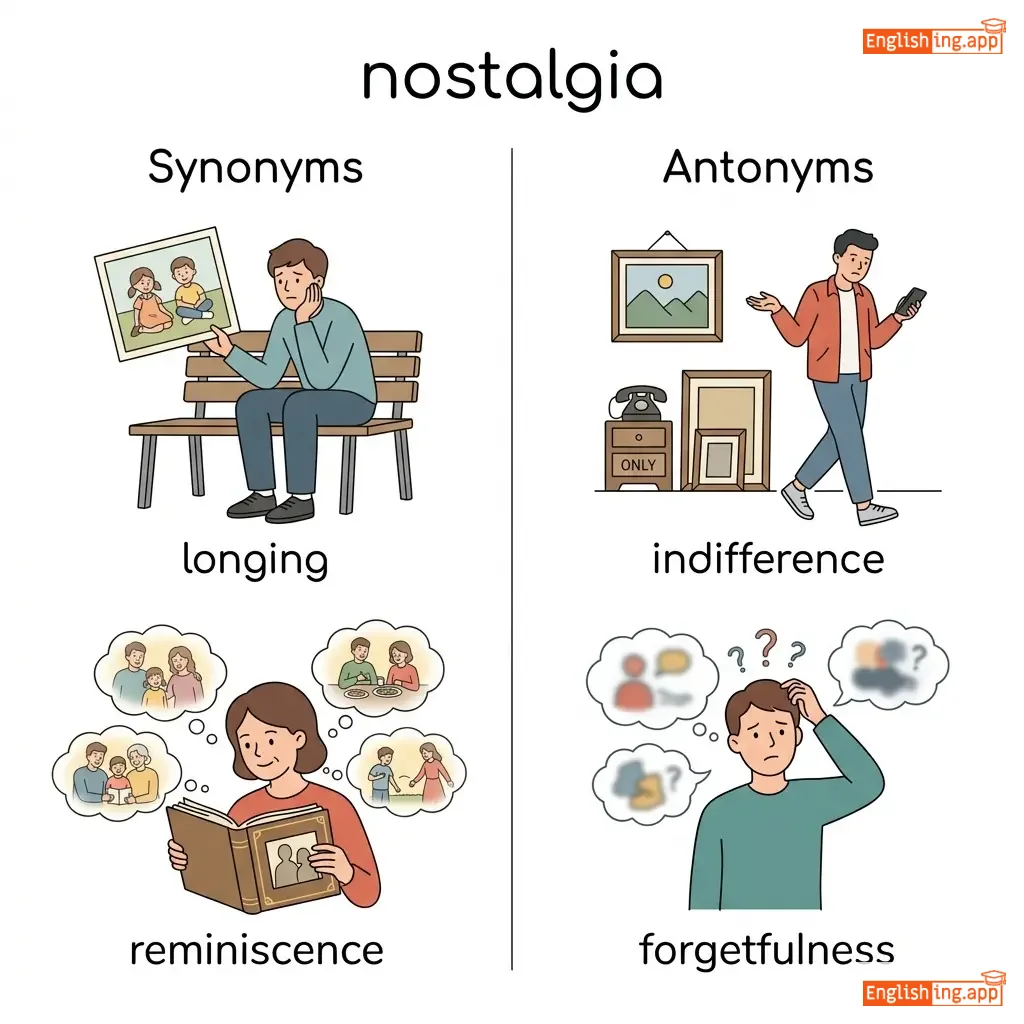
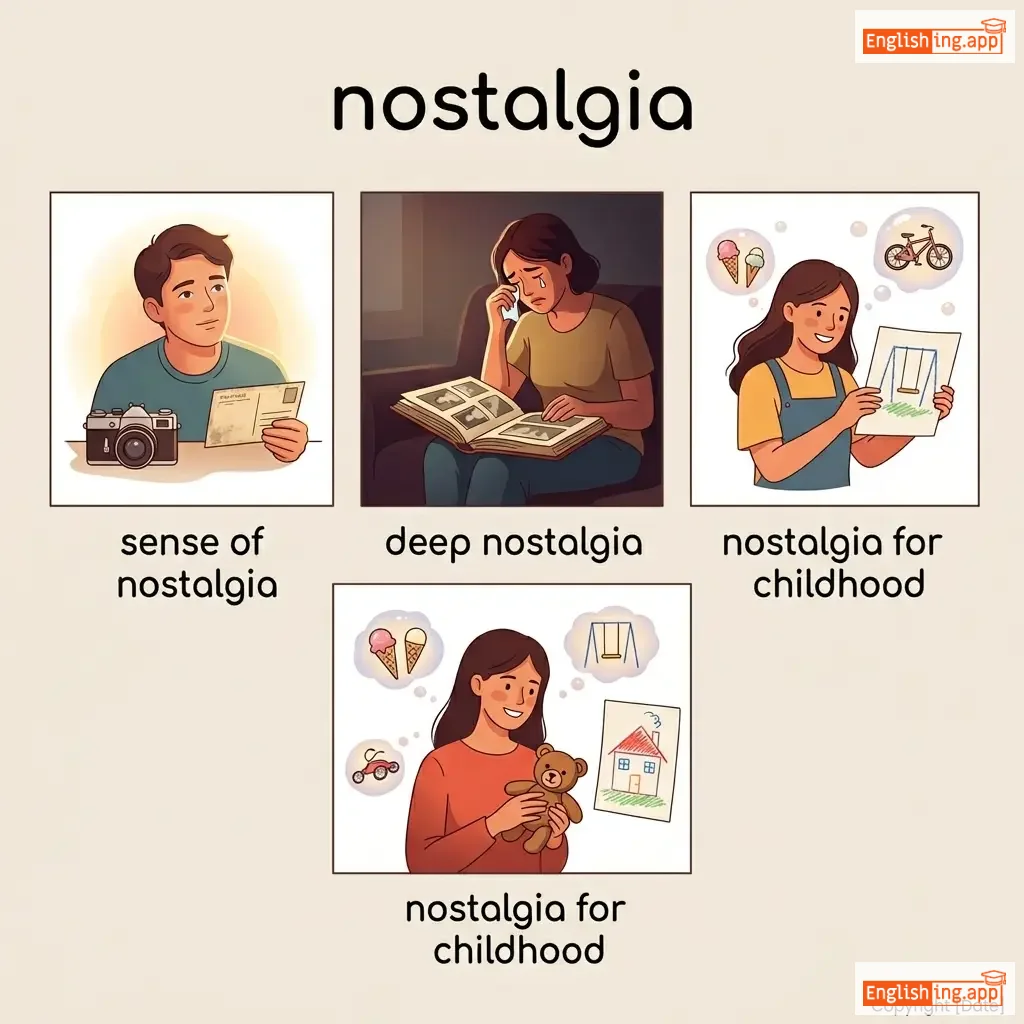
/nəˈstæl.dʒə/
noun
(怀旧)
••••••
|
|
怀旧
huaijiu
••••••
|
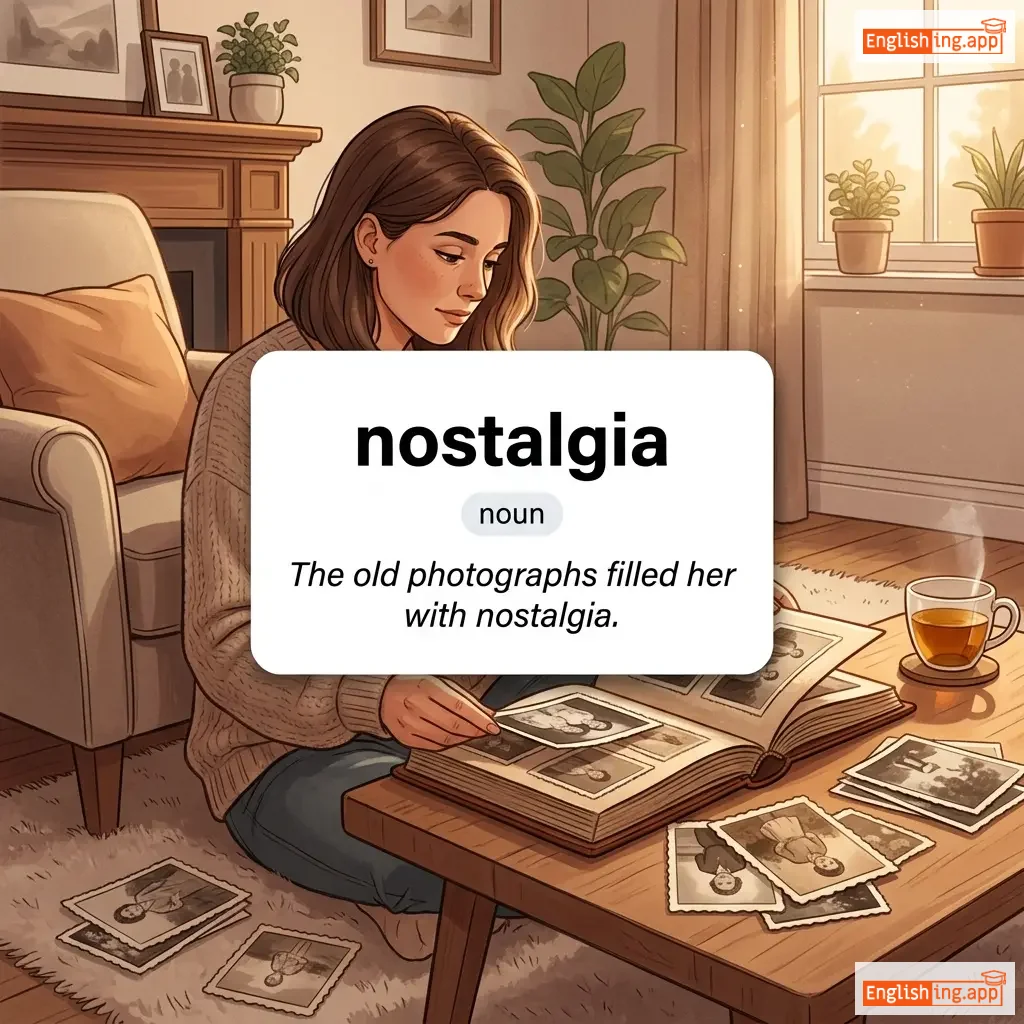
a sentimental longing for the past; wistful affection for a period in the past
••••••
|
Looking at old photos filled her with nostalgia.
看着旧照片,她感到怀旧。
••••••
|
看着旧照片,她感到怀旧。
Kànzhe jiù zhàopiàn, tā gǎndào huáijiù.
••••••
|
longing, wistfulness, reminiscence, sentimentality
••••••
|
present focus, future thinking, indifference
••••••
|
wave of nostalgia, childhood nostalgia, feel nostalgia
••••••
|
怀旧 = 当你回忆过去时心中充满温暖
••••••
|
|
#937
🥴
|
/ˈnɪn.i/
noun
(尼尼)
••••••
|
- •••••• |
傻瓜
shagua
••••••
|
a silly or foolish person; someone who lacks common sense
••••••
|
Don't be such a ninny, use your brain! |
不要做傻瓜,动动脑子!
bùyào zuò shǎguā, dòng dòng nǎozi!
••••••
|
fool, idiot, simpleton, dummy
••••••
|
genius, intelligent person, wise person
••••••
|
silly ninny, complete ninny, such a ninny
••••••
|
傻瓜和ninny在中文和英语中都表示同样的意思。
••••••
|
|
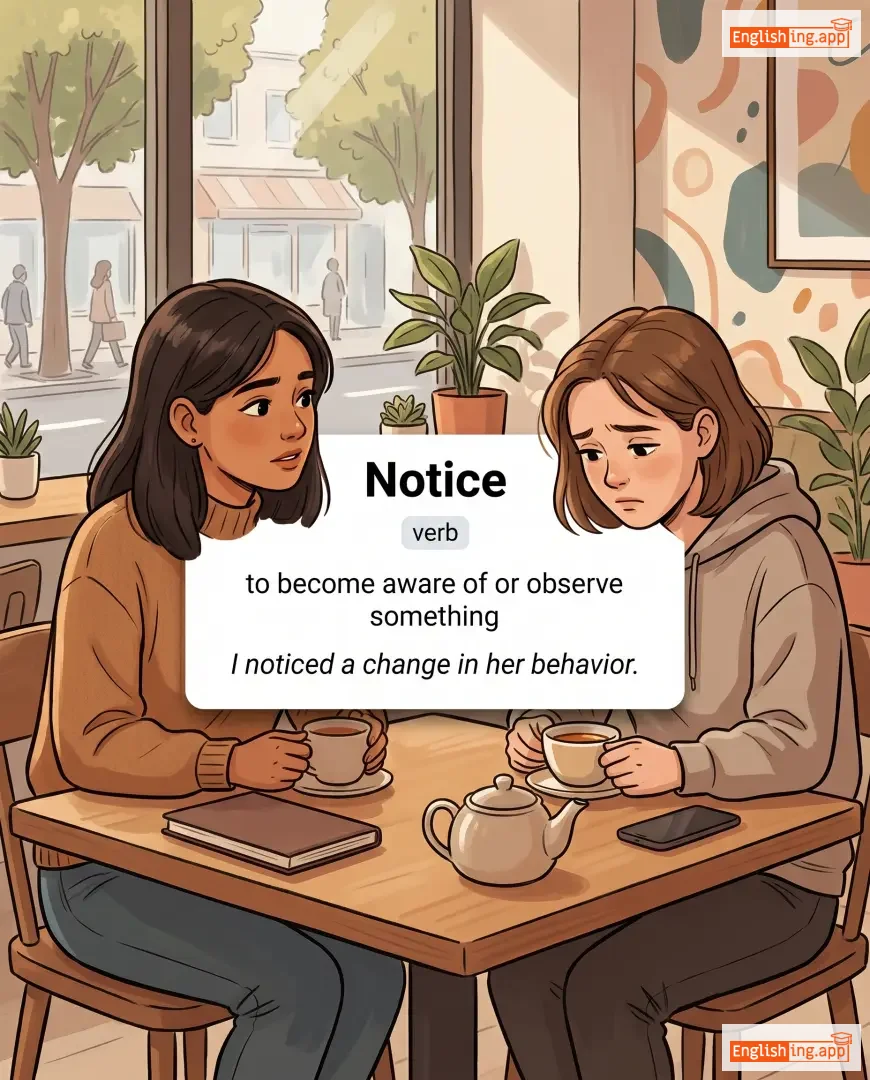
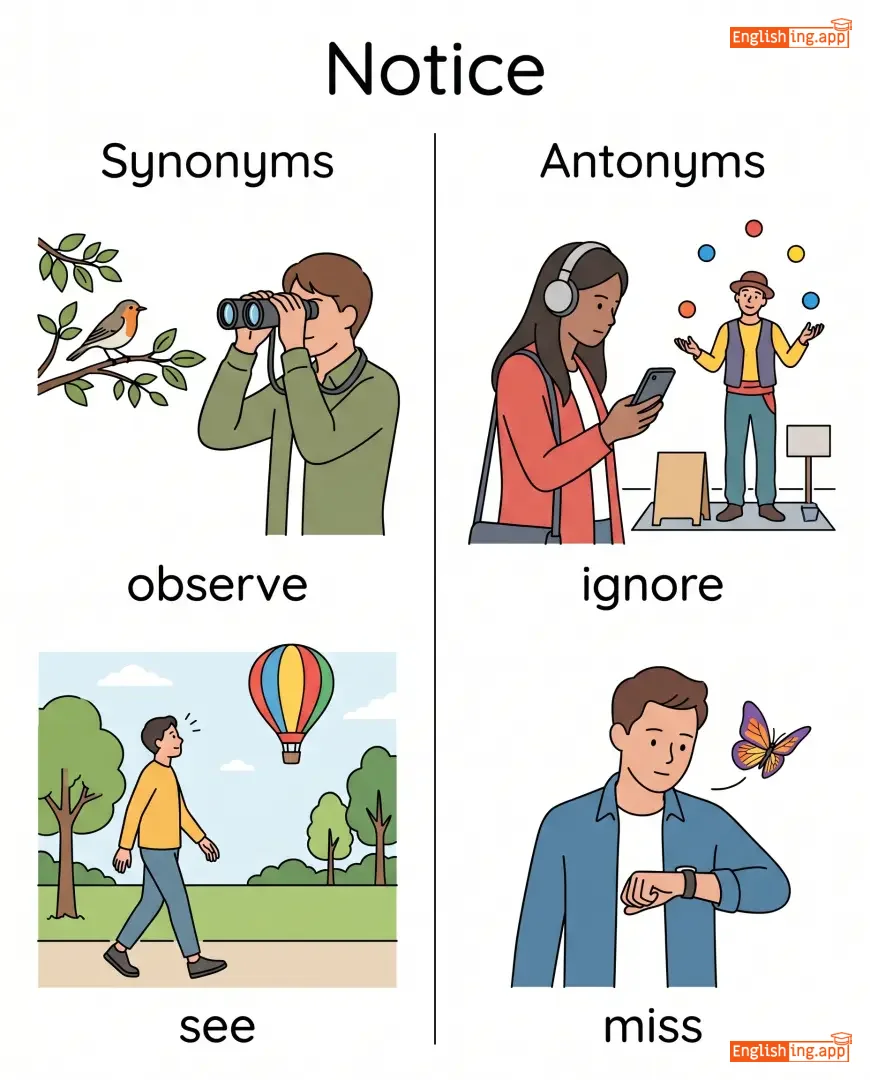
#938
📝
|
/ˈnoʊ.tɪs/
noun
(nòtí)
••••••
|
|
通知
tongzhi
••••••
|
attention to something; a written or printed announcement
••••••
|
The notice on the board announced the school closure.
公告板上的通知宣布了学校关闭。
••••••
|
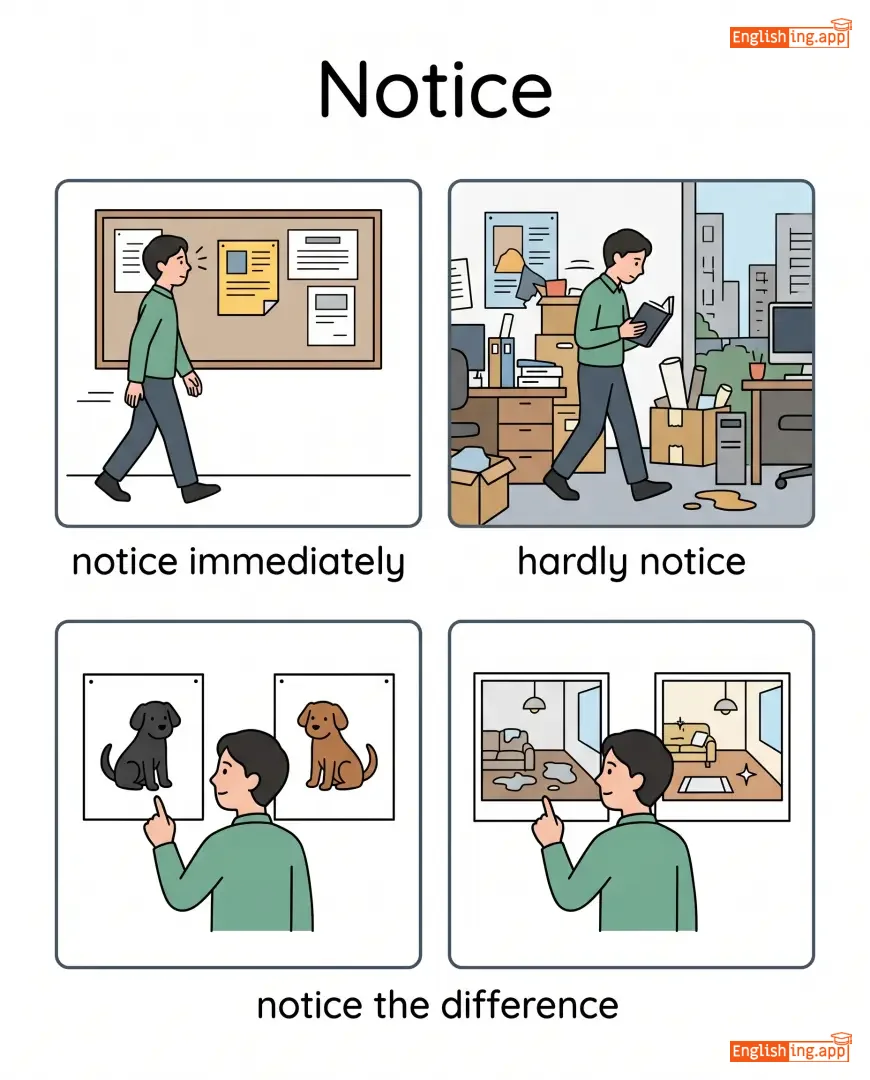
公告板上的通知宣布了学校关闭。
Gōnggào bǎn shàng de tōngzhī xuānbù le xuéxiào guānbì.
••••••
|
announcement, notification, warning, sign
••••••
|
ignorance, oversight, neglect
••••••
|
public notice, advance notice, take notice
••••••
|
通知是在公告板上找到的信息。
••••••
|
|
#939
👑
|
/noʊˈbɪl.ə.ti/
noun
(诺比利蒂)
••••••
|
- •••••• |
贵族; 高级身份
guìzú; gāojí shēnfèn
••••••
|
the quality of being noble in character; people of noble rank
••••••
|
He showed great nobility in forgiving his enemies.
他通过原谅敌人展现了伟大的贵族精神。
••••••
|
他通过原谅敌人展现了伟大的贵族精神。
Tā tōngguò yuánliàng dírén zhǎnxiànle wěidà de guìzú jīngshén.
••••••
|
honor, dignity, virtue, aristocracy
••••••
|
dishonor, baseness, vulgarity, commoners
••••••
|
true nobility, nobility of character, moral nobility
••••••
|
贵族像高贵的人一样宽容,像宽恕敌人一样高贵。
••••••
|
|
#940
💡
|
/ˈnoʊ.ʃən/
noun
(nòu-xiàng)
••••••
|
- •••••• |
概念
gàiniàn
••••••
|
a conception or belief about something; an idea or opinion
••••••
|
She had a strange notion that someone was following her. |
她有一个奇怪的概念,认为有人在跟踪她。
Tā yǒu yīgè qíguài de gàiniàn, rènwéi yǒurén zài gēnzōng tā.
••••••
|
idea, concept, belief, impression
••••••
|
fact, reality, certainty, knowledge
••••••
|
vague notion, strange notion, reject notion
••••••
|
概念 = 好的理解
••••••
|
Vocabulary Quiz
Test your vocabulary by matching words with their translations or meanings.
Login to take the quiz
Comments (0)
Share your thoughts and join the discussion.
Join the discussion by logging in
Login to CommentNo comments yet
Be the first to share your thoughts!