



Swipe left or right, or use the buttons. Tap image to zoom.
例句翻译
单词
Lesson 48Lesson 48 - 遮罩切换
|
表情符号
|
单词 | Images | 翻译 | 含义 | 例句 | 例句翻译 | 同义词 | 反义词 | 搭配词 | 助记符 |
|---|---|---|---|---|---|---|---|---|---|---|
|
#941
⭐
|
/ˈnoʊ.və/
noun
(诺瓦)
••••••
|
- •••••• |
新星
xīnxīng
••••••
|
a star that suddenly increases greatly in brightness
••••••
|
Astronomers discovered a new nova in the constellation.
天文学家在星座中发现了一个新的诺瓦。
••••••
|
天文学家在星座中发现了一个新的诺瓦。
tiānwénxuéjiā zài xīngzuò zhōng fāxiàn le yī gè xīn de nuòwǎ.
••••••
|
supernova, bright star, stellar explosion
••••••
|
dim star, fading star
••••••
|
bright nova, observe nova, nova explosion
••••••
|
天际线上的新星突然亮起来了
••••••
|
|
#942
🤚
|
/oʊθ/
noun
(oath)
••••••
|
- •••••• |
誓言
shiyan
••••••
|
a solemn promise or declaration; a sworn statement
••••••
|
The doctor took an oath to help patients. |
医生宣誓帮助病人。
Yisheng xuanshi bangzhu bingren.
••••••
|
vow, pledge, promise, swear
••••••
|
denial, refusal, breach
••••••
|
take oath, under oath, oath of office
••••••
|
Chinese '誓言' (shiyan) for oath.
••••••
|
|
#943
🎆
|
/ˈnɑv.əl.ti/
noun
(nuòwēiértì)
••••••
|
|
新奇; 独创性;
xīnqí; dúchuàngxìng
••••••
|
the quality of being new, original, or unusual; a new or unfamiliar thing
••••••
|
The novelty of the smartphone quickly wore off.
智能手机的新奇感很快就消失了。
••••••
|
智能手机的新奇感很快就消失了。
zhìnéng shǒujī de xīnqí gǎn hěn kuài jiù xiāoshī le.
••••••
|
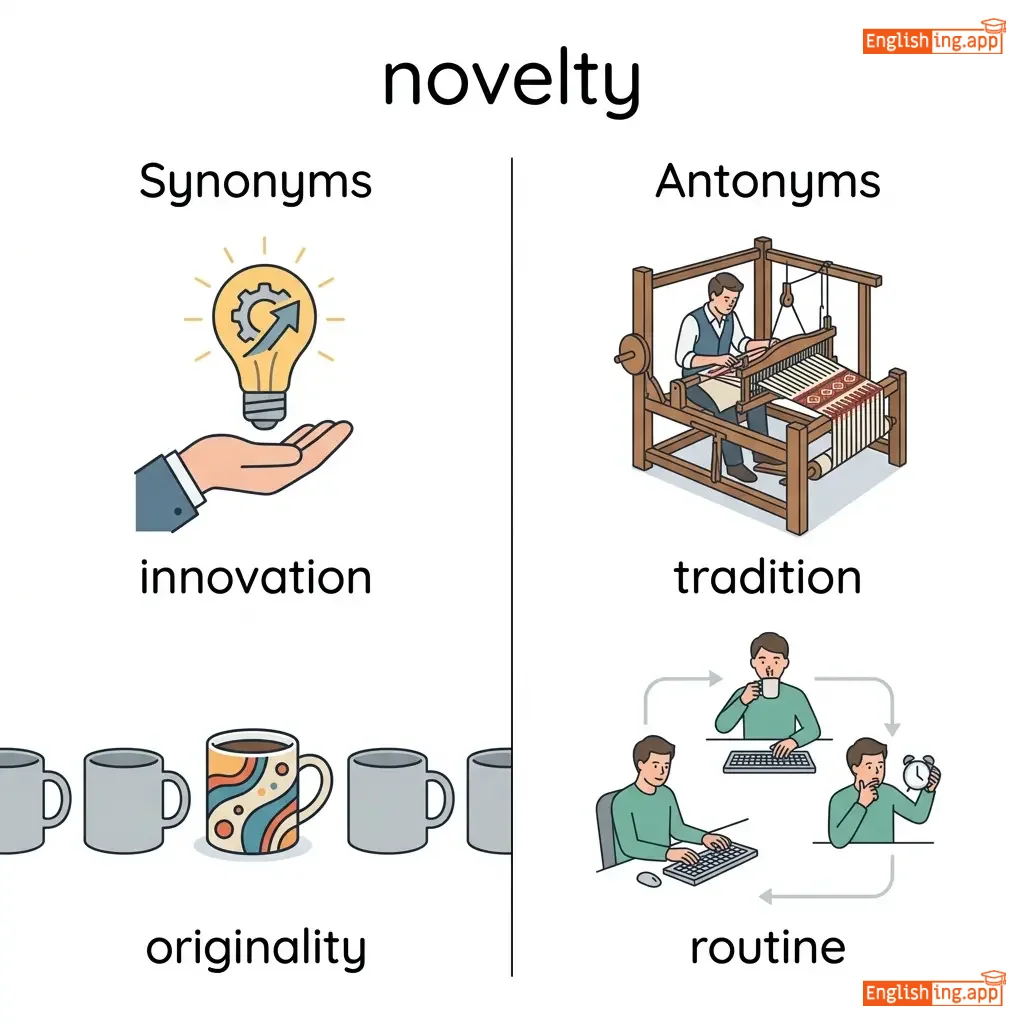
newness, originality, freshness, innovation
••••••
|
familiarity, oldness, tradition, routine
••••••
|
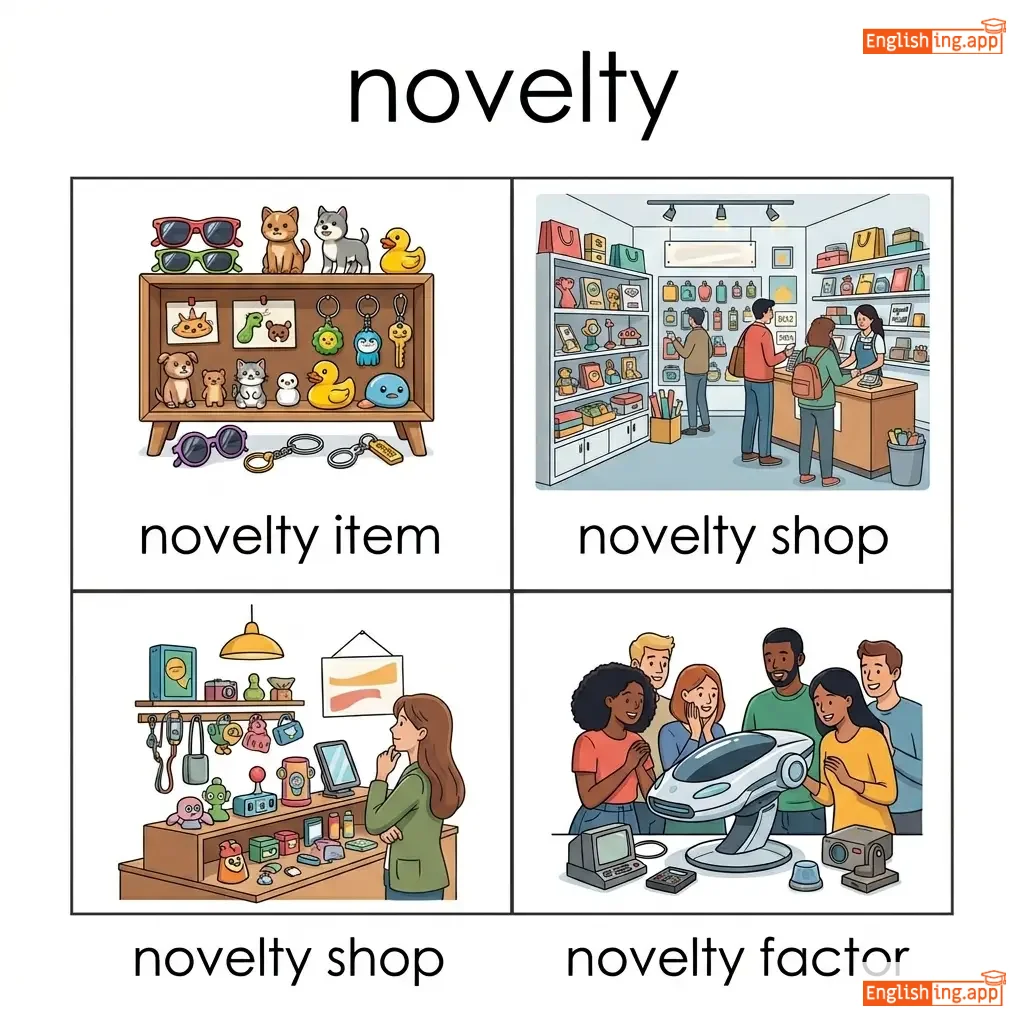
novelty item, novelty factor, wear off novelty
••••••
|
新奇事物最吸引眼球,但它很快消失
••••••
|
|
#944
🙏
|
/oʊˈbiː.di.əns/
noun
(服从)
••••••
|
- •••••• |
服从
fúcóng
••••••
|
compliance with an order, request, or law; submission to authority
••••••
|
Children should show obedience to their parents.
孩子们应该对父母表现出服从。
••••••
|
孩子们应该对父母表现出服从。
Háizimen yīnggāi duì fùmǔ biǎoxiàn chū fúcóng.
••••••
|
compliance, submission, conformity, respect
••••••
|
disobedience, rebellion, defiance, resistance
••••••
|
blind obedience, show obedience, demand obedience
••••••
|
服从父母是应尽的责任。
••••••
|
|
#945
👶
|
/ˈnɑv.ɪs/
noun
(诺维斯)
••••••
|
- •••••• |
新手
xīnshǒu
••••••
|
a person new to or inexperienced in a field or situation; a beginner
••••••
|
As a novice driver, she was very careful on the road.
作为一个新手司机,她在路上非常小心。
••••••
|
作为一个新手司机,她在路上非常小心。
Zuòwéi yīgè xīnshǒu sījī, tā zài lùshàng fēicháng xiǎoxīn.
••••••
|
beginner, newcomer, apprentice, amateur
••••••
|
expert, veteran, professional, master
••••••
|
complete novice, novice driver, novice teacher
••••••
|
新手 = Novice 在中文
••••••
|
|
#946
🪦
|
/oʊˈbɪt.ʃu.er.i/
noun
(讣告)
••••••
|
- •••••• |
讣告
fugao
••••••
|
a notice of someone's death published in a newspaper; biographical account of deceased person
••••••
|
The newspaper published his obituary yesterday. |
报纸昨天发布了他的讣告。
Baozhi zuotian fabu le tade fugao.
••••••
|
death notice, memorial, tribute, eulogy
••••••
|
birth announcement, celebration, life story
••••••
|
write obituary, publish obituary, obituary notice
••••••
|
讣告是对逝去之人最后的告别,通常出现在报纸上。
••••••
|
|
#947
💡
|
/ˈnoʊ.ʃən/
noun
(nòu shēn)
••••••
|
- •••••• |
概念; 想法; 意见
gàiniàn; xiǎngfǎ; yìjiàn
••••••
|
a conception or belief about something; an idea or opinion
••••••
|
I had no notion that the meeting was so important. |
我完全没有想到会议会这么重要。
Wǒ wánquán méiyǒu xiǎngdào huìyì huì zhème zhòngyào.
••••••
|
idea, concept, belief, impression
••••••
|
fact, reality, certainty, knowledge
••••••
|
vague notion, preconceived notion, have notion
••••••
|
In Chinese, '概念' links to 'notion,' connected to 'idea' (想法) and 'opinion' (意见).
••••••
|
|
#948
✋
|
/əbˈdʒek.ʃən/
noun
(反对)
••••••
|
- •••••• |
反对; 异议; 抗议;
fǎnduì; yìyì; kàngyì;
••••••
|
an expression of disagreement or disapproval; a reason for disagreeing
••••••
|
The lawyer raised an objection during the trial.
律师在审判过程中提出了异议。
••••••
|
律师在审判过程中提出了异议。
Lǜshī zài shěnpàn guòchéng zhōng tíchūle yìyì.
••••••
|
protest, opposition, complaint, disagreement
••••••
|
agreement, approval, acceptance, consent
••••••
|
raise objection, strong objection, overrule objection
••••••
|
Think of raising an '反对' (objection) in a Chinese courtroom.
••••••
|
|
#949
😠
|
/ˈnuː.səns/
noun
(nuísàns)
••••••
|
- •••••• |
麻烦; 打扰;
máfan; dǎrǎo
••••••
|
a person, thing, or circumstance causing inconvenience or annoyance
••••••
|
The constant noise from construction is a real nuisance.
建筑施工的持续噪音是一种真正的麻烦。
••••••
|
建筑施工的持续噪音是一种真正的麻烦。
Jiànzhù shīgōng de chíxù zhàoyīn shì yī zhǒng zhēnzhèng de máfan.
••••••
|
annoyance, bother, trouble, pest
••••••
|
pleasure, help, benefit, blessing
••••••
|
public nuisance, constant nuisance, real nuisance
••••••
|
The constant noise from construction is a ‘máfan’ (nuisance) in China.
••••••
|
|
#950
🎯
|
/əbˈdʒek.tɪv/
noun
(ob-jec-tive)
••••••
|
|
目标
mùbiāo
••••••
|
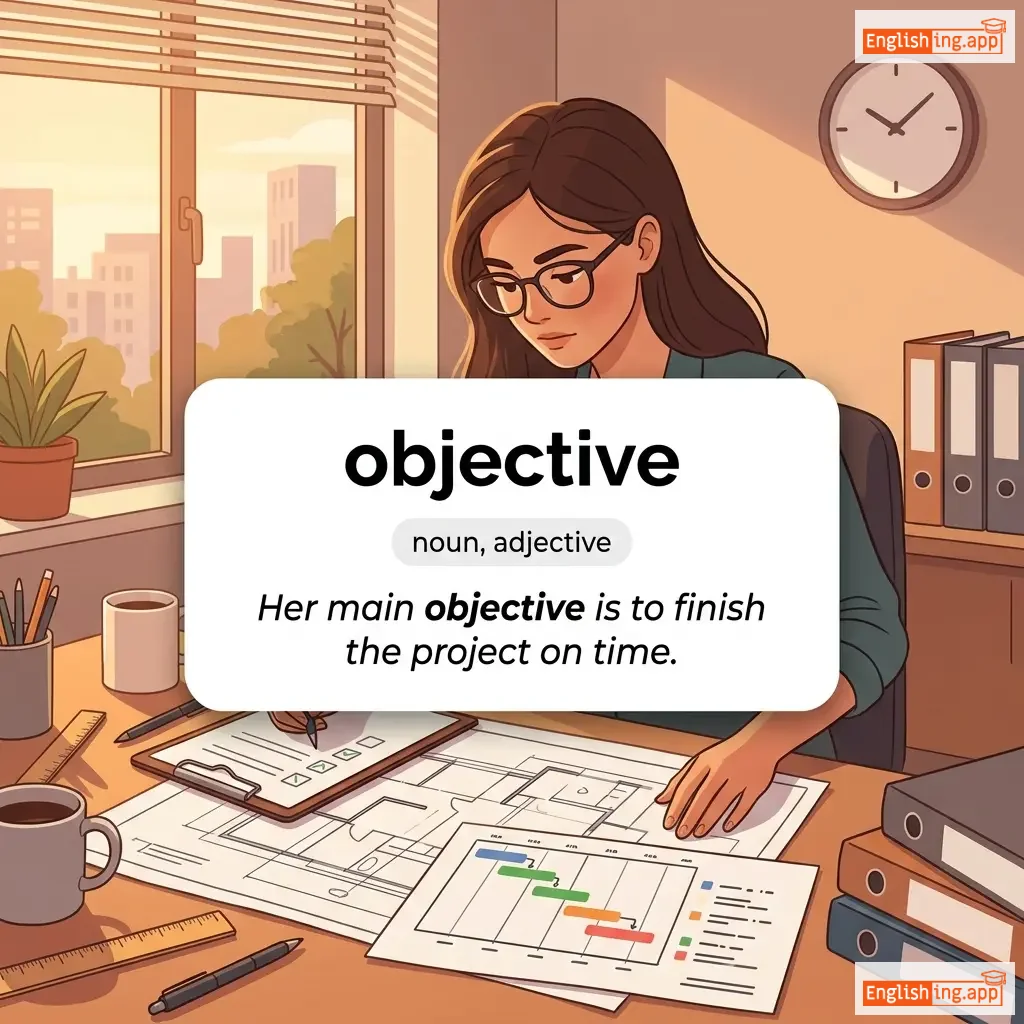
a goal or aim; something that one strives to achieve
••••••
|
Our main objective is to increase sales.
我们的主要目标是增加销售。
••••••
|
我们的主要目标是增加销售。
wǒmen de zhǔyào mùbiāo shì zēngjiā xiāoshòu
••••••
|
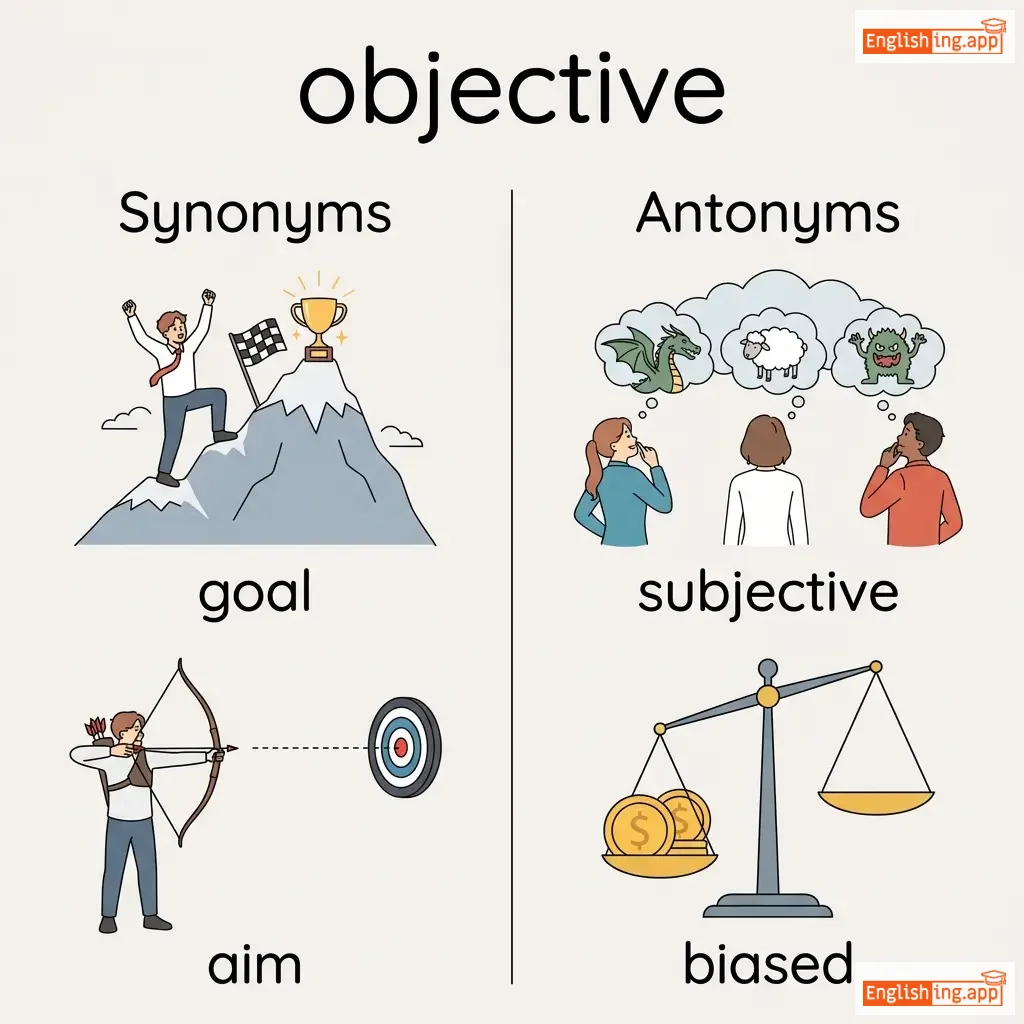
goal, aim, target, purpose
••••••
|
subjective, biased, personal opinion
••••••
|
main objective, achieve objective, clear objective
••••••
|
目标在中文中意味着我们努力要实现的目标。
••••••
|
|
#951
👩🎓
|
/nʌn/
noun
(nān)
••••••
|
- •••••• |
修女
xiū nǚ
••••••
|
a woman who has taken vows in a religious order and lives in a convent
••••••
|
The nun taught at the local Catholic school.
修女在当地的天主教学校授课。
••••••
|
修女在当地的天主教学校授课。
Xiū nǚ zài dāngdì de tiānzhǔjiào xuéxiào shòukè.
••••••
|
sister, religious woman, mother superior
••••••
|
layperson, secular woman
••••••
|
Catholic nun, teaching nun, convent nun
••••••
|
Chinese '修女' is pronounced similarly to 'nun'.
••••••
|
|
#952
📝
|
/ˌɑb.lɪˈɡeɪ.ʃən/
noun
(义务)
••••••
|
- •••••• |
义务
yiwu
••••••
|
a duty or commitment; something that must be done legally or morally
••••••
|
Parents have an obligation to care for their children.
父母有责任照顾他们的孩子。
••••••
|
父母有责任照顾他们的孩子。
fumu you zeren zhaogu tamen de haizi
••••••
|
duty, responsibility, commitment, requirement
••••••
|
freedom, choice, option, liberty
••••••
|
legal obligation, moral obligation, meet obligation
••••••
|
父母有责任照顾他们的孩子,法律和道德要求如此。
••••••
|
|
#953
🌱
|
/ˈnɜr.tʃər/
noun
(nǔrchèr)
••••••
|
- •••••• |
培养
peiyang
••••••
|
the process of caring for and encouraging growth or development
••••••
|
Good parenting involves both nature and nurture. |
良好的育儿涉及自然和培养两个方面。
Liánghǎo de yù'ér shèjí zìrán hé péiyǎng liǎng gè fāngmiàn
••••••
|
care, cultivation, upbringing, development
••••••
|
neglect, abandonment, harm, destruction
••••••
|
nature vs nurture, nurture growth, provide nurture
••••••
|
Nurture is helping something grow, just like a gardener nurtures plants.
••••••
|
|
#954
🌫️
|
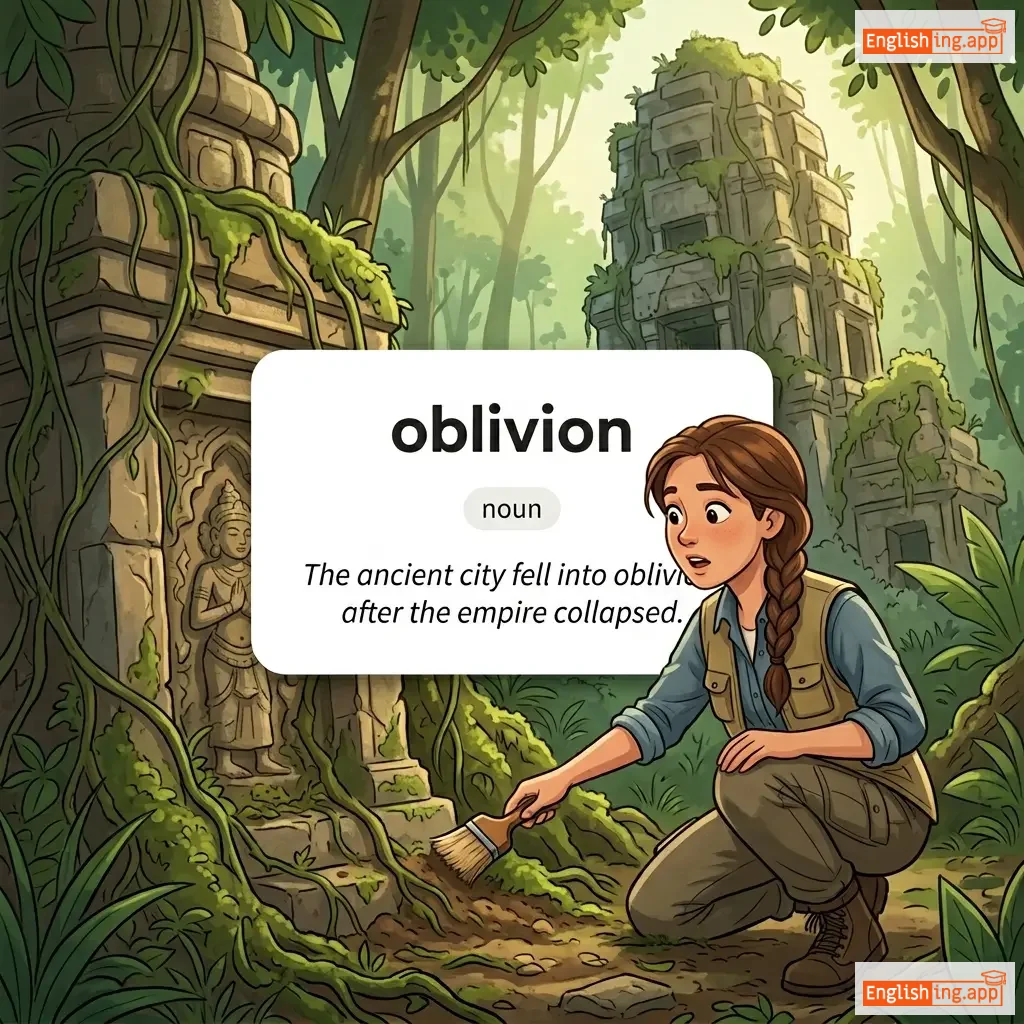
/əˈblɪv.i.ən/
noun
(oblivion)
••••••
|
|
遗忘
yíwàng
••••••
|
the state of being completely forgotten; unconsciousness
••••••
|
The old castle fell into oblivion over the centuries.
这座古老的城堡在几个世纪中陷入了遗忘。
••••••
|
这座古老的城堡在几个世纪中陷入了遗忘。
Zhè zuò gǔlǎo de chéngbǎo zài jǐ gè shìjì zhōng xiànrùle yíwàng.
••••••
|
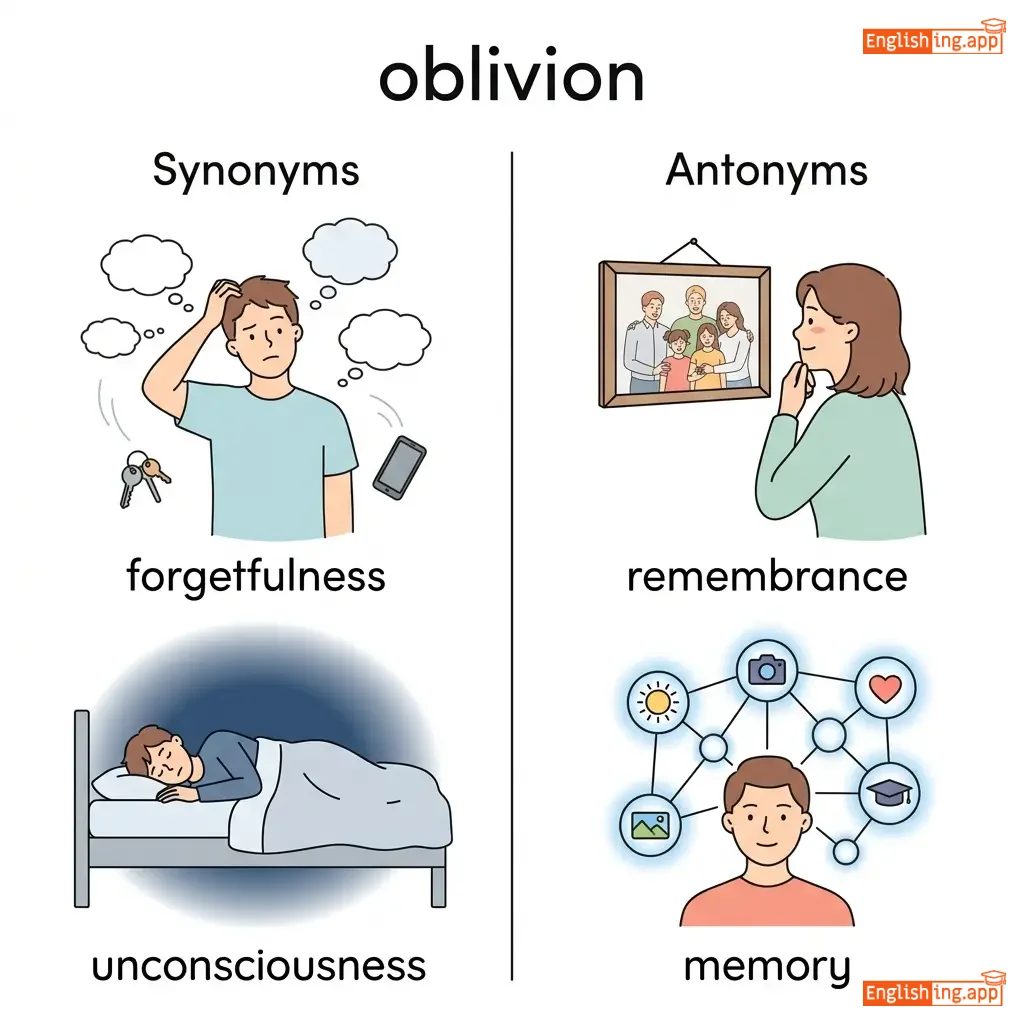
forgetfulness, unconsciousness, void, neglect
••••••
|
remembrance, memory, awareness, consciousness
••••••
|
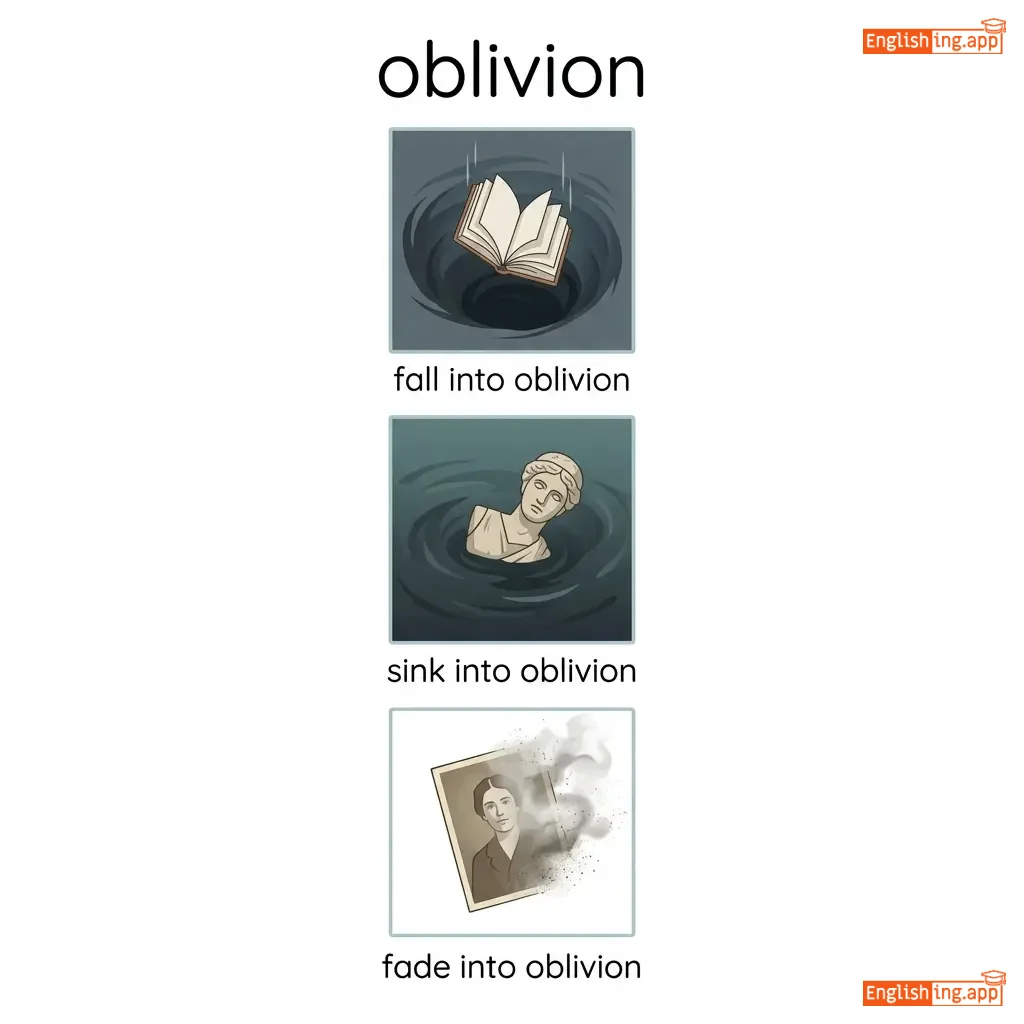
fade into oblivion, sink into oblivion, rescue from oblivion
••••••
|
Oblivion = Gǔlǎo chéngbǎo + yíwàng
••••••
|
|
#955
🧚♀️
|
/nɪmf/
noun
(nímf)
••••••
|
- •••••• |
水仙
shuǐxiān
••••••
|
a mythological spirit of nature; a beautiful young woman in classical mythology
••••••
|
The water nymph appeared by the moonlit lake. |
水仙出现在月光下的湖边。
shuǐxiān chūxiàn zài yuèguāng xià de húbiān.
••••••
|
fairy, sprite, goddess, maiden
••••••
|
mortal, human, ordinary person
••••••
|
water nymph, wood nymph, sea nymph
••••••
|
水仙 - 神话中的自然女神
••••••
|
|
#956
😠
|
/ˈɑb.lə.kwi/
noun
(奥布洛奎)
••••••
|
- •••••• |
严厉的批评或言语侮辱;公开谴责
aobuluokui
••••••
|
harsh criticism or verbal abuse; strong public condemnation
••••••
|
The politician faced obloquy after the scandal. |
政治家在丑闻之后遭遇了严厉的批评。
zhengzhijia zai chouwen zhihou zaoyu le yanli de piping.
••••••
|
criticism, condemnation, abuse, censure
••••••
|
praise, approval, commendation, acclaim
••••••
|
face obloquy, subject to obloquy, public obloquy
••••••
|
Chinese: 'Obloquy' sounds like 'obscure,' meaning public disgrace or severe criticism.
••••••
|
|
#957
🥴
|
/oʊf/
noun
(哦夫)
••••••
|
- •••••• |
笨拙、愚蠢或麻木的人
bènzhuō, yúchǔn huò mámù de rén
••••••
|
a clumsy, stupid, or insensitive person
••••••
|
Don't be such an oaf - handle the dishes carefully! |
不要做那种笨蛋 – 小心洗碗!
Bùyào zuò nà zhǒng bèndàn – xiǎoxīn xǐ wǎn!
••••••
|
fool, clumsy person, buffoon, blockhead
••••••
|
gentleman, graceful person, intelligent person
••••••
|
clumsy oaf, stupid oaf, big oaf
••••••
|
Oaf可以想象成‘做事笨拙的人’
••••••
|
|
#958
👀
|
/ˌɑb.zɚˈveɪ.ʃən/
noun
(观察)
••••••
|
- •••••• |
观察
guancha
••••••
|
the action of watching something carefully; a comment or remark
••••••
|
The scientist made careful observations of the experiment.
科学家仔细观察了实验。
••••••
|
科学家仔细观察了实验。
Kexuejia zixi guancha le shiyan.
••••••
|
watching, monitoring, examination, remark
••••••
|
ignorance, neglect, inattention, oversight
••••••
|
careful observation, direct observation, under observation
••••••
|
科学家认真观察实验中的每个细节。
••••••
|
|
#959
🌴
|
/oʊˈeɪ.sɪs/
noun
(绿洲)
••••••
|
- •••••• |
绿洲
lüzhou
••••••
|
a fertile spot in a desert where water is found; a pleasant refuge
••••••
|
The travelers found an oasis after days in the desert. |
旅行者在沙漠中几天后找到了一个绿洲。
lǚxíng zhě zài shāmò zhōng jǐ tiān hòu zhǎodào le yī ge lǜzhōu.
••••••
|
refuge, haven, sanctuary, retreat
••••••
|
desert, wasteland, barren land
••••••
|
desert oasis, peaceful oasis, find oasis
••••••
|
绿洲 (lüzhou) in Chinese is a peaceful escape in the desert.
••••••
|
|
#960
🚧
|
/ˈɑb.stə.kəl/
noun
(障碍)
••••••
|
- •••••• |
障碍
zhàng'ài
••••••
|
something that blocks or makes progress difficult; a barrier
••••••
|
Bad weather was the main obstacle to our journey. |
坏天气是我们旅行的主要障碍。
Huài tiānqì shì wǒmen lǚxíng de zhǔyào zhàng'ài.
••••••
|
barrier, hindrance, impediment, hurdle
••••••
|
assistance, help, advantage, support
••••••
|
overcome obstacle, major obstacle, remove obstacle
••••••
|
The word '障碍' (zhàng'ài) sounds like 'a giant barrier' in Chinese, which fits the meaning of 'obstacle'.
••••••
|
Vocabulary Quiz
Test your vocabulary by matching words with their translations or meanings.
Login to take the quiz
Comments (0)
Share your thoughts and join the discussion.
Join the discussion by logging in
Login to CommentNo comments yet
Be the first to share your thoughts!