



Swipe left or right, or use the buttons. Tap image to zoom.
例句翻译
单词
Lesson 1Lesson 1 - 遮罩切换
|
表情符号
|
单词 | Images | 翻译 | 含义 | 例句 | 例句翻译 | 同义词 | 反义词 | 搭配词 | 助记符 |
|---|---|---|---|---|---|---|---|---|---|---|
|
#1
⚡
|
/ˈæk.ʃən/
noun
(行动)
••••••
|
- •••••• |
行动; 活动
xingdong; huodong
••••••
|
the process of doing something; something that is done
••••••
|
We need to take action to solve this problem. |
我们需要采取行动来解决这个问题。
Wo men xu yao cai qu xing dong lai jie jue zhe ge wen ti.
••••••
|
deed, act, activity, move
••••••
|
inaction, passivity
••••••
|
take action, direct action, immediate action, corrective action
••••••
|
行动是改变的开始,迈出第一步。
••••••
|
|
#2
💡
|
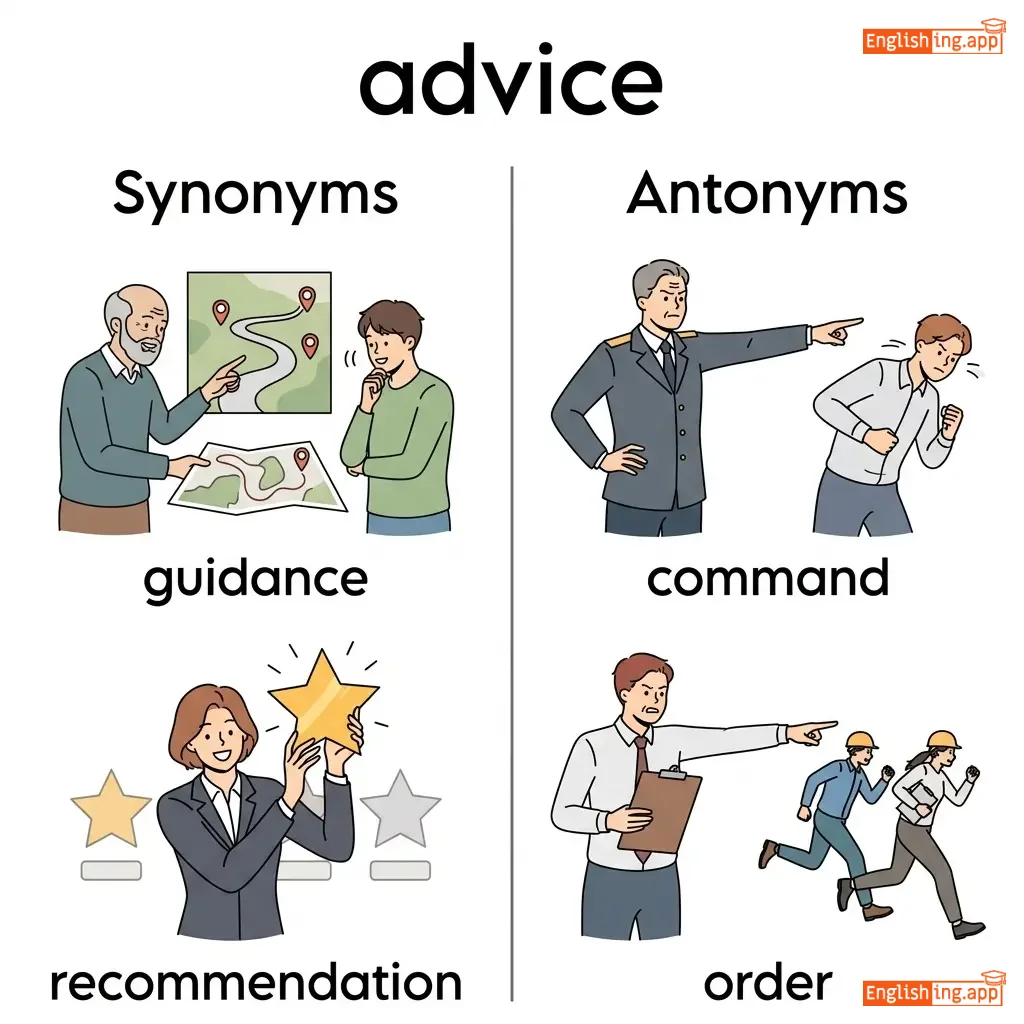
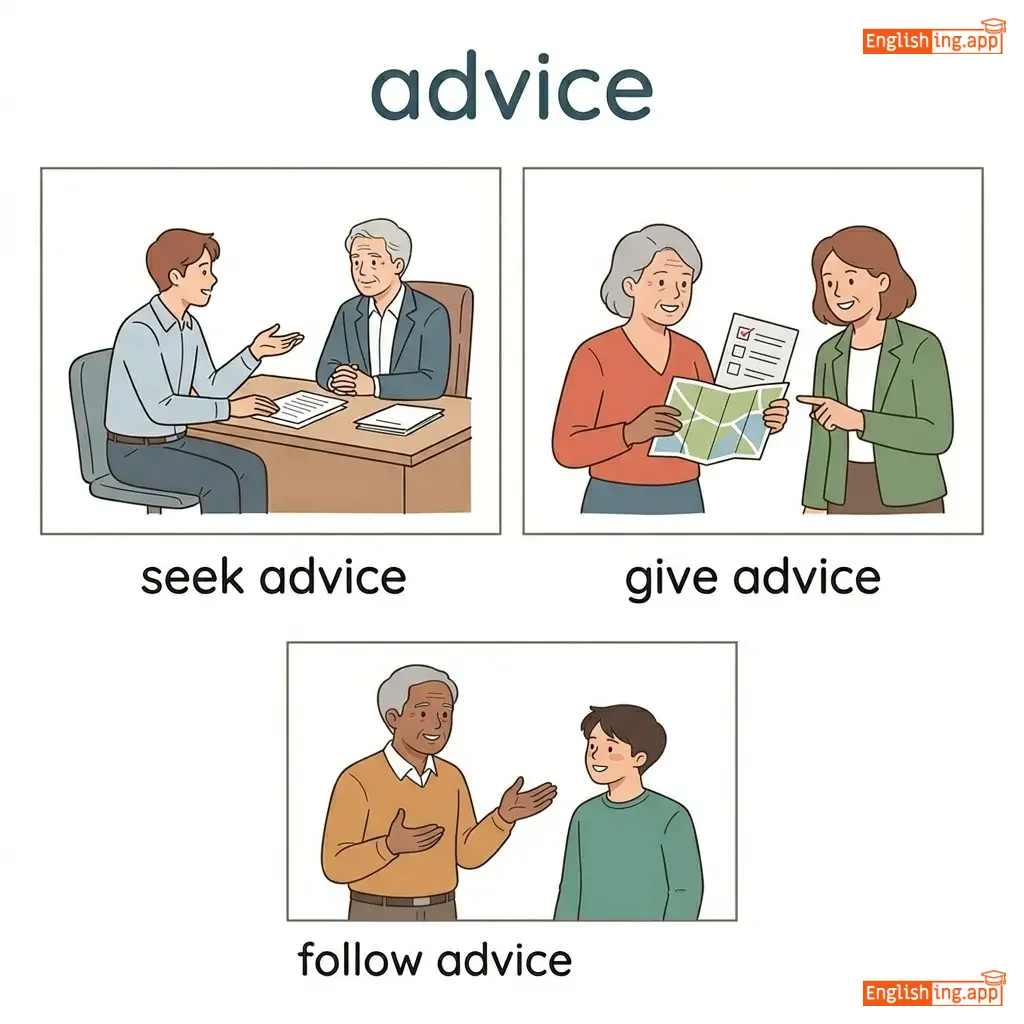
/ədˈvaɪs/
noun
(ædvɑɪs)
••••••
|
|
建议
jianyi
••••••
|
guidance or recommendations offered with regard to prudent action; opinion about what should be done
••••••
|
She gave me good advice about choosing a career. |
她给了我关于选择职业的好建议。
Ta gei le wo guanyu xuanze zhiye de hao jianyi.
••••••
|
guidance, counsel, recommendation, suggestion
••••••
|
misguidance, discouragement
••••••
|
give advice, take advice, good advice, professional advice
••••••
|
获得建议,避免未来的后悔
••••••
|
|
#3
🏔️
|
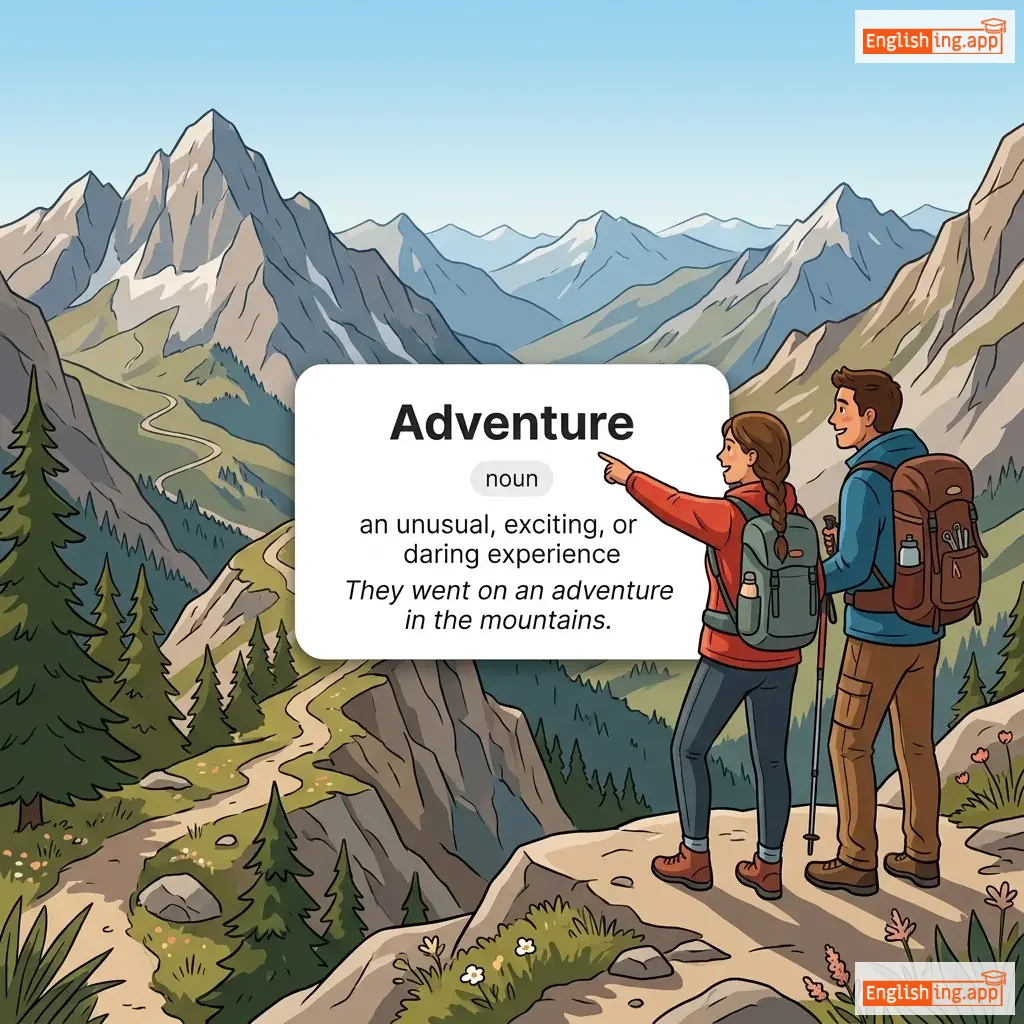
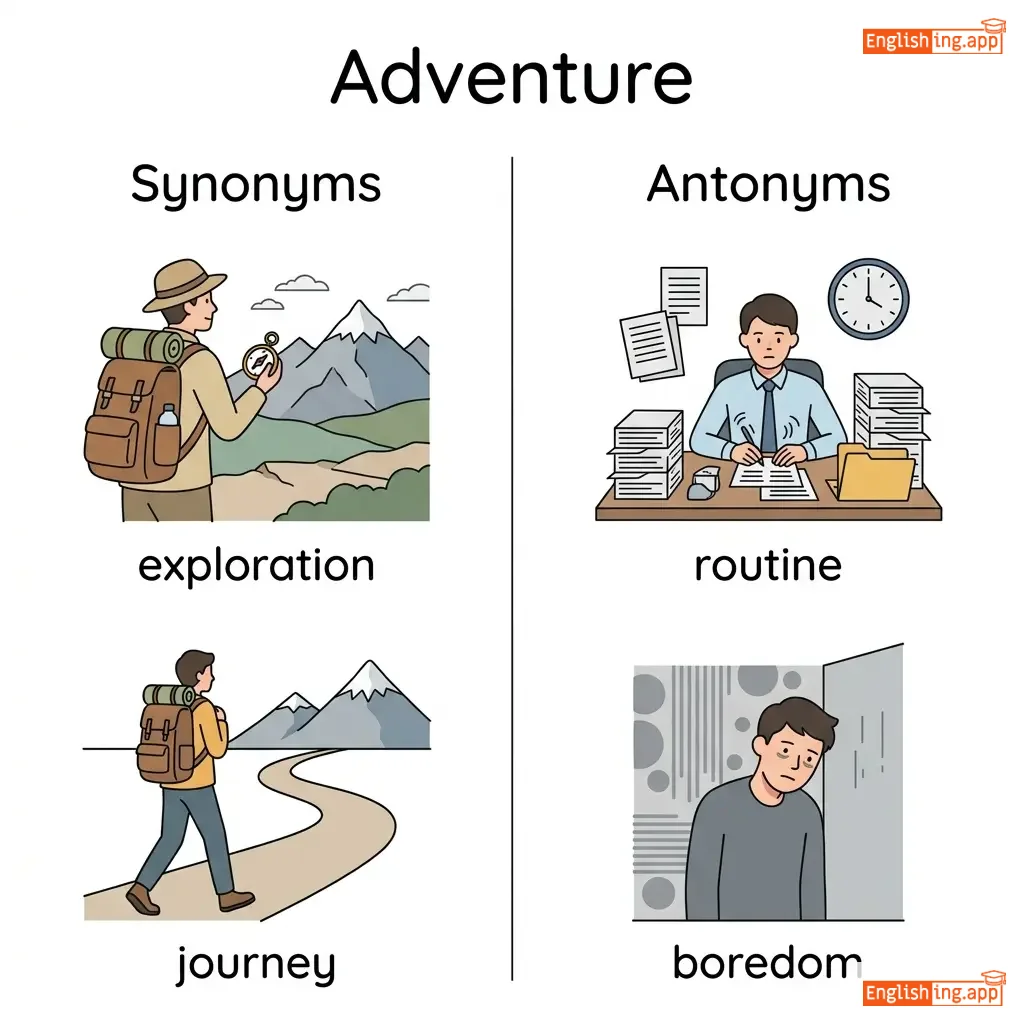
/ədˈven.tʃər/
noun
(冒险)
••••••
|
|
冒险
màoxiǎn
••••••
|
an exciting or dangerous experience; an unusual and exciting activity
••••••
|
Their trip to the Amazon was a real adventure. |
他们的亚马逊之旅是一场真正的冒险。
Tāmen de yàmǎxùn zhī lǚ shì yī chǎng zhēnzhèng de màoxiǎn.
••••••
|
expedition, journey, quest, escapade
••••••
|
routine, boredom, safety
••••••
|
outdoor adventure, adventure story, seek adventure, exciting adventure
••••••
|
中文中的'冒险'就是英语的 adventure.
••••••
|
|
#4
🏆
|
/ədˈvæn.tɪdʒ/
noun
(àdvàntáizhī)
••••••
|
- •••••• |
优势; 利益
yōushì; lìyì
••••••
|
a condition or circumstance that puts one in a favorable position; a benefit
••••••
|
Having a college degree gives you an advantage in the job market.
拥有大学学位可以在就业市场上为您提供优势。
••••••
|
拥有大学学位可以在就业市场上为您提供优势。
Yǒngyǒu dàxué xuéwèi kěyǐ zài jiùyè shìchǎng shàng wèi nín tígōng yōushì.
••••••
|
benefit, asset, plus, edge
••••••
|
disadvantage, drawback, handicap
••••••
|
competitive advantage, take advantage, unfair advantage, clear advantage
••••••
|
优势可以帮助你获得职位
••••••
|
|
#5
⬆️
|
/ədˈvæns/
noun
(ædˈvæns)
••••••
|
- •••••• |
进步; 发展; 预付款
jìnbù; fāzhǎn; yùfùkuǎn
••••••
|
progress or development; movement forward; money paid before it is due
••••••
|
Technology has made great advances in recent years.
科技在近年来取得了巨大的进步。
••••••
|
科技在近年来取得了巨大的进步。
Kējì zài jìnnián lái qǔdé le jùdà de jìnbù.
••••••
|
progress, improvement, development, breakthrough
••••••
|
retreat, decline, setback
••••••
|
technological advance, medical advance, advance payment, in advance
••••••
|
Advancing technology means progress and development forward.
••••••
|
|
#6
👨
|
/əˈdʌlt/
noun
(成人)
••••••
|
- •••••• |
成年人;成人
chéngrén; chéngrén
••••••
|
a person who is fully grown or developed; mature
••••••
|
Only adults are allowed to enter this area.
只有成年人可以进入这个区域。
••••••
|
只有成年人可以进入这个区域。
Zhǐyǒu chéngnián rén kěyǐ jìnrù zhège qūyù.
••••••
|
grown-up, mature person, grownup
••••••
|
child, minor, juvenile
••••••
|
young adult, adult education, adult supervision, adult responsibilities
••••••
|
Chéngrén = Adult; Zhǐyǒu chéngnián rén kěyǐ jìnrù.
••••••
|
|
#7
🎓
|
/ədˈmɪʃ.ən/
noun
(入学)
••••••
|
- •••••• |
入学; 接受
rùxué; jiēshòu
••••••
|
the process of entering or being allowed to enter a school or organization; accepting that something is true
••••••
|
She gained admission to Harvard University.
她获得了哈佛大学的入学许可。
••••••
|
她获得了哈佛大学的入学许可。
Tā huòqǔle hāfó dàxué de rùxué xǔkě.
••••••
|
entry, acceptance, enrollment, confession
••••••
|
rejection, denial, exclusion
••••••
|
college admission, hospital admission, admission fee, admission requirements
••••••
|
入学 = 当你被接受时,就可以进入一个新的地方,例如大学。
••••••
|
|
#8
🏛️
|
/ədˌmɪn.ɪˈstreɪ.ʃən/
noun
(行政管理)
••••••
|
- •••••• |
行政; 管理
xíngzhèng; guǎnlǐ
••••••
|
the process of managing or organizing something; a government or organization
••••••
|
The university administration announced new policies. |
大学行政管理宣布了新的政策。
dàxué xíngzhèng guǎnlǐ xuānbùle xīn de zhèngcè.
••••••
|
management, government, control, supervision
••••••
|
chaos, disorder, mismanagement
••••••
|
public administration, school administration, business administration, government administration
••••••
|
行政管理就像是对整个组织的管理和监督。
••••••
|
|
#9
➕
|
/əˈdɪʃ.ən/
noun
(加法)
••••••
|
- •••••• |
加法; 添加过程
jia fa; tian jia guo cheng
••••••
|
the process of adding numbers; something that is added
••••••
|
The addition of a new room made the house more spacious. |
新房间的加入使房子更加宽敞。
xin fangjian de jiaru shi fangzi gengjia kuanchang.
••••••
|
supplement, extension, extra, attachment
••••••
|
subtraction, removal, reduction
••••••
|
in addition to, recent addition, new addition, welcome addition
••••••
|
加法就是将一个数加到另一个数上。
••••••
|
|
#10
🎯
|
/ækˈtɪv.ə.ti/
noun
(活动)
••••••
|
- •••••• |
活动; 行动; 任务
huodong; xingdong; renwu
••••••
|
something that you do for interest or pleasure, or in order to achieve a particular aim
••••••
|
Physical activity is important for good health. |
体育活动对保持健康非常重要。
tiyu huodong dui baochi jiankang feichang zhongyao.
••••••
|
pursuit, exercise, pastime, occupation
••••••
|
inactivity, rest, idleness
••••••
|
physical activity, outdoor activity, leisure activity, business activity
••••••
|
为了健康,做更多活动吧!
••••••
|
|
#11
💪
|
/əˈbɪləti/
noun
(能力)
••••••
|
- •••••• |
能力; 技能
nengli; jineng
••••••
|
the power or skill to do something; capacity
••••••
|
She has the ability to solve complex problems.
她有解决复杂问题的能力。
••••••
|
她有解决复杂问题的能力。
Ta you jiejue fuza wenti de nengli.
••••••
|
capability, skill, talent, competence
••••••
|
inability, incapacity, weakness
••••••
|
natural ability, mental ability, ability to learn
••••••
|
想象自己有能力克服任何困难,像超级英雄一样。
••••••
|
|
#12
😣
|
/eɪk/
noun
(èik)
••••••
|
- •••••• |
疼痛
téngtòng
••••••
|
a continuous or prolonged dull pain in a part of one's body
••••••
|
He had a terrible headache after working late. |
他在工作到很晚后感到剧烈的头痛。
Tā zài gōngzuò dào hěn wǎn hòu gǎndào jùliè de tóutòng.
••••••
|
pain, soreness, discomfort, hurt
••••••
|
comfort, relief, ease, wellness
••••••
|
headache, backache, stomach ache
••••••
|
疼痛 (téngtòng) 就像长时间工作后头部的钝痛。
••••••
|
|
#13
🎯
|
/ˈækjərəsi/
noun
(ā kè yuè lì sī)
••••••
|
- •••••• |
准确性; 精确度
zhunquexing; jingquedu
••••••
|
the quality of being correct or precise; exactness
••••••
|
The accuracy of the measurements is very important. |
测量的准确性非常重要。
Cèliáng de zhǔnquèxìng fēicháng zhòngyào.
••••••
|
precision, correctness, exactness, truth
••••••
|
inaccuracy, error, mistake, imprecision
••••••
|
high accuracy, accuracy of data, improve accuracy
••••••
|
Accuracy 就像是将每个数字放在精确的地方。
••••••
|
|
#14
📊
|
/əˈkaʊnt/
noun
(账户)
••••••
|
- •••••• |
账户
zhànghù
••••••
|
a record of money received and paid out; a report or description of an event
••••••
|
She opened a savings account at the bank. |
她在银行开设了一个储蓄账户。
Tā zài yínháng kāishèle yīgè chǔxù zhànghù.
••••••
|
record, report, statement, description
••••••
|
silence, concealment, secrecy
••••••
|
bank account, account balance, on account of
••••••
|
账户是用于记录存取资金的地方。
••••••
|
|
#15
🏠
|
/əˌkɒməˈdeɪʃən/
noun
(ā kè mó dé shēn)
••••••
|
- •••••• |
住宿
zhùsù
••••••
|
a room, group of rooms, or building in which someone may live or stay
••••••
|
The hotel provides comfortable accommodation for tourists.
酒店为游客提供舒适的住宿。
••••••
|
酒店为游客提供舒适的住宿。
Jiǔdiàn wèi yóukè tígōng shūshì de zhùsù.
••••••
|
housing, lodging, residence, shelter
••••••
|
homelessness, displacement, eviction
••••••
|
student accommodation, temporary accommodation, book accommodation
••••••
|
住宿 (zhùsù) means accommodation in Chinese.
••••••
|
|
#16
🚗💥
|
/ˈæksɪdənt/
noun
(āksīdènt)
••••••
|
|
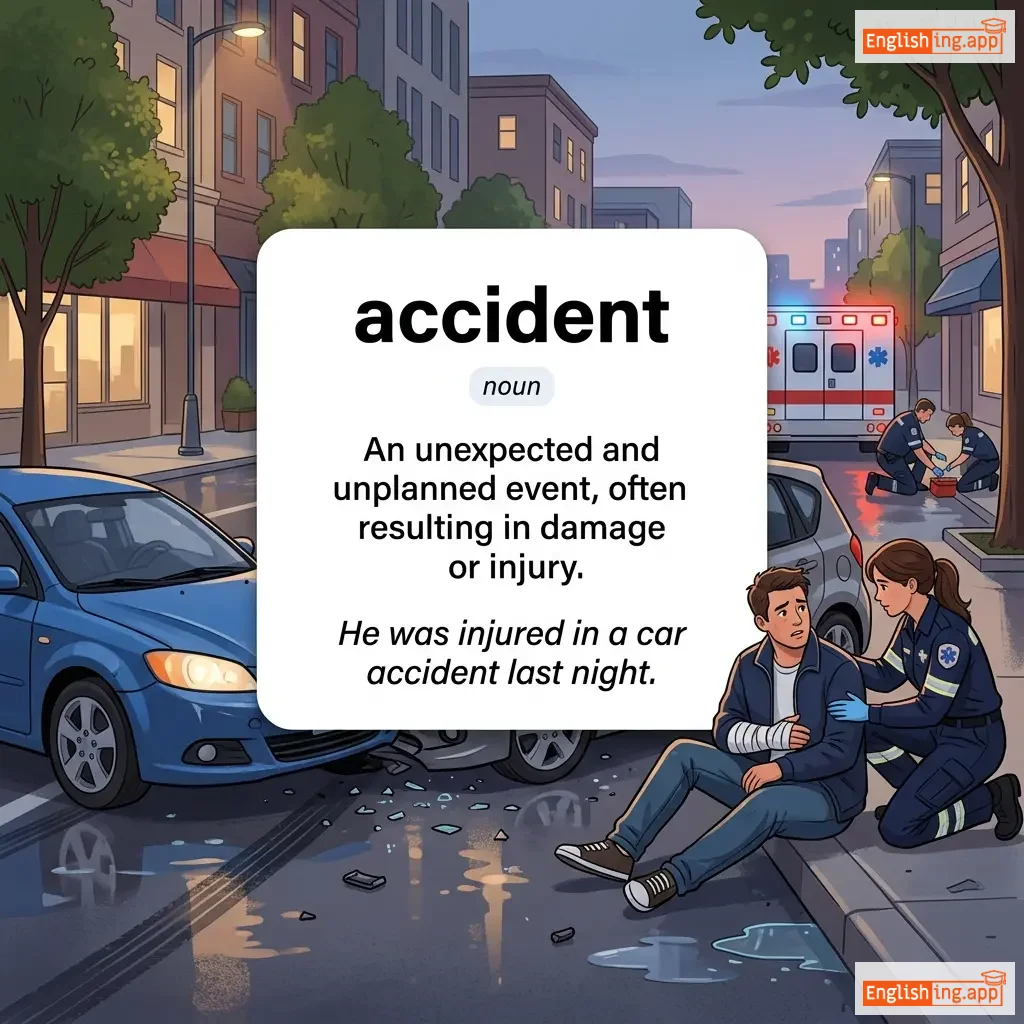
事故
shìgù
••••••
|
an unfortunate incident that happens unexpectedly and unintentionally
••••••
|
The car accident happened on the highway during rush hour. |
汽车事故发生在高峰时段的高速公路上。
qìchē shìgù fāshēng zài gāofēng shíduàn de gāosù gōnglù shàng.
••••••
|
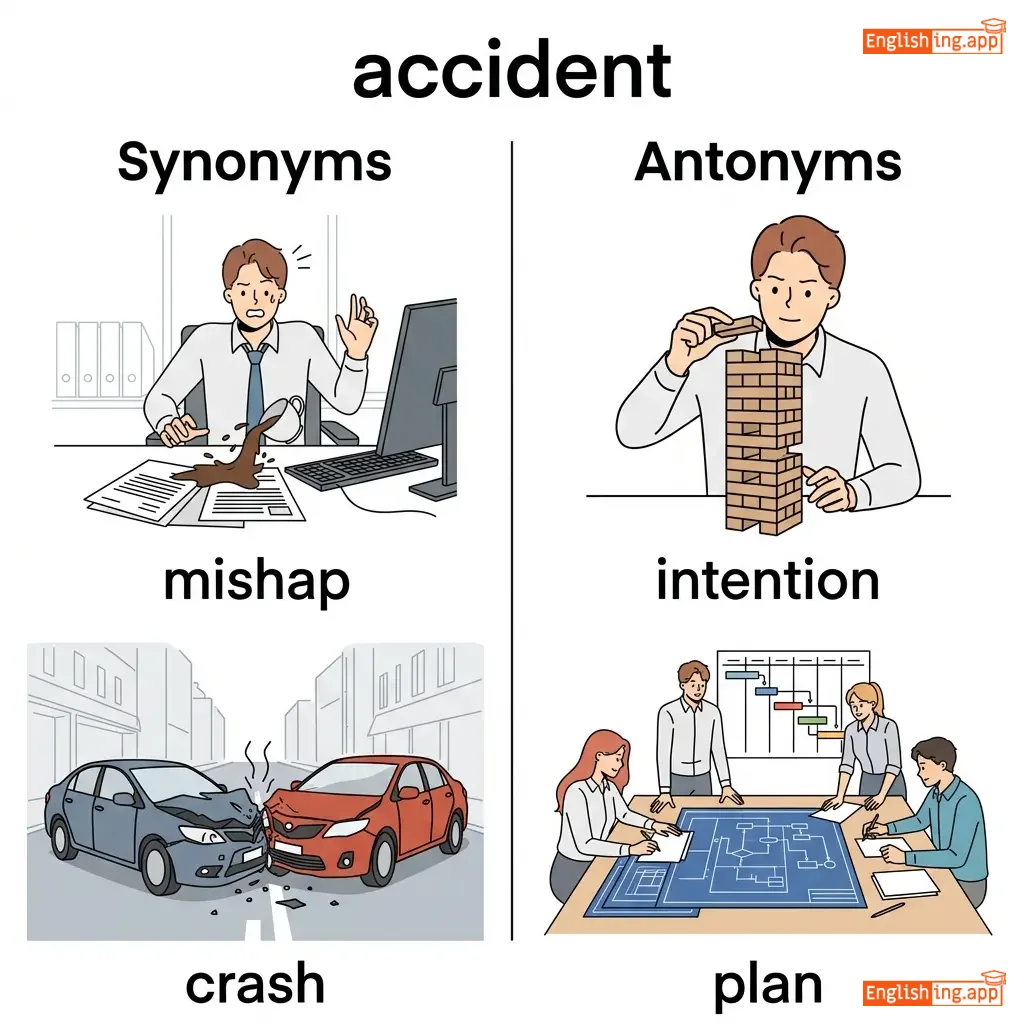
mishap, incident, crash, collision
••••••
|
intention, plan, design, purpose
••••••
|
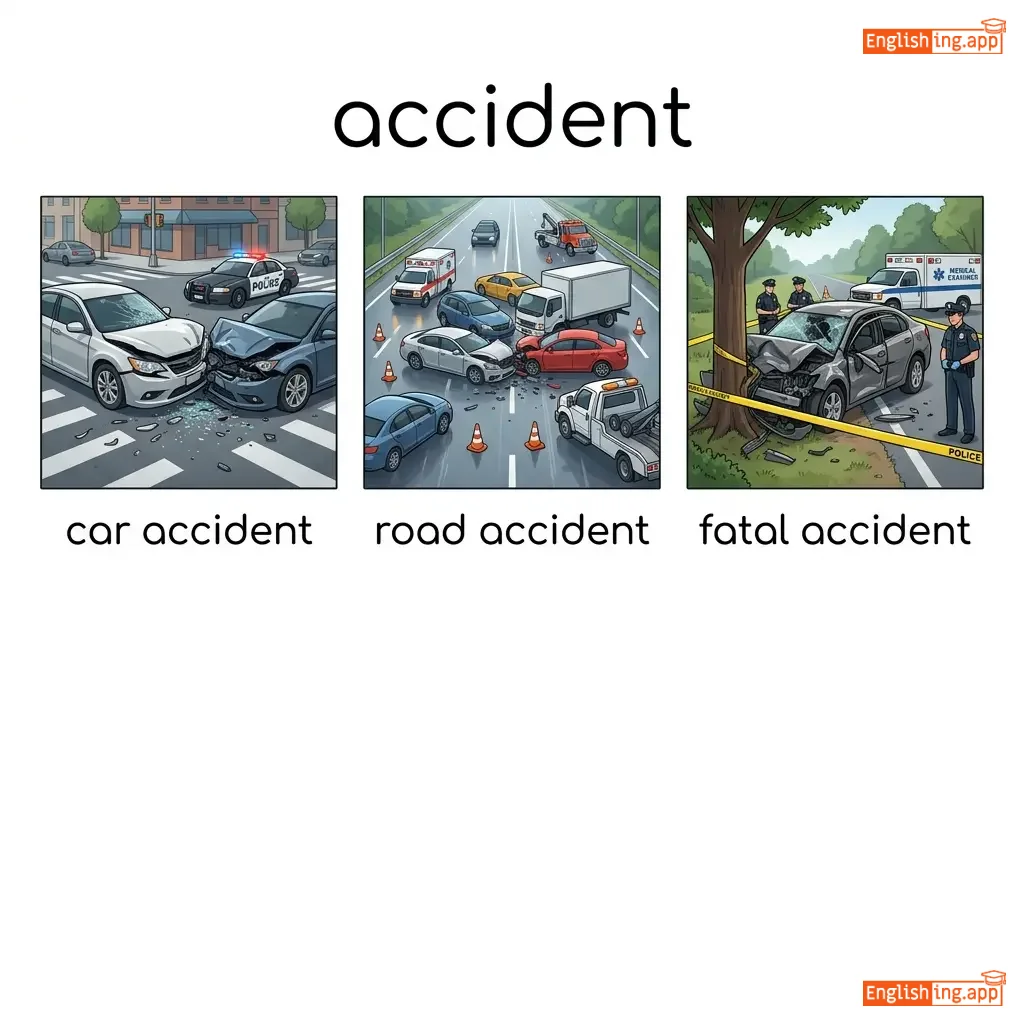
car accident, by accident, accident report
••••••
|
事故是指意外的、不小心发生的事情,像车祸一样。
••••••
|
|
#17
🔓
|
/ˈækses/
noun
(áksesī)
••••••
|
- •••••• |
访问
fǎngwèn
••••••
|
the ability, right, or permission to approach, enter, or pass to and from a place
••••••
|
Students have access to the library 24 hours a day. |
学生可以全天候访问图书馆。
Xuéshēng kěyǐ quántiānhòu fǎngwèn túshūguǎn.
••••••
|
entry, admission, approach, passage
••••••
|
denial, restriction, prohibition, blockage
••••••
|
access to information, free access, access road
••••••
|
访问 = 'fǎngwèn' - 就像敲开一个门, 你获得了访问权限.
••••••
|
|
#18
🚫
|
/əˈbjuːs/
noun
(虐待)
••••••
|
- •••••• |
虐待; 滥用;
nüèdài; lànyòng
••••••
|
cruel and violent treatment; improper use of something
••••••
|
The abuse of power led to his resignation. |
滥用权力导致了他的辞职。
Lànyòng quánlì dǎozhìle tā de cízhí.
••••••
|
mistreatment, misuse, maltreatment, exploitation
••••••
|
care, protection, proper use, respect
••••••
|
abuse of power, physical abuse, drug abuse
••••••
|
滥用 = 错误使用他人的权力
••••••
|
|
#19
🌾
|
/əˈbʌndəns/
noun
(ā bùn dénsī)
••••••
|
|
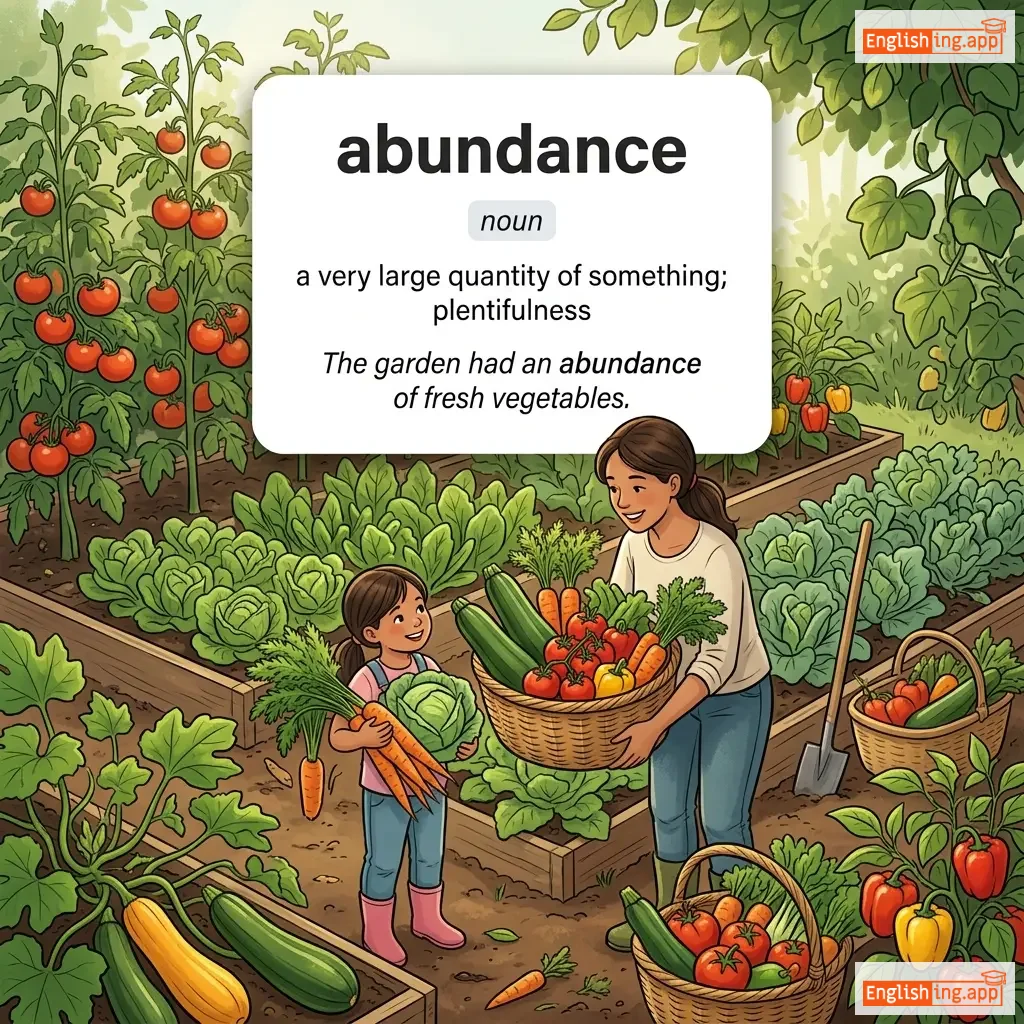
丰富; 大量
fengfu; daliang
••••••
|
a very large quantity of something; plentifulness
••••••
|
The garden had an abundance of fresh vegetables.
花园里有大量的新鲜蔬菜。
••••••
|
花园里有大量的新鲜蔬菜。
Huāyuán lǐ yǒu dàliàng de xīnxiān shūcài.
••••••
|
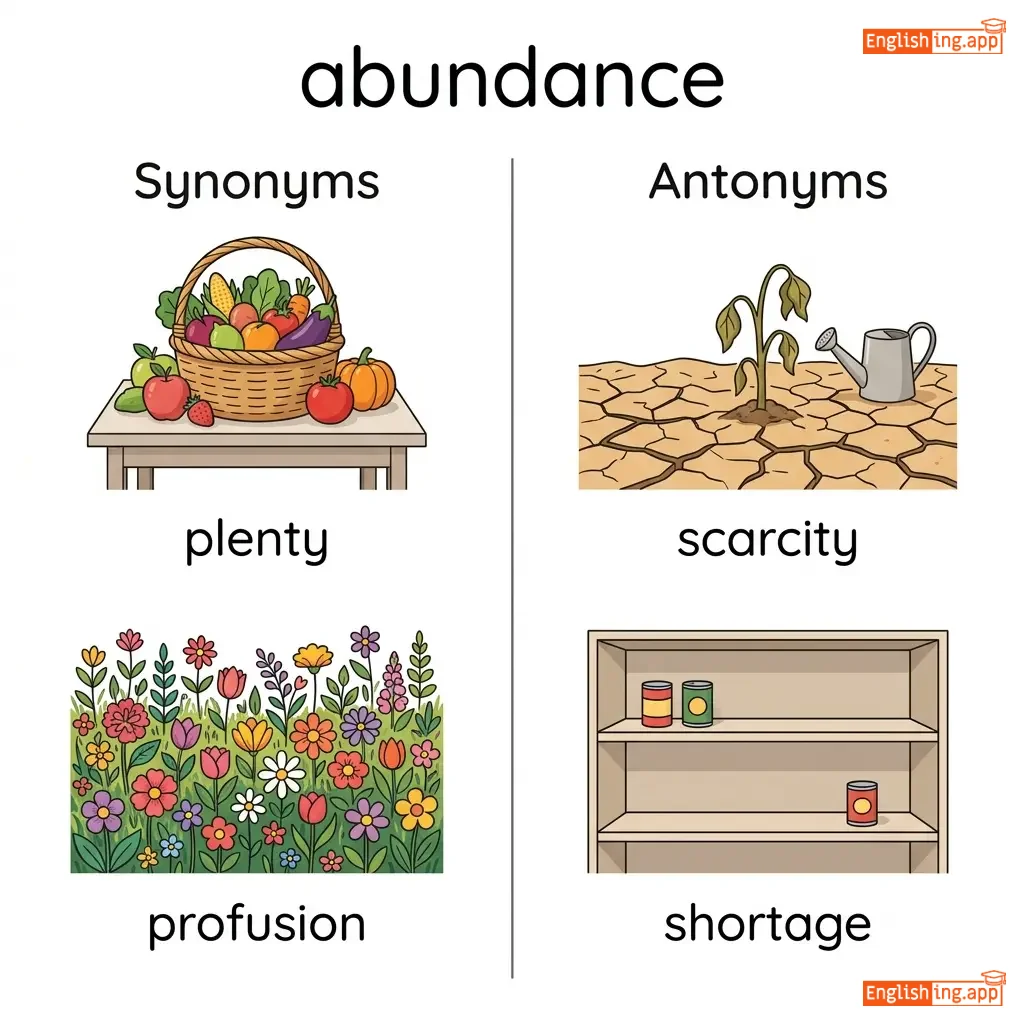
plenty, profusion, wealth, richness
••••••
|
scarcity, shortage, lack, dearth
••••••
|
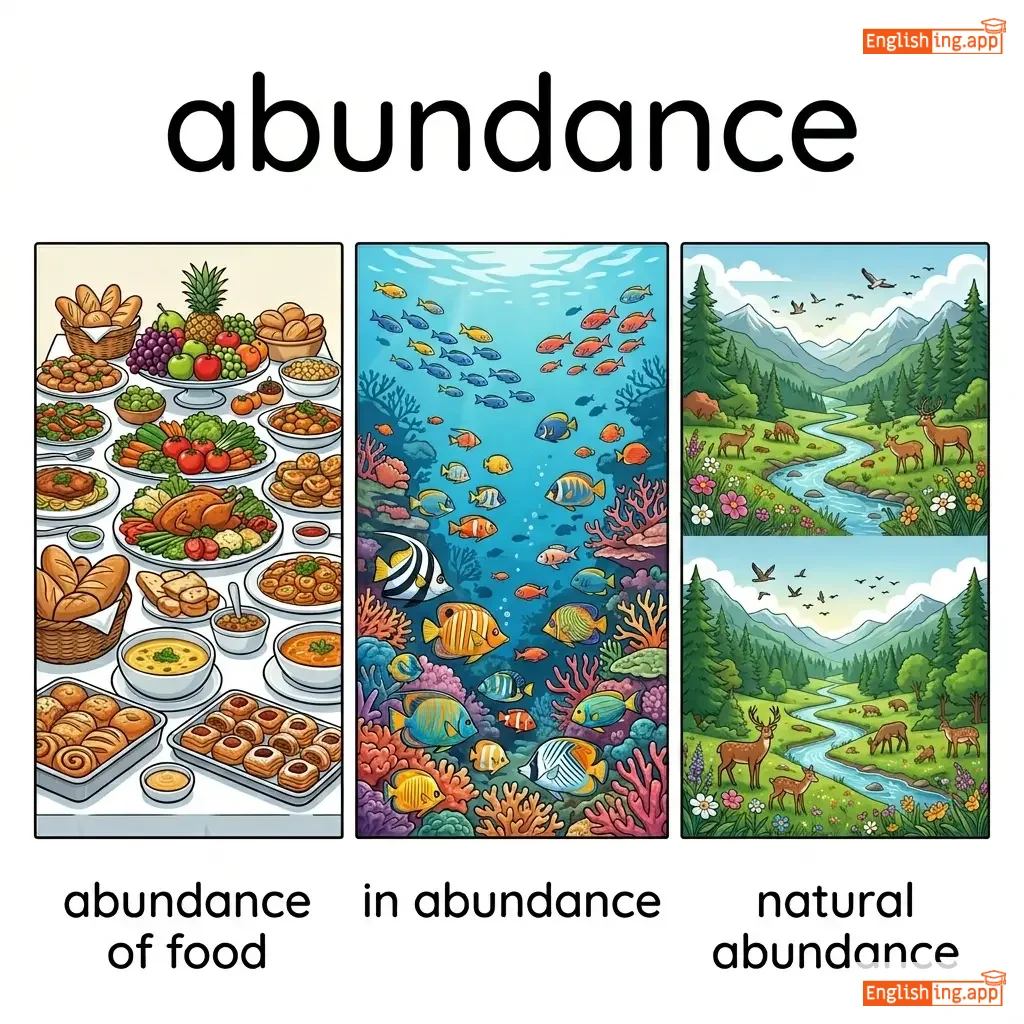
abundance of food, in abundance, natural abundance
••••••
|
Abundance: A garden filled with fresh vegetables.
••••••
|
|
#20
❌
|
/ˈæbsəns/
noun
(æbsəns)
••••••
|
- •••••• |
缺席
quēxí
••••••
|
the state of being away from a place or person; lack or non-existence
••••••
|
His absence from the meeting was noticed by everyone.
他缺席的会议被大家注意到了。
••••••
|
他缺席的会议被大家注意到了。
Tā quēxí de huìyì bèi dàjiā zhùyì dào le.
••••••
|
nonattendance, lack, want, deficiency
••••••
|
presence, attendance, existence
••••••
|
absence from work, in the absence of, prolonged absence
••••••
|
Absence = 'quēxí' in Chinese, similar to 'absence' meaning 'not there'.
••••••
|
Vocabulary Quiz
Test your vocabulary by matching words with their translations or meanings.
Login to take the quiz
Comments (0)
Share your thoughts and join the discussion.
Join the discussion by logging in
Login to CommentNo comments yet
Be the first to share your thoughts!