



Swipe left or right, or use the buttons. Tap image to zoom.
例句翻译
单词
Lesson 59Lesson 59 - 遮罩切换
|
表情符号
|
单词 | Images | 翻译 | 含义 | 例句 | 例句翻译 | 同义词 | 反义词 | 搭配词 | 助记符 |
|---|---|---|---|---|---|---|---|---|---|---|
|
#1161
💕
|
/rɪˈleɪ.ʃən.ʃɪp/
noun
(关系)
••••••
|
- •••••• |
关系
guanxi
••••••
|
the way two people or groups feel and behave towards each other; a connection between two things
••••••
|
They have a very close relationship. |
他们有着非常亲密的关系。
Tāmen yǒu zhe fēicháng qīnmì de guānxì.
••••••
|
connection, bond, association, link
••••••
|
separation, isolation, disconnection
••••••
|
close relationship, personal relationship, working relationship, family relationship
••••••
|
Relationship: 'G' for '关系' in Chinese
••••••
|
|
#1162
🔨
|
/ˌren.əˈveɪ.ʃən/
noun
(翻修)
••••••
|
- •••••• |
翻新; 恢复
fanxin; huifu
••••••
|
the act of renovating; restoration to a former better state
••••••
|
The old house underwent a complete renovation last year. |
去年老房子进行了彻底的翻修。
qunian lao fangzi jinxingle chedi de fanxin.
••••••
|
restoration, refurbishment, modernization, improvement
••••••
|
deterioration, neglect, decay
••••••
|
home renovation, renovation project, complete renovation, renovation work
••••••
|
翻 (transform) + 新 (new)
••••••
|
|
#1163
🤝
|
/rɪˈlaɪ.əns/
noun
(rǐˈlɑɪəns)
••••••
|
- •••••• |
依赖
yīlài
••••••
|
the state of depending on something or someone for support or help
••••••
|
His reliance on technology is concerning. |
他对技术的依赖令人担忧。
tā duì jìshù de yīlài lìng rén dānyōu
••••••
|
dependence, trust, confidence, faith
••••••
|
independence, self-reliance, distrust
••••••
|
heavy reliance, reliance on, self-reliance, complete reliance
••••••
|
依赖 (yīlài) – 就像一个支撑你前进的柱子。
••••••
|
|
#1164
⭐
|
/rɪˈnaʊn/
noun
(rénáo)
••••••
|
- •••••• |
声誉; 名声
renown
••••••
|
the condition of being known or talked about by many people; fame
••••••
|
The scientist achieved international renown for her discoveries. |
这位科学家因其发现而获得了国际声誉。
Zhe wei kexuejia yin qi faxian er huodele guoji shengyu.
••••••
|
fame, reputation, celebrity, prominence, distinction
••••••
|
obscurity, anonymity, insignificance
••••••
|
international renown, great renown, achieve renown, artist of renown
••••••
|
通过科学发现获得国际声誉
••••••
|
|
#1165
😌
|
/rɪˈliːf/
noun
(瑞利夫)
••••••
|
- •••••• |
宽慰; 安慰; 援助
kuānwèi, ānwèi, yuánzhù
••••••
|
a feeling of comfort after worry or distress; assistance given to those in need
••••••
|
She felt great relief when the exam was over.
她在考试结束时感到极大的宽慰。
••••••
|
她在考试结束时感到极大的宽慰。
Tā zài kǎoshì jiéshù shí gǎndào jí dà de kuānwèi.
••••••
|
comfort, ease, assistance, aid
••••••
|
anxiety, worry, stress, burden
••••••
|
pain relief, relief work, great relief, tax relief
••••••
|
宽慰意味着放松!
••••••
|
|
#1166
🏠
|
/rent/
noun
(快乐)
••••••
|
- •••••• |
幸福
xìngfú
••••••
|
a payment made periodically by a tenant to a landlord for use of property
••••••
|
The monthly rent for this apartment is quite affordable. |
当她获得奖项时,她无法掩饰自己的幸福。
Dāng tā huòdé jiǎngxiàng shí, tā wúfǎ yǎnshì zìjǐ de xìngfú.
••••••
|
lease, rental, hire, tenancy fee
••••••
|
ownership, purchase, buy
••••••
|
pay rent, monthly rent, rent increase, rent control, house rent
••••••
|
追求幸福
••••••
|
|
#1167
😕
|
/rɪˈlʌk.təns/
noun
(rɪˈlʌk.təns)
••••••
|
- •••••• |
不情愿; 犹豫
bu qing yuan; you yu
••••••
|
unwillingness to do something; hesitation
••••••
|
He showed reluctance to accept the job offer. |
他表现出不情愿接受工作提议。
Ta biaoxian chu bu qing yuan jie shou gongzuo tiyi.
••••••
|
unwillingness, hesitation, resistance, disinclination
••••••
|
eagerness, willingness, enthusiasm, readiness
••••••
|
show reluctance, great reluctance, initial reluctance, overcome reluctance
••••••
|
Reluctance means 不情愿 (bu qing yuan) in Chinese; it’s when you hesitate to agree.
••••••
|
|
#1168
💬
|
/ˌrep.ɑːˈtiː/
noun
(repartee)
••••••
|
- •••••• |
机智的回答
jizhi de huida
••••••
|
conversation or speech characterized by quick, witty comments or replies
••••••
|
The dinner party was filled with brilliant repartee between the guests. |
晚宴上,客人之间充满了精彩的机智回答。
Wanye shang, keren zhijian chongman le jingcai de jizhi huida
••••••
|
banter, wit, wordplay, badinage, riposte
••••••
|
silence, dullness, monotone
••••••
|
witty repartee, brilliant repartee, quick repartee, exchange repartee
••••••
|
机智的回答 = 快速机智的回复 (quick and witty responses)
••••••
|
|
#1169
📝
|
/rɪˈmeɪn.dər/
noun
(rei-mándè)
••••••
|
- •••••• |
剩余部分; 剩下的东西
shengyu bufen, shengxia de dongxi
••••••
|
the part that is left over; what remains after the other parts have been taken away
••••••
|
The remainder of the food was stored in the refrigerator.
食物的剩余部分被储存在冰箱里。
••••••
|
剩下的食物被存放在冰箱里。
Shengxia de shíwù bèi cúnfàng zài bīngxiāng lǐ.
••••••
|
rest, residue, leftover, balance
••••••
|
whole, entirety, total, complete
••••••
|
the remainder of, small remainder, large remainder, remainder value
••••••
|
剩下的东西就是剩余部分。
••••••
|
|
#1170
🙏
|
/rɪˈpen.təns/
noun
(rìpéntànsi)
••••••
|
- •••••• |
悔改
huǐgǎi
••••••
|
the action of repenting; sincere regret or remorse
••••••
|
His genuine repentance moved everyone in the courtroom. |
他真正的悔改感动了法庭上的所有人。
Tā zhēnzhèng de huǐgǎi gǎndòngle fǎtíng shàng de suǒyǒu rén
••••••
|
remorse, regret, contrition, penitence, sorrow
••••••
|
impenitence, defiance, stubbornness
••••••
|
genuine repentance, show repentance, act of repentance, deep repentance
••••••
|
Huǐgǎi is the Chinese word for repentance
••••••
|
|
#1171
💊
|
/ˈrem.ə.di/
noun
(瑞米迪)
••••••
|
- •••••• |
药物;治疗;补救办法
remedy
••••••
|
a medicine or treatment for a disease; a solution to a problem
••••••
|
This herbal remedy helps with headaches.
这种草药治疗有助于缓解头痛。
••••••
|
这种草药治疗有助于缓解头痛。
zhe zhong cao yao zhi liao you zhu yu huan jie tou tong
••••••
|
cure, treatment, solution, medicine
••••••
|
disease, problem, ailment, poison
••••••
|
home remedy, herbal remedy, legal remedy, effective remedy
••••••
|
Remedy = 雷米的药, 想象一个药箱上写着 REMEDY, 旁边是中文标签 雷米的药, 头痛时拿它就能缓解
••••••
|
|
#1172
⚡
|
/ˌriː.pəˈkʌʃ.ən/
noun
(后果)
••••••
|
|
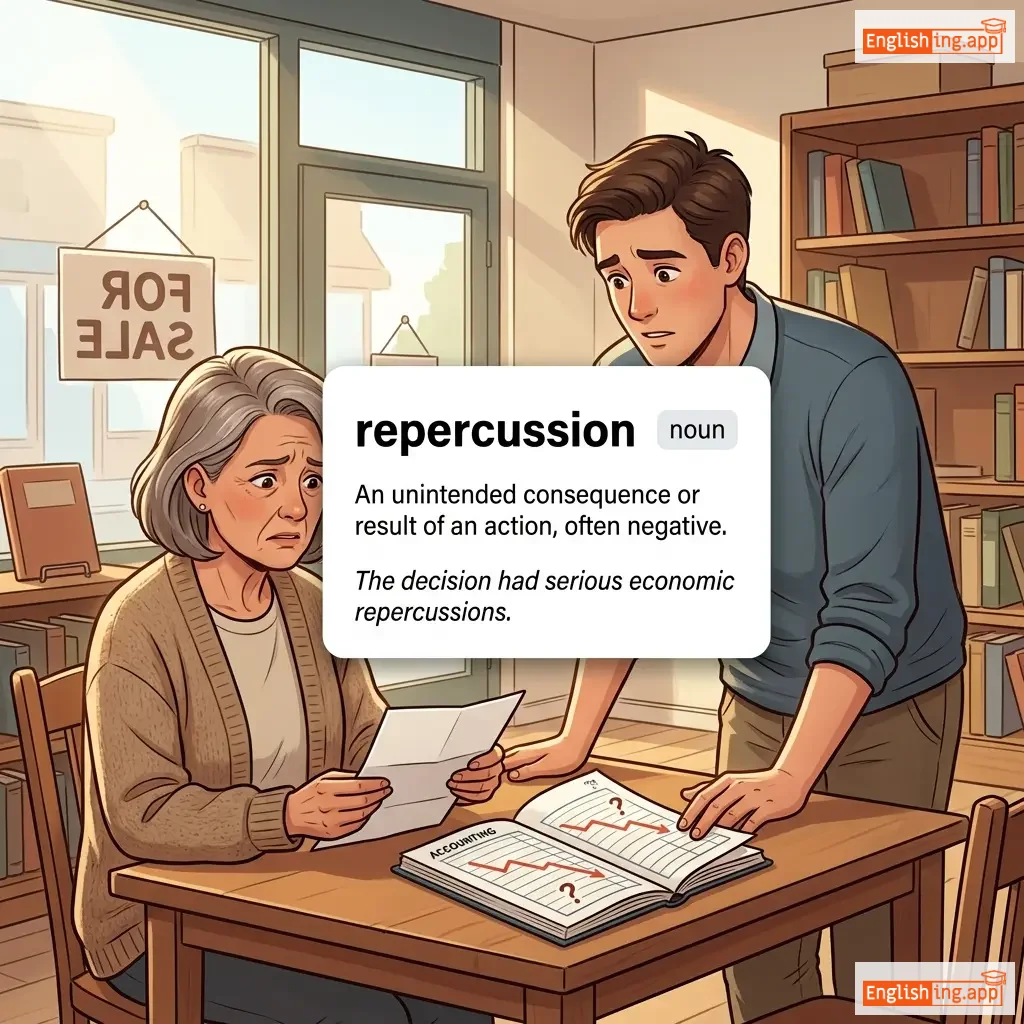
后果
houguo
••••••
|
an unintended consequence occurring some time after an event or action
••••••
|
The economic policy had serious repercussions for small businesses. |
经济政策对小企业产生了严重的后果。
jingji zhengce dui xiao qiye chanshengle yanzhong de houguo.
••••••
|
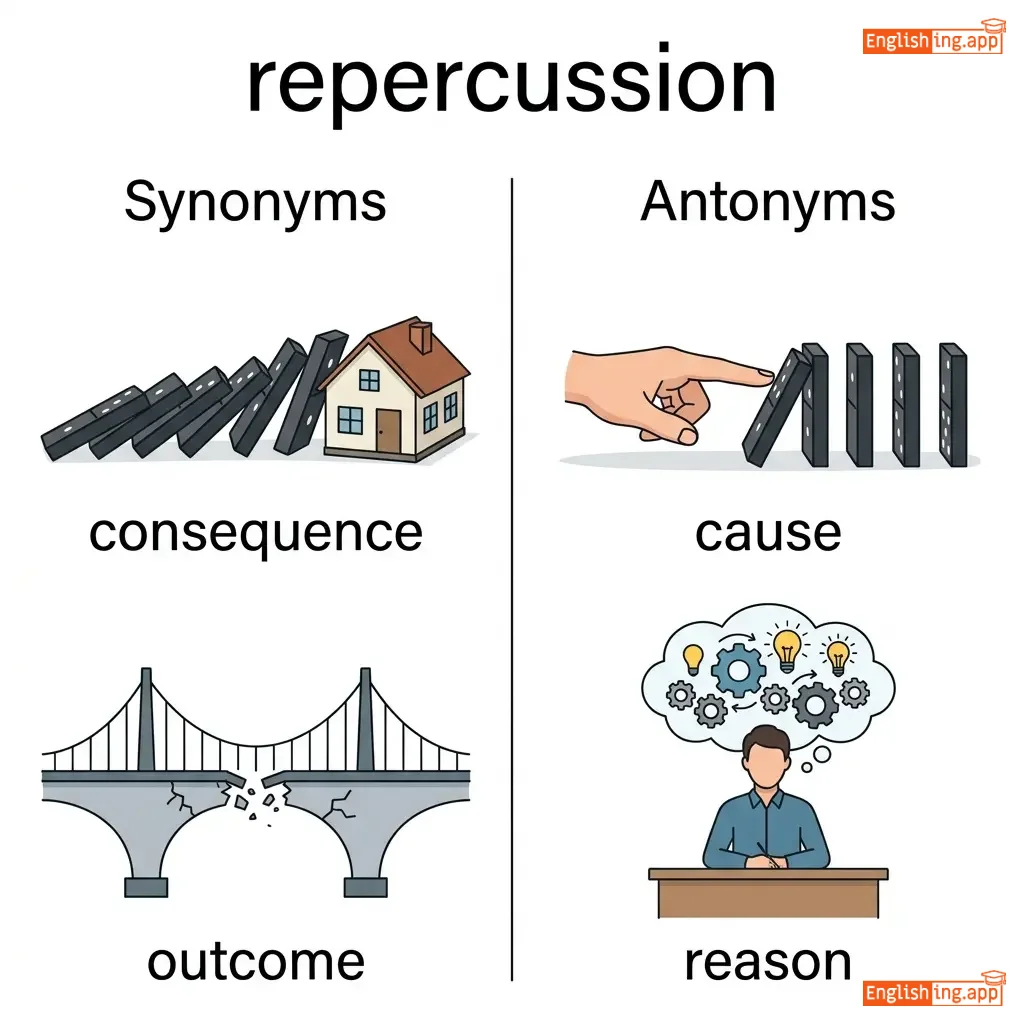
consequence, aftermath, result, effect, outcome
••••••
|
cause, origin, source
••••••
|
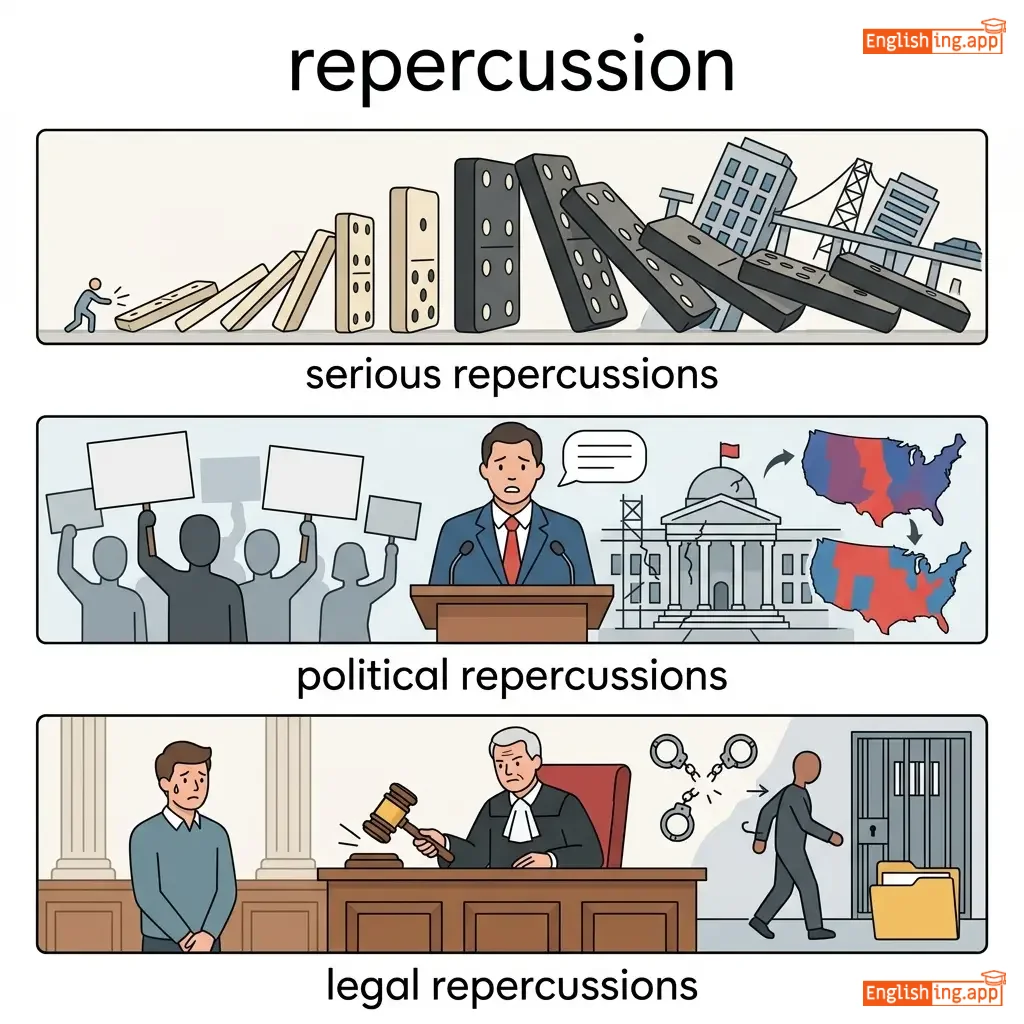
serious repercussions, negative repercussions, legal repercussions, face repercussions
••••••
|
后果像水中的波纹,紧跟着事件发生。
••••••
|
|
#1173
🧩
|
/ˈrem.nənt/
noun
(rem-nant)
••••••
|
- •••••• |
残余
cán yú
••••••
|
a small remaining quantity of something; a piece of cloth left over after the main piece has been used
••••••
|
Only a remnant of the ancient wall remains. |
古老的墙只剩下残余。
gǔ lǎo de qiáng zhǐ shèng xià cán yú.
••••••
|
remainder, leftover, fragment, piece
••••••
|
whole, entirety, complete, total
••••••
|
fabric remnant, last remnant, small remnant, ancient remnant
••••••
|
残余意味着剩下的部分,就像使用后的旧墙
••••••
|
|
#1174
🔄
|
/ˌrep.ɪˈtɪʃ.ən/
noun
(重复)
••••••
|
- •••••• |
重复
chongfu
••••••
|
the action of repeating something that has already been said or written
••••••
|
Constant repetition helps students memorize vocabulary effectively.
持续重复帮助学生有效地记忆词汇。
••••••
|
持续的重复帮助学生有效地记忆词汇。
Chixu de chongfu bangzhu xuesheng youxiaode jiyi cihui.
••••••
|
reiteration, recurrence, duplication, restatement
••••••
|
originality, novelty, variation
••••••
|
constant repetition, avoid repetition, unnecessary repetition, repetition of words
••••••
|
重复,就像重复说的词
••••••
|
|
#1175
😔
|
/rɪˈmɔːrs/
noun
(rímóusī)
••••••
|
- •••••• |
懊悔
àohuǐ
••••••
|
deep regret or guilt for a wrong committed; bitter regret for something done
••••••
|
He felt deep remorse for his actions. |
他对自己的行为感到深深的懊悔。
tā duì zìjǐ de xíngwéi gǎndào shēnshēn de àohuǐ
••••••
|
regret, guilt, repentance, sorrow
••••••
|
satisfaction, pride, contentment, joy
••••••
|
deep remorse, feel remorse, show remorse, without remorse
••••••
|
懊悔带来的是心灵的解脱
••••••
|
|
#1176
🔄
|
/ˈrep.lɪ.kə/
noun
(ré-pu-lí-kà)
••••••
|
- •••••• |
复制品
fuzhipin
••••••
|
an exact copy or model of something, especially one on a smaller scale
••••••
|
The museum displayed a perfect replica of the ancient statue.
博物馆展示了古代雕像的完美复制品。
••••••
|
博物馆展示了古代雕像的完美复制品。
Bówùguǎn zhǎnshìle gǔdài diāoxiàng de wánměi fùzhìpǐn.
••••••
|
copy, duplicate, reproduction, imitation, model
••••••
|
original, authentic, genuine
••••••
|
exact replica, perfect replica, replica watch, create replica
••••••
|
复制品 = Exact copy
••••••
|
|
#1177
🗑️
|
/rɪˈmuː.vəl/
noun
(rìmùwǎ)
••••••
|
- •••••• |
移除; 去除; 解雇;
yí chú, qù chú, jiě gù
••••••
|
the action of taking something away or eliminating it; dismissal from office
••••••
|
The removal of the old furniture took all day.
移除旧家具花了整整一天。
••••••
|
移除旧家具花了整整一天。
Yí chú jiù jiājù huā le zhěng zhěng yī tiān.
••••••
|
elimination, extraction, dismissal, eviction
••••••
|
installation, addition, appointment, placement
••••••
|
hair removal, waste removal, snow removal, surgical removal
••••••
|
移除 = 移除不再需要的家具。
••••••
|
|
#1178
⚔️
|
/rɪˈpraɪ.zəl/
noun
(报复)
••••••
|
- •••••• |
报复
baofu
••••••
|
an act of retaliation; revenge taken for an injury or wrong
••••••
|
The attack was carried out as a reprisal for the earlier bombing. |
此次攻击是作为对早期爆炸事件的报复而进行的。
ci ci gongji shi zuo wei dui zaoqi baozha shijian de baofu er jinxing de.
••••••
|
retaliation, revenge, vengeance, retribution, payback
••••••
|
forgiveness, mercy, pardon
••••••
|
violent reprisal, fear reprisal, reprisal attack, take reprisal
••••••
|
‘报复’ sounds like ‘battle,’ which often follows a fight or attack, relating it to retaliation.
••••••
|
|
#1179
💰
|
/rɪˌmjuː.nəˈreɪ.ʃən/
noun
(报酬)
••••••
|
- •••••• |
报酬; 薪酬; 奖金
baochou; xin chou; jiang jin
••••••
|
money paid for work or services; compensation or reward
••••••
|
The job offers excellent remuneration and benefits.
这份工作提供了优厚的报酬和福利。
••••••
|
这份工作提供了优厚的报酬和福利。
Zhe fen gongzuo tigongle youhou de baochou he fuli.
••••••
|
salary, payment, compensation, wage
••••••
|
penalty, fine, cost, expense
••••••
|
fair remuneration, adequate remuneration, executive remuneration, annual remuneration
••••••
|
工作报酬丰厚,享受好福利!
••••••
|
|
#1180
👨💼
|
/ˌrep.rɪˈzen.tə.tɪv/
noun
(瑞普森塔蒂夫)
••••••
|
|
代表
daibiao
••••••
|
a person chosen or appointed to act or speak for another or others
••••••
|
Each district elects a representative to serve in the parliament.
伊奇 迪斯特里克特 伊莱克茨 啊 瑞普森塔蒂夫 托 瑟夫 因 德 帕尔拉门特
••••••
|
各区选出一名代表在议会任职。
ge qu xuan chu yi ming dai biao zai yi hui ren zhi
••••••
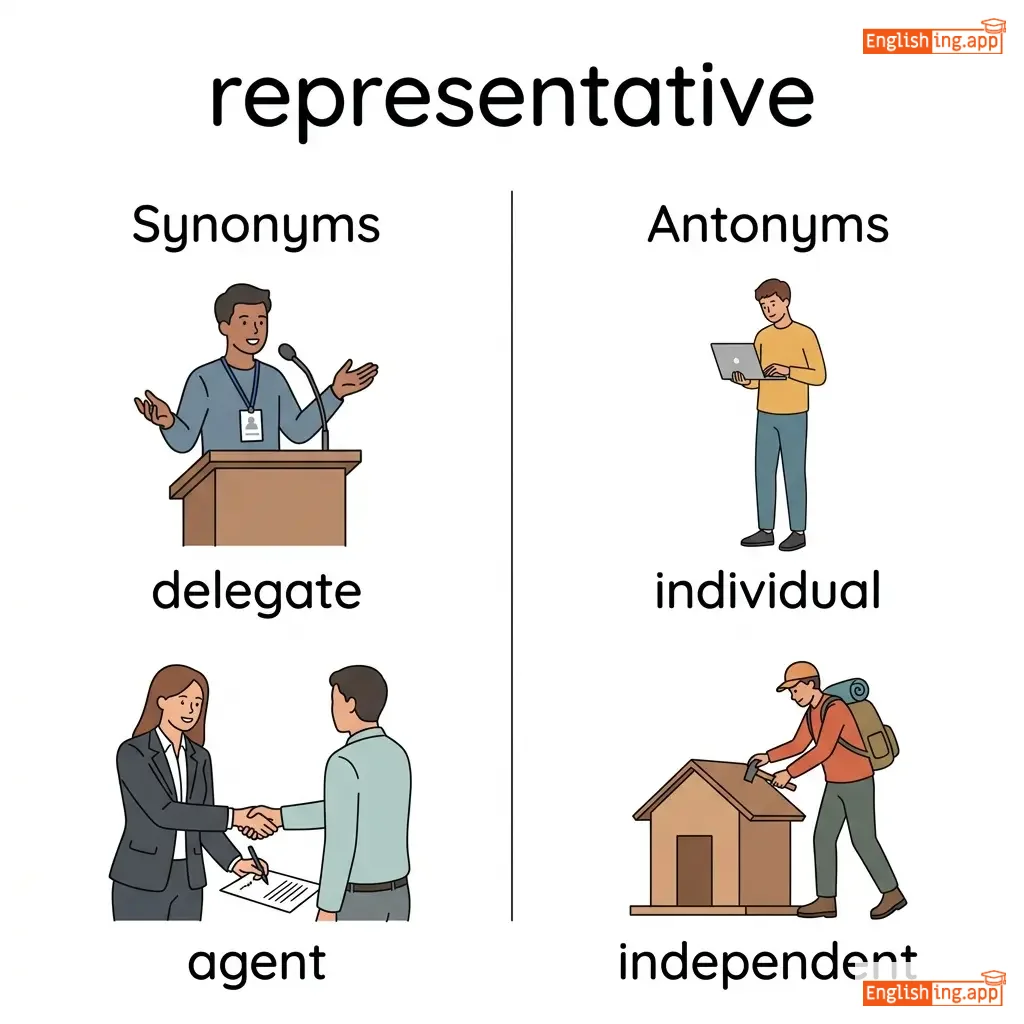
|
delegate, agent, spokesperson, envoy, ambassador
••••••
|
constituent, voter, represented
••••••
|
elected representative, sales representative, government representative, legal representative
••••••
|
DaiBiao = 代 + 表, 想象一个人举着大号的 Biao 旗子为众人发声, 他就是 DaiBiao
••••••
|
Vocabulary Quiz
Test your vocabulary by matching words with their translations or meanings.
Login to take the quiz
Comments (0)
Share your thoughts and join the discussion.
Join the discussion by logging in
Login to CommentNo comments yet
Be the first to share your thoughts!