


Swipe left or right, or use the buttons. Tap image to zoom.
例句翻译
单词
Lesson 13Lesson 13 - 遮罩切换
|
表情符号
|
单词 | Images | 翻译 | 含义 | 例句 | 例句翻译 | 同义词 | 反义词 | 搭配词 | 助记符 |
|---|---|---|---|---|---|---|---|---|---|---|
|
#241
💕
|
/ˈdæl.i.əns/
noun
(达利安斯)
••••••
|
- •••••• |
短暂的恋情; 风流韵事
duǎnzàn de liànqíng, fēngliú yùnshì
••••••
|
a casual romantic or sexual relationship; a brief involvement or experiment
••••••
|
His dalliance with photography lasted only a few months before he lost interest. |
他与摄影的短暂关系只持续了几个月,之后他失去了兴趣。
tā yǔ shèyǐng de duǎnzàn guānxì zhǐ chíxùle jǐ gè yuè, zhīhòu tā shīqùle xìngqù
••••••
|
flirtation, affair, fling, liaison
••••••
|
commitment, dedication, serious relationship
••••••
|
brief dalliance, romantic dalliance, casual dalliance
••••••
|
No •••••• |
|
#242
☀️
|
/deɪ/
noun
(dài)
••••••
|
- •••••• |
天; 日
tian, ri
••••••
|
a period of twenty-four hours; the time during which there is light
••••••
|
What a beautiful day it is today with clear blue skies! |
今天是个美丽的日子,蓝天晴朗!
Jīntiān shì gè měilì de rìzi, lán tiān qínglǎng!
••••••
|
daytime, twenty-four hours, date, era
••••••
|
night, darkness, evening
••••••
|
beautiful day, long day, working day
••••••
|
Tian means 'sky' or 'day', starts bright and sunny.
••••••
|
|
#243
🏞️
|
/dæm/
noun
(dám)
••••••
|
- •••••• |
大坝; 水库;
dàbà, shuǐkù
••••••
|
a barrier constructed to hold back water and raise its level; a female parent of an animal
••••••
|
The massive dam provides electricity and controls flooding in the region.
巨大的大坝为该地区提供电力,并控制洪水。
••••••
|
巨大的大坝为该地区提供电力,并控制洪水。
Jùdà de dàbà wèi gāi dìqū tígōng diànlì, bìng kòngzhì hóngshuǐ.
••••••
|
barrier, weir, embankment, dyke
••••••
|
opening, breach, gap
••••••
|
hydroelectric dam, concrete dam, dam construction
••••••
|
大坝 = 阻挡水流和水库 = 储存水的地方
••••••
|
|
#244
⏰
|
/ˈded.laɪn/
noun
(dèd lái ēn)
••••••
|
- •••••• |
最后期限;
zuìhòu qīxiàn
••••••
|
the latest time or date by which something should be completed
••••••
|
The deadline for submitting the project is next Friday.
提交项目的截止日期是下周五。
••••••
|
提交项目的截止日期是下周五。
Tíjiāo xiàngmù de jiézhǐ rìqī shì xià zhōu wǔ.
••••••
|
time limit, due date, cutoff, expiry
••••••
|
extension, flexibility, open-ended
••••••
|
strict deadline, meet deadline, deadline pressure
••••••
|
Deadline (最后期限) — 必须按时提交项目的日期。
••••••
|
|
#245
🔒
|
/ˈded.lɑk/
noun
(死锁)
••••••
|
- •••••• |
死锁; 僵局
sǐsuǒ; jiāngjú
••••••
|
a situation in which no progress is possible; complete standstill
••••••
|
The negotiations reached a deadlock when neither side would compromise.
谈判进入死胡同,因为双方都不愿意妥协。
••••••
|
谈判陷入僵局,因为没有一方愿意妥协。
Tánpàn xiànrù jiāngjú, yīnwèi méiyǒu yī fāng yuànyì tuǒxié.
••••••
|
stalemate, impasse, standstill, gridlock
••••••
|
progress, breakthrough, resolution, movement
••••••
|
political deadlock, break deadlock, reach deadlock
••••••
|
Deadlock = 僵局 in Chinese
••••••
|
|
#246
💥
|
/ˈdæm.ɪdʒ/
noun
(dàmèi)
••••••
|
- •••••• |
损害; 损失
sǔnhài, sǔnshī
••••••
|
physical harm caused to something; injury or harm that reduces value or usefulness
••••••
|
The storm caused significant damage to the coastal buildings. |
暴风雨对沿海建筑物造成了重大损害。
Bàofēngyǔ duì yán hǎi jiànzhúwù zàochéngle zhòngdà sǔnhài.
••••••
|
harm, destruction, injury, loss
••••••
|
repair, restoration, improvement, benefit
••••••
|
property damage, brain damage, environmental damage
••••••
|
损害通常意味着某物不再有用或不再值钱。
••••••
|
|
#247
🔥
|
/dæmˈneɪ.ʃən/
noun
(dæmˈneɪʃən)
••••••
|
- •••••• |
永恒的惩罚; 破坏
yǒnghéng de chéngfá; pòhuài
••••••
|
condemnation to eternal punishment in hell; something that causes ruin or failure
••••••
|
The preacher spoke about salvation and damnation in his sermon.
传教士在他的讲道中谈到了救赎和诅咒。
••••••
|
传教士在他的讲道中谈到了救赎和诅咒。
Chuánjiàoshì zài tā de jiǎngdào zhōng tán dào le jiùshú hé zǔzhòu.
••••••
|
condemnation, perdition, ruin, curse
••••••
|
salvation, blessing, redemption
••••••
|
eternal damnation, threat of damnation, escape damnation
••••••
|
Damnation 中文意味着永远的惩罚和破坏.
••••••
|
|
#248
🤝
|
/ˈdiː.lɪŋ/
noun
(dīlǐng)
••••••
|
- •••••• |
交易; 对待; 事务处理
jiaoyi, duidai, shiwù chǔlǐ
••••••
|
business transactions; the way of treating people or handling situations
••••••
|
His fair dealing with customers earned him an excellent reputation. |
他与客户的公平交易为他赢得了极好的声誉。
Tā yǔ kèhù de gōngpíng jiāoyì wèi tā yíngdéle jí hǎo de shēngyù.
••••••
|
transaction, trade, conduct, behavior
••••••
|
avoidance, neglect, dishonesty
••••••
|
fair dealing, business dealing, honest dealing
••••••
|
在交易中公平对待他人,才会得到好名声。
••••••
|
|
#249
❄️
|
/ˈdæn.drʌf/
noun
(丹德拉夫)
••••••
|
- •••••• |
头皮屑
dandruff
••••••
|
small white or grey flakes of dead skin that form on the scalp and fall from the hair
••••••
|
He used a special shampoo to treat his persistent dandruff problem.
他使用了一种特殊的洗发水来治疗他持续的头皮屑问题。
••••••
|
他使用了一种特殊的洗发水来治疗他持续的头皮屑问题。
ta shiyongle yi zhong teshu de xifashui lai zhiliao ta chixu de toupixie wenti
••••••
|
scalp flakes, seborrhea, scurf
••••••
|
healthy scalp, clean hair
••••••
|
dandruff shampoo, severe dandruff, treat dandruff
••••••
|
Dandruff = 丹德拉夫 的 snowflakes 落在 toupi 上, 记住 头皮屑
••••••
|
|
#250
⚰️
|
/deθ/
noun
(德斯)
••••••
|
- •••••• |
死亡
sǐwáng
••••••
|
the end of life; the permanent cessation of vital functions
••••••
|
The death of the great leader was mourned by the entire nation. |
伟大领导人的死亡让整个国家陷入哀悼。
Wěidà lǐngdǎo rén de sǐwáng ràng zhěnggè guójiā xiànrù āidào.
••••••
|
demise, passing, mortality, end
••••••
|
birth, life, existence, vitality
••••••
|
sudden death, natural death, death certificate
••••••
|
死亡 (sǐwáng) 和生命的结束有关系,是中文中的常用词。
••••••
|
|
#251
🎯
|
/ˈder.ɪŋ/
noun
(德林)
••••••
|
- •••••• |
大胆; 愿意冒险
dàdǎn, yuànyì màoxiǎn
••••••
|
adventurous courage; willingness to take risks
••••••
|
The mountain climber's daring impressed everyone at the base camp. |
登山者的大胆令基地营的每个人都印象深刻。
Dēngshān zhě de dàdǎn lìng jīdì yíng de měi gè rén dōu yìnxiàng shēnkè.
••••••
|
boldness, courage, bravery, audacity
••••••
|
cowardice, timidity, caution, hesitation
••••••
|
great daring, act of daring, show daring
••••••
|
Daring in Chinese is 大胆, like the courage to climb up!
••••••
|
|
#252
🗣️
|
/dɪˈbeɪt/
noun
(dɪˈbeɪt)
••••••
|
- •••••• |
辩论
bianlun
••••••
|
a formal discussion of opposing viewpoints; argument with reasoned points
••••••
|
The political debate lasted for three hours with passionate arguments. |
政治辩论持续了三个小时,充满了激情的论点。
zhèngzhì biànlùn chíxù le sān gè xiǎoshí, chōngmǎn le jīqíng de lùndiǎn.
••••••
|
discussion, argument, dispute, deliberation
••••••
|
agreement, consensus, silence, acceptance
••••••
|
heated debate, public debate, debate competition
••••••
|
辩论是理智的争论。
••••••
|
|
#253
🌑
|
/ˈdɑrk.nəs/
noun
(dàkè nà sī)
••••••
|
- •••••• |
黑暗; 无知;
hēi'àn, wúzhī
••••••
|
the partial or total absence of light; wickedness or evil; ignorance or lack of knowledge
••••••
|
The power outage plunged the entire city into darkness.
停电使整个城市陷入了黑暗。
••••••
|
停电使整个城市陷入了黑暗。
Tíngdiàn shǐ zhěnggè chéngshì xiànrùle hēi'àn.
••••••
|
blackness, gloom, shadow, ignorance
••••••
|
light, brightness, illumination, knowledge
••••••
|
total darkness, fear of darkness, darkness falls
••••••
|
黑暗吞噬所有一切
••••••
|
|
#254
💳
|
/ˈdeb.ɪt/
noun
(借方)
••••••
|
- •••••• |
借方; 负债; 提款
jiè fāng; fù zhài; tí kuǎn
••••••
|
an entry recording an amount owed; money taken from a bank account
••••••
|
The bank showed a debit of fifty dollars from my checking account.
银行显示从我的支票账户中扣除五十美元。
••••••
|
银行显示从我的支票账户中扣除五十美元。
Yínháng xiǎnshì cóng wǒ de zhīpiào zhànghù zhōng kòuchú wǔshí měiyuán.
••••••
|
charge, withdrawal, debt, liability
••••••
|
credit, deposit, asset, income
••••••
|
debit card, debit account, automatic debit
••••••
|
借方表示从账户中取出的款项,就像借记卡一样。
••••••
|
|
#255
📊
|
/ˈdeɪ.tə/
noun
(数据)
••••••
|
- •••••• |
数据
shuju
••••••
|
facts and statistics collected together for reference or analysis; information in digital form
••••••
|
Scientists analyzed the data from thousands of experiments to reach their conclusion. |
科学家分析了来自数千个实验的数据,以得出结论。
Kexuejia fenxile laizi shuqian ge shiyan de shuju, yi dechu jielun.
••••••
|
information, facts, statistics, figures
••••••
|
ignorance, misinformation, assumptions
••••••
|
collect data, analyze data, raw data
••••••
|
No •••••• |
|
#256
🧱
|
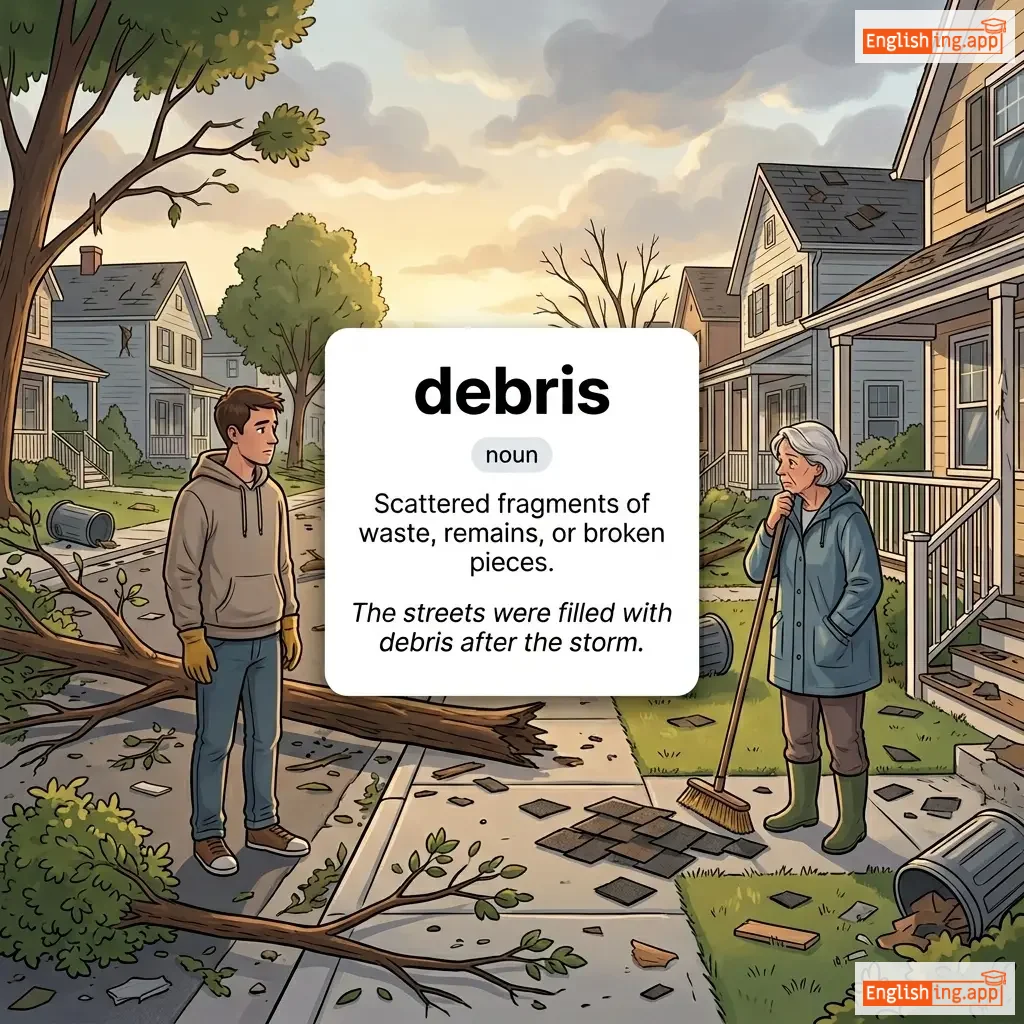
/dəˈbriː/
noun
(德布里)
••••••
|
|
碎片; 被摧毁的东西的残余
suipian; bei cuishui de dongxi de canyu
••••••
|
scattered fragments of something destroyed; rubble or wreckage
••••••
|
The cleanup crew removed debris from the construction site.
清理小组从建筑工地移除了碎片。
••••••
|
清理小组从建筑工地移除了碎片。
Qingli xiaozu cong jianzhu gongdi yilue le suipian.
••••••
|
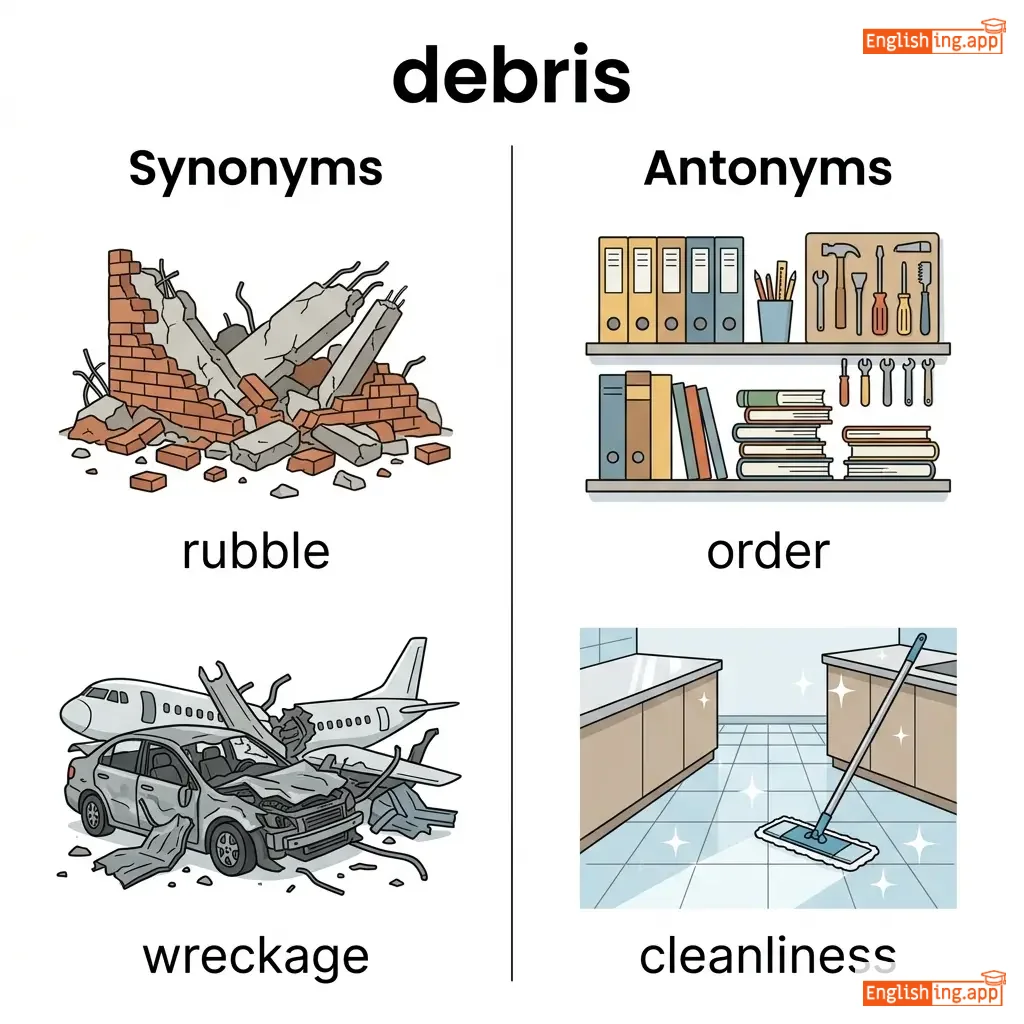
rubble, wreckage, fragments, ruins
••••••
|
construction, building, whole structure
••••••
|
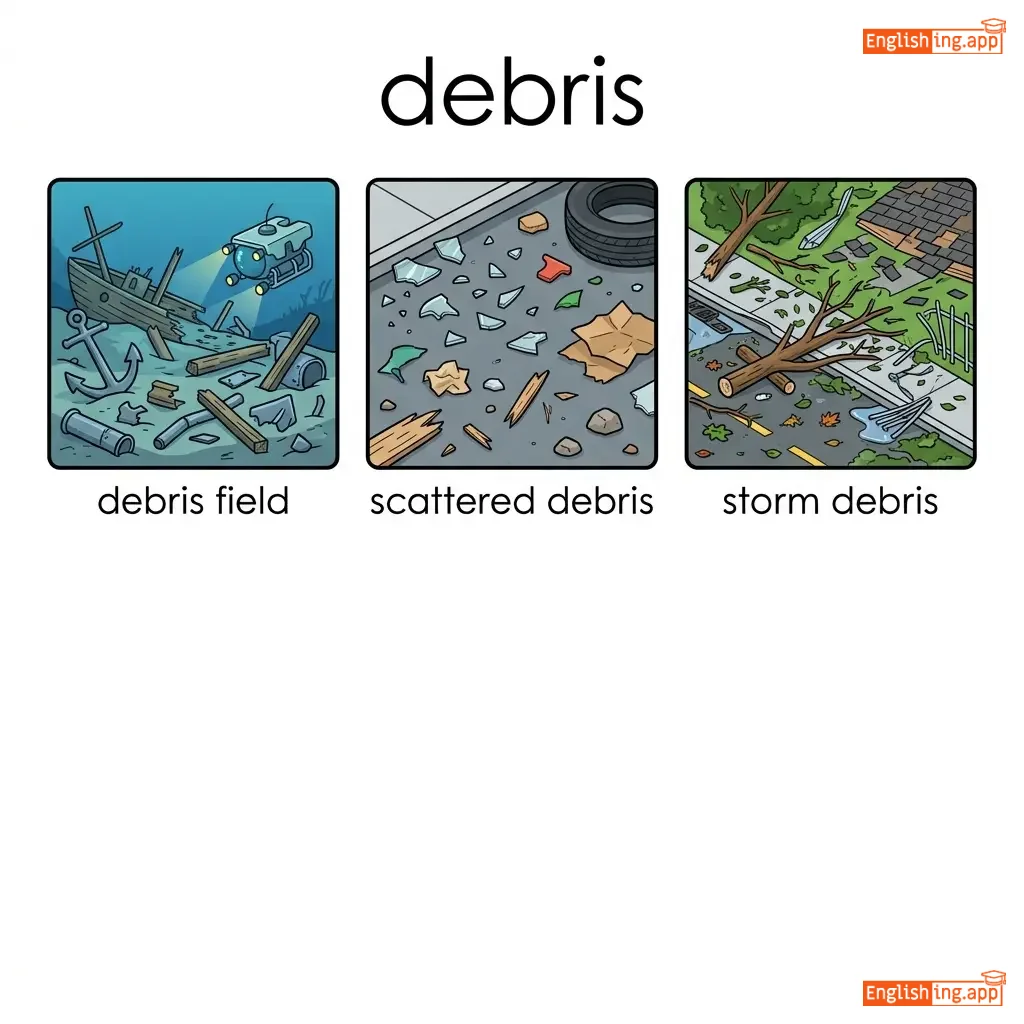
space debris, construction debris, clear debris
••••••
|
‘Debris’ 在中文里意味着碎片,像是被毁坏的东西的残余。
••••••
|
|
#257
👧
|
/ˈdɔː.tər/
noun
(dàotè)
••••••
|
- •••••• |
女儿
nǚ'ér
••••••
|
a female offspring; a young woman in relation to her parents
••••••
|
Their daughter graduated from medical school with top honors.
她的女儿以优异的成绩从医学院毕业。
••••••
|
她的女儿以优异的成绩从医学院毕业。
Tā de nǚ'ér yǐ yōuyì de chéngjī cóng yīxuéyuàn bìyè.
••••••
|
child, offspring, girl, descendant
••••••
|
son, parent, ancestor
••••••
|
eldest daughter, beloved daughter, daughter-in-law
••••••
|
Chinese '女儿' means 'daughter' in English.
••••••
|
|
#258
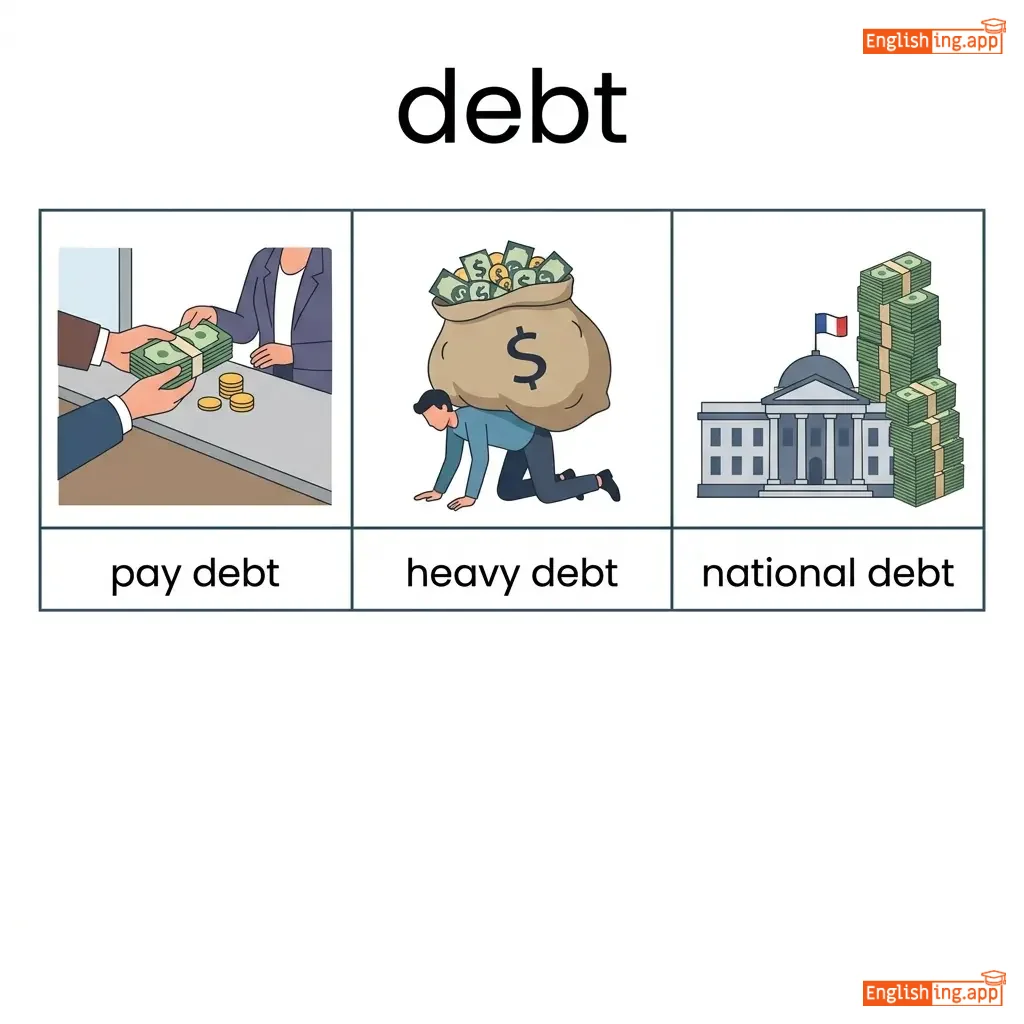
💰
|
/det/
noun
(债务)
••••••
|
|
债务; 义务
zhàiwù; yìwù
••••••
|
something owed, especially money; obligation to pay or repay
••••••
|
He worked extra hours to pay off his student loan debt.
他加班工作以偿还学生贷款债务。
••••••
|
他加班工作以偿还学生贷款债务。
Tā jiābān gōngzuò yǐ chánghuán xuéshēng dàikuǎn zhàiwù.
••••••
|
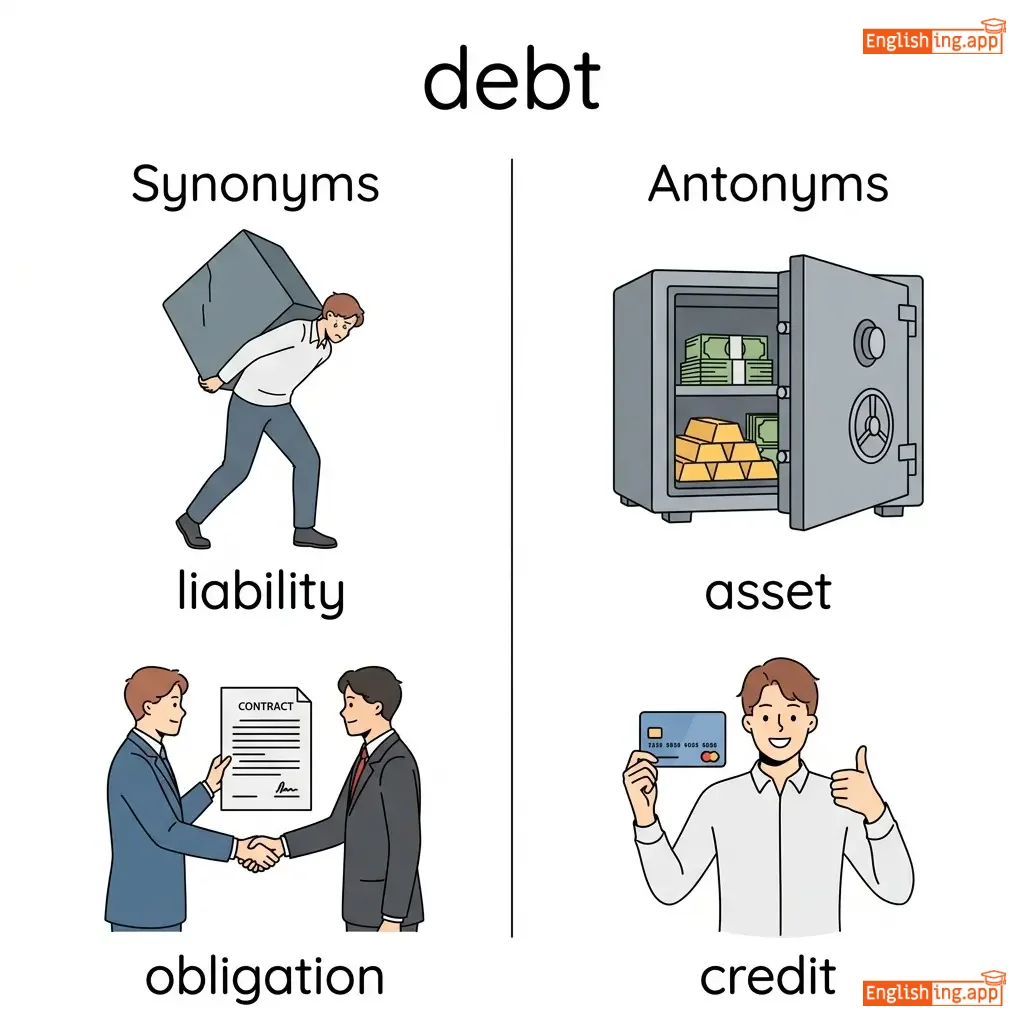
loan, obligation, liability, arrears
••••••
|
asset, credit, wealth, savings
••••••
|
pay debt, national debt, debt relief
••••••
|
Debt is 'zhàiwù', a '义务' (obligation) to repay.
••••••
|
|
#259
🌅
|
/dɔːn/
noun
(黎明)
••••••
|
- •••••• |
黎明
liming
••••••
|
the first appearance of light in the sky before sunrise; the beginning or start of something
••••••
|
The fishermen set out to sea before dawn to catch the morning tide. |
渔民们在黎明前出海,赶上早潮。
Yuminmen zai liming qian chuhai, gan shang zaochao.
••••••
|
daybreak, sunrise, morning, beginning
••••••
|
dusk, sunset, evening, end
••••••
|
crack of dawn, dawn breaks, dawn of a new era
••••••
|
Dawn – 黎明,像是黑暗中的第一道光,唤醒新的开始。
••••••
|
|
#260
🍂
|
/dɪˈkeɪ/
noun
(dikey)
••••••
|
- •••••• |
腐烂; 分解; 衰退
fulan, fenjie, shuaitui
••••••
|
the process of rotting or decomposing; gradual decline or deterioration
••••••
|
The old building showed signs of decay after years of neglect.
The old building showed signs of decay after years of neglect.
••••••
|
这座老建筑在多年疏忽后显示出腐烂的迹象。
Zhe zuo lao jianzhu zai duonian shuhu hou xianshi chu fulan de jixiang.
••••••
|
deterioration, rot, decomposition, decline
••••••
|
growth, improvement, preservation, renewal
••••••
|
tooth decay, urban decay, prevent decay
••••••
|
Decay = 如同腐烂的食物一样,逐渐消失。
••••••
|
Vocabulary Quiz
Test your vocabulary by matching words with their translations or meanings.
Login to take the quiz
Comments (0)
Share your thoughts and join the discussion.
Join the discussion by logging in
Login to CommentNo comments yet
Be the first to share your thoughts!