

翻訳
過去
過去分詞
三人称単数
動名詞
意味
例文
例文の翻訳
同義語
対義語
コロケーション
ニーモニック

Swipe left or right, or use the buttons. Tap image to zoom.
例文の翻訳
単語
Lesson 48Lesson 48 - マスクトグル
|
絵文字
|
単語 | Images | 翻訳 | 意味 | 例文 | 例文の翻訳 | 同義語 | 対義語 | コロケーション | ニーモニック |
|---|---|---|---|---|---|---|---|---|---|---|
|
#941
⭐
|
/ˈnoʊ.və/
noun
(ノヴァ)
••••••
|
- •••••• |
新星
shinsei
••••••
|
a star that suddenly increases greatly in brightness
••••••
|
Astronomers discovered a new nova in the constellation.
天文学者たちは星座で新しいノヴァを発見しました。
••••••
|
天文学者たちは星座で新しいノヴァを発見しました。
tenmongakusha-tachi wa seiza de atarashī nova o hakken shimashita.
••••••
|
supernova, bright star, stellar explosion
••••••
|
dim star, fading star
••••••
|
bright nova, observe nova, nova explosion
••••••
|
夜空に現れる新星が突然明るくなる
••••••
|
|
#942
🤚
|
/oʊθ/
noun
(オース)
••••••
|
- •••••• |
誓い
chikai
••••••
|
a solemn promise or declaration; a sworn statement
••••••
|
The doctor took an oath to help patients. |
医師は患者を助けることを誓いました。
Ishi wa kanja wo tasukeru koto wo chikaimashita.
••••••
|
vow, pledge, promise, swear
••••••
|
denial, refusal, breach
••••••
|
take oath, under oath, oath of office
••••••
|
Japanese '誓い' (chikai) for oath.
••••••
|
|
#943
🎆
|
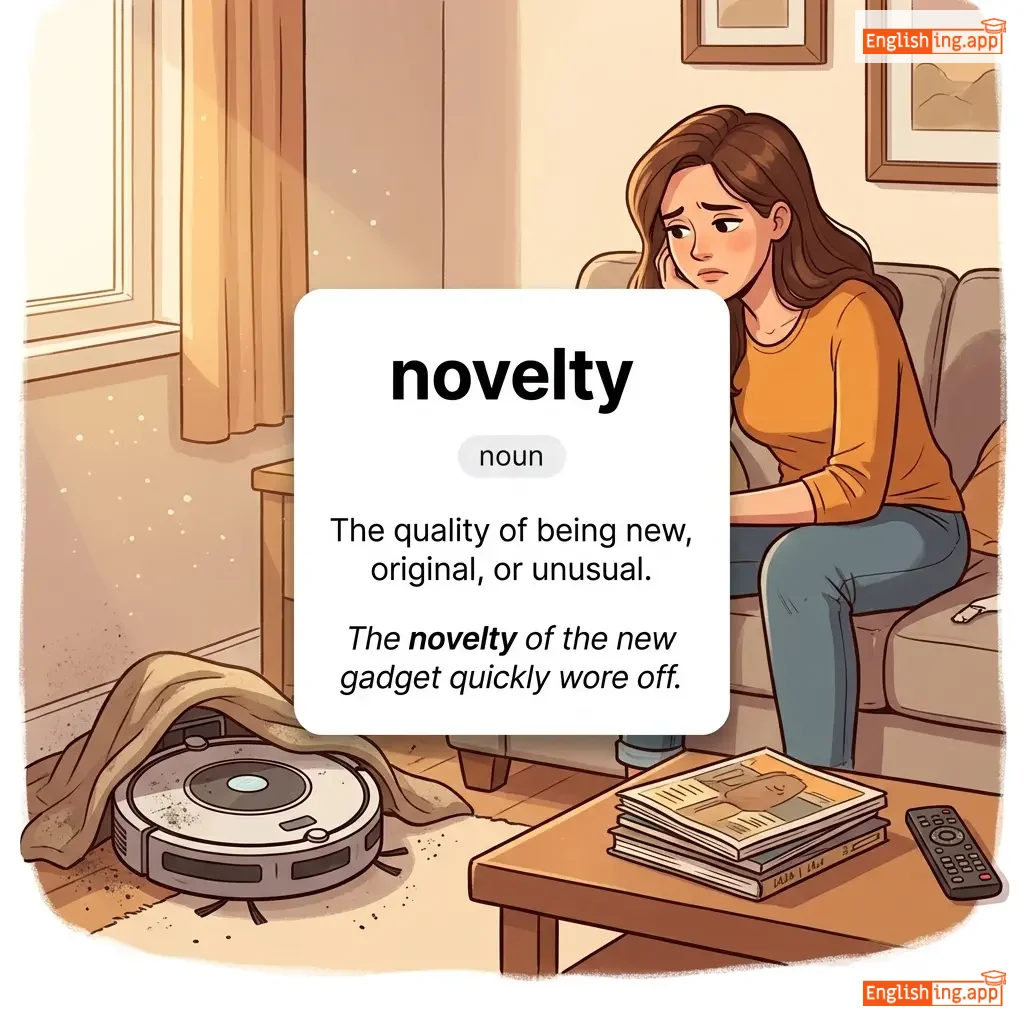
/ˈnɑv.əl.ti/
noun
(ノヴェルティ)
••••••
|
|
新規; 独創性;
shinki; dokusōsei
••••••
|
the quality of being new, original, or unusual; a new or unfamiliar thing
••••••
|
The novelty of the smartphone quickly wore off.
スマートフォンの新しさはすぐに消えた。
••••••
|
スマートフォンの新しさはすぐに消えた。
sumātofon no atarashisa wa sugu ni kieta.
••••••
|
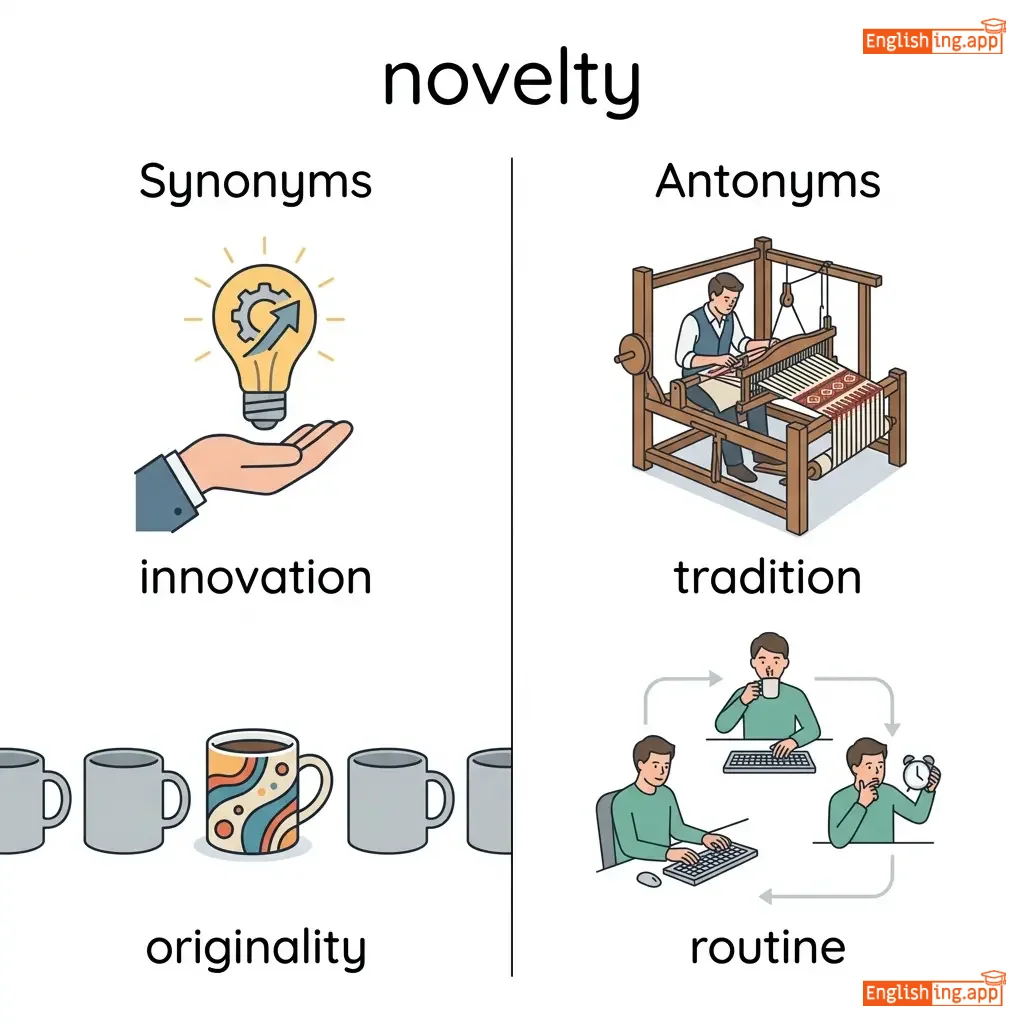
newness, originality, freshness, innovation
••••••
|
familiarity, oldness, tradition, routine
••••••
|
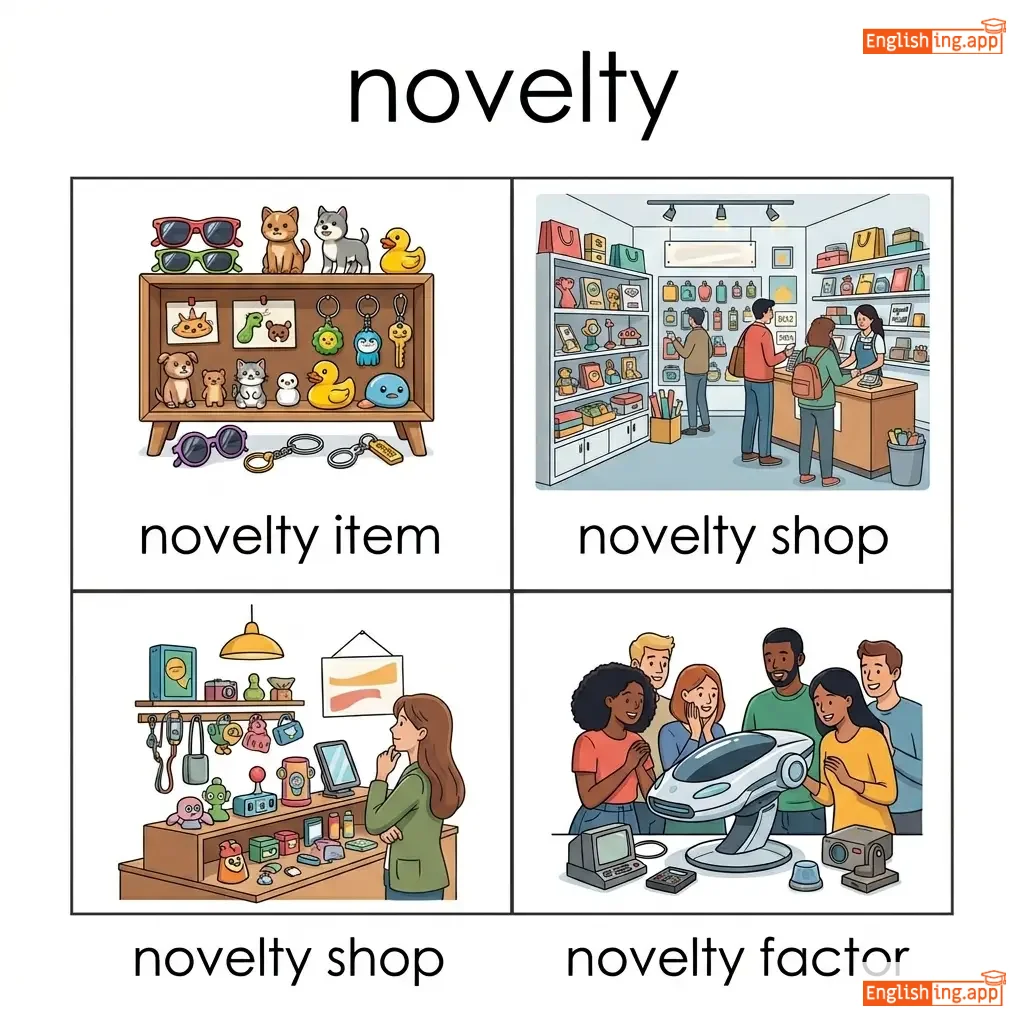
novelty item, novelty factor, wear off novelty
••••••
|
新しいものは最初は興味を引くが、すぐに飽きられる
••••••
|
|
#944
🙏
|
/oʊˈbiː.di.əns/
noun
(オビディエンス)
••••••
|
- •••••• |
服従
fukujū
••••••
|
compliance with an order, request, or law; submission to authority
••••••
|
Children should show obedience to their parents.
子供たちは両親に従うべきです。
••••••
|
子供たちは両親に従うべきです。
Kodomotachi wa ryōshin ni shitagau beki desu.
••••••
|
compliance, submission, conformity, respect
••••••
|
disobedience, rebellion, defiance, resistance
••••••
|
blind obedience, show obedience, demand obedience
••••••
|
服従は親の言うことを聞くことです。
••••••
|
|
#945
👶
|
/ˈnɑv.ɪs/
noun
(ノービス)
••••••
|
- •••••• |
初心者
shoshinsha
••••••
|
a person new to or inexperienced in a field or situation; a beginner
••••••
|
As a novice driver, she was very careful on the road.
初心者のドライバーとして、彼女は道路で非常に慎重でした。
••••••
|
初心者のドライバーとして、彼女は道路で非常に慎重でした。
Shoshinsha no doraibā toshite, kanojo wa dōro de hijō ni shinchō deshita.
••••••
|
beginner, newcomer, apprentice, amateur
••••••
|
expert, veteran, professional, master
••••••
|
complete novice, novice driver, novice teacher
••••••
|
初心者 = Novice 在日语
••••••
|
|
#946
🪦
|
/oʊˈbɪt.ʃu.er.i/
noun
(オビチュアリー)
••••••
|
- •••••• |
訃報
fuhou
••••••
|
a notice of someone's death published in a newspaper; biographical account of deceased person
••••••
|
The newspaper published his obituary yesterday. |
新聞は昨日彼の訃報を掲載しました。
Shinbun wa kinou kare no fuhou o keisai shimashita.
••••••
|
death notice, memorial, tribute, eulogy
••••••
|
birth announcement, celebration, life story
••••••
|
write obituary, publish obituary, obituary notice
••••••
|
訃報は、亡くなった人に最後の別れを告げるものです。
••••••
|
|
#947
💡
|
/ˈnoʊ.ʃən/
noun
(ノーション)
••••••
|
- •••••• |
概念; アイデア; 意見
gainen; aidea; iken
••••••
|
a conception or belief about something; an idea or opinion
••••••
|
I had no notion that the meeting was so important. |
その会議がこんなに重要だとは全く思っていませんでした。
Sono kaigi ga konna ni juuyou da to wa mattaku omotteimasen deshita.
••••••
|
idea, concept, belief, impression
••••••
|
fact, reality, certainty, knowledge
••••••
|
vague notion, preconceived notion, have notion
••••••
|
In Japanese, 'notion' as '概念' links to 'idea' (アイデア) and 'opinion' (意見).
••••••
|
|
#948
✋
|
/əbˈdʒek.ʃən/
noun
(異議)
••••••
|
- •••••• |
異議; 反対; 抗議;
igi; hantai; kōgi;
••••••
|
an expression of disagreement or disapproval; a reason for disagreeing
••••••
|
The lawyer raised an objection during the trial.
弁護士は裁判中に異議を唱えました。
••••••
|
弁護士は裁判中に異議を唱えました。
Bengoshi wa saiban-chū ni igi o tonaemashita.
••••••
|
protest, opposition, complaint, disagreement
••••••
|
agreement, approval, acceptance, consent
••••••
|
raise objection, strong objection, overrule objection
••••••
|
Think of raising an '異議' (objection) during a trial in Japan.
••••••
|
|
#949
😠
|
/ˈnuː.səns/
noun
(ヌイサンス)
••••••
|
- •••••• |
迷惑; 不便;
meiwaku; fuben
••••••
|
a person, thing, or circumstance causing inconvenience or annoyance
••••••
|
The constant noise from construction is a real nuisance.
建設の絶え間ない騒音は本当の迷惑です。
••••••
|
建設の絶え間ない騒音は本当の迷惑です。
Kensetsu no taemanai souon wa hontou no meiwaku desu.
••••••
|
annoyance, bother, trouble, pest
••••••
|
pleasure, help, benefit, blessing
••••••
|
public nuisance, constant nuisance, real nuisance
••••••
|
In Japan, constant construction noise is a ‘meiwaku’ (nuisance).
••••••
|
|
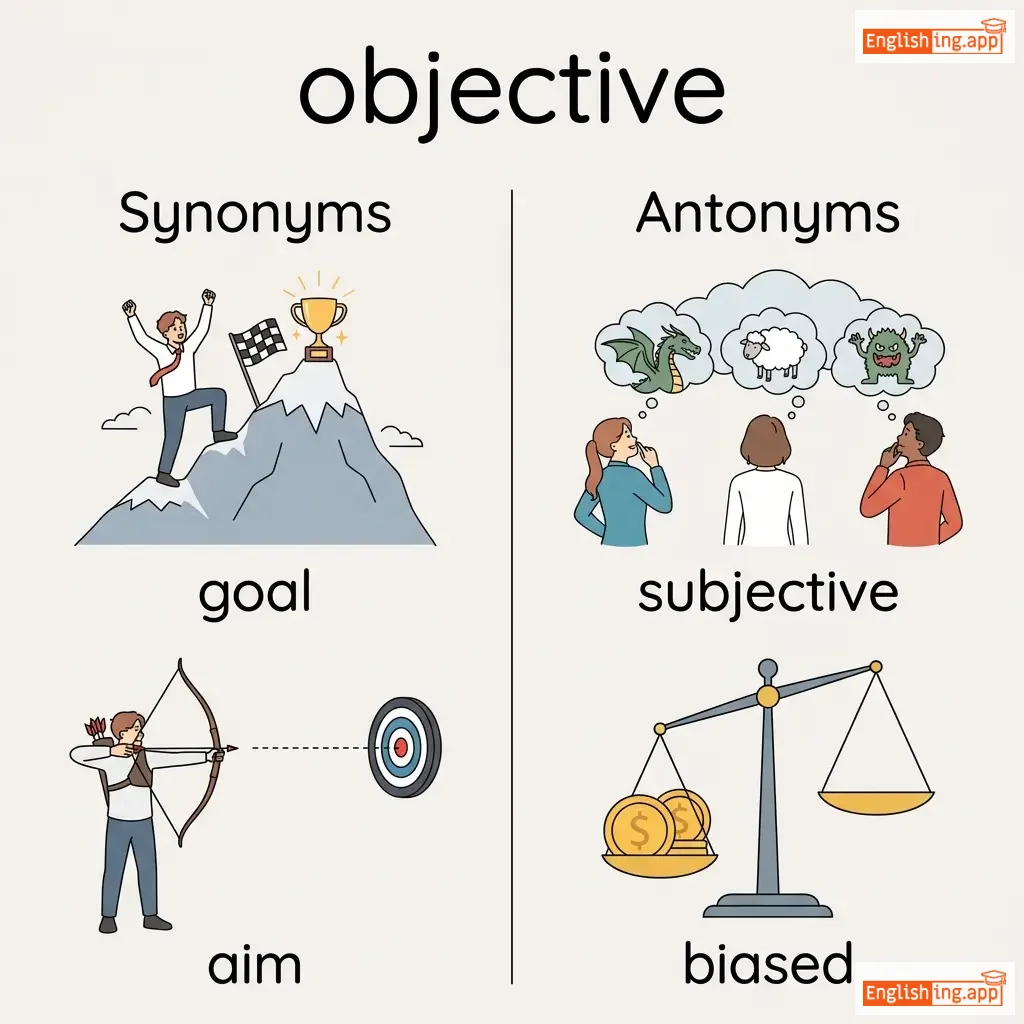
#950
🎯
|
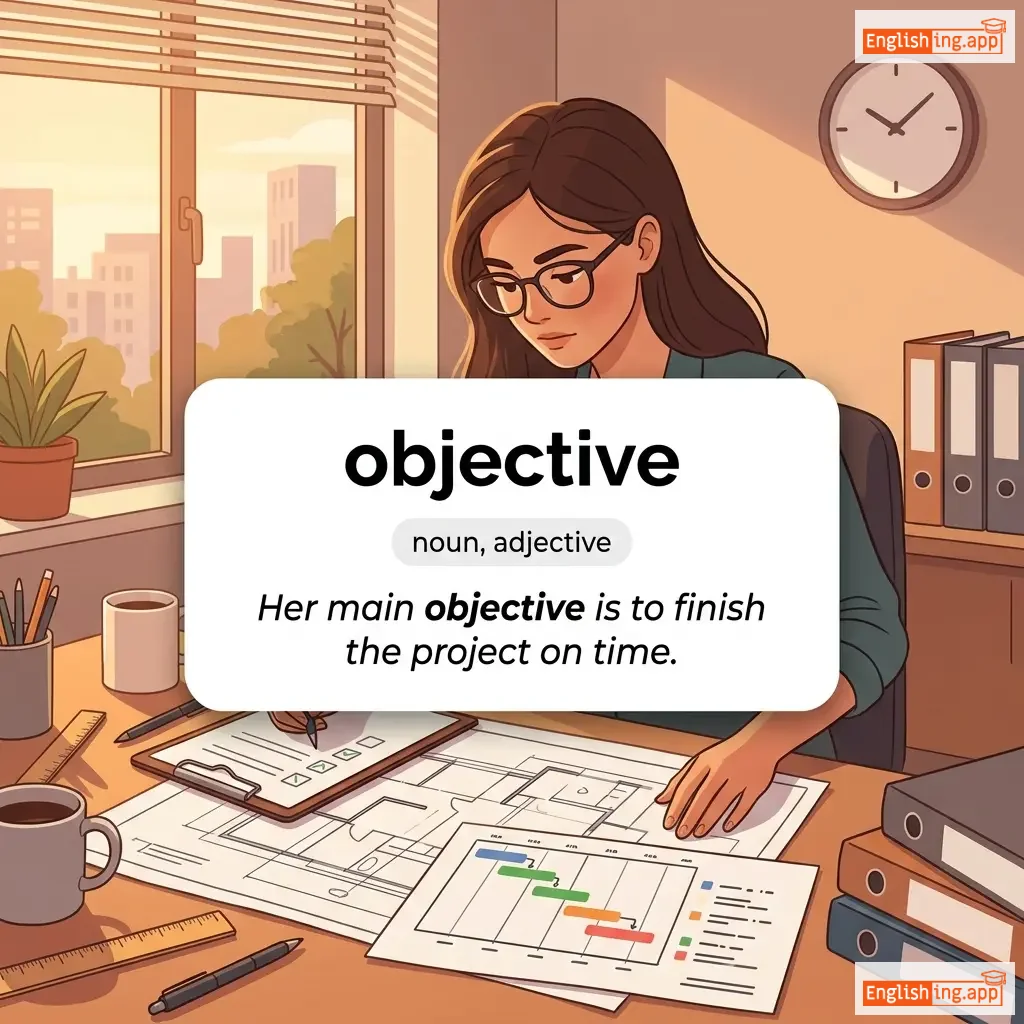
/əbˈdʒek.tɪv/
noun
(オブジェクティブ)
••••••
|
|
目標
mokuhyō
••••••
|
a goal or aim; something that one strives to achieve
••••••
|
Our main objective is to increase sales.
私たちの主な目的は売上を増加させることです。
••••••
|
私たちの主な目的は売上を増加させることです。
watashitachi no omona mokuhyō wa uriage o zōka saseru koto desu
••••••
|
goal, aim, target, purpose
••••••
|
subjective, biased, personal opinion
••••••
|
main objective, achieve objective, clear objective
••••••
|
目標を達成しようとすることが目標を設定する理由です。
••••••
|
|
#951
👩🎓
|
/nʌn/
noun
(ナン)
••••••
|
- •••••• |
修道女
shūdōjo
••••••
|
a woman who has taken vows in a religious order and lives in a convent
••••••
|
The nun taught at the local Catholic school.
その修道女は地元のカトリック学校で教えていました。
••••••
|
その修道女は地元のカトリック学校で教えていました。
Sono shūdōjo wa jimoto no katorikku gakkō de oshiete imashita.
••••••
|
sister, religious woman, mother superior
••••••
|
layperson, secular woman
••••••
|
Catholic nun, teaching nun, convent nun
••••••
|
Japanese '修道女' is close to 'nun' in meaning and sound.
••••••
|
|
#952
📝
|
/ˌɑb.lɪˈɡeɪ.ʃən/
noun
(オブリゲーション)
••••••
|
- •••••• |
義務
gimu
••••••
|
a duty or commitment; something that must be done legally or morally
••••••
|
Parents have an obligation to care for their children.
親は子供の世話をする義務がある。
••••••
|
親は子供の世話をする義務がある。
oya wa kodomo no sewa o suru gimu ga aru
••••••
|
duty, responsibility, commitment, requirement
••••••
|
freedom, choice, option, liberty
••••••
|
legal obligation, moral obligation, meet obligation
••••••
|
親は子供の世話をすることが道徳的および法的義務です。
••••••
|
|
#953
🌱
|
/ˈnɜr.tʃər/
noun
(ナーチャー)
••••••
|
- •••••• |
養育
youiku
••••••
|
the process of caring for and encouraging growth or development
••••••
|
Good parenting involves both nature and nurture. |
良い育て方は自然と養育の両方を含みます。
Yoi sodatekata wa shizen to youiku no ryouhou o fukumimasu
••••••
|
care, cultivation, upbringing, development
••••••
|
neglect, abandonment, harm, destruction
••••••
|
nature vs nurture, nurture growth, provide nurture
••••••
|
Nurture is giving care to help someone or something grow, like nurturing a child.
••••••
|
|
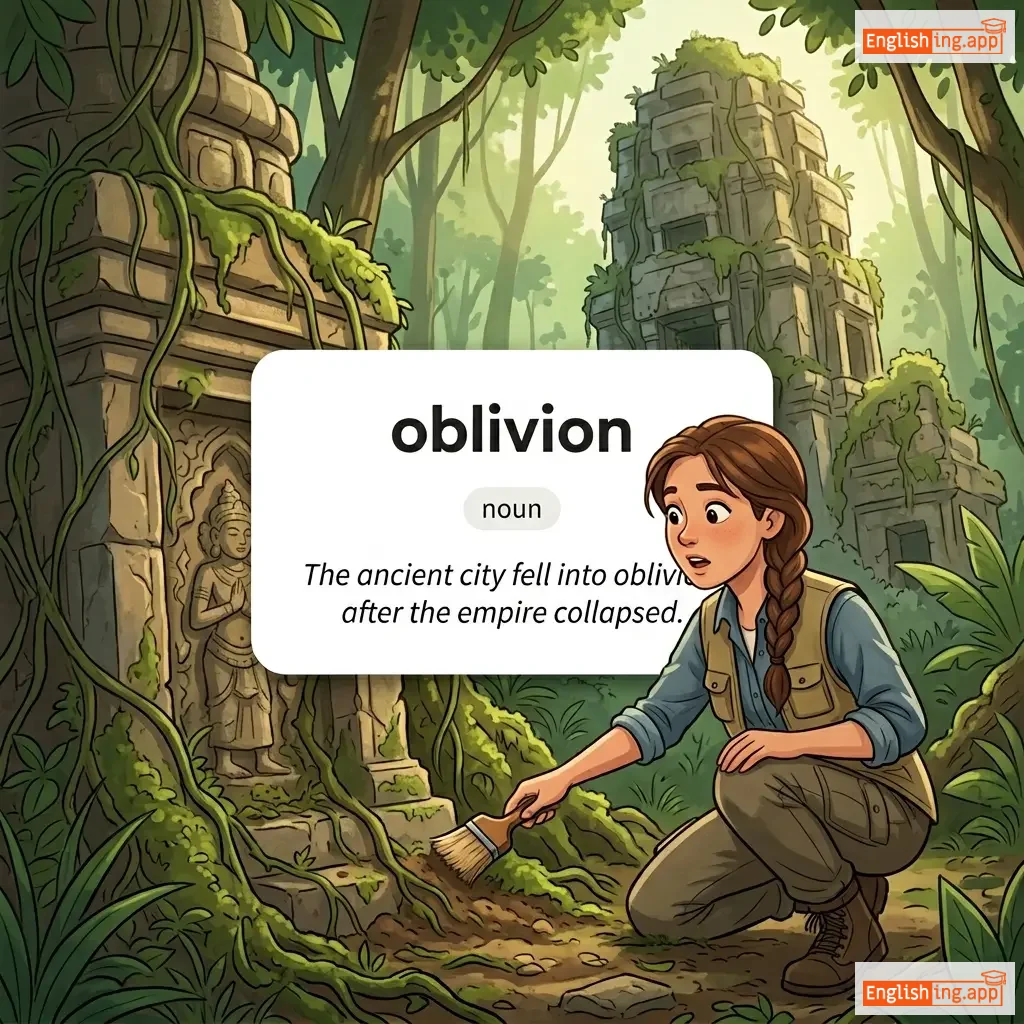
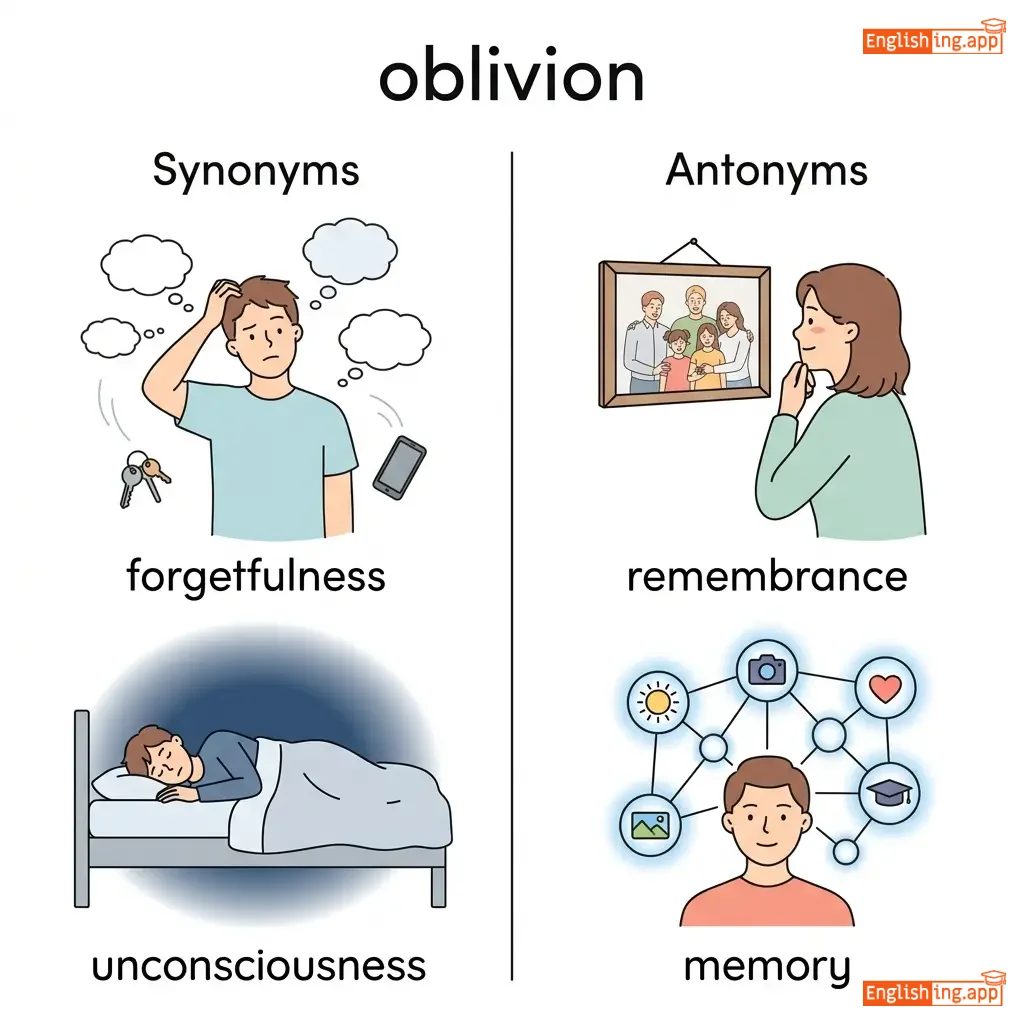
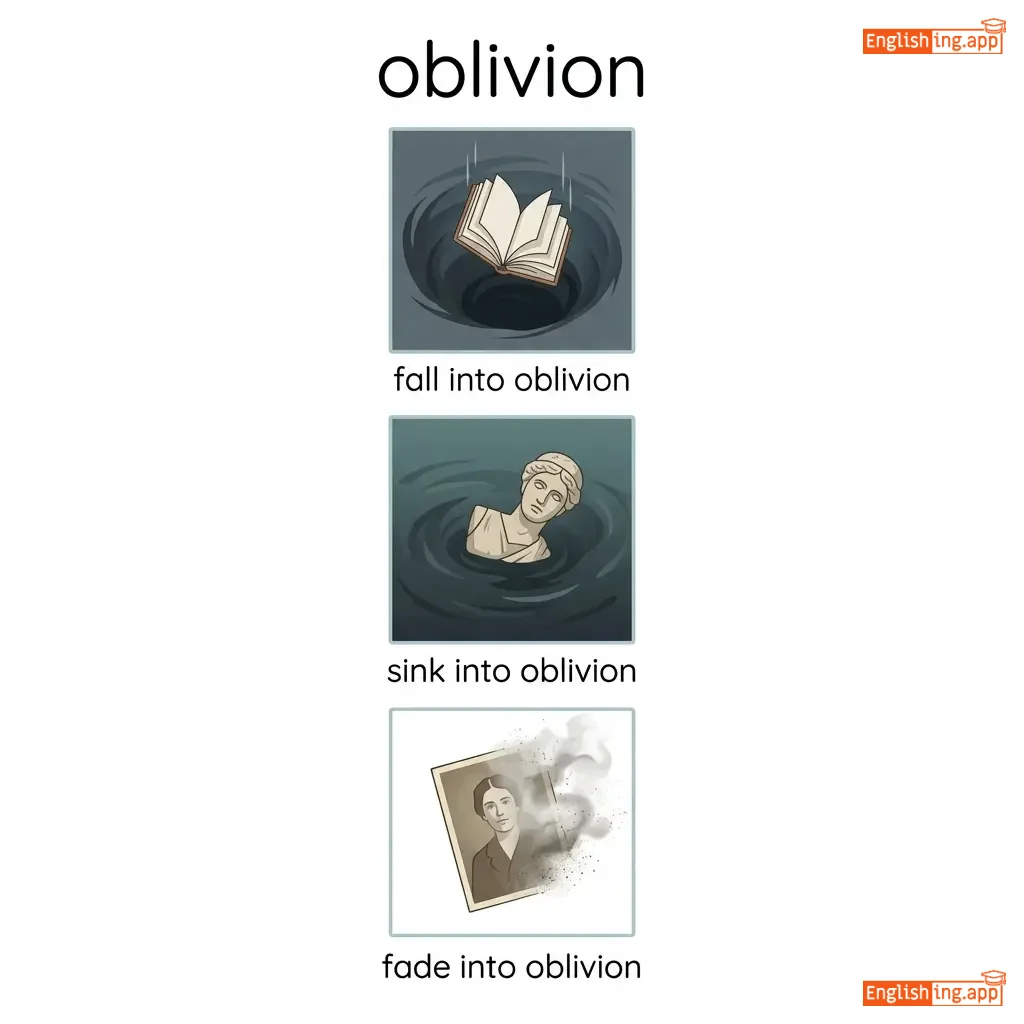
#954
🌫️
|
/əˈblɪv.i.ən/
noun
(オブリヴィオン)
••••••
|
|
忘却
bōkyaku
••••••
|
the state of being completely forgotten; unconsciousness
••••••
|
The old castle fell into oblivion over the centuries.
古い城は何世紀にもわたって忘却の彼方へと消えた。
••••••
|
古い城は何世紀にもわたって忘却の彼方へと消えた。
Furui shiro wa nan-seiki ni mo watatte bōkyaku no kanata e to kieta.
••••••
|
forgetfulness, unconsciousness, void, neglect
••••••
|
remembrance, memory, awareness, consciousness
••••••
|
fade into oblivion, sink into oblivion, rescue from oblivion
••••••
|
Oblivion = Furui shiro + bōkyaku
••••••
|
|
#955
🧚♀️
|
/nɪmf/
noun
(ニンフ)
••••••
|
- •••••• |
ニンフ
ninfu
••••••
|
a mythological spirit of nature; a beautiful young woman in classical mythology
••••••
|
The water nymph appeared by the moonlit lake. |
水のニンフが月明かりの湖のそばに現れました。
Mizu no ninfu ga tsukiakari no mizuumi no soba ni arawaremashita.
••••••
|
fairy, sprite, goddess, maiden
••••••
|
mortal, human, ordinary person
••••••
|
water nymph, wood nymph, sea nymph
••••••
|
ニンフ - 神話の中で自然に住む美しい女性
••••••
|
|
#956
😠
|
/ˈɑb.lə.kwi/
noun
(オブロクィ)
••••••
|
- •••••• |
厳しい批判または言葉による虐待; 公共の非難
oburokui
••••••
|
harsh criticism or verbal abuse; strong public condemnation
••••••
|
The politician faced obloquy after the scandal. |
政治家はスキャンダルの後、厳しい批判を受けました。
Seijika wa sukyandaru no ato, kibishii hihan wo ukemashita.
••••••
|
criticism, condemnation, abuse, censure
••••••
|
praise, approval, commendation, acclaim
••••••
|
face obloquy, subject to obloquy, public obloquy
••••••
|
Japanese: 'Obloquy' sounds like 'oblivious,' meaning harsh public criticism.
••••••
|
|
#957
🥴
|
/oʊf/
noun
(オーフ)
••••••
|
- •••••• |
不器用で愚かな、無神経な人
bukiyō de oroka na, mushinkei na hito
••••••
|
a clumsy, stupid, or insensitive person
••••••
|
Don't be such an oaf - handle the dishes carefully! |
そんなオーフにならないで – お皿は気をつけて洗って!
Sonna ofu ni naranai de – osara wa ki o tsukete aratte!
••••••
|
fool, clumsy person, buffoon, blockhead
••••••
|
gentleman, graceful person, intelligent person
••••••
|
clumsy oaf, stupid oaf, big oaf
••••••
|
Oafを‘オーフみたいに鈍くて愚かに行動しないで’と覚える
••••••
|
|
#958
👀
|
/ˌɑb.zɚˈveɪ.ʃən/
noun
(オブザーベーション)
••••••
|
- •••••• |
観察
kansatsu
••••••
|
the action of watching something carefully; a comment or remark
••••••
|
The scientist made careful observations of the experiment.
科学者は実験を慎重に観察しました。
••••••
|
科学者は実験を慎重に観察しました。
Kagakusha wa jikken o shinchou ni kansatsu shimashita.
••••••
|
watching, monitoring, examination, remark
••••••
|
ignorance, neglect, inattention, oversight
••••••
|
careful observation, direct observation, under observation
••••••
|
科学者は実験の観察を慎重に行います。
••••••
|
|
#959
🌴
|
/oʊˈeɪ.sɪs/
noun
(オアシス)
••••••
|
- •••••• |
オアシス
oasis
••••••
|
a fertile spot in a desert where water is found; a pleasant refuge
••••••
|
The travelers found an oasis after days in the desert. |
旅行者たちは砂漠で数日後にオアシスを見つけました。
Ryokō-sha-tachi wa sabaku de sūjitsu-go ni oasisu o mitsukemashita.
••••••
|
refuge, haven, sanctuary, retreat
••••••
|
desert, wasteland, barren land
••••••
|
desert oasis, peaceful oasis, find oasis
••••••
|
オアシス (Oasis) is the same in Japanese, a life-saving escape in the desert.
••••••
|
|
#960
🚧
|
/ˈɑb.stə.kəl/
noun
(オブスタクル)
••••••
|
- •••••• |
障害物
shōgaibutsu
••••••
|
something that blocks or makes progress difficult; a barrier
••••••
|
Bad weather was the main obstacle to our journey. |
悪天候が私たちの旅行の最大の障害物でした。
Akutenkō ga watashitachi no ryokō no saidaiji no shōgaibutsu deshita.
••••••
|
barrier, hindrance, impediment, hurdle
••••••
|
assistance, help, advantage, support
••••••
|
overcome obstacle, major obstacle, remove obstacle
••••••
|
In Japanese, '障害物' (shōgaibutsu) can be remembered as '障害' (obstacle) + '物' (thing).
••••••
|
Vocabulary Quiz
Test your vocabulary by matching words with their translations or meanings.
Login to take the quiz
Comments (0)
Share your thoughts and join the discussion.
Join the discussion by logging in
Login to CommentNo comments yet
Be the first to share your thoughts!