

翻訳
過去
過去分詞
三人称単数
動名詞
意味
例文
例文の翻訳
同義語
対義語
コロケーション
ニーモニック

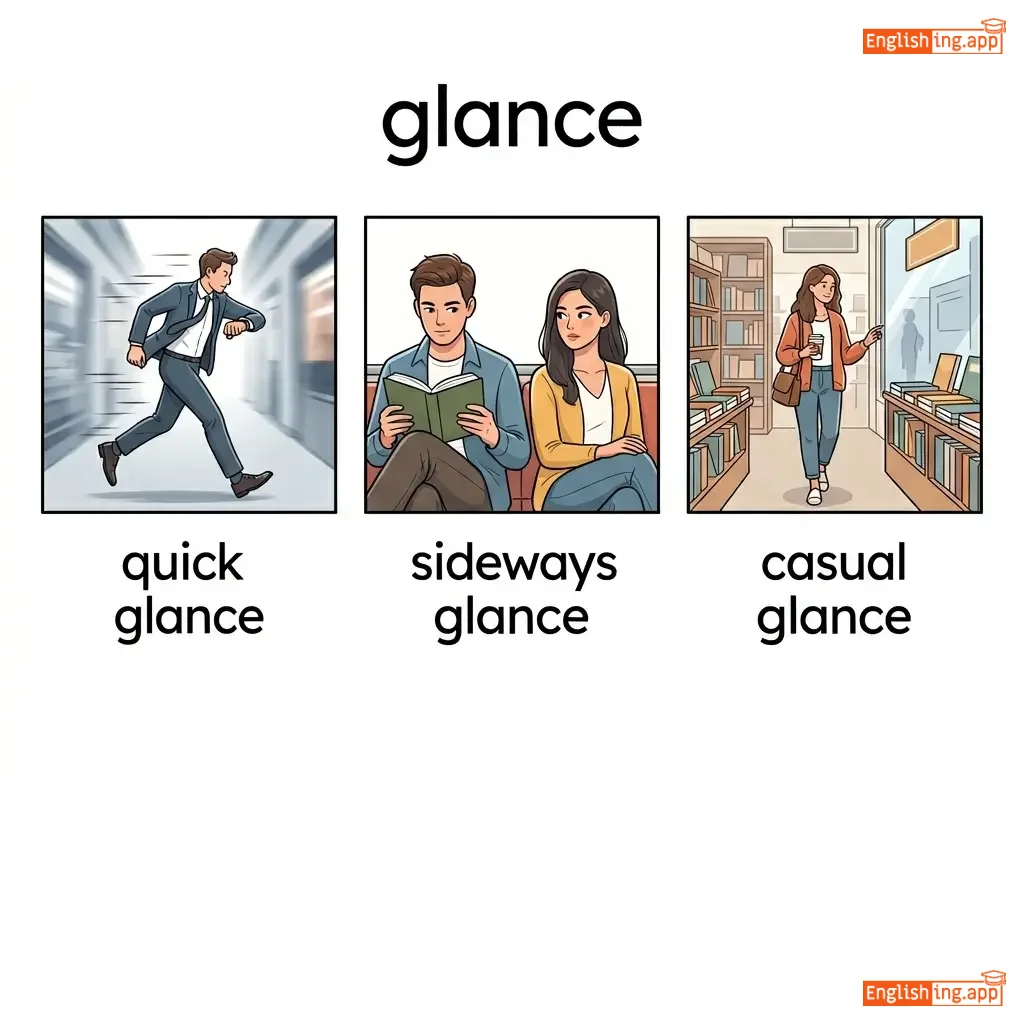
Swipe left or right, or use the buttons. Tap image to zoom.
例文の翻訳
単語
Lesson 26Lesson 26 - マスクトグル
|
絵文字
|
単語 | Images | 翻訳 | 意味 | 例文 | 例文の翻訳 | 同義語 | 対義語 | コロケーション | ニーモニック |
|---|---|---|---|---|---|---|---|---|---|---|
|
#501
🚪
|
/ˈɡeɪt.weɪ/
noun
(ゲートウェイ)
••••••
|
- •••••• |
ゲートウェイ; 入り口
geetowei; iriguchi
••••••
|
an entrance or opening that provides access to a place; a means of achieving a particular state or condition
••••••
|
The ancient stone gateway served as the entrance to the magnificent palace.
古代の石のゲートウェイは壮大な宮殿の入り口として機能しました。
••••••
|
古代の石のゲートウェイは壮大な宮殿の入り口として機能しました。
Kodai no ishi no geetowei wa sōdaina kyūden no iriguchi toshite kinō shimashita.
••••••
|
entrance, portal, doorway, passage
••••••
|
exit, barrier, obstacle, blockade
••••••
|
gateway to success, gateway drug, internet gateway
••••••
|
In Japanese, 'ゲートウェイ' is a gateway to new opportunities, much like '入り口'.
••••••
|
|
#502
👋
|
/ˈdʒes.tʃər/
noun
(ジェスチャー)
••••••
|
- •••••• |
ジェスチャー
jesuchā
••••••
|
a movement of part of the body, especially a hand or the head, to express an idea or meaning
••••••
|
She made a welcoming gesture with her hands to invite the guests inside.
彼女は手でゲストを招待するために歓迎のジェスチャーをしました。
••••••
|
彼女は手でゲストを招待するために歓迎のジェスチャーをしました。
Kanojo wa te de gesuto o shōtai suru tame ni kangei no jesuchā o shimashita.
••••••
|
motion, signal, sign, indication
••••••
|
stillness, inaction, immobility, passivity
••••••
|
hand gesture, friendly gesture, gesture of goodwill
••••••
|
ジェスチャーという言葉は、手や頭を使って意味を表現する動きを指します。
••••••
|
|
#503
👁️
|
/ɡeɪz/
noun
(ゲイズ)
••••••
|
- •••••• |
じっと見つめること; 特定の方向に集中的に見る
jitto mitsumeru koto; tokutei no hōkō ni shūchū-teki ni miru
••••••
|
a steady intent look; to look steadily and intently in a particular direction
••••••
|
She met his intense gaze across the crowded room and felt her heart skip a beat. |
彼女は混雑した部屋の中で彼の強い視線を交わし、心臓が一瞬止まるのを感じた。
Kanojo wa konzatsu shita heya no naka de kare no tsuyoi shisen o kawashi, shinzō ga isshun tomaru no o kanjita.
••••••
|
stare, look, glance, regard
••••••
|
glance away, avoid looking, turn away, ignore
••••••
|
steady gaze, piercing gaze, admiring gaze
••••••
|
No •••••• |
|
#504
👻
|
/ɡoʊst/
noun
(ゴースト)
••••••
|
- •••••• |
ゴースト
goosuto
••••••
|
an apparition of a dead person believed to be able to become visible to the living; a spirit
••••••
|
The old mansion was rumored to be haunted by the ghost of its former owner.
その古い館は、前の所有者のゴーストによって幽霊が出ると噂されていました。
••••••
|
その古い館は、前の所有者のゴーストによって幽霊が出ると噂されていました。
Sono furui yakata wa, mae no shoyuusha no goosuto ni yotte yuurei ga deru to uwasa sarete imashita.
••••••
|
spirit, phantom, specter, apparition
••••••
|
living being, physical form, reality, substance
••••••
|
ghost story, ghost town, haunted by ghost
••••••
|
ゴースト-おばけのような影、闇の中にいる。
••••••
|
|
#505
📰
|
/ɡəˈzet/
noun
(ガゼット)
••••••
|
- •••••• |
公報
kōhō
••••••
|
an official journal or newspaper, especially one published by an organization or government
••••••
|
The promotion was officially announced in the government gazette last week. |
昇進は先週、政府の公報で正式に発表されました。
Shōshin wa senshū, seifu no kōhō de seishiki ni happyō saremashita.
••••••
|
journal, newspaper, publication, bulletin
••••••
|
private correspondence, secret document, classified information, unpublished material
••••••
|
government gazette, official gazette, gazette notification
••••••
|
公報は政府の公式な発表が載る場所です。
••••••
|
|
#506
🗿
|
/ˈdʒaɪ.ənt/
noun
(ジャイアント)
••••••
|
- •••••• |
ジャイアント; 人間の形をした神話上または想像上の存在で、超人的なサイズを持つ
jaianto; ningen no katachi o shita shinwa-jō matawa sōzō-jō no sonzai de, chōjin-teki na saizu o motsu
••••••
|
an imaginary or mythical being of human form but superhuman size; something of great size or force
••••••
|
The technology giant announced record profits for the third consecutive quarter.
テクノロジー業界のジャイアントは、3四半期連続の記録的な利益を発表しました。
••••••
|
テクノロジー業界のジャイアントは、3四半期連続の記録的な利益を発表しました。
Tekunorojī gyōkai no jaianto wa, 3 shihanki renzoku no kirokuteki na rieki o happyō shimashita.
••••••
|
colossus, titan, behemoth, mammoth
••••••
|
dwarf, pygmy, miniature, tiny
••••••
|
technology giant, sleeping giant, corporate giant
••••••
|
ジャイアントのように大きな存在を想像して!
••••••
|
|
#507
💎
|
/dʒem/
noun
(ジェム)
••••••
|
- •••••• |
貴石
kiseki
••••••
|
a precious or semi-precious stone, especially when cut and polished or engraved; something prized for its beauty or worth
••••••
|
The antique necklace featured a rare sapphire gem surrounded by diamonds.
そのアンティークのネックレスは、ダイヤモンドに囲まれた珍しいサファイアのジェムを特徴としていました。
••••••
|
そのアンティークのネックレスは、ダイヤモンドに囲まれた珍しいサファイアのジェムを特徴としていました。
Sono antīku no nekkuresu wa, daiyamondo ni kakomareta mezurashī safaiya no jemu o tokuchō to shite imashita.
••••••
|
jewel, precious stone, treasure, gemstone
••••••
|
worthless stone, common rock, fake jewelry, imitation
••••••
|
precious gem, rare gem, hidden gem
••••••
|
貴石はまるでダイヤモンドに囲まれたサファイアのようなものです。
••••••
|
|
#508
⚰️
|
/ˈdʒɪb.ɪt/
noun
(ギベット)
••••••
|
- •••••• |
絞首台
kōshutai
••••••
|
a gallows for hanging criminals; an upright post with a projecting arm for hanging the bodies of criminals
••••••
|
In medieval times, criminals were often executed on a gibbet as a public warning. |
中世では、犯罪者はしばしば警告として絞首台で処刑された。
chūsei de wa, hanzai-sha wa shibashiba keikoku to shite kōshutai de shokei sareta.
••••••
|
gallows, scaffold, hanging post, execution frame
••••••
|
sanctuary, safety, protection, refuge
••••••
|
public gibbet, medieval gibbet, gibbet execution
••••••
|
絞首台は日本語で‘Gibbet’を意味し、犯罪者が警告として処刑された場所です。
••••••
|
|
#509
⚧️
|
/ˈdʒen.dər/
noun
(ジェンダー)
••••••
|
- •••••• |
性別
seibetsu
••••••
|
either of the two sexes (male and female); the range of characteristics pertaining to masculinity and femininity
••••••
|
The company promotes gender equality by ensuring equal opportunities for all employees.
その企業はすべての従業員に平等な機会を提供することで、ジェンダー平等を促進しています。
••••••
|
その企業はすべての従業員に平等な機会を提供することで、ジェンダー平等を促進しています。
Sono kigyō wa subete no jūgyōin ni byōdō na kikai o teikyō suru koto de, jendā byōdō o sokushin shiteimasu.
••••••
|
sex, classification, category, type
••••••
|
genderless, neutral, unspecified, ambiguous
••••••
|
gender equality, gender roles, gender identity
••••••
|
ジェンダー (seibetsu) – 性別による男女の違いを理解するために使用されます。
••••••
|
|
#510
🎁
|
/ɡɪft/
noun
(ギフト)
••••••
|
- •••••• |
ギフト; 贈り物;
gifuto, okurimono
••••••
|
a thing given willingly to someone without payment; a present; a natural ability or talent
••••••
|
She received a beautiful jewelry gift from her grandmother on her birthday.
彼女は誕生日に祖母から美しいジュエリーのギフトを受け取りました。
••••••
|
彼女は誕生日に祖母から美しいジュエリーのギフトを受け取りました。
Kanojo wa tanjōbi ni sobo kara utsukushī juwerī no gifuto o uketorimashita.
••••••
|
present, offering, donation, talent
••••••
|
debt, burden, obligation, payment
••••••
|
birthday gift, gift wrap, natural gift
••••••
|
In Japanese, 'ギフト' is how we say 'gift' and it is always given with love.
••••••
|
|
#511
👨👩👧👦
|
/ˌdʒen.əˈreɪ.ʃən/
noun
(jenerēshon)
••••••
|
- •••••• |
世代; 生産;
sedai, seisan
••••••
|
all the people born and living at about the same time; the production or creation of something
••••••
|
Each generation faces unique challenges that shape their worldview and values.
各世代は、それぞれ独自の課題に直面し、それが彼らの世界観と価値観を形作っています。
••••••
|
各世代は、それぞれ独自の課題に直面し、それが彼らの世界観と価値観を形作っています。
Kaku sedai wa, sorezore dokujino kadai ni chokumen shi, sore ga karera no sekaikan to kachikan o katachi tsukutteimasu.
••••••
|
cohort, age group, era, production
••••••
|
individual, single person, destruction, consumption
••••••
|
younger generation, generation gap, next generation
••••••
|
新しい世代が価値観を作り出す。
••••••
|
|
#512
🫚
|
/ˈdʒɪn.dʒər/
noun
(ジンジャー)
••••••
|
- •••••• |
生姜
shōga
••••••
|
a hot fragrant spice made from the rhizome of a plant; the plant itself
••••••
|
The chef added fresh ginger to the stir-fry to enhance its flavor and aroma. |
シェフは炒め物に新鮮な生姜を加えて、風味と香りを高めました。
shefu wa itamemono ni shinsen na shōga o kuwaete, fūmi to kaori o takamemashita.
••••••
|
spice, root, rhizome, seasoning
••••••
|
bland ingredient, tasteless herb, mild spice, sweet element
••••••
|
fresh ginger, ginger root, ginger tea
••••••
|
No •••••• |
|
#513
🤲
|
/ˌdʒen.əˈrɒs.ə.ti/
noun
(ジェネロシティ)
••••••
|
- •••••• |
寛大さ
kandaisa
••••••
|
the quality of being kind and generous; willingness to give money, help, kindness freely
••••••
|
The billionaire's generosity was evident in his numerous charitable donations to hospitals. |
億万長者の寛大さは、彼の病院への多くの慈善寄付に明らかでした。
Okumanchōja no kandaisa wa, kare no byōin e no ōku no jizen kifu ni akiraka deshita.
••••••
|
kindness, benevolence, charity, magnanimity
••••••
|
stinginess, selfishness, greed, meanness
••••••
|
show generosity, act of generosity, overwhelming generosity
••••••
|
The Japanese word 寛大さ (kandaisa) can be easily linked to generosity, which is an act of kindness and giving.
••••••
|
|
#514
💡
|
/dʒɪst/
noun
(ジスト)
••••••
|
- •••••• |
要点
youten
••••••
|
the substance or essence of a speech or text; the main point
••••••
|
I missed the beginning of the lecture, but I caught the gist of the professor's argument.
私は講義の始まりを逃しましたが、教授の議論の要点を理解しました。
••••••
|
私は講義の始まりを逃しましたが、教授の議論の要点を理解しました。
Watashi wa kōgi no hajimari o nogashimashita ga, kyōju no giron no yōten o rikai shimashita.
••••••
|
essence, core, substance, main point
••••••
|
detail, elaboration, complication, tangent
••••••
|
get the gist, main gist, gist of argument
••••••
|
Gist = 'Gist' sounds like '要点' in Japanese, which helps to remember the main point.
••••••
|
|
#515
🧠
|
/ˈdʒiː.ni.əs/
noun
(ジーニアス)
••••••
|
- •••••• |
天才
tensai
••••••
|
exceptional intellectual or creative power or other natural ability; a person who has such ability
••••••
|
Einstein was recognized as a genius for his groundbreaking contributions to physics. |
アインシュタインは物理学への画期的な貢献により天才と認められました。
Ainshutain wa butsurigaku e no kakki-teki na kōken ni yori tensai to mitomeraremashita.
••••••
|
brilliance, talent, intellect, mastermind
••••••
|
idiot, fool, mediocrity, dunce
••••••
|
mathematical genius, creative genius, evil genius
••••••
|
天才 = Genius = Wise
••••••
|
|
#516
✨
|
/ˈɡlæm.ər/
noun
(グラマー)
••••••
|
- •••••• |
魅力; 魅力的な魅力;
miryoku; miryokuteki na miryoku;
••••••
|
an attractive or exciting quality that makes certain people or things seem appealing; alluring charm
••••••
|
The glamour of Hollywood attracted young actors from around the world.
ハリウッドのグラマーは世界中から若い俳優を引き寄せました。
••••••
|
ハリウッドのグラマーは世界中から若い俳優を引き寄せました。
Haryuddo no guramā wa sekaijū kara wakai haiyū o hiki yose mashita.
••••••
|
charm, allure, appeal, magnetism
••••••
|
plainness, dullness, ordinariness, simplicity
••••••
|
Hollywood glamour, old glamour, glamour industry
••••••
|
The Japanese word 'グラマー' (Glamor) sounds similar to the English word.
••••••
|
|
#517
☠️
|
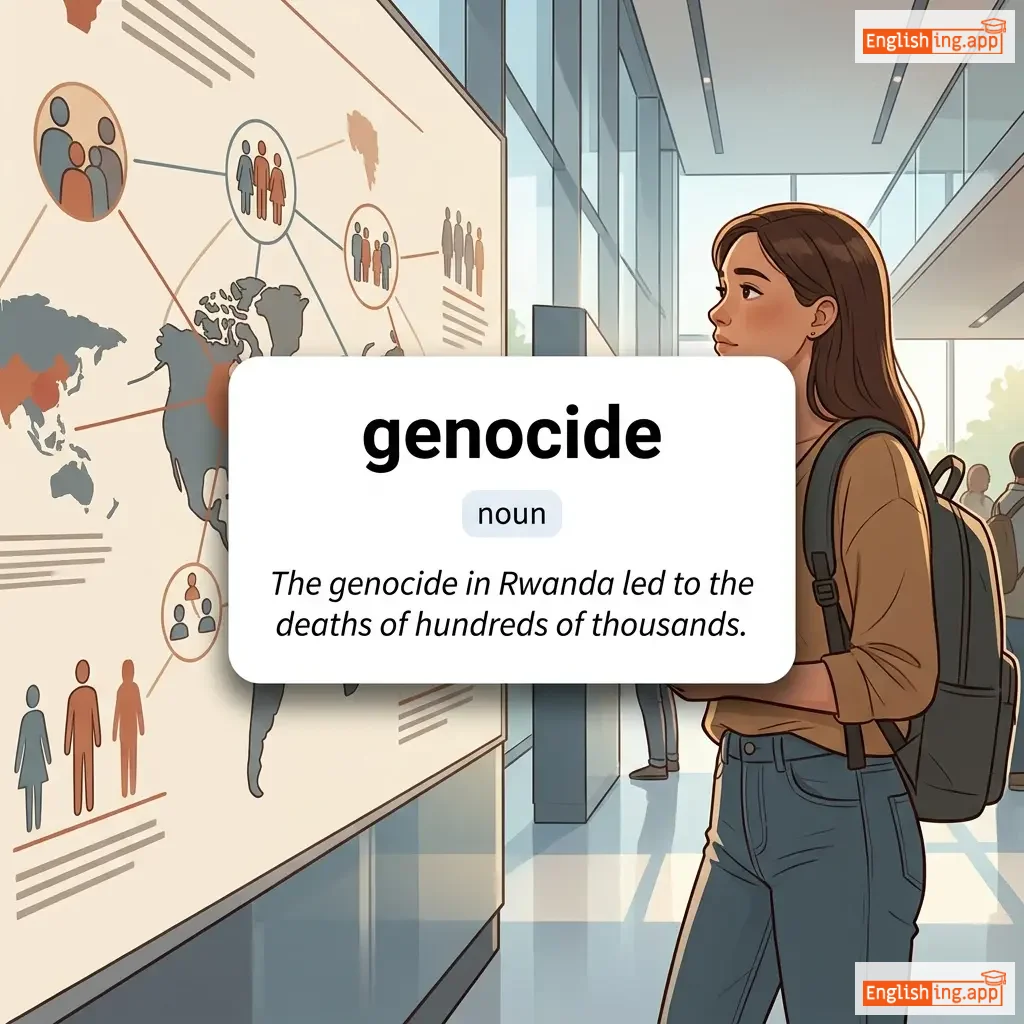
/ˈdʒen.ə.saɪd/
noun
(ジェノサイド)
••••••
|
|
ジェノサイド
jenosaido
••••••
|
the deliberate killing of a large group of people, especially those of a particular ethnic group or nation
••••••
|
The international court condemned the systematic genocide committed during the war. |
国際裁判所は戦争中に行われた体系的なジェノサイドを非難しました。
Kokusai saiban-sho wa sensō-chū ni okonawareta taikei-teki na jenosaido o hinan shimashita.
••••••
|
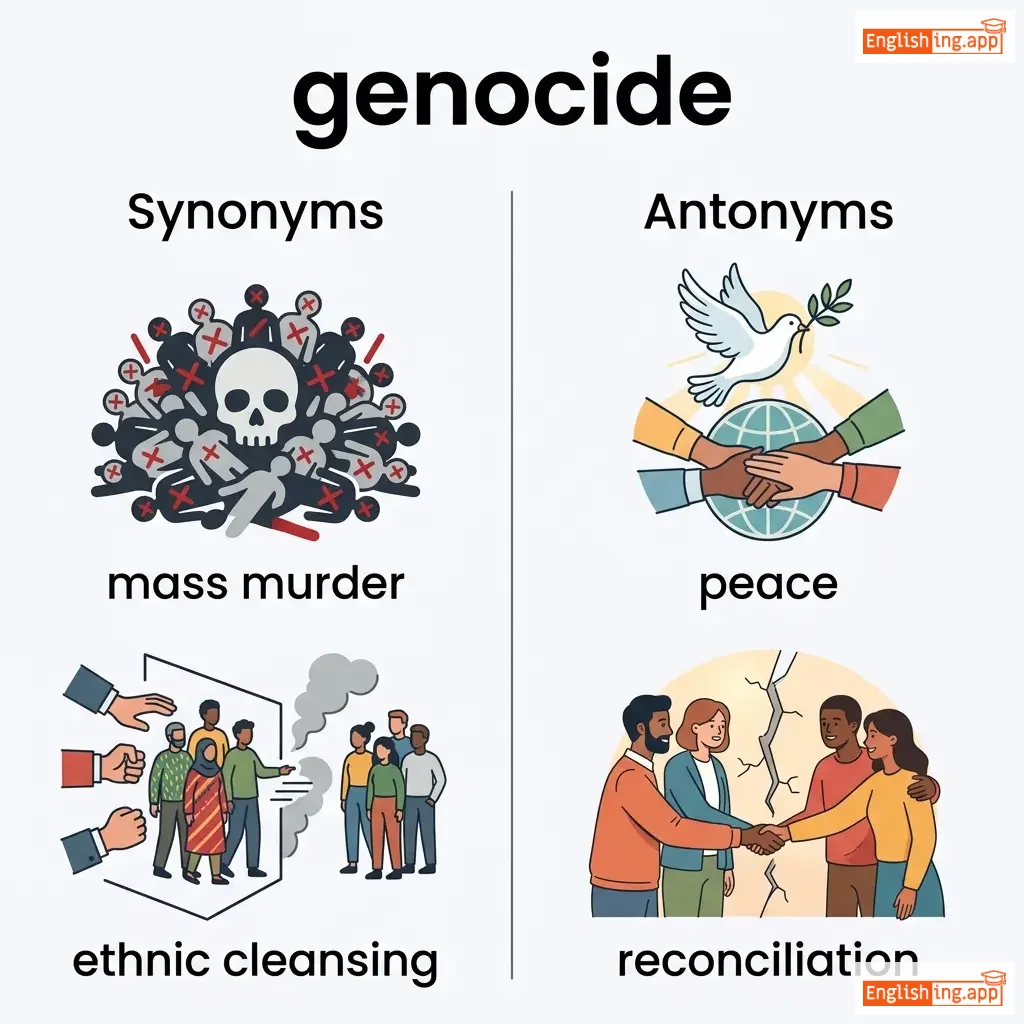
mass murder, ethnic cleansing, extermination, massacre
••••••
|
protection, preservation, salvation, rescue
••••••
|
prevent genocide, genocide prevention, ethnic genocide
••••••
|
ジェノサイドとは民族を根絶すること、覚えやすいジェノサイド。
••••••
|
|
#518
👀
|
/ɡlæns/
noun
(グランス)
••••••
|
|
一瞥; 速い視線
ichibetsu; hayai shisen
••••••
|
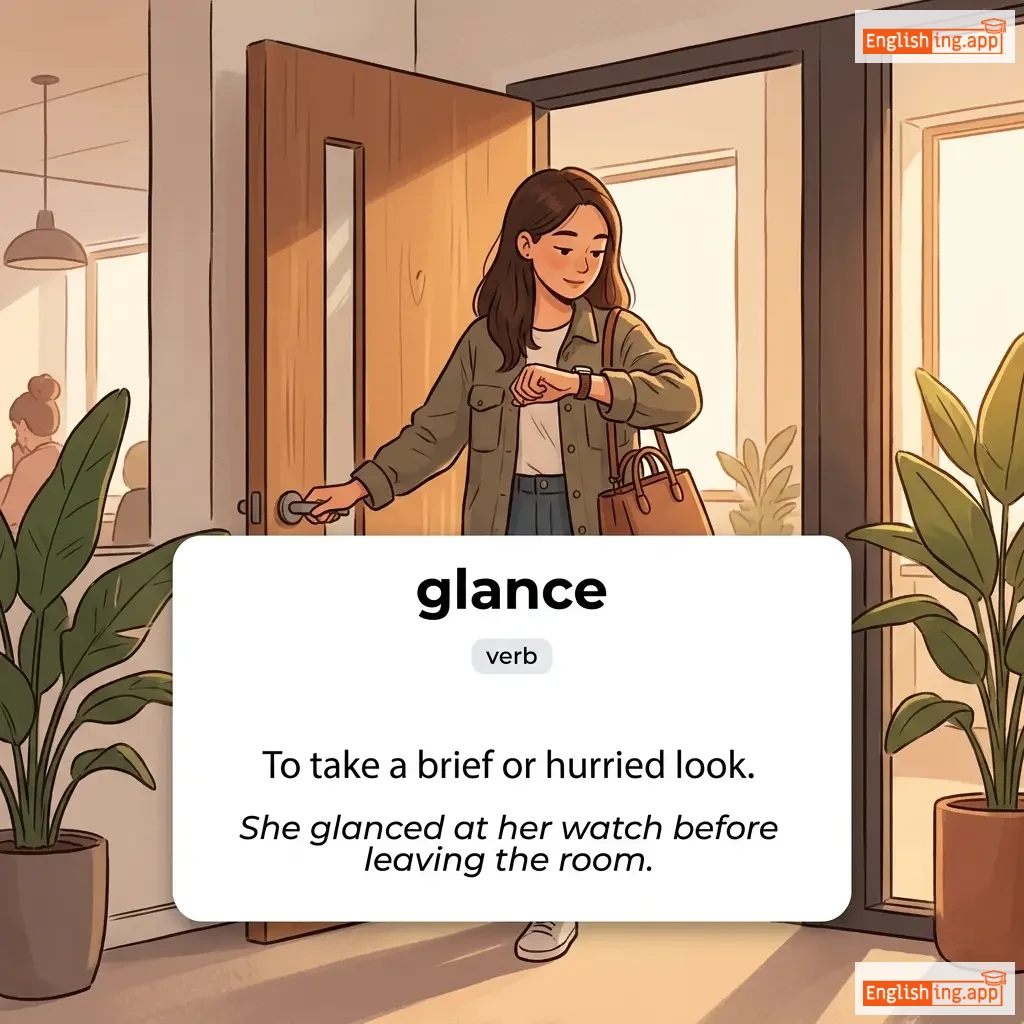
a quick look; a brief or hurried look
••••••
|
She took a quick glance at her watch to check the time before the meeting.
彼女は会議の前に時間を確認するために時計を素早く一瞥した。
••••••
|
彼女は会議の前に時間を確認するために時計を素早く一瞥した。
Kanojo wa kaigi no mae ni jikan o kakunin suru tame ni tokei o subayaku ichibetsu shita.
••••••
|
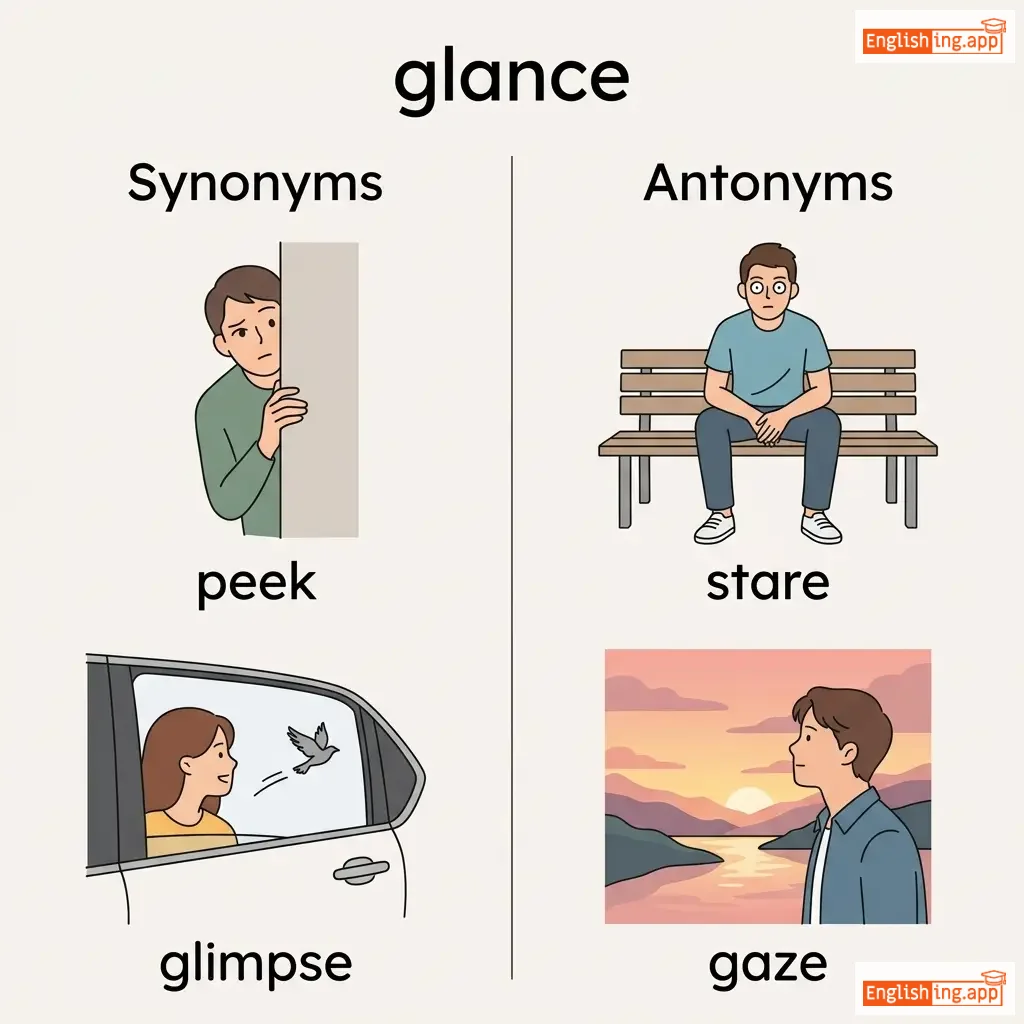
look, peek, glimpse, gaze
••••••
|
stare, scrutiny, examination, focus
••••••
|
quick glance, stolen glance, glance around
••••••
|
Glance – 会議前に時計を素早く一瞥する。
••••••
|
|
#519
🎩
|
/dʒenˈtɪl.ə.ti/
noun
(ジェンティリティ)
••••••
|
- •••••• |
上品さ; 洗練
jouhinsa, senren
••••••
|
social superiority as demonstrated by polite and refined manners; the quality of being well-mannered and refined
••••••
|
Her natural gentility and grace made her popular among high society circles. |
彼女の自然な上品さと優雅さは、彼女を高社会層の中で人気者にしました。
Kanojo no shizen na jouhinsa to yuugasa wa, kanojo o takai shakaizou no naka de ninkimono ni shimashita.
••••••
|
refinement, elegance, politeness, sophistication
••••••
|
rudeness, vulgarity, coarseness, boorishness
••••••
|
natural gentility, refined gentility, old-fashioned gentility
••••••
|
No •••••• |
|
#520
😠
|
/ɡler/
noun
(グレア)
••••••
|
- •••••• |
怒りのこもった凝視; 強くてまぶしい光
ikari no komotta gyōshi; tsuyokute mabushī hikari
••••••
|
a fierce or angry stare; a strong and dazzling light
••••••
|
The teacher's stern glare silenced the noisy students immediately.
先生の厳しい視線は、すぐに騒がしい学生たちを静めました。
••••••
|
先生の厳しい視線は、すぐに騒がしい学生たちを静めました。
sensei no kibishī shisen wa, sugu ni sawagashī gakuseitachi o shizumemashita.
••••••
|
stare, scowl, brightness, dazzle
••••••
|
smile, gentleness, dimness, softness
••••••
|
angry glare, sun glare, glare of lights
••••••
|
グレア、怒った目で強く光る!
••••••
|
Vocabulary Quiz
Test your vocabulary by matching words with their translations or meanings.
Login to take the quiz
Comments (0)
Share your thoughts and join the discussion.
Join the discussion by logging in
Login to CommentNo comments yet
Be the first to share your thoughts!