

翻訳
過去
過去分詞
三人称単数
動名詞
意味
例文
例文の翻訳
同義語
対義語
コロケーション
ニーモニック





Swipe left or right, or use the buttons. Tap image to zoom.
例文の翻訳
単語
Lesson 21Lesson 21 - マスクトグル
|
絵文字
|
単語 | Images | 翻訳 | 意味 | 例文 | 例文の翻訳 | 同義語 | 対義語 | コロケーション | ニーモニック |
|---|---|---|---|---|---|---|---|---|---|---|
|
#401
🏝️
|
/ˈek.saɪl/
noun
(エクザイル)
••••••
|
- •••••• |
亡命
bōmei
••••••
|
the state of being barred from one's native country; enforced removal from one's homeland
••••••
|
The political leader was forced into exile after the military coup.
軍事クーデターの後、政治的リーダーは亡命を強制された。
••••••
|
軍事クーデターの後、政治的リーダーは亡命を強制された。
Gunji kūdetā no ato, seijiteki rīdā wa bōmei o kyōsei sareta.
••••••
|
banishment, deportation, expulsion, ostracism
••••••
|
return, homecoming, welcome, inclusion
••••••
|
forced exile, political exile, exile from homeland
••••••
|
Visualize a political leader being forced into exile after a coup.
••••••
|
|
#402
😊
|
/ɪkˈspreʃ.ən/
noun
(エクスプレッション)
••••••
|
- •••••• |
表現; 発表;
hyougen, happyou
••••••
|
the act of making thoughts or feelings known; a look on someone's face
••••••
|
The artist's painting was a beautiful expression of her inner emotions.
アーティストの絵は彼女の内面的な感情の美しい表現でした。
••••••
|
アーティストの絵は彼女の内面的な感情の美しい表現でした。
Aatisuto no e wa kanojo no naimen-teki na kanjou no utsukushii hyougen deshita.
••••••
|
manifestation, display, demonstration, articulation
••••••
|
suppression, concealment, hiding, repression
••••••
|
facial expression, creative expression, freedom of expression
••••••
|
Japanese '表現' (hyougen) means 'expression', and it's used for showing feelings.
••••••
|
|
#403
🌍
|
/ɪɡˈzɪs.təns/
noun
(egzisutensu)
••••••
|
- •••••• |
存在
sonzai
••••••
|
the fact or state of living or having objective reality; being alive
••••••
|
Scientists are searching for evidence of life's existence on other planets. |
科学者たちは他の惑星で生命の存在の証拠を探しています。
Kagakusha-tachi wa hoka no wakusei de seimei no sonzai no shōko o sagashiteimasu.
••••••
|
being, presence, reality, actuality
••••••
|
nonexistence, absence, death, void
••••••
|
human existence, prove existence, existence of life
••••••
|
Existenceの意味は生命の存在、科学者が証拠を探しているように。
••••••
|
|
#404
🔌
|
/ɪkˈsten.ʃən/
noun
(エクステンション)
••••••
|
- •••••• |
延長; 拡張
enchou; kakuchou
••••••
|
the action of extending something; additional time or space
••••••
|
The professor granted an extension for the assignment deadline.
教授は課題の締め切りに対して延長を許可しました。
••••••
|
教授は課題の締め切りに対して延長を許可しました。
Kyouju wa kadai no shimekiri ni taishite enchou wo kyoka shimashita.
••••••
|
expansion, enlargement, prolongation, continuation
••••••
|
reduction, contraction, shortening, curtailment
••••••
|
file extension, deadline extension, extension cord
••••••
|
Extension sounds like '延長' in Japanese, which refers to extending something, like time.
••••••
|
|
#405
📈
|
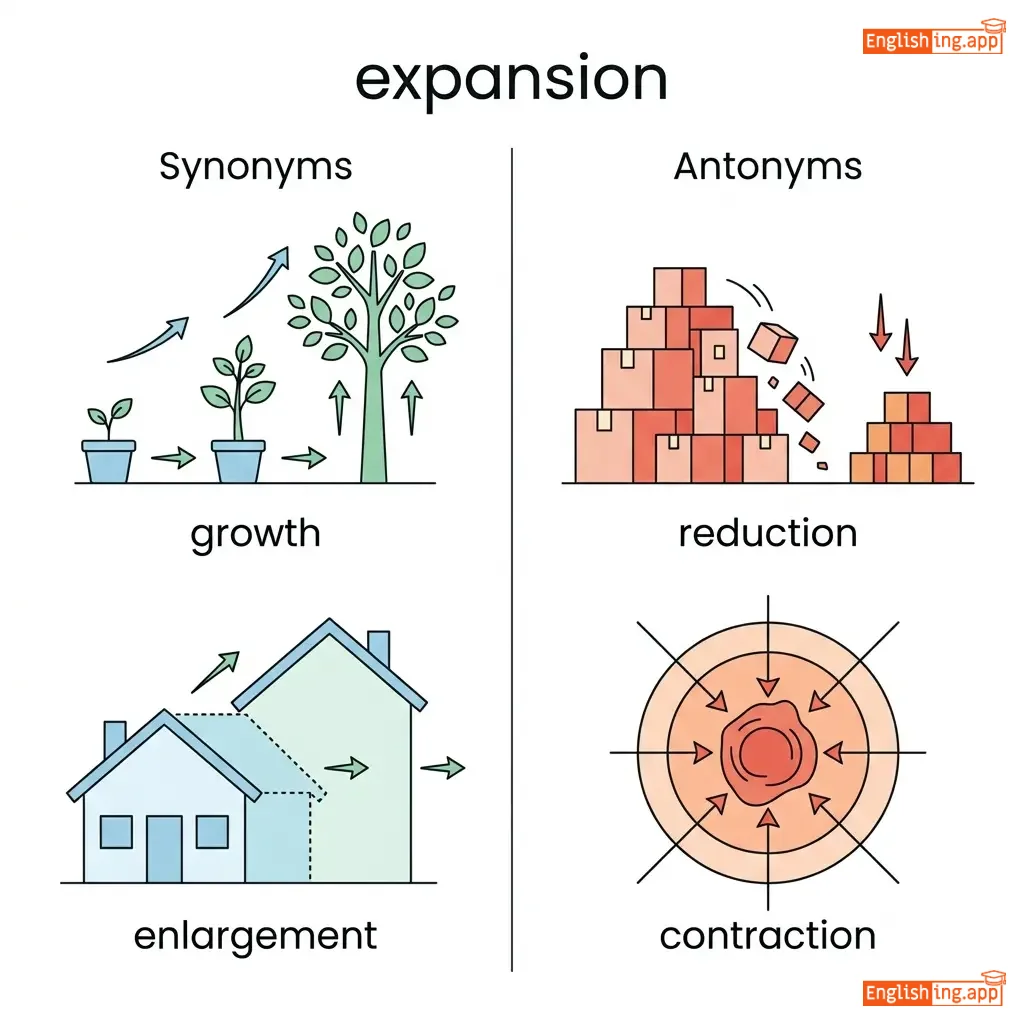
/ɪkˈspæn.ʃən/
noun
(エクスパンション)
••••••
|
|
拡張; 発展;
kakuchō, hatten
••••••
|
the action of becoming larger or more extensive; growth in size or scope
••••••
|
The company announced the expansion of its operations to three new countries.
会社は三つの新しい国に向けて事業拡大を発表しました。
••••••
|
会社は三つの新しい国に向けて事業拡大を発表しました。
Kaisha wa mittsu no atarashī kuni ni mukete jigyō kakudai o happyō shimashita.
••••••
|
growth, enlargement, extension, development
••••••
|
contraction, reduction, shrinkage, decline
••••••
|
business expansion, rapid expansion, expansion plan
••••••
|
Expansion in Japanese sounds like 'expanding'—more reach and growth.
••••••
|
|
#406
📏
|
/ɪkˈstent/
noun
(エクステント)
••••••
|
- •••••• |
範囲; 広がり
han'i, hirogari
••••••
|
the area covered by something; the degree to which something has spread
••••••
|
The extent of the damage caused by the flood was enormous.
洪水によって引き起こされた損害の範囲は非常に広かった。
••••••
|
洪水によって引き起こされた損害の範囲は非常に広かった。
kōsui ni yotte hikiokosareta songai no han'i wa hijō ni hirokatta.
••••••
|
scope, range, degree, magnitude
••••••
|
limitation, restriction, confinement, boundary
••••••
|
to some extent, full extent, great extent
••••••
|
In Japanese, '範囲' (han'i) represents the extent or area of something, just like flood damage.
••••••
|
|
#407
🤞
|
/ˌek.spekˈteɪ.ʃən/
noun
(eksupekutēshon)
••••••
|
- •••••• |
期待; 予想;
kitai, yosou
••••••
|
a strong belief that something will happen or be the case; anticipation
••••••
|
The new teacher exceeded everyone's expectations with her innovative teaching methods.
新しい教師は、その革新的な教授法で皆の期待を超えました。
••••••
|
新しい教師は、その革新的な教授法で皆の期待を超えました。
Atarashī kyōshi wa, sono kakushinteki na kyōjuhō de mina no kitai o koemashita.
••••••
|
anticipation, hope, prospect, assumption
••••••
|
despair, hopelessness, doubt, uncertainty
••••••
|
high expectations, meet expectations, beyond expectations
••••••
|
期待は革新的な方法で超えるものです。
••••••
|
|
#408
💎
|
/ɪkˈstræv.ə.ɡəns/
noun
(エクストラバガンス)
••••••
|
- •••••• |
過度の支出; 無駄遣い
kado no shishutsu; muda zukai
••••••
|
lack of restraint in spending money; excessive expense
••••••
|
The wedding celebration was criticized for its unnecessary extravagance. |
結婚式の祝賀は、その不必要な贅沢で批判されました。
kekkonshiki no shukuga wa, sono fuhitsuyō na zeitaku de hihan saremashita.
••••••
|
lavishness, excess, luxury, wastefulness
••••••
|
frugality, thrift, economy, moderation
••••••
|
financial extravagance, unnecessary extravagance, lifestyle extravagance
••••••
|
エクストラバガンスは無駄遣いを意味し、豪華な結婚式のようです。
••••••
|
|
#409
🏔️
|
/ˌek.spɪˈdɪʃ.ən/
noun
(エクスペディション)
••••••
|
- •••••• |
遠征
ensei
••••••
|
a journey undertaken by a group of people with a particular purpose; organized trip for exploration
••••••
|
The mountain climbing expedition required months of careful planning and preparation. |
山登りの遠征は、数ヶ月の慎重な計画と準備を必要としました。
Yamanobori no ensei wa, suūkagetsu no shinchō na keikaku to junbi o hitsuyō to shimashita.
••••••
|
journey, voyage, mission, exploration
••••••
|
stay, residence, inactivity, rest
••••••
|
scientific expedition, Arctic expedition, expedition team
••••••
|
Expedition = 遠征 = 探索のための組織的な旅行
••••••
|
|
#410
🌡️
|
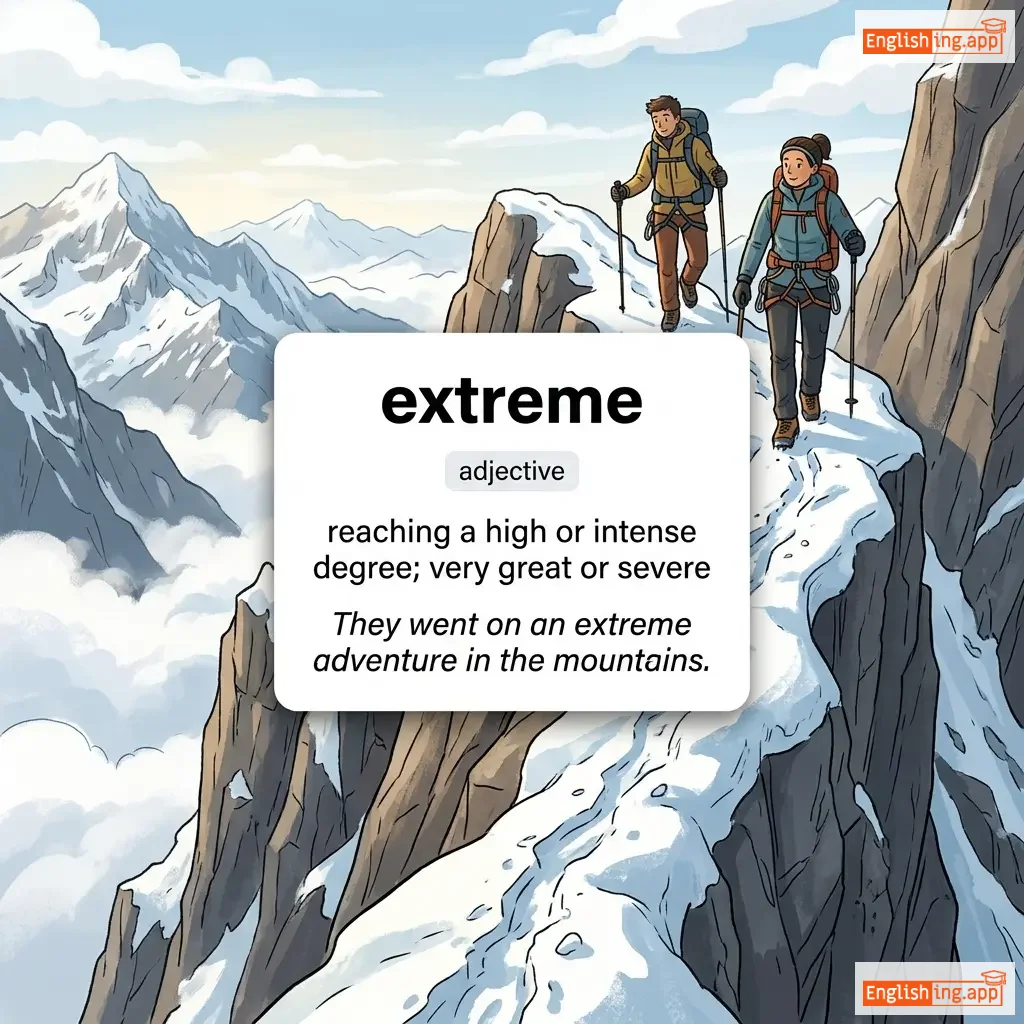
/ɪkˈstriːm/
noun
(ekusutoriimu)
••••••
|
|
極端; 過度
kyokutan, kodo
••••••
|
either of two abstract things that are as different from each other as possible
••••••
|
The weather went from one extreme to another within a single day.
de wéðer wént frôm wân ekusutoriimu tū anōðer wíðin ā síngəl dé.
••••••
|
天気は一日で一つの極端から別の極端へと変わった。
tenki wa ichinichi de hitotsu no kyokutan kara betsu no kyokutan e to kawatta.
••••••
|
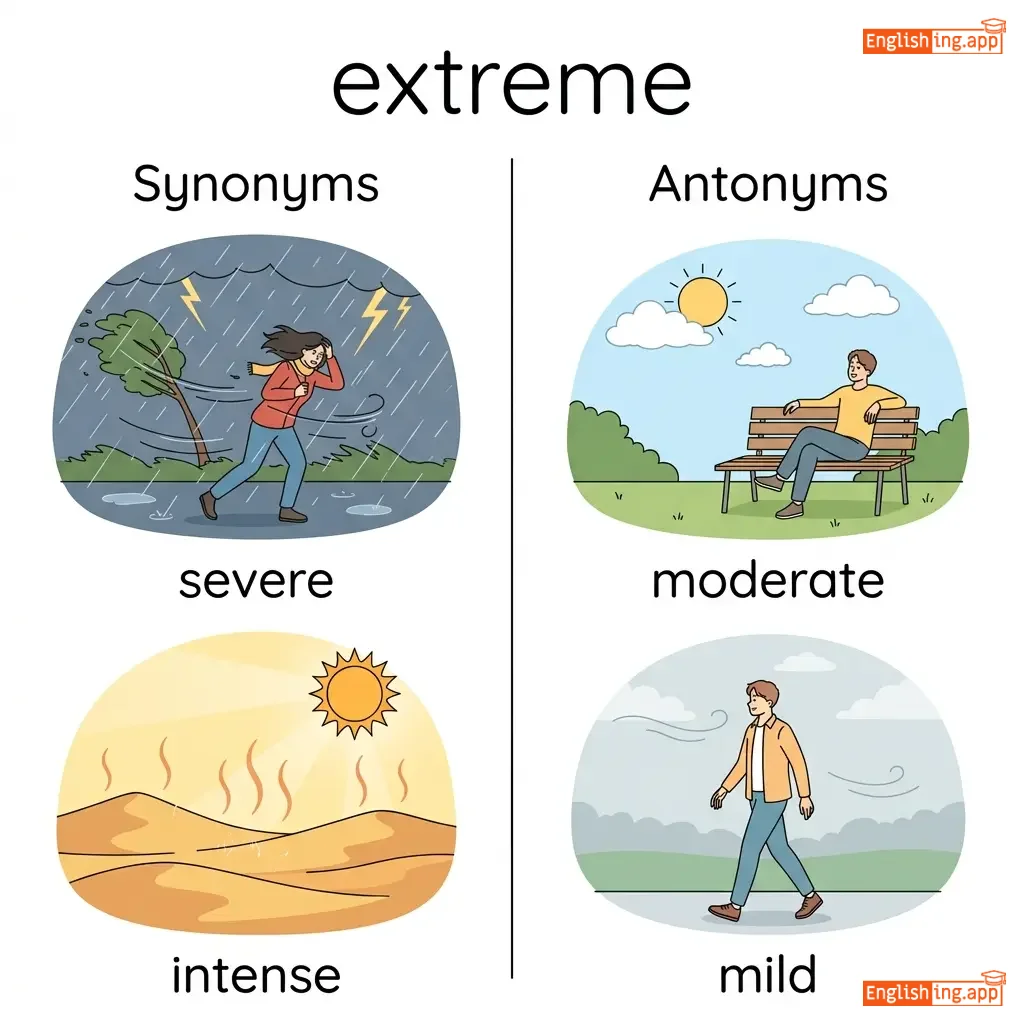
maximum, utmost, limit, boundary
••••••
|
moderate, average, middle, center
••••••
|
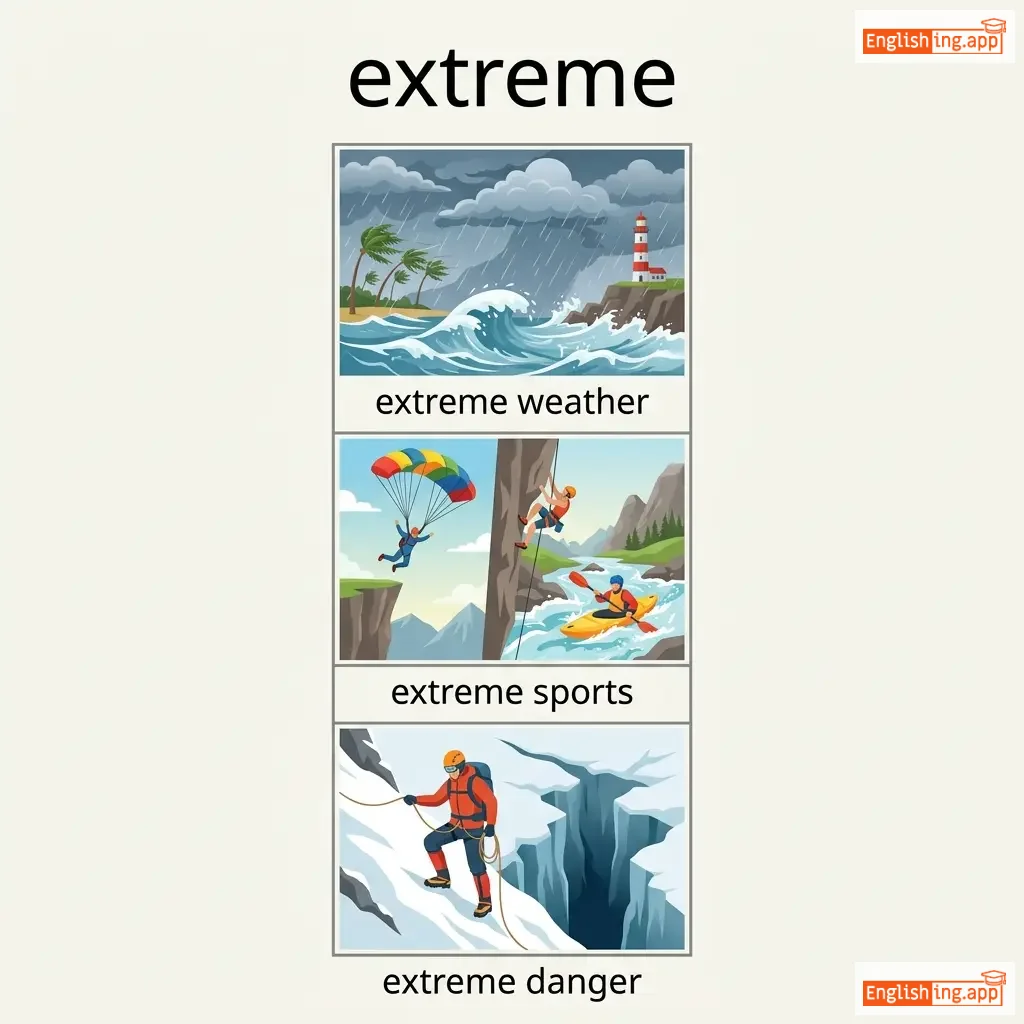
extreme weather, extreme measures, go to extremes
••••••
|
Extremeは、天気が一日で一つの極端から別の極端へと変わることで覚えられます。
••••••
|
|
#411
💸
|
/ɪkˈspen.dɪ.tʃər/
noun
(ekisupendichā)
••••••
|
|
支出; 支出額
shishutsu, shishutsugaku
••••••
|
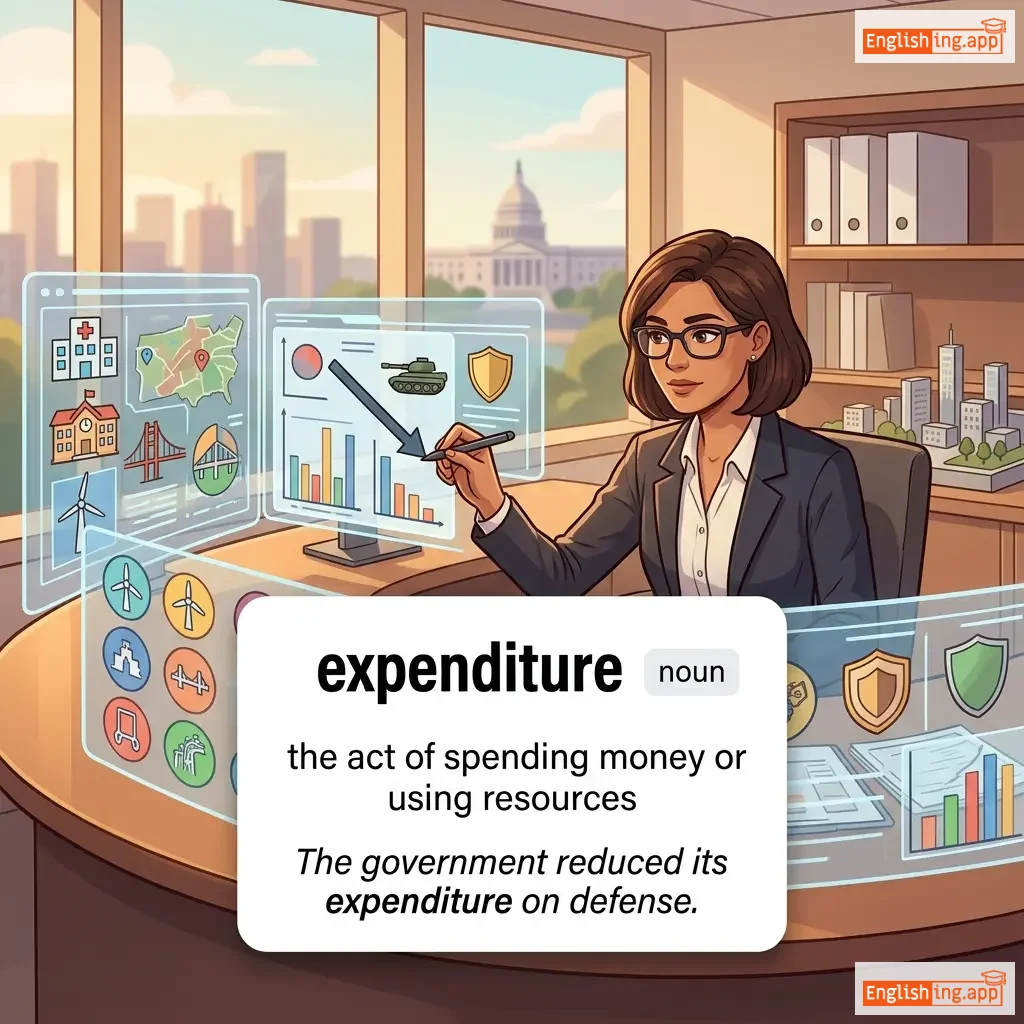
the action of spending funds; an amount of money spent
••••••
|
The government needs to reduce its expenditure on unnecessary projects. |
政府は不必要なプロジェクトへの支出を減らす必要があります。
seifu wa fuhitsuyou na purojekuto e no shishutsu o herasu hitsuyou ga arimasu.
••••••
|
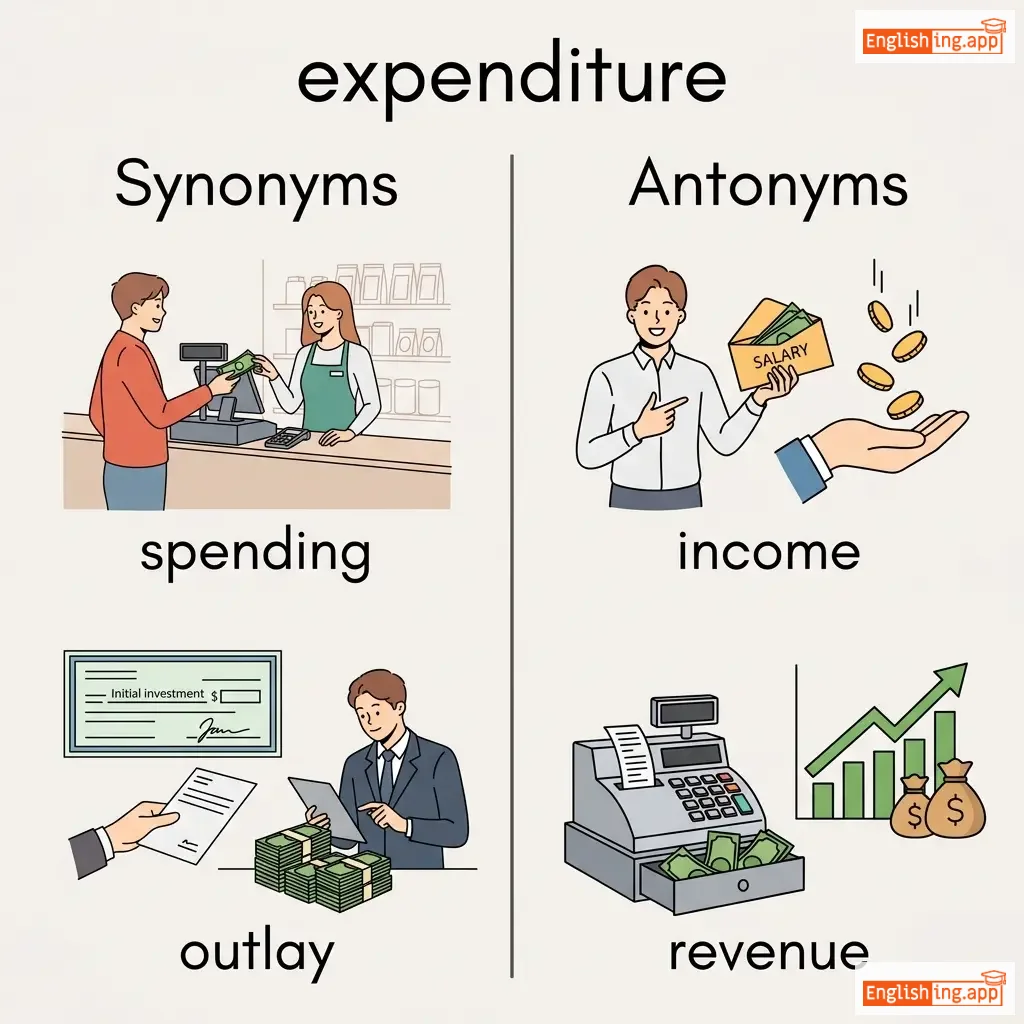
spending, cost, expense, outlay
••••••
|
income, revenue, earnings, savings
••••••
|
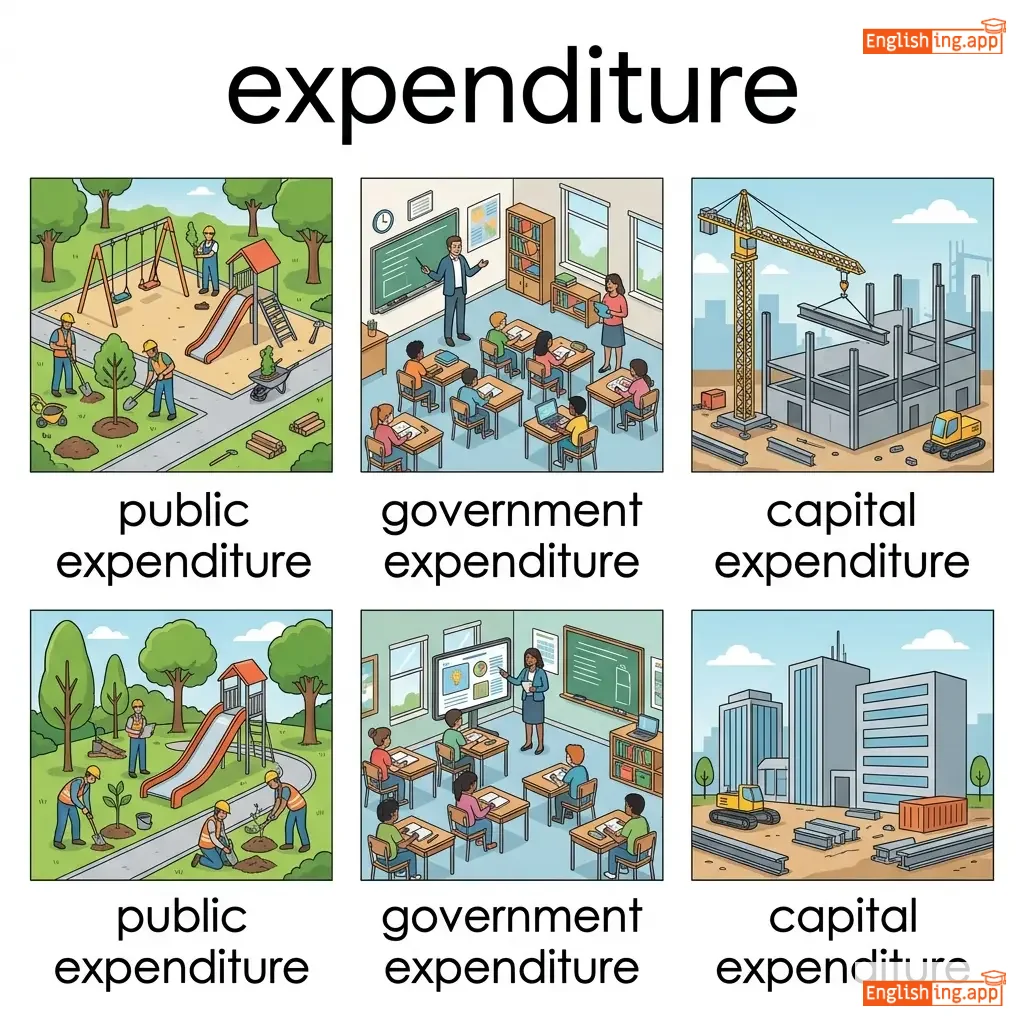
government expenditure, reduce expenditure, capital expenditure
••••••
|
日本語の'支出'は'Expenditure'と同じ意味で、支出されたお金を指します。
••••••
|
|
#412
⚡
|
/ɪkˈstriː.mɪst/
noun
(エクストリミスト)
••••••
|
- •••••• |
過激派
kagekiha
••••••
|
a person who holds extreme political or religious views
••••••
|
The government is taking measures to prevent extremist activities. |
政府は過激派の活動を防ぐための措置を講じています。
seifu wa kagekiha no katsudō o fuseru tame no sochi o kōjiteimasu.
••••••
|
radical, fanatic, militant, fundamentalist
••••••
|
moderate, centrist, liberal, tolerant
••••••
|
political extremist, religious extremist, extremist group
••••••
|
過激派は常に極端な行動を選びます。
••••••
|
|
#413
💰
|
/ɪkˈspens/
noun
(ekusu-pensu)
••••••
|
- •••••• |
費用; 支出;
hiyou, shishutsu
••••••
|
the cost required for something; money spent on something
••••••
|
The travel expense for the business trip was covered by the company. |
出張費用は会社が負担しました。
shucchou hiyou wa kaisha ga futan shimashita.
••••••
|
cost, charge, fee, expenditure
••••••
|
income, profit, gain, revenue
••••••
|
travel expense, medical expense, living expense
••••••
|
Expense = 費用, think about the business trip costs paid
••••••
|
|
#414
👁️
|
/ˈaɪ.saɪt/
noun
(アイサイト)
••••••
|
- •••••• |
視力
shiryoku
••••••
|
the ability to see; vision
••••••
|
Regular eye checkups are important for maintaining good eyesight. |
定期的な目の検査は良い視力を維持するために重要です。
Teikitekina me no kensa wa yoi shiryoku o iji suru tame ni juuyou desu.
••••••
|
vision, sight, visual ability, perception
••••••
|
blindness, sightlessness, visual impairment, darkness
••••••
|
poor eyesight, sharp eyesight, eyesight problems
••••••
|
Shiryoku (Japanese) - just like 'sight', both related to vision.
••••••
|
|
#415
🎯
|
/ɪkˈspɪə.ri.əns/
noun
(エクスペリエンス)
••••••
|
- •••••• |
経験
keiken
••••••
|
practical contact with and observation of facts or events; knowledge gained through involvement
••••••
|
Her years of teaching experience made her an excellent mentor for new teachers.
彼女の何年もの教職経験は、新しい教師たちにとって優れたメンターとなりました。
••••••
|
彼女の何年もの教職経験は、新しい教師たちにとって優れたメンターとなりました。
Kanojo no nannen mono kyoushoku keiken wa, atarashī kyōshitachi ni totte yūshū na mentā to narimashita.
••••••
|
knowledge, expertise, skill, background
••••••
|
inexperience, ignorance, naivety, unfamiliarity
••••••
|
work experience, life experience, gain experience
••••••
|
経験は実践を通じて学ぶこと。
••••••
|
|
#416
😒
|
/ˈaɪ.sɔːr/
noun
(ai-sōru)
••••••
|
- •••••• |
目障りなもの; 不快な視覚効果
mezawari na mono; fukai na shikaku kōka
••••••
|
something that is very ugly and unpleasant to look at
••••••
|
The abandoned building has become an eyesore in the neighborhood.
放置されている建物は近所の目障りになっています。
••••••
|
放置された建物は近所の目障りになっています。
Hōchi sareta tatemono wa kinjo no mezawari ni natteimasu.
••••••
|
blight, ugliness, monstrosity, disfigurement
••••••
|
beauty, attraction, sight for sore eyes, ornament
••••••
|
urban eyesore, neighborhood eyesore, become an eyesore
••••••
|
目障りな建物は、目に見える不快な視覚です。
••••••
|
|
#417
💡
|
/ˌek.spləˈneɪ.ʃən/
noun
(ekusupuraneishon)
••••••
|
- •••••• |
説明; 明確化;
setsumei, meikakuka
••••••
|
a statement or account that makes something clear; clarification of meaning
••••••
|
The teacher gave a detailed explanation of the complex mathematical concept.
教師は複雑な数学的概念の詳細な説明を行った。
••••••
|
教師は複雑な数学的概念の詳細な説明を行った。
Kyōshi wa fukuzatsu na sūgakuteki gainen no shōsai na setsumei o okonatta.
••••••
|
clarification, description, interpretation, elucidation
••••••
|
confusion, mystery, ambiguity, obscurity
••••••
|
clear explanation, detailed explanation, provide explanation
••••••
|
説明は複雑なことを理解できるようにする手段です。
••••••
|
|
#418
👁️🗨️
|
/ˈaɪ.wɪt.nəs/
noun
(アイウィットネス)
••••••
|
- •••••• |
目撃者
mokugekisha
••••••
|
a person who has seen something happen and can give evidence about it
••••••
|
The police interviewed several eyewitnesses to the accident. |
警察は事故の目撃者にインタビューを行いました。
Keisatsu wa jiko no mokugekisha ni intabyū wo okonaimashita.
••••••
|
observer, witness, bystander, onlooker
••••••
|
participant, perpetrator, absent person, non-observer
••••••
|
eyewitness account, eyewitness testimony, reliable eyewitness
••••••
|
目撃者は事件を見た人で、その証言は重要です。
••••••
|
|
#419
⛏️
|
/ˌek.splɔɪˈteɪ.ʃən/
noun
(エクスプロイテーション)
••••••
|
|
搾取; 悪用
sakushu, akuyou
••••••
|
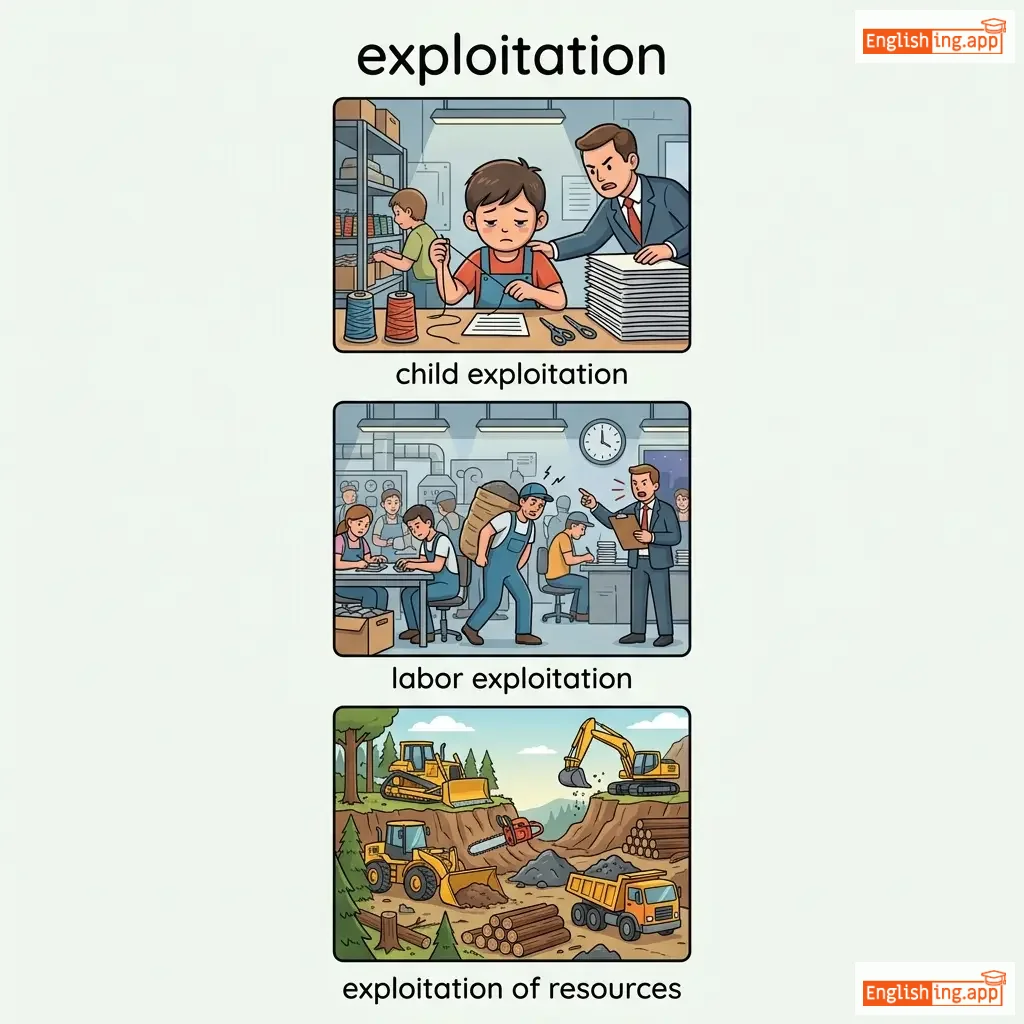
the action of treating someone unfairly in order to benefit from their work; misuse
••••••
|
The company was accused of worker exploitation due to poor working conditions. |
その会社は劣悪な労働条件で労働者の搾取で告発されました。
Sono kaisha wa retsuaku na roudou jouken de roudousha no sakushu de kokuhatsu saremashita.
••••••
|
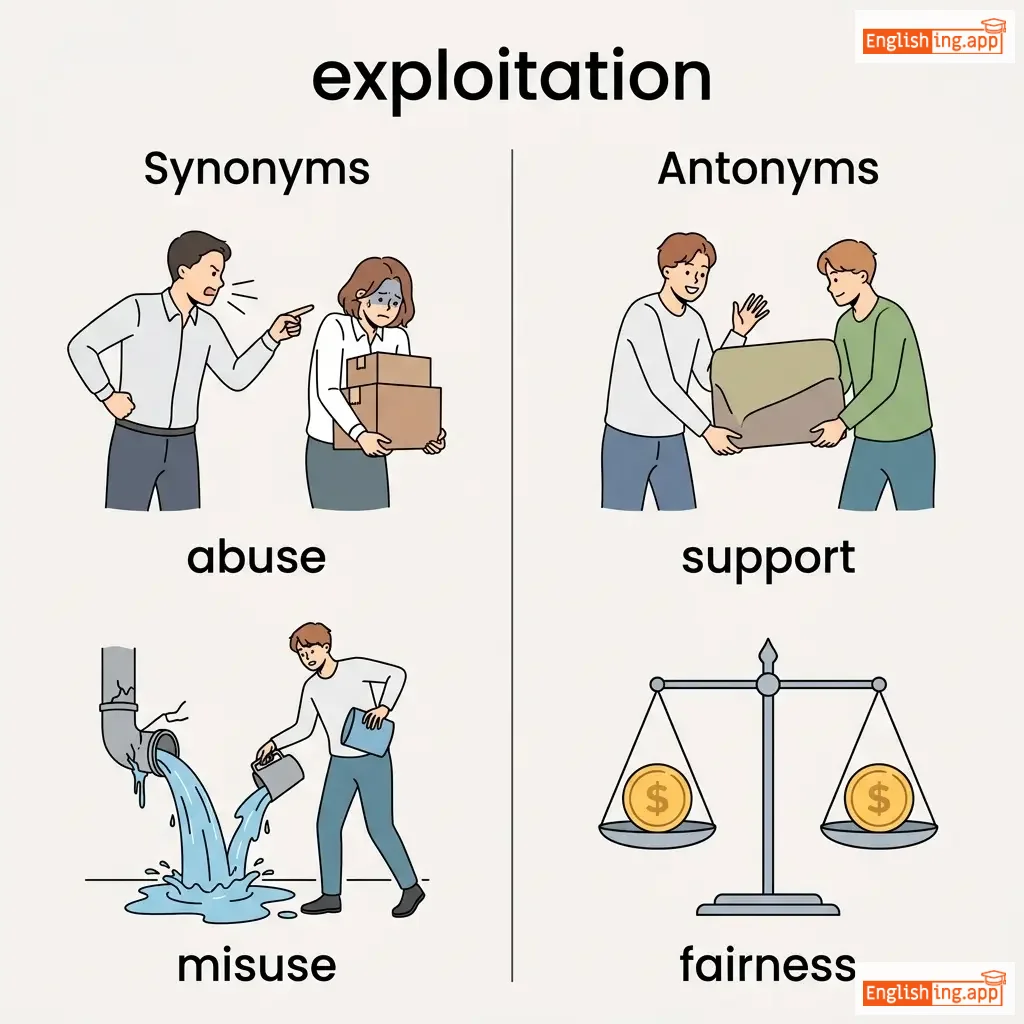
abuse, misuse, oppression, manipulation
••••••
|
protection, fairness, justice, respect
••••••
|
worker exploitation, resource exploitation, prevent exploitation
••••••
|
Exploitation is like 'akuyou', using someone’s labor unfairly.
••••••
|
|
#420
🤥
|
/ˌfæb.rɪˈkeɪ.ʃən/
noun
(ファブリケーション)
••••••
|
|
捏造; 嘘; 虚構
netsuzo; uso; kyoko
••••••
|
something that is made up or invented; a lie or false story
••••••
|
The journalist was fired for publishing fabrications instead of facts. |
記者は事実の代わりに捏造を公表したため解雇されました。
Kisha wa jijitsu no kawari ni netsuzo o kohyo shita tame kaiko saremashita.
••••••
|
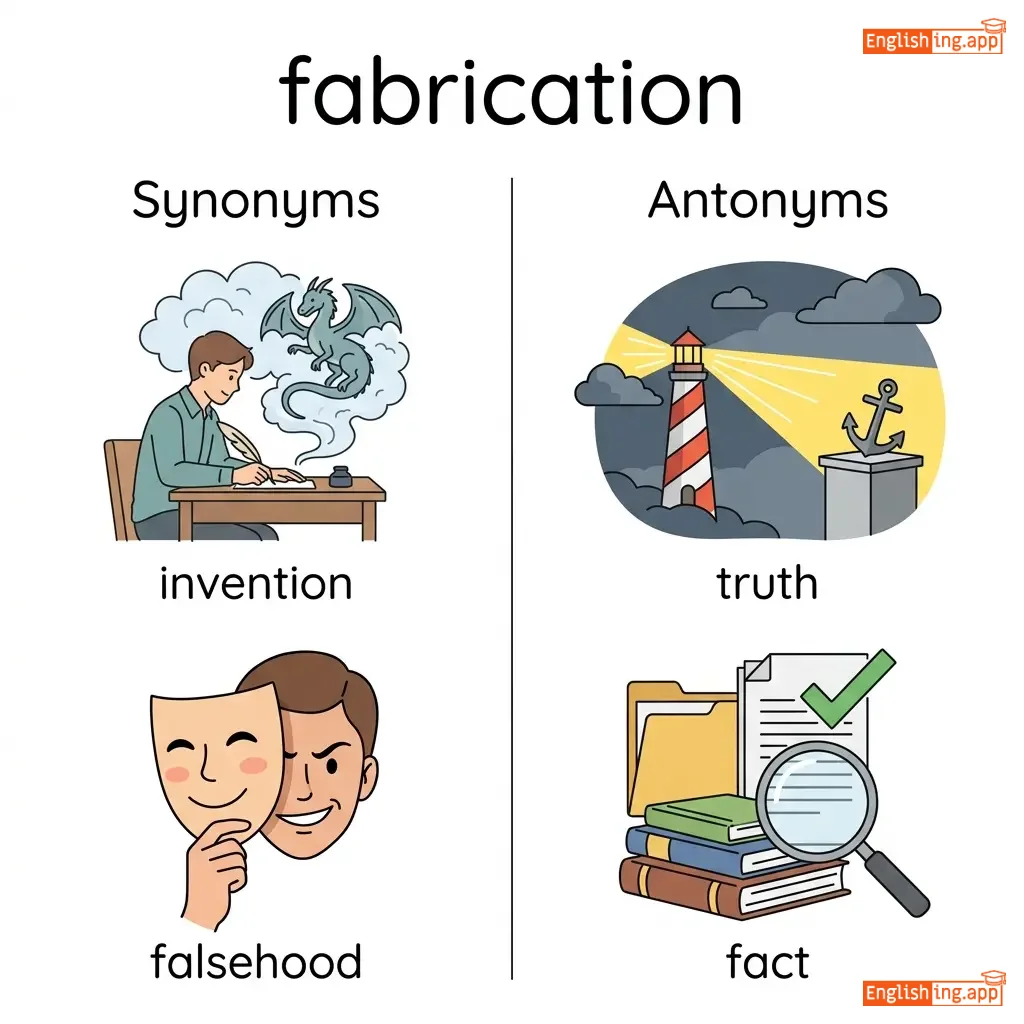
invention, falsehood, lie, fiction
••••••
|
truth, fact, reality, authenticity
••••••
|
pure fabrication, fabrication of evidence, complete fabrication
••••••
|
ファブリケーション = ファクト (fact) + クリエイト (create) = 嘘の創造
••••••
|
Vocabulary Quiz
Test your vocabulary by matching words with their translations or meanings.
Login to take the quiz
Comments (0)
Share your thoughts and join the discussion.
Join the discussion by logging in
Login to CommentNo comments yet
Be the first to share your thoughts!