

翻訳
過去
過去分詞
三人称単数
動名詞
意味
例文
例文の翻訳
同義語
対義語
コロケーション
ニーモニック
Swipe left or right, or use the buttons. Tap image to zoom.
例文の翻訳
単語
Lesson 49Lesson 49 - マスクトグル
|
絵文字
|
単語 | Images | 翻訳 | 意味 | 例文 | 例文の翻訳 | 同義語 | 対義語 | コロケーション | ニーモニック |
|---|---|---|---|---|---|---|---|---|---|---|
|
#961
😤
|
/ˈɑb.stɪ.nə.si/
noun
(オブスティナシー)
••••••
|
|
頑固さ
obusutinashii
••••••
|
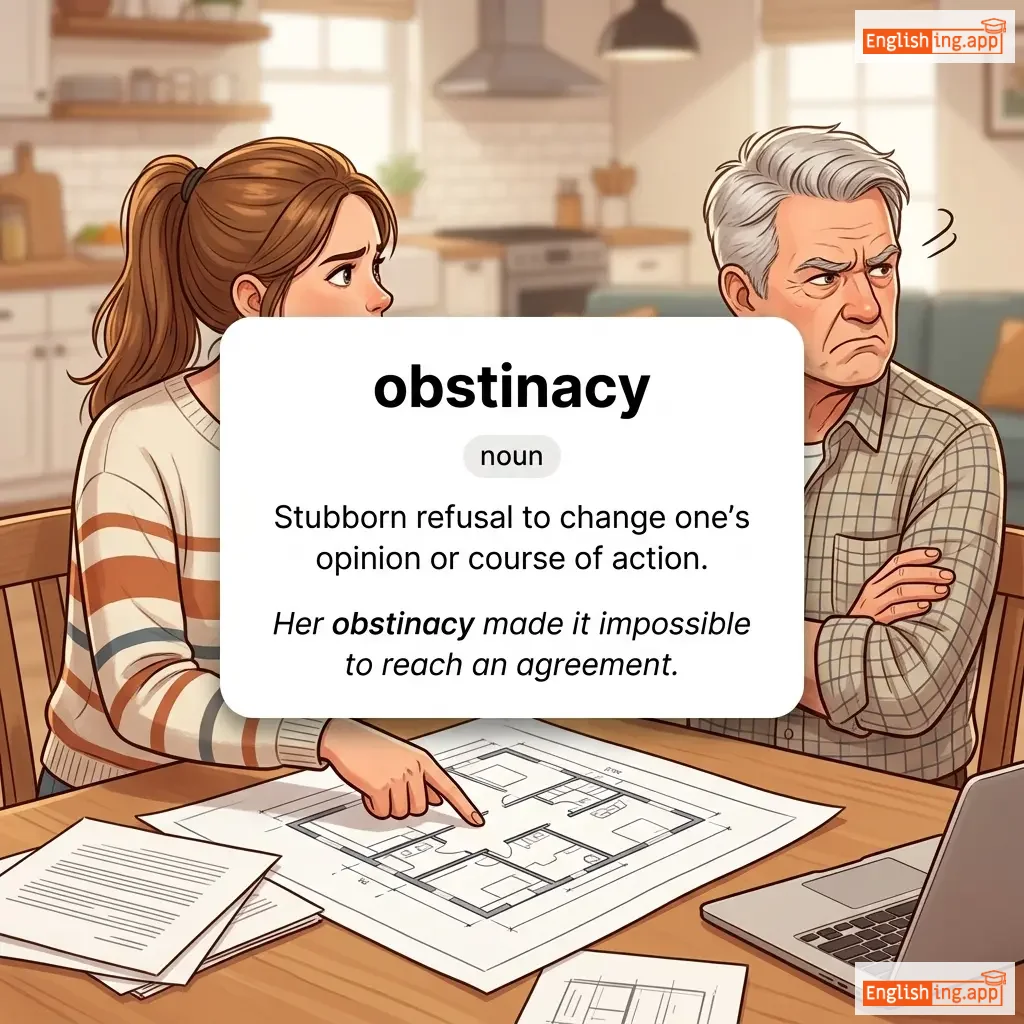
stubbornness; refusal to change one's opinion or course of action
••••••
|
His obstinacy prevented him from accepting help.
ヒズ オブスティナシー プリベンテッド ヒム フロム アクセプティング ヘルプ。
••••••
|
彼の頑固さのせいで、彼は助けを受け入れることができなかった。
Kare no gankosa no sei de, kare wa tasuke o ukeireru koto ga dekinakatta.
••••••
|
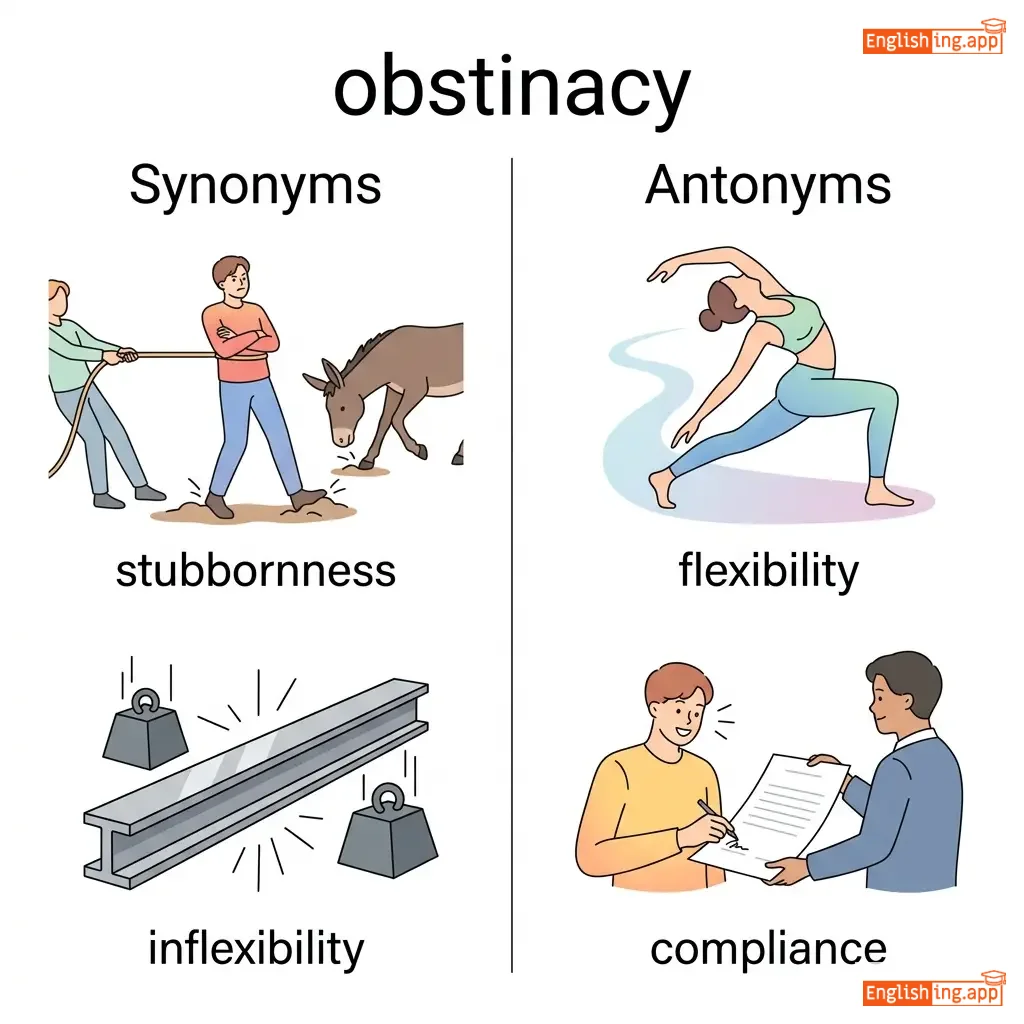
stubbornness, persistence, determination, tenacity
••••••
|
flexibility, adaptability, compliance, cooperation
••••••
|
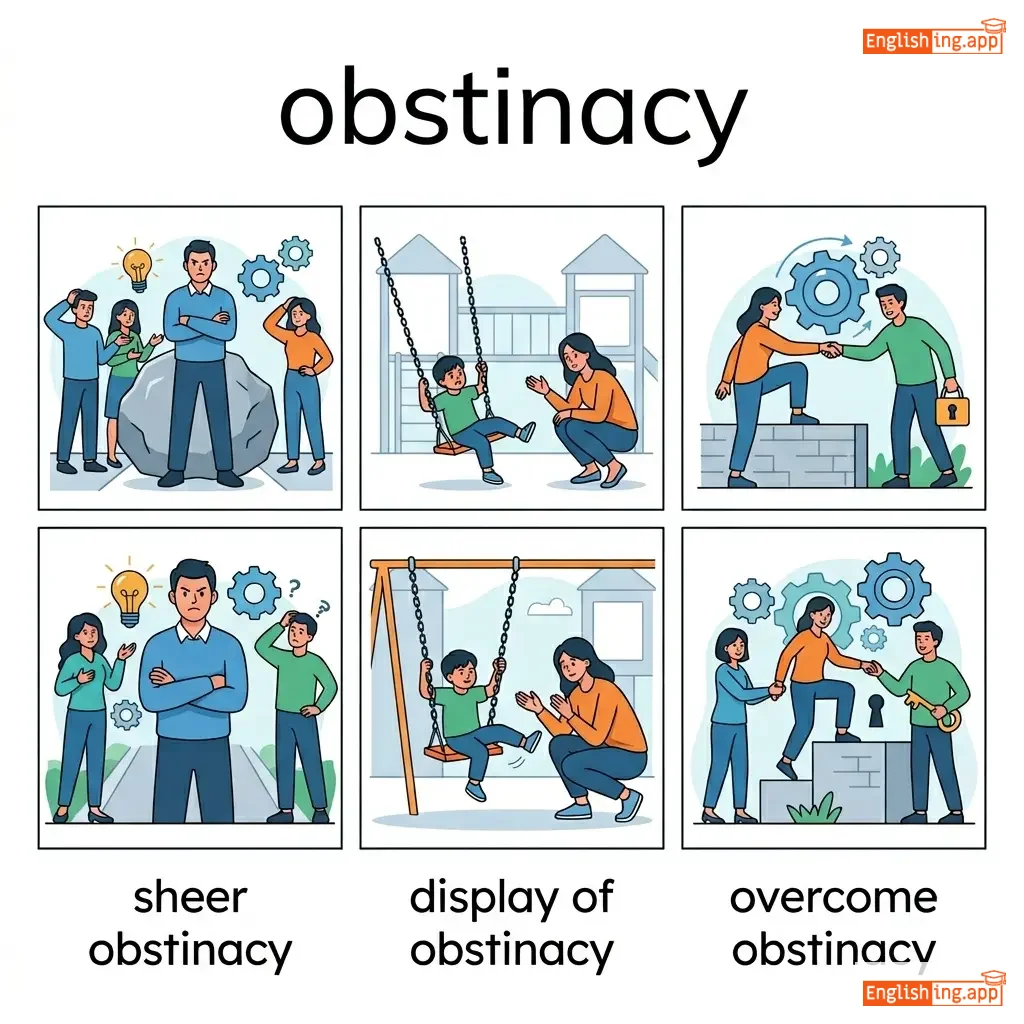
show obstinacy, overcome obstinacy, stubborn obstinacy
••••••
|
Obstinacy mnemonic: Obu + stina + shii, picture がんこ (ganko) wearing a sign that says NO CHANGE
••••••
|
|
#962
❌
|
/oʊˈmɪʃ.ən/
noun
(オミッション)
••••••
|
- •••••• |
省略; 除外
shōryaku; shugai
••••••
|
the action of excluding or leaving out someone or something; a failure to include
••••••
|
The omission of his name from the list was intentional. |
リストから彼の名前を省略することは意図的でした。
Risuto kara kare no namae o shōryaku suru koto wa itotekideshita.
••••••
|
exclusion, neglect, oversight, absence
••••••
|
inclusion, addition, presence, mention
••••••
|
glaring omission, notable omission, omission from list
••••••
|
省略とは意図的に何かを抜かすこと!
••••••
|
|
#963
🎉
|
/əˈkeɪ.ʒən/
noun
(okēshon)
••••••
|
- •••••• |
機会; 特別な出来事
kikai; tokubetsuna dekigoto
••••••
|
a particular time or instance of an event; a special celebration
••••••
|
Their wedding was a joyous occasion. |
彼らの結婚式は喜ばしい機会でした。
karera no kekkonshiki wa yorokobashii kikai deshita.
••••••
|
event, opportunity, instance, celebration
••••••
|
routine, ordinary time, regular day
••••••
|
special occasion, formal occasion, on occasion
••••••
|
機会は結婚式のような特別な瞬間です!
••••••
|
|
#964
🏁
|
/ˈɑn.set/
noun
(オンセット)
••••••
|
- •••••• |
開始; 始まり
kaishi; hajimari
••••••
|
the beginning or early stages of something; the start of a medical condition
••••••
|
The onset of winter brought heavy snowfall. |
冬の開始は大雪をもたらしました。
Fuyu no kaishi wa ooyuki o motarashimashita.
••••••
|
beginning, start, commencement, outbreak
••••••
|
end, conclusion, termination, finish
••••••
|
sudden onset, onset of disease, early onset
••••••
|
Onsetは何かの始まり、冬の始まりのように。
••••••
|
|
#965
💼
|
/ˌɑk.jəˈpeɪ.ʃən/
noun
(オキュペーション)
••••••
|
- •••••• |
職業; 仕事; 占領
shokugyo; shigoto; senryo
••••••
|
a job or profession; the action of taking control of a place
••••••
|
Teaching is her chosen occupation. |
教えることは彼女の選んだ職業です。
Oshieru koto wa kanojo no eranda shokugyo desu.
••••••
|
profession, job, career, work
••••••
|
unemployment, leisure, vacation, freedom
••••••
|
full-time occupation, main occupation, military occupation
••••••
|
職業を選ぶことで幸福を見つけよう
••••••
|
|
#966
💭
|
/əˈpɪn.jən/
noun
(オピニオン)
••••••
|
- •••••• |
意見
iken
••••••
|
a view or judgment formed about something; a belief or assessment based on grounds short of proof
••••••
|
In my opinion, this is the best solution.
私の意見では、これは最良の解決策です。
••••••
|
私の意見では、これは最良の解決策です。
watashi no iken de wa, kore wa sairyō no kaiketsusaku desu.
••••••
|
view, belief, judgment, perspective
••••••
|
fact, certainty, proof, evidence
••••••
|
personal opinion, public opinion, expert opinion
••••••
|
Imagine explaining your 'iken' (opinion) in a Japanese meeting!
••••••
|
|
#967
⚡
|
/əˈkɜr.əns/
noun
(okurensu)
••••••
|
- •••••• |
出来事
dekigoto
••••••
|
an instance or event of something happening; the fact of occurring
••••••
|
The occurrence of earthquakes is common in this region. |
この地域では地震の出来事が一般的です。
Kono chiiki dewa jishin no dekigoto ga ippanteki desu.
••••••
|
event, incident, happening, instance
••••••
|
absence, non-occurrence, prevention
••••••
|
rare occurrence, frequent occurrence, natural occurrence
••••••
|
出来事 (dekigoto) = occurrence
••••••
|
|
#968
⚔️
|
/əˈpoʊ.nənt/
noun
(オポーネント)
••••••
|
- •••••• |
対戦相手; ライバル
taisensōte; raibaru
••••••
|
a person who disagrees with or resists a proposal or practice; someone who competes against another
••••••
|
The chess player defeated his strongest opponent. |
チェスのプレーヤーは最強の対戦相手を倒した。
Chesu no purēyā wa saikyō no taisensōte o taoshita.
••••••
|
adversary, rival, competitor, enemy
••••••
|
ally, supporter, friend, partner
••••••
|
political opponent, strong opponent, defeat opponent
••••••
|
対戦相手は競争する相手です。
••••••
|
|
#969
🌊
|
/ˈoʊ.ʃən/
noun
(オーシャン)
••••••
|
|
海洋
kaiyō
••••••
|
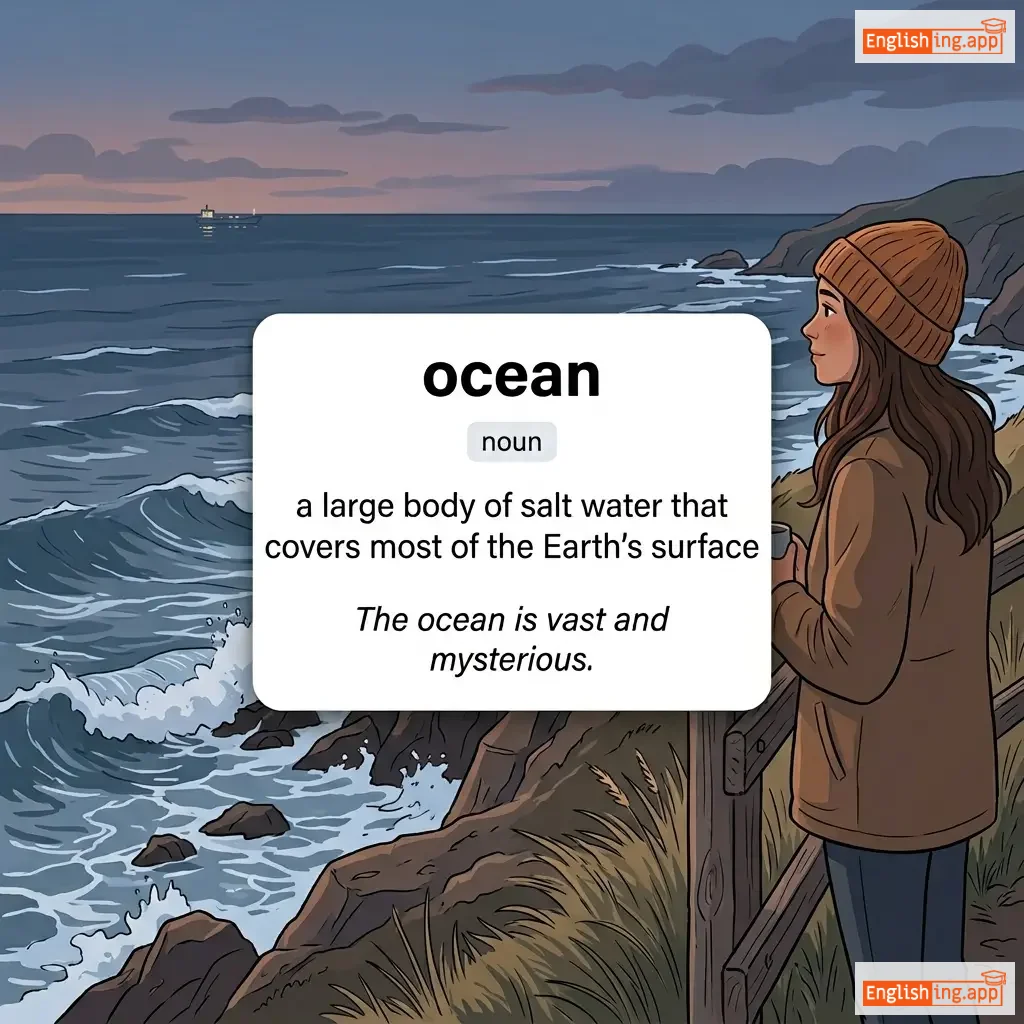
a very large expanse of sea; a large quantity of something
••••••
|
The Pacific Ocean is the largest ocean in the world.
太平洋は世界で最も大きな海洋です。
••••••
|
太平洋は世界で最も大きな海洋です。
Taiheiyō wa sekai de mottomo ōkina kaiyō desu.
••••••
|
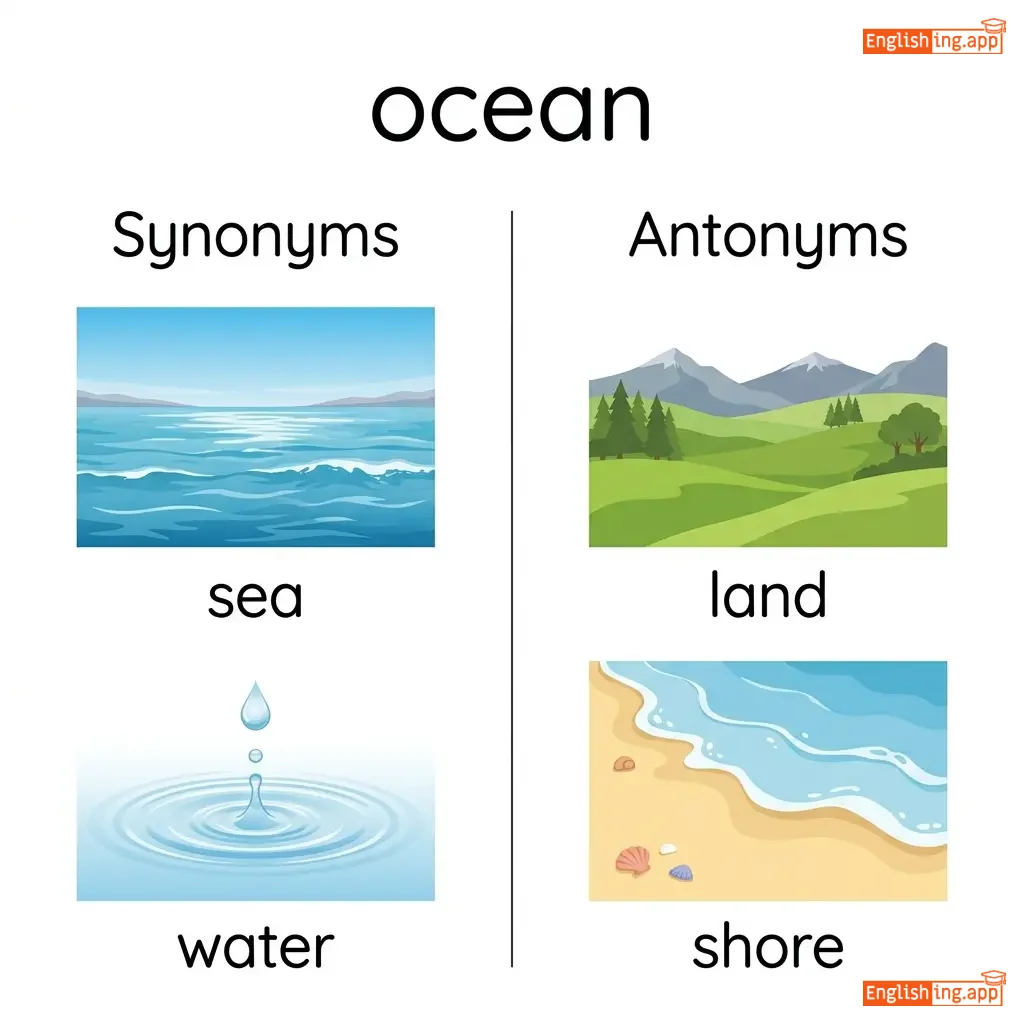
sea, marine, waters, deep
••••••
|
land, continent, desert, mountain
••••••
|
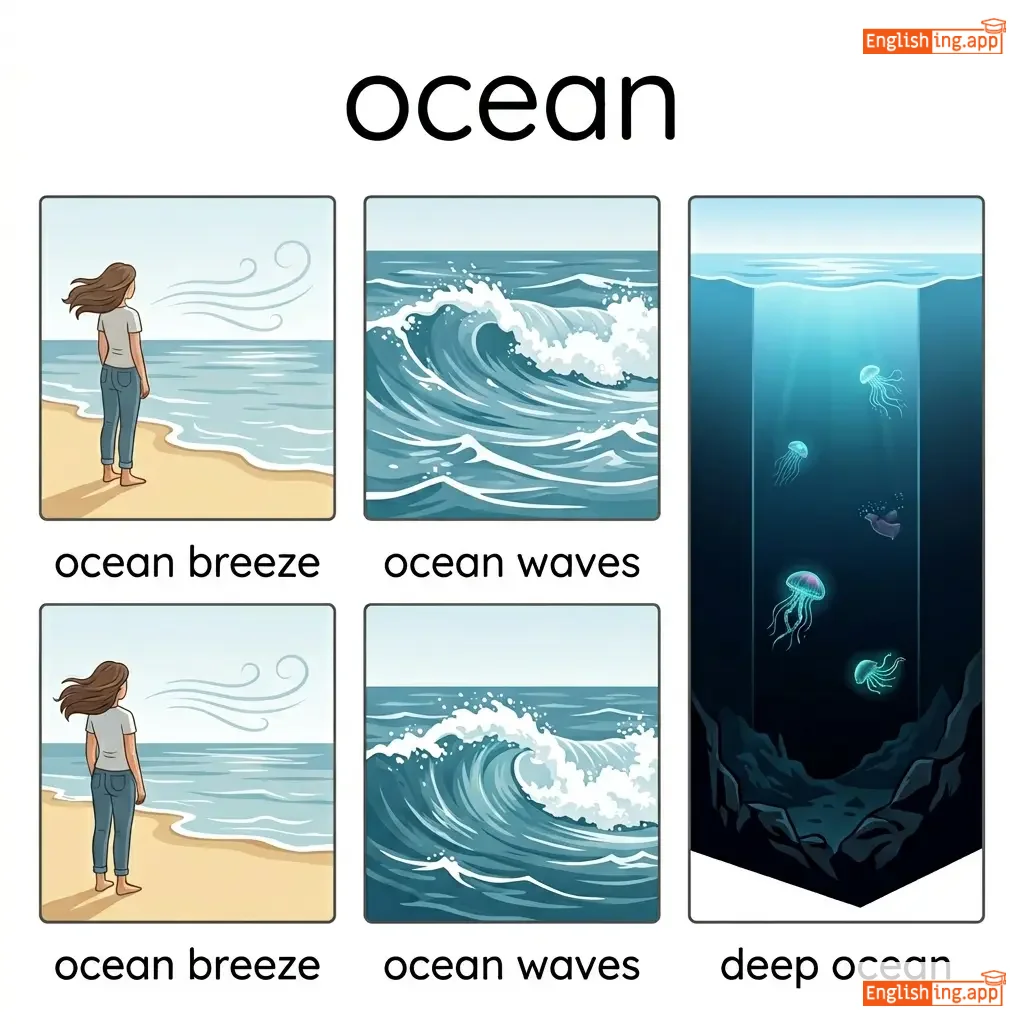
deep ocean, ocean floor, cross ocean
••••••
|
海洋の広がりは果てしない。
••••••
|
|
#970
⛓️
|
/əˈpreʃ.ən/
noun
(オプレッション)
••••••
|
- •••••• |
抑圧; 虐待; 圧政;
yokatsu; gyakutai; assoku;
••••••
|
cruel or unjust treatment or exercise of authority; the state of being subject to harsh treatment
••••••
|
The people fought against political oppression. |
人々は政治的な抑圧に反対して戦った。
Hitobito wa seijiteki na yokatsu ni hantai shite tatakatta.
••••••
|
persecution, tyranny, subjugation, cruelty
••••••
|
freedom, liberation, justice, fairness
••••••
|
political oppression, fight oppression, end oppression
••••••
|
抑圧 = 人々は圧政に反抗する
••••••
|
|
#971
🤔
|
/ˈɑd.ɪ.ti/
noun
(オディティ)
••••••
|
- •••••• |
珍奇な現象
chinki na genshō
••••••
|
something that is strange or unusual; a peculiar trait
••••••
|
His habit of sleeping standing up was considered an oddity.
彼の立って寝る習慣は珍奇な現象と見なされていました。
••••••
|
彼の立って寝る習慣は珍奇な現象と見なされていました。
Kare no tatte neru shūkan wa chinki na genshō to minasa rete imashita.
••••••
|
strangeness, peculiarity, abnormality, quirk
••••••
|
normality, regularity, conventionality, ordinariness
••••••
|
strange oddity, cultural oddity, curious oddity
••••••
|
In Japanese, '珍奇な現象' (chinki na genshō) means 'oddity' — rare and strange.
••••••
|
|
#972
😊
|
/ˈɑp.tə.mɪst/
noun
(オプティミスト)
••••••
|
- •••••• |
楽観主義者
rakkanshugi-sha
••••••
|
a person who tends to be hopeful and confident about the future; someone who sees the good side of things
••••••
|
As an optimist, she always believed things would improve. |
楽観主義者として、彼女は常に物事が改善されると信じていました。
rakkanshugi-sha to shite, kanojo wa jōni monogoto ga kaizen sareru to shinjite imashita.
••••••
|
positive thinker, hopeful person, idealist
••••••
|
pessimist, cynic, negative person
••••••
|
eternal optimist, incurable optimist, natural optimist
••••••
|
楽観主義者はいつも前向きに物事を考えます。
••••••
|
|
#973
👃
|
/ˈoʊ.dər/
noun
(臭い)
••••••
|
- •••••• |
臭い
nikui
••••••
|
a distinctive smell, especially an unpleasant one
••••••
|
The odour of fresh bread filled the kitchen.
新鮮なパンの臭いがキッチンに広がった。
••••••
|
新鮮なパンの臭いがキッチンに広がった。
Shinsen na pan no nikui ga kicchin ni hirogatta.
••••••
|
smell, scent, aroma, fragrance
••••••
|
freshness, scentless, odorless
••••••
|
pleasant odour, strong odour, foul odour
••••••
|
臭い (nikui) in Japanese captures the unpleasant Odour, as in English.
••••••
|
|
#974
🔀
|
/ˈɑp.ʃən/
noun
(オプション)
••••••
|
- •••••• |
オプション
opushon
••••••
|
a thing that is or may be chosen; an alternative course of action
••••••
|
You have the option to work from home or office. |
自宅またはオフィスから仕事をするオプションがあります。
Jitaku mata wa ofisu kara shigoto wo suru opushon ga arimasu.
••••••
|
choice, alternative, possibility, selection
••••••
|
requirement, obligation, necessity, compulsion
••••••
|
have option, best option, viable option
••••••
|
オプションは選択肢、異なる行動の選択肢を提供する。
••••••
|
|
#975
⚠️
|
/əˈfens/
noun
(オフェンス)
••••••
|
- •••••• |
違反; 犯罪
ihan; hanzai
••••••
|
a breach of law or rule; an annoyance or resentment
••••••
|
Stealing is a serious offence punishable by law. |
窃盗は法律で罰せられる重大な違反です。
Settō wa hōritsu de bassareru jūdaina ihan desu.
••••••
|
crime, violation, wrongdoing, transgression
••••••
|
compliance, obedience, lawfulness, virtue
••••••
|
criminal offence, minor offence, commit offence
••••••
|
‘Offence’ in Japanese sounds like ‘ihan’, which is related to legal violation.
••••••
|
|
#976
🔮
|
/ˈɔr.ə.kəl/
noun
(オラクル)
••••••
|
- •••••• |
オラクル
orakuru
••••••
|
a person regarded as a source of wise counsel; in ancient times, a priest or priestess acting as a medium
••••••
|
The ancient Greeks consulted the oracle at Delphi. |
古代ギリシャ人はデルポイのオラクルに相談しました。
kodai girishajin wa derupoi no orakuru ni soudan shimashita
••••••
|
prophet, seer, wise person, advisor
••••••
|
ignorant person, fool, misleader
••••••
|
ancient oracle, consult oracle, oracle of wisdom
••••••
|
オラクルは古代ギリシャ人の知恵の源、デルポイのオラクルのように。
••••••
|
|
#977
👮♂️
|
/əˈfen.dər/
noun
(オフェンダー)
••••••
|
- •••••• |
犯罪者; 法律違反者
hanzai-sha; hōritsu ihan-sha
••••••
|
a person who commits an illegal act; someone who breaks the law
••••••
|
The young offender was sentenced to community service.
その若い犯罪者はコミュニティサービスを命じられました。
••••••
|
その若い犯罪者はコミュニティサービスを命じられました。
Sono wakai hanzai-sha wa komyuniti sābisu o meijiraremashita.
••••••
|
criminal, culprit, lawbreaker, wrongdoer
••••••
|
law-abiding citizen, innocent person, victim
••••••
|
repeat offender, young offender, first-time offender
••••••
|
An '犯罪者' breaks the law, just like an offender.
••••••
|
|
#978
🎤
|
/ˈɔr.ə.tər/
noun
(オラター)
••••••
|
- •••••• |
演説家
enzetsuka
••••••
|
a public speaker, especially one who is eloquent or skilled in speaking
••••••
|
The famous orator delivered an inspiring speech.
ザ フェイマス オラター デリーヴド アン インスパイアリング スピーチ。
••••••
|
有名な演説家が感動的なスピーチを行った。
Yuumei na enzetsuka ga kandouteki na supii chi o okotta
••••••
|
speaker, rhetorician, lecturer, spokesperson
••••••
|
listener, audience member, silent person
••••••
|
skilled orator, famous orator, powerful orator
••••••
|
オラター = ORA + TAR; imagine a heroic samurai shouting 'Ora!' to start a grand SPEECH
••••••
|
|
#979
🔮
|
/ˈoʊ.mən/
noun
(オーメン)
••••••
|
- •••••• |
未来の良いまたは悪い運命の兆し
mirai no yoi matawa warui unmei no kizashi
••••••
|
an event regarded as a sign of future good or bad luck
••••••
|
Many people consider a black cat crossing your path a bad omen. |
多くの人々は、黒猫が道を横切ることを悪いオーメンだと考えています。
ooku no hitobito wa, kuroneko ga michi wo yokogiru koto wo warui omen da to kangaeteimasu.
••••••
|
sign, portent, indication, warning
••••••
|
coincidence, accident, randomness
••••••
|
good omen, bad omen, evil omen
••••••
|
オーメン:未来の運命を予示するもの
••••••
|
|
#980
⚡
|
/ɔrˈdiːl/
noun
(オーディアル)
••••••
|
|
試練
odeiaru
••••••
|
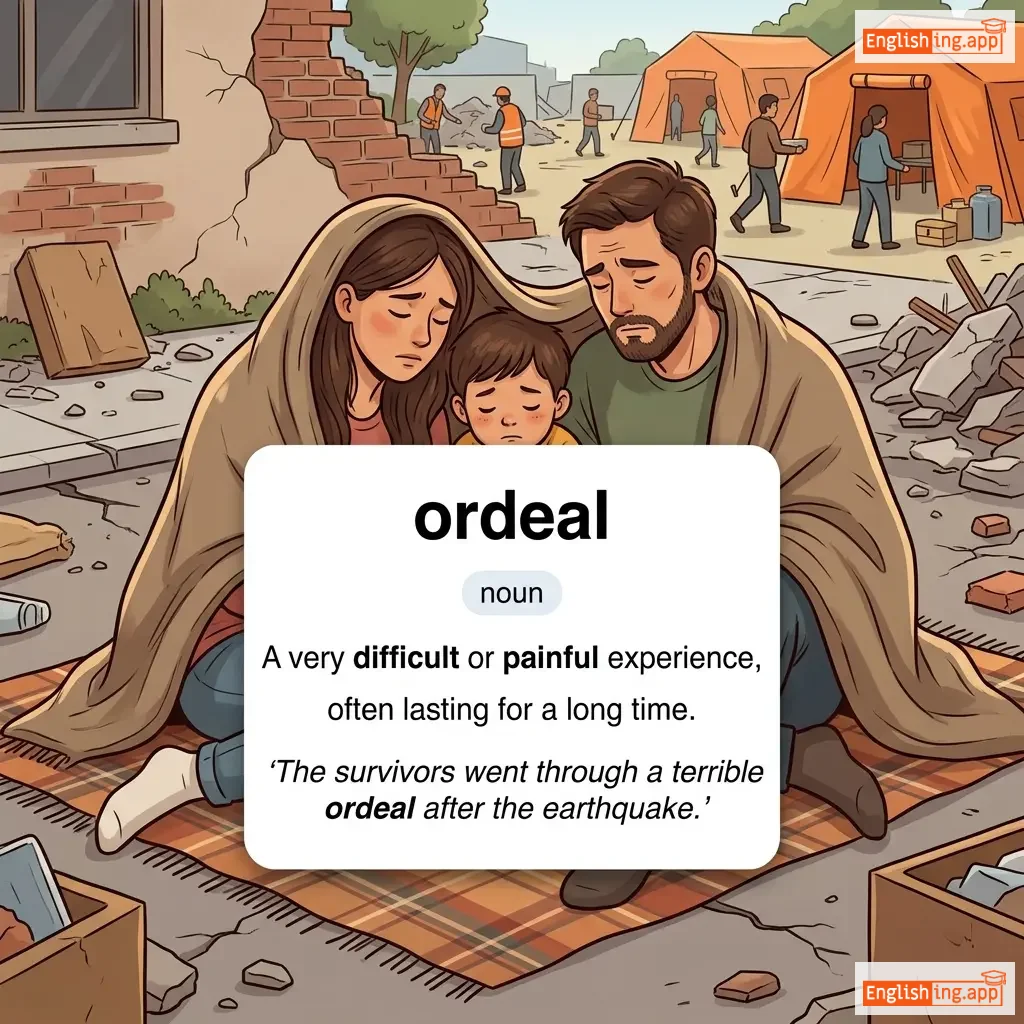
a painful or horrific experience; a severe trial or test
••••••
|
The refugees went through a terrible ordeal during the war.
難民は戦争中にひどい試練を経験した。
••••••
|
難民は戦争中にひどい試練を経験した。
Nanmin wa sensouchuu ni hidoi shiren o keiken shita
••••••
|
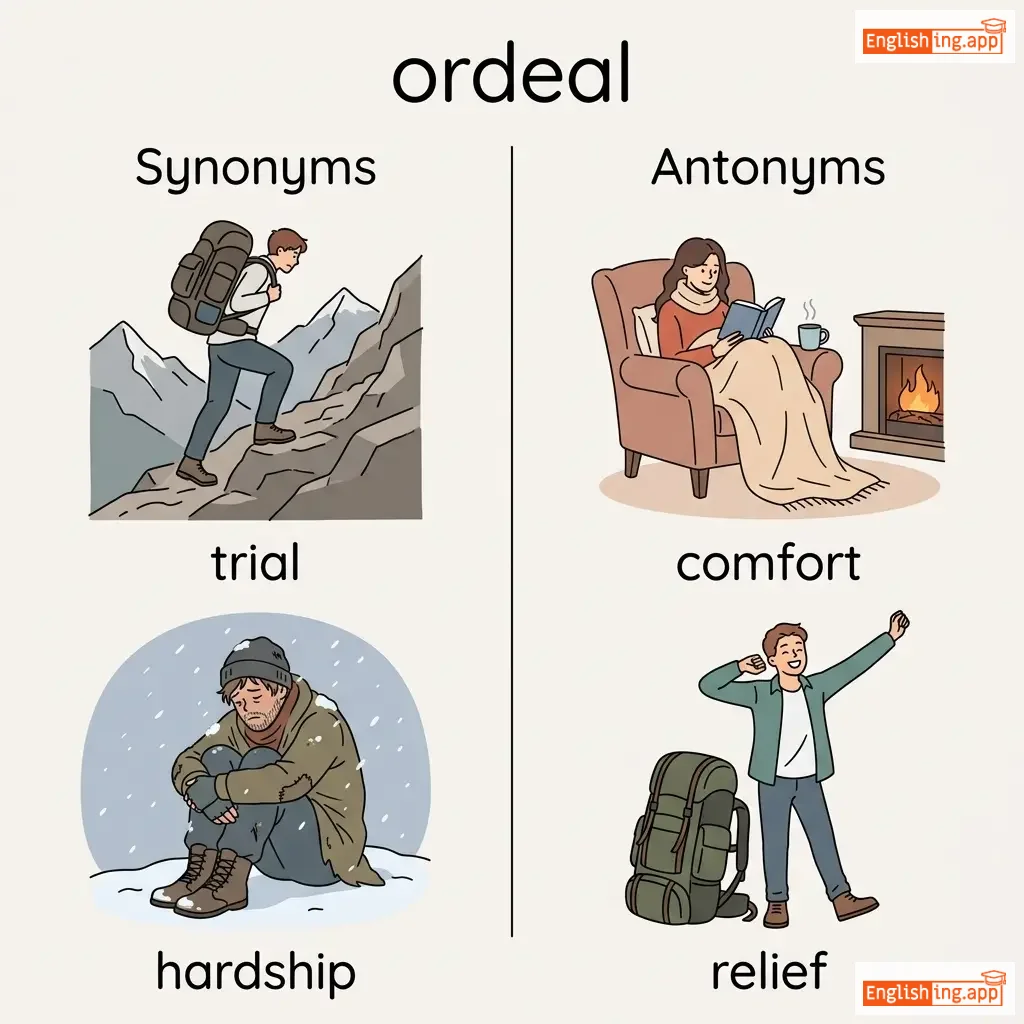
trial, tribulation, hardship, suffering
••••••
|
pleasure, comfort, ease, blessing
••••••
|
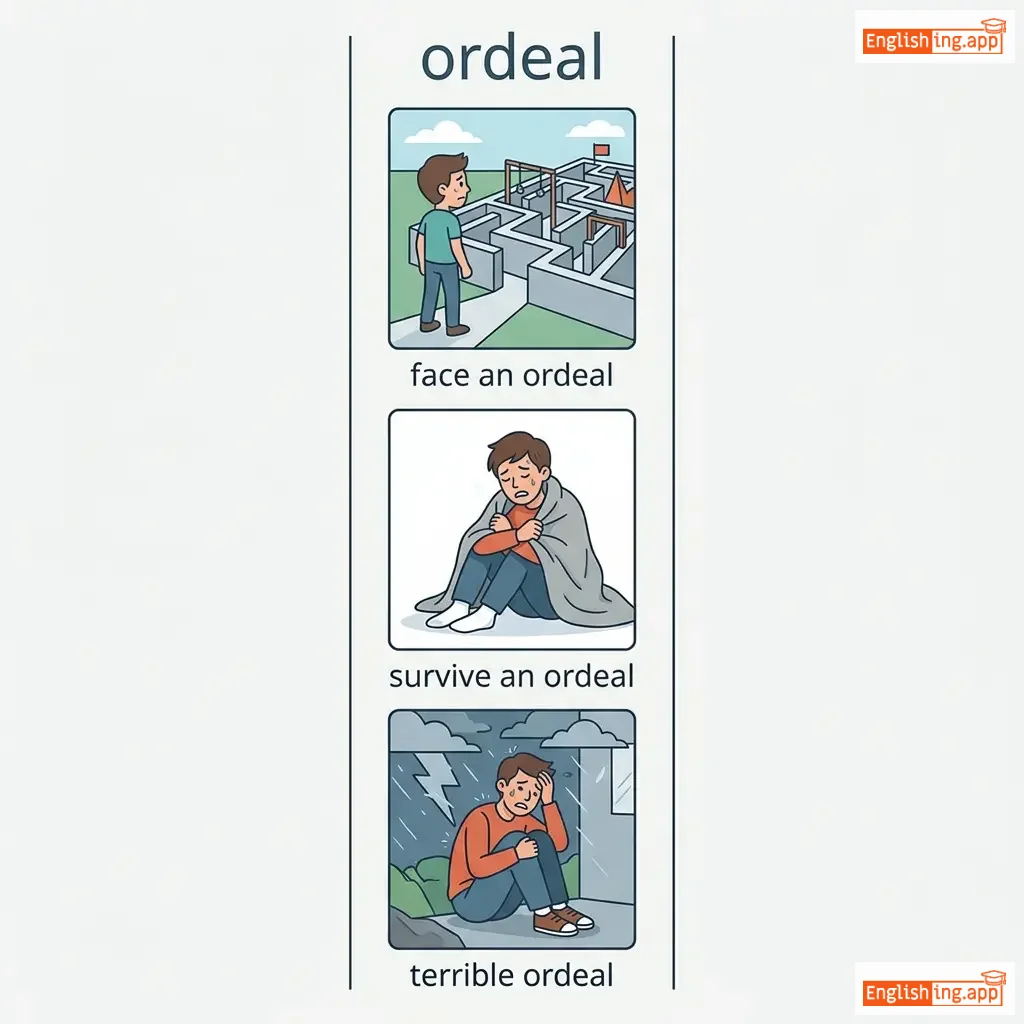
terrible ordeal, survive ordeal, endure ordeal
••••••
|
Oh dear aru imagine a painful test Ordeal equals Oh Dear aru a severe trial
••••••
|
Vocabulary Quiz
Test your vocabulary by matching words with their translations or meanings.
Login to take the quiz
Comments (0)
Share your thoughts and join the discussion.
Join the discussion by logging in
Login to CommentNo comments yet
Be the first to share your thoughts!