

翻訳
過去
過去分詞
三人称単数
動名詞
意味
例文
例文の翻訳
同義語
対義語
コロケーション
ニーモニック


Swipe left or right, or use the buttons. Tap image to zoom.
例文の翻訳
単語
Lesson 57Lesson 57 - マスクトグル
|
絵文字
|
単語 | Images | 翻訳 | 意味 | 例文 | 例文の翻訳 | 同義語 | 対義語 | コロケーション | ニーモニック |
|---|---|---|---|---|---|---|---|---|---|---|
|
#1121
💀
|
/kwaɪˈiːtəs/
noun
(クワイエタス)
••••••
|
- •••••• |
死または死を引き起こすもの; 最後の決着
shi matawa shi wo hikiokosu mono; saigo no ketchaku
••••••
|
death or something that causes death; a final settlement
••••••
|
The hero received his quietus from the villain's sword.
英雄は悪党の剣から自分のクワイエタスを受け取った。
••••••
|
英雄は悪党の剣から自分のクワイエタスを受け取った。
eiyū wa akutō no ken kara jibun no kwaietasu o uketotta.
••••••
|
death, demise, end, termination
••••••
|
birth, beginning, life, start
••••••
|
final quietus, receive quietus, give quietus
••••••
|
quietus = 最後の休息 = 最後の平和
••••••
|
|
#1122
🌍
|
/riˈæl.ə.ti/
noun
(リアリティ)
••••••
|
|
現実
genjitsu
••••••
|
the state of things as they actually exist; the actual situation
••••••
|
We need to face the reality of the situation. |
私たちは状況の現実に直面する必要があります。
Watashitachi wa joukyou no genjitsu ni chokumen suru hitsuyou ga arimasu.
••••••
|
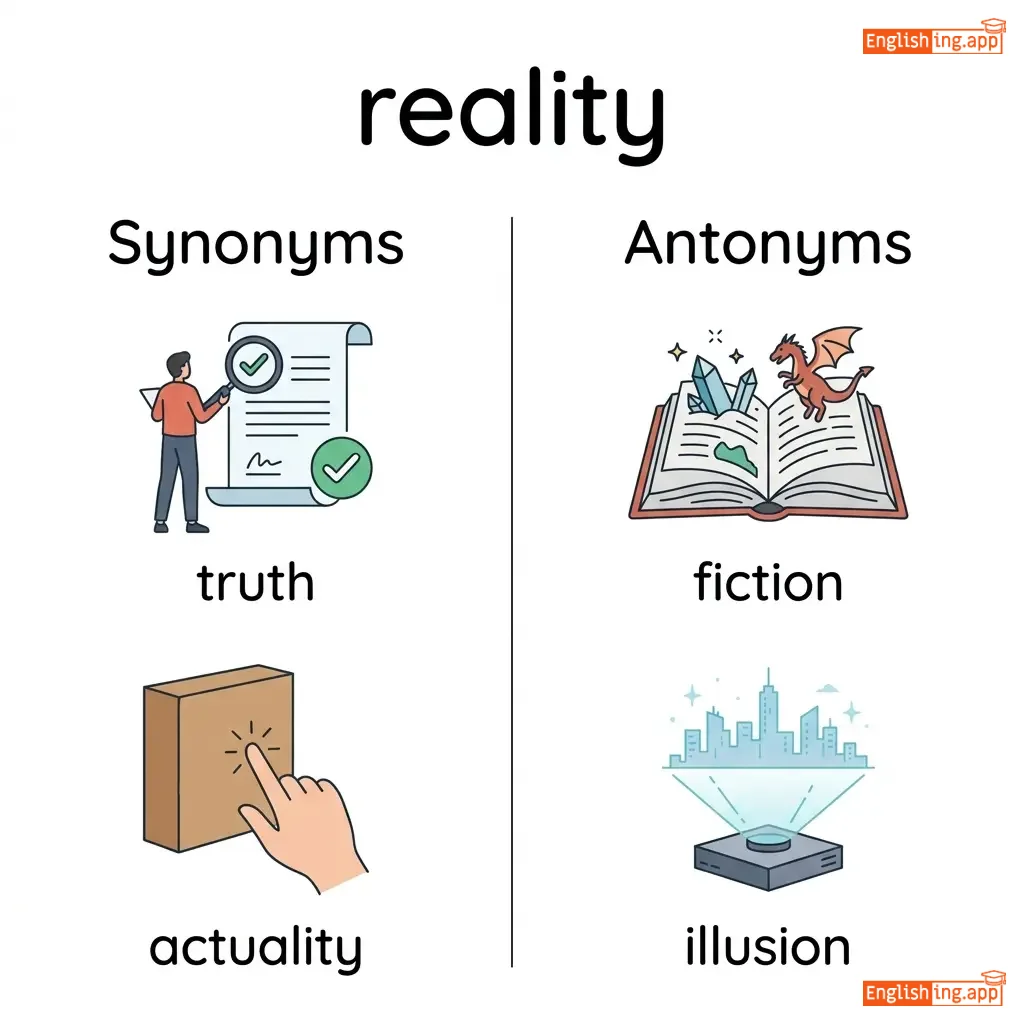
actuality, truth, fact
••••••
|
fantasy, illusion, fiction
••••••
|
face reality, harsh reality, virtual reality
••••••
|
現実 = 実際に存在するもの
••••••
|
|
#1123
🤪
|
/kwɜːrk/
noun
(クイーク)
••••••
|
- •••••• |
癖; 特徴
kuse; tokuchou
••••••
|
a peculiar behavioral habit; an unexpected turn or twist
••••••
|
Her quirk of always wearing mismatched socks made her unique.
彼女のいつもミスマッチな靴下を履くクセが、彼女をユニークにした。
••••••
|
彼女のいつもミスマッチな靴下を履くクセが、彼女をユニークにした。
Kanojo no itsumo misumacchi na kutsushita o haku kuse ga, kanojo o yunikku ni shita.
••••••
|
peculiarity, idiosyncrasy, trait, habit
••••••
|
normalcy, conformity, regularity, predictability
••••••
|
personal quirk, strange quirk, little quirk
••••••
|
癖や特徴を覚えていると、あなたがユニークになる理由がわかります。
••••••
|
|
#1124
🤗
|
/ˌriː.əˈʃʊr.əns/
noun
(リアシュアランス)
••••••
|
- •••••• |
安心
anshin
••••••
|
comfort or confidence given to someone to remove their fears or doubts
••••••
|
She needed reassurance that everything would be okay. |
彼女はすべてがうまくいくことを確認するために安心が必要でした。
Kanojo wa subete ga umaku iku koto o kakunin suru tame ni anshin ga hitsuyō deshita.
••••••
|
comfort, encouragement, support
••••••
|
discouragement, doubt, uncertainty
••••••
|
seek reassurance, provide reassurance, need reassurance
••••••
|
安心は不安を取り除く信頼の源です。
••••••
|
|
#1125
👥
|
/ˈræbəl/
noun
(ラブル)
••••••
|
- •••••• |
群衆
gunshū
••••••
|
a disorderly crowd; the common people regarded as socially inferior
••••••
|
The politician dismissed the protesters as mere rabble. |
政治家は抗議者を単なる群衆として退けた。
seiji-ka wa kōgisha o tannaru gunshū toshite shirizoketa.
••••••
|
mob, crowd, masses, horde
••••••
|
elite, aristocracy, nobility, gentry
••••••
|
angry rabble, unruly rabble, common rabble
••••••
|
群衆が無秩序に集まる様子が、'ラブル'の意味に合う。
••••••
|
|
#1126
✊
|
/ˈreb.əl/
noun
(レベル)
••••••
|
- •••••• |
反逆者
hangyakusha
••••••
|
a person who resists authority or control
••••••
|
The young rebel refused to follow the school rules. |
その若い反逆者は学校の規則に従うことを拒否した。
Sono wakai hangyakusha wa gakkō no kisoku ni shitagau koto o kyohi shita.
••••••
|
revolutionary, insurgent, dissenter
••••••
|
conformist, loyalist, supporter
••••••
|
teenage rebel, rebel leader, rebel forces
••••••
|
反逆者は決して権威に従わない。
••••••
|
|
#1127
🗣️
|
/ˌrækənˈtɜːr/
noun
(ハピネス)
••••••
|
- •••••• |
幸せ
shiawase
••••••
|
a person who tells anecdotes in a skillful and amusing way
••••••
|
The old man was a gifted raconteur who entertained everyone with his stories. |
彼女は賞を受け取ったとき、喜びを隠せなかった。
Kanojo wa shō o uketotta toki, yorokobi o kakusenakatta.
••••••
|
storyteller, narrator, anecdotalist, spinner
••••••
|
listener, audience, silent person, introvert
••••••
|
gifted raconteur, accomplished raconteur, entertaining raconteur
••••••
|
幸せは人生の中で最も価値のある宝物です。
••••••
|
|
#1128
⚔️
|
/rɪˈbel.jən/
noun
(反乱)
••••••
|
- •••••• |
反乱
hanran
••••••
|
an act of armed resistance to an established government or leader
••••••
|
The rebellion against the king lasted for three years.
王に対する反乱は3年間続いた。
••••••
|
王に対する反乱は3年間続いた。
Ō ni taisuru hanran wa 3-nenkan tsuzuita.
••••••
|
revolt, uprising, insurrection
••••••
|
obedience, submission, compliance
••••••
|
armed rebellion, suppress rebellion, lead rebellion
••••••
|
反乱 = 反抗 + 戦う (戦いの象徴)
••••••
|
|
#1129
🧽
|
/ræɡ/
noun
(ラグ)
••••••
|
- •••••• |
古い布; 掃除に使われる擦り切れた衣類
furui nuno; soji ni tsukawareru surikireta irui
••••••
|
a piece of old cloth used for cleaning; worn-out clothing
••••••
|
She used an old rag to clean the dusty table. |
彼女は古い布を使って、ほこりだらけのテーブルを掃除しました。
Kanojo wa furui nuno o tsukatte, hokori darake no tēburu o sōji shimashita.
••••••
|
cloth, towel, wipe, fabric
••••••
|
new cloth, fine fabric, silk, luxury textile
••••••
|
cleaning rag, old rag, dirty rag
••••••
|
古い布で掃除
••••••
|
|
#1130
📞
|
/rɪˈsiː.vər/
noun
(レシーバー)
••••••
|
- •••••• |
受話器
juwaki
••••••
|
a person or thing that receives something; the part of a telephone containing the earpiece and mouthpiece
••••••
|
She picked up the receiver to answer the phone call.
彼女は電話に出るために受話器を取った。
••••••
|
彼女は電話に出るために受話器を取った。
Kanojo wa denwa ni deru tame ni juwaki o totta.
••••••
|
recipient, beneficiary, addressee
••••••
|
sender, transmitter, giver
••••••
|
phone receiver, radio receiver, pick up receiver
••••••
|
受話器は電話を受け取る器、受け取るための部分です。
••••••
|
|
#1131
🧹
|
/reɪk/
noun
(レイク)
••••••
|
- •••••• |
レーキ
reiki
••••••
|
a garden tool with a long handle and prongs for gathering leaves; to gather with a rake
••••••
|
He used a rake to gather the fallen autumn leaves.
彼は落ち葉を集めるためにレーキを使いました。
••••••
|
彼は落ち葉を集めるためにレーキを使いました。
Kare wa ochiba o atsumeru tame ni reiki o tsukaimashita.
••••••
|
tool, implement, scraper, gatherer
••••••
|
scatter, spread, disperse, strew
••••••
|
garden rake, leaf rake, rake leaves
••••••
|
レーキ: 落ち葉を集めるために使う道具。
••••••
|
|
#1132
🎉
|
/rɪˈsep.ʃən/
noun
(レセプション)
••••••
|
- •••••• |
歓迎; 受け入れ; イベント;
kangei; ukeire; ibento;
••••••
|
the action of receiving something or someone; a formal social occasion held to welcome someone
••••••
|
The wedding reception was held at a beautiful hotel.
結婚式のレセプションは美しいホテルで行われました。
••••••
|
結婚式のレセプションは美しいホテルで行われました。
kekkonshiki no resepushon wa utsukushī hoteru de okonawaremashita.
••••••
|
welcome, gathering, party
••••••
|
rejection, dismissal, farewell
••••••
|
wedding reception, hotel reception, reception desk
••••••
|
レセプション – 結婚式などで行われる、ゲストを歓迎するための正式なイベント
••••••
|
|
#1133
🎲
|
/ˈrændəm/
adjective
(ランダム)
••••••
|
- •••••• |
ランダム
randamu
••••••
|
without pattern or predetermined order; happening by chance
••••••
|
She selected a random book from the library shelf.
彼女は図書館の棚からランダムに本を選びました。
••••••
|
彼女は図書館の棚からランダムに本を選びました。
Kanojo wa toshokan no tana kara randamu ni hon o erabimashita.
••••••
|
arbitrary, chance, haphazard, accidental
••••••
|
planned, systematic, organized, deliberate
••••••
|
random selection, random number, random choice
••••••
|
日本語で'ランダム'は計画なしで選ばれたものを意味します。
••••••
|
|
#1134
🎁
|
/rɪˈsɪp.i.ənt/
noun
(rɪˈsɪpɪənt)
••••••
|
- •••••• |
受取人
uketorin
••••••
|
a person who receives something
••••••
|
She was the recipient of the prestigious award. |
彼女はその名誉ある賞の受取人でした。
Kanojo wa sono meiyo aru shou no uketorin deshita
••••••
|
receiver, beneficiary, addressee
••••••
|
donor, giver, sender
••••••
|
award recipient, scholarship recipient, organ recipient
••••••
|
Recipient = 受取人 (Recipient = Uketorin)
••••••
|
|
#1135
💎
|
/ˈrerəti/
noun
(レアリティ)
••••••
|
- •••••• |
珍しい状態; 普通でないもの、または希少なもの
mezurashī jōtai; futsū denai mono, mata wa kishōna mono
••••••
|
the state of being rare; something that is uncommon or scarce
••••••
|
The antique vase was a rarity worth thousands of dollars. |
その古代の花瓶は、数千ドルの価値がある珍しいものだった。
sono kodai no kabin wa, sūsen doru no kachi ga aru mezurashī mono datta.
••••••
|
scarcity, uniqueness, novelty, oddity
••••••
|
commonality, abundance, frequency, normalcy
••••••
|
great rarity, extreme rarity, museum rarity
••••••
|
珍しいものは価値が高いということを、この単語 'rarity' が示しています。
••••••
|
|
#1136
🎭
|
/ˌres.ɪˈteɪ.ʃən/
noun
(レシテーション)
••••••
|
- •••••• |
朗読
rōdoku
••••••
|
the action of reciting or repeating aloud from memory
••••••
|
The poetry recitation contest was held in the auditorium.
詩の朗読大会はホールで行われました。
••••••
|
詩の朗読大会はホールで行われました。
shi no rōdoku taikai wa hōru de okonawaremashita.
••••••
|
recital, reading, performance
••••••
|
silence, muteness, listening
••••••
|
poetry recitation, Quran recitation, recitation contest
••••••
|
Japanese '朗読' ties to reciting aloud, often seen in educational and performance settings.
••••••
|
|
#1137
✅
|
/ˌrætɪfɪˈkeɪʃən/
noun
(ラティフィケーション)
••••••
|
- •••••• |
承認
shōnin
••••••
|
the action of signing or giving formal consent to a treaty, contract, or agreement
••••••
|
The treaty required ratification by both countries' parliaments.
その条約は両国の議会による批准を必要とした。
••••••
|
その条約は両国の議会による批准を必要とした。
sono jōyaku wa ryōkoku no gikai ni yoru shōnin o hitsuyō to shita.
••••••
|
approval, confirmation, endorsement, validation
••••••
|
rejection, denial, disapproval, veto
••••••
|
treaty ratification, formal ratification, parliamentary ratification
••••••
|
承認は契約を締結する最終ステップです。
••••••
|
|
#1138
🏆
|
/ˌrek.əɡˈnɪʃ.ən/
noun
(レコグニション)
••••••
|
|
認識; 同定
ninshiki; dōtei
••••••
|
acknowledgment of the existence, validity, or legality of something
••••••
|
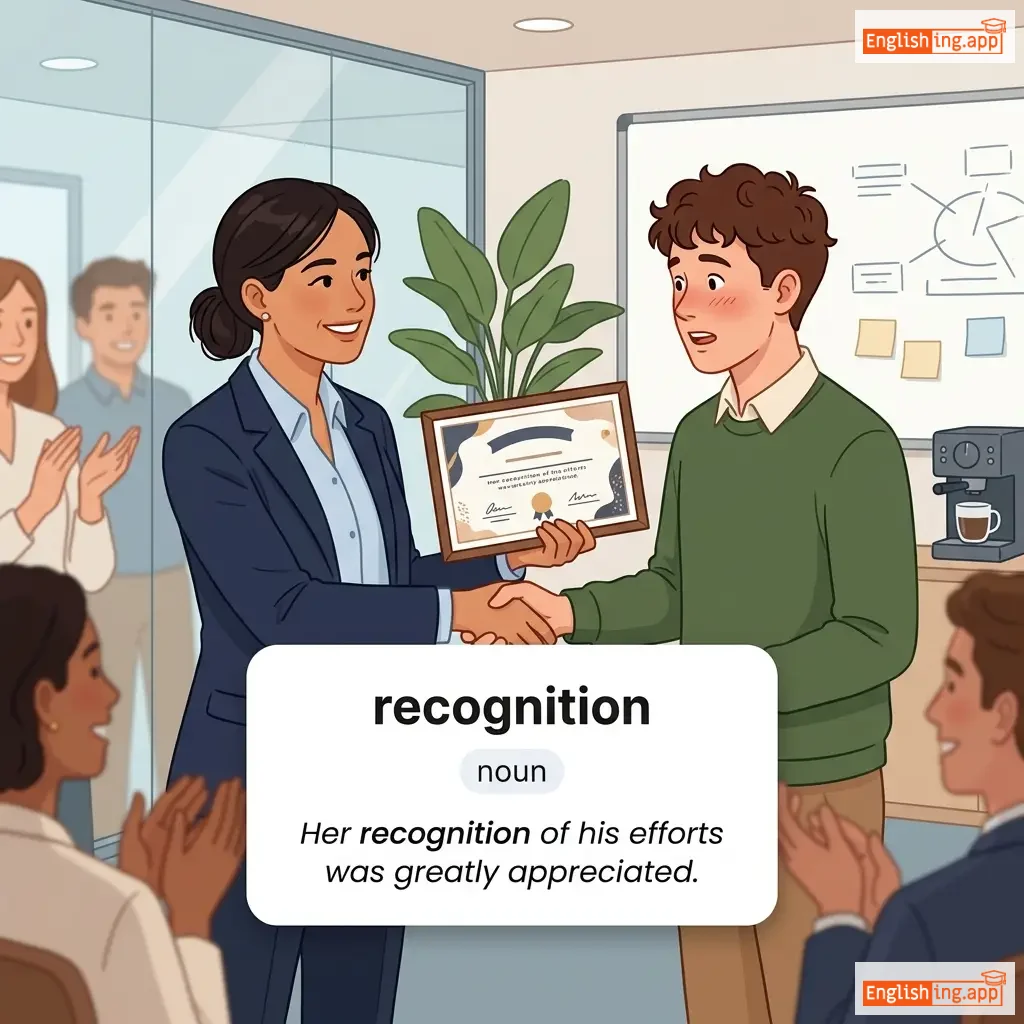
His hard work finally received recognition from the management. |
彼の努力は最終的に経営陣から認識されました。
Kare no doryoku wa saishūteki ni keieijin kara ninshiki saremashita.
••••••
|
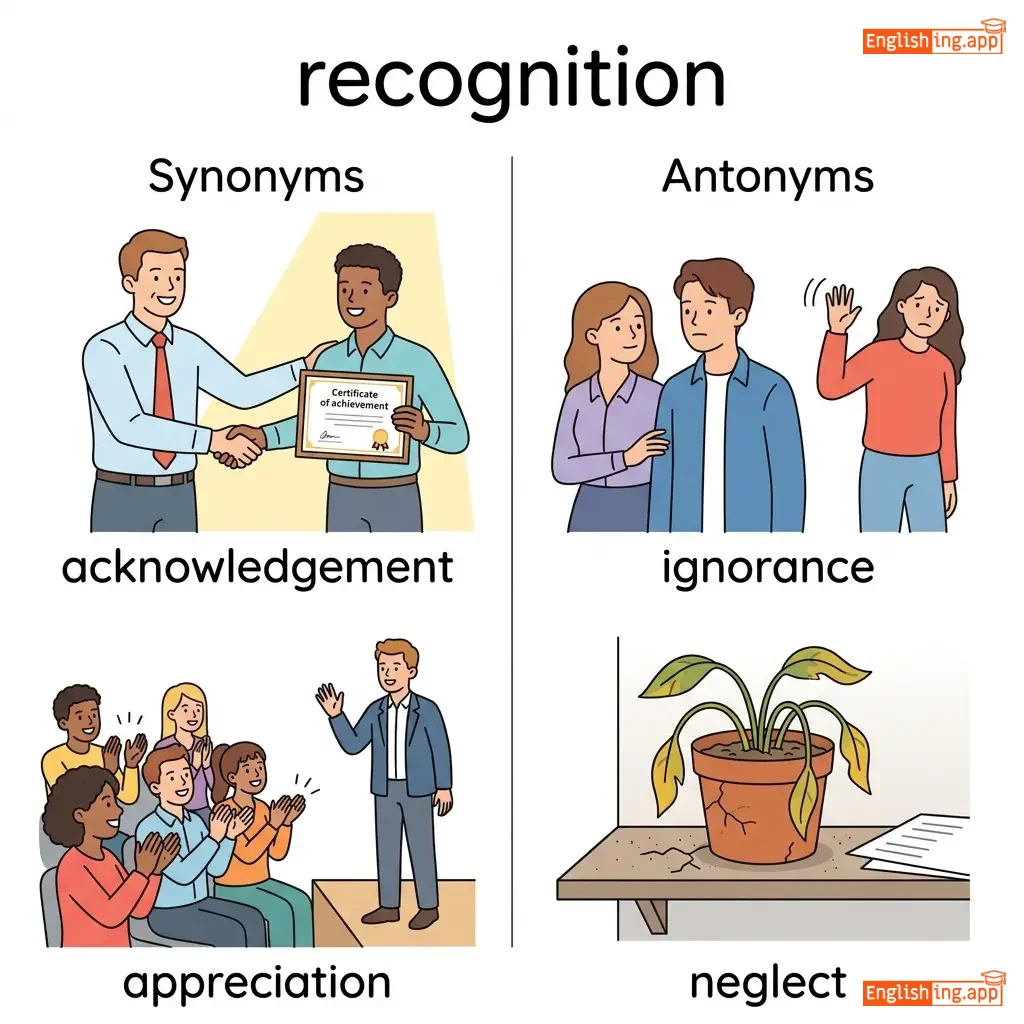
acknowledgment, appreciation, acceptance
••••••
|
ignorance, denial, rejection
••••••
|
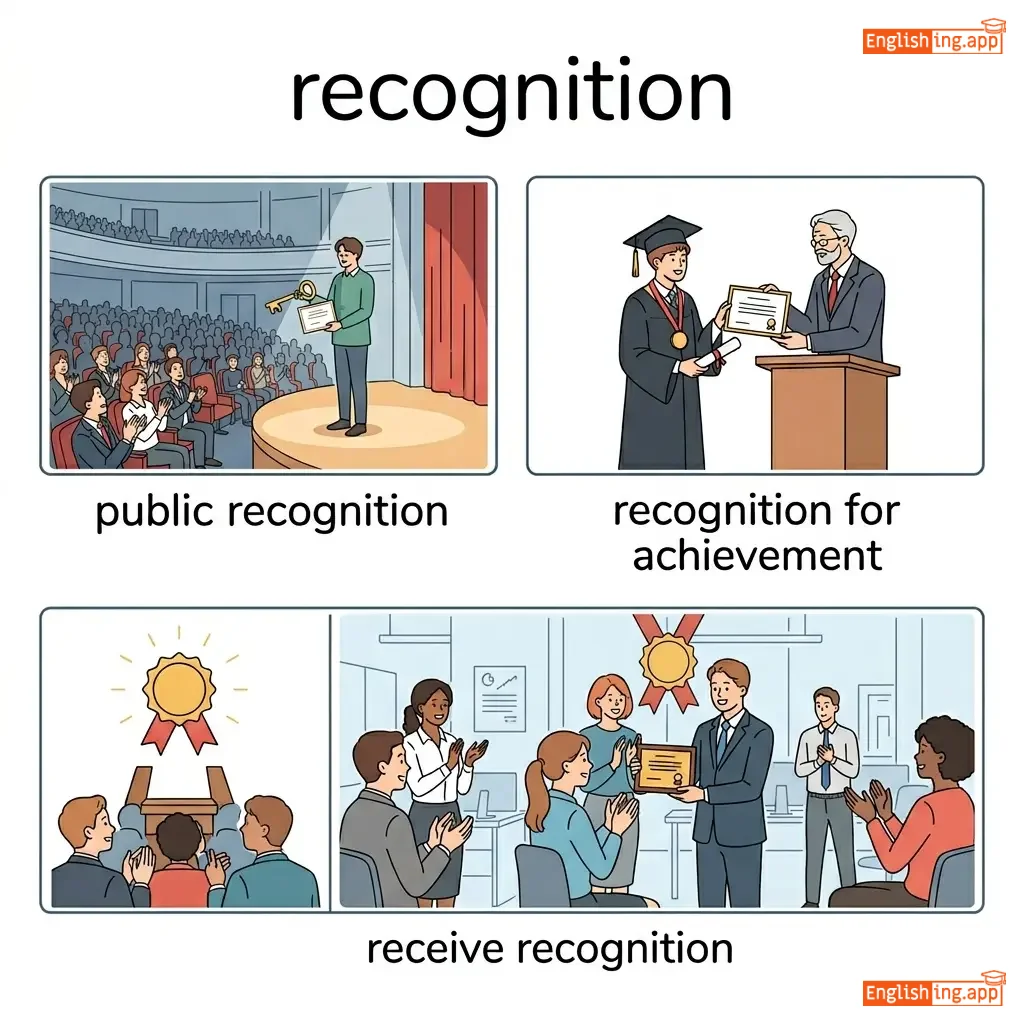
gain recognition, facial recognition, public recognition
••••••
|
In Japanese, '認識' means recognition, like acknowledging someone's hard work.
••••••
|
|
#1139
⚡
|
/riˈækʃən/
noun
(リアクション)
••••••
|
|
反応
hannou
••••••
|
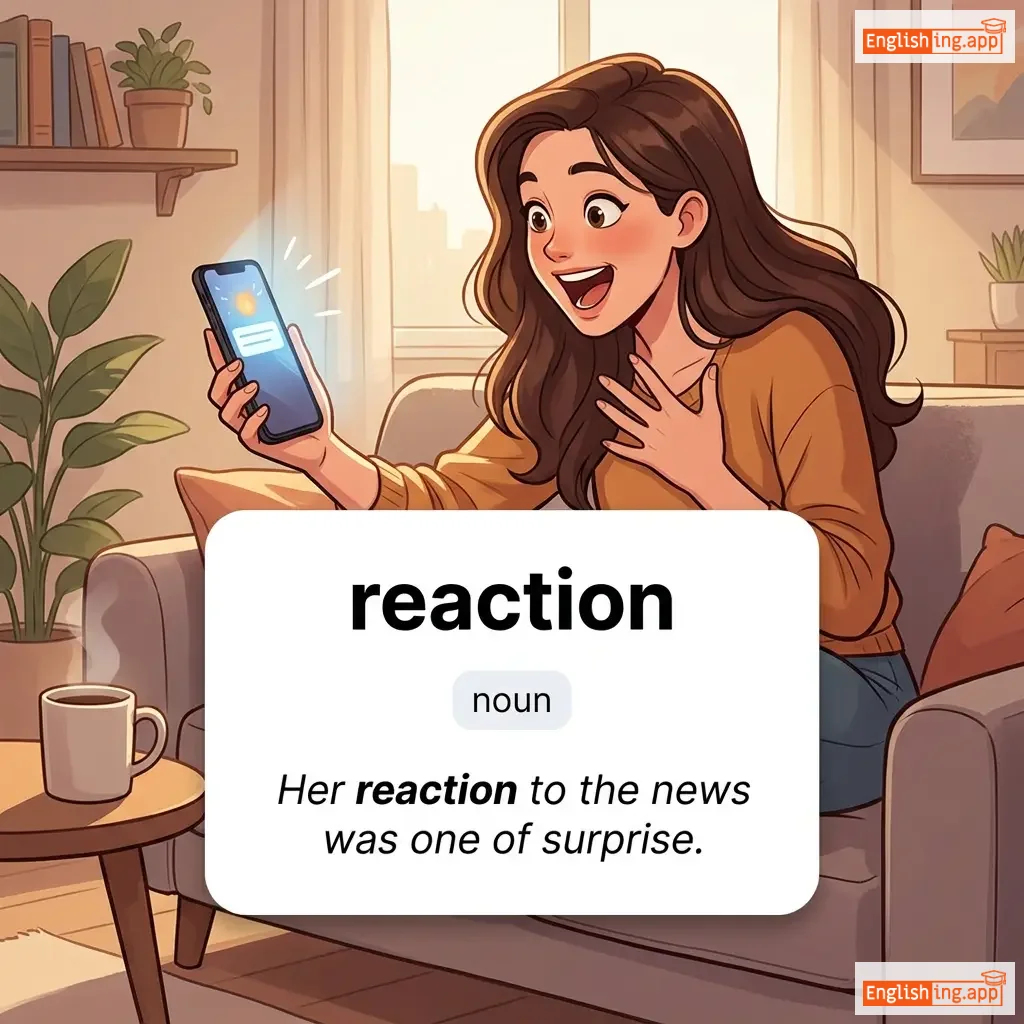
an action performed or a feeling experienced in response to a situation or event
••••••
|
Her reaction to the surprise party was pure joy. |
サプライズパーティーへの彼女の反応は純粋な喜びでした。
Sapuraizu pātī e no kanojo no hannou wa junsuina yorokobi deshita
••••••
|
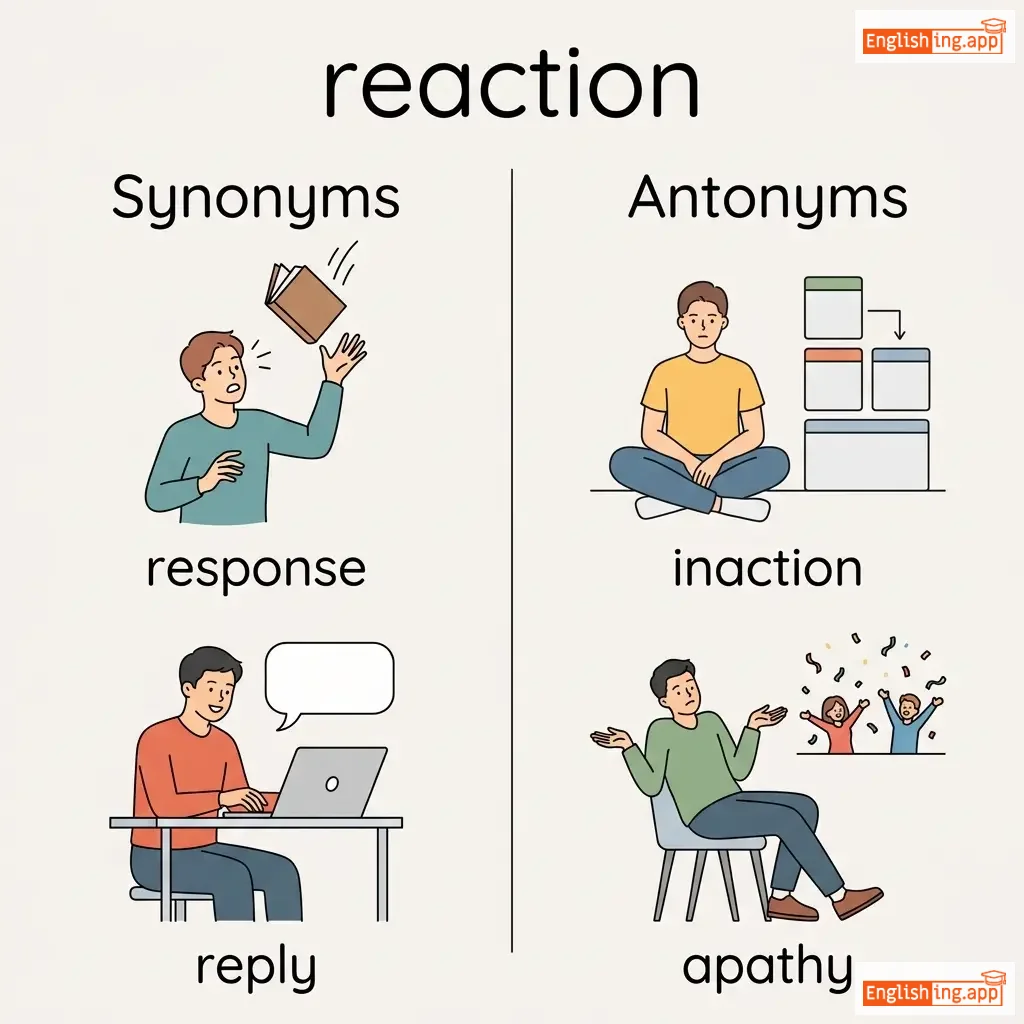
response, reply, feedback, consequence
••••••
|
action, cause, stimulus, initiative
••••••
|
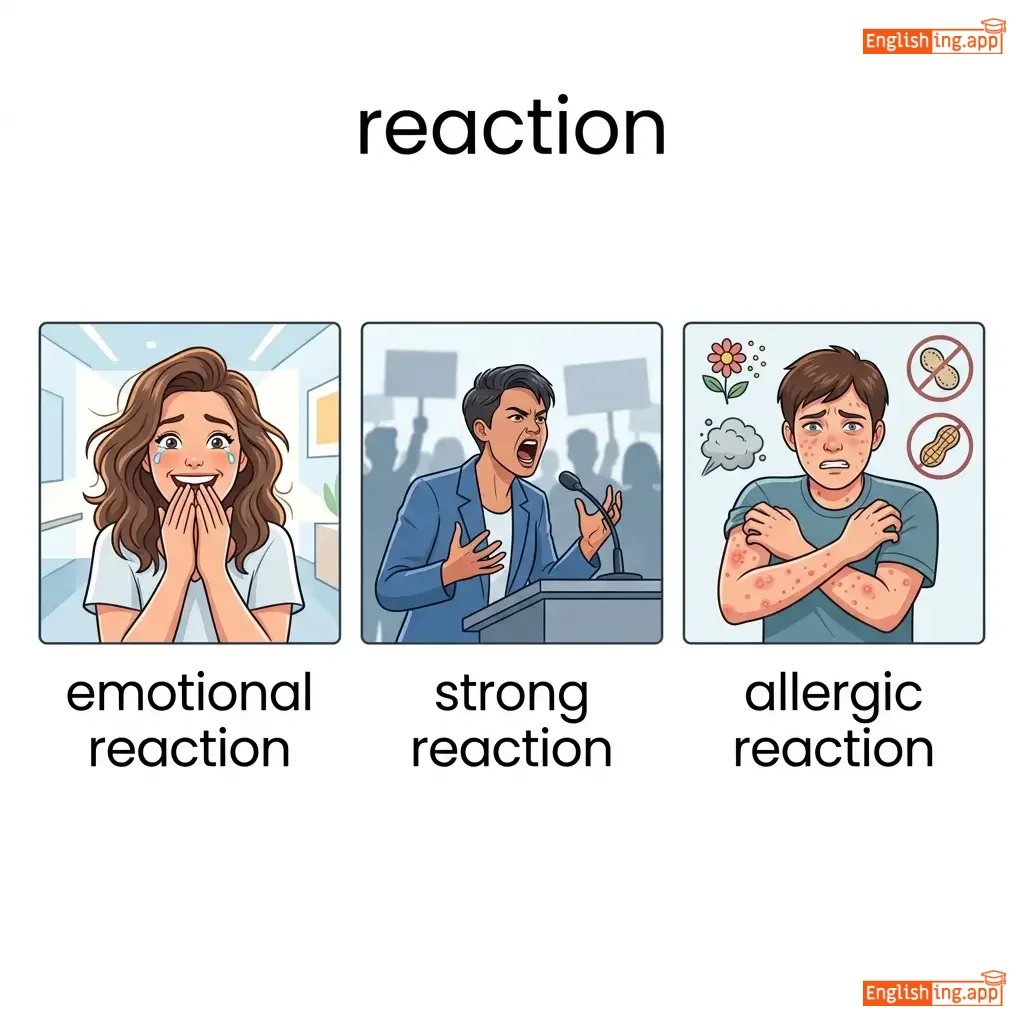
immediate reaction, strong reaction, chemical reaction
••••••
|
反応とは何かに対する私たちの行動や感じ方
••••••
|
|
#1140
🧠
|
/ˌrek.əˈlek.ʃən/
noun
(リコレクション)
••••••
|
|
記憶
kioku
••••••
|
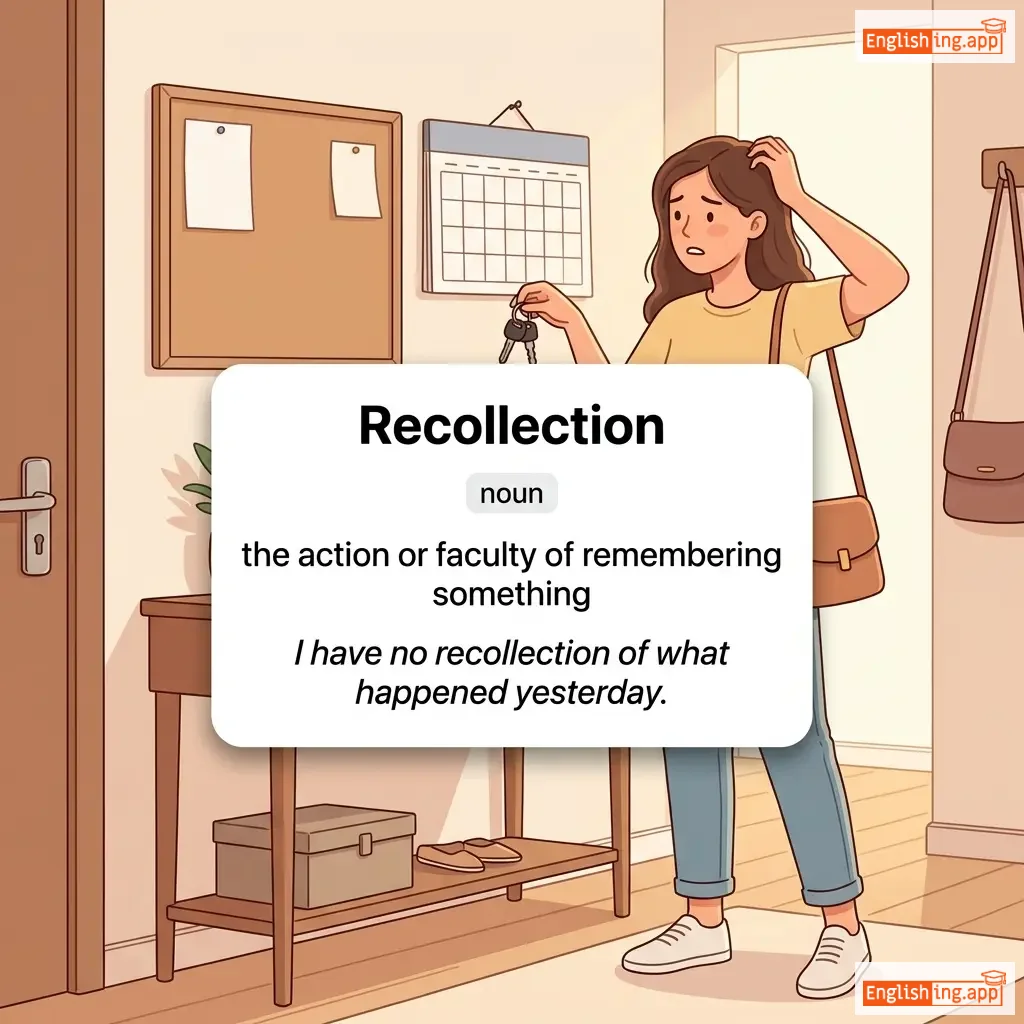
the action or faculty of remembering something
••••••
|
I have no recollection of what happened yesterday. |
昨日何が起こったか全く覚えていません。
Kinō nani ga okotta ka mattaku oboeteimasen.
••••••
|
memory, remembrance, recall
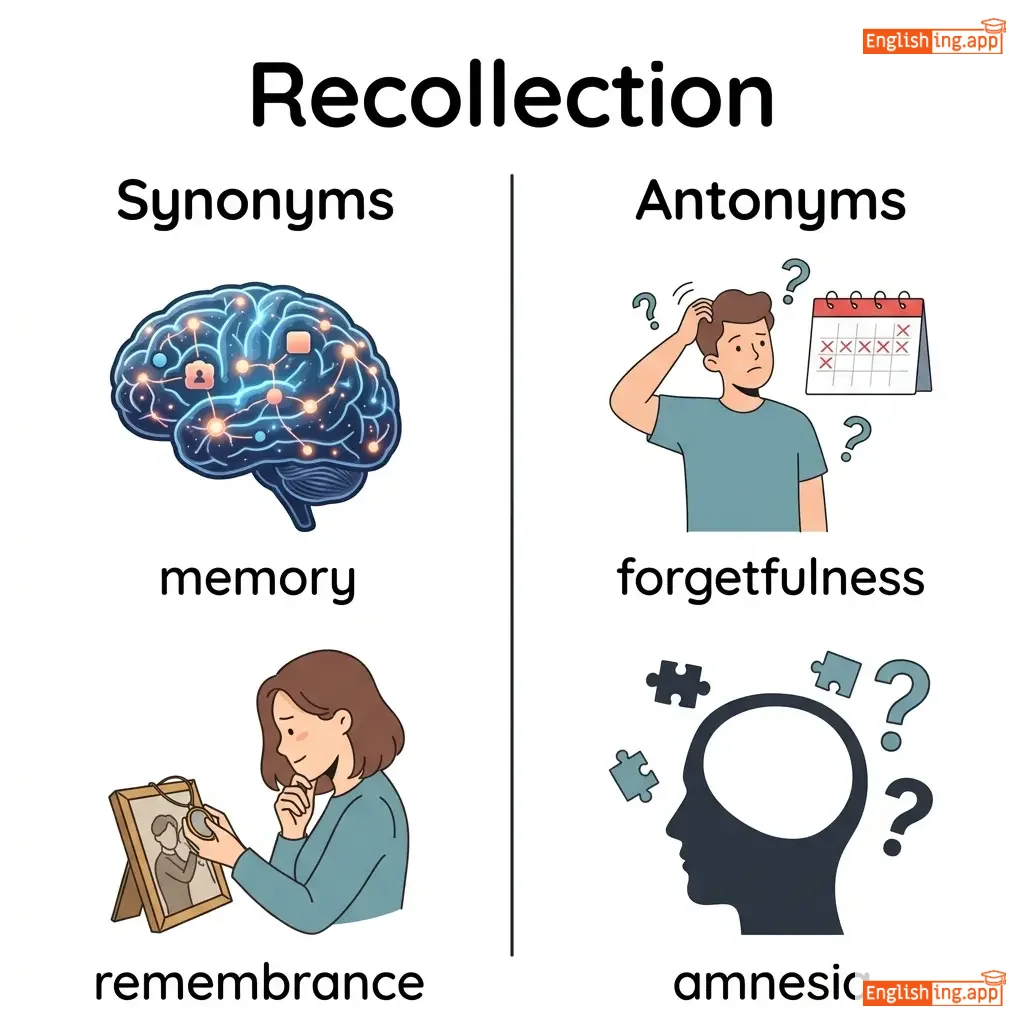
••••••
|
forgetfulness, amnesia, oblivion
••••••
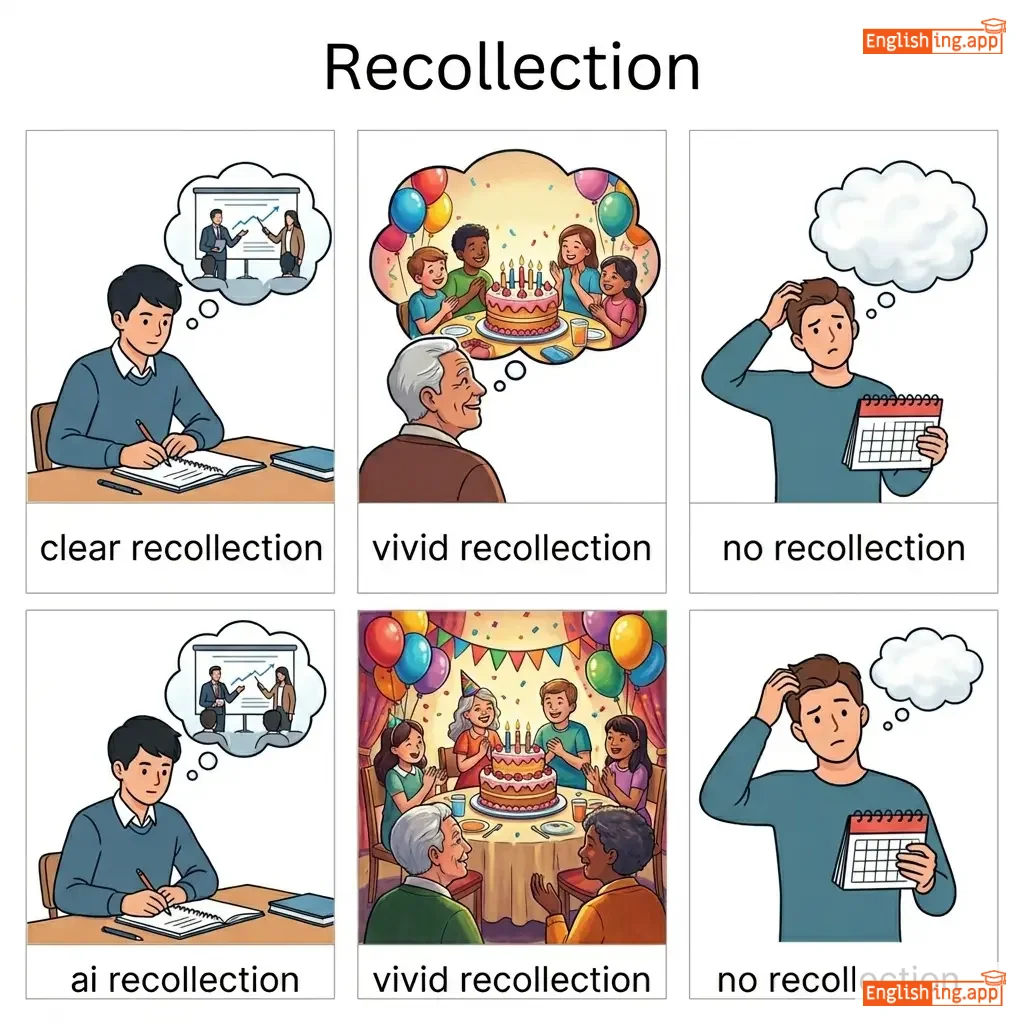
|
clear recollection, vivid recollection, no recollection
••••••
|
Recalling something, like remembering a lost item
••••••
|
Vocabulary Quiz
Test your vocabulary by matching words with their translations or meanings.
Login to take the quiz
Comments (0)
Share your thoughts and join the discussion.
Join the discussion by logging in
Login to CommentNo comments yet
Be the first to share your thoughts!