

翻訳
過去
過去分詞
三人称単数
動名詞
意味
例文
例文の翻訳
同義語
対義語
コロケーション
ニーモニック





Swipe left or right, or use the buttons. Tap image to zoom.
例文の翻訳
単語
Lesson 24Lesson 24 - マスクトグル
|
絵文字
|
単語 | Images | 翻訳 | 意味 | 例文 | 例文の翻訳 | 同義語 | 対義語 | コロケーション | ニーモニック |
|---|---|---|---|---|---|---|---|---|---|---|
|
#461
🤸
|
/ˌflek.səˈbɪl.ə.ti/
noun
(フレキシビリティ)
••••••
|
|
柔軟性; 適応能力
jūnansē, tekiō nōryoku
••••••
|
the quality of bending easily without breaking; willingness to change or compromise
••••••
|
The job requires flexibility in working hours and the ability to adapt quickly. |
この仕事は勤務時間の柔軟性と迅速な適応能力を要求します。
Kono shigoto wa kinmu jikan no jūnansē to jinsoku na tekiō nōryoku o yōkyū shimasu.
••••••
|
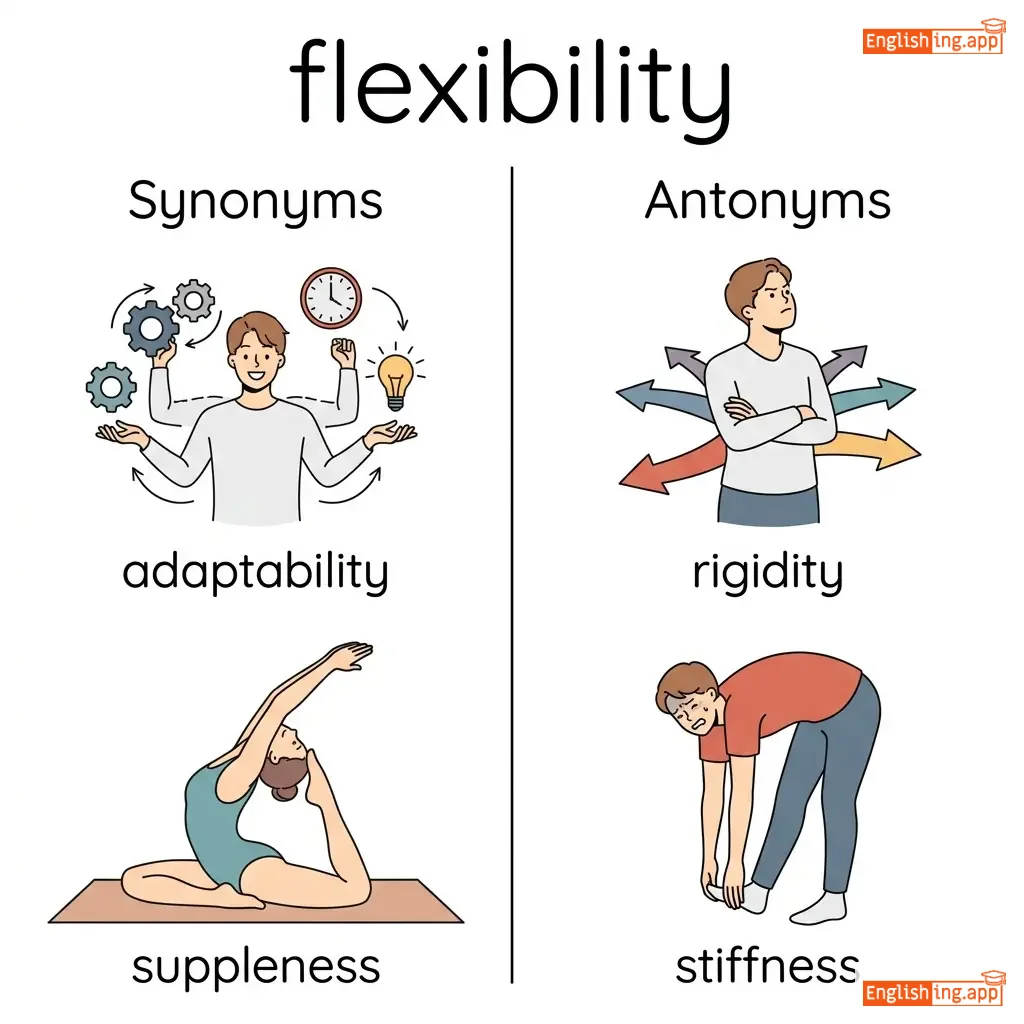
adaptability, versatility, pliability, elasticity
••••••
|
rigidity, inflexibility, stiffness, stubbornness
••••••
|
mental flexibility, workplace flexibility, show flexibility
••••••
|
柔軟性 = 柔軟性 (適応力が高い)
••••••
|
|
#462
➗
|
/ˈfræk.ʃən/
noun
(フラクション)
••••••
|
- •••••• |
分数; 部分
bunsu, bubun
••••••
|
a numerical quantity that is not a whole number; a small or tiny part of something
••••••
|
Only a small fraction of the population voted in the local election.
地方選挙で投票したのは人口のごく一部に過ぎなかった。
••••••
|
地方選挙で投票したのは人口のごく一部に過ぎなかった。
Chiho senkyo de tohyō shita no wa jinkō no goku ichibu ni suginakatta.
••••••
|
portion, segment, part, piece
••••••
|
whole, entirety, total, complete
••••••
|
small fraction, proper fraction, fraction of time
••••••
|
フラクション = 部分、'フラクション' は小さい部分を示す
••••••
|
|
#463
🗣️
|
/ˈfluː.ən.si/
noun
(フルエンシー)
••••••
|
|
流暢さ; 流暢な話し方
ryuuchousa, ryuuchou na hanashikata
••••••
|
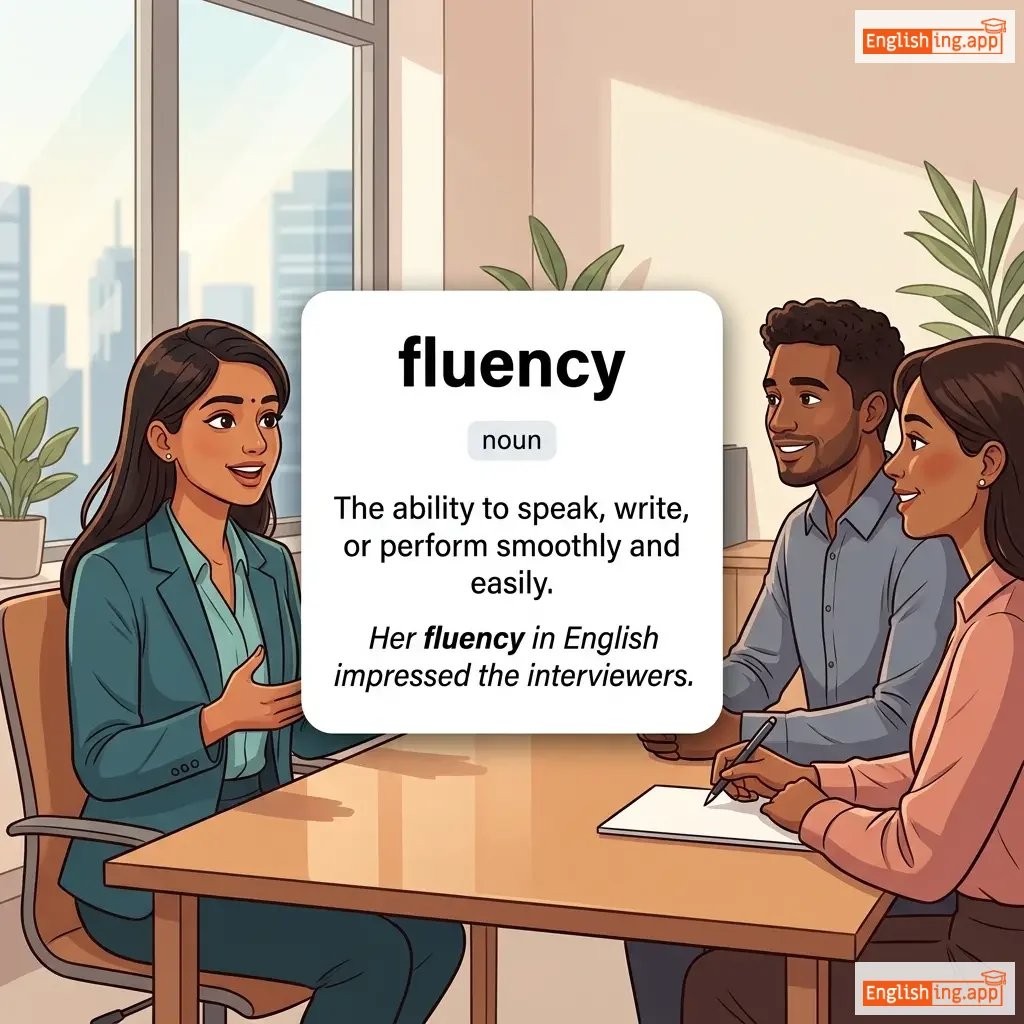
the ability to speak or write a language easily and accurately; smooth and effortless speech
••••••
|
Her fluency in three languages made her an excellent translator.
彼女の三つの言語の流暢さは、彼女を優れた翻訳者にしました。
••••••
|
彼女の三つの言語の流暢さは、彼女を優れた翻訳者にしました。
Kanojo no mittsu no gengo no ryuuchousa wa, kanojo o sugureta hon'yakusha ni shimashita.
••••••
|
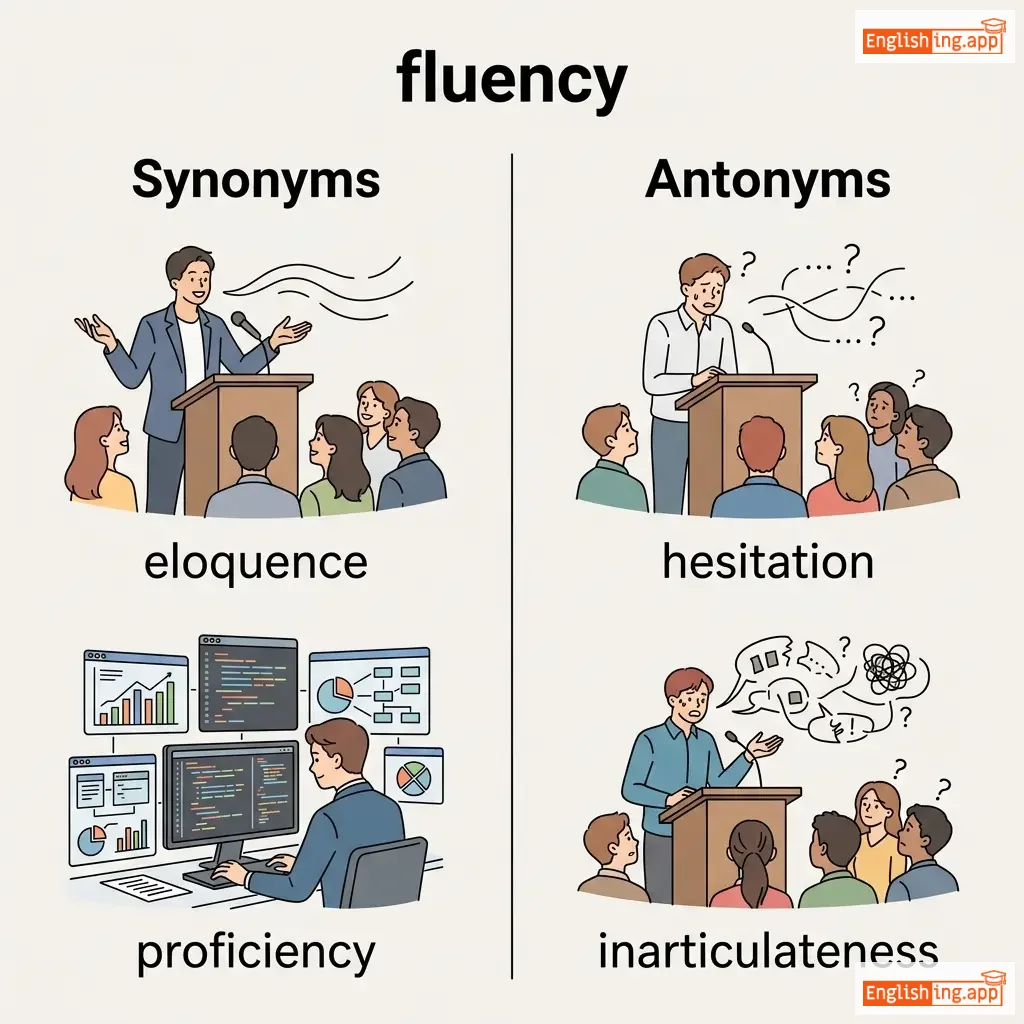
eloquence, articulateness, proficiency, smoothness
••••••
|
stuttering, hesitation, awkwardness, incoherence
••••••
|
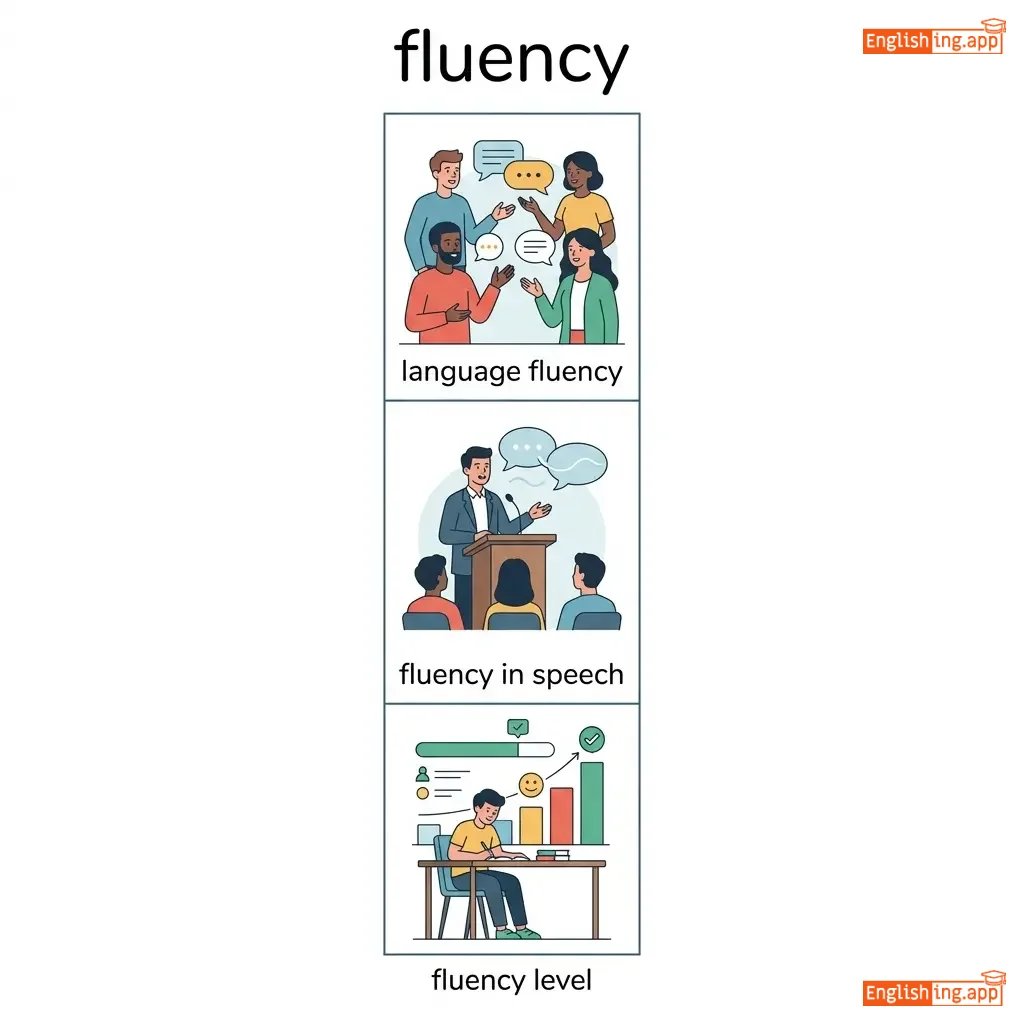
language fluency, verbal fluency, fluency in English
••••••
|
Fluency in Japanese (フルエンシー) sounds perfect just like it!
••••••
|
|
#464
😤
|
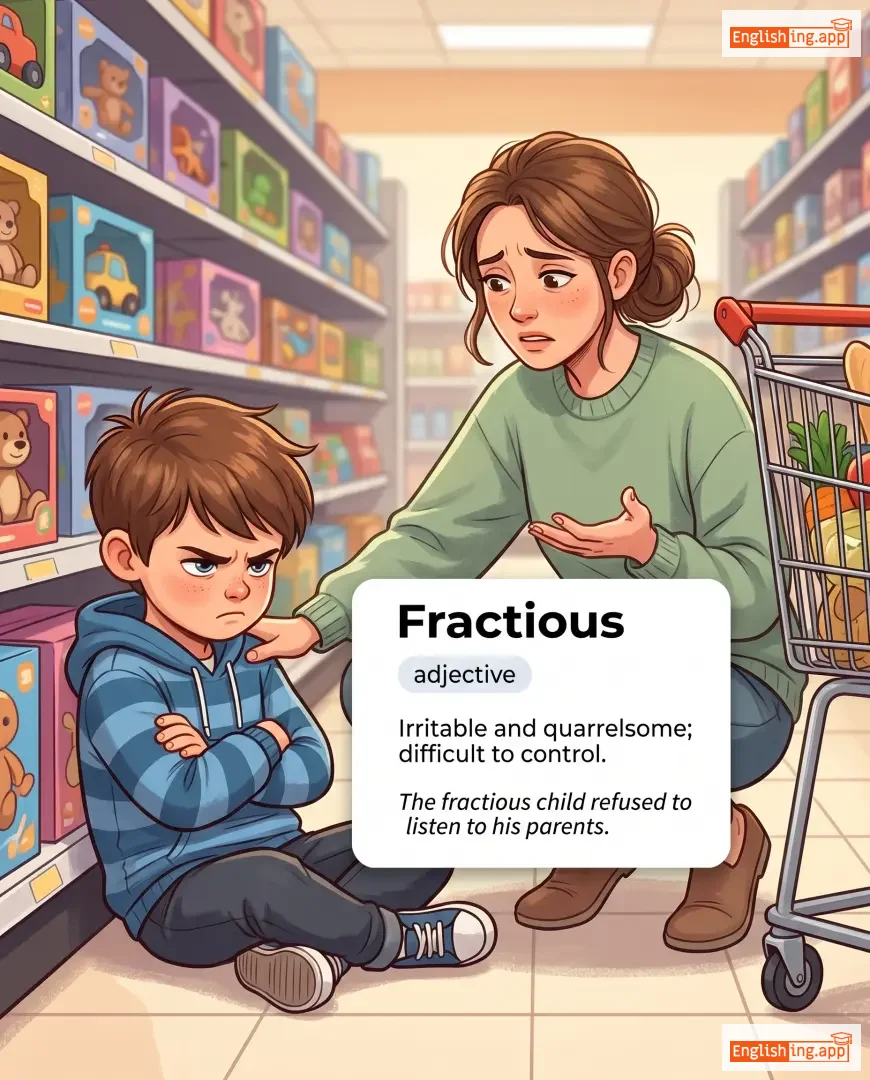
/ˈfræk.ʃəs/
adjective
(furekushasu)
••••••
|
|
わがままな; けんか腰の; 手に負えない
wagama mana; kenka-goshi no; te ni oenai
••••••
|
irritable and quarrelsome; difficult to control; bad-tempered
••••••
|
The fractious child refused to follow any of the teacher's instructions.
その気難しい子供は教師の指示に従うことを拒否しました。
••••••
|
その気難しい子供は教師の指示に従うことを拒否しました。
Sono kimuzukashī kodomo wa kyōshi no shiji ni shitagau koto o kyohi shimashita.
••••••
|
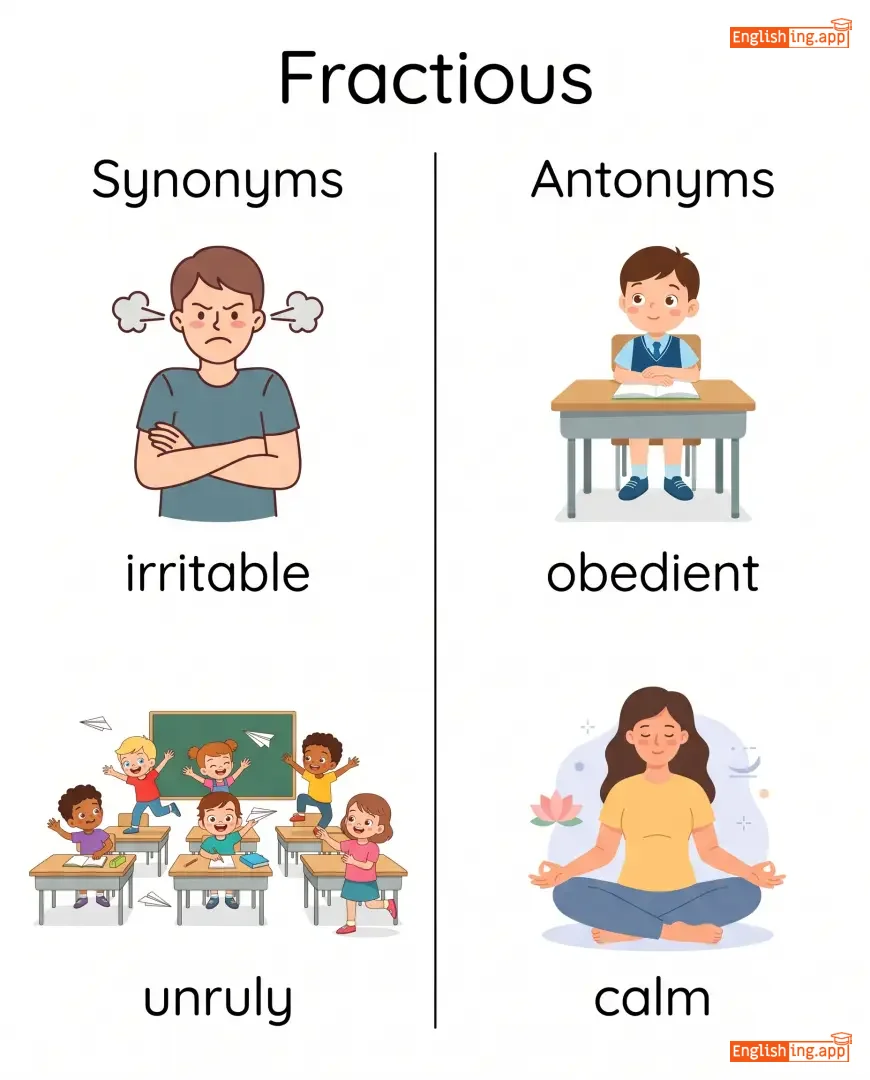
quarrelsome, irritable, unruly, rebellious
••••••
|
obedient, cooperative, agreeable, compliant
••••••
|
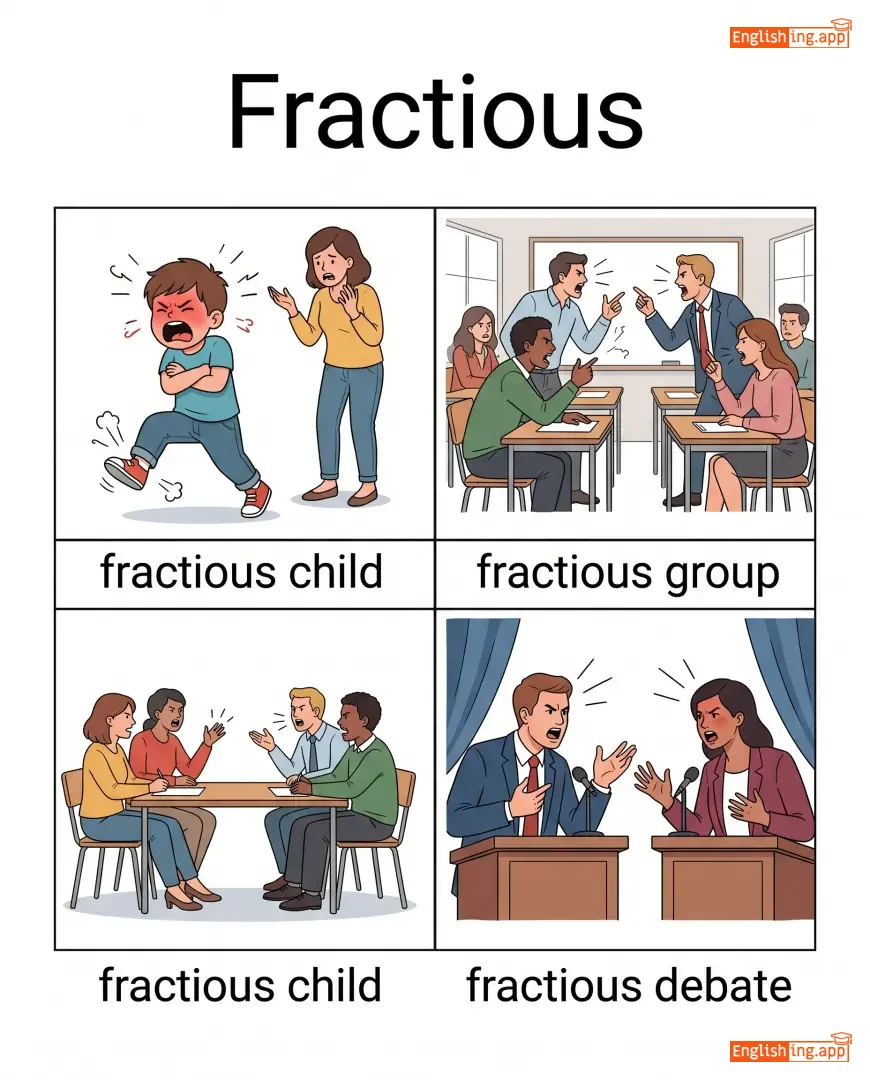
fractious behavior, fractious child, fractious mood
••••••
|
Fractious in Japanese is like a '気難しい' child who refuses to follow instructions.
••••••
|
|
#465
🫧
|
/foʊm/
noun
(フォーム)
••••••
|
- •••••• |
泡
awa
••••••
|
a mass of small bubbles formed on or in liquid; frothy white mass
••••••
|
The waves crashed against the rocks, creating white foam on the shore. |
波が岩にぶつかり、浜辺に白い泡を作った。
Nami ga iwa ni butsukari, hamabe ni shiroi awa wo tsukutta.
••••••
|
froth, bubbles, lather, suds
••••••
|
solid, stillness, calm, flat
••••••
|
sea foam, shaving foam, foam rubber
••••••
|
泡は泡フォームと似ています!
••••••
|
|
#466
🦴
|
/ˈfræk.tʃər/
noun
(骨折)
••••••
|
- •••••• |
骨折; 骨のひび割れ
kossetsu, hone no hibiware
••••••
|
the cracking or breaking of a hard object or material; a break in a bone
••••••
|
The doctor confirmed that he had a hairline fracture in his wrist.
医者は彼の手首に髪の毛のような骨折があることを確認しました。
••••••
|
医者は彼の手首に髪の毛のような骨折があることを確認しました。
Isha wa kare no tekubi ni kami no ke no you na kossetsu ga aru koto o kakunin shimashita.
••••••
|
break, crack, split, rupture
••••••
|
healing, mending, repair, wholeness
••••••
|
bone fracture, stress fracture, hairline fracture
••••••
|
骨折は日本語で骨が割れることを思い出させます。
••••••
|
|
#467
💪
|
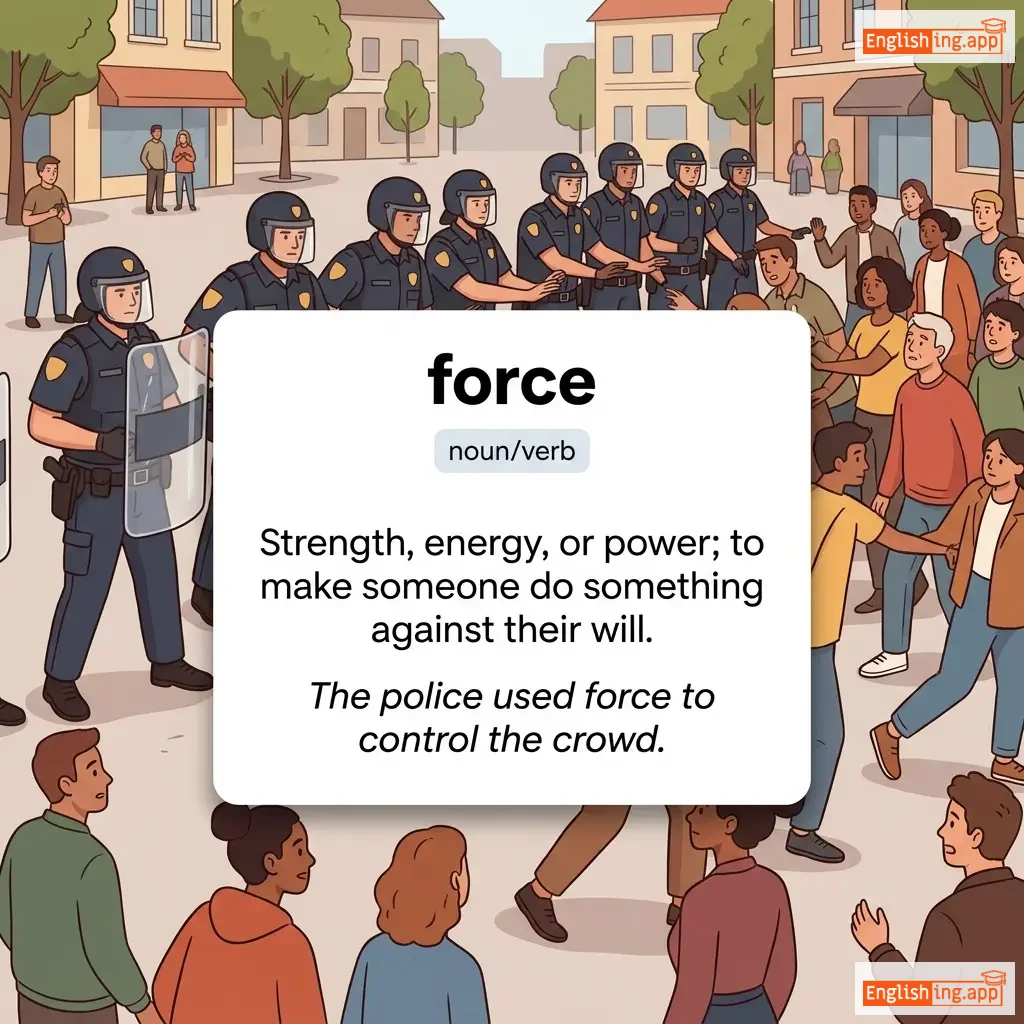
/fɔːrs/
noun
(fōsu)
••••••
|
|
力; エネルギー; 力強さ;
chikara, enerugī, chikara-zuyosa
••••••
|
strength or energy as an attribute of physical action or movement; coercion or compulsion
••••••
|
The force of the wind knocked down several trees during the storm.
風の力が嵐の間に何本かの木を倒した。
••••••
|
風の力が嵐の間に何本かの木を倒した。
Kaze no chikara ga arashi no aida ni nanbonka no ki o taoshita.
••••••
|
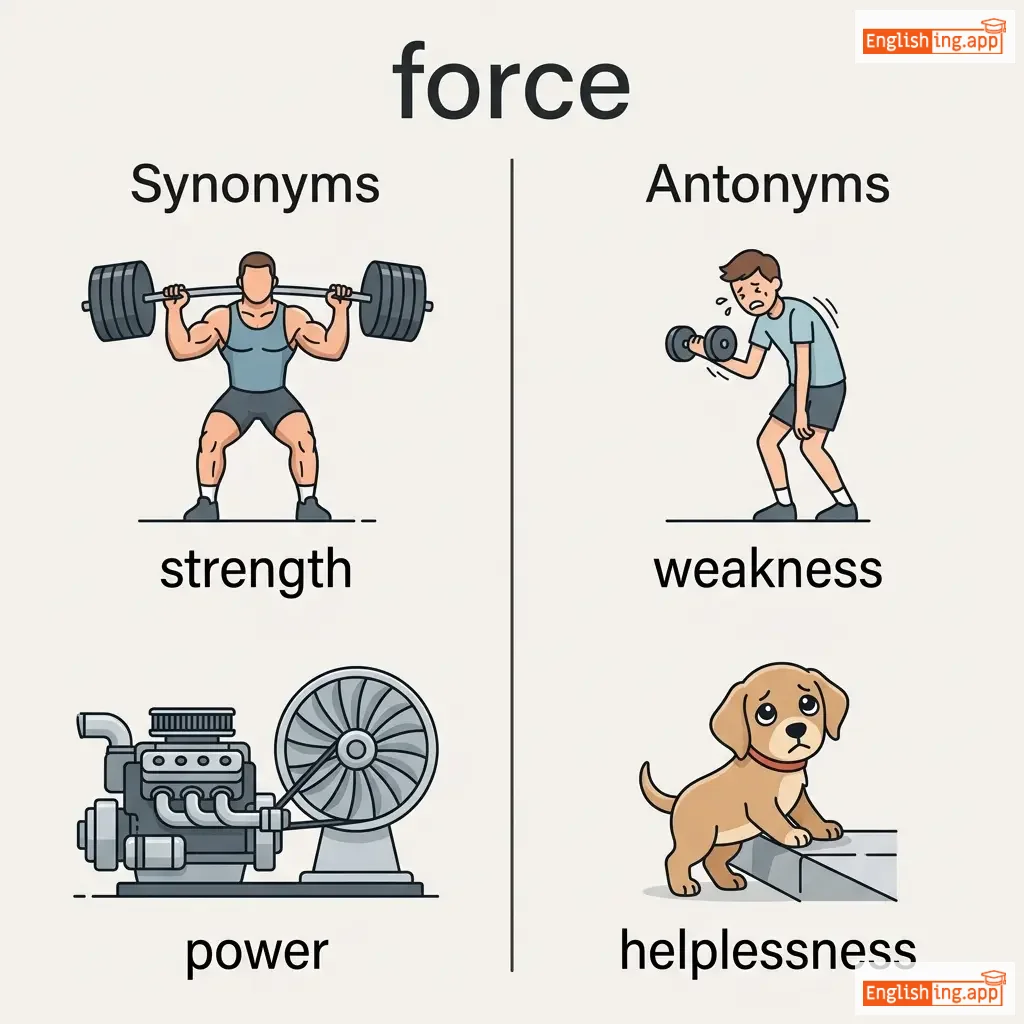
power, strength, energy, might
••••••
|
weakness, gentleness, persuasion, softness
••••••
|
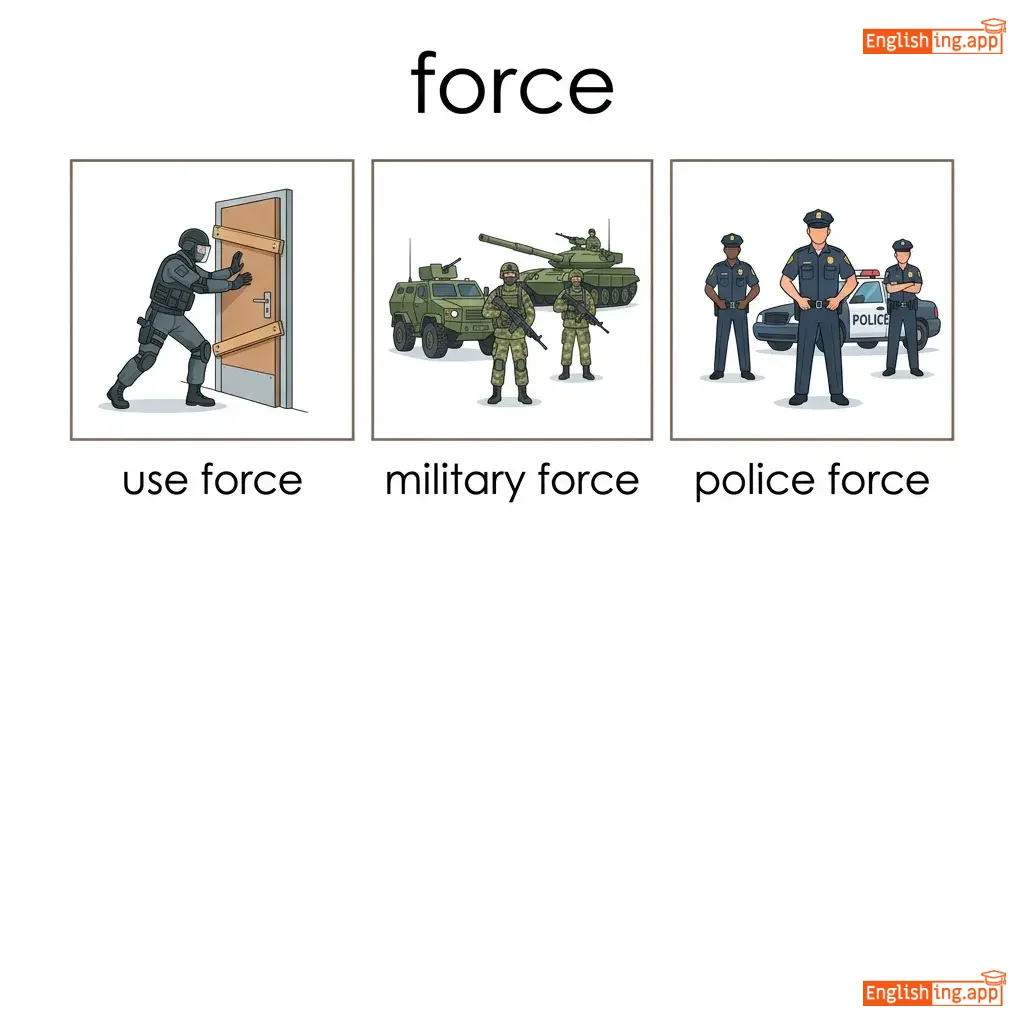
military force, use force, force of nature
••••••
|
力 = 強さ、何か強いものには力がある。
••••••
|
|
#468
🖼️
|
/freɪm/
noun
(fureimu)
••••••
|
|
フレーム; 構造
fureimu, kouzou
••••••
|
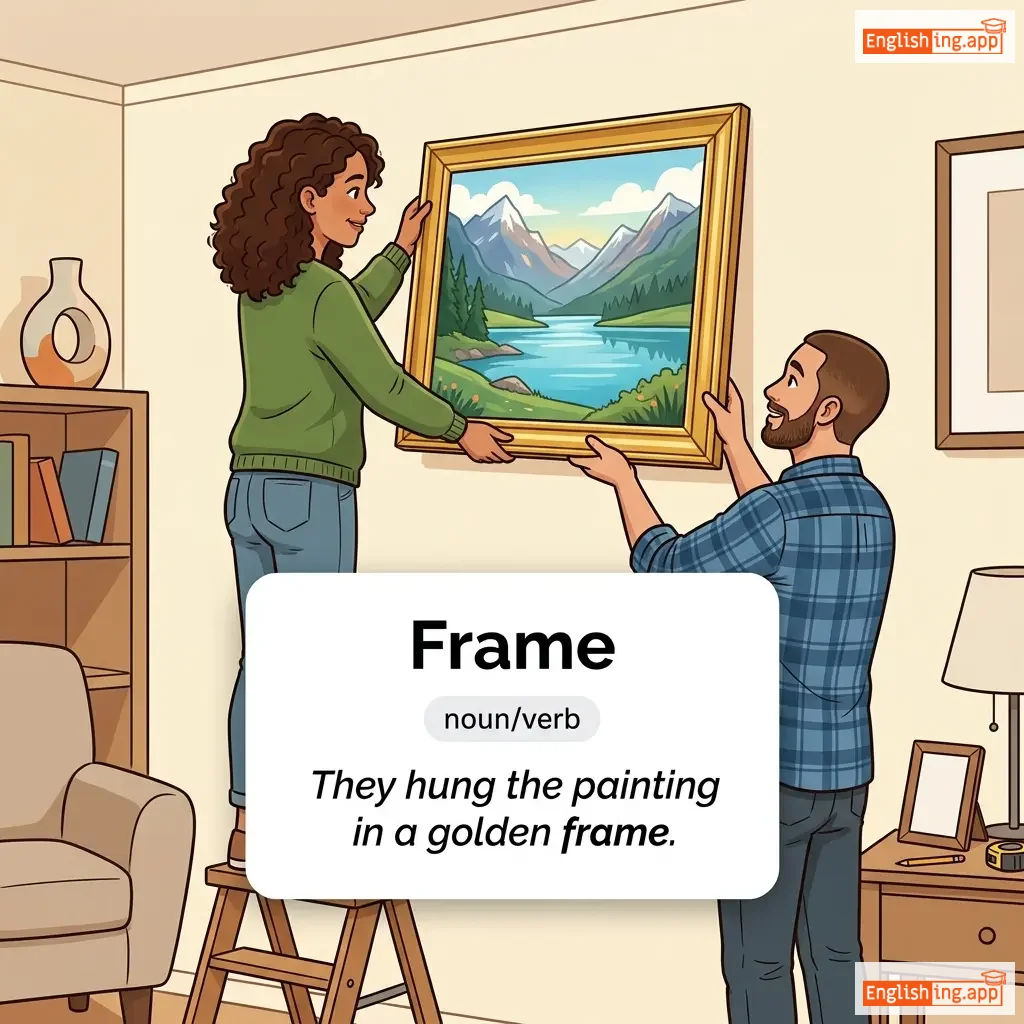
a rigid structure that surrounds or encloses something; the basic structure of something
••••••
|
She bought a beautiful wooden frame for her graduation photograph. |
彼女は卒業写真用に美しい木製のフレームを買いました。
Kanojo wa sotsugyou shashin you ni utsukushii mokusei no fureimu o kaimashita.
••••••
|
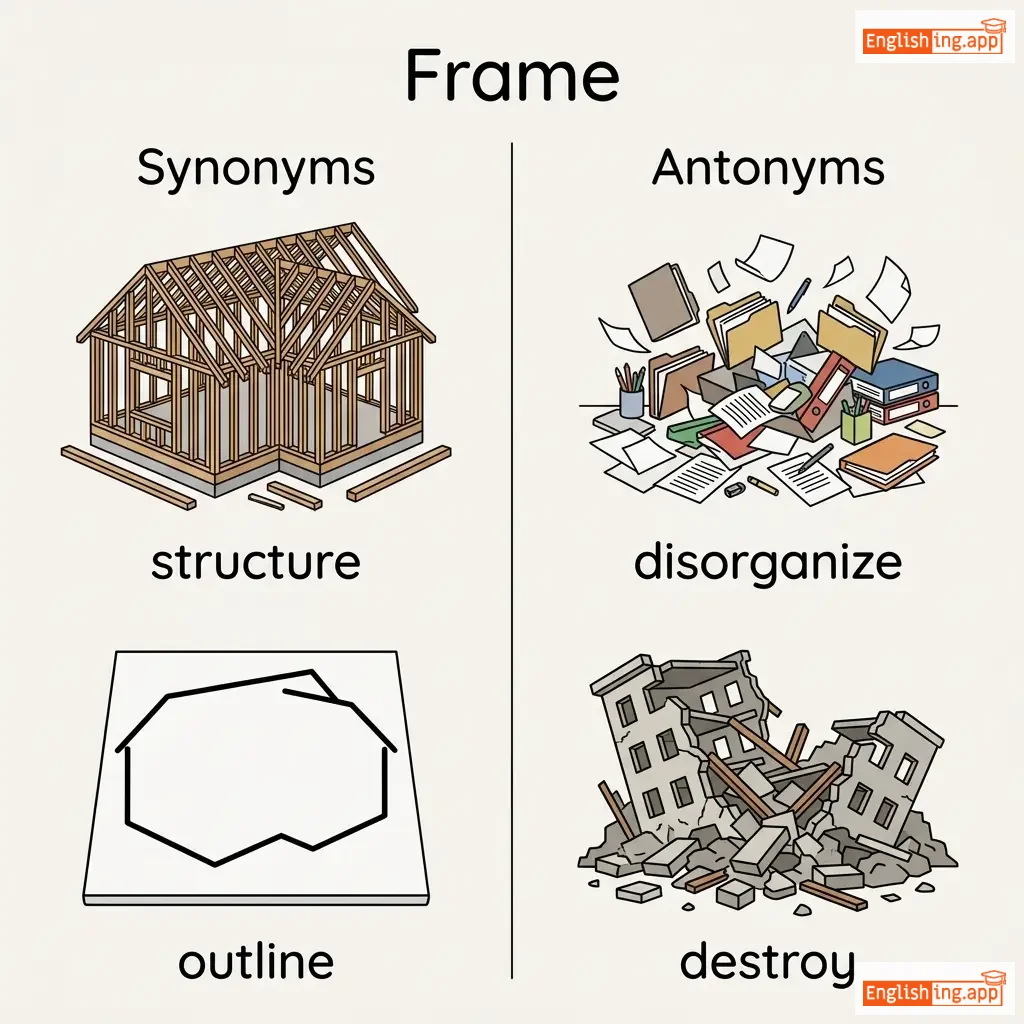
border, structure, framework, outline
••••••
|
center, interior, core, middle
••••••
|
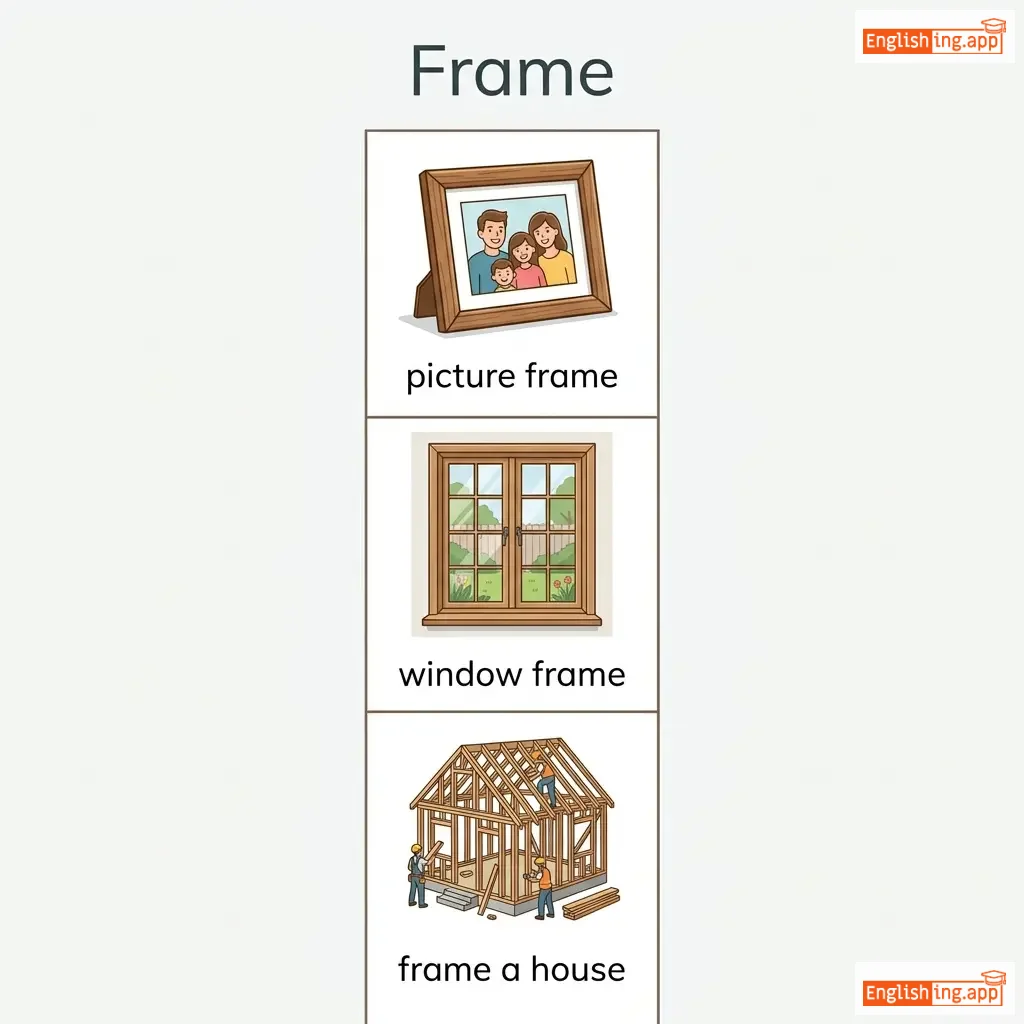
picture frame, door frame, frame of mind
••••••
|
フレームは写真を包むものです、それが意味をもたらす。
••••••
|
|
#469
🌤️
|
/ˈfɔːr.kæst/
noun
(フォーカスト)
••••••
|
- •••••• |
天気予報
tenki yohou
••••••
|
a prediction or estimate of future events, especially coming weather conditions
••••••
|
The weather forecast predicted heavy rain for the entire weekend. |
天気予報は週末全体で大雨を予測しました。
Tenki yohou wa shuumatsu zentai de ooi ame o yosoku shimashita.
••••••
|
prediction, projection, outlook, prognosis
••••••
|
hindsight, retrospection, past event, history
••••••
|
weather forecast, economic forecast, forecast accuracy
••••••
|
No •••••• |
|
#470
🧩
|
/ˈfræɡ.mənt/
noun
(フラグメント)
••••••
|
- •••••• |
断片; 部分;
danpen, bubun
••••••
|
a small part broken or separated off something; an incomplete or isolated portion
••••••
|
Archaeologists found fragments of ancient pottery buried in the soil. |
考古学者たちは土の中で古代の陶器の断片を発見しました。
Kougakusha-tachi wa tsuchi no naka de kodai no touki no danpen wo hakken shimashita.
••••••
|
piece, part, portion, shard
••••••
|
whole, complete, entirety, totality
••••••
|
bone fragment, memory fragment, text fragment
••••••
|
フラグメントはパズルのピースのようで、完成品が見えるために必要な部分です。
••••••
|
|
#471
🎩
|
/fɔːrˈmæl.ə.ti/
noun
(fōmariティ)
••••••
|
- •••••• |
形式
keishiki
••••••
|
the rigid observance of rules of convention or etiquette; a thing done simply to comply with requirements
••••••
|
The signing of the contract was just a formality; the deal was already agreed upon.
契約書にサインすることは単なる形式でした。契約はすでに合意されていました。
••••••
|
契約書にサインすることは単なる形式でした。契約はすでに合意されていました。
Keiyakusho ni sain suru koto wa tannaru keishiki deshita. Keiyaku wa sude ni gōi sarete imashita.
••••••
|
ceremony, protocol, procedure, convention
••••••
|
informality, casualness, spontaneity, flexibility
••••••
|
mere formality, legal formality, observe formalities
••••••
|
Formality = For + mal (Japanese for form)
••••••
|
|
#472
🌸
|
/ˈfreɪ.ɡrəns/
noun
(furegansu)
••••••
|
- •••••• |
香り; 香水
kaori, kōsui
••••••
|
a pleasant, sweet smell; a perfume or cologne
••••••
|
The fragrance of jasmine flowers filled the entire garden in the evening. |
ジャスミンの花の香りが夕方、庭全体に広がった。
Jasumin no hana no kaori ga yūgata, niwa zentai ni hirogatta.
••••••
|
aroma, scent, perfume, smell
••••••
|
stench, odor, foulness, bad smell
••••••
|
floral fragrance, sweet fragrance, delicate fragrance
••••••
|
No •••••• |
|
#473
📋
|
/ˈfɔːr.mæt/
noun
(フォーマット)
••••••
|
- •••••• |
フォーマット
fomatto
••••••
|
the way in which something is arranged or set out; the shape, size, and presentation of a book or document
••••••
|
Please submit your report in PDF format by the end of the week. |
週末までにPDFフォーマットで報告書を提出してください。
Shuumatsu made ni PDF fomatto de hokokusho o teishutsu shite kudasai.
••••••
|
layout, structure, arrangement, design
••••••
|
disorder, chaos, confusion, disarray
••••••
|
file format, video format, standard format
••••••
|
In Japanese, format refers to the structure of a document, like how a PDF is arranged!
••••••
|
|
#474
🚫
|
/frɔːd/
noun
(フロード)
••••••
|
- •••••• |
詐欺
sagi
••••••
|
wrongful or criminal deception intended to result in financial or personal gain
••••••
|
The company was investigated for credit card fraud and money laundering. |
その会社はクレジットカード詐欺とマネーロンダリングで調査されました。
Sono kaisha wa kurejitto kaado sagi to manee rondaringu de chousa saremashita.
••••••
|
deception, scam, swindle, trickery
••••••
|
honesty, truth, legitimacy, authenticity
••••••
|
credit fraud, insurance fraud, identity fraud
••••••
|
詐欺は破産を招く
••••••
|
|
#475
🦁
|
/ˈfɔːr.tə.tuːd/
noun
(フォルティチュード)
••••••
|
|
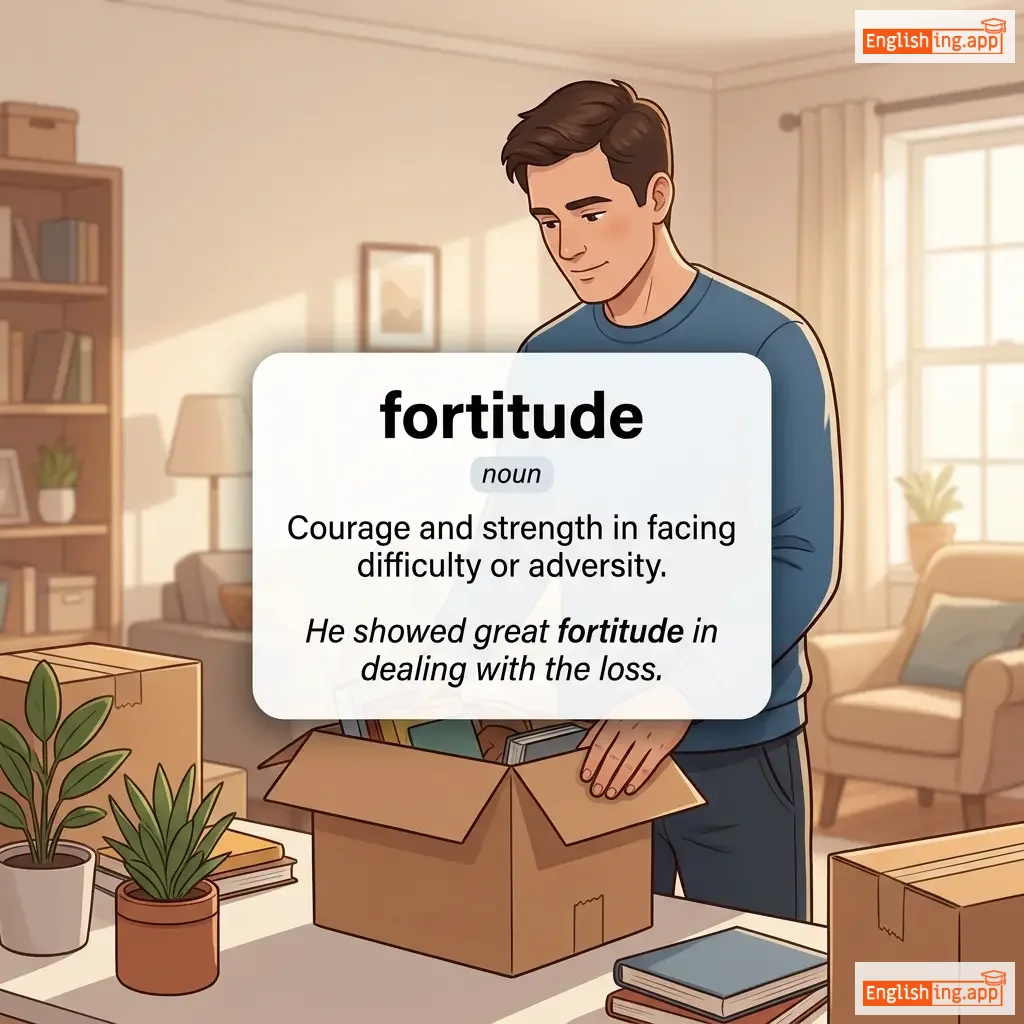
不屈; 逆境で示す勇気; 困難に直面したときの精神的および感情的な強さ
fukutsu, gyakkyo de shimesu yūki, konnan ni chokumen shita toki no seishinteki oyobi kanjōteki na tsuyosa
••••••
|
courage in pain or adversity; mental and emotional strength in facing difficulty
••••••
|
She showed great fortitude during her long battle with illness.
彼女は病気との長い戦いの中で偉大な忍耐力を示しました。
••••••
|
彼女は病気との長い戦いの中で偉大な忍耐力を示しました。
Kanojo wa byōki to no nagai tatakai no naka de idaina nintairyoku o shimashita.
••••••
|
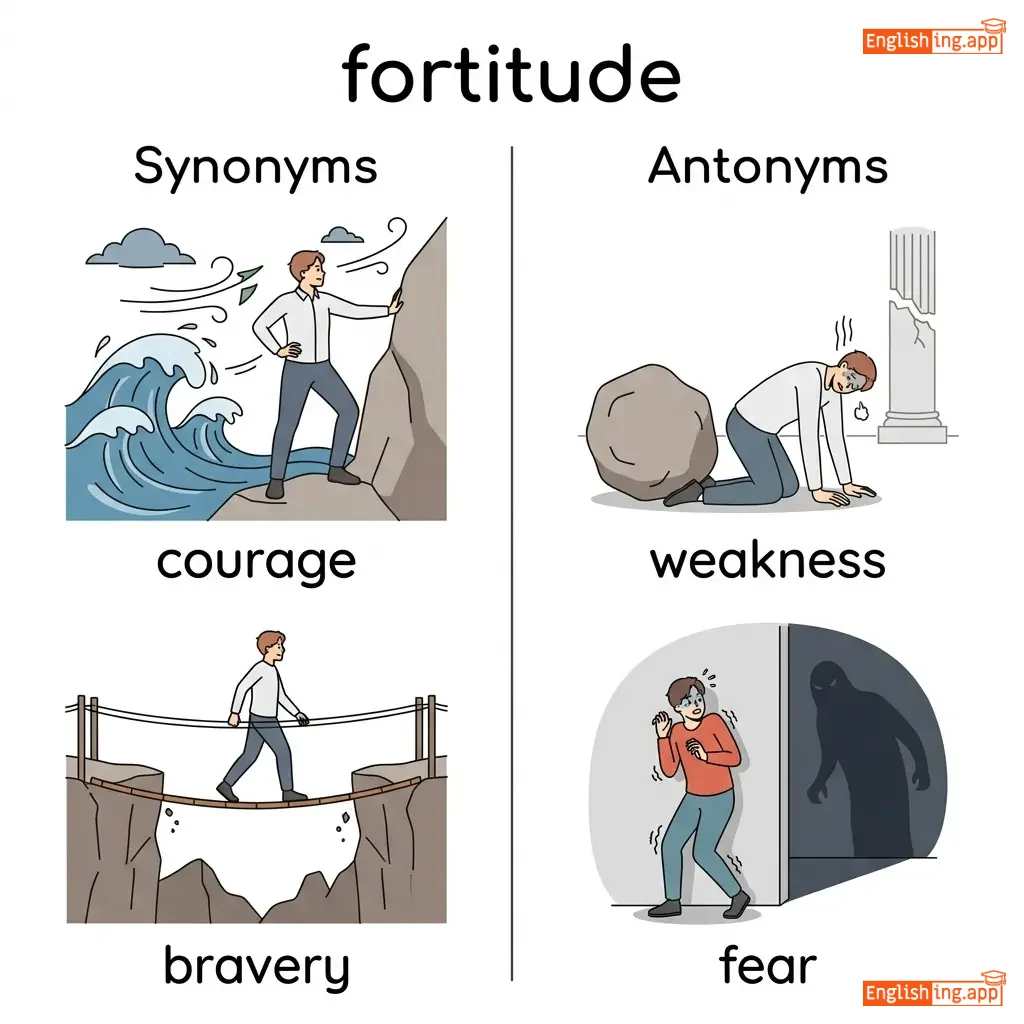
courage, bravery, endurance, resilience
••••••
|
cowardice, weakness, frailty, timidity
••••••
|
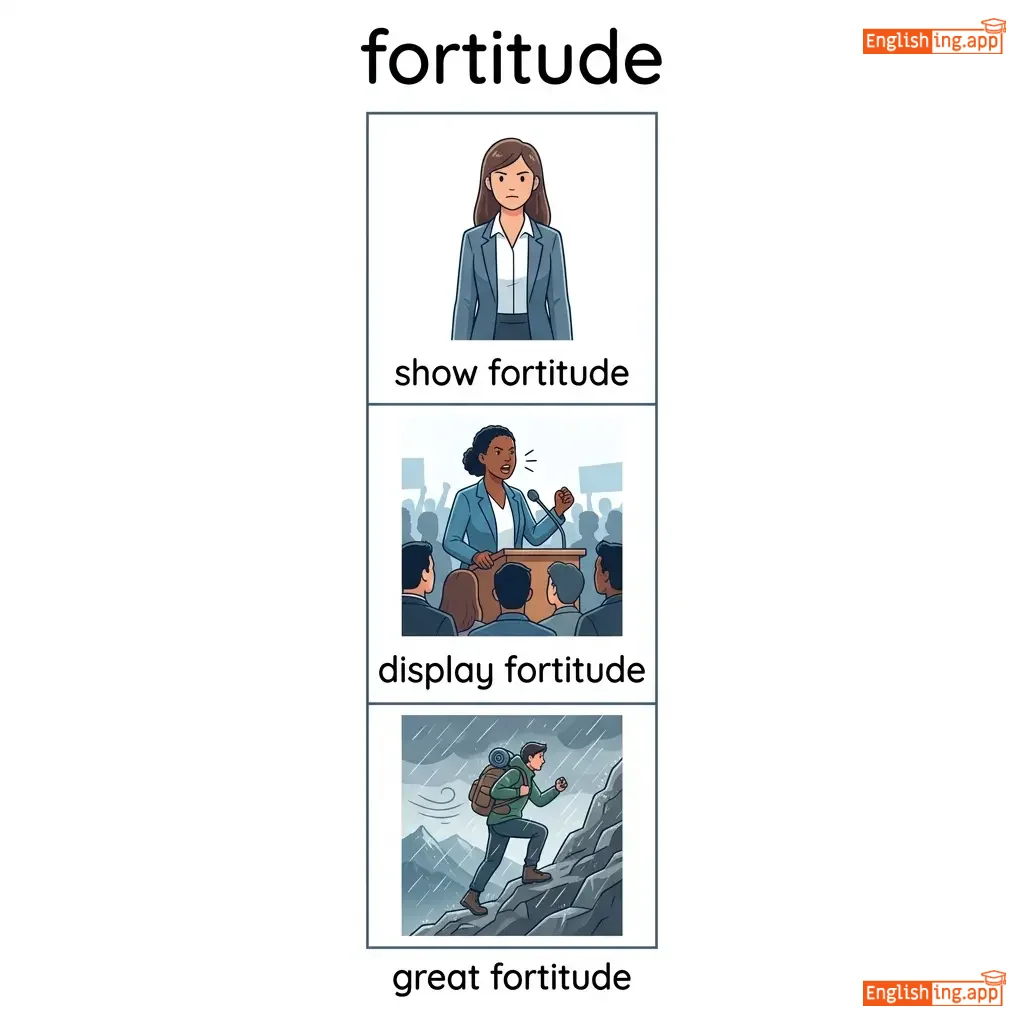
moral fortitude, show fortitude, inner fortitude
••••••
|
Fortitude in Japanese: '不屈' (fukutsu) – Think of 'fukutsu' as the strength to persist in the face of challenges.
••••••
|
|
#476
👩🦰
|
/ˈfrek.əl/
noun
(frekəl)
••••••
|
- •••••• |
そばかす
sobakasu
••••••
|
a small brownish spot on the skin, often becoming more pronounced through exposure to the sun
••••••
|
Her face was covered with cute freckles that appeared every summer.
彼女の顔は可愛いそばかすで覆われていて、毎年夏になると現れます。
••••••
|
彼女の顔は可愛いそばかすで覆われていて、毎年夏になると現れます。
Kanojo no kao wa kawaii sobakasu de ōwarete ite, mainen natsu ni naru to arawaremasu.
••••••
|
spot, mark, speckle, blemish
••••••
|
clear skin, unmarked, smooth, spotless
••••••
|
facial freckles, sun freckles, cute freckles
••••••
|
そばかすは太陽の下で目立つ小さな斑点です。
••••••
|
|
#477
🍀
|
/ˈfɔːr.tʃən/
noun
(フォーチュン)
••••••
|
- •••••• |
運; 幸運; 財産
un, kouun, zaisan
••••••
|
chance or luck as an external, arbitrary force affecting human affairs; a large amount of money or assets
••••••
|
He made his fortune by investing wisely in technology companies. |
彼はテクノロジー企業に賢明に投資することで運を得ました。
Kare wa tekunorojī kigyō ni kenmei ni tōshi suru koto de un o emashita.
••••••
|
luck, fate, wealth, prosperity
••••••
|
misfortune, poverty, bad luck, hardship
••••••
|
good fortune, fortune teller, make fortune
••••••
|
日本語では、'fortune'は運や財産を意味し、ラッキーな出来事を思い出させます。
••••••
|
|
#478
🕊️
|
/ˈfriː.dəm/
noun
(fûridamu)
••••••
|
|
自由
jiyū
••••••
|
the power or right to act, speak, or think as one wants without hindrance or restraint
••••••
|
The country celebrated its freedom from colonial rule with great enthusiasm.
その国は植民地支配からの自由を大いに祝いました。
••••••
|
その国は植民地支配からの自由を大いに祝いました。
Sono kuni wa shokuminchi shihai kara no jiyū o ōini iwai mashita.
••••••
|
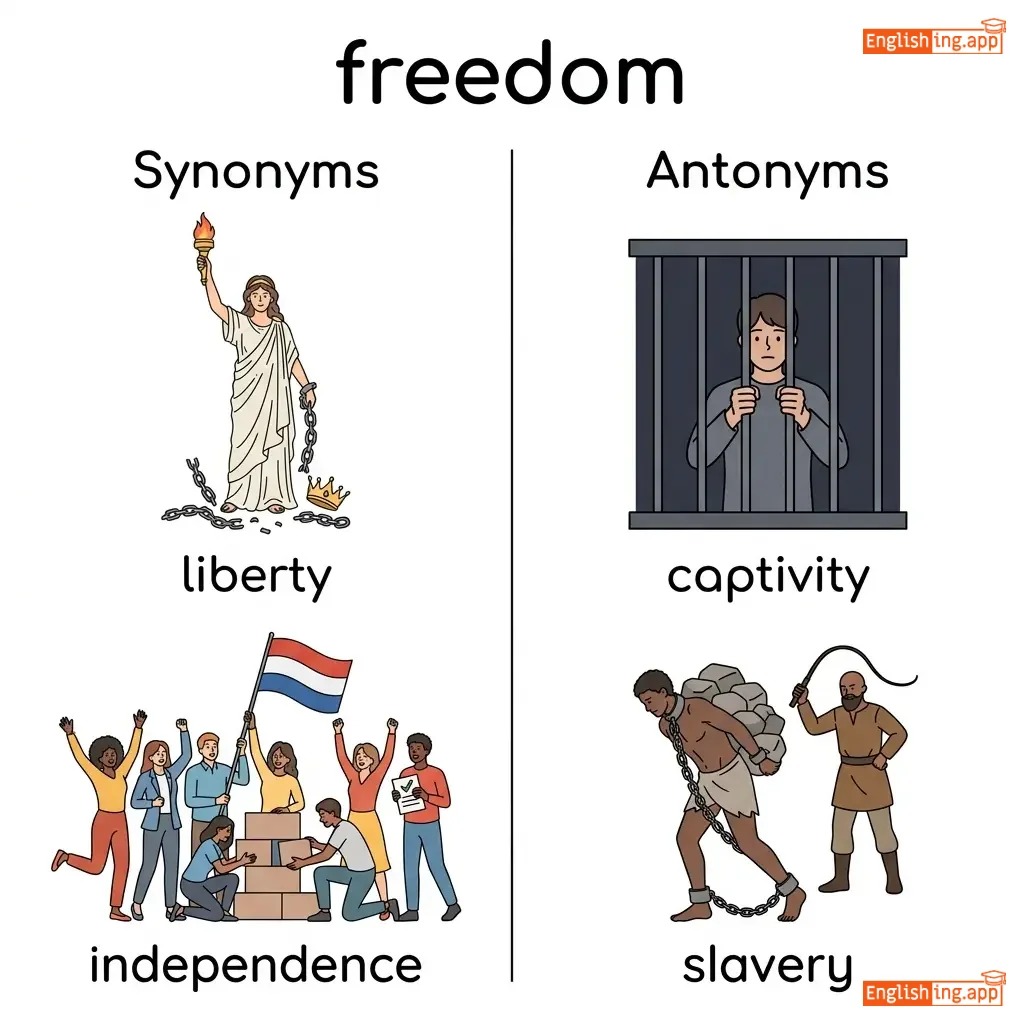
liberty, independence, autonomy, emancipation
••••••
|
captivity, slavery, oppression, bondage
••••••
|
freedom of speech, personal freedom, fight for freedom
••••••
|
In Japanese, '自由' sounds like 'Jiyu' – liberation and freedom!
••••••
|
|
#479
👨💼
|
/ˈfaʊn.dər/
noun
(ファウンダー)
••••••
|
|
創設者
sousetsu sha
••••••
|
a person who establishes an institution or settlement; someone who starts or creates something
••••••
|
Steve Jobs was the co-founder of Apple Inc. and revolutionized personal computing. |
スティーブ・ジョブズはApple Inc.の共同創設者で、個人用コンピュータを革新しました。
Sutibu Jobuzu wa Apple Inc. no kyoudou sousetsusha de, kojin you konpyu-ta o kakushin shimashita.
••••••
|
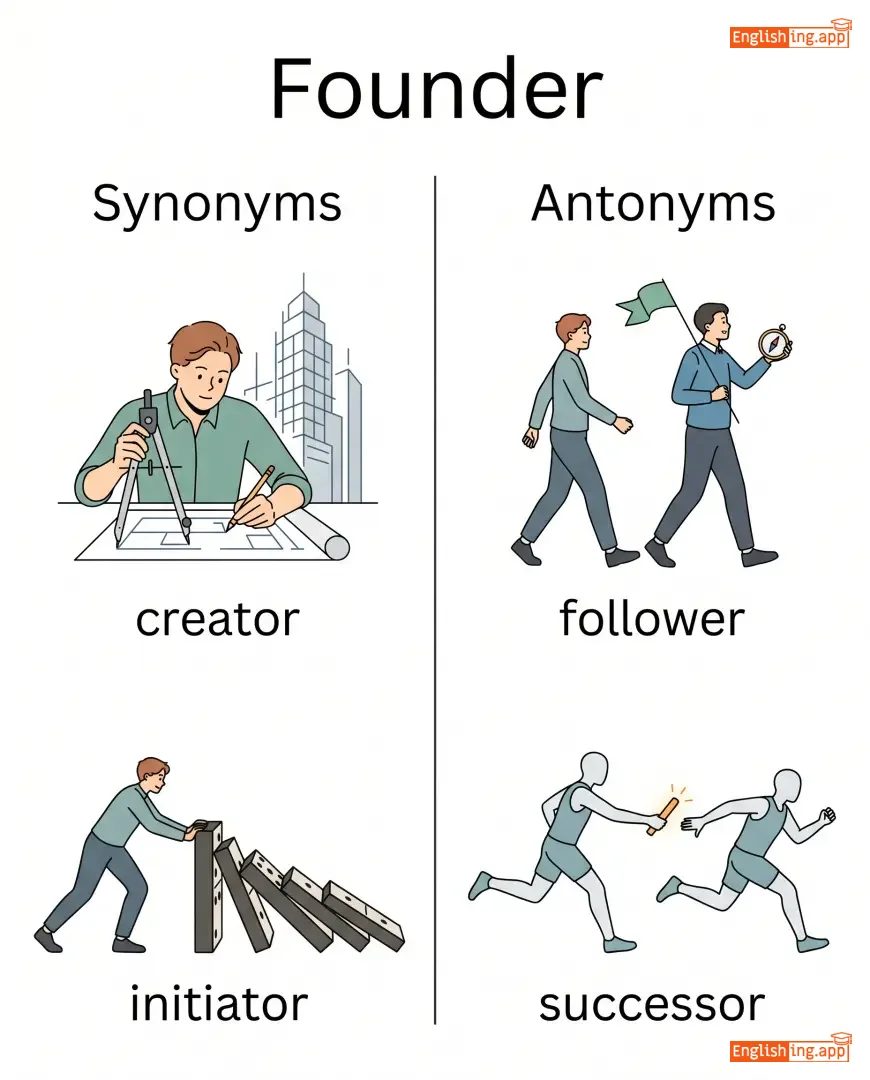
creator, establisher, originator, pioneer
••••••
|
follower, destroyer, imitator, successor
••••••
|
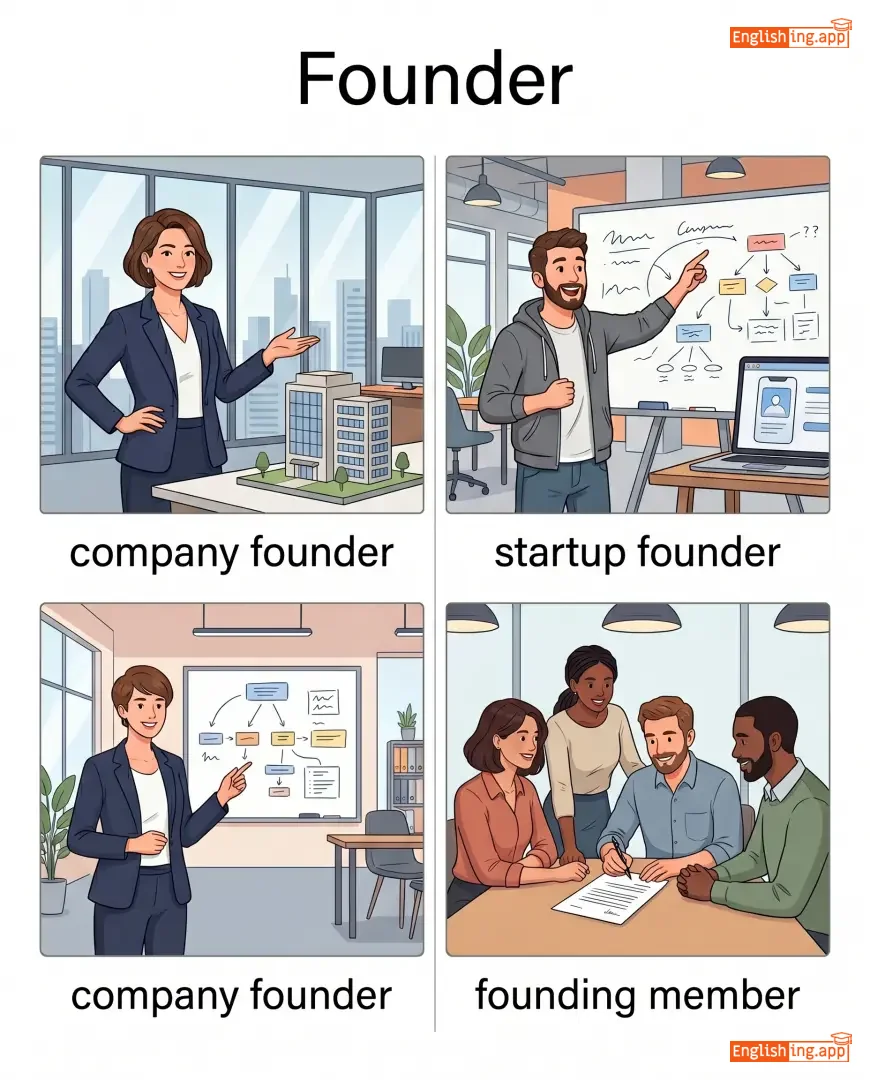
company founder, founding father, co-founder
••••••
|
創設者 - スティーブ・ジョブズのように、革新的な会社を創設しよう!
••••••
|
|
#480
🌪️
|
/ˈfren.zi/
noun
(furenji)
••••••
|
- •••••• |
熱狂
nekkyo
••••••
|
a state or period of uncontrolled excitement or wild behavior; intense activity
••••••
|
The announcement of the sale created a shopping frenzy at the mall.
セールの発表はショッピングの熱狂を引き起こしました。
••••••
|
セールの発表はショッピングの熱狂を引き起こしました。
Sēru no happyō wa shoppingu no nekkyō o hikiokoshimashita.
••••••
|
hysteria, mania, rage, excitement
••••••
|
calmness, tranquility, peace, composure
••••••
|
feeding frenzy, buying frenzy, media frenzy
••••••
|
Frenzy = ショッピング熱狂を引き起こす!
••••••
|
Vocabulary Quiz
Test your vocabulary by matching words with their translations or meanings.
Login to take the quiz
Comments (0)
Share your thoughts and join the discussion.
Join the discussion by logging in
Login to CommentNo comments yet
Be the first to share your thoughts!