

翻訳
過去
過去分詞
三人称単数
動名詞
意味
例文
例文の翻訳
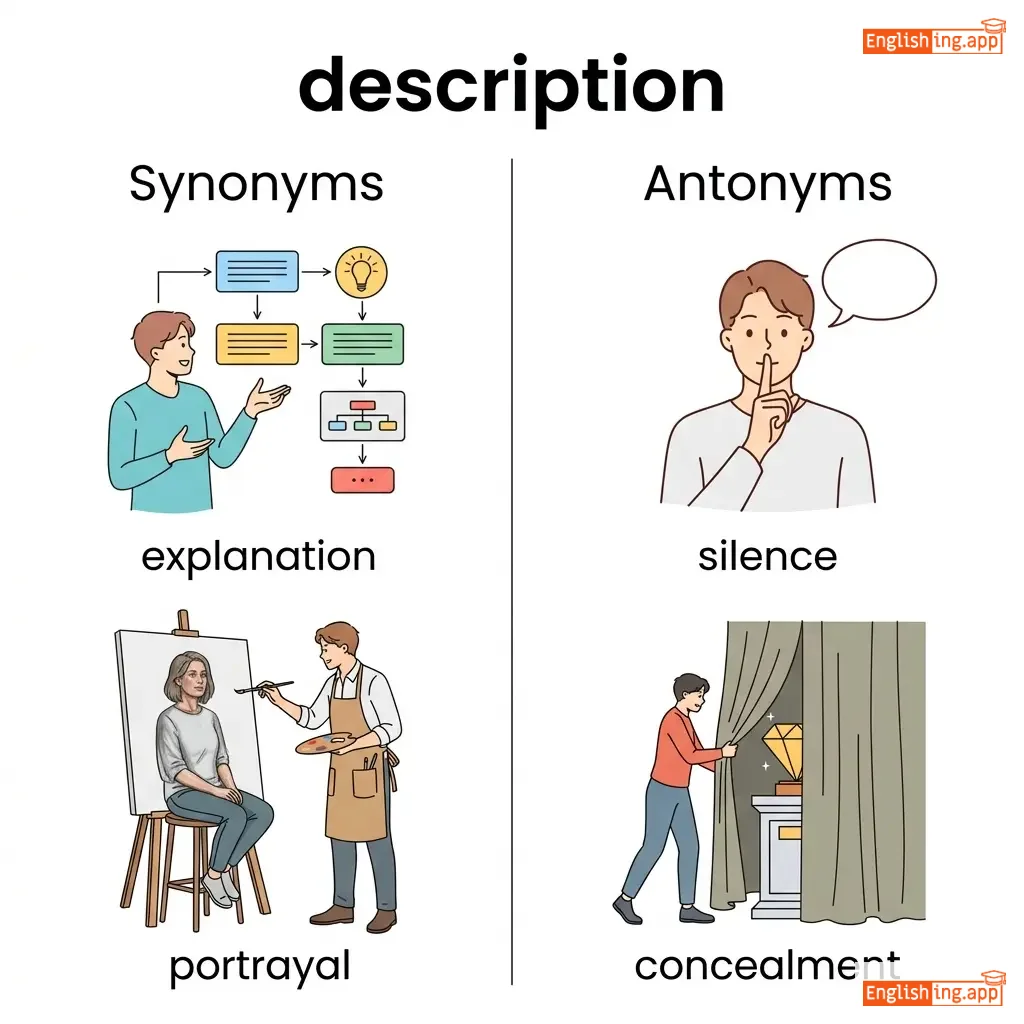
同義語
対義語
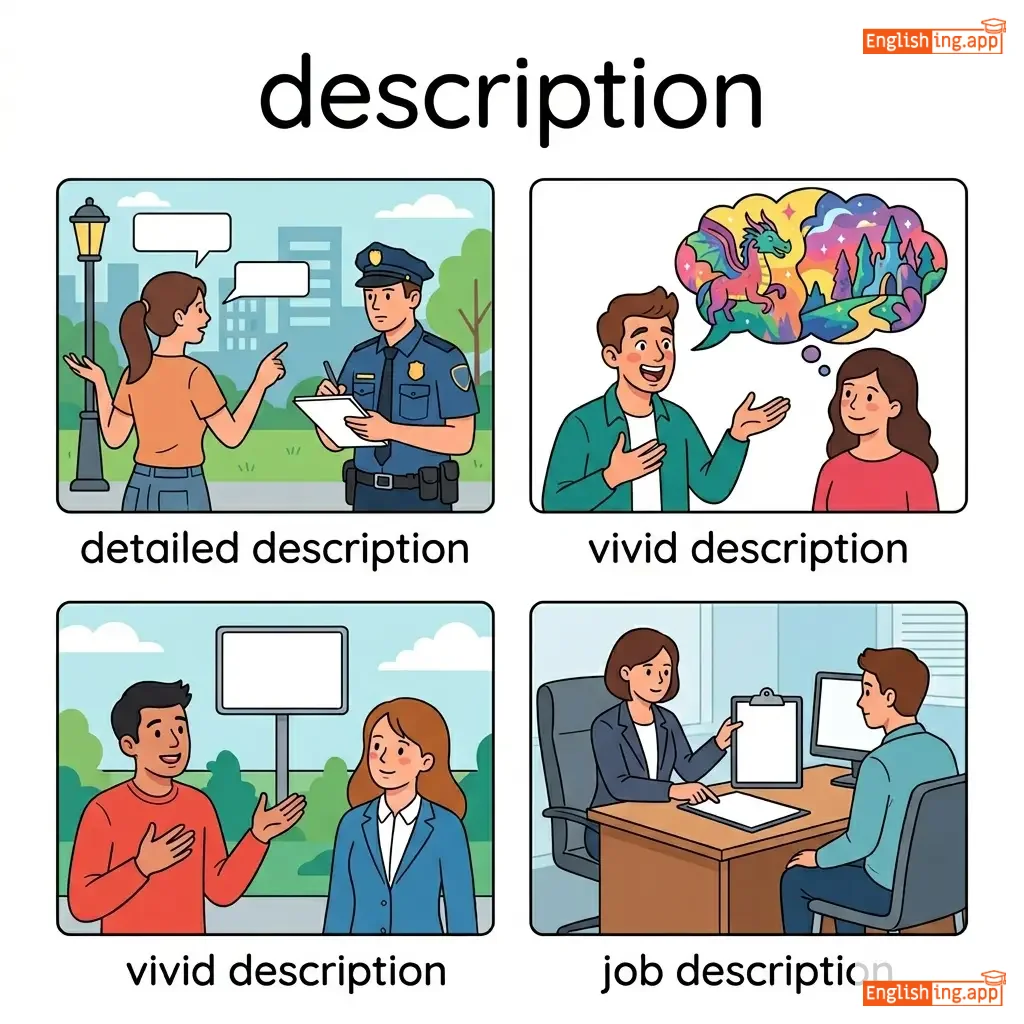
コロケーション
ニーモニック
Swipe left or right, or use the buttons. Tap image to zoom.
例文の翻訳
単語
Lesson 15Lesson 15 - マスクトグル
|
絵文字
|
単語 | Images | 翻訳 | 意味 | 例文 | 例文の翻訳 | 同義語 | 対義語 | コロケーション | ニーモニック |
|---|---|---|---|---|---|---|---|---|---|---|
|
#281
😄
|
/dɪˈlaɪt/
noun
(ディライト)
••••••
|
- •••••• |
喜び; 楽しみ
yorokobi, tanoshimi
••••••
|
a feeling of happiness or pleasure; something that gives great pleasure
••••••
|
The children's laughter filled her heart with pure delight. |
子供たちの笑い声は彼女の心を純粋な喜びで満たしました。
kodomotachi no waraigoe wa kanojo no kokoro o junsuina yorokobi de mitashimashita.
••••••
|
joy, pleasure, happiness, bliss
••••••
|
sorrow, displeasure, disappointment, misery
••••••
|
pure delight, take delight, great delight
••••••
|
No •••••• |
|
#282
✈️
|
/dɪˈpɑː.tʃər/
noun
(ディパーチャー)
••••••
|
- •••••• |
出発
shuppatsu
••••••
|
the action of leaving, especially to start a journey; a deviation from an established course
••••••
|
The departure of the train was delayed by thirty minutes due to technical issues. |
列車の出発は技術的な問題で30分遅れました。
ressha no shuppatsu wa gijutsuteki na mondai de sanjippun okuremashita.
••••••
|
exit, leaving, withdrawal, launch
••••••
|
arrival, coming, entrance, approach
••••••
|
departure time, sudden departure, departure gate
••••••
|
出発 (departure) - 新しい旅を始めるように、次の冒険に出かける準備ができる。
••••••
|
|
#283
📦
|
/dɪˈlɪv.ə.ri/
noun
(デリバリー)
••••••
|
- •••••• |
配達; 出産
haitatsu, shussan
••••••
|
the action of delivering letters, parcels, or goods; the process of giving birth
••••••
|
The delivery of the package was delayed due to bad weather conditions.
パッケージのデリバリーは悪天候のため遅れました。
••••••
|
パッケージのデリバリーは悪天候のため遅れました。
Pakkēji no deribarī wa akutenkō no tame okuremashita.
••••••
|
distribution, dispatch, shipment, birth
••••••
|
collection, pickup, retention
••••••
|
express delivery, home delivery, safe delivery
••••••
|
デリバリーは、すべてがタイムリーであるべきです。出産のように。
••••••
|
|
#284
🤝
|
/dɪˈpen.dəns/
noun
(ディペンデンス)
••••••
|
- •••••• |
依存
izon
••••••
|
the state of relying on or needing someone or something for support; addiction
••••••
|
His dependence on technology made it difficult for him to work without internet. |
テクノロジーへの依存がインターネットなしでは仕事を困難にした。
Tekunorojī e no izon ga intānetto nashi dewa shigoto o konnan ni shita.
••••••
|
reliance, addiction, need, dependency
••••••
|
independence, self-reliance, autonomy
••••••
|
drug dependence, economic dependence, complete dependence
••••••
|
依存は自分を束縛する
••••••
|
|
#285
📢
|
/dɪˈmænd/
noun
(ディマンド)
••••••
|
- •••••• |
需要;消費者の商品の要求
juyō; shōhisha no shōhin no yōkyū
••••••
|
an urgent request; the desire of consumers for goods or services
••••••
|
The demand for organic food has increased significantly in recent years. |
オーガニック食品の需要は近年顕著に増加しています。
Ōganikku shokuhin no juyō wa kin'nen kencho ni zōka shiteimasu.
••••••
|
request, requirement, need, claim
••••••
|
supply, offer, refusal, rejection
••••••
|
high demand, meet demand, supply and demand
••••••
|
需要があれば、解決策を見つけることが重要です。
••••••
|
|
#286
👶
|
/dɪˈpen.dənt/
noun
(ディペンデント)
••••••
|
- •••••• |
依存している; 扶養されている
izon shiteiru; fuyou sareteiru
••••••
|
a person who relies on another for financial support; someone who depends on others
••••••
|
As a tax dependent, she could not file her own tax return separately.
税金の扶養控除対象者として、彼女は自分の税務申告を別々に提出することができませんでした。
••••••
|
税金の扶養控除対象者として、彼女は自分の税務申告を別々に提出することができませんでした。
Zeikin no fuyou koujo taishousha toshite, kanojo wa jibun no zeimu shinkoku o betsubetsu ni teishutsu suru koto ga dekimasen deshita.
••••••
|
subordinate, reliant person, charge, ward
••••••
|
independent, self-sufficient, autonomous
••••••
|
tax dependent, financial dependent, dependent child
••••••
|
依存している意味は他の人に頼っていること、税金の扶養対象者のように
••••••
|
|
#287
🚧
|
/ˌdiː.mɑːˈkeɪ.ʃən/
noun
(ディマーカション)
••••••
|
- •••••• |
境界設定
kyōkai settei
••••••
|
the action of fixing the boundary or limits of something; separation or division
••••••
|
The demarcation between public and private land was clearly marked. |
公共の土地と私有地の境界設定は明確に示されていた。
Kōkyō no tochi to shiyūchi no kyōkai settei wa meikaku ni shimesarete ita.
••••••
|
boundary, separation, division, delimitation
••••••
|
integration, unification, merger
••••••
|
clear demarcation, demarcation line, territorial demarcation
••••••
|
境界設定 in Japanese means setting boundaries, similar to 'demarcation' in English.
••••••
|
|
#288
😞
|
/dɪˈpreʃ.ən/
noun
(うつ病)
••••••
|
- •••••• |
うつ病
utsubyo
••••••
|
a mental health condition characterized by persistent sadness; a severe economic downturn
••••••
|
The therapist helped her cope with depression through cognitive behavioral therapy. |
セラピストは認知行動療法を通じて彼女がうつ病に対処する手助けをしました。
Serapisuto wa ninchi koudou ryouhou wo tsuujite kanojo ga utsubyou ni taisho suru tedasuke wo shimashita.
••••••
|
sadness, melancholy, recession, downturn
••••••
|
happiness, joy, prosperity, boom
••••••
|
clinical depression, economic depression, severe depression
••••••
|
うつ病は心に重い雲がかかるような感覚です。
••••••
|
|
#289
❌
|
/ˌdiːˈmer.ɪt/
noun
(デメリット)
••••••
|
- •••••• |
欠点; 不利; 過ちや違反に対して与えられるマーク
kenten, furi, ayamachi ya ihan ni taishite ataerareru māku
••••••
|
a fault or disadvantage; a mark given for a fault or offense
••••••
|
The student received a demerit for arriving late to class repeatedly. |
その生徒は繰り返し遅刻したため、デメリットを受けました。
Sono seito wa kurikaeshi chikoku shita tame, demeritto o ukemashita.
••••••
|
fault, flaw, disadvantage, penalty
••••••
|
merit, advantage, benefit, reward
••••••
|
serious demerit, receive demerit, demerit point
••••••
|
デメリット - それは遅刻や過ちのマークのようなものです!
••••••
|
|
#290
🌊
|
/depθ/
noun
(デプス)
••••••
|
- •••••• |
深さ; 深いまたは深遠な特質
fukasa, fukai matawa shin'en na tokushitsu
••••••
|
the distance from the top or surface to the bottom; the quality of being intense or profound
••••••
|
The depth of the ocean in this area reaches over three thousand meters.
この地域の海の深さは3,000メートルを超えています。
••••••
|
この地域の海の深さは3,000メートルを超えています。
Kono chiiki no umi no fukasa wa sanzen meetoru wo koeteimasu.
••••••
|
profundity, deepness, intensity, extent
••••••
|
shallowness, superficiality, surface
••••••
|
ocean depth, emotional depth, in-depth analysis
••••••
|
海の深さは想像を超えた
••••••
|
|
#291
🗳️
|
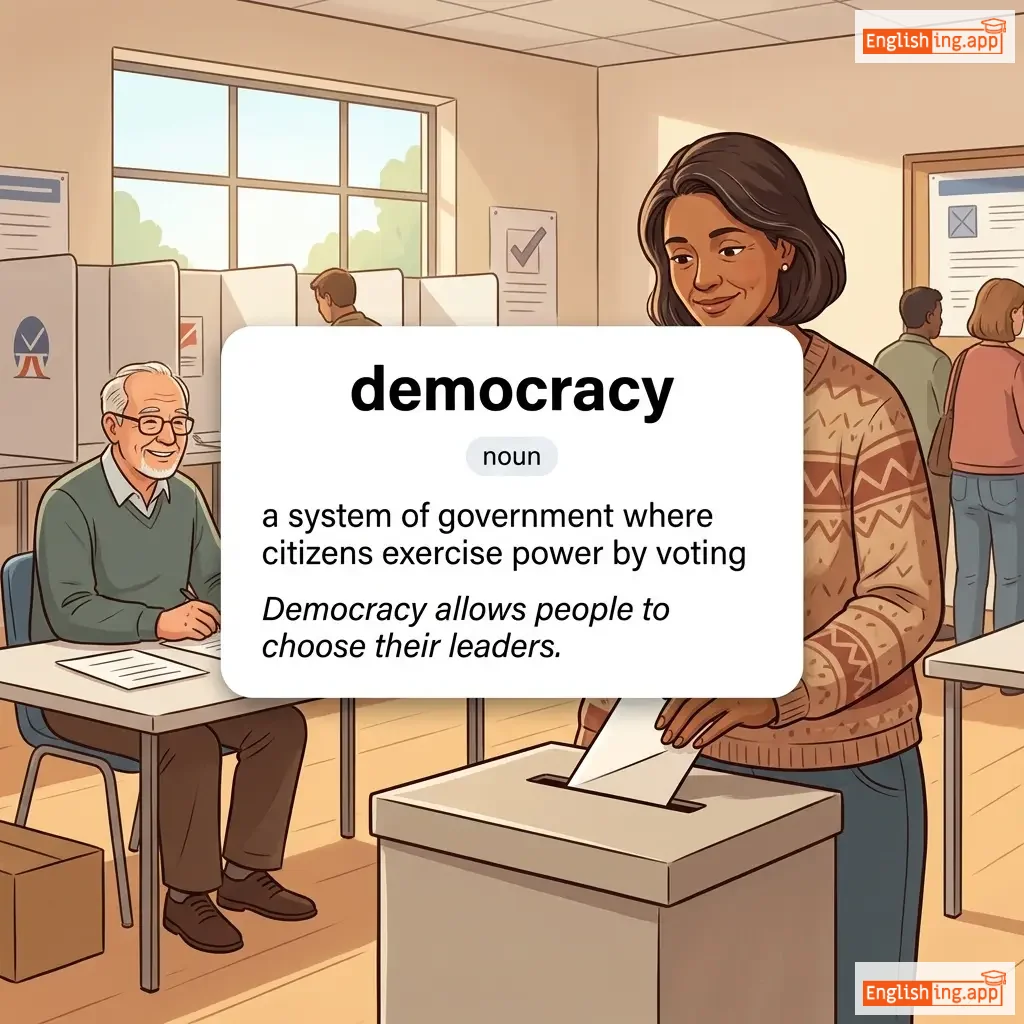
/dɪˈmɒk.rə.si/
noun
(デモクラシー)
••••••
|
|
民主主義
minshu shugi
••••••
|
a system of government by the whole population through elected representatives
••••••
|
Democracy allows citizens to participate in decision-making through voting. |
民主主義では、市民が投票を通じて意思決定に参加することができます。
minshu shugi de wa, shimin ga tōhyō o tōjite ishikettei ni sanka suru koto ga dekimasu.
••••••
|
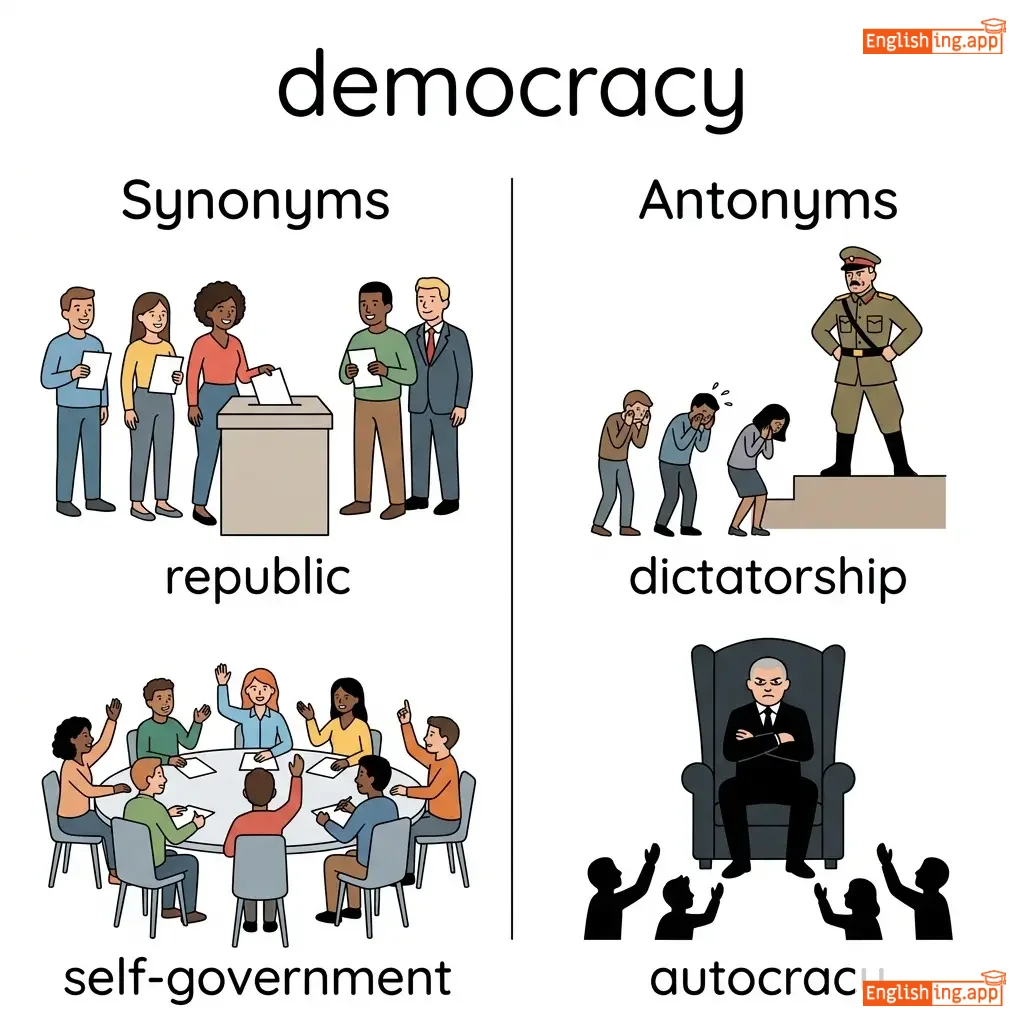
republic, self-government, popular government
••••••
|
dictatorship, autocracy, totalitarianism
••••••
|
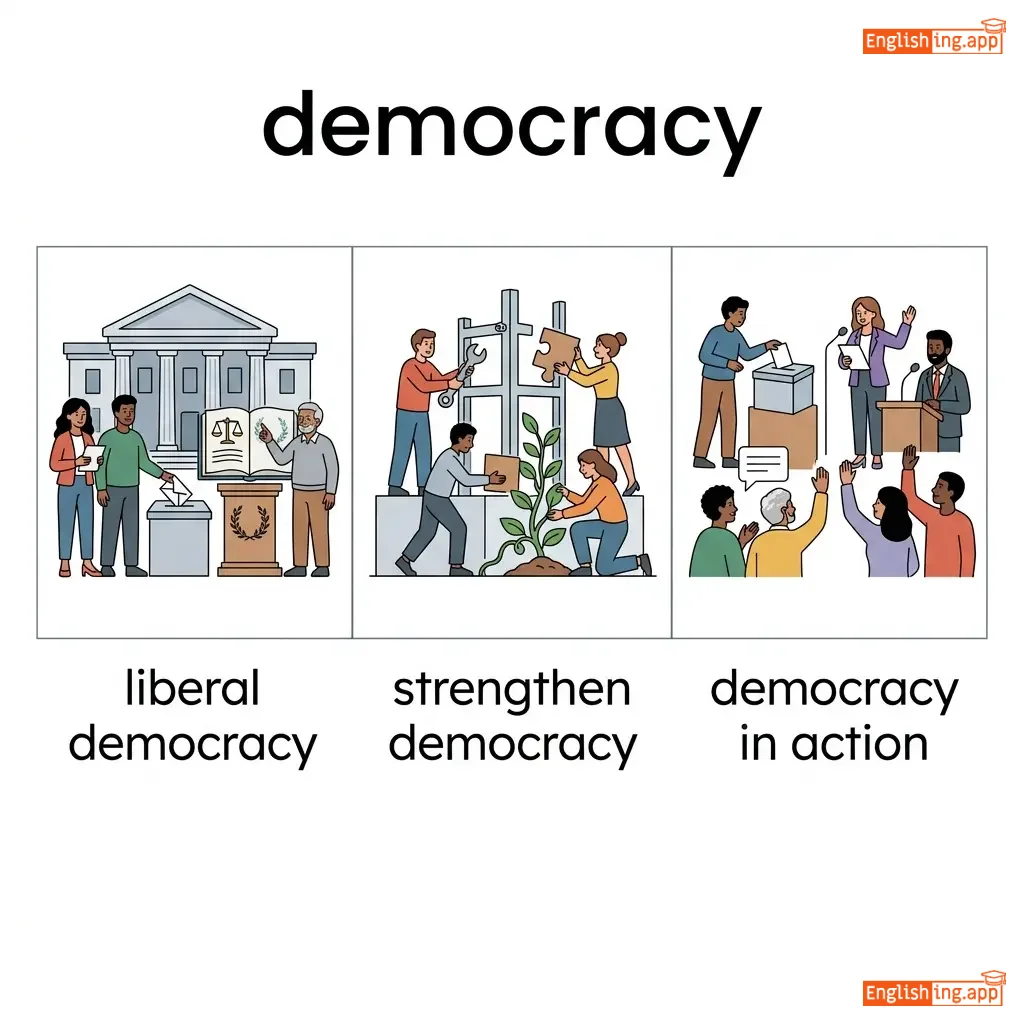
parliamentary democracy, liberal democracy, democratic process
••••••
|
民主主義 - 市民が選ぶ
••••••
|
|
#292
👨👩👧👦
|
/dɪˈsen.dənt/
noun
(ディセンダント)
••••••
|
- •••••• |
子孫
shison
••••••
|
a person who is descended from a particular ancestor; offspring of a later generation
••••••
|
She discovered that she was a descendant of European royalty through genealogy research.
彼女は系譜研究を通じて、ヨーロッパの王族の子孫であることを発見しました。
••••••
|
彼女は系譜研究を通じて、ヨーロッパの王族の子孫であることを発見しました。
Kanojo wa keifu kenkyū o tōjite, Yōroppa no ōzoku no shison de aru koto o hakken shimashita.
••••••
|
offspring, heir, progeny, successor
••••••
|
ancestor, forefather, predecessor
••••••
|
direct descendant, royal descendant, descendant of immigrants
••••••
|
In Japanese, ‘子孫’ (shison) means descendant, relating to family and ancestry.
••••••
|
|
#293
🏠
|
/den/
noun
(デン)
••••••
|
- •••••• |
巣穴; 快適な部屋; 不法活動の場所
suana; kaiteki na heya; fuhou katsudou no basho
••••••
|
a wild animal's lair or home; a small, comfortable room; a place for illegal activities
••••••
|
The fox disappeared into its den when it sensed danger approaching. |
キツネは危険が迫るのを感じて、巣穴に姿を消しました。
Kitsune wa kiken ga semaru no o kanjite, sua ni sugata o keshimashita.
••••••
|
lair, burrow, hideout, retreat
••••••
|
open space, exposure, public area
••••••
|
animal den, cozy den, thieves' den
••••••
|
No •••••• |
|
#294
📝
|
/dɪˈskrɪp.ʃən/
noun
(ディスクリプション)
••••••
|
|
説明
setsumei
••••••
|
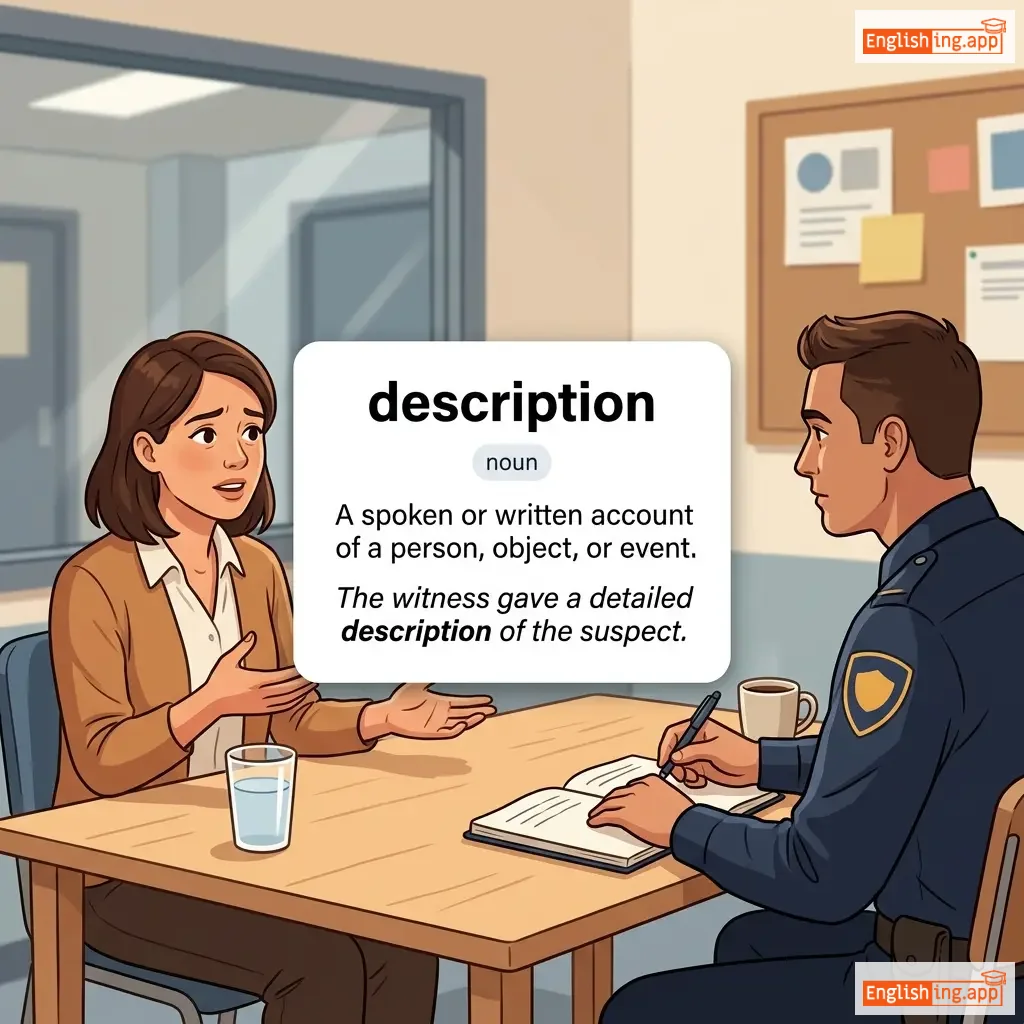
a spoken or written representation or account of someone or something
••••••
|
The witness gave a detailed description of the suspect to the police officer.
目撃者は警察官に容疑者の詳細な説明をしました。
••••••
|
目撃者は警察官に容疑者の詳細な説明をしました。
Mokugekisha wa keisatsukan ni yougisha no shousai na setsumei o shimashita.
••••••
|
account, explanation, depiction, portrayal
••••••
|
misrepresentation, distortion, concealment
••••••
|
detailed description, job description, physical description
••••••
|
説明 - 詳細に語られる出来事
••••••
|
|
#295
🚫
|
/dɪˈnaɪ.əl/
noun
(dɪˈnaɪəl)
••••••
|
- •••••• |
否認
hōnin
••••••
|
the action of declaring something to be untrue; refusal to acknowledge something
••••••
|
His denial of involvement in the scandal was met with skepticism. |
スキャンダルへの関与を否認した彼の姿勢は、疑念を持って受け止められました。
Sukyandaru e no kan'yo o hōnin shita kare no shisei wa, ginen o motte uketomeraremashita.
••••••
|
refusal, rejection, disavowal, contradiction
••••••
|
acceptance, admission, acknowledgment, confirmation
••••••
|
flat denial, complete denial, denial of access
••••••
|
否認は真実を認めないことです。
••••••
|
|
#296
🏜️
|
/ˈdez.ət/
noun
(砂漠)
••••••
|
- •••••• |
砂漠
sabaku
••••••
|
a barren area of landscape with little precipitation; an arid region with sparse vegetation
••••••
|
The Sahara Desert is one of the largest hot deserts in the world.
サハラ砂漠は世界で最も大きな熱砂漠の一つです。
••••••
|
サハラ砂漠は世界で最も大きな熱砂漠の一つです。
Sahara sabaku wa sekai de mottomo ōkina netsu sabaku no hitotsu desu.
••••••
|
wasteland, wilderness, arid region, badlands
••••••
|
oasis, forest, meadow, wetland
••••••
|
desert climate, desert storm, cross the desert
••••••
|
砂漠とは、乾燥していて砂が多い場所、サハラ砂漠のような場所です。
••••••
|
|
#297
📏
|
/ˈden.sə.ti/
noun
(デンシティ)
••••••
|
- •••••• |
密度
mitsu do
••••••
|
the degree of compactness of a substance; the quantity of something per unit area
••••••
|
The density of population in the city center is extremely high. |
市の中心部の人口密度は非常に高い。
Shi no chūshinbu no jinkō mitsudo wa hijō ni takai.
••••••
|
compactness, concentration, thickness, mass
••••••
|
sparseness, thinness, scarcity
••••••
|
population density, bone density, high density
••••••
|
密度 = 密 (dense) + 度 (degree)
••••••
|
|
#298
🏷️
|
/ˌdez.ɪɡˈneɪ.ʃən/
noun
(デジグネーション)
••••••
|
- •••••• |
任命; 役職; 職位; ステータス
ninmei, yakushoku, shokui, suteetasu
••••••
|
the action of choosing someone for a position; a name, title, or official status
••••••
|
His designation as team leader came with additional responsibilities and authority.
チームリーダーとしての彼の任命は、追加の責任と権限を伴っていました。
••••••
|
チームリーダーとしての彼の任命は、追加の責任と権限を伴っていました。
chiimu riidaa toshite no kare no ninmei wa, tsuika no sekinin to kenri o tomonatte imashita.
••••••
|
title, appointment, assignment, label
••••••
|
dismissal, removal, demotion
••••••
|
job designation, official designation, special designation
••••••
|
Designation - これは地位やタイトルを表します。
••••••
|
|
#299
🧴
|
/diˈoʊ.dər.ənt/
noun
(ディオドラント)
••••••
|
- •••••• |
デオドラント
deodoranto
••••••
|
a substance that removes or conceals unpleasant smells, especially bodily odors
••••••
|
She applied deodorant before going to the gym to stay fresh during workout. |
彼女はジムに行く前に、トレーニング中にさっぱりとした状態を保つためにデオドラントを塗りました。
Kanojo wa jimu ni iku mae ni, torēningu-chū ni sapparito shita jōtai o tamotsu tame ni deodoranto o nurimashita.
••••••
|
antiperspirant, fragrance, freshener
••••••
|
perfume, scent (positive smells)
••••••
|
roll-on deodorant, spray deodorant, natural deodorant
••••••
|
ジムで清潔を保つためのデオドラント
••••••
|
|
#300
😰
|
/dɪˈsper/
noun
(ディスペア)
••••••
|
- •••••• |
絶望
zetsubou
••••••
|
the complete loss or absence of hope; a state of feeling hopeless
••••••
|
After losing his job, he fell into despair and couldn't see any way forward.
アフター・ロージング・ヒズ・ジョブ、ヒ・フェル・イントゥ・ディスペア・アンド・クッドント・シー・エニ・ウェイ・フォーワード。
••••••
|
仕事を失った後、彼は絶望し、前に進む方法が見えなかった。
Shigoto o ushinatta ato, kare wa zetsubou shi, mae ni susumu houhou ga mienakatta.
••••••
|
hopelessness, anguish, desperation, despondency
••••••
|
hope, optimism, confidence, joy
••••••
|
deep despair, fall into despair, overcome despair
••••••
|
絶望は希望を失ったときに感じることです。
••••••
|
Vocabulary Quiz
Test your vocabulary by matching words with their translations or meanings.
Login to take the quiz
Comments (0)
Share your thoughts and join the discussion.
Join the discussion by logging in
Login to CommentNo comments yet
Be the first to share your thoughts!