

翻訳
過去
過去分詞
三人称単数
動名詞
意味
例文
例文の翻訳
同義語
対義語
コロケーション
ニーモニック

Swipe left or right, or use the buttons. Tap image to zoom.
例文の翻訳
単語
Lesson 66Lesson 66 - マスクトグル
|
絵文字
|
単語 | Images | 翻訳 | 意味 | 例文 | 例文の翻訳 | 同義語 | 対義語 | コロケーション | ニーモニック |
|---|---|---|---|---|---|---|---|---|---|---|
|
#1301
✂️
|
/slɪt/
noun
(スリット)
••••••
|
- •••••• |
切れ目
kireme
••••••
|
a long narrow opening or cut
••••••
|
There was a small slit in the fabric.
生地に小さなスリットがありました。
••••••
|
生地に小さな切れ目がありました。
Kiji ni chiisana kireme ga arimashita.
••••••
|
cut, opening, gap, crack
••••••
|
closure, seal
••••••
|
narrow slit, small slit, slit open
••••••
|
切れ目は布に見える小さなスリットのようなものです。
••••••
|
|
#1302
👻
|
/soʊl/
noun
(魂)
••••••
|
- •••••• |
魂
tamashī
••••••
|
the spiritual or immaterial essence of a human being or animal; a person's emotional or intellectual nature
••••••
|
She poured her heart and soul into her artwork.
彼女は芸術作品に心と魂を込めました。
••••••
|
彼女は芸術作品に心と魂を込めました。
kanojo wa geijutsu sakuhin ni kokoro to tamashī o komemashita.
••••••
|
spirit, essence, heart, core
••••••
|
body, flesh, matter
••••••
|
heart and soul, lost soul, soul mate, save one's soul
••••••
|
魂 (Tamashī) - 創造の中に込められた魂
••••••
|
|
#1303
⛰️
|
/sloʊp/
noun
(スロープ)
••••••
|
- •••••• |
坂; 傾斜地
saka; keishachi
••••••
|
an inclined surface; a piece of ground that is not level
••••••
|
We walked up the steep slope of the mountain.
私たちは山の急な坂を登りました。
••••••
|
私たちは山の急な坂を登りました。
Watashitachi wa yama no kyūna saka o noborimashita.
••••••
|
incline, gradient, hill, ramp
••••••
|
flat, level, plateau
••••••
|
steep slope, gentle slope, ski slope
••••••
|
坂(saka)は上り坂、登り続ける道
••••••
|
|
#1304
📍
|
/sɔːrs/
noun
(ソース)
••••••
|
- •••••• |
源
soosu
••••••
|
a place, person, or thing from which something originates; the origin of information
••••••
|
The river's source is high in the mountains.
川の源流は山の高い所にある。
••••••
|
川の源流は山の高い所にある。
kawanogenryuuwayamanotakaitokoroniaru
••••••
|
origin, beginning, root, foundation
••••••
|
destination, end, result, outcome
••••••
|
reliable source, news source, water source, energy source
••••••
|
源GENは山の頂上で現れる image を思い出す混合メモ: Sourceは起点である
••••••
|
|
#1305
🦥
|
/sloʊθ/
noun
(スロース)
••••••
|
- •••••• |
怠惰; 仕事や努力をすることに対する reluctance
taida; shigoto ya doryoku o suru koto ni taisuru reluctance
••••••
|
laziness; reluctance to work or make an effort
••••••
|
His sloth prevented him from achieving his goals.
彼のスロースは、目標達成を妨げました。
••••••
|
彼の怠惰は、目標達成を妨げました。
Kare no taida wa, mokuhyou tassei o samatagemashita.
••••••
|
laziness, idleness, lethargy, inactivity
••••••
|
diligence, activity, energy, industriousness
••••••
|
deadly sloth, overcome sloth, fall into sloth
••••••
|
怠惰は成功への道を閉ざします。
••••••
|
|
#1306
🎁
|
/ˌsuːvəˈnɪər/
noun
(スーベニア)
••••••
|
- •••••• |
お土産
omiyage
••••••
|
a thing that is kept as a reminder of a person, place, or event; a memento
••••••
|
I bought a small souvenir from the gift shop.
私はギフトショップで小さな土産を買いました。
••••••
|
私はギフトショップで小さな土産を買いました。
Watashi wa gifuto shoppu de chiisana omiyage o kaimashita.
••••••
|
memento, keepsake, reminder, token
••••••
|
necessity, essential, requirement
••••••
|
souvenir shop, tourist souvenir, travel souvenir, souvenir collection
••••••
|
お土産 = 旅行の思い出として買うもの。
••••••
|
|
#1307
🏚️
|
/slʌm/
noun
(スラム)
••••••
|
- •••••• |
スラム街
suram gai
••••••
|
a poor urban area with substandard housing and squalid conditions
••••••
|
The government is working to improve conditions in the slum.
政府はスラムの条件を改善するために取り組んでいます。
••••••
|
政府はスラムの条件を改善するために取り組んでいます。
Seifu wa suramu no jouken wo kaizen suru tame ni torikundeimasu.
••••••
|
ghetto, shantytown, favela, tenement
••••••
|
suburb, mansion, palace, estate
••••••
|
urban slum, slum dweller, slum clearance
••••••
|
スラム街 = Poor area with poor living conditions
••••••
|
|
#1308
⚡
|
/spɑːrk/
noun
(supāku)
••••••
|
- •••••• |
火花
kohana
••••••
|
a small fiery particle thrown off from a fire; a flash of light; something that triggers or initiates
••••••
|
A spark from the campfire ignited the dry leaves. |
キャンプファイヤーからの火花が乾いた葉を点火しました。
kyampu faiyā kara no kohana ga kawaita ha o tenka shimashita.
••••••
|
flame, flash, ignition, trigger
••••••
|
extinguish, dampen, quench
••••••
|
spark plug, spark of genius, spark interest, electric spark
••••••
|
火花、始まりの火を灯す
••••••
|
|
#1309
🧠
|
/ˈsmɑːrt.nəs/
noun
(スマートネス)
••••••
|
- •••••• |
知恵;賢さ;整然としたモダンな外観
chie; kashikosa; seizen to shita modan na gaikan
••••••
|
intelligence; cleverness; neat and fashionable appearance
••••••
|
Her smartness in solving problems impressed everyone. |
問題解決の際の彼女の知恵は、皆に感銘を与えました。
Mondai kaiketsu no sai no kanojo no chie wa, minna ni kanmei o ataemashita.
••••••
|
intelligence, cleverness, wit, elegance
••••••
|
stupidity, dullness, sloppiness
••••••
|
natural smartness, dress smartness, mental smartness
••••••
|
賢さとモダンな外見
••••••
|
|
#1310
👨⚕️
|
/ˈspeʃəlɪst/
noun
(スペシャリスト)
••••••
|
- •••••• |
専門家
senmonka
••••••
|
a person who has specialized knowledge or training in a particular area; an expert
••••••
|
She consulted a heart specialist about her condition.
彼女は自分の状態について心臓専門医に相談しました。
••••••
|
彼女は自分の状態について心臓専門医に相談しました。
Kanojo wa jibun no jōtai ni tsuite shinzō senmon'i ni sōdan shimashita.
••••••
|
expert, professional, authority, consultant
••••••
|
generalist, amateur, novice, beginner
••••••
|
medical specialist, heart specialist, IT specialist, specialist knowledge
••••••
|
専門家 = エキスパート
••••••
|
|
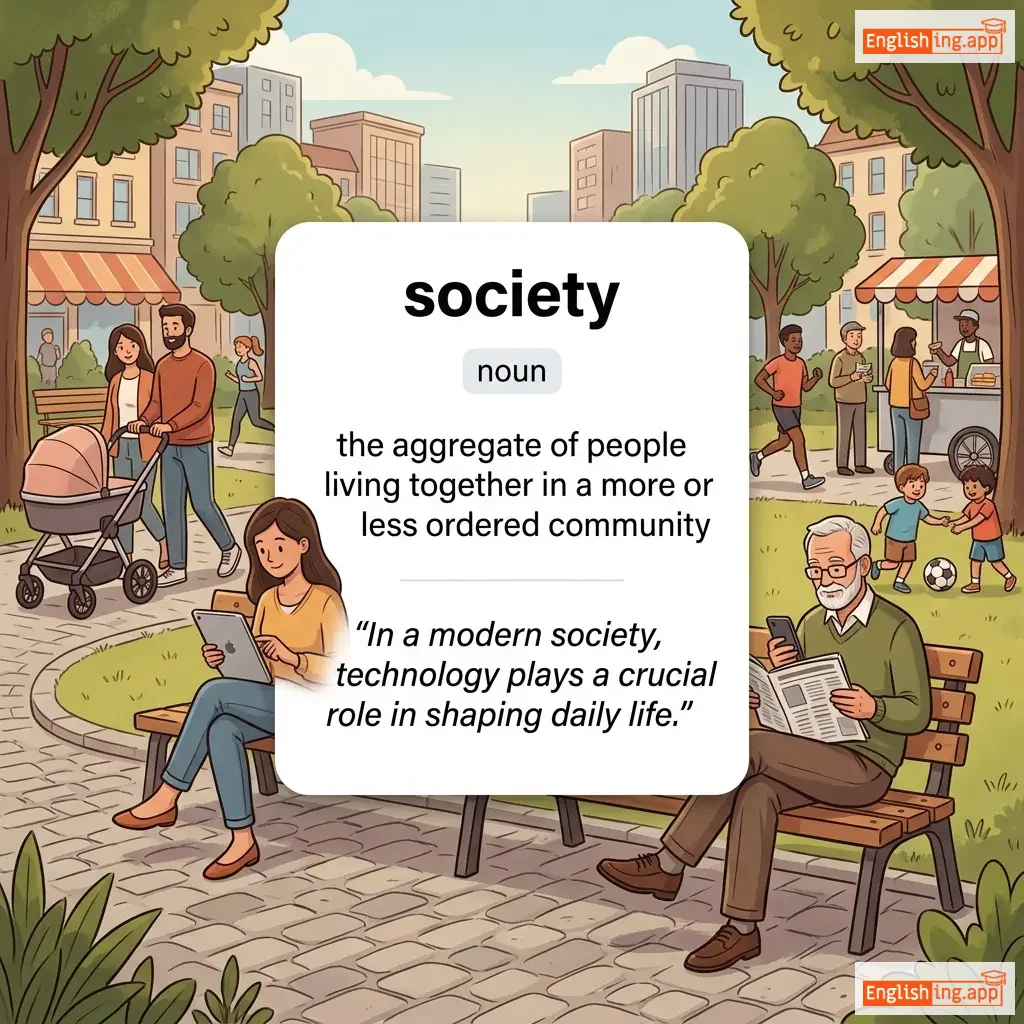
#1311
🏘️
|
/səˈsaɪ.ə.ti/
noun
(ソサエティ)
••••••
|
|
社会; 組織
shakai; soshiki
••••••
|
a community of people living together; an organization or association
••••••
|
Education plays an important role in society. |
教育は社会において重要な役割を果たします。
Kyoiku wa shakai ni oite jūyōna yakuwari o hatashimasu.
••••••
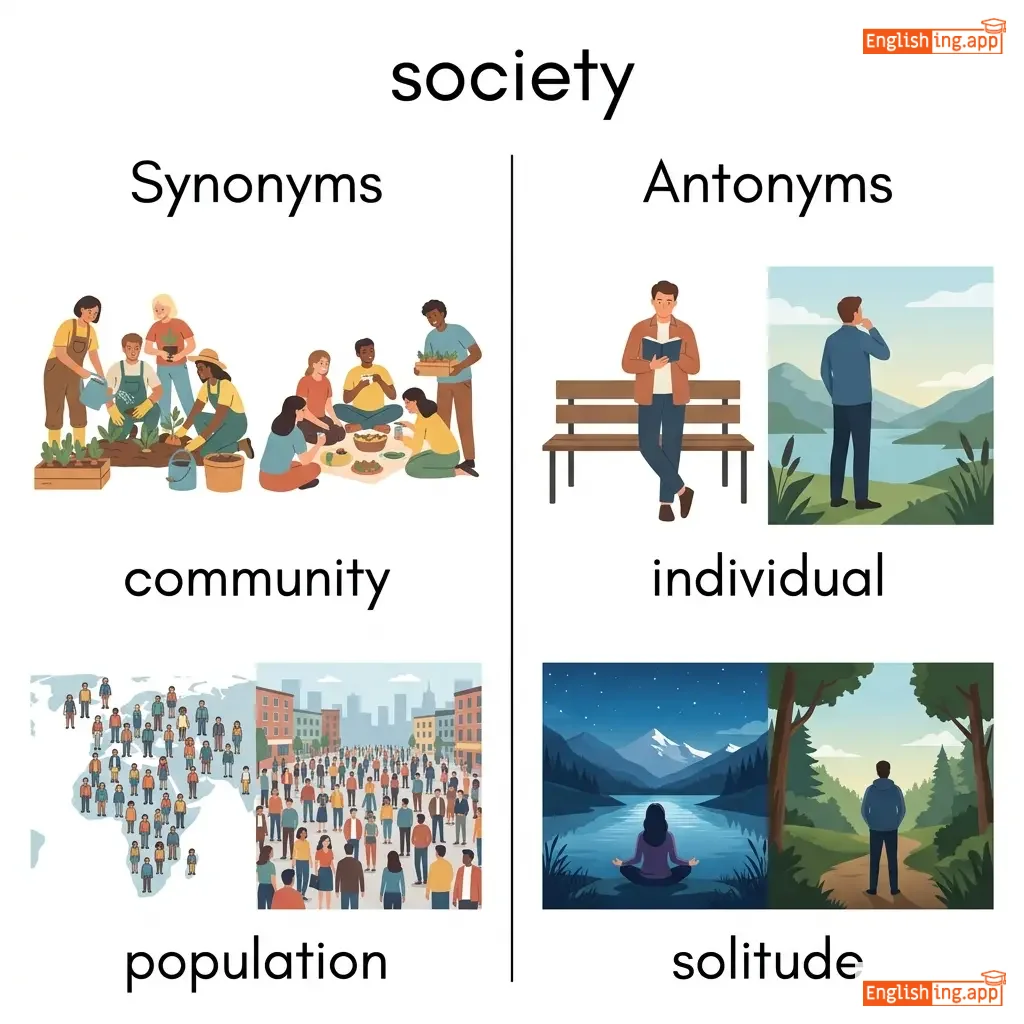
|
community, civilization, culture, association
••••••
|
isolation, solitude, individualism
••••••
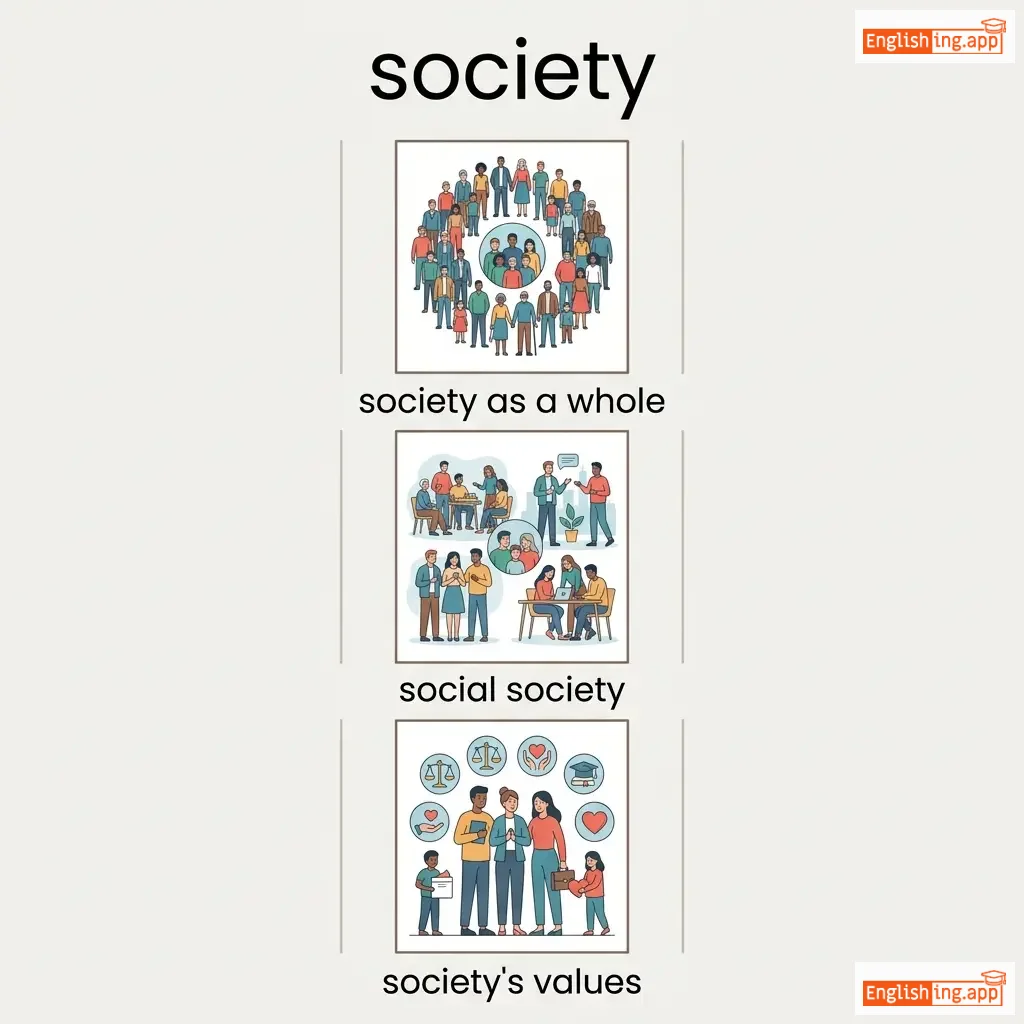
|
modern society, civil society, human society
••••••
|
社会とは共に生きること、教育はその力です。
••••••
|
|
#1312
🎆
|
/ˌspeʃiˈælɪti/
noun
(supeshariti)
••••••
|
- •••••• |
専門分野
senmon bun'ya
••••••
|
a particular area of activity or interest that someone focuses on; expertise in a specific field
••••••
|
His speciality is Italian cuisine. |
彼の専門分野はイタリア料理です。
kare no senmon bun'ya wa itaria ryōri desu.
••••••
|
expertise, forte, strength, field
••••••
|
weakness, general knowledge, inexperience
••••••
|
medical speciality, culinary speciality, area of speciality, speciality dish
••••••
|
専門分野で専門家になろう
••••••
|
|
#1313
🤗
|
/ˈsɒl.ɪs/
noun
(ソラス)
••••••
|
- •••••• |
慰め
nagomari
••••••
|
comfort or consolation in a time of distress or sadness
••••••
|
She found solace in music after her loss. |
彼女は失った後、音楽に慰めを見つけました。
Kanojo wa ushinatta ato, ongaku ni nagomari o mitsukemashita.
••••••
|
comfort, consolation, relief, peace
••••••
|
distress, agony, torment, anguish
••••••
|
find solace, seek solace, take solace
••••••
|
慰めは心を落ち着けるもので、失った後に音楽で見つけるようなものです。
••••••
|
|
#1314
🐨
|
/ˈspiːʃiːz/
noun
(supīshizu)
••••••
|
- •••••• |
種; タイプ
shu; taipu
••••••
|
a group of living organisms that can reproduce with each other; a type or kind
••••••
|
The Amazon rainforest is home to thousands of animal species.
アマゾンの熱帯雨林は何千もの動物種の家です。
••••••
|
アマゾンの熱帯雨林は何千もの動物種の家です。
Amazon no nettai urin wa nanzen mo no dōbutsu shu no ie desu.
••••••
|
type, kind, variety, category
••••••
|
individual, single organism
••••••
|
animal species, plant species, endangered species, new species
••••••
|
アマゾンの種は多様性に富んでいる。
••••••
|
|
#1315
🤝
|
/ˌsɒl.ɪˈdær.ə.ti/
noun
(ソリダリティ)
••••••
|
- •••••• |
団結
danketsu
••••••
|
unity or agreement of feeling or action among individuals with a common interest
••••••
|
The workers showed solidarity during the strike.
労働者はストライキの間、団結を示しました。
••••••
|
労働者はストライキの間、団結を示しました。
roudousha wa sutoraiki no aida, danketsu o shimashita.
••••••
|
unity, cohesion, cooperation, fellowship
••••••
|
division, discord, conflict, disagreement
••••••
|
show solidarity, express solidarity, worker solidarity
••••••
|
Danketsu in Japanese means 'solidarity' - workers stand united during strikes!
••••••
|
|
#1316
🧪
|
/ˈspesɪmən/
noun
(スペシメン)
••••••
|
- •••••• |
標本; 試料; サンプル
hyouhon; shiryou; sanpuru
••••••
|
an individual example of something; a sample collected for scientific study or testing
••••••
|
The scientist collected a blood specimen for analysis.
科学者は分析のために血液の標本を集めました。
••••••
|
科学者は分析のために血液の標本を集めました。
Kagakusha wa bunseki no tame ni ketsueki no hyouhon o atsume mashita.
••••••
|
sample, example, model, instance
••••••
|
whole, entirety, bulk
••••••
|
blood specimen, specimen jar, fine specimen, specimen collection
••••••
|
科学者が分析のために標本を集める。
••••••
|
|
#1317
💡
|
/səˈluː.ʃən/
noun
(ソリューション)
••••••
|
- •••••• |
解決策; 返信; 液体の混合物
kaiketsusaku; henshin; ekitai no kongōbutsu
••••••
|
an answer to a problem; a liquid mixture
••••••
|
We need to find a solution to this problem.
私たちはこの問題の解決策を見つける必要があります。
••••••
|
私たちはこの問題の解決策を見つける必要があります。
Watashitachi wa kono mondai no kaiketsusaku wo mitsukeru hitsuyou ga arimasu.
••••••
|
answer, resolution, remedy, fix
••••••
|
problem, question, complication
••••••
|
find solution, perfect solution, practical solution
••••••
|
Solution 解決策が必要です
••••••
|
|
#1318
👀
|
/spekˈteɪtər/
noun
(スペクテイター)
••••••
|
- •••••• |
観客
kankyaku
••••••
|
a person who watches at a show, game, or other event; an observer
••••••
|
The stadium was filled with excited spectators.
スタジアムは興奮した観客でいっぱいでした。
••••••
|
スタジアムは興奮した観客でいっぱいでした。
sutajiamu wa kofun shita kankyaku de ippai deshita
••••••
|
observer, viewer, onlooker, audience
••••••
|
participant, player, performer, actor
••••••
|
sports spectator, cheering spectators, spectator sport, spectator stand
••••••
|
In Japanese, '観客' (kankyaku) means audience—those who watch the action.
••••••
|
|
#1319
😢
|
/ˈsɒr.oʊ/
noun
(ソロ)
••••••
|
- •••••• |
悲しみ; 哀しみ;
kanashimi; kanashimi
••••••
|
a feeling of deep distress caused by loss or disappointment
••••••
|
His heart was filled with sorrow after the tragedy.
悲劇の後、彼の心は悲しみで満ちていた。
••••••
|
悲劇の後、彼の心は悲しみで満ちていた。
Higeki no ato, kare no kokoro wa kanashimi de michite ita.
••••••
|
grief, sadness, anguish, heartache
••••••
|
joy, happiness, delight, bliss
••••••
|
deep sorrow, overwhelming sorrow, share sorrow
••••••
|
悲しみに満ちた心
••••••
|
|
#1320
🤔
|
/ˌspekyəˈleɪʃən/
noun
(投機)
••••••
|
|
投機
tōki
••••••
|
the forming of a theory or conjecture without firm evidence; investment in stocks hoping to gain from fluctuations
••••••
|
There was much speculation about the company's future plans. |
会社の将来の計画について多くの投機がありました。
Kaisha no shōrai no keikaku ni tsuite ōku no tōki ga arimashita.
••••••
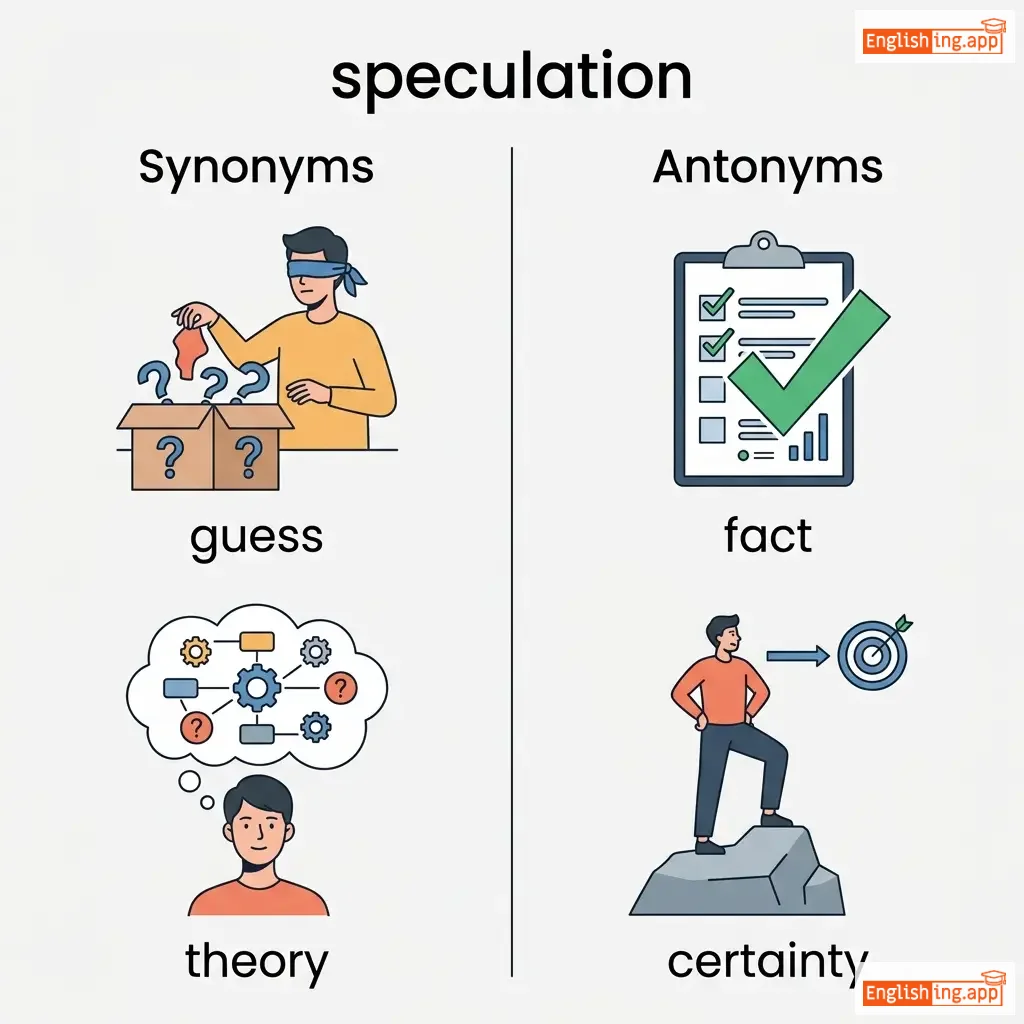
|
conjecture, theory, guess, assumption
••••••
|
certainty, fact, proof, evidence
••••••
|
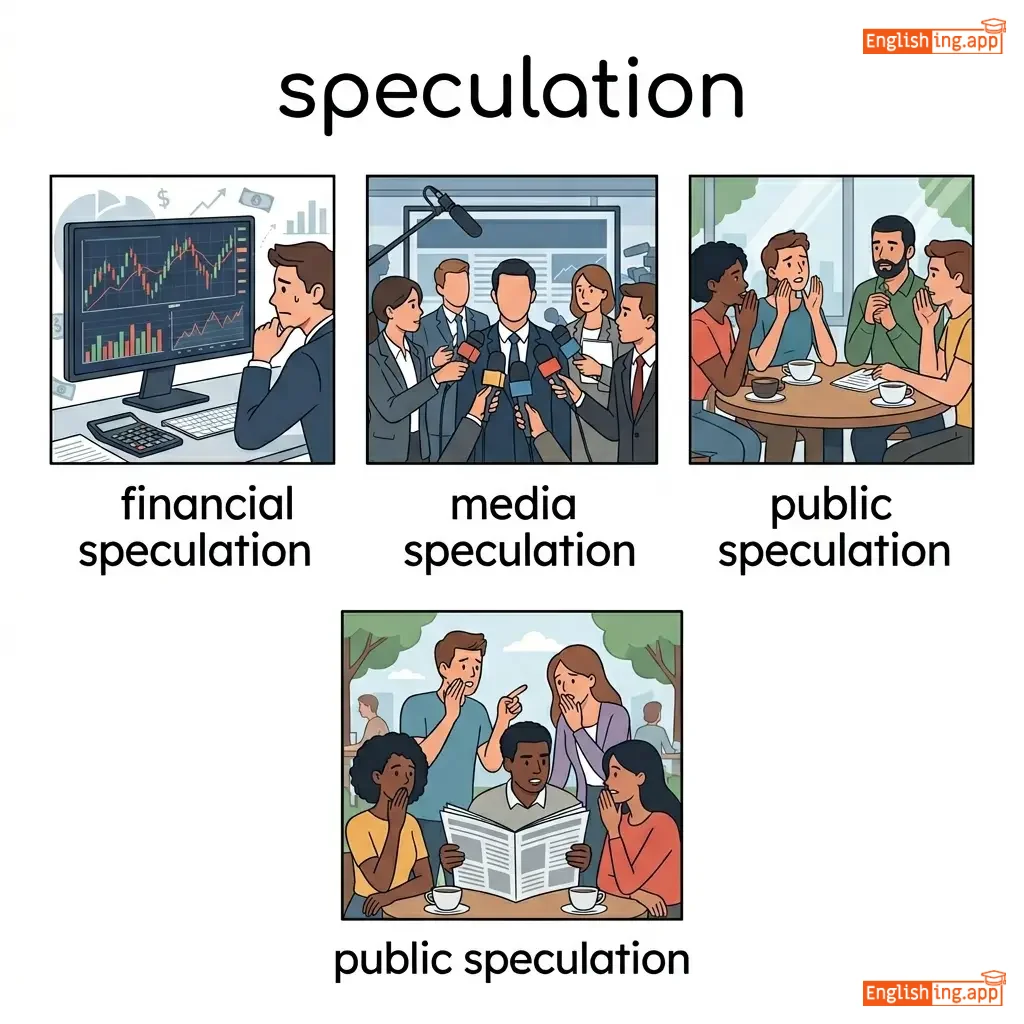
wild speculation, media speculation, speculation about, financial speculation
••••••
|
投機は証拠なしに予測することに似ています。
••••••
|
Vocabulary Quiz
Test your vocabulary by matching words with their translations or meanings.
Login to take the quiz
Comments (0)
Share your thoughts and join the discussion.
Join the discussion by logging in
Login to CommentNo comments yet
Be the first to share your thoughts!