

अनुवाद
भूतकाल
भूत कृदंत
तृतीय पुरुष एकवचन
जेरंड
मीनिंग
उदाहरण वाक्य
उदाहरण वाक्य अनुवाद
सिनोनिम्स
एंटोनिम्स
कॉलोकेशन्स
निमोनिक
Swipe left or right, or use the buttons. Tap image to zoom.
उदाहरण वाक्य अनुवाद
शब्द
Lesson 44Lesson 44 - मास्क टॉगल
|
इमोजी
|
शब्द | Images | अनुवाद | मीनिंग | उदाहरण वाक्य | उदाहरण वाक्य अनुवाद | सिनोनिम्स | एंटोनिम्स | कॉलोकेशन्स | निमोनिक |
|---|---|---|---|---|---|---|---|---|---|---|
|
#861
🎭
|
/maɪm/
noun
(माइम)
••••••
|
- •••••• |
मूक अभिनय; मूक अभिनेता;
mime
••••••
|
A performer who acts without words, using only gestures and body movements
••••••
|
The street mime entertained the crowd with his invisible box routine. |
सड़क पर माइम ने अपनी अदृश्य बॉक्स की प्रस्तुति से भीड़ को मनोरंजन किया।
sadak par mime ne apni adrishya box ki prastuti se bheed ko manoranjan kiya.
••••••
|
pantomimist, silent performer, street performer
••••••
|
speaker, narrator, vocal performer
••••••
|
street mime, mime artist, mime performance, invisible box
••••••
|
Mime और मूक अभिनय दोनों मूक शब्दों से जुड़े हैं
••••••
|
|
#862
😈
|
/ˈmɪs.kri.ənt/
noun
(मिस्क्रिऐंट)
••••••
|
- •••••• |
दुष्ट व्यक्ति; अपराधी
miscreant
••••••
|
A person who behaves badly or illegally; a villain or criminal
••••••
|
The miscreant was caught stealing from the store.
द मिस्क्रिऐंट वॉज़ कॉट स्टीलिंग फ्रॉम द स्टोर।
••••••
|
दुष्ट व्यक्ति को दुकान से चोरी करते हुए पकड़ा गया।
dusht vyakti ko dukaan se chori karte huye pakda gaya.
••••••
|
villain, criminal, wrongdoer, scoundrel
••••••
|
hero, saint, good person, law-abiding citizen
••••••
|
dangerous miscreant, petty miscreant, notorious miscreant, young miscreant
••••••
|
Miscreant - A person who misbehaves, miscreants in Hindi are 'dusht vyakti'.
••••••
|
|
#863
🔄
|
/ˈmɪm.ɪk/
noun
(मिमिक)
••••••
|
- •••••• |
नकल करने वाला; नकल;
mimic
••••••
|
A person who copies or imitates the actions, speech, or mannerisms of others
••••••
|
The talented mimic could perfectly imitate famous celebrities.
द टैलंटेड मिमिक कूड परफेक्टली इमिटेट फेमस सेलिब्रिटीज।
••••••
|
प्रतिभाशाली नकल करने वाला प्रसिद्ध हस्तियों की पूरी तरह नकल कर सकता था।
pratibhashali nakal karne wala prashiddh hastiyon ki puri tarah nakal kar sakta tha.
••••••
|
imitator, impersonator, copycat, impressionist
••••••
|
original, innovator, creator
••••••
|
talented mimic, voice mimic, animal mimic, perfect mimic
••••••
|
Hindi में 'मिमिक' शब्द का मतलब नकल करने वाला होता है, जैसे अंग्रेजी में 'Mimic' जो किसी की नकल करता है।
••••••
|
|
#864
❌
|
/ˌmɪsˈdiːd/
noun
(मिसडीड)
••••••
|
- •••••• |
दुराचार; अपराध;
misdeed
••••••
|
A wicked or illegal act; wrongdoing
••••••
|
He regretted his past misdeeds and tried to make amends. |
उसने अपने अतीत के दुराचारों पर अफसोस जताया और सुधार करने की कोशिश की।
usne apne atit ke duracharon par afsos jataya aur sudhar karne ki koshish ki.
••••••
|
wrongdoing, offense, transgression, crime
••••••
|
good deed, virtue, righteousness, kindness
••••••
|
past misdeed, serious misdeed, minor misdeed, confess misdeed
••••••
|
Misdeed: Mis- (बुरा) deed (कर्म) – बुरे कर्म
••••••
|
|
#865
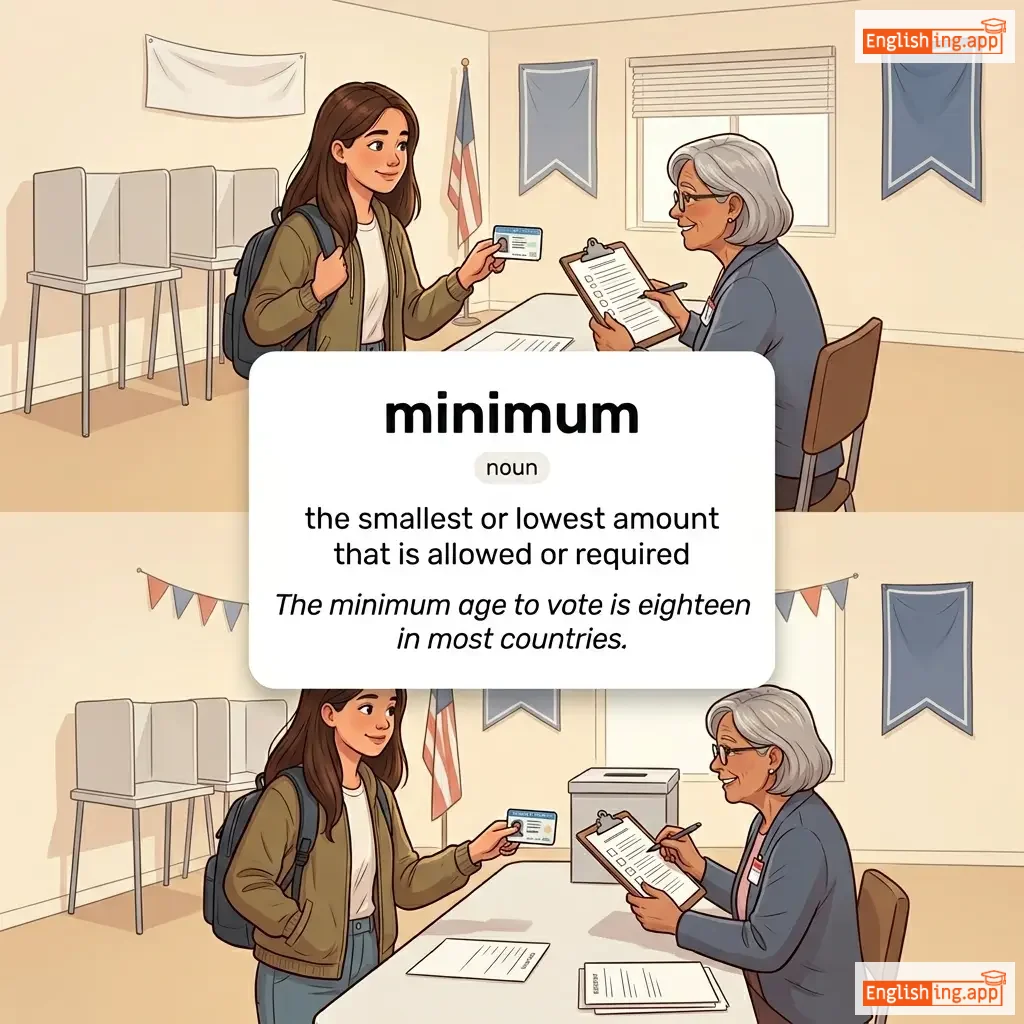
⬇️
|
/ˈmɪn.ɪ.məm/
noun
(मिनिमम)
••••••
|
|
न्यूनतम
nyuntam
••••••
|
The smallest or lowest amount, degree, or quantity possible or required
••••••
|
The minimum wage was increased to help workers cover basic expenses. |
न्यूनतम वेतन को बढ़ाकर श्रमिकों को बुनियादी खर्चों को कवर करने में मदद दी गई।
nyuntam vetan ko badhakar shramikon ko buniyadi kharchon ko cover karne mein madad di gayi.
••••••
|
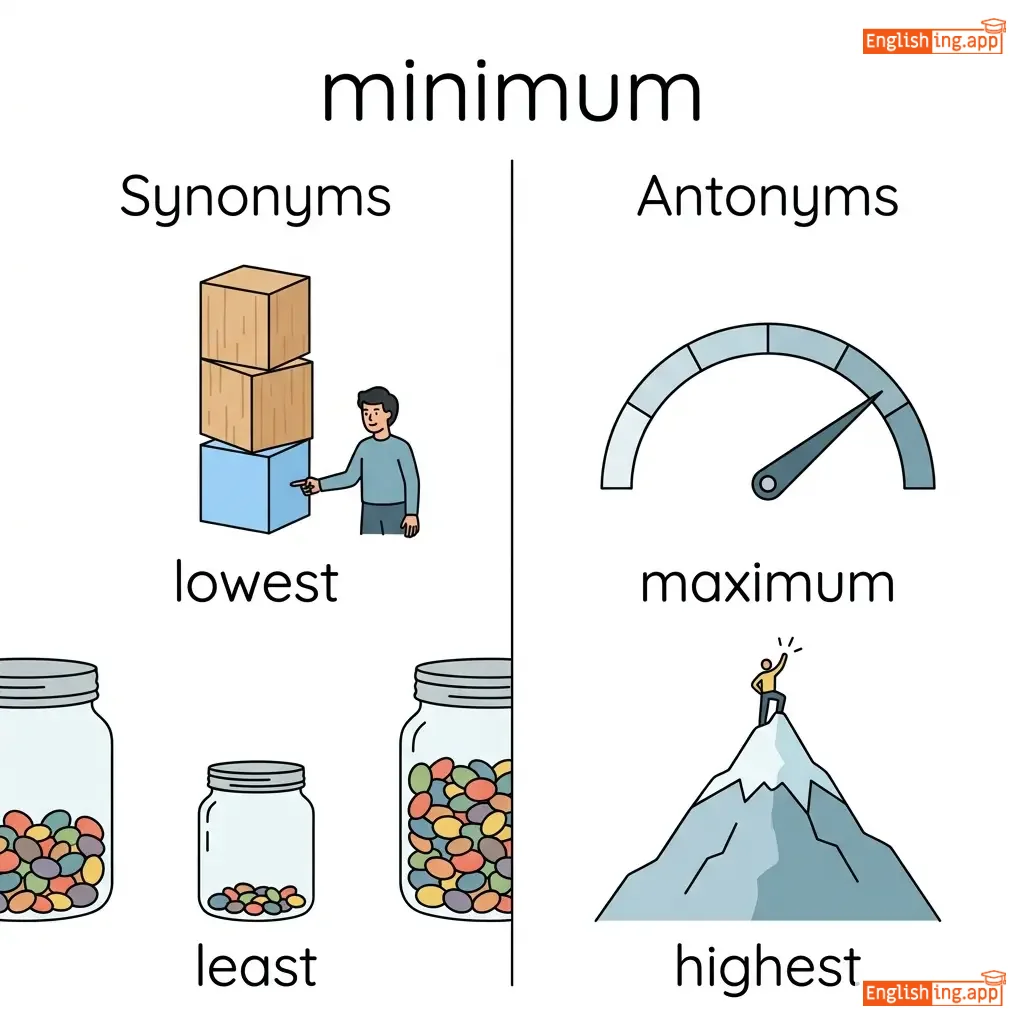
least, lowest, smallest, bottom
••••••
|
maximum, highest, most, peak
••••••
|
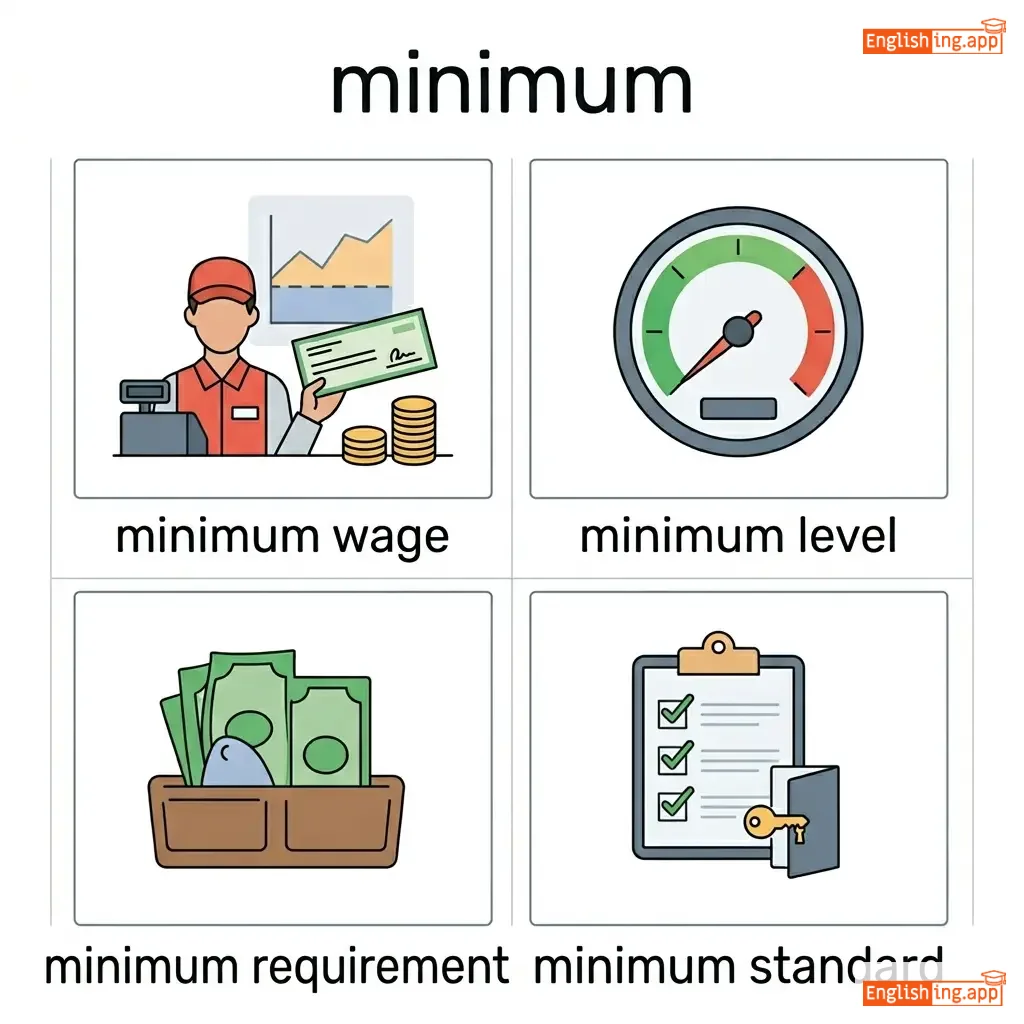
minimum wage, minimum requirement, minimum amount, bare minimum
••••••
|
In Hindi, न्यूनतम (nyuntam) means lowest, which sounds like the English 'minimum'.
••••••
|
|
#866
😭
|
/ˈmɪz.ər.i/
noun
(मिज़री)
••••••
|
- •••••• |
दुःख; दरिद्रता; असहनीय दर्द
misery
••••••
|
Great mental or physical suffering; extreme unhappiness or distress
••••••
|
The poor family lived in complete misery after losing their home.
दूसरी बार घर खोने के बाद गरीब परिवार पूरी तरह से दुख में जी रहा था।
••••••
|
गरीब परिवार अपने घर खोने के बाद पूरी तरह से दुख में जी रहा था।
gareeb parivaar apne ghar khone ke baad poori tarah se dukh mein jee raha tha.
••••••
|
suffering, anguish, distress, torment
••••••
|
happiness, joy, bliss, contentment
••••••
|
human misery, complete misery, endless misery, cause misery
••••••
|
दुःख का कष्ट यह दिखाता है कि दुख में जीते हुए हम जैसे हैं।
••••••
|
|
#867
🏛️
|
/ˈmɪn.ɪ.stri/
noun
(मिनिस्ट्री)
••••••
|
- •••••• |
मंत्रालय
mantralay
••••••
|
A government department responsible for a particular area of public administration
••••••
|
The Ministry of Education announced new policies for schools. |
शिक्षा मंत्रालय ने स्कूलों के लिए नई नीतियाँ घोषित की हैं।
Shiksha mantralay ne schoolon ke liye nayi nitiyaan ghoshit ki hain.
••••••
|
department, bureau, office, agency
••••••
|
private sector, corporation, business
••••••
|
government ministry, ministry office, ministry officials, ministry policy
••••••
|
Hindi: 'Mantra' (guidance) and 'lay' (to put) - the place where public guidance is given.
••••••
|
|
#868
🤔
|
/mɪsˈɡɪv.ɪŋ/
noun
(मिसगिविंग)
••••••
|
- •••••• |
संदेह; आशंका; अनिश्चितता
misgiving
••••••
|
A feeling of doubt or apprehension about the outcome or consequences of something
••••••
|
She had serious misgivings about accepting the job offer.
वह नौकरी के प्रस्ताव को स्वीकार करने को लेकर गंभीर संदेह महसूस कर रही थी।
••••••
|
वह नौकरी के प्रस्ताव को स्वीकार करने को लेकर गंभीर संदेह महसूस कर रही थी।
vah naukri ke prastaav ko sveekar karne ko lekar gambhir sandeh mehsoos kar rahi thi.
••••••
|
doubt, apprehension, uncertainty, worry
••••••
|
confidence, certainty, assurance, trust
••••••
|
serious misgiving, grave misgiving, deep misgiving, have misgivings
••••••
|
Hindi: 'संदेह' शब्द का अर्थ 'अविश्वास' या 'नकारात्मक भावना' होता है, जब कोई निर्णय में संदेह करता है
••••••
|
|
#869
🌿
|
/mɪnt/
noun
(मिंट)
••••••
|
- •••••• |
पुदीना; टकसाल
pudina; taksaal
••••••
|
An aromatic plant used for flavoring; also a place where money is manufactured
••••••
|
She added fresh mint leaves to the tea for a refreshing taste.
उसने चाय में ताजे पुदीने के पत्ते डाले ताकि उसका स्वाद ताजगी से भरा हो।
••••••
|
उसने चाय में ताजे पुदीने के पत्ते डाले ताकि उसका स्वाद ताजगी से भरा हो।
usne chay mein taje pudine ke patte daale taki uska swad tajgi se bhara ho.
••••••
|
peppermint, spearmint, mentha
••••••
|
bitter herb, sour plant
••••••
|
fresh mint, mint leaves, mint tea, mint condition
••••••
|
Pudina se mint ka swad yaad karein, jaise minty aur thanda.
••••••
|
|
#870
😱
|
/ˈmɪs.hæp/
noun
(मिशैप)
••••••
|
- •••••• |
दुर्घटना; विपत्ति; अप्रत्याशित घटना
mishap
••••••
|
An unlucky accident or unfortunate event, typically minor
••••••
|
The cooking mishap resulted in a burnt dinner.
द कुकिंग मिशैप रिजल्टेड इन अ बर्न्ट डिनर।
••••••
|
रसोई की दुर्घटना के कारण रात का खाना जल गया।
rasoi ki durghatna ke kaaran raat ka khana jal gaya.
••••••
|
accident, misfortune, setback, incident
••••••
|
success, good fortune, blessing
••••••
|
minor mishap, kitchen mishap, traffic mishap, unfortunate mishap
••••••
|
मिशैप = मस्ती में खाना बनाने का हादसा।
••••••
|
|
#871
✨
|
/ˈmɪr.ɪ.kəl/
noun
(मिरेकल)
••••••
|
- •••••• |
चमत्कार
chamatkar
••••••
|
An extraordinary and welcome event that cannot be explained by natural or scientific laws
••••••
|
The patient's recovery was called a miracle by the doctors. |
मरीज की रिकवरी को डॉक्टरों ने एक चमत्कार कहा।
mareez ki recovery ko doktoron ne ek chamatkar kaha
••••••
|
wonder, marvel, phenomenon, blessing
••••••
|
disaster, catastrophe, misfortune
••••••
|
medical miracle, modern miracle, miracle cure, miracle worker
••••••
|
चमत्कार (chamatkar) sounds like 'magic'—an event that seems magical and unexplained.
••••••
|
|
#872
🎯
|
/ˈmɪʃ.ən/
noun
(मिशन)
••••••
|
- •••••• |
एक महत्वपूर्ण कार्य या असाइनमेंट जो एक व्यक्ति या समूह को सौंपा जाता है; एक विशिष्ट उद्देश्य या लक्ष्य
mission
••••••
|
An important task or assignment given to a person or group; a specific purpose or goal
••••••
|
The astronauts completed their mission to the space station. |
खगोलयात्रियों ने अपने मिशन को अंतरिक्ष स्टेशन तक पूरा किया।
khagolyatraiyon ne apne mission ko antariksh station tak poora kiya.
••••••
|
task, assignment, objective, goal
••••••
|
aimlessness, purposelessness
••••••
|
space mission, rescue mission, secret mission, military mission
••••••
|
Mission is like 'मिशन' (Mission in Hindi), where every task has a specific goal.
••••••
|
|
#873
🏜️
|
/mɪˈrɑːʒ/
noun
(मिराज)
••••••
|
- •••••• |
मृगमरीचिका
mrigmarichika
••••••
|
An optical illusion caused by atmospheric conditions, especially in deserts
••••••
|
The travelers saw a mirage of water in the desert.
द ट्रैवलर्स सा ए मिराज ऑफ वाटर इन द डेजर्ट।
••••••
|
यात्री रेगिस्तान में पानी की मृगमरीचिका देख रहे थे।
yatri registan mein pani ki mrigmarichika dekh rahe the.
••••••
|
illusion, hallucination, phantom, vision
••••••
|
reality, truth, fact
••••••
|
desert mirage, water mirage, optical mirage, distant mirage
••••••
|
Mirage ka matlab hai 'mrigmarichika', jaise mirage ko dekhen to samajh mein aata hai, pani ka dikhna, lekin sach mein kuch nahi.
••••••
|
|
#874
⛪
|
/ˈmɪʃ.ən.ɛr.i/
noun
(मिशनरी)
••••••
|
- •••••• |
धर्म प्रचारक
dharm pracharak
••••••
|
A person sent on a religious mission to promote their faith in a foreign country
••••••
|
The missionary spent years teaching and helping people in remote villages.
द मिशनरी ने वर्षों तक दूरदराज़ गांवों में लोगों को पढ़ाया और उनकी मदद की।
••••••
|
धर्म प्रचारक ने वर्षों तक दूरदराज़ गांवों में लोगों को पढ़ाया और उनकी मदद की।
dharm pracharak ne varsho tak durdaraaz gaanv mein logon ko padhaya aur unki madad ki.
••••••
|
evangelist, preacher, religious worker, apostle
••••••
|
atheist, non-believer, secular person
••••••
|
Christian missionary, foreign missionary, missionary work, missionary school
••••••
|
Missionary = धर्म प्रचारक; 'धर्म' के साथ 'mission' जोड़ें, यह याद रखने में मदद करता है
••••••
|
|
#875
😡
|
/ˌmɪs.bɪˈheɪ.vjər/
noun
(मिसबिहेवियर)
••••••
|
- •••••• |
गलत या अस्वीकार्य व्यवहार, खासकर बच्चों द्वारा या औपचारिक परिस्थितियों में
misbehaviour
••••••
|
Bad or unacceptable behavior, especially by children or in formal situations
••••••
|
The student was punished for his misbehaviour in class.
छात्र को कक्षा में अपने गलत व्यवहार के लिए सजा मिली।
••••••
|
छात्र को कक्षा में अपने गलत व्यवहार के लिए सजा मिली।
chatr ko kaksha mein apne galat vyavhaar ke liye saza mili.
••••••
|
misconduct, bad behavior, wrongdoing, naughtiness
••••••
|
good behavior, proper conduct, obedience
••••••
|
student misbehaviour, serious misbehaviour, repeated misbehaviour, classroom misbehaviour
••••••
|
Hindi: 'mis' as in 'mistake' + 'behaviour' – meaning a mistake in behavior
••••••
|
|
#876
🤦
|
/mɪˈsteɪk/
noun
(मिस्टेक)
••••••
|
- •••••• |
गलती; त्रुटि;
galti; truti;
••••••
|
An action or judgment that is misguided or wrong; an error
••••••
|
Making mistakes is part of the learning process.
मेकिंग मिस्टेक्स इज़ पार्ट ऑफ़ द लर्निंग प्रोसेस।
••••••
|
गलतियाँ करना सीखने की प्रक्रिया का हिस्सा है।
galtiyan karna seekhne ki prakriya ka hissa hai.
••••••
|
error, blunder, fault, slip
••••••
|
correctness, accuracy, success
••••••
|
common mistake, serious mistake, honest mistake, learn from mistakes
••••••
|
गलती के बिना कुछ नहीं सीख सकते।
••••••
|
|
#877
😈
|
/ˈmɪs.tʃɪf/
noun
(मिसचीफ)
••••••
|
- •••••• |
शरारत
shararat
••••••
|
Playful behavior that causes minor trouble or annoyance but is not meant to cause serious harm
••••••
|
The children were full of mischief during the summer holidays. |
गर्मियों की छुट्टियों में बच्चे शरारतों से भरे हुए थे।
garmiyon ki chhuttiyon mein bachche shararaton se bhare hue the.
••••••
|
naughtiness, pranks, trouble, devilry
••••••
|
good behavior, obedience, virtue
••••••
|
childhood mischief, playful mischief, harmless mischief, get into mischief
••••••
|
Mischief मतलब शरारत, जैसे बच्चा मस्ती करने में व्यस्त हो।
••••••
|
|
#878
😒
|
/ˌmɪsˈtrʌst/
noun
(मिस्ट्रस्ट)
••••••
|
- •••••• |
अविश्वास
avishwas
••••••
|
Lack of trust; suspicion or doubt about someone or something
••••••
|
There was deep mistrust between the two political parties. |
दो राजनीतिक दलों के बीच गहरी अविश्वास था।
do raajnaitik dalon ke beech gehri avishwas tha.
••••••
|
distrust, suspicion, doubt, wariness
••••••
|
trust, confidence, faith, belief
••••••
|
deep mistrust, mutual mistrust, growing mistrust, mistrust of authority
••••••
|
A trusted person is full of trust, 'अ' is absent in 'अविश्वास'.
••••••
|
|
#879
⚠️
|
/ˌmɪsˈkɒn.dʌkt/
noun
(मिसकंडक्ट)
••••••
|
- •••••• |
दुराचरण
duracharan
••••••
|
Unacceptable or improper behavior, especially by a professional person
••••••
|
The officer was dismissed for professional misconduct. |
अधिकारी को पेशेवर दुराचरण के लिए बर्खास्त कर दिया गया था।
adhikari ko peshewar duracharan ke liye borkhast kar diya gaya tha.
••••••
|
wrongdoing, malpractice, impropriety, violation
••••••
|
good conduct, proper behavior, integrity
••••••
|
professional misconduct, serious misconduct, sexual misconduct, academic misconduct
••••••
|
Durachar ki wajah se ek peshewar vyakti ko job se nikal diya gaya
••••••
|
|
#880
🤷
|
/ˌmɪs.ʌn.dəˈstæn.dɪŋ/
noun
(मिसअंडरस्टैंडिंग)
••••••
|
- •••••• |
ग़लतफ़हमी
galatfahmi
••••••
|
A failure to understand something correctly; a disagreement or confusion between people
••••••
|
The argument was caused by a simple misunderstanding. |
बहस एक साधारण ग़लतफ़हमी के कारण हुई थी।
bahas ek sadharan galatfahmi ke karan hui thi.
••••••
|
confusion, miscommunication, mix-up, disagreement
••••••
|
understanding, clarity, agreement, comprehension
••••••
|
clear up misunderstanding, avoid misunderstanding, cultural misunderstanding, serious misunderstanding
••••••
|
गलतफ़हमी के कारण होती है हर बहस
••••••
|
Vocabulary Quiz
Test your vocabulary by matching words with their translations or meanings.
Login to take the quiz
Comments (0)
Share your thoughts and join the discussion.
Join the discussion by logging in
Login to CommentNo comments yet
Be the first to share your thoughts!